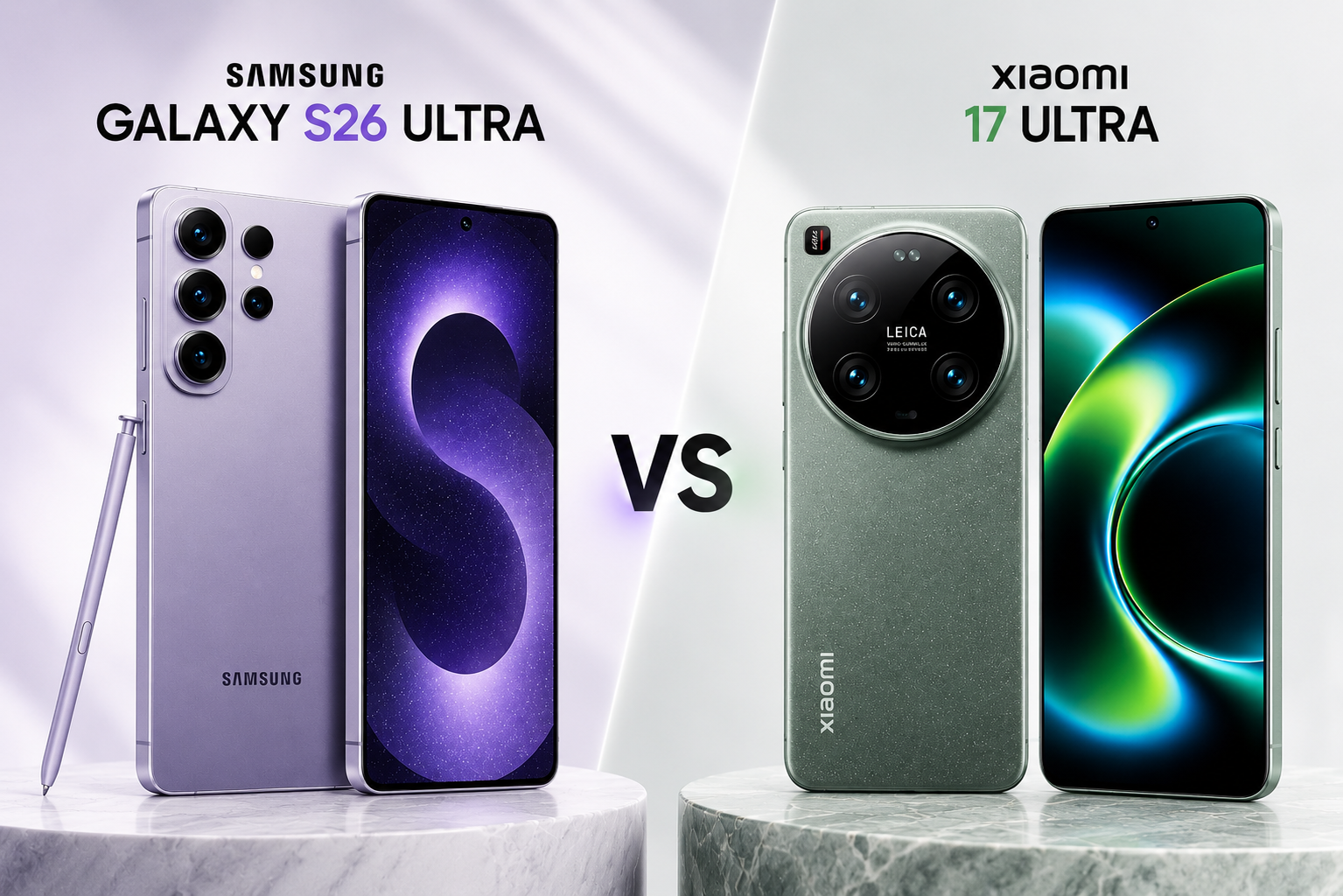
Xiaomi 17 Ultra focuses on a 1-inch Leica sensor and a 200 MP periscope with smooth zoom, while the Galaxy S26 Ultra features a 200-megapixel main camera and two separate telephoto lenses (3x and 5x). Both flagships start at 6,499 PLN. Want a photographic character and a large sensor? Choose Xiaomi. Opting for versatile, reliable zoom and Galaxy AI? Go for Samsung.
This is a duel of two completely different philosophies of mobile photography. The Xiaomi 17 Ultra (premiere in Poland on February 28, 2026) leans towards a «real camera» with Leica and a sensor reminiscent of compacts. The Galaxy S26 Ultra (from March 11, 2026) is a computational powerhouse with the most extensive focal length set on the market.
In this comparison of the flagship cameras of 2026, we focus primarily on photography, as it is what divides these phones the most. We break down the main lens, zoom, ultra-wide angle, selfie, character of photos and videos. At the end, you will find a clear recommendation.
Camera Specifications — Xiaomi 17 Ultra vs Galaxy S26 Ultra
Let’s start with a complete overview of the optical systems. This is where we can see how different paths both manufacturers have taken.
| Camera | Xiaomi 17 Ultra | Galaxy S26 Ultra |
|---|---|---|
| Main | 50 MP, 1″ Light Fusion 1050L (Leica), f/1.67 | 200 MP, 1/1.3″, f/1.4, OIS |
| Telephoto | no separate (zoom through periscope) | 10 MP, 3x optical, f/2.4, OIS |
| Periscope | 200 MP, 1/1.4″, smooth optical zoom | 50 MP, 5x optical, f/2.9, OIS |
| Ultrawide | 50 MP | 50 MP, f/1.9, 120° |
| Selfie | 50 MP | 12 MP |
| Color Tuning | Leica (Authentic and Vibrant profiles) | Galaxy AI, ProVisual Engine |
| Optical Zoom | smooth (periscope 200 MP) | two ranges: 3x and 5x |
| Video | up to 8K | up to 8K |
| Special Edition | Leica Edition with mechanical zoom ring | none |
At first glance, two ideas for the same thing are visible. Xiaomi focuses on two huge sensors (main and periscope), Samsung on four specialized lenses covering more focal lengths.
Main camera — 1-inch sensor vs 200 megapixels
This is the heart of both phones and the biggest difference in philosophy. Xiaomi 17 Ultra has a larger sensor, Galaxy S26 Ultra more pixels.
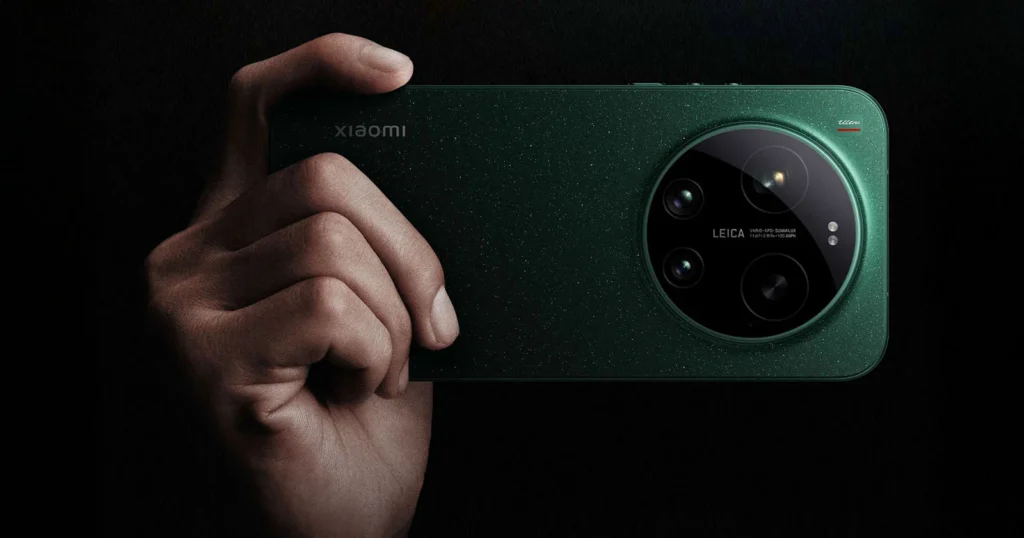
Xiaomi montuje 50-megapikselowy sensor Light Fusion 1050L o przekątnej 1 cala, strojony z Leicą i z technologią LOFIC rozszerzającą zakres tonalny. Duża matryca to więcej światła na piksel, naturalne rozmycie tła i lepsze zdjęcia po zmroku bez agresywnego software’u. Wysokie noty w teście aparatu Xiaomi 17 Ultra w DXOMARK potwierdzają, że to jeden z najlepszych aparatów na rynku.
Galaxy S26 Ultra odpowiada 200-megapikselowym sensorem 1/1.3″ z jaśniejszą przysłoną f/1.4 (rok wcześniej było f/1.7). Mniejsza matryca, ale gigantyczna rozdzielczość daje ogromny zapas detalu i swobodę kadrowania — możesz przyciąć zdjęcie i wciąż mieć ostry plik.
W praktyce różnica wygląda tak:
- Xiaomi — bardziej „aparatowy» charakter, ładniejszy bokeh, lepsza praca w trudnym świetle dzięki wielkiej matrycy.
- Samsung — więcej detalu w dzień, większa elastyczność kadrowania i bardziej przewidywalny, obliczeniowy efekt.
Conclusion: If the most important factor is the quality of the main camera at night and the photographic atmosphere, the Xiaomi 17 Ultra has the advantage. For photos in full light and maximum resolution, Samsung performs just as well.
Zoom — one powerful periscope vs dual telephoto
This is where the paths diverge the most, and often this element determines the choice.
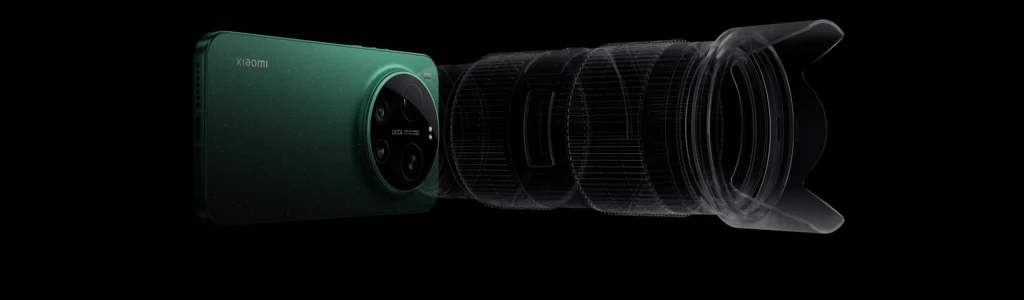
Xiaomi 17 Ultra has one, but exceptional telephoto lens: a 200 MP periscope on a 1/1.4″ sensor with smooth optical zoom. The enormous resolution ensures that even heavily cropped shots retain surprisingly much detail. This solution shines in medium and long zoom — portraits, architecture, details from a distance. Thanks to the pixel reserve, intermediate magnifications (e.g., 4x or 6x) are cut from the sensor without real loss of quality.
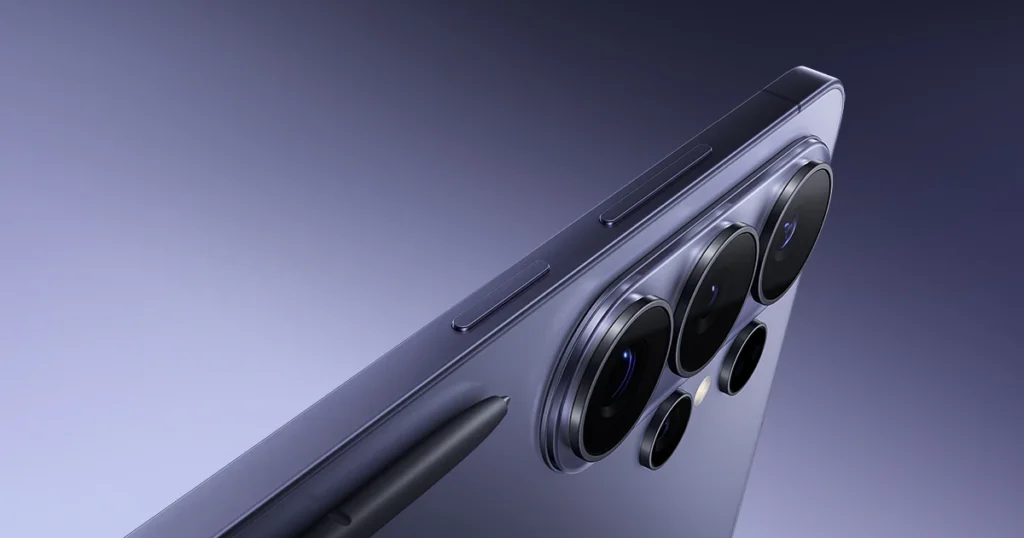
Galaxy S26 Ultra focuses on the classic versatility typical of the Ultra series: two separate telephoto lenses — 10 MP with 3x zoom (f/2.4) and a 50-megapixel 5x periscope (f/2.9, with a brighter aperture than before). This gives you dedicated optics for portraits (3x) and for long zoom (5x), while the software smoothly combines the ranges up to 100x digital zoom.
What does it mean in the field?
- Xiaomi wins in raw detail at specific, long-range zoom.
- Samsung wins in versatility — you have native focal lengths for different situations, from portrait to landscape from afar.
If you take a lot of portraits, Samsung’s dual telephoto lens can be more convenient on a daily basis. If maximum detail in strong zoom matters to you, Xiaomi’s periscope is impressive.
Ultrawide angle and selfies
In the ultrawide angle, it’s a tie on paper — both phones have 50-megapixel sensors. The Galaxy S26 Ultra adds a bright aperture of f/1.9 and a 120-degree angle, which helps with architecture and landscapes. Xiaomi maintains a consistent level and color with the rest of the lenses thanks to Leica tuning.

Selfies are Xiaomi’s advantage at least on the numbers: 50 MP versus 12 MP in Samsung. More pixels up front means sharper self-portraits and better framing for group photos. However, Samsung makes up for it with refined processing and natural skin rendering.


Character of photos — Leica vs Galaxy AI
Numbers are not everything. Whether you will like the photos is determined by their «character» — and here the difference is fundamental.
Xiaomi 17 Ultra uses Leica tuning. You get two profiles: Leica Authentic (contrasty, with strong shadows, more documentary) and Leica Vibrant (brighter colors for social media). This sound is known from Leica cameras, which many photographers simply love. The Leica Edition adds a mechanical zoom ring on the body, allowing you to set the focal length, exposure, and white balance like in a real lens.
Galaxy S26 Ultra is on a computational path. Galaxy AI and the ProVisual engine ensure a consistent, «safe» effect: readable colors, strong HDR, and plenty of automatic enhancements. It’s convenient, predictable, and great for those who want a good photo without fussing around.
Tip: If you like to influence the photo and appreciate a characterful, photographic look, you will love Leica in Xiaomi. If you prefer the phone to «do well for you,» you will appreciate Samsung’s approach.
Night photography — where a large sensor makes a difference
After dark, Xiaomi 17 Ultra often wins. The 1-inch sensor of the main camera gathers more light, so night shots are brighter and less «processed» than in phones that have to compensate with algorithms. Less noise, more natural city lights, and better preserved neon colors.
Galaxy S26 Ultra is not far behind. A brighter f/1.4 aperture and a strong night mode deliver very good results, although Samsung tends to brighten and smooth the scene more. It’s a matter of taste: Xiaomi keeps the night atmosphere, while Samsung prefers to show as many details as possible.
In night zoom, Xiaomi maintains an advantage thanks to the 200 MP periscope, which retains more detail when zoomed in even in low light.

Portrety i bokeh
Do portretów liczą się dwie rzeczy: rozmycie tła i odwzorowanie skóry. Xiaomi 17 Ultra korzysta z dużej matrycy i strojenia Leiki, więc bokeh jest naturalny, a odcień skóry przyjemnie ciepły. Profile Leica Authentic i Vibrant pozwalają dobrać klimat pod nastrój zdjęcia.
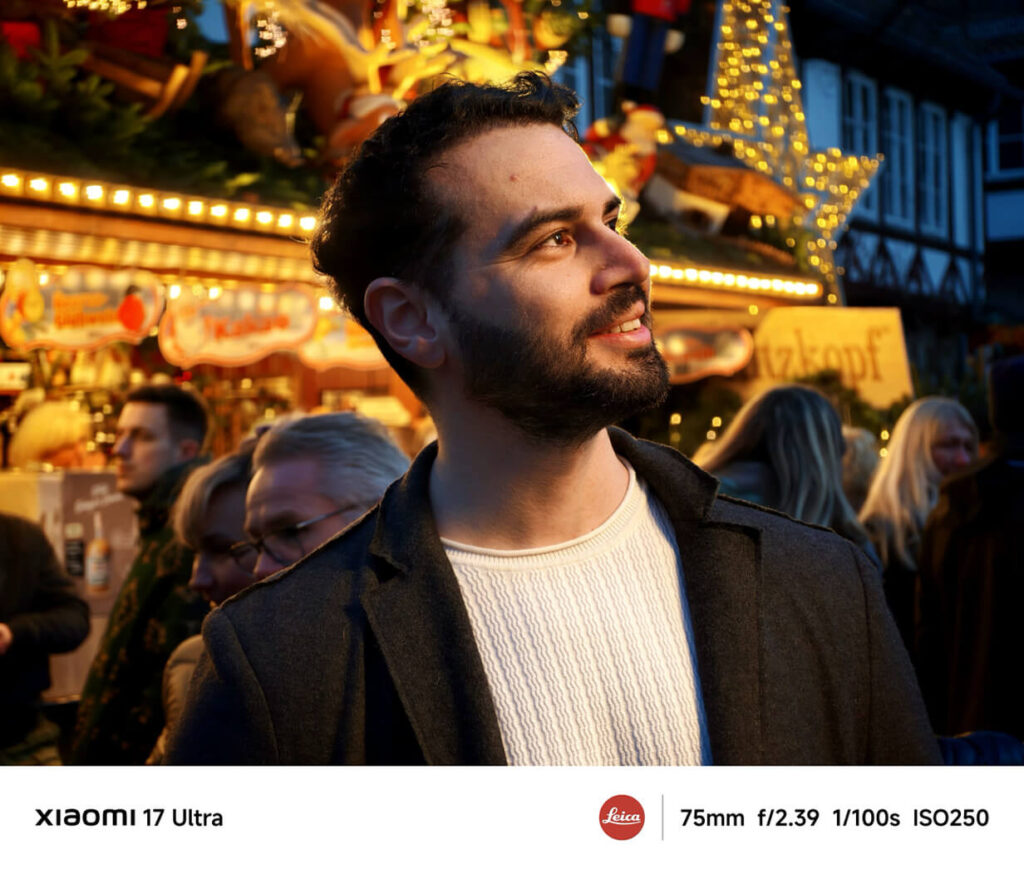
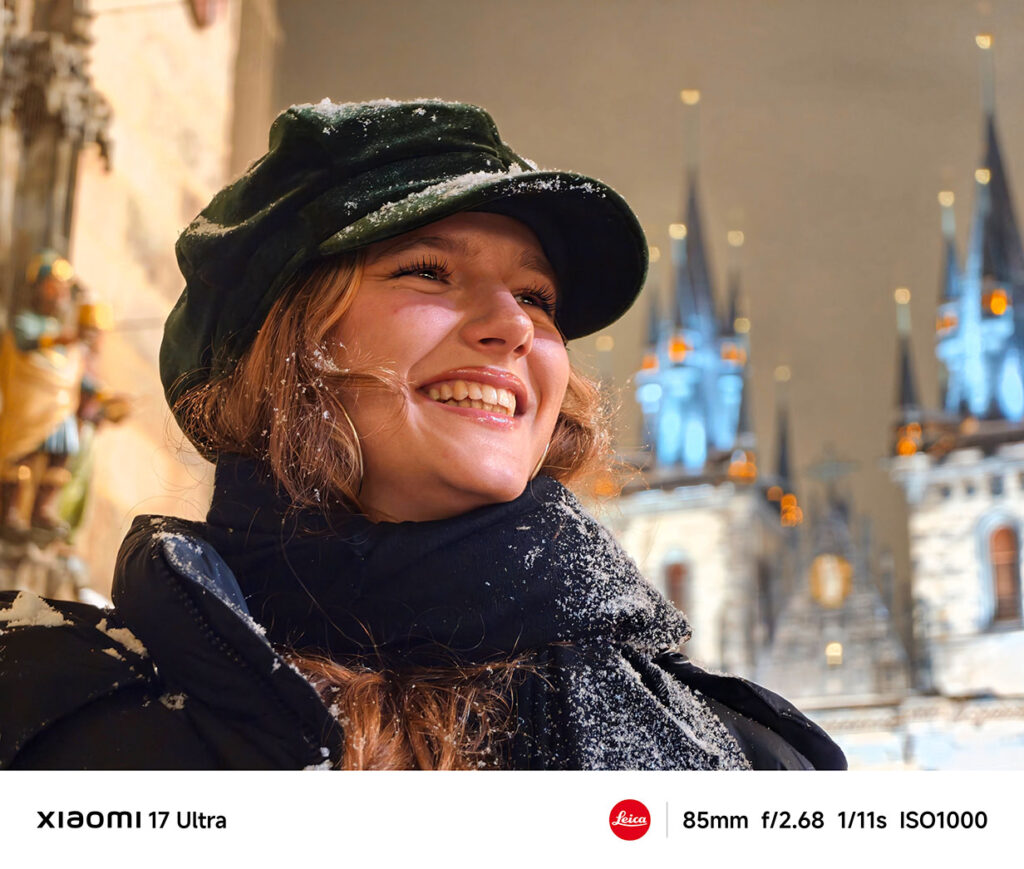
Galaxy S26 Ultra ma za to dedykowany teleobiektyw 3x — klasyczną „portretówkę», która daje pochlebną perspektywę bez podchodzenia zbyt blisko. Efekt jest spójny i przewidywalny, a Galaxy AI dba o czytelne odseparowanie postaci od tła.
Wideo
Both flagships record in up to 8K resolution and offer stabilization and pro modes. Samsung has long been a benchmark in video on Android — it has consistent color across lenses and very good sound. Xiaomi has caught up significantly, and the large sensor of the main camera helps in night recordings. For most users, the differences in filming will be subtle; only creators will fully appreciate the advantage.
The rest of the specifications — display, battery, performance
Cameras are not everything, so a brief note on the rest. Both phones have top processors, bright AMOLED displays, and fast charging. Xiaomi stands out here with a large 6800 mAh battery and a display brightness of 3500 nits, which translates to excellent readability in sunlight and long usage time.
| Parameter | Xiaomi 17 Ultra | Galaxy S26 Ultra |
|---|---|---|
| Battery | 6800 mAh | flagship, fast charging |
| Display | AMOLED, up to 3500 nits | AMOLED, high refresh rate |
| System / AI | HyperOS, AI assistant | One UI, Galaxy AI |
| S Pen | none | S Pen |
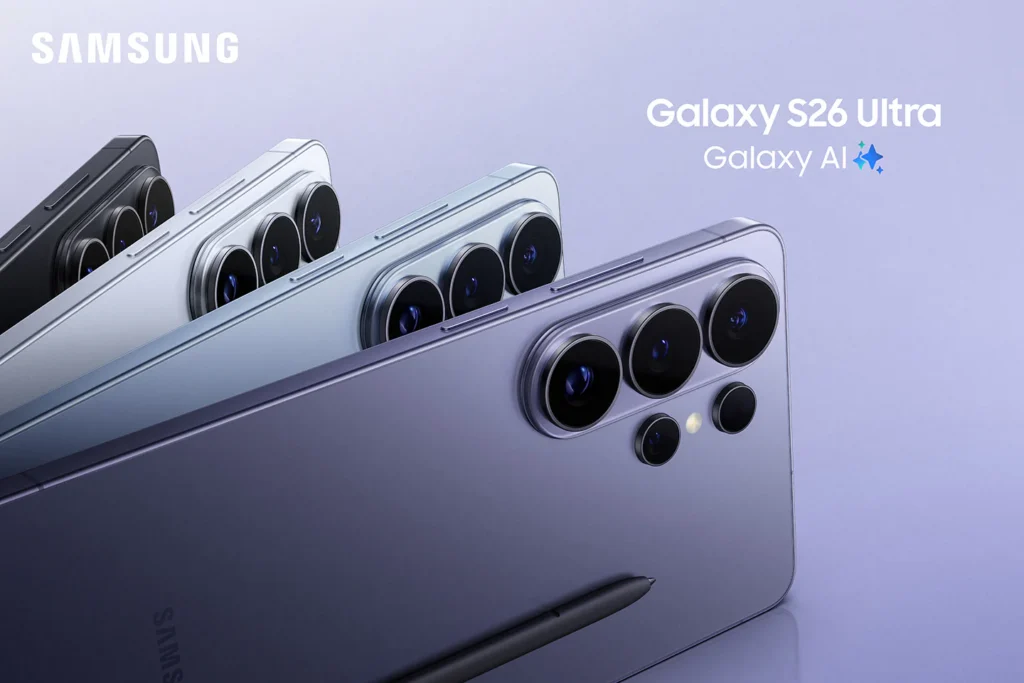
One of Samsung’s advantages remains the S Pen — a stylus that Xiaomi does not offer. If you take notes, draw, or edit photos with your finger, this is a real advantage of the Galaxy.
Price and availability in Poland
The starting prices are identical: both flagships cost from 6,499 PLN. The Xiaomi 17 Ultra in the 16/512 GB version is 6,499 PLN, while the 16 GB/1 TB version is 6,999 PLN. The Galaxy S26 Ultra starts at 6,499 PLN for the 256 GB variant and can be significantly cheaper during promotions.
Both phones are officially available in Poland, so you can buy them with a Polish warranty and support. This is important — with Xiaomi Ultra flagships, it has varied, but the 17 Ultra model has entered official sales.
Which one to choose? Recommendations based on needs
In terms of the camera, there is no single winner — there is a winner for a specific style of photography:
- You want the largest sensor and photographic character → Xiaomi 17 Ultra (1-inch sensor, Leica tuning).
- Maximum detail in strong zoom matters → Xiaomi 17 Ultra (200 MP periscope).
- You value manual control over the frame → Xiaomi 17 Ultra Leica Edition (zoom ring).
- Do you need a versatile, reliable zoom for everyday use → Galaxy S26 Ultra (3x and 5x).
- Do you want maximum detail during the day and freedom in framing → Galaxy S26 Ultra (200 MP main).
- Are you interested in the S Pen and Samsung ecosystem → Galaxy S26 Ultra.
Our choice: For pure photographic pleasure and night shots — Xiaomi 17 Ultra. As a universal, reliable device with the best zoom package and S Pen — Galaxy S26 Ultra. Both are at the top of the 2026 rankings.
Looking for a broader picture? Check out our ranking of the best phones for photos in 2026, and if you’re into photography with Xiaomi — also check out the comparison of Vivo X300 Ultra vs Xiaomi 17 Ultra.
Accessories — how to secure a flagship for 6,499 PLN
Telefon za ponad sześć tysięcy złotych warto chronić od pierwszego dnia — szkło hartowane i etui to ułamek ceny naprawy. Sprawdź dopasowane akcesoria do obu modeli: etui i ochronę do Xiaomi 17 Ultra, a po stronie Samsunga najlepsze etui do Galaxy S26 Ultra i szkło hartowane do Galaxy S26 Ultra. Przy tak rozbudowanych aparatach warto pomyśleć też o szkle na aparat Galaxy S26 Ultra, które ochroni obiektywy przed zarysowaniem. Konkretne modele podpowiadamy w rankingu najlepszych szkieł do Xiaomi 17 Ultra. Kupujesz u sprawdzonego sprzedawcy: ocena 4,9/5 w Google i 99,8% pozytywnych opinii na Allegro.
Podsumowanie
Xiaomi 17 Ultra i Galaxy S26 Ultra to dwa najlepsze aparaty w telefonie w 2026 roku, tyle że osiągają to inaczej. Xiaomi gra wielką, 1-calową matrycą Leica i peryskopem 200 MP, stawiając na charakter i detal w zoomie. Samsung odpowiada 200-megapikselowym głównym aparatem i podwójnym teleobiektywem, stawiając na wszechstronność i komputacyjną niezawodność.
Najważniejsze wnioski:
- Główny aparat: Xiaomi (większa matryca, nocne zdjęcia, bokeh) vs Samsung (więcej detalu w dzień).
- Zoom: Xiaomi (peryskop 200 MP, detal) vs Samsung (3x i 5x, wszechstronność).
- Character: Leica (Xiaomi) vs Galaxy AI (Samsung).
- Price: identical, starting from 6,499 PLN.
Choose Xiaomi 17 Ultra for photographic pleasure and a large sensor, and Galaxy S26 Ultra for versatility, S Pen, and ecosystem. Regardless of your decision, take care of the glass and case, as a camera worth thousands of PLN deserves protection.
FAQ — frequently asked questions
Xiaomi 17 Ultra or Galaxy S26 Ultra, which has a better camera?
It depends on the style. Xiaomi 17 Ultra wins with sensor size (1 inch) and detail in strong zoom (periscope 200 MP), while Galaxy S26 Ultra excels in zoom versatility (3x and 5x) and main camera resolution (200 MP). For night shots, Xiaomi is better, for universal use — Samsung.
Which takes better photos at night?
Usually, Xiaomi 17 Ultra — thanks to the 1-inch main camera sensor that gathers more light. Galaxy S26 Ultra also performs well, but relies more on computational processing.
Which has better zoom?
It depends on the distance. Xiaomi provides more detail in one strong periscope 200 MP, while Samsung is more flexible with two telephoto lenses (3x and 5x) covering different focal lengths.
How much do Xiaomi 17 Ultra and Galaxy S26 Ultra cost in Poland?
Both start from 6,499 PLN. Xiaomi 17 Ultra in the 16/512 GB version is 6,499 PLN, and the 16 GB/1 TB version — 6,999 PLN. Galaxy S26 Ultra costs from 6,499 PLN for 256 GB and can be cheaper during promotions.
What is the Leica edition in Xiaomi 17 Ultra?
It is a variant with a unique design and a mechanical zoom ring on the body, allowing you to set the focal length, exposure, and white balance like in a classic lens. The camera specifications are the same as in the standard version.
Does the Galaxy S26 Ultra have an S Pen, while the Xiaomi 17 Ultra does not?
Yes. The Galaxy S26 Ultra retains the S Pen stylus, which the Xiaomi 17 Ultra does not offer. For those who take notes and draw, this is a significant advantage for Samsung.
Legg att eit svar