Category: Comparisons

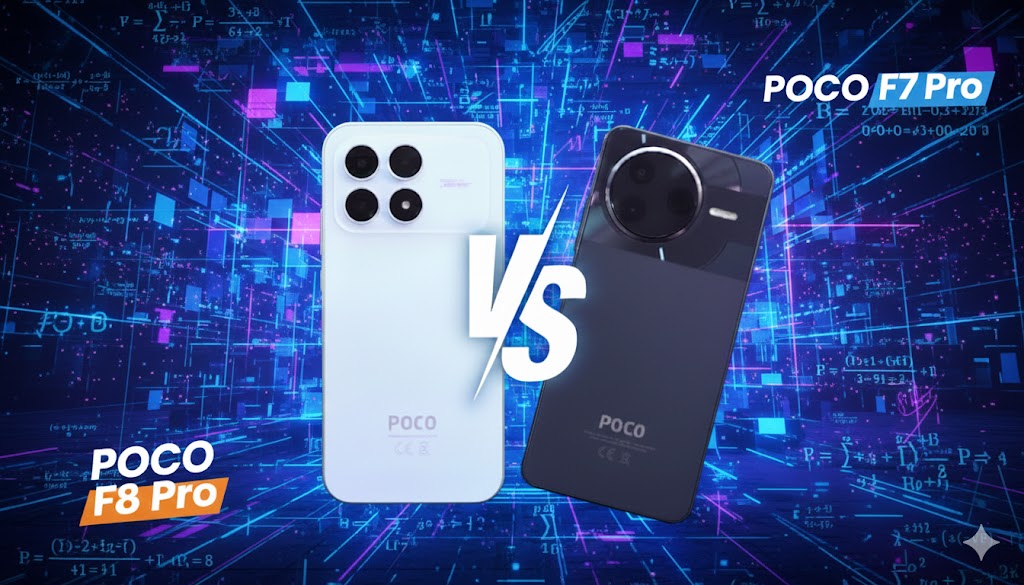
  • Xiaomi Poco F8 Pro vs Poco F7 Pro – detailed comparison

    Xiaomi Poco F8 Pro vs Poco F7 Pro – detailed comparison

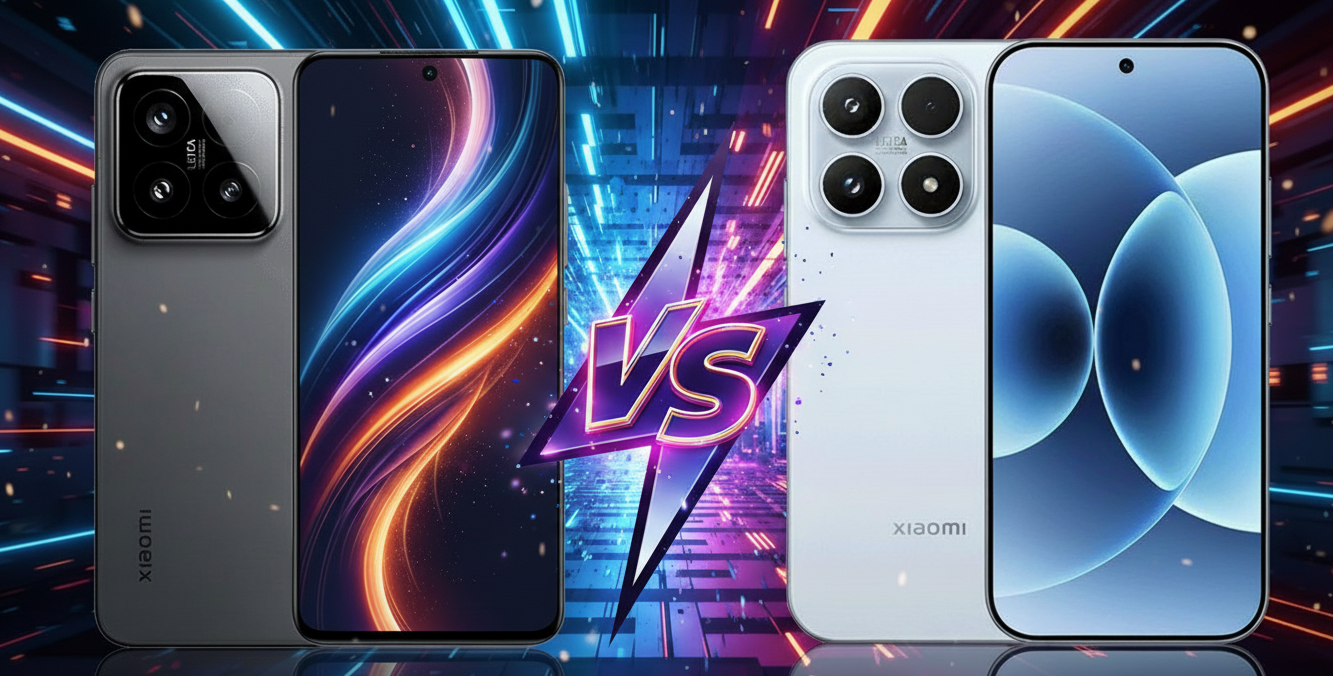
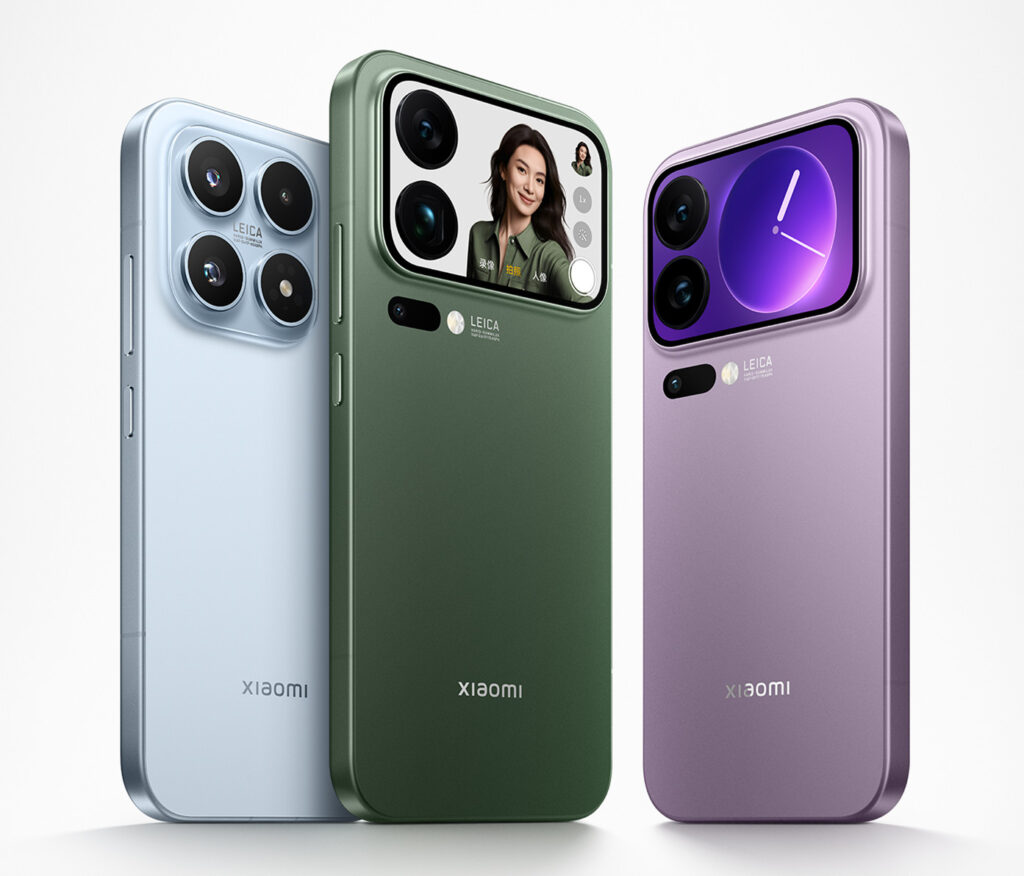
    If you’re looking for the best POCO phone in Poland at the end of 2025, choose the POCO F8 Pro — it offers a more powerful processor, a better camera with a telephoto lens, and a larger battery with faster charging. But if you care about a great 2K screen and want to spend less than 2000 PLN, the POCO F7 Pro is still an excellent option.

    📊 Comparison of specifications POCO F7 PRO vs POCO F8 PRO

    Feature / ParameterPOCO F7 ProPOCO F8 Pro
    ProcessorSnapdragon 8 Gen 3Snapdragon 8 Elite (3 nm, Oryon)
    GPUAdreno 750Adreno 830
    RAM / Internal Memory12 GB LPDDR5X + 256 / 512 GB UFS 4.112 GB LPDDR5X + 256 / 512 GB UFS 4.1
    Screen6.67″ AMOLED, 3200×1440, 120 Hz6.59″ AMOLED, 2510×1156, 120 Hz, 3500 nit
    Rear Cameras50 MP (main) + 8 MP (ultrawide)50 MP (main) + 50 MP tele + 8 MP ultrawide
    Selfie Camera20 MP20 MP
    Battery6000 mAh6210 mAh
    Charging90W HyperCharge100W HyperCharge + 22.5W reverse charge
    Body / Dimensions / Weight160.26 × 74.95 × 8.12 mm — 206 g157.49 × 75.25 × 8.0 mm — 199 g
    SIM / eSIMDual nanoSIMnanoSIM + nanoSIM / nanoSIM + eSIM / eSIM + eSIM
    Water ResistanceIP68IP68
    Operating SystemHyperOS 2 (Android 15)HyperOS 3 (Android 16)
    Connectivity / Wi-Fi / BluetoothWi-Fi 7, Bluetooth 5.4Wi-Fi 7 (8×8 MU-MIMO), Bluetooth 5.4
    Approximate Price (PL)about 1800–2000 PLN (promotions)about 2099–2299 PLN

    Display and External Appearance

    What has changed in the design and screen of the POCO F8 Pro compared to the F7 Pro?

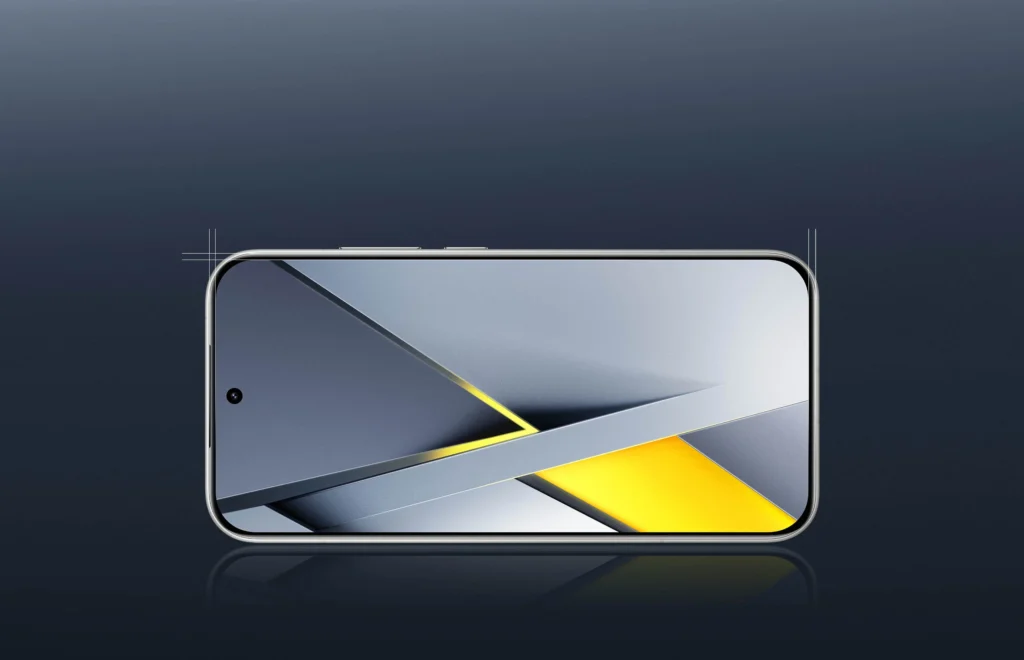
    In terms of appearance and build quality, both models present a high level, but the POCO F8 Pro introduces a few subtle changes that affect daily ergonomics:

    • Smaller dimensions and lower weight: The F8 Pro is shorter (157.5 mm vs 160.3 mm) and lighter (199 g vs 206 g), which translates to more comfortable one-handed use.
    • Rounded edges and better grip: The new shape of the F8 Pro features gentle curves and a thinner bottom bezel, making the phone fit better in the hand.
    • Identical IP68 resistance class: Both smartphones are resistant to dust and immersion in water up to 1.5 m for 30 minutes, confirming a high standard of construction.

    The change in form is not revolutionary, but the F8 Pro is noticeably more compact and “smoother” in daily use – without compromising on sturdiness.
    ➡️ If you want to improve the protection and grip of the device, choose the appropriate  case for POCO F7 Pro or case for POCO F8 Pro.


    Screen: sharpness vs brightness – which is better for the eyes?

    POCO F7 Pro impresses with its classic form – a flat 6.67″ AMOLED display with WQHD+ resolution (3200×1440 px) and thin, symmetrical bezels. With 12-bit color depth, support for HDR10+ and Dolby Vision, and very high sharpness (526 ppi), it is the perfect display for those who value detail – for reading, watching high-quality movies, or playing graphically intensive games.

    The POCO F8 Pro features a smaller 6.59″ screen with a resolution of 2510×1156 px (446 ppi). Importantly, it has a significantly higher peak brightness – up to 3500 nits (vs 3200 nits in F7 Pro), making it better for outdoor use. Additionally, it supports Wet Touch 2.0 mode, which increases touch responsiveness in rain or with wet fingers – a rarity even among flagships.
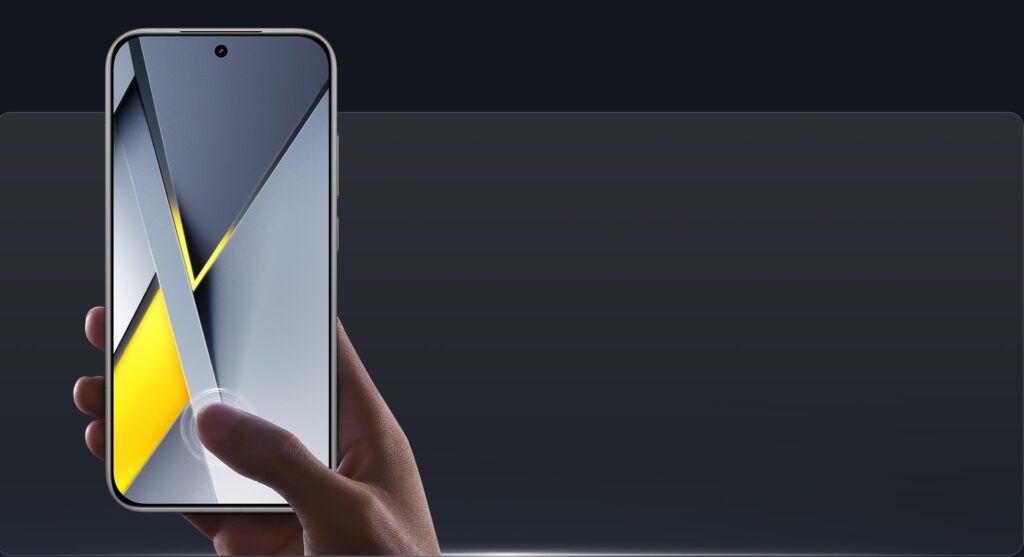
    Both displays support 120 Hz refresh rate and advanced dimming (PWM/DC), but differ in priority: F7 Pro focuses on sharpness and pixel density, while F8 Pro emphasizes comfort in all lighting conditions. – the screen responds better to touch in humid conditions. Both displays are top quality, but the choice depends on whether detail (F7 Pro) or brightness and response time (F8 Pro) is more important.

    ➡️ Check out the matching tempered glass for POCO F7 Pro or tempered glass for POCO F8 Pro to avoid screen damage.


    Cameras and Photo-Video Capabilities

    Telephoto vs No Tele – an advantage that is immediately visible

    Both smartphones use the same, very good 50 MP Light Fusion 800 sensor as the main camera. It is a 1/1.55″ matrix with OIS, large 2.0 μm pixels (after 4-in-1 merging) and excellent photo quality both day and night. However, this is where the similarities end.

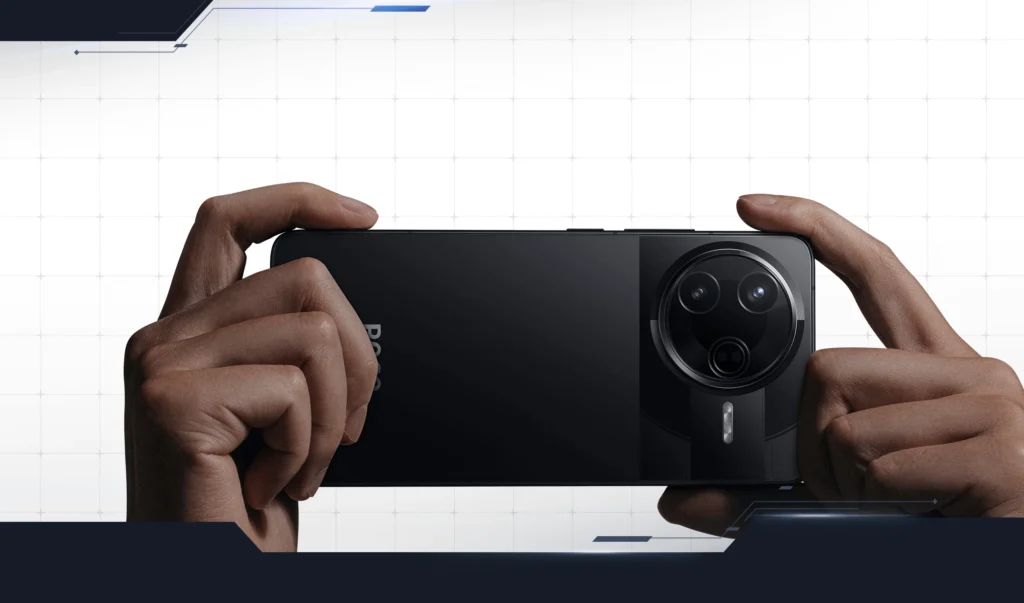
    🔍 POCO F8 Pro – a huge leap thanks to the 50 MP telephoto lens

    F8 Pro is the only one in this pair that has a dedicated 50 MP telephoto lens with a focal length of 60 mm, which offers:

    • 2× optical zoom without quality loss,
    • significantly better portrait photos with natural background separation,
    • sharper detail photos from a greater distance,
    • Super Moon mode and adaptive zoom.

    This makes the F8 Pro clearly more versatile in photography.

    🌄 POCO F7 Pro – only wide and ultra-wide

    The F7 Pro offers two cameras:

    • 50 MP main (the same as in F8 Pro),
    • 8 MP ultra-wide.

    The lack of a telephoto lens means that any zoom is digital, so quality decreases with close-ups. Portraits also look weaker – the bokeh effect is more artificial.
    🎥 Video – both record in 8K, but the F8 Pro does it better

    • F7 Pro: 8K 24 fps, 4K 60 fps.
    • F8 Pro: 8K 30 fps, 4K 60 fps + more stabilization modes.

    Additionally, the F8 Pro offers:

    • director mode,
    • dual video recording,
    • ShootSteady,
    • better motion tracking.

    🤳 Selfie Camera – tie

    Both phones have the same 20 MP front camera, offering HDR, portrait mode, and 1080p 60 fps recording.

    Section summary: If you take a lot of photos, especially portraits and close-ups — the F8 Pro is a crushing winner. The F7 Pro delivers great quality from the main sensor, but it lacks versatility.


    Battery and Charging

    Greater capacity or greater convenience? Differences you feel every day

    In terms of battery, both models perform excellently, but they differ in their approach to runtime and additional features.

    🔋 POCO F7 Pro — solid 6000 mAh battery

    • Capacity: 6000 mAh
    • Wired charging: 90W HyperCharge
    • No reverse charging

    The F7 Pro provides very good runtime — even 7–8 hours SOT, and thanks to 90W, it can be charged quickly. It’s an excellent battery in its price range.
    ⚡ POCO F8 Pro — larger battery, faster charging, and power bank feature

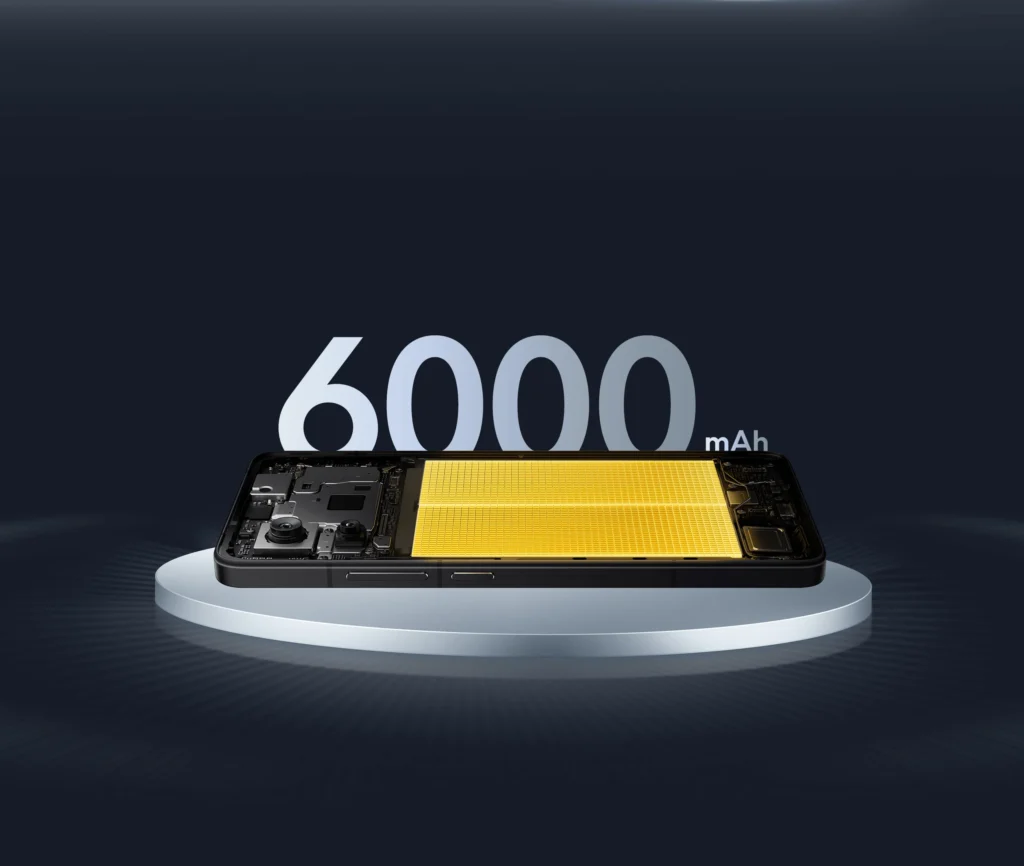
    • Capacity: 6210 mAh (210 mAh more)
    • Wired charging: 100W HyperCharge (full charge in about 30 minutes)
    • Reverse charging 22.5W — you can charge headphones, a smartwatch, or a second phone

    The F8 Pro offers a realistically longer battery life (on average +40–60 minutes) and also acts as a portable power bank thanks to fast reverse charging.
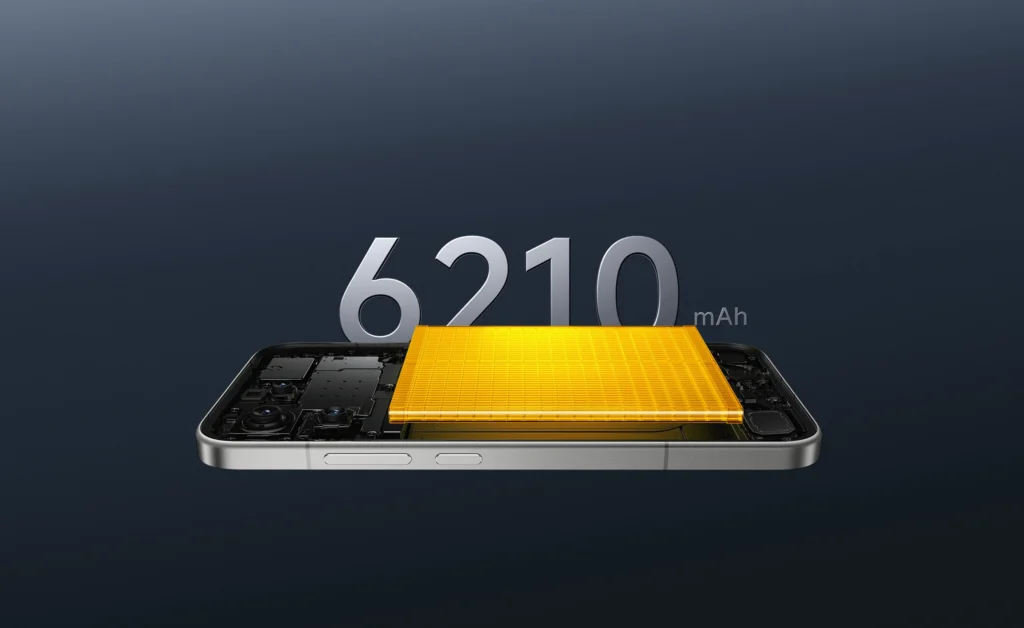
    📌 Which smartphone has a better battery?

    • If you care about maximum convenience and the fastest charging → choose POCO F8 Pro.
    • If you want very good battery life at a lower price → the F7 Pro is still a great choice.

    In practice: the advantage of the F8 Pro is clear, as it combines greater capacity, better charging technology, and additional features that the F7 Pro does not offer.

    ➡️ To take full advantage of the 100W power, it’s worth checking fast chargers for POCO F8 Pro, which support the PD/PPS standard and enable the fastest possible charging of the phone.


    Performance and Computing Power

    Snapdragon 8 Gen 3 in POCO F7 Pro – powerful, stable, predictable

    Snapdragon 8 Gen 3 has long been Qualcomm’s most powerful processor and still performs excellently in 2025. It is a chip that guarantees:

    • high level of fluidity in applications,
    • stable performance even during long gaming sessions,
    • good cooling performance and energy efficiency.
    In everyday use, the F7 Pro operates dynamically — switching applications, multitasking, and media handling are fast and seamless. In gaming, the phone maintains frame rates very well, although in the heaviest FPS titles, it can slightly drop after longer sessions.

    In short: The F7 Pro still offers flagship-level performance but at a lower price.


    Snapdragon 8 Elite in POCO F8 Pro – groundbreaking Oryon architecture

    The Snapdragon 8 Elite is in a completely different league. Qualcomm has implemented the Oryon architecture, which is significantly more advanced than classic ARM cores.

    Key advantages:

    • significantly higher single-core performance, which is felt with every touch of the screen,
    • much stronger Performance cores, which maintain stable clock speeds under heavier loads,
    • better performance with AI and multimedia, which affects photo editing, video, transcription, and content recognition.
    In practice, the F8 Pro works faster — apps open instantly, animations are more responsive, and the phone hardly slows down even with 30–40 apps in the background.


    Smart System and Features

    HyperOS 2 vs HyperOS 3 – is the difference noticeable?

    The POCO F7 Pro runs on HyperOS 2 (Android 15), while the POCO F8 Pro debuts with HyperOS 3 basing on Android 16. Although the interface is visually similar, the differences are clear in performance and system features.

    HyperOS 3 in POCO F8 Pro — faster, smoother, smarter

    The new version of HyperOS introduces several improvements:

    • better energy management thanks to the new processor workload schedule,
    • more responsive animations — utilizing the higher performance of Oryon,
    • enhanced AI modules that speed up photo processing, translation, and search,
    • greater stability of background applications due to RAM optimization.

    F8 Pro also leverages the power of Snapdragon 8 Elite for AI features that F7 Pro does not support, e.g., at such quality or speed.
    HyperOS 2 in POCO F7 Pro — still fast, but less flexible

    HyperOS 2 is a very stable and lightweight system that offers:

    • fast app switching,
    • intuitive gestures,
    • wide customization options,
    • good RAM management.

    It works great, but it lacks some AI enhancements that only appeared in version 3.


    🔐 Security and biometrics

    Both phones offer:

    • ultrasonic fingerprint reader in the display,
    • AI face recognition,
    • regular security updates.

    The difference is that F8 Pro will be supported longer, as HyperOS 3 is a newer generation of the system.


    Conclusions — which system is better?

    • F7 Pro → fast, stable, polished, ideal for those who do not need next-generation AI features.
    • F8 Pro → more future-proof, faster in animations, smarter, better utilizes processor power.

    👉 If you care about up-to-date software and the best responsiveness — F8 Pro wins.


    Connectivity and Global Standards

    eSIM, 5G, Wi-Fi — this is where one of the key differences appears

    In terms of connectivity, both models offer a full set of modern technologies, but the POCO F8 Pro has a more flexible SIM configuration and newer wireless connectivity standards.


    SIM Cards — F8 Pro’s Advantage with eSIM Support

    POCO F7 Pro

    • Dual nanoSIM (2× physical cards)
      No eSIM support.

    POCO F8 Pro

    • nano SIM + nano SIM
      or
    • nano SIM + eSIM
      or
    • eSIM + eSIM

    eSIM requires activation with the operator and may have roaming restrictions — depending on the country and service provider.

    This is a significant advantage of the F8 Pro, especially for people using:

    • two numbers,
    • foreign profiles,
    • eSIM cards in a smartwatch or for easy operator switching.

    Supported 5G and LTE Bands

    Both phones support the same key bands:

    • 5G SA/NSA,
    • wide range of TDD and FDD bands for Europe,
    • full operator support in Poland (Orange, Play, Plus, T-Mobile).

    However, the F8 Pro has a somewhat richer list of bands, especially in 5G SA/NSA, making it more future-proof.


    📡 Wi-Fi and Bluetooth

    F7 Pro

    • Wi-Fi 7, Wi-Fi 6, Wi-Fi 5
    • Bluetooth 5.4

    F8 Pro

    • Wi-Fi 7 (more complete support, 8×8 MU-MIMO),
    • support for multiple links (multi-link),
    • Bluetooth 5.4,
    • support for LDAC, LHDC 5.0, AptX Adaptive, and a full set of codecs.

    In practice:

    • F8 Pro has more stable connections in crowded networks,
    • better BT sound quality,
    • lower latency in games.

    GPS and Location

    Both models have very broad support for global systems:

    • GPS L1+L5
    • Galileo E1+E5a
    • QZSS
    • GLONASS
    • Beidou
    • NavIC

    The differences in practice are minimal — both phones offer fast and precise positioning, even in the city.


    Connectivity Summary

    POCO F8 Pro wins because it offers:

    • eSIM in multiple configurations,
    • more advanced Wi-Fi 7,
    • a wider range of 5G bands,
    • better audio BT codecs.

    F7 Pro is still very good, but the F8 Pro offers more options and is more future-proof.


    Prices and Availability in Poland

    What are the prices of POCO F7 Pro and F8 Pro?

    • In official Polish sales, the list price of F8 Pro (12 GB RAM + 512 GB) is 2299 PLN.
    • The cheaper variant of F8 Pro (12/256 GB) started at 2099 PLN
    • Some stores may also have promotional offers — then the price may be lower, although it rarely drops to a level similar to F7 Pro. 

    Conclusions:

    • The F8 Pro currently ranks above the level of “budget flagships” — the price of around 2099–2299 PLN reflects its modern features (telephoto lens, eSIM, powerful processor).
    • If you find the F7 Pro on sale (~1800–2000 PLN), it may be more cost-effective with a good compromise between price and capabilities.
    • The F8 Pro offers more options for the future — better camera, eSIM, faster charging — but you will pay more for it.

    Summary: Which model to choose?

    🔥 POCO F8 Pro — the choice for those who want:

    • the best possible performance (Snapdragon 8 Elite with Oryon architecture),
    • a better camera with a 50 MP telephoto lens,
    • support for eSIM in various configurations,
    • a larger battery and 100W faster charging,
    • a more compact and lighter design,
    • longer system support (HyperOS 3).

    This is a more future-proof, versatile phone aimed at demanding users.
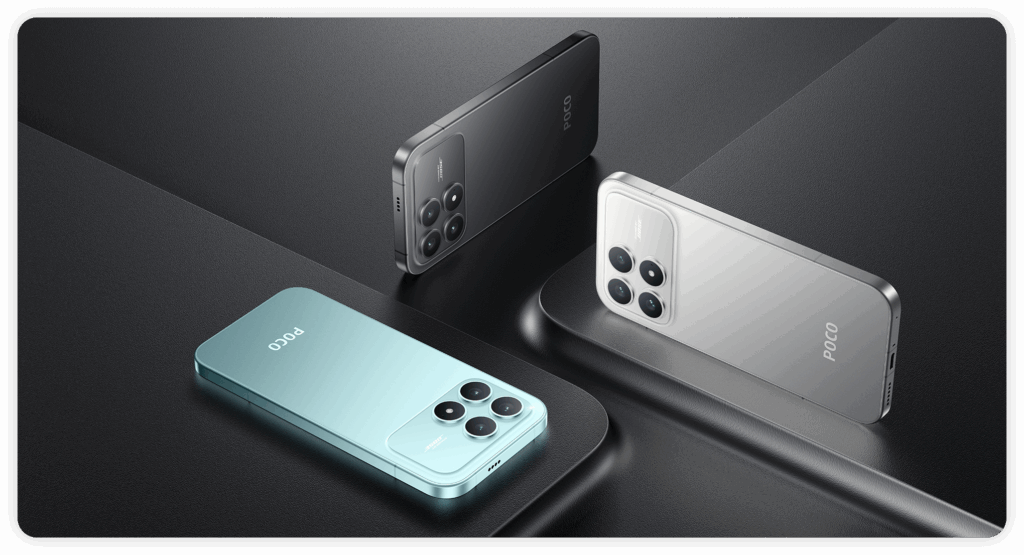

    💎 POCO F7 Pro — a choice for those who want:

    • an excellent screen WQHD+ 3200×1440 (a rarity at this price),
    • a very powerful Snapdragon 8 Gen 3 processor,
    • a large 6000 mAh battery with 90W fast charging,
    • top gaming performance at a lower price,
    • a reasonable price/quality ratio.

    This is the best choice if you care about flagship components but don’t want to exceed 2000 PLN (during promotions).
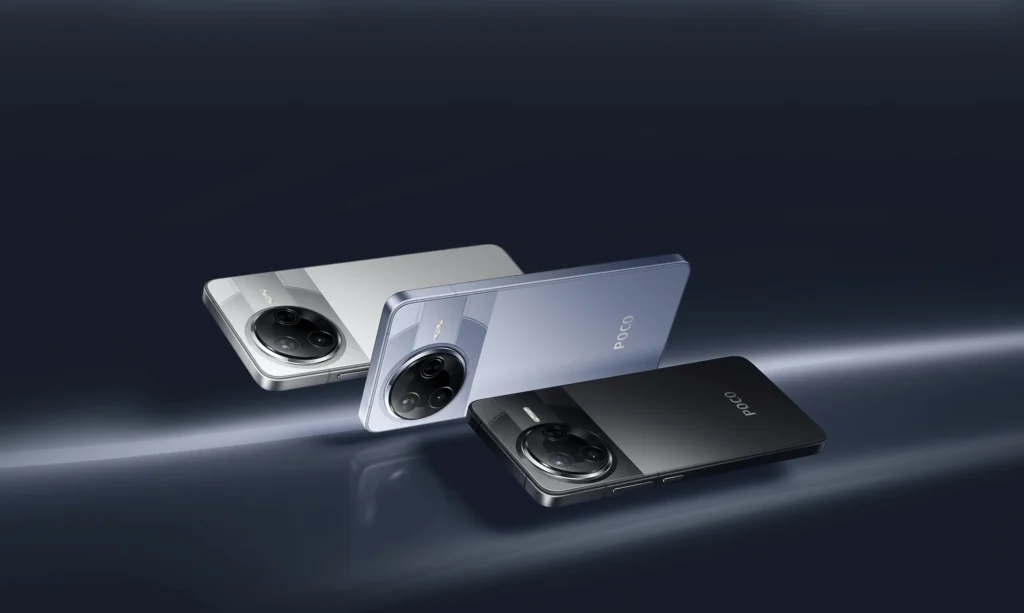

    Final Verdict

    • If you want the best POCO 2025, choose F8 Pro.
    • If you want the best value for money, choose F7 Pro.
    • If you mainly care about a 2K display, F7 Pro wins — F8 Pro has a brighter screen but with a lower resolution.
    • If you care about camera versatility, there’s no discussion — F8 Pro with a telephoto lens definitely wins.

    FAQ — Frequently Asked Questions

    ⭐ 1. Which POCO has a better camera — F7 Pro or F8 Pro?

    Definitely F8 Pro. It has a 50 MP telephoto lens with 2× optical zoom and better stabilization modes.
    F7 Pro only has a main camera + ultra-wide.


    ⭐ 2. Does POCO F7 Pro support eSIM?

    No. It only supports 2× nanoSIM.
    eSIM works exclusively on POCO F8 Pro.


    ⭐ 3. Which model has a better battery?

    The F8 Pro has a larger battery (6210 mAh) and faster 100W charging + reverse charging.
    The F7 Pro has 6000 mAh and 90W.


    ⭐ 4. Which screen is better?

    • F7 Pro — higher WQHD+ resolution and pixel density (ideal for content).
    • F8 Pro — much higher brightness (3500 nits) and better outdoor visibility.

    The choice depends on your priorities.


    ⭐ 5. Is it worth paying extra for the F8 Pro?

    Yes, if you care about the best cameras, eSIM, performance, and charging.
    If you want to spend less and have a great 2K screen — the F7 Pro is still excellent.


    ⭐ 6. Which model performs better in gaming?

    F8 Pro, thanks to the Adreno 830 GPU, is more stable during long sessions and heats up less.
    F7 Pro still delivers flagship performance, but F8 Pro wins in 3D gaming.


    ⭐ 7. Do both models have IP68 waterproofing?

    Yes — both F7 Pro and F8 Pro have IP68 (submersion 1.5 m for 30 min).
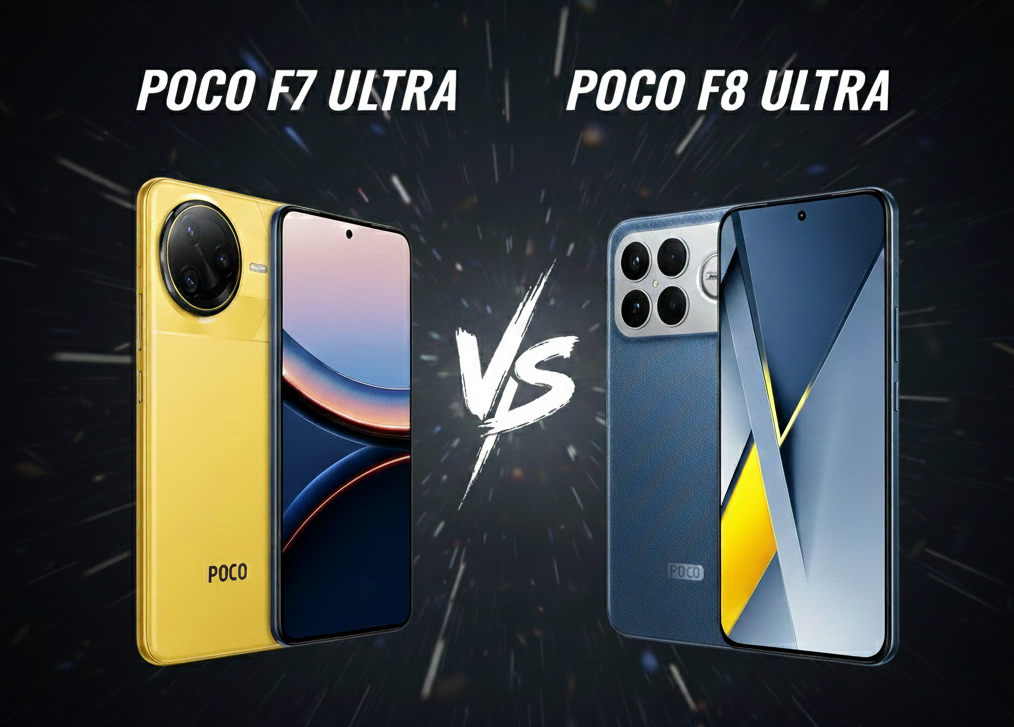


  • Xiaomi Poco F8 Ultra or F7 Ultra – which is better?

    Xiaomi Poco F8 Ultra or F7 Ultra – which is better?

    The new Poco F8 Ultra offers a larger battery (6500 mAh), a better camera (5x periscope), Bose subwoofer speakers, and a top Snapdragon 8 Gen 5 processor. The older F7 Ultra still tempts with a sharper WQHD+ display, faster 120 W charging, and a lower price.

    📊 Comparison Table: Xiaomi Poco F7 Ultra vs F8 Ultra

    ParameterPoco F7 UltraPoco F8 Ultra
    Display6.67″ WQHD+ AMOLED, 120 Hz6.9″ AMOLED 1.5K, 120 Hz
    ProcessorSnapdragon 8 EliteSnapdragon 8 Elite Gen 5
    Camera (rear)50 + 50 (tele 2.5x) + 32 Mpix (ultra)50 + 50 (5x periscope) + 50 Mpix (ultra)
    Camera (front)32 Mpix, FHD video32 Mpix, 4K video
    Battery5300 mAh6500 mAh
    Charging120 W wired, 50 W wireless100 W wired, 50 W wireless, 22.5 W reverse
    AudioStereo 2.0 (Dolby Atmos)Stereo 2.1 + Bose subwoofer
    SystemAndroid 15, HyperOS 2Android 16, HyperOS 3
    Connectivity5G, Wi-Fi 7-ready, Bluetooth 5.4, IR, NFC5G + eSIM, Wi-Fi 7, Bluetooth 6.0, IR, NFC
    Price (PL)1875 zł (12/256 GB), 1999.99 zł (16/512 GB)2699 zł (12/256 GB), 2999 zł (16/512 GB)

    What does the Poco F8 Ultra and F7 Ultra casing look like?

    What distinguishes the Denim Blue version with Bose subwoofer?

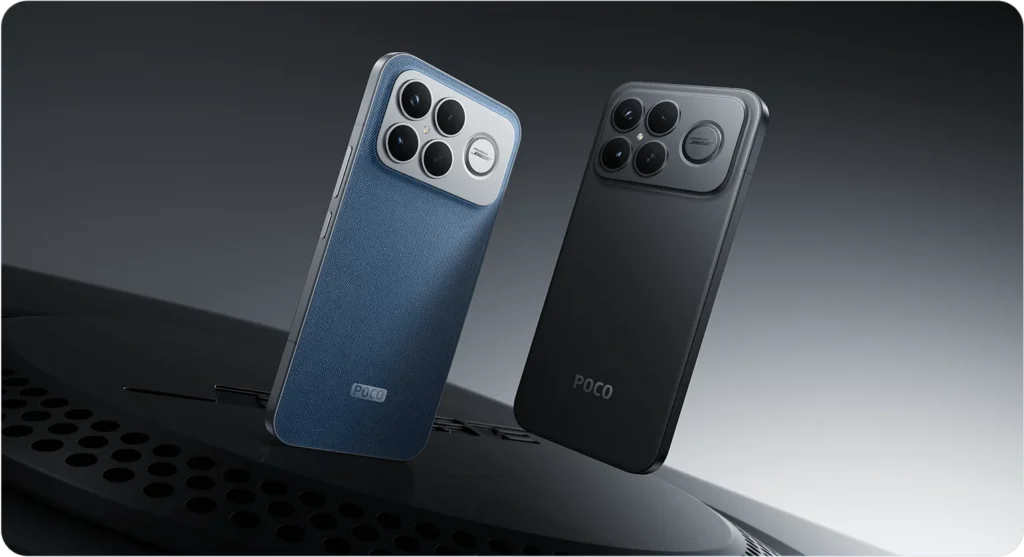
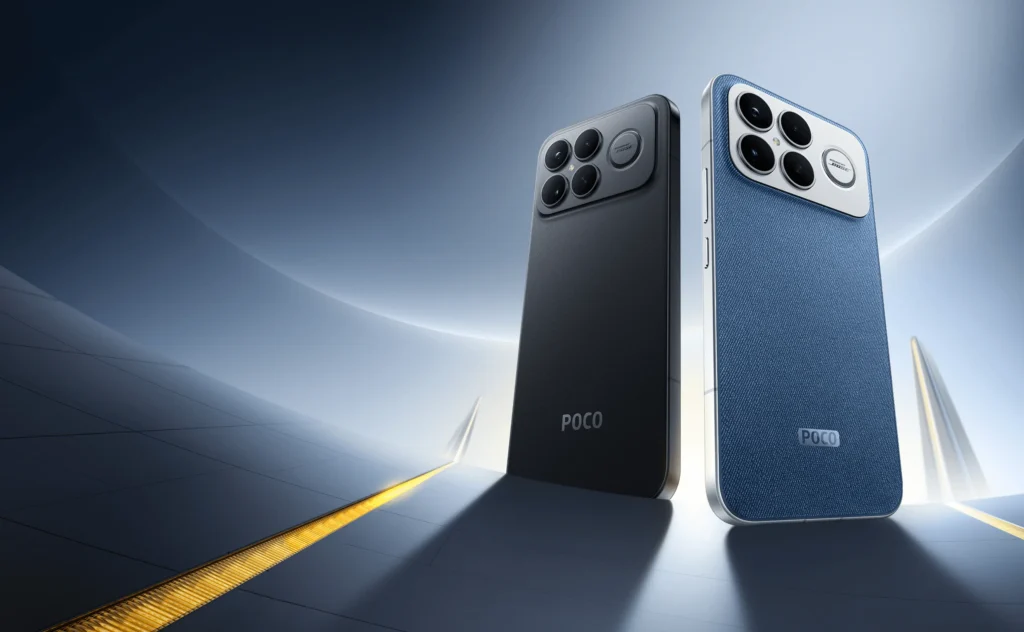
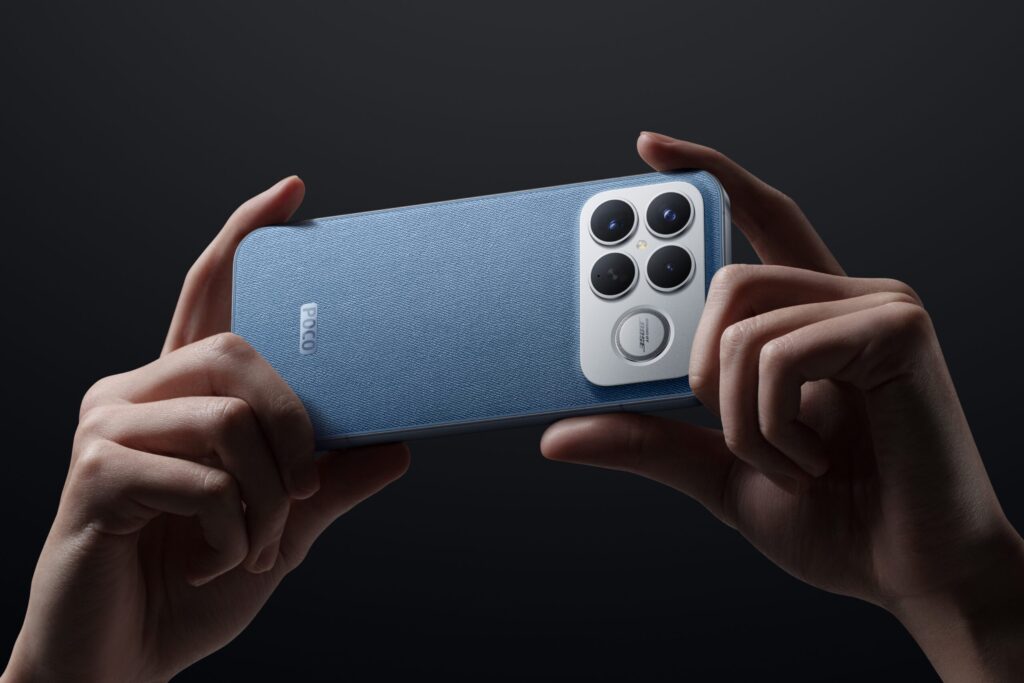
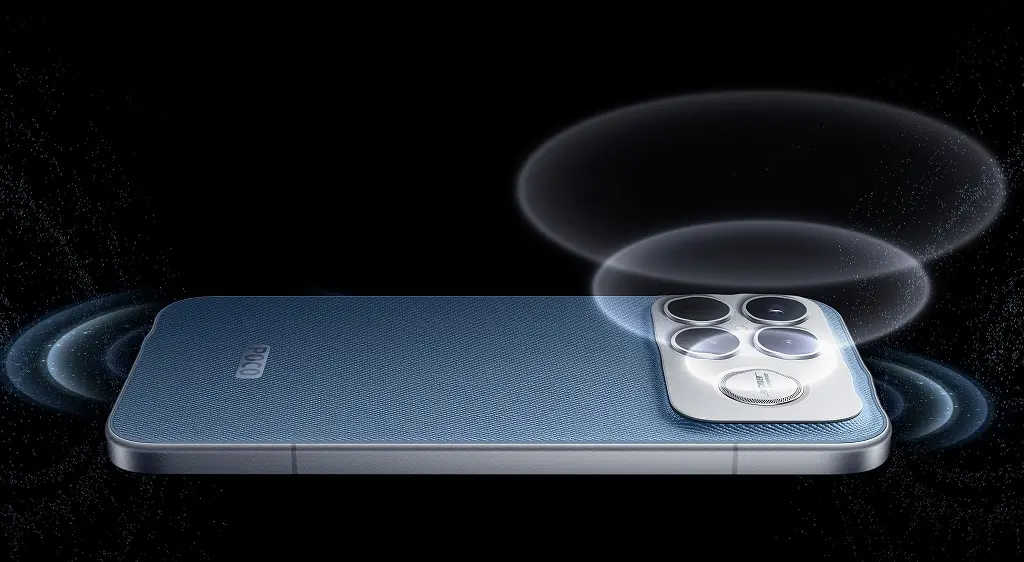
    Poco F8 Ultra in the Denim Blue variant stands out with its vivid, unique design. The back with a texture resembling denim fabric gives the device a stylish yet modern character. It is not real fabric, but the visual and tactile effect is very realistic. At the top of the casing, there is a Bose logo, indicating an unusual addition – a third bass speaker, serving as a subwoofer. As a result, the F8 Ultra offers fuller, deeper sound than most smartphones – especially when playing music and movies without headphones.

    Are both smartphones waterproof?

    Both Poco F7 Ultra and F8 Ultra are designed with everyday durability in mind. Both models feature a metal frame, which ensures structural solidity and an elegant finish. Additionally, they meet the IP68 standard, meaning they are resistant to dirt and immersion in water – up to a depth of 1.5 m for a maximum of 30 minutes. This is a useful feature, especially in the rain, during workouts, or on vacation.

    Dimensions and comfort – which model fits better in the hand?

    ModelDimensions (mm)Weight
    F8 Ultra163.33 × 77.82 × 8.05220 g
    F7 Ultra160.26 × 74.95 × 8.39212 g

    F8 Ultra is slightly larger, but at the same time it is thinner than its predecessor. Thanks to the rounded edges and well-balanced center of gravity, it remains comfortable to use, even with one hand. F7 Ultra is lighter and narrower – more compact, which may be appreciated by those who prefer smaller devices.

    What colors are the models available in?

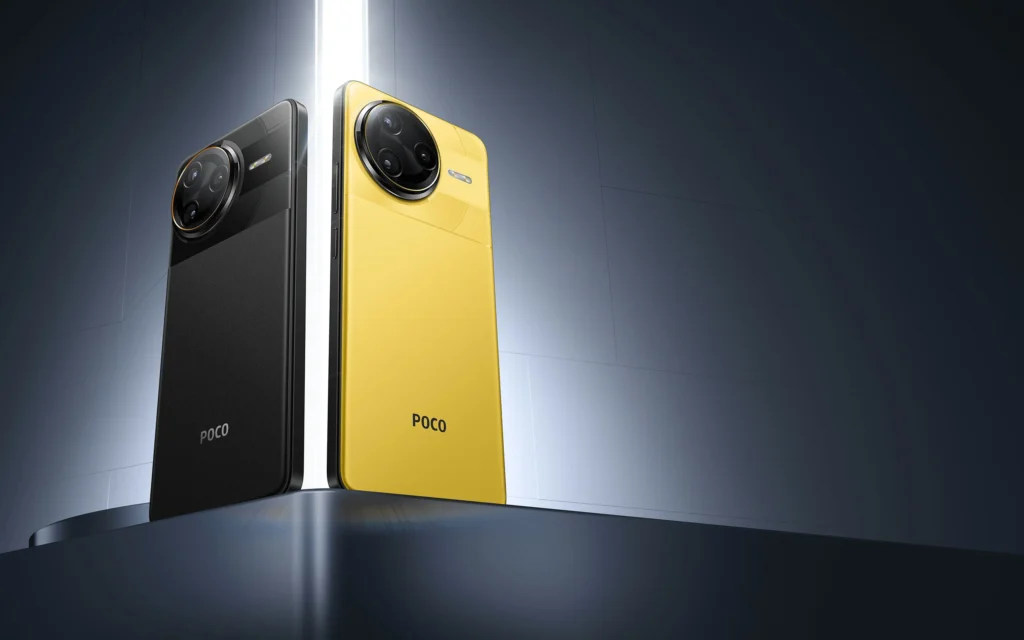
    • Poco F7 Ultra: classic black and vibrant, recognizable yellow
    • Poco F8 Ultra: elegant black, pure white and unique Denim Blue

    The Denim Blue version is the strongest stylistic accent in the POCO lineup – it combines aesthetics with functionality (Bose speaker) and makes the device stand out from the competition.

    ➡️ Check the case for Poco F7 Ultra, if you want to protect the device without losing style.

    ➡️ In the case of F8 Ultra, check out accessories for Poco F8 Ultra – you will soon find all the necessary additions there, such as tempered glass for Poco F8 Ultra or case for Poco F8 Ultra.


    Poco F8 Ultra Display vs F7 Ultra

    Larger screen vs higher resolution – which provides a better effect?

    Poco F8 Ultra features a larger, 6.90-inch AMOLED LTPS display with a resolution of 1200 × 2608 px (~416 ppi). The 19.5:9 aspect ratio makes the screen wider and more spacious, ideal for movies, multitasking, and gaming.

    Poco F7 Ultra has a smaller, but noticeably sharper display: 6.67″ WQHD+ (1440 × 3200 px), which results in ~526 ppi. This provides noticeably better detail, especially when reading small fonts or browsing photos.

    Refresh Rate and Brightness – Are There Any Differences?

    • Both models offer a smooth 120 Hz, HDR10+ and Dolby Vision.
    • F8 Ultra: up to 3500 nits brightness – screen is great visible in sunlight.
    • F7 Ultra: also very bright (up to 3200 nits), but slightly lags behind the newer model.

    In summary:

    •  F7 Ultra – more detailed image, ideal for text work
    • F8 Ultra – larger, brighter screen, great for multimedia

    Processor and Performance – Which Poco is Stronger in Daily Use?

    Snapdragon 8 Elite vs Elite Gen 5 – How Do They Perform in Tests?

    Poco F7 Ultra is powered by the Snapdragon 8 Elite (SM8750-AB) processor with a clock speed of up to 4.32 GHz. At the time of its release, it was one of the most powerful mobile chipsets, offering excellent performance in games and applications.

    F8 Ultra takes it a step further — it features the latest Snapdragon 8 Elite Gen 5 (SM8850-AC) with a clock speed of up to 4.6 GHz and improved energy architecture (3 nm). In benchmarks like AnTuTu, the differences are clear:

    • AnTuTu: F8 Ultra approaches 3.86 million points, F7 Ultra around 2.63 million
    • Geekbench: F8 Ultra has about 24–25% higher single-core and multi-core performance

    RAM and storage – has anything changed?

    Both smartphones offer top configurations:

    • 12 GB or 16 GB LPDDR5X RAM
    • 256 GB or 512 GB UFS 4.1 storage
    • ❌ No microSD card slot – you cannot expand the storage

    System performance, loading applications or games with maximum details – in both cases it works great, but F8 Ultra provides a greater power reserve for the future.

    Summary:


    Camera – is Poco F8 Ultra the new leader in mobile photography?

    What can the main lenses in F8 Ultra and F7 Ultra do?

    Both models have very good, 50-megapixel main cameras with a large aperture (f/1.6–1.7) and optical image stabilization (OIS). This guarantees great photos during the day, good results after dark, and smooth shots in motion.

    However, differences appear with the additional lenses.

    Poco F8 Ultra – a strong advantage in zoom and wide angle

    • Ultrawide angle: 50 Mpix (vs 32 Mpix in F7 Ultra) – better detail and less distortion
    • Periscope telephoto lens: 50 Mpix with 5x optical zoom and OIS (vs 2.5x zoom in F7 Ultra)
    •  Front camera: 32 Mpix – in F8 Ultra it records 4K, in F7 Ultra only 1080p

    F8 Ultra offers better close-ups, more details, and more advanced photographic capabilities. Additionally, thanks to the periscope, photos taken from a distance maintain sharpness and quality.

    F7 Ultra – still very solid optics

    • Great main camera with OIS
    • 2.5x optical zoom with telephoto lens
    • Good daytime and nighttime shots
    • 32 Mpix front selfie

    In summary:

    •  F8 Ultra – better zoom, better wide angle, better video with selfies
    •  F7 Ultra – good main camera, decent telephoto lens

    Battery and charging – which Poco lasts longer, and which charges faster?

    Which one has a larger battery and better battery life?

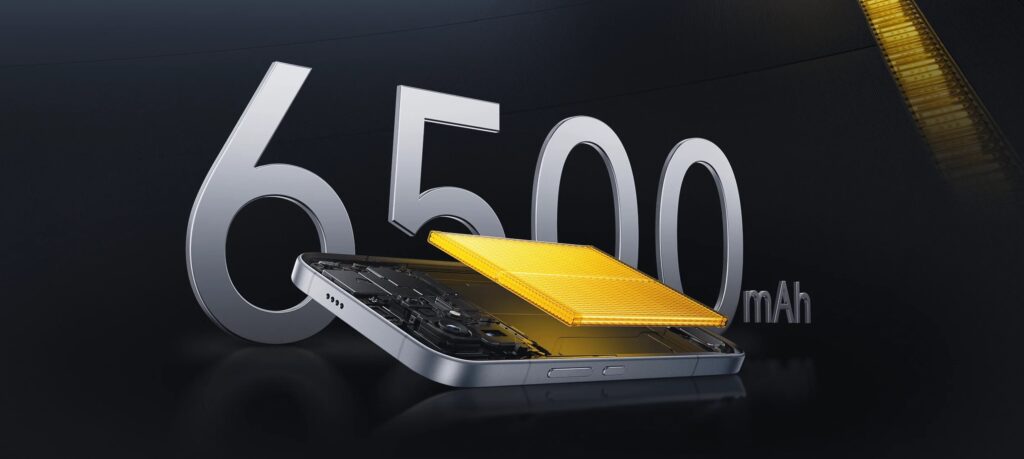
    POCO F8 Ultra clearly wins in terms of capacity – it has a 6500 mAh battery that provides a very long usage time even with intensive use. POCO F7 Ultra has a slightly smaller 5300 mAh battery, which also lasts all day, but offers a shorter screen-on time.

    How do fast charging and wireless technologies look?

    F7 Ultra supports very fast 120 W wired charging (full charge in about 30 minutes), as well as 50 W wireless charging and 10–15 W reverse charging.
    F8 Ultra supports 100 W wired charging50 W wireless charging and 22.5 W reverse charging.

    Which model is better in terms of charging and battery?

    •  F8 Ultra – longer usage time, larger capacity, and stronger reverse charging
    • F7 Ultra – faster wired charging, slightly smaller battery

    ➡️ Need fast charging? Check out the available fast chargers for Poco F8 Ultra, compatible with Power Delivery technology.

    ➡️ For the older model, there are also chargers for Poco F7 Ultra, perfect for fully utilizing its capabilities.


    System and software – does the new Android and HyperOS make a difference?

    Android 16 vs Android 15 – what has changed?

    Poco F8 Ultra debuts with the latest Android 16, complemented by HyperOS 3, which is another version of the Xiaomi overlay created after moving away from MIUI. This system offers better optimization, AI support, smoother animations, and better integration with other Xiaomi devices.

    Poco F7 Ultra uses Android 15 and HyperOS 2, which still provides great smoothness, but may receive one update less in the future.

    What does HyperOS offer in practice?

    • Advanced interface customization
    • Intelligent memory manager
    • Gaming mode and advanced sound options
    • Longer support for F8 Ultra (Android updates + security)

    In everyday use, both phones operate very smoothly. But if you care about longer support and newer AI featuresF8 Ultra is the better future-proof choice.


    Memory and storage – is it worth paying extra for the 512 GB version?

    What memory variants do Poco F8 Ultra and F7 Ultra offer?

    Both models are available in identical configurations:

    • 12 GB or 16 GB RAM (standard LPDDR5X – fast and energy-efficient)
    • 256 GB or 512 GB internal storage (UFS 4.1 – very fast read/write)

    This means that regardless of the model, you can count on top performance in multitasking, gaming, video editing, or storing large files.

    Can memory be expanded with a microSD card?

    ❌ Unfortunately no. Neither the F8 Ultra nor the F7 Ultra have a memory card slot. This means that it’s worth deciding on the appropriate capacity right away – if you take a lot of photos, record 4K video, or use many offline games or applications, the 512 GB variant will be a safer choice.

    Brief comparison:

    • Both models offer fast memory and plenty of RAM
    • No microSD – the choice of capacity matters right away
    • F8 Ultra with 512 GB is a sensible investment “for years”

    Connectivity and sound – which Poco has better audio and eSIM?

    Do both models have 5G, Wi-Fi 7, and modern ports?

    Yes – both Poco F8 Ultra and F7 Ultra support the latest connectivity standards:

    • 5G dual SIM (supports two nanoSIM cards simultaneously)
    • Wi-Fi 7 – the fastest standard, backward compatible with Wi-Fi 6 and 5
    • Bluetooth:
      • F8 Ultra: 6.0
      • F7 Ultra: 5.4
    • NFC – for contactless payments on both
    • USB-C:
      • F8 Ultra: USB 3.2
      • F7 Ultra: USB 2.0
    • F8 Ultra additionally supports eSIM – a convenient solution for travelers

    Does the sound differ as well?

    Definitely yes! Poco F8 Ultra has an advantage in the audio system:

    • F8 Ultra: the first smartphone with triple 2.1 speaker setup – two stereo + Bose subwoofer
    • F7 Ultra: stereo with Dolby

    Which Poco Ultra is worth choosing?

    Poco F8 Ultra is a more modern, more efficient, and more multimedia-oriented model:

    ✅ larger battery (6500 mAh)
    ✅ more powerful processor (Snapdragon 8 Elite Gen 5)
    ✅ better additional cameras (5x zoom, 50 Mpix ultra wide)
    ✅ higher screen brightness and Bose subwoofer
    ✅ eSIM, USB 3.2, longer software support

    On the other hand, Poco F7 Ultra still has its strengths:

    ✅ sharper screen (WQHD+)
    ✅ faster charging (120 W)
    ✅ solid camera set and great design
    ✅ often lower price (especially the 12/256 GB version)

    In summary:

    • Choose Poco F8 Ultra if you care about maximum performance, cameras, and sound
    • Opt for F7 Ultra if you want a great flagship at a better price and with a sharper screen

    Frequently Asked Questions about Poco F8 Ultra and Poco F7 Ultra


    What screen does the Poco F8 Ultra have and is it better than the F7 Ultra?

    • The Poco F8 Ultra has a larger 6.9″ AMOLED screen (~1.5K) and very high brightness – up to 3500 nits.
    • The Poco F7 Ultra has a sharper 6.67″ WQHD+ display (526 ppi).
    • Choose the F8 Ultra if visibility is important to you, or the F7 Ultra if you value image sharpness.

    Does the Poco F8 Ultra have better sound than the F7 Ultra?

    • Yes – the F8 Ultra offers a unique 2.1 speaker system with a Bose subwoofer.
    • This is the first Poco smartphone with a dedicated subwoofer.

    Does the Poco F8 Ultra have eSIM and USB 3.2?

    • Yes, the F8 Ultra supports eSIM and fast USB-C 3.2.
    • The F7 Ultra does not offer eSIM and uses a USB 2.0 port.

    Which model has a better camera: Poco F7 Ultra or F8 Ultra?

    • F8 Ultra has 3 cameras 50 Mpix (main, ultra wide, and 5x tele), each with OIS.
    • F7 Ultra has a weaker ultra-wide (32 Mpix) and a 2.5x telephoto lens.
    • F8 Ultra wins in terms of zoom, detail, and night shots.

    How long does the battery last in Poco F8 Ultra and F7 Ultra?

    • F8 Ultra has a larger 6500 mAh battery and lasts noticeably longer.
    • F7 Ultra with 5300 mAh charges faster (120 W), but offers shorter usage time.

    Is it worth buying Poco F8 Ultra in 2025?

    • Yes, Poco F8 Ultra is one of the most advanced smartphones in its class. Great performance, a triple 50 Mpix camera, and a Bose subwoofer make it still a very cost-effective choice.
  • Oppo Find X9 Pro vs Vivo X300 Pro

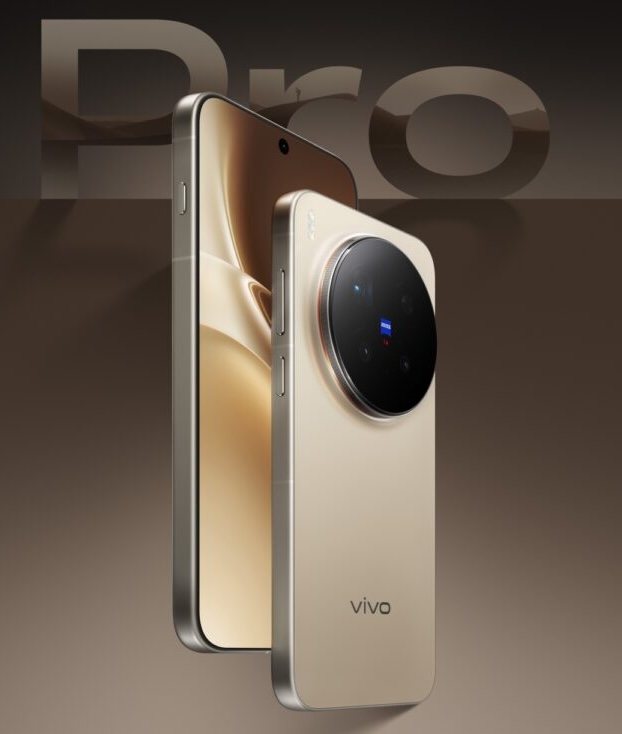
    Oppo Find X9 Pro vs Vivo X300 Pro

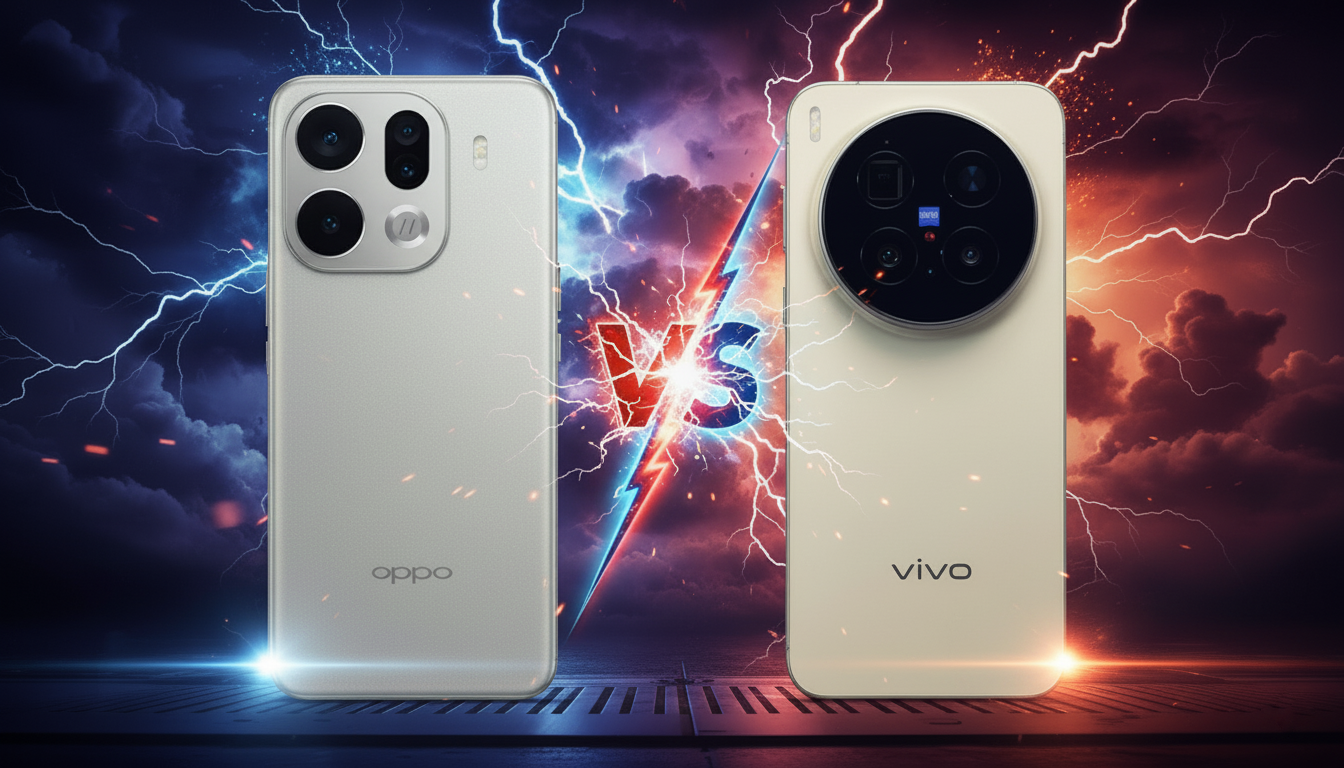
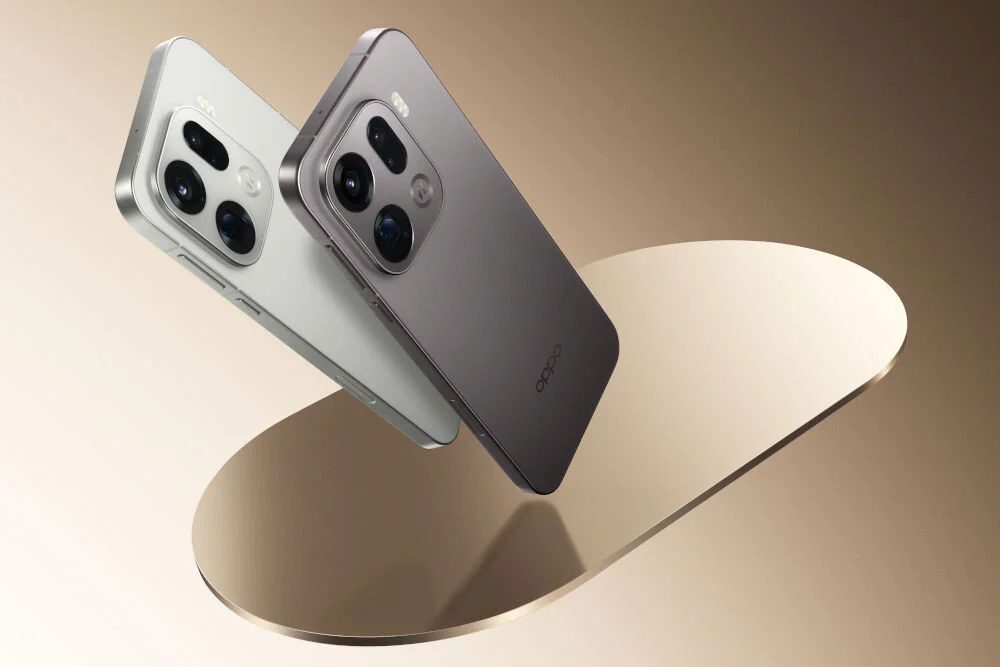
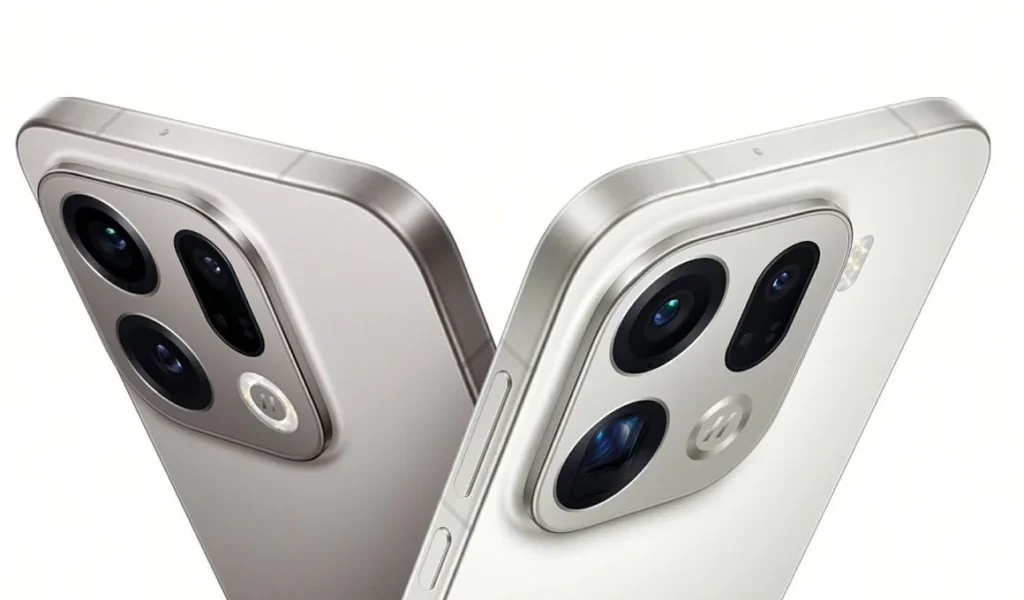
    Oppo Find X9 Pro vs Vivo X300 Pro — which is better?

    If you primarily care about the best battery, record screen brightness, and powerful zoom, Oppo Find X9 Pro will be the better choice.
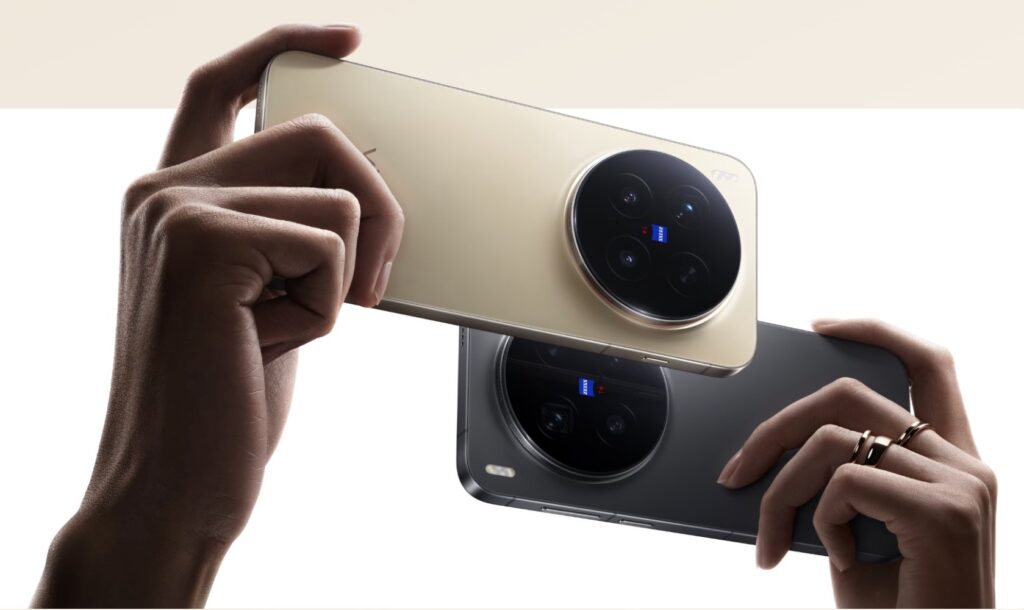
    On the other hand, if your priorities are the best optical close-ups, more natural Zeiss colors, and advanced gimbal stabilization, Vivo X300 Pro takes the advantage.

    Both models are flagship devices of 2025 with very similar performance — the same Dimensity 9500 processor, identical 16/512 GB memory, excellent LTPO 120 Hz screens, and extremely powerful camera setups of 50 MP + 50 MP + 200 MP. The differences come down to brand philosophy:

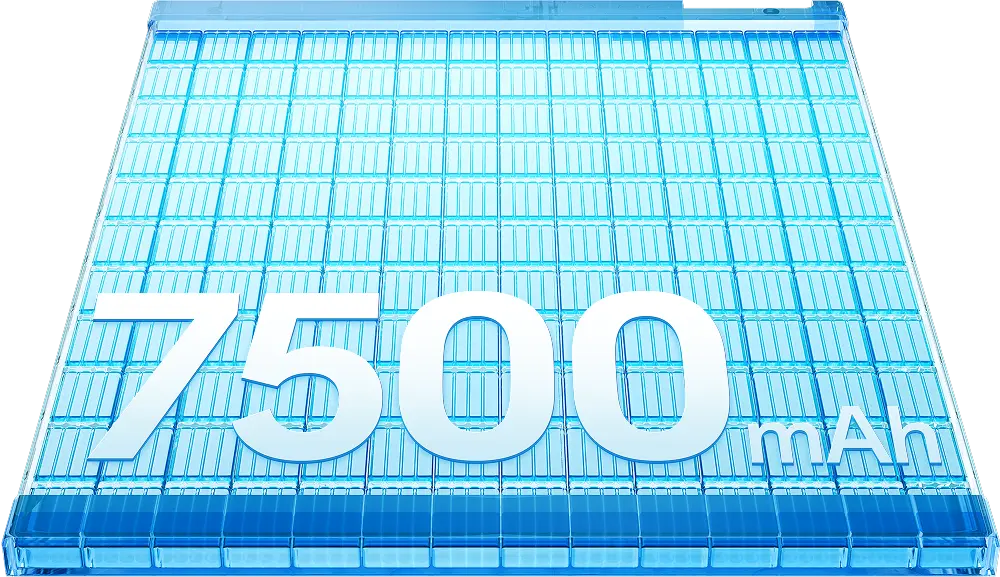
    • Oppo Find X9 Pro — larger 7500 mAh battery, brighter screen (up to 3600 nits), collaboration with Hasselblad, zoom up to 200× (with converter).
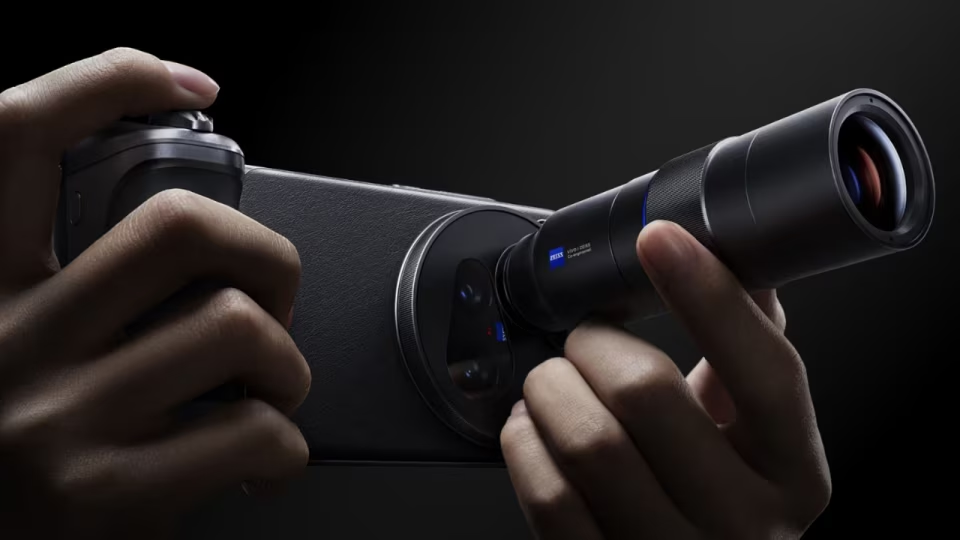
    • Vivo X300 Pro — better Zeiss APO periscope telephoto lens (~3.7×), gimbal stabilization, perfect sharpness at zooms, and Zeiss colors.

    What does this mean in practice?

    • For professional mobile photography and zoomsVivo X300 Pro.
    • For daily use, multimedia, bright screen, and long battery lifeOppo Find X9 Pro.

    Comparison Table: Oppo Find X9 Pro vs Vivo X300 Pro

    CategoryOppo Find X9 ProVivo X300 Pro
    Display6.78″ AMOLED LTPO, 2772×1272 px, 3600 nits, 120 Hz6.78″ AMOLED LTPO, 2800×1260 px, high brightness, 120 Hz
    ProcessorMediaTek Dimensity 9500 (3 nm)MediaTek Dimensity 9500 (3 nm)
    RAM / Storage16 GB LPDDR5X / 512 GB UFS 4.116 GB LPDDR5X / 512 GB UFS 4.1
    Rear Camera50 MP (main) + 50 MP (ultra) + 200 MP tele 3× + mono sensor50 MP (main gimbal OIS) + 50 MP (ultra) + 200 MP tele ~3.7× Zeiss APO
    Front Camera50 MP AF50 MP AF
    Zoom3× optical, 10× optical with converter, up to 200× digital~3.7× optical, ~8.7× with converter, up to 100× digital
    Video4K 120 fps (Dolby Vision), 1080p 240 fps4K 120 fps (Dolby Vision), 1080p 240 fps
    Battery7500 mAh, 80 W, 50 W wireless.6510 mAh / 5440 mAh (EU), 90 W, 40 W wireless.
    ResistanceIP66 / IP68 / IP69IP68 / IP69
    SystemColorOS 16 (Android 15/16)OriginOS 6 (Android 16)
    Dimensions / Weight161.3 × 76.5 × 8.3 mm / 224 g161.98 × 75.48 × 7.99 mm / 226 g
    Price in Polandapprox. 5499 PLN approx. 5999 PLN

    Cameras

    Oppo Find X9 Pro – Hasselblad and 200× zoom

    Oppo Find X9 Pro focuses on the duo Hasselblad + 200 MP telephoto lens, offering a set for those who enjoy zoom and versatility:

    • 50 MP main (Sony LYT-828, f/1.5, OIS) – excellent quality, natural colors, high detail.
    • 50 MP ultra-wide (120°, AF) – sharp macro photos and wide shots.
    • 200 MP periscope 3× (f/2.1, OIS) – enormous resolution allows for hybrid zoom up to 120×, and with the optional Hasselblad teleconverter, up to 10× optical and 200× digital.
    • Danxia Sensor (mono) – better color analysis and black-and-white mode photos.

    Hasselblad modes (Natural Colour, XPan) give photos a distinctive style, and Night Mode in the Find X9 Pro is one of the best on the market.

    Who is it for?
    ➡️ For those who want powerful zoom and cinematic Hasselblad colors.

    Vivo X300 Pro – Zeiss, periscope APO and gimbal stabilization

    Vivo X300 Pro is more “photographic” in a professional sense — it focuses on sharpness, optics, and colors:

    • 50 MP main (Sony LYT-828, f/1.57) with gimbal stabilization OIS CIPA 5.5 — incredible stability for night photos and videos.
    • 50 MP ultra-wide with AF — also great for macro.
    • 200 MP tele ~3.7× Zeiss APO (1/1.4”, f/2.67) – a class of its own:
      • sharper than Oppo at high zooms,
      • no aberrations (thanks to APO),
      • with a Zeiss teleconverter, it even reaches a 1600 mm equivalent.

    Zeiss colors are more natural and cinematic, and Zeiss portrait modes (Biotar, Cine-Flare, portrait bokeh) add character to photos.

    For whom?
    ➡️ For those who want the best optical quality and perfect close-ups.

    Camera Summary

    • Best zoom and versatility: Oppo Find X9 Pro
    • Best telephoto quality and professional optics: Vivo X300 Pro
    • Best stabilization and night: Vivo X300 Pro
    • Best panoramic photos and Hasselblad style: Oppo Find X9 Pro

    Display

    Oppo Find X9 Pro – one of the brightest screens on the market

    Oppo aims for the “wow” effect.
    The Find X9 Pro screen is almost a benchmark OLED panel for those who often use their smartphone outdoors:

    • 6.78″ AMOLED LTPO 120 Hz
    • Resolution 2772×1272 px (1.5K)
    • Record brightness of 3600 nits – one of the brightest screens of 2025
    • Ultra-thin bezels 1.15 mm
    • High refresh rate of 120 Hz with LTPO (1–120 Hz)
    • Crystal Shield Glass + Gorilla Glass Victus 2

    The Oppo screen is perfect for media, gaming, and photos, especially when using the phone in full sunlight — the brightness makes a huge difference.

    Vivo X300 Pro – perfectly balanced AMOLED with thin bezels

    Vivo also uses a top-tier OLED panel but focuses on color accuracy and design:

    • 6.78″ AMOLED LTPO 120 Hz
    • Resolution 2800×1260 px (1.5K)
    • Frames only 1.1 mm – one of the thinnest in smartphones
    • 100% DCI-P3 coverage
    • Very high brightness HDR10+
    • High resistance tempered glass

    The image on Vivo is slightly more natural, with excellent contrast and perfect black — especially at an angle, it is clear that this is a premium class panel.

    Screen Summary

    • Highest brightness: Oppo Find X9 Pro
    • Thinnest frames: Vivo X300 Pro
    • Best HDR and colors: close, light handling Vivo
    • Usability in sunlight: Oppo > Vivo

    Both displays are absolutely top-notch, but Oppo slightly wins in “power,” while Vivo excels in “aesthetics.”


    Performance and components

    The same processor – top performance in both models

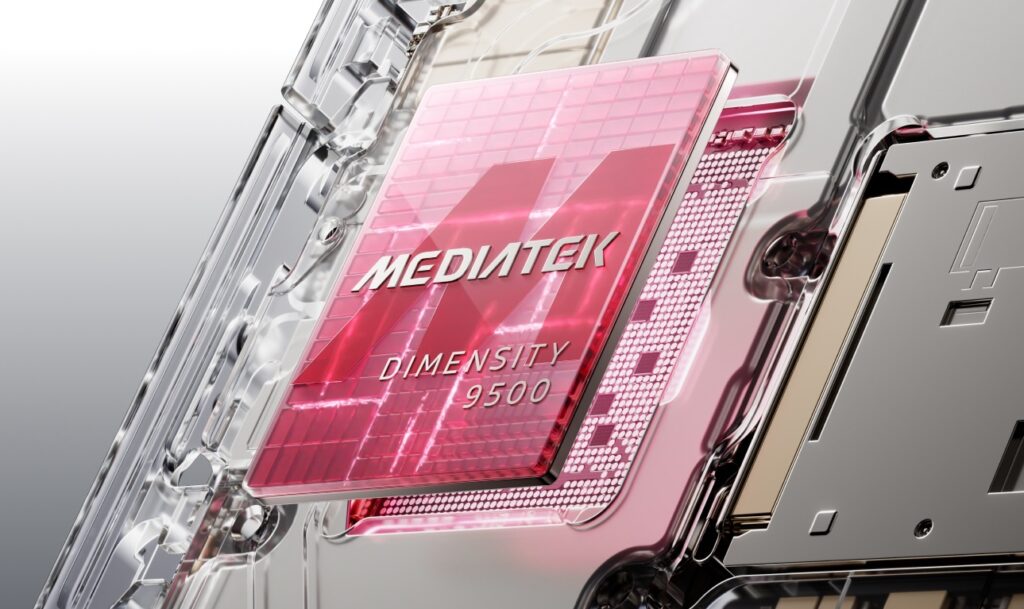
    Oppo Find X9 Pro and Vivo X300 Pro use the identical, flagship processor MediaTek Dimensity 9500 (3 nm). This chip is designed for computational photography, AI, and gaming performance, achieving levels comparable to high-end Snapdragon.

    Key common features:

    • 8 cores, including a super-efficient Cortex-X
    • High graphics power
    • Very low power consumption (3 nm technology)
    • Great stability even during long photo/video sessions
    • Perfect gaming performance at 120 Hz

    In practice – you can’t “choose the faster one”, as both are equally powerful.

    Memory and Fluidity

    Here we also have a draw:

    • 16 GB RAM LPDDR5X
    • 512 GB UFS 4.1
    • Very fast I/O
    • Ability to expand RAM by an additional 8–16 GB (virtually)

    In everyday use, both phones operate extremely fast, without app reloads, with perfect animation fluidity.


    Cooling and Stability

    Both designs utilize advanced heat dissipation systems:

    • Oppo: large vapor chamber + graphite layers
    • Vivo: expanded cooling system + AI optimizations

    Effect?
    Even when recording 4K 120 fps or gaming, the phones do not overheat and do not lose performance.


    Connectivity and Accessories – Full Top Specification

    Both the Find X9 Pro and X300 Pro offer everything expected from a flagship in 2025:

    • 5G (SA/NSA)
    • Wi-Fi 7
    • Bluetooth 6.0 LE Audio
    • NFC
    • USB-C 3.2 Gen1
    • Stereo speakers
    • Precise haptics
    • IR blaster (TV/air conditioning remote)

    These are complete premium smartphones without any compromises.


    Performance Summary

    • Computing power: draw
    • System smoothness: draw
    • Gaming: draw
    • Stability during long recordings: lightweight Vivo handling thanks to the gimbal
    • Cost-effectiveness in terms of power: both at the highest level

    Battery

    Oppo Find X9 Pro – the largest battery in its class

    Oppo wins in capacity – it’s one of the longest-lasting flagships of 2025.

    Key numbers:

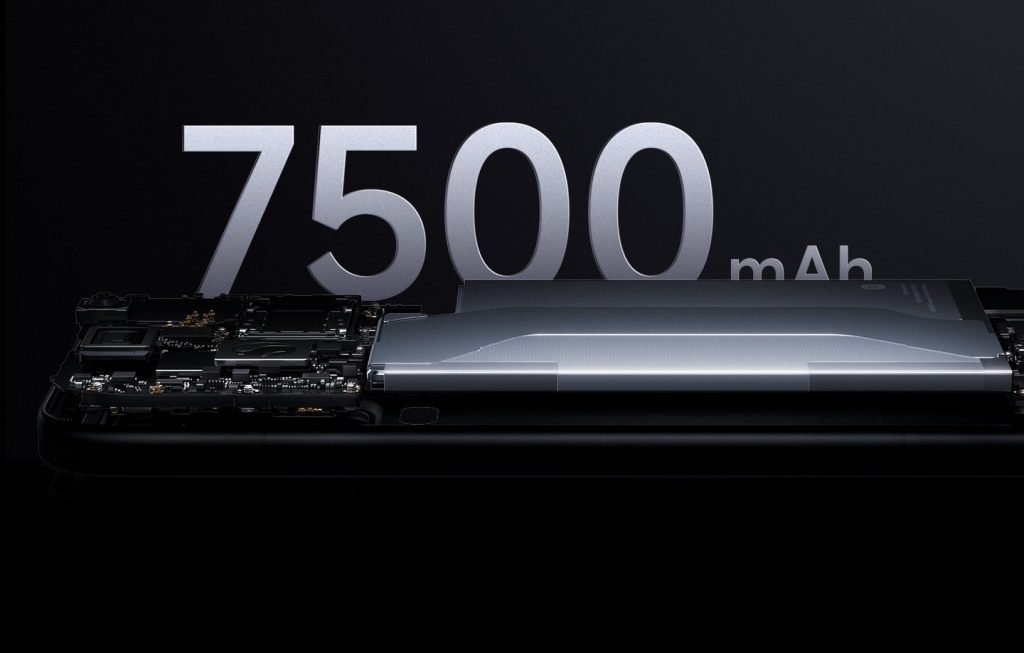
    • 7500 mAh – huge battery
    • 80 W wired charging
    • 50 W wireless charging
    • approx. 10 W reverse charging
    • Full charge: ~40 minutes

    In practice, Oppo lasts 1.5–2 days of use, even with a bright 120 Hz screen.
    It’s a great choice for those who travel a lot, take photos, and want to reach for the charger less often.

    Vivo X300 Pro – fast charging + large battery (though smaller than Oppo)

    Vivo has a smaller battery, but still above average:

    • 6510 mAh (global version)
    • 5440 mAh (EU version)
    • 90 W wired charging
    • 40 W wireless charging
    • 10 W reverse charging
    • Full charge: ~30 minutes

    The difference compared to Oppo is about 13–20%, but Vivo makes up for it with faster charging and intelligent energy management (OriginOS + LTPO 1 Hz).

    Battery life in practice

    • Oppo Find X9 Pro: 7–9h SOT → comfortable 1.5–2 days
    • Vivo X300 Pro: 6–8h SOT → 1–1.5 days

    Both phones are durable, but Oppo has a real advantage – the difference is particularly noticeable with the bright screen and 4K/120 fps photos.

    Resistance and Water Resistance

    Both models offer top-level protection:

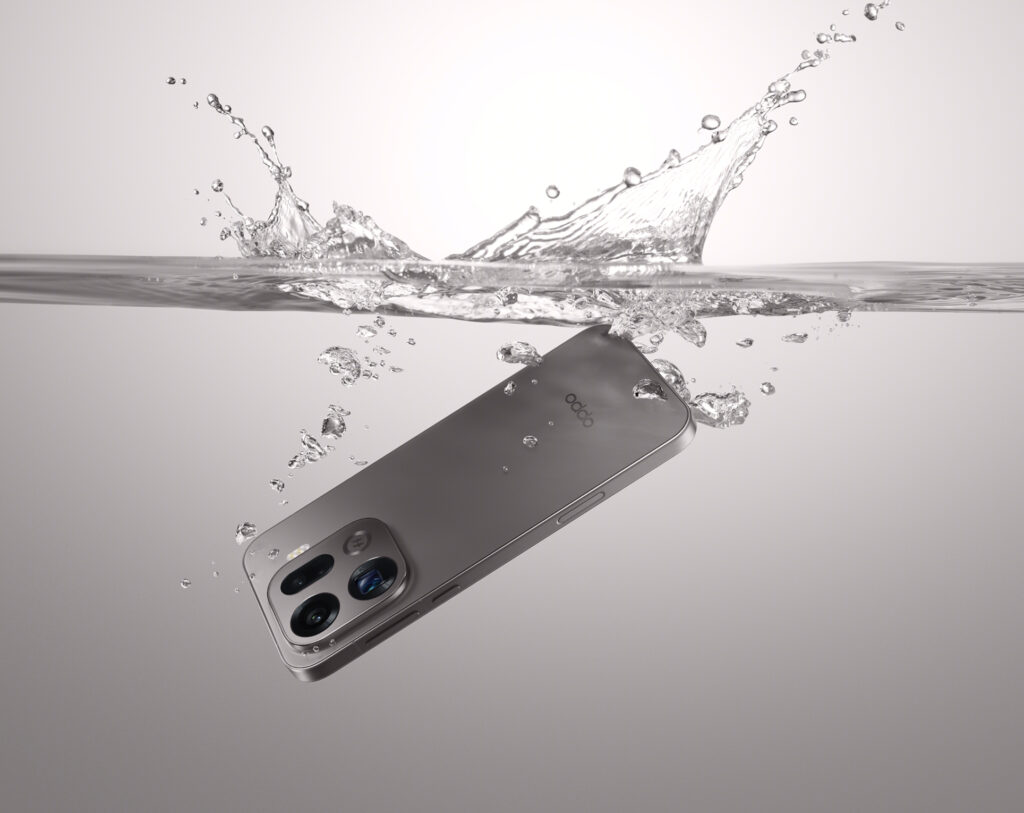
    • IP68 + IP69 (Vivo and Oppo)
    • Oppo additionally has a certificate of IP66 – resistance to water jets under pressure

    This is a rare combination — the phones are resistant even to heavy rain, dust, or shallow immersion.

    Battery Summary

    • Longest Battery Life: Oppo Find X9 Pro
    • Fastest Charging: Vivo X300 Pro
    • Best Water Resistance: tie (Oppo has additional IP66)
    • Most “Hassle-Free” in Daily Use: Oppo

    Software

    ColorOS 16 on Oppo Find X9 Pro – stability, AI, and refined animations

    Oppo focuses on a mature, refined system ColorOS 16, based on Android 15 (with a quick transition to Android 16).
    This overlay is known for:

    • very smooth animations,
    • intelligent energy management Trinity Engine,
    • great customization (themes, AOD, icons),
    • advanced AI features:
      • AI Writer (text summarization, post generation),
      • AI Clean-up (removing objects from photos),
      • AI Eraser video.

    ColorOS also offers Touch to Share – quick file transfer between a laptop and a phone, as well as advanced privacy modes (Private Safe, App Lock).

    This system is for those who want an intuitive, fast, and stable overlay with strong AI support.

    OriginOS 6 on Vivo X300 Pro – modern design, Zeiss, and PC ecosystem

    Vivo has implemented a completely new, global version of OriginOS 6 on Android 16.
    This is one of the most advanced overlays of 2025.

    Key features:

    • minimalist, elegant interface,
    • very smooth 120 Hz animations,
    • Office Kit – excellent collaboration with the computer:
      • Task Handoff (continuing work on PC),
      • Screen Mirroring,
      • dragging files between the phone and laptop,
    • One-Tap Transfer – quick data transfer between Vivo and iPhone,
    • wide integration with Zeiss color profiles in the camera.

    OriginOS is visually more modern and more “impressive” than ColorOS, but equally fast and lightweight.

    Updates and Support

    Both models offer a similar range of updates:

    • 3 versions of Android
    • 4–5 years of security patches

    This means that the phones will be supported until 2029–2030.

    Software Summary

    • Most refined UI: ColorOS 16
    • Most modern and impressive: OriginOS 6
    • Best collaboration with computer: Vivo (Office Kit)
    • Most AI tools: Oppo

    Price and Availability

    Oppo Find X9 Pro – price in Poland

    • Version 16 GB / 512 GB
    • Price: 5,499 PLN

    Vivo X300 Pro – price in Poland

    • Version 16 GB / 512 GB
    • Price: 5,999 PLN

    Which smartphone is more cost-effective?

    If you care solely about the price-to-performance ratio, the more cost-effective option is:

    • Oppo Find X9 Pro – usually cheaper (from 5,499 PLN), and offers a larger battery of 7500 mAh, record screen brightness of 3600 nits, and a strong 200 MP zoom.

    On the other hand:

    • Vivo X300 Pro for 5,999 PLN is a better choice if you care about the highest quality telephoto photos, gimbal stabilization, and distinctive Zeiss colors.

    Summary:

    Best camera and optical zoom: Vivo X300 Pro

    Best price/quality: Oppo Find X9 Pro


    FAQ – frequently asked questions

    Which phone takes better photos – Oppo Find X9 Pro or Vivo X300 Pro?

    Vivo X300 Pro offers better telephoto quality thanks to the 200 MP Zeiss APO ~3.7×, gimbal stabilization, and natural Zeiss colors. Oppo wins with digital zoom, offering up to 200× with a converter.


    Which smartphone has a better battery?

    Oppo Find X9 Pro, with its massive 7500 mAh battery, lasts noticeably longer than the Vivo X300 Pro (5440–6510 mAh). It’s the best choice for those who travel a lot or use their phone intensively.


    Which screen is better – Oppo or Vivo?

    Oppo Find X9 Pro has a brighter screen up to 3600 nits, giving it an advantage in sunlight. Vivo X300 Pro has slightly narrower bezels and more natural colors, but the differences are minor.


    How do they perform in daily efficiency?

    The performance is practically identical, as both smartphones use the MediaTek Dimensity 9500, 16 GB of RAM, and UFS 4.1. In practice, it’s hard to feel any difference.


    Which model is more cost-effective?

    The most cost-effective is the Oppo Find X9 Pro (starting from 5,499 PLN).
    Vivo X300 Pro for about 5,999 PLN only wins if you care about the best telephoto lens and gimbal stabilization.


    Are both phones waterproof?

    Yes — both have IP68 and IP69 certifications, which means they are resistant to immersion, dust, and high-pressure water jets.


    Is it worth paying extra for the Vivo X300 Pro?

    Yes, if your priority is telephoto photography, optical zoom, and gimbal stabilization.
    If not – Oppo Find X9 Pro offers a better price/performance balance.

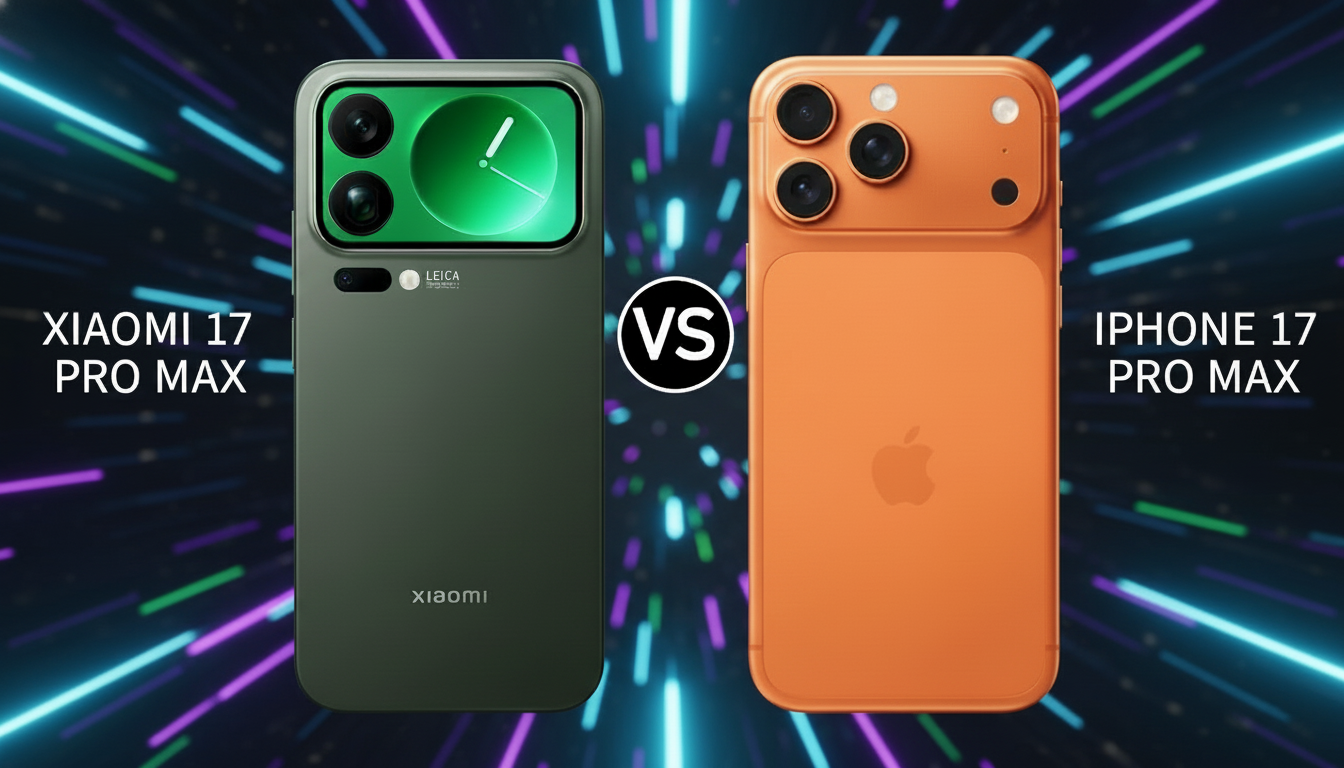
  • Xiaomi 17 Pro Max vs iPhone 17 Pro Max

    Xiaomi 17 Pro Max vs iPhone 17 Pro Max

    Xiaomi 17 Pro Max offers a larger battery (7500 mAh), a brighter screen, and a lower price, while the iPhone 17 Pro Max excels in photo quality, system stability, and long update support.
    In short: Xiaomi is a powerful smartphone for demanding users seeking maximum performance, while the iPhone 17 Pro Max is the choice for those who value perfect integration and reliability.

    Number jump – why did Xiaomi skip from series 15 straight to 17?

    Xiaomi surprised the industry, skipping series 16 and presenting flagship models Xiaomi 17, 17 Pro, and 17 Pro Max right away. For many, this is just a marketing trick, but in reality, there is a specific plan behind it — both technological and image-related.

    Does Xiaomi want to compete with the iPhone 17 even in name?

    According to sources Android Authority and PhoneArena, the manufacturer deliberately skipped number 16 to align with the iPhone’s numbering. This way, the Xiaomi 17 Pro Max becomes a natural rival to the iPhone 17 Pro Max — both in name and in the premium class.
    This is a symbolic but effective move: it shows that Xiaomi does not want to be “a generation behind” Apple, but to play in the same league.

    Change of strategy and the start of the “new era” of HyperOS

    Xiaomi describes the series 17 as “the beginning of a new era” – it is the first full generation designed for the HyperOS 3 system, completely different from MIUI. This means a more cohesive user experience, better optimization, and longer system support.
    According to Android Authority, the company wants to “build a bridge between the mobile ecosystem and the smart home” – HyperOS connects smartphones, watches, tablets, and IoT.

    💬 What does this mean for the user?

    • Xiaomi 17 Pro Max is not just the successor to the 15, but a redefinition of the flagship line.
    • The manufacturer has introduced a new design language, better cooling, larger batteries, and an improved camera to distinguish itself from its predecessors.
    • The numerical leap is also a marketing message: “we are ready to compete with Apple on equal terms.”

    📈 In short:
    Xiaomi jumped from series 15 to 17 not by accident. It’s a move that aims to show that the brand has matured into a “full-fledged competitor to Apple,” rather than just a cheaper alternative.


    📊 Comparison table – Xiaomi 17 Pro Max vs iPhone 17 Pro Max

    ParameterXiaomi 17 Pro MaxiPhone 17 Pro Max
    SoC (chipset)Snapdragon 8 Elite Gen 5 (3 nm)Apple A19 Pro
    RAM12 GB or 16 GB LPDDR5X12 GB LPDDR5X
    Built-in storage256/512 GB or 1 TB (UFS 4.1)256/512 GB, 1 TB or 2 TB
    Display6.9″ LTPO AMOLED, 120 Hz, HDR (up to 3500 nits)6.9″ OLED Super Retina XDR, 120 Hz, HDR (up to 3000 nits)
    CamerasRear: 50 MP (f/1.7) + 50 MP (tele 5× f/2.6) + 50 MP (ultra-wide) Front: 50 MPRear: 48 MP (f/1.78) + 48 MP (f/2.2) + 48 MP (tele 4× f/2.8) Front: 18 MP
    Battery7500 mAh, charging: 100 W wired, 50 W wireless4823 mAh (regular SIM) or 5088 mAh (eSIM), charging: 40 W
    SystemXiaomi HyperOS 3 (Android 16)iOS 26
    Starting priceapprox. 1088 USD (-4700 PLN, import)6299 PLN (256 GB)

    Performance – computing power of two flagships

    Snapdragon 8 Elite Gen 5 in Xiaomi 17 Pro Max

    Xiaomi 17 Pro Max uses the new Snapdragon 8 Elite Gen 5 chipset, which according to leaks operates in several devices from the 17 series with a clock speed of up to ~4.6 GHz.
    In Geekbench 6.4/6.5 tests, scores of around 3,705–3,831 points (single-core) and 11,228–11,525 points (multi-core) for devices with this chipset appear, which is confirmed by leaks.
    However, it should be noted — these are preliminary results / leaks, so they may change during official tests.

    Apple A19 Pro in iPhone 17 Pro Max – optimization and stability

    The iPhone 17 Pro Max is powered by the Apple A19 Pro processor. In Geekbench 6 tests, according to sources, the results were: ≈ 3,871 points (single-core) and ≈ 9,968 points (multi-core)
    This data is officially published by Tom’s Guide and Geekbench Browser, making it more reliable than leaks in the case of the competitor.

    🎮 Conclusions in the context of usage and gaming

    • Xiaomi demonstrates very high multi-core power — the chipset “threatens” to be close to Apple in multi-threaded performance, which gives it an advantage in demanding games or multitasking tasks.
    • The iPhone, on the other hand, shows an advantage in single-threaded tests and offers great energy efficiency and stability during prolonged use — which may mean fewer performance drops in real-time.
    • Since Xiaomi’s results mainly come from leaks, it’s worth approaching such a statement with some caution.

    ➡ In summary: both models are absolutely flagship in terms of computing power — the differences are subtle and depend on the specific application. If you care about “maximum number of cores” and synthetic tests — Xiaomi may be the favorite. However, if the priority is smooth operation, system optimization, and support for years — the iPhone remains a safe choice.

    👉 Check cases for iPhone 17 Pro Max, which will protect your smartphone from drops, scratches, and everyday wear and tear.


    Camera – comparison of cameras Xiaomi 17 Pro Max and iPhone 17 Pro Max

    What camera does Xiaomi 17 Pro Max have? Specifications and capabilities

    Xiaomi 17 Pro Max received a set of three 50 MP cameras:

    • main (f/1.7, sensor 1/1.28″),
    • 5× telephoto (50 MP, f/2.6, 115 mm),
    • ultra-wide (50 MP, f/2.4).
      On the front – an impressive 50 MP (21 mm) camera.

    This set allows for recording in 4K @ 60 fps and in slow motion up to 1920 fps. According to the NotebookCheck website, Xiaomi has introduced one of the best photo-video systems in the history of its flagships – with excellent detail and natural colors.
    Users especially praise the 5× telephoto, which provides an advantage in distant shots.


    How does the camera perform on the iPhone 17 Pro Max? Apple focuses on realism and AI

    The iPhone 17 Pro Max features a triple 48 MP set:

    • main (f/1.78, 24 mm),
    • ultra-wide (f/2.2, 13 mm),
    • telephoto 4× (f/2.8, 100 mm),
      and also a LiDAR sensor and a front camera 18 MP with Centre Stage feature.

    The service Tom’s Guide rated the new system as “the best camera in Apple history,” mainly due to the uniform 48 MP resolution across all lenses and ProRes RAW and Dolby Vision modes.
    A novelty is the integration of Apple Intelligence (AI), which automatically adjusts exposure and color tone, reducing the need for manual editing.

    👉 Check the camera glass for iPhone 17 Pro Max, which will keep your photos sharp and scratch-free — perfect for everyday use and equipment protection.


    Battery and charging – who will win in everyday use?

    Powerful capacity of Xiaomi 17 Pro Max

    The Xiaomi 17 Pro Max is equipped with a battery capacity of 7500 mAh, which, combined with wired charging of 100 W and wireless charging of 50 W gives a clear advantage in battery performance tests. Sources indicate that such a setup provides at least 2 full days of intensive usage.
    It is also worth noting that Xiaomi has implemented fast charging (often below 30 minutes to full) and efficient battery temperature management during charging.

    Efficiency of the iPhone 17 Pro Max

    The Apple iPhone 17 Pro Max has a battery with an estimated capacity of 4823-5088 mAh, which, with proper system optimization and the A19 Pro processor, allows for very good operating times — typical usage tests report values around 42 hours between charges.
    Charging is done via USB-C (approximately 40 W) and using MagSafe, which increases user convenience and compatibility with Apple accessories.

    📊 What does this mean in practice?

    FeatureXiaomi 17 Pro MaxiPhone 17 Pro Max
    Battery capacity7500 mAh4823-5088 mAh
    Wired charging100 Wapprox. 40 W USB-C
    Wireless charging50 WMagSafe / standard Qi
    Real usage time2 days+ of intensive use42 hours of typical use

    For users who heavily use their smartphone – for gaming, movies, photos – Xiaomi may prove to be a better choice for battery/charging. However, if you care about work stability, a proven ecosystem, and charging convenience – the iPhone still offers a very strong package.


    Display – AMOLED vs Super Retina XDR

    Xiaomi 17 Pro Max Display – brightness and the “wow” effect

    The Xiaomi 17 Pro Max features a huge, 6.9-inch LTPO AMOLED display with a refresh rate of 120 Hz. This panel achieves an impressive peak brightness of up to 3500 nits in HDR mode, making it one of the brightest screens in smartphone history.
    It supports full DCI-P3 color coverage, a contrast ratio of 5,000,000:1, and adaptive refresh rates of 1–120 Hz, which automatically adjusts to the content, saving energy.

    Reviewers (including NotebookCheck and GizmoChina) praise it for excellent sunlight visibility, great viewing angles, and deep blacks typical of AMOLED panels.
    Additionally, Xiaomi has implemented a reading mode and HDR 10+ feature, which enhance comfort while watching movies and browsing multimedia content.

    iPhone 17 Pro Max Display – perfect calibration and natural colors

    The iPhone 17 Pro Max features a 6.9-inch Super Retina XDR OLED display with a resolution of 2868 × 1320 pixels (460 ppi). Apple has introduced enhanced ProMotion 120 Hz technology, adaptive refresh rates from 1–120 Hz, and a maximum brightness of 3000 nits in HDR mode (1600 nits typically).

    The Apple display traditionally impresses with natural color reproduction and incredible contrast (2,000,000:1).
    Reviewers from Tom’s Guide and TechRadar emphasize that it is the most realistic OLED panel among flagship devices of 2025 – perfect for graphic work and video editing.
    In everyday use, the differences between the two models are subtle, but the iPhone maintains an edge in color accuracy and even white balance.

    ⚖️ Screen Comparison – Brightness vs Calibration

    FeatureXiaomi 17 Pro MaxiPhone 17 Pro Max
    TypeLTPO AMOLEDOLED Super Retina XDR
    Peak Brightnessup to 3500 nitsup to 3000 nits
    Refresh Rate1–120 Hz1–120 Hz (ProMotion)
    Resolution3200 × 1440 px (QHD+)2868 × 1320 px
    Colorsvivid, saturated (DCI-P3 100 %)natural, neutral
    HDRHDR 10+Dolby Vision, HDR10

    📊 Conclusions:

    • Xiaomi 17 Pro Max – highest brightness and stunning image ideal for multimedia.
    • iPhone 17 Pro Max – excellent color accuracy, balance, and realism of the image.

    Operating System and Support – Android HyperOS 3 vs iOS 26

    Xiaomi 17 Pro Max – HyperOS 3 and update prospects

    Xiaomi 17 Pro Max runs on HyperOS 3, based on Android 16, which aims to provide a smoother and cleaner user environment than previous overlays.
    Although Xiaomi boasts numerous features and a new design, available sources have not yet provided an official support period for Android and security updates. Therefore, it is worth noting in the article that support may be shorter than that of competitors.

    iPhone 17 Pro Max – iOS 26 and a solid future

    The iPhone 17 Pro Max comes with iOS 26, which introduces features like Apple Intelligence and is announced as an update available for many models older than the 17 series. Apple is known for long support for system and security updates – making this aspect a strong advantage for users planning to use the phone for years.


    💰 Price – how much do the flagships of 2025 cost?

    Price of Xiaomi 17 Pro Max

    The starting price for the Xiaomi 17 Pro Max is listed as around $999 at launch.
    In Poland, this value may be higher for the imported version (due to taxes, customs, global variant).

    Price of iPhone 17 Pro Max

    The starting price in the USA is $1,199 for the base version. In Poland, the price is around 6,299 zł for the 256 GB version. Market analyses suggest a possible price increase to $1,249 or more in some countries in the future.


    FAQ – Xiaomi 17 Pro Max vs iPhone 17 Pro Max

    ⭐ Which is better: Xiaomi 17 Pro Max or iPhone 17 Pro Max?

    In everyday use, both phones are extremely fast and refined. Xiaomi 17 Pro Max has a larger battery and a brighter screen, while iPhone 17 Pro Max excels in system fluidity and video quality. The choice depends on preferences – Android or iOS.

    ⭐ What is the performance of Xiaomi 17 Pro Max compared to iPhone 17 Pro Max?

    Xiaomi 17 Pro Max with Snapdragon 8 Elite Gen 5 processor achieves very high scores in multi-core tests, while iPhone 17 Pro Max with A19 Pro chip is faster in single-core tasks. Both are top flagship devices of 2025.

    ⭐ Which has a better camera – Xiaomi 17 Pro Max or iPhone 17 Pro Max?

    iPhone 17 Pro Max has an advantage in filming (Dolby Vision, ProRes RAW) and natural colors, while Xiaomi 17 Pro Max performs better in night photography and 5× zoom.

    ⭐ How long does the battery last in Xiaomi 17 Pro Max and iPhone 17 Pro Max?

    Xiaomi has a huge 7500 mAh battery and 100 W charging, allowing it to last over 2 days. The iPhone with a battery of about 5000 mAh lasts shorter, but thanks to iOS 26 optimization, it still offers a very long usage time.

    ⭐ Is Xiaomi 17 Pro Max available in Poland?

    Officially no – the model is mainly sold in China, but it can be purchased through import. The iPhone 17 Pro Max is available through the full Apple distribution in Poland.

    ⭐ How much does iPhone 17 Pro Max and Xiaomi 17 Pro Max cost?

    The price of the iPhone 17 Pro Max in Poland starts at about 6299 zł, while the Xiaomi 17 Pro Max (imported) costs about 4700 zł.

    ⭐ Is it worth buying Xiaomi 17 Pro Max in 2025?

    Yes, if you care about the best battery, a huge screen, and great value for money. For those who value stability and the Apple ecosystem, the better choice will be the iPhone 17 Pro Max.


  • Xiaomi 15 vs Xiaomi 17 – what’s new?

    Xiaomi 15 vs Xiaomi 17 – what’s new?

    The series Xiaomi 17 is a significant step forward compared to Xiaomi 15. All models – from the basic to Pro Max – bring the new Snapdragon 8 Elite Gen 5 processorbetter Leica cameraslarger batteries (up to 7500 mAh) and the newer HyperOS 3.0 system based on Android 16.
    Meanwhile, Xiaomi 15 still remains an excellent choice for those looking for top performance at a lower price.

    Comparison table Xiaomi 15 vs Xiaomi 17

    SpecificationXiaomi 15 / 15 Pro / 15 Pro MaxXiaomi 17 / 17 Pro / 17 Pro Max
    Release DateQ4 2024 (globally)Q3 2025 (China), globally 2026
    System / UIAndroid 15, HyperOS 2.0Android 16, HyperOS 3.0
    Display6.36″ LTPO AMOLED (3200 nit HDR, 120 Hz) – Pro / Pro Max up to 6.7″6.3″ LTPO AMOLED (3500 nit HDR, 120 Hz) – Pro / Pro Max with rear OLED display (2.7–2.9″)
    ProcessorSnapdragon 8 Elite (3 nm, Oryon V2 up to 4.32 GHz)Snapdragon 8 Elite Gen 5 (3 nm, Oryon V3 up to 4.6 GHz)
    GPUAdreno 830Adreno 840
    RAM / Storage12/16 GB LPDDR5x, 256/512 GB UFS 4.0 (1 TB in Pro Max)12/16 GB LPDDR5x, 256/512 GB UFS 4.1 (1 TB in Pro / Pro Max)
    Rear Camera50 MP (f/1.6, OIS) + 50 MP wide (115°) + 50 MP tele 2.6× (Pro 5×)50 MP (f/1.7, Leica, OIS) + 50 MP wide (102° or macro 5 cm) + 50 MP tele 2.6× / 5×
    Front Camera32 MP (f/2.0), no AF (Pro with AF)50 MP (f/2.2, PDAF) with autofocus
    Battery5240–6100 mAh (15–Pro Max), 90 W / 50 W6300–7500 mAh (17–Pro Max), 120 W / 50 W
    Connectivity5G, Wi-Fi 7, Bluetooth 5.4, NFC, Dual SIM + eSIM, USB-C 3.2 DP, IP685G, Wi-Fi 7, Bluetooth 5.4, NFC, UWB (Pro / Pro Max), USB-C 3.2 DP, IP68
    Glass / OtherDragon Glass 2, ultrasonic readerDragon Glass 3, UWB, rear display (Pro / Pro Max)
    Price (starting)from approx. 3779 PLN (12/256 GB, PL 2025)similar price level in China – PL premiere 2026

    Performance of Xiaomi 15 vs Xiaomi 17

    Which one is faster?

    Both smartphones are powered by top Qualcomm processors. Xiaomi 15 uses the Snapdragon 8 Elite (3 nm) chip with Oryon V2 cores (up to 4.32 GHz) and Adreno 830 graphics, while Xiaomi 17 received the newer Snapdragon 8 Elite Gen 5 (3 nm) with Oryon V3 cores (up to 4.6 GHz) and Adreno 840 graphics.

    In practice, this translates to a noticeable increase in performance. According to the manufacturer, the unit in Xiaomi 17 is 20–50% faster than in Xiaomi 15. Benchmarks confirm this data – GeekBench shows around 3440 points (single-core) for Xiaomi 17 vs 2769 points for Xiaomi 15, and AnTuTu gives a clear advantage to the new model.

    In everyday use

    Both smartphones offer 12 or 16 GB of LPDDR5x memory, ensuring smooth operation of the system and games. However, Xiaomi 17 handles multitasking better, loads applications faster, and maintains high performance longer under heavy load. For gamers and demanding users – the choice is obvious.


    Xiaomi 15 vs Xiaomi 17 Display

    Does Xiaomi 17 have a better display than Xiaomi 15?

    • Xiaomi 15 has an LTPO AMOLED panel with a diagonal of 6.36″, a resolution of 2670 × 1200 px (~460 ppi), and a variable refresh rate from 1 to 120 Hz. The maximum brightness reached 3200 nits.
    • Xiaomi 17 offers a display also LTPO AMOLED with a diagonal of 6.3″, a resolution of 2656 × 1220 px (~464 ppi) with an adaptive refresh rate of 1-120 Hz, but with a maximum brightness of up to 3500 nits and Dragon Crystal Glass 3 protective glass.

    🔎 What does this mean in practice

    • In strong sunlight conditions, the Xiaomi 17 display will be more readable due to its higher brightness – which translates to better visibility outdoors.
    • LTPO with a range of 1–120 Hz means that the refresh rate can be dynamically adjusted depending on the content, which helps save battery – both generations have this feature, but the 17 is a more refined solution.
    • Higher brightness and newer protective glass in the Xiaomi 17 also mean better durability and a lower risk of glare or loss of readability in sunlight.
    • Although the change in screen size is minimal (6.36″ → 6.3″), the Xiaomi 17 gains in compactness and better aspect ratio while maintaining excellent image quality.

    Additional improvements in the Xiaomi 17 series (Pro and Pro Max):

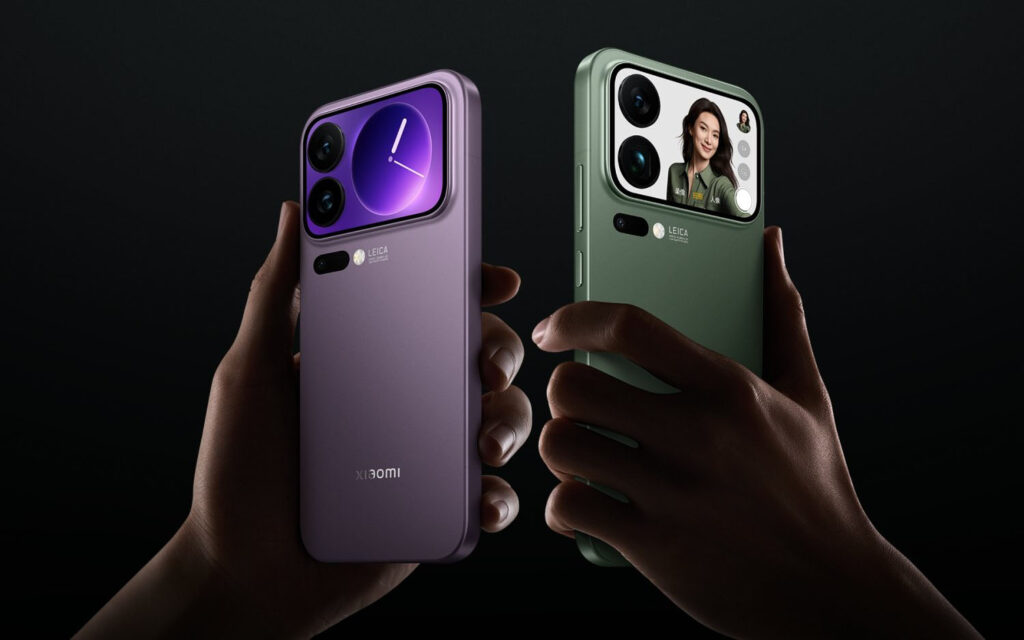
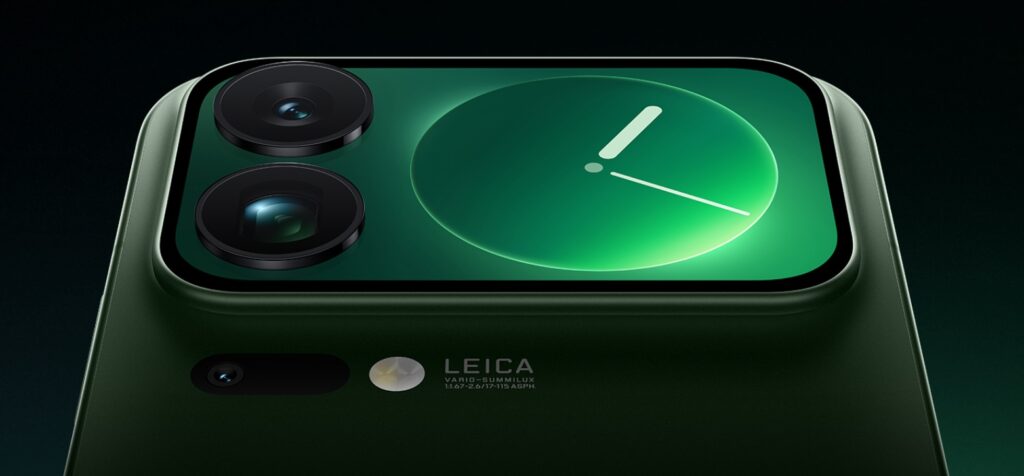
    • For the Pro and Pro Max variants, there is a secondary display on the back of the case with a diagonal of about 2.7″-2.9″ – which can serve as a preview for the cameras or display notifications. 
    • Higher brightness (3500 nits) is also maintained in Pro/Pro Max, which means that regardless of the version, you get a top-tier panel.

    ✅ Conclusion

    If the priority is a best display — meaning excellent brightness, fast refresh rate adaptation, and better protective glass — then the Xiaomi 17 performs better than the Xiaomi 15. However, if you mainly use your smartphone in normal conditions and do not care about extreme brightness or a Pro/Pro Max rear display — the Xiaomi 15’s screen still meets most needs.

    👉 Check out tempered glass for Xiaomi 15


    Leica Camera in Xiaomi 15 and 17

    Which one takes better photos?

    In the camera section, both smartphones are at a very high level, but the Xiaomi 17 introduces several significant improvements compared to the Xiaomi 15.

    • In the Xiaomi 15: rear set of three 50 MP cameras (main f/1.62 + ultra-wide f/2.2 + tele f/2.0, 2.6× zoom) according to the DXOMARK test.
    • In the Xiaomi 17: also three 50 MP cameras each, but with the newer Light Fusion 950 sensor (1/1.31″, f/1.67) and ultra-wide 50 MP f/2.4, tele 50 MP 2.6× zoom (and in Pro/Pro Max variants even 5× optical zoom). 
    • Front camera in the Xiaomi 17: 50 MP with PDAF and autofocus — in the Xiaomi 15 it was 32 MP without AF

    What does it mean in practice?

    • Better photo quality in low light: a larger sensor and improved lens in the Xiaomi 17 mean more light, less noise, and better dynamic range (in Pro/Pro Max versions with LOFIC technology for 16.5 EV). 
    • Better zooms: the basic 17 model maintains a 2.6× zoom, but the Pro and Pro Max versions are equipped with a 5× telephoto lens with a larger sensor – providing a real advantage when photographing from a distance. 
    • Higher selfie detail: 50 MP with autofocus in the 17 is definitely an improved front camera compared to 32 MP without AF in the 15.
    • New features and processing: The 17 series uses newer Leica AI algorithms and better optics — effectively improving colors, contrast, and depth.

    ✅ Conclusions

    If the camera is a priority for you, then the Xiaomi 17 takes photography and video to the next level: better zooms, better sensor, more details.
    However, if your needs are standard — photos, videos, social media — the Xiaomi 15 still delivers great results and may be a more cost-effective choice.

    🛒 Check out cases for Xiaomi 15 at Home Screen store


    Battery and charging – Xiaomi 17 outclasses its predecessor

    How long does Xiaomi 17 last?

    The biggest advancement between the Xiaomi 15 and 17 series concerns the battery and energy efficiency.

    • Xiaomi 15 offered a battery capacity of 5240 mAh,
    • Xiaomi 15 Pro – about 5700 mAh,
    • Xiaomi 15 Pro Max – about 6100 mAh.

    The new generation takes it a step further:

    • Xiaomi 17 has 7000 mAh,
    • Xiaomi 17 Pro – 6300 mAh,
    • Xiaomi 17 Pro Max – up to 7500 mAh, making it one of the most powerful flagships on the market.

    The difference is huge – in practice, the 17 series lasts even 40–60% longer on a single charge than the 15 series.
    The new Snapdragon 8 Elite Gen 5 chips, manufactured using a 3 nm process, are more energy-efficient, so even more powerful devices consume less energy.

    Charging speed

    • Xiaomi 15 / Pro / Pro Max: 90 W wired + 50 W wireless + 22.5 W reverse charging.
    • Xiaomi 17 / Pro / Pro Max: up to 120 W wired50 W wireless22.5 W reverse.

    This means that even the huge 7500 mAh battery in the Pro Max model can be fully charged in about 25 minutes, while the smaller Xiaomi 17 can recharge in under 20 minutes.

    In practice:

    • 10 minutes of charging is about 50 % energy,
    • 30 minutes – full charge,
    • and the 50 W wireless works stably even with Qi2 chargers.

    ✅ Conclusion

    The Xiaomi 17 series offers not only more power but also record battery life.
    The 17 Pro Max with a 7500 mAh battery and 120 W charging is one of the most efficient flagships of 2025/2026. If battery life and fast charging are your priorities – this version definitely outperforms the previous series 15.

    👉 Check out fast chargers for Xiaomi 17


    System and features

    What’s new in HyperOS 3.0 and Android 16?

    The Xiaomi 17 series features the latest version of the interface — HyperOS 3.0, based on Android 16. The system introduces, among other things:

    • a refreshed interface with faster animations and less delay,
    • better energy management and RAM optimization — which positively affects smooth operation and multitasking,
    • new “Cross-Device” features and AI assistants that better integrate the phone with other Xiaomi devices (e.g., TV, headphones, tablet).
      Additionally, the HyperOS 3.0 update in the 17 models has been confirmed with version 3.0.17.0, containing stability fixes and optimizations for the rear screen and gaming. 

    🔹 Pro and Pro Max Versions – rear screen, UWB, and advanced features

    In the 17 Pro and 17 Pro Max models, hardware and software features not available in the base version have been added:

    • OLED rear screen (“Dynamic Back Display”) with a diagonal of ~2.7″–2.9″, allowing for camera preview, notifications, or wallpaper personalization. 
    • support for UWB (Ultra Wide Band) technology – used for precise device location and better integration with accessories (e.g., headphones, locators).
    • better cooling, larger memory (up to 1 TB), which translates to even smoother operation and greater future-proofing of the smartphone.

    Price and availability

    which Xiaomi is more worth it?

    Xiaomi 17 debuted in China in October 2025 and will hit the global market in 2026. Prices remain similar to Xiaomi 15 – around 4500 PLN for the 12/256 GB version.

    Xiaomi 15 is already available in Poland and currently costs about 3779 PLN, and after the release of the newer model, it will be possible to buy it even cheaper.

    💸 Conclusion: if you want to save money – choose Xiaomi 15. If you care about maximum performance and battery – Xiaomi 17 will be a better choice.


    🏁 Final opinion – which model to choose?

    After analyzing all key aspects — performance, screen, cameras, battery, system, and price — here’s a summary of which model will be best in a specific situation:

    ✅ If you care about maximum performance and the best possible smartphone for years, choose:

    • Xiaomi 17 Pro Max — the largest display (6.9″), huge battery (~7500 mAh), 5× optical zoom, rear OLED screen, full UWB support, latest processor.
    • Xiaomi 17 Pro — if you want a compromise: basically the same components as in Pro Max, but slightly smaller dimensions and a lower price.

    ✅ If you want a great flagship, but don’t necessarily need absolutely top parameters – for many users, the best choice will be:

    • Xiaomi 17 – the “basic” flagship of the 17 series: Gen 5 processor, large battery (~7000 mAh), improved camera and display — still a huge leap compared to the 15 series, but in a more accessible size.

    💡 If you have a limited budget or don’t need all the “features” of the new generation — the ideal choice will be:

    • Xiaomi 15 – great performance, very good camera set, compact form, and attractive price. It’s still a flagship that will meet expectations in everyday use.

    📣 Stay updated – when Xiaomi 17 becomes available in Poland, you will find all accessories for Xiaomi 17: cases, screen protectors, chargers, and more!


    ⭐ FAQ – frequently asked questions about Xiaomi 15 and Xiaomi 17

    ⭐ Does the case for Xiaomi 15 fit Xiaomi 17?

    No, each model has different dimensions and camera placements. The case from the 15 series will not fit Xiaomi 17 – it’s worth choosing dedicated accessories.


    ⭐ Does Xiaomi 17 have a better camera than Xiaomi 15?

    Yes – primarily thanks to the new Light Fusion 950 sensor and a 50 MP selfie camera with autofocus. The Pro and Pro Max versions also offer 5× optical zoom and better night photos.


    ⭐ How long does Xiaomi 17 last on battery?

    Depending on the model, from 9 to 12 hours of SoT (screen on time).
    The Pro Max version with a 7500 mAh battery can last up to two days without charging with moderate use.


    ⭐ Does Xiaomi 17 have wireless charging?

    Yes, the entire 17 series supports 50 W wireless charging and 22.5 W reverse charging, allowing you to power up headphones, a smartwatch, or another phone.


    ⭐ Does Xiaomi 17 have a rear display?

    Yes, the Pro and Pro Max versions have an additional 2.7–2.9 inch OLED display on the back panel – for selfies, notifications, and personalization.


    ⭐ Is it worth buying Xiaomi 15 in 2025?

    Yes. Despite the launch of the 17 series, Xiaomi 15 is still one of the best-priced flagships – it offers high performance, an AMOLED display, and Leica cameras, and its price has dropped below 3800 PLN.


    ⭐ When will Xiaomi 17 be available in Poland?

    The global premiere is planned for Q1 2026 when the 17 series will be officially available for sale in Europe.


    ⭐ Does Xiaomi 17 support UWB and the latest AI features?

    Yes – the 17 Pro and Pro Max models have an UWB (Ultra Wide Band) module and AI features in HyperOS 3.0 (e.g. scene recognition, speech transcription, interface personalization).

    ⭐ How much do Xiaomi 15 and Xiaomi 17 cost in Poland?

    Xiaomi 17 (12/256 GB) – estimated around 4,500 PLN after the global premiere

    Xiaomi 15 (12/256 GB) – approx. 3,779 PLN


  • iPad Pro M5 vs M4 – which one is worth buying in 2025?

    iPad Pro M5 vs M4 – which one is worth buying in 2025?

    The latest iPad Pro with the M5 chip is an evolutionary upgrade over its predecessor, the M4. It offers higher performance (especially in graphics and AI), faster connectivity (Wi‑Fi 7, Bluetooth 6, faster 5G), and support for fast charging. The iPad Pro M5 will be the best choice for professionals and the most demanding users, while the iPad Pro M4 will still perform excellently for those with slightly lower requirements – and at a lower price. 

    📊iPad Pro M5 vs iPad Pro M4 – Comparison Table

    FeatureiPad Pro M4 11″iPad Pro M4 12.9″iPad Pro M5 11″iPad Pro M5 13″
    Display11″ OLED Ultra Retina XDR, 120 Hz, HDR12.9″ OLED Ultra Retina XDR11″ OLED Ultra Retina XDR13″ OLED Ultra Retina XDR
    ProcessorApple M4Apple M4Apple M5Apple M5
    RAM8–16 GB8–16 GB12–16 GB12–16 GB
    Storage256 GB – 2 TB SSD256 GB – 2 TB SSD256 GB – 2 TB (faster SSD)256 GB – 2 TB (faster SSD)
    Cameras12 + 10 Mpix + LiDAR12 + 10 Mpix + LiDARunchangedunchanged
    ConnectivityWi-Fi 6E, BT 5.3Wi-Fi 6E, BT 5.3Wi-Fi 7, BT 6, 5G C1XWi-Fi 7, BT 6, 5G C1X
    Chargingapprox. 20–30 Wapprox. 20–30 WFast Charge (50% in 30 min)Fast Charge (50% in 30 min)
    SystemiPadOS 17iPadOS 17iPadOS 26iPadOS 26
    Starting Pricefrom 999 USDfrom 1299 USDfrom 999 USDfrom 1299 USD

    At first glance: iPad Pro M5 and M4 are very similar in terms of base specifications – both come in the same sizes and have fantastic OLED displays, identical cameras, and casings. The biggest differences lie in performance and internal components: the M5 chip offers higher performance than the M4, M5 models have more RAM in cheaper configurations, as well as newer connectivity modules (Wi‑Fi 7, 5G C1X modem) and fast charging capability.


    Screen and design – does the iPad Pro M5 have a better display than the M4?

    The same Ultra Retina XDR OLED display

    Both the iPad Pro M4 and M5 have the same top-tier Ultra Retina XDR OLED screen with ProMotion 120 Hz technology and full HDR support (1600 nit peak). It’s the same tandem OLED panel that Apple introduced in 2024 and still has no competition in the tablet world.

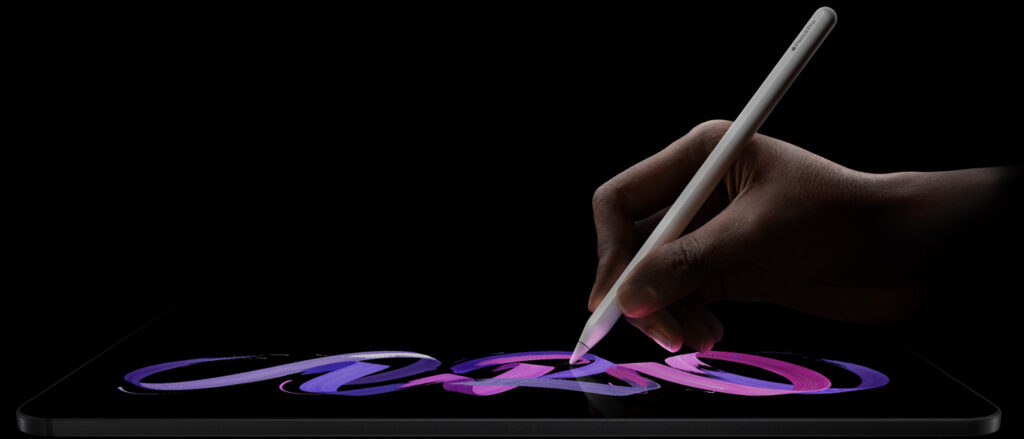
    The image quality is phenomenal: perfect blacks, high contrast, and a wide P3 color gamut. Both models provide smooth scrolling and responsiveness that no other tablet offers. In practice, you won’t notice a difference between the M4 and M5 screens – Apple didn’t need to change it, as they had already achieved a “reference” level.

    Design – thin, light, and sturdy

    Both generations of the iPad Pro have the same aerospace aluminum construction, with flat edges and very thin bezels.
    The dimensions and weight remain identical:

    • iPad Pro 11″ – 5.3 mm thick, approx. 470 g
    • iPad Pro 13″ – 5.1 mm thick, approx. 570 g

    These are still the thinnest tablets on the market. A new feature of the iPad Pro M5 is the Space Black color, which has replaced the previous star gray. For many users, this is a minor but desirable aesthetic change.

    💡 Check also cases for iPad Pro 13″ or cases for iPad Pro 11″, to properly protect this ultra-thin design from scratches.

    Front camera – now in a better position

    The most practical change concerns the position of the front camera. In the iPad Pro M5, it has been moved to the longer edge, allowing you to look directly into the lens during landscape mode calls.
    In the M4, the camera was on the shorter side, so in horizontal orientation, it gave the impression of a “side glance.” If you often hold online meetings or video lessons – this improvement really makes a difference.


    Performance and computing power – Apple M5 vs M4

    How big is the performance difference between M4 and M5?

    The Apple M5 chip is an improved version of the M4 chip, made using the same 3 nm process, but with a new core architecture.

    • CPU: up to 15% faster, with better energy management,
    • GPU: up to 40% more powerful, with support for 3rd generation ray tracing,
    • Neural Engine: up to 4× faster in AI tasks.

    In everyday use (notes, browsing the web, movies), the differences are minimal. But if you work with RAW files, design in Procreate, edit 4K videos in LumaFusion, or use AI applications – M5 provides a real boost in work comfort.

    More RAM in cheaper models

    This is a significant change.

    • iPad Pro M4 (256/512 GB) → 8 GB RAM
    • iPad Pro M5 (256/512 GB) → 12 GB RAM

    For demanding applications, this is a big difference – M5 handles multitasking better and keeps more projects open without refreshing. The 1 TB and 2 TB versions in both models have 16 GB RAM.

    Faster disk and memory

    The M5 uses newer NVMe SSD modules, offering up to 2× faster data read and write speeds. The memory bandwidth has also been increased to 153 GB/s (up from 120 GB/s in the M4).
    The result: shorter application loading times, faster transfer of large files, and smoother performance in professional applications.


    Battery and charging – does the iPad Pro M5 last longer?

    Battery life

    Apple claims the same operating time: up to 10 hours of Wi-Fi or 9 hours on 5G.
    In practice, the iPad Pro M5 has slightly better energy efficiency – thanks to the newer processor and modem, it consumes less power under heavy load (e.g., during 4K streaming or working on 5G).

    Fast charging – finally!

    The biggest novelty is fast charge.
    The iPad Pro M5 can be charged up to 50% in about 30 minutes using a 40W or stronger power adapter (e.g., a MacBook charger).
    The M4 model did not support fast charging and needed over an hour for a similar result.
    This is a huge advantage if you use the iPad outdoors or want to quickly recharge it between meetings.

    🔋 Also see tempered glass for iPad Pro 13″ and glass for iPad Pro 11″, if you want to protect the screen from damage during everyday use or charging in a bag.


    Cameras and multimedia – does M5 take better photos?

    Rear setup unchanged

    Both models have the same configuration:

    • main camera 12 MP (f/1.8),
    • ultra-wide 10 MP (123°),
    • LiDAR scanner for AR and autofocus.

    The quality of photos and 4K videos remains the same. Apple has not changed the sensors or optics. These are solid cameras for scans and recordings, but they still do not match the Pro iPhones.

    Front camera – practical change

    The 12 Mpix module with Center Stage remains the same, but its position (on the longer side in M5) significantly improves the comfort of video conferencing.

    Sound and multimedia

    The system of four stereo speakers with Dolby Atmos remains unchanged. The sound is still fantastic – full and loud, even without headphones.
    Both iPads lack a 3.5 mm Jack socket, but you can use USB-C or Bluetooth headphones.


    Connectivity and accessories – what’s new in the iPad Pro M5?

    Wi-Fi 7 and Bluetooth 6

    The new connectivity chip in M5 supports the Wi-Fi 7 (802.11be) standard, providing higher speeds and lower latency.
    M4 remains with Wi-Fi 6E.
    Bluetooth 6 allows simultaneous audio connections and better energy management – these are future-proof features that you will appreciate over time.

    5G C1X modem

    The iPad Pro M5 received a custom Apple C1X modem instead of a Qualcomm chip. It is even 50% faster and consumes less energy.
    If you often work in the field, M5 will provide more stable connections and fewer signal “drops.”

    Accessory compatibility

    Full compatibility in both directions:

    • Apple Pencil 2 and Apple Pencil Pro work with M4 and M5,
    • Magic Keyboard (old and new with function key row) fits both models,
    • the same Smart Connector and magnetic mounts.

    No need to buy new accessories when changing iPads – that’s a big plus.

    Is it worth paying extra for the iPad Pro M5?

    When it’s worth choosing M5

    • You work with video, 3D graphics, design, or AI.
    • You often use a 5G modem and care about faster transmission.
    • You need fast-charge and modern connectivity standards.
    • You want hardware with longer system support (iPadOS 26+).

    When M4 is enough

    • You use the iPad for notes, movies, games, and daily tasks.
    • You don’t need the fastest networks or fast charging.
    • What matters to you is a lower price – M4 offers 90% of the capabilities of M5, often on sale for several hundred zlotys less.

    ❓ FAQ – Frequently Asked Questions about iPad Pro M5 vs iPad Pro M4

    🔹 What is the main difference between iPad Pro M5 and M4?

    The iPad Pro M5 has a newer processor Apple M5, faster GPU and AI, more RAM in cheaper models, and supports fast charging. The rest (screen, casing, cameras) remains unchanged.

    🔹 Does the iPad Pro M5 have a better screen?

    No. Both iPad Pros have the same Ultra Retina XDR OLED 120 Hz screen, with brightness up to 1600 nits.

    🔹 Is it worth paying extra for the iPad Pro M5?

    Yes – if you use the iPad for graphics, video, 3D projects, or AI.
    No – if you mainly use it for multimedia and notes.

    🔹 Does the iPad Pro M5 have a faster processor?

    Yes, the processor Apple M5 is about ~15% faster in CPU and up to 40% faster in GPU than M4.

    🔹 How much RAM do the iPad Pro M4 and M5 have?

    M4: 8 GB (256/512 GB) or 16 GB (1–2 TB)
    M5: 12 GB (256/512 GB) or 16 GB (1–2 TB)

    🔹 Does the iPad Pro M5 have a longer battery life?

    Unofficially – slightly longer under heavy load, but Apple claims the same 10 hours.

    🔹 Does the iPad Pro M5 support fast charging?

    Yes. It supports fast-charge 50% in 30 minutes (charger ≥ 40 W).

    🔹 Does the iPad Pro M4 support fast charging?

    No. M4 charges at standard speed (20–30 W), without fast-charge mode.

    🔹 Does the iPad Pro M5 have a better camera?

    No. The cameras are identical (12 + 10 Mpix + LiDAR), only the position of the front camera differs – in M5 it is on the side.

    🔹 Is the camera on the iPad Pro M5 better for video calls?

    Yes, because it has been moved to the longer edge – now you look directly into the lens during a call.

    🔹 Does the iPad Pro M5 have Wi-Fi 7?

    Yes, M5 supports Wi-Fi 7 and Bluetooth 6. M4 has Wi-Fi 6E and BT 5.3.

    🔹 Does the iPad Pro M5 have a new 5G modem?

    Yes. M5 uses the Apple C1X modem – faster and more energy-efficient than Qualcomm in M4.

    🔹 Does the iPad Pro M5 work with Apple Pencil Pro?

    Yes. Apple Pencil Pro works with the iPad Pro M5 and M4.

    🔹 Do accessories from the iPad Pro M4 fit M5?

    Yes – full compatibility. Magic Keyboard, Apple Pencil, and other accessories work on both models.

  • Apple Watch Ultra 2 vs Watch Ultra 3 – comparison, differences, and cost-effectiveness

    Apple Watch Ultra 2 vs Watch Ultra 3 – comparison, differences, and cost-effectiveness

    Apple Watch Ultra 3 is an evolution, not a revolution compared to Ultra 2 – both watches look almost identical, but Ultra 3 has a larger screen, longer battery life, satellite connectivity, and a 5G RedCap modem. For most users, Ultra 2 will still be a great choice, but if you are just buying a premium smartwatch or need maximum independence in the field – Ultra 3 is the best choice for 2025.

    Comparison table: Apple Watch Ultra 2 vs Ultra 3

    FeatureApple Watch Ultra 2 (2023)Apple Watch Ultra 3 (2025)
    Starting price (PL)currently approx. 3399 PLN3799 PLN (launch price)
    Case materialGrade 5 Titanium (natural or black)Grade 5 Titanium (natural or black)
    Dimensions49 × 44 × 14.4 mm49 × 44 × 12 mm
    Weight (without strap)61.4–61.8 g61.6–61.8 g
    Display1.92″ LTPO OLED (410 × 502 px, 326 ppi) – 3000 nits1.99″ LTPO3 OLED (422 × 514 px, 326 ppi) – 3000 nits
    Processor (SiP)Apple S9 + Neural EngineApple S10 + Neural Engine
    Internal memory64 GB64 GB
    Cellular connectivity4G/LTE (eSIM)5G RedCap + 4G/LTE (eSIM)
    Satellite connectivity❌ No✅ Emergency SOS via Satellite
    Local connectivityWi-Fi 4 (2.4/5 GHz), Bluetooth 5.3, UWB 2nd gen., GPS L1+L5Same
    Battery – typical useUp to 36 hUp to 42 h
    Battery – Low Power ModeUp to 72 hUp to 72 h
    DurabilityWR100, IP6X, MIL-STD-810HWR100, IP6X, MIL-STD-810H
    Health sensorsHeart rate, ECG, SpO₂, temp., accelerometer, gyroscopeThe same + hypertension notifications, Sleep Score
    Sports featuresMulti-sport, Backtrack, compass, GPS L1+L5The same + Workout Buddy (AI coach)
    Operating systemwatchOS 10 → update to watchOS 26watchOS 26 (factory)
    Update supportuntil 2028until 2030

    What does the Apple Watch Ultra 3 look like and how does it differ from the Ultra 2?

    Does the Apple Watch Ultra 3 have a new design?

    On the outside, Apple Watch Ultra 3 looks almost identical to Ultra 2, but the devil is in the details. Apple has retained the distinctive aircraft-grade titanium case (Grade 5) in a size of 49 mm, however, the new model has thinner screen bezels by 24%. This allows the Ultra 3 to offer a larger working area (1.99 ″ vs 1.92 ″) without increasing the overall dimensions.

    Interestingly, the case of the Ultra 3 is also thinner (12 mm instead of 14.4 mm), which makes the watch sit better on the wrist.
    The weight remains almost identical – about 61–62 g without the strap, so there is no noticeable difference in weight during daily use.

    What materials are used in the Apple Watch Ultra 3?

    Both watches – Ultra 2 and Ultra 3 – utilize the same, exceptionally durable titanium and sapphire glass that is scratch-resistant.
    The construction meets the standards of IP6X, WR100 (up to 100 m immersion) and MIL-STD-810H, which is the military standard for resistance to shocks, dust, moisture, and extreme temperatures.

    In practice, this means that both Ultra 2 and Ultra 3 are ready for mountain trekking, swimming, and even diving up to 40 m – ideal for outdoor athletes.

    What colors are available for the Apple Watch Ultra 3?

    Apple continues with two color variants:

    • Natural titanium (silver)
    • Black titanium

    These are minimalist, elegant shades that pair well with any strap – from silicone sports to leather and fabric.
    👉 See straps for Apple Watch Ultra 3 at Home Screen store


    Display, performance, and battery – what has been improved in the Apple Watch Ultra 3?

    Is the display in Ultra 3 better?

    Yes. The Ultra 3 has a newer LTPO OLED 3rd generation panel, which provides better viewing angles, deeper blacks, and greater energy efficiency.
    Although the brightness remains the same (3000 nits), in practice, the Ultra 3 is more readable in sunlight and has a smoother always-on mode with a 1 Hz refresh rate – for the first time on the Apple Watch, you can constantly see the second hand.

    The resolution has increased from 410×502 px to 422×514 px, which is not revolutionary but improves the sharpness of dials and the readability of maps in workout mode.

    Does the new S10 processor make a difference?

    The Apple Watch Ultra 3 is powered by a S10 SiP chip, which replaced the S9 from Ultra 2.
    The differences in speed are minimal, but S10 is more energy-efficient, which combined with the new display gives a real +6 hours of battery.
    The new chip also enables the “wrist flick” gesture (waving the wrist for control) and better processing of AI features with watchOS 26.

    How long does the Apple Watch Ultra 3 last on battery?

    Apple declares:

    • Ultra 2: up to 36 hours of normal usage
    • Ultra 3: up to 42 hours (normally) or 72 hours in power-saving mode

    Tests confirm that the Ultra 3 actually lasts up to 2–3 days with typical usage (with Always-On Display).
    Fast USB-C charging in 15 minutes adds about 12 hours of usage.

    👉 Check fast chargers for Apple Watch Ultra 3


    Connectivity and new features

    5G, satellite, and greater independence

    The Apple Watch Ultra 3 is the first Apple smartwatch with support for 5G RedCap networks and satellite SOS connectivity.
    This allows the watch to connect to the network even in areas without GSM coverage.
    The Emergency SOS via Satellite feature allows you to send an emergency message and GPS coordinates to rescue services or emergency contacts — it works similarly to the iPhone 14 and 15.
    This solution is primarily aimed at people who engage in trekking, sailing, or off-roading, where lack of coverage is a real problem.

    The new 5G RedCap modem improves coverage and energy efficiency, not offering the full 5G speed known from smartphones, but sufficient for maps, notifications, or Siri.
    In Poland, the 5G Standalone feature is already being implemented by operators, so Ultra 3 will be fully compatible in the coming months.

    Additional connectivity enhancements

    • improved antenna layout (better coverage in difficult terrain),
    • UWB 2nd gen. – precise device locating in the “Find” app,
    • dual GPS L1+L5 – accurate route tracking even in mountains and cities,
    • Bluetooth 5.3 and Wi-Fi 4 (2.4 / 5 GHz) with lower power consumption.

    These enhancements make Ultra 3 the most “independent” Apple smartwatch to date – it operates independently from the iPhone, even in the field.

    Health and sports features

    Both generations of Apple Watch Ultra offer a wide range of health sensors, however, Ultra 3 expands their capabilities through software.
    The watch monitors heart rate (optical 3rd gen), ECG, blood oxygen (SpO₂), body temperature, and detects falls and accidents (Crash Detection).

    The new features in Ultra 3 are:

    • notifications for hypertension,
    • Sleep Score – daily sleep quality assessment,
    • Workout Buddy – an intelligent AI coach from Apple Intelligence, analyzing progress and motivating during workouts.

    In terms of sports, both models offer:

    • measurement of running power, stride length, and ground contact,
    • precise GPS L1+L5 and barometric altimeter,
    • Multi-sport mode (triathlon, cycling, swimming, climbing),
    • 86 dB emergency siren and Backtrack mode (return navigation).

    The watches are waterproof up to 100 m, resistant to saltwater and dust, and thanks to the EN13319 certification, they can serve as a dive computer.


    Software and Support

    How long will Apple update these watches?

    Apple is known for its long support of its devices, and the Ultra series is no exception.
    Apple Watch Ultra 2 debuted with watchOS 10, and after updates, it now runs on watchOS 26, while Ultra 3 comes factory-installed with this version.

    How long will support last?

    • Ultra 2 – security and system updates expected until around 2028,
    • Ultra 3 – full support until 2030.

    This means that by purchasing the Ultra 3, you gain two more years of updates, which translates to a longer device lifespan and access to new Apple Intelligence (AI) features that may require the newer S10 chip in the future.

    Compatibility and Ecosystem

    Both models work with iPhone 11 or newer (running iOS 26).
    Thanks to integration with the Apple ecosystem, users can take advantage of:

    • Apple Fitness+ (workouts with trainers),
    • Apple Pay (contactless payments),
    • Apple Music and Podcasts,
    • health data synchronization in iCloud.

    Ultra 3 and Ultra 2 also have full accessory compatibility – 49 mm bands and chargers are interchangeable between generations.


    Is it worth buying the Apple Watch Ultra 3 instead of Ultra 2?

    For most users, the differences between Ultra 2 and Ultra 3 are not revolutionary, but they are real.
    The new model is more efficient, lasts longer on battery, supports 5G and satellite communication, and has longer support.

    When is it better to choose Ultra 3?

    • if you don’t have an Ultra series watch yet,
    • if you often stay out of network coverage (mountains, sailing, travel),
    • if you want the most future-proof model with 5G and SOS via Satellite,
    • if you care about an AI trainer and longer battery life.

    When is it better to buy the Ultra 2?

    • when you have a limited budget – the price difference is often 400–600 PLN,
    • if you mainly use the watch in the city and do not need satellite connectivity,
    • if you already have the Ultra 2 – switching does not make much economic sense.

    In terms of cost-effectiveness, a simple rule can be applied:

    🔹 New users → choose Ultra 3
    🔹 Ultra 2 owners → stick with your current model


    📊 Summary: Apple Watch Ultra 3 vs Ultra 2

    AspectBetter ChoiceComment
    Design and Build QualityDrawBoth models are titanium, same sturdiness
    DisplayUltra 3Thinner bezels, newer LTPO3 panel
    BatteryUltra 3+6 hours with typical usage
    ConnectivityUltra 35G RedCap + SOS via Satellite
    Health FeaturesUltra 3New algorithms: hypertension, Sleep Score
    Sports FeaturesDrawWorkout Buddy (AI) only in Ultra 3
    PriceUltra 2Usually cheaper by 400–600 PLN
    System SupportUltra 3Until 2030 (vs 2028)

    💬 User Opinions and Reviews

    Reviewers (The Verge, Tom’s Guide, MacRumors) unanimously emphasize that Ultra 3 is a great smartwatch, but more of an improvement than a revolution.
    New features are mainly valuable for those who need them in practice (outdoor, safety, sports).

    “Ultra 3 is for those who do not yet have Ultra — for Ultra 2 owners, it’s more of a luxury than a necessity.” — The Verge

    Users praise primarily the longer battery life, larger screen, and the sturdiness of the construction.
    The most common conclusion: if this is your first Ultra – go for the “three”; if you have the “two” – wait for the Ultra 4.


    FAQ – frequently asked questions about Apple Watch Ultra 3 and Ultra 2

    ⭐️ Is it worth buying the Apple Watch Ultra 3 in 2025?
    Yes, if you are just buying your first Apple Watch Ultra. The Ultra 3 model has a larger screen, longer battery life, satellite connectivity, and 5G support, making it the most future-proof choice. For Ultra 2 owners, the change is not necessary, as the differences are not revolutionary.

    ⭐️ What is the difference between the Apple Watch Ultra 3 and Ultra 2?
    The Ultra 3 has a larger screen (1.99″ vs 1.92″), thinner bezels, a newer S10 processor, 5G RedCap connectivity, SOS via Satellite feature, and longer software support until 2030. The other elements – such as health sensors or durability – are practically identical.

    ⭐️ How long does the battery last in the Apple Watch Ultra 3?
    The watch lasts up to 42 hours with normal use and up to 72 hours in power-saving mode. Thanks to fast charging, just 15 minutes is enough to gain about 12 hours of use.

    ⭐️ Does the Apple Watch Ultra 3 work in Poland with 5G network?
    Yes, it uses the 5G RedCap mode, which operates in Standalone (SA) 5G networks. Polish operators – including Plus, Orange, and T-Mobile – are gradually implementing this solution, so compatibility will expand.

    ⭐️ Does the Apple Watch Ultra 3 support SOS via satellite in Poland?
    Yes, Apple has announced the availability of the Emergency SOS via Satellite feature for users in Poland and the entire EU. The service is free for the first 2 years after activating the watch.

    ⭐️ Do the bands and cases from Apple Watch Ultra 2 fit Ultra 3?
    Yes. All accessories for the 49 mm case are fully compatible. Therefore, you can use existing bands, cases, and chargers with the new model.

    ⭐️ Does the Apple Watch Ultra 3 have new health features?
    Ultra 3 introduces hypertension notifications and the Sleep Score feature – a sleep quality assessment. Both models measure heart rate, ECG, SpO₂, and detect falls or accidents (Crash Detection).

    ⭐️ Is the Apple Watch Ultra 3 suitable for diving?
    Yes. The watch is water-resistant up to 100 meters and meets the EN13319 standard, allowing it to be used as a dive computer up to 40 m deep. It also works in saltwater and extreme temperatures.

    ⭐️ What are the prices of Apple Watch Ultra 3 and Ultra 2 in Poland?
    Ultra 3 costs about 3799 PLN (launch), while Ultra 2 is available from about 3399 PLN. The difference of about 400–600 PLN depends on the store and promotions. If Ultra 2 is significantly cheaper, it will still be a very good choice.

    ⭐️ Does Apple Watch Ultra 3 work without an iPhone?
    Yes. Thanks to the eSIM module and cellular connectivity (LTE/5G), Ultra 3 can operate independently – receiving calls, messages, and GPS data without a phone nearby.

    ⭐️ Does Ultra 3 support Apple Pay and Siri in Polish?
    Yes, the watch fully supports Apple Pay and Siri in Polish, both online and offline (thanks to on-device processing).

    ⭐️ Does Apple Watch Ultra 3 have a better screen than Ultra 2?
    Yes. Although the brightness remains at 3000 nits, Ultra 3 features a newer 3rd generation LTPO OLED display, with thinner bezels and better viewing angles.

  • AirPods 3 Pro vs AirPods 2 Pro

    AirPods 3 Pro vs AirPods 2 Pro

    AirPods Pro 3 is the evolution of Pro 2: they offer better ANC, longer battery life, and new features (heart rate measurement, Live Translation) at the same or lower starting price. According to The Verge it is “the only obvious upgrade” in this cycle, mainly due to stronger ANC and longer battery life.

    Which model for whom? If you need maximum noise cancellation, train intensively (or have an iPhone with USB-C) – AirPods Pro 3 will be the right choice. For those seeking the best sound quality, Pro3 will deliver a slightly richer and clearer sound.

    On the other hand, for users on a budget or those who already own Pro 2 (especially the version with USB-C), it often makes sense to stick with the older model – it offers very good quality, and its price may be lower today. For owners of very old generations (e.g., Pro 1st gen from 2019), upgrading to the newer Pro 2 or Pro 3 already provides a noticeable jump in quality (sound, ANC, battery).

    Comparison table – AirPods Pro 3 vs AirPods Pro 2

    Differences, ANC, battery, price in Poland

    FeatureAirPods Pro 3 (2025)AirPods Pro 2 (2022/2023 USB-C)What it means in practice
    ANC (noise cancellation)~ more effective vs Pro 2Very goodPro 3 will better silence metro/office, less speech and street noise come through.
    Battery – earbuds (with ANC)up to 8 hup to 6 hLonger listening sessions “at once” on Pro 3.
    Battery – total with caseabout 24 hup to 30 hPro 2 is charged less often; Pro 3 provides longer continuous listening.
    Tips / fit5 sizes (XXS–L), foam+silicone4 sizes (XS–L), siliconeBetter sealing and stability of Pro 3 (sports, small ears).
    Water resistance (earbuds + case)IP57IP54Pro 3 is more reliable in the rain; short immersion is OK.
    Port and charging caseUSB-C + MagSafe/Qi/Apple WatchLightning (older) or USB-CUSB-C is more convenient with iPhone 15/16/17 and iPad.
    “Find” / UWB in caseU2 (more accurate tracking)U1Easier precise searching for Pro 3 case.
    Health featuresHeart rate measurement (PPG)HR/calories without a watch.
    Live TranslationYes (limited availability in the EU)After update (also EU limitations)In Poland, it may be regionally disabled at launch.
    Price in Poland1099 PLNpromotions ~949–999 PLNDifference <200 PLN → often worth paying extra for Pro 3.

    Active Noise Cancellation and Transparency Mode

    Effectiveness of ANC

    AirPods Pro 3 offer approximately twice the noise reduction compared to AirPods Pro 2. In practice, they better cut out street noise, conversations in open spaces, and noise during transportation. The effectiveness is enhanced by improved microphones and new foam tips, which improve passive isolation. According to TechRadar, Pro 3 also more effectively suppress higher frequencies (speech, sibilants).

    Transparency Mode

    Both models have a transparency mode, but in AirPods Pro 3 it is personalized — your own voice and the speech of the conversation partner sound more natural, without artificial enhancement of sibilants. AirPods Pro 2 offer Adaptive Transparency, which effectively lowers loud sounds, but without individual tone correction.
    Additionally, both models support Conversation Boost (enhancement of the conversation partner’s speech).


    Battery Life and Charging (USB-C vs Lightning)

    Headphone Usage Time

    • AirPods Pro 3: up to approx. 8 hours with ANC on (approx. 7.5 h with Spatial Audio).
    • AirPods Pro 2: up to approx. 6 hours with ANC on (approx. 5.5 h with Spatial Audio).

    Usage Time with Case

    • AirPods Pro 3: total up to approx. 24 hours (with ANC).
    • AirPods Pro 2: total up to approx. 30 hours (with ANC).

    Fast Charging

    Both generations support fast charging: 5 minutes in the case ≈ 1 hour of listening (with ANC).

    Port and Charging Standards

    • AirPods Pro 3: case with USB-C (USB-C cable must be purchased separately).
    • AirPods Pro 2: initially Lightning, later also a MagSafe with USB-C version.
      Both cases support MagSafeQi and Apple Watch charger.

    Versions and compatibility with Apple devices

    Eco-system and connectivity

    AirPods Pro 3 and 2 use the H2 chip and Bluetooth 5.3, allowing them to work with iPhone, iPad, Apple Watch, Mac, and Apple TV. They offer quick pairingautomatic switching between devices, Siri and audio sharing (requires current versions of iOS/iPadOS/watchOS/macOS).

    Hearing Health features

    Both generations support hearing protection and support tools: hearing testspeech enhancement (Hearing Aid) and hearing protection (requires iOS 18).

    Fitness and translation features

    AirPods Pro 3 add heart rate sensor and fitness integrations (e.g. HR preview, training support with Apple Watch). There is also Live Translation (live conversation translation) — this feature is expected to be more widely available for Pro 2 after updates, but in the EU (including Poland) it is on hold at launch due to Apple Intelligence / regional availability restrictions.

    Case and pouch

    Ergonomics and fit

    Both models maintain a white, compact form, however AirPods Pro 3 are slightly smaller and lighter, and the changed ear tips and housings help with a better fit in the ear (more stable, better isolation).

    Changes in the case

    In AirPods Pro 3 the details have been redesigned: the pairing button is hidden beneath the surface, and the status light is on the front. Both cases have a built-in speaker for easier locating and a lanyard loop. They support MagSafe / Qi / Apple Watch charging.

    If you want to reduce scratches and improve grip, consider a protective case for AirPods Pro 3 or case for AirPods Pro 2.

    Water Resistance

    • AirPods Pro 3: certification IP57 (dust, sweat, short immersion up to 1 m).
    • AirPods Pro 2: IP54 (splash and sweat resistance).

    Location (Find My)

    Both generations can be found via Find My — the case can emit a sound. AirPods Pro 3 use 2nd generation UWB (U2), which improves tracking accuracy compared to U1 in Pro 2.

    Price and value for money (Poland)

    Starting price and promotions

    • AirPods Pro 3: 1099 PLN (Apple Poland).
    • AirPods Pro 2: today often ~949–1000 PLN on promotion (especially the USB-C variant).

    Purchase profitability

    AirPods Pro 3 offer more new features (better ANC, longer battery life on a single charge, IP57, heart rate sensor, more accurate Find My with U2) for a price close to the launch of Pro 2. However, if budget is crucial or you do not use the new features, AirPods Pro 2 on a good promotion is still a very good choice for most users.

    FAQ – AirPods Pro 3 vs AirPods Pro 2

    Is it worth exchanging AirPods Pro 2 for AirPods Pro 3?

    If you value maximum noise cancellationlonger listening time on a single chargeIP57more accurate “Find” (U2) and heart rate measurement — yes. If the differences are marginal for you and you have a good price on Pro 2, the exchange is not necessary.

    How big is the difference in ANC between Pro 3 and Pro 2?

    Pro 3 can cancel noise significantly better (approx. “~2×” in public transport and open space) — less human speech and high background noise come through.

    What is the real battery life?

    • Pro 3: up to ~8 h with ANC (about 7.5 h with Spatial Audio), total with the case about 24 h.
    • Pro 2: up to ~6 h with ANC, total with the case up to 30 h.
      In practice, Pro 3 are better “at once”, Pro 2 are charged less often as a complete set.

    Do AirPods Pro 3 sound noticeably better?

    The differences are audible but subtle: clearer mids, better bass control, a bit more detail. For most — an evolution, not a revolution.

    Are AirPods Pro 3 waterproof?

    Yes, IP57 (sweat, dust, short immersion). Pro 2 have IP54 (splashing/sweat). Remember: do not charge a wet case.

    USB-C or Lightning — which to choose?

    Pro 3 come with USB-C as standard. Pro 2 are available in Lightning and USB-C. If you have an iPhone 15/16/17 or an iPad with USB-C, it will be more convenient with Pro 3.

    Is there a USB-C cable in the Pro 3 box?

    No — you need to have your own USB-C cable or purchase one.

    Does Live Translation work in Poland?

    The feature is regionally limited in the EU (including in PL) at launch. It’s worth checking availability after iOS/firmware updates.

    How is the fit and comfort?

    Pro 3 have 5 sizes of tips (XXS–L) and a hybrid foam+silicone — better sealing and stability (running, gym). Pro 2: 4 sizes of silicone (XS–L).

  • iPhone 15 vs iPhone 17 – a two-year difference in practice

    Switching from the iPhone 15 to the iPhone 17 provides a clearly noticeable leap in quality. The new model finally has a 120 Hz ProMotion display in all versions, larger and brighter screens, much better battery life, and faster charging.

    The cameras are more versatile – in every model, we find dual or triple 48 MP modules, and the front camera has gained Center Stage functionality and 4K recording from both sides simultaneously.

    Additionally, the iPhone 17 is more powerful, heats up less, and introduces local AI features, such as live conversation translation and on-screen content recognition.

    For owners of the iPhone 15 or 15 Plus, the difference is huge – primarily a smoother display and better battery. For users of the 15 Pro/Pro Max, it mainly means a better telephoto lens, a larger screen, and longer battery life.

    📊 iPhone 15 vs iPhone 17 – Comparison Table

    FeatureiPhone 15 (2023)iPhone 17 (2025)
    Processor & RAMA16 Bionic (15/15 Plus), A17 Pro (15 Pro/Max) • 6-core CPU, 5-core GPU • 6–8 GB RAMA19 (17/Air), A19 Pro (17 Pro/Max) • +40% faster CPU • GPU with AI accelerators • 8 GB RAM (17) • 12 GB RAM (Air/Pro/Max)
    Performance~2500 points single-core (A16) • Top performance in 2023~3800 points single-core (A19 Pro) • Multi-core ~9700 points • GPU +35% vs A18 Pro
    Display6.1″ / 6.7″ OLED 60 Hz (ProMotion only in Pro) • 2000 nits (peak) • AoD only in Pro6.3″ / 6.5″ / 6.9″ OLED LTPO 120 Hz (everywhere) • 3000 nits (record) • AoD in every model
    Rear Cameras15/Plus: 48 + 12 MP • no tele (2× crop)   15 Pro: 48 + 12 + 12 MP (tele 3×)   15 Pro Max: tele 5× (periscope)17: 48 + 48 MP (ultra-wide also 48)   Air: single 48 MP   17 Pro/Max: 48 + 48 + 48 MP • tele 4× 100 mm (crop to ~8× “optical quality”)
    Front Camera12 MP • static frame18 MP Center Stage • auto-framing • 4K HDR recording + Dual Capture
    Video4K@60 HDR • Cinematic 4K@30 (Pro) • ProRes 4K@30 (Pro) • Spatial Video (announced for 15 Pro)4K@120 (slow-mo) • ProRes 4K@60 RAW (Pro) • Genlock (multi-cam sync) • Spatial Video (available for the entire series)
    Battery15: up to 20 h • 15 Plus: 26 h • 15 Pro: 23 h • 15 Pro Max: 29 h17: 30 h • 17 Air: 27 h • 17 Pro: 33 h • 17 Pro Max: 39 h (1.5–2 days of use)
    ChargingUSB-C 2.0 (15) • USB-C 3 (Pro) • 50% in 30 min (20W) • MagSafe 15WUSB-C 3 in Air/Pro (DisplayPort) • 50% in 20 min (40W charger) • MagSafe/Qi2 25W • reverse charging for accessories
    Design & MaterialsAluminum frame (15) or titanium (Pro) • Dynamic Island • mute button (Pro: Action Button)Aluminum unibody (better cooling) • Ceramic Shield 2 (3× more resistant) • Action Button in all models • new ultra-thin Air model (5.6 mm)
    Connectivity5G, Wi-Fi 6 (Pro: 6E), BT 5.3, UWB gen. 25G, Wi-Fi 7, BT 6 (LE Audio), UWB gen. 3, Thread (Smart Home), chip N1 (faster AirDrop/Hotspot)
    SoftwareiOS 17 • StandBy, NameDrop, SOS satelliteiOS 26 • Apple Intelligence (AI offline), Live Translation, Visual Intelligence, Memory Integrity Enforcement
    Variants and Prices15 / 15 Plus / 15 Pro / 15 Pro Max • from 128 GB • 15 from 4699 PLN17 / 17 Air / 17 Pro / 17 Pro Max • starting from 256 GB • 17 from 3999 PLN • new colors (lavender, cosmic orange)

    Design and Ergonomics

    iPhone 17 vs iPhone 15 – what has changed in appearance and construction?

    Switching from the iPhone 15 to the 17 starts with the first impression. The phone looks and feels different – more modern and more “fitted” to the hand.

    Apple has narrowed the bezels by about 15%, so even the iPhone 17 Pro Max with a 6.9″ screen has almost the same dimensions as the 15 Pro Max with a 6.7″ screen. This means:

    • Larger screen in the same body – perfect for watching videos and working on a split screen.
    • More immersive experiences – fewer visible bezels mean more enjoyment from gaming and watching movies.
    • More comfortable one-handed operation – despite the larger display, you don’t feel that the phone is less handy.

    The Pro versions received a new unibody aluminum casing, which not only looks better than titanium in the 15 Pro, but also dissipates heat better.
    In practice, this means less heating of the phone when recording video or during long gaming sessions.

    The back is covered with matte glass with a new texture – less slippery and less prone to fingerprints.
    New colors (lavender, cosmic orange) add freshness to the line and distinguish the phone from previous generations.

    💡 Everyday difference: the iPhone 17 fits better in the hand, heats up less, and the Air model is record-thin and lightweight – ideal for those who previously chose the 15 Plus but would like something more portable.


    Cameras and Video

    The biggest leap in photo and video quality in years

    This is where the generational leap is truly visible.
    In the iPhone 15 and 15 Plus, we had a main 48 MP camera and a 12 MP ultra-wide. The telephoto lens was missing, and zoom was done digitally.

    The iPhone 17 introduces:

    • two 48 MP cameras already in the base model – main and ultra-wide,
    • full set of 48+48+48 MP in Pro and Pro Max – including a 4× 100 mm telephoto lens, with the ability to crop up to 8× without losing quality.

    The effect in practice:

    • ultra-wide photos are sharper and more detailed,
    • zoom is suitable for photographing concerts, architecture, and distant objects,
    • night mode is faster and provides brighter shots than in the 15.

    The front camera now has 18 MP and Center Stage functionality – the frame follows you during video calls, which was previously reserved for the iPad.

    Video:

    • from 4K/60 in 15 you switch to 4K/120 in Dolby Vision,
    • you can record in ProRes RAW 4K/60,
    • you have the ability to synchronize multiple iPhones (Genlock) – a feature useful for video creators.

    💡 Everyday difference: the 15 Pro offered ProRes, but without RAW and without 4K/120. The 17 Pro is practically a miniature film camera that can replace professional equipment in many scenarios.


    Display

    finally 120 Hz for everyone

    This is the biggest “wow effect” when switching from the iPhone 15 or 15 Plus.
    In the previous generation, only the Pro versions had ProMotion 120 Hz and Always-On Display.
    Now:

    • every iPhone 17 has an LTPO 1–120 Hz display,
    • Always-On Display is available for everyone,
    • brightness has increased to 3000 nits – 50% more than in the 15.

    💡 Everyday difference: scrolling, animations, and games are ultra-smooth even in the base model. The display is readable in full sunlight, making it more convenient to use the phone outdoors than ever before.


    🔋 Battery and Charging – realistically longer

    Apple has increased the cells and optimized energy consumption thanks to the A19 and LTPO panels.
    The effect:

    • iPhone 17 Pro Max: up to 39 h of video playback (15 Pro Max – 29 h),
    • iPhone 17 Pro: up to 33 h,
    • iPhone 17 Air: about 27 h despite the thinnest construction.

    Charging:

    • 50% in 20 minutes using a 40 W charger,
    • MagSafe/Qi2 up to 25 W – finally fast wireless charging,
    • reverse charging for AirPods and Apple Watch.

    💡 Everyday difference: the iPhone 15 needed to be charged almost daily. The iPhone 17 lasts up to 2 days without a charger under normal use.


    ⚡ Performance and Cooling – power without throttling

    The iPhone 15 used A16 (15/Plus) or A17 Pro (Pro/Max).
    In the 17, the entire line received A19/A19 Pro with AI accelerators.
    In practice:

    • apps open faster,
    • video export is shorter by 20–30%,
    • in AAA games, the phone maintains a stable framerate longer.

    Thanks to the unibody casing and vapor chamber, the iPhone 17 Pro heats up less and does not throttle as quickly as the 15 Pro.


    🌐 System and Software – iOS 26 and Apple Intelligence

    The iPhone 15 launched with iOS 17, which performed most AI functions in the cloud.
    The iPhone 17 introduces:

    • Apple Intelligence offline – faster and more private operation,
    • Live Translation – real-time conversation translation,
    • Visual Intelligence – recognizes objects and text on the screen with one touch,
    • Faster Siri, which understands context and operates locally.

    💡 Everyday difference: less waiting and less dependence on the internet. The phone becomes more of a “smart assistant” than in the 15.


    📶 Connectivity – faster and more stable

    The iPhone 15 offered Wi-Fi 6/6E and Bluetooth 5.3.
    The iPhone 17 transitions to:

    • Wi-Fi 7 – more stable connection and lower latency,
    • Bluetooth 6 with LE Audio – better sound quality and less lag in games,
    • UWB gen. 3 – more accurate locating of AirTags and digital keys,
    • Thread – faster smart home automation.

    💡 Everyday difference: AirDrop is faster, Hotspot works more stably, and the smart home reacts instantly.

  • iPhone 17 Pro Max vs Samsung Galaxy S25 Ultra – Which is better for professionals?

    iPhone 17 Pro Max vs Samsung Galaxy S25 Ultra – Which is better for professionals?

    Both models are absolute flagships of 2025, but iPhone 17 Pro Max excels in mobile video, ecosystem, and color consistency of the display, while Samsung Galaxy S25 Ultra offers more “pro” features: built-in S Pen stylus, 10× optical quality zoom, and DeX mode that turns the phone into a computer. The choice depends on your work style – filmmakers and Mac users will be thrilled with the iPhone, while graphic designers and mobile multitaskers will love the S25 Ultra.

    📊 Comparison Table iPhone 17 Pro Max vs Samsung Galaxy S25 Ultra

    ParameteriPhone 17 Pro MaxSamsung Galaxy S25 Ultra
    Processor / PerformanceApple A19 Pro (3 nm), best single-core performance, 40% better power retention under loadSnapdragon 8 Elite (3 nm), top score in multi-core tests, strong AI and Adreno 830 GPU
    RAM / Storage12 GB RAM, NVMe storage 256 GB – 2 TB12 GB RAM, UFS 4.0 256 GB – 1 TB
    Display6.9″ OLED Super Retina XDR, 1–120 Hz, 3000 nit peak, perfect color calibration6.9″ Dynamic AMOLED 2X, QHD+, 1–120 Hz, 2600 nit peak, Natural/Vivid mode, stylus support
    Rear Cameras3 × 48 MP (main, ultra-wide, 4× periscope), optical quality zoom up to 8×, LiDAR200 MP main + 50 MP UW + 10 MP 3× + 50 MP 5×, optical zoom 3×, 5×, 10× (crop), Space Zoom 100×
    Photo QualityNatural colors, consistent shots, excellent Smart HDR 5, portrait mode with depth controlVery high detail, vibrant colors, strong AI, best results in zoom above 5×
    VideoProRes 4K60, Log 2, Cinematic Mode 4K HDR, Action Mode 2.8K, support for recording to external SSD8K30, HDR10+ Video, Pro Video with manual settings, Director’s View, Super Steady
    Batteryapprox. 5000 mAh, up to 39 h video, 40 W wired charging, MagSafe 25 W, excellent standby5000 mAh, approx. 17 h SOT 5G, 45 W charging, 15 W wireless, reverse charging
    System and EcosystemiOS 26, integration with Mac/iPad (AirDrop, Handoff, Continuity Camera), top pro appsAndroid 16 + One UI 7, Samsung DeX (desktop mode), Link to Windows, extensive customization options
    Additional FeaturesMagSafe, Action Button, Emergency SOS satellite, LiDARBuilt-in S Pen (BT stylus), Space Zoom 100×, AI assistant Gemini, PC mode (DeX)
    Price (PL)from approx. 6299 PLN (256 GB), retains value on resalefrom approx. 5000 PLN (256 GB, frequent promotions), often in bundles with extras
    Who is it for?Filmmakers, creators using Mac and Final Cut, those valuing simplicity and ecosystem consistencyGraphic designers, illustrators, reporters – if zoom, stylus, and desktop mode are important

    Performance and Computing Power

    Processors and Architecture

    iPhone 17 Pro Max uses the Apple A19 Pro (3 nm) chip – a six-core processor (2 performance cores + 4 energy-efficient), supported by a 6-core GPU and a 16-core Neural Engine. Thanks to the new cooling system with a vapor chamber, it maintains even 40% better performance under load compared to its predecessor. This is crucial for professionals – prolonged video rendering or working with large files does not cause sudden throttling.

    Samsung Galaxy S25 Ultra uses the global version of Snapdragon 8 Elite – an eight-core SoC with a new Oryon architecture (two super-efficient cores up to 4.47 GHz). The Adreno 830 GPU is optimized for ray tracing in games and AI processing in creative applications.

    Benchmark Results

    In Geekbench 6, the iPhone 17 Pro Max scores about 3895 single-core points and ~9746 multi-core. The Galaxy S25 Ultra is slightly slower in single-core testing (about 3031), but makes up for it in multi-core testing (~9829 points). In practice, both phones provide power reserves for years – differences will only be seen in synthetic tests. (tomsguide.com)

    RAM and Storage

    Both models have 12 GB LPDDR5X RAM, allowing for multiple applications to run in the background and smooth switching between them. The iPhone offers NVMe storage up to 2 TB, while Samsung offers UFS 4.0 up to 1 TB. Both technologies are extremely fast, but NVMe in the iPhone has slightly shorter access times, which is beneficial for working with large files (e.g., ProRes 4K).


    Display and Screen

    Brightness and Readability in Sunlight

    The iPhone 17 Pro Max is equipped with a 6.9-inch Super Retina XDR OLED panel with a peak brightness of 3000 nits – currently one of the brightest screens on the market. This ensures that even in full sunlight, the display remains readable and accurately reproduces colors.

    The Samsung Galaxy S25 Ultra has an equally large Dynamic AMOLED 2X display (6.9″), with a maximum brightness of 2600 nits. In practice, the difference in brightness is minimal – both phones are suitable for outdoor work, although Apple has a slight edge.

    Resolution and Sharpness

    The Galaxy S25 Ultra wins in terms of image sharpness – its panel has a QHD+ resolution (3120×1440, ~498 ppi). The iPhone offers 2868×1320 px (~460 ppi), which is still very sharp, but Samsung shows more details in graphics, texts, or when drawing.

    Colors and Calibration

    The iPhone is known for its perfect factory calibration – it supports the P3 color space and True Tone technology, and color reproduction is close to reference (Delta E < 1). For photographers and graphic designers, this means that what they see on the iPhone screen will be close to the final effect on a studio monitor.
    The Galaxy S25 Ultra offers a choice – Natural mode for neutral colors and Vivid mode for more saturated colors. This is a good option for those who prefer more “vivid” colors or want to calibrate the screen to their own preferences.

    Refresh Rate and Smoothness

    Both models offer adaptive refresh rates of 1–120 Hz (LTPO). Scrolling through photos, video editing, or drawing on the screen is incredibly smooth. Additionally, the S25 Ultra works with the S Pen, giving an advantage in precise notes or sketches – something the iPhone still does not offer.

    💡 Tip: For maximum display protection, it is worth investing in tempered glass for iPhone 17 Pro Max or hybrid glass for Galaxy S25 Ultra, which maintain full touch sensitivity and color reproduction.


    Cameras and Photography

    Camera Set – Comparison

    • iPhone 17 Pro Max – triple set of 48 MP (main, ultra-wide, 4× periscope), LiDAR scanner, and optical quality zoom up to 8×. The focal length range from 13 mm to 200 mm makes the iPhone suitable for both landscapes and portraits.
    • Galaxy S25 Ultra – four cameras: 200 MP main, 50 MP ultra-wide, 10 MP tele 3×, and 50 MP periscope 5×. Additionally, it features Space Zoom 100× – Samsung offers greater capabilities in photography from a distance.

    Photo Quality

    The iPhone is renowned for its natural color palette and consistent look of shots. The Smart HDR 5 mode improves white balance and pulls details from shadows without an overdone effect. Portraits look natural, and depth maps from LiDAR allow for precise background blurring even in low light.

    The Galaxy S25 Ultra, on the other hand, impresses with its detail – 200 MP photos or 50 MP crops have an enormous amount of detail, ideal for later editing. Its AI effectively reduces noise, and night photos come out bright and clear.

    Zoom and Telephoto Lenses

    If you care about long-range zoom, Samsung wins – it offers 3×, 5×, and 10× optical quality. The iPhone has excellent 4× (100 mm) and “optical” 8×, but above that level, the zoom is already digital. For nature photographers or reporters – the S25 Ultra provides more flexibility.

    RAW and Pro Modes

    The iPhone supports Apple ProRAW (12-bit DNG) – ideal for working in Lightroom or Capture One. The Galaxy has Expert RAW (16-bit DNG) with the ability to take night shots in RAW and color profiles for Lightroom. Samsung also offers a Pro Video mode with manual control over exposure and ISO during recording, which the native Apple app does not offer (although this can be achieved in third-party apps).

    💡 Tip: If the camera is your main work tool – additionally secure it by installing camera glass for iPhone 17 Pro Max or camera glass for Galaxy S25 Ultra.


    Video and Filming

    Recording Resolution and Modes

    iPhone 17 Pro Max is considered the king of mobile video. It supports ProRes 4K 60 fps, Log 2 mode (ideal for color correction), and can record even 4K 120 fps when saving to an external SSD via USB-C 3.0. The Cinematic Mode now works in full 4K HDR and allows for smooth focus transitions between subjects.
    Samsung Galaxy S25 Ultra stands out with the ability to record in 8K 30 fps and 4K 60 fps from any camera. The Pro Video mode provides manual control over exposure parameters, ISO, white balance, and smooth switching between lenses during recording.

    Stabilization and Autofocus

    The iPhone uses advanced 2nd gen sensor-shift stabilization, which provides very smooth shots even while walking. For dynamic scenes, the Action Mode (2.8K 60 fps) simulates a gimbal effect.
    Samsung has a Super Steady mode (1080p/1440p), which combines OIS and EIS. Combined with a larger main sensor, it provides brighter shots at night and good stability in motion.

    Workflow and Editing

    On the iPhone, ProRes or Log 2 files can be quickly transferred via AirDrop to a Mac and editing can begin in Final Cut Pro or DaVinci Resolve without conversion. This saves time on set.
    The Galaxy S25 Ultra, thanks to the DeX feature, allows for video editing on a large screen in desktop mode – e.g., in Adobe Premiere Rush or web tools.


    Battery and Charging

    Battery Life on a Single Charge

    The iPhone 17 Pro Max has a battery of approx. 5000 mAh, which combined with the energy-efficient A19 Pro chip provides even up to 39 hours of video playback or nearly 2 days of typical usage. iOS is known for its energy-saving consumption in standby mode – the phone can “survive” a night with minimal battery drop.
    The Galaxy S25 Ultra also has 5000 mAh and achieves about 17–18 hours of 5G browsing in tests. When the 60 Hz mode is enabled, the battery life extends by an additional 1–1.5 hours. For mobile workers, both models will comfortably provide a full day of intensive work with a reserve.

    Fast Charging

    • iPhone 17 Pro Max – finally fast charging at 40 W (USB-C PD), 50% battery in about 20 minutes. Wireless: MagSafe/Qi2 25 W, 50% in ~30 minutes.
    • Galaxy S25 Ultra – 45 W Super Fast Charging 2.0, 100% in about 1 hour, 50% in about 20 minutes. Wireless 15 W + Wireless PowerShare feature (reverse charging of accessories).

    Charging Convenience in Practice

    The iPhone has an advantage with MagSafe – magnetic attachment for chargers, power banks, and mounts. For a photographer in the field, this means the ability to quickly “attach” a power bank without cables. Samsung responds with the PowerShare feature – you can charge headphones or a watch simply by placing them on the back of the phone.

    💡 Tip: Professionals will appreciate fast and convenient charging – opt for wireless chargers, which allow for wireless energy replenishment in the office, home, or car, without tangled cables and full compatibility with MagSafe and Qi2.


    System and Ecosystem

    iOS 26 – Simplicity and Integration with Mac/iPad

    The iPhone 17 Pro Max runs on iOS 26, which is known for its refinement and stability.
    For professionals, integration features are key:

    • AirDrop – instant transfer of photos and videos (e.g., ProRAW or ProRes) to a Mac or iPad, without quality loss.
    • Continuity and Handoff – the ability to start work on the iPhone and continue on the Mac (e.g., sketch in Notes, video editing).
    • Continuity Camera – using the iPhone as a 4K webcam in a MacBook (great for streams or online meetings).
    • iCloud Photos – automatic synchronization of photos and projects, ensuring that the portfolio is always at hand on other devices.

    The Apple ecosystem is closed but consistent – if you have a Mac, iPad, or Apple Watch, the workflow is exceptionally smooth.

    Android 16 + One UI 7 – Flexibility and Multitasking

    The Galaxy S25 Ultra runs on Android 16 with the One UI 7 overlay. This is a system that offers more freedom:

    • Samsung DeX – turns the phone into a computer when connected to a monitor – you can edit photos in Lightroom or work in a browser in desktop mode.
    • Multitasking – split screen and floating windows allow you to edit a photo and browse client notes simultaneously.
    • Link to Windows – integration with PC – the ability to receive SMS, copy files, and control the phone from the computer.
    • Bixby Routines – automation of tasks (e.g., turning on silent mode during work hours, transferring files when connected to Wi-Fi in the office).

    One UI 7 also introduces new AI features – transcriptions of conversations, Circle to Search, text summaries – which can save time in creative work.

    Security and Updates

    The iPhone uses Face ID (3D face scan) – a very secure and convenient way to unlock. Apple usually provides 5–6 years of iOS updates, so the phone will be supported for a long time.
    The Samsung S25 Ultra has a 3D Sonic fingerprint reader in the screen and provides up to 7 years of security updates and 5 major Android versions – this is a record in the Android world and ensures the longevity of the device.


    Price and Additional Features

    Price and Value for Money

    iPhone 17 Pro Max starts at around 6299 PLN for the 256 GB version and goes up to 10299 PLN for 2 TB – it’s an investment, but iPhones retain high resale value.
    Galaxy S25 Ultra is slightly cheaper at launch (from around 5000 PLN) and often goes on promotions, including bundles with freebies (e.g., Galaxy Watch or headphones). If price matters, Samsung may be more cost-effective.

    Build and Design

    The iPhone has an aluminum unibody frame and Ceramic Shield 2 glass, while the Galaxy has a titanium frame and Gorilla Glass Armor 2, which is more scratch-resistant and has less glare.
    The Galaxy is lighter (218 g vs 233 g) and slightly thinner, improving ergonomics in hand.

    Stylus and Creative Work

    The biggest advantage of the Galaxy S25 Ultra is the built-in S Pen stylus – it supports 4096 levels of pressure and works like a precise mouse. You can sketch, sign documents, or retouch photos with it. The iPhone does not support active styluses – for that purpose, the iPad with Apple Pencil is better.

    MagSafe and Accessories

    The iPhone wins with the MagSafe ecosystem – magnetic chargers, car mounts, power banks, and tripod mounts. This is a significant convenience for photographers or filmmakers in the field.
    Samsung does not have built-in magnets, but you can buy a case with a magnetic ring if you want to use MagSafe accessories.

    Connectivity and Ports

    Both models have Wi-Fi 7, Bluetooth 5.x, and UWB for precise locating of accessories.
    The iPhone has finally received USB-C 3.0 (10 Gb/s) – fast file transfer (e.g., ProRes video). The Galaxy S25 Ultra offers USB-C 3.2 (5 Gb/s) and full DeX desktop mode.
    Samsung also has a physical SIM slot (in most regions) and eSIM – which travelers will appreciate. The iPhone in Europe supports only dual eSIM (no tray for a physical card).


    Summary – Which to Choose?

    iPhone 17 Pro Max – For Whom?

    Ideal choice for professionals who prioritize:

    • Best video quality – ProRes, Log 2, Cinematic Mode, 4K 60/120 fps.
    • Perfect screen calibration – true colors, no banding, great for presenting work.
    • Integration with the Apple ecosystem – Mac, iPad, and iCloud Photos ensure a smooth workflow.

    Samsung Galaxy S25 Ultra – For Whom?

    Great option if you care about:

    • Versatility and S Pen stylus – sketches, notes, and precise editing on the go.
    • Ability to work in desktop mode (DeX) – phone as a mini-computer.
    • Long optical zoom of 10× and enormous detail in 200 MP photos.

    Conclusion:

    📌 If your work mainly involves video, editing, and collaboration with Mac/iPad – choose the iPhone 17 Pro Max.
    📌 If you more often photograph in the field, use zoom, and stylus – the Galaxy S25 Ultra will be a better, more versatile tool.

    💡 Good to know: Regardless of which model you choose, secure it from day one – check cases for iPhone 17 Pro Max and cases for Galaxy S25 Ultra to protect the phone from drops and scratches.


    Frequently Asked Questions (FAQ)

    ★ Which phone has a better camera – iPhone 17 Pro Max or Galaxy S25 Ultra?

    Both models have top camera sets, but differ in philosophy.

    • iPhone 17 Pro Max is known for its natural colors, perfect white balance, and best video quality (ProRes, Log 2).
    • Galaxy S25 Ultra has an advantage in 10× optical zoom and enormous photo resolution (200 MP).
      For landscape photographers and reporters, Samsung will be better, while for filmmakers and vloggers – the iPhone.

    ★ Which smartphone is faster?

    In Geekbench 6 tests, the iPhone 17 Pro Max has higher single-core performance, which translates to instant interface response. The Galaxy S25 Ultra matches it in multi-core tasks, and thanks to AI and Snapdragon 8 Elite, it performs excellently in multitasking and DeX mode.

    ★ iPhone 17 Pro Max or Galaxy S25 Ultra – which has a better display?

    The iPhone has an OLED Super Retina XDR display with a brightness of up to 3000 nits and perfect color calibration.
    The Galaxy S25 Ultra has a higher QHD+ resolution, vibrant colors, and S Pen support, which may be important for graphic designers.

    ★ Which phone has a better battery and faster charging?

    The iPhone 17 Pro Max lasts up to 39 hours of video playback and supports MagSafe 25 W.
    The Galaxy S25 Ultra has a similar battery life but faster wired charging at 45 W (full charge in about 60 minutes).

    Which to choose for working with a computer?

    If you have a Mac – the iPhone with iOS 26 is unbeatable.
    If you work on Windows – the Galaxy S25 Ultra with DeX and Link to Windows will be more practical.