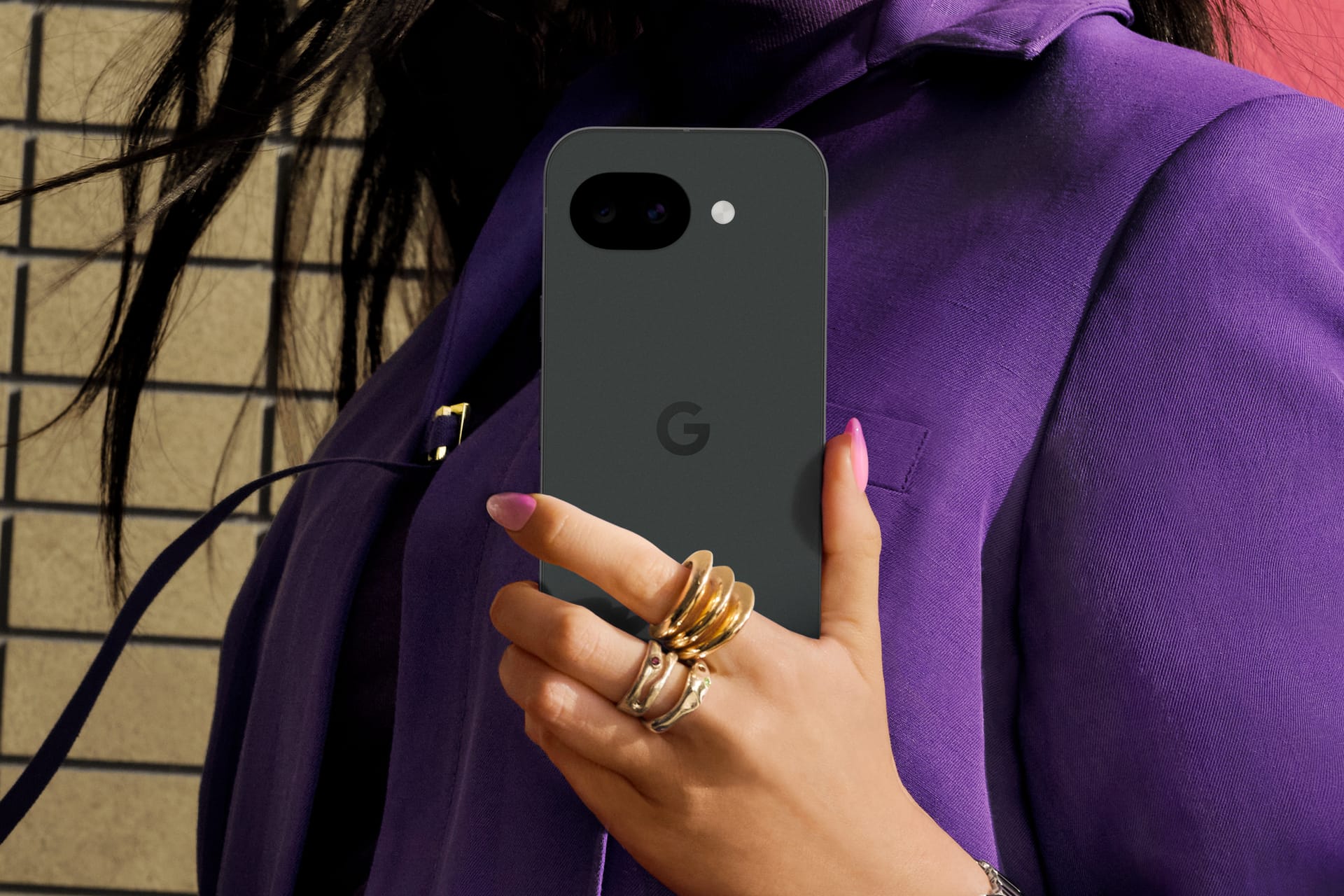
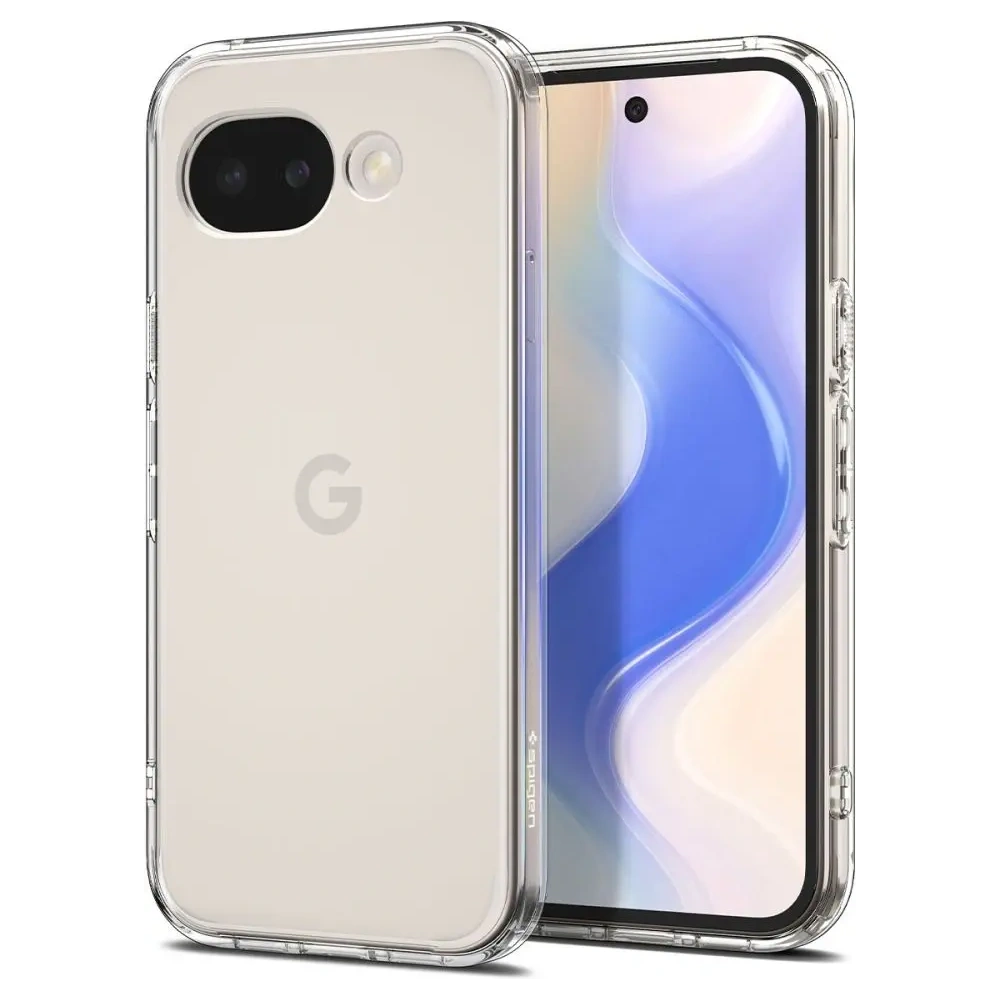
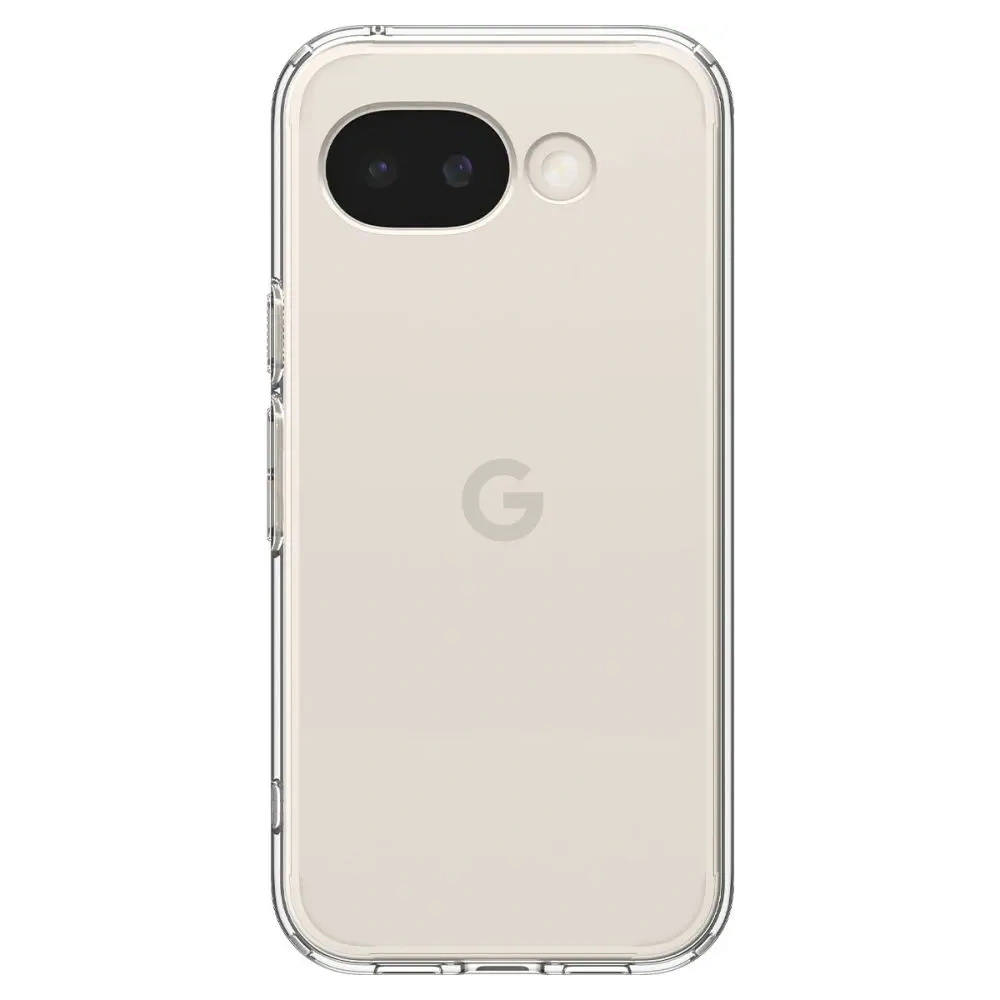
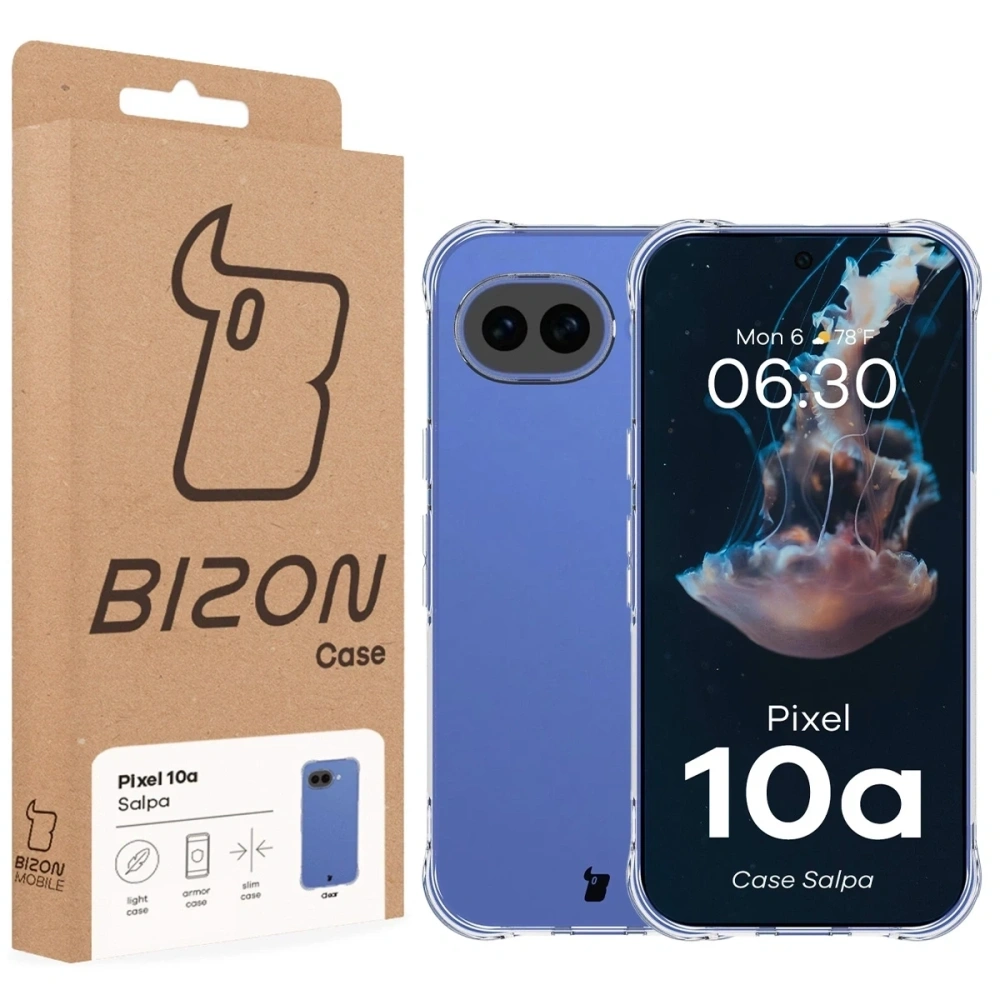
The best case for the Pixel 10a is the Spigen Ultra Hybrid (59 PLN) — transparent with raised edges and Air Cushion technology. The cheapest? The Bizon Case Salpa for 25 PLN. The Pixel 10a has a plastic back, so a case is not a luxury, but a necessity.
The Google Pixel 10a debuted on March 5, 2026. For 549 EUR, you get a Tensor G4 processor, a 48 MP camera with OIS, a 120 Hz display with Gorilla Glass 7i, and a 5100 mAh battery with 30W charging. It’s a great smartphone for its price — but it has a plastic back that scratches easily.
In this guide, you will find the best accessories for the Pixel 10a: cases starting from 25 PLN, tempered glass, and chargers that utilize the full potential of 30W fast charging.
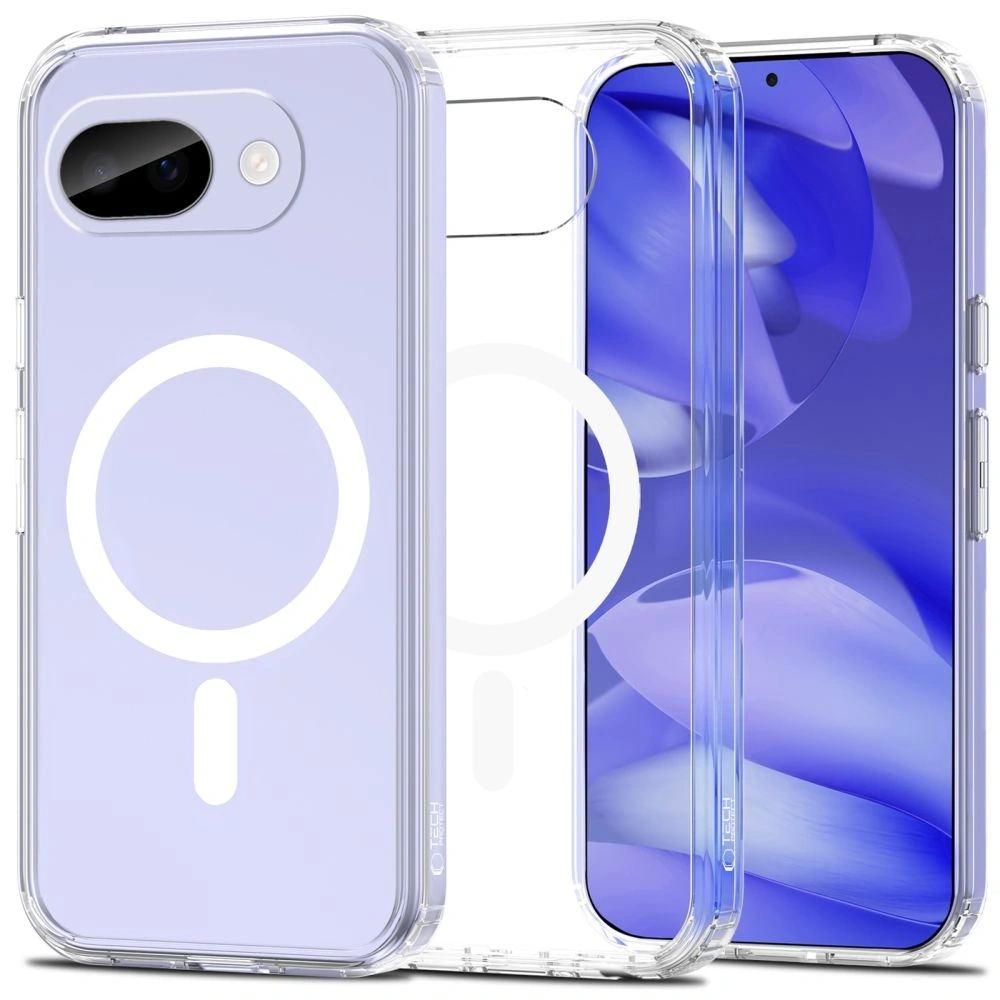
Tip: The Pixel 10a supports 10W Qi wireless charging, but it does not have native MagSafe or Qi2. Cases with a magnetic ring (e.g., Tech-Protect or Ringke MagSafe) add compatibility with MagSafe accessories.
1. Spigen Ultra Hybrid — transparent with Air Cushion (59 PLN)
Our choice
Spigen Ultra Hybrid is a proven series — a transparent polycarbonate back with a flexible TPU frame. Air Cushion technology in the corners absorbs impacts, and raised edges protect the screen and camera.
Air Cushion Technology — air cushions in the corners
Transparent back — shows the original color of the Pixel 10a
Raised edges — screen and camera protection
Precise cutouts for all ports and buttons
The Pixel 10a has a flat camera module (without a protruding “island”), so the case sits perfectly on any surface. For 59 PLN, you get Spigen’s proven quality and assurance of fit.
Parameter
Value
Material
TPU + polycarbonate
Type
Transparent
MagSafe
❌
Price
59 PLN
2. Ringke Fusion Magnetic MagSafe — magnetic transparent (65 PLN)
Pixel 10a does not have native MagSafe, but Ringke Fusion Magnetic adds a built-in magnetic ring. Thanks to it, you can use magnetic chargers, power banks, and car mounts — just like iPhone users.
Built-in MagSafe ring — compatibility with magnetic chargers and accessories
Transparent polycarbonate — resistant to yellowing
Raised edges around the screen and camera
Precise cutouts for USB-C and speakers
At 65 PLN, this is the most expensive case in the comparison, but the only transparent one with full MagSafe. If you plan to use wireless chargers or magnetic mounts, it’s the best choice.
Tech-Protect Flexair is half the price of Ringke, yet offers the same key features: a transparent hybrid with a built-in magnetic ring. The hybrid construction (TPU + PC) combines the flexibility of the frame with a hard, scratch-resistant back.
MagSafe — built-in magnetic ring
Hybrid TPU + PC — rigid back, flexible frame
Transparent — visible original color of the phone
Raised edges around the screen and camera
At 35 PLN, it offers the best price-to-functionality ratio in the comparison. If you want MagSafe for the Pixel 10a and don’t want to overpay, Tech-Protect Flexair is a perfect choice.
Parameter
Value
Material
TPU + polycarbonate
Type
Transparent
MagSafe
✅
Price
35 PLN
4. 3MK Armor Case — armored protection (49.90 PLN)
3MK Armor Case is a rugged case with reinforced corners and a textured back that doesn’t slip from your hand. The design absorbs impacts more effectively than standard TPU cases.
Reinforced corners — enhanced protection during falls
Textured back — non-slip surface
Matte finish — does not collect fingerprints
Raised edges around the screen and camera
The plastic back of the Pixel 10a is particularly prone to scratches. The 3MK Armor Case ensures that even a fall on concrete won’t result in a crack. At 49.90 PLN, it’s a solid rugged case from a Polish brand.
Parameter
Value
Material
Reinforced TPU
Type
Armored
MagSafe
❌
Price
49.90 PLN
5. Bizon Case Salpa — the cheapest protection (25 PLN)
Lowest price
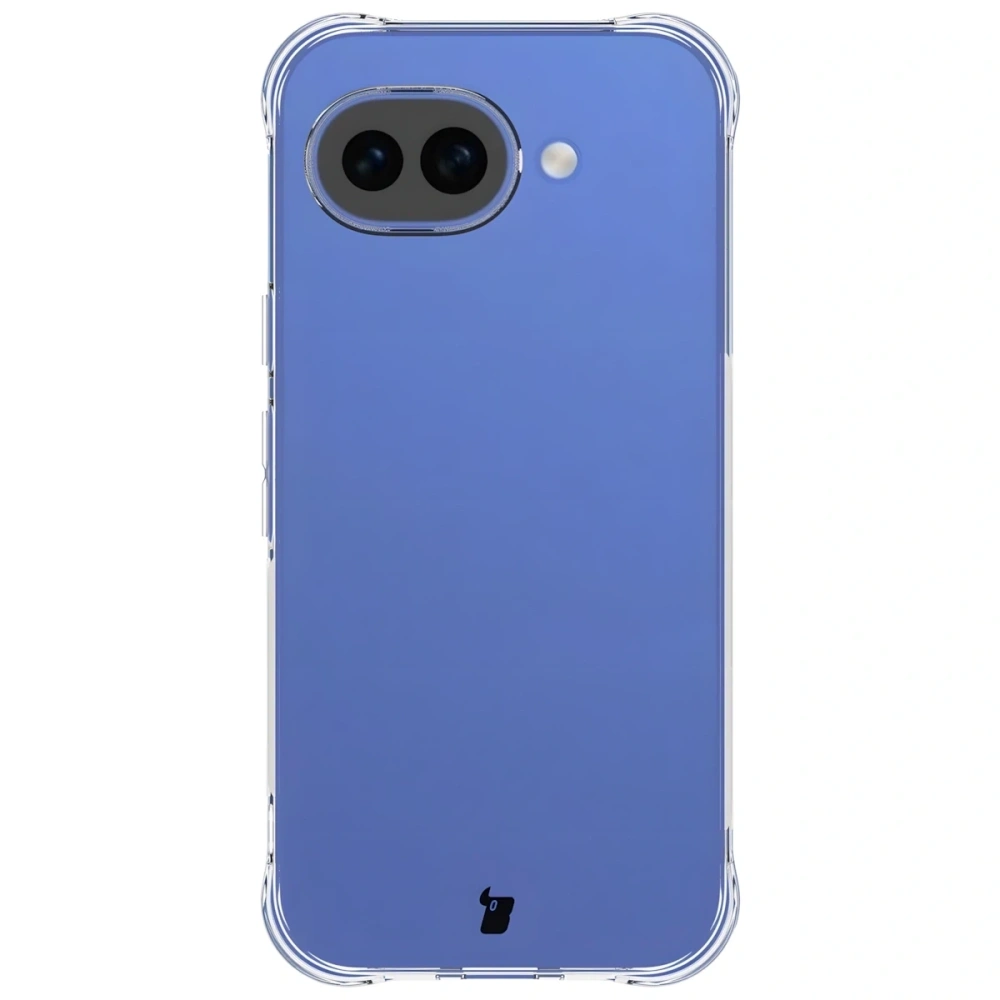
Flexible TPU case for 25 PLN. Bizon Case Salpa is a minimalist, transparent cover that protects against scratches and light falls. It lacks Air Cushion and MagSafe, but it does what it needs to do — at a minimal price.
Flexible TPU — easy to put on and take off
Transparent — visible design of the Pixel 10a
Raised edges around the screen
Slim profile — does not add unnecessary thickness
Perfect as a temporary case right after purchasing a phone or for those who do not need advanced protection. For 25 PLN, it’s hard to find a better option to start with.
Parameter
Value
Material
TPU
Type
Transparent, flexible
MagSafe
❌
Price
25 PLN
Comparison of cases for Pixel 10a
Case
Brand
Type
MagSafe
Feature
Price
Ultra Hybrid
Spigen
Transparent
❌
Air Cushion, top brand
59 PLN
Fusion Magnetic
Ringke
Transparent
✅
MagSafe + yellowing resistance
65 PLN
Flexair Hybrid
Tech-Protect
Transparent
✅
Cheapest MagSafe
35 PLN
Armor Case
3MK
Armored
❌
Reinforced corners
49.90 PLN
Salpa
Bizon
Flexible
❌
Lowest price
25 PLN
Our choice: Depends on the priority. MagSafe for cheap? Tech-Protect Flexair (35 PLN). Proven brand? Spigen Ultra Hybrid (59 PLN). Minimum expenses? Bizon Salpa (25 PLN).
Tempered glass for Pixel 10a
Pixel 10a has Gorilla Glass 7i on the front — it’s durable glass, but it’s not indestructible when dropped on concrete. Tempered glass adds a protective layer for a few dozen PLN.
Tech-Protect Glass Fit+ 2-pack(25 PLN) — two glasses in a set for the price of one from the competition. Compatible with Pixel 9a and 10a (same screen size). The black frame masks the edges and gives an elegant look. Best value in this category.
Ringke Tempered Glass 2-pack (39 zł) — premium option with an oleophobic coating (resistant to fingerprints) and a hardness of 9H. Two glasses in the set — one for now, the other as a spare.
3MK FlexibleGlass (34,90 zł) — hybrid glass that combines the flexibility of a film with the hardness of glass. It does not shatter upon impact like traditional tempered glass. One piece in the package.
Chargers and power banks for Pixel 10a
Pixel 10a supports 30W charging via cable (USB PD 3.0) and 10W wirelessly (Qi). To take advantage of the full charging speed, you need a USB PD charger with a minimum power of 30W.
Wall charger — look for models with USB-C PD 30W+. A GaN charger (gallium nitride) will be compact and efficient. Check wall chargers at homescreen.pl.
Power bank — minimum 10,000 mAh with USB-C PD. If you bought a case with MagSafe (e.g., Ringke or Tech-Protect), a magnetic power bank will stick to the phone and charge it wirelessly. Power banks at homescreen.pl.
USB-C Cable — The Pixel 10a has USB-C 3.2, so you need a USB-C to USB-C cable that supports PD 30W+. Most cables in the box are 2.0 versions — a 3.2 cable will be useful for data transfer.
FAQ — Frequently Asked Questions about Pixel 10a Accessories
Does the Pixel 10a support MagSafe?
Not natively. The Pixel 10a has Qi standard (10W), but not MagSafe or Qi2. Cases with a built-in magnetic ring (e.g., Ringke Fusion Magnetic, Tech-Protect Flexair MagSafe) add compatibility with MagSafe accessories.
Do cases from the Pixel 9a fit the Pixel 10a?
No. The Pixel 10a has different dimensions (153.9 x 73 x 9 mm) than the Pixel 9a. Cases are not interchangeable between models. Tempered glass may be compatible — e.g., Tech-Protect Glass Fit+ is labeled as “Pixel 9a / 10a”.
What charger for the Pixel 10a?
A USB-C charger with PD (Power Delivery) of at least 30W. This provides full charging speed — 50% battery in 30 minutes.
Is the Pixel 10a waterproof?
Yes, it has an IP68 rating — dustproof and waterproof up to 1.5 meters for 30 minutes. A case is not required for waterproofing, but it protects against scratches and drops.
Does the Pixel 10a have a glass back?
No. The Pixel 10a has a plastic back — this is one of the reasons why a case is particularly important. Plastic scratches more easily than glass and doesn’t look as good after a few months without protection.
How much do accessories for the Pixel 10a cost?
Cases range from 25 PLN (Bizon Salpa) to 65 PLN (Ringke Fusion Magnetic MagSafe). Tempered glass ranges from 25 PLN (Tech-Protect 2-pack) to 39 PLN (Ringke 2-pack). A complete protection set (case + glass) can be purchased for 50–100 PLN.
Summary
The Pixel 10a is a great smartphone, but the plastic back needs protection. The good news is that accessories are cheap — you can buy a complete set (case + tempered glass) for just 50 PLN.
Key takeaways:
Best quality: Spigen Ultra Hybrid (59 PLN) — Air Cushion, transparent, trusted brand
Best with MagSafe: Ringke Fusion Magnetic (65 PLN) — magnetic ring + transparent
Best price-to-value ratio: Tech-Protect Flexair MagSafe (35 PLN) — MagSafe for half the price of Ringke
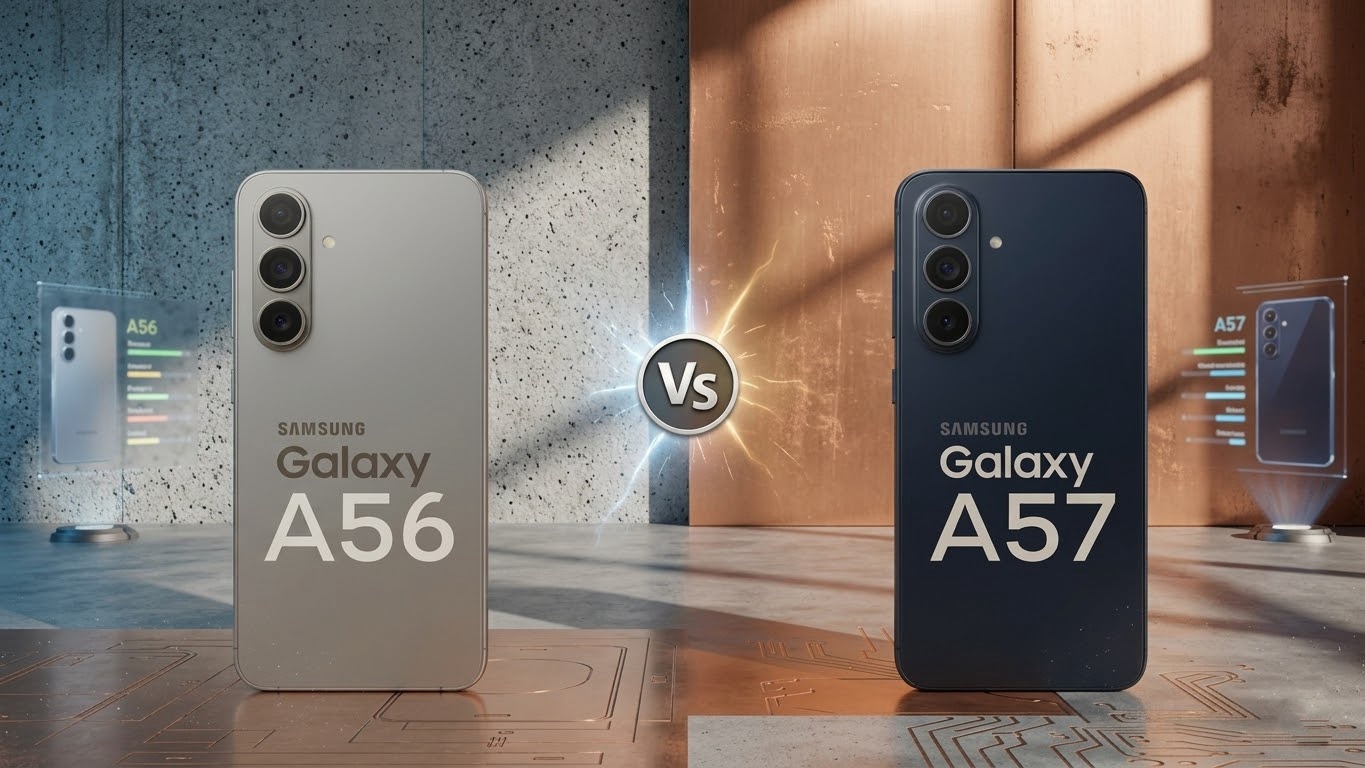
Samsung Galaxy A57 vs A56 – the main difference is the more powerful Exynos 1680 processor with AMD Xclipse 550 GPU and Android 16 with One UI 8.5. The display (6.7″ Super AMOLED, 120 Hz), battery (5000 mAh), and cameras (50 Mpix) are identical in both models. The starting price of the Galaxy A57 is about 300 PLN higher.
The Galaxy A57 is the successor to one of the best-selling mid-range phones of 2025. The Galaxy A56 gained immense popularity due to its solid specifications, attractive price, and long update support. In this comparison of Samsung Galaxy A57 vs A56, we examine both models point by point so you can choose the one that best fits your needs.
Specifications of Galaxy A57 vs Galaxy A56 – comparison table
Before we get into the details, it’s worth looking at a side-by-side comparison of the Galaxy A57 and A56. The table below summarizes the Samsung Galaxy A57 specifications and key technical parameters of both models.
Parameter
Samsung Galaxy A57 5G
Samsung Galaxy A56 5G
Display
6.7″ Super AMOLED, FHD+ (1080 × 2340), 120 Hz
6.7″ Super AMOLED, FHD+ (1080 × 2340), 120 Hz
Processor
Exynos 1680 (4 nm), GPU Xclipse 550
Exynos 1580 (4 nm)
RAM
8 GB
8 GB / 12 GB
Internal storage
128 / 256 GB
128 / 256 GB
Main camera
50 Mpix, OIS
50 Mpix, f/1.8, OIS, 1/1.56″
Ultra-wide camera
12 Mpix
12 Mpix, f/2.2, 123°
Macro camera
5 Mpix
5 Mpix, f/2.4
Front camera
12 Mpix, f/2.2
12 Mpix, f/2.2
Battery
5000 mAh
5000 mAh
Charging
45 W wired
45 W wired
System
Android 16, One UI 8.5
Android 15, One UI 7
Dimensions
161.5 × 76.9 × 6.9 mm
162.2 × 77.5 × 7.4 mm
Weight
192 g
198 g
Protection
IP67
IP67
Connectivity
5G, Wi-Fi 6E, Bluetooth 6.0
5G, Wi-Fi 6E, Bluetooth 5.3
SIM
Dual SIM + eSIM
Dual SIM + eSIM
Price (Europe)
from approx. 539 EUR (~2,299 PLN)
from approx. 479 EUR (~1,999 PLN)
The full specifications of both models are available on the GSMArena website.
Tip: If you mainly care about the camera and RAM capacity, the Galaxy A56 with 12 GB RAM might be a better choice at a lower price.
Display of Galaxy A57 vs A56 – identical panel
Both the Galaxy A57 and A56 feature a 6.7-inch Super AMOLED display with a Full HD+ resolution (1080 × 2340 pixels) and a refresh rate of 120 Hz. The peak brightness reaches 1900 nits, ensuring good readability even in bright sunlight.
Both models are protected by Gorilla Glass Victus+, which effectively safeguards against scratches and minor drops. Samsung did not opt to introduce LTPO technology (dynamic refresh rate change from 1 to 120 Hz), which would help save battery. LTPO remains reserved for the flagship Galaxy S series.
In the comparison of Galaxy A57 and A56 in terms of display, there are practically no differences. If you liked the screen of the Galaxy A56, you will get exactly the same panel in the A57.
Performance of Galaxy A57 vs A56 – Exynos 1680 vs Exynos 1580
Here, the Galaxy A57 makes the biggest leap forward. The new Exynos 1680 processor (4 nm) with AMD Xclipse 550 GPU offers a noticeable increase in computing power compared to the Exynos 1580 in the Galaxy A56.
Benchmarks and real-world performance
The Exynos 1680 uses CPU cores in a 1+3+4 configuration and a 4 nm lithography, similar to its predecessor. The key change is the Xclipse 550 GPU based on AMD RDNA architecture, which offers ray tracing support. This feature has so far only been available in flagship Exynos 2×00 processors from the Galaxy S series.
What does this mean in practice?
Mobile games run smoother. Titles like Genshin Impact or Call of Duty Mobile should maintain more stable frames per second, and ray tracing will add realism in supported games.
Applications open faster, and multitasking (switching between several apps at once) is smoother.
Photo and video editing – the stronger GPU accelerates rendering and applying filters in apps like Adobe Lightroom or CapCut.
Energy efficiency – the new chip is more energy-efficient, which may result in longer battery life despite higher performance.
The Galaxy A56 with Exynos 1580 still performs well in everyday use. If you don’t play demanding mobile games and mainly use social media, browsers, and messaging apps, the performance difference will not be noticeable. For the average user, both processors offer more power than needed for daily tasks.
Camera of Galaxy A57 vs Galaxy A56 – evolution, not revolution
Both phones have a triple camera setup with a main 50 Mpix sensor with optical image stabilization (OIS), a 12 Mpix ultra-wide, and a 5 Mpix macro. The front camera in both cases is 12 Mpix with an f/2.2 aperture.
Samsung did not change the hardware configuration of the cameras, but the Galaxy A57 benefits from improved image processing thanks to the new processor. The Exynos 1680 supports AI algorithms for night photography, which enhance noise reduction and dynamic range in low light conditions.
Key differences in photography
Scenario
Galaxy A57
Galaxy A56
Daytime photos
Identical quality, same 50 Mpix sensor
Identical quality
Night mode
Faster processing, better noise reduction
Good, but slower processing
Video recording
Potentially better stabilization (stronger GPU)
Standard OIS stabilization
Selfies
No changes, 12 Mpix f/2.2
No changes, 12 Mpix f/2.2
Portrait with bokeh
Better background cutting thanks to AI
Good background cutting
In the comparison of Galaxy A57 vs A56, the camera differences will be subtle. The sensors remain the same, so photo quality in good lighting is practically identical. Improvements will mainly be visible in demanding conditions, such as night photography or dynamic video shots.
Battery and charging – no changes, but with better optimization
Both smartphones have a 5000 mAh battery and support 45 W fast charging (Super Fast Charge 2.0). The charger is not included in the box, so you will need to purchase it separately.
The Galaxy A56 charges from 0 to 65% in about 30 minutes, and a full charge takes about 68 minutes. The Galaxy A57 should achieve similar results, but thanks to the more energy-efficient Exynos 1680, the overall battery life on a single charge may be slightly longer.
Neither model supports wireless charging, which remains the domain of the flagship Galaxy S series. If you’re looking for a fast 45 W charger compatible with both models, check out network chargers with USB Power Delivery in our store. A solid USB-C cable supporting USB PD will also be useful.
Design and build quality
The Galaxy A57 is slimmer and lighter than its predecessor:
Galaxy A57
Galaxy A56
Thickness
6.9 mm
7.4 mm
Weight
192 g
198 g
Dimensions
161.5 × 76.9 mm
162.2 × 77.5 mm
The difference of 0.5 mm in thickness and 6 g in weight may not look impressive on paper, but it is noticeable in hand. The Galaxy A57 feels more comfortable and appears more refined.
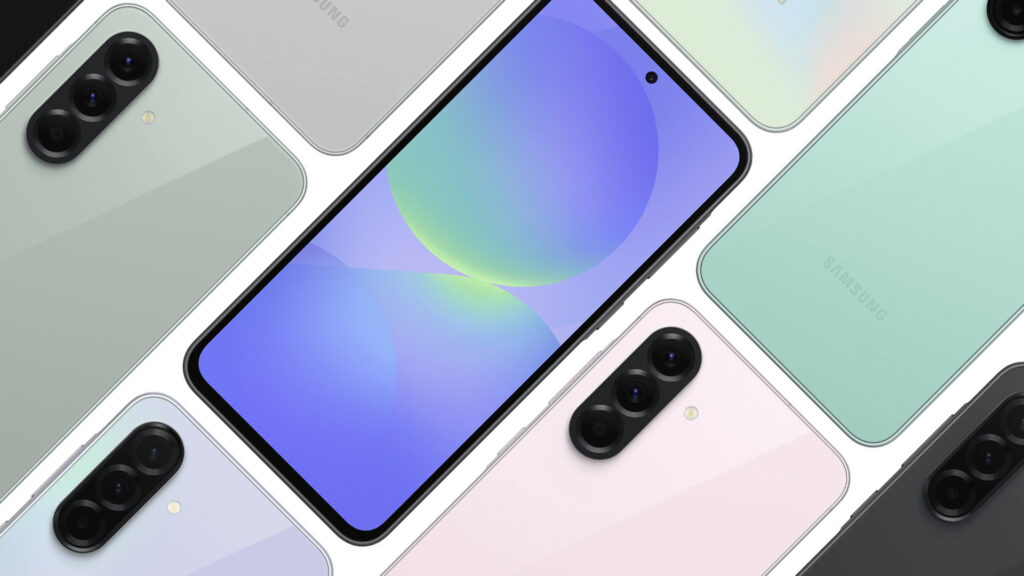
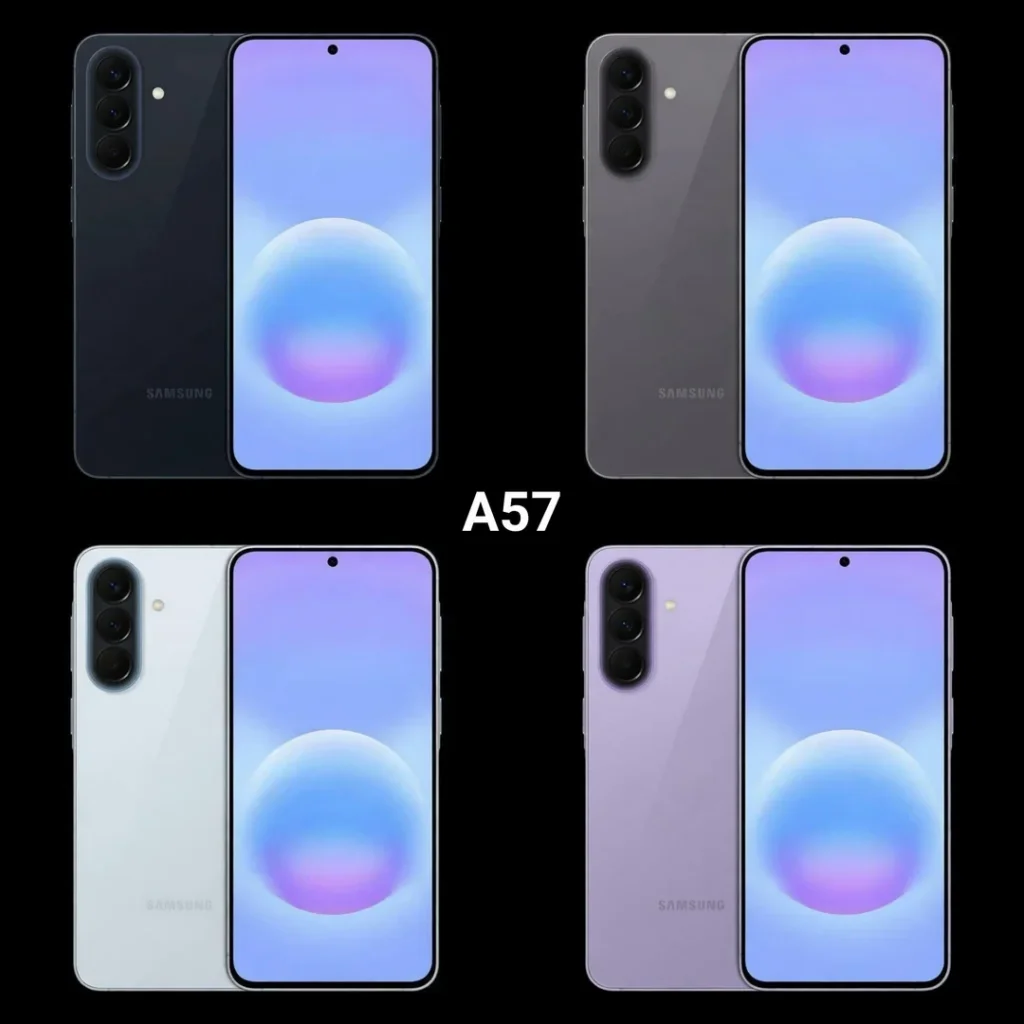
Both models have a flat frame, an IP67 rating (dust and water resistance up to 1 m for 30 minutes), and Gorilla Glass Victus+ on the front. The colors of the Galaxy A57 are gray, light blue, lilac, and navy blue, with a slightly different palette than the A56 (graphite, light gray, olive, pink).
photo. Reddit
Choose a case that highlights the slim design of the new model. At homescreen.pl, you will find cases for Galaxy A57 from Ringke, 3MK, Tech-Protect, and Bizon, with over 50 models starting from 29 PLN.
System and updates – Android 16 vs Android 15
The Galaxy A57 debuts with Android 16 and One UI 8.5, while the Galaxy A56 launched with Android 15 and One UI 7. This is an important difference, as the newer version of the system means:
Longer support for updates from the moment of release
New AI features integrated with One UI 8.5, including improved Galaxy AI with context recognition
Circle to Search 2.0 – enhanced visual search by circling an object on the screen
Improved notifications and interface customization
Bluetooth 6.0 (vs Bluetooth 5.3 in A56), providing better connection stability with wireless headphones
The Galaxy A56 will receive an update to Android 16, but it may take a few months from the release of the new system. Samsung provides 4 years of system updates and 5 years of security patches for both models, which according to Samsung’s official update policy is one of the longest support cycles in the mid-range market.
Galaxy A57 vs A56 – price and value for money
This is a key question for many buyers. The launch price of the Galaxy A57 in Poland starts at around 2,299 PLN for the 8/128 GB version, while the Galaxy A56 in the same configuration cost around 1,999 PLN at launch. This is a difference of about 300 PLN.
Variant
Galaxy A57 (launch price)
Galaxy A56 (current price)
8/128 GB
approx. 2,299 PLN
approx. 1,599-1,799 PLN
8/256 GB
approx. 2,599 PLN
approx. 1,799-1,999 PLN
The Galaxy A56, which has been on the market for over a year, can be purchased at a significantly lower price than at launch. This makes the value for money of the Galaxy A56 really hard to beat. With the saved 500-700 PLN, you can buy a complete set of protective accessories: a case, tempered glass, and a fast charger.
Which one to choose? Recommendations based on needs
Choose the Samsung Galaxy A57 if:
– You care about the latest processor and the highest performance in mobile gaming
– You want Android 16 and One UI 8.5 from day one
– You prefer a slimmer and lighter design
– You don’t mind paying a higher price for the latest solutions
Stick with the Samsung Galaxy A56 if:
– You are looking for great value for money
– You don’t need the latest processor for everyday use
– You want to save 300-500 PLN and spend it on accessories
– You prefer a model that has been proven by users, with Samsung Galaxy A56 reviews confirming its reliability (rating 4.6/5)
Our recommendation: For most users, the Galaxy A56 at its current reduced price is the better choice. The extra cost for the Galaxy A57 makes sense mainly for mobile gamers and those who always want the latest technology.
Accessories – protection for your new smartphone
Whether you choose the Galaxy A57 or the Galaxy A56, it’s worth getting protective accessories right away. Both models have a large 6.7″ display that should be protected with tempered glass from day one of use.
For Samsung Galaxy A57, you will find at homescreen.pl:
– Protective cases from Ringke, 3MK, Tech-Protect, and Bizon (starting from 29 PLN)
– Tempered glass Bizon Glass Clear Duo and Ringke Easy Slide (starting from 35 PLN)
– Camera glasses to protect the camera module
– Protective sets Bizon MatteO Pack and Case Clear Pack (case + glass at an attractive price)
For Samsung Galaxy A56, available are:
– Recycled cases Bizon Case ReLeaf in various colors
– Tempered glass 3MK HardGlass Max with full coverage
– Privacy glass Bizon Glass Mule Shadow protecting against peeping
– Matte films Bizon Glass Film Sun reducing glare and fingerprints
Don’t forget about apower bankfor longer trips; the 5000 mAh battery is substantial, but extra energy is always useful.
Summary
In the comparison of Samsung Galaxy A57 vs A56, it is clear that the new model is a solid, albeit evolutionary update. The main changes are the more powerful Exynos 1680 processor with AMD Xclipse 550 GPU and ray tracing, a slimmer body (6.9 vs 7.4 mm), a newer Android 16 system with One UI 8.5, and Bluetooth 6.0. The display, battery, camera, and charging remain practically unchanged.
With a price difference of about 300-700 PLN (considering the reduced price of the Galaxy A56 after a year on the market), the choice depends on your priorities. If performance and the latest system are your priorities, go for the A57. If value for money matters, in the comparison of Galaxy A57 vs Galaxy A56, the older model wins as one of the best mid-range phones on the market.
FAQ
What is the difference between Samsung Galaxy A57 and Galaxy A56?
The main differences are the newer Exynos 1680 processor (vs Exynos 1580), Android 16 with One UI 8.5 (vs Android 15), Bluetooth 6.0 (vs 5.3), and a slimmer and lighter design (6.9 vs 7.4 mm thick). The display, battery, charging, and cameras remain the same.
Is it worth paying extra for the Galaxy A57?
The extra cost of about 300-500 PLN makes sense if you care about better gaming performance (Xclipse 550 GPU with ray tracing) or want the latest system from day one. For everyday use, the Galaxy A56 is still sufficient.
What processor does the Samsung Galaxy A57 have?
The Samsung Galaxy A57 5G is equipped with the Exynos 1680 processor made in 4 nm technology with AMD Xclipse 550 GPU. This chip is noticeably more powerful than the Exynos 1580 in the Galaxy A56, especially in terms of graphics.
How much does the Samsung Galaxy A57 cost? Price in Poland
The starting price of the Galaxy A57 is around 2,299 PLN for the 8/128 GB version and around 2,599 PLN for the 8/256 GB version. The Galaxy A56 in the same configuration can be purchased from around 1,599 PLN after discounts.
Does the Galaxy A57 have a better camera than the A56?
Both models have identical camera configurations: 50 Mpix (main) + 12 Mpix (ultra-wide) + 5 Mpix (macro) + 12 Mpix (selfie). The Galaxy A57 may offer slightly better night photography due to the improved ISP in the Exynos 1680 processor.
Do Galaxy A56 cases fit the Galaxy A57? No, the Galaxy A57 has different dimensions than the Galaxy A56 (161.5 × 76.9 × 6.9 mm vs 162.2 × 77.5 × 7.4 mm), so the cases are not compatible. Check out dedicated cases for Galaxy A57 at homescreen.pl.
When is the Samsung Galaxy A57 release date?
The Samsung Galaxy A57 5G debuts in March 2026. The phone is already available for pre-order with most Polish operators and in electronics stores.
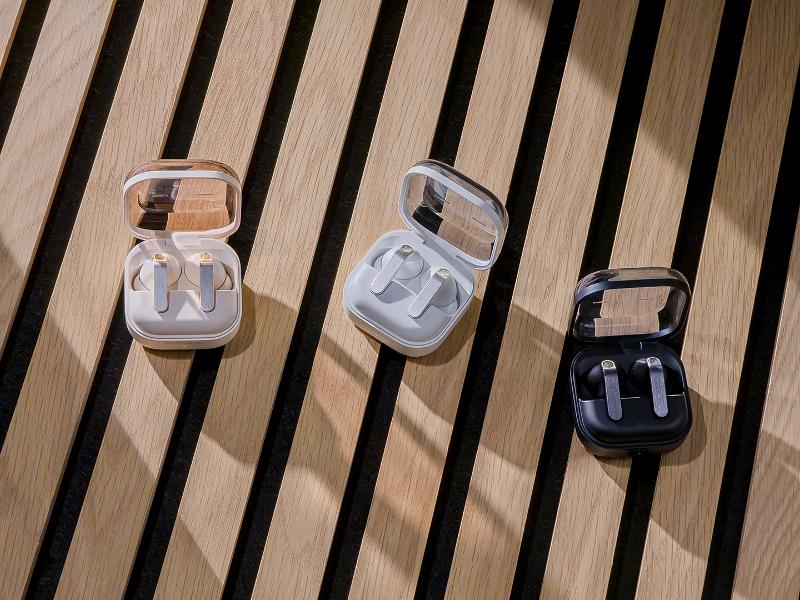
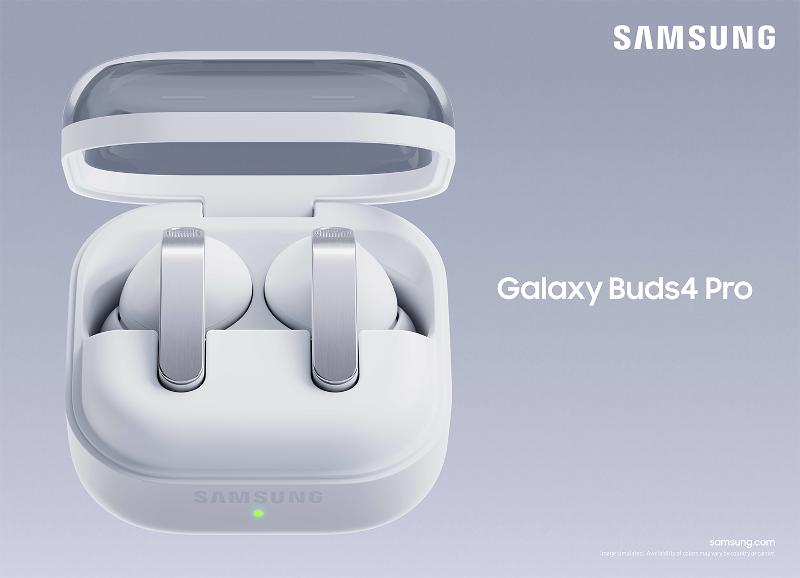
Galaxy Buds 4 Pro are the latest wireless headphones from Samsung with Adaptive ANC 2.0, Bluetooth 6.1, and a weight of 5.1 g. Compared to Galaxy Buds 3 Pro, they offer better noise cancellation, longer battery life in tests, and head gesture support. They cost 1099 PLN compared to about 650-899 PLN for the older model. Which one to choose? Below is a detailed comparison.
Samsung presented the Samsung Buds 4 Pro on February 25, 2026, and sales in Poland started on March 11. This is the direct successor to the Samsung Buds 3 Pro from July 2024. Both Samsung headphone models have a dual-driver system (dynamic + planar), ANC, and IP57 water resistance, but differ in several significant aspects.
1029 PLN (launch) / from approx. 650 PLN (current)
🔊 Sound quality of Galaxy Buds 4 Pro vs Buds 3 Pro
Both models of Samsung in-ear headphones have a dual-driver system, but in the Buds 4 Pro, Samsung replaced both.
Galaxy Buds 4 Pro have a larger 11 mm woofer (vs 10.5 mm). In practice, this provides about 20% more diaphragm area, resulting in deeper, more controlled bass. Reviewers from SoundGuys and What Hi-Fi describe the sound as energetic yet precise, with better instrument separation.
Galaxy Buds 3 Pro, on the other hand, have a larger 6.1 mm planar tweeter (vs 5.4 mm in Buds 4 Pro). Theoretically, this should provide an advantage in high frequencies, but tests show that the Buds 3 Pro tended to have overly strong bass that “bled” into the mids.
Audio codecs
Both models support the same codecs: SBC, AAC, LC3, and Samsung Seamless Codec (SSC UHQ) with a resolution of up to 24 bit/96 kHz. Neither supports LDAC or aptX. SSC UHQ requires a Samsung Galaxy S23 or newer smartphone with One UI 6.1.1+.
This means that you will only get the full sound quality with a Samsung smartphone. With an iPhone or phones from other brands, these Samsung wireless headphones are limited to AAC, which is a noticeable loss of quality compared to SSC UHQ.
Tuning and sound character
The Galaxy Buds 4 Pro have a slightly darker tuning with less emphasis on the high frequencies. The bass is deep but does not dominate the rest of the range. The mid frequencies (vocals, acoustic instruments) sound cleaner than in the predecessor.
The Galaxy Buds 3 Pro have a brighter tuning with more detail in the high frequencies. The soundstage is slightly wider, but the bass can be too expansive, which in some genres (e.g., EDM, hip-hop) leads to “muddiness” in the low frequencies.
The Buds 4 Pro win in sound quality. Better controlled bass, cleaner mid frequencies, and generally a more balanced presentation. The difference is not revolutionary, but it is noticeable.
🔇 ANC: Galaxy Buds 4 Pro vs Buds 3 Pro
This is one of the biggest leaps between generations of these Samsung headphones.
Galaxy Buds 4 Pro feature Adaptive ANC 2.0, which monitors the environment in real-time and adjusts the noise cancellation to specific frequencies. In SoundGuys tests, these Samsung wireless earbuds reduced around 84% of ambient noise, placing them on par with AirPods Pro 3.
Galaxy Buds 3 Pro have first-generation Adaptive ANC, which operates based on programmed algorithms. It still provides effective noise reduction, but does not respond as dynamically to changing conditions.
The biggest improvement is seen in the range below 1 kHz, where the noise from air conditioning, fans, and street traffic resides. Both models struggle with sudden loud sounds.
Ambient Mode and Voice Detection
Both Samsung earbuds have:
– Voice Detection: automatic switching to ambient mode when you start speaking
– Ambient Mode: allowing sounds from the environment
– Adaptive EQ: adjustment to the shape of the ear
In ambient mode, Buds 4 Pro sound a bit more natural. The sounds from the environment do not have the “metallic” aftertaste that sometimes appeared in Buds 3 Pro. This is important if you use ambient mode on a daily basis (e.g., in the office).
Buds 4 Pro win this category. Adaptive ANC 2.0 is a real improvement, not a marketing slogan.
🎙️ Call Quality
Here the difference is most apparent and concerns both sides of the connection.
Galaxy Buds 4 Pro have 6 microphones with a VPU (Voice Pickup Unit) sensor, meaning bone conduction. Additionally, they feature Super Clear Call technology with a bandwidth of 16 kHz (Super Wideband), but only when paired with the Galaxy S26.
In a quiet environment, the voice sounds clear and natural. In noise, the microphone performs well, although there is a slight “digitalization” of the voice. The VPU captures vibrations from the jawbone, which helps isolate the voice from background noise.
Galaxy Buds 3 Pro also have 6 microphones, but without the VPU sensor. They support AI noise cancellation, but reviewers rated the call quality as “below average,” especially in loud environments.
Super Clear Call is an exclusive feature of the Galaxy Buds 4 Pro that doubles the voice bandwidth (from 8 kHz to 16 kHz). In practice, the caller hears you more clearly, and your voice sounds more natural. However, this requires the Galaxy S26, S26+, or S26 Ultra.
Winner: Buds 4 Pro. VPU and Super Clear Call are noticeable improvements, especially for those who make a lot of phone calls.
🔋 Samsung Buds 4 Pro vs Buds 3 Pro Battery
On paper, both models look identical: 6 hours with ANC, 7 hours without ANC, 26/30 hours with the case. But tests from independent publications paint a different picture.
Parameter
Buds 4 Pro (test)
Buds 3 Pro (test)
ANC on (SoundGuys)
6 h 1 min
4 h 31 min
Headphone capacity
61 mAh
53 mAh
Case capacity
530 mAh
515 mAh
Galaxy Buds 4 Pro with a 61 mAh battery (15% more than Buds 3 Pro) achieved exactly 6 hours and 1 minute in SoundGuys tests with ANC on. This result is close to the manufacturer’s claims.
Galaxy Buds 3 Pro with a 53 mAh battery lasted only 4 hours and 31 minutes in the same tests, which is 25% less than the claimed 6 hours.
Both models charge via USB-C and wirelessly (Qi). Samsung does not provide exact charging times, but in practice, fully charging the case with a cable takes about 1.5 hours. The earbuds themselves charge to full in about 50-60 minutes while in the case.
Battery: Advantage Buds 4 Pro. An hour and a half longer battery life in real conditions is a significant difference, especially during travel or long workouts.
🎨 Design and Comfort
Samsung has changed its approach to design in the Buds 4 Pro, focusing on premium materials.
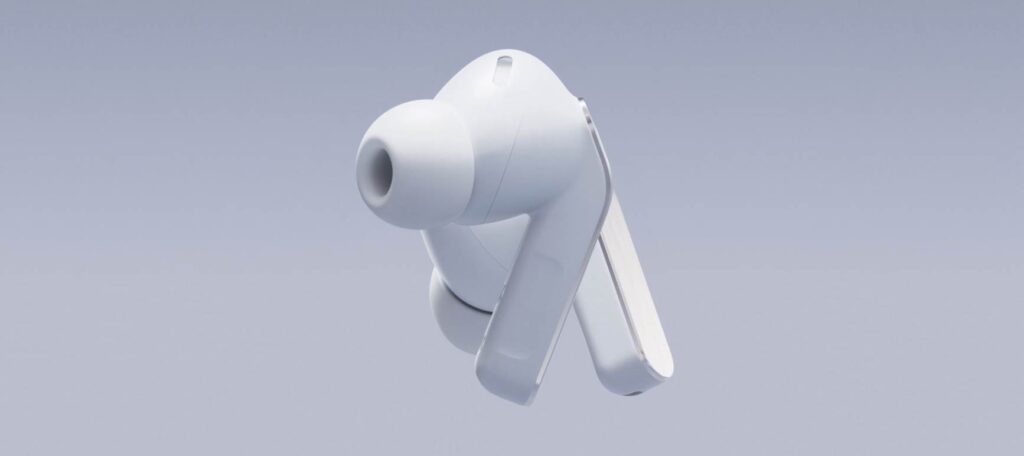
Galaxy Buds 4 Pro have metal (aluminum) stems with a matte finish and delicate touch grooves. The case is flat, horizontal, with a transparent cover through which the earbuds are visible. Weighing 5.1 g per earbud makes them one of the lighter in this class.
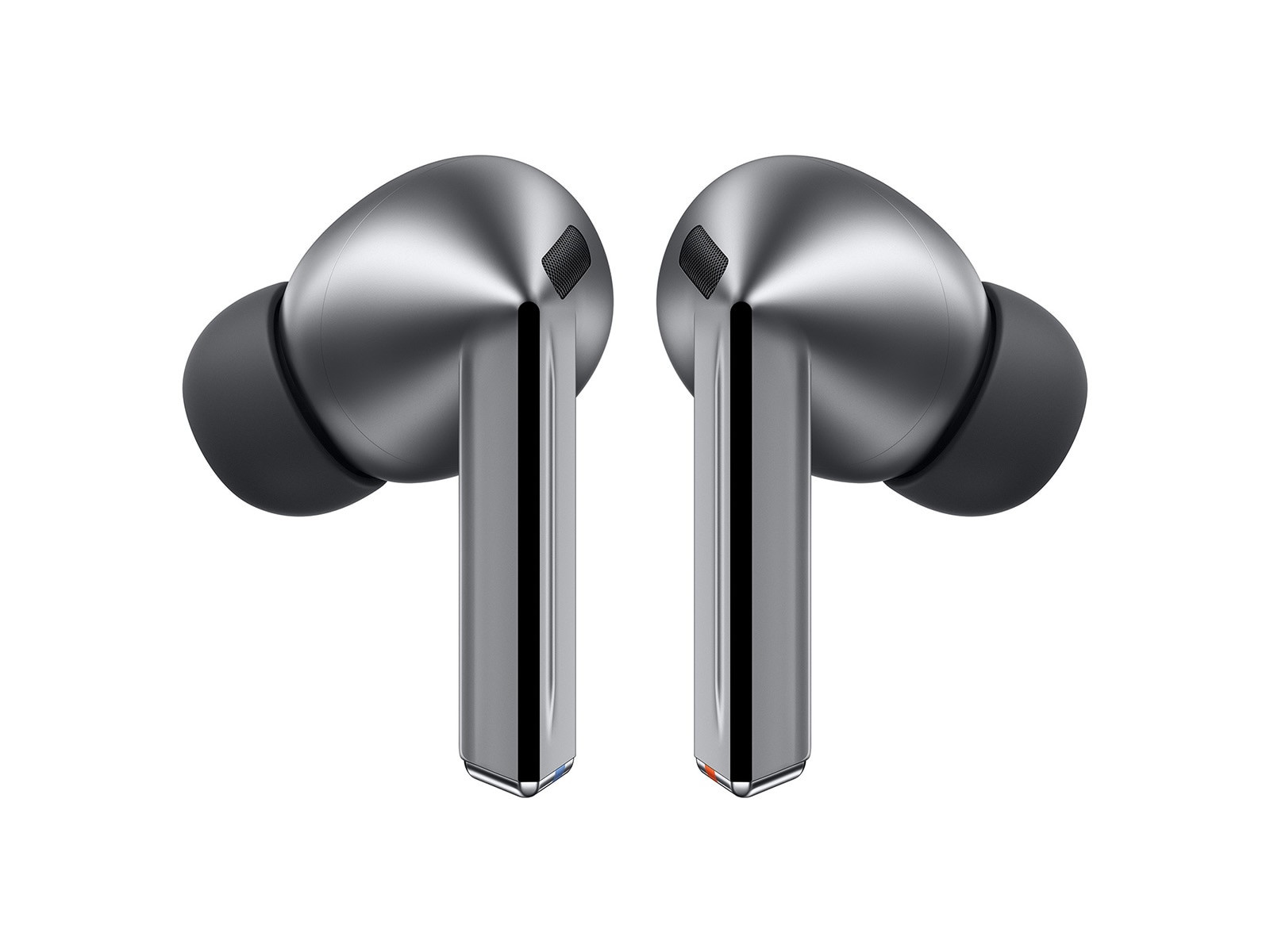
Galaxy Buds 3 Pro have plastic stems with a backlit LED strip that lights up during pairing and notifications. The case is vertical, traditional, without a transparent cover. Weighing 5.4 g per earbud.
Fit and Ear Tips
The difference of 0.3 g per earbud sounds like nothing, but it matters during hours of wear. Both models come with 4 sizes of silicone ear tips (XS, S, M, L). Samsung claims that the Buds 4 Pro were designed based on the analysis of 100 million ear scans and 10,000 virtual simulations.
In practice, both models sit securely in the ear and are suitable for running and exercising. The IP57 certification means protection against dust and immersion in water up to 1 meter for 30 minutes, which is sufficient for sweating during workouts.
Available colors:
– Buds 4 Pro: Black, White, Pink Gold
– Buds 3 Pro: Silver, White
A tie with a slight advantage for Buds 4 Pro. The aluminum stems look premium, and the lighter weight improves comfort. But if you like the LED on the stems of Buds 3 Pro, it’s a matter of taste.
📱 Smart features and Samsung ecosystem
Head gestures (only Buds 4 Pro)
A new feature exclusive to Samsung Buds 4 Pro: nodding your head answers a call, shaking your head rejects it. Works only with Samsung phones. A small but useful novelty when your hands are busy while cooking, training, or cycling.
Voice assistant
Buds 4 Pro support both Gemini and Bixby simultaneously: you say “Hey Google” or “Hey Bixby” without needing to select in settings. Buds 3 Pro require choosing one assistant (Bixby, Google Assistant, or Siri).
Having a dual assistant means you can use Gemini for questions and searches, and Bixby for controlling your Samsung phone settings. It’s a convenient solution for Galaxy ecosystem users.
Spatial Audio and 360 Audio
Both Samsung headphone models support spatial audio with head tracking. The effect is most noticeable when watching movies on the Samsung Galaxy Tab. In music, Spatial Audio can be controversial as it widens the soundstage at the expense of precision.
Other Common Features
Both models have:
– Real-Time Interpreter: real-time conversation translation (requires Galaxy AI)
– Auracast: audio sharing via Bluetooth LE Audio (e.g., sharing music with a friend)
– SmartThings Find: locating lost earbuds
– Adapt Sound: sound personalization based on hearing tests
– Dialogue Boost: enhancing dialogues in movies and podcasts
– Fall Detection: automatic notification to emergency contacts
Compatibility with Phones
These Samsung earbuds work with both Android and iOS. However, you will only fully utilize their capabilities (SSC UHQ, head gestures, Super Clear Call, Galaxy AI) with a Samsung smartphone.
With an iPhone, you lose: head gestures, Super Clear Call, SSC UHQ codec, SmartThings Find, and automatic pairing. You are left with AAC, basic ANC, and touch controls. If you have an iPhone, consider AirPods Pro 3 as an alternative.
💰 Price of Galaxy Buds 4 Pro vs Buds 3 Pro in Poland
Model
Launch Price
Current Price (March 2026)
Galaxy Buds 4 Pro
1099 PLN
1099 PLN
Galaxy Buds 3 Pro
1029 PLN
from approx. 650 PLN
This is the most important difference in this comparison. Samsung Buds 3 Pro, which launched at 1029 PLN, can now be purchased for 650-899 PLN (depending on the store and promotions). Galaxy Buds 4 Pro cost 1099 PLN without discounts.
The difference between the launch prices is only 70 PLN. But between the current price of Buds 3 Pro and Buds 4 Pro, it is even 200-450 PLN.
The question then comes down to: is Adaptive ANC 2.0, better battery performance in tests, head gestures, and Bluetooth 6.1 worth the extra 200-450 PLN?
If you are buying Samsung earbuds for several years and care about the best ANC and calls, the answer is yes. If you are looking for good value for money, Buds 3 Pro for 650-700 PLN are still great wireless earbuds from Samsung.
In Europe, the price of Galaxy Buds 4 Pro is 249 euros, which is identical to the launch price of Buds 3 Pro. In the USA, both models were priced at 249.99 USD, but Buds 3 Pro can now be purchased for about 170-190 USD.
🆚 Who should choose which Samsung earbuds?
Choose Galaxy Buds 4 Pro if:
You care about the best ANC in the Samsung ecosystem
You make a lot of phone calls
You have a Galaxy S26 (Super Clear Call)
You want head gestures and dual assistant (Gemini + Bixby)
You bought a Samsung phone in 2026 and want a complete set
Choose Galaxy Buds 3 Pro if:
You want to save 200-450 PLN
You don’t need the latest ANC
Sound is more important than call quality
You are looking for solid wireless earbuds at a good price
You have an older Samsung phone (Buds 3 Pro work great anyway)
Yes. Buds 4 Pro connect to iOS via Bluetooth, but you lose features exclusive to Samsung: head gestures, Super Clear Call, Gemini/Bixby, SmartThings Find, and automatic pairing.
Do Galaxy Buds 3 Pro support LDAC?
No. Neither the Buds 3 Pro nor the Buds 4 Pro support the LDAC codec. Both models use Samsung Seamless Codec (SSC UHQ) offering quality up to 24 bit/96 kHz, but only with Samsung smartphones.
Do Buds 4 Pro have better sound than Buds 3 Pro?
Yes, but the difference is not drastic. The Buds 4 Pro have better-controlled bass and clearer mid-tones thanks to a larger 11 mm driver. In blind tests, audiophiles will mainly notice the difference.
Is it worth buying Buds 3 Pro in 2026?
Yes. For 650-700 PLN, they are one of the best wireless headphones from Samsung with ANC, planar sound, and IP57. The price drop after the release of Buds 4 Pro makes them a great deal.
How much do Galaxy Buds 4 Pro cost in Poland?
The launch price of the Galaxy Buds 4 Pro in Poland is 1099 PLN. They are available in three colors: Black, White, and Pink Gold.
Do Samsung Galaxy Buds 4 Pro have noise cancellation?
Yes. The Buds 4 Pro feature Adaptive ANC 2.0, which is next-generation active noise cancellation that monitors the environment in real-time and adjusts the attenuation to specific frequencies.
What is the difference between Galaxy Buds 4 Pro and regular Galaxy Buds 4?
Galaxy Buds 4 Pro have a dual-driver system (dynamic + planar), Adaptive ANC 2.0, Bluetooth 6.1, and VPU. Regular Galaxy Buds 4 have a single driver, basic ANC, and Bluetooth 5.4. The price difference is about 400 PLN.
Summary
Galaxy Buds 4 Pro are an evolution, not a revolution, compared to Galaxy Buds 3 Pro. The most important upgrades are Adaptive ANC 2.0 (realistically better noise cancellation), Bluetooth 6.1, head gestures, dual AI assistant, and better battery in tests (6 h vs 4.5 h with ANC).
Is it worth the extra cost? At the full launch price (1099 vs 1029 PLN), the answer is: yes. At the current price of Buds 3 Pro (about 650-700 PLN), the decision is more difficult, because for almost half the price you get 80-90% of the experience.
Our verdict: Galaxy Buds 4 Pro are the best earbuds Samsung has ever made. But if your budget is limited, Galaxy Buds 3 Pro for 650-700 PLN is one of the best deals on the wireless earbuds market in 2026.
If you care about the Apple ecosystem, stability, and great video — the better choice will be the iPhone 17 Pro Max.
On the other hand, if you prioritize maximum specifications, a 200 MP camera, S Pen, and greater control over the system — the Galaxy S26 Ultra offers more technology.
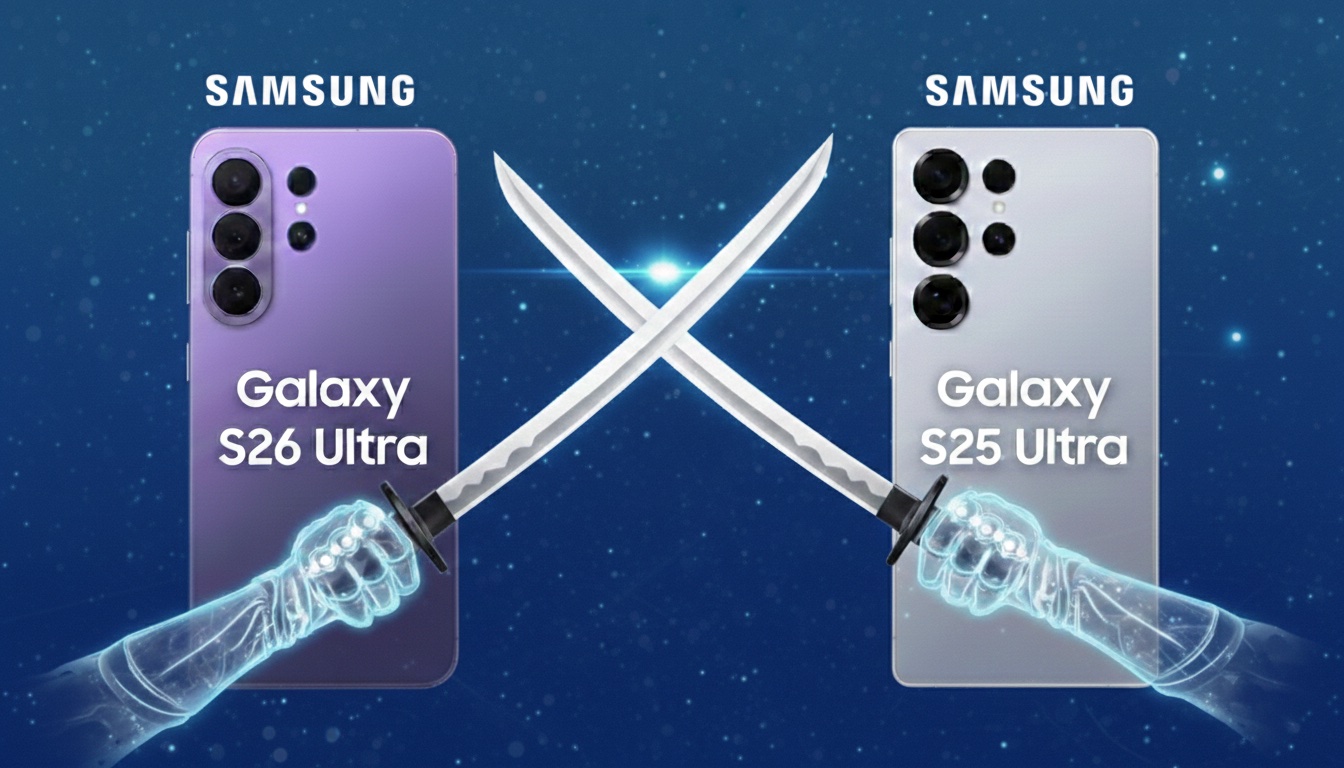
6,299 PLN for the iPhone 17 Pro Max. 6,499 PLN for the Samsung Galaxy S26 Ultra. The difference? 200 PLN and two completely different ecosystems. On paper, both phones have 6.9-inch screens, flagship processors, and cameras that make DSLRs from a few years ago look pale in comparison. But the devil is in the details.
If you’re wondering which one will be your companion for the next 3-4 years, this article will help you make an informed decision.
📊 Specifications – iPhone 17 Pro Max vs Galaxy S26 Ultra
Before we get into the details, here’s a comparison of the key parameters side by side:
Parameter
iPhone 17 Pro Max
Galaxy S26 Ultra
Display
6.9″ OLED, 2868×1320, 460 ppi
6.9″ Dynamic AMOLED 2X, 3120×1440, 498 ppi
Brightness
1000/1600/3000 nits
~1750/2600 nits
Processor
Apple A19 Pro
Snapdragon 8 Elite Gen 5
RAM
12 GB (unofficially)
12/16 GB
Storage
256 GB / 512 GB / 1 TB / 2 TB
256 GB / 512 GB / 1 TB
Main Camera
48 MP f/1.78
200 MP f/1.4
Ultrawide
48 MP f/2.2 (120°)
50 MP f/1.9
Telephoto
48 MP 4x f/2.8 (8x optical)
50 MP 5x + 10 MP 3x
Selfie
18 MP f/1.9
12 MP f/2.2
Video
4K Dolby Vision 120fps, ProRes
8K 30fps, 4K 120fps
Battery
4,823 mAh
5,000 mAh
Charging
40 W wired, 25 W MagSafe
60 W wired, 25 W Qi2.2
Dimensions
163.4 x 78.0 x 8.75 mm
163.6 x 78.1 x 7.90 mm
Weight
233 g
214 g
Protection
Ceramic Shield 2, IP68 (6 m)
Gorilla Armor, IP68
Material
Aluminum, Ceramic Shield
Titanium
System
iOS 26
Android 16 + One UI
S Pen / stylus
❌
✅
Price (256 GB)
6,299 zł
6,499 zł
At first glance, it’s clear: these are two different approaches to a flagship. Samsung focuses on camera resolution and faster charging, while Apple emphasizes the video ecosystem and memory capacity. Let’s get into the details.
⚡ Performance and Processor
A19 Pro vs Snapdragon 8 Elite Gen 5
The iPhone 17 Pro Max is powered by Apple A19 Pro — a chip manufactured using a 2 nm process with a 6-core CPU and a 6-core GPU featuring hardware ray tracing. Samsung counters with the Snapdragon 8 Elite Gen 5 from Qualcomm, which Samsung uses in all regions (no more Exynos in Europe).
Benchmarks vs Reality
In Geekbench 6 tests, Samsung surprised: the Galaxy S26 Ultra scored 11,738 points in multi-core — about 20% more than the iPhone 17 Pro Max (~9,700 pts). Single-core? Samsung also leads with a score of 3,852 points.
Does this mean that Samsung is faster in everyday use? Not necessarily. iOS traditionally optimizes resources better, so an iPhone with less RAM (12 GB vs 16 GB in the top version of Samsung) can perform just as smoothly. The differences in benchmarks mainly translate to:
Video and 3D graphics rendering — here Samsung has a measurable advantage
Multitasking with multiple heavy applications — 16 GB of RAM gives Samsung a buffer
Everyday applications (social media, browser, maps) — both phones operate at the same speed
💡 Tip: If you are not rendering video on your phone and not playing the latest 3D games, you simply won’t notice any performance differences between these two flagships.
Display – iPhone 17 Pro Max vs Samsung Galaxy S26 Ultra
Resolution, brightness, and screen features
The iPhone 17 Pro Max and Samsung Galaxy S26 Ultra offer large, 6.9-inch OLED displays with a refresh rate of 120 Hz. However, this is where the similarities between the screens of both flagships essentially end.
Samsung Galaxy S26 Ultra has a higher screen resolution — 3120 × 1440 px (498 ppi), while iPhone 17 Pro Max offers 2868 × 1320 px (460 ppi). In practice, you will notice the difference in sharpness mainly when viewing text or images very closely. In everyday use, both displays are simply phenomenally sharp.
Where does the iPhone 17 Pro Max catch up? Screen brightness. Apple claims even up to 3000 nits at peak (e.g., in full sunlight) — this is one of the highest values on the smartphone market. Galaxy S26 Ultra reaches about 2600 nits, so in very bright conditions, the iPhone may be slightly more readable.
However, Samsung has something that we won’t find in the iPhone — the Privacy Display feature. This technology limits the screen viewing angle, so people sitting next to you on the bus or train won’t see your messages or banking app. In terms of privacy, this is a very practical solution.
This is where the most interesting part of the comparison begins. Both phones have camera systems that compete with compact cameras, but they approach photography from different angles.
Main Camera: 48 MP vs 200 MP
Samsung boasts a 200 MP with an aperture of f/1.4 — the brightest aperture in Galaxy history. It lets in 47% more light than the S25 Ultra (f/1.7). The iPhone responds with a “modest” 48 MP, but with optical sensor-shift stabilization.
Is 200 MP better than 48 MP? By default, both phones take pictures at ~12 MP (through pixel binning). Samsung wins in situations where you want to pull out detail — the full 200 MP provides huge files for cropping. The iPhone focuses on color consistency across all three lenses.
Zoom: periscope system
Zoom
iPhone 17 Pro Max
Galaxy S26 Ultra
Ultrawide
48 MP, 0.5x
50 MP, 0.6x
Main
48 MP, 1x-2x
200 MP, 1x
Telephoto #1
—
10 MP, 3x
Telephoto #2
48 MP, 4x (8x optical)
50 MP, 5x
Max digital zoom
40x
100x (Space Zoom AI)
Samsung offers two telephoto lenses (3x and 5x), providing greater flexibility. The iPhone has one 4x telephoto lens, but with the ability to crop to 8x without loss of quality (thanks to the 48 MP sensor). In practice, both systems deliver excellent results up to ~10x zoom. Above that, Samsung leads with its 100x Space Zoom supported by AI.
Selfies and Portrait Mode
The iPhone wins in selfies — 18 MP with autofocus and Center Stage vs 12 MP on Samsung. Center Stage automatically crops the shot, tracking your face during video calls. Samsung has HDR10+ in selfies, but with lower resolution.
🎬 Video and Filming
This is a category where the iPhone traditionally dominates — and the 17 Pro Max maintains this position.
iPhone 17 Pro Max records 4K Dolby Vision up to 120 fps and supports ProRes — a format used in professional post-production. Slow-motion in 4K at 120 fps is a quality that just 3 years ago required a camera costing several thousand zlotys. Additionally, Spatial Video for Apple Vision Pro.
Samsung Galaxy S26 Ultra records 8K at 30 fps — higher resolution on paper, but 30 fps limits smoothness. In 4K, Samsung offers up to 120 fps, which levels the playing field. However, there is no equivalent to ProRes — Samsung’s files are compressed.
Feature
iPhone 17 Pro Max
Galaxy S26 Ultra
Max resolution
4K 120 fps (Dolby Vision)
8K 30 fps
ProRes / pro format
✅ ProRes 4K 120 fps
❌
Slow-motion
4K 120fps, 1080p 240fps
4K 120fps, 1080p 240fps
Spatial Video
✅
❌
Stabilization
Sensor-shift OIS
OIS
Verdict: If filming is a priority for you, the iPhone has no competition in the smartphone segment. If you mainly record short clips for social media, both phones perform excellently.
🔋 Battery and Charging
Battery capacity and charging speed
Samsung has a larger battery (5,000 mAh vs 4,823 mAh), but the iPhone compensates with better energy optimization. Apple claims 39 hours of video playback for the Pro Max — one of the best results on the market.
Where does Samsung clearly win? Wired charging.
Charging
iPhone 17 Pro Max
Galaxy S26 Ultra
Wired
40 W (50% in 20 min)
60 W (75% in 30 min)
Wireless
25 W (MagSafe/Qi2)
25 W (Qi2.2)
Reverse charging
✅ (MagSafe)
✅ (4.5 W)
Samsung charges significantly faster via wired — 60 W vs 40 W. If you forgot to charge your phone overnight, Samsung will get back to 75% in half an hour. The iPhone takes longer, although 50% in 20 minutes is still a decent result.
Wireless charging is a tie — 25 W on both sides. Both support reverse charging (charging headphones or a watch from the phone).
🤖 AI and Software
This is a category that in 2026 becomes one of the most important differentiators. Both phones offer advanced AI features, but in different styles.
Apple Intelligence
Apple Intelligence operates deeply within iOS 26. Key features:
Siri with context — understands what is on the screen, continues the conversation, executes complex commands
Writing tools — summarization, tone correction, rewriting text in any application
Genmoji — generating personalized emojis from a description
Image Playground — creating AI images in illustration style
Notification prioritization — AI sorts notifications by importance
Galaxy AI
Samsung Galaxy AI in S26 Ultra offers:
Real-time conversation translation — during phone calls, without internet
Circle to Search — circle anything on the screen to search for it
Generative Edit — filling in photo fragments with AI-generated content
Note Assist — note summaries, transcription of recordings
Privacy Display AI — intelligent dimming of the screen when someone is looking from the side
Updates — how many years of support?
Here is the key difference. Apple traditionally supports iPhones for 6-7 years of iOS updates. Samsung promises 7 years of system and security updates starting with the S24 series — matching Apple.
In practice, both phones purchased today will receive updates until 2032-2033. This means that an investment of ~6,300 PLN is spread over at least 7 years of support.
💰 Price and Value for Money
How much does the iPhone 17 Pro Max cost vs the Samsung Galaxy S26 Ultra?
Variant
iPhone 17 Pro Max
Galaxy S26 Ultra
256 GB
6,299 PLN
6,499 PLN
512 GB
7,299 PLN
7,499 PLN
1 TB
8,299 PLN
9,499 PLN
2 TB
10,299 PLN
❌ not available
iPhone 17 Pro Max is about 200 PLN cheaper than the Galaxy S26 Ultra in every memory variant. In practice, this means that regardless of the chosen version — 256 GB, 512 GB, or 1 TB — the Apple smartphone remains slightly more affordable.
Additionally, Apple is the only one offering a variant with as much as 2 TB of memory, which we won’t find in the Galaxy S26 Ultra. This can be especially significant for those recording a lot of high-quality video or photographers working with ProRAW and ProRes files, which can take up a lot of space.
💡 Tip: If 256 GB turns out to be too little, and 1 TB too much, the best compromise for most users will be the 512 GB variant. In both models, it costs around 7,300–7,500 PLN and offers enough space for photos, videos, and applications for several years of use.
iPhone 17 Pro Max vs Samsung Galaxy S26 Ultra – summary
Which flagship will be the better choice?
After analyzing 8 categories, there is no clear winner. Both phones are phenomenal, but they target different users.
Filmmakers and video creators — ProRes, Dolby Vision 4K 120fps, Spatial Video
Apple ecosystem users — Mac, iPad, AirPods, Apple Watch, Vision Pro
People valuing long-term value — iPhones hold their value longer in the secondary market
Photographers needing large storage — 2 TB option
People preferring simplicity — iOS is less customizable but more consistent
Samsung Galaxy S26 Ultra — for whom?
S Pen users — notes, drawing, precise control
Photographers focusing on zoom — 100x Space Zoom, two telephoto lenses
People who value fast charging — 60 W wired
Multitaskers — DeX, split windows, 16 GB RAM
People who value screen privacy — Privacy Display is a unique feature
If you already have an iPhone or Samsung…
Changing ecosystems is not just about getting a new phone — it’s about changing your watch, headphones, subscriptions, and habits. If you’ve been in the Apple or Samsung ecosystem for years, switching to the other side is rarely worthwhile. Choose a newer model within your ecosystem.
Are you buying your first flagship? Check out both in the store. Hold them in your hand. See which interface feels more intuitive to you. For around 6,300-6,500 PLN, you can’t go wrong with either of them.
Regardless of whether you choose an iPhone or Samsung, it’s worth taking care of the right accessories right away — especially screen protection, a case, and a good charger. If you’re looking for proven models, check out our rankings and guides:
How much does the iPhone 17 Pro Max cost in Poland? The iPhone 17 Pro Max starts at 6,299 PLN for the 256 GB version. The 512 GB variant costs 7,299 PLN, 1 TB — 8,299 PLN, and 2 TB — 10,299 PLN.
When is the release of the Samsung Galaxy S26 Ultra? The Samsung Galaxy S26 Ultra was released in the first quarter of 2026. The phone has been available in Polish stores since February 2026.
Which has a better camera — iPhone 17 Pro Max or Galaxy S26 Ultra? It depends on the use case. Samsung excels in photography with high zoom (100x Space Zoom) and has a brighter main lens (f/1.4). The iPhone has better color consistency between lenses and dominates in video recording (ProRes, Dolby Vision 4K 120fps).
Which has longer update support? Both offer 7 years of system and security updates. The iPhone 17 Pro Max will be supported until ~2032, while the Galaxy S26 Ultra — until ~2033.
Is it worth waiting for the S26 Ultra, or should I buy the S25 Ultra cheaper? The S26 Ultra offers several significant upgrades: a brighter f/1.4 lens (vs f/1.7), Privacy Display, Snapdragon 8 Elite Gen 5, and next-generation Galaxy AI. If you find the S25 Ultra at a good price (below 5,000 PLN), it is still an excellent phone. But if you are buying for the next 3-4 years — the S26 Ultra is a better investment.
iPhone 17 Pro Max or Galaxy S26 Ultra — which is lighter? The Samsung Galaxy S26 Ultra weighs 214 g — 19 g less than the iPhone 17 Pro Max (233 g). Samsung is also slimmer: 7.9 mm vs 8.75 mm.
The Samsung Galaxy S26 Ultra is clearly better than the S25 Ultra in three key areas: performance, charging, and low-light photography.
The new model offers:
more powerful Snapdragon 8 Elite Gen 5 processor
brighter main camera f/1.4 (more light at night)
faster 60 W charging (75% in 30 minutes)
larger vapor chamber and better cooling
new Privacy Display feature (private screen)
thinner and lighter body
At the same time, the screen, battery (5000 mAh), and most AI capabilities remain very similar to its predecessor.
Appearance, dimensions, and build quality
Comparison of Galaxy S26 Ultra vs Galaxy S25 Ultra construction
Specification
Samsung Galaxy S26 Ultra
Samsung Galaxy S25 Ultra
Dimensions
163.6 × 78.1 × 7.9 mm
162.8 × 77.6 × 8.2 mm
Weight
214 g
218 g
Frame
Armor Aluminium
Titanium
Front Glass
Corning Gorilla Armor 2
Corning Gorilla Armor
Back Glass
Gorilla Glass Victus 2
Gorilla Glass Victus 2
Resistance
IP68
IP68
Port
USB-C 3.2, OTG, DisplayPort 1.4
USB-C 3.2, OTG, DisplayPort 1.4
What has really changed in the design?
At first glance, both models are almost identical. The camera layout, shape, proportions – Samsung has not introduced a visual revolution. The differences are subtle and can only be seen when comparing the specifications.
Galaxy S26 Ultra is thinner (7.9 mm vs 8.2 mm) and lighter (214 g vs 218 g). This makes it the slimmest Ultra model in the history of the series. The difference of 0.3 mm may seem symbolic, but with such a large device, it affects the comfort of grip.
The change that sparks the most discussion is the abandonment of the titanium frame. The Galaxy S25 Ultra used titanium, while the S26 Ultra features Armor Aluminium. In practice, both materials provide very high structural rigidity, but titanium was a distinguishing element of its predecessor. The new model does not feel less solid, but it is a noticeable change in premium communication.
At the front, the Galaxy S26 Ultra is protected by Gorilla Armor 2, which is the newer generation of protective glass. The back in both cases is Gorilla Glass Victus 2. This means very high resistance to scratches and drops in both devices.
The IP68 certification remains unchanged — both smartphones are resistant to dust and immersion in water.
The slimmer design and glass back mean it’s worth taking care of the case protection as well.Case for Samsung Galaxy S26 Ultra helps protect the frame and camera from scratches and cushions falls – especially with such a large and heavy smartphone.
Screen – similar parameters, but S26 Ultra adds “smart” enhancements
Display comparison
Samsung Galaxy S26 Ultra
Samsung Galaxy S25 Ultra
Diagonal
6.9″
6.9″
Type
Dynamic LTPO AMOLED 2X
Dynamic LTPO AMOLED 2X
Resolution
3120 × 1440 px
3120 × 1440 px
Refresh Rate
adaptive 1–120 Hz
adaptive 1–120 Hz
Maximum Brightness
2600 nits
2600 nits
What does this mean in practice?
If we look solely at the numbers, the screen is “the same”: identical diagonal, resolution, brightness, and refresh rate. This is important because the S25 Ultra was already at the absolute top, and Samsung didn’t need to forcefully boost the specifications here.
The differences in the S26 Ultra only appear when we delve into how the phone processes images.
New mDNIe engine and ProScaler – why is this necessary if the parameters are the same?
In the Galaxy S26 Ultra, Samsung adds new elements “under the hood”:
mDNIe (Digital Natural Image) – a new image processing engine designed to improve color depth precision and gradations (i.e., tonal transitions, shadows, midtones, subtle differences in hues). In short: the image is supposed to look more “smooth” and natural, without the effect of artificiality in challenging scenes.
ProScaler – uses AI to enhance sharpness and readability of details, especially when the source is of lower quality (e.g., lower resolution video, streaming, reels, heavily compressed content).
These are not “wow on paper” changes, but in everyday use they can provide subtly better image quality: sharper contours in video, less “flat” colors, better transitions in shadows.
Privacy Display – the biggest difference in the screen (and realistically practical)
Here we enter a feature that actually distinguishes the S26 Ultra from the S25 Ultra: Privacy Display.
This is a privacy mode that:
limits screen readability from a side angle, so people next to you see less,
can work for the entire screen or only for selected elements (e.g., apps, notifications, password/PIN fields),
is particularly useful in public places (transportation, queues, open spaces).
Important detail: when private mode is enabled, the image from “your” angle may look different (this is normal), and depending on conditions (brightness, angle, surroundings), some information may still be somewhat visible — this is not an “invisibility cloak,” just a limitation of the view.
With such a large, 6.9-inch display, it’s worth considering additional protection. Tempered glass for Samsung Galaxy S26 Ultra is a small cost compared to potential repairs 🔒📱
Cameras – does brighter optics make a real difference?
Camera specifications comparison
Samsung Galaxy S26 Ultra
Samsung Galaxy S25 Ultra
Main camera
200 MP, f/1.4, 1/1.3”, PDAF, Laser AF, OIS
200 MP, f/1.7, 1/1.3”, PDAF, Laser AF, OIS
Ultrawide
50 MP, f/1.9, 120°
50 MP, f/1.9, 120°
Tele 3x
10 MP, f/2.4, OIS
10 MP, f/2.4, OIS
Tele 5x
50 MP, f/2.8, OIS
50 MP, f/3.4, OIS
Front camera
12 MP, f/2.2
12 MP, f/2.2
Video
8K 30 fps, 4K 120 fps
8K 30 fps, 4K 120 fps
What has changed in practice?
On paper, the arrangement of the cameras looks almost identical, but the key differences lie in the optics.
The Galaxy S26 Ultra has received a brighter main lens (f/1.4 instead of f/1.7). This means that more light reaches the sensor, which translates to:
better night photos,
shorter exposure times,
lower risk of motion blur,
more natural colors in difficult conditions.
The difference is particularly noticeable after dark.
The second important change concerns the 5x telephoto lens. In the S26 Ultra, it has an aperture of f/2.8 instead of f/3.4, which also improves photo quality in lower light and provides slightly better background depth.
AI and photo editing
Both models offer advanced Galaxy AI features, but the Galaxy S26 Ultra introduces the ability to edit photos using text commands. You can describe the effect you want to achieve, and the system will automatically adjust the parameters.
It’s more of an evolution than a revolution, but for those who frequently edit photos, it can be a real advantage.
Performance and cooling – the new Snapdragon makes a difference
Processor comparison
Samsung Galaxy S26 Ultra
Samsung Galaxy S25 Ultra
Processor
Snapdragon 8 Elite Gen 5 (3 nm)
Snapdragon 8 Elite (3 nm)
Performance cores
2 × 4.74 GHz Oryon V3
2 × 4.47 GHz Oryon V2
Efficient cores
6 × 3.62 GHz
6 × 3.53 GHz
GPU
Adreno 840
Adreno 830
Performance increase
+19% CPU, +24% GPU, +39% NPU
—
What does Snapdragon 8 Elite Gen 5 mean in practice?
The Galaxy S26 Ultra is the only model in the series to receive Snapdragon 8 Elite Gen 5 for Galaxy – currently the most powerful chip in Qualcomm’s offering.
Samsung declares:
up to 19% faster CPU performance,
up to 24% better GPU performance,
up to 39% increase in AI unit power (NPU).
In everyday use, this translates to:
faster app switching,
more stable performance with many open programs,
better fluidity in games,
more efficient operation of Galaxy AI features.
The difference won’t be dramatic when browsing the internet, but in gaming, video editing, or intensive multitasking – it will be.
Cooling – larger vapor chamber
The Galaxy S26 Ultra has received a new Vapor Chamber design. Samsung reports a thermal performance improvement of about 21%.
In practice, this means:
longer maintenance of maximum performance,
fewer clock speed drops in games,
more stable performance when recording in 8K.
This is particularly important when utilizing the power of the new processor – without adequate cooling, even the best chip won’t show its full potential.
System and updates
Galaxy S26 Ultra launches with Android 16 and One UI 8.5. Galaxy S25 Ultra runs on Android 15 but will receive an update to Android 16.
Both models have:
Galaxy AI support,
long update support (multi-year security and system patches).
Differences in AI features may blur over time as the older model also receives new tools in updates.
Battery and charging – this is where the difference is most noticeable
Battery and charging power comparison
Samsung Galaxy S26 Ultra
Samsung Galaxy S25 Ultra
Battery capacity
5000 mAh
5000 mAh
Wired charging
60 W
45 W
Wireless charging
25 W
15 W
Reverse charging
4.5 W
4.5 W
30 minutes of charging
up to ~75%
about ~69%
The same battery, but different speed
In terms of capacity, the batteries are identical – both models have 5000 mAh, so the actual usage time on a single charge will be similar.
However, the differences are clear in the charging methods:
Galaxy S26 Ultra supports fast wired charging at 60 W – this means that in about 30 minutes you can reach even ~75% battery.
Galaxy S25 Ultra charges at 45 W – in a similar charging time, it reaches about ~69%.
Wireless charging is also faster – S26 Ultra supports up to 25 W, while S25 Ultra offers 15 W.
This translates to:
shorter sessions under the charger,
faster charging “here and now”,
more flexible use of wireless chargers.
Although the battery capacity has not changed, S26 Ultra has a clear advantage in charging speed, both wired and wireless.
Prices and profitability – does the price difference make sense?
Market price comparison
Samsung Galaxy S26 Ultra
Samsung Galaxy S25 Ultra
12/256 GB
6499 PLN
5349 PLN
12/512 GB
7399 PLN
5799 PLN
12/1 TB
8699 PLN
6598 PLN
💡 Samsung promotion (until March 10): 🔹 Galaxy S26 Ultra 512 GB quickly on promotion costs about 6499 PLN 🔹 Galaxy S26 Ultra 1 TB about 7799 PLN (effectively this is a reduction of ~900 PLN from the catalog price)
Price vs value
The new Galaxy S26 Ultra is not cheap — this is natural for a top Ultra model. However, it has several areas where it significantly surpasses its predecessor:
✔️ new Snapdragon 8 Elite Gen 5 processor ✔️ brighter main and 5x telephoto camera ✔️ faster charging (60 W / 25 W wirelessly) ✔️ thinner and lighter design ✔️ Privacy Display and new AI features
At the same time, the S25 Ultra still offers: ✔️ great cameras ✔️ a very large 5000 mAh battery ✔️ top-notch display ✔️ stable performance and long updates
When is the S26 Ultra worth it?
if you care about:
the best possible performance in the Galaxy series,
faster charging,
better camera in difficult lighting conditions,
new AI features and screen privacy
During promotions, the price difference is smaller, making it easier to justify purchasing the new generation.
FAQ – frequently asked questions about the Galaxy S26 Ultra
Is it worth switching from the Galaxy S25 Ultra to the Galaxy S26 Ultra?
If you care about faster loading, better performance, and a brighter camera for night photos — yes. However, if the S25 Ultra still runs smoothly and the price difference is significant, a change is not necessary.
Does the Galaxy S26 Ultra have a better camera than the S25 Ultra?
Yes, but the difference mainly concerns low-light performance. The Galaxy S26 Ultra has a brighter aperture (f/1.4 vs f/1.7) and a better 5x telephoto lens (f/2.8 vs f/3.4), which improves the quality of night photos and close-ups.
Is the battery in the Galaxy S26 Ultra larger?
No. Both models have a 5000 mAh battery. The difference lies in faster charging in the S26 Ultra (60 W wired and 25 W wireless).
What is Privacy Display in the Galaxy S26 Ultra?
It is a feature that limits screen visibility at an angle. It protects sensitive data, such as banking apps or messages, from being viewed in public places.
How much does the Samsung Galaxy S26 Ultra cost?
Samsung Galaxy S26 Ultra 12/256 GB — ok. 6499 zł
Samsung Galaxy S26 Ultra 12/512 GB — ok. 7399 zł
Samsung Galaxy S26 Ultra 12/1 TB — ok. 8699 zł
What colors does the Galaxy S26 Ultra come in?
The Galaxy S26 Ultra is available in four basic color versions: purple, light blue, black, and white. Additionally, Samsung offers two special variants – silver and gold – which can only be purchased through the manufacturer’s official sales.
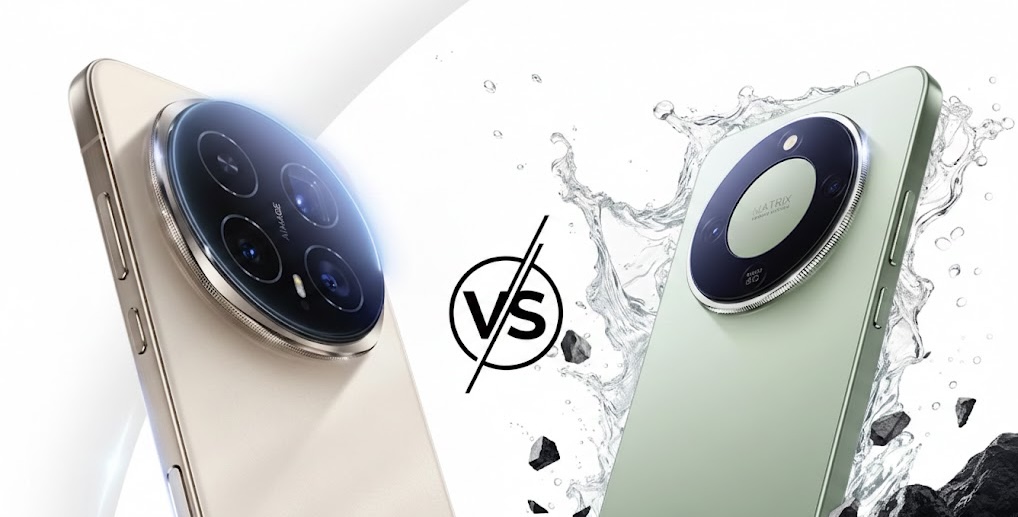
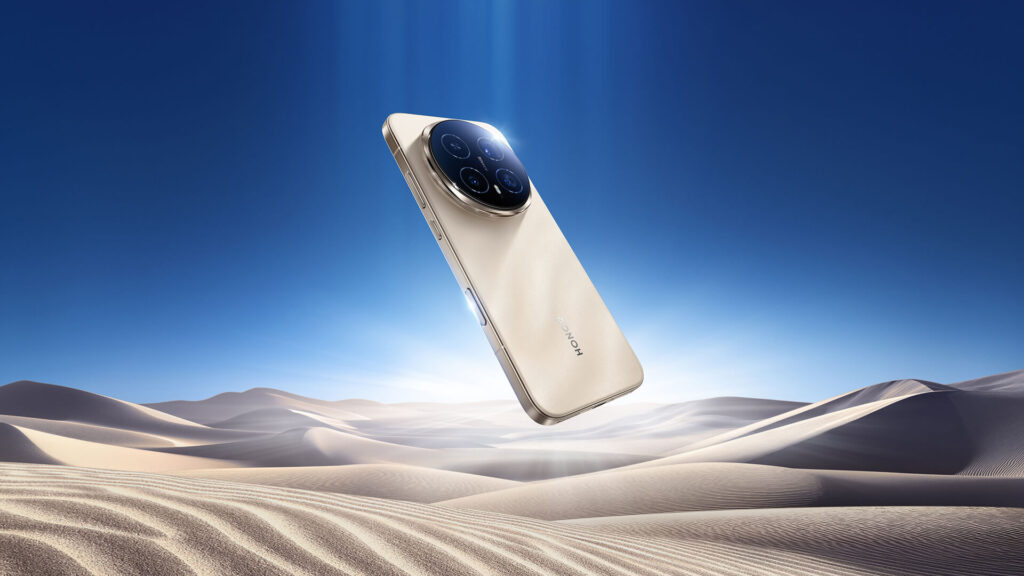
If you care about the highest performance, top-tier cameras, and technological innovations – Honor Magic8 Pro will definitely be a better choice. This flagship offers top components and features in all aspects (screen, camera, processor, fast charging, etc.).
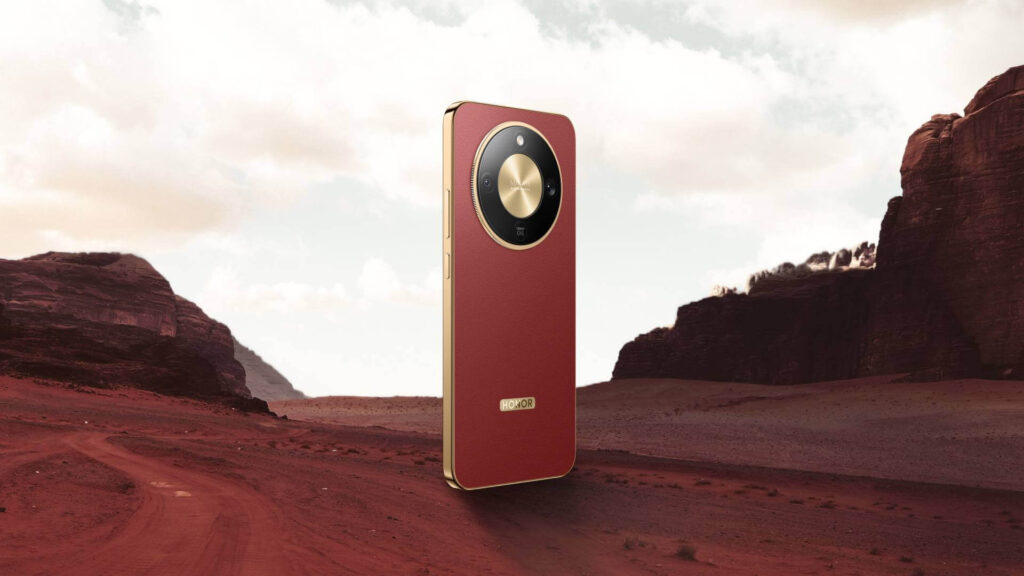
On the other hand, Honor Magic8 Lite will be suitable if your priority is long battery life, increased durability of the casing, and a significantly lower price. Magic8 Lite provides solid daily functionality with a fantastic battery, although it falls short of the Pro version in terms of speed and photo quality.
In short: Honor Magic8 Pro for demanding enthusiasts, Magic8 Lite for practical users who care about budget.
Two new Honor Magic8 models
Honor presented two new smartphones from the Magic series at the beginning of 2026, aimed at different audiences. Honor Magic8 Pro is a premium flagship, focused on advanced mobile photography and integration with AI (including Google Assistant Gemini). Meanwhile, Honor Magic8 Lite is a “rugged” mid-range device with a reinforced construction and record battery life. Both models had their Polish premiere in January 2026 – sales started on January 15, 2026. Magic8 Pro showcases the technological capabilities of the Honor brand, while Magic8 Lite aims to attract users looking for long battery life and resistance to damage at a more affordable price.
Glass and metal (premium), curved screen, 213 g, 8.3 mm thick. Colors: gold (Sunrise), blue (Sky), black.
Reinforced casing, flat symmetrical screen, 189 g, 7.8 mm thick. Colors: black, green (Forest).
System
MagicOS 10 (Android 16) – integration with Google Gemini, dedicated AI Button
MagicOS 9 (Android 15) – similar AI features (photo editor, life assistant), no physical AI Button.
💡After choosing a model, it’s worth taking care of the protection for the case and screen right away. If you’re aiming for a flagship, check out the best cases for Honor Magic8 Pro— preferably one that securely protects the camera and edges.
If you prefer a durable mid-range phone, check out cases for Honor Magic8 Lite, which will emphasize its “rugged” character and facilitate everyday use.
Design and durability: which is more comfortable and resistant?
On paper, both models appear to be “strong” (high IP ratings), but in hand and in everyday use, they differ significantly: Magic8 Pro is a heavier, bulkier flagship with strong screen protection, while Magic8 Lite is lighter, thinner, and has a larger display – more “practical” for daily use.
Honor Magic8 Pro – heavier flagship with NanoCrystal Shield and top IP protection
Magic8 Pro features a 6.71″ OLED (2808 × 1256 px) and HONOR NanoCrystal Shield, which is a real plus if the phone often ends up in a pocket with keys or experiences drops.
Pro dimensions and specifications (Your data):
161.15 × 75 × 8.4 mm
219 g
IP68 / IP69 / IP69K
brightness: up to 6000 nits (max), HBM 1800 nits
USB-C 3.2 Gen 1
In practice: the phone is “substantial” – 219 g is noticeable, but this is also typical for models with a large battery and an advanced camera module. If you like solid and “flagship-feeling” equipment, the Pro fulfills this role.
Honor Magic8 Lite – larger screen, lower weight, and an even wider set of IP standards
Magic8 Lite has 6.79″ AMOLED (2640 × 1200 px), glass aluminosilicate and one thing that stands out in the specifications: IP66 + IP68 + IP69 + IP69K (which means IP66 is added).
Construction and dimensions of Lite (your data):
161.9 × 76.1 × 7.76 mm
189 g
IP66 / IP68 / IP69 / IP69K
screen: 3840 Hz PWM (important for sensitive eyes)
Lite is 30 g lighter and noticeably thinner. For many people, this will simply be more comfortable in the pocket and in the hand — especially during longer scrolling, reading, or watching videos (larger screen).
Mini-conclusion: what to choose at this point?
If you prefer a larger screen, lower weight, and thinner body (plus 3840 Hz PWM) → Magic8 Lite
If you want a strongly “flagship” feel, compact 6.71″ and NanoCrystal Shield protection → Magic8 Pro
Screen: brightness, PWM, and comfort for the eyes (Pro vs Lite)
The screen is one of those things you feel all the time — while scrolling, reading, watching movies, and in the sun. In this pair, the differences are concrete: Pro has a more “flagship” specification (OLED + higher claimed brightness), while Lite focuses on a large AMOLED panel and strong eye comfort features (including 3840 Hz PWM).
Honor Magic8 Pro – OLED 6.71″ with strong brightness and NanoCrystal Shield
Pro offers a 6.71″ OLED with a resolution of 2808 × 1256 px and declared brightness parameters:
up to 6000 nits (max.)
HBM 1800 nits
This is important in two scenarios:
sun / bright environment → the phone remains readable
HDR and multimedia → the screen can achieve a very high peak effect
Additionally, there is HONOR NanoCrystal Shield, which is a real protective bonus for the panel itself.
Who is this for? For those who use their phone a lot outside the home, watch multimedia, and want a “flagship” display without compromises.
Honor Magic8 Lite – AMOLED 6.79″ + 3840 Hz PWM, a screen friendly to the eyes
Lite has a larger screen: 6.79″ AMOLED with a resolution of 2640 × 1200 px. It is most distinguished by features related to comfort:
3840 Hz – ultra-high PWM dimming
“Eye comfort”
“Night display with circadian rhythm”
“Dynamic dimming”
glass aluminosilicate
In practice: if you belong to those who strain their eyes in the evening or are sensitive to flicker at low brightness, 3840 Hz PWM may be one of the most noticeable advantages of this model.
Who is this for? For those who read a lot on their phone, work in the evenings, and want a larger screen for movies/scrolling.
Mini-conclusion: Pro or Lite in terms of the screen?
Choose Magic8 Pro if your priority is maximum brightness and a “flagship” OLED + NanoCrystal Shield experience.
Choose Magic8 Lite if you want a bigger screen and eye comfort (3840 Hz PWM) is the most important.
Performance and smoothness: Snapdragon 8 Elite Gen 5 vs Snapdragon 6 Gen 4
At this point, the differences between Magic8 Pro and Magic8 Lite are the most “black and white.” Pro is built for maximum power and uncompromising performance, while Lite aims for stable everyday use — but with a clearly weaker performance reserve.
Honor Magic8 Pro – Snapdragon 8 Elite Gen 5 and Adreno 840 (top 2026)
Magic8 Pro runs on Snapdragon 8 Elite Gen 5 with Adreno 840 graphics, which is a top-tier set. In practice, this provides:
very high system fluidity even with many applications at once,
great performance in games and with heavier titles,
faster photo processing and AI modes (e.g., burst shots, night, “AI” features in the camera),
greater comfort “for years,” as the top chipset remains fast longer despite updates and increasing application demands.
This is a model for those who want to be sure that the phone won’t “struggle” under intensive use.
Honor Magic8 Lite – Snapdragon 6 Gen 4 (mid-range, but economical and practical)
Magic8 Lite has Snapdragon 6 Gen 4 (8 cores), which is a mid-range chipset. This means that:
in everyday use (social media, navigation, YouTube, browser) it will simply work smoothly,
but with heavier tasks (games at high settings, longer editing, more demanding applications) it will show its limitations faster,
compared to Pro, it has less “future-proof” power reserve.
This is a good solution for those who do not need flagship power, but want a stable phone for normal use — with an emphasis on battery life.
Conclusion: if maximum performance, gaming, and “peace of mind for years” are a priority → Magic8 Pro. If you want daily smoothness without overpaying and are not a demanding user → Magic8 Lite.
Cameras: 200 MP periscope and 50 MP selfie vs 108 MP and simple photography
In cameras, it is easiest to see, who each model is for. Magic8 Pro has a typically flagship set (periscope telephoto + strong main + wide) and many photo/video features with AI. Magic8 Lite focuses on simplicity: a good 108 MP main camera and a basic 5 MP ultra-wide.
Honor Magic8 Pro – triple camera 200 MP + 50 MP + 50 MP and strong AI modes
50 MP ultra-wide: ƒ/2.0, 122°, with HD Macro mode at 2.5 cm
This means that the Pro is “complete”:
you have reasonable zoom (not just digital),
you have wide angle and close-up macro,
you have greater flexibility in difficult lighting thanks to OIS and a bright main camera.
Additionally, there are many photo/video features from your list, including AI Super Zoom, enhanced AI night mode, HDR, super burst, professional mode, multi-video, EIS/OIS.
On the front: 50 MP (ƒ/2.0) + 3D face unlock — and this is a real advantage of the Pro if you care about fast, “reliable” face unlock and better selfies.
Honor Magic8 Lite – 108 MP with OIS, but a more basic set
In the Lite, we have 2 cameras on the back:
108 MP main: ƒ/1.75, OIS
5 MP (second camera): ƒ/1.22
The main 108 MP camera with OIS is a good foundation for everyday photos (especially during the day and in typical scenarios). However, the set is less versatile than in the Pro — particularly when:
you want to zoom without significant loss of quality (no periscope),
you often take wide-angle shots in better quality,
you care about more advanced photo/video capabilities.
On the front: 16 MP (ƒ/2.45) — sufficient for video calls and social media, but it’s not in the same league as the 50 MP in the Pro.
Conclusion: if the camera is important (zoom, night, portraits, versatility, and selfies) → Magic8 Pro. If you mainly take regular photos and want “just a good main camera” → Magic8 Lite will be sufficient.
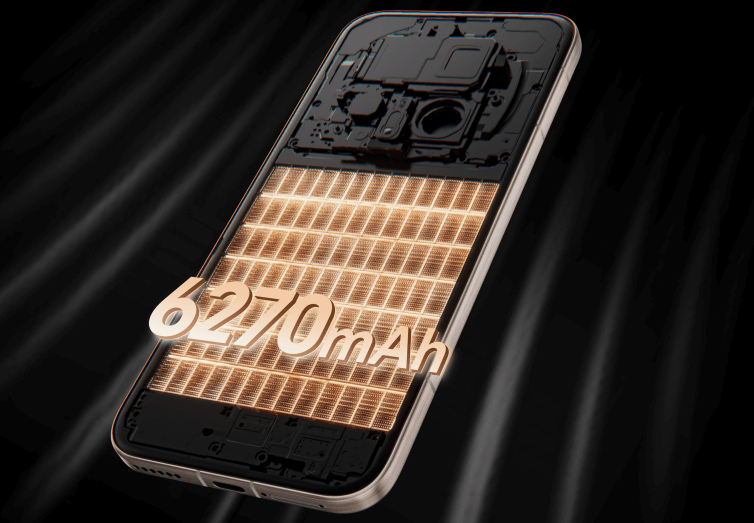
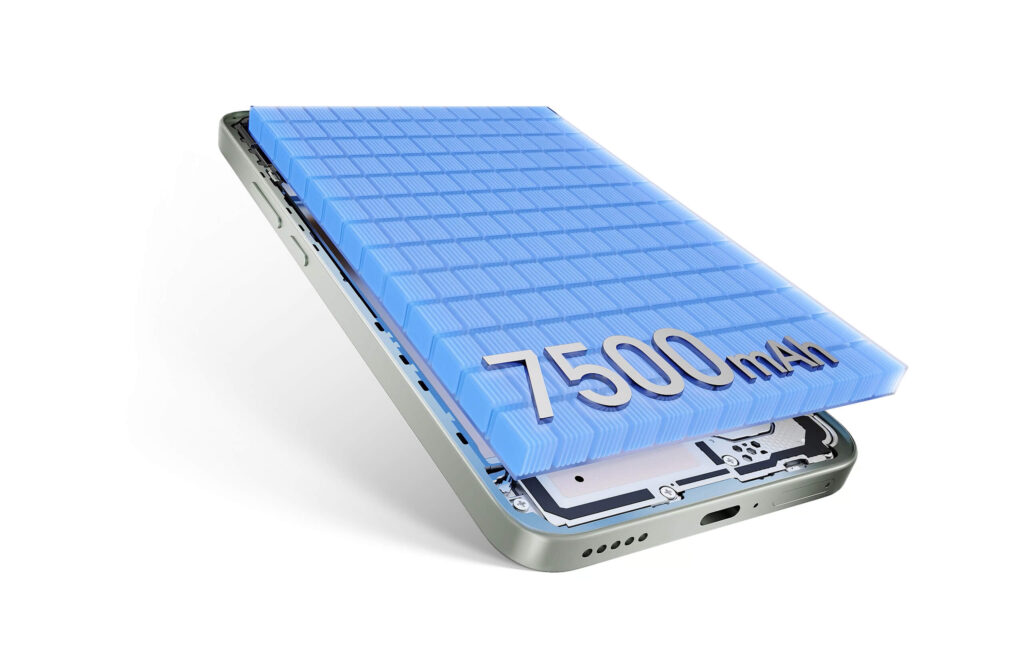
Battery and Charging: 6270 mAh + 100W/80W vs 7500 mAh + 66W
Here the situation is very interesting, because both phones have silicon-carbon batteries, but follow a completely different philosophy: Pro wins in charging speed (also wirelessly), while Lite boasts a record capacity and is focused on maximum runtime.
Honor Magic8 Pro – 6270 mAh and premium charging (100W + 80W wirelessly)
Magic8 Pro has a battery:
6270 mAh (typical) / 6090 mAh (rated)
technology: next-generation HONOR silicon-carbon
On top of that, you get:
100W HONOR SuperCharge (wired)
80W HONOR SuperCharge (wireless)
In practice, Pro is for those who:
like to charge their phone “on the go” (briefly, but very quickly),
want the convenience of cable-free charging,
often use it intensively (photo, video, GPS, games) and quick energy replenishment is more important than breaking battery life records.
Honor Magic8 Lite – 7500 mAh: a phone for those who don’t want to charge daily
Magic8 Lite has a battery:
7500 mAh
technology: silicon-carbon
Charging:
66W wired
no wireless charging
This is a model that is ideal if:
you want to plug your phone into the charger as rarely as possible,
You are often on the go, working “in the field,” or simply don’t like keeping track of percentages,
longer battery life is more important than top charging speed.
Conclusion: if you care about convenience and top charging (including wireless) → Magic8 Pro. If your priority is the longest possible usage time away from the socket → Magic8 Lite.
For the Honor Magic8 Lite, which offers 66 W wired charging and does not support wireless charging, a good choice would be wired chargers for Honor Magic8 Lite — these accessories will help minimize charging time.
Connectivity and Add-ons: Wi-Fi 7, Bluetooth 6.0, and USB-C 3.2 vs Wi-Fi 6 (ax) and Bluetooth 5.2
In everyday use, both phones provide everything needed (5G, NFC, modern Wi-Fi), but the Pro version has several typically “flagship” features that will be appreciated by those using fast networks, good audio, and more modern connectivity standards.
Honor Magic8 Pro – Wi-Fi 7, Bluetooth 6.0, richer audio, and more flexible SIM
HONOR Sound + HONOR Surround Subwoofer (in practice: stronger, “fuller” sound than typical mid-range devices).
Honor Magic8 Lite – modern base: Wi-Fi 6 (ax), Bluetooth 5.2, 4×4 MIMO
Lite has a very reasonable set, simply more “mid-range”:
Wi-Fi in standards a/b/g/n/ac/ax (which means practically Wi-Fi 6 / ax)
Bluetooth 5.2
NFC
Wi-Fi Direct
additionally: 4×4 MIMO
Audio codecs are also decent:
SBC/AAC/LDAC/aptX/aptX HD/aptX Adaptive + BLE
Navigation is complete (GPS, A-GPS, Galileo, GLONASS, BeiDou), but without specified bands like L1/L5.
Connector:
USB-C (without specifying the version as in Pro).
Conclusion: if you care about the most modern connectivity (Wi-Fi 7, Bluetooth 6.0), faster wired transfer (USB-C 3.2), and richer audio → Magic8 Pro. If you just want very good connectivity for everyday use (Wi-Fi 6/ax, NFC, 5G) without paying extra for “top standards” → Magic8 Lite.
System and features: MagicOS 10 (Android 16) vs MagicOS 9 (Android 15)
The system difference between these models is not just a “number”. Magic8 Pro starts with a newer version of Android and MagicOS, which means a longer perspective for updates and the latest features. Magic8 Lite operates on an older version but still offers a complete set of the most important solutions.
Honor Magic8 Pro – Android 16 and MagicOS 10.0
Magic8 Pro runs on:
Android 16
MagicOS 10.0
This provides:
newer system base,
greater future-proofing for updates,
better integration with AI features (especially with the camera and system tools),
potentially longer security support.
In practice: by buying the Pro, you start with the latest software, which usually means more updates in the future and slower “aging” of the system.
Honor Magic8 Lite – Android 15 and MagicOS 9.0
Magic8 Lite runs on:
Android 15
MagicOS 9.0
It is still a modern system that provides:
smooth operation,
access to all current applications,
typical MagicOS features (customization, gestures, power-saving modes, camera tools).
The difference will not be dramatic in the first months of use, but in the long run, the Pro has a “starting” advantage due to the newer version of Android.
Conclusion: if you care about the latest system and maximum future-proofing → Magic8 Pro. If Android 15 is completely sufficient for you and you don’t care about being “on the latest version” → Magic8 Lite will be fully functional.
Who is Honor Magic8 Pro for, and who is Honor Magic8 Lite for?
Honor Magic8 Pro — for the demanding and those who want a “limitless phone”
Choose Magic8 Pro if your phone usage is more than just social media and a browser — and you want hardware that won’t limit you.
For mobile gamers and fans of maximum smoothness
If you play demanding titles and want stable performance, Pro is the safer choice. A top-tier chipset + strong GPU simply means more comfort today and greater reserves for the coming years.
For those who take a lot of photos and use zoom
You have optical zoom from the periscope, a powerful camera setup, and advanced photo/video modes with AI. If you often take photos in the evening, at concerts, while traveling, or like to “zoom in” without losing quality — the Pro will be clearly better.
For multitaskers and those working on their phone
If you frequently switch between apps, make video calls, edit files, scan documents, and want everything to run smoothly — the Pro offers greater freedom and a newer system base.
For those who want charging convenience (including wireless)
If you value quick “top-ups on the go” and like to place your phone on a charger without a cable — the Pro has an advantage with wireless charging and faster wired charging.
Honor Magic8 Lite — for the practical: battery, convenience, and great price
Choose Magic8 Lite if you are looking for a “life phone”: it should last long, be comfortable, and cost reasonably — without paying extra for flagship features.
For travelers, drivers, and those often away from home
A large battery makes a difference when you don’t want to remember to charge every day. The Lite is also convenient for navigation and watching content (large screen).
For the everyday user: social media, videos, messaging apps
If your phone is mainly for the internet, apps, quick photos, banking, and entertainment — Lite will handle it easily, and it will be easier on your wallet.
For students and those buying “most sensibly”
At this price, Lite is a pragmatic choice: a large screen for notes/reading, a good battery for the whole day, and no feeling that you are overpaying for power you won’t use.
For those sensitive to eye comfort in the evening
If you spend a lot of time on your phone after dark and care about solutions for eye comfort (e.g., high PWM, eye protection modes) — Lite has a very strong argument here.
FAQ: Honor Magic8 Pro vs Honor Magic8 Lite — frequently asked questions
Does Honor Magic8 Lite have wireless charging?
No. Honor Magic8 Lite does not support wireless charging. It only offers wired charging 66W.
Does Honor Magic8 Pro have wireless charging?
Yes. Honor Magic8 Pro supports wireless charging 80W (HONOR SuperCharge) and 100W wired. This is one of the significant differences between the models.
Which model has a better camera: Magic8 Pro or Magic8 Lite?
Honor Magic8 Pro. It has a triple set (200 MP periscope + 50 MP + 50 MP) and 50 MP front, making it more versatile, especially in zoom and challenging conditions. Lite has 108 MP with OIS and a simpler set, good for everyday photos.
Does Honor Magic8 Lite have image stabilization (OIS)?
Yes — the main camera 108 MP in Magic8 Lite has OIS, which helps in low light photography and video recording.
Which phone is better for gaming?
Honor Magic8 Pro, because it has a top-tier Snapdragon 8 Elite Gen 5 chipset and stronger graphics. The Lite (Snapdragon 6 Gen 4) will handle everyday games, but in heavier titles, it will show its limitations faster.
Which model has a better battery?
When it comes to battery life, the Honor Magic8 Lite wins with a 7500 mAh battery. The Magic8 Pro has 6270 mAh and can also last long, but the Lite is typically “long-lasting”.
Are both models waterproof?
Yes, both have high resistance to water and dust.
Magic8 Pro: IP68 / IP69 / IP69K
Magic8 Lite: IP66 / IP68 / IP69 / IP69K
Which model has a better screen? Honor Magic8 Pro or Lite?
It depends on what is more important:
Magic8 Pro has a 6.71″ OLED with very high brightness (max 6000 nits) and protection from NanoCrystal Shield.
Magic8 Lite has a larger 6.79″ AMOLED and a strong argument for eye comfort: 3840 Hz PWM.
Which model is lighter and more comfortable for everyday use?
Honor Magic8 Lite — weighs 189 g and has a thickness of 7.76 mm. Magic8 Pro is heavier (219 g) and thicker (8.4 mm).
Today, February 18, 2026, the pre-sale of Google Pixel 10a begins — Google announced this itself in a short video on the Made by Google channel. This is important because the A series usually debuted later in the year, and this time Google is clearly accelerating the schedule.
In practice, Pixel 10a and 9a are very similar (the same Tensor G4, similar ~6.3″ 120 Hz display, similar camera setup, and 5100 mAh battery). So if you want the best value for money, Pixel 9a usually wins on price, especially during promotions.
When is it worth paying extra for Pixel 10a? Mainly when “specific details” matter: faster charging (according to leaks 45 W), newer glass (Gorilla Glass 7i), and minor design changes (flatter back / camera module).
Vanden Borre: European retailer revealed details before the premiere
Vanden Borre is an example of a classic situation where “the store published the page too early.” Such product cards are often created based on marketing materials from the distributor, which is why they are very valuable – especially when they contain specific information about the device’s features and characteristics.
photo. Vanden Borrephoto. Vanden Borre
What does the Vanden Borre listing bring?
In their description, Pixela 10a features a lot of “user” details that are typical for Google communication:
battery: claims of 30+ hours of operation and a power-saving mode for about 120 hours,
durability: IP68 (water and dust),
screen: Actua 6.3” with a refresh rate of up to 120 Hz,
AI and smart features: emphasis on solutions like Gemini Live, “Nano Banana”, call features (e.g., noise reduction), Highlight to search,
variants and prices: the store suggests memory configurations (e.g. 128/256 GB) and visible price levels.
photo. Vanden Borre
Comparison of Google Pixel 10a vs Pixel 9a — table
Feature
Google Pixel 10a
Google Pixel 9a
Status
Pre-order: February 18, 2026
Available
System / support
Android 16 + 7 years
Pixel 9a has 7 years of updates/security
Processor
Google Tensor G4
Google Tensor G4
RAM / storage
8 GB, 128/256 GB (UFS 3.1 according to leaks)
8 GB, 128/256 GB
Screen
~6.3″ OLED, up to 120 Hz
6.3″ pOLED (Actua), 60–120 Hz
Front glass
Gorilla Glass 7i
Gorilla Glass 3
Cameras (rear)
48 MP (OIS) + 13 MP ultra-wide
48 MP + 13 MP ultra-wide
Selfie camera
13 MP
13 MP
Battery
5100 mAh
5100 mAh
Wired charging
up to 45 W
approx. 23 W
Resistance
IP68
IP68
Connectivity
Bluetooth 6, Wi-Fi 6E, NFC, USB-C
Bluetooth 5.3, Wi-Fi 6E, NFC, USB-C
Dimensions / weight
153.9 × 73 × 9 mm, 183 g (according to leaks)
154.7 × 73.3 × 8.9 mm, 186 g
Colors
Obsidian, Berry, Fog, Lavender (according to leaks)
Obsidian, Porcelain, Peony, Iris (Google Store)
Prices
Europe approx. €499 (128 GB) and ~€600 (256 GB)
Google Store UK: £499 Poland (market): approx. 1656 zł (128 GB)
What does this specification mean in practice and is it worth the extra cost?
On paper, the Pixel 10a looks like a very close relative of the Pixel 9a — and that’s true: the core of the phone is practically the same. Therefore, the decision of “is it worth it” comes down to a few specific differences that can be felt in everyday use.
Tensor G4 Processor + 8 GB RAM: a big leap? Probably not
The Pixel 10a is expected to be based on Tensor G4 and offer 8 GB RAM, which is a configuration very similar to the 9a. In practice, this means that:
the daily performance speed (apps, social, navigation) will be very similar,
the “feeling” of the system and smoothness should be at the same level,
any differences may arise more from Android optimization and AI features than from “power”.
Is it worth paying extra just for this? No. If the 9a meets your needs, the 10a won’t suddenly change the performance class.
6.3″ OLED 120 Hz display: the comfort is the same
Both models target a display of around 6.3″ and a refresh rate of 120 Hz, so in everyday scrolling and content viewing, the difference will be minimal.
Is it worth paying extra for the screen? Probably not — it’s a similar level and similar feelings.
Battery 5100 mAh: similar, but 10a might win on charging habits
Capacity 5100 mAh is very good in this class, and Vanden Borre provides marketing claims of 30+ hours and an extreme mode for about 120 hours.
Is this an argument “for 10a”? The capacity alone — no, because it’s similar in 9a. But…
Charging 45 W: this might be the only upgrade that you can actually feel
If 45 W charging in Pixel 10a (according to WinFuture) is confirmed, it’s a difference that changes everyday life:
short top-ups before going out make sense,
less stress when using a lot of camera, GPS, and data,
easier to “save the day” without a power bank.
Is it worth paying extra for charging?
Yes, if you often charge on the go and are annoyed by slower battery replenishment. No, if you mainly charge at night — then you won’t feel the advantage.
Cameras 48 MP + 13 MP: “hardware-wise” almost the same
Leaks suggest a set of 48 MP (OIS) + 13 MP ultra-wide + 13 MP selfie. This indicates a continuation of Google’s strategy: algorithms do the work, not a chase for megapixels.
Is it worth paying extra for photos? If you expect a significant jump in quality compared to 9a — probably not. If you want new AI features for photos (e.g., suggestions/enhancers) — then yes, but it largely depends on what Google leaves as “exclusive” and what will also come to 9a via an update.
Gorilla Glass 7i vs Gorilla Glass 3: small change on paper, big for peace of mind
According to leaks, the Pixel 10a is set to receive Gorilla Glass 7i, while the Pixel 9a has Gorilla Glass 3. In practice, this is a difference that doesn’t make a “wow” in specifications, but can make sense in everyday life because:
newer glass usually handles micro-scratches and minor mishaps better,
it’s easier to keep the screen in “nice condition” without visible marks after a few months.
Is it worth paying extra for glass?
Yes, if you don’t like protective film/glass or often carry your phone in your pocket with keys. No, if you immediately apply glass/film anyway — then the difference is less noticeable.
Bluetooth 6 vs Bluetooth 5.3: an upgrade “for the future”, but not for everyone
The Pixel 10a is rumored to switch to Bluetooth 6, while the Pixel 9a will remain with Bluetooth 5.3. In everyday use, it may not always be a revolution, but it can be useful if:
you use TWS headphones a lot and care about connection stability,
you have several BT devices (watch, car, headphones) and switch often,
you plan to keep the phone “for years” and want a newer standard for future accessories.
Is it worth paying extra for Bluetooth 6?
Rather just as a bonus, not as the main reason for the change. It’s a detail you’ll appreciate mainly when you actually live in the BT accessories ecosystem and want maximum compatibility for the future.
IP68 and a more “flat” back: small things, but practical
IP68 is simply peace of mind (rain, kitchen, dust). And the flattened camera module is a detail you’ll appreciate:
the phone sits more stably on the table,
it’s easier to choose a thinner case,
it catches less in your pocket.
Is it worth paying extra for design/durability? It’s a nice bonus, but rarely justifies the change from 9a to 10a on its own.
Is it worth buying the Google Pixel 10a instead of the Pixel 9a? It is worth it if you care about faster charging and newer details (glass, Bluetooth). If price is a priority, the Pixel 9a will usually be more cost-effective.
Is the Pixel 10a much better than the Pixel 9a? No — it’s more of a slight refresh. The core (processor, RAM, cameras, battery) is very similar, and the biggest differences are in charging, glass, and connectivity.
When does the pre-sale for the Google Pixel 10a start? The pre-sale starts on February 18, 2026.
Does the Pixel 10a have IP68? According to leaks and store listings — yes, it has IP68 (water and dust resistance).
Does the Pixel 10a have 120 Hz? Yes — the pre-release information mentions a ~6.3″ OLED display with a refresh rate of up to 120 Hz.
Does the Pixel 10a have faster charging than the Pixel 9a? According to leaks, the Pixel 10a is expected to have up to 45 W, which would be a clear advantage over the 9a.
Are the cameras in the Pixel 10a better than in the Pixel 9a? Hardware-wise, they look very similar (48 MP + 13 MP). If there are differences, they are likely to be in features and algorithms rather than in “raw specifications.”
Is it worth upgrading from the Pixel 9a to the Pixel 10a? Most often, no — unless you really care about faster charging and the extra cost is small.
What could be the price of the Pixel 10a in Poland? Based on the announced prices in euros and typical market conversions in Poland, it is most often mentioned to be around ~2399–2499 PLN at launch (this will only be confirmed by official sales).
The series Xiaomi Redmi Note 15 is one of the most talked-about launches in the mid-range segment at the beginning of 2026. Although the first units reached Polish stores as early as December 2025, the official launch in Poland took place on January 15, 2026.
Among the available models in Poland is also the flagship Redmi Note 15 Pro+Plus 5G, which naturally began to be compared to its predecessor, the Redmi Note 14 Pro+Plus.
So — are the changes significant enough to make it worth switching?
If you are using the Redmi Note 14 Pro+Plus and are considering an upgrade, the Redmi Note 15 Pro+Plus will be a clear step forward. The new model offers a significantly larger 6500 mAh battery, brighter 6.83” display, better 32 MP selfie camera, a newer HyperOS 2 (Android 15) system, and longer update support. The Redmi Note 14 Pro+Plus still remains a very good and cheaper choice, but in terms of “future-proofing,” the Redmi Note 15 Pro+Plus wins.
* Prices may vary depending on the store and promotions — the prices are approximately based on offers from various sellers.
Display – which Redmi Note has a better screen?
Is the screen on the Redmi Note 15 Pro+Plus larger?
Yes. The Redmi Note 15 Pro+Plus features a 6.83-inch AMOLED screen, while the Redmi Note 14 Pro+Plus has a 6.67 inches. The difference may not seem significant on paper, but in practice:
more workspace,
better video viewing experience,
more convenient use of apps in split-screen mode.
Has the image quality improved?
Yes, although it is not a revolution. Both models offer:
resolution 1.5K,
refresh rate 120 Hz,
support for HDR10+ and Dolby Vision.
Redmi Note 15 Pro+(Plus) wins brightness – up to 3200 nits (vs 3000 nits), which improves readability in full sunlight.
Performance – does the new processor make a difference?
Snapdragon 7s Gen 4 vs Snapdragon 7s Gen 3 – what does it change?
Redmi Note 15 Pro+Plus uses a newer processor that:
is slightly faster in everyday tasks,
handles multitasking better,
will be supported with system updates for a longer time.
In everyday use, the difference is not drastic, but the new model is simply more future-proof.
Is the Redmi Note 14 Pro+Plus still fast enough?
Yes. For social media, browsing the internet, videos, photos, and most games, the performance is still very good and in everyday use, it’s hard to talk about any stutters. The smartphone handles multitasking and typical applications without any problems.
However, it should be noted that this is an older generation processor. If you plan to use the phone for several more years, use it intensively for work, or want longer system support, the advantage gradually shifts towards the newer generation, namely the Redmi Note 15 Pro+Plus.
Battery and charging – the biggest difference between generations
Does the Redmi Note 15 Pro+Plus last longer on a single charge?
Definitely yes. The difference between 6500 mAh and 5110 mAh is noticeable in everyday use:
Redmi Note 14 Pro+Plus → reliably one day,
Redmi Note 15 Pro+Plus → even 1.5–2 days without charging.
This is one of the biggest changes in the new generation.
Do both models charge equally fast?
Slightly differently:
Redmi Note 14 Pro+Plus → 120 W,
Redmi Note 15 Pro+Plus → 100 W.
In practice, both charge very quickly, and the difference of a few minutes doesn’t matter much. However, the new model offers something that the older one does not.
Does the Redmi Note 15 Pro+Plus have reverse charging?
Yes. Only the Redmi Note 15 Pro+Plus supports 22.5 W reverse charging, allowing it to function as a power bank — for example, for headphones or a smartwatch. The Redmi Note 14 Pro+Plus does not have this feature.
Durability and construction – which model is more “bulletproof”?
Are both Redmi Notes waterproof?
Yes. Both smartphones meet the IP68 standard, however:
Redmi Note 15 Pro+Plus additionally has IP66,
the new model is better protected in everyday conditions (rain, dust, splashes).
Has the build quality changed?
The differences are subtle but noticeable:
thinner bezels around the screen,
a larger display without increasing weight,
a more “flagship” feel in hand.
the use of Corning Gorilla Glass Victus 2.
System and updates – which model is more future-proof?
Android 15 vs Android 14 – does it matter?
Yes, especially in the long run:
Redmi Note 15 Pro+Plus launches with HyperOS 2 (Android 15),
Redmi Note 14 Pro+Plus runs on HyperOS (Android 14).
The new model:
will be supported longer with updates,
will receive more system and AI features,
is better prepared for future Android versions.
Summary – which model to choose in 2026?
If we compare both smartphones as a whole, the differences between the generations are clear, though not revolutionary. Redmi Note 15 Pro+Plus is the more future-proof model – it offers a larger battery, a newer system, a better selfie camera, and additional features that the predecessor lacks. On the other hand, Redmi Note 14 Pro+Plus still remains a very solid premium mid-range device that makes sense in 2026, especially if you find a good promotion.
In short:
comfort and long usage → Redmi Note 15 Pro+Plus
good price and proven design → Redmi Note 14 Pro+Plus
Is it worth upgrading from Redmi Note 14 Pro+Plus to Redmi Note 15 Pro+Plus?
When does such a change make sense?
Upgrading to a newer model will be worthwhile if:
you care about a significantly longer battery life,
you often use your phone outside the home and don’t want to charge it every day,
you take a lot of selfies or video calls (better front camera),
you plan to use the phone for several more years and want longer system support.
In such a scenario, the Redmi Note 15 Pro+Plus realistically improves the comfort of daily use.
When is it better to stick with the Redmi Note 14 Pro+Plus?
A change is not necessary if:
your current phone runs smoothly and meets your needs,
you don’t care about record battery life,
you mainly use the main camera, not the front one,
you find an attractive price or already have a well-protected phone with accessories.
In that case, the Redmi Note 14 Pro+Plus will still handle 2026 comfortably.
FAQ – frequently asked questions from users
Is the Redmi Note 15 Pro+Plus 5G available in Poland?
Yes. Redmi Note 15 Pro+Plus 5G has been officially available in Poland since January 15, 2026, although the first units appeared for sale as early as December 2025.
What are the differences between the Redmi Note 15 Pro+Plus and the Redmi Note 14 Pro+Plus?
The Redmi Note 15 Pro+Plus offers a larger screen, significantly larger battery (6500 mAh), an IP68 certification, and additional features such as 22.5 W reverse charging, which the Pro version lacks.
Is the Redmi Note 15 Pro+Plus a good phone for several years?
Yes. With Android 15, HyperOS 2, a large battery, and a powerful processor the Redmi Note 15 Pro+Plus is more future-proof than the Redmi Note 14 Pro+Plus.
Is the Redmi Note 15 Pro+Plus better for work and multitasking?
Yes. The larger 6.83” screen, newer processor, and better system optimization make the Redmi Note 15 Pro+Plus more suitable for work, emails, maps, and business applications.
Does the Redmi Note 14 Pro+Plus make sense as a cheaper alternative?
Yes. In 2026, the Redmi Note 14 Pro+Plus is still a reasonable choice if:
you care about a lower price,
you don’t need the largest battery,
Android 14 and a proven design are sufficient for you.
Is the Redmi Note 15 Pro+Plus suitable for gaming?
Yes, although it is not a gaming phone. The Snapdragon 7s Gen 4 provides smooth gameplay in popular games, and the large 120 Hz AMOLED screen enhances the gaming experience.
Does the Redmi Note 15 Pro+Plus have eSIM?
Yes. The Redmi Note 15 Pro+Plus supports Dual SIM (nano SIM + eSIM), just like the Redmi Note 14 Pro+Plus.
Does the Redmi Note 15 Pro+Plus have better screen protection?
Yes. The smartphone features Gorilla Glass Victus 2, and additionally has higher brightness and better PWM control, which improves usability in sunlight and in the evening.
Is it worth switching from Redmi Note 14 Pro+Plus to Redmi Note 15 Pro+Plus?
The change makes sense mainly if you care about longer battery life, newer system, and better front camera. If your current Note 14 Pro+ is working fine, the upgrade is not necessary.
Does the Redmi Note 15 Pro+Plus have reverse charging?
Yes. It supports 22.5 W reverse charging, which is not available on the Redmi Note 14 Pro+Plus.
OnePlus 15 will be a better choice for users who expect a top-notch camera, longer update support, wireless charging, and a full-fledged flagship.
OnePlus 15R, on the other hand, is a great alternative for those looking for a powerful smartphone at a lower price, with a large battery and very fast performance, but with some compromises in the camera and premium features.
If you care about the best photos and full features – choose OnePlus 15.
However, if price, performance, and battery life matter – OnePlus 15R will be the more sensible choice.
OnePlus 15 vs OnePlus 15R – quick comparison
Feature
OnePlus 15
OnePlus 15R
Screen
6.78″ AMOLED LTPO, 165 Hz
6.83″ AMOLED LTPS, 165 Hz
Processor
Snapdragon 8 Elite
Snapdragon 8 Gen
Cameras
50 MP + ultra + telephoto
50 MP + ultra
Battery
7300 mAh
7400 mAh
Charging
120 W + wireless
80 W
USB / eSIM
USB-C 3.2, eSIM
USB-C 2.0
Resistance
IP68 / IP69K
IP68 / IP69K
Price
from 3999 PLN
749 € (promotion)
Although OnePlus 15 and OnePlus 15R may seem very similar at first glance, the table clearly shows that these smartphones are aimed at two different user groups.
Dimensions, weight, and build quality of OnePlus 15R vs OnePlus 15
Dimensions and weight – differences in everyday use
Both smartphones are large and quite heavy due to the use of large screens and capacious batteries. OnePlus 15R is slightly larger and heavier than OnePlus 15, which, given the already considerable dimensions of the flagship, may somewhat reduce the comfort of use, especially when handling with one hand.
OnePlus 15: 161.4 × 76.7 × 8.1 mm, approx. 211 g
OnePlus 15R: 163.4 × 77.0 × 8.3 mm, 214–219 g (depending on the version)
The differences are not huge, but in practice OnePlus 15 feels slightly more manageable and better balanced.
👉 Check out cases for OnePlus 15 that will protect the body and camera without adding bulk to the smartphone.
Build Quality and Durability of the Body
The build quality of both models is at a very high level. Both OnePlus 15 and OnePlus 15R offer:
an aluminum frame,
IP68/IP69K water resistance (full resistance also to strong water jets under pressure),
a solid premium-class construction.
The backs of smartphones can be made of glass or composite fiberglass – depending on the color variant, so it’s worth paying attention to this when choosing a specific version.
Premium materials and details – where does OnePlus 15 have the advantage?
Looking closely, OnePlus 15 performs better in terms of build quality. The flagship received:
better screen protection – Gorilla Glass Victus 2 (vs Gorilla Glass 7i in the 15R model),
more impressive and advanced camera module,
more modern USB-C 3.2 port, which provides faster data transfer
In comparison, OnePlus 15R uses USB-C 2.0, which in everyday use may not always be noticeable, but matters when transferring large files.
The OnePlus 15 is equipped with a 6.78-inch AMOLED LTPO display, which offers adaptive refresh rates ranging from 1–120 Hz (and up to 165 Hz in selected scenarios). Thanks to LTPO technology, the refresh rate can dynamically adjust to the content, resulting in better smoothness and lower energy consumption.
The display also stands out with:
very high resolution,
brightness reaching up to 3600 nits,
support for HDR10+ and HDR Vivid,
an excellent color reproduction and deep black.
This is one of the best displays currently available in smartphones.
The OnePlus 15R received a slightly larger, 6.83-inch LTPS AMOLED display. It also offers refresh rates up to 165 Hz, but without the full adaptation known from LTPO.
In practice, this means that:
the screen operates in steps (e.g. 60 / 90 / 120 Hz),
it does not drop to 1 Hz with static content,
it may consume slightly more energy in everyday use.
In terms of brightness, contrast, and colors, the 15R display still presents a very high level and in normal use, it will be hard to consider it weak.
OnePlus 15 vs OnePlus 15R – which display is better?
OnePlus 15 wins thanks to LTPO technology, better energy efficiency, and a more “flagship” character.
OnePlus 15R offers a larger display, great fluidity, and very good image quality, but with minor technological compromises.
Cameras – the biggest difference between OnePlus 15R and OnePlus 15
Main camera – similar sensors, different capabilities
Both OnePlus 15 and OnePlus 15R use a 50-megapixel Sony IMX906 sensor as the main camera, which means very good daytime photo quality in both models.
However, differences appear in the details:
OnePlus 15 offers a fuller autofocus system (including laser AF),
OnePlus 15R performs well in good light, but loses precision in low-light conditions.
In practice, the flagship focuses faster and retains more details after dark.
Ultrawide camera – clear advantage of OnePlus 15
Here the difference is very clear:
OnePlus 15: 50 MP, wide angle with autofocus
OnePlus 15R: 8 MP, without AF
The ultrawide lens in OnePlus 15 offers significantly better detail, better colors, and greater versatility (also for macro shots).
In OnePlus 15R, the wide-angle camera is purely supplementary and falls short in quality compared to the rest of the set.
Telephoto Lens – only in OnePlus 15
This is a key difference:
OnePlus 15 has a 50 MP telephoto lens with approximately 3.5× optical zoom,
OnePlus 15R does not have a telephoto lens – zoom is achieved solely digitally.
This means that portrait photos, close-ups, and distant photography perform significantly better on the OnePlus 15. For those who take a lot of pictures of people or details, this is a huge advantage for the flagship.
Front Camera and Video
Both models offer a 32-megapixel selfie camera with autofocus, which is still a rarity in the market. The quality of front photos is at a very good level, both for selfies and video calls.
Differences arise in video:
OnePlus 15 supports 8K recording and more advanced stabilization,
OnePlus 15R is limited to 4K, which will still be sufficient for most users.
If the camera is very important to you, the OnePlus 15 is definitely the better choice – it offers a telephoto lens, a significantly better ultra-wide angle, and more stable performance in low light. The OnePlus 15R is suitable for everyday photos with the main camera, but its photographic capabilities are clearly limited compared to the flagship model.
Performance and gaming – flagship power in both models
Processor and memory – Snapdragon in two versions
Both the OnePlus 15 and the OnePlus 15R are among the most powerful smartphones on the market, but they differ in the variant of the processor used.
The OnePlus 15 is equipped with Snapdragon 8 Elite (Gen 5) – the most powerful version of the chip,
The OnePlus 15R uses Snapdragon 8 Gen 5 in the standard configuration.
In practice, this means that the OnePlus 15 has a slight but noticeable performance advantage, especially in synthetic tests and prolonged loads.
Performance in gaming and everyday use
In everyday use, the differences are hard to notice. Both smartphones:
operate extremely smoothly,
handle multitasking without issues,
run the most demanding games at maximum graphical settings.
Thanks to the 165 Hz displays, both models perform excellently in mobile gaming. The OnePlus 15 maintains more stable frames during longer sessions and heats up more slowly, which gamers will appreciate.
RAM and internal storage
OnePlus 15: up to 16 GB RAM and even 1 TB of storage
OnePlus 15R: up to 12 GB RAM and 512 GB of storage
For most users, the 15R configurations will be more than sufficient, but the OnePlus 15 offers greater power reserve and better future-proofing.
Battery and charging – large cells, different approach
Battery capacity – slight advantage of OnePlus 15R
Both models offer very large batteries, among the largest in their class:
OnePlus 15: approx. 7300 mAh
OnePlus 15R: approx. 7400 mAh
On paper, the OnePlus 15R has a slightly larger capacity, however, in practice, the OnePlus 15 often achieves longer runtimes, mainly due to its more energy-efficient LTPO display.
Price and promotions for OnePlus 15R and OnePlus 15
OnePlus 15R – launch promotion and gifts
OnePlus 15R officially went on sale and is already available with an attractive offer. The price has been reduced from €849 to €749, which means savings of €100 compared to the regular price.
Moreover, as part of the promotion you receive two gifts worth a total of €94, added at no extra charge. This is a real benefit that further increases the value of the purchase right at launch.
If you are planning to buy the OnePlus 15R, this is one of the best moments to take advantage of the price promotion and bonuses available immediately.
OnePlus 15 – price and availability in Poland
OnePlus 15 has been available for some time now as a full-fledged flagship of the brand. This model is aimed at users who expect the best camera, a premium display, and a full set of features without compromises.
Current prices for OnePlus 15 in Polish stores:
12 GB RAM / 256 GB – approx. 3999 zł
16 GB RAM / 512 GB – approx. 4699 zł
Although the OnePlus 15 is clearly more expensive than the 15R version, the price difference is due to its richer equipment, better photographic capabilities, and additional premium features such as wireless charging.
FAQ – OnePlus 15R and OnePlus 15
Is the OnePlus 15R already available for sale?
Yes. The OnePlus 15R is officially on sale and can be purchased in the current launch promotion. There is currently a price reduction from €849 to €749, and two gifts worth a total of €94 are included with the purchase.
How much does the OnePlus 15 cost in Poland?
The current prices for the OnePlus 15 in Poland are:
12 GB RAM / 256 GB – about 3999 zł
16 GB RAM / 512 GB – about 4699 zł
Prices may vary slightly depending on the store and current promotions.
Which model is more worthwhile – OnePlus 15 or OnePlus 15R?
It depends on your needs:
OnePlus 15R will be a better choice if you care about lower price, high performance, and current promotions with gifts.
OnePlus 15 is a proposal for those who want better camera, wireless charging, and a full-fledged flagship, even at the cost of a higher price.
Does OnePlus 15R have a worse camera than OnePlus 15?
Yes. OnePlus 15 offers a more advanced camera setup, including a telephoto lens and better ultra-wide angle. OnePlus 15R will perform well in everyday photos, but is not as versatile in photography as the flagship model.
Does OnePlus 15R have wireless charging?
No. OnePlus 15R does not support wireless charging. This feature is available only in the OnePlus 15 model, which also offers faster wired charging.
Is the OnePlus 15R suitable for gaming?
Yes. The OnePlus 15R is a very good smartphone for mobile gaming – it offers high performance, a 165 Hz display, and a large battery that allows for long gaming sessions.
Motorola Edge 60 Pro will be a better choice for most people — it has a significantly more powerful processor, a much larger 6000 mAh battery, a 3× telephoto lens, and it costs today over 1500 zł less.
Motorola Edge 70 is distinguished primarily by its ultra-thin body (5.99 mm) and longer Android support, but its processor is weaker and it lacks optical zoom.
If you care about power, battery, and value — go for the Edge 60 Pro. If your priority is design and low weight — paying extra for the Edge 70 may make sense.
📊 Comparison table – Motorola Edge 60 Pro vs Edge 70
Feature
Motorola Edge 60 Pro
Motorola Edge 70
Processor
MediaTek Dimensity 8350 Extreme (flagship)
Snapdragon 7 Gen 4 (mid-range)
RAM / Storage
12 GB / 512 GB UFS 4.0
12 GB / 512 GB uMCP
Display
6.67″ pOLED, 1220p, 120 Hz, 4500 nits
6.67″ pOLED, 1220p, 120 Hz, 4500 nits
Cameras
50 Mpix + 50 Mpix + 10 Mpix (3× optical zoom)
50 Mpix + 50 Mpix (ultra-wide + macro)
Selfie
50 Mpix
50 Mpix
Battery
6000 mAh, 90 W / 15 W
4800 mAh, 68 W / 15 W
Battery Life
2 days +, top DXOMARK score
up to 50 h declared (approx. 1.5–2 days)
Thickness / Weight
8.24 mm / 186 g
5.99 mm / 159 g (ultra-thin)
Durability
IP68/IP69, MIL-STD-810H
IP68/IP69, MIL-STD-810H
System / Support
Android 15 → 18
Android 16 → 20 (6 years of security)
Price (2025/26)
approx. 1999 PLN
approx. 3499 PLN
Biggest Advantage
Power, battery, 3× zoom, price
Ultra-thin design, long support
Who is it for?
Demanding user
Minimalism, style, portability
Performance – which smartphone works faster?
Processors — flagship MediaTek vs mid-range Snapdragon
The Motorola Edge 60 Pro uses the MediaTek Dimensity 8350 Extreme — an octa-core processor with a clock speed of up to 3.35 GHz, designed for high performance in gaming and CPU and GPU-intensive tasks. Combined with UFS 4.0 memory, the phone clearly outperforms most mid-range models and handles multitasking and video editing with ease.
The Motorola Edge 70 runs on the Qualcomm Snapdragon 7 Gen 4, also octa-core, but belonging to the upper-midrange class. It provides smooth performance in everyday tasks, excels in energy optimization and AI, but will be noticeably weaker than the Dimensity 8350 Extreme in demanding games.
👉 If you care about computing power and future performance headroom, the better choice remains Motorola Edge 60 Pro.
Both smartphones are equipped with excellent panels:
6.67″
P-OLED
1220 × 2712 px
120 Hz
brightness up to 4500 nits
These are some of the brightest screens on the market in 2025/2026. There are virtually no differences in image quality between these two models.
Cameras – telephoto vs enhanced AI algorithms
Motorola Edge 60 Pro – the advantage of optical zoom
Edge 60 Pro features:
50 Mpix (main)
50 Mpix (ultrawide)
10 Mpix telephoto with 3× optical zoom
This is a big advantage because optical zoom means true close-ups without loss of quality — ideal for urban, sports, or portrait photography.
Motorola Edge 70 – improved image processing
Edge 70 has:
50 MP (main)
50 MP (ultra-wide + macro)
The lack of a telephoto lens is compensated by better color and AI processing. Photos are more natural, especially in difficult lighting, but the limitation of zoom is noticeable.
👉 If you care about true 3× zoom — choose Edge 60 Pro. 👉 If you want a lighter phone and good daytime photos — Edge 70 will also do the job.
Battery and charging – capacity advantage on the side of Edge 60 Pro
Difference of as much as 1200 mAh
Edge 60 Pro: 6000 mAh
Edge 70: 4800 mAh
Edge 60 Pro has even won DXOMARK awards for battery life — it is one of Motorola’s best smartphones in terms of battery.
Charging
90 W in Edge 60 Pro
68 W in Edge 70
Difference of ~10 minutes to full, so in practice both charge quickly.
Design and ergonomics – ultra-thin style vs classic solidity
Edge 70 – extremely slim and lightweight, designed for comfort
Motorola Edge 70 was created as a model that primarily impresses with its silhouette. The smartphone is only 5.99 mm thick, making it one of the thinnest devices on the market in 2025/2026 — and this is in the full-fledged Edge series, not in the “lite” segment.
Additionally, it weighs only 159 grams, making it almost disappear in your hand during use. It’s the perfect choice for those who:
don’t like heavy phones,
often keep their smartphone in their jeans or jacket pocket,
appreciate minimalism and a modern look,
are looking for a device that doesn’t strain the hand during prolonged use.
Despite this ultra-thin construction, the Edge 70 maintains IP68/IP69 and MIL-STD-810H standards, so its durability remains at a very high level — a rarity in such thin phones.
Aesthetically, it stands out with a matte finish, lightweight profile, and characteristic Pantone colors. It is one of the most “lifestyle” models from Motorola.
Edge 60 Pro – sturdier, yet still elegant and premium
The Motorola Edge 60 Pro is noticeably thicker (8.24 mm) and heavier (186 g), but this is directly due to the use of:
a much larger battery 6000 mAh,
a camera module with a 3× telephoto lens,
a more advanced cooling system.
In practice, this means that the Edge 60 Pro:
fits better in the hand for those who prefer a “more secure grip”,
feels more stable, especially in a case,
gives a more “flagship” impression in everyday use.
The design of this model is still very attractive — the curved P-OLED screen, matte finish, Pantone colors, and symmetrical lines make the phone look premium, though not as extravagant as the ultra-thin Edge 70.
Software – longer support in Edge 70
Android updates and device longevity
Both models run on nearly pure Android with My UX additions. This means that:
the system is lightweight, fast, and free of unnecessary apps,
you get Motorola gestures (e.g., “shake to turn on the flashlight”),
AI features integrate with the camera, battery, and settings.
However, the most important difference concerns update support:
Motorola Edge 60 Pro: Android 15 → updates approximately until Android 18
Motorola Edge 70: Android 16 → updates until Android 20
This means about 2 years longer support for the Edge 70. If you plan to use the smartphone for 4–5 years, this will be a significant advantage.
The Edge 60 Pro is still well supported, but its life cycle will be shorter — although for those who change their phone every 2–3 years, this is practically irrelevant.
Final verdict – which model wins?
Motorola has prepared two great smartphones, but aimed at completely different users. Edge 60 Pro is the choice of reason, power, and value for money. Edge 70 — is the choice of style, lightness, and modern design.
To make the choice easier, see a brief summary of characteristics.
Motorola Edge 60 Pro – winner for most users
This is a phone that offers the most for the least. For about 1999 PLN you get:
flagship performance of Dimensity 8350 Extreme,
a huge 6000 mAh battery that can last up to 2 days,
90 W fast charging,
3× telephoto lens, which is hard to find in the Edge 70,
great screen and complete premium specifications.
If you care about a phone that truly offers more for your money — the Edge 60 Pro wins hands down. It’s the most cost-effective choice of the two.
Motorola Edge 70 – ideal if style, lightness, and modernity matter
The Edge 70 is a completely different philosophy:
5.99 mm thick — ultra-thin, minimalist design,
only 159 grams,
longer Android support (up to version 20),
better color in photos and improved image algorithms,
high user comfort and an elegant, modern character.
This is a smartphone for those who want something beautiful, lightweight, and “for years to come”. It is not a device for fans of optical zoom or maximum power, but in terms of style and ergonomics, it is one of the most interesting models in its class.
So what is the choice?
If you are looking for performance, battery, optics, and the best price → Choose Motorola Edge 60 Pro.
If you care about lightness, design, and long system support → Choose Motorola Edge 70.
Both smartphones are successful, but it is Edge 60 Pro that remains a more versatile and clearly better choice for most users — Edge 70, on the other hand, delights those who prioritize style over specifications.
FAQ – frequently asked questions
⭐ Is the Motorola Edge 70 better than the Motorola Edge 60 Pro?
Not in every aspect. The Edge 70 wins in design, lightness, and longer system support, but the Edge 60 Pro is more efficient, more cost-effective, and has a 3× telephoto lens as well as a larger battery. For most people, the Edge 60 Pro will be more practical.
⭐ Which phone has a better battery – Edge 60 Pro or Edge 70?
Definitely Motorola Edge 60 Pro. It has a 6000 mAh battery, one of the best in its class, with DXOMARK awards. The Edge 70 has a smaller 4800 mAh battery, which performs well in a lightweight design, but does not achieve the results of the Edge 60 Pro.
⭐ Is it worth paying extra for the Motorola Edge 70?
Yes — if you really care about an ultra-thin design (5.99 mm), low weight, and longer Android support (up to version 20). No — if you care about performance, battery, and cameras. Then the Edge 60 Pro is a much better choice.
⭐ Which phone takes better photos?
Edge 60 Pro: better in terms of 3× optical zoom, portraits, and photography from a distance.
Edge 70: better color reproduction and natural hues, especially in daytime photos.
If you use zooms — choose Edge 60 Pro. If you care about a lightweight phone with a good main camera — Edge 70 will be enough for you.
⭐ Is the Motorola Edge 70 suitable for gaming?
It is suitable for everyday and moderately demanding games. However, if you play heavier titles, need higher FPS stability, or use the phone for creative tasks — Edge 60 Pro will be significantly better thanks to the Dimensity 8350 Extreme.
⭐ Do both phones have wireless charging?
Yes, both Edge 60 Pro and Edge 70 support 15 W inductive charging. In wired charging, Edge 60 Pro (90 W) is faster.
⭐ Is the Edge 70 durable despite such a thin casing?
Yes — it has IP68, IP69 and MIL-STD-810H certifications. This is a very high level of durability for a smartphone that is 5.99 mm thick.