Category: Comparisons

  • Vivo X300 Ultra vs OPPO Find X9 Ultra — which camera is better? Comparison

    Vivo X300 Ultra vs OPPO Find X9 Ultra — which camera is better? Comparison

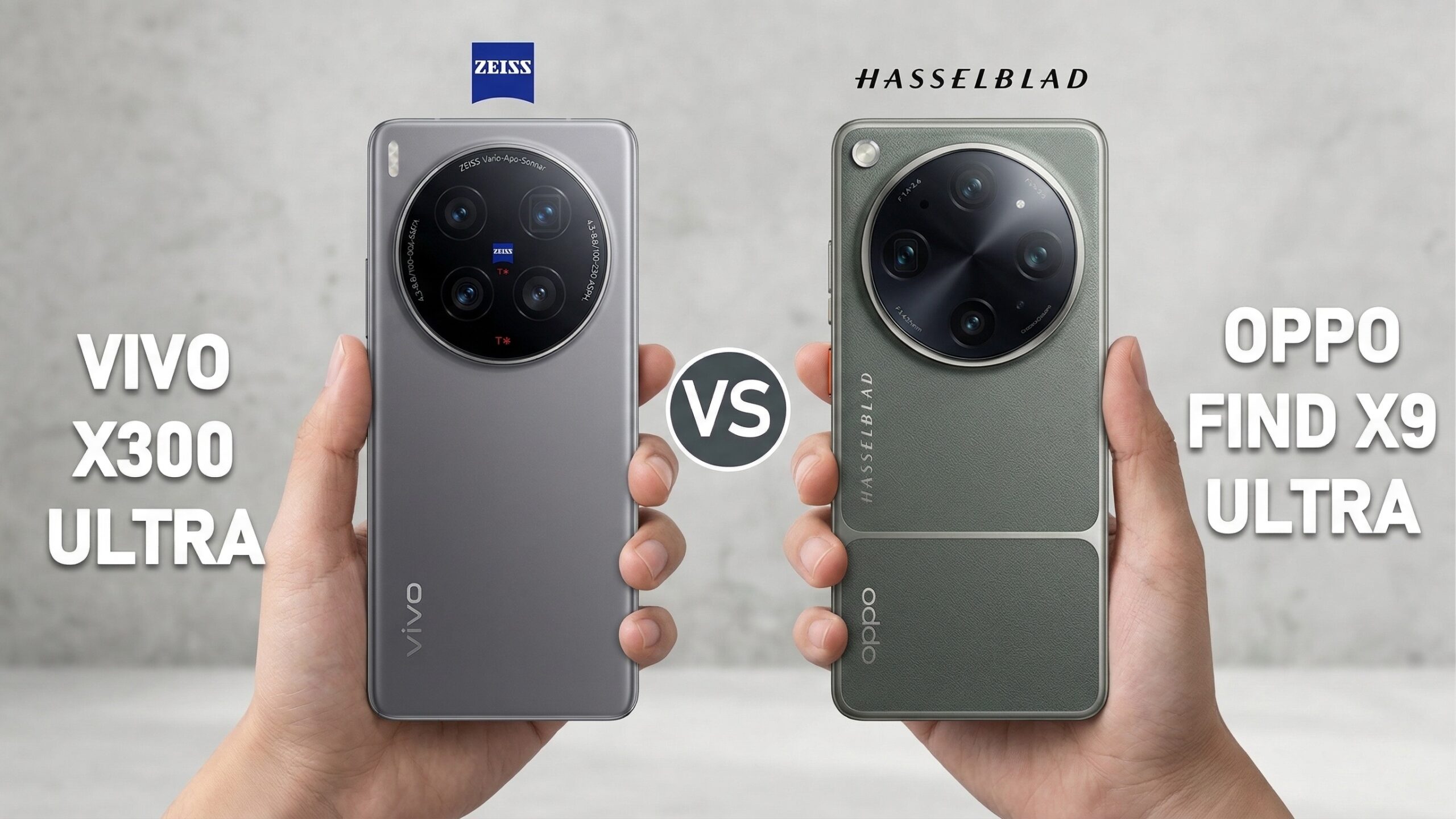
    Vivo X300 Ultra and OPPO Find X9 Ultra are the only smartphones with a dual 200 MP setup — but each implements this idea differently. Vivo focuses on ZEISS T* optics with gimbal stabilization and a 400 mm teleconverter, while OPPO counters with a triple optical zoom from Hasselblad (3× + 10×) and a 7050 mAh battery. Which one better replaces a compact camera? We compare them point by point.

    OPPO Find X9 Ultra has its global premiere on April 21, 2026 — this is the first Ultra model in OPPO’s history to hit European markets. Vivo X300 Ultra has been available for pre-order in Europe since April 16. Both phones share the same Snapdragon 8 Elite Gen 5 processor and Sony LYT-901 main sensor, but differ practically in everything else.

    Note: OPPO Find X9 Ultra had not yet officially premiered at the time of publication of this article. OPPO specifications are based on the manufacturer’s official announcements, certification entries (China Telecom), and reliable leaks.

    Looking for accessories for the new flagship? Check out cases and glass for OPPO Find X9 and accessories for Vivo X phones at Home Screen.

    Specifications Vivo X300 Ultra vs OPPO Find X9 Ultra

    ParameterVivo X300 UltraOPPO Find X9 Ultra
    PremiereApril 2026 (Europe)April 21, 2026 (globally)
    Screen6.82″ LTPO AMOLED, 2K (1440×3168), 144 Hz, ZEISS Master Color6.82″ LTPO AMOLED, 2K (1440×3120), 144 Hz, 3600 nits
    Screen protectionArmor GlassNanoCrystal Shield
    ProcessorSnapdragon 8 Elite Gen 5 (3 nm)Snapdragon 8 Elite Gen 5 (3 nm)
    RAM12/16 GB LPDDR5X12/16 GB LPDDR5X
    Storage256/512 GB/1 TB UFS 4.1256/512 GB/1 TB UFS 4.1
    Main camera200 MP Sony LYT-901 (1/1.12″), f/1.85, OIS gimbal, ZEISS T*200 MP Sony LYT-901 (1/1.12″), f/1.5, OIS, Hasselblad
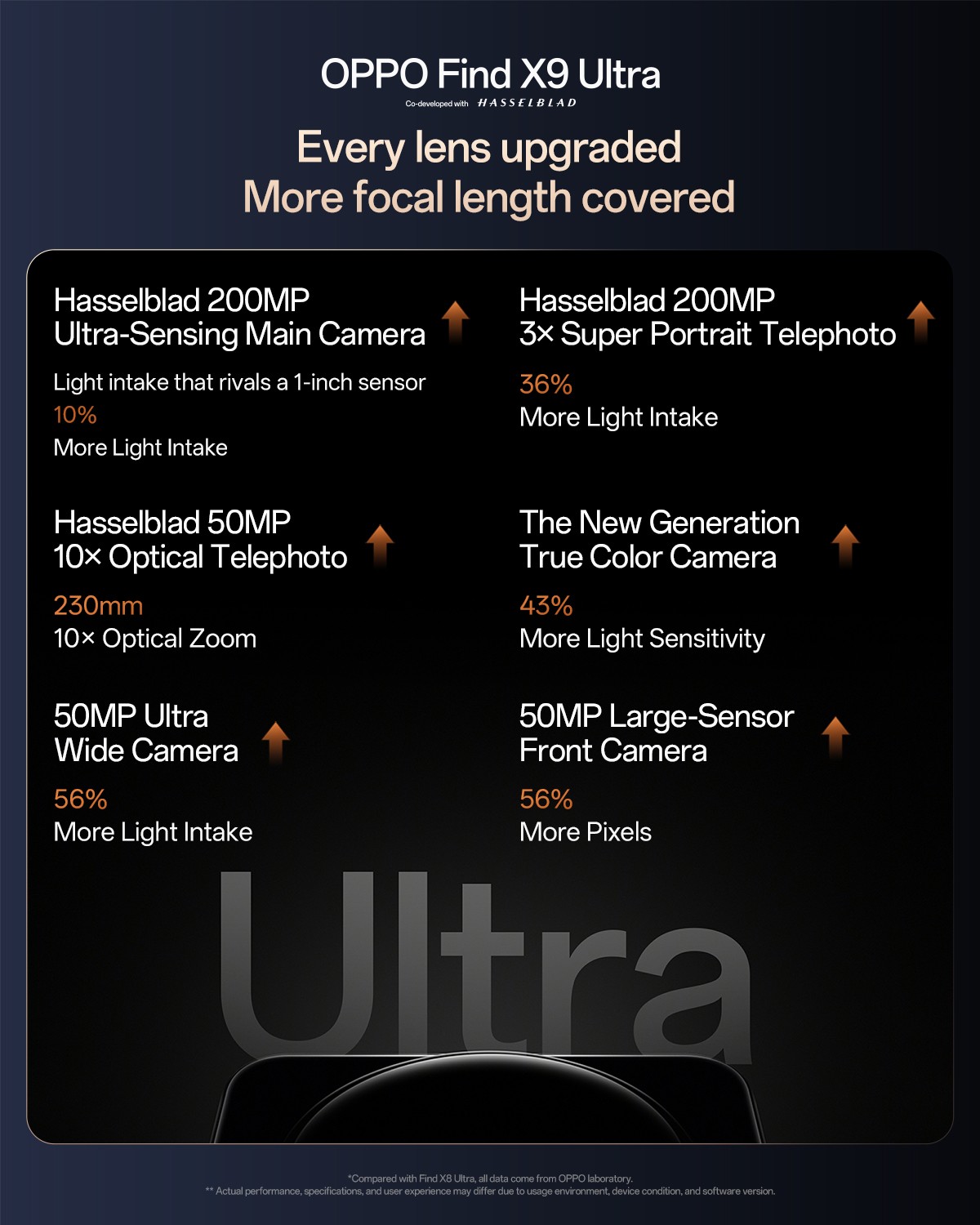
    Telephoto 3-4×200 MP Samsung HP0 (1/1.4″), f/2.3, 85 mm, 3.7× periscope, ZEISS APO200 MP OmniVision OV52A (1/1.28″), f/2.2, 70 mm, 3× periscope, Hasselblad
    Telephoto 10×none50 MP Samsung JNL (1/2.75″), f/3.5, 230 mm, 10× periscope
    Ultrawide50 MP Sony LYTIA 818 (1/1.28″), f/2.0, 116°, OIS50 MP Sony LYT-600 (1/1.95″), f/2.0, 120°
    Multispectral sensor5 MP VCS 3rd generation3.2 MP (color accuracy)
    Selfie50 MP, f/2.5, AF50 MP, AF
    Video8K/30, 4K/120 10-bit Log (all lenses), APV 422, ACES, Dolby Vision4K/120, 10-bit, Dolby Vision HDR
    Battery6600/7000 mAh (silicon-carbon)7050 mAh (silicon-carbon)
    Wired charging100 W100 W SuperVOOC
    Wireless charging40 W + reverse50 W AirVOOC + 10 W reverse
    Dimensions8.19 mm thickness163.04 × 76.91 × 9.15 mm
    Weight232-237 g235-238 g
    Water resistanceIP68/IP69IP68/IP69
    Bluetooth5.45.4
    Wi-FiWi-Fi 7Wi-Fi 7
    NFC / IRyes / yesyes / yes
    USBType-C 3.2, DisplayPortType-C 3.2
    SIMdual nano-SIMdual nano-SIM
    Fingerprint readerultrasonic, under the screenultrasonic, under the screen
    Speakersstereo, Hi-Resstereo
    SystemAndroid 16, OriginOS 6Android 16, ColorOS 16
    Optical partnershipZEISSHasselblad
    Dedicated camera buttonnoneyes (Camera Quick Launch)
    External teleconverterZEISS 400 mm G2 Ultra (17.4× zoom)Hasselblad 300 mm
    Satellite connectivityyes (1 TB version)yes (Satellite version)
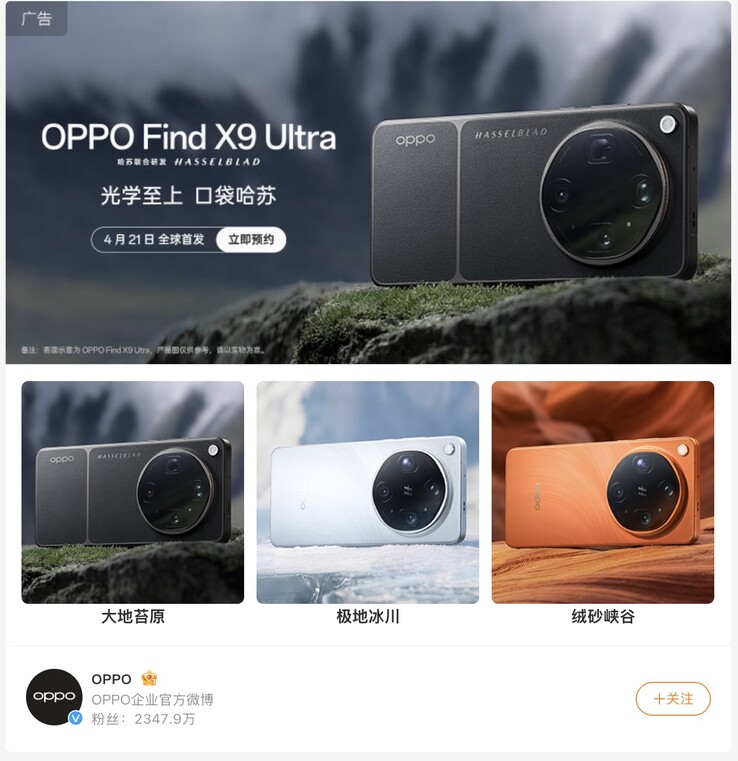
    Colorsblack, silver, greenPolar Glacier, Sand Canyon, Earth Tundra
    Price from (estimated)~6500 PLN (pre-order)~6000-7000 PLN (estimated, premiere 21.04)

    The full specifications of both phones can be compared on GSMArena.
    Vivo X300 Ultra vs OPPO Find X9 Ultra — ZEISS vs Hasselblad

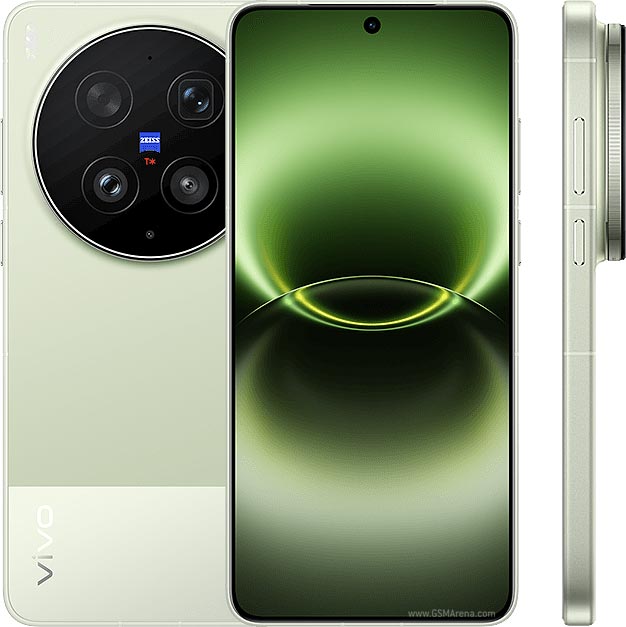
    The camera of the Vivo X300 Ultra and the camera of the OPPO Find X9 Ultra are the two most ambitious photographic systems in smartphones of 2026. Both have a dual 200 MP setup, but differ in philosophy and zoom range.

    Main camera — the same sensor, different approach

    Both phones use the same Sony LYT-901 sensor (1/1.12″) — one of the largest in smartphones. The key difference lies in the optics:

    Vivo X300 Ultra has a brighter telephoto lens with gimbal OIS stabilization and ZEISS T* certification (anti-reflective coatings). The f/1.85 aperture is a solid result.

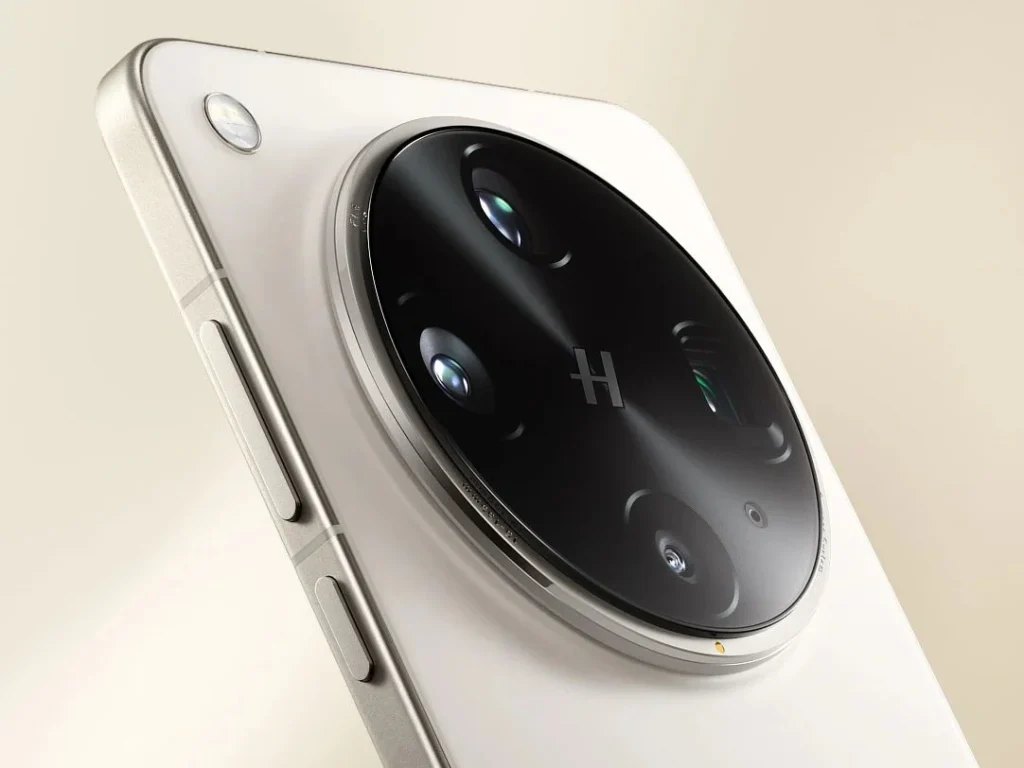
    OPPO Find X9 Ultra according to leaks goes further with an aperture of f/1.5 — it’s one of the brightest optics in smartphone history (some sources report f/1.8, official data will be revealed on April 21). A brighter lens means more light on the sensor, which translates to better photos in low light. Hasselblad calibration gives photos a characteristic, warm tone.

    OPPO’s advantage in the brightness of the main lens (f/1.5 vs f/1.85). Vivo responds with gimbal stabilization, which can provide sharper images at longer exposure times.
    Zoom – this is where the biggest difference lies

    This is the key point of this comparison.

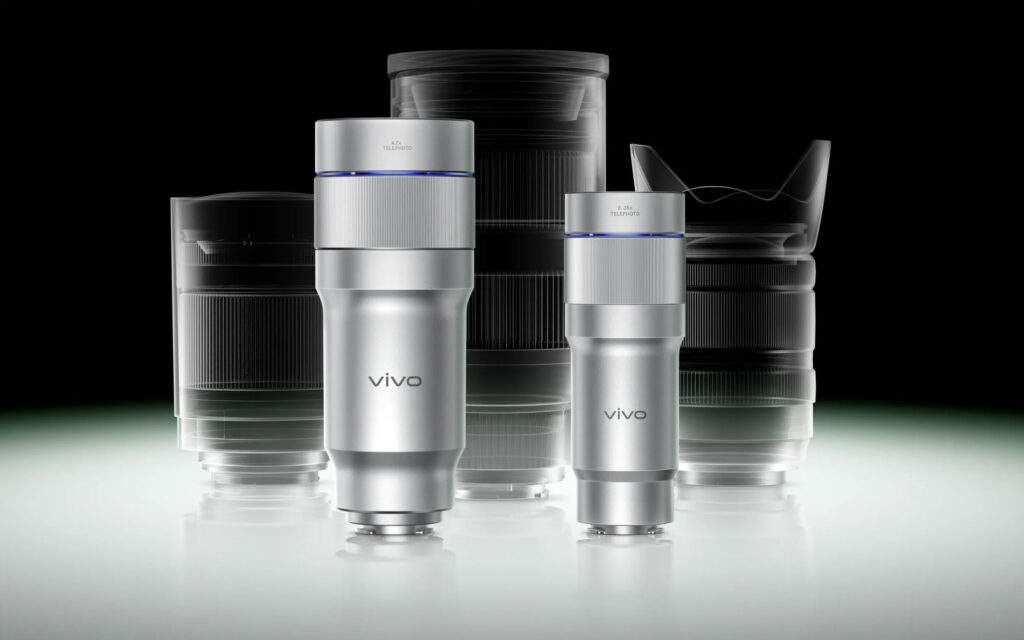
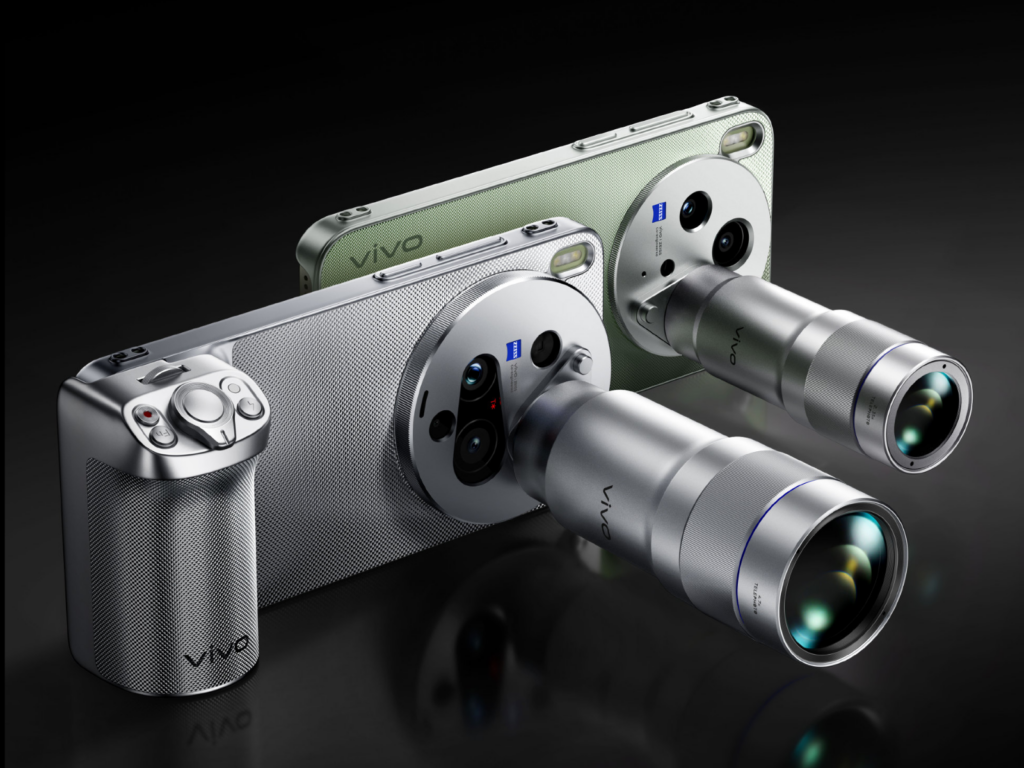
    Vivo X300 Ultra has one 200 MP telephoto lens with 3.7× optical zoom (85 mm) and an optional ZEISS 400 mm G2 Ultra teleconverter, which provides 17.4× optical zoom. In the range of 3.7-17×, it is the best zoom system in a smartphone — but the teleconverter is purchased separately.

    OPPO Find X9 Ultra has two telephoto lenses: 200 MP 3× periscope (70 mm) and 50 MP 10× periscope (230 mm) — both built into the phone. You don’t need any accessories to achieve 10× optical zoom. Lossless zoom reaches up to 40-50× thanks to computations.

    In the range of 3-5× both phones will deliver excellent photos from the 200 MP sensors. Above 5× OPPO has a built-in 10× zoom, while Vivo needs a teleconverter. But with the teleconverter, Vivo achieves 17.4× at full 200 MP — a range unavailable to any other smartphone.

    OPPO wins in versatility (triple zoom without accessories), Vivo wins in maximum range (400 mm with teleconverter).

    Ultrawide

    Here Vivo X300 Ultra has a significant advantage. The Sony LYTIA 818 (1/1.28″) sensor is much larger than the Sony LYT-600 (1/1.95″) in OPPO. Additionally, the ultrawide Vivo has its own OIS stabilization, which is lacking in OPPO.

    A larger sensor and OIS clearly result in better ultrawide photos, especially in low light and when recording video.

    Vivo X300 Ultra wins — the 1/1.28″ sensor with OIS is in a different league.

    Night Photos

    Both phones use the same main sensor, the Sony LYT-901, but OPPO has a brighter lens (f/1.5 vs f/1.85). In theory, this provides about 40% more light on the sensor, which should translate to better night photos from the main camera.

    Vivo responds with gimbal stabilization OIS, which allows for longer exposure times without blur. In practice, both approaches yield great results at night.

    Slight advantage for OPPO due to a potentially brighter lens — but the final aperture will be confirmed at the premiere, and the real difference in photo quality will only be visible after independent tests.
    Video

    Vivo X300 Ultra dominates in video:
    4K/120 fps 10-bit Log on all lenses (main, tele, ultrawide)
    APV 422 encoding and ACES workflow
    – 8K/30 fps, Dolby Vision HDR

    OPPO Find X9 Ultra according to current information records 4K/120 fps with 10-bit color and Dolby Vision HDR. Log recording and 8K have not yet been confirmed by OPPO — the predecessor Find X9 Pro supported Log up to 4K/120 with ACES, so the Ultra model likely offers this as well. Full details will be revealed after the premiere on April 21.

    Vivo wins video — 10-bit Log on every lens and APV 422 are professional tools. For stable video recording in motion, a tripod or gimbal for your phone will come in handy.

    Screen – twin parameters

    ParameterVivo X300 UltraOPPO Find X9 Ultra
    Diagonal6.82″ LTPO AMOLED6.82″ LTPO AMOLED
    Resolution1440 × 3168 (2K)1440 × 3120 (2K)
    Refresh Rate144 Hz144 Hz
    Peak Brightness4500 nits (claimed)3600 nits
    CalibrationZEISS Master ColorHDR10+, Dolby Vision, HDR Vivid
    ProtectionArmor GlassNanoCrystal Shield

    Both phones have nearly identical screens — 6.82″ LTPO AMOLED with a 2K resolution and a 144 Hz refresh rate. These are some of the best displays on the market.

    Vivo claims a higher peak brightness (4500 vs 3600 nits) and offers ZEISS Master Color calibration — a bonus for photographers evaluating images on the screen. OPPO counters with HDR Vivid support and NanoCrystal Shield as screen protection.

    Minimal draw — both screens are excellent. Vivo potentially has a brighter panel, but without independent tests, it’s hard to confirm.

    Battery and Charging

    ParameterVivo X300 UltraOPPO Find X9 Ultra
    Capacity6600/7000 mAh (silicon-carbon)7050 mAh (silicon-carbon)
    Wired charging100 W100 W SuperVOOC
    Wireless charging40 W50 W AirVOOC
    Reverse chargingyes (wireless)yes (10 W wireless)
    Battery life80% after 1200 cyclesno data

    OPPO Find X9 Ultra features the latest silicon-carbon battery with a capacity of 7050 mAh — one of the largest batteries in flagship devices on the market. Vivo offers 6600 or 7000 mAh depending on the variant.

    The wired charging is identical (100 W), but OPPO has better wireless charging (50 W AirVOOC vs 40 W on Vivo). Both phones support reverse charging.

    OPPO wins with the battery — guaranteed 7050 mAh and faster wireless charging.

    Planning to take a flagship on a longer trip? Check out smartphone power banks and wall chargers at Home Screen.

    Build, weight, and water resistance
    Both phones have IP68 and IP69 certifications — they can withstand immersion in water and a stream of hot water under pressure. Taking photos in the rain is not a problem.

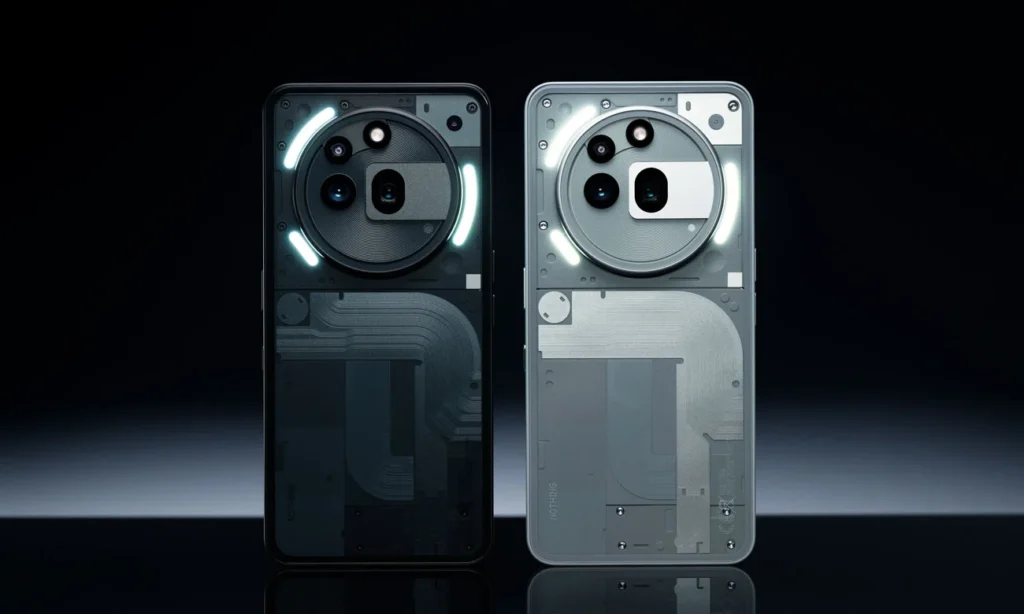
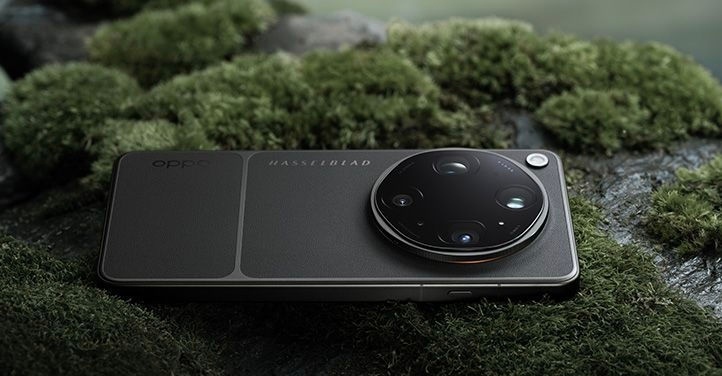
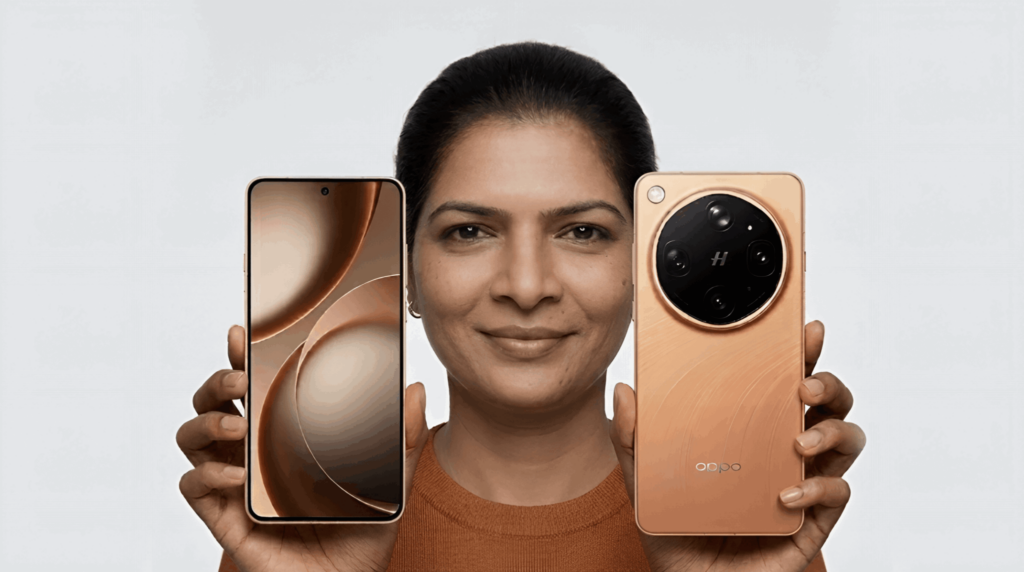
    OPPO Find X9 Ultra is slightly thicker (9.15 mm vs 8.19 mm for Vivo) and weighs 235-238 g. Available in three color variants with eco-leather: Polar Glacier (light blue), Sand Canyon (orange), and Earth Tundra (dark brown). It has a dedicated camera button (Camera Quick Launch) and a quick access button Plus Key.

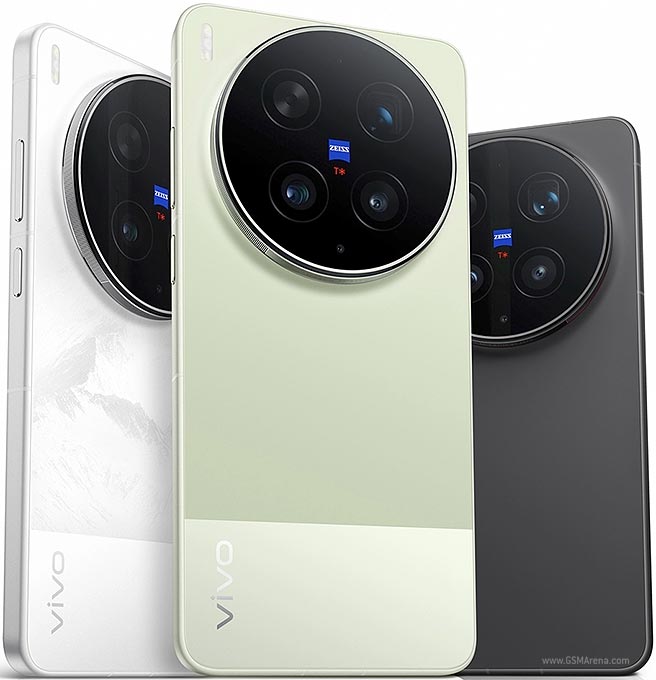
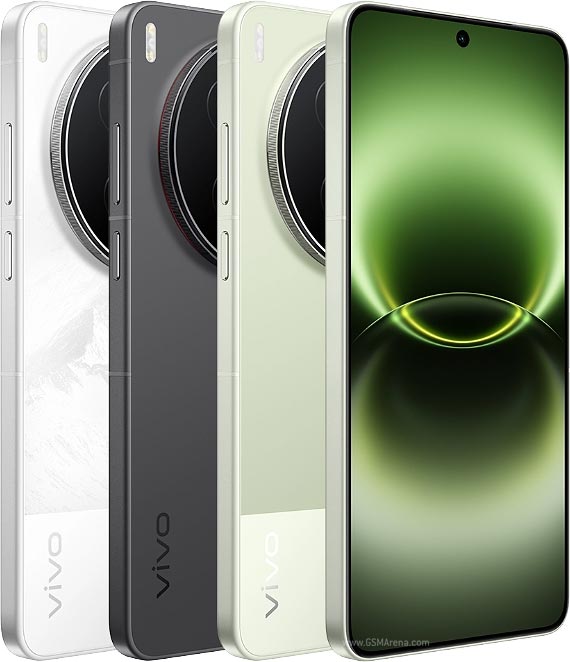
    Vivo X300 Ultra is slimmer (8.19 mm) and weighs 232-237 g. Available in black, silver, and green with an Armor Glass finish. Both phones have an infrared emitter (IR blaster).

    Draw — Vivo is slimmer, OPPO has a more interesting design with eco-leather and a dedicated camera button.

    Vivo X300 Ultra price vs OPPO Find X9 Ultra price

    VariantVivo X300 UltraOPPO Find X9 Ultra
    Base~6500 PLN (pre-order with Pro Video set)~6000-7000 PLN (estimated, premiere on 21.04)
    Top~8600 PLN (16 GB/1 TB)no data
    TeleconverterZEISS 400 mm (~2000 PLN)Hasselblad 300 mm (price unknown)

    The price of the Vivo X300 Ultra starts at 6500 PLN in pre-order with the Pro Video Rig Kit — this is the confirmed price. The price of the OPPO Find X9 Ultra has not yet been officially announced and will only be revealed at the premiere on April 21, 2026. Based on the price of the OPPO Find X9 Pro (~5499 PLN in Europe), we estimate that the OPPO Find X9 Ultra will cost ~6000-7000 PLN, but this is just our estimation.

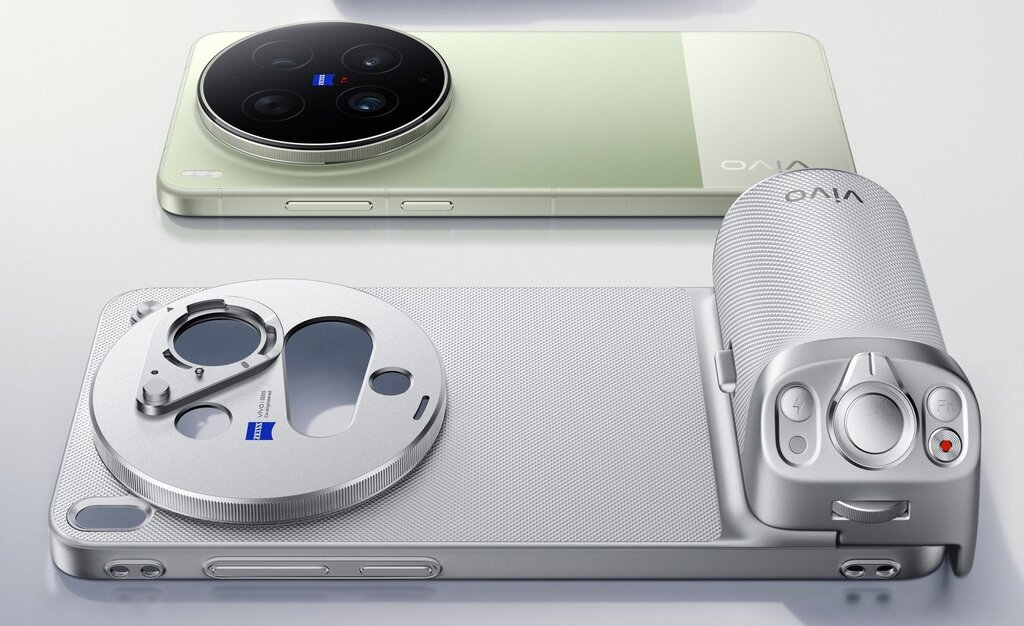
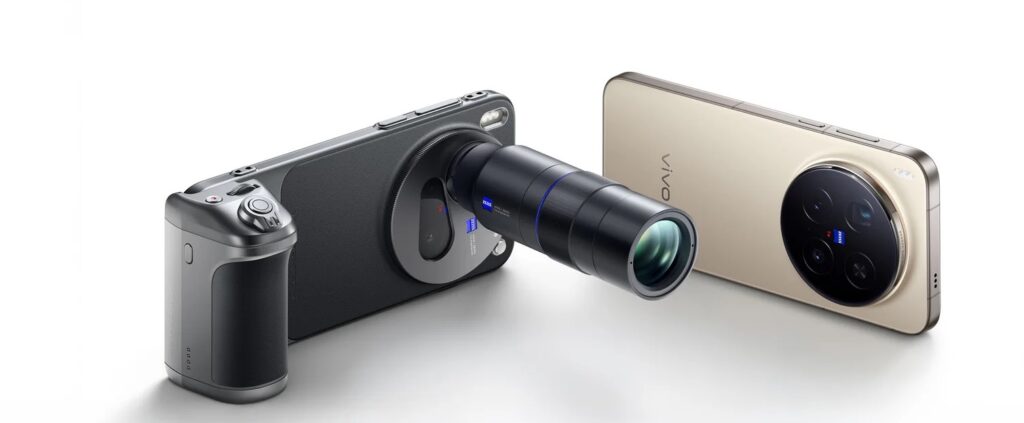
    Both phones have dedicated photographic accessories — teleconverters (ZEISS 400 mm vs Hasselblad 300 mm) and grips with a battery.

    The price of OPPO will be confirmed on April 21 — we will return with an update after the premiere.
    Unique features – what distinguishes each model

    Only Vivo X300 Ultra:

    • ZEISS 400 mm G2 Ultra Teleconverter — 17.4× optical zoom in 200 MP
    • 4K/120 10-bit Log on all lenses + APV 422 + ACES
    • Ultrawide with 1/1.28″ sensor (Sony LYTIA 818) with OIS
    • 5 MP multispectral sensor VCS 3rd generation
    • Gimbal stabilization OIS (main camera)
    • ZEISS Master Color screen calibration

    Only OPPO Find X9 Ultra:

    • Triple optical zoom (3× + 10×) — without accessories up to 230 mm
    • Main lens f/1.5 — the brightest among flagships
    • 7050 mAh battery — the largest in comparison
    • 50 W wireless charging AirVOOC
    • Dedicated camera button + Plus Key button
    • Hasselblad Color Calibration on all lenses
    • Hasselblad 300 mm teleconverter
    • 5 years of system updates, 6 years of security updates

    Summary: which one to choose?

    Choose Vivo X300 Ultra if:
    – You record professional videos (10-bit Log on every lens, APV 422)
    – You need extreme zoom with a teleconverter (400 mm, 17.4×)
    – You care about the best ultra-wide (1/1.28″ sensor with OIS)
    – You prefer a slimmer design (8.19 mm)
    – You want neutral, true-to-life colors from ZEISS

    Choose OPPO Find X9 Ultra if:
    – You want a triple zoom built into the phone (3× + 10× without accessories)
    – You mainly photograph in low light (f/1.5 lens)
    – You care about the largest battery (7050 mAh)
    – You value warm, distinctive colors from Hasselblad
    – You want a dedicated camera button

    The comparison of Vivo X300 Ultra vs OPPO Find X9 Ultra is a clash of two mobile photography philosophies — ZEISS vs Hasselblad, gimbal vs triple zoom, professional video vs versatility without accessories. There is no single winner — there is your winner.

    Looking for a case, tempered glass, or charger for your new flagship? Check out accessories for OPPO Find X9, Vivo X accessories, and wireless chargers at Home Screen — with free delivery from 100 PLN and a rating of 4.9/5 on Google.

    FAQ – frequently asked questions

    When is the OPPO Find X9 Ultra premiere?
    The OPPO Find X9 Ultra premiere takes place globally on April 21, 2026. This is the first Ultra model in OPPO’s history to hit the European markets.

    What is the price of the OPPO Find X9 Ultra in Poland?
    The price of the OPPO Find X9 Ultra has not yet been officially announced. Based on the price of the OPPO Find X9 Pro (~5499 PLN), we estimate that the Ultra model will cost around 6000-7000 PLN. The official price will be revealed on April 21.

    Will the OPPO Find X9 Ultra be available in Poland?
    Yes — OPPO has confirmed the global premiere, including for the European markets. In Poland, OPPO is available, among others, through Media Expert. The exact date of availability in stores depends on the distributor.

    Which phone takes better photos?
    The Vivo X300 Ultra camera excels in video (10-bit Log on each lens, APV 422) and ultra-wide (1/1.28″ sensor). The OPPO Find X9 Ultra camera has an advantage in zoom (built-in 10× without accessories) and night shots (f/1.5 lens). Both have the same main sensor, the Sony LYT-901.

    Which phone has a better battery?
    The OPPO Find X9 Ultra has a 7050 mAh battery with 50 W wireless charging. The Vivo X300 Ultra has a 6600-7000 mAh battery with 40 W wireless charging.

    What is the best camera smartphone in 2026?
    The Vivo X300 Ultra, OPPO Find X9 Ultra, and Xiaomi 17 Ultra are the top three camera smartphones of 2026. Each excels in a different category — Vivo in video, OPPO in zoom, Xiaomi in mechanical optical zoom with Leica colors.

    What are the opinions on the OPPO Find X9 Ultra?
    The OPPO Find X9 Ultra has not yet had its official premiere (April 21, 2026), so independent opinions and reviews will appear after this date. Its predecessor — the OPPO Find X9 Pro — ranked 5th in the DxOMark ranking, which bodes well for the Ultra model.
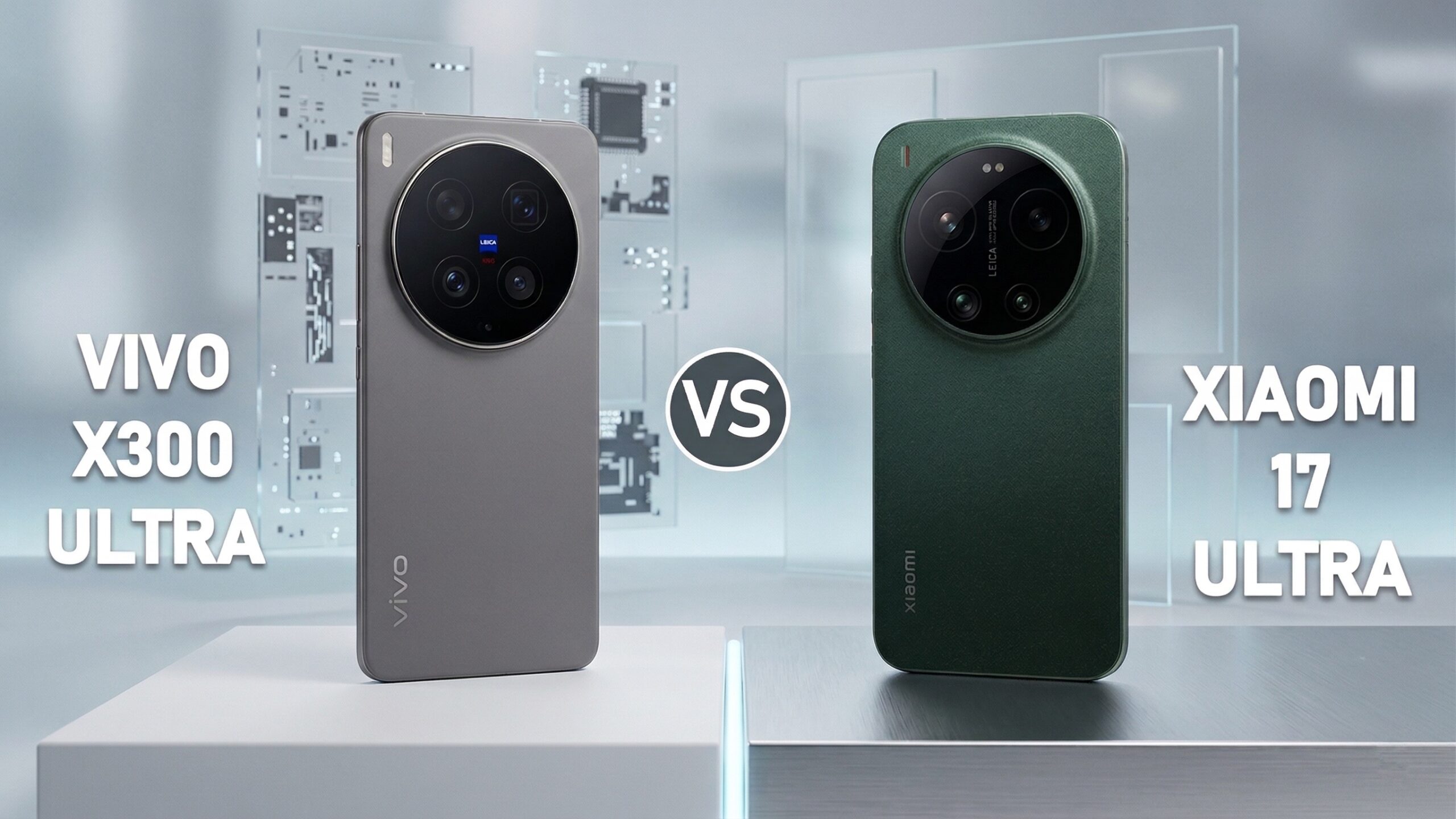
  • Vivo X300 Ultra vs Xiaomi 17 Ultra – comparison of flagship cameras

    Vivo X300 Ultra vs Xiaomi 17 Ultra – comparison of flagship cameras

    Vivo X300 Ultra has a dual 200 MP setup with ZEISS optics and a 400 mm teleconverter, while the Xiaomi 17 Ultra features a 1-inch Leica sensor with a mechanical zoom of 75-100 mm. Both phones target photographers, but the philosophy of each is completely different — Vivo focuses on raw power and zoom range, while Xiaomi emphasizes the atmosphere of photos and hardware HDR. Which one better replaces a compact camera? If you’re looking for the best photography smartphone of 2026, the choice comes down to these two models.

    Vivo X300 Ultra went on European pre-sale on April 16, 2026, while the Xiaomi 17 Ultra has been available since the end of February. They are direct competitors in the ultra-premium segment, united by one ambition: to replace the compact camera. However, they differ in philosophy, optics, and price.

    Specifications Vivo X300 Ultra vs Xiaomi 17 Ultra

    ParameterVivo X300 UltraXiaomi 17 Ultra
    PremiereApril 2026 (Europe)February 2026 (globally)
    Screen6.82″ LTPO AMOLED, 2K (1440×3168), 144 Hz, ZEISS Master Color6.9″ OLED Xiaomi HyperRGB, 2608×1200, 120 Hz LTPO, 300 Hz touch, 12-bit
    Peak brightness4500 nits (declared)3500 nits
    Screen protectionArmor GlassXiaomi Shield Glass 3.0
    ProcessorSnapdragon 8 Elite Gen 5 (3 nm)Snapdragon 8 Elite Gen 5 (3 nm)
    RAM12/16 GB LPDDR5X16 GB LPDDR5X
    Storage256/512 GB/1 TB UFS 4.1512 GB/1 TB UFS 4.1
    Main camera200 MP Sony LYT-901 (1/1.12″), f/1.85, OIS gimbal, ZEISS T*50 MP Light Fusion 1050L (1″), f/1.67, OIS, LOFIC HDR
    Telephoto200 MP Samsung HP0 (1/1.4″), f/2.3, 85 mm, 3.7× periscope, ZEISS APO200 MP Samsung HPE (1/1.4″), f/2.39-2.96, 75-100 mm mechanical zoom, OIS
    Ultrawide50 MP Sony LYTIA 818 (1/1.28″), f/2.0, 116°, OIS50 MP Samsung JN5 (1/2.75″), f/2.2, 14 mm, 115°
    Multispectral sensor5 MP VCS 3rd generationnone
    Selfie50 MP, f/2.5, AF50 MP OV50M, f/2.2, AF, 21 mm, 90°
    Video8K/30, 4K/120 10-bit Log, Dolby Vision, APV 4228K/30, 4K/120 Log, ACES, Dolby Vision, slow-mo 1080p/1920 fps
    Battery6600/7000 mAh (silicon-carbon)6000 mAh (global version)
    Wired charging100 W90 W (~43 min)
    Wireless charging40 W + reverse charging50 W
    Reverse chargingyes (wireless)yes (22.5 W wired)
    Dimensions8.19 mm thick162.9 × 77.6 × 8.29 mm
    Weight232-237 g (depending on color)218.4 g (Black/White) / 219 g (Green)
    Water resistanceIP68/IP69IP68
    Bluetooth5.46.0
    Wi-FiWi-Fi 7Wi-Fi 7 (tri-band, Wi-Fi 6e)
    NFCyesyes
    Infrared port (IR)yesyes
    USBType-C 3.2, DisplayPortType-C 3.2 Gen 2, DisplayPort
    SIMdual nano-SIMnano+nano or nano+eSIM or eSIM+eSIM
    Fingerprint readerultrasonic, under displayultrasonic, under display
    Speakersstereo, Hi-Resstereo, Hi-Res
    SystemAndroid 16, OriginOS 6Android 16, HyperOS 3
    DxOMarknot yet rated166 points (#6 globally)
    Satellite connectivityyes (1 TB version)none
    Colorsblack, silver, greenblack, white, green (Starlit Green)
    Price fromapprox. 7999 PLN for the 16 GB/1 TB variantapprox. 6499

    The full specifications of both phones can also be compared on GSMArena. Looking for accessories for your new flagship? Check out cases and glass for Xiaomi 17 Ultra and accessories for Vivo X phones at Home Screen.

    Camera Vivo X300 Ultra vs Xiaomi 17 Ultra — which one takes better photos?

    This is where the real fun begins — the camera of the Vivo X300 Ultra and the camera of the Xiaomi 17 Ultra approach mobile photography from completely different angles.

    Camera Philosophy

    Vivo X300 Ultra is a “technologist” — it focuses on raw specification power. The dual 200 MP sensor (main Sony LYT-901, f/1.85 + telephoto Samsung HP0, f/2.3) provides a huge field for framing and digital zooming. OIS stabilization at gimbal level and ZEISS T* certification on the main lens are parameters rarely seen in smartphones. Additionally, the ultra-wide lens with a large Sony LYTIA 818 sensor (1/1.28″) — significantly larger than the competition.

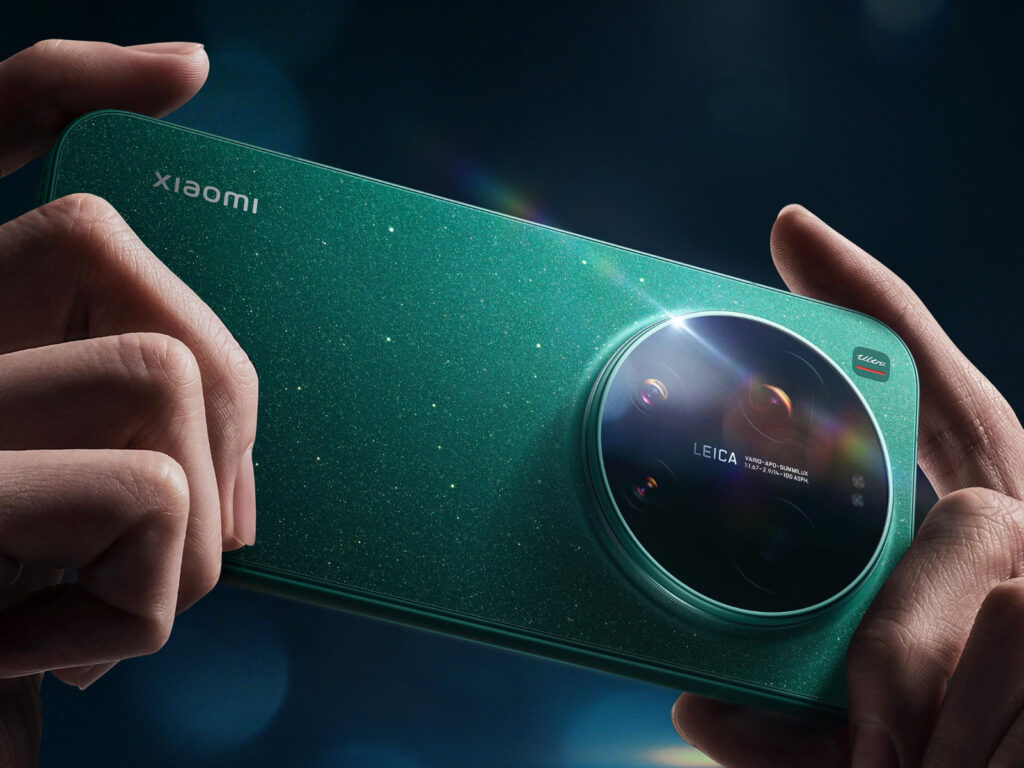
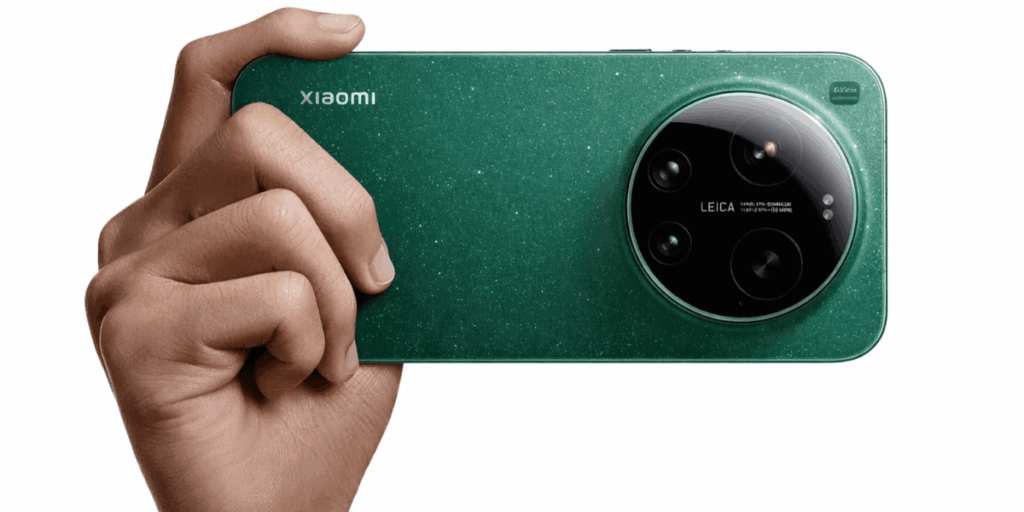
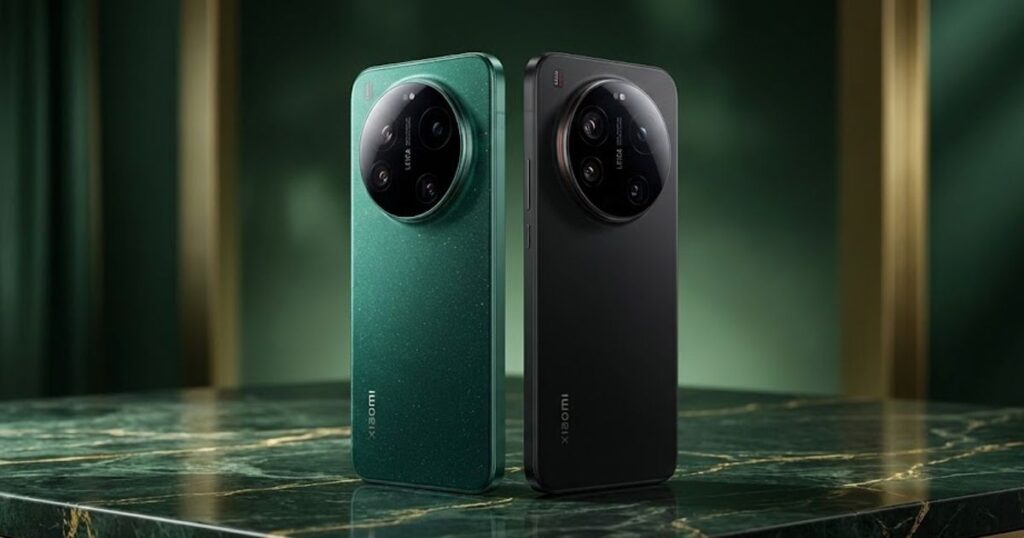
    Xiaomi 17 Ultra is an “artist” — a 1-inch main sensor with LOFIC technology (hardware HDR without frame merging) and a mechanical optical zoom of 75-100 mm are solutions known from professional cameras. Collaboration with Leica translates into characteristic color reproduction and emulation of Leica M9 films.

    Daytime photo quality

    In good lighting, Vivo X300 Ultra produces more neutral, true-to-life colors. Photos from the 200 MP sensor have an enormous amount of detail — when cropped to a lower resolution, the effect is incredibly sharp.

    Xiaomi 17 Ultra with a 1-inch sensor captures more light and creates a more natural background blur (bokeh). Colors in Leica Vibrant mode are warmer and more saturated, while in Leica Authentic mode — truer, with the characteristic “leica look”.

    Draw. Vivo wins in detail and resolution, Xiaomi — in atmosphere and color reproduction. The choice depends on the photography style.

    Night mode photos

    Here, Xiaomi 17 Ultra has a clear advantage. The 1-inch sensor with LOFIC technology processes exposure information at the hardware level, resulting in more balanced night photos without the typical artifacts from merging multiple frames.

    Vivo X300 Ultra performs well thanks to CIPA 7.0 stabilization, which allows for longer exposure times without blurring. In practice, both phones deliver excellent results at night, but Xiaomi retains more detail in shadows and better controls noise.

    Xiaomi 17 Ultra wins — the LOFIC sensor is a real advantage in low light.

    Zoom and telephoto lens

    This is the key difference between the two phones.

    Vivo X300 Ultra offers a 200 MP telephoto lens with a focal length of 85 mm (3.7× optical zoom). Additionally, there is an optional ZEISS 400 mm G2 Ultra teleconverter, which provides up to 17.4× optical zoom at full 200 MP resolution. This is a record among smartphones.

    Xiaomi 17 Ultra has a 200 MP telephoto lens with mechanical optical zoom of 75-100 mm (3.2-4.3×). This is the first such solution in a smartphone — a movable optical element provides true optical zoom without quality loss across the entire focal range.

    At close-ups of 3-5×, Xiaomi delivers sharper images because it uses optical zoom without digital cropping. Above 5×, Vivo takes the lead — with the teleconverter, it achieves ranges unavailable to any other smartphone.

    Vivo wins in range, Xiaomi — in photo quality in the popular 3-5× range. The ZEISS teleconverter is a powerful accessory, but you buy it separately.

    If you plan to record professional video on your smartphone, a tripod or gimbal for your phone. will also be useful.

    Ultrawide

    Both phones have 50 MP ultrawide lenses with similar fields of view (~116°), but the Vivo X300 Ultra has a huge advantage with its 1/1.28″ Sony LYTIA 818 sensor — that’s more than twice the size of the Samsung JN5 (1/2.75″) in the Xiaomi. Additionally, the ultrawide Vivo has its own OIS stabilization.

    In practice, the Vivo X300 Ultra should provide significantly better ultrawide photos, especially in low light, thanks to the larger sensor and stabilization.

    The Vivo X300 Ultra wins — the 1/1.28″ sensor with OIS is in a completely different league than the 1/2.75″ without stabilization.

    Video

    Both phones record in 8K/30 fps, 4K/120 fps Log with support for ACES and Dolby Vision — this is currently the absolute top of smartphone video. The differences lie in the details:

    Vivo X300 Ultra:
    4K/120 fps 10-bit Vivo Log on all lenses (main, tele, ultra-wide)
    – Encoding APV 422 (more efficient format than H.265)
    – Dolby Vision HDR, 8K/30 fps

    Xiaomi 17 Ultra:
    4K/120 fps Log with ACES support (Academy Color Encoding System)
    – Super slow-motion 1080p up to 1920 fps
    – Leica film modes (warm color rendition)
    – ShootSteady recording up to 2.8K/60 fps (advanced stabilization)
    – Dolby Vision HDR, 8K/30 fps

    Both of these machines offer professional video tools — Log, ACES, and 4K/120. The key advantage of Vivo is 10-bit Log on every lens (not just the main one) and APV 422 encoding. Xiaomi, on the other hand, offers super slow-motion 1080p/1920 fps and ShootSteady stabilization — ideal for dynamic shots in motion.

    Tie in video — both phones are professional filmmaking tools. Vivo has better encoding (APV 422) and Log on all lenses, Xiaomi has better slow-motion and stabilization. For stable video recording in motion, a selfie stick with tripod function will also work well.

    Screen — does 2K resolution make a difference?

    ParameterVivo X300 UltraXiaomi 17 Ultra
    Diagonal6.82″ LTPO AMOLED6.9″ OLED Xiaomi HyperRGB
    Resolution1440 × 3168 (2K)2608 × 1200, 12-bit
    Refresh Rate144 Hz120 Hz LTPO
    Peak Brightness4500 nits (claimed)3500 nits
    CalibrationZEISS Master ColorDCI-P3, TUV Rheinland
    ProtectionArmor GlassXiaomi Shield Glass 3.0

    Vivo leads in all screen parameters — 2K vs FHD+, 144 Hz vs 120 Hz, and 4500 nits peak brightness (claimed) vs 3500 nits from Xiaomi. ZEISS Master Color calibration is an additional bonus for photographers who want to evaluate photos directly on the phone’s screen.

    Xiaomi counters with adaptive LTPO refresh rate, which saves battery by lowering the frequency to 1 Hz when sufficient. The Xiaomi screen offers 12-bit color depth and TÜV Rheinland certifications (Low Blue Light, Flicker Free).

    Vivo wins with the screen — higher resolution, faster refresh rate, and brighter panel. Xiaomi counters with better color depth (12-bit) and eye protection certifications.

    Battery and Charging — Vivo X300 Ultra vs Xiaomi 17 Ultra

    ParameterVivo X300 UltraXiaomi 17 Ultra
    Capacity6600/7000 mAh (silicon-carbon)6000 mAh
    Wired charging100 W90 W (~43 min)
    Wireless charging40 W + reverse charging50 W
    Reverse chargingyes (wireless)yes (10 W wireless, 22.5 W wired)
    Battery life80% after 1200 cyclesno data

    The Vivo X300 Ultra has a significantly larger battery — 6600 or even 7000 mAh (depending on the variant) with a silicon-carbon cell, compared to 6000 mAh in the Xiaomi 17 Ultra. Faster wired charging (100 W vs 90 W) is an additional advantage. In tests, EPREL showed that Vivo achieved about 57 hours of operation, placing it among the top smartphones. Both phones support reverse charging — you can charge headphones, a watch, or even a second phone with them.

    The Xiaomi 17 Ultra has better wireless charging (50 W vs 40 W) and stronger wired reverse charging (22.5 W). In everyday use, both phones easily last a full day of intensive photography.

    Vivo wins in battery capacity (even 1000 mAh more), Xiaomi in wireless and reverse charging.

    Planning to take your flagship on a longer trip? Check out smartphone power banks and wall chargers to ensure that the battery doesn’t die at a crucial moment.

    Build, weight, and water resistance

    You will take both phones in your hand and feel the difference — Xiaomi is about 13-19 g lighter. With similar dimensions (~163 × 77 × 8.2-8.3 mm), every gram matters during long photography sessions.

    Vivo X300 Ultra has IP68 and IP69 certifications — it can withstand immersion in water and a stream of hot water under pressure. Xiaomi 17 Ultra has an IP68 certification (immersion up to 6 m for 30 minutes). Taking photos in the rain or near water is not a problem for either of them.

    Xiaomi 17 Ultra weighs 218.4 g (Black/White) or 219 g (Starlit Green). Available in three colors: black, white, and green. Both phones have an infrared emitter (IR blaster) for controlling home appliances.

    Vivo X300 Ultra weighs 232-237 g (the black is lighter, the green is heavier) and has Armor Glass on the back. The construction is massive but solid — the aluminum frame and flat edges provide a secure grip. Available in black, silver, and green.

    Vivo wins with IP protection (IP68+IP69 vs just IP68), but Xiaomi wins with weight — it is noticeably lighter.

    Price in Poland — how much does each flagship cost?

    The launch price of Xiaomi 17 Ultra was 6499 PLN for the 16/512 GB version, but it can currently be purchased from 5295 PLN. The official prices for this model in Poland have not yet been announced, but leaks suggest that Vivo X300 Ultra may cost around 7999 PLN for the 16 GB / 1 TB version.

    Both phones have dedicated photography grips (Xiaomi Photography Kit, SmallRig Kit for Vivo), but you buy them separately. The ZEISS 400 mm teleconverter is a unique accessory that has no equivalent among competitors. The quality-to-price ratio favors Xiaomi — but Vivo with the pre-sale set levels the playing field.

    Unique features — what distinguishes each model

    Only Vivo X300 Ultra:

    • ZEISS 400 mm G2 Ultra teleconverter — 17.4× optical zoom in 200 MP
    • Dual sensor 200 MP (main + telephoto) with ZEISS T* optics
    • 4K/120 10-bit Vivo Log on all lenses + ACES workflow
    • Ultrawide with 1/1.28″ sensor (Sony LYTIA 818) with OIS
    • 5 MP multispectral sensor VCS 3rd generation
    • 6600/7000 mAh battery (silicon-carbon)
    • ZEISS Master Color screen calibration
    • BeiDou satellite connectivity (1 TB version)
    • Infrared port (IR blaster)
    • OIS gimbal stabilization

    Only Xiaomi 17 Ultra:

    • Mechanical optical zoom 75-100 mm (first in a smartphone)
    • 1-inch sensor with LOFIC (hardware HDR)
    • Leica film modes (Leica Authentic, Leica Vibrant, film filters)
    • Super slow-motion 1080p/1920 fps
    • ShootSteady stabilization up to 2.8K/60 fps
    • Bluetooth 6.0 and Wi-Fi 6e (tri-band)
    • Support for eSIM (nano+eSIM or eSIM+eSIM)
    • DxOMark 166 points (#6 globally)
    • Xiaomi HyperAI (writing AI, translating AI, searching AI)

    Summary: which one to choose?

    Choose Vivo X300 Ultra if:
    – You record a lot of video (8K and 4K/120 Log is a huge advantage over the competition)
    – You need extreme zoom (400 mm with a teleconverter)
    – You want maximum photo resolution (dual 200 MP)
    – You prefer neutral, true-to-life colors from ZEISS
    – You care about the best display (2K, 144 Hz)

    Choose Xiaomi 17 Ultra if:
    – You mainly photograph outdoors (IP68, lighter)
    – You value the colors and atmosphere of Leica photos
    – You take a lot of night shots (LOFIC sensor)
    – You care about a lower price (from ~5295 PLN)
    – You want a phone available immediately

    The comparison of Vivo X300 Ultra vs Xiaomi 17 Ultra shows that there is no single winner — it is your winner, depending on whether you prefer the raw power of Vivo or the artistic character of Leica in Xiaomi.

    Looking for a case, tempered glass, or charger for your new flagship? Check out cases and glass for Xiaomi 17 Ultra and wireless chargers at Home Screen – with free delivery from 100 PLN and a rating of 4.9/5 on Google.

    FAQ — frequently asked questions

    Will Vivo X300 Ultra be available in Poland?
    Vivo X300 Ultra is available for pre-order in Europe since April 16, 2026, with shipping starting from April 24. It can be ordered through the official Vivo website and selected retailers.

    What is the price of Xiaomi 17 Ultra in Poland?
    Xiaomi 17 Ultra costs around 5295 PLN (current market price) for the 16/512 GB version up to about 6999 PLN for the 16 GB/1 TB version. The launch price was 6499 PLN. It has been available in Polish stores since March 2026.

    Which phone takes better photos?
    It depends on the photography style. The camera of Vivo X300 Ultra wins in zoom range, resolution, and video recording. The camera of Xiaomi 17 Ultra provides better night photos, warmer Leica colors, and better ultra-wide shots. For video — Vivo, for street and portrait photography — Xiaomi.

    Is it worth waiting for the Vivo X300 Ultra, since the Xiaomi 17 Ultra is already available?
    If your priority is video, extreme zoom, or dual 200 MP — yes, it’s worth the wait. If you care about immediate availability, IP68, a lighter design, and a lower price — the Xiaomi 17 Ultra is a safe choice right now.

    When is the Vivo X300 Ultra release?
    European pre-sales start on April 16, 2026, and regular sales begin on April 24, 2026.

    What is the best camera smartphone in 2026?
    The Vivo X300 Ultra and Xiaomi 17 Ultra are the two main contenders for the title of best camera smartphone of 2026. Vivo leads in video and zoom, while Xiaomi excels in night photography and Leica colors. The Samsung Galaxy S26 Ultra and iPhone 17 Pro Max are strong competitors, but they do not have such advanced optical systems.

    What are the reviews of the Vivo X300 Ultra and Xiaomi 17 Ultra?
    The first reviews of the Vivo X300 Ultra highlight its outstanding video capabilities and record zoom range. Reviews of the Xiaomi 17 Ultra praise its night photography, Leica colors, and mechanical optical zoom.

  • Vivo X300 Ultra vs Xiaomi 17 Ultra – comparison of photographic flagships

    Vivo X300 Ultra vs Xiaomi 17 Ultra – comparison of photographic flagships

    Vivo X300 Ultra has a dual 200 MP setup with ZEISS optics and a 400 mm teleconverter, while the Xiaomi 17 Ultra features a 1-inch Leica sensor with a mechanical zoom of 75-100 mm. Both phones target photographers, but the philosophy of each is completely different — Vivo focuses on raw power and zoom range, while Xiaomi emphasizes the atmosphere of photos and hardware HDR. Which one better replaces a compact camera? If you’re looking for the best photography smartphone of 2026, the choice comes down to these two models.

    Vivo X300 Ultra went on European pre-sale on April 16, 2026, while the Xiaomi 17 Ultra has been available since the end of February. They are direct competitors in the ultra-premium segment, united by one ambition: to replace a compact camera. However, they differ in philosophy, optics, and price.

    Specifications Vivo X300 Ultra vs Xiaomi 17 Ultra

    ParameterVivo X300 UltraXiaomi 17 Ultra
    PremiereApril 2026 (Europe)February 2026 (globally)
    Screen6.82″ LTPO AMOLED, 2K (1440×3168), 144 Hz, ZEISS Master Color6.9″ OLED Xiaomi HyperRGB, 2608×1200, 120 Hz LTPO, 300 Hz touch, 12-bit
    Peak brightness4500 nits (declared)3500 nits
    Screen protectionArmor GlassXiaomi Shield Glass 3.0
    ProcessorSnapdragon 8 Elite Gen 5 (3 nm)Snapdragon 8 Elite Gen 5 (3 nm)
    RAM12/16 GB LPDDR5X16 GB LPDDR5X
    Storage256/512 GB/1 TB UFS 4.1512 GB/1 TB UFS 4.1
    Main camera200 MP Sony LYT-901 (1/1.12″), f/1.85, OIS gimbal, ZEISS T*50 MP Light Fusion 1050L (1″), f/1.67, OIS, LOFIC HDR
    Telephoto200 MP Samsung HP0 (1/1.4″), f/2.3, 85 mm, 3.7× periscope, ZEISS APO200 MP Samsung HPE (1/1.4″), f/2.39-2.96, 75-100 mm mechanical zoom, OIS
    Ultrawide50 MP Sony LYTIA 818 (1/1.28″), f/2.0, 116°, OIS50 MP Samsung JN5 (1/2.75″), f/2.2, 14 mm, 115°
    Multispectral sensor5 MP VCS 3rd generationnone
    Selfie50 MP, f/2.5, AF50 MP OV50M, f/2.2, AF, 21 mm, 90°
    Video8K/30, 4K/120 10-bit Log, Dolby Vision, APV 4228K/30, 4K/120 Log, ACES, Dolby Vision, slow-mo 1080p/1920 fps
    Battery6600/7000 mAh (silicon-carbon)6000 mAh (global version)
    Wired charging100 W90 W (~43 min)
    Wireless charging40 W + reverse charging50 W
    Reverse chargingyes (wireless)yes (22.5 W wired)
    Dimensions8.19 mm thickness162.9 × 77.6 × 8.29 mm
    Weight232-237 g (depending on color)218.4 g (Black/White) / 219 g (Green)
    Water resistanceIP68/IP69IP68
    Bluetooth5.46.0
    Wi-FiWi-Fi 7Wi-Fi 7 (tri-band, Wi-Fi 6e)
    NFCyesyes
    Infrared port (IR)yesyes
    USBType-C 3.2, DisplayPortType-C 3.2 Gen 2, DisplayPort
    SIMdual nano-SIMnano+nano or nano+eSIM or eSIM+eSIM
    Fingerprint readerultrasonic, under the screenultrasonic, under the screen
    Speakersstereo, Hi-Resstereo, Hi-Res
    SystemAndroid 16, OriginOS 6Android 16, HyperOS 3
    DxOMarknot yet rated166 points (#6 globally)
    Satellite connectivityyes (1 TB version)none
    Colorsblack, silver, greenblack, white, green (Starlit Green)
    Price fromapprox. 7999 PLN for the 16 GB/1 TB variantapprox. 6499

    The full specifications of both phones can also be compared on GSMArena. Looking for accessories for your new flagship? Check out cases and glass for Xiaomi 17 Ultra and accessories for Vivo X phones at Home Screen.

    Camera Vivo X300 Ultra vs Xiaomi 17 Ultra — who takes better photos?

    This is where the real fun begins — the camera of the Vivo X300 Ultra and the camera of the Xiaomi 17 Ultra approach mobile photography from completely different angles.

    Camera Philosophy

    Vivo X300 Ultra is a “technologist” — it focuses on raw specification power. The dual 200 MP sensor (main Sony LYT-901, f/1.85 + telephoto Samsung HP0, f/2.3) provides a vast area for framing and digital zooming. OIS stabilization at gimbal level and ZEISS T* certification on the main lens are parameters rarely found in smartphones. Additionally, the ultra-wide lens with a large Sony LYTIA 818 sensor (1/1.28″) — significantly larger than the competition.

    Xiaomi 17 Ultra is an “artist” — a 1-inch main sensor with LOFIC technology (hardware HDR without frame merging) and a mechanical optical zoom of 75-100 mm are solutions known from professional cameras. Collaboration with Leica translates into characteristic color reproduction and emulation of Leica M9 films.

    Daytime photo quality

    In good lighting, Vivo X300 Ultra produces more neutral, true-to-life colors. Photos from the 200 MP sensor have an enormous amount of detail — when cropped to a smaller resolution, the effect is incredibly sharp.

    Xiaomi 17 Ultra with a 1-inch sensor captures more light and creates more natural background blur (bokeh). Colors in Leica Vibrant mode are warmer and more saturated, while in Leica Authentic mode — more faithful, with the characteristic “leica look”.

    Draw. Vivo wins in detail and resolution, Xiaomi — in atmosphere and color reproduction. The choice depends on the photography style.

    Night mode photos

    Here, Xiaomi 17 Ultra has a clear advantage. The 1-inch sensor with LOFIC technology processes exposure information at the hardware level, resulting in more balanced night photos without the typical artifacts from merging multiple frames.

    Vivo X300 Ultra performs well thanks to CIPA 7.0 stabilization, which allows for longer exposure times without blur. In practice, both phones deliver great results at night, but Xiaomi retains more detail in shadows and better controls noise.

    Xiaomi 17 Ultra wins — the LOFIC sensor is a real advantage in low light.

    Zoom and telephoto lens

    This is the key difference between the two phones.

    Vivo X300 Ultra offers a 200 MP telephoto lens with a focal length of 85 mm (3.7× optical zoom). Additionally, there is an optional ZEISS 400 mm G2 Ultra teleconverter that provides up to 17.4× optical zoom at full 200 MP resolution. This is a record among smartphones.

    Xiaomi 17 Ultra has a 200 MP telephoto lens with mechanical optical zoom of 75-100 mm (3.2-4.3×). This is the first such solution in a smartphone — a moving optical element provides true optical zoom without quality loss across the entire focal length range.

    At 3-5× zoom, Xiaomi delivers sharper images because it uses optical zoom without digital cropping. Above 5×, Vivo takes the lead — with the teleconverter, it achieves ranges unavailable to any other smartphone.

    Vivo wins in range, Xiaomi — in photo quality in the popular 3-5× range. The ZEISS teleconverter is a powerful accessory, but you buy it separately.

    If you plan to record professional video on your smartphone, a tripod or gimbal for your phone. will also be useful.

    Ultrawide

    Both phones have 50 MP ultrawide lenses with similar fields of view (~116°), but the Vivo X300 Ultra has a huge advantage with its Sony LYTIA 818 sensor measuring 1/1.28″ — that’s more than twice the size of the Samsung JN5 (1/2.75″) in the Xiaomi. Additionally, the ultrawide Vivo has its own OIS stabilization.

    In practice, the Vivo X300 Ultra should provide significantly better ultrawide photos, especially in low light, thanks to the larger sensor and stabilization.

    The Vivo X300 Ultra wins — the 1/1.28″ sensor with OIS is in a completely different league than the 1/2.75″ without stabilization.

    Video

    Both phones record in 8K/30 fps, 4K/120 fps Log with support for ACES and Dolby Vision — this is currently the absolute top of smartphone video. The differences lie in the details:

    Vivo X300 Ultra:
    4K/120 fps 10-bit Vivo Log on all lenses (main, tele, ultra-wide)
    – Encoding APV 422 (more efficient format than H.265)
    – Dolby Vision HDR, 8K/30 fps

    Xiaomi 17 Ultra:
    4K/120 fps Log with support for ACES (Academy Color Encoding System)
    – Super slow-motion 1080p up to 1920 fps
    – Leica film modes (warm color reproduction)
    – ShootSteady recording up to 2.8K/60 fps (advanced stabilization)
    – Dolby Vision HDR, 8K/30 fps

    Both of these machines offer professional video tools — Log, ACES, and 4K/120. The key advantage of Vivo is 10-bit Log on every lens (not just the main one) and APV 422 encoding. Xiaomi, on the other hand, offers super slow-motion 1080p/1920 fps and ShootSteady stabilization — perfect for dynamic shots in motion.

    Tie in video — both phones are professional filmmaking tools. Vivo has better encoding (APV 422) and Log on all lenses, Xiaomi has better slow-motion and stabilization. For stable video recording in motion, a selfie stick with tripod function will also come in handy.

    Screen — does 2K resolution make a difference?

    ParameterVivo X300 UltraXiaomi 17 Ultra
    Diagonal6.82″ LTPO AMOLED6.9″ OLED Xiaomi HyperRGB
    Resolution1440 × 3168 (2K)2608 × 1200, 12-bit
    Refresh Rate144 Hz120 Hz LTPO
    Peak Brightness4500 nits (claimed)3500 nits
    CalibrationZEISS Master ColorDCI-P3, TUV Rheinland
    ProtectionArmor GlassXiaomi Shield Glass 3.0

    Vivo leads in all screen parameters — 2K versus FHD+, 144 Hz versus 120 Hz, and 4500 nits peak brightness (claimed) versus 3500 nits from Xiaomi. ZEISS Master Color calibration is an additional bonus for photographers who want to evaluate photos directly on the phone’s screen.

    Xiaomi counters with adaptive LTPO refresh rate, which saves battery by lowering the frequency to 1 Hz when sufficient. The Xiaomi screen offers 12-bit color depth and TÜV Rheinland certifications (Low Blue Light, Flicker Free).

    Vivo wins with the screen — higher resolution, faster refresh rate, and a brighter panel. Xiaomi counters with better color depth (12-bit) and eye protection certifications.

    Battery and charging — Vivo X300 Ultra vs Xiaomi 17 Ultra

    ParameterVivo X300 UltraXiaomi 17 Ultra
    Capacity6600/7000 mAh (silicon-carbon)6000 mAh
    Wired charging100 W90 W (~43 min)
    Wireless charging40 W + reverse charging50 W
    Reverse chargingyes (wireless)yes (10 W wireless, 22.5 W wired)
    Battery life80% after 1200 cyclesno data

    The Vivo X300 Ultra has a significantly larger battery — 6600 or even 7000 mAh (depending on the variant) with a silicon-carbon cell, compared to 6000 mAh in the Xiaomi 17 Ultra. Faster wired charging (100 W vs 90 W) is an additional advantage. In tests, EPREL reported that Vivo achieved about 57 hours of operation, placing it among the top smartphones. Both phones support reverse charging — you can charge headphones, a watch, or even a second phone with them.

    The Xiaomi 17 Ultra has better wireless charging (50 W vs 40 W) and stronger wired reverse charging (22.5 W). In everyday use, both phones easily last a full day of intensive photography.

    Vivo wins in battery capacity (even 1000 mAh more), Xiaomi in wireless and reverse charging.

    Planning to take a flagship on a longer trip? Check out smartphone power banks and wall chargers to ensure the battery doesn’t die at a crucial moment.

    Build, weight, and water resistance

    You will take both phones in your hand and feel the difference — Xiaomi is about 13-19 g lighter. With similar dimensions (~163 × 77 × 8.2-8.3 mm), every gram matters during long photo sessions.

    Vivo X300 Ultra has IP68 and IP69 certifications — it can withstand immersion in water and a stream of hot water under pressure. Xiaomi 17 Ultra has an IP68 certification (immersion up to 6 m for 30 minutes). Taking photos in the rain or by the water is not a problem for either of them.

    Xiaomi 17 Ultra weighs 218.4 g (Black/White) or 219 g (Starlit Green). Available in three colors: black, white, and green. Both phones have an infrared emitter (IR blaster) to control home appliances.

    Vivo X300 Ultra weighs 232-237 g (the black is lighter, the green heavier) and has Armor Glass on the back. The construction is massive but solid — the aluminum frame and flat edges provide a secure grip. Available in black, silver, and green.

    Vivo wins with IP protection (IP68+IP69 vs just IP68), but Xiaomi wins with weight — it is noticeably lighter.

    Price in Poland — how much does each flagship cost?

    The launch price of Xiaomi 17 Ultra was 6499 PLN for the 16/512 GB version, but it can currently be purchased from 5295 PLN. The official prices for this model in Poland have not yet been announced, but leaks suggest that Vivo X300 Ultra may cost around 7999 PLN for the 16 GB / 1 TB version.

    Both phones have dedicated photography grips (Xiaomi Photography Kit, SmallRig Kit for Vivo), but you buy them separately. The ZEISS 400 mm teleconverter is a unique accessory that has no equivalent among competitors. The quality-to-price ratio favors Xiaomi — but Vivo with the pre-sale set levels the playing field.

    Unique features — what distinguishes each model

    Only Vivo X300 Ultra:

    • ZEISS 400 mm G2 Ultra teleconverter — 17.4× optical zoom in 200 MP
    • Dual sensor 200 MP (main + telephoto) with ZEISS T* optics
    • 4K/120 10-bit Vivo Log on all lenses + ACES workflow
    • Ultrawide with 1/1.28″ sensor (Sony LYTIA 818) with OIS
    • 5 MP multispectral sensor VCS 3rd generation
    • 6600/7000 mAh battery (silicon-carbon)
    • ZEISS Master Color screen calibration
    • BeiDou satellite connectivity (1 TB version)
    • Infrared port (IR blaster)
    • OIS gimbal stabilization

    Only Xiaomi 17 Ultra:

    • Mechanical optical zoom 75-100 mm (first in a smartphone)
    • 1-inch sensor with LOFIC (hardware HDR)
    • Leica film modes (Leica Authentic, Leica Vibrant, film filters)
    • Super slow-motion 1080p/1920 fps
    • ShootSteady stabilization up to 2.8K/60 fps
    • Bluetooth 6.0 and Wi-Fi 6e (tri-band)
    • Support for eSIM (nano+eSIM or eSIM+eSIM)
    • DxOMark 166 points (#6 globally)
    • Xiaomi HyperAI (AI writing, AI translation, AI search)

    Summary: which one to choose?

    Choose Vivo X300 Ultra if:
    – You record a lot of video (8K and 4K/120 Log is a huge advantage over the competition)
    – You need extreme zoom (400 mm with a teleconverter)
    – You want maximum photo resolution (dual 200 MP)
    – You prefer neutral, true-to-life colors from ZEISS
    – You care about the best display (2K, 144 Hz)

    Choose Xiaomi 17 Ultra if:
    – You mainly photograph outdoors (IP68, lighter)
    – You value the colors and atmosphere of Leica photos
    – You take a lot of night shots (LOFIC sensor)
    – You care about a lower price (from ~5295 PLN)
    – You want a phone available right away

    The comparison of Vivo X300 Ultra vs Xiaomi 17 Ultra shows that there is no single winner — it’s your winner, depending on whether you prefer the raw power of Vivo or the artistic character of Leica in Xiaomi.

    Looking for a case, tempered glass, or charger for your new flagship? Check out cases and glass for Xiaomi 17 Ultra and wireless chargers at Home Screen – with free delivery from 100 PLN and a rating of 4.9/5 on Google.

    FAQ — frequently asked questions

    Will Vivo X300 Ultra be available in Poland?
    Vivo X300 Ultra is available for pre-order in Europe since April 16, 2026, with shipping starting from April 24. It can be ordered through the official Vivo website and selected retailers.

    What is the price of Xiaomi 17 Ultra in Poland?
    Xiaomi 17 Ultra costs around 5295 PLN (current market price) for the 16/512 GB version to about 6999 PLN for the 16 GB/1 TB version. The launch price was 6499 PLN. It has been available in Polish stores since March 2026.

    Which phone takes better photos?
    It depends on the photography style. The camera of Vivo X300 Ultra wins in zoom range, resolution, and video recording. The camera of Xiaomi 17 Ultra provides better night photos, warmer Leica colors, and better ultra-wide shots. For video — Vivo, for street and portrait photography — Xiaomi.

    Is it worth waiting for the Vivo X300 Ultra, since the Xiaomi 17 Ultra is already available?
    If your priority is video, extreme zoom, or dual 200 MP — yes, it’s worth the wait. If you care about immediate availability, IP68, a lighter design, and a lower price — the Xiaomi 17 Ultra is a safe choice right now.

    When is the Vivo X300 Ultra’s release?
    The European pre-sale starts on April 16, 2026, and regular sales begin on April 24, 2026.

    What is the best camera smartphone in 2026?
    The Vivo X300 Ultra and Xiaomi 17 Ultra are the two main contenders for the title of best camera smartphone of 2026. Vivo leads in video and zoom, while Xiaomi excels in night photography and Leica colors. The Samsung Galaxy S26 Ultra and iPhone 17 Pro Max are strong competitors, but they do not have such advanced optical systems.

    What are the reviews for the Vivo X300 Ultra and Xiaomi 17 Ultra?
    The first reviews of the Vivo X300 Ultra highlight its outstanding video capabilities and record zoom range. Reviews of the Xiaomi 17 Ultra praise its night photography, Leica colors, and mechanical optical zoom.

  • Nothing Phone 4a Pro vs 3a Pro — aluminum instead of glass. Is it worth switching?

    Nothing Phone 4a Pro vs 3a Pro — aluminum instead of glass. Is it worth switching?

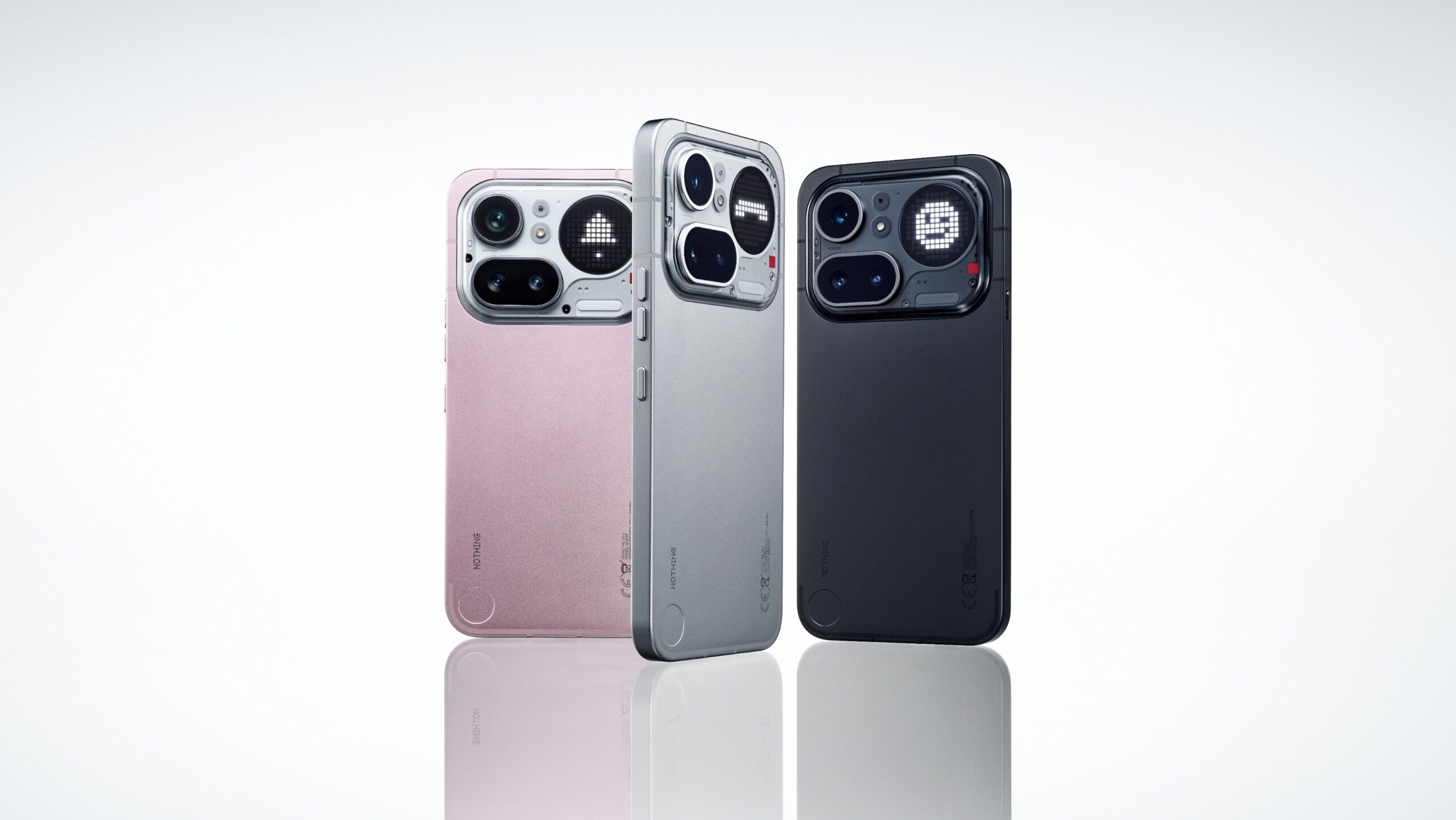
    Nothing Phone 4a Pro vs 3a Pro — Phone 4a Pro wins with a 144 Hz display with a brightness of 5000 nits, a Snapdragon 7 Gen 4 processor (even twice as powerful GPU), and a completely new Glyph Matrix with 137 mini-LEDs. However, it loses the iconic transparent back for an aluminum casing and has a weaker selfie camera (32 MP instead of 50 MP). In Poland, the surcharge is about 350 PLN compared to the launch price of the 3a Pro.

    Nothing Phone 4a Pro debuted on March 5, 2026 — exactly one year after the Phone 3a Pro, which premiered during MWC 2025. The first reviews from critics are positive, but the comparison of both generations reveals not only progress — but also a surprising step backward.

    Looking for a case or tempered glass? In our store, you will find accessories for Nothing Phone 4a Pro and Nothing Phone 3a Pro.

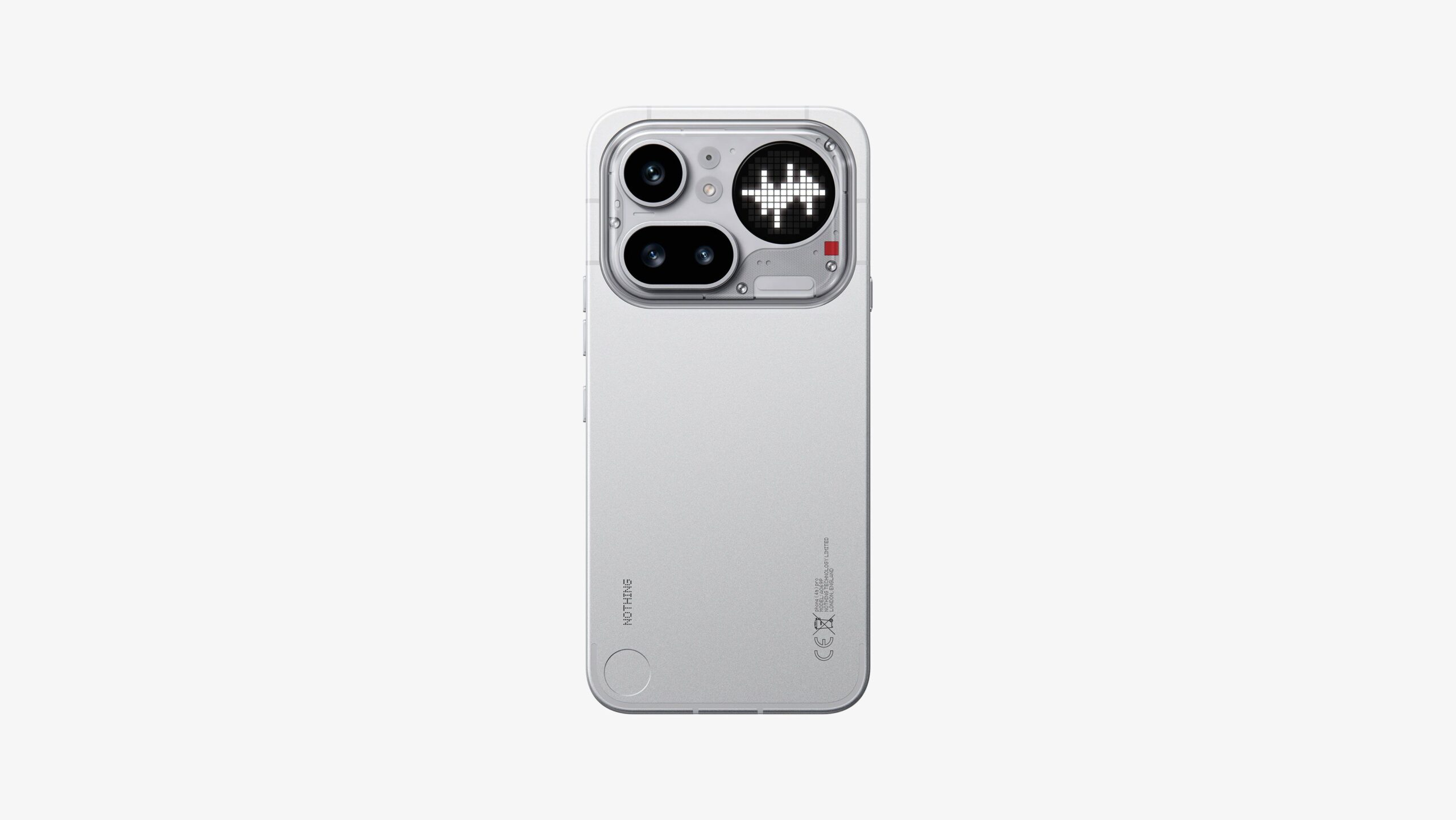
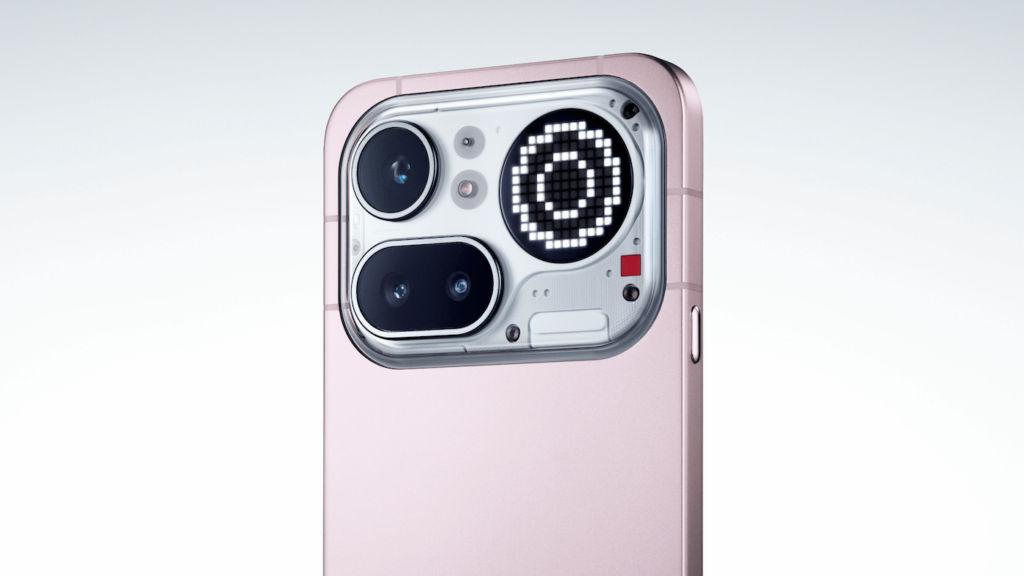
    Nothing Phone 4a Pro — marketing photo, overall view

    Key differences — Nothing Phone 4a Pro vs 3a Pro at a glance

    FeaturePhone 4a Pro (2026)Phone 3a Pro (2025)
    ProcessorSnapdragon 7 Gen 4Snapdragon 7s Gen 3
    Display6.83″ / 144 Hz / 5000 nits6.77″ / 120 Hz / 3000 nits
    Telephoto50 MP, 3.5x optical zoom50 MP, 3x optical zoom
    Selfie Camera32 MP50 MP
    Battery5080 mAh5000 mAh
    Glyph137 mini-LEDs (matrix)3 LED strips, 26 zones
    BodyAluminum (unibody)Glass (transparent) + plastic
    ProtectionGorilla Glass 7i, IP65Panda Glass, IP64
    Price (PL)from 2099 PLN (8/128 GB)from ~1300 PLN (sales)

    Full specification — Nothing Phone 4a Pro vs 3a Pro

    ParameterPhone 4a ProPhone 3a Pro
    ReleaseMarch 2026March 2025
    Dimensions163.7 × 76.6 × 8.0 mm163.5 × 77.5 × 8.4 mm
    Weight210 g211 g
    Display6.83″ AMOLED, 1260 × 2800 px (440 ppi)6.77″ AMOLED, 1080 × 2392 px (387 ppi)
    Refresh Rate144 Hz120 Hz
    PWM2160 Hz2160 Hz
    Peak Brightness5000 nits3000 nits
    ProcessorSnapdragon 7 Gen 4 (4 nm)Snapdragon 7s Gen 3 (4 nm)
    GPUAdreno 722Adreno 810
    RAM8 / 12 GB LPDDR5X8 / 12 GB
    Storage128 / 256 GB (UFS 3.1)128 / 256 GB
    Main Camera50 MP, f/1.9, OIS, 1/1.56″50 MP, f/1.9, OIS, 1/1.56″
    Telephoto50 MP, f/2.9, 3.5× zoom, OIS50 MP, f/2.6, 3× zoom, OIS
    Ultrawide8 MP, f/2.2, 120°8 MP, f/2.2, 120°
    Selfie Camera32 MP, f/2.250 MP, f/2.2
    Video4K 30 fps, Ultra XDR / Dolby Vision4K 30 fps
    Battery5080 mAh5000 mAh
    Charging50 W (100% in 64 min)50 W (100% in 56 min)
    Wireless ChargingNoNo
    SystemAndroid 16 / Nothing OS 4.1Android 15 / Nothing OS 3.1 (update to Android 16)
    Updates3 years Android + 6 years security3 years Android + 6 years security
    5GYesYes
    WiFiWiFi 6WiFi 6
    Bluetooth5.45.4
    NFCYesYes
    IPIP65IP64
    ColorsBlack, Silver, PinkBlack, Gray

    You can check the official specifications from the manufacturer at nothing.tech.

    Display — 5000 vs 3000 nits and higher refresh rate

    The screen is one of the most noticeable changes when comparing Nothing Phone 4a Pro vs 3a Pro.

    The Phone 4a Pro received a larger 6.83-inch panel (vs 6.77″) with a higher resolution — 1260 × 2800 px gives 440 ppi instead of 387 ppi. Text and small interface elements look clearer. The refresh rate increased from 120 Hz to 144 Hz. You will notice the difference mainly in games and fast scrolling through lists.

    The biggest change concerns brightness. 5000 nits in the Phone 4a Pro is 67% more than 3000 nits in the 3a Pro. This has a real impact on screen readability in bright sunlight — while running, cycling, or navigating the city in summer.

    Nothing also applied Corning Gorilla Glass 7i instead of Panda Glass, which means better scratch resistance. You can find the full specifications of the Nothing Phone 4a Pro display in the table above. If you still prefer additional protection, tempered glass for Nothing smartphones is available in our store.

    💡 Tip: If you mainly use your phone indoors, the difference in brightness will be less noticeable. 3000 nits in the 3a Pro is still an excellent result — better than many flagship devices from 2024.

    Design and materials — the end of transparency

    This is the most controversial change. The Nothing Phone 4a Pro abandons the iconic transparent back for an aluminum unibody case. This is the first Nothing phone with a metal construction.

    What does this mean in practice?

    • Materials — 4a Pro: aluminum (frame and back) + Gorilla Glass 7i (front). 3a Pro: plastic frame + glass transparent back + Panda Glass (front).
    • Premium feeling — aluminum gives the impression of a more expensive phone. Reviewers compare it to higher-end devices.
    • Weight and dimensions — practically identical (210 vs 211 g). The Phone 4a Pro is thinner by 0.4 mm and narrower by almost a millimeter.
    • Water resistance — IP65 (resistance to water jets) vs IP64 (resistance to splashes). A small but real improvement.
    • Colors — 4a Pro offers three options (Black, Silver, Pink), 3a Pro two (Black, Gray).

    ⚠️ Note: If a transparent design is a key feature for you, Nothing — Phone 3a Pro is the last model in the “a” series that offers it. Phone 4a Pro looks more “mainstream,” which may not appeal to everyone.

    Nothing Phone 4a Pro — aluminum unibody construction

    Performance — Snapdragon 7 Gen 4 vs 7s Gen 3

    Under the hood, Phone 4a Pro hides the Snapdragon 7 Gen 4, while the 3a Pro has the Snapdragon 7s Gen 3. The difference is significant:

    • CPU — about 15% faster single-core, about 32% faster multi-core in Phone 4a Pro
    • GPU — Adreno 722 in 4a Pro is even twice as efficient as Adreno 810 in 3a Pro
    • RAM — both offer 8 and 12 GB LPDDR5X variants

    What does this mean in everyday use? The Phone 3a Pro is still a smooth phone — Nothing OS is well optimized. You will mainly feel the difference in:

    • Gaming — higher frames per second, more stable framerate in Genshin Impact, Call of Duty Mobile
    • Photo and video editing — export about 30% faster
    • Multitasking — more open apps without reloading

    Both phones have UFS 3.1 memory — the lack of UFS 4.0 is a certain compromise, but in practice, the difference is mainly felt when copying large files.

    Nothing Phone 4a Pro — Snapdragon 7 Gen 4 performance

    Camera — better zoom, but weaker selfies

    The main camera in both phones is identical — 50 MP, f/1.9, 1/1.56″ sensor with OIS. The ultrawide is also unchanged (8 MP, f/2.2). Key differences concern the telephoto lens and the selfie camera.

    Telephoto lens

    ParameterPhone 4a ProPhone 3a Pro
    Resolution50 MP50 MP
    Optical zoom3.5× (80 mm)3× (70 mm)
    Aperturef/2.9f/2.6
    SensorSamsung JN5, 1/2.75″1/1.95″
    Digital zoomup to 140×no data

    Phone 4a Pro offers a longer zoom (3.5× vs 3×), which is useful for photographing distant objects. It also features in-sensor zoom up to 7× and digital zoom up to 140×. But beware — the telephoto sensor is smaller (1/2.75″ vs 1/1.95″), which may result in poorer zoom photos in low light.

    There is also a new TrueLens Engine 4 — multi-frame RAW processing with 12-layer AI segmentation. Video has gained an Ultra XDR mode (similar to Dolby Vision HDR).

    Selfie camera — a step back

    This is the only clear downgrade in the Phone 4a Pro:

    • 3a Pro: 50 MP, 1/2.76″ sensor — one of the better selfie cameras in the segment
    • 4a Pro: 32 MP, 1/3.42″ sensor — smaller sensor, lower resolution, no 4K in video

    If you often take selfies, record TikToks, or have video calls, the 3a Pro has an objective advantage here.

    Nothing Phone 4a Pro — camera and telephoto module

    Battery and charging — Nothing Phone 4a Pro vs 3a Pro

    ParameterPhone 4a ProPhone 3a Pro
    Capacity5080 mAh5000 mAh
    Charging50 W50 W
    0–50%22 min19 min
    0–100%64 min56 min
    Endurance rating (GSMArena)63:24h43:17h
    Wireless chargingNoNo
    Reverse charging7.5 W (wired)No

    Phone 4a Pro has a slightly larger battery (5080 vs 5000 mAh), but achieves a significantly better endurance rating according to GSMArena — 63:24h vs 43:17h. This suggests that the new processor and display are more energy-efficient. Paradoxically, a full charge takes longer (64 vs 56 min) despite the identical power of 50 W.

    A new feature is reverse charging at 7.5 W — you can charge headphones or a smartwatch with a cable from Phone 4a Pro.

    💡 Tip: Neither model supports wireless charging. If this is important to you, consider alternatives like OnePlus 13 or Google Pixel.

    Glyph Interface — 137 LEDs vs 26 zones

    Glyph Interface is the hallmark of Nothing, and here the difference between generations is huge.

    Phone 3a Pro had 3 LED strips with 26 addressable zones arranged around the camera module. They were mainly used for notifications, charging indicators, and illuminating photos.

    Phone 4a Pro introduces a completely new Glyph Matrix — 137 individually controllable mini-LEDs with a brightness of up to 3000 nits. These are no longer strips — this is a pixel matrix that displays:

    • Pixel-style icons and animations
    • Digital clock
    • Battery level indicator
    • Moon phase and sun position
    • Notifications with individual patterns for contacts
    • Android 16 Live Updates on Glyph Bar (navigation, Uber rides, timers)
    • Illumination for photos

    The Glyph matrix occupies 57% more surface area than its predecessor and is 100% brighter. The new “Glyph Toys” features add interactive elements — something no other manufacturer offers.

    Software — Nothing OS 4.1 vs 3.1

    Phone 4a Pro launches with Android 16 and Nothing OS 4.1, while 3a Pro debuted with Android 15 and Nothing OS 3.1 (update to Android 16 / Nothing OS 4.0 available from December 2025).

    New features in Nothing OS 4.1:

    • Glyph Live Updates — integration of Android 16 Live Updates with the Glyph matrix
    • AI Eraser — local object removal from photos (no cloud)
    • AI Ringtone Generation — AI-generated ringtones for individual contacts
    • Relaxation Hub — “Breathing Break” widgets with Focus, Relax, and Calm modes
    • Lock Screen Depth Effect (beta) — clock hides behind wallpaper elements

    The update policy is identical — both phones will receive 3 major Android updates and 6 years of security patches. Phone 4a Pro will get Android up to version 19, while 3a Pro will get up to version 18.

    Price in Poland — Nothing Phone 4a Pro vs 3a Pro

    VariantPhone 4a ProPhone 3a Pro (launch)Phone 3a Pro (now)
    8/128 GB2099 PLNnonenone
    12/256 GB2399 PLN2049 PLNfrom ~1300 PLN

    Phone 4a Pro in the 12/256 GB version costs 2399 PLN — that’s about 350 PLN more than the launch price of the 3a Pro in the same configuration. But the real difference is greater: the 3a Pro can today be purchased in promotions for about 1300–1800 PLN. This means that for the price of the Phone 4a Pro, you can get the Phone 3a Pro and still have enough left for the Nothing 3a Pro case and accessories.

    Phone 4a Pro also offers a cheaper variant of 8/128 GB for 2099 PLN — an option not available with the 3a Pro.

    💡 Tip: If budget is a priority, the Phone 3a Pro at current prices (1300–1800 PLN) is one of the best smartphones in this range. By paying extra for the 4a Pro, you mainly gain a better display, performance, and Glyph Matrix.

    Which model for whom? Summary

    Choose the Nothing Phone 4a Pro if:

    • You care about having the best display in the segment (144 Hz, 5000 nits)
    • You play games and need a stronger GPU
    • You want the new Glyph Matrix with 137 LEDs
    • You prefer a metal, premium build
    • You are buying a new phone and comparing it with other new releases of 2026

    Stick with the Nothing Phone 3a Pro (or buy it now) if:

    • You love the transparent design of Nothing
    • You often take selfies (50 MP vs 32 MP)
    • You are looking for a great smartphone at a lower price (from ~1300 PLN)
    • The current performance of the 3a Pro is enough for you
    • You don’t need the latest Glyph features

    In summary, comparing Nothing Phone 4a Pro vs 3a Pro — the new model is better in almost every technical category, but not enough for 3a Pro users to rush to the store. The biggest arguments for the upgrade are the 5000 nit display, Snapdragon 7 Gen 4, and the revolutionary Glyph Matrix. The biggest argument against it is the loss of the transparent design and a weaker selfie camera.

    Check the full range of accessories for both models:
    Cases and glass for Nothing Phone 4a Pro
    Cases and glass for Nothing Phone 3a Pro
    All Nothing accessories

    Alternatives — what else is worth considering?

    If neither of the Nothing Phones meets your expectations one hundred percent, it’s worth looking at the competition in a similar price range:

    Google Pixel 9a — a direct competitor in the segment. It offers pure Android, seven years of updates, and one of the best cameras among mid-range devices thanks to Google’s algorithms. No Glyph Interface and less distinctive design, but it makes up for it with software. You can find accessories for Pixel in our Google Pixel category.

    OnePlus Nord 4 — if wireless charging is a priority, OnePlus has delivered what both Nothing Phones lack. A metal body (similar philosophy to 4a Pro), 120 Hz AMOLED, and OxygenOS based on pure Android. Check accessories for OnePlus.

    Samsung Galaxy A56 — a choice for those who value the Samsung ecosystem. One UI, Samsung Pay, DeX — this is not offered by Nothing OS. Inferior Glyph (because it doesn’t exist), but better service support in Poland and a wide network of stores.

    CMF Phone 2 Pro — a budget option from the Nothing sub-brand. Much cheaper, lacks periscope and Glyph, but shares the design philosophy and software with Nothing. Ideal if you like Nothing OS but don’t want to spend 2000+ PLN. Check out accessories for CMF Phone.

    Note: Each of the above alternatives has its strengths, but none offers the Glyph Interface — this remains a unique feature of the Nothing ecosystem, which distinguishes the Phone 4a Pro and 3a Pro from the competition.

    FAQ — frequently asked questions

    Is it worth switching from Nothing Phone 3a Pro to 4a Pro?

    If the 3a Pro is working well and you are not complaining about performance or the screen — you don’t need to rush. The upgrade makes sense mainly for those who want the brightest display in the segment (5000 nits), need a stronger GPU for gaming, or have fallen in love with the new Glyph Matrix. It is not worth replacing the phone after a year of use just for the price difference.

    Which has a better camera — 4a Pro or 3a Pro?

    It depends on the scenario. The main camera (50 MP, f/1.9) is identical in both. The Phone 4a Pro wins with the telephoto lens (3.5× vs 3× zoom) and image processing (TrueLens Engine 4, Ultra XDR video). But the 3a Pro has a clearly better selfie camera — 50 MP with a larger sensor vs 32 MP in the newer model.
    How much does the Nothing Phone 4a Pro cost in Poland?

    The Nothing Phone 4a Pro costs in Poland from 2099 PLN for the 8/128 GB version and 2399 PLN for the 12/256 GB version. In comparison, the Nothing Phone 3a Pro (12/256 GB) can now be purchased on promotion for about 1300–1800 PLN.

    Does the Nothing Phone 4a Pro have wireless charging?

    No — just like the 3a Pro. Neither model supports wireless charging. Both charge via cable with a power of 50 W. The Phone 4a Pro, however, offers reverse charging at 7.5 W, which its predecessor did not have.

    What is the difference between the Glyph Interface in the 4a Pro and the 3a Pro?

    The difference is huge. The Phone 3a Pro had 3 LED strips with 26 zones. The Phone 4a Pro has a completely new Glyph Matrix — 137 mini-LEDs displaying icons, animations, a clock, battery level, moon phase, and supporting Android 16 Live Updates.

    How long will Nothing update both phones?

    Both models will receive 3 major Android system updates and 6 years of security patches. Phone 4a Pro (launch: Android 16) will be updated to Android 19. Phone 3a Pro (launch: Android 15, currently Android 16) — to Android 18.

  • OPPO Watch X2 vs OPPO Watch X3 — comparison

    OPPO Watch X2 vs OPPO Watch X3 — comparison

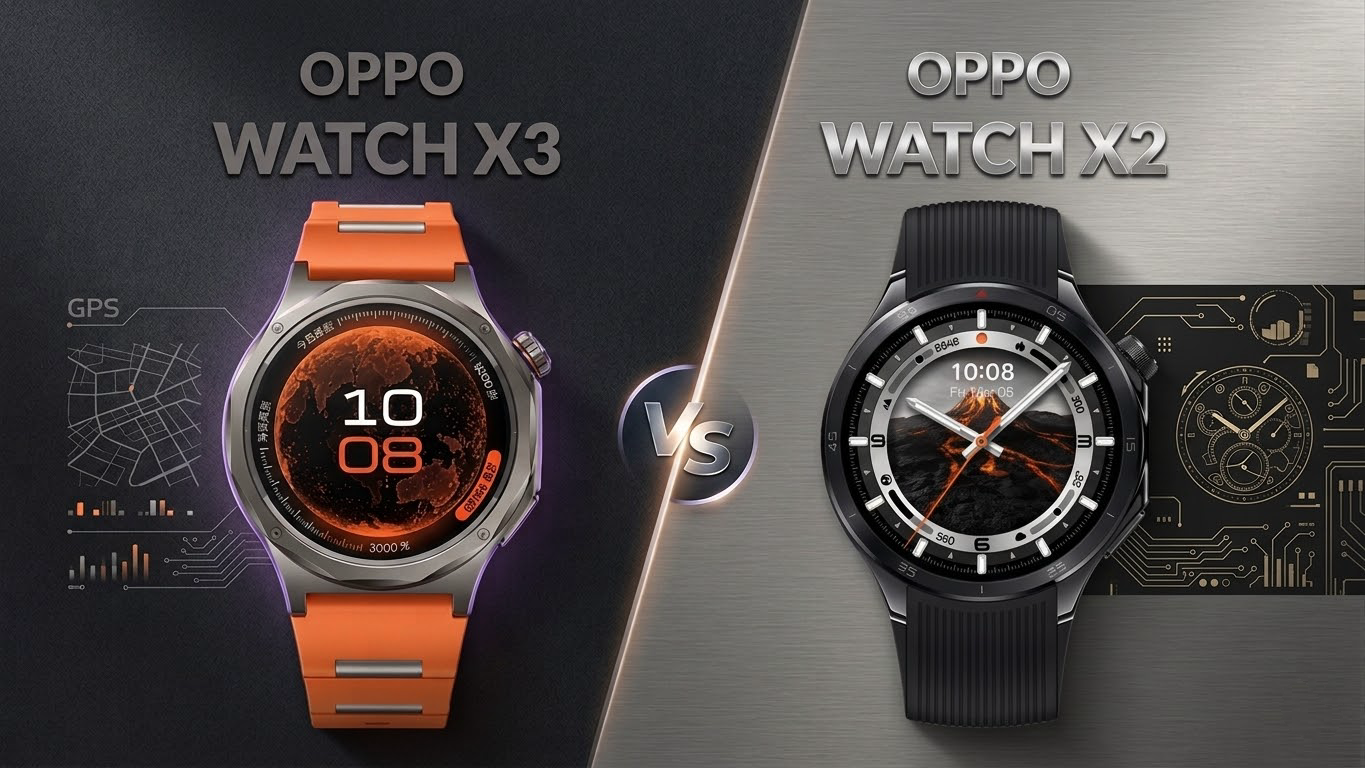
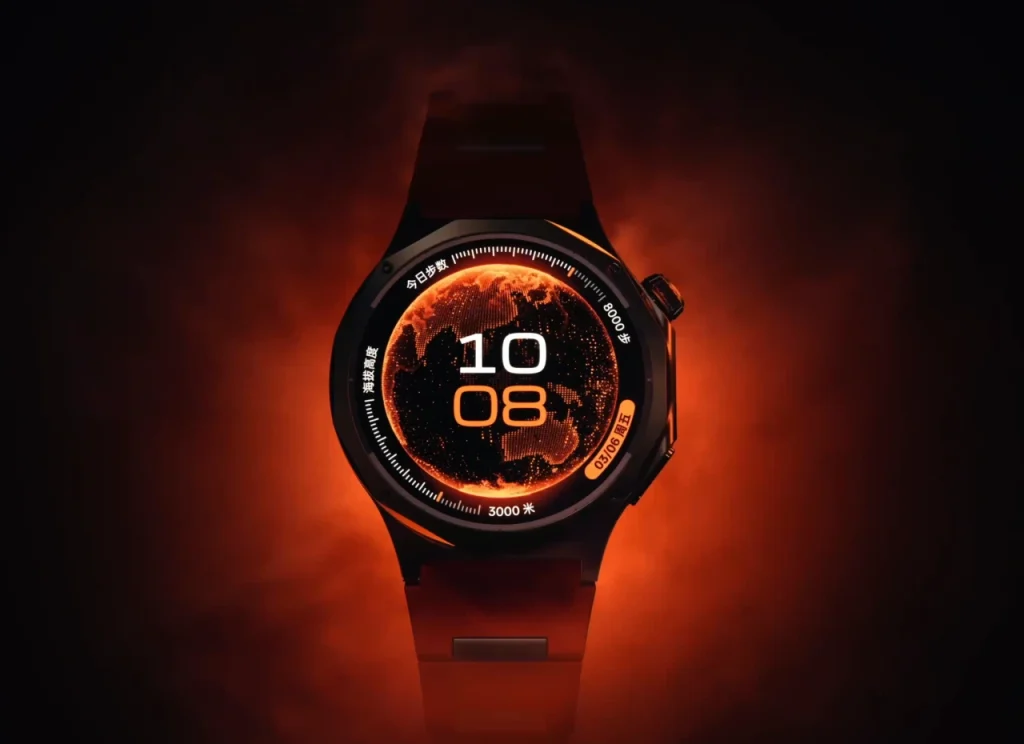
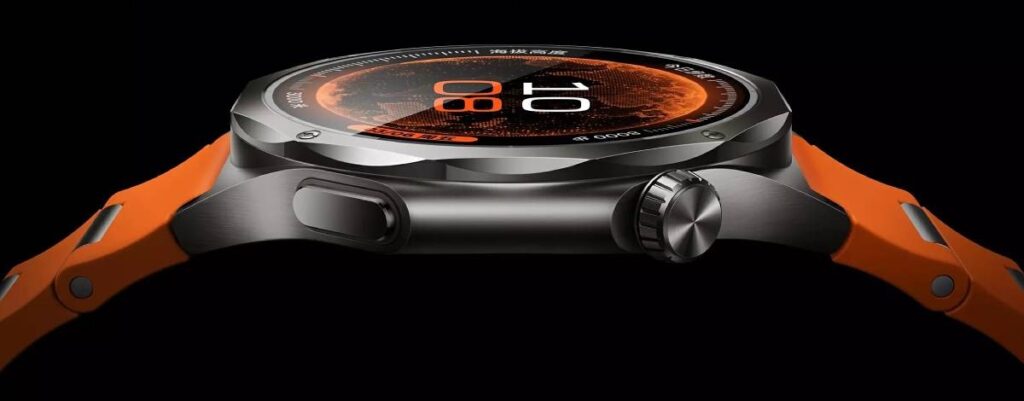
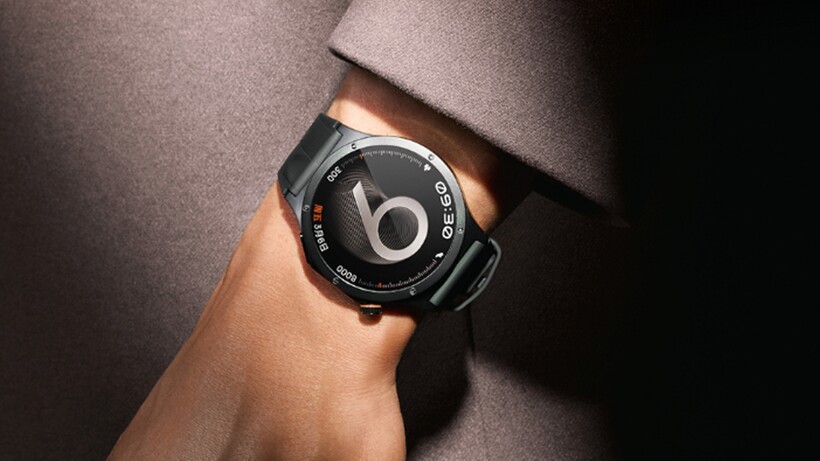
    OPPO Watch X2 vs X3 — what are the differences and is the newer model worth the extra cost? OPPO Watch X3 is a flagship smartwatch with a titanium case, a 3000-nit display, and a blood glucose sensor.

    Compared to the Watch X2, it is lighter by 6 g, thinner by 0.75 mm, and offers a brighter screen and new health features. Below is a detailed comparison of both models.

    OPPO unveiled the Watch X3 on March 17, 2026, in China. It is the direct successor to the Watch X2, which debuted in May 2025. Both smartwatches have a 1.5-inch LTPO OLED screen (dynamic refresh rate technology), a Snapdragon W5 processor, and eSIM (built-in SIM card with LTE support), but the newer model introduces several significant changes in design and sensor set.

    Interestingly, OPPO is also preparing a Watch X3 Mini variant — a smaller version, which is set to launch in April 2026. If the standard 47 mm size is too large for you, it’s worth waiting for this compact alternative.

    Looking for protective accessories for your smartwatch? Check out films and glasses for OPPO Watch in our store.

    Key differences — OPPO Watch X2 vs X3 at a glance

    DifferenceWatch X2Watch X3
    CaseStainless steel + titaniumTC4 titanium (aerospace)
    Screen brightness2200 nits3000 nits
    Weight (without strap)49.7 g43 g
    Glucose sensorNoYes
    Water resistanceIP68, 5 ATMIP68, IP69, 5 ATM
    SystemWear OS 5.0ColorOS Watch 16.0
    ProcessorSnapdragon W5 Gen 1Snapdragon W5 Gen 2

    Full specification OPPO Watch X3 vs Watch X2

    ParameterOPPO Watch X3OPPO Watch X2
    PremiereMarch 2026May 2025
    Display1.5″ LTPO OLED1.5″ LTPO AMOLED
    Resolution466 × 466 px466 × 466 px
    Max brightness3000 nits2200 nits
    ProcessorSnapdragon W5 Gen 2Snapdragon W5 Gen 1
    Co-processorQualcomm QCC5100BES2800BP
    RAM2 GB2 GB
    Internal memory32 GB32 GB
    Battery646 mAh648 mAh
    Battery life (smart mode)up to 5 daysup to 5 days
    Battery life (power saving)up to 16 daysup to 16 days
    Dimensions47.4 × 47.4 × 11.0 mm47.6 × 46.6 × 11.75 mm
    Weight70 g (with strap) / 43 g (watch only)76 g (with strap) / 49.7 g (watch only)
    Case materialaircraft-grade titanium TC4stainless steel + titanium (bezel)
    Glasssapphiresapphire
    Water resistanceIP68, IP69, 5 ATMIP68, 5 ATM
    Military standardMIL-STD-810HMIL-STD-810H
    GPSL1 + L5 (GPS, GLONASS, BeiDou, Galileo, QZSS)L1 + L5 (GPS, GLONASS, Galileo, QZSS)
    Bluetooth5.25.2
    WiFi802.11 a/b/g/n802.11 a/b/g/n
    LTE / eSIMyesyes
    NFCyesyes
    Heart rate sensoryesyes
    SpO2yesyes
    ECGyesyes
    Blood pressureyesyes
    Skin temperatureyesyes
    Glucose sensoryesno
    SystemColorOS Watch 16.0Wear OS 5.0 + ColorOS Watch 7.0
    Sports modes100+100+
    Price (China)from approx. 1400 PLNapprox. 1300–1500 PLN

    Display — 3000 vs 2200 nits

    The watches have the same display size of 1.5 inches and identical resolution of 466 × 466 pixels. In everyday use, the screens look very similar — colors are vibrant, blacks are deep, and viewing angles are wide.

    The key difference is brightness. The OPPO Watch X3 reaches 3000 nits, which is 36% more than the 2200 nits in the older model. In comparison, the display of the OPPO Watch X2 vs X3 is one of the more noticeable aspects — especially under bright sunlight while running, cycling, or walking around the city in summer.
    The Watch X3 uses a next-generation LTPO OLED panel, while the Watch X2 uses LTPO AMOLED. Both support Always-On Display (AOD — continuous display of time and selected information on the screen), but the newer model should be slightly more energy-efficient due to the updated display technology.

    Tip: If you primarily train indoors or in the evenings, the difference in screen brightness won’t be crucial for you. 2200 nits in the Watch X2 is still a very good result — more than in most competing smartwatches.

    Design and materials — titanium vs steel

    This is one of the biggest changes between generations. The OPPO Watch X3 has a case made entirely of aerospace-grade TC4 titanium, while the Watch X2 combines stainless steel with a titanium frame.

    What does this mean in practice?

    • Weight — The Watch X3 weighs 43 g without the strap (vs 49.7 g). The difference of 6.7 g is about 13% less. You will definitely feel this on your wrist, especially during sleep and training.
    • Thickness — The newer model is 11.0 mm thick (vs 11.75 mm). The watch hides better under a shirt cuff and protrudes less on a slim wrist.
    • Durability — Both have sapphire glass and MIL-STD-810H certification (military-grade durability standard). However, the Watch X3 adds IP69 (resistance to high-pressure hot water jets), which its predecessor lacks.

    Both models have two buttons on the right side — the upper one serves as a rotating crown. The Watch X3 offers three color variants: Gravity Black, Global Star Orange, and Infinite Titanium.

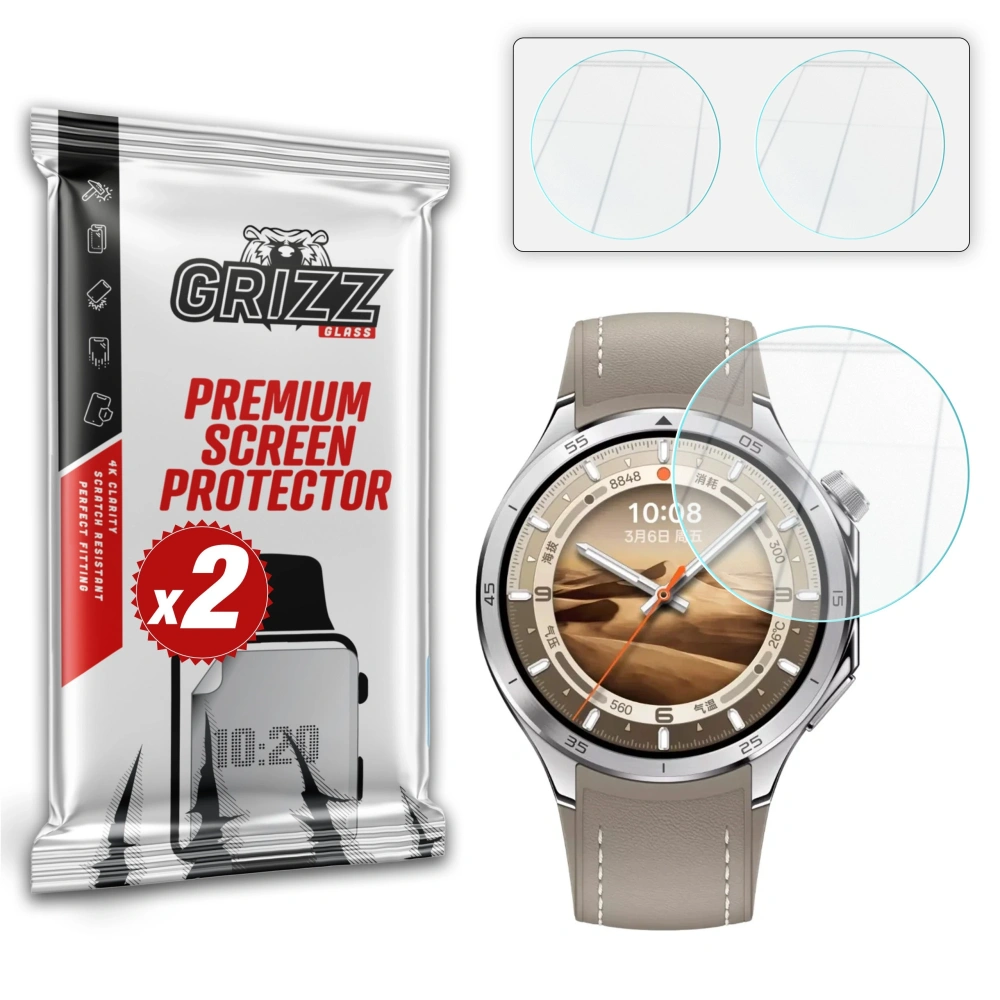
    Regardless of which model you choose, it’s worth investing in additional screen protection. At homescreen.pl you will find GrizzGlass HybridGlass hybrid glass and GrizzGlass CeramicFilm ceramic film for OPPO Watch X2 starting from 12.99 PLN.

    Performance — Snapdragon W5 Gen 2 vs Gen 1

    OPPO Watch X3 runs on the newer Snapdragon W5 Gen 2 with an ARM Cortex-A53 processor up to 1.7 GHz and Adreno 702 GPU. It is supported by the Qualcomm QCC5100 coprocessor. Watch X2 uses the Snapdragon W5 Gen 1 with the BES2800BP coprocessor.

    In everyday use, the difference in smoothness is not dramatic — both smartwatches handle navigation through the menu, notifications, and apps efficiently. However, the newer chipset in Watch X3 should provide:

    • Better energy efficiency — the same battery life with increased screen brightness and new sensors.
    • Faster processing of health data — crucial for continuous monitoring of glucose, blood pressure, and ECG.
    • Smoother animations — particularly noticeable when switching between watch faces and apps.

    Both generations have 2 GB of RAM and 32 GB of internal storage, so in this respect, nothing changes. 32 GB is enough for offline maps, music, and several dozen apps.

    Battery and charging — OPPO Watch X3 vs X2

    The battery capacities are nearly identical — 646 mAh in the Watch X3 vs 648 mAh in the Watch X2. The declared usage times (according to the manufacturer) also match:

    • Smart mode — up to 5 days
    • Intensive usage — about 3 days
    • Power saving mode — up to 16 days

    So where is the difference? The Watch X3 achieves the same battery life despite a brighter screen and additional sensors, indicating better energy optimization of the new chipset and display.

    The OPPO Watch X3 charges fully in about 75 minutes, while the Watch X2 takes about 60 minutes with the 10W VOOC charger. The newer model compensates for the longer charging time with a quick “emergency” charging feature — 10 minutes provides power for 24 hours. Useful when you discover a dead watch in the morning before your workout.

    Note: Both models only charge with dedicated magnetic chargers — they do not support the Qi standard. Before purchasing, make sure you have the original charging accessory.

    Health and Sensors — the Biggest Advantage of the Watch X3

    This is an area where the OPPO Watch X3 clearly outpaces its predecessor. Both models offer:

    • 24/7 heart rate monitoring
    • Blood oxygen saturation measurement (SpO2)
    • ECG (electrocardiogram)
    • Blood pressure measurement
    • Skin temperature measurement
    • Sleep analysis with phases (light, deep, REM)

    Watch X3 adds a blood glucose sensor — a feature that the Watch X2 lacks. The watch uses non-invasive optical technology for continuous monitoring of sugar levels. This is particularly useful for people with type 2 diabetes or prediabetes, but also for athletes tracking the impact of diet on training results.

    It is worth noting that non-invasive glucose measurement from the wrist does not replace a professional glucometer. This technology is still developing and is more suited for observing trends rather than for precise medical measurements. Nevertheless, continuous glucose monitoring is a feature that most competitors in this price range do not offer — including Samsung Galaxy Watch and Huawei Watch GT.

    In the showdown between OPPO Watch X2 vs X3, it is the sensors that make the biggest difference. The rest of the health features are identical.

    Sports and Navigation

    Both smartwatches support over 100 sports modes and GPS with dual-band L1 + L5 signal, ensuring precise route tracking in urban areas with tall buildings.

    Watch X3 uses five satellite navigation systems (GPS, GLONASS, BeiDou, Galileo, QZSS), while Watch X2 uses four (GPS, GLONASS, Galileo, QZSS — without BeiDou). In practice, the additional system can improve positioning accuracy in difficult conditions — e.g., in dense forests or narrow streets of old towns.

    Both models have eSIM with LTE support, allowing you to receive calls and messages without a phone. Useful when running or cycling, when you don’t want to take your smartphone with you.

    In the context of sports, it’s worth mentioning the analysis of gait and posture while running — a feature available in both models. The watch monitors cadence, ground contact time, and vertical oscillations, providing runners with specific data to improve their technique.

    If you are comparing smartwatches with other brands, also check our offer of watch bands and accessories.

    Operating System — Wear OS vs ColorOS Watch

    Here lies an interesting change and one of the key elements in the comparison of OPPO Watch X2 vs X3. Watch X2 runs on Wear OS 5.0 with the ColorOS Watch 7.0 overlay, which means access to apps from the Google Play Store — Google Maps, Spotify, Strava, and many others.

    OPPO Watch X3 has transitioned to ColorOS Watch 16.0 as a standalone system. In China, Wear OS is not widely used, so OPPO opted for its own solution with better energy optimization. The question is: what system will the global version of Watch X3 receive?

    If OPPO decides on Wear OS for the international version (as was done with Watch X2), the difference will be smaller. However, if the global version retains ColorOS Watch 16.0, access to applications will be limited to the OPPO ecosystem and selected partners.

    Tip: If you care about the Google app ecosystem (maps, Spotify, Google Wallet), Watch X2 with Wear OS 5.0 is a safer choice — at least until we learn the details of the global launch of Watch X3.

    Price and Availability — OPPO Watch X2 vs X3 in Poland

    OPPO Watch X3 debuted in China at the following prices:

    • Gravity Black — 2599 yuan (approx. 1400 PLN)
    • Global Star Orange / Infinite Titanium — 2799 yuan (approx. 1510 PLN)

    OPPO Watch X2 at launch cost around 1300–1500 PLN depending on the variant. It can currently be found at lower prices, making it an attractive option for those looking for a flagship OPPO smartwatch at a more affordable price.

    The global premiere of the Watch X3 has not yet been officially confirmed, but the OPPO Watch X2 hit the international market (including Poland) a few months after its Chinese premiere. A similar scenario can be expected — it’s worth following the official OPPO website for updates.

    OPPO Watch X3 Mini — a smaller version is coming

    OPPO is also preparing a compact variant, the Watch X3 Mini, which is expected to be released in April 2026. Information about this model has appeared in several leaks, but the official specifications have not yet been revealed.

    If the standard 47-millimeter size of the Watch X3 is too large for you — for example, you have a slim wrist or prefer smaller watches — it’s worth waiting for this model. The Watch X2 Mini turned out to be a popular alternative, and the Watch X3 Mini will likely follow the same path.
    Current accessories for the smaller model are available — check out the GrizzGlass hybrid glass for OPPO Watch X2 Mini in our store.

    Who is the OPPO Watch X3 for, and who is the Watch X2 for?

    Choose the OPPO Watch X3 if:

    • You care about the lightest and thinnest design (43 g vs 49.7 g)
    • You need blood glucose monitoring
    • You train outdoors and need a screen readable in full sunlight (3000 nits)
    • You want the latest generation with an IP69 certification

    Stick with the OPPO Watch X2 if:

    • You are looking for a proven smartwatch with Wear OS 5.0 and access to Google Play
    • You do not need a glucose sensor
    • You want to save money — the Watch X2 at falling prices offers great value for money
    • You prefer to wait for the global version of the Watch X3 and see what operating system it will get

    Summary

    In summary, comparing OPPO Watch X2 vs X3 — Watch X3 is a solid evolution, not a revolution. Key upgrades include a titanium case (lighter and thinner), a brighter 3000-nit display, and a blood glucose sensor. The rest of the specifications — battery, RAM, memory, connectivity — remain at the same level.

    If you have the Watch X2 and it works without issues, upgrading is not necessary. But if you are buying your first flagship OPPO smartwatch or are interested in glucose monitoring, the Watch X3 is definitely the better choice.

    Regardless of your choice, make sure to protect your smartwatch. At homescreen.pl, you will find protective films, hybrid glasses, and cases for OPPO smartwatches — starting from 11.99 PLN with fast delivery.

    FAQ

    Is OPPO Watch X3 compatible with iPhone?

    OPPO Watch X3 works best with Android smartphones. Compatibility with iPhone is limited — there is no full synchronization of notifications and health features. If you have an iPhone, it’s worth considering the Apple Watch, which is optimized for the Apple ecosystem.

    When will OPPO Watch X3 be available in Poland?

    The official date of the Polish premiere has not yet been confirmed. The OPPO Watch X2 reached European markets a few months after its Chinese debut — a similar schedule can be expected for the Watch X3.

    Is the OPPO Watch X3 Mini available yet?

    No — the OPPO Watch X3 Mini has not yet been officially presented. The premiere is expected in April 2026. Only preliminary information from leaks is known.

    Is it worth buying the OPPO Watch X2 now, or should I wait for the X3?

    If you care about Wear OS and access to Google Play — the Watch X2 is a safe choice. If you want the latest health sensors and a titanium case, wait for the global premiere of the Watch X3. The price of the Watch X2 is becoming increasingly attractive.

    What is the weight difference between the Watch X3 and Watch X2?

    The OPPO Watch X3 weighs 43 g (the watch itself without the strap), while the Watch X2 weighs 49.7 g. The difference of 6.7 g is due to the use of titanium instead of stainless steel.

    Does the OPPO Watch X3 measure blood pressure?

    Yes — both the Watch X3 and Watch X2 have a blood pressure sensor. However, the Watch X3 adds blood glucose measurement, which the older model does not offer.

  • POCO X8 Pro vs POCO X8 Pro Max — which model to choose in 2026?

    POCO X8 Pro vs POCO X8 Pro Max — which model to choose in 2026?

    The dilemma of POCO X8 Pro vs POCO X8 Pro Max is one of the hottest smartphone comparisons of 2026. Both models debuted in March and immediately generated enormous interest — they offer AMOLED displays with a brightness of 3,500 nits, IP68/IP69K protection, and 100 W charging. The key difference? Processor, battery, and camera. POCO X8 Pro starts at 1,399 PLN, while POCO X8 Pro Max starts at 1,799 PLN. Below you will find a detailed comparison to help you choose the right model.

    Technical specifications — POCO X8 Pro vs POCO X8 Pro Max

    Before we move on to a detailed analysis, it’s worth seeing the full specifications of POCO X8 Pro and POCO X8 Pro Max in one place. The table below shows the key differences between both models.

    ParameterPOCO X8 ProPOCO X8 Pro Max
    Display6.59″ AMOLED, 1.5K6.83″ AMOLED, 1.5K
    Brightness3,500 nits (peak)3,500 nits (peak)
    Refresh Rate120 Hz120 Hz
    ProcessorMediaTek Dimensity 8500-Ultra (4 nm)MediaTek Dimensity 9500s (3 nm)
    AnTuTu v112,283,5583,085,998
    RAM / Storage8/256 GB or 12/512 GB12/256 GB or 12/512 GB
    Main Camera50 MP, Sony IMX882, OIS50 MP, Light Fusion 600, OIS
    Battery6,500 mAh8,500 mAh
    Charging100 W HyperCharge100 W HyperCharge
    SystemAndroid 16, HyperOS 3Android 16, HyperOS 3
    ResistanceIP68 / IP69KIP68 / IP69K
    Weight201.5 g218 g
    Fingerprint ReaderOptical (under display)Ultrasonic (under display)
    Wi-FiWi-Fi 6Wi-Fi 7
    eSIMNoYes
    Price from1,399 PLN1,799 PLN

    Display — bigger doesn’t always mean better

    Both the POCO X8 Pro and POCO X8 Pro Max feature 1.5K AMOLED panels with a refresh rate of 120 Hz and a peak brightness of 3,500 nits. They support Dolby Vision and HDR10+, which translates to excellent color reproduction while watching movies.

    The main difference is the size — the POCO X8 Pro has a 6.59-inch display, while the POCO X8 Pro Max offers 6.83 inches. Both models are protected by Corning Gorilla Glass 7i and have TÜV Rheinland certifications (Low Blue Light, Flicker Free).

    Tip: If you value compactness and one-handed operation, the POCO X8 Pro will be more comfortable. For fans of large displays — the X8 Pro Max with a 6.83-inch panel is a better choice for movies and games.

    The touch sampling rate is 480 Hz (Game Turbo) in both models, and the PWM dimming operates at 3,840 Hz — this is important for those sensitive to screen flicker.

    POCO X8 Pro — AMOLED display 6.59 inches with brightness of 3500 nits

    Processor and performance — this is where the POCO X8 Pro Max excels

    This is one of the biggest differences when comparing POCO X8 Pro vs POCO X8 Pro Max. The Pro model is powered by the MediaTek Dimensity 8500-Ultra in a 4-nanometer process technology, while the Pro Max received the flagship Dimensity 9500s made in a 3 nm process.

    The performance difference is clear — the POCO X8 Pro score in AnTuTu v11 is 2,283,558 points, while the POCO X8 Pro Max achieves 3,085,998 in AnTuTu:

    TestPOCO X8 ProPOCO X8 Pro MaxDifference
    AnTuTu v112,283,5583,085,998+35%
    Process technology4 nm (TSMC)3 nmNewer
    GPUMali-G720 MC8Immortalis-G925 MC12Higher class

    The Dimensity 9500s in the POCO X8 Pro Max is a flagship segment chip — the same processor can be found in phones costing over 3,000 PLN. The Immortalis-G925 MC12 GPU provides smooth gameplay even in the most demanding mobile games, such as Genshin Impact or Honkai: Star Rail at the highest settings.

    POCO X8 Pro with Dimensity 8500-Ultra also performs very well in everyday use — multitasking, social media, and gaming on medium settings are not a problem. However, in benchmarks and intensive games, the 35% difference in favor of the Max model is noticeable.

    Both smartphones feature the POCO 3D IceLoop cooling system with a surface area of 5,300 mm², which effectively dissipates heat during longer gaming sessions.

    It is worth adding that both models support 5G network (SA/NSA) — this is the standard in 2026, but still an important parameter when choosing a new smartphone. The RAM in both cases is LPDDR5X, and the internal storage is UFS 4.1 — the fastest available standards in the mid-premium segment.

    Camera — Light Fusion 600 vs Sony IMX882

    Both models have a 50 MP main camera with optical image stabilization (OIS), but the sensors used differ significantly.

    POCO X8 Pro uses the Sony IMX882 — a proven sensor with a size of 1/1.95 inches and 0.8 μm pixels. It is a solid sensor that performs well in daylight and well-lit scenes.

    POCO X8 Pro Max received the newer Light Fusion 600 with 1.6 μm pixels — twice as large as those in the X8 Pro. The Dual Native ISO Fusion technology improves dynamic range and significantly enhances photo quality in low light. In practice, this means less noise in night photos and better details in shadows.

    The remaining elements of the camera set are identical:
    – Ultra-wide angle — 8 MP, f/2.2
    – Front — 20 MP, f/2.2
    – Video recording — 4K at 30/60 fps, slow motion 960 fps

    Tip: If you often take photos in the evening or in poorly lit interiors, the POCO X8 Pro Max with the Light Fusion 600 sensor will be a noticeably better choice.

    Battery and charging — 6,500 vs 8,500 mAh

    This is another category where the POCO X8 Pro Max clearly dominates. The 8,500 mAh battery (silicon-carbon technology) is 30% more than the 6,500 mAh in the Pro model.
    ParameterPOCO X8 ProPOCO X8 Pro Max
    Capacity6,500 mAh8,500 mAh
    Wired charging100 W HyperCharge100 W HyperCharge
    Reverse charging27 W27 W
    Wireless chargingNoNo
    Battery life≥80% after 1,600 cycles≥80% after 1,600 cycles

    In practice, the POCO X8 Pro Max easily lasts two full days of moderate use, and with light usage, even three days. The POCO X8 Pro comfortably provides a full day even with intensive use.

    Both models charge with a power of 100 W — the POCO X8 Pro Max recovers 50% of energy in about 24 minutes, and a full charge takes just over 50 minutes. Neither model supports wireless charging.

    If you are looking for a fast wall charger that supports 100 W, it’s worth choosing a model with USB Power Delivery (fast charging standard) or a dedicated Xiaomi charger. A compact power bank with the appropriate output power will also be useful for daily top-ups while traveling.

    Build and design — aluminum, glass, and IP69K

    Both smartphones have aluminum frames, Gorilla Glass 7i protection on the front, and an IP68/IP69K certification — they can withstand immersion in water as well as a stream of hot water under pressure. This is rare in this price range. Despite their durability, it is worth protecting the display — screen protectors will provide additional protection against scratches in everyday use.

    ParameterPOCO X8 ProPOCO X8 Pro Max
    Dimensions157.5 × 75.2 × 8.4 mm162.9 × 77.9 × 8.2 mm
    Weight201.5 g218 g
    Back coverGlassFiberglass
    SIMDual nano-SIMDual nano-SIM + eSIM
    RGB backlight8 colors8 colors
    ColorsBlack, White, Mint GreenBlack, White, Blue

    POCO X8 Pro is lighter by 16.5 g and slightly narrower — it fits better in the hand and in narrower pockets. The Max model is slimmer (8.2 vs 8.4 mm) but larger and heavier due to the bigger battery and display.

    It is worth mentioning that the POCO X8 Pro is also available in a limited Iron Man edition (12/512 GB) for 1,749 PLN on promotion — this variant is for Marvel fans.

    Regardless of the chosen model, it is good to invest in a suitable POCO smartphone case that will protect the aluminum frame and glass or fiberglass back from mechanical damage.

    POCO X8 Pro — design and build with aluminum frame

    Connectivity — Wi-Fi 7 and eSIM only in the Max model

    In terms of connectivity, the POCO X8 Pro Max offers several significant improvements:

    • Wi-Fi 7 (802.11be) instead of Wi-Fi 6 — faster transfer and lower latency
    • eSIM — a convenient solution while traveling, without the need to swap a physical SIM card
    • Bluetooth 5.4 with Auracast — wireless audio sharing to multiple headphones simultaneously
    • Symmetrical stereo speakers — better sound than the standard stereo speakers in the X8 Pro

    The POCO X8 Pro 5G and POCO X8 Pro Max 5G support both SA and NSA modes. Other common connectivity features include NFC, infrared port (IR blaster), USB-C 2.0, GPS L1+L5, and Dolby Atmos with Hi-Res Audio (24-bit/192 kHz). Neither model has a 3.5 mm headphone jack — if you prefer wireless audio, check out Bluetooth headphones compatible with both smartphones.

    Security and Software

    Both smartphones run on Android 16 with HyperOS 3 and will receive 4 years of system updates and 6 years of security patches. They also have access to Google Gemini, Circle to Search, and AI tools (AI Writing, AI Speech).

    The key difference concerns the fingerprint reader:

    • POCO X8 Pro — optical reader under the screen
    • POCO X8 Pro Max — ultrasonic reader under the screen

    The ultrasonic reader works faster, is more precise, and recognizes the finger even when wet — this is a clear advantage of the Max model.

    POCO X8 Pro Max also offers the Xiaomi Offline Communication feature with a range of up to 500 m — it allows communication with other Xiaomi devices without internet access or cellular network.

    Price of POCO X8 Pro and POCO X8 Pro Max in Poland

    How much do these smartphones cost? The price of POCO X8 Pro starts at 1,399 PLN, and the price of POCO X8 Pro Max starts at 1,799 PLN in the promotional launch (until March 31, 2026):

    VariantPOCO X8 ProPOCO X8 Pro Max
    8/256 GB1,399 PLN (only mi.com)
    12/256 GB1,799 PLN (only mi.com)
    12/512 GB1,599 PLN1,999 PLN
    Iron Man 12/512 GB1,749 PLN

    Regular prices (after the promotion):

    VariantPOCO X8 ProPOCO X8 Pro Max
    8/256 GB1,699 PLN
    12/256 GB2,099 PLN
    12/512 GB1,899 PLN2,299 PLN
    Iron Man 12/512 GB1,999 PLN

    The difference of 400 PLN between comparable variants (12/512 GB) is a reasonable surcharge for the flagship processor, larger battery, better camera, and Wi-Fi 7. You can find current prices and availability on the official POCO website.

    Gaming performance — how do they perform in practice?

    Simply comparing AnTuTu scores does not provide the full picture. In everyday use, both smartphones perform excellently — apps open instantly, multitasking works smoothly, and scrolling through the interface is fluid at 120 Hz.

    The difference becomes apparent in demanding mobile games. The POCO X8 Pro Max with the Immortalis-G925 MC12 GPU maintains a stable 60 fps in Genshin Impact at the highest graphics settings, while the POCO X8 Pro with the Mali-G720 MC8 requires lowering some options to medium to maintain smoothness. In less demanding titles — PUBG Mobile, Call of Duty Mobile, or Honkai: Star Rail — both models run without issues at high settings.

    The POCO 3D IceLoop cooling system works effectively in both cases. After a 30-minute session of Genshin Impact, the casing temperatures remain within a comfortable range. The POCO X8 Pro Max has a slight advantage here due to its larger casing, which dissipates heat better.

    For casual gamers, the POCO X8 Pro will be more than sufficient. However, if you regularly play the most demanding titles and care about maximum graphics settings, the Dimensity 9500s in the Max model is a safer choice for the coming years.

    POCO X8 Pro Max vs competition — how does it compare to rivals?

    It’s worth looking at both POCO models in the context of the market. In the price range of 1,400–2,300 PLN, the competition is significant:

    • Samsung Galaxy A56 5G (~1,699 PLN) — better Samsung ecosystem, longer support (7 years of updates), but noticeably weaker Exynos 1580 processor and smaller 5,000 mAh battery. The POCO X8 Pro offers more performance for a similar price.
    • Redmi Note 14 Pro+ 5G (~1,599 PLN) — a close relative from the Xiaomi family. Similar specifications to the POCO X8 Pro, but slightly weaker Dimensity 8400-Ultra and smaller 6,200 mAh battery. POCO stands out with an IP69K certification.
    • Nothing Phone (3a) (~1,799 PLN) — distinguished by its Glyph lighting design, pure Android, but weaker processor and smaller battery. A choice for those who prioritize aesthetics.
    • Motorola Edge 60 (~1,899 PLN) — a competitor with wireless charging, which is lacking in POCO. However, it falls short in performance compared to the POCO X8 Pro Max.

    POCO X8 Pro Max priced at 1,999 PLN (12/512 GB) offers performance comparable to smartphones costing over 3,000 PLN — Samsung Galaxy S25, OnePlus 13, or Xiaomi 15. This is its biggest competitive advantage.

    Summary of differences — who wins in each category?

    CategoryWinnerWhy?
    DisplayPOCO X8 Pro MaxLarger 6.83″ panel
    PerformancePOCO X8 Pro MaxDimensity 9500s, +35% in AnTuTu
    CameraPOCO X8 Pro MaxLight Fusion 600, better night photos
    BatteryPOCO X8 Pro Max8,500 vs 6,500 mAh
    CompactnessPOCO X8 ProLighter (201.5 g), narrower
    PricePOCO X8 ProFrom 1,399 PLN
    ConnectivityPOCO X8 Pro MaxWi-Fi 7, eSIM, Auracast
    BiometricsPOCO X8 Pro MaxUltrasonic reader

    POCO X8 Pro Max wins in six out of eight categories — but POCO X8 Pro holds its ground with its price and compact dimensions.

    POCO X8 Pro vs POCO X8 Pro Max — which model to choose in 2026?

    The choice between POCO X8 Pro and POCO X8 Pro Max depends on your priorities and budget.

    Choose POCO X8 Pro if:
    – You are looking for the best value for money under 1,700 PLN
    – You prefer a compact and lighter smartphone (201.5 g vs 218 g)
    – You don’t need flagship performance — Dimensity 8500-Ultra is more than sufficient for everyday tasks
    – You are interested in the limited Iron Man edition

    Choose POCO X8 Pro Max if:
    – You want the flagship Dimensity 9500s processor with performance comparable to phones costing over 3,000 PLN
    – You care about the longest battery life — 8,500 mAh lasts 2–3 days without charging
    – You take a lot of photos in low light — Light Fusion 600 makes a noticeable difference
    – You need eSIM or Wi-Fi 7
    – You value a faster and more accurate ultrasonic fingerprint reader

    Our verdict: For an additional 400 PLN, POCO X8 Pro Max offers significantly more — a flagship processor, a huge battery, and a better camera. It is one of the best smartphones in terms of price to performance ratio in 2026. However, if compactness and a lower price are priorities, POCO X8 Pro remains an excellent choice.

    In summary, comparing POCO X8 Pro vs POCO X8 Pro Max — both smartphones offer excellent value, but the Max model targets users who want flagship performance without the flagship price.

    Are you looking for accessories for your new POCO smartphone? Check out cases and tempered glass for POCO phones at Home Screen — you’ll find protection tailored to your model.

    Frequently Asked Questions (FAQ)

    POCO X8 Pro vs POCO X8 Pro Max — what are the differences?

    The main differences are the processor (Dimensity 8500-Ultra vs flagship Dimensity 9500s), battery (6,500 vs 8,500 mAh), camera sensor (Sony IMX882 vs Light Fusion 600 with larger pixels), fingerprint reader (optical vs ultrasonic), and connectivity (Wi-Fi 6 vs Wi-Fi 7, no eSIM vs eSIM).

    Is the POCO X8 Pro Max worth the additional 400 PLN?

    Yes — for an additional 400 PLN, you get a flagship processor with 35% higher performance, a battery that’s 2,000 mAh larger, a better camera for night photos, Wi-Fi 7, and eSIM. It’s one of the better upgrades on the smartphone market.

    What is the price of the POCO X8 Pro in Poland?

    The POCO X8 Pro costs from 1,399 PLN (8/256 GB, promotional price) to 1,899 PLN (12/512 GB, regular price). There is also a limited Iron Man edition available for 1,749–1,999 PLN.

    Are the POCO X8 Pro and X8 Pro Max waterproof?

    Yes — both models have an IP68 and IP69K certification, which means they are resistant to immersion in water (up to 1.5 m for 30 minutes) and to a stream of hot water under pressure.

    How long does the battery last in the POCO X8 Pro Max?

    The 8,500 mAh battery in the POCO X8 Pro Max lasts for 2–3 days of moderate use. The 100 W HyperCharge charging allows you to recover 50% of the energy in about 24 minutes.

    Does the POCO X8 Pro have eSIM?

    No — eSIM is available only in the POCO X8 Pro Max. The Pro model supports only two physical nano-SIM cards.

  • POCO X8 Pro vs POCO X8 Pro Max — which model to choose?

    POCO X8 Pro vs POCO X8 Pro Max — which model to choose?

    The dilemma of POCO X8 Pro vs POCO X8 Pro Max is one of the hottest smartphone comparisons of 2026. Both models debuted in March and immediately sparked huge interest — they offer AMOLED displays with a brightness of 3,500 nits, IP68/IP69K protection, and 100 W charging. The key difference? Processor, battery, and camera. POCO X8 Pro starts at 1,399 PLN, while POCO X8 Pro Max starts at 1,799 PLN. Below you will find a detailed comparison to help you choose the right model.

    Technical specifications — POCO X8 Pro vs POCO X8 Pro Max

    Before we move on to a detailed analysis, it’s worth looking at the full specifications of POCO X8 Pro and POCO X8 Pro Max in one place. The table below shows the key differences between both models.

    ParameterPOCO X8 ProPOCO X8 Pro Max
    Display6.59″ AMOLED, 1.5K6.83″ AMOLED, 1.5K
    Brightness3,500 nits (peak)3,500 nits (peak)
    Refresh Rate120 Hz120 Hz
    ProcessorMediaTek Dimensity 8500-Ultra (4 nm)MediaTek Dimensity 9500s (3 nm)
    AnTuTu v112,283,5583,085,998
    RAM / Storage8/256 GB or 12/512 GB12/256 GB or 12/512 GB
    Main Camera50 MP, Sony IMX882, OIS50 MP, Light Fusion 600, OIS
    Battery6,500 mAh8,500 mAh
    Charging100 W HyperCharge100 W HyperCharge
    Operating SystemAndroid 16, HyperOS 3Android 16, HyperOS 3
    ResistanceIP68 / IP69KIP68 / IP69K
    Weight201.5 g218 g
    Fingerprint ReaderOptical (under display)Ultrasonic (under display)
    Wi-FiWi-Fi 6Wi-Fi 7
    eSIMNoYes
    Price from1,399 PLN1,799 PLN

    Display — bigger doesn’t always mean better

    Both the POCO X8 Pro and POCO X8 Pro Max feature 1.5K AMOLED displays with a 120 Hz refresh rate and a peak brightness of 3,500 nits. They support Dolby Vision and HDR10+, resulting in excellent color reproduction while watching movies.

    The main difference is size — the POCO X8 Pro has a 6.59-inch display, while the POCO X8 Pro Max offers 6.83 inches. Both models are protected by Corning Gorilla Glass 7i and have TÜV Rheinland certifications (Low Blue Light, Flicker Free).

    Tip: If you value compactness and one-handed use, the POCO X8 Pro will be more comfortable. For fans of large displays — the X8 Pro Max with its 6.83-inch panel is a better choice for movies and games.

    The touch sampling rate is 480 Hz (Game Turbo) in both models, and PWM dimming operates at 3,840 Hz — this is important for those sensitive to screen flicker.

    POCO X8 Pro — AMOLED display 6.59 inches with 3500 nits brightness

    Processor and performance — this is where the POCO X8 Pro Max excels

    This is one of the biggest differences when comparing POCO X8 Pro vs POCO X8 Pro Max. The Pro model is powered by MediaTek Dimensity 8500-Ultra in a 4-nanometer manufacturing process, while the Pro Max received the flagship Dimensity 9500s made in a 3 nm process.

    The performance difference is clear — the POCO X8 Pro score in AnTuTu v11 is 2,283,558 points, while the POCO X8 Pro Max reaches 3,085,998 in AnTuTu:

    TestPOCO X8 ProPOCO X8 Pro MaxDifference
    AnTuTu v112,283,5583,085,998+35%
    Manufacturing process4 nm (TSMC)3 nmNewer
    GPUMali-G720 MC8Immortalis-G925 MC12Higher class

    The Dimensity 9500s in the POCO X8 Pro Max is a flagship segment chip — the same processor can be found in phones costing over 3,000 PLN. The Immortalis-G925 MC12 GPU provides smooth gameplay even in the most demanding mobile games, such as Genshin Impact or Honkai: Star Rail at the highest settings.

    POCO X8 Pro with Dimensity 8500-Ultra also performs very well in everyday use — multitasking, social media, and gaming at medium settings are not a problem. However, in benchmarks and intensive games, the 35% difference in favor of the Max model is noticeable.

    Both smartphones feature the POCO 3D IceLoop cooling system with a surface area of 5,300 mm², which effectively dissipates heat during longer gaming sessions.

    It is worth mentioning that both models support 5G network (SA/NSA) — this is the standard in 2026, but still an important parameter when choosing a new smartphone. The RAM in both cases is LPDDR5X, and the internal storage is UFS 4.1 — the fastest available standards in the mid-premium segment.

    Camera — Light Fusion 600 vs Sony IMX882

    Both models have a main camera of 50 MP with optical image stabilization (OIS), but the sensors used differ significantly.

    POCO X8 Pro uses the Sony IMX882 — a proven sensor with a size of 1/1.95 inches and 0.8 μm pixels. It is a solid sensor that performs well in daylight and well-lit scenes.

    POCO X8 Pro Max received the newer Light Fusion 600 with 1.6 μm pixels — twice as large as those in the X8 Pro. The Dual Native ISO Fusion technology improves dynamic range and significantly enhances photo quality in low light. In practice, this means less noise in night photos and better details in shadows.

    The remaining elements of the camera set are identical:
    – Ultra-wide angle — 8 MP, f/2.2
    – Front — 20 MP, f/2.2
    – Video recording — 4K at 30/60 fps, slow motion 960 fps

    Tip: If you often take photos in the evening or in poorly lit interiors, the POCO X8 Pro Max with the Light Fusion 600 sensor will be a noticeably better choice.

    Battery and charging — 6,500 vs 8,500 mAh

    This is another category where the POCO X8 Pro Max clearly dominates. The 8,500 mAh battery (silicon-carbon technology) is 30% more than the 6,500 mAh in the Pro model.

    ParameterPOCO X8 ProPOCO X8 Pro Max
    Capacity6,500 mAh8,500 mAh
    Wired charging100 W HyperCharge100 W HyperCharge
    Reverse charging27 W27 W
    Wireless chargingNoNo
    Battery life≥80% after 1,600 cycles≥80% after 1,600 cycles

    In practice, the POCO X8 Pro Max easily lasts two full days of moderate use, and with light usage, even three days. The POCO X8 Pro comfortably provides a full day even with intensive use.

    Both models charge at a power of 100 W — the POCO X8 Pro Max recovers 50% of energy in about 24 minutes, and a full charge takes just over 50 minutes. Neither model supports wireless charging.

    If you are looking for a fast wall charger that supports 100 W, it’s worth choosing a model with USB Power Delivery (fast charging standard) or a dedicated Xiaomi charger. A compact power bank with the appropriate output power will also be useful for daily charging on the go.

    Construction and design — aluminum, glass, and IP69K

    Both smartphones have aluminum frames, Gorilla Glass 7i protection on the front, and an IP68/IP69K certification — they can withstand immersion in water as well as a stream of hot water under pressure. This is rare in this price range. Despite their durability, it’s worth protecting the display — screen protectors will provide additional protection against scratches in everyday use.

    ParameterPOCO X8 ProPOCO X8 Pro Max
    Dimensions157.5 × 75.2 × 8.4 mm162.9 × 77.9 × 8.2 mm
    Weight201.5 g218 g
    Back coverGlassFiberglass
    SIMDual nano-SIMDual nano-SIM + eSIM
    RGB backlight8 colors8 colors
    ColorsBlack, White, Mint GreenBlack, White, Blue

    POCO X8 Pro is lighter by 16.5 g and slightly narrower — it fits better in the hand and fits into narrower pockets. The Max model is slimmer (8.2 vs 8.4 mm), but larger and heavier due to the bigger battery and display.

    It’s worth mentioning that the POCO X8 Pro is also available in a limited Iron Man edition (12/512 GB) for 1,749 PLN on promotion — this is a variant for Marvel fans.

    Regardless of the chosen model, it’s good to invest in a suitable case for the POCO smartphone that will protect the aluminum frame and glass or fiberglass back from mechanical damage.

    POCO X8 Pro — design and construction with an aluminum frame

    Connectivity — Wi-Fi 7 and eSIM only in the Max model

    In terms of connectivity, the POCO X8 Pro Max offers several significant improvements:

    • Wi-Fi 7 (802.11be) instead of Wi-Fi 6 — faster transfer and lower latency
    • eSIM — a convenient solution while traveling, without the need to swap physical SIM cards
    • Bluetooth 5.4 with Auracast — wireless audio sharing to multiple headphones simultaneously
    • Symmetrical stereo speakers — better sound than the standard stereo speakers in the X8 Pro

    POCO X8 Pro 5G and POCO X8 Pro Max 5G support both SA and NSA modes. Other common connectivity features include NFC, infrared port (IR blaster), USB-C 2.0, GPS L1+L5, and Dolby Atmos with Hi-Res Audio (24-bit/192 kHz). Neither model has a 3.5 mm headphone jack — if you prefer wireless audio, check out Bluetooth headphones compatible with both smartphones.

    Security and Software

    Both smartphones run on Android 16 with HyperOS 3 and will receive 4 years of system updates and 6 years of security patches. They also have access to Google Gemini, Circle to Search, and AI tools (AI Writing, AI Speech).

    The key difference concerns the fingerprint reader:

    • POCO X8 Pro — optical reader under the screen
    • POCO X8 Pro Max — ultrasonic reader under the screen

    The ultrasonic reader works faster, is more precise, and recognizes the finger even when wet — this is a clear advantage of the Max model.

    POCO X8 Pro Max also offers the Xiaomi Offline Communication feature with a range of up to 500 m — it allows communication with other Xiaomi devices without access to the internet or cellular network.

    Price of POCO X8 Pro and POCO X8 Pro Max in Poland

    How much do these smartphones cost? The price of POCO X8 Pro starts at 1,399 PLN, and the price of POCO X8 Pro Max starts at 1,799 PLN in the promotional launch (until March 31, 2026):

    VariantPOCO X8 ProPOCO X8 Pro Max
    8/256 GB1,399 PLN (only mi.com)
    12/256 GB1,799 PLN (only mi.com)
    12/512 GB1,599 PLN1,999 PLN
    Iron Man 12/512 GB1,749 PLN

    Regular prices (after promotion):

    VariantPOCO X8 ProPOCO X8 Pro Max
    8/256 GB1,699 zł
    12/256 GB2,099 zł
    12/512 GB1,899 zł2,299 zł
    Iron Man 12/512 GB1,999 zł

    The difference of 400 zł between comparable variants (12/512 GB) is a reasonable surcharge for the flagship processor, larger battery, better camera, and Wi-Fi 7. You can find current prices and availability on the official POCO website.

    Gaming performance — how do they perform in practice?

    Simply comparing AnTuTu scores does not provide the full picture. In everyday use, both smartphones perform excellently — apps open instantly, multitasking works smoothly, and scrolling through the interface is fluid at 120 Hz.

    The difference becomes noticeable in demanding mobile games. The POCO X8 Pro Max with the Immortalis-G925 MC12 GPU maintains a stable 60 fps in Genshin Impact at the highest graphics settings, while the POCO X8 Pro with the Mali-G720 MC8 requires lowering some options to medium to maintain fluidity. In less demanding titles — PUBG Mobile, Call of Duty Mobile, or Honkai: Star Rail — both models run smoothly at high settings.

    The POCO 3D IceLoop cooling system works effectively in both cases. After a 30-minute session of Genshin Impact, the casing temperatures remain within a comfortable range. The POCO X8 Pro Max has a slight advantage here due to its larger casing, which dissipates heat better.

    For casual gamers, the POCO X8 Pro will be more than sufficient. However, if you regularly play the most demanding titles and care about maximum graphic settings, the Dimensity 9500s in the Max model is a safer choice for the years to come.

    POCO X8 Pro Max vs competition — how does it compare to rivals?

    It is worth looking at both POCO models in the context of the market. In the price range of 1,400–2,300 PLN, the competition is significant:

    • Samsung Galaxy A56 5G (~1,699 PLN) — better Samsung ecosystem, longer support (7 years of updates), but noticeably weaker Exynos 1580 processor and smaller 5,000 mAh battery. The POCO X8 Pro offers more performance for a similar price.
    • Redmi Note 14 Pro+ 5G (~1,599 PLN) — a close relative from the Xiaomi family. Similar specifications to the POCO X8 Pro, but slightly weaker Dimensity 8400-Ultra and smaller 6,200 mAh battery. POCO stands out with an IP69K certification.
    • Nothing Phone (3a) (~1,799 PLN) — distinguished by its Glyph lighting design, pure Android, but weaker processor and smaller battery. A choice for those who prioritize aesthetics.
    • Motorola Edge 60 (~1,899 PLN) — a competitor with wireless charging, which is lacking in POCO. However, it falls short in performance compared to the POCO X8 Pro Max.

    POCO X8 Pro Max priced at 1,999 PLN (12/512 GB) offers performance comparable to smartphones costing over 3,000 PLN — Samsung Galaxy S25, OnePlus 13, or Xiaomi 15. This is its biggest competitive advantage.

    Summary of differences — who wins in each category?

    CategoryWinnerWhy?
    DisplayPOCO X8 Pro MaxLarger 6.83″ panel
    PerformancePOCO X8 Pro MaxDimensity 9500s, +35% in AnTuTu
    CameraPOCO X8 Pro MaxLight Fusion 600, better night photos
    BatteryPOCO X8 Pro Max8,500 vs 6,500 mAh
    CompactnessPOCO X8 ProLighter (201.5 g), narrower
    PricePOCO X8 ProFrom 1,399 PLN
    ConnectivityPOCO X8 Pro MaxWi-Fi 7, eSIM, Auracast
    BiometricsPOCO X8 Pro MaxUltrasonic reader

    POCO X8 Pro Max wins in six out of eight categories — but POCO X8 Pro stands its ground with its price and compact dimensions.

    POCO X8 Pro vs POCO X8 Pro Max — which model to choose in 2026?

    The choice between POCO X8 Pro and POCO X8 Pro Max depends on your priorities and budget.

    Choose POCO X8 Pro if:
    – You are looking for the best value for money under 1,700 PLN
    – You prefer a compact and lighter smartphone (201.5 g vs 218 g)
    – You don’t need flagship performance — Dimensity 8500-Ultra is more than enough for everyday tasks
    – You are interested in the limited Iron Man edition

    Choose POCO X8 Pro Max if:
    – You want a flagship Dimensity 9500s processor with performance comparable to phones costing over 3,000 PLN
    – You care about the longest battery life — 8,500 mAh lasts 2–3 days without charging
    – You take a lot of photos in low light — Light Fusion 600 makes a noticeable difference
    – You need eSIM or Wi-Fi 7
    – You value a faster and more accurate ultrasonic fingerprint reader

    Our verdict: For an additional 400 PLN, POCO X8 Pro Max offers significantly more — a flagship processor, a huge battery, and a better camera. It is one of the best smartphones in terms of price to performance ratio in 2026. However, if compactness and a lower price are priorities, POCO X8 Pro remains an excellent choice.

    In summary, comparing POCO X8 Pro vs POCO X8 Pro Max — both smartphones offer excellent value, but the Max model targets users who want flagship performance without the flagship price.

    Are you looking for accessories for your new POCO smartphone? Check out cases and tempered glass for POCO phones at Home Screen — you’ll find protection tailored to your model.

    Frequently Asked Questions (FAQ)

    POCO X8 Pro vs POCO X8 Pro Max — what are the differences?

    The main differences are the processor (Dimensity 8500-Ultra vs flagship Dimensity 9500s), battery (6,500 vs 8,500 mAh), camera sensor (Sony IMX882 vs Light Fusion 600 with larger pixels), fingerprint reader (optical vs ultrasonic), and connectivity (Wi-Fi 6 vs Wi-Fi 7, no eSIM vs eSIM).

    Is the POCO X8 Pro Max worth the extra 400 PLN?

    Yes — for an additional 400 PLN, you get a flagship processor with 35% higher performance, a battery that is 2,000 mAh larger, a better camera for night photos, Wi-Fi 7, and eSIM. It’s one of the better upgrades on the smartphone market.

    What is the price of the POCO X8 Pro in Poland?

    The POCO X8 Pro costs from 1,399 PLN (8/256 GB, promotional price) to 1,899 PLN (12/512 GB, regular price). There is also a limited Iron Man edition available for 1,749–1,999 PLN.

    Are the POCO X8 Pro and X8 Pro Max waterproof?

    Yes — both models have an IP68 and IP69K certification, which means they are resistant to immersion in water (up to 1.5 m for 30 minutes) and to a stream of hot water under pressure.

    How long does the battery last in the POCO X8 Pro Max?

    The 8,500 mAh battery in the POCO X8 Pro Max lasts for 2–3 days of moderate use. The 100 W HyperCharge charging allows you to regain 50% of the energy in about 24 minutes.

    Does the POCO X8 Pro have eSIM?

    No — eSIM is only available in the POCO X8 Pro Max. The Pro model supports only two physical nano-SIM cards.

  • TOP 10 MagSafe Cases for Samsung Galaxy S26 Ultra [2026]

    TOP 10 MagSafe Cases for Samsung Galaxy S26 Ultra [2026]

    The best MagSafe cases for the Samsung Galaxy S26 Ultra are the Samsung Slim Magnet (299 PLN) with a perfect fit from the phone manufacturer and the PITAKA Edge Case (289 PLN) made of ultra-light aramid fiber. We have ranked them from premium models to budget options, so you can choose a case that meets your expectations and budget.

    The Samsung Galaxy S26 Ultra is one of the most expensive smartphones on the market, so a suitable MagSafe case is not a luxury but a necessity. The magnetic attachment opens access to the entire ecosystem of accessories, from wireless chargers, through power banks, to car mounts. In this ranking, we have gathered the 10 best MagSafe cases for the Galaxy S26 Ultra, testing each for protection, material quality, design, and price-to-quality ratio. Whether you are looking for a premium MagSafe case for the S26 Ultra or a budget case with magnets for the Samsung S26 Ultra, you will find the perfect model here.

    Comparison table of MagSafe cases for the Galaxy S26 Ultra

    PositionCaseMaterialPriceMagSafeStand
    1.Samsung Slim MagnetPlastic299 PLN
    2.PITAKA Edge CaseAramid fiber289 PLN
    3.Supcase Cosmo MagPC + TPU155 PLN
    4.Karl Lagerfeld Embossed RingEco leather + TPU + PC149 PLN
    5.Guess Rhinestone Round LogoTPU + PC139 PLN
    6.Spigen Nano Pop MagTPU109 PLN
    7.ESR Classic Hybrid KickstandPC + acrylic + TPU85 PLN
    8.Spigen Ultra Hybrid MagTPU + PC79 PLN
    9.Ringke Silicone MagneticSilicone + PC + microfiber79 PLN
    10.3MK Satin Armor MagCasePC + TPU69.90 PLN

    Ranking of MagSafe cases for Samsung Galaxy S26 Ultra

    1. Samsung Slim Magnet, original from the manufacturer (299 PLN)

    Samsung Slim Magnet opens the ranking as the only case from the smartphone manufacturer. The perfect fit for Galaxy S26 Ultra is no coincidence. Samsung designs the case in parallel with the phone, ensuring millimeter precision.

    The slim construction emphasizes the elegant design of the smartphone, and the built-in magnets guarantee the best compatibility with original Samsung accessories. This magnetic case for the Galaxy S26 Ultra protects against scratches and light impacts while maintaining a natural, stable grip.

    The price of 299 zł is the highest in the ranking, but for the original case from Samsung, you pay for the guarantee of perfect fit, the best magnetic compatibility, and availability in several colors, including an elegant light blue.

    Our premium choice: Samsung Slim Magnet for 299 zł, original case from the manufacturer with perfect fit and the strongest magnets.

    2. PITAKA Edge Case, aramid fiber with Fusion Weaving (289 zł)

    PITAKA Edge Case is a proposal for demanding users who appreciate minimalism and premium materials. The case is made of aramid fiber using Fusion Weaving technology. This is the same material used in bulletproof vests and Formula 1 racing.

    Despite the advanced material, the case maintains an ultra-slim profile, adding almost no thickness to the phone. The textured surface provides a secure grip, and the raised edges around the camera protect the lenses from contact with the ground.

    The Milky Way Galaxy pattern gives the case a unique appearance. The price of 289 PLN is justified by the quality of workmanship and the durability of aramid fiber, which is 5 times stronger than steel while being lighter than most plastic cases.

    3. Supcase Cosmo Mag, armored protection with style (155 PLN)

    Supcase Cosmo Mag is the only case in the ranking that combines Military Grade certification with a designer pattern. The two-part construction with polycarbonate (PC) back and a transparent cover provides top-level protection.

    Reinforced corners with Air Cushion technology, raised edges around the screen and camera, and button covers make for a complete protective set. The aluminum finger ring also serves as a stand in both vertical and horizontal orientations.

    The price of 155 PLN (or 139.50 PLN in a set) is a reasonable amount for a case that can withstand a fall from over a meter high. The Coral pattern stands out against the competition.

    4. Karl Lagerfeld Embossed Ring, luxury fashion (149 PLN)

    Karl Lagerfeld Embossed Ring Initials is a case for fashion lovers and luxury brands. Made of high-quality eco-leather, adorned with embossed initials KL and a metal inscription KARL LAGERFELD.

    The button covers and camera frame made of aluminum give the case a premium character. The magnetic ring compatible with MagSafe allows for wireless charging without removing the case.

    The price of 149 zł is a reasonable amount for a licensed case from a fashion brand that turns the Galaxy S26 Ultra into a true fashion statement. The brown color variant matches elegant styles and catches the eye with its embossed details.

    5. Guess Rhinestone Round Logo, elegance with character (139 zł)

    Guess Rhinestone Round Logo is a stylish option for those who appreciate recognizable fashion brands. The distinctive round 4G logo and Rhinestone Round branding give the case a refined look.

    Flexible sides allow for easy installation and removal, while raised edges protect the phone’s screen. The MagSafe magnetic ring ensures full compatibility with wireless chargers and MagSafe accessories.

    For 139 zł this licensed case combines protection with fashion design. The beige color variant fits both elegant and casual styles. Full access to ports and buttons, along with precise fitting for the Galaxy S26 Ultra, makes the case as practical as it is stylish.

    6. Spigen Nano Pop Mag, colorful design (109 zł)

    Spigen Nano Pop Mag is a case for those who want to stand out from the crowd. The two-tone, contrasting design with a colorful frame lifting the lens is a real eye-catcher. The Avo Green version combines dark green back with a light green frame.

    Made of durable TPU polyurethane, with Air Cushion technology in the corners to absorb impacts. The matte finish provides a non-slip grip and reduces fingerprints.

    For 109 PLN, you get a solid case with character. The built-in MagSafe ring and precise cutouts for all ports and buttons enhance functionality. It’s the perfect choice if you’re looking for something between premium and budget.

    7. ESR Classic Hybrid Kickstand, with built-in stand (85 PLN)

    ESR Classic Hybrid Kickstand features a metal stand integrated with the camera frame. It works in both vertical and horizontal orientations, making it ideal for watching movies, video calls, or following recipes in the kitchen.

    The hybrid construction combines a polycarbonate (PC) and acrylic back with a flexible TPU frame. The result? Solid protection without adding bulk to the phone. The built-in MagSafe ring ensures compatibility with wireless charging and magnetic accessories.

    For 85 PLN, it is the only case in the ranking with a stand. Raised edges around the screen and lenses protect against scratches, while the matte Frosted Black finish gives it an elegant character.

    8. Spigen Ultra Hybrid Mag, transparent with Air Cushion (79 PLN)

    Spigen Ultra Hybrid Mag is a case that combines transparency with solid protection. The hybrid design with a flexible TPU frame and rigid polycarbonate (PC) back ensures that the phone is safe while being visible in all its glory.

    Air Cushion technology in the reinforced corners effectively absorbs impacts. The raised edges protect both the display and the camera module from scratches on flat surfaces. The built-in magnetic ring provides a stable connection with MagSafe accessories and wireless charging without removing the case.

    For 79 PLN, it offers the best price-to-quality ratio in the entire ranking. It is perfect for those who want to showcase the original design of the Galaxy S26 Ultra without sacrificing protection.

    Best price-to-quality ratio: Spigen Ultra Hybrid Mag for 79 PLN, a transparent case with Air Cushion and full MagSafe compatibility.

    9. Ringke Silicone Magnetic, best grip (79 PLN)

    Ringke Silicone Magnetic is a case for those who value a secure grip and pleasant materials to the touch. The soft silicone outer layer, reinforced PC frame, and microfiber-lined interior create a three-layer protection.

    The anti-slip surface ensures that the phone won’t slip out of your hand even during intense use. Integrated button covers and precise cutouts for ports guarantee full access to all smartphone functions.

    The price of 79 PLN and solid construction make it one of the best silicone cases with MagSafe on the market. The built-in magnetic ring ensures hassle-free wireless charging.

    10. 3MK Satin Armor MagCase, solid protection at the best price (69.90 PLN)

    3MK Satin Armor MagCase ranks as the cheapest case in the comparison, but with parameters that put more expensive competitors to shame. The satin, matte surface reduces fingerprints and provides an elegant look, while the Absorber175 standard guarantees protection from falls from heights of up to 175 cm.

    With a thickness of just 1.5 mm, it is one of the thinnest MagSafe cases on the market. The combination of polycarbonate (PC) and flexible TPU creates a structure that protects without adding unnecessary bulk. Raised edges protect the camera and screen.

    At 69.90 PLN, it is an absolute must-have for those looking for MagSafe protection at an affordable price. The Polish manufacturer 3MK is known for high-quality protective accessories. Proof? Military Grade certification in a case costing less than 70 PLN.

    Best price in the ranking: 3MK Satin Armor MagCase for 69.90 PLN, satin finish, Military Grade protection, and a thickness of 1.5 mm.

    What to pay attention to when choosing a MagSafe case for the Galaxy S26 Ultra?

    When choosing a magnetic case for the Samsung Galaxy S26 Ultra (MagSafe case), it’s worth paying attention to a few key aspects that affect daily use.

    The strength of the magnets determines how stably the case works with accessories. The original Samsung case and models from reputable brands like Spigen or PITAKA offer the strongest magnetic connection, which is particularly important when using car mounts.

    The material affects durability, grip, and appearance. Aramid fiber (PITAKA) is the lightest and most durable choice. TPU with polycarbonate (Spigen, ESR) combines flexibility with rigidity. Silicone (Ringke) provides the best grip. Eco-leather (Karl Lagerfeld) looks luxurious but requires more care.

    The level of protection varies significantly. If you tend to drop your phone, choose a case with a Military Grade certification (Supcase, 3MK) or Air Cushion technology (Spigen). For everyday use without extreme conditions, standard protection is sufficient.

    Compatibility with Qi2 is another important aspect. The Qi2 standard (the successor to Qi) uses magnets for precise positioning of the phone on the charger. All MagSafe cases for the Samsung Galaxy S26 Ultra in our ranking support this standard, so you can charge wirelessly without removing the case.

    Design vs protection is an age-old compromise. Ultra-slim cases like the PITAKA Edge Case look great but offer less protection than the rugged Supcase Cosmo Mag. Consider whether your lifestyle requires reinforced protection or if basic safeguarding against everyday scratches is sufficient.

    Which MagSafe case for Galaxy S26 Ultra to choose? Recommendations

    Choosing the best MagSafe case for Samsung Galaxy S26 Ultra depends on your priorities. Below you will find recommendations tailored to specific needs.

    If you want a case from the phone manufacturer, Samsung Slim Magnet (299 PLN) guarantees a perfect fit and the best compatibility with original Samsung accessories. It’s a natural choice for fans of the Galaxy ecosystem.

    If you value premium materials and minimalism, PITAKA Edge Case (289 PLN) made of aramid fiber is an unparalleled option. Its ultra-slim profile and weight of just a few grams make it feel almost non-existent on your phone.

    If you need maximum protection, opt for Supcase Cosmo Mag (155 PLN) with Military Grade certification and reinforced corners. For budget-friendly alternatives, consider 3MK Satin Armor MagCase (69.90 PLN) with Absorber175 standard.

    If you care about appearance and a recognizable fashion brand, consider the Karl Lagerfeld Embossed Ring (149 PLN) made of eco-leather or the Guess Rhinestone Round Logo (139 PLN) featuring the iconic 4G logo.

    If you’re looking for a case with a stand, the only sensible choice is the ESR Classic Hybrid Kickstand (85 PLN). The metal stand built into the camera frame allows you to set the phone in both vertical and horizontal orientation.

    If you want the best price-to-quality ratio, choose the Spigen Ultra Hybrid Mag (79 PLN). Transparent back, Air Cushion, and MagSafe for under 80 PLN is a hard offer to beat. An alternative is the Ringke Silicone Magnetic (79 PLN) with a pleasant silicone finish.

    Summary: the best MagSafe cases for Galaxy S26 Ultra

    The market for the best Galaxy S26 Ultra cases with MagSafe offers solutions for every budget, from 69.90 PLN (3MK Satin Armor) to 299 PLN (Samsung Slim Magnet). At the top of the ranking are premium models that guarantee a perfect fit and the highest quality materials, but there are also great options available at affordable prices.

    If budget is not an issue, Samsung Slim Magnet and PITAKA Edge Case are cases that impress with their quality and design. Looking for the golden mean? Supcase Cosmo Mag for 155 PLN combines rugged protection with a designer pattern. And if your wallet matters, Spigen Ultra Hybrid Mag (79 PLN) and 3MK Satin Armor MagCase (69.90 PLN) prove that great MagSafe protection doesn’t have to cost a fortune.

    All the cases from the ranking can be found in the offer of homescreen.pl in the category cases for Galaxy S26 Ultra. Check the full offer of MagSafe accessories to complete your set with a wireless charger or a magnetic mount.

    FAQ about MagSafe cases for Galaxy S26 Ultra

    Does Samsung Galaxy S26 Ultra support MagSafe?

    Samsung Galaxy S26 Ultra supports the magnetic accessory mounting technology thanks to built-in magnets compatible with the Qi2 standard. Cases with a MagSafe ring enhance this connection, providing more stable holding on chargers and mounts.

    Does the MagSafe case slow down wireless charging for the Galaxy S26 Ultra?

    No. All the cases in our ranking are designed not to interfere with wireless charging. The magnets inside the case precisely center the phone’s coil relative to the charger, which may even improve charging efficiency compared to charging without a case.

    Which MagSafe case for the Galaxy S26 Ultra is the most durable?

    The most durable case in the ranking is the PITAKA Edge Case made of aramid fiber, a material 5 times stronger than steel. If you are looking for the best protection against drops, choose the Supcase Cosmo Mag with Military Grade certification or the 3MK Satin Armor MagCase with Absorber175 standard.

    Does the MagSafe case fit Qi2 chargers?

    Yes. The MagSafe technology is fully compatible with the Qi2 standard (the successor to Qi). Cases with a magnetic ring provide a stable connection with Qi2 chargers, improving phone positioning and charging efficiency.

    Which MagSafe case for the Galaxy S26 Ultra to choose on a budget?

    On a budget, the best choice is the 3MK Satin Armor MagCase for 69.90 PLN. It offers a satin finish, Military Grade protection, and a thickness of just 1.5 mm. Alternatives are the Spigen Ultra Hybrid Mag and Ringke Silicone Magnetic, both priced at 79 PLN.

    How much does a MagSafe case for the Samsung Galaxy S26 Ultra cost?

    Prices for MagSafe cases for the Galaxy S26 Ultra start at 69.90 PLN (3MK Satin Armor MagCase) and go up to 299 PLN (Samsung Slim Magnet). Most models from reputable brands fall within the range of 79-155 PLN, allowing you to find a solid case without straining your budget.

  • Xiaomi Poco F8 Pro vs Poco F7 Pro – detailed comparison

    Xiaomi Poco F8 Pro vs Poco F7 Pro – detailed comparison

    If you are looking for the best POCO phone in Poland at the end of 2025, choose the POCO F8 Pro — it offers a more powerful processor, a better camera with a telephoto lens, and a larger battery with faster charging. But if you care about a great 2K screen and want to spend less than 2000 PLN, the POCO F7 Pro is still an excellent option.

    📊 Comparison of specifications POCO F7 PRO vs POCO F8 PRO

    Feature / ParameterPOCO F7 ProPOCO F8 Pro
    ProcessorSnapdragon 8 Gen 3Snapdragon 8 Elite (3 nm, Oryon)
    GPUAdreno 750Adreno 830
    RAM / Internal Memory12 GB LPDDR5X + 256 / 512 GB UFS 4.112 GB LPDDR5X + 256 / 512 GB UFS 4.1
    Display6.67″ AMOLED, 3200×1440, 120 Hz6.59″ AMOLED, 2510×1156, 120 Hz, 3500 nit
    Rear Cameras50 MP (main) + 8 MP (ultrawide)50 MP (main) + 50 MP tele + 8 MP ultrawide
    Selfie Camera20 MP20 MP
    Battery6000 mAh6210 mAh
    Charging90W HyperCharge100W HyperCharge + 22.5W reverse charge
    Body / Dimensions / Weight160.26 × 74.95 × 8.12 mm — 206 g157.49 × 75.25 × 8.0 mm — 199 g
    SIM / eSIMDual nanoSIMnanoSIM + nanoSIM / nanoSIM + eSIM / eSIM + eSIM
    Water ResistanceIP68IP68
    Operating SystemHyperOS 2 (Android 15)HyperOS 3 (Android 16)
    Connectivity / Wi-Fi / BluetoothWi-Fi 7, Bluetooth 5.4Wi-Fi 7 (8×8 MU-MIMO), Bluetooth 5.4
    Approximate Price (PL)about 1800–2000 PLN (promotions)about 2099–2299 PLN

    Display and External Appearance

    What has changed in the design and display of POCO F8 Pro compared to F7 Pro?

    In terms of appearance and build quality, both models present a high level, but the POCO F8 Pro introduces a few subtle changes that affect daily ergonomics:

    • Smaller dimensions and lower weight: The F8 Pro is shorter (157.5 mm vs 160.3 mm) and lighter (199 g vs 206 g), which translates to more comfortable one-handed use.
    • Rounded edges and better grip: The new shape of the F8 Pro features gentle curves and a thinner bottom bezel, making the phone fit better in the hand.
    • Identical IP68 resistance class: Both smartphones are resistant to dust and immersion in water up to 1.5 m for 30 minutes, confirming a high standard of workmanship.

    The change in form is not revolutionary, but the F8 Pro is noticeably more compact and “smoother” in daily use – without compromising on sturdiness.

    ➡️ If you want to improve the protection and grip of the device, choose the appropriate  case for POCO F7 Pro or case for POCO F8 Pro.


    Screen: sharpness vs brightness – which is better for the eyes?

    POCO F7 Pro impresses with its classic form – a flat 6.67″ AMOLED display with WQHD+ resolution (3200×1440 px) and thin, symmetrical bezels. With 12-bit color depth, support for HDR10+ and Dolby Vision, and very high sharpness (526 ppi), it is the perfect display for those who value detail – for reading, watching high-quality movies, or playing graphically intensive games.

    The POCO F8 Pro features a smaller 6.59″ screen with a resolution of 2510×1156 px (446 ppi). Importantly, it has a significantly higher peak brightness – up to 3500 nits (vs 3200 nits in F7 Pro), making it better for outdoor use. Additionally, it supports Wet Touch 2.0 mode, which enhances touch responsiveness in rain or with wet fingers – a rarity even among flagships.

    Both displays support 120 Hz refresh rate and advanced dimming (PWM/DC), but differ in priority: F7 Pro focuses on sharpness and pixel density, while F8 Pro prioritizes comfort in all lighting conditions. – the screen responds better to touch in humid conditions. Both displays are top quality, but the choice depends on whether detail (F7 Pro) or brightness and response time (F8 Pro) is more important.

    ➡️ Check the matched tempered glass for POCO F7 Pro or tempered glass for POCO F8 Pro to avoid screen damage.


    Cameras and Photo-Video Capabilities

    Telephoto vs No Tele – an advantage that is immediately visible

    Both smartphones use the same, very good 50 MP Light Fusion 800 sensor as the main camera. It is a 1/1.55″ sensor with OIS, large 2.0 μm pixels (after 4-in-1 binning) and excellent photo quality both day and night. However, this is where the similarities end.

    🔍 POCO F8 Pro – a huge leap thanks to the 50 MP telephoto lens

    F8 Pro is the only one in this pair that has a dedicated 50 MP telephoto lens with a focal length of 60 mm, which offers:

    • 2× optical zoom without loss of quality,
    • significantly better portrait photos with natural background separation,
    • sharper detail photos from a greater distance,
    • Super Moon mode and adaptive zoom.

    This makes the F8 Pro clearly more versatile in photography.

    🌄 POCO F7 Pro – only wide and ultra-wide

    The F7 Pro offers two cameras:

    • 50 MP main (the same as in F8 Pro),
    • 8 MP ultra-wide.

    The lack of a telephoto lens means that every zoom is digital, so quality decreases with close-ups. Portraits also look weaker – the bokeh effect is more artificial.

    🎥 Video – both record in 8K, but the F8 Pro does it better

    • F7 Pro: 8K 24 fps, 4K 60 fps.
    • F8 Pro: 8K 30 fps, 4K 60 fps + more stabilization modes.

    Additionally, the F8 Pro offers:

    • director mode,
    • dual video recording,
    • ShootSteady,
    • better motion tracking.

    🤳 Selfie Camera – tie

    Both phones have the same 20 MP front camera, offering HDR, portrait mode, and 1080p 60 fps recording.

    Section summary: If you take a lot of photos, especially portraits and close-ups — the F8 Pro is a crushing winner. The F7 Pro provides great quality from the main sensor, but it lacks versatility.


    Battery and Charging

    Greater capacity or greater convenience? Differences you can feel every day

    In terms of battery, both models perform excellently, but they differ in their approach to runtime and additional features.

    🔋 POCO F7 Pro — solid 6000 mAh battery

    • Capacity: 6000 mAh
    • Wired charging: 90W HyperCharge
    • No reverse charging

    The F7 Pro offers very good runtime — even 7–8 hours SOT, and with 90W it can be charged quickly. This is an excellent battery in its price range.

    ⚡ POCO F8 Pro — larger battery, faster charging, and power bank function

    • Capacity: 6210 mAh (210 mAh more)
    • Wired charging: 100W HyperCharge (full charge in about 30 minutes)
    • Reverse charging 22.5W — you can charge your headphones, smartwatch, or a second phone

    The F8 Pro offers a realistically longer battery life (on average +40–60 minutes) and additionally acts as a portable power bank thanks to fast reverse charging.

    📌 Which smartphone has a better battery?

    • If you care about maximum convenience and the fastest charging → choose POCO F8 Pro.
    • If you want very good battery life at a lower price → the F7 Pro is still a great choice.

    In practice: the advantage of the F8 Pro is clear, as it combines greater capacity, better charging technology, and additional features that the F7 Pro does not offer.

    ➡️ To take advantage of the full power of 100W, it’s worth checking fast chargers for POCO F8 Pro, which support the PD/PPS standard and enable the fastest possible charging of the phone.


    Performance and Computing Power

    Snapdragon 8 Gen 3 in POCO F7 Pro – powerful, stable, predictable

    Snapdragon 8 Gen 3 has long been Qualcomm’s most powerful processor and still performs excellently in 2025. It is a chip that guarantees:

    • high level of fluidity in applications,
    • stable performance even during long gaming sessions,
    • good cooling performance and energy efficiency.

    In everyday use, the F7 Pro operates dynamically — switching apps, multitasking, and media handling are fast and seamless. In gaming, the phone maintains frame rates very well, although in the heaviest FPS titles, it can slightly drop after longer sessions.

    In short: The F7 Pro still offers flagship-level performance, but at a lower price.


    Snapdragon 8 Elite in POCO F8 Pro – groundbreaking Oryon architecture

    The Snapdragon 8 Elite is in a completely different league. Qualcomm has implemented the Oryon architecture, which is significantly more advanced than classic ARM cores.

    The main advantages:

    • significantly higher single-core performance, which is felt with every touch of the screen,
    • much stronger Performance cores, which maintain stable clock speeds under heavier loads,
    • better performance with AI and multimedia, which affects photo and video processing, transcription, and content recognition.

    In practice, the F8 Pro works faster — apps open instantly, animations are more responsive, and the phone hardly slows down even with 30–40 apps in the background.


    System and Smart Features

    HyperOS 2 vs HyperOS 3 – is the difference noticeable?

    POCO F7 Pro runs on HyperOS 2 (Android 15), while the POCO F8 Pro debuts with HyperOS 3 based on Android 16. Although the interface is visually similar, the differences are clear in performance and system features.

    HyperOS 3 in POCO F8 Pro — faster, smoother, smarter

    The new version of HyperOS introduces several improvements:

    • better power management thanks to the new processor workload schedule,
    • more responsive animations — utilizing the higher performance of Oryon,
    • enhanced AI modules that speed up photo processing, translations, and searches,
    • greater stability of background applications due to RAM optimization.

    F8 Pro also leverages the power of Snapdragon 8 Elite for AI features that F7 Pro does not support, e.g., at such quality or speed.

    HyperOS 2 in POCO F7 Pro — still fast, but less flexible

    HyperOS 2 is a very stable and lightweight system that offers:

    • quick app switching,
    • intuitive gestures,
    • wide customization options,
    • good RAM management.

    It works great, but it lacks some AI enhancements that only appeared in version 3.


    🔐 Security and Biometrics

    Both phones offer:

    • ultrasonic fingerprint reader in the display,
    • AI facial recognition,
    • regular security updates.

    The difference is that F8 Pro will be supported longer, as HyperOS 3 is a newer generation of the system.


    Conclusions — which system is better?

    • F7 Pro → fast, stable, refined, ideal for those who do not need next-generation AI features.
    • F8 Pro → more future-proof, faster in animations, smarter, better utilizes processor power.

    👉 If you care about up-to-date software and the best responsiveness — F8 Pro wins.


    Connectivity and Global Standards

    eSIM, 5G, Wi-Fi — here is one of the key differences

    In terms of connectivity, both models offer a full set of modern technologies, but the POCO F8 Pro has a more flexible SIM configuration and newer wireless connectivity standards.


    SIM Cards — F8 Pro’s Advantage with eSIM Support

    POCO F7 Pro

    • Dual nanoSIM (2× physical cards)
      No eSIM support.

    POCO F8 Pro

    • nano SIM + nano SIM
      or
    • nano SIM + eSIM
      or
    • eSIM + eSIM

    eSIM requires activation with the operator and may have roaming restrictions — depending on the country and service provider.

    This is a significant advantage of the F8 Pro, especially for those using:

    • two numbers,
    • foreign profiles,
    • eSIM cards in a smartwatch or for easy operator switching.

    Supported 5G and LTE bands

    Both phones support the same key bands:

    • 5G SA/NSA,
    • wide range of TDD and FDD bands for Europe,
    • full operator support in Poland (Orange, Play, Plus, T-Mobile).

    However, the F8 Pro has a somewhat richer list of bands, especially in 5G SA/NSA, making it more future-proof.


    📡 Wi-Fi and Bluetooth

    F7 Pro

    • Wi-Fi 7, Wi-Fi 6, Wi-Fi 5
    • Bluetooth 5.4

    F8 Pro

    • Wi-Fi 7 (more comprehensive support, 8×8 MU-MIMO),
    • support for multiple links (multi-link),
    • Bluetooth 5.4,
    • support for LDAC, LHDC 5.0, AptX Adaptive, and a full set of codecs.

    In practice:

    • F8 Pro has more stable connections in crowded networks,
    • better BT sound quality,
    • lower latency in games.

    GPS and location

    Both models have very broad support for global systems:

    • GPS L1+L5
    • Galileo E1+E5a
    • QZSS
    • GLONASS
    • Beidou
    • NavIC

    The differences in practice are minimal — both phones offer fast and precise positioning, even in the city.


    Connectivity Summary

    POCO F8 Pro wins because it offers:

    • eSIM in multiple configurations,
    • more advanced Wi-Fi 7,
    • wider range of 5G bands,
    • better audio BT codecs.

    F7 Pro is still very good, but the F8 Pro offers more options and is more future-proof.


    Prices and Availability in Poland

    What are the prices of POCO F7 Pro and F8 Pro?

    • In official Polish sales, the list price of the F8 Pro (12 GB RAM + 512 GB) is 2299 PLN.
    • The cheaper variant of the F8 Pro (12/256 GB) started at 2099 PLN
    • Some stores may also have promotional offers — then the price may be lower, although it rarely drops to a level similar to the F7 Pro. 

    Conclusions:

    • The F8 Pro currently ranks above the level of “budget flagships” — the price of approx. 2099–2299 PLN reflects its modern features (telephoto lens, eSIM, powerful processor).
    • If you find the F7 Pro on sale (~1800–2000 PLN), it may be more cost-effective with a good compromise between price and capabilities.
    • The F8 Pro offers more options for the future — better camera, eSIM, faster charging — but you will pay more for it.

    Summary: Which model to choose?

    🔥 POCO F8 Pro — the choice for those who want:

    • the best possible performance (Snapdragon 8 Elite with Oryon architecture),
    • a better camera with 50 MP telephoto lens,
    • support for eSIM in various configurations,
    • a larger battery and 100W faster charging,
    • a more compact and lighter design,
    • longer system support (HyperOS 3).

    This is a more future-proof, versatile phone aimed at demanding users.


    💎 POCO F7 Pro — a choice for those who want:

    • a great screen WQHD+ 3200×1440 (a rarity at this price),
    • a very powerful Snapdragon 8 Gen 3 processor,
    • a large 6000 mAh battery with 90W fast charging,
    • top gaming performance at a lower price,
    • a reasonable price/quality ratio.

    This is the best choice if you care about flagship components but don’t want to exceed 2000 PLN (during promotions).


    Final Verdict

    • If you want the best POCO 2025, choose F8 Pro.
    • If you want the best value for money, choose F7 Pro.
    • If you mainly care about a 2K display, F7 Pro wins — F8 Pro has a brighter screen but lower resolution.
    • If you care about camera versatility, there’s no discussion — F8 Pro with a telephoto lens definitely wins.

    FAQ — Frequently Asked Questions

    ⭐ 1. Which POCO has a better camera — F7 Pro or F8 Pro?

    Definitely F8 Pro. It has a 50 MP telephoto lens with 2× optical zoom and better stabilization modes.
    F7 Pro only has a main camera + ultra-wide.


    ⭐ 2. Does POCO F7 Pro support eSIM?

    No. It only supports 2× nanoSIM.
    eSIM works only in POCO F8 Pro.


    ⭐ 3. Which model has a better battery?

    F8 Pro has a larger battery (6210 mAh) and faster charging of 100W + reverse charging.
    F7 Pro has 6000 mAh and 90W.


    ⭐ 4. Which screen is better?

    • F7 Pro — higher WQHD+ resolution and pixel density (ideal for content).
    • F8 Pro — much higher brightness (3500 nits) and better outdoor visibility.

    The choice depends on your priorities.


    ⭐ 5. Is it worth paying extra for F8 Pro?

    Yes, if you care about the best cameras, eSIM, performance, and charging.
    If you want to spend less and have a great 2K screen — F7 Pro is still excellent.


    ⭐ 6. Which model performs better in gaming?

    F8 Pro, thanks to the Adreno 830 GPU, is more stable during long sessions and heats up less.
    F7 Pro still delivers flagship performance, but F8 Pro wins in 3D gaming.


    ⭐ 7. Do both models have IP68 water resistance?

    Yes — both F7 Pro and F8 Pro have IP68 (submersion 1.5 m for 30 min).


  • The best cases for Samsung Galaxy Buds 4 and Buds 4 Pro [2026]

    The best cases for Samsung Galaxy Buds 4 and Buds 4 Pro [2026]

    The best case for Galaxy Buds 4 is the Spigen Rugged Armor (85 PLN) – durable, with a matte finish and precise fit for the charging case. If you’re looking for a cheaper option, the Tech-Protect Slim Hook at 39 PLN offers a carabiner and a slim design. All cases in this ranking fit both Galaxy Buds 4 and Buds 4 Pro.

    Samsung Galaxy Buds 4 and Buds 4 Pro are among the most interesting true wireless headphones on the market. However, the charging cases are prone to scratches and mechanical damage. In this guide, we compare eight protective cases from Spigen, Ringke, and Tech-Protect.

    We advise what to pay attention to when choosing and which case will work best depending on your needs. Looking for a case for an older model? Check out the case for Galaxy Buds 3 / 3 Pro.

    What to pay attention to when choosing a case for Galaxy Buds 4?

    Before we move on to the ranking, it’s worth knowing what to consider when choosing. A protective case for headphones is a small expense, but a good case for Galaxy Buds 4/4 Pro can protect your headphones from costly repairs.

    Material and type of protection

    Protective cases for Galaxy Buds 4 are made from three main materials. TPU (thermoplastic polyurethane) is the most common choice – flexible, shock-absorbing, and scratch-resistant. Silicone provides a better grip and a pleasant texture, but it may attract dust. Polycarbonate (PC) offers rigid protection and a sleek appearance, but it absorbs falls less effectively.

    The best protection is provided by dual-layer cases, combining a soft TPU core with a rigid polycarbonate outer shell. This solution is used, among others, by Spigen in the Lock Fit model.

    Carabiner and Hook

    Many users carry their headphones with them all day. A case with a carabiner or hook allows you to attach the Galaxy Buds 4 to a backpack, belt, or bag. This convenient solution minimizes the risk of losing the charging case.

    Not every carabiner is equally sturdy. Metal hooks (like in Spigen Lock Fit) are more durable than plastic ones, but they add some weight.

    Compatibility with Wireless Charging and MagSafe

    All cases in this ranking allow for Qi wireless charging without removing the cover. It’s worth paying attention to models with a cutout for the LED – this way, you can immediately see the charging status. If you are looking for a wireless charger compatible with Galaxy Buds 4, you can find it in our offer.

    An interesting option is the Ringke Onyx Magnetic with built-in MagSafe magnets. If you use a MagSafe charger or a magnetic mount, the case will provide a stable attachment.

    Fit for Galaxy Buds 4 and Buds 4 Pro

    Both Samsung headphone models – Galaxy Buds 4 and Galaxy Buds 4 Pro – have identical dimensions for the charging case. All protective cases in this ranking fit both versions.

    Ranking – best cases for Galaxy Buds 4 / 4 Pro

    We tested the offer available at homescreen.pl and selected the eight best cases. Here is our ranking – from the best to the cheapest.

    1. Spigen Rugged Armor – durable and stylish (85 PLN)

    Our choice in the category of best protection

    Spigen Rugged Armor is a proven series, known for smartphone cases. The version for Galaxy Buds 4 maintains the same high standard. Made of flexible TPU with a characteristic carbon fiber pattern, it provides solid protection against drops and scratches.

    The case has precise cutouts for the USB-C port and LED indicator. The Matte Black finish does not collect fingerprints. On the back, you’ll find a hook for a carabiner (included). The whole thing weighs just a few grams and does not add unnecessary bulk.

    Advantages:
    – Proven brand with many years of experience
    – Matte finish resistant to fingerprints
    – Carabiner included
    – Compatible with Qi wireless charging

    Disadvantages:
    – Available only in black
    – No version with MagSafe

    2. Spigen Lock Fit – premium with metal carabiner (145 PLN)

    Spigen Lock Fit is the most expensive case in this comparison, but also the most advanced. The two-piece construction made of polycarbonate and TPU provides the highest level of protection. The metal carabiner is exceptionally sturdy and will not accidentally detach.

    The case closes with a snap, eliminating the risk of the earbuds falling out. The matte black finish looks premium and feels good in hand. If you care about maximum protection and don’t mind the higher price – Lock Fit is the best option.

    Advantages:
    – Two-layer construction PC + TPU
    – Metal, sturdy carabiner
    – Snap closure system
    – Best protection in the ranking

    Disadvantages:
    – Highest price (145 PLN)
    – Adds some thickness

    3. Spigen Classic Fit – elegant style (109 PLN)

    Spigen Classic Fit stands out from the competition with its elegant design. The leather-like finish gives the Galaxy Buds 4 a more prestigious look. Underneath, there is a solid TPU layer that protects against impacts.

    This case is perfect if you value style and don’t want your headphones to look like survival gear. Classic Fit pairs well with an elegant set of accessories for Galaxy Watch or a leather smartphone case.

    Advantages:
    – Elegant leather-like finish
    – Solid TPU protection underneath
    – Good grip in hand
    – Carabiner included

    Disadvantages:
    – Higher price than silicone cases
    – Finish may wear over time

    4. Ringke Onyx Magnetic MagSafe – for fans of magnetic charging (59 zł)

    Ringke Onyx Magnetic is a unique case with built-in magnets compatible with MagSafe. If you use a MagSafe charger, magnetic power bank, or car mount – this case will connect perfectly with them.

    Made of flexible TPU with a textured surface. Provides a secure grip and solid protection against scratches. Available in four colors: Black, Sage Green, Constant Coral, and Warm Grey.

    Advantages:
    – Built-in MagSafe magnets
    – Four color variants
    – Textured surface for better grip
    – Good value for money

    Disadvantages:
    – No carabiner included
    – Magnets add a small weight

    5. Ringke Silicone – soft silicone in many colors (55 PLN)

    Ringke Silicone is a classic silicone case with a pleasant-to-touch surface. The silicone provides an excellent grip – the case won’t slip out of your hand or off the table. Available in Black, Light Purple, Pink Sand, and Stone colors.

    The cutouts for the charging port and LED are precise. The case absorbs minor drops well, although it does not offer as advanced protection as Spigen models. It is a solid choice in the mid-price range.

    Advantages:
    – Pleasant, matte texture of silicone
    – Four colors to choose from
    – Excellent grip
    – Precise cutouts

    Disadvantages:
    – Silicone may attract dust and particles
    – No carabiner

    6. Tech-Protect Slim Hook – slim with a hook (39 zł)

    Tech-Protect Slim Hook combines a slim design with a practical hook. The TPU case is thin, lightweight, and does not add unnecessary bulk. The built-in hook allows you to attach the headphones to a bag or belt.

    Available in three colors: Black, Fluffy Blue, and Olive Green. At this price, it’s hard to find a better balance of functionality to price. If you’re looking for a case with a carabiner but don’t want to spend over 80 PLN – Slim Hook is a perfect choice.

    Advantages:
    – Hook/carabiner included
    – Slim design
    – Three color variants
    – Attractive price

    Disadvantages:
    – Plastic hook (less durable than metal)
    – Basic level of protection

    7. Tech-Protect FlexAir – transparent and minimalist (25 PLN)

    Tech-Protect FlexAir is a transparent case made of flexible TPU. Ideal if you want to showcase the original color of the Galaxy Buds 4 charging case while providing basic protection against scratches.

    The transparent case may slightly yellow over time due to UV exposure – this is a natural characteristic of the material. In return, you get a minimalist look and full compatibility with wireless charging for only 25 PLN.

    Advantages:
    – Transparent design – shows the original color of the headphones
    – Very low price
    – Minimalist and lightweight
    – Compatible with Qi charging

    Disadvantages:
    – May yellow over time
    – No carabiner
    – Basic protection

    8. Tech-Protect Silicone Hook – lowest price with hook (19 PLN)

    Best price in the ranking

    Tech-Protect Silicone Hook is the cheapest case in the comparison – and yet it offers a silicone construction with a built-in hook. For 19 PLN, you get protection against scratches, a convenient hook for attachment, and a pleasant silicone texture.

    Available in Black, Navy Blue, Dusty Pink, and Lavender. This is an ideal choice if you are looking for a cheap everyday case or want to have a few colors to switch between.

    Advantages:
    – Lowest price on the market (19 PLN)
    – Hook included
    – Four colors
    – Silicone texture

    Disadvantages:
    – Thinner silicone than in more expensive models
    – Less precise fit

    Comparison of cases for Galaxy Buds 4 – summary table

    CaseMaterialCarabinerMagSafeColorsPrice
    Spigen Rugged ArmorTPU185 zł
    Spigen Lock FitPC + TPU✅ (metal)1145 zł
    Spigen Classic FitTPU + eco-leather1109 zł
    Ringke Onyx MagneticTPU459 zł
    Ringke SiliconeSilicone455 zł
    Tech-Protect Slim HookTPU339 zł
    Tech-Protect FlexAirTPU125 zł
    Tech-Protect Silicone HookSilicone419 zł

    Which case to choose? Recommendations based on needs

    The choice of case depends on your priorities. Here are our recommendations tailored to different scenarios.

    If you care about the best protection – choose Spigen Lock Fit (145 zł). The dual-layer construction and metal carabiner provide the highest level of security. It will be suitable if you travel often or work in demanding conditions. Are you gathering accessories for the new Samsung? Also check out cases for the Galaxy S26 Ultra.

    If you are looking for the best value for moneySpigen Rugged Armor (85 PLN) is the golden mean. Solid protection, a carabiner included, and proven Spigen quality. Our number one in this ranking.

    If you use MagSafe – the only choice is Ringke Onyx Magnetic (59 PLN). Built-in magnets ensure compatibility with MagSafe chargers and accessories.

    If you want a case with a carabiner at a low priceTech-Protect Slim Hook (39 PLN) combines a practical hook with a slim design. For even more savings – Tech-Protect Silicone Hook for 19 PLN.

    If you value style and eleganceSpigen Classic Fit (109 PLN) with a leather-like finish fits a more formal outfit. Meanwhile, Ringke Silicone (55 PLN) offers a nice texture and pastel colors.

    If you want to maintain the original look – the transparent Tech-Protect FlexAir (25 PLN) shows the factory color of the charging case.

    Tip: Regardless of the case you choose, all models in this ranking allow for Qi wireless charging without removing the case. So you don’t have to worry about compatibility with chargers.

    Summary

    The case for Galaxy Buds 4 and Buds 4 Pro is a small investment that will protect your headphones from scratches and drops. Our favorite is Spigen Rugged Armor (85 PLN) – it combines solid protection with an elegant matte finish and a carabiner included.

    If you have a limited budget, Tech-Protect Silicone Hook for 19 PLN offers surprisingly much for its price. And for fans of magnetic charging, the only option with MagSafe is Ringke Onyx Magnetic (59 PLN).

    Check the full offer cases for Galaxy Buds 4 / 4 Pro at homescreen.pl and choose a model suited to your needs. Are you interested in other audio accessories? At homescreen.pl you will also find headphones, speakers, and microphones.

    FAQ

    Does the case for Galaxy Buds 4 also fit Galaxy Buds 4 Pro?

    Yes. Galaxy Buds 4 and Galaxy Buds 4 Pro have identical dimensions of the charging case. All protective cases from this ranking fit both models of Samsung headphones. However, keep in mind that the cases from this ranking do not fit older models. If you have Galaxy Buds 2, Buds Pro, or Buds Live, check cases for older models of Galaxy Buds.

    Can I wirelessly charge Galaxy Buds 4 with the case on?

    Yes, all the cases in our ranking are compatible with Qi wireless charging. You don’t need to remove the case to charge the headphones on the induction charger.

    Which case for Galaxy Buds 4 is the cheapest?

    The cheapest case in our ranking is the Tech-Protect Silicone Hook for 19 PLN. Despite the low price, it offers a silicone construction, a clip for attachment, and four color variants.

    Does the case for Galaxy Buds 4 have a carabiner?

    Not all of them. The following have a carabiner or clip: Spigen Rugged Armor, Spigen Lock Fit, Spigen Classic Fit, Tech-Protect Slim Hook, and Tech-Protect Silicone Hook. The Ringke and Tech-Protect FlexAir models do not have a clip.

    Which case for Galaxy Buds 4 has MagSafe?

    The only case with built-in MagSafe magnets in our offer is the Ringke Onyx Magnetic (59 PLN). It allows you to attach the headphones to chargers and magnetic accessories.

    Is it worth buying a case for Galaxy Buds 4?

    Definitely yes. The charging case for Galaxy Buds 4 is prone to scratches and can crack upon falling. A protective case costing 19-145 PLN is a small expense compared to the price of new headphones or repairs.