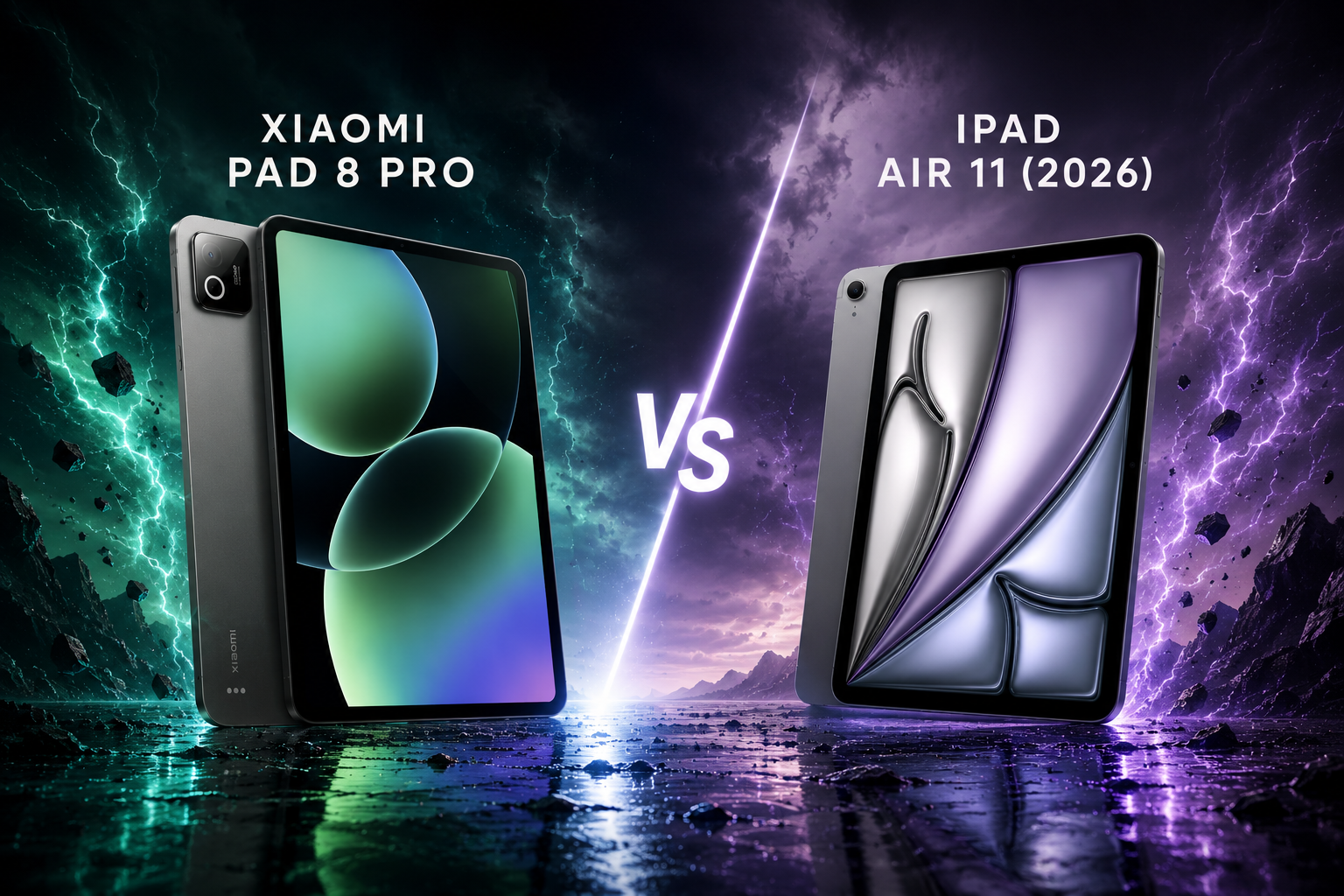
Xiaomi Pad 8 Pro wins on specifications for less: 11.2″ 144 Hz 3.2K display, 9,200 mAh, and Snapdragon 8 Elite for 2,599 PLN. iPad Air 11 with M4 chip and iPadOS 26 (from 2,899 PLN) wins on pro apps, Apple ecosystem, and support for 6–7 years. Below is a full comparison with recommendations for every type of user.
Xiaomi Pad 8 Pro vs iPad Air 11 — comparison at a glance
| Parameter | Xiaomi Pad 8 Pro | iPad Air 11 (M4) |
|---|---|---|
| Screen | 11.2″, IPS, 144 Hz, 800 nits | 11″, Liquid Retina IPS, 60 Hz, 500 nits |
| Resolution | 3200 × 2136 (345 ppi), Dolby Vision | 2360 × 1640 (264 ppi), True Tone |
| Processor | Snapdragon 8 Elite (3 nm) | Apple M4 (3 nm), 9-core GPU |
| RAM / storage | 8 / 12 GB + 256 / 512 GB UFS 4.1 | 12 GB + 128 GB / 256 GB / 512 GB / 1 TB |
| Battery | 9,200 mAh | 28.93 Wh (~7,606 mAh) |
| Charging | 67 W (wired) | ~20 W (USB-C PD) |
| Cameras | 50 MP rear + 32 MP front | 12 MP rear + 12 MP Center Stage |
| Speakers | 4× Dolby Atmos | 2× stereo (landscape) |
| Wi-Fi / BT | Wi-Fi 7 / BT 5.4 | Wi-Fi 7 / BT 5.3 |
| Weight | 485 g | 464 g |
| Dimensions | 251.2 × 173.4 × 5.75 mm | 247.6 × 178.5 × 6.1 mm |
| Biometrics | Fingerprint reader in the button + 2D face unlock | Touch ID in the button |
| System | Android 16 + HyperOS 3 | iPadOS 26 |
| Stylus | Xiaomi Focus Pen | Apple Pencil Pro / Pencil (USB-C) |
| Price (starting) | 2,599 PLN (8/256 GB) | 2,899 PLN (128 GB Wi-Fi) |
Our choice in terms of quality to price: Xiaomi Pad 8 Pro — for 300 PLN less you get a better screen, larger battery, and faster charging.
Our choice for iPhone / Mac users: iPad Air 11 — a seamless ecosystem, longer system support, and better pro apps.
Display — where Xiaomi clearly wins
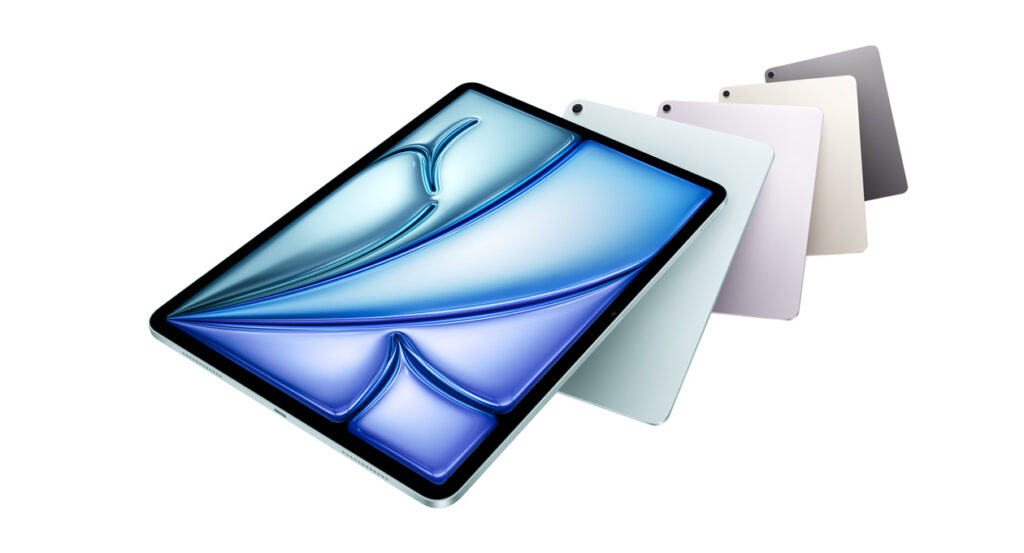
Xiaomi Pad 8 Pro has an 11.2″ display with a resolution of 3200 × 2136 pixels (345 ppi) with a refresh rate of 144 Hz. iPad Air 11 features an 11″ Liquid Retina at 2360 × 1640 pixels (264 ppi) with a refresh rate of 60 Hz.
The difference in refresh rate is noticeable in everyday scrolling and gaming. 144 Hz in Xiaomi provides smoothness unavailable in any iPad below the Pro model. Apple maintains 60 Hz across the entire Air line and offers full ProMotion 120 Hz only in iPad Pro models.
Xiaomi also has an advantage in brightness (800 nits vs 500 nits) and supports Dolby Vision with 12-bit color depth. Apple only offers True Tone. However, Xiaomi lacks a matte anti-reflective coating.
Tip: If you plan to draw or take notes with a stylus, consider getting a matte film for the iPad that reduces reflections and gives the feeling of writing on paper — check out accessories for iPad Air 11.
Conclusion about the display: Xiaomi wins on specifications (resolution, refresh rate, HDR, brightness). The iPad Air, however, has better out-of-the-box color calibration and support for full P3.
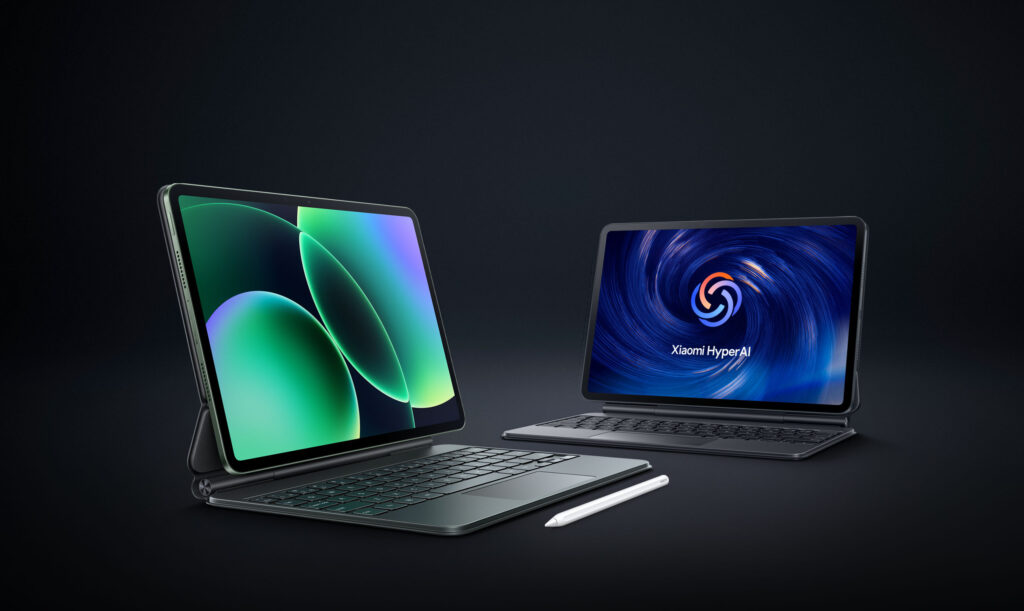
Processor and Performance — M4 vs Snapdragon 8 Elite Showdown
Apple M4 and Snapdragon 8 Elite are the two most powerful chips in tablets from 2026. Both are made using a 3 nm process, with differences in architecture and software.
Apple M4 excels in single-core synthetic benchmarks and is optimized for pro applications: Procreate, LumaFusion, DaVinci Resolve, Affinity Designer. Apps on iPadOS are designed with a single chip in mind, so they run flawlessly.
Snapdragon 8 Elite in the Xiaomi Pad 8 Pro offers greater flexibility: console emulation, multitasking, desktop mode, and compatibility with Office files without hassle. In AnTuTu 10, it scores over 2,800,000 points — a result on par with flagship smartphones.
| Test (approximate result) | Xiaomi Pad 8 Pro | iPad Air 11 (M4) |
|---|---|---|
| Geekbench 6 single-core | ~3,100 | ~3,700 |
| Geekbench 6 multi-core | ~9,800 | ~14,500 |
| 3DMark Wild Life Extreme | ~6,400 | ~5,200 |
| AnTuTu 10 | ~2,800,000 | n/a (iOS) |
In practice: both tablets will handle any game and application without a hitch. The iPad is faster in video export and 3D rendering. Xiaomi performs better with AAA games and emulation (Nintendo Switch, PS2) thanks to the Adreno 830.
Battery and charging — Xiaomi’s advantage
The battery 9,200 mAh in the Xiaomi Pad 8 Pro vs 28.93 Wh (approx. 7,606 mAh) in the iPad Air. Xiaomi charges at 67 W, while Apple is limited to ~20 W via USB-C PD.
In real-world usage, the difference is:
– Xiaomi: 0 → 100% in about 96 minutes, 50% in 38 minutes
– iPad Air 11: 0 → 100% in about 150 minutes
The battery life on both tablets is comparable — about 10 hours in internet browsing and video streaming tests. Xiaomi compensates for what it loses on the less optimized Android with a larger battery.
Note: Apple does NOT include a full-power charger in the box. To charge the iPad in a reasonable time, you need a GaN charger of at least 30 W with a USB-C port. Check the charging offer at homescreen.pl.
Cameras — who even uses them on a tablet?
Xiaomi Pad 8 Pro: 50 MP f/1.8 (rear) + 32 MP (front, ultra-wide).
iPad Air 11: 12 MP f/1.8 (rear) + 12 MP (front, in landscape, with Center Stage).
Xiaomi wins on paper, but the camera on a tablet is mainly used for scanning documents and video conferencing. Here the iPad has a better front camera setup — placed on the longer side (landscape), perfect for Zoom and Google Meet when holding the tablet horizontally with a keyboard.
Xiaomi has a front camera in portrait mode, which forces a strange frame during video conferencing.
System — Android 16 + HyperOS 3 vs iPadOS 26
This is the most important difference between these tablets — and it determines whether it’s even worth considering Xiaomi.
iPadOS 26 is a mature system designed for tablets: Stage Manager, support for external monitors, pro apps (Adobe, Autodesk, Procreate, LumaFusion). Apple guarantees 6–7 years of updates — an iPad from 5 years ago still receives the latest iPadOS.
HyperOS 3 on Android 16 in Xiaomi is a system written for phones, adapted for tablets. Multitasking and desktop mode work well, but some apps (streaming, banking) can be poorly adapted to large screens. Xiaomi guarantees 4 years of Android updates and 6 years of security patches.
What Xiaomi does better:
– Full Microsoft Office without iCloud/iPadOS restrictions
– Compatibility with .exe/.apk files through emulators
– Desktop mode with a taskbar and windows
– No App Store tax — most apps are free
What iPad does better:
– Creative apps (Procreate, LumaFusion, Affinity)
– Integration with Mac/iPhone (Handoff, Universal Clipboard, AirDrop)
– Longer system support (6–7 years vs 4 years)
– Consistency of the interface across the system
Stylus and keyboard — what each ecosystem offers
The iPad Air 11 works with Apple Pencil Pro and Apple Pencil (USB-C) as well as the original Magic Keyboard. It is a mature set with haptic feedback and precision that has been lacking in other ecosystems for years.
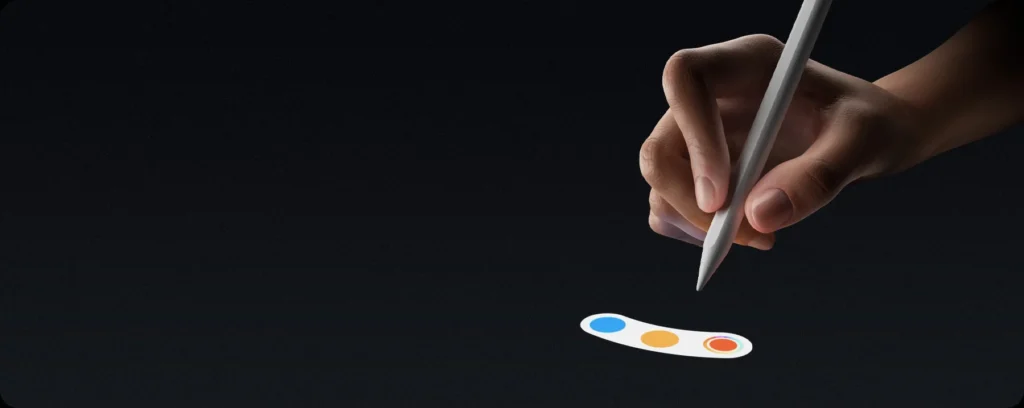
Xiaomi offers its own Focus Pen (8,192 pressure levels, magnetic charging) and Focus Keyboard often included in the package. Functionally, it is closer to the Apple Pencil 2nd generation — for significantly less.
Case and protection are a must for tablets costing over 2,500 PLN. You can find the full range of accessories in the categories: Xiaomi Pad 8 / 8 Pro → | iPad Air 11 →.
Price — where the difference makes the biggest impact
| Configuration | Xiaomi Pad 8 Pro | iPad Air 11 |
|---|---|---|
| 128–256 GB Wi-Fi | 2,599 PLN (8/256 GB) | 2,899 PLN (128 GB) / 3,399 PLN (256 GB) |
| 512 GB Wi-Fi | 2,999 PLN (12/512 GB) | 4,399 PLN |
| 1 TB Wi-Fi | n/a | 5,399 PLN |
| LTE / 5G | n/a (Wi-Fi only) | +800 PLN for Cellular |
| Stylus | ~350 PLN (Focus Pen) | 399 PLN (Pencil USB-C) / 599 PLN (Pencil Pro) |
| Keyboard | ~599 PLN (or in a bundle) | ~1,599 PLN (Magic Keyboard) |
For the same price (~3,500 PLN) you get:
– Xiaomi Pad 8 Pro 12/512 GB + Focus Pen + case with keyboard.
– Just the iPad Air 11 256 GB Wi-Fi (without stylus and keyboard).
The difference becomes even greater if you need LTE — the iPad Air adds 800 PLN for the Cellular module, while Xiaomi doesn’t have that option at all (requires a hotspot from a phone).
Which tablet to choose? Recommendations based on needs
Choose Xiaomi Pad 8 Pro if:
- You have a budget of up to 3,000 PLN and want maximum specifications for that price.
- You watch a lot of videos and play games — the 144 Hz 3.2K Dolby Vision screen and 4 Dolby Atmos speakers will make a difference.
- You use Android on your phone — synchronization works more smoothly.
- You want to take notes with a stylus and have a keyboard included.
- You need a large battery and fast charging (67 W).
Choose iPad Air 11 if:
- You have an iPhone or Mac — the Apple ecosystem is the biggest added value.
- You work on pro apps: Procreate, Affinity, LumaFusion, DaVinci Resolve.
- You want the longest system support (6–7 years of updates).
- You need a variant with LTE/5G.
- You value a cohesive system and don’t want to deal with stores and sideloading.
Our verdict: For 70% of users looking for a tablet for learning, entertainment, and simple office work, Xiaomi Pad 8 Pro is the smarter choice — it offers more for less money. The iPad Air 11 is worth the extra 300–500 PLN only if you are already in the Apple ecosystem or use apps not available on Android.

What to buy after the purchase? Tablet protection
Regardless of your choice — a case and tempered glass are a must. Repairing the display on both models costs around 1,200–1,800 PLN. Meanwhile, a solid case and tempered glass protect the tablet from 90% of accidental damage for a fraction of that price.
You can find the full range of accessories — cases, tempered glass, matte films, keyboards — in our categories:
Check accessories: Xiaomi Pad 8 / 8 Pro → | iPad Air 11 (2024/2025/2026) →
Summary — Xiaomi Pad 8 Pro vs iPad Air 11
Xiaomi Pad 8 Pro vs iPad Air 11 is a battle of better hardware versus better software. Xiaomi offers 144 Hz, 9,200 mAh, and 67 W charging for 2,599 PLN. Apple provides the M4 chip, iPadOS 26, and 6–7 years of updates for 2,899 PLN.
If you want the best value for money outside the Apple ecosystem — choose Xiaomi. If you have an iPhone or Mac and need pro apps — pay extra for the iPad. Regardless of your choice: protect your tablet with a case and tempered glass — screen repairs cost 20× more.
FAQ — frequently asked questions
Will the Xiaomi Pad 8 Pro be available in LTE / 5G version?
No. The Xiaomi Pad 8 Pro is sold globally only in the Wi-Fi version. If you need mobile internet, you have to use a hotspot from your phone or choose the iPad Air 11 in the Cellular version (+800 PLN).
Which tablet is better for studying and taking notes?
Both tablets are very good for note-taking, but the iPad Air 11 has an advantage in apps (GoodNotes, Notability, Apple Notes). The Xiaomi Pad 8 Pro with Focus Pen and keyboard included is cheaper, and Microsoft OneNote and Xiaomi Notes on Android perform excellently.
Does the iPad Air 11 support 144 Hz like Xiaomi?
No. The iPad Air 11 has a 60 Hz display. If you want higher refresh rates from Apple, you need to choose the iPad Pro with ProMotion technology (120 Hz) — which starts at around 5,200 PLN.
Does the Xiaomi Pad 8 Pro receive regular updates?
Yes, Xiaomi guarantees 4 years of major Android system updates and 6 years of security updates. The iPad Air 11 typically receives 6–7 years of full iPadOS updates.
Do cases for the Xiaomi Pad 7 Pro fit the Xiaomi Pad 8 Pro?
Yes — the Xiaomi Pad 7 / 7 Pro / 8 / 8 Pro have nearly identical dimensions of 11.2″. Most cases and screen protectors are compatible with the entire series. Check the exact product description — in the Xiaomi Pad 8 Series category, all products are marked with compatibility.
Does the 2nd generation Apple Pencil work with the iPad Air 11 (M4)?
No. The iPad Air 11 with the M4 chip supports Apple Pencil Pro and Apple Pencil (USB-C). The older 2nd generation Pencil (with inductive charging for iPad Pro 2018–2022) does not work with the new Air.
Which tablet is better for gaming?
For mobile gaming, the Xiaomi Pad 8 Pro is the better choice — Adreno 830 + 144 Hz + 4 Dolby Atmos speakers is an optimal setup for Genshin Impact, PUBG, or Honkai. The iPad Air 11 excels in AAA games ported from Mac (Resident Evil, Death Stranding) and in emulation of older consoles.
Leave a Reply