According to the latest leaks and reports (including from TechRadar, El País, and Tom’s Guide), the official premiere of the iPhone 17 series will take place on September 9, 2025. The lineup will include the ultra-thin iPhone 17 Air, and the Pro models will gain features such as a 120 Hz display, LTE, new A19 processors, and larger batteries.
September 9, 2025 – likely date for Apple’s presentation
September 12 – possible start of pre-orders
September 19–20 – availability in stores
iPhone 17 – What Will the Models Be Like?
Model
Screen
Processor
RAM
Rear Cameras
Battery
Highlight
iPhone 17
6.3″ OLED 120 Hz
A19
8 GB
48 MP + 12 MP ultra
~3,900 mAh
New design, lighter
iPhone 17 Air
6.6″ OLED 120 Hz
A19
8 GB
48 MP + 12 MP ultra
~3,800 mAh
Ultra thin – 5.5 mm
iPhone 17 Pro
6.3″ LTPO OLED 1–120 Hz
A19 Pro
12 GB
48 MP + 12 MP ultra + tele
~4,500 mAh
Aluminum frame
iPhone 17 Pro Max
6.9″ LTPO OLED 1–120 Hz
A19 Pro
12 GB
48 MP + 12 MP ultra + 48 MP periscope
~5,000 mAh
Largest screen and battery
iPhone 17 – Appearance and Technical Details
Although Apple is still keeping its cards close to its chest, leaks suggest that the iPhone 17 will visually continue the design style known from the iPhone 16, but with subtle, practical changes. One of them is expected to be a screen size increase from 6.1 inches to 6.3 inches – a similar approach was taken by Apple in the iPhone 16 Pro series, which resulted in greater comfort for browsing content and watching videos.
The basic model of the iPhone 17 retains the proven design, well known from the previous generation. The camera module still has the form of a diagonal arrangement of two lenses placed in a square “island” in the upper left corner of the back panel. The mockup photos shared by leaker Sonny Dickson show that, unlike the Air and Pro models, Apple did not decide to enlarge or change the shape of the island here.
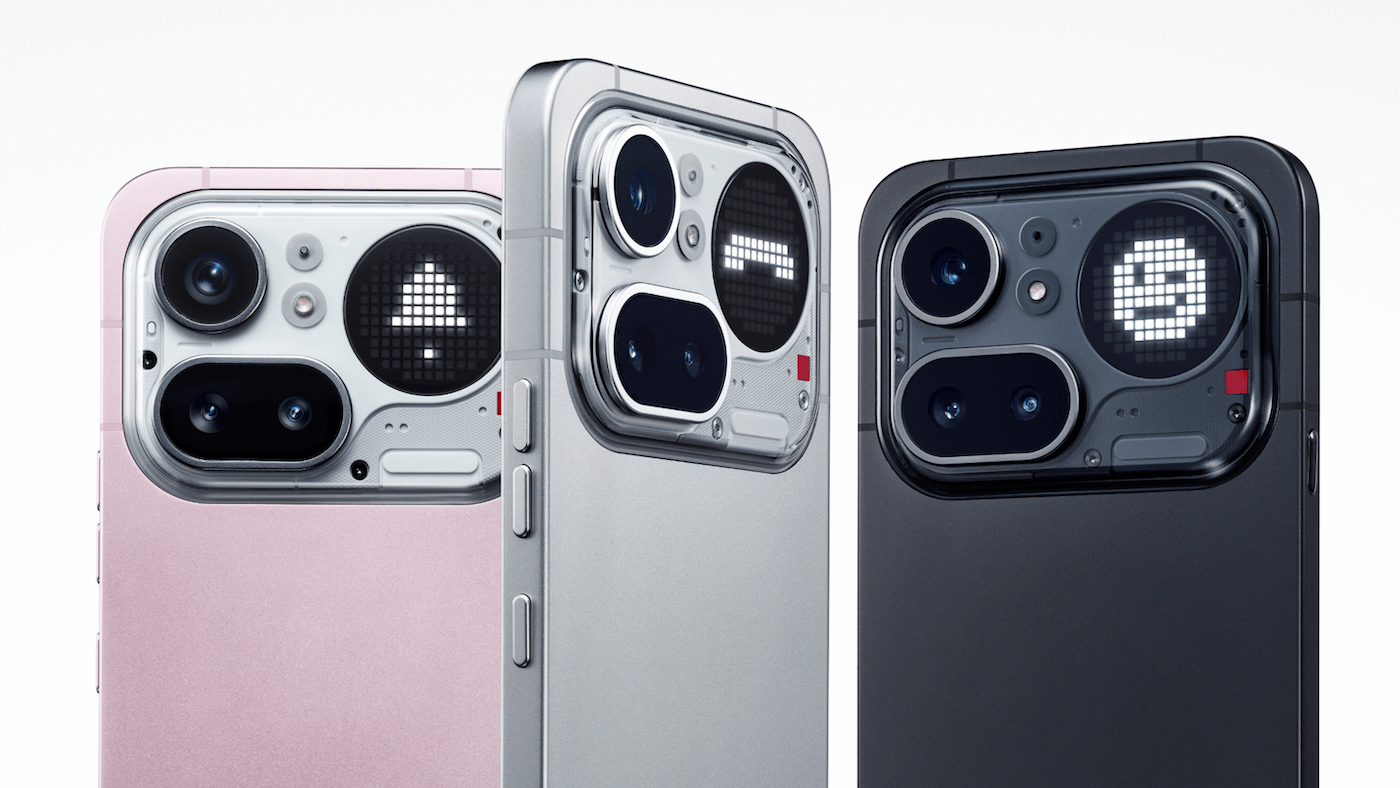
Photo by SonnyDickson/ From left: iPhone 17, iPhone 17 Air, iPhone 17 Pro, and iPhone 17 Pro Max
The display in the basic iPhone 17 is expected to be made using OLED technology, which until now was reserved only for Pro models. This means about 30% higher brightness compared to the screens in the iPhone 16 and 16 Plus, as well as refresh rate of 120 Hz for much smoother scrolling and animations.
The basic model will debut in a wide range of colors – black, white, steel gray, green, purple, and light blue. The heart of the smartphone is expected to be the new Apple A19 processor and 8 GB of RAM – this configuration will allow for full utilization of the Apple Intelligence artificial intelligence features, which are expected to work locally on the device from launch.
Colors of iPhone 17
iPhone 17 Air – Ultra-Thin Revolution
The new iPhone 17 Air replaces the Plus model in this year’s series and introduces a revolution in design – primarily in terms of the thickness of the casing. According to leaks from sources such as Mark Gurman (Bloomberg), Ming-Chi Kuo, and Jeff Pu, Apple has prepared the thinnest iPhone in history.
Lewis George Hilsenteger from the Unbox Therapy channel described it as “terrifyingly slim” during the presentation of the mockup, which measured just 5.66 mm.
For comparison – the iPhone 16 Pro is 8.25 mm thick, and the previous record belonged to the iPhone 6 (6.9 mm). This means it will be almost unnoticeable in the pocket, yet still provide high structural rigidity.
Dimensions and Construction
According to various analysts:
Mark Gurman: iPhone 17 Air will be 2 mm thinner than 16 Pro
Ming-Chi Kuo: 5.5 mm at its thinnest point
Jeff Pu: about 6 mm
Unbox Therapy (mockup): 5.66 mm
Colors of iPhone 17 Air
Design and Ergonomics
The iPhone 17 Air will likely be the most minimalist smartphone Apple has ever made. Its thin profile will necessitate the use of a proper case – preferably slim, so as not to disrupt the phone’s unique silhouette while still providing protection.
Specifications, Design Changes, and First Visualizations
The new generation of iPhone 17 Pro (6.3 inches) and iPhone 17 Pro Max (6.9 inches) is shaping up to be one of the biggest steps in the development of the Pro series in years. According to leaks:
Processor: Apple A19 Pro – even faster and more energy-efficient than A18 Pro.
RAM: increase from 8 GB to 12 GB, which will speed up multitasking and 4K video editing.
Cameras:
Main lens – 48 MP
Ultra-wide lens – 48 MP
Telephoto lens – 48 MP, 3.5x optical zoom (instead of 12 MP in the previous generation)
Construction: return to aluminum, with the back panel divided into an aluminum top and glass bottom.
New camera “island”: a rectangle occupying the entire width of the phone, with rounded corners and aluminum finish.
According to some sources, the arrangement of the lenses could be changed to horizontal to better cooperate with the features of Apple Vision Pro, however, most leaks suggest that the triangular arrangement will be retained.
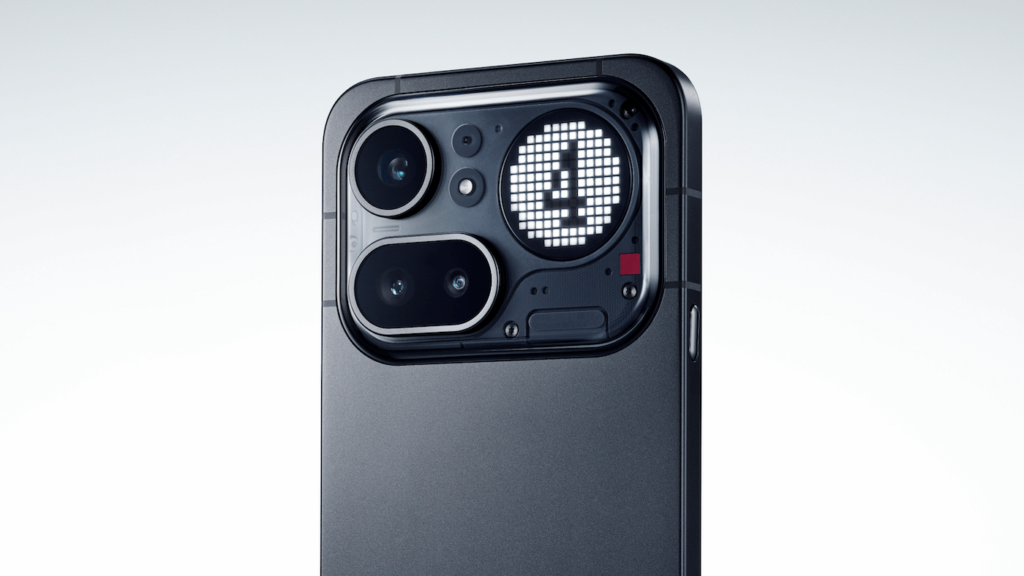
Known leaker Jon Prosser published a concept graphic showing how both models might look. It confirms the wide aluminum “island” and a more uniform back of the casing.
📸 Video mockups from Unbox Therapy already show the first physical versions of these devices. Thanks to them, accessory manufacturers can prepare perfectly fitting cases for iPhone 17 Pro and cases for iPhone 17 Pro Max. In our homescreen.pl storein Koszalin, they can be ordered with fast shipping throughout Poland.
(Unbox Therapy)
Expected Prices in Poland
Estimated prices (may change after the official premiere):
iPhone 17 – from 4499 PLN
iPhone 17 Air – from 4999 PLN
iPhone 17 Pro – from 5799 PLN
iPhone 17 Pro Max – from 6799 PLN (256 GB)
Additional New Features and Color Variants
New colors: e.g. Papaya Orange in iPhone 17 Pro Max
Redesigned camera module resembling Google Pixel
Processors: standard models will receive A18/A19, Pro variants – A19 Pro with 12 GB RAM
(FAQ) Frequently Asked Questions about iPhone 17
🌟When is the iPhone 17 premiere? The official premiere of the iPhone 17 will take place on September 9, 2025.
🌟Where can I buy the iPhone 17 in Poland at the lowest price? Typically, the lowest prices appear in online stores during pre-orders or operator promotions. It is worth comparing offers at Media Expert, RTV Euro AGD, x-kom, and Orange/Play.
🌟How much does the iPhone 17 cost in Poland on the day of the premiere? The starting price of the iPhone 17 in Poland is expected to be around 4999 PLN for the 128 GB version. The Air and Pro models will be more expensive.
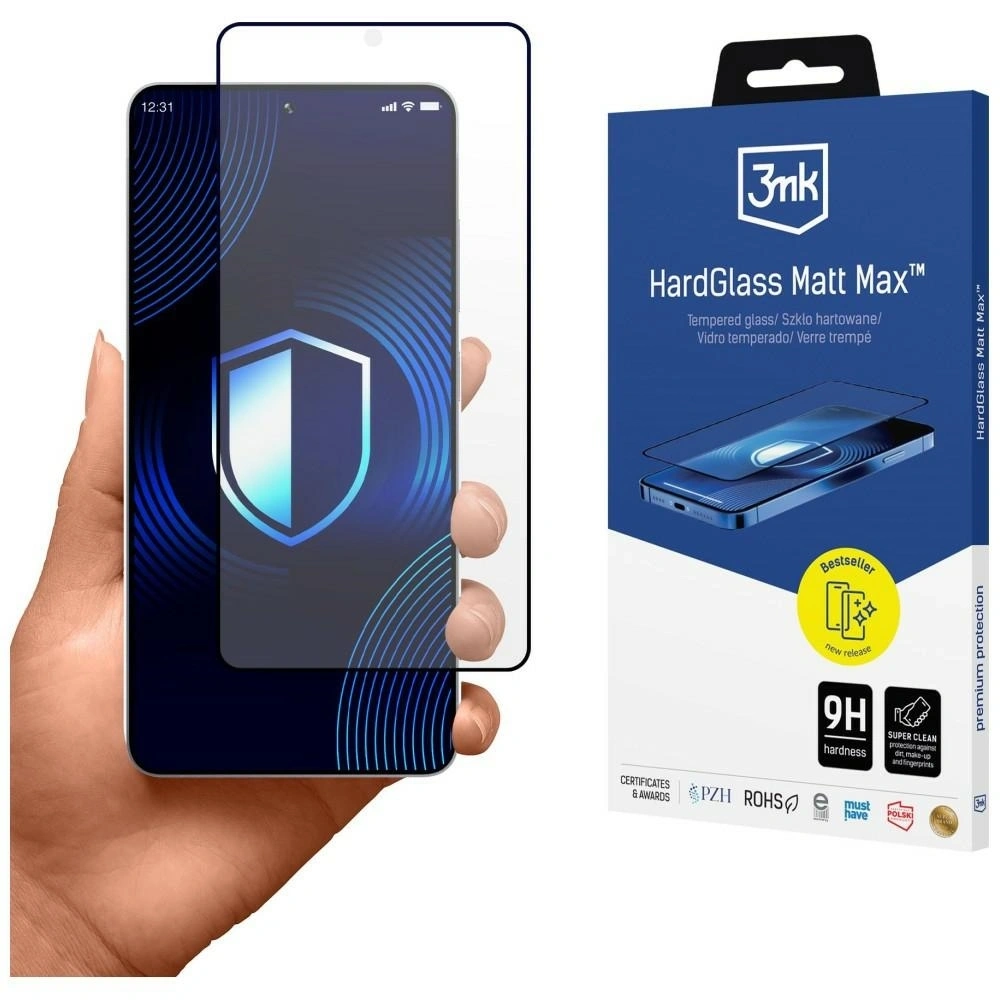
🌟Does the tempered glass from iPhone 16 fit the iPhone 17? No, because the screen of the iPhone 17 has different dimensions. The best choice is dedicated tempered glass for iPhone 17, available in Polish accessory stores.
🌟Which iPhone 17 model has the best battery? The longest-lasting is the iPhone 17 Pro Max with a 5000 mAh battery and energy-saving optimization in iOS 19.
🌟Will the iPhone 17 Air be available in Poland? Yes, the iPhone 17 Air will be available for sale in Poland on the same day as the other models.
🌟Is the iPhone 17 compatible with MagSafe and Qi chargers in Poland? Yes, all iPhone 17 models support MagSafe and wireless charging in the Qi2 standard.
🌟Does the iPhone 17 support 5G networks in Poland? Yes, all versions intended for the Polish market support the full 5G bands available from operators.
🌟What are the new colors of the iPhone 17 available in Poland? The offer will include: titanium blue, pearl white, deep green, and classic black.
Smartphones of 2025 continue to surprise. Apple and Samsung this year focused on radically slimming down their flagships, creating devices so thin and light that holding them in hand is a completely new experience.
Which phone is the thinnest in 2025 – iPhone 17 Air or Galaxy S25 Edge? Both are record-thin, but the iPhone 17 Air is slightly thinner (5.6 mm vs 5.8 mm in Galaxy S25 Edge). The difference is subtle, so when choosing, it’s better to focus on the operating system (iOS or Android), screen, and battery.
Below we present a detailed comparison of these models in terms of design, display, cameras, performance, battery, software, ecosystem, as well as prices and first opinions.
Key parameters – comparison table
What are the differences between Samsung Galaxy S25 Edge and Apple iPhone 17 Air?
Parameter
Apple iPhone 17 Air
Samsung Galaxy S25 Edge
Dimensions and weight
156.2 × 74.7 × 5.64 mm, 165 g
158.2 × 75.6 × 5.8 mm, 163 g
Body materials
Titanium frame (Grade 5), Ceramic Shield 2 on the front and back – the most durable iPhone
Titanium frame, Gorilla Glass Ceramic 2, rounded edges for reinforcement
Display
6.5″ OLED Super Retina XDR, 2736×1260 px (460 ppi), ProMotion 120 Hz, Always-On, up to 3000 nits
6.7″ Dynamic AMOLED 2X LTPO, 3120×1440 px (513 ppi), 1–120 Hz, HDR10+, up to 2600 nits
Rear cameras
48 MP Fusion Main (ƒ/1.6, OIS) + 2× tele (optical quality crop); no ultra-wide
200 MP main (ƒ/1.7, OIS) + 12 MP ultra-wide (ƒ/2.2, AF); no tele (crop from 200 MP)
Front camera
18 MP Center Stage (ƒ/1.9, AF) – automatic framing, Dual Capture in 4K
12 MP (ƒ/2.2, AF), wide-angle selfies, recording up to 4K60, AI selfies
Processor
Apple A19 Pro (3 nm) – 6-core CPU, 5-core GPU, 16-core Neural Engine with ray tracing
Snapdragon 8 Elite (3 nm) – 8 cores, Adreno 830 GPU, ray tracing, AI optimizations
RAM
Estimated 6–8 GB (iOS is very optimized)
12 GB LPDDR5X
Storage
256 GB / 512 GB / 1 TB NVMe – no microSD
256 GB / 512 GB UFS 4.0 – no microSD
Battery
approx. 3300–3500 mAh, up to 27 h video
3900 mAh, up to 24 h video
Charging
20 W wired (USB‑C PD), 15 W MagSafe, no reverse charging
25 W wired, 15 W Qi2, Wireless PowerShare (reverse)
Resistance
IP68 (6 m for 30 min), eSIM only
IP68 (1.5 m for 30 min), sealed construction
Biometrics
Face ID (3D), Action button
In-screen fingerprint reader (ultrasonic), 2D face recognition
System
iOS 19, updates for 5+ years
Android 15 + OneUI 7, updates for 7 years
Ecosystem
Apple Watch, AirPods, iPad, Mac, iCloud, Apple Pay
Galaxy Watch, Buds, SmartThings, Samsung Pay, Link To Windows
Pre-order: September 12, 2025, in stores: September 19, 2025
Launch: May 12, 2025, sales from May 30, 2025
Price note: iPhone 17 Air is significantly more expensive – the 1 TB version costs as much as 7299 PLN. Samsung Galaxy S25 Edge starts at 3999 PLN on promotions, which may attract those looking for top design at a lower price.
Design and slimness
iPhone 17 Air – ultra-thin elegance
Apple iPhone 17 Air is a true showcase of engineering capabilities. The smartphone is only 5.6 mm thick and weighs 165 g, which is a huge leap compared to previous generations (iPhone 16 had 7.8 mm and 170 g). The slimness was achieved by using a titanium frame (Grade 5) and new Ceramic Shield 2 on the front and back. Apple has eliminated the physical SIM slot in favor of eSIM, which further stiffened the construction. A characteristic element is the so-called “plateau” – a flat island on the back housing the camera, speaker, and some electronics, which allowed for slimming down the rest of the body and increasing the battery size. There are four elegant finishes available: space black, cloud white, light gold, and sky blue. MacRumors described the iPhone 17 Air as “impossibly thin and premium to the touch” ”(macrumors.com)
Samsung Galaxy S25 Edge – slimness with ergonomics
Galaxy S25 Edge is the thinnest phone in the history of the Galaxy S series – it is 5.8 mm thick and weighs 163 g. It uses a titanium frame and Corning Gorilla Glass Ceramic 2 on the front, which combines scratch resistance with high light transmittance. Samsung opted for slightly rounded edges of the frame, which improves ergonomics and reduces the risk of breakage under stress. The back is minimalist, with two lenses in a slim module without a distinct island. The phone meets the IP68 standard (submersion up to 1.5 m for 30 minutes) and is available in Titanium Silver, Jetblack, and Icyblue colors. The Verge noted that “the device feels so light that you can forget you’re carrying it in your pocket”(theverge.com)
Both models impress with their slimness and modern design. iPhone 17 Air attracts with its more angular, minimalist design and the mirrored finish of the titanium frame – a great choice for those who value compactness and a precise look. Galaxy S25 Edge offers a larger screen, softer lines, and better ergonomics – making it more comfortable to hold, especially during prolonged use. The choice thus depends on preferences: maximum compactness and Apple style versus a larger, more “cinematic” format and comfort of use in Samsung’s execution.
Display – brightness and smoothness at the highest level
iPhone 17 Air – record brightness and ProMotion
The display of the iPhone 17 Air is a 6.5-inch OLED Super Retina XDR with a resolution of 2736×1260 px (~460 ppi). The aspect ratio is close to 19.5:9, and almost the entire front is filled with the display except for the Dynamic Island, which houses the camera and Face ID sensors. A novelty in this series is ProMotion 120 Hz, which is adaptive refresh known so far from Pro models. The LTPO matrix allows scaling of the refresh rate from 1 Hz (e.g., Always-On) to 120 Hz, ensuring smoothness and energy savings.
Brightness: typical – 1000 nits, HDR – 1600 nits, peak – up to 3000 nits. This is a record among iPhones, making the display readable even in full sunlight. Ceramic Shield 2 with an anti-reflective coating reduces glare. Support for HDR10, Dolby Vision, wide P3 color gamut, and True Tone ensures natural colors and a high contrast of 2,000,000:1.
👉 Check out hybrid glass for iPhone 17 Air – it will protect the screen without thickening the phone, ideal for such a thin construction.
Samsung Galaxy S25 Edge – larger surface and QHD+
Galaxy S25 Edge has a larger, 6.7-inch Dynamic AMOLED 2X panel with a QHD+ resolution (3120×1440 px, ~513 ppi). It also uses an LTPO matrix with adaptive refresh from 1 to 120 Hz. The display supports HDR10+ and offers a Vision Booster feature, improving visibility in bright light. The peak brightness reaches around 2600 nits, making it one of the brightest panels from Samsung.
The front is completely flat, with symmetrical and very narrow bezels. Instead of a notch, we have a discreet hole for the selfie camera, providing a cleaner view when watching movies or playing games. Gorilla Glass Ceramic 2 further reduces reflections and protects the screen.
Both displays are premium class. iPhone 17 Air stands out with record brightness and integration of Dynamic Island, while Galaxy S25 Edge offers a larger working area and higher resolution, which movie and game fans will appreciate. The choice depends on preferences: the brighter Apple screen or the more cinematic Samsung panel.
Cameras – quality versus versatility
iPhone 17 Air – simplicity and consistency of photos
Apple iPhone 17 Air focuses on minimalism – it has one rear 48 MP Fusion Main camera and an 18 MP Center Stage front camera. Despite having only one camera on the back, the 48 MP sensor is versatile: it combines pixels for 24 MP photos and allows for 2× optical quality zoom thanks to cropping from the matrix. The lack of a separate telephoto and ultra-wide lens is a compromise, but Apple focuses on consistency – every photo has the same color characteristics and sharpness. The f/1.6 lens and Photonic Engine provide excellent results at night, and the ProRAW mode allows for photography in full 48 MP resolution.
The 18 MP front camera is a significant step forward – Center Stage automatically tracks the face in the frame, and recording in 4K60 and the Dual Capture feature (front+back simultaneously) make the iPhone a great tool for vloggers.
Galaxy S25 Edge has a dual rear camera: 200 MP main and 12 MP ultra-wide with autofocus. Thanks to the enormous resolution of the main sensor, it achieves 2× and 4× zoom through cropping while maintaining detail (AI Zoom up to 10×). The lack of a telephoto lens may limit quality at high zooms, but the wide angle and macro capability (AF in ultra-wide) provide more creative freedom. Samsung uses ProVisual Engine and Galaxy AI algorithms that brighten night photos, improve skin tones, and automatically select the best shots in Best Face mode.
The 12 MP front camera records in 4K60 with HDR10+, and all cameras have autofocus – allowing for sharp selfies and macro shots even with the front camera. The Edge also supports 4K120 recording and LOG mode for advanced creators.
Which is better? It depends on the style of photography:
iPhone 17 Air will be ideal for those who value simplicity, consistent colors, and excellent selfie/video quality. It’s a great choice for everyday “point and shoot.”
Galaxy S25 Edge wins in terms of creativity – it offers a wide angle, better macro capabilities, higher resolution, and video modes for professionals.
For most users, both will provide flagship quality, but if portraits and vlogging are a priority – iPhone Air has the advantage. If, on the other hand, you want to experiment and enjoy wide angles – Galaxy S25 Edge is more versatile.
Performance and technical specifications – flagship power in a slim form
iPhone 17 Air – Apple A19 Pro and perfect optimization
The iPhone 17 Air is powered by the Apple A19 Pro chip made with 3 nm lithography. It consists of a 6-core CPU (2 performance cores + 4 efficiency cores) and a 5-core GPU, supported by a 16-core Neural Engine capable of performing up to 17 trillion operations per second. This translates to excellent benchmark results – the iPhone Air is about ~15–20% faster than its predecessor and outperforms most Android devices in single-threaded tests.
Apple uses fast NVMe storage (256 GB – 1 TB) and likely 6–8 GB LPDDR5 RAM, which combined with iOS 19 ensures instant app launches and immediate switching between them. An advantage is also hardware ray tracing and optimization for AAA games – titles like Resident Evil or Assassin’s Creed run at a steady 30–60 fps. The N1 chip and C1X modem take care of connectivity (5G, Wi‑Fi 6E/7, Bluetooth 5.3), and Apple boasts that this is “the most energy-efficient iPhone in history.”
Samsung Galaxy S25 Edge – Snapdragon 8 Elite for Galaxy
The Galaxy S25 Edge features the Snapdragon 8 Elite for Galaxy – a special version of the 8 Gen 3 chip clocked higher than standard. It has 8 cores (1 super-efficient, 5 efficient, 2 power-saving) and an Adreno 830 GPU with ray tracing support. The chip supports the latest AI technologies and provides high multi-threaded performance, often surpassing A19 Pro in heavily parallel tasks. We have 12 GB LPDDR5X RAM available, allowing for keeping many apps in the background and running split-screen mode or floating windows.
The cooling system is based on a thin vapor chamber, allowing the phone to maintain high performance even during prolonged gaming. Snapdragon integrates the 5G X70 modem, Wi‑Fi 7, and Bluetooth 5.4, so the Galaxy is ready for future standards. Samsung also heavily emphasizes AI features – ProVisual Engine, live translation, image generation, and integration with Google Gemini.
Comparison and conclusions
Both phones are extremely fast and offer flagship-worthy smoothness. iPhone 17 Air wins in single-threaded performance and optimization for iOS – the system runs quickly and smoothly even with less RAM. Galaxy S25 Edge provides more freedom – multitasking, multi-window, and 12 GB RAM make it better suited for multitasking and gaming at high settings. If you value long update support and tight integration with the Apple ecosystem – the iPhone will be a safer choice. However, if you care about system openness, more RAM, and advanced AI features – the Galaxy S25 Edge may prove to be more versatile.
Battery and charging – the compromise of slimness
iPhone 17 Air – surprisingly good for 5.6 mm
Apple does not disclose the battery capacity in mAh, but estimates suggest ~3300–3500 mAh. The manufacturer states the operating time – up to 27 hours of offline video playback, which is an excellent result for such a thin device. In everyday use, the iPhone Air lasts for 1 day of work, although intensive users (gaming, 4K video) may need a recharge in the evening. The energy efficiency of the A19 Pro chip and adaptive refresh rate of 1–120 Hz play a significant role.
Charging occurs via USB‑C (20 W PD) – 50% in 30 minutes – and wirelessly via MagSafe (15 W). Full charging takes about 75–90 minutes. Apple offers MagSafe Battery Pack accessories that can extend the operating time to about 40 hours, although this is an option for those willing to thicken the phone with an addition. The iPhone does not support reverse charging.
Samsung Galaxy S25 Edge – slightly larger battery, more features
Galaxy S25 Edge has a 3900 mAh battery, which translates to about 24 hours of video playback. This is less than in the S25+ or Ultra models, but remember – the Edge is 2 mm thinner. A day of work is possible, but under heavy load (gaming, recording) a recharge will be necessary during the day.
Wired charging 25 W (USB‑C PD/PPS) provides 55% in 30 minutes. The phone supports Qi2 15 W and Wireless PowerShare – reverse charging of accessories (e.g., Buds, Watch). Full charging takes about 70 minutes. Samsung also offers numerous battery-saving modes: reducing resolution to 1080p, forcing 60 Hz, or AI Standby.
Conclusions
Both smartphones require daily charging – this is a compromise for the ultra-thin construction. iPhone 17 Air manages energy slightly better at rest and offers longer operating time under similar usage, while Galaxy S25 Edge compensates with additional features – reverse charging, full Qi2 compatibility, and greater control over power-saving modes. The choice depends on priorities: if every extra hour on a single charge matters – the iPhone will be better, if convenience of charging and the ability to quickly charge accessories – Samsung has the advantage.
Operating system and special features – iOS vs OneUI
iPhone 17 Air – Apple ecosystem in full
iPhone 17 Air runs on iOS 19, providing smoothness, security, and tight integration with the Apple ecosystem. A novelty is Camera Control linked to the Action button – quick access to the camera and video recording. The front camera with Center Stage automatically tracks the user during video calls. iOS 19 emphasizes Apple Intelligence – AI features for voice dictation, app suggestions, and photo editing – processed locally with a focus on privacy.
Apple is developing integration with Vision Pro – the iPhone Air can record spatial video for viewing in 3D. The new UWB chip makes it easier to locate accessories (e.g., AirPods Pro 3). All standard Apple features are available: Handoff, AirDrop, iCloud, Apple Pay, CarPlay, automatic switching of AirPods. iOS offers long support (about 5–6 years of major updates). A downside remains the slower USB‑C 2.0 (480 Mbps), which limits the speed of wired transfers.
Samsung Galaxy S25 Edge – OneUI 7 and Galaxy AI
Galaxy S25 Edge runs on Android 15 with OneUI 7, providing access to customization, themes, and advanced settings. The biggest novelty is Galaxy AI – features like Now Brief (personalized daily summaries), Live Interpreter (live translation from the camera), and content generation in the photo editor. The phone supports Samsung DeX – desktop mode, also wirelessly.
The Edge works great with Galaxy devices (Watch, Buds, TV) and supports Link To Windows – SMS and apps from the phone on PC. The in-screen fingerprint reader is fast and convenient, and Knox Vault protects data. OneUI also offers greater freedom in file management (USB‑C OTG, downloading from the web, changing default apps).
Conclusions
iOS 19 wins in simplicity and integration – ideal for Apple users who want “just works” and tight cooperation between iPhone, MacBook, Apple Watch, and iPad. OneUI 7 offers more customization, multitasking, DeX, and advanced AI – a great option for those who like to tailor their phone to themselves and enjoy open Android. Both systems will provide long support, high security, and access to the largest app stores.
Frequently Asked Questions (FAQ)
1. Which phone is thinner – iPhone 17 Air or Galaxy S25 Edge?
Both models are ultra-thin, but iPhone 17 Air is 5.6 mm thick, while Galaxy S25 Edge is 5.8 mm. The difference is minimal, but in practice, the Air is a bit more “featherweight.”
2. Is the lack of ultra-wide in iPhone Air noticeable?
For most everyday users, it won’t be a problem, but those photographing landscapes or architecture may feel the lack of a wide angle. Reviewers from Tom’s Guide noted that sometimes “you have to physically step back or take a panorama” to capture the whole scene.
3. Does Galaxy S25 Edge have a telephoto lens?
No – instead, it uses a 200 MP sensor for digital zoom of 2×/4×. Up to about 3× the quality is very good, but above 5× the photos lose detail. The iPhone Air and Edge are thus comparable in terms of 2× zoom.
4. How is the battery in these ultra-thin phones?
Both models provide 1 day of work with typical use. iPhone Air achieves up to 27 hours of video playback, Edge about 24 hours. TechCrunch noted that the iPhone 17 (standard) has a 3-hour better result than the Air, which may matter for intensive users. The Verge rated the Edge 8/10 and noted that the battery life “is not as weak as feared.” (theverge.com)
5. Do iPhone 17 Air and Galaxy S25 Edge support fast charging?
Yes – iPhone Air charges wired at 20 W (50% in 30 minutes) and has MagSafe at 15 W, while Galaxy S25 Edge supports 25 W wired and Qi2 at 15 W. Samsung additionally has Wireless PowerShare reverse charging, which allows charging headphones or a watch on the back of the phone.
6. Which phone is better for vlogging?
iPhone 17 Air with its 18 MP front camera, Center Stage, and Dual Capture feature is great for vloggers. Galaxy S25 Edge offers more modes (4K120, LOG), so it will be better for advanced creators.
7. Which phone is lighter?
Galaxy S25 Edge weighs 163 g, while iPhone 17 Air weighs 165 g – the difference is minimal, but the Edge is slightly lighter and has more rounded edges, improving ergonomics.
For professionals, the tools that truly facilitate work matter: durability, performance, cameras, and battery life. The iPhone 16 Pro is a powerful device with a titanium body, excellent cameras, and an A18 Pro processor – sufficient for most photographers, designers, and programmers.
The iPhone 17 Pro is, however, a step further: a brighter display, larger battery, more RAM, a new 48 Mpix telephoto lens with 8× zoom, and film functions that were not available before. This is equipment for filmmakers, vloggers, reporters, and anyone who demands absolutely the highest quality.
Apple has used aircraft-grade titanium in this model, which is a significant change from previous steel constructions. For professionals, this means one thing: lower weight (199 g) while maintaining high durability. If you use your phone daily in a gimbal mount, on a tripod, or in film rigs – every gram counts.
Flat edges and a classic camera island in the corner make the iPhone 16 Pro very compatible with professional photo-video accessories. This is important for those using additional lenses attached to the camera or cage-type mounts.
It’s worth immediately choosing a case for the iPhone 16 Pro that not only protects the body but also improves grip confidence during fieldwork.
iPhone 17 Pro – new unibody and higher resistance
In the iPhone 17 Pro, Apple opted for a aluminum unibody and a wide “shelf” of cameras that occupies almost the entire top of the back. This design ensures better heat dissipation – crucial for filmmakers recording long materials in 4K or 8K.
Another novelty is Ceramic Shield 2 not only on the front but also on the back of the phone. This means greater resistance to scratches and cracks. For a reporter who carries their phone in their pocket next to equipment, or a traveler working in tough field conditions, such durability is a real advantage.
Homescreen already offers special cases for the iPhone 17 Pro that provide protection without losing aesthetics. There are armored models, ideal for those working in the field, transparent ones that showcase the new design of the phone, and elegant business cases suitable for everyday office work. This way, every professional can find a solution tailored to their needs – from maximum durability to stylish minimalism.
Display
iPhone 16 Pro – brightness sufficient for studio and office
The 6.3-inch Super Retina XDR OLED with ProMotion 120 Hz and peak brightness of 2000 nits performs excellently in professional work. Colors in the P3 color space are accurate, which is useful for graphic designers and photographers. With support for HDR and Dolby Vision, the phone also becomes a mobile monitor for quick evaluation of video material.
For those who work mainly indoors – in a studio, office, or home – the iPhone 16 Pro’s screen is fully sufficient.
iPhone 17 Pro – record brightness outdoors
The new OLED panel in the iPhone 17 Pro reaches up to 3000 nits. This is a revolution for professionals working in sunlight – an outdoor photographer, a filmmaker shooting a concert outdoors, or an architect using AR on a construction site will see an image as clear as indoors.
Moreover, the panel is more energy-efficient, which directly extends battery life – crucial for all-day sessions or recordings.
iPhone 16 Pro – power sufficient for creative work
The A18 Pro chip and 8 GB RAM is a set that handles every professional task. Video editing in 4K, RAW photo editing in Lightroom, designing in Procreate, or working with AR – everything runs smoothly. Developers can count on stable performance in development environments, without stutters or delays.
iPhone 17 Pro – power reserve for the future
The A19 Pro processor and 12 GB RAM cater to multitasking users. A video editor can simultaneously render material, export files, and have other applications open without worrying about performance.
The new Neural Engine supports advanced AI features, which is useful for photographers (faster night modes, intelligent shot merging), filmmakers (automatic image corrections), and developers experimenting with local ML. This is a phone that not only works today but is ready for the growing role of artificial intelligence in mobile work.
Camera and Video
iPhone 16 Pro – versatile tool for photos and videos
Main camera 48 Mpix with a quad-pixel sensor.
Ultra-wide 48 Mpix with autofocus and macro mode.
Telephoto 12 Mpix 5× (120 mm).
Front camera 12 Mpix.
Video: 4K 120 fps ProRes, Dolby Vision HDR.
This set provides enormous freedom – a reporter can capture an event from a distance, a landscape photographer can utilize the ultra-wide angle at 48 Mpix, and a filmmaker can shoot slow motion in cinematic quality.
iPhone 17 Pro – equipment for filmmakers and vloggers
All lenses have 48 Mpix, ensuring consistent quality.
The new telephoto 4× (100 mm) offers lossless zoom up to 8× – more details and sharpness, ideal for nature and reportage photography.
Front camera 24 Mpix with Center Stage – a vlogger or video conference host always stays in the center of the frame.
Video: ProRes RAW, Apple Log 2, Dual Capture (front + back simultaneously), genlock – features previously known only from professional cameras.
For filmmakers, this is a true revolution – the phone can be included in the film set as an additional camera.
However, it is worth remembering that with such an extensive camera system, it is good to protect them. Here, the camera glass for the iPhone 17 Pro will come in handy. This will keep the lenses safe even with intensive use.
Battery and Charging
iPhone 16 Pro – solid workday
The battery lasts up to 27 hours of video playback, and fast wired charging (27 W) allows you to replenish 50% of energy in 30 minutes. This is sufficient for a photographer or designer who returns to the office and can recharge their equipment in the meantime. MagSafe 15 W makes it easy to use desk or car chargers.
iPhone 17 Pro – reserve for field workers
The new design allowed for a larger cell – the iPhone 17 Pro lasts up to 33 hours. That’s 6 hours more than its predecessor, which for a reporter or traveler means assurance that the phone won’t die at a crucial moment.
Charging at 40 W (50% in 20 minutes) and wireless Qi2 up to 25 W allow for quick energy recovery. A few minutes on the charger provides hours of work – an ideal solution on a film set or while traveling.
Connectivity and Ecosystem
iPhone 16 Pro – fast file transfer
The phone supports 5G, Wi-Fi 7, and Bluetooth 5.3. The USB-C 10 Gb/s port allows for quick transfers of large video files or RAW photos to a computer or SSD. This is a huge time saver for editors and photographers working with hundreds of gigabytes of material.
iPhone 17 Pro – ready for the future
In addition to what the iPhone 16 Pro has, it adds Bluetooth 6 and Thread. For professionals, this means better connection stability (important for streaming, for example) and compatibility with the new generation of smart home and IoT devices. The N1 chip is responsible for connectivity – thanks to it, Wi-Fi connections and hotspots are more stable, which reporters transmitting material in the field will appreciate.
Which model to choose as a professional?
iPhone 16 Pro – power at a more reasonable price
The iPhone 16 Pro, despite the release of a newer model, is still a premium device. It is a proposal for professionals who want an efficient work tool but do not need all the latest innovations.
Light and prestigious casing – aircraft-grade titanium makes the phone lighter and more resistant, which will be appreciated by those using gimbals, rigs, or photo mounts.
A18 Pro + 8 GB RAM performance – sufficient for editing films in 4K, processing RAW photos, or testing AR applications.
5× telephoto camera – ideal for concerts, sports events, or reports where you need to be further from the action.
Film functions – recording in 4K 120 fps ProRes offers capabilities that were previously reserved for professional cameras.
For a freelance photographer, graphic designer, or programmer, the iPhone 16 Pro will still be a fully sufficient tool. And with a lower price compared to the 17 Pro, there is also a budget for accessories – lenses, grips, gimbals, or tripods.
iPhone 17 Pro – for demanding professionals
The iPhone 17 Pro raises the bar in several key aspects and is aimed at those who expect absolutely the best parameters.
New 48 Mpix 4× telephoto with lossless 8× zoom – ideal for nature and reportage photography, where there is no possibility to get closer.
24 Mpix front camera with Center Stage – a tool created for vloggers, YouTubers, and those frequently conducting video conferences.
Professional film functions – ProRes RAW, Apple Log 2, and genlock allow for synchronizing multiple cameras and provide greater flexibility in post-production.
Battery and charging – up to 33 hours of video playback and fast energy replenishment (40 W wired, Qi2 up to 25 W wirelessly) is a huge advantage for reporters and creators working in the field.
A19 Pro + 12 GB RAM performance – more comfort in multitasking and readiness for the future, especially in working with Apple Intelligence and local AI models.
This is a smartphone for filmmakers, video creators, streamers, or professional photographers who need not only a great camera but also advanced editing tools and long work without breaks for charging.
Summary of the choice
If you are a photographer, graphic designer, or programmer looking for a powerful and reliable device at a more reasonable price – the iPhone 16 Pro will meet your needs.
However, if you create films, stream, record vlogs, work outdoors, or need the latest tools, the choice is simple – the iPhone 17 Pro. This is a phone that not only provides an advantage today but also has a reserve of power and features for the coming years.
FAQ – iPhone 16 Pro vs iPhone 17 Pro
Is it worth switching from iPhone 16 Pro to iPhone 17 Pro?
Yes, if you work with video, AI, or often operate outdoors. The iPhone 17 Pro offers a better 48 Mpix telephoto lens with 8× zoom, ProRes RAW and Apple Log 2 features for filmmakers, a brighter 3000 nits display, and longer battery life. However, if your needs mainly involve photography, graphic design, or programming – the iPhone 16 Pro will still be fully sufficient and allow you to save budget for accessories.
Which model is better for photographers?
The iPhone 16 Pro has a 5× telephoto lens that provides excellent zoom for concerts or sports. The iPhone 17 Pro, on the other hand, focuses on higher detail – the 48 Mpix 4× telephoto and lossless 8× zoom allow capturing more details, for example, in nature and architectural photography. For professional photographers, the 17 Pro offers greater capabilities, but for freelancers and hobbyists, the 16 Pro is still a great tool.
Which model to choose for recording films and vlogs?
Here, the advantage goes to the iPhone 17 Pro. With ProRes RAW, Apple Log 2, Dual Capture mode (recording front and back simultaneously), and genlock for synchronizing multiple cameras, the 17 Pro acts like a mobile film studio. Additionally, the 24 Mpix front camera with Center Stage works great for vloggers and those in video conferences. The iPhone 16 Pro records in 4K 120 fps ProRes and is also suitable for professional productions, but the 17 Pro offers greater flexibility in post-production.
Which iPhone performs better in fieldwork?
The iPhone 17 Pro – thanks to a larger battery (33 h vs 27 h), faster charging (40 W wired, Qi2 25 W wirelessly), and a brighter 3000 nits display. This is a phone designed for reporters, travelers, and filmmakers working outdoors. The iPhone 16 Pro will provide a solid workday, but the 17 Pro offers greater comfort and security.
Is the iPhone 17 Pro more future-proof than the iPhone 16 Pro?
Yes. It has more RAM (12 GB vs 8 GB), a more efficient A19 Pro processor, and a stronger Neural Engine, which means better performance for Apple Intelligence and local AI models. Additionally, it supports newer connectivity standards: Bluetooth 6 and Thread. This means it will receive iOS support and new features for a year longer than the iPhone 16 Pro.
If you care about a modern and future-proof smartphone, the choice is simple — iPhone 17. It brings the biggest changes: a smooth 120 Hz ProMotion display, a new 24 MP selfie camera, faster charging (up to 35 W wired and 25 W wireless) and a slightly larger battery of 3692 mAh, which together translates to convenience and longer device longevity. Meanwhile, the iPhone 16 remains a very good choice for those looking to save money while still getting a powerful smartphone with a solid 12 MP camera and a classic 60 Hz display.
And tonight, there will be an Apple Event “Awe Dropping”, during which the iPhone 17 will debut. The premiere starts on September 9, 2025, at 10:00 AM Pacific Time (7:00 PM in Poland), and the live stream can be watched on the Apple website, in the Apple TV app, or on the official YouTube channel.
Comparison Table: iPhone 16 vs iPhone 17
Feature
iPhone 16
iPhone 17
Display
6.1″ OLED, 60 Hz
6.3″ OLED, 120 Hz ProMotion
Processor
Apple A18
Apple A19
RAM
6–8 GB
8 GB
Main Camera
48 MP + 12 MP ultra-wide
Front Camera
12 MP
24 MP
Battery
~3560 mAh
~3690 mAh
Wired Charging
up to ~25 W
up to 35 W
Wireless Charging
MagSafe 15 W
MagSafe/Qi2 25 W
System
iOS 25 (upgrade to iOS 26)
iOS 26 (Apple Intelligence expanded)
Design and Display
Appearance and Ergonomics
iPhone 16: Apple opted for a proven design with an aluminum frame and glass back. The phone is solid, but has quite noticeable bezels around the display, and the overall look is practically unchanged from its predecessor. Dynamic Island remains the center of interaction, but in the base model, we won’t find any additional visual changes.
iPhone 17: the design has been slightly refreshed. The bezels are even thinner, allowing the smartphone to offer a larger display (about 6.3 inches instead of 6.1) while maintaining similar dimensions. Dynamic Island has been retained, but according to leaks, it will be better integrated with the iOS 26 interface. The phone looks more modern and sleeker, which will be especially noticeable when directly compared to the iPhone 16.
Display and Smoothness
iPhone 16: OLED display with a diagonal of 6.1″ and a refresh rate of 60 Hz. It still offers good color quality and high brightness, but the smoothness of animations lags behind the competition — even cheaper phones in 2025 often offer 90–120 Hz.
iPhone 17: a huge qualitative leap, as Apple introduces ProMotion 120 Hz technology for the first time in the base model. This makes scrolling, switching apps, and gaming much more comfortable. This is one of the main reasons why users of the iPhone 16 may consider upgrading.
Performance and Software
Processor and RAM
iPhone 16: the A18 chip, efficient and energy-saving, handles any application or game without issues. Supported by 6–8 GB of RAM, which is sufficient for multitasking.
iPhone 17: the new A19 chip made with an improved manufacturing process. Besides better performance, it also provides greater energy efficiency and stronger support for AI tasks. This means that the iPhone 17 will maintain smoothness in daily use for a longer time and gain an advantage “for the future.”
iOS and Apple Intelligence
Both phones run on iOS 26, but the difference lies in the details:
iPhone 16 will handle basic functions of Apple Intelligence (e.g., text summaries, simple graphic generation).
iPhone 17 thanks to A19 will gain access to more advanced features: intelligent photo and video editing, even better real-time translations, and a new “Liquid Glass” interface.
Cameras
Rear Setup
iPhone 16: the configuration consists of a main 48 MP sensor and a 12 MP ultra-wide. It’s a solid setup, offering great daytime photos and good quality at night.
iPhone 17: the camera setup remains the same on paper, but Apple improves the image processing algorithms. We can expect more natural colors, better stabilization in videos, and slightly brighter night photos.
Front Camera
iPhone 16: 12 MP, sufficient for selfies and video calls, but compared to the competition in 2025, this was already considered a modest parameter.
iPhone 17: doubles the resolution to 24 MP. The result? Clearly sharper selfies, better portrait mode performance, and video quality at a level that content creators and those frequently using FaceTime or Zoom will appreciate.
Battery and Charging — Latest Leak
Data from the Chinese Regulator
Well-known leaker ShrimpApplePro revealed documents from the Chinese telecommunications regulatory office, to which Apple submitted the iPhone 17 series. They indicate:
iPhone 16: battery 3561 mAh,
iPhone 17: battery 3692 mAh.
This is an increase of 131 mAh (~3.7%). It may seem small, but combined with the more energy-efficient A19 chip, the difference in real usage time may be more noticeable than the numbers suggest.
Charging Speed
iPhone 16: maximum of about 25 W wired and 15 W via MagSafe.
iPhone 17: up to 35 W wired and 25 W wireless (Qi2/MagSafe).
In practice, this means significantly shorter charging times, especially when using more powerful chargers. The 25 W wireless charging is also a significant step forward — we will charge the phone faster in the car, on the desk, or by the bed.
Who is the iPhone 16 for, and who is the iPhone 17 for?
The iPhone 16 will be better for:
people who want a cheaper iPhone with still top performance,
users of older models (12/13),
those who do not mind a 60 Hz display and a standard selfie camera.
Does the iPhone 17 have a much better battery than the iPhone 16?
No. The capacity has only increased by about 131 mAh (3561 → 3692 mAh). This gives about a 3.7% difference, but thanks to the more energy-efficient A19 processor and faster charging, the iPhone 17 realistically lasts a bit longer and charges faster.
Does the iPhone 17 support a 120 Hz display?
Yes. This is one of the biggest novelties in the base model — the 120 Hz ProMotion display comes to the iPhone 17 for the first time. The iPhone 16 only had 60 Hz.
Is the iPhone 16 still worth buying in 2025?
Yes. It is still a very powerful phone with the A18 chip, good cameras, and support for iOS 26. After the iPhone 17 premiere, it can be found at a lower price, making it an attractive option for those looking to save.
What is the difference in cameras between the iPhone 16 and 17?
The rear camera setup is very similar (48 MP main + 12 MP ultra-wide). The biggest change concerns the front camera — from 12 MP in the iPhone 16 to 24 MP in the iPhone 17, which improves selfies and video calls.
Does the iPhone 17 charge faster than the iPhone 16?
Yes. The iPhone 16 supports wired charging up to about 25 W and MagSafe 15 W. The iPhone 17 has 35 W wired and 25 W wireless (Qi2/MagSafe), which means shorter charging times.
Does the iPhone 17 have better support for artificial intelligence (Apple Intelligence)?
Yes. The iPhone 16 supports basic Apple Intelligence functions, while the iPhone 17, thanks to the A19 chip and greater AI power, unlocks a fuller set of options, such as advanced summaries, graphic editing, or intelligent real-time translations.
Is it worth upgrading from the iPhone 16 to the 17?
It depends. If you have an iPhone 16 and are satisfied, the change is not necessary. But if you miss the smoothness of the display, a better selfie camera, and faster charging, the iPhone 17 will be an attractive upgrade.
The best glass for the iPhone 17 Pro Max is ESR Ultrafit Armorite Pro, which stands out for its highest resistance to scratches and drops, while maintaining perfect screen clarity. For those looking for a cheaper alternative, theBizon Glass Clear 2 is a great option, and for those who want to maintain privacy – GrizzGlass SecretGlass.
Comparison of protective glasses for iPhone 17 Pro Max
Best glasses for iPhone 17 Pro Max – detailed descriptions
Bizon Glass Clear 2 – tempered glass for iPhone 17 Pro Max
Price: 25 PLN Bizon Glass Clear 2 is a classic tempered glass for iPhone 17 Pro Max, which works great as basic protection for the new Apple smartphone. It is thin, completely transparent, and almost invisible on the screen. It protects against scratches and accidental cracks, and thanks to precise fitting, it does not affect the operation of Face ID or touch sensitivity. 👉 Best for: people looking for a cheap, proven, and easy-to-install protective glass to start with.
ESR Ultrafit Armorite Pro – the strongest protective glass for iPhone 17 Pro Max
Price: 55 PLN If you care about maximum resistance,ESR Ultrafit Armorite Pro is the best tempered glass for iPhone 17 Pro Max. According to the manufacturer, it withstands even strong falls, and its hardness exceeds standard 9H glasses. It has a high-quality oleophobic coating, which keeps the screen clean and free of streaks. This is a premium product that provides the highest level of protection and user comfort. 👉 Best for: active people who want to be sure that their iPhone 17 Pro Max will survive daily challenges.
ESR Ultrafit Tempered Glass 2-pack – practical tempered glass for iPhone 17 Pro Max
Price: 39 PLN The two-pack of glasses from ESR is an economical and convenient solution – you apply one glass immediately, and the other remains as a spare. ESR Ultrafit Tempered Glass guarantees excellent clarity, high level of protection, and precise fitting to the iPhone 17 Pro Max screen. It is a great alternative for those who want branded glass but at a lower price than Armorite Pro. 👉 Best for: practical people who want to secure their phone for a longer time and not worry about potential glass damage.
Tech-Protect Spy+ Privacy 2-pack – privacy glass for iPhone 17 Pro Max
Price: 35 PLN Tech-Protect Spy+ is privacy glass for iPhone 17 Pro Max, which effectively protects the screen from the eyes of bystanders. Thanks to a special coating, content is only visible at a right angle, which is particularly important during travel or work in public places. The set includes two pieces, making it a cost-effective offer. 👉 Best for: people who want to protect their privacy while also securing the screen from damage.
Tech-Protect Quick Set+ 2-pack – tempered glass with a frame for iPhone 17 Pro Max
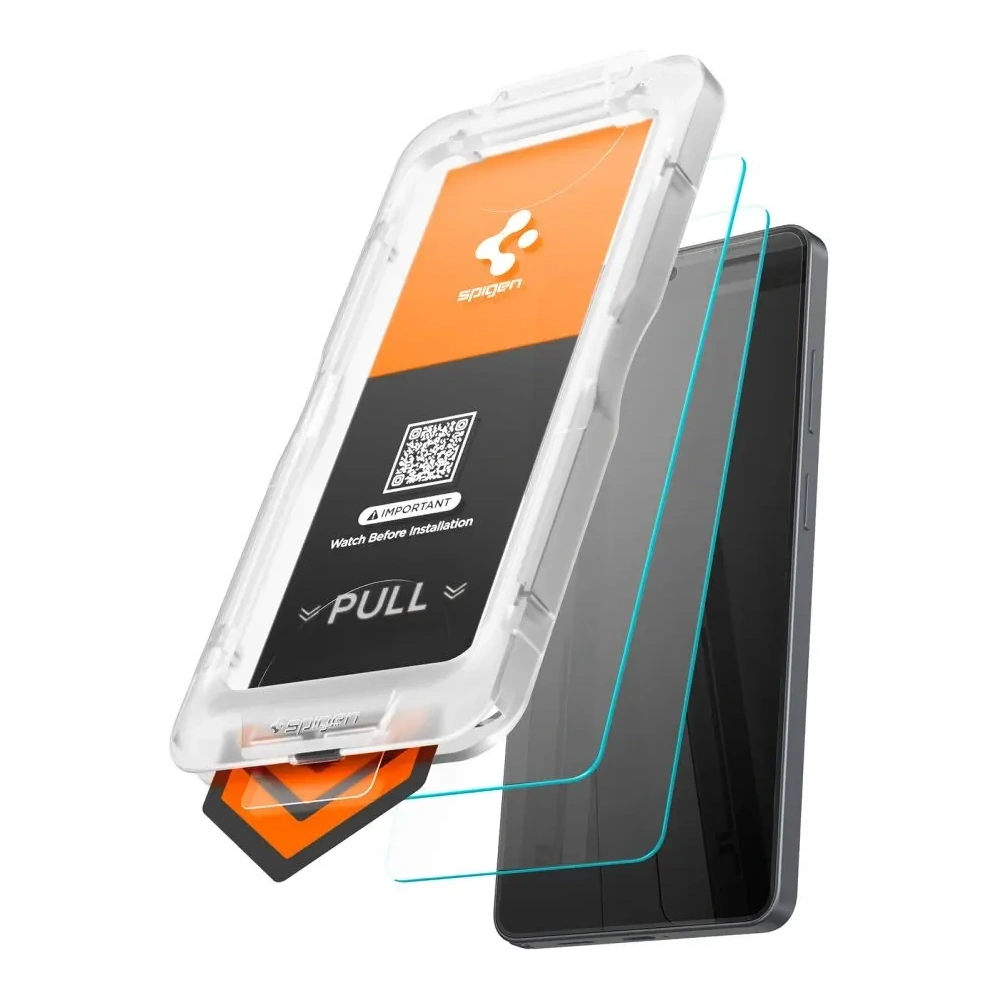
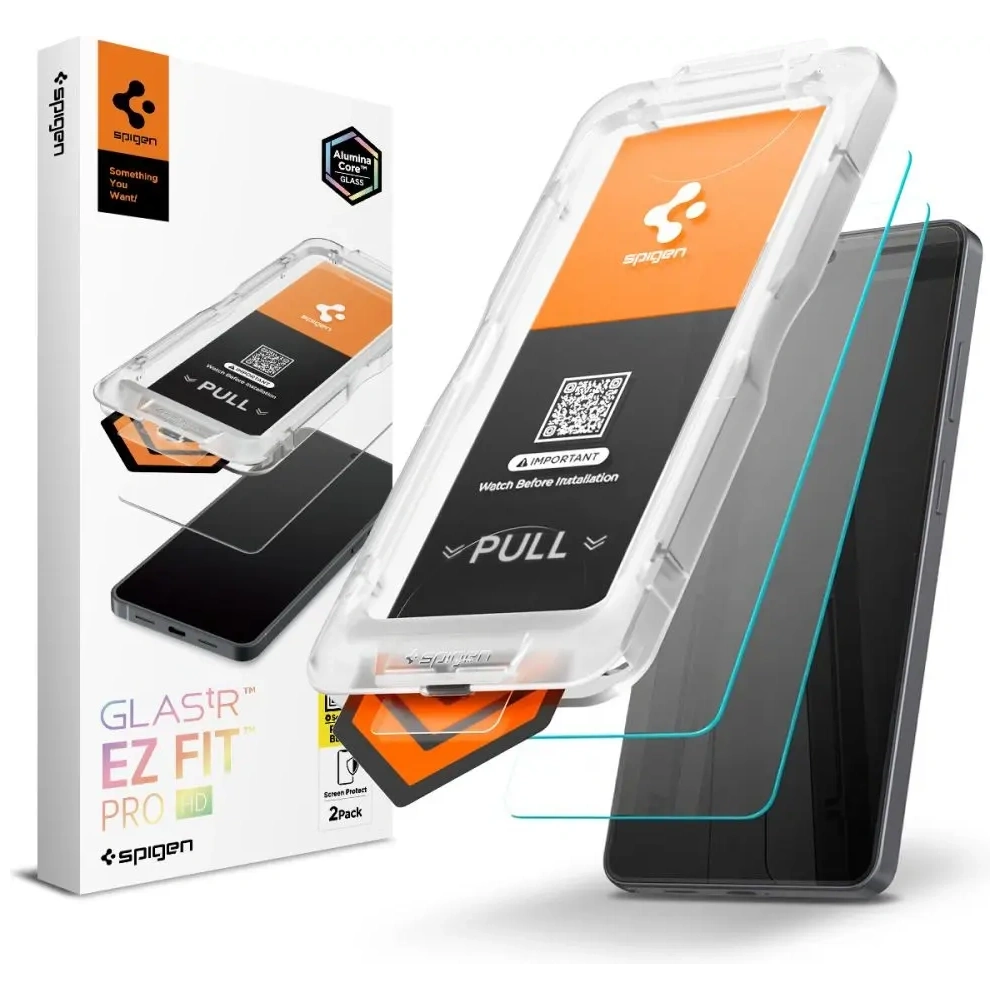
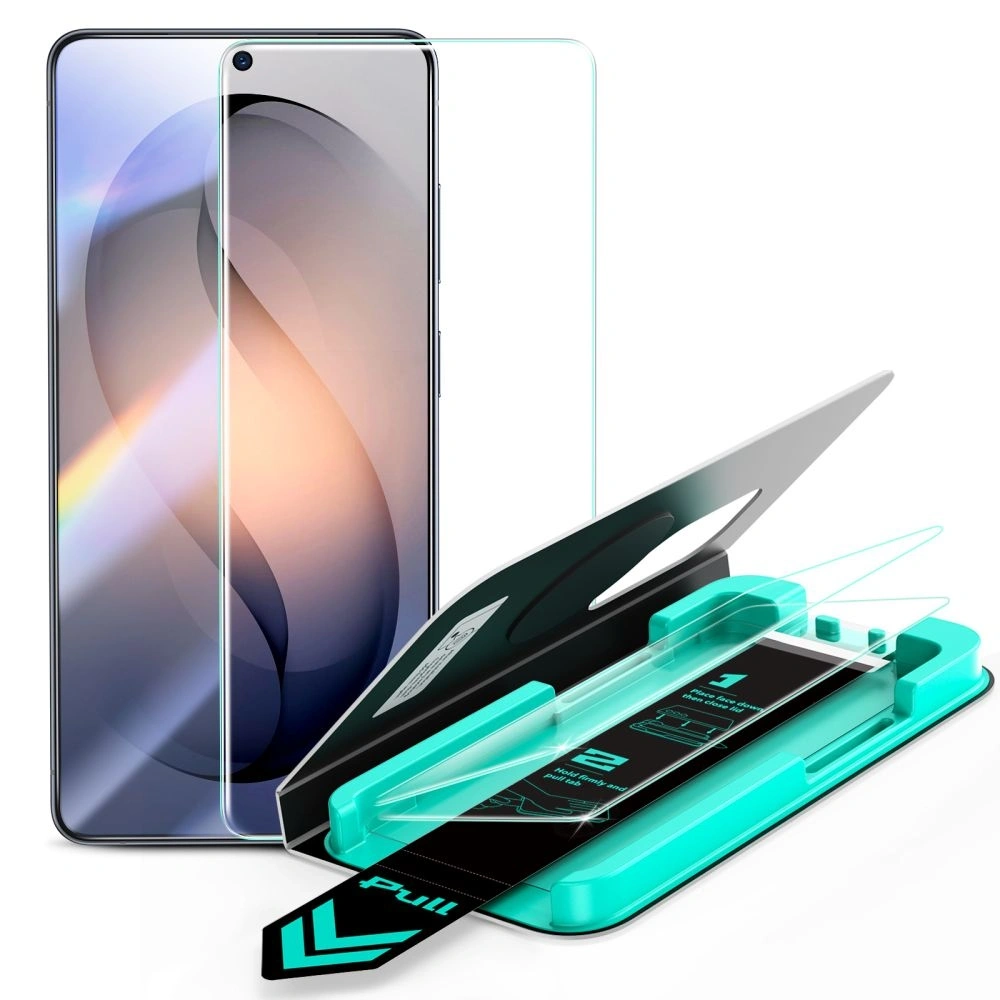
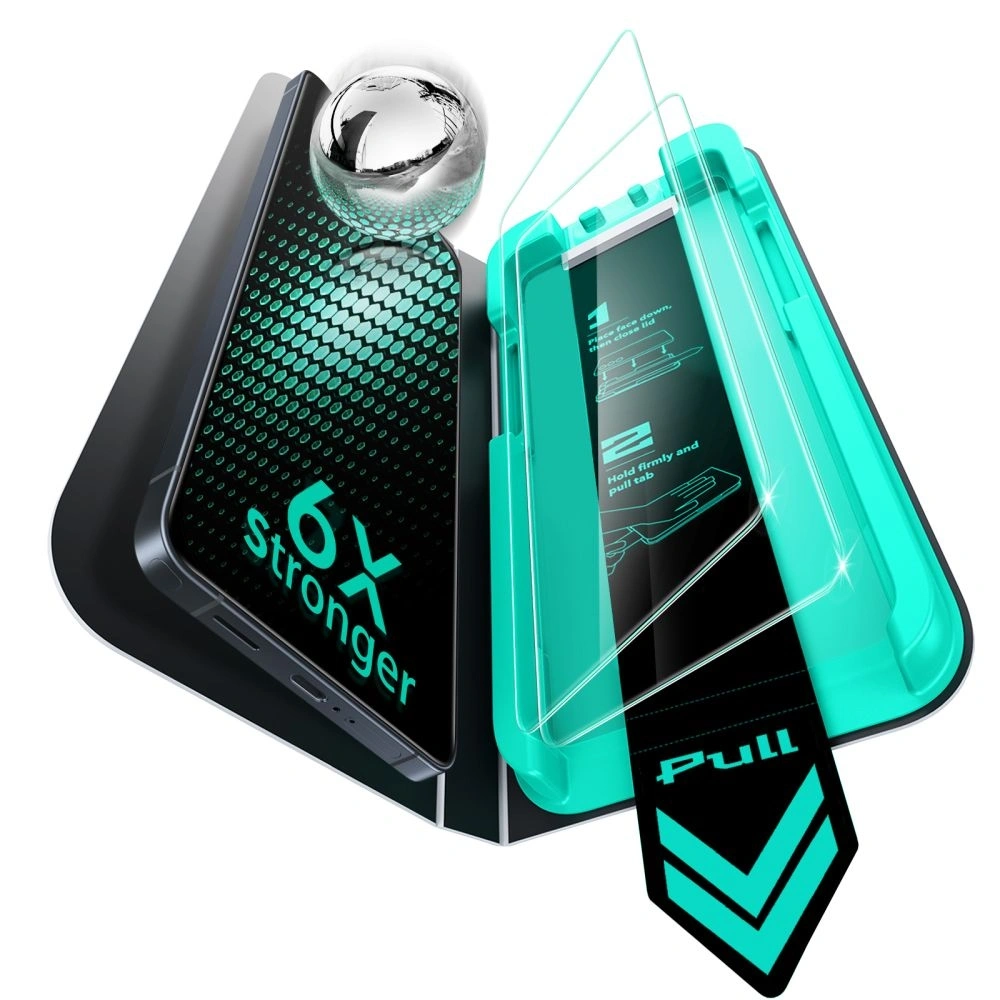
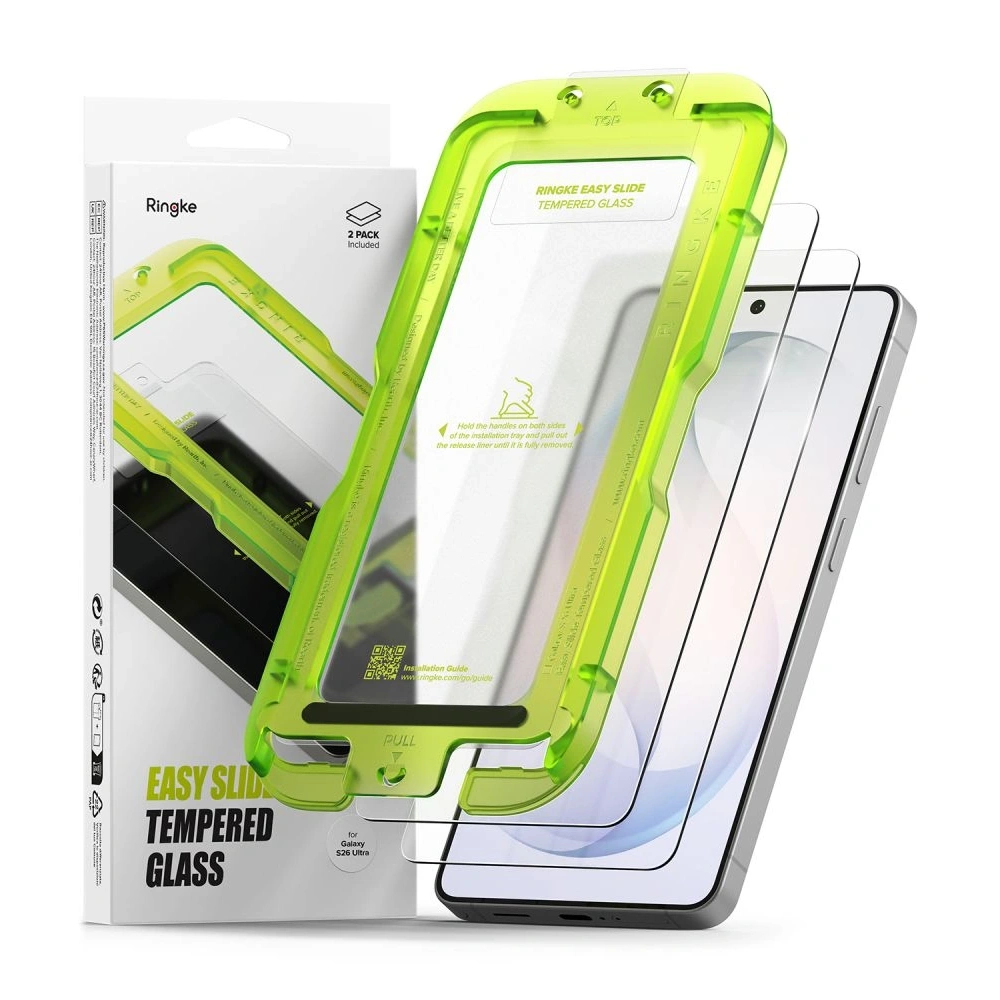
Price: 39 PLN Quick Set+ is tempered glass for iPhone 17 Pro Max with a practical installation frame, which allows you to apply the glass perfectly evenly and without air bubbles in seconds. The set includes two copies, so you have protection for longer. This is a great option for people who are afraid of self-installation. 👉 Best for: users who want to ensure easy and perfect application of the glass.
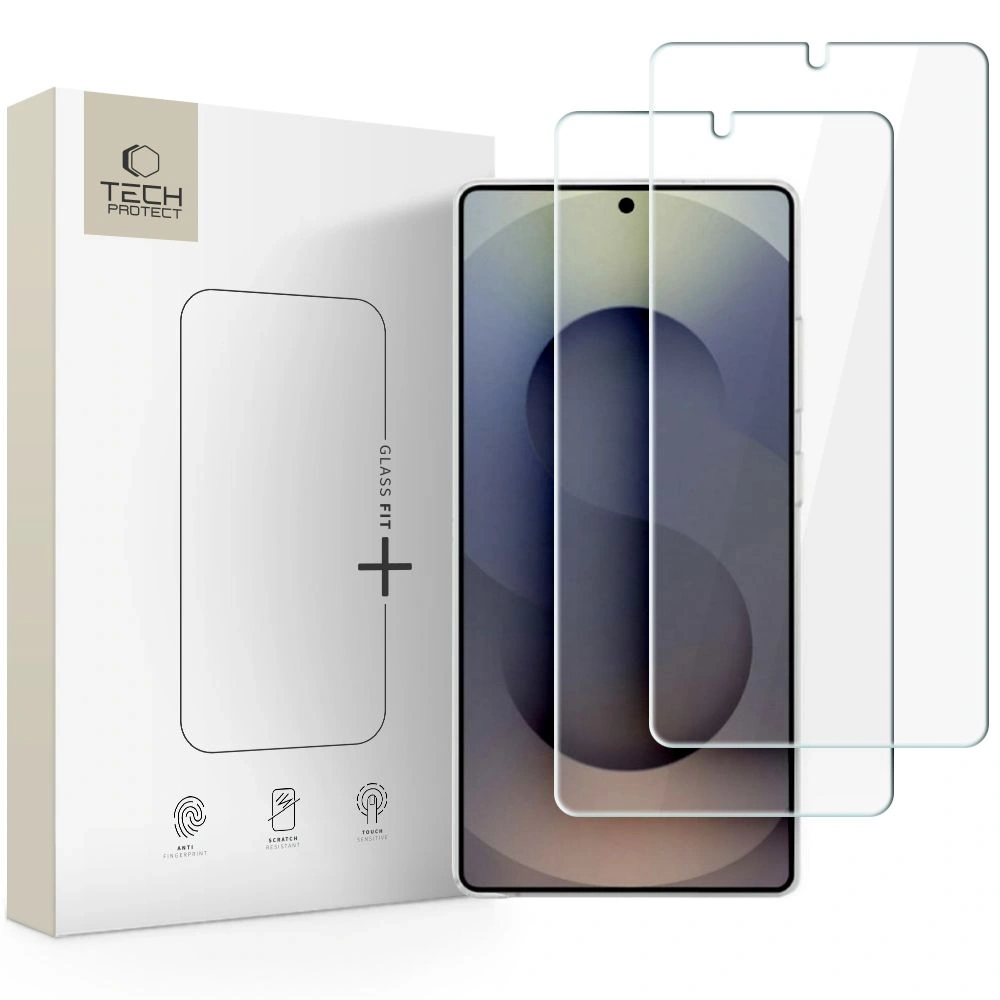
Tech-Protect Glass Fit+ 2-pack – the cheapest tempered glass for iPhone 17 Pro Max
Price: 19 PLN Glass Fit+ is a budget protective glass that, despite its low price, fulfills its function – it protects the screen from scratches and cracks. The set includes two pieces, making it a very economical solution. Although it does not offer the same durability as ESR or GrizzGlass, it is hard to find better protection for this price. 👉 Best for: people who want to spend as little as possible while ensuring that the iPhone 17 Pro Max screen will not be damaged.
GrizzGlass SecretGlass – matte privacy glass for iPhone 17 Pro Max
Price: 34.99 PLN GrizzGlass SecretGlass is an exceptional protective glass for iPhone 17 Pro Max, which features a matte finish and a privacy filter. This not only protects the user’s privacy but also reduces glare and makes the screen more readable in sunlight. The matte surface also means that fewer fingerprints are visible on the glass. 👉 Best for: people who often use their phone in public spaces and dislike the “mirror” effect on the screen.
How to choose the best protective glass for iPhone 17 Pro Max?
Choosing protective glass for the iPhone 17 Pro Max is not as obvious as it may seem. In stores, you will find dozens of models differing in price, type of coating, or installation method. To make the decision easier, we have prepared a short list of things to pay attention to:
Type of glass – tempered, matte, or privacy?
The most commonly chosen solution is 9H tempered glass for iPhone 17 Pro Max – it provides high resistance to scratches and cracks. If you often use your phone in public places, it is worth considering privacy glass, e.g., GrizzGlass SecretGlass, which limits the viewing angle of the screen. Alternatives are also matte glasses, which reduce glare and fingerprints.
Glass installation – self-installation or with a frame?
For many people, the biggest problem is correctly applying the glass without air bubbles. A solution is installation frame kits, such as Tech-Protect Quick Set+. Thanks to the special guide, installation is quick and precise, and the effect looks like after a professional service.
Additional coatings – oleophobic and anti-reflective
It is worth choosing glasses that have an oleophobic coating, e.g.,ESR Ultrafit Armorite Pro. Thanks to it, the screen stays clean longer and fingerprints are less visible. In matte models, you will often find an anti-reflective coating that improves visibility in sunlight.
Compatibility with cases – case-friendly
Not every glass works well with thicker cases. If you use rugged cases, pay attention to whether the glass is case-friendly – meaning it has slightly smaller dimensions so that it does not lift under the case frame. Products from brands like ESR or Bizon are designed with compatibility with cases in mind.
⭐ Does tempered glass for iPhone 17 Pro Max affect Face ID and touch?
No – good glasses, such asBizon Glass Clear 2 or ESR, are perfectly fitted and do not affect the operation of Face ID or touch sensitivity.
⭐ Which tempered glass for iPhone 17 Pro Max is the easiest to install?
The most convenient are kits with an installation frame, e.g., Tech-Protect Quick Set+ 2-pack. Thanks to the guide, the glass is applied evenly and without bubbles.
⭐ Does the camera glass from iPhone 16 Pro Max fit on 17 Pro Max?
No – the camera island on the iPhone 17 Pro Max is different, so the lens glasses must be specifically dedicated to this model.
The best way to apply tempered glass without bubbles is installation in a clean room (preferably in the bathroom after a shower), thorough degreasing of the screen, and evenly lowering the glass onto the display. Any bubbles should be gently pushed to the sides to ensure the adhesive adheres perfectly to the screen.
Why is it worth having glass on the screen?
The display is the most frequently damaged component of smartphones in Poland — according to the study Smart Barometer 2022 (Digital Care) about 75% of service events concern the screen. This is a real argument to proactively protect the display with glass or film and minimize the risk of costly repairs.
For new models, screen repair is an expense counted in hundreds or even ~2 thousand PLN. For example, an authorized Apple partner in Poland estimates the replacement of the iPhone 16 Pro display at 1,999 PLN (iPhone 16: 1,699 PLN; 16 Pro Max: 2,399 PLN)
In the case of Samsung Galaxy S25 Ultra an independent service provides an estimate: glass replacement 699 PLN, and full display replacement 1,049 PLN (prices are examples for one location in Poland). The glass/film itself costs several dozen–~200 PLN in popular retail chains — often significantly less than one display repair.
Types of glass/film – quick comparison
Type
What it is
Pros
Cons
When to choose
Tempered glass (case-friendly)
Rigid glass pane, shorter at the edges to avoid interfering with cases
Very good protection against impacts and scratches, “glass” glide, easy replacement
May crack on a strong fall
Universal protection for everyday use, with most cases
3D / Full Cover glass
Shaped glass with a frame, full front coverage
Factory-like appearance, better edge closure
Requires good fitting to the case
When you care about full coverage and aesthetics
Hybrid glass (flex)
Glass-polymer laminate, more flexible than glass
Thinner, “hugs” the edges, lower risk of pane cracking
Somewhat weaker in falls vs classic glass
Screens with slight curvature, when tempered glass “sticks out”
Better readability in sunlight, pleasant “glide” under the stylus
Minimally lower image sharpness
Outdoor use, gaming/stylus
Privacy glass (privacy)
Layer narrowing the viewing angle
Protects content from prying eyes
Darker image, lower brightness
Work in transport/publicly
Antibacterial glass
Coating limiting bacterial growth
Greater surface hygiene
Does not increase drop resistance
Shared devices, high hygiene
Blue light filter glass
Filter for part of the blue light spectrum
Potentially greater eye comfort in the evening
Slight “warming” of the image
Long reading/work after dark
Tip: if you use a case, choose glass “case-friendly” (does not end at the edge). For curved screens, the best options are 3D/Full Cover or hydrogel.
Instructions for installing tempered glass
1️⃣ Ensure a clean environment Start the installation in the bathroom right after a shower – the steam will absorb the dust floating in the air, preventing dirt under the glass. This simple trick significantly improves the quality of the application.
2️⃣ Thoroughly clean the screen Use the included alcohol-soaked cloth to remove greasy stains and dirt. Then polish the screen with a dry microfiber cloth so that the surface is perfectly smooth and shiny.
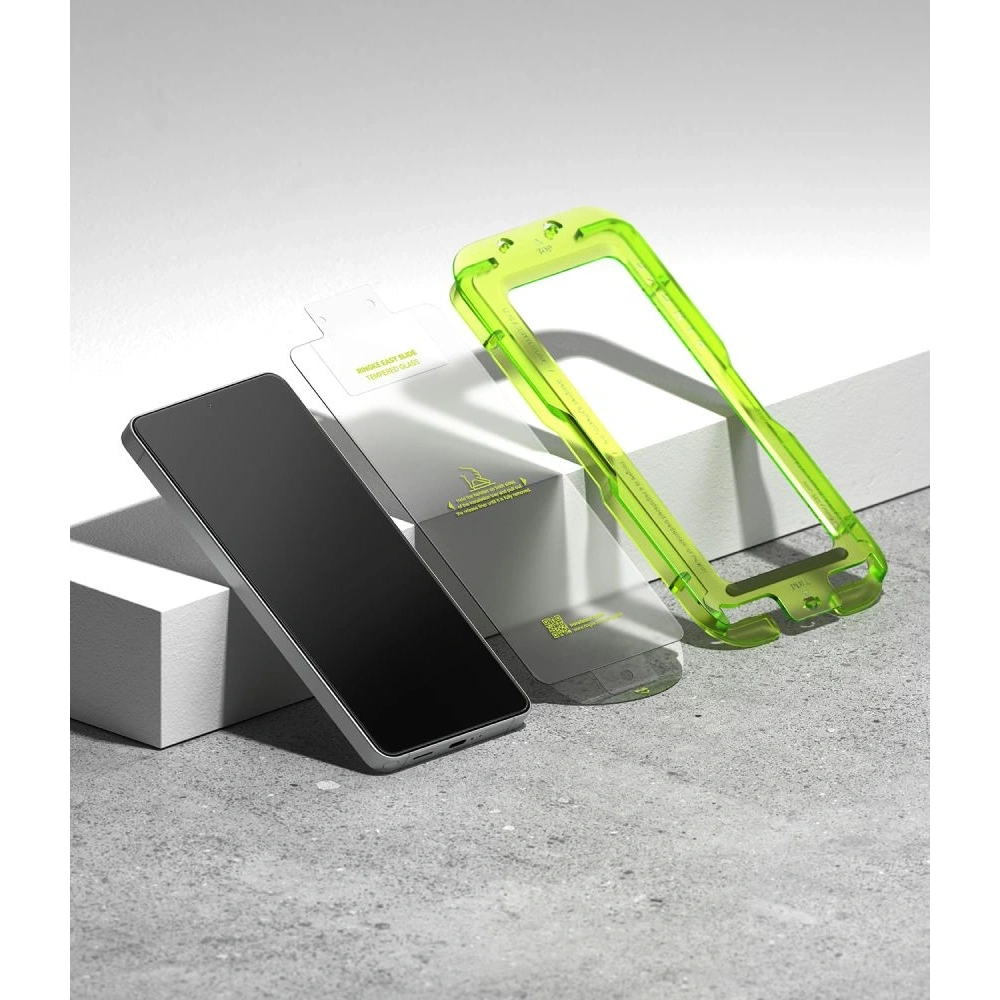
3️⃣ Precise fitting of the glass Holding the glass by the edges, position it as evenly as possible. If a positioning frame is included in the set – be sure to use it to perfectly center the glass relative to the screen.
4️⃣ Applying the glass and pressing Slowly lower the glass onto the display and let it adhere by itself. Then gently press it down, making circular motions for several seconds. This will ensure that the adhesive layer bonds well with the screen and maintains protection for a long time.
How to avoid air bubbles under the glass?
Install the glass in a humid room, e.g., in the bathroom after a shower.
Always use cleaning accessories from the set (cloths, dust stickers).
Don’t rush – precision and patience guarantee the best result.
Professional installation of glass and film in Koszalin and surrounding areas
If you don’t want to risk a failed installation or are afraid of air bubbles – use our professional service.
✅ Installation in a sterile anti-dust chamber with a HEPA filter – this prevents dust from getting under the glass, resulting in a perfect effect.
✅ Precise plotter for film – fitting for thousands of smartphone, tablet, and laptop models.
✅ Experienced technicians – for years they have applied glass not only to clients but also to friends, family, and… neighbors 😉.
✅ General FAQ – tempered glass
🌟 Can you apply tempered glass yourself? Yes, just clean the screen well, remove dust, and slowly lower the glass onto the display. In most cases, the installation is simple and takes a few minutes.
🌟 Can tempered glass be applied multiple times? No. Once removed, it loses its adhesive layer and will not stick well to the screen.
🌟 How to remove tempered glass from the phone? Gently pry up a corner with your nail or a plastic card and slowly lift the glass. Avoid sharp tools that may scratch the screen.
🌟 Will air bubbles under the glass disappear on their own? Microscopic bubbles usually disappear after 24–48 hours. Larger bubbles should be pushed out with a card wrapped in a cloth.
🌟 Protective film or tempered glass – what to choose?
Tempered glass provides better protection against impacts and falls.
Film is thinner, more flexible, and works well on curved screens.
🌟 What types of protective glasses are there?
classic tempered glass,
hybrid glass (flexible, crack-resistant),
privacy glass (protects privacy),
antibacterial glass,
matte and anti-reflective glass.
🌟 Does tempered glass worsen image or touch quality? Good quality glasses are practically unnoticeable – they do not change touch sensitivity or image clarity.
🌟 Does tempered glass protect against screen cracking? Yes – the glass absorbs the impact force, so in the event of a fall, the glass usually breaks instead of the phone screen.
🌟 How often should tempered glass be replaced? It is worth replacing it when you notice deep scratches or cracks. Cracked glass no longer protects the screen effectively.
✅ FAQ about the service at Home Screen (Koszalin and surrounding areas)
🌟 Does Home Screen only apply glass to phones? No – we also apply glass and films to tablets, smartwatches, and laptops.
🌟 Do you offer installation of hydrogel films? Yes, we offer hydrogel films that perfectly fit curved screens thanks to wet installation.
🌟 Can I come right after buying a new phone? Yes – many customers from Koszalin and surrounding areas choose to install glass or film on the day of purchasing the phone to immediately protect the screen.
🌟 Can I bring glass purchased from another store? Yes – we also install glass and films purchased outside of Home Screen.
🌟 How long does it take to install glass or film? Usually about 5–10 minutes. In the case of hydrogel films with plotter cutting – up to 15 minutes.
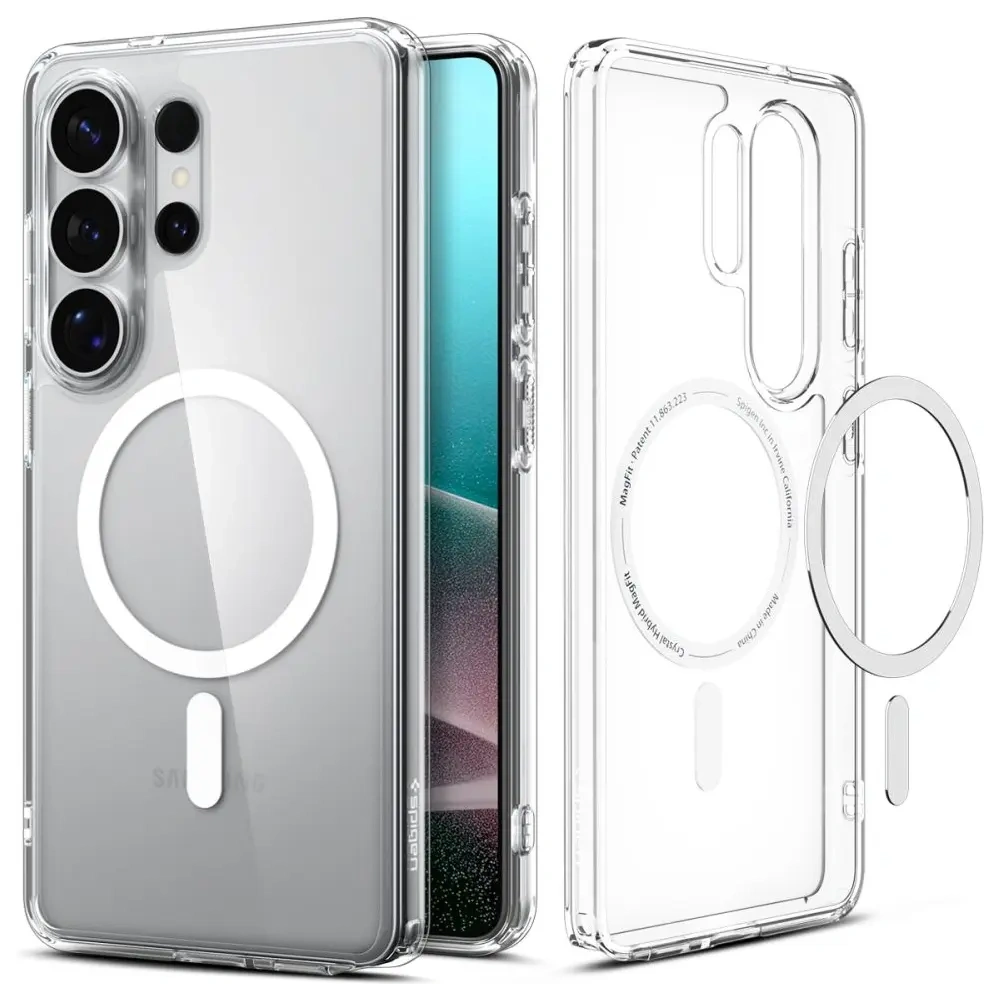
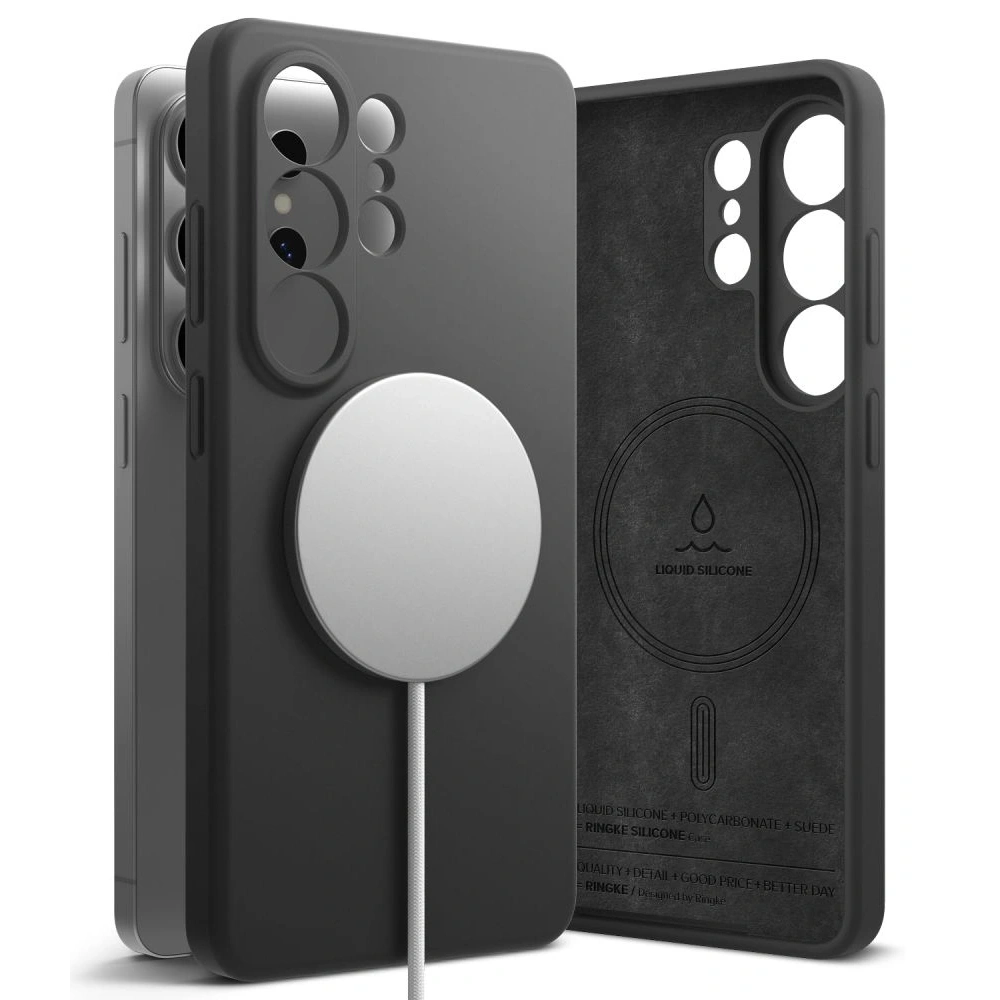
The best cases for iPhone 17 Pro and 17 Pro Max in 2025 are models with full compatibility with MagSafe/Qi2, enhanced camera protection, and a MIL-STD-810G certification. If you care about maximum protection, choose a rugged case (e.g., Ringke Onyx). For those who value style and lightness, transparent hybrid cases from ESR or silikonowe etui 3mk will work well, and for business, elegant cases from Guess and Dux Ducis will be ideal.
📊 TOP 5 categories of cases for iPhone 17 Pro / 17 Pro Max
Category
Main choice
Biggest advantage
Alternatives
Rugged and drop-resistant
Ringke Onyx Magnetic MagSafe
MIL-STD certification, MagSafe, matte finish
Bizon Case TUR, Tech-Protect Ion Carbon
Transparent and hybrid
ESR Classic Hybrid Kickstand MagSafe
Transparent design + built-in stand
Ringke Fusion Clear, Tech-Protect MagFlex, ESR set with glass
Silikonowe and lightweight
Ringke Silicone Magnetic MagSafe
Soft silicone + MagSafe ring
3mk Silicone Case, Mercury Semi Silicone
Elegant and business
Guess 4G Strap Triangle Logo MagSafe
Premium style, Guess logo, MagSafe
Dux Ducis Skin X Pro, Bizon Case Pocket
Functional with accessories
Tech-Protect MagRing MagSafe
360° rotating ring + MagSafe
Bizon Case Hybrid Ring
🛡️ Rugged and drop-resistant
If you are wondering, which case will best protect the iPhone 17 Pro Max from a fall from 2 meters, the answer is simple – rugged models. They offer the highest level of safety, meet durability standards, and protect not only the body but also the protruding camera module.
Ringke Onyx Magnetic MagSafe – certified military case. The manufacturer confirms drop resistance according to the MIL-STD-810G standard, which means the phone can withstand a fall from a height of 2 meters. The matte surface prevents slipping, and the built-in MagSafe ring allows for wireless charging and accessory use. This is the number one choice if you want uncompromising protection in everyday use.
Bizon Case TUR – solid, massive case designed for extreme conditions. With reinforced corners and a strong frame, it absorbs shocks, and the raised edges protect the screen and camera from scratches. This model will appeal to active individuals and those who often use their phone on construction sites, in workshops, or outdoors.
Tech-Protect Ion Carbon MagSafe – rugged protection in a sporty edition. The carbon texture gives it a modern character, and the strong back and frames effectively secure the device. The built-in MagSafe ensures that even thicker cases do not limit wireless charging functionality. This is a compromise between sturdiness and style.
👉 Best for: people who want to ensure that their iPhone 17 Pro/Pro Max survives accidental drops while not losing MagSafe functionality.
Many users ask: how to protect the iPhone 17 Pro without covering its elegant design? The answer is transparent cases and hybrids – lightweight, slim, and aesthetic.
ESR Classic Hybrid Kickstand MagSafe – transparent back that showcases the original color of the iPhone, and the built-in stand allows for convenient positioning of the phone vertically or horizontally. This is the ideal choice for video calls and watching videos.
Ringke Fusion Clear – classic clear case that combines ultra-thin construction with protection for the phone’s essential elements. Raised frames around the camera and screen minimize the risk of scratches, and flexible sides make it easy to put on and take off the case.
Tech-Protect MagFlex – an interesting hybrid: transparent back allows you to admire the design of the iPhone, while the colored frame adds a personal touch. This solution is for those who want to combine minimalism with a touch of style.
👉 Best for: people who value the appearance of their iPhone and do not want to cover it, but at the same time need practical protection.
Which case is the most comfortable for everyday holding and does not increase the weight of the phone? The answer: silicone. Soft, lightweight, comfortable to hold, and available in many colors.
3mk Silicone Case – minimalist, matte finish in classic black. Provides a pleasant grip and basic protection. Ideal for those who want a simple case without unnecessary additions.
Ringke Silicone Magnetic MagSafe – combines soft silicone with full MagSafe support. Available in pastel colors, e.g., light purple, making it a great fit for more creative users.
Mercury Semi Silicone MagSafe – a slightly harder construction than typical silicone cases. This provides better shock absorption, and the additional MagSafe support allows the use of magnetic accessories.
👉 Best for: people looking for a lightweight, comfortable case in attractive colors that won’t significantly increase the phone’s size.
Which case for iPhone 17 Pro Max best matches a suit or business meetings? Elegant models work best here – with a flap, leather finish, or branded design.
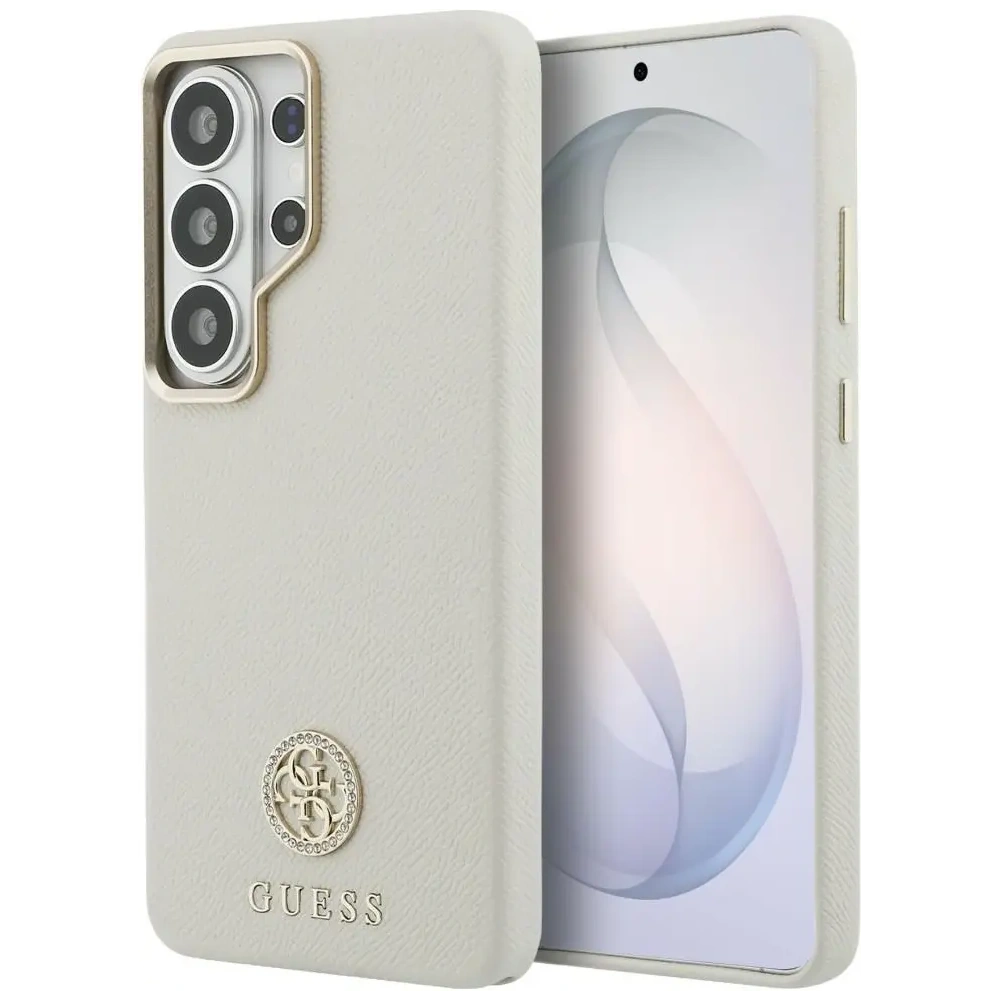
Guess 4G Strap Triangle Logo MagSafe – a case that combines fashion and technology. The black design, adorned with the Guess logo, makes the phone look prestigious. The built-in MagSafe ensures full functionality. The whole is complemented by a tasteful beaded keychain.
Dux Ducis Skin X Pro MagSafe – classic flap case that also serves as a wallet. Inside, you will find pockets for cards and cash, making it a great choice for business meetings.
Bizon Case Pocket– brown wallet case in a traditional style. The muted color and practical functionality make it suitable for those who appreciate classic and simplicity.
👉 Best for: business users and those who want to combine functionality with elegance.
Is there a case that not only protects the iPhone but also makes everyday use easier? Yes – these are models with additional features, such as rings, grips, or stands.
Tech-Protect MagRing (movable ring) – equipped with a 360° ring that rotates around its axis. It makes it easier to hold the phone with one hand, and when needed, it acts as a stand. Thanks to MagSafe, it does not lose compatibility with charging.
Bizon Case Hybrid Ring – massive hybrid case, where the ring serves as a finger grip and kickstand. This is a great solution for those who often watch movies or have video calls.
👉 Best for: users actively using their phone who want more convenience and safety during daily activities.
How to choose the right case for iPhone 17 Pro / 17 Pro Max?
Choosing a case for iPhone 17 Pro and 17 Pro Max is not easy — you will find dozens of models on the market: from thin clear cases to rugged covers. To make the decision easier, answer a few key questions:
🔄 Compatibility with the model
Is the case dedicated to 17 Pro or 17 Pro Max? – the difference in size and the layout of the camera island means that not every case will fit both versions.
New Action Button – make sure the case has a precise cutout for the additional button.
⚡ MagSafe and Qi2 support
Do you need fast wireless charging? If so, choose a case with a built-in MagSafe ring.
Do you use MagSafe accessories (car mount, wallet, power bank)? Without a magnetic ring, they may not work properly.
🛡️ Fall protection
Are you afraid of falls from heights? Opt for models with a MIL-STD-810G certification (e.g., Ringke Onyx).
Do you care about camera protection? Look for cases with raised frames around the camera module.
🎨 Materials and design
Silicone / TPU – lightweight, soft, comfortable for everyday use.
Natural or eco leather – elegance and prestige, often in flap versions.
Carbon / rugged – sporty character and maximum protection.
❓ Frequently Asked Questions (FAQ)
Which case best protects the iPhone 17 Pro Max from falls?
The safest are rugged cases with MIL-STD-810G certification, e.g., Ringke Onyx Magnetic MagSafe. Such covers withstand falls from heights of up to 2 meters and protect the camera thanks to raised frames.
Does the case for iPhone 17 Pro also fit the iPhone 17 Pro Max?
❌ No, it does not fit. The models differ in screen size and camera islands. Always choose a case dedicated to your iPhone 17 model to avoid looseness and misalignment of buttons.
Does a MagSafe case affect wireless charging?
✅ Yes, positively. A case with a built-in MagSafe ring stabilizes the phone’s position on the charger and allows for full Qi2 power usage. Also, check out MagSafe chargers that work perfectly with magnetic cases.
What materials best protect the iPhone 17 Pro / Pro Max?
TPU + PC (polycarbonate) – best for rugged cases, resistant to falls.
Silicone – lightweight and comfortable, good for everyday use.
Leather – elegance and prestige, though less resistant than rugged cases.
Hybrids (clear + frame) – a compromise between design and protection.
👍 Definitely yes. Sets like ESR Classic Hybrid + tempered glass provide full 360° protection and a guarantee of fit. Alternatively, you can choose separate glasses and protective films for iPhone 17 Pro/17 Pro Max.
Do thicker cases make it difficult to use the phone?
Not necessarily. Rugged models are larger, but modern constructions (e.g., Tech-Protect Ion Carbon) provide a comfortable grip and do not block MagSafe. If you care about slimness, choose transparent or silicone cases.
Do you like unique solutions and at the same time want to protect your device? The company Spigen, along with users, has prepared an interesting product that refers in design to the first iPhone. We are talking about the limited edition Classic One model for the iPhone X. You will find it below.
Perhaps you are wondering if it is worth investing in a waterproof case. A smartphone case is particularly needed now, during the holiday season. You may not realize that while traveling, for example, to the seaside, your smartphone is exposed to many factors that are not necessarily beneficial for it. One could even say that if you do not have adequate protection against water, sand, and sun, and if your phone is valuable to you, it might be worth considering leaving it at home or deep in your bag. But here, waterproof case manufacturers come to our aid.
Water-resistant vs. waterproof – are there any differences?
At the beginning, it may be worth considering the difference between water resistance and waterproofing. Water-resistant means that it is resistant to water action, to seepage. A waterproof item, on the other hand, is designed not to allow water to pass through and to prevent it from getting inside.
Why does a smartphone need a waterproof case?
If our device is not water-resistant, the matter is simple. Its task is to protect the phone from unwanted factors such as flooding. Its task is also to provide you with peace of mind knowing that your phone is well protected. And even if it falls into the sea, pool, or river, it should not be damaged in terms of water flooding.
And if you have a water-resistant device and think that a waterproof case is unnecessary for you, I must sadly state that you are mistaken. On the surface of the smartphone, we find many openings through which water can enter the device. These include: the charging port, headphone jack, speakers, and microphone. Although all the openings are secured with seals and impermeable foams, as we know, all of this can fail. And as we can unfortunately guess, manufacturers do not want to repair supposedly water-resistant devices at their own expense and often blame the user for using the smartphone improperly.
What happens to a smartphone after flooding?
One of the variants is a short circuit that can occur due to the flow of current through the integrated circuits. We often do not realize that after flooding, a corrosion process may also begin on the device’s motherboard, which can effectively prevent the use of the smartphone and consequently force us to replace the device with a new one.
The impact of water type on damage
Are you wondering if the type of water matters when flooding? After all, water is water. And here, unfortunately, a problem arises. Saltwater is a great conductor of electricity. It also significantly accelerates the corrosion process of metals (rusting).Freshwater is a bit less dangerous as it conducts electricity less effectively, but we cannot say that this water is safe, as it reacts with metals, leading to oxidation or corrosion.
So how can you effectively protect yourself from flooding?
The most important and best protection against water is waterproof cases. In our assortment, we have Ghostek Nautical cases (for many smartphone models) and Choetech waterproof case. They will allow you to use your smartphone carefree at any time while providing protection against unwanted external factors.
Ghostek Nautical case is a great solution if you spend a lot of time outdoors and expose your smartphone to various weather conditions. It effectively protects the device from water, dust, sand, and mud, while also looking good. Additionally, the Ghostek Nautical case has reinforced corners, which will also effectively protect against drops. Despite its protective features, the case is relatively slim, has a trendy design, and allows for comfortable use of the smartphone.
On the other hand, the Choetech waterproof case is an ideal solution if you do not need dedicated solutions and would also like to take documents with you during contact with liquids. The Choetech case ensures waterproofing up to 30 meters underwater, which means that your items will not get flooded during normal swimming. The material from which the case is made does not affect touch sensitivity, so you do not have to worry about damaging your smartphone when constantly taking it out of the case, for example, with wet hands, as there is no need to do so. Additionally, the case comes with a shoulder strap and lanyard, which further enhances user comfort.
Waterproof cases – although not yet fully appreciated in Poland, are worth attention. Thanks to their features, we can enjoy the beauty of our surroundings without worrying about sand, water, or other unfavorable factors. So if you dream of a vacation where you can enjoy the pleasures of life and avoid worries, be sure to equip yourself with a waterproof case!
Are you tired of ordinary photos taken with your smartphone? Would you like to achieve something impressive without the need to invest in a good camera? Choetech comes to the rescue with clip-on lenses for your phone. The set includes a wide-angle lens, a so-called “fish-eye,” and a macro lens. Choetech smartphone lenses are made of high-quality glass that reduces reflections. Additionally, the product comes with caps to prevent dirt, and the whole set is sold in a practical case. It is also interesting that the lenses are universal, allowing them to be used with almost any smartphone available on the market.
Wide-angle lens:
This type of lens is designed to allow us, among other things, to photograph large objects from a short distance. Choetech wide-angle lens allows you to capture a much wider area in the photo and includes many more elements than a standard lens. The design of such a lens allows for a field of view of over 60 degrees. It is particularly suitable for landscape, architecture, and interior photography.
Fish-eye lens:
This is a lens with a very wide field of view, also known as ultra-wide-angle. Such lenses render reality strongly distorted, making them mainly suitable for artistic photography. The field of view of this type of lens is 180 degrees. Choetech has ensured that the fish-eye lens allows us to achieve uniquely rounded images that will take us to another world!
Macro lens:
In this case, Choetech focused on enabling us to take very sharp photos from a close distance. Another important feature of this lens is the accurate reproduction of image geometry. Choetech macro lens is perfect for photographing nature, such as flowers, insects, etc. It will allow us to meticulously reproduce the appearance and characteristics of the captured objects.
Choetech smartphone lenses will work really well for you if you expect something more from your photos without the need to invest a lot of money in professional equipment. Small, unassuming, compact – these are just some of the superlatives that can be attributed to Choetech lenses. Want to see what other advantages these lenses hide? Order, and you will see for yourself!
The photographs included in the article do not depict images taken with the described lenses; they are merely a presentation of the capabilities of a given type of lens.