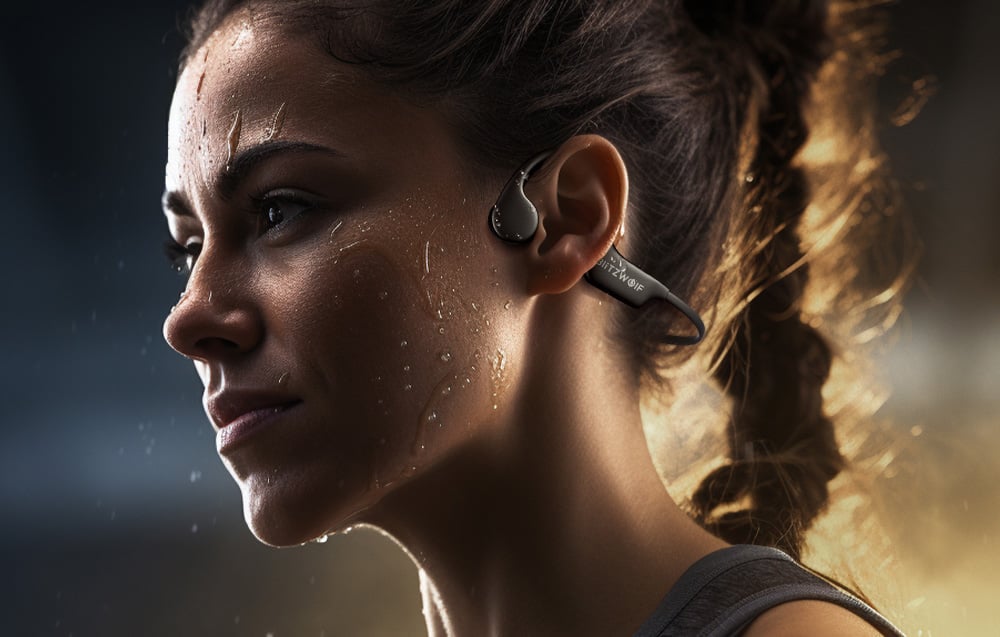
The best headphones for running are those that do not block the ear. You can hear the music, but also the car, the bike, and the runner behind you. For outdoor running, choose open-ear headphones: with a clip on the outer ear, with a hook behind the ear, or with bone conduction.
Our pick for most runners is the UGREEN FitBuds WS213: a hook behind the ear, IPX5 resistance, and up to 8 hours of playtime on a single charge. If you prefer something smaller, choose the QCY Crossky C30S headphones with a clip.
Below we explain the differences between the three types of open headphones, what waterproof ratings mean, and whether you can compete in races with headphones. We also compare seven models available in the store.
Why open headphones for running, and not in-ear ones
Regular in-ear headphones, such as AirPods Pro, block the ear canal. Additionally, some of them have active noise cancellation. On a treadmill, this is an advantage, but on the street or bike path, you hear your surroundings much worse, unless you turn on the ambient mode.
The risk is not exaggerated. A study published in the journal Injury Prevention described 116 accidents in which pedestrians wearing headphones were struck by a train or another vehicle. In nearly one-third of the cases, a warning signal, such as a horn or train siren, was heard before the incident. The authors do not claim that the headphones themselves were to blame, but point to distraction as a possible reason.


On the street and path in the city, you need to hear cars, bicycles, and scooters. Photos: Trac Vu, Zoshua Colah / Unsplash.
Open headphones play next to the ear canal, not in it. Sound from the environment reaches the ear unobstructed. There is also a second advantage: nothing presses on the ear canal, which many people appreciate during long runs.
Types of running headphones: clip, hook, or bone conduction
All three types leave the ear open. They differ in how they hold on the head and where the sound comes from.
| Feature | With clip (ear-clip) | With ear-hook | With bone conduction |
|---|---|---|---|
| How it holds | clip tightens on the edge of the auricle | band wraps around the ear from behind | band around the back of the head |
| Where the sound comes from | speaker at the entrance to the ear | speaker at the entrance to the ear | vibrations through the skull bones |
| Stability while running | good | best | good |
| Comfort with glasses and hat | ✅ | depends on the model | ❌ band interferes with the hood |
| Sound | full | full | weaker bass |
| Charging case | ✅ | ✅ | ❌ charging with cable |
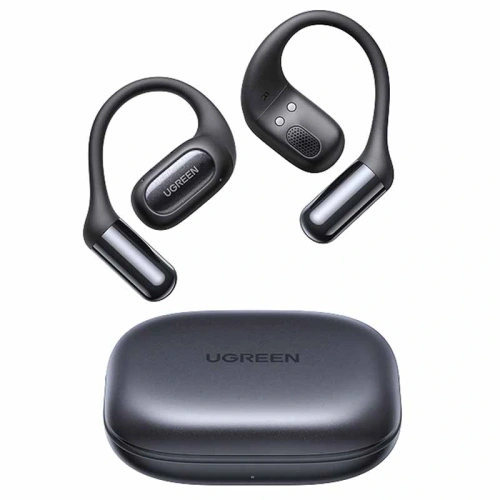
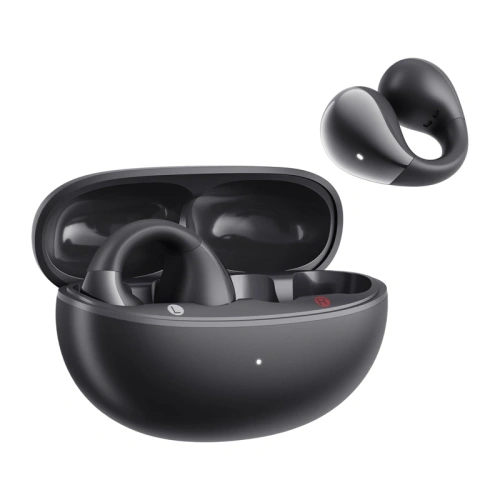
On the left headphones with ear-hook, on the right with clip on the edge of the auricle.
Headphones with clip are the smallest and lightest, weighing about 5 g each. You slide them onto the edge of the ear like a ear cuff. They are suitable for calm running and everyday use, but may not fit well on a large ear.
Earhook headphones wrap around the entire ear from the back. They are harder to shake off during fast running, jumping, or interval training. They are slightly larger than clips.
Bone conduction headphones do not cover the ear. The band rests on the auricle, and the transducers sit on the cheekbones in front of the ear and transmit vibrations through the skull bones. The ear canal is completely free, but the bass is weaker, and at higher volumes, a slight tickling sensation can be felt.
Water resistance IPX: what do IPX4, IPX5, and IPX8 mean
Running headphones have constant contact with sweat and often with rain as well. Therefore, pay attention to the IP rating according to IEC 60529. The letter X means that dust resistance has not been tested.
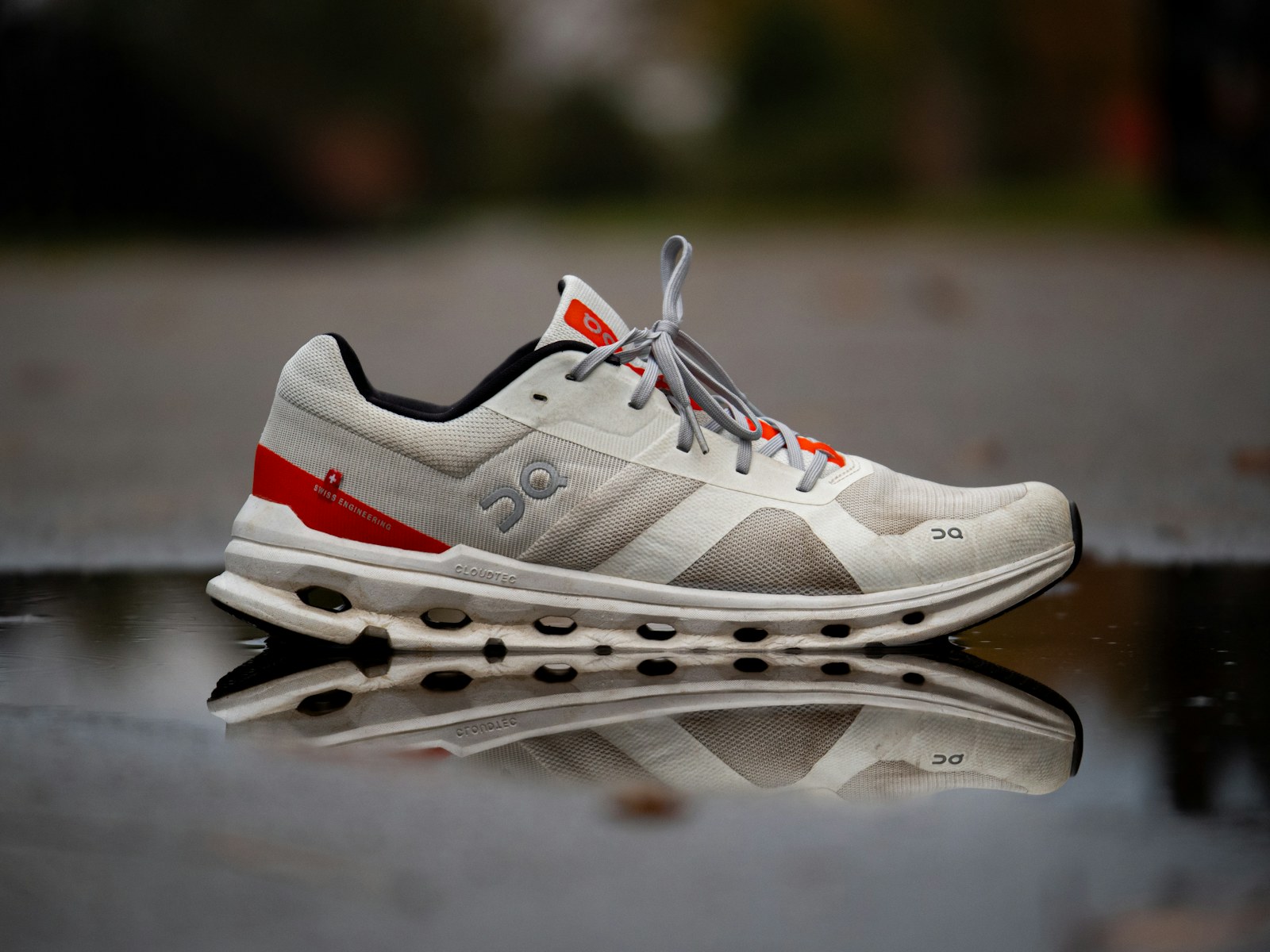
In autumn, running headphones must withstand rain and sweat. Photo: Idean Azad / Unsplash.
- IPX4: resistance to splashes from any direction. Sufficient for sweat and light rain.
- IPX5: resistance to water jets from a nozzle. Headphones will withstand heavy rain and rinsing under a tap.
- IPX7: immersion up to 1 m for 30 minutes.
- IPX8: immersion longer or deeper, under conditions specified by the manufacturer.
One trap: IPX7 and IPX8 classes do not automatically include IPX5. These are separate tests. Headphones resistant to immersion do not have to withstand a stream of water unless they have a dual rating, e.g., IPX5/IPX7.
Can you run in headphones during competitions?
It depends on the race regulations. The World Athletics rules prohibit headphones and players for athletes competing in the elite category. Amateur runners may be allowed, advised against, or prohibited from using headphones, especially when the route is not closed to traffic.


The decision about headphones during competitions is determined by the race regulations. Photos: Mārtiņš Zemlickis, Miguel A Amutio / Unsplash.
In Poland, each race determines this itself. The regulations of the PHO3NIX KIDS Half Marathon 2026 in Poznań explicitly prohibit running with headphones under the threat of disqualification. The regulations of the Poznań Marathon and the Toruń Marathon 2026 do not mention headphones at all. Check the regulations of your race before the start.
In Great Britain, England Athletics states that in shared routes with other users, in-ear headphones are prohibited, while bone conduction headphones are the only ones allowed in all street races. The regulations do not explicitly mention clip-on headphones, so their status in British competitions is unclear.
Best running headphones: our picks
All technical data in the comparison comes from the manufacturers. Where the manufacturer does not publish them, we indicate that these are retailer data.
1. UGREEN FitBuds WS213: best for running
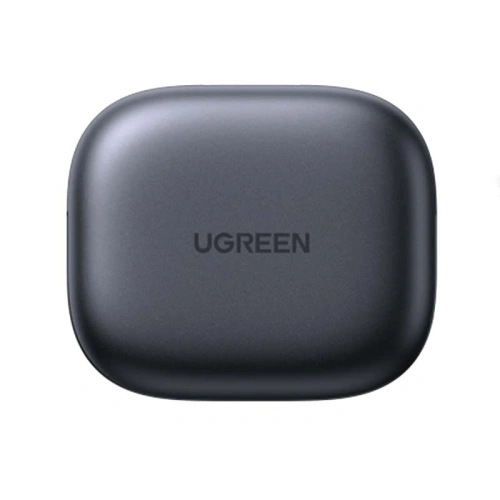
UGREEN FitBuds WS213: soft ear hook and charging case.
Our choice for most runners. UGREEN FitBuds WS213 feature a soft ear hook made of titanium alloy wire that returns to shape. This design holds securely during fast running and intervals.
- Ear hook, ear remains open
- Up to 8 hours on a single charge, up to 28 hours with the case
- IPX5 resistance
- 4 microphones with noise reduction for calls
- Bluetooth 6.0, connection with two devices
- App with 8 equalizer settings and touch configuration
Advantages:
- Longest playtime on a single charge among earbuds with a case
- Stable hook for fast running
Disadvantages:
- Larger than clip-on earbuds
- Hook may interfere with glasses with thick temples
2. QCY Crossky C30S: best clip-on headphones

QCY Crossky C30S: clip-on earphone with a wireless charging case.
QCY Crossky C30S are clips that weigh 5 g each. They have the longest working time in the set with the case: 40 hours, which means a week of daily workouts without looking for a charger. The case also charges wirelessly.
- Clip on the edge of the ear
- Up to 6 h on a single charge, up to 40 h with the case
- IPX5 resistance
- LDAC codec and Hi-Res Audio certification
- Bluetooth 6.0, connection with two devices
- U nas w czterech kolorach: czarnym, białym, srebrnym i czerwonym
Zalety:
- Bardzo lekkie i małe
- Ładowanie bezprzewodowe etui
Wady:
- Kodek LDAC trzeba włączyć w aplikacji, domyślnie jest wyłączony
- Klips trzyma słabiej niż zaczep przy sprintach
3. UGREEN ClipBuds Pro WS218: z LDAC i ANC
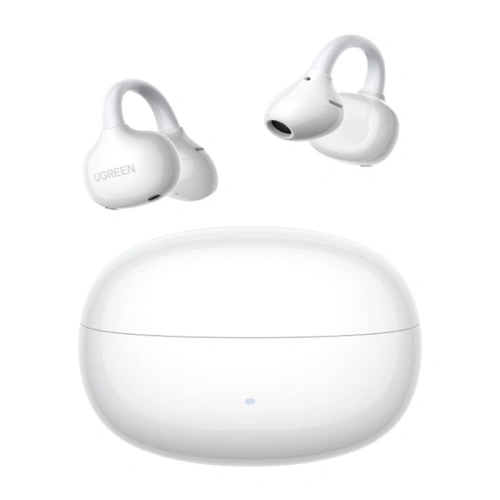
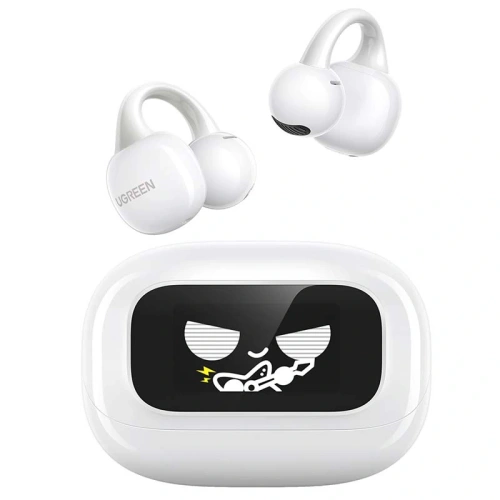
Po lewej UGREEN ClipBuds Pro WS218, po prawej ClipBuds WS208 z ekranem na etui.
UGREEN ClipBuds Pro WS218 are headphones with a clip that have the richest equipment in the comparison. They have the LDAC codec, 6 microphones, and adaptive noise cancellation. In open headphones, it mainly suppresses low sounds, e.g. the noise of public transport.
When running on the street, turn off the noise cancellation in the app. That’s exactly why you choose open headphones, to hear your surroundings.
- Clip on the edge of the ear
- Up to 7 hours on a single charge, up to 32 hours with the case
- IPX5 resistance
- LDAC, AAC, and SBC codecs
- Bluetooth 6.0, connection with two devices
- App with 8 equalizer settings
A simpler alternative is UGREEN ClipBuds WS208. It does not have noise cancellation or LDAC, but it has a case with a color screen for changing tracks and volume, IPX5, and up to 30 hours of playtime with the case.
Advantages:
- 6 microphones with wind noise reduction for calls
- Noise reduction for the city, turned off for running
Wady:
- Redukcję hałasu do biegania po ulicy trzeba wyłączać
4. QCY Crossky C50: z czterema mikrofonami
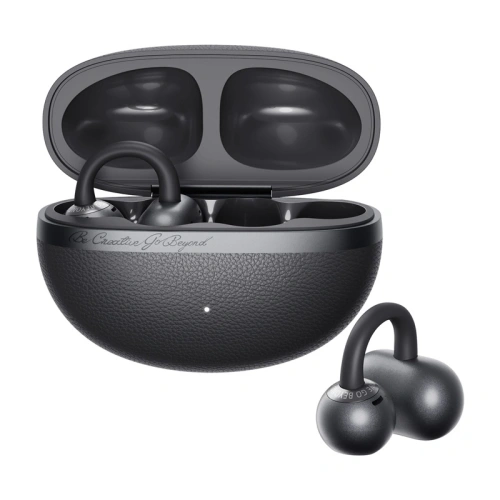
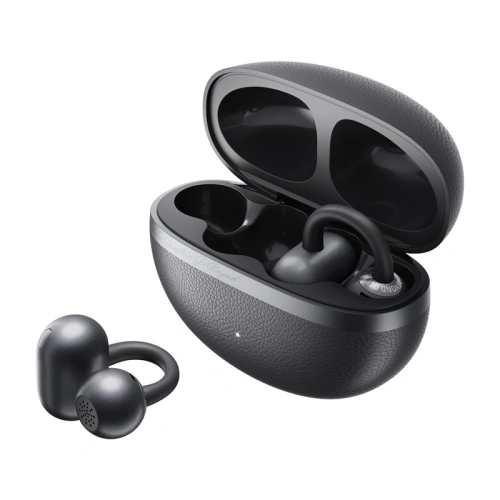
QCY Crossky C50: klips z drutem tytanowym i etui ładujące.
QCY Crossky C50 to klipsy z elastycznym drutem tytanowym. Producent deklaruje, że wypuszczają na zewnątrz o 90% mniej dźwięku niż typowe słuchawki otwarte. To ważne, bo słuchawki otwarte z natury są słyszalne dla osób obok.
- Klips na krawędź ucha
- Do 7,5 h na jednym ładowaniu, do 35 h z etui
- Odporność IPX5
- 4 microphones with wind noise filter
- Bluetooth 6.0, wireless charging case
Advantages:
- Wind filter in microphones, useful for conversations on the go
- Long battery life for a clip
Disadvantages:
- Clip less stable than a hook at a fast pace
5. Baseus Eli Sport 1: two ways to wear
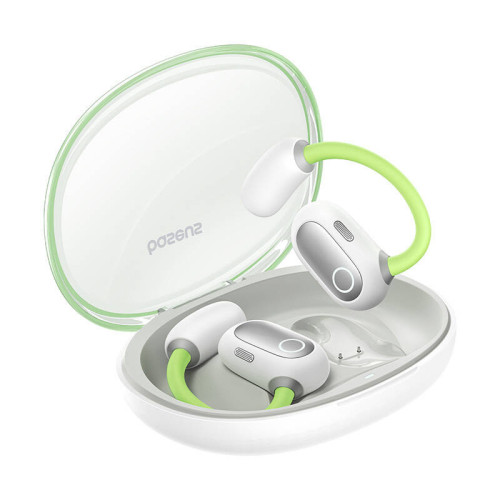
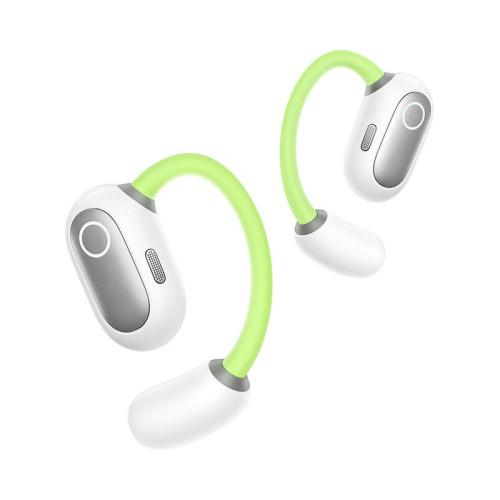
Baseus Eli Sport 1: open headphones with a flexible hook.
Baseus Eli Sport 1 can be worn in two ways: as two separate headphones or connected with a neckband. With the neckband, if a headphone falls out of your ear, it stays on your neck instead of on the pavement.
- Open headphones, separately or with a neckband
- Up to 7.5 hours on a single charge (at half volume), up to 30 hours with the case
- IPX4 resistance
- 16.2 mm drivers
- Connection to two devices, Baseus app
Advantages:
- The neckband prevents losing the headphones
- Large drivers
Disadvantages:
- Only IPX4, meaning resistance to sweat and light rain, not heavy downpours
6. UGREEN HiTune S3: simple, without an app
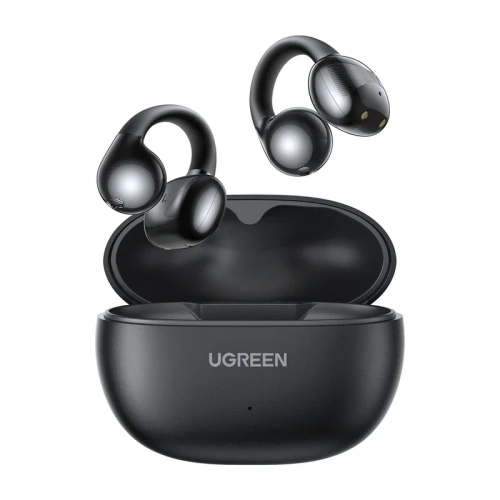
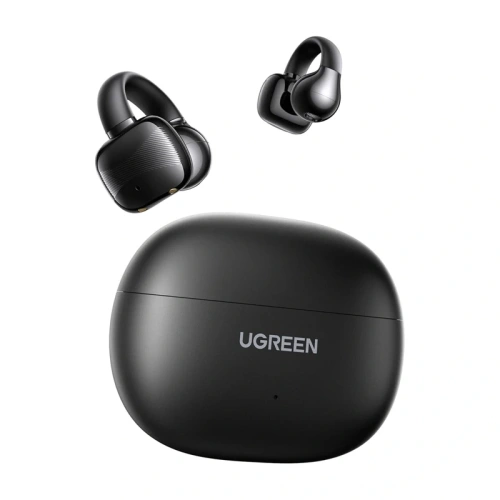
UGREEN HiTune S3: klipsy w kształcie litery C.
UGREEN HiTune S3 to proste klipsy ważące 5,3 g na sztukę. Nie mają aplikacji, steruje się nimi tylko dotykiem. Dla wielu osób to zaleta: zakładasz i biegniesz.
Według UGREEN klips pasuje na ucho o rozmiarze do 2,5 cm. Na większym uchu może się więc nie zmieścić.
- Klips na krawędź ucha
- Do 7,5 h na jednym ładowaniu, do 30 h z etui
- Odporność IPX5
- Bluetooth 5.4
- U nas w trzech kolorach: czarnym, białym i fioletowym
Zalety:
- Light and easy to use
- 15 minutes of charging provides 2 hours of playtime
Cons:
- No app and equalizer
- May not fit large ears
7. BlitzWolf BW-BTS8: bone conduction headphones with music memory
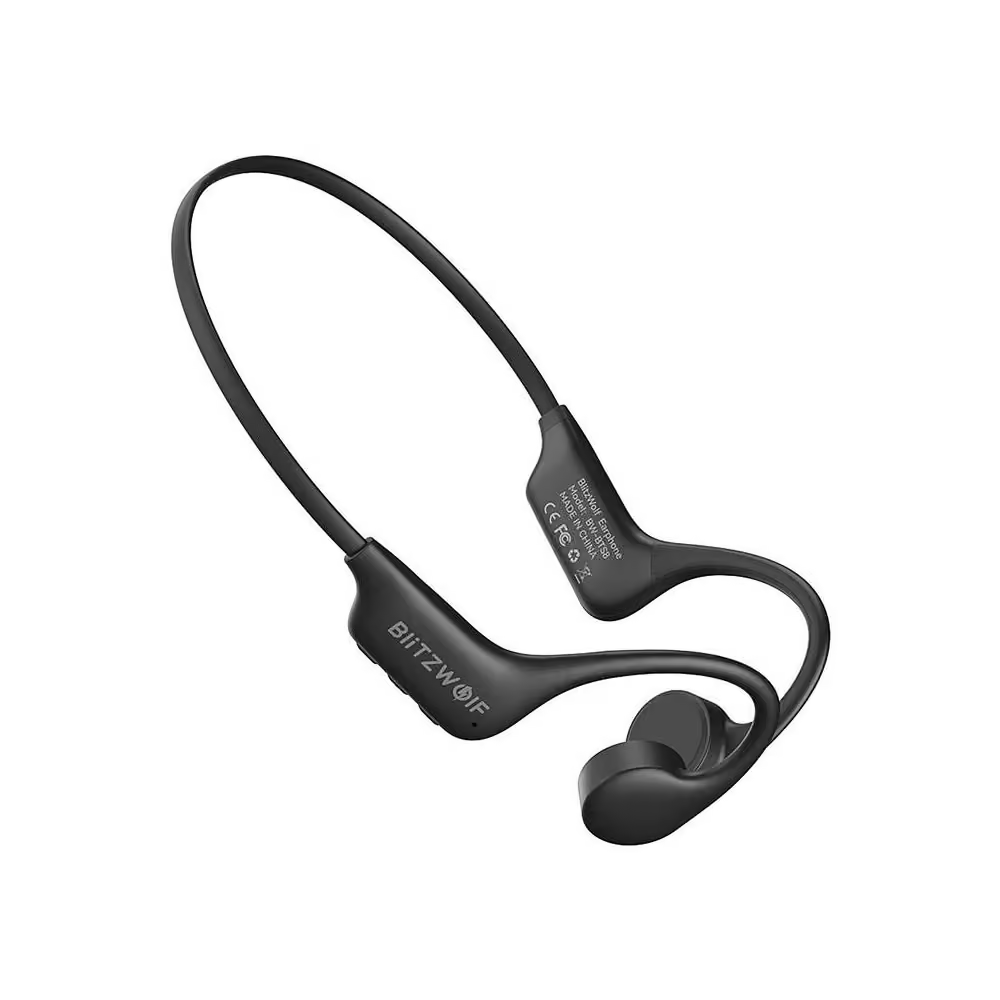
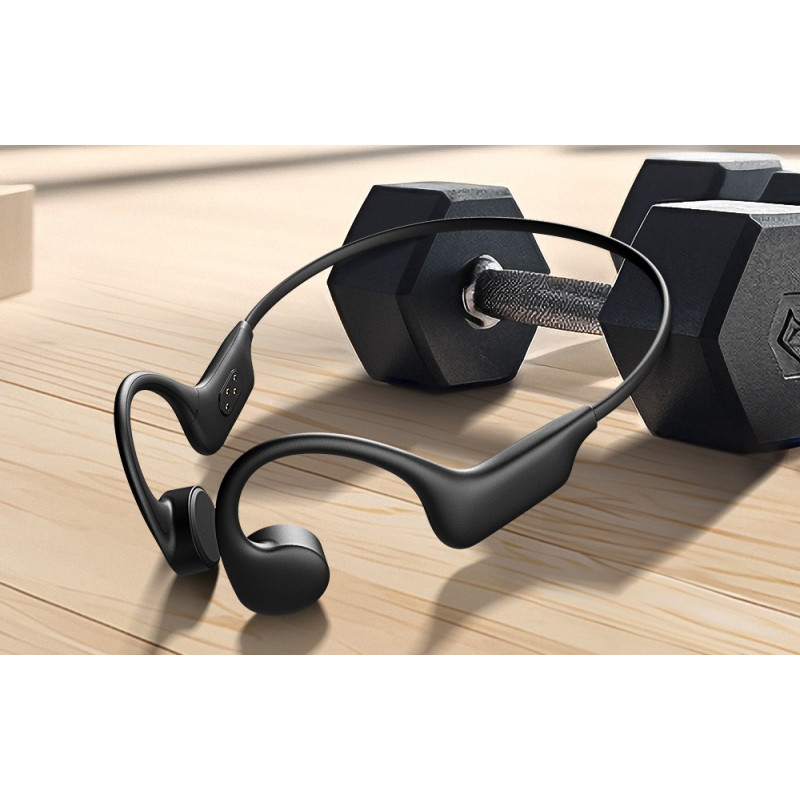
BlitzWolf BW-BTS8: band around the back of the head, transducers on the cheekbones.
BlitzWolf BW-BTS8 is the only bone conduction headphones in the comparison. Their distinguishing feature is built-in 32 GB memory. You upload music and run without your phone, so you don’t need an armband or belt.
The manufacturer does not publish the specifications for this model, so the data below comes from the seller.
- Bone conduction, band around the back of the head
- Up to 10 hours of operation, charging via cable
- IPX8 resistance (immersion conditions not specified)
- 32 GB memory for music files
- Physical buttons instead of touch panels
- Weight 28 g
Advantages:
- Running without a phone
- Ear completely free
Disadvantages:
- Weaker bass than in clip-on headphones with a hook
- The band interferes with a hood and high collar
[hs_products ids=»121271,125496,126455,115383,140613,105183,66297″ cols=»4″]
Słuchawki do biegania w tabeli
| Model | Typ | Bateria (słuchawki / z etui) | Wodoodporność | Połączenie z 2 urządzeniami | Aplikacja |
|---|---|---|---|---|---|
| UGREEN FitBuds WS213 | zaczep | 8 h / 28 h | IPX5 | ✅ | ✅ |
| QCY Crossky C30S | klips | 6 h / 40 h | IPX5 | ✅ | ✅ |
| UGREEN ClipBuds Pro WS218 | klips | 7 h / 32 h | IPX5 | ✅ | ✅ |
| QCY Crossky C50 | klips | 7,5 h / 35 h | IPX5 | brak danych | ✅ (dane sprzedawcy) |
| Baseus Eli Sport 1 | zaczep lub opaska | 7,5 h / 30 h | IPX4 | ✅ | ✅ |
| UGREEN HiTune S3 | klips | 7,5 h / 30 h | IPX5 | brak danych | ❌ |
| BlitzWolf BW-BTS8 | kostne | 10 h (bez etui) | IPX8 (dane sprzedawcy) | brak danych | ❌ |
Jak wybrać w skrócie:
- Biegasz szybko i daleko? UGREEN FitBuds WS213 z zaczepem.
- Chcesz małych, lekkich słuchawek? QCY Crossky C30S.
- Dużo rozmawiasz przez telefon? UGREEN ClipBuds Pro albo QCY Crossky C50.
- Boisz się zgubić słuchawkę? Baseus Eli Sport 1 z opaską na szyję.
- Do you want to run without a phone? BlitzWolf BW-BTS8 with 32 GB of memory.
What else to pay attention to when choosing
Control. Touch panels can be easily accidentally activated while running, for example, when adjusting your hat. If this annoys you, in the UGREEN FitBuds app, you can change the gesture assignments. Physical buttons, like those on BlitzWolf, require a clear press, making them harder to accidentally push.
Battery life. Manufacturers measure playtime in specifications under test conditions, for example, Baseus at half volume. On the street, you’ll turn up the music to drown out the noise, so expect shorter times than in the specifications. For long runs, choose models with at least 7 hours of playtime.
Glasses and hat. Clips interfere the least with sports glasses. The hook behind the ear shares space with the temple, and the bone conduction headphone band with a hood and headband.
Phone during training: where to hide it

A phone in hand quickly gets tiring; a band or belt is more comfortable. Photo: Pedro Farto / Unsplash.
Headphones are half of the set. The phone needs to be stored somewhere, and in the shorts pocket, it bumps against the thigh. We compared methods in the guide how to run with a phone, and you can find bands and belts in the category running accessories.
If you want to run without a phone, but with music and pace measurement, a GPS watch will come in handy. We gathered models for runners in the ranking best running watch. For the gym, where there is no street movement, regular in-ear headphones will also work, as we discuss in the text how to choose headphones for the gym.
Summary: which headphones for running

Photo: McCarthy Beckan / Unsplash.
- Best for running: UGREEN FitBuds WS213, stable hook and 8 hours of playtime.
- Best with clip: QCY Crossky C30S, 5 g and 40 hours with the case.
- For calls: UGREEN ClipBuds Pro with 6 microphones.
- No phone: BlitzWolf BW-BTS8 with 32 GB memory.
- Always open headphones on the street, and turn off noise cancellation.
You can find the full offer in the category open-ear and clip headphones. Free shipping is available for orders over 100 PLN.
FAQ
What headphones are best for running? For outdoor running, open headphones that do not block the ear are best: with a clip, behind-the-ear hook, or bone conduction. You can hear cars and bikes this way. Models with a behind-the-ear hook hold the most securely during fast running.
Are bone conduction headphones better for running? They leave the ear completely free and stay well on the head, but they have weaker bass. Clip and behind-the-ear hook headphones also leave the ear canal open and sound fuller. Bone conduction headphones have an advantage when you are competing in events that only allow this type of headphones.
Do clip headphones fall out while running? At a steady pace, a well-fitted clip stays in place. During sprints and jumps, headphones with a behind-the-ear hook are more secure. The clip may also not fit well on very large or very small ears.
What waterproof rating is sufficient for running? For sweat and light rain, IPX4 is enough. If you run in all weather, choose IPX5, which is resistant to water jets. IPX7 and IPX8 ratings refer to immersion and do not automatically include resistance to jets.
Can you run with headphones in a marathon? It depends on the race regulations. Some organizers prohibit headphones, while others allow them. The World Athletics rules prohibit them for elite athletes. Check the regulations of your race before the start.
Can you swim with running headphones? Headphones with IPX4 and IPX5 are not suitable for swimming. IPX8 class indicates resistance to immersion, but only under the conditions specified by the manufacturer, so check them in the instructions before swimming.
Legg att eit svar