Skribent: Dawid Cylke

  • Nothing Phone 4a Pro vs 3a Pro — aluminum instead of glass. Is it worth switching?

    Nothing Phone 4a Pro vs 3a Pro — aluminum instead of glass. Is it worth switching?

    Nothing Phone 4a Pro vs 3a Pro — Phone 4a Pro wins with a 144 Hz display with a brightness of 5000 nits, Snapdragon 7 Gen 4 processor (even twice as powerful GPU) and a completely new Glyph Matrix with 137 mini-LEDs. However, it loses the iconic transparent back for an aluminum casing and has a weaker selfie camera (32 MP instead of 50 MP). In Poland, the surcharge is about 350 PLN compared to the launch price of 3a Pro.

    Nothing Phone 4a Pro debuted on March 5, 2026 — exactly one year after Phone 3a Pro, which premiered during MWC 2025. The first reviews from critics are positive, but the comparison of both generations reveals not only progress — but also a surprising step backward.

    Looking for a case or tempered glass? In our store, you will find accessories for Nothing Phone 4a Pro and Nothing Phone 3a Pro.

    Key differences — Nothing Phone 4a Pro vs 3a Pro at a glance

    CechaPhone 4a Pro (2026)Phone 3a Pro (2025)
    ProcesorSnapdragon 7 Gen 4Snapdragon 7s Gen 3
    Wyświetlacz6,83″ / 144 Hz / 5000 nitów6,77″ / 120 Hz / 3000 nitów
    Teleobiektyw50 MP, 3,5x zoom optyczny50 MP, 3x zoom optyczny
    Aparat selfie32 MP50 MP
    Bateria5080 mAh5000 mAh
    Glyph137 mini-LED-ów (matryca)3 paski LED, 26 stref
    ObudowaAluminium (unibody)Szkło (transparentne) + plastik
    OchronaGorilla Glass 7i, IP65Panda Glass, IP64
    Cena (PL)od 2099 zł (8/128 GB)od ~1300 zł (wyprzedaże)

    Pełna specyfikacja — Nothing Phone 4a Pro vs 3a Pro

    ParametrPhone 4a ProPhone 3a Pro
    PremieraMarch 2026March 2025
    Wymiary163.7 × 76.6 × 8.0 mm163.5 × 77.5 × 8.4 mm
    Waga210 g211 g
    Wyświetlacz6.83″ AMOLED, 1260 × 2800 px (440 ppi)6.77″ AMOLED, 1080 × 2392 px (387 ppi)
    Odświeżanie144 Hz120 Hz
    PWM2160 Hz2160 Hz
    Jasność szczytowa5000 nits3000 nits
    ProcesorSnapdragon 7 Gen 4 (4 nm)Snapdragon 7s Gen 3 (4 nm)
    GPUAdreno 722Adreno 810
    RAM8 / 12 GB LPDDR5X8 / 12 GB
    Pamięć128 / 256 GB (UFS 3.1)128 / 256 GB
    Aparat główny50 MP, f/1.9, OIS, 1/1.56″50 MP, f/1.9, OIS, 1/1.56″
    Teleobiektyw50 MP, f/2.9, 3.5× zoom, OIS50 MP, f/2.6, 3× zoom, OIS
    Ultrawide8 MP, f/2.2, 120°8 MP, f/2.2, 120°
    Aparat selfie32 MP, f/2.250 MP, f/2.2
    Wideo4K 30 fps, Ultra XDR / Dolby Vision4K 30 fps
    Bateria5080 mAh5000 mAh
    Ładowanie50 W (100% w 64 min)50 W (100% w 56 min)
    Ładowanie bezprzewodoweNieNie
    SystemAndroid 16 / Nothing OS 4.1Android 15 / Nothing OS 3.1 (aktualizacja do Android 16)
    Aktualizacje3 lata Android + 6 lat security3 lata Android + 6 lat security
    5GTakTak
    WiFiWiFi 6WiFi 6
    Bluetooth5.45.4
    NFCTakTak
    IPIP65IP64
    KoloryBlack, Silver, PinkBlack, Gray

    The official manufacturer’s specification can be checked at nothing.tech.

    Display — 5000 vs 3000 nits and higher refresh rate

    The screen is one of the most noticeable changes when comparing Nothing Phone 4a Pro vs 3a Pro.

    The Phone 4a Pro has a larger 6.83-inch panel (vs 6.77″) with a higher resolution — 1260 × 2800 px gives 440 ppi instead of 387 ppi. Text and small interface elements look sharper. The refresh rate increased from 120 Hz to 144 Hz. You will notice the difference mainly in games and fast scrolling through lists.

    The biggest change concerns brightness. 5000 nits in the Phone 4a Pro is 67% more than 3000 nits in the 3a Pro. This has a real impact on screen readability in bright sunlight — while running, cycling, or navigating the city in summer.

    Nothing also used Corning Gorilla Glass 7i instead of Panda Glass, which means better scratch resistance. You can find the full specifications of the Nothing Phone 4a Pro display in the table above. If you still prefer additional protection, tempered glass for Nothing smartphones is available in our store.

    💡 Tip: If you mainly use your phone indoors, the difference in brightness will be less noticeable. 3000 nits in the 3a Pro is still an excellent result — better than many flagship devices from 2024.

    Design and materials — the end of transparency

    This is the most controversial change. The Nothing Phone 4a Pro abandons the iconic transparent back for an aluminum unibody design. This is the first Nothing phone with a metal construction.

    What does this mean in practice?

    • Materials — 4a Pro: aluminum (frame and back) + Gorilla Glass 7i (front). 3a Pro: plastic frame + glass transparent back + Panda Glass (front).
    • Premium feeling — aluminum gives the impression of a more expensive phone. Reviewers compare it to higher-end devices.
    • Weight and dimensions — practically identical (210 vs 211 g). The Phone 4a Pro is thinner by 0.4 mm and narrower by almost a millimeter.
    • Water resistance — IP65 (resistance to water jets) vs IP64 (resistance to splashes). A small but real improvement.
    • Colors — 4a Pro offers three options (Black, Silver, Pink), 3a Pro two (Black, Gray).

    ⚠️ Attention: If transparent design is a key feature for you, the Nothing — Phone 3a Pro is the last model in the «a» series that offers it. The Phone 4a Pro looks more «mainstream,» which may not appeal to everyone.

    Nothing Phone 4a Pro — aluminum unibody construction

    Performance — Snapdragon 7 Gen 4 vs 7s Gen 3

    Under the hood, the Phone 4a Pro features the Snapdragon 7 Gen 4, while the 3a Pro has the Snapdragon 7s Gen 3. The difference is significant:

    • CPU — about 15% faster single-core, about 32% faster multi-core in the Phone 4a Pro
    • GPU — Adreno 722 in the 4a Pro is even twice as powerful as Adreno 810 in the 3a Pro
    • RAM — both offer 8 and 12 GB LPDDR5X variants

    What does this mean for everyday use? The Phone 3a Pro is still a smooth phone — Nothing OS is well optimized. You’ll mainly feel the difference in:

    • Gaming — higher frames per second, more stable framerate in Genshin Impact, Call of Duty Mobile
    • Editing photos and videos — export is about 30% faster
    • Multitasking — more open applications without reloading

    Both phones have UFS 3.1 memory — the lack of UFS 4.0 is a certain compromise, but in practice, the difference is mainly felt when copying large files.

    Nothing Phone 4a Pro — Snapdragon 7 Gen 4 performance

    Camera — better zoom, but weaker selfies

    The main camera in both phones is identical — 50 MP, f/1.9, 1/1.56″ sensor with OIS. The ultrawide is also unchanged (8 MP, f/2.2). The key differences concern the telephoto lens and the selfie camera.

    Telephoto lens

    ParameterPhone 4a ProPhone 3a Pro
    Resolution50 MP50 MP
    Optical zoom3.5× (80 mm)3× (70 mm)
    Aperturef/2.9f/2.6
    SensorSamsung JN5, 1/2.75″1/1.95″
    Digital zoomup to 140×no data

    Phone 4a Pro offers a longer zoom (3.5× vs 3×), which is useful for photographing distant objects. It also added in-sensor zoom up to 7× and digital zoom up to 140×. But beware — the telephoto sensor is smaller (1/2.75″ vs 1/1.95″), which may mean worse zoom photos in low light.

    Another novelty is the TrueLens Engine 4 — multi-frame RAW processing with 12-layer AI segmentation. Video has gained an Ultra XDR mode (similar to Dolby Vision HDR).

    Selfie camera — a step back

    This is the only clear downgrade in the Phone 4a Pro:

    • 3a Pro: 50 MP, 1/2.76″ sensor — one of the better selfie cameras in the segment
    • 4a Pro: 32 MP, 1/3.42″ sensor — smaller sensor, lower resolution, no 4K in video

    If you often take selfies, record TikToks, or make video calls, the 3a Pro has an objective advantage here.

    Nothing Phone 4a Pro — camera and telephoto module

    Battery and charging — Nothing Phone 4a Pro vs 3a Pro

    ParametrPhone 4a ProPhone 3a Pro
    Pojemność5080 mAh5000 mAh
    Ładowanie50 W50 W
    0–50%22 min19 min
    0–100%64 min56 min
    Endurance rating (GSMArena)63:24h43:17h
    Ładowanie bezprzewodoweNieNie
    Reverse charging7,5 W (przewodowe)Nie

    Phone 4a Pro has a slightly larger battery (5080 vs 5000 mAh), but achieves significantly better endurance rating according to GSMArena — 63:24h vs 43:17h. This suggests that the new processor and display are more energy-efficient. Paradoxically, a full charge takes longer (64 vs 56 min) despite the identical power of 50 W.

    A new feature is reverse charging at 7.5 W — you can charge headphones or a smartwatch with a cable from the Phone 4a Pro.

    💡 Tip: Neither model supports wireless charging. If this is important to you, consider alternatives like OnePlus 13 or Google Pixel.
    Glyph Interface — 137 LED-ów vs 26 stref

    Glyph Interface is the hallmark of Nothing and here the difference between generations is huge.

    Phone 3a Pro had 3 LED strips with 26 addressable zones arranged around the camera module. They were mainly used for notifications, charging indicators, and photo lighting.
    Phone 4a Pro introduces a completely new Glyph Matrix — 137 individually controllable mini-LEDs with a brightness of up to 3000 nits. These are no longer strips — this is a pixel matrix that displays:
    • Pixel-style icons and animations
    • Digital clock
    • Battery level indicator
    • Moon phase and sun position
    • Notifications with custom patterns for contacts
    • Android 16 Live Updates on Glyph Bar (navigation, Uber rides, timers)
    • Photo lighting

    The Glyph Matrix occupies 57% more surface area than its predecessor and is 100% brighter. The new «Glyph Toys» features add interactive elements — something no other manufacturer offers.

    Software — Nothing OS 4.1 vs 3.1

    Phone 4a Pro launches with Android 16 and Nothing OS 4.1, while 3a Pro debuted with Android 15 and Nothing OS 3.1 (update to Android 16 / Nothing OS 4.0 available from December 2025).

    New features in Nothing OS 4.1:

    • Glyph Live Updates — integration of Android 16 Live Updates with Glyph matrix
    • AI Eraser — local object removal from photos (no cloud)
    • AI Ringtone Generation — AI ringtone generation for individual contacts
    • Relaxation Hub — «Breathing Break» widgets with Focus, Relax, and Calm modes
    • Lock Screen Depth Effect (beta) — clock hides behind wallpaper elements

    The update policy is the same — both phones will receive 3 major Android updates and 6 years of security patches. Phone 4a Pro will get Android up to version 19, while 3a Pro will get up to version 18.

    Price in Poland — Nothing Phone 4a Pro vs 3a Pro

    VariantPhone 4a ProPhone 3a Pro (launch)Phone 3a Pro (now)
    8/128 GB2099 złnonenone
    12/256 GB2399 zł2049 złfrom ~1300 zł

    Phone 4a Pro in the 12/256 GB version costs 2399 zł — that’s about 350 zł more than the launch price of 3a Pro in the same configuration. But the real difference is greater: 3a Pro can today be bought in promotions for about 1300–1800 zł. This means that for the price of Phone 4a Pro, you can have Phone 3a Pro and still have money left for the Nothing 3a Pro case and accessories.

    Phone 4a Pro also offers a cheaper variant of 8/128 GB for 2099 zł — an option unavailable with 3a Pro.

    💡 Tip: If budget is a priority, Phone 3a Pro at current prices (1300–1800 zł) is one of the best smartphones in this range. By paying extra for 4a Pro, you mainly gain a better screen, performance, and Glyph Matrix.

    For whom which model? Summary

    Choose Nothing Phone 4a Pro if:

    • You care about having the best screen in the segment (144 Hz, 5000 nits)
    • You play games and need a stronger GPU
    • You want a new Glyph Matrix with 137 LEDs
    • You prefer a metal, premium build
    • You are buying a new phone and comparing it with other new releases of 2026

    Stick with the Nothing Phone 3a Pro (or buy it now) if:

    • You love the transparent design of Nothing
    • You often take selfies (50 MP vs 32 MP)
    • You are looking for a great smartphone at a lower price (from ~1300 PLN)
    • The current performance of the 3a Pro is enough for you
    • You don’t need the latest Glyph features

    Summarizing the comparison of Nothing Phone 4a Pro vs 3a Pro — the new model is better in almost every technical category, but not enough for 3a Pro users to rush to the store. The biggest arguments for the upgrade are the 5000 nits display, Snapdragon 7 Gen 4, and the revolutionary Glyph Matrix. The biggest argument against it — the loss of the transparent design and a weaker selfie camera.

    Check the full range of accessories for both models:
    Cases and glasses for Nothing Phone 4a Pro
    Cases and glasses for Nothing Phone 3a Pro
    All Nothing accessories

    Alternatives — what else is worth considering?

    If neither of the Nothing Phones meets your expectations one hundred percent, it’s worth looking at the competition in a similar price range:

    Google Pixel 9a — a direct competitor in the segment. Offers pure Android, seven years of updates, and one of the best cameras among mid-range devices thanks to Google’s algorithms. Lacks Glyph Interface and has a less distinctive design, but makes up for it with software. You can find accessories for Pixel in our Google Pixel category.

    OnePlus Nord 4 — if wireless charging is a priority, OnePlus has delivered what both Nothing Phones lack. Metal housing (similar philosophy to 4a Pro), 120 Hz AMOLED, and OxygenOS based on pure Android. Check accessories for OnePlus.

    Samsung Galaxy A56 — a choice for those who value the Samsung ecosystem. One UI, Samsung Pay, DeX — this is not offered by Nothing OS. Inferior Glyph (because it doesn’t exist), but better service support in Poland and a wide network of stores.

    CMF Phone 2 Pro — a budget option from the Nothing subbrand. Much cheaper, no periscope and Glyph, but shares the design philosophy and software with Nothing. Ideal if you like Nothing OS but don’t want to spend 2000+ PLN. Check out accessories for CMF Phone.

    Note: Each of the above alternatives has its strengths, but none offers the Glyph Interface — this is still a unique feature of the Nothing ecosystem that distinguishes the Phone 4a Pro and 3a Pro from the competition.

    FAQ — frequently asked questions

    Is it worth switching from Nothing Phone 3a Pro to 4a Pro?

    If the 3a Pro works well and you are not complaining about performance or the screen — you don’t need to rush. The upgrade makes sense mainly for those who want the brightest display in the segment (5000 nits), need a stronger GPU for gaming, or have fallen in love with the new Glyph Matrix. For the price difference alone, it’s not worth replacing the phone after a year of use.

    Which has a better camera — 4a Pro or 3a Pro?

    It depends on the scenario. The main camera (50 MP, f/1.9) is identical in both. Phone 4a Pro wins with the telephoto lens (3.5× vs 3× zoom) and image processing (TrueLens Engine 4, Ultra XDR video). But 3a Pro has a clearly better selfie camera — 50 MP with a larger sensor vs 32 MP in the newer model.

    How much does Nothing Phone 4a Pro cost in Poland?

    Nothing Phone 4a Pro costs in Poland from 2099 PLN for the 8/128 GB version and 2399 PLN for the 12/256 GB version. For comparison, Nothing Phone 3a Pro (12/256 GB) can now be purchased in promotions for about 1300–1800 PLN.

    Does Nothing Phone 4a Pro have wireless charging?

    No — just like 3a Pro. Neither model supports wireless charging. Both charge wired at 50 W. Phone 4a Pro, however, offers reverse charging at 7.5 W, which the predecessor did not have.

    What is the difference between Glyph Interface in 4a Pro and 3a Pro?

    The difference is huge. Phone 3a Pro had 3 LED strips with 26 zones. Phone 4a Pro has a completely new Glyph Matrix — 137 mini-LEDs displaying icons, animations, clock, battery level, moon phase, and supporting Android 16 Live Updates.

    How long will Nothing update both phones?

    Both models will receive 3 major Android system updates and 6 years of security patches. Phone 4a Pro (starting: Android 16) will be updated to Android 19. Phone 3a Pro (starting: Android 15, currently Android 16) — to Android 18.

  • OPPO Watch X2 vs OPPO Watch X3 — comparison

    OPPO Watch X2 vs OPPO Watch X3 — comparison

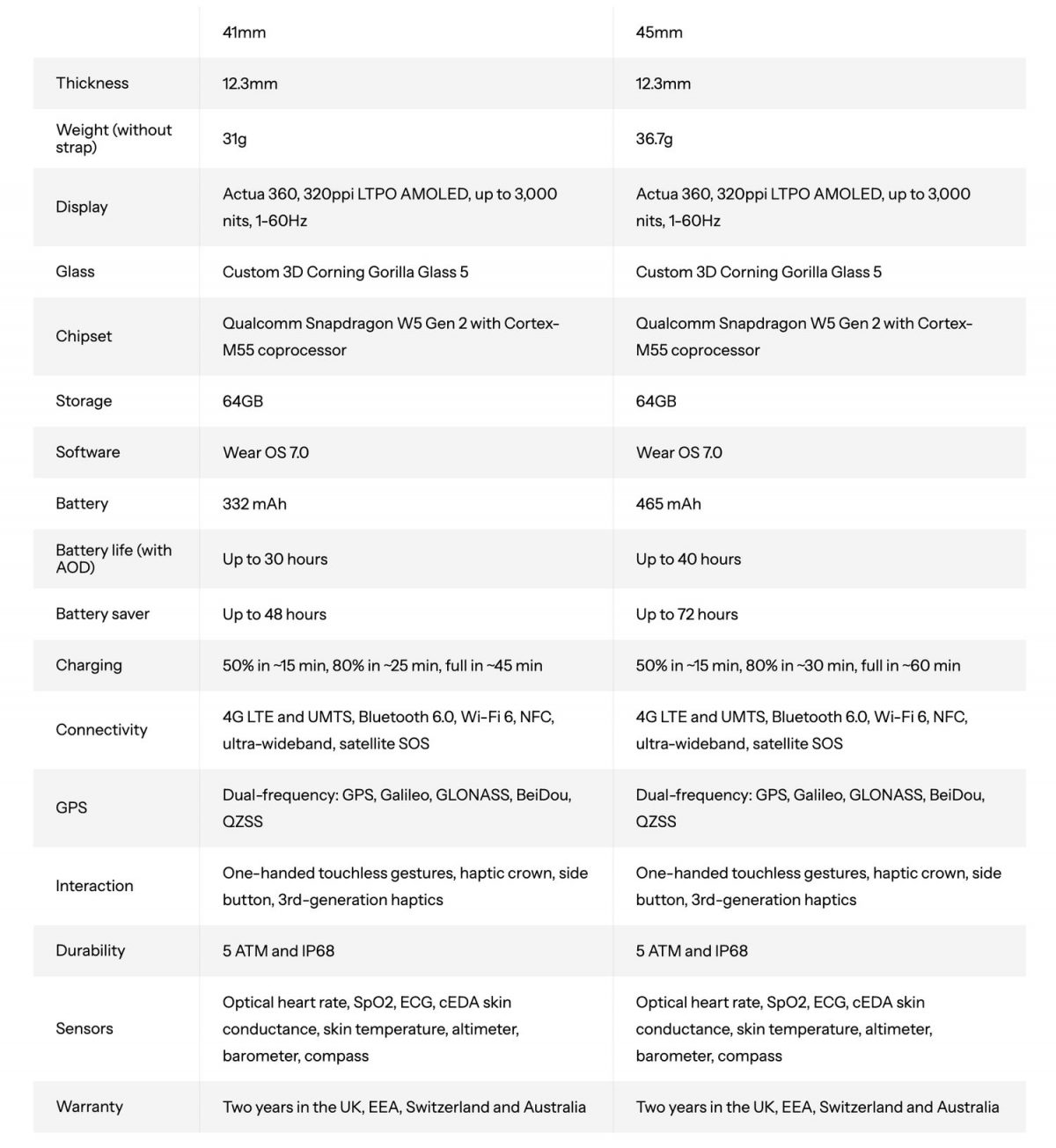
    OPPO Watch X2 vs X3 — what are the differences and is the newer model worth the extra cost? OPPO Watch X3 is a flagship smartwatch with a titanium case, a 3000-nit display, and a blood glucose sensor.

    Compared to Watch X2, it is lighter by 6 g, thinner by 0.75 mm, and offers a brighter screen and new health features. Below is a detailed comparison of both models.

    OPPO unveiled the Watch X3 on March 17, 2026, in China. It is the direct successor to the Watch X2, which debuted in May 2025. Both smartwatches feature a 1.5-inch LTPO OLED screen (dynamic refresh rate technology), a Snapdragon W5 processor, and eSIM (built-in SIM card with LTE support), but the newer model introduces several significant changes in design and sensor set.

    Interestingly, OPPO is also preparing a Watch X3 Mini variant — a smaller version, which is set to launch in April 2026. If the standard 47 mm size is too large for you, it’s worth waiting for this compact alternative.

    Looking for protective accessories for your smartwatch? Check out films and glasses for OPPO Watch in our store.

    Key differences — OPPO Watch X2 vs X3 at a glance

    RóżnicaWatch X2Watch X3
    KopertaStal nierdzewna + tytanTytan TC4 (lotniczy)
    Jasność ekranu2200 nitów3000 nitów
    Waga (bez paska)49,7 g43 g
    Czujnik glukozyNieTak
    WodoodpornośćIP68, 5 ATMIP68, IP69, 5 ATM
    SystemWear OS 5.0ColorOS Watch 16.0
    ProcesorSnapdragon W5 Gen 1Snapdragon W5 Gen 2

    Pełna specyfikacja OPPO Watch X3 vs Watch X2

    ParametrOPPO Watch X3OPPO Watch X2
    PremieraMarch 2026May 2025
    Wyświetlacz1.5″ LTPO OLED1.5″ LTPO AMOLED
    Rozdzielczość466 × 466 px466 × 466 px
    Jasność maks.3000 nits2200 nits
    ProcesorSnapdragon W5 Gen 2Snapdragon W5 Gen 1
    KoprocesorQualcomm QCC5100BES2800BP
    RAM2 GB2 GB
    Pamięć wewnętrzna32 GB32 GB
    Bateria646 mAh648 mAh
    Czas pracy (tryb smart)up to 5 daysup to 5 days
    Czas pracy (oszczędzanie)up to 16 daysup to 16 days
    Wymiary47.4 × 47.4 × 11.0 mm47.6 × 46.6 × 11.75 mm
    Waga70 g (with strap) / 43 g (watch only)76 g (with strap) / 49.7 g (watch only)
    Materiał kopertyaircraft-grade titanium TC4stainless steel + titanium (frame)
    Szkłosapphiresapphire
    WodoodpornośćIP68, IP69, 5 ATMIP68, 5 ATM
    Norma wojskowaMIL-STD-810HMIL-STD-810H
    GPSL1 + L5 (GPS, GLONASS, BeiDou, Galileo, QZSS)L1 + L5 (GPS, GLONASS, Galileo, QZSS)
    Bluetooth5.25.2
    WiFi802.11 a/b/g/n802.11 a/b/g/n
    LTE / eSIMyesyes
    NFCyesyes
    Czujnik tętnayesyes
    SpO2yesyes
    EKGyesyes
    Ciśnienie krwiyesyes
    Temperatura skóryyesyes
    Czujnik glukozyyesno
    SystemColorOS Watch 16.0Wear OS 5.0 + ColorOS Watch 7.0
    Tryby sportowe100+100+
    Cena (Chiny)from approx. 1400 PLNapprox. 1300–1500 PLN

    Display — 3000 vs 2200 nits

    The watches have the same display size of 1.5 inches and an identical resolution of 466 × 466 pixels. In everyday use, the screens look very similar — the colors are vibrant, blacks are deep, and the viewing angles are wide.

    The key difference is brightness. The OPPO Watch X3 achieves 3000 nits, which is 36% more than the 2200 nits in the older model. In comparison, the display of the OPPO Watch X2 vs X3 is one of the more noticeable aspects — especially under bright sunlight while running, cycling, or walking around the city in summer.

    The Watch X3 uses a next-generation LTPO OLED panel, while the Watch X2 uses LTPO AMOLED. Both support Always-On Display (AOD — continuous display of time and selected information on the screen), but the newer model should be slightly more energy-efficient due to the updated display technology.

    Tip: If you primarily train indoors or in the evenings, the difference in screen brightness won’t be crucial for you. 2200 nits in the Watch X2 is still a very good result — more than in most competing smartwatches.

    Design and materials — titanium vs steel

    This is one of the biggest changes between generations. The OPPO Watch X3 has a case made entirely of aerospace-grade TC4 titanium, while the Watch X2 combines stainless steel with a titanium frame.

    What does this mean in practice?

    • Weight — The Watch X3 weighs 43 g without the strap (vs 49.7 g). The difference of 6.7 g is about 13% less. You will definitely feel this on your wrist, especially during sleep and training.
    • Thickness — The newer model is 11.0 mm thick (vs 11.75 mm). The watch hides better under a shirt cuff and protrudes less on a slim wrist.
    • Durability — Both have sapphire glass and MIL-STD-810H certification (military-grade resistance standard). However, the Watch X3 adds IP69 (resistance to high-pressure hot water jets), which its predecessor lacks.

    Both models have two buttons on the right side — the upper one serves as a rotating crown. The Watch X3 offers three color variants: Gravity Black, Global Star Orange, and Infinite Titanium.

    Niezależnie od tego, który model wybierzesz, warto zainwestować w dodatkową ochronę ekranu. W ofercie homescreen.pl znajdziesz szkło hybrydowe GrizzGlass HybridGlass i folię ceramiczną GrizzGlass CeramicFilm do OPPO Watch X2 od 12,99 zł.

    Wydajność — Snapdragon W5 Gen 2 vs Gen 1

    OPPO Watch X3 pracuje na nowszym Snapdragon W5 Gen 2 z procesorem ARM Cortex-A53 do 1,7 GHz i GPU Adreno 702. Wspiera go koprocesor Qualcomm QCC5100. Watch X2 korzysta ze Snapdragon W5 Gen 1 z koprocesorem BES2800BP.

    W codziennym użytkowaniu różnica w płynności nie jest dramatyczna — oba smartwatche sprawnie obsługują nawigację po menu, powiadomienia i aplikacje. Nowszy chipset w Watch X3 powinien jednak zapewniać:

    • Better energy efficiency — the same battery life with higher screen brightness and new sensors.
    • Faster processing of health data — crucial for continuous monitoring of glucose, blood pressure, and ECG.
    • Smoother animations — particularly noticeable when switching between watch faces and apps.

    Both generations have 2 GB of RAM and 32 GB of internal storage, so nothing changes in this regard. 32 GB is enough for offline maps, music, and several dozen apps.

    Battery and charging — OPPO Watch X3 vs X2

    The battery capacities are almost identical — 646 mAh in Watch X3 vs 648 mAh in Watch X2. The declared operating times (according to the manufacturer) also match:

    • Smart mode — up to 5 days
    • Intensive use — about 3 days
    • Power saving mode — up to 16 days

    So where’s the difference? The Watch X3 achieves the same battery life despite a brighter screen and additional sensors, indicating better energy optimization of the new chipset and display.

    The OPPO Watch X3 charges fully in about 75 minutes, while the Watch X2 takes about 60 minutes with the 10W VOOC charger. The newer model compensates for the longer charging time with a quick «emergency» charging feature — 10 minutes provides energy for 24 hours. Useful when you discover a dead watch in the morning before your workout.

    Note: Both models charge exclusively through dedicated magnetic chargers — they do not support the Qi standard. Before purchasing, make sure you have the original charging accessory.

    Health and sensors — the biggest advantage of the Watch X3

    This is an area where the OPPO Watch X3 clearly leaps ahead of its predecessor. Both models offer:

    • 24/7 heart rate monitoring
    • Blood oxygen saturation measurement (SpO2)
    • ECG (electrocardiogram)
    • Blood pressure measurement
    • Skin temperature measurement
    • Sleep analysis with phases (light, deep, REM)

    Watch X3 adds a blood glucose sensor — a feature that the Watch X2 does not have. The watch uses non-invasive optical technology for continuous monitoring of sugar levels. This is particularly useful for people with type 2 diabetes or prediabetes, but also for athletes tracking the impact of diet on training results.

    It is worth noting that non-invasive glucose measurement from the wrist does not replace a professional glucometer. This technology is still developing and is more for observing trends than for precise medical measurements. Nevertheless, continuous glucose monitoring is a feature that most competitors in this price range do not offer — including Samsung Galaxy Watch and Huawei Watch GT.

    In the battle of OPPO Watch X2 vs X3, it is the sensors that make the biggest difference. The rest of the health features are identical.

    Sports and navigation

    Both smartwatches support over 100 sports modes and GPS with dual-band L1 + L5 signal, ensuring precise route tracking in cities with high-rise buildings.

    Watch X3 uses five satellite navigation systems (GPS, GLONASS, BeiDou, Galileo, QZSS), while Watch X2 uses four (GPS, GLONASS, Galileo, QZSS — without BeiDou). In practice, the additional system can improve positioning accuracy in difficult conditions — e.g., in dense forests or narrow streets of the old town.

    Both models have eSIM with LTE support, allowing you to receive calls and messages without a phone. Useful while running or cycling when you don’t want to take your smartphone with you.

    In the context of sports, it is worth mentioning the analysis of gait and posture while running — a feature available in both models. The watch monitors cadence, ground contact time, and vertical oscillations, providing runners with specific data to improve their technique.

    If you are comparing smartwatches with other brands, also check our offer of watch bands and accessories.

    Operating system — Wear OS vs ColorOS Watch

    Here lies an interesting change and one of the key elements of the comparison OPPO Watch X2 vs X3. Watch X2 runs on Wear OS 5.0 with ColorOS Watch 7.0 overlay, which means access to applications from Google Play Store — Google Maps, Spotify, Strava, and many others.

    OPPO Watch X3 has transitioned to ColorOS Watch 16.0 as a standalone system. In China, Wear OS is not widely used, so OPPO opted for its own solution with better energy optimization. The question is: what system will the global version of Watch X3 receive?

    If OPPO decides on Wear OS for the international version (as was done with Watch X2), the difference will be smaller. However, if the global version retains ColorOS Watch 16.0, access to applications will be limited to the OPPO ecosystem and selected partners.

    Tip: If you care about the Google app ecosystem (maps, Spotify, Google Wallet), Watch X2 with Wear OS 5.0 is a safer choice — at least until we learn the details of the global launch of Watch X3.

    Price and availability — OPPO Watch X2 vs X3 in Poland

    OPPO Watch X3 debuted in China at prices:

    • Gravity Black — 2599 yuan (approx. 1400 PLN)
    • Global Star Orange / Infinite Titanium — 2799 yuan (approx. 1510 PLN)

    OPPO Watch X2 at launch cost around 1300–1500 PLN depending on the variant. It can now be found at lower prices, making it an attractive option for those looking for a flagship OPPO smartwatch at a more accessible price.

    Global premiere of the Watch X3 has not yet been officially confirmed, but the OPPO Watch X2 hit the international market (including Poland) a few months after its Chinese debut. A similar scenario can be expected — it’s worth following the official OPPO website for updates.

    OPPO Watch X3 Mini — a smaller version is coming

    OPPO is also preparing a compact variant, the Watch X3 Mini, which is expected to debut in April 2026. Information about this model has appeared in several leaks, but the official specifications have not yet been revealed.

    If the standard 47mm size of the Watch X3 is too large for you — for example, if you have a slim wrist or prefer smaller watches — it’s worth waiting for this model. The Watch X2 Mini proved to be a popular alternative, and the Watch X3 Mini will likely follow the same path.

    Current accessories for the smaller model are available — check out the GrizzGlass hybrid glass for OPPO Watch X2 Mini in our store.

    Who is the OPPO Watch X3 for, and who is the Watch X2 for?

    Choose the OPPO Watch X3 if:

    • You care about the lightest and thinnest design (43 g vs 49.7 g)
    • You need blood glucose monitoring
    • You train outdoors and need a screen readable in full sunlight (3000 nits)
    • You want the latest generation with IP69 certification

    Stick with the OPPO Watch X2 if:

    • You are looking for a proven smartwatch with Wear OS 5.0 and access to Google Play
    • You do not need a glucose sensor
    • Chcesz zaoszczędzić — Watch X2 w spadających cenach oferuje świetny stosunek jakości do ceny
    • Wolisz poczekać na globalną wersję Watch X3 i sprawdzić, jaki system operacyjny dostanie

    Podsumowanie

    Podsumowując porównanie OPPO Watch X2 vs X3 — Watch X3 to solidna ewolucja, a nie rewolucja. Kluczowe ulepszenia to tytanowa koperta (lżejsza i cieńsza), jaśniejszy ekran 3000 nitów i czujnik glukozy we krwi. Reszta specyfikacji — bateria, RAM, pamięć, łączność — pozostaje na tym samym poziomie.

    Jeśli masz Watch X2 i działa on bez problemów, przesiadka nie jest konieczna. Ale jeśli kupujesz pierwszy flagowy smartwatch OPPO lub zależy ci na monitorowaniu glukozy, Watch X3 to zdecydowanie lepszy wybór.

    Niezależnie od wyboru, zadbaj o ochronę swojego smartwatcha. W homescreen.pl znajdziesz folie ochronne, szkła hybrydowe i etui do smartwatchy OPPO — od 11,99 zł z szybką dostawą.

    FAQ

    Czy OPPO Watch X3 jest kompatybilny z iPhone’em?

    OPPO Watch X3 działa najlepiej ze smartfonami z Androidem. Współpraca z iPhone’em jest ograniczona — brakuje pełnej synchronizacji powiadomień i funkcji zdrowotnych. Jeśli masz iPhone’a, warto rozważyć Apple Watch, który jest zoptymalizowany pod ekosystem Apple.

    When will OPPO Watch X3 be available in Poland?

    The official date of the Polish premiere has not yet been confirmed. The OPPO Watch X2 reached European markets a few months after its Chinese debut — a similar timeline can be expected for the Watch X3.

    Is the OPPO Watch X3 Mini available yet?

    No — the OPPO Watch X3 Mini has not been officially presented yet. The premiere is expected in April 2026. Only preliminary information from leaks is known.

    Is it worth buying the OPPO Watch X2 now, or should I wait for the X3?

    If you care about Wear OS and access to Google Play — the Watch X2 is a safe choice. If you want the latest health sensors and a titanium case, wait for the global premiere of the Watch X3. Price-wise, the Watch X2 is becoming increasingly attractive.

    What is the weight difference between the Watch X3 and Watch X2?

    The OPPO Watch X3 weighs 43 g (the watch itself without the strap), while the Watch X2 weighs 49.7 g. The difference of 6.7 g is due to the use of titanium instead of stainless steel.

    Does the OPPO Watch X3 measure blood pressure?

    Yes — both the Watch X3 and Watch X2 have a blood pressure sensor. However, the Watch X3 adds blood glucose measurement, which the older model does not offer.

  • Best Phone for Photos 2026 — TOP 5 Flagship Ranking

    Best Phone for Photos 2026 — TOP 5 Flagship Ranking

    What is the best smartphone for photos in 2026? The answer is not straightforward — each manufacturer focuses on different strengths.

    In this ranking of phones for photos, we compare five flagships sorted by camera quality — from the iPhone 17 Pro Max, through the 1-inch sensor of the Xiaomi 17 Ultra with Leica optics, to the revolutionary vivo system with a ZEISS lens.

    Ranking of the best phones for photos 2026 — quick overview

    Before we move on to a detailed analysis, here is a summary of our top five at a glance:

    PositionModelDxOMarkMain sensorOptical zoomPrice from
    1.Apple iPhone 17 Pro Max168 pts48 MP, sensor 1/1.28″8x (tetraprism, 200 mm)6,299 PLN
    2.Xiaomi 17 Ultra166 pts50 MP, Light Fusion 1050L (1″)4.3x (mechanical Leica zoom)6,499 PLN
    3.Google Pixel 10 Pro163 pts50 MP, Samsung GNK (1/1.31″)5x (100x Pro Res Zoom)~3,450 PLN
    4.Samsung Galaxy S26 Ultra157 pts200 MP, ISOCELL HP2 (1/1.3″)2x/3x/5x/10x6,499 PLN
    5.vivo X300 UltraTBD*200 MP, Sony LYTIA-901 (1/1.12″)3.5x (17x with ZEISS extender)~7,500 PLN

    *estimated price — global launch Q2 2026


    1. Apple iPhone 17 Pro Max — lider DxOMark i 8x zoom tetrapryzmat

    Apple iPhone 17 Pro Max to najlepszy telefon do zdjęć 2026 według rankingu DxOMark (168 pkt). Ogromny skok w teleobiektywie — z 5x na 8x zoom optyczny z nowym tetrapryzmem i sensorem 48 MP — czyni go numerem jeden wśród smartfonów fotograficznych.

    System aparatów

    ObiektywRozdzielczośćSensorPrzysłonaOgniskowa
    Główny48 MP Fusion1/1.28″f/1.524 mm
    Ultraszeroki48 MPf/2.213 mm
    Teleobiektyw 8x (tetrapryzmat)48 MP56% większy sensorf/2.8200 mm
    Przedni (Centre Stage)18 MPkwadratowy sensorf/2.2

    Dlaczego numer 1?

    iPhone 17 Pro Max wprowadza przełomowy teleobiektyw — 48 MP sensor z 8-krotnym zoomem optycznym (200 mm) na tetrapryzmie nowej generacji. To najdłuższa ogniskowa w historii iPhone’a. Dzięki crop z sensora 48 MP, jakość optyczna utrzymuje się nawet przy 16-krotnym zakresie zoomu. To ogromny postęp względem 12 MP teleobiektywu w poprzedniku.

    Video remains the hallmark of Apple — 4K Dolby Vision, ProRes Log, Cinematic Mode, and Spatial Video for Apple Vision Pro. The new 18 MP front camera with a square Centre Stage sensor allows for rotating the photo orientation without turning the phone. The physical Camera Control button turns the iPhone into an intuitive camera.

    Tip: Check out cases and tempered glass for iPhone 17 Pro Max at Home Screen — you’ll protect both the camera and the display at the same time.

    Strengths and Weaknesses

    Strengths: Highest DxOMark score (168 points), 8x optical zoom 48 MP (200 mm), best video (4K ProRes Log), Camera Control, Spatial Video.

    Weaknesses: No 8K video, high price starting from 6,299 PLN, smaller main sensor than Xiaomi and vivo.


    2. Xiaomi 17 Ultra — 1-calowy sensor i mechaniczny zoom Leica

    Xiaomi 17 Ultra to smartfon stworzony z myślą o fotografii — 1-calowy sensor główny Light Fusion 1050L i mechaniczny zoom optyczny z certyfikacją Leica APO sprawiają, że granica między smartfonem a aparatem bezlusterkowym zaciera się bardziej niż kiedykolwiek.

    System aparatów

    ObiektywRozdzielczośćSensorPrzysłonaOgniskowa
    Główny50 MPLight Fusion 1050L (1″)f/1.6723 mm
    Ultraszeroki50 MPf/2.214 mm
    Teleobiektyw (mechaniczny zoom)200 MP1/1.4″75–100 mm (4,3x)
    Przedni32 MPf/2.0

    Dlaczego na podium?

    Xiaomi 17 Ultra has a 1-inch sensor in the main camera — this is the largest sensor among smartphones in 2026 (excluding the yet-to-be-global vivo X300 Ultra). The Light Fusion 1050L sensor with LOFIC HDR technology offers a full well capacity 6.3 times greater than its predecessor, the Xiaomi 15 Ultra. In practice, this means phenomenal dynamic range — details in both bright and dark areas of the photo.

    The 200 MP telephoto lens with a 1/1.4″ sensor is a revolution — a mechanical optical zoom system with three groups of lenses changes the focal length from 75 to 100 mm. Leica APO eliminates chromatic aberrations, and the optical quality zoom reaches an equivalent of 400 mm. The special edition Leica Leitzphone adds a physical zoom ring on the body.

    Video and special features

    Recording 8K at 24 fps, 4K at 120 fps Dolby Vision, Movie mode with full manual control and 10-bit Log support. The Xiaomi 17 Ultra is a serious tool for video creators.

    Advice: The Xiaomi 17 Ultra with the Leica camera module requires solid protection — check out cases for Xiaomi 17 Ultra at Home Screen.

    Strengths and Weaknesses

    Strengths: 1-inch main sensor, mechanical optical zoom, 200 MP telephoto lens, Leica APO optics, 6,500 mAh battery.

    Weaknesses: No extender version (like vivo), 32 MP selfie camera weaker than Pixel 9 Pro, price starting from 6,499 PLN.


    3. Google Pixel 10 Pro — master of artificial intelligence with 100x Pro Res Zoom

    The Google Pixel 10 Pro is the best photo phone of 2026 for those who want to take the perfect picture without worrying about settings. The Tensor G5 chip with an enhanced TPU unit powers powerful AI features, and the new 100x Pro Res Zoom finally puts the Pixel on par with Samsung in terms of close-ups. A score of 163 points in DxOMark ranks it third in the world.

    System aparatów

    ObiektywRozdzielczośćSensorPrzysłonaOgniskowa
    Główny50 MPSamsung GNK (1/1.31″)f/1.6824 mm
    Ultraszeroki (AF)48 MP1/2.55″f/1.712 mm
    Teleobiektyw 5x (peryskop)48 MP1/2.55″f/2.8110 mm
    Przedni42 MPf/2.218 mm

    Co wyróżnia Pixela 10 Pro?

    Google Pixel 10 Pro dziedziczy najlepsze cechy poprzednika i dodaje kluczowe ulepszenia:

    • 100x Pro Res Zoom — AI-wspomagany zoom z jakością optyczną do 10x
    • 50 MP portrety — nowa jakość zdjęć portretowych dzięki Tensor G5
    • 8K wideo — upscaling chmurowy do 8K z 4K, nowa funkcja Pixela
    • Magic Eraser — usuwanie niechcianych obiektów i osób ze zdjęć
    • Magic Editor — generatywna AI do modyfikacji elementów zdjęcia
    • Best Take — składanie najlepszych min z wielu ujęć
    • Night Sight Video — nagrywanie wideo w słabym oświetleniu z AI

    Ultraszeroki obiektyw z autofocusem (f/1.7!) to jeden z najjaśniejszych w branży. Przedni aparat 42 MP z najszerszym kątem widzenia (18 mm) robi najlepsze selfie w tym zestawieniu.

    Porada: Pixel 10 Pro to najkorzystniej wyceniony flagowiec w tym zestawieniu — od ~3 450 zł. Sprawdź dostępne akcesoria do Google Pixel 10 Pro w Home Screen.

    Mocne i słabe strony

    Mocne strony: DxOMark 163 pkt (3. na świecie), najlepsze funkcje AI, 50 MP portrety, naturalne odwzorowanie kolorów, najlepsza kamera selfie (42 MP), najniższa cena.

    Słabe strony: 8K tylko przez upscaling chmurowy, Tensor G5 słabszy w ogólnej wydajności niż Snapdragon, mniejsze sensory niż Xiaomi/vivo.


    4. Samsung Galaxy S26 Ultra — king of zoom and versatility

    Samsung Galaxy S26 Ultra (157 pts DxOMark) is the best phone for photography in 2026 for those who value versatility. The quadruple camera system covers every photographic scenario — from ultra-wide landscapes to details of distant objects thanks to 100x Space Zoom.

    Camera system

    LensResolutionSensorApertureFocal Length
    Main200 MPSamsung ISOCELL HP2 (1/1.3″)f/1.423 mm
    Ultra-wide50 MPSamsung ISOCELL JN3 (1/2.5″)f/1.9120° FoV
    3x Telephoto10 MPSony IMX754 (1/3.94″)f/2.467 mm
    5x Telephoto (periscope)50 MPSony IMX854 (1/2.52″)f/2.9111 mm
    Front12 MPf/2.226 mm

    Why is it still in the TOP 5?

    Samsung Galaxy S26 Ultra inherits the proven quad zoom system from the S25 Ultra, but introduces key optical improvements — f/1.4 aperture in the main lens (47% brighter than f/1.7 in its predecessor) and f/2.9 in the periscope (37% brighter than f/3.4). Four optical focal lengths (23, 67, 111 mm + ultra-wide) still represent the widest zoom range among smartphones — no competitor offers this.

    Video on this smartphone is a separate league — recording 8K at 30 fps on three lenses, Galaxy Log mode, and new 60 W charging. DxOMark points out issues with exposure and AF in low light, but in everyday use, the Galaxy S26 Ultra remains an incredibly versatile tool.

    Advice: Samsung Galaxy S26 Ultra is a premium flagship — it’s worth securing it with a solid case for Galaxy S26 Ultra that will protect the titanium frame and glass back.

    Strengths and weaknesses

    Strengths: The widest zoom range (4 focal lengths), brighter aperture f/1.4, 8K recording, 60W charging, Galaxy Log mode.

    Weaknesses: DxOMark 157 points (18th in the world), 3x telephoto only 10 MP, unstable exposure according to DxOMark, high price starting from 6,499 PLN.


    5. vivo X300 Ultra — record-breaking sensor and ZEISS optics

    Vivo X300 Ultra is a phone with a good camera in 2026, which changes the game in mobile photography. Equipped with a record-breaking sensor — Sony LYTIA-901 with a size of 1/1.12″ — and full ZEISS T* APO optical certification, it approaches the capabilities of mirrorless cameras more than any competitor.

    System aparatów

    ObiektywRozdzielczośćSensorOgniskowa
    Główny200 MPSony LYTIA-901 (1/1.12″)35 mm
    Ultraszeroki50 MPSony LYTIA-818 (1/1.28″)14 mm
    Teleobiektyw peryskop200 MPSamsung ISOCELL HP01 (1/1.4″)3,5x
    Multispektralny5 MP
    Przedni50 MP (AF)

    Co wyróżnia vivo X300 Ultra?

    Kluczowym elementem jest akcesorium ZEISS Telephoto Extender Gen 2 Ultra — doczepiana soczewka, która zwiększa zoom z 3,5x do 17x optycznego (ekwiwalent 400 mm). To jedyny smartfon na rynku z możliwością osiągnięcia takiego zoomu w pełni optycznie. Z extenderem zachowujesz pełną rozdzielczość 200 MP.

    The main sensor 1/1.12″ collects even more light than the 1-inch sensor of the Xiaomi 17 Ultra. The ultra-wide 50 MP with a 1/1.28″ sensor is larger than the main sensors of many flagships — this is a unique feature of vivo.

    Video and special features

    Recording 4K at 120 fps Dolby Vision HDR on all rear lenses with 10-bit Log mode. vivo also offers a SmallRig accessory ecosystem (video cage).

    Tip: The global launch of the vivo X300 Ultra is planned for Q2 2026. It’s worth keeping an eye on the availability of vivo accessories at the Home Screen store.

    Strengths and weaknesses

    Strengths: The largest sensors (1/1.12″ and 1/1.28″), 17x optical zoom with ZEISS extender, dual 200 MP cameras, 4K 120 fps Dolby Vision.

    Weaknesses: The most expensive option in the ranking (~7,500 PLN), ZEISS extender is an additional purchase, global launch not until Q2 2026, 35 mm focal length may be too wide for portraits.


    Best phone for photos 2026 — comparison in every scenario

    The best flagship for photos is not just about specifications — it’s also about software, AI processing, and the accessory ecosystem. The following comparison of phones with the best camera takes into account ten key photographic scenarios.

    ScenarioBest ChoiceWhy?
    Daytime Photosvivo X300 UltraLargest sensor 1/1.12″, 200 MP
    Night PhotosXiaomi 17 Ultra1-inch sensor + LOFIC HDR, phenomenal dynamic range
    Long Zoom (>5x)Samsung Galaxy S26 UltraQuad zoom system, 100x Space Zoom
    PortraitXiaomi 17 UltraLeica mechanical zoom 75-100 mm, natural bokeh
    SelfieGoogle Pixel 10 Pro42 MP, widest angle 18 mm
    Professional VideoiPhone 17 Pro Max4K ProRes Log, Dolby Vision
    Casual VideoSamsung Galaxy S26 Ultra8K on three lenses
    Action Shots (Sports)vivo X300 Ultra17x optical zoom with ZEISS extender
    AI PhotographyGoogle Pixel 10 ProMagic Eraser, Best Take, 100x Pro Res Zoom
    Price to Quality RatioGoogle Pixel 10 ProFrom ~3,450 PLN for a flagship camera

    Best Phone for Photos 2026 — Which to Choose?

    Choosing the best phone for photography in 2026 depends on your shooting style and budget.

    For versatile photographers: Samsung Galaxy S26 Ultra — covers every scenario from ultra-wide to 100x zoom. A brighter f/1.4 aperture is a clear improvement over its predecessor.

    For photography enthusiasts: Xiaomi 17 Ultra — 1-inch sensor and Leica mechanical zoom offer image quality unavailable on any other smartphone in this price range.

    For budget-conscious professionals: vivo X300 Ultra — if you take mobile photography seriously. The largest sensors and 17x optical zoom with ZEISS extender are in a league of their own.

    For filmmakers and video creators: iPhone 17 Pro Max — ProRes Log, 8x zoom 48 MP, and Spatial Video are professional tools in a smartphone.

    For those who value simplicity and value: Google Pixel 10 Pro — Google’s artificial intelligence with 100x Pro Res Zoom will do most of the work for you, and the price starting at ~3,450 PLN is unbeatable.

    Our verdict: iPhone 17 Pro Max is the best phone for photography in 2026 according to DxOMark (168 points) — it has the best camera in a phone for 2026 with a groundbreaking 8x zoom 48 MP. Xiaomi 17 Ultra with a 1-inch sensor and Leica optics (166 points) is ideal for photography enthusiasts, while Google Pixel 10 Pro (163 points, starting at ~3,450 PLN) offers the best value for money.

    Flagships with large sensors consume more energy while photographing — check network chargers with USB-C PD to quickly charge your phone after a full day of shooting. For a longer outdoor session, it’s worth bringing a power bank — especially since recording in 4K and 8K can drain even a 6,000 mAh battery in a few hours.


    Frequently Asked Questions (FAQ)

    What is the best phone for photos in 2026?

    The best phone for photos in 2026 is the Apple iPhone 17 Pro Max with a score of 168 points in DxOMark — it offers 8x optical zoom 48 MP (200 mm), the best video with ProRes Log and Camera Control. Right behind it is the Xiaomi 17 Ultra (166 points) with a 1-inch Leica sensor and the Google Pixel 10 Pro (163 points) with revolutionary AI photography.

    Which phone takes the best night photos?

    The Xiaomi 17 Ultra with a 1-inch Light Fusion 1050L sensor and LOFIC HDR technology offers phenomenal dynamic range in low light. The Samsung Galaxy S26 Ultra with an f/1.4 aperture (47% brighter than its predecessor) also performs excellently after dark.

    Will vivo X300 Ultra be available in Poland?

    vivo announced the global premiere of the X300 Ultra for Q2 2026. The premiere in China is scheduled for March 30, 2026. Availability in Poland depends on official distribution — it’s worth keeping an eye on updates on the manufacturer’s website.

    Which flagship has the best zoom?

    The Samsung Galaxy S26 Ultra with a quadruple optical system (2x/3x/5x/10x) and AI-assisted Space Zoom 100x offers the best built-in zoom range. The iPhone 17 Pro Max with 8x optical zoom 48 MP (200 mm) is a newcomer, while the vivo X300 Ultra with a ZEISS extender achieves a 17x purely optical zoom.

    Is the Google Pixel 10 Pro a good choice for mobile photography?

    Yes — the Google Pixel 10 Pro is an excellent choice, especially at its price (from ~3,450 PLN). The Tensor G5 powers unique AI features like Magic Eraser, 100x Pro Res Zoom, and Best Take. Natural color reproduction and Night Sight Video mode set it apart from the competition.

    Samsung Galaxy S26 Ultra or Xiaomi 17 Ultra — which is better for photos?

    The Samsung Galaxy S26 Ultra wins in zoom versatility (4 focal lengths) and 8K recording on three lenses. The Xiaomi 17 Ultra dominates in single photo quality thanks to its 1-inch sensor and Leica APO optics with mechanical zoom. Samsung is better for sports and wildlife photography, while Xiaomi excels in portraits and street photography.

  • POCO X8 Pro vs POCO X8 Pro Max — which model to choose in 2026?

    POCO X8 Pro vs POCO X8 Pro Max — which model to choose in 2026?

    The dilemma of POCO X8 Pro vs POCO X8 Pro Max is one of the hottest smartphone comparisons of 2026. Both models debuted in March and immediately generated huge interest — they offer AMOLED displays with a brightness of 3,500 nits, IP68/IP69K protection, and 100 W charging. The key difference? Processor, battery, and camera. POCO X8 Pro starts at 1,399 PLN, while POCO X8 Pro Max starts at 1,799 PLN. Below you will find a detailed comparison that will help you choose the right model.

    Technical specifications — POCO X8 Pro vs POCO X8 Pro Max

    Before we move on to a detailed analysis, it’s worth seeing the full specifications of POCO X8 Pro and POCO X8 Pro Max in one place. The table below shows the key differences between both models.

    ParametrPOCO X8 ProPOCO X8 Pro Max
    Display6,59″ AMOLED, 1,5K6,83″ AMOLED, 1,5K
    Brightness3 500 nits (peak)3 500 nits (peak)
    Refresh Rate120 Hz120 Hz
    ProcessorMediaTek Dimensity 8500-Ultra (4 nm)MediaTek Dimensity 9500s (3 nm)
    AnTuTu v112 283 5583 085 998
    RAM / Storage8/256 GB or 12/512 GB12/256 GB or 12/512 GB
    Main Camera50 MP, Sony IMX882, OIS50 MP, Light Fusion 600, OIS
    Battery6 500 mAh8 500 mAh
    Charging100 W HyperCharge100 W HyperCharge
    SystemAndroid 16, HyperOS 3Android 16, HyperOS 3
    ResistanceIP68 / IP69KIP68 / IP69K
    Weight201,5 g218 g
    Fingerprint ReaderOptical (under display)Ultrasonic (under display)
    Wi-FiWi-Fi 6Wi-Fi 7
    eSIMNoYes
    Price from1 399 zł1 799 zł

    Display — bigger doesn’t always mean better

    Both the POCO X8 Pro and POCO X8 Pro Max feature 1.5K AMOLED displays with a 120 Hz refresh rate and a peak brightness of 3,500 nits. They support Dolby Vision and HDR10+, resulting in excellent color reproduction when watching movies.

    The main difference is the size — the POCO X8 Pro has a 6.59-inch display, while the POCO X8 Pro Max offers 6.83 inches. Both models are protected by Corning Gorilla Glass 7i and have TÜV Rheinland certifications (Low Blue Light, Flicker Free).

    Tip: If you value compactness and one-handed operation, the POCO X8 Pro will be more comfortable. For fans of large displays — the X8 Pro Max with its 6.83-inch panel is a better choice for movies and games.

    The touch sampling rate is 480 Hz (Game Turbo) in both models, and the PWM dimming operates at 3,840 Hz — this is important for those sensitive to display flicker.

    POCO X8 Pro — AMOLED display 6.59 inches with brightness of 3500 nits

    Processor and performance — here the POCO X8 Pro Max takes the lead

    It’s one of the biggest differences when comparing POCO X8 Pro vs POCO X8 Pro Max. The Pro model is powered by the MediaTek Dimensity 8500-Ultra built on a 4-nanometer process technology, while the Pro Max received the flagship Dimensity 9500s made in a 3 nm process.

    The performance difference is evident — the POCO X8 Pro score in AnTuTu v11 is 2,283,558 points, while the POCO X8 Pro Max achieves 3,085,998 in AnTuTu:

    TestPOCO X8 ProPOCO X8 Pro MaxDifference
    AnTuTu v112 283 5583 085 998+35%
    Process technology4 nm (TSMC)3 nmNewer
    GPUMali-G720 MC8Immortalis-G925 MC12Higher class

    The Dimensity 9500s in the POCO X8 Pro Max is a flagship segment chip — the same processor can be found in phones costing over 3,000 PLN. The Immortalis-G925 MC12 GPU provides smooth gameplay even in the most demanding mobile games, such as Genshin Impact or Honkai: Star Rail at the highest settings.

    POCO X8 Pro with Dimensity 8500-Ultra also performs very well in everyday use — multitasking, social media, and gaming on medium settings are not a problem. However, in benchmarks and intensive games, the 35% difference in favor of the Max model is noticeable.

    Both smartphones feature the POCO 3D IceLoop cooling system with a surface area of 5,300 mm², which effectively dissipates heat during longer gaming sessions.

    It is worth adding that both models support 5G network (SA/NSA) — this is the standard in 2026, but still an important parameter when choosing a new smartphone. The RAM in both cases is LPDDR5X, and the internal memory is UFS 4.1 — the fastest available standards in the mid-premium segment.

    Camera — Light Fusion 600 vs Sony IMX882

    Both models have a 50 MP main camera with optical image stabilization (OIS), but the sensors used differ significantly.

    POCO X8 Pro uses the Sony IMX882 — a proven sensor with a size of 1/1.95 inches and 0.8 μm pixels. It is a solid sensor that performs well in daylight and well-lit scenes.

    POCO X8 Pro Max received the newer Light Fusion 600 with 1.6 μm pixels — twice as large as those in the X8 Pro. The Dual Native ISO Fusion technology improves dynamic range and significantly enhances photo quality in low light. In practice, this means less noise in night photos and better detail in shadows.

    The other elements of the camera set are identical:
    – Ultra-wide angle — 8 MP, f/2.2
    – Front — 20 MP, f/2.2
    – Video recording — 4K at 30/60 fps, slow motion 960 fps

    Tip: If you often take photos in the evening or in poorly lit interiors, the POCO X8 Pro Max with Light Fusion 600 sensor will be a noticeably better choice.

    Battery and charging — 6,500 vs 8,500 mAh

    This is another category where the POCO X8 Pro Max clearly dominates. The 8,500 mAh battery (silicon-carbon technology) is 30% more than the 6,500 mAh in the Pro model.

    ParameterPOCO X8 ProPOCO X8 Pro Max
    Capacity6,500 mAh8,500 mAh
    Wired charging100 W HyperCharge100 W HyperCharge
    Reverse charging27 W27 W
    Wireless chargingNoNo
    Longevity≥80% after 1,600 cycles≥80% after 1,600 cycles

    In practice, the POCO X8 Pro Max easily lasts two full days of moderate use, and with light usage, even three days. The POCO X8 Pro comfortably provides a full day even with intensive use.

    Both models charge with a power of 100 W — the POCO X8 Pro Max recovers 50% of energy in about 24 minutes, and a full charge takes just over 50 minutes. Neither model supports wireless charging.

    If you are looking for a fast wall charger that supports 100 W, it is worth choosing a model with USB Power Delivery (fast charging standard) or a dedicated Xiaomi charger. For daily top-ups while traveling, a compact power bank with the appropriate output power will also come in handy.

    Construction and design — aluminum, glass, and IP69K

    Both smartphones have aluminum frames, Gorilla Glass 7i protection on the front, and a IP68/IP69K certification — they can withstand immersion in water as well as a stream of hot water under pressure. This is rare in this price range. Despite their durability, it is worth protecting the display — protective films will provide additional protection against scratches in everyday use.

    ParametrPOCO X8 ProPOCO X8 Pro Max
    Wymiary157,5 × 75,2 × 8,4 mm162,9 × 77,9 × 8,2 mm
    Waga201,5 g218 g
    Tył obudowySzkłoWłókno szklane (fiberglass)
    SIMDual nano-SIMDual nano-SIM + eSIM
    Podświetlenie RGB8 kolorów8 kolorów
    KoloryCzarny, Biały, Mint GreenCzarny, Biały, Niebieski

    POCO X8 Pro jest lżejszy o 16,5 g i nieco węższy — lepiej leży w dłoni i mieści się w węższych kieszeniach. Model Max jest smuklejszy (8,2 vs 8,4 mm), ale większy i cięższy ze względu na większą baterię i wyświetlacz.

    Warto wspomnieć, że POCO X8 Pro dostępny jest również w limitowanej edycji Iron Man (12/512 GB) za 1 749 zł w promocji — to wariant dla fanów Marvel.

    Niezależnie od wybranego modelu, dobrze jest zainwestować w odpowiednie etui do smartfona POCO, które ochroni aluminiową ramkę i szklaną lub włóknistą tylną część obudowy przed uszkodzeniami mechanicznymi.

    POCO X8 Pro — design i budowa z aluminiową ramką

    Connectivity — Wi-Fi 7 and eSIM only in the Max model

    In terms of connectivity, the POCO X8 Pro Max offers several significant improvements:

    • Wi-Fi 7 (802.11be) instead of Wi-Fi 6 — faster transfer and lower latency
    • eSIM — a convenient solution while traveling, without the need to swap physical SIM cards
    • Bluetooth 5.4 with Auracast — wireless audio sharing to multiple headphones simultaneously
    • Symmetrical stereo speakers — better sound than standard stereo speakers in the X8 Pro

    The POCO X8 Pro 5G and POCO X8 Pro Max 5G support both SA and NSA modes. Other common connectivity features include NFC, infrared port (IR blaster), USB-C 2.0, GPS L1+L5, and Dolby Atmos with Hi-Res Audio (24-bit/192 kHz). Neither model has a 3.5 mm headphone jack — if you prefer wireless audio, check out Bluetooth headphones compatible with both smartphones.

    Security and Software

    Both smartphones run on Android 16 with HyperOS 3 and will receive 4 years of system updates and 6 years of security patches. They also have access to Google Gemini, Circle to Search, and AI tools (AI Writing, AI Speech).

    The key difference concerns the fingerprint reader:

    • POCO X8 Pro — czytnik optyczny pod ekranem
    • POCO X8 Pro Max — czytnik ultradźwiękowy pod ekranem

    Ultradźwiękowy czytnik działa szybciej, jest bardziej precyzyjny i rozpoznaje palec nawet gdy jest mokry — to wyraźna przewaga modelu Max.

    POCO X8 Pro Max oferuje również funkcję Xiaomi Offline Communication o zasięgu do 500 m — pozwala komunikować się z innymi urządzeniami Xiaomi bez dostępu do internetu czy sieci komórkowej.

    Cena POCO X8 Pro i POCO X8 Pro Max w Polsce

    Ile kosztują te smartfony? Cena POCO X8 Pro startuje od 1 399 zł, a cena POCO X8 Pro Max od 1 799 zł w promocji na start (do 31 marca 2026):

    WariantPOCO X8 ProPOCO X8 Pro Max
    8/256 GB1 399 zł (tylko mi.com)
    12/256 GB1 799 zł (tylko mi.com)
    12/512 GB1 599 zł1 999 zł
    Iron Man 12/512 GB1 749 zł

    Ceny regularne (po promocji):

    VariantPOCO X8 ProPOCO X8 Pro Max
    8/256 GB1 699 zł
    12/256 GB2 099 zł
    12/512 GB1 899 zł2 299 zł
    Iron Man 12/512 GB1 999 zł

    The difference of 400 zł between comparable variants (12/512 GB) is a reasonable surcharge for the flagship processor, larger battery, better camera, and Wi-Fi 7. You can find current prices and availability on the official POCO website.

    Gaming performance — how do they perform in practice?

    Simply comparing AnTuTu scores does not give the full picture. In everyday use, both smartphones perform excellently — apps open instantly, multitasking works without hiccups, and scrolling through the interface is smooth at 120 Hz.

    The difference becomes apparent in demanding mobile games. The POCO X8 Pro Max with the Immortalis-G925 MC12 GPU maintains a stable 60 fps in Genshin Impact at the highest graphics settings, while the POCO X8 Pro with the Mali-G720 MC8 requires lowering some options to medium to maintain smoothness. In less demanding titles — PUBG Mobile, Call of Duty Mobile, or Honkai: Star Rail — both models run without issues at high settings.

    The POCO 3D IceLoop cooling system works effectively in both cases. After a 30-minute session of Genshin Impact, the casing temperatures remain within a comfortable range. The POCO X8 Pro Max has a slight advantage here due to its larger casing, which dissipates heat better.

    For casual gamers, the POCO X8 Pro will be more than sufficient. However, if you regularly play the most demanding titles and care about maximum graphics settings, the Dimensity 9500s in the Max model is a safer choice for the next few years.

    POCO X8 Pro Max vs competition — how does it fare against rivals?

    It’s worth looking at both POCO models in the context of the market. In the price range of 1,400–2,300 PLN, the competition is significant:

    • Samsung Galaxy A56 5G (~1,699 PLN) — better Samsung ecosystem, longer support (7 years of updates), but noticeably weaker Exynos 1580 processor and smaller 5,000 mAh battery. The POCO X8 Pro offers more performance for a similar price.
    • Redmi Note 14 Pro+ 5G (~1,599 PLN) — a close relative from the Xiaomi family. Similar specifications to the POCO X8 Pro, but slightly weaker Dimensity 8400-Ultra and smaller 6,200 mAh battery. POCO stands out with an IP69K certification.
    • Nothing Phone (3a) (~1,799 PLN) — distinguished by its Glyph lighting design, pure Android, but weaker processor and smaller battery. A choice for those who prioritize aesthetics.
    • Motorola Edge 60 (~1 899 zł) — a competitor with wireless charging, which is lacking in POCO. However, it falls short in performance compared to the POCO X8 Pro Max.

    POCO X8 Pro Max at a price of 1 999 zł (12/512 GB) offers performance comparable to smartphones costing over 3 000 zł — Samsung Galaxy S25, OnePlus 13, or Xiaomi 15. This is its biggest competitive advantage.

    Summary of differences — who wins in each category?

    CategoryWinnerWhy?
    DisplayPOCO X8 Pro MaxLarger 6.83″ panel
    PerformancePOCO X8 Pro MaxDimensity 9500s, +35% in AnTuTu
    CameraPOCO X8 Pro MaxLight Fusion 600, better night photos
    BatteryPOCO X8 Pro Max8,500 vs 6,500 mAh
    CompactnessPOCO X8 ProLighter (201.5 g), narrower
    PricePOCO X8 ProFrom 1,399 zł
    ConnectivityPOCO X8 Pro MaxWi-Fi 7, eSIM, Auracast
    BiometricsPOCO X8 Pro MaxUltrasonic reader

    POCO X8 Pro Max wins in six out of eight categories — but POCO X8 Pro defends itself with its price and compact dimensions.

    POCO X8 Pro vs POCO X8 Pro Max — which model to choose in 2026?

    The choice between POCO X8 Pro and POCO X8 Pro Max depends on your priorities and budget.

    Choose POCO X8 Pro if:
    – You are looking for the best value for money below 1,700 PLN
    – You prefer a compact and lighter smartphone (201.5 g vs 218 g)
    – You do not need flagship performance — Dimensity 8500-Ultra is more than enough for everyday tasks
    – You are interested in the limited Iron Man edition

    Choose POCO X8 Pro Max if:
    – You want the flagship Dimensity 9500s processor with performance comparable to phones costing 3,000+ PLN
    – You care about the longest battery life — 8,500 mAh provides 2–3 days without charging
    – You take a lot of photos in low light — Light Fusion 600 makes a noticeable difference
    – You need eSIM or Wi-Fi 7
    – You value a faster and more accurate ultrasonic fingerprint reader

    Our verdict: For an additional 400 PLN, POCO X8 Pro Max offers significantly more — a flagship processor, a huge battery, and a better camera. It is one of the best smartphones in terms of price to performance ratio in 2026. However, if compactness and a lower price are your priorities, POCO X8 Pro remains an excellent choice.

    In summary, comparing POCO X8 Pro vs POCO X8 Pro Max — both smartphones offer excellent value, but the Max model targets users who want flagship performance without the flagship price.

    Are you looking for accessories for your new POCO smartphone? Check out cases and tempered glass for POCO phones at Home Screen — you will find protection tailored to your model.

    Frequently Asked Questions (FAQ)

    POCO X8 Pro vs POCO X8 Pro Max — what are the differences?

    The main differences are the processor (Dimensity 8500-Ultra vs flagship Dimensity 9500s), battery (6,500 vs 8,500 mAh), camera sensor (Sony IMX882 vs Light Fusion 600 with larger pixels), fingerprint reader (optical vs ultrasonic), and connectivity (Wi-Fi 6 vs Wi-Fi 7, no eSIM vs eSIM).

    Is the POCO X8 Pro Max worth the extra 400 PLN?

    Yes — for an additional 400 PLN, you get a flagship processor with 35% higher performance, a battery larger by 2,000 mAh, a better camera for night photos, Wi-Fi 7, and eSIM. This is one of the better upgrades on the smartphone market.

    What is the price of the POCO X8 Pro in Poland?

    The POCO X8 Pro costs from 1,399 PLN (8/256 GB, promotional price) to 1,899 PLN (12/512 GB, regular price). There is also a limited Iron Man edition available for 1,749–1,999 PLN.

    Are the POCO X8 Pro and X8 Pro Max waterproof?

    Yes — both models have an IP68 and IP69K rating, which means they are resistant to immersion in water (up to 1.5 m for 30 minutes) and to a stream of hot water under pressure.

    How long does the battery last in POCO X8 Pro Max?

    The 8,500 mAh battery in the POCO X8 Pro Max lasts for 2–3 days of moderate use. The 100 W HyperCharge allows you to recover 50% of the energy in about 24 minutes.

    Does POCO X8 Pro have eSIM?

    No — eSIM is available only in the POCO X8 Pro Max. The Pro model supports only two physical nano-SIM cards.

  • AirPods Max 2 — premiere, price, and specifications of the new Apple headphones

    AirPods Max 2 — premiere, price, and specifications of the new Apple headphones

    AirPods Max 2 are new Apple over-ear headphones with the H2 chip, offering 1.5x better active noise cancellation than the previous generation. The price in Poland is 2499 zł, orders start on March 25, 2026, and deliveries will begin in early April.

    Four years of waiting and the same price — sounds like good news. But has Apple changed enough to justify upgrading from the old Maxes? We check what exactly you get for that 2499 zł.

    Technical specifications of AirPods Max 2

    ParametrAirPods Max (1. gen)AirPods Max 2
    ChipApple H1Apple H2
    Bluetooth5.05.3
    ANCStandardowy1,5x lepszy
    Audio bezstratne24-bit / 48 kHz (USB-C)
    Tryb przezroczystościTakUlepszony
    Adaptive Audio
    Wykrywanie rozmów
    Izolacja głosu
    Tłumaczenie na żywo
    Spersonalizowana głośność
    Czas pracy bateriido 20 hdo 20 h
    ZłączeLightning / USB-CUSB-C
    Waga384,8 g386,2 g
    Kolory55 (nowa paleta)
    Cena w Polsce2499 zł (USB-C)2499 zł

    Chip H2 — serce nowych AirPods Max 2

    Największa zmiana kryje się pod aluminiową obudową. Nowe Apple AirPods Max korzystają z chipa H2 (tego samego, który zadebiutował w AirPods Pro 2), a ulepszenia dotyczą trzech kluczowych obszarów:

    • Lepsza redukcja hałasu — nowe algorytmy obliczeniowe analizują dźwięk otoczenia do 48 000 razy na sekundę, co przekłada się na 1,5x skuteczniejsze ANC niż w pierwszej generacji
    • Lower wireless latency — Bluetooth 5.3 reduces audio lag, which gamers and movie lovers will appreciate
    • Lossless audio support — via USB-C cable, you can listen to music in 24-bit / 48 kHz quality (Apple Lossless)

    The H2 chip also supports personalized spatial audio with dynamic head tracking — the effect is closest to what you know from the cinema. The result? On paper, it’s the same amplifier with a wide dynamic range, but in practice, the bass sounds fuller, and individual instruments are easier to extract from the mix. The difference is most noticeable in orchestral music and well-produced recordings on Apple Music — with a pop playlist, you might not notice it.

    You can find the full range of Apple over-ear headphones at homescreen.pl.


    New smart features

    The new Apple AirPods Max take over features known from AirPods Pro 3, which were previously unavailable in the over-ear version.

    Adaptive Audio is a feature that makes you stop thinking about headphone modes. Are you entering a café? The headphones automatically let in the voices around you. Are you getting on a train? ANC kicks in at full power. Conversation Awareness works similarly — when you start speaking, the music quiets down, and the voice of the person you’re talking to is amplified. You don’t have to take off your headphones to order a coffee.

    Voice Isolation does the same but in the opposite direction — during a phone call, your conversation partner hears only you, even if you are calling from a busy street. All three features work without any configuration.

    Live Translation requires an iPhone with iOS 26 and Apple Intelligence — so for now, it only works on iPhone 16 and newer. The headphones translate the conversation in real-time, displaying subtitles on the phone screen. It sounds futuristic, but in practice, it’s more of a help in simple conversations than a substitute for a translator. A dozen languages are supported, including Polish.

    Personalized Volume learns your preferences and automatically adjusts the volume level to the surroundings — Marek, who commutes by subway to work every day and then sits in an open space, will appreciate this feature the most.


    Price of AirPods Max 2 in Poland

    Apple AirPods Max 2 cost in Poland 2499 zł — exactly the same as the USB-C version of the original AirPods Max. This is an amount that clearly positions them in the premium segment.

    For comparison:

    ModelPrice in PolandType
    AirPods 4approx. 549 złIn-ear, open
    AirPods Pro 3approx. 1099 złIn-ear, ANC
    AirPods Max 22499 złOver-ear, ANC
    Sony WH-1000XM5approx. 1299 złOver-ear, ANC
    Bose QuietComfort Ultraapprox. 1699 złOver-ear, ANC

    2499 zł for wireless headphones is a lot — almost twice as much as the Sony WH-1000XM5, which regularly compete head-to-head with the Max in blind sound tests. What are you paying extra for? Primarily for integration with the Apple ecosystem: automatic switching between iPhone, iPad, and Mac works so smoothly that after a week you’ll forget you ever manually switched devices. Features like live translation are an additional argument, but — let’s be honest — for most users, it’s a curiosity, not a reason to buy.


    Design and materials — what has changed?

    Short answer: almost nothing. If you placed AirPods Max 1 vs 2 side by side, the only visible difference would be the color. Apple has not changed the shape, weight (386 g — they are still among the heaviest popular over-ear headphones), or construction:

    • Aluminum ear cups with independent rotation provide a perfect fit
    • Mesh headband distributes pressure evenly across the top of the head
    • Memory foam ear cushions — comfortable even during long hours of wear
    • Digital Crown is used to adjust volume and control playback
    • Listening mode button — a new element replacing the noise control button

    What is new is the color palette. Instead of Space Gray, Silver, Sky Blue, Pink, and Green, we get: Midnight, Moonlight, Blue, Purple, and Orange. The particularly bold choice is the orange variant, which stands out against Apple’s typically muted offerings.


    AirPods Max 2 vs AirPods Max — is the upgrade worth it?

    If you have the original AirPods Max with the H1 chip, upgrading to the second generation makes sense in three cases:

    1. You care about better ANC — 1.5x more effective noise cancellation is a noticeable difference, especially in public transport and open spaces
    2. You want Adaptive Audio and Conversation Awareness — smart features that automate mode switching are a real convenience in daily use
    3. You need live translation — if you travel or work in an international environment, Live Translation can be a game-changer

    However, if your current AirPods Max are working flawlessly and you mainly listen to music at home — don’t replace them. The sound quality has improved, but not enough for you to notice a difference during everyday listening on Spotify. It’s better to wait for the third generation.

    Advice: If you have AirPods Max with Lightning, the upgrade makes extra sense — you gain USB-C, which simplifies the cable setup and adds lossless audio.

    For everyday charging, any USB-C charger will suffice — and the full range of all AirPods models and headphones can be found at homescreen.pl.


    Ecology — Apple moves forward

    Apple emphasizes sustainability in AirPods Max 2:

    • 100% recycled rare earth metals in magnets
    • 100% recycled polyester in ear cushions
    • 100% recycled gold and tin in circuit boards
    • Packaging made entirely from paper from natural fibers

    This is a continuation of the Apple Carbon Neutral 2030 strategy, which encompasses an increasing number of product categories. You can find the full specifications of AirPods Max 2 on the official Apple website.


    Summary — who are the AirPods Max 2 for?

    AirPods Max 2 is an evolution, not a revolution. Apple has put a new chip into an old casing and you get genuinely better ANC, smart features from AirPods Pro 3, and lossless audio via USB-C. But you don’t get a new design, longer battery life, or a lower price. These are the best over-ear headphones from Apple that you can buy today.

    Worth buying if:
    – You use multiple Apple devices and value seamless integration
    – You’re looking for top-tier ANC for working in noisy environments
    – You want live translation features or Adaptive Audio

    Consider alternatives if:
    – You don’t need the Apple ecosystem — Sony WH-1000XM5 or Bose QC Ultra offer comparable ANC at a lower price. Compare over-ear headphones with ANC at homescreen.pl
    – You prefer in-ear — AirPods Pro 3 have the same H2 chip for less than half the price

    Our choice: AirPods Max 2 in Northern color — classic, versatile, and you won’t get bored with it after a year.

    W sklepie homescreen.pl znajdziesz etui dopasowane do różnych generacji i modeli AirPods – od klasycznych modeli (1., 2. i 3. generacji), przez nowsze AirPods 4, aż po modele AirPods Pro 2 czy AirPods Pro 3. Dzięki temu bez problemu wybierzesz ochronne etui idealnie dopasowane do Twoich słuchawek, niezależnie od tego, jaką generację lub wariant posiadasz

    Sprawdź wszystkie akcesoria do AirPods w homescreen.pl →


    FAQ — najczęściej zadawane pytania

    Kiedy premiera AirPods Max 2 w Polsce?

    Zamówienia na nowe słuchawki startują 25 marca 2026, a pierwsze dostawy w Polsce ruszą na początku kwietnia 2026. Będą dostępne w autoryzowanych sklepach Apple oraz u partnerów handlowych.

    How much do AirPods Max 2 cost in Poland?

    The price of the second generation in Poland is 2499 PLN — the same as the USB-C version of the previous model. In the USA, the price is 549 dollars.

    What are the differences between AirPods Max 2 and the first generation?

    The main differences are the H2 chip instead of H1, 1.5x better noise cancellation, Bluetooth 5.3, lossless audio via USB-C, and new features: Adaptive Audio, Conversation Detection, Voice Isolation, and Live Translation. The design and battery (20 h) remain unchanged.

    Do AirPods Max 2 have USB-C?

    Yes, the second generation uses only the USB-C port for charging and wired listening to lossless music (24-bit / 48 kHz).

    What colors are available for AirPods Max 2?

    The new model is available in five colors: Midnight (black), Lunar Glow (gold), Blue, Purple, and Orange. This is a completely new palette compared to the first generation.

    Is it worth buying AirPods Max 2 instead of Sony WH-1000XM5?

    The second generation Apple Max headphones are a better choice for users of the Apple ecosystem due to automatic switching between devices and smart features. Sony WH-1000XM5 offers comparable ANC at a lower price (around 1299 PLN) and works better with Android devices.

  • Nothing Phone 4a and 4a Pro — specifications, prices, and release in Poland

    Nothing Phone 4a and 4a Pro — specifications, prices, and release in Poland

    Nothing officially presented the Phone 4a and 4a Pro. Prices in Poland start at 1,599 PLN for the 4a model and 2,099 PLN for the 4a Pro. Both smartphones feature a periscope telephoto lens with 3.5x optical zoom, 1.5K AMOLED displays, and a new Glyph system. Pre-orders for the Phone 4a start today — sales begin on March 13.

    The Nothing Phone 4a series represents the biggest quality leap in the history of the “a” line. Periscope zoom, screen brightness up to 5000 nits, and Snapdragon 7 Gen 4 processor are parameters that just a year ago we found only in flagships. Nothing poses the question: why pay for a flagship when a mid-range phone offers 90% of its capabilities?

    What’s new in the Nothing Phone 4a and 4a Pro?

    The biggest changes compared to the previous generation (Phone 3a / 3a Pro):

    • Periscope telephoto lens 50 MP with 3.5x optical zoom — a huge leap from 2x zoom in the Phone 3a. Hybrid zoom reaches 70x in the 4a and 140x in the 4a Pro.
    • Brighter screens — 4500 nits (4a) and 5000 nits (4a Pro) vs ~2300 nits in predecessors. Gorilla Glass 7i instead of Panda Glass.
    • New processors — Snapdragon 7s Gen 4 (4a) and Snapdragon 7 Gen 4 (4a Pro). The Pro model is ~27% faster in CPU and ~65% more efficient in AI tasks.
    • Refreshed Glyph — Phone 4a received a Glyph Bar (63 mini-LEDs in 7 zones), while 4a Pro got a Glyph Matrix (137 mini-LEDs with animations).
    • Nothing OS 4.1 on Android 16 — 3 years of system updates + 6 years of security patches.
    • eSIM in the Pro model — Phone 4a still uses only physical nano-SIM cards.

    Specifications of Nothing Phone 4a vs 4a Pro

    ParametrPhone 4aPhone 4a Pro
    Wyświetlacz6,78″ AMOLED, 120 Hz, 4500 nit6,83″ AMOLED, 144 Hz, 5000 nit
    Rozdzielczość1224 x 2720 (1.5K)1260 x 2800 (1.5K)
    ProcesorSnapdragon 7s Gen 4Snapdragon 7 Gen 4
    RAM / pamięć8/128, 8/256, 12/256 GB8/128, 12/256 GB
    Aparat główny50 MP, f/1.9, OIS50 MP Sony LYT700c, f/1.9, OIS
    Teleobiektyw50 MP peryskop, 3.5x zoom50 MP peryskop, 3.5x zoom
    Zoom hybrydowydo 70xdo 140x
    Ultraszeroki8 MP, f/2.2, 120°8 MP, f/2.2, 120°
    Bateria5080 mAh5080 mAh
    Ładowanie50W przewodowe50W przewodowe + reverse 7.5W
    GlyphGlyph Bar (63 LED)Glyph Matrix (137 LED)
    IPIP64IP65
    Grubość / waga8.6 mm / 204.5 g7.95 mm / 210 g
    eSIMBrakTak
    Kolorybiały, czarny, różowy, niebieskiczarny, srebrny, różowy

    Design — dwa różne podejścia

    Nothing zaskoczył, dając każdemu modelowi odrębną tożsamość wizualną.

    Phone 4a kontynuuje kultowy przezroczysty design. Pod szkłem Gorilla Glass 7i widać elementy wewnętrzne — cewki, śruby i struktury PCB. Nowe kolory różowy i niebieski mają barwioną warstwę pod przezroczystym panelem, co daje subtelny, pastelowy efekt.

    Phone 4a Pro is a completely different story. Nothing has given up the transparent back for a metal unibody made of aluminum. It is the sleekest Nothing in history (7.95 mm). It looks more premium, but loses some of its «nothing-like» character. The transparent elements have been limited to the camera island.

    The common denominator is Glyph. In the 4a model, it is the Glyph Bar — 7 square LED segments in a strip. In Pro — Glyph Matrix with 137 mini-LEDs arranged in a circular field. The Matrix displays animated notifications, charging progress, and reacts to Live Updates from Android 16.

    Camera — periscope in a mid-range for 1,599 PLN

    This is the biggest highlight of the 4a series. The 50 MP periscope telephoto lens with 3.5x optical zoom and OIS is something that did not exist in the previous generation Nothing Phone 3a. The 50 MP sensor with PDAF and optical stabilization provides sharp photos even in low light.

    The Pro model gets a better main sensor — Sony LYT700c — and a dual hybrid zoom (140x vs 70x in the standard 4a). Both models record in 4K with Dolby Vision and Ultra XDR.

    The new TrueLens Engine in Nothing OS 4.1 adds photographic presets, including «Stretch» developed in collaboration with photographer Jordan Hemingway.

    Prices in Poland

    VariantPhone 4aPhone 4a Pro
    8 GB / 128 GB1 599 zł2 099 zł
    8 GB / 256 GB1 749 zł
    12 GB / 256 GB1 899 zł2 399 zł

    Prices in Europe: Phone 4a from 349 EUR, Phone 4a Pro from 479 EUR.

    Availability and dates

    • Phone 4a: pre-sale from March 5, sale from March 13, 2026
    • Phone 4a Pro: pre-sale from March 13, sale from March 27, 2026

    Both models are available on the official website pl.nothing.tech. Color variants: 4a in white, black, pink, and blue; 4a Pro in black, silver, and pink. Pink and blue colors available exclusively in the 12/256 GB version.

    Expect availability in Polish electronics stores after the regular sales begin.

    Who is Phone 4a for, and who is it for Pro?

    Phone 4a for 1 599 zł is the choice if you care about the transparent design of Nothing and don’t need the fastest processor. You get a periscope zoom, a great 1.5K screen, and Glyph Bar — all for under 1,600 zł. The best price-to-performance ratio in the series.

    Phone 4a Pro for 2,099 PLN makes sense if you want a faster processor (+27% CPU, +65% AI), 144 Hz instead of 120 Hz, IP65, eSIM, and Glyph Matrix with animations. The unibody metal construction looks premium, although it loses the iconic transparent style.

    Both models are a very strong proposition in their price ranges. The 3.5x periscope telephoto lens for 1,599 PLN is something that no competitor offers at this price.

  • TOP 10 MagSafe cases for Samsung Galaxy S26 Ultra [2026]

    TOP 10 MagSafe cases for Samsung Galaxy S26 Ultra [2026]

    The best MagSafe cases for Samsung Galaxy S26 Ultra are Samsung Slim Magnet (299 zł) with a perfect fit from the phone manufacturer and PITAKA Edge Case (289 zł) made of ultra-light aramid fiber. We have arranged the ranking from premium models to budget options, so you can choose a case that meets your expectations and budget.

    Samsung Galaxy S26 Ultra is one of the most expensive smartphones on the market, so a suitable case with MagSafe support is not a luxury but a necessity. The magnetic attachment opens access to the entire ecosystem of accessories, from wireless chargers, through power banks, to car mounts. In this ranking, we have gathered the 10 best MagSafe cases for Galaxy S26 Ultra, testing each for protection, material quality, design, and price-to-quality ratio. Whether you are looking for a premium MagSafe case for S26 Ultra or a budget case with magnets for Samsung S26 Ultra, you will find the perfect model here.

    Comparison table of MagSafe cases for Galaxy S26 Ultra

    PozycjaEtuiMateriałCenaMagSafePodstawka
    1.Samsung Slim MagnetTworzywo sztuczne299 zł
    2.PITAKA Edge CaseWłókno aramidowe289 zł
    3.Supcase Cosmo MagPC + TPU155 zł
    4.Karl Lagerfeld Embossed RingSkóra eko + TPU + PC149 zł
    5.Guess Rhinestone Round LogoTPU + PC139 zł
    6.Spigen Nano Pop MagTPU109 zł
    7.ESR Classic Hybrid KickstandPC + akryl + TPU85 zł
    8.Spigen Ultra Hybrid MagTPU + PC79 zł
    9.Ringke Silicone MagneticSilikon + PC + mikrofibra79 zł
    10.3MK Satin Armor MagCasePC + TPU69,90 zł

    Ranking etui MagSafe do Samsung Galaxy S26 Ultra

    1. Samsung Slim Magnet, oryginalne od producenta (299 zł)

    Samsung Slim Magnet opens the ranking as the only case from the smartphone manufacturer. The perfect fit for Galaxy S26 Ultra is no coincidence. Samsung designs the case in parallel with the phone, ensuring millimeter precision.

    The slim design emphasizes the elegant look of the smartphone, and the built-in magnets guarantee the best compatibility with original Samsung accessories. This magnetic case for Galaxy S26 Ultra protects against scratches and light impacts while maintaining a natural, stable grip.

    The price of 299 zł is the highest in the ranking, but for the original case from Samsung, you pay for the guarantee of a perfect fit, the best magnetic compatibility, and availability in several colors, including elegant light blue.

    Our premium choice: Samsung Slim Magnet for 299 zł, original case from the manufacturer with a perfect fit and the strongest magnets.

    2. PITAKA Edge Case, aramid fiber with Fusion Weaving (289 zł)

    PITAKA Edge Case is a proposal for demanding users who value minimalism and premium materials. The case is made from aramid fiber using Fusion Weaving technology. This is the same material used in bulletproof vests and Formula 1 racing.

    Despite the advanced material, the case maintains an ultra-slim profile, adding almost no thickness to the phone. The textured surface provides a secure grip, and the raised edges around the camera protect the lenses from contact with the ground.

    The Milky Way Galaxy pattern gives the case a unique appearance. The price of 289 zł is justified by the quality of workmanship and the durability of aramid fiber, which is 5 times stronger than steel while being lighter than most plastic cases.

    3. Supcase Cosmo Mag, armored protection with style (155 zł)

    Supcase Cosmo Mag is the only case in the ranking that combines Military Grade certification with a designer pattern. The two-piece construction with polycarbonate (PC) back and a transparent cover provides top-level protection.

    Reinforced corners with Air Cushion comforts, raised frames around the screen and camera, and button covers make for a complete protective set. The aluminum ring for the finger also serves as a stand in both vertical and horizontal orientation.

    The price of 155 zł (or 139,50 zł in a set) is a reasonable amount for a case that can withstand a fall from over a meter high. The Coral pattern stands out against the competition.

    4. Karl Lagerfeld Embossed Ring, luxury fashion (149 zł)

    Karl Lagerfeld Embossed Ring Initials is a case for fashion lovers and luxury brands. Made from high-quality eco-leather, adorned with embossed initials KL and a metal inscription KARL LAGERFELD.

    The button covers and camera frame made of aluminum give the case a premium character. The magnetic ring compatible with MagSafe allows for wireless charging without removing the case.

    The price of 149 zł is a reasonable amount for a licensed case from a fashion brand that turns the Galaxy S26 Ultra into a true fashion statement. The brown color variant matches elegant styles and catches the eye with its embossed details.

    5. Guess Rhinestone Round Logo, elegance with character (139 zł)

    Guess Rhinestone Round Logo is a stylish option for those who appreciate recognizable fashion brands. The distinctive round 4G logo and Rhinestone Round logo give the case a sophisticated look.

    Flexible sides allow for easy installation and removal, while the raised edges protect the phone’s screen. The MagSafe magnetic ring ensures full compatibility with wireless chargers and MagSafe accessories.

    For 139 zł this licensed case combines protection with fashion design. The beige color variant fits both elegant and casual styles. Full access to ports and buttons, along with precise fitting for the Galaxy S26 Ultra, makes the case as practical as it is stylish.

    6. Spigen Nano Pop Mag, colorful design (109 zł)

    Spigen Nano Pop Mag is a case for those who want to stand out from the crowd. The two-tone, contrasting design with a colorful frame lifting the lens is a real eye-catcher. The Avo Green version combines dark green back with a light green frame.

    Made of durable TPU polyurethane, with Air Cushion technology in the corners to absorb shocks. The matte finish provides a non-slip grip and reduces fingerprints.

    For 109 zł you get a solid case with character. The built-in MagSafe ring and precise cutouts for all ports and buttons enhance functionality. It’s the perfect choice if you’re looking for something between premium and budget.

    7. ESR Classic Hybrid Kickstand, with built-in stand (85 zł)

    ESR Classic Hybrid Kickstand stands out with a metal stand integrated with the camera frame. It works in both vertical and horizontal orientations, making it ideal for watching movies, video calls, or following recipes in the kitchen.

    The hybrid construction combines a polycarbonate (PC) and acrylic back with a flexible TPU frame. The result? Solid protection without adding bulk to the phone. The built-in MagSafe ring ensures compatibility with wireless charging and magnetic accessories.

    For 85 zł, this is the only case in the ranking with a stand. Raised edges around the screen and lenses protect against scratches, while the matte Frosted Black finish gives it an elegant character.

    8. Spigen Ultra Hybrid Mag, transparent with Air Cushion (79 zł)

    Spigen Ultra Hybrid Mag is a case that combines transparency with solid protection. The hybrid design with a flexible TPU frame and rigid polycarbonate (PC) back ensures that the phone is safe while being visible in all its glory.

    The Air Cushion technology in the reinforced corners effectively absorbs impacts. The raised edges protect both the display and the camera module from scratches on flat surfaces. The built-in magnetic ring provides a stable connection with MagSafe accessories and wireless charging without removing the case.

    For 79 zł, it offers the best price-to-quality ratio in the entire ranking. It is perfect for those who want to showcase the original design of the Galaxy S26 Ultra without compromising on protection.

    Best price-to-quality ratio: Spigen Ultra Hybrid Mag for 79 zł, a transparent case with Air Cushion and full MagSafe compatibility.

    9. Ringke Silicone Magnetic, best grip (79 zł)

    Ringke Silicone Magnetic is a case for those who value a secure grip and pleasant materials to the touch. The soft outer silicone coating, reinforced PC frame, and microfiber-lined interior create a three-layer protection.

    The anti-slip surface ensures that the phone won’t slip from your hand even during intense use. Integrated button covers and precise cutouts for ports guarantee full access to all smartphone functions.

    The price of 79 zł and solid construction make it one of the best silicone cases with MagSafe on the market. The built-in magnetic ring ensures hassle-free wireless charging.

    10. 3MK Satin Armor MagCase, solid protection at the best price (69.90 zł)

    3MK Satin Armor MagCase closes the ranking as the cheapest case in the comparison, but with parameters that embarrass the more expensive competition. The satin, matte surface reduces fingerprints and provides an elegant look, while the Absorber175 standard guarantees protection from falls from heights of up to 175 cm.

    With a thickness of just 1.5 mm, it is one of the thinnest MagSafe cases on the market. The combination of polycarbonate (PC) and flexible TPU creates a structure that protects without adding unnecessary bulk. The raised edges protect the camera and screen.

    At 69.90 zł, it is an absolute must-have for those looking for MagSafe protection at an affordable price. The Polish manufacturer 3MK is known for high-quality protective accessories. Proof? Military Grade certification in a case costing less than 70 zł.

    Best price in the ranking: 3MK Satin Armor MagCase for 69.90 zł, satin finish, Military Grade protection, and a thickness of 1.5 mm.

    What to pay attention to when choosing a MagSafe case for the Galaxy S26 Ultra?

    When choosing a magnetic case for the Samsung Galaxy S26 Ultra (MagSafe case), it’s worth paying attention to several key aspects that affect everyday use.

    The strength of the magnets determines how stably the case works with accessories. The original Samsung case and models from reputable brands like Spigen or PITAKA offer the strongest magnetic connection, which is particularly important when using car mounts.

    The material affects durability, grip, and appearance. Aramid fiber (PITAKA) is the lightest and most durable choice. TPU with polycarbonate (Spigen, ESR) combines flexibility with rigidity. Silicone (Ringke) provides the best grip. Eco-leather (Karl Lagerfeld) looks luxurious but requires more care.

    The level of protection varies significantly. If you tend to drop your phone, choose a case with Military Grade certification (Supcase, 3MK) or Air Cushion technology (Spigen). For everyday use without extreme conditions, standard protection is sufficient.

    Compatibility with Qi2 is another important aspect. The Qi2 standard (the successor to Qi) uses magnets for precise positioning of the phone on the charger. All MagSafe cases for the Samsung Galaxy S26 Ultra in our ranking support this standard, so you can charge wirelessly without removing the case.

    Design kontra ochrona to odwieczny kompromis. Ultrasmukłe etui jak PITAKA Edge Case wyglądają świetnie, ale oferują mniejszą ochronę niż pancerne Supcase Cosmo Mag. Zastanów się, czy Twój styl życia wymaga wzmocnionej ochrony, czy wystarczy Ci zabezpieczenie przed codziennymi zarysowaniami.

    Które etui MagSafe do Galaxy S26 Ultra wybrać? Rekomendacje

    Wybór najlepszego etui MagSafe do Samsung Galaxy S26 Ultra zależy od Twoich priorytetów. Poniżej znajdziesz rekomendacje dopasowane do konkretnych potrzeb.

    Jeśli chcesz etui od producenta telefonu, Samsung Slim Magnet (299 zł) gwarantuje perfekcyjne dopasowanie i najlepszą kompatybilność z oryginalnymi akcesoriami Samsung. To naturalny wybór dla fanów ekosystemu Galaxy.

    Jeśli cenisz premium materiały i minimalizm, PITAKA Edge Case (289 zł) z włókna aramidowego to bezkonkurencyjna propozycja. Ultrasmukły profil i waga kilkunastu gramów sprawiają, że niemal nie czujesz etui na telefonie.

    Jeśli potrzebujesz maksymalnej ochrony, postaw na Supcase Cosmo Mag (155 zł) z certyfikatem Military Grade i wzmocnionymi narożnikami. Dla oszczędnych alternatywą jest 3MK Satin Armor MagCase (69,90 zł) ze standardem Absorber175.

    If you care about the appearance and recognizable fashion brand, consider the Karl Lagerfeld Embossed Ring (149 zł) made of eco-leather or the Guess Rhinestone Round Logo (139 zł) with the distinctive 4G logo.

    If you are looking for a case with a stand, the only sensible choice is the ESR Classic Hybrid Kickstand (85 zł). The metal stand built into the camera frame allows you to set the phone in both vertical and horizontal orientation.

    If you care about the best price-to-quality ratio, choose the Spigen Ultra Hybrid Mag (79 zł). Transparent back, Air Cushion, and MagSafe for under 80 zł is a hard offer to beat. An alternative is the Ringke Silicone Magnetic (79 zł) with a pleasant silicone finish.

    Summary: the best MagSafe cases for Galaxy S26 Ultra

    The market for the best Galaxy S26 Ultra cases with MagSafe offers solutions for every budget, from 69.90 zł (3MK Satin Armor) to 299 zł (Samsung Slim Magnet). At the top of the ranking are premium models that guarantee a perfect fit and the highest quality materials, but there are also great options available at affordable prices.

    If the budget is not an issue, Samsung Slim Magnet and PITAKA Edge Case are cases that impress with their quality and design. Looking for a middle ground? Supcase Cosmo Mag for 155 PLN combines rugged protection with a designer pattern. And if the wallet matters, Spigen Ultra Hybrid Mag (79 PLN) and 3MK Satin Armor MagCase (69.90 PLN) prove that great MagSafe protection doesn’t have to cost a fortune.

    All cases from the ranking can be found at homescreen.pl in the category cases for Galaxy S26 Ultra. Check out the full offer of MagSafe accessories to complete your set with a wireless charger or a magnetic mount.

    FAQ about MagSafe cases for Galaxy S26 Ultra

    Does Samsung Galaxy S26 Ultra support MagSafe?

    Samsung Galaxy S26 Ultra supports the magnetic accessory mounting technology thanks to built-in magnets compatible with the Qi2 standard. Cases with a MagSafe ring enhance this connection, providing more stable holding on chargers and mounts.

    Does the MagSafe case slow down wireless charging of the Galaxy S26 Ultra?

    No. All cases in our ranking are designed not to interfere with wireless charging. The magnets inside the case precisely center the phone’s coil relative to the charger, which may even improve charging efficiency compared to charging without a case.

    Which MagSafe case for the Galaxy S26 Ultra is the most durable?

    The most durable case in the ranking is the PITAKA Edge Case made of aramid fiber, a material 5 times stronger than steel. If you’re looking for the best protection against drops, choose the Supcase Cosmo Mag with Military Grade certification or the 3MK Satin Armor MagCase with Absorber175 standard.

    Does the MagSafe case fit Qi2 chargers?

    Yes. MagSafe technology is fully compatible with the Qi2 standard (the successor to Qi). Cases with a magnetic ring provide a stable connection with Qi2 chargers, improving phone positioning and charging efficiency.

    Which MagSafe case for the Galaxy S26 Ultra to choose on a budget?

    On a budget, the best choice is the 3MK Satin Armor MagCase for 69.90 PLN. It offers a satin finish, Military Grade protection, and a thickness of just 1.5 mm. Alternatives include the Spigen Ultra Hybrid Mag and Ringke Silicone Magnetic, both priced at 79 PLN.

    How much does a MagSafe case for Samsung Galaxy S26 Ultra cost?

    Prices for MagSafe cases for the Galaxy S26 Ultra start at 69.90 PLN (3MK Satin Armor MagCase) and go up to 299 PLN (Samsung Slim Magnet). Most models from reputable brands fall within the range of 79-155 PLN, allowing you to find a solid case without straining your budget.

  • Best Cases for Samsung Galaxy Buds 4 and Buds 4 Pro [2026]

    Best Cases for Samsung Galaxy Buds 4 and Buds 4 Pro [2026]

    The best case for Galaxy Buds 4 is Spigen Rugged Armor (85 zł) – durable, with a matte finish and precise fit for the charging case. If you’re looking for a cheaper option, Tech-Protect Slim Hook at 39 zł offers a carabiner and a slim design. All cases in this ranking fit both Galaxy Buds 4 and Buds 4 Pro.

    Samsung Galaxy Buds 4 and Buds 4 Pro are among the most interesting true wireless headphones on the market. However, the charging cases are prone to scratches and mechanical damage. In this guide, we compare eight protective cases from Spigen, Ringke, and Tech-Protect.

    We advise you on what to pay attention to when choosing and which case will work best depending on your needs. Looking for a case for an older model? Check out the case for Galaxy Buds 3 / 3 Pro.

    What to pay attention to when choosing a case for Galaxy Buds 4?

    Before we move on to the ranking, it’s worth knowing what to consider when choosing. A protective case for headphones is a small expense, but a good case for Galaxy Buds 4/4 Pro can protect your headphones from costly repairs.

    Material and type of protection

    Protective cases for Galaxy Buds 4 are made from three main materials. TPU (thermoplastic polyurethane) is the most common choice – flexible, shock-absorbing, and scratch-resistant. Silicone provides a better grip and a pleasant texture, but may attract dust. Polycarbonate (PC) offers rigid protection and a sleek appearance, but absorbs falls less effectively.

    The best protection is provided by dual-layer cases, combining a soft TPU core with a rigid polycarbonate outer shell. This solution is used by Spigen in the Lock Fit model, among others.

    Carabiner and Hook

    Many users carry their headphones with them all day. A case with a carabiner or hook allows you to attach Galaxy Buds 4 to a backpack, belt, or bag. This is a convenient solution that minimizes the risk of losing the charging case.

    Not every carabiner is equally sturdy. Metal hooks (like in Spigen Lock Fit) are more durable than plastic ones, but add a bit of weight.

    Compatibility with Wireless Charging and MagSafe

    All cases in this ranking allow for Qi wireless charging without removing the cover. It’s worth paying attention to models with a cutout for the LED – this way, you can immediately see the charging status. If you’re looking for a wireless charger compatible with Galaxy Buds 4, you can find it in our offer.

    An interesting option is the Ringke Onyx Magnetic with built-in MagSafe magnets. If you use a MagSafe charger or a magnetic mount, the case will provide a stable attachment.

    Fit for Galaxy Buds 4 and Buds 4 Pro

    Both Samsung headphone models – Galaxy Buds 4 and Galaxy Buds 4 Pro – have identical dimensions for the charging case. All protective cases in this ranking fit both versions.

    Ranking – best cases for Galaxy Buds 4 / 4 Pro

    We tested the offer available at the homescreen.pl store and selected the eight best cases. Here is our ranking – from the best to the cheapest.

    1. Spigen Rugged Armor – durable and stylish (85 zł)

    Our choice in the category of best protection

    Spigen Rugged Armor is a proven series, known for smartphone cases. The version for Galaxy Buds 4 maintains the same high standard. Made from flexible TPU with a characteristic carbon fiber pattern, it provides solid protection against drops and scratches.

    The case has precise cutouts for the USB-C port and LED indicator. The Matte Black finish does not collect fingerprints. On the back, you will find a clip for a carabiner (included). The whole thing weighs just a few grams and does not add unnecessary bulk.

    Advantages:
    – Proven brand with many years of experience
    – Matte finish resistant to fingerprints
    – Carabiner included
    – Compatible with Qi wireless charging

    Disadvantages:
    – Available only in black
    – No version with MagSafe

    2. Spigen Lock Fit – premium with metal carabiner (145 zł)

    Spigen Lock Fit is the most expensive case in this comparison, but also the most advanced. The two-part construction made of polycarbonate and TPU provides the highest level of protection. The metal carabiner is exceptionally sturdy and won’t accidentally detach.

    The case closes with a latch, which eliminates the risk of the earbuds falling out. The matte black finish looks premium and feels good in hand. If you care about maximum protection and don’t mind the higher price – Lock Fit is the best option.

    Advantages:
    – Two-layer construction PC + TPU
    – Sturdy metal carabiner
    – Latch closure system
    – Best protection in the ranking

    Disadvantages:
    – Highest price (145 PLN)
    – Adds some thickness

    3. Spigen Classic Fit – elegant style (109 PLN)

    Spigen Classic Fit stands out from the competition with its elegant design. The leather-like finish gives the Galaxy Buds 4 a more prestigious look. Underneath, there is a solid TPU layer that protects against impacts.

    This case is perfect if you value style and don’t want your headphones to look like survival gear. Classic Fit matches well with an elegant set of Galaxy Watch accessories or a leather smartphone case.

    Advantages:
    – Elegant leather-like finish
    – Solid TPU protection underneath
    – Good grip in hand
    – Carabiner included

    Disadvantages:
    – Higher price than silicone cases
    – Finish may wear over time

    4. Ringke Onyx Magnetic MagSafe – for fans of magnetic charging (59 zł)

    Ringke Onyx Magnetic is a unique case with built-in magnets compatible with MagSafe. If you use a MagSafe charger, magnetic power bank, or car mount – this case will connect perfectly with them.

    Made of flexible TPU with a textured surface. Provides a secure grip and solid protection against scratches. Available in four colors: Black, Sage Green, Constant Coral, and Warm Grey.

    Advantages:
    – Built-in MagSafe magnets
    – Four color variants
    – Textured surface for better grip
    – Good value for money

    Disadvantages:
    – No carabiner included
    – Magnets add a slight weight

    5. Ringke Silicone – soft silicone in many colors (55 zł)

    Ringke Silicone is a classic silicone case with a pleasant-to-touch surface. The silicone provides an excellent grip – the case won’t slip out of your hand or off the table. Available in Black, Light Purple, Pink Sand, and Stone colors.

    The cutouts for the charging port and LED are precise. The case absorbs minor drops well, although it does not offer as advanced protection as Spigen models. It’s a solid choice in the mid-price range.

    Advantages:
    – Pleasant, matte texture of the silicone
    – Four colors to choose from
    – Excellent grip
    – Precise cutouts

    Disadvantages:
    – Silicone may attract dust and particles
    – No carabiner

    6. Tech-Protect Slim Hook – slim with a hook (39 zł)

    Tech-Protect Slim Hook combines a slim design with a practical hook. The TPU case is thin, lightweight, and does not add unnecessary bulk. The built-in hook allows you to attach the headphones to a bag or belt.

    Available in three colors: Black, Fluffy Blue, and Olive Green. At this price, it’s hard to find a better balance of functionality to price. If you’re looking for a case with a carabiner but don’t want to spend over 80 zł – Slim Hook is a perfect choice.

    Advantages:
    – Hook/carabiner included
    – Slim design
    – Three color variants
    – Attractive price

    Disadvantages:
    – Plastic hook (less durable than metal)
    – Basic level of protection

    7. Tech-Protect FlexAir – transparent and minimalist (25 zł)

    Tech-Protect FlexAir is a transparent case made of flexible TPU. Ideal if you want to showcase the original color of the Galaxy Buds 4 charging case while providing basic scratch protection.

    The transparent case may slightly yellow over time due to UV exposure – this is a natural characteristic of the material. In return, you get a minimalist look and full compatibility with wireless charging for just 25 zł.

    Advantages:
    – Transparent design – shows the original color of the headphones
    – Very low price
    – Minimalist and lightweight
    – Compatible with Qi charging

    Disadvantages:
    – May yellow over time
    – No carabiner
    – Basic protection

    8. Tech-Protect Silicone Hook – lowest price with hook (19 zł)

    Best price in the ranking

    Tech-Protect Silicone Hook is the cheapest case in the comparison – and yet it offers a silicone construction with a built-in hook. For 19 PLN, you get protection against scratches, a convenient hook for attachment, and a pleasant silicone texture.

    Available in Black, Navy Blue, Dusty Pink, and Lavender. This is an ideal choice if you are looking for a cheap case for everyday use or want to have a few colors to swap.

    Advantages:
    – Lowest price on the market (19 PLN)
    – Hook included
    – Four colors
    – Silicone texture

    Disadvantages:
    – Thinner silicone than in more expensive models
    – Less precise fit

    Comparison of cases for Galaxy Buds 4 – summary table

    EtuiMateriałKarabińczykMagSafeKoloryCena
    Spigen Rugged ArmorTPU185 zł
    Spigen Lock FitPC + TPU✅ (metal)1145 zł
    Spigen Classic FitTPU + eko-skóra1109 zł
    Ringke Onyx MagneticTPU459 zł
    Ringke SiliconeSilikon455 zł
    Tech-Protect Slim HookTPU339 zł
    Tech-Protect FlexAirTPU125 zł
    Tech-Protect Silicone HookSilikon419 zł

    Which case to choose? Recommendations based on needs

    The choice of case depends on your priorities. Here are our recommendations tailored to different scenarios.

    If you care about the best protection – choose Spigen Lock Fit (145 zł). The dual-layer construction and metal carabiner provide the highest level of security. It will be suitable if you travel often or work in demanding conditions. Are you gathering accessories for the new Samsung? Check also case for Galaxy S26 Ultra.

    If you’re looking for the best value for moneySpigen Rugged Armor (85 zł) is the golden mean. Solid protection, a carabiner included, and proven Spigen quality. Our number one in this ranking.

    If you use MagSafe – the only choice is Ringke Onyx Magnetic (59 zł). Built-in magnets ensure compatibility with MagSafe chargers and accessories.

    If you want a case with a carabiner at a low priceTech-Protect Slim Hook (39 zł) combines a practical hook with a slim design. For those looking to save even more – Tech-Protect Silicone Hook for 19 zł.

    If you value style and eleganceSpigen Classic Fit (109 zł) with a leather-like finish suits a more formal set. Meanwhile, Ringke Silicone (55 zł) offers a nice texture and pastel colors.

    If you want to maintain the original look – the transparent Tech-Protect FlexAir (25 zł) shows the factory color of the charging case.

    Tip: Regardless of the chosen case, all models in this ranking allow for Qi wireless charging without removing the cover. So you don’t have to worry about compatibility with chargers.

    Summary

    Yes. The Galaxy Buds 4 and Galaxy Buds 4 Pro have identical dimensions for the charging case. All protective cases in this ranking fit both models of Samsung earbuds. However, keep in mind that the cases in this ranking do not fit older models. If you have Galaxy Buds 2, Buds Pro, or Buds Live, check cases for older Galaxy Buds models.

    Can I wirelessly charge Galaxy Buds 4 with the case on?

    Yes, all the cases in our ranking are compatible with Qi wireless charging. You don’t need to remove the case to charge the headphones on the induction charger.

    Which case for Galaxy Buds 4 is the cheapest?

    The cheapest case in our ranking is the Tech-Protect Silicone Hook for 19 PLN. Despite the low price, it offers a silicone construction, a clip for attachment, and four color variants.

    Does the case for Galaxy Buds 4 have a carabiner?

    Not all of them. The following have a carabiner or clip: Spigen Rugged Armor, Spigen Lock Fit, Spigen Classic Fit, Tech-Protect Slim Hook, and Tech-Protect Silicone Hook. The Ringke and Tech-Protect FlexAir models do not have a clip.

    Which case for Galaxy Buds 4 has MagSafe?

    The only case with built-in MagSafe magnets in our offer is the Ringke Onyx Magnetic (59 PLN). It allows for attaching the headphones to chargers and magnetic accessories.

    Is it worth buying a case for Galaxy Buds 4?

    Definitely yes. The charging case for Galaxy Buds 4 is prone to scratches and can crack if dropped. A protective case for 19-145 PLN is a small cost compared to the price of new headphones or repairs.

  • Best Accessories for Google Pixel 10a — Cases, Glasses, and Chargers for 2026

    Best Accessories for Google Pixel 10a — Cases, Glasses, and Chargers for 2026

    The best case for Pixel 10a is Spigen Ultra Hybrid (59 PLN) — transparent with raised edges and Air Cushion technology. The cheapest? Bizon Case Salpa for 25 PLN. The Pixel 10a has a plastic back, so a case is not a luxury, but a necessity.

    Google Pixel 10a debuted on March 5, 2026. For 549 EUR, you get a Tensor G4 processor, a 48 MP camera with OIS, a 120 Hz display with Gorilla Glass 7i, and a 5100 mAh battery with 30W charging. It’s a great smartphone for its price — but it has a plastic back that scratches easily.

    In this guide, you will find the best accessories for Pixel 10a: cases from 25 PLN, tempered glass, and chargers that utilize the full potential of 30W fast charging.

    Tip: The Pixel 10a supports 10W Qi wireless charging, but it does not have native MagSafe or Qi2. Cases with a magnetic ring (e.g., Tech-Protect or Ringke MagSafe) add compatibility with MagSafe accessories.

    Ranking: 5 best cases for Pixel 10a

    1. Spigen Ultra Hybrid — transparent with Air Cushion (59 PLN)

    Our choice

    Spigen Ultra Hybrid is a proven series — transparent polycarbonate back with a flexible TPU frame. Air Cushion technology in the corners absorbs impacts, and the raised edges protect the screen and camera.

    • Air Cushion Technology — air cushions in the corners
    • Transparent back — shows the original color of the Pixel 10a
    • Raised edges — protection for the screen and camera
    • Precise cutouts for all ports and buttons

    Pixel 10a has a flat camera module (without a protruding «island»), so the case sits perfectly on any surface. For 59 PLN you get the proven quality of Spigen and assurance of fit.

    ParameterValue
    MaterialTPU + polycarbonate
    TypeTransparent
    MagSafe
    Price59 zł

    2. Ringke Fusion Magnetic MagSafe — magnetic transparent (65 zł)

    Pixel 10a does not have native MagSafe, but Ringke Fusion Magnetic adds a built-in magnetic ring. With it, you can use magnetic chargers, power banks, and car mounts — just like iPhone users.

    • Built-in MagSafe ring — compatibility with magnetic chargers and accessories
    • Transparent polycarbonate — resistant to yellowing
    • Podniesione krawędzie wokół ekranu i aparatu
    • Precyzyjne wycięcia na USB-C i głośniki

    Za 65 zł to najdroższe etui w zestawieniu, ale jedyne przezroczyste z pełnym MagSafe. Jeśli planujesz używać ładowarek bezprzewodowych lub uchwytów magnetycznych, to najlepszy wybór.

    ParametrWartość
    MateriałTPU + poliwęglan
    TypPrzezroczyste
    MagSafe
    Cena65 zł

    3. Tech-Protect Flexair Hybrid MagSafe — budżetowy MagSafe (35 zł)

    Najlepsza cena z MagSafe

    Tech-Protect Flexair is half the price of Ringke, yet offers the same key features: a transparent hybrid with a built-in magnetic ring. The hybrid construction (TPU + PC) combines the flexibility of the frame with a hard, scratch-resistant back.

    • MagSafe — built-in magnetic ring
    • Hybrid TPU + PC — rigid back, flexible frame
    • Transparent — visible original color of the phone
    • Raised edges around the screen and camera

    At 35 zł, it offers the best price-to-functionality ratio in the comparison. If you want MagSafe for the Pixel 10a and don’t want to overpay, Tech-Protect Flexair is a perfect choice.

    ParameterValue
    MaterialTPU + polycarbonate
    TypeTransparent
    MagSafe
    Price35 zł

    4. 3MK Armor Case — armored protection (49.90 zł)

    3MK Armor Case is a rugged case with reinforced corners and a textured back that won’t slip from your hand. The design absorbs impacts more effectively than standard TPU cases.

    • Reinforced corners — enhanced protection against drops
    • Textured back — non-slip surface
    • Matte finish — does not collect fingerprints
    • Raised edges around the screen and camera

    The plastic back of the Pixel 10a is particularly prone to scratches. The 3MK Armor Case ensures that even a fall on concrete won’t result in a crack. At 49.90 PLN, it’s a solid rugged case from a Polish brand.

    ParameterValue
    MaterialReinforced TPU
    TypeArmored
    MagSafe
    Price49.90 zł

    5. Bizon Case Salpa — the cheapest protection (25 zł)

    Lowest price

    Flexible TPU case for 25 zł. Bizon Case Salpa is a minimalist, transparent cover that protects against scratches and light drops. It lacks Air Cushion and MagSafe, but it does what it needs to do — at a minimal price.

    • Flexible TPU — easy to put on and take off
    • Transparent — visible design of the Pixel 10a
    • Raised edges around the screen
    • Slim profile — adds no unnecessary thickness

    Perfect as a temporary case right after purchasing a phone or for those who do not need advanced protection. For 25 PLN, it’s hard to find a better option to start with.

    ParameterValue
    MaterialTPU
    TypeTransparent, flexible
    MagSafe
    Price25 PLN

    Comparison of cases for Pixel 10a

    CaseBrandTypeMagSafeFeaturePrice
    Ultra HybridSpigenTransparentAir Cushion, top brand59 PLN
    Fusion MagneticRingkeTransparentMagSafe + yellowing resistance65 PLN
    Flexair HybridTech-ProtectTransparentCheapest MagSafe35 PLN
    Armor Case3MKArmoredReinforced corners49.90 PLN
    SalpaBizonFlexibleLowest price25 PLN

    Our choice: Depends on the priority. MagSafe for pennies? Tech-Protect Flexair (35 zł). Proven brand? Spigen Ultra Hybrid (59 zł). Minimum expenses? Bizon Salpa (25 zł).

    Tempered glass for Pixel 10a

    Pixel 10a has Gorilla Glass 7i on the front — it’s durable glass, but it’s not indestructible when dropped on concrete. Tempered glass adds a protective layer for a few dozen złoty.

    Tech-Protect Glass Fit+ 2-pack (25 zł) — two glasses in a set for the price of one from the competition. Compatible with Pixel 9a and 10a (same screen size). The black frame conceals the edges and gives an elegant look. Best value in this category.

    Ringke Tempered Glass 2-pack (39 zł) — premium option with an oleophobic coating (resistant to fingerprints) and a hardness of 9H. Two glasses in the set — one for now, the other as a spare.

    3MK FlexibleGlass (34,90 zł) — hybrid glass that combines the flexibility of a film with the hardness of glass. It does not crack upon falling like traditional tempered glass. One piece in the package.

    Ładowarki i powerbanki do Pixel 10a

    Pixel 10a obsługuje ładowanie 30W po kablu (USB PD 3.0) i 10W bezprzewodowo (Qi). Żeby wykorzystać pełną prędkość ładowania, potrzebujesz ładowarki z USB PD o mocy minimum 30W.

    Ładowarka sieciowa — szukaj modeli z USB-C PD 30W+. Ładowarka GaN (azotek galu) będzie kompaktowa i wydajna. Sprawdź ładowarki sieciowe w homescreen.pl.

    Powerbank — minimum 10 000 mAh z USB-C PD. Jeśli kupiłeś etui z MagSafe (np. Ringke czy Tech-Protect), magnetyczny powerbank przyklei się do telefonu i naładuje go bezprzewodowo. Powerbanki w homescreen.pl.

    USB-C cable — The Pixel 10a has USB-C 3.2, so you need a USB-C to USB-C cable that supports PD 30W+. Most cables in the box are 2.0 versions — a 3.2 cable will be useful for data transfer.

    FAQ — most common questions about Pixel 10a accessories

    Does the Pixel 10a support MagSafe?
    Not natively. The Pixel 10a has Qi standard (10W), but not MagSafe or Qi2. Cases with a built-in magnetic ring (e.g., Ringke Fusion Magnetic, Tech-Protect Flexair MagSafe) add compatibility with MagSafe accessories.

    Do cases from the Pixel 9a fit the Pixel 10a?
    No. The Pixel 10a has different dimensions (153.9 x 73 x 9 mm) than the Pixel 9a. Cases are not interchangeable between models. Tempered glasses may be compatible — e.g., Tech-Protect Glass Fit+ is labeled as “Pixel 9a / 10a».

    What charger for the Pixel 10a?
    A USB-C charger with PD (Power Delivery) of at least 30W. This provides full charging speed — 50% battery in 30 minutes.

    Is the Pixel 10a waterproof?
    Yes, it has an IP68 rating — dustproof and waterproof up to 1.5 meters for 30 minutes. A case is not required for waterproofing, but it protects against scratches and drops.

    Does the Pixel 10a have a glass back?
    No. The Pixel 10a has a plastic back — this is one of the reasons why a case is particularly important. Plastic scratches more easily than glass and does not look as good after a few months without protection.

    How much do accessories for the Pixel 10a cost?
    Cases from 25 PLN (Bizon Salpa) to 65 PLN (Ringke Fusion Magnetic MagSafe). Tempered glasses from 25 PLN (Tech-Protect 2-pack) to 39 PLN (Ringke 2-pack). A complete protection set (case + glass) can be purchased for 50–100 PLN.

    Summary

    Pixel 10a is a great smartphone, but the plastic back needs protection. The good news is that accessories are cheap — you can buy a complete set (case + tempered glass) for just 50 PLN.

    Key takeaways:

    • Best quality: Spigen Ultra Hybrid (59 PLN) — Air Cushion, transparent, trusted brand
    • Best with MagSafe: Ringke Fusion Magnetic (65 PLN) — magnetic ring + transparent
    • Best price-to-value ratio: Tech-Protect Flexair MagSafe (35 PLN) — MagSafe for half the price of Ringke
    • Rugged: 3MK Armor Case (49.90 PLN) — reinforced corners, Polish brand
    • Cheapest: Bizon Case Salpa (25 PLN) — minimum for minimum

    Don’t forget about tempered glass — Tech-Protect Glass Fit+ for 25 PLN (2 pieces!) is an absolute must-have.

  • Best cases and glass for Motorola Moto G35 5G – ranking 2026

    Best cases and glass for Motorola Moto G35 5G – ranking 2026

    The best case for the Moto G35 5G is the Tech-Protect CamShield Pro (19 PLN) — rugged with a ring and slider for the camera. The best tempered glass is the 3mk HardGlass (29.90 PLN, hardness 9H). A complete protective set costs from 45 PLN — less than 7% of the phone’s price.

    The Moto G35 5G costs around 700 PLN, and replacing the display is more than half of that amount. In this guide, you will find specific recommendations for cases, tempered glasses, and protective films available at the Home Screen store. No fluff — just products with prices and specifications.

    The guide covers three categories: protective cases, glasses and screen films, and camera protection. We tested each product for materials, thickness, and value for money.

    Why is it worth securing the Moto G35 5G?

    The Moto G35 5G is a solid budget phone with a 6.7-inch IPS LCD display and a refresh rate of 120 Hz. It has a plastic frame and back, which means two things: it is lighter than glass flagships, but also more prone to scratches.

    Key parameters influencing the choice of accessories:

    • 6.7″ IPS LCD display — large surface to protect, flat screen (no curve)
    • Plastic housing — scratches more easily than glass, but withstands drops better
    • 50 MP camera — protruding camera module requires protection
    • Dimensions: 163.8 x 74.8 x 8 mm, 186 g

    A flat display is good news — you can use both tempered glass and protective film without issues with edge adhesion.

    Tip: The Moto G35 5G does not support wireless charging, so you don’t need to worry about case compatibility with Qi. Focus on protection and ergonomics.

    Check out the best cases for Moto G35 5G at homescreen.pl

    The best cases for Moto G35 5G — ranking

    At Home Screen, cases from three brands are available: Tech-Protect, 3mk, and Bizon. There are no Spigen or ESR — these brands do not produce accessories for budget Motorolas. That’s not a problem: Tech-Protect and 3mk offer solid protection at affordable prices.

    1. Tech-Protect CamShield Pro — best protection with a ring (19 zł)

    Our choice in the protection category

    For 19 zł, you get a case that on paper competes with products priced at 50–70 zł. Tech-Protect CamShield Pro combines a hybrid TPU + polycarbonate construction with three practical features:

    • Camera slider — a slider covering the lenses, protects against scratches in your pocket
    • Ring 360° — obrotowy pierścień służy jako podstawka i uchwyt na palec
    • Wzmocnione narożniki — absorbują energię upadku

    Materiał wewnętrzny to miękki TPU (termoplastyczny poliuretan), który amortyzuje wstrząsy. Zewnętrzna warstwa z poliwęglanu chroni przed zarysowaniami. Waga 70 g.

    Jedyna wada? Pierścień dodaje grubość — etui nie leży płasko na stole.

    ParametrWartość
    MateriałTPU + poliwęglan
    Waga70 g
    Slider na aparat
    Ring/podstawka
    Cena19 zł

    2. 3mk Matt Case — matowa elegancja z certyfikatem (39.90 zł)

    Jeśli zależy Ci na wyglądzie równie mocno jak na ochronie, 3mk Matt Case to najlepszy kompromis. Matowe wykończenie nie zbiera odcisków palców i przyjemnie leży w dłoni.

    Co wyróżnia 3mk? Certyfikaty i testy. Matt Case przeszedł test Absorber125™ — 26 upadków z wysokości 125 cm bez uszkodzeń. Do tego:

    • Pralne — można myć pod wodą bez detergentów
    • EasyClick™ — przyciski reagują jak bez etui
    • Certyfikat PZH — potwierdzenie bezpieczeństwa materiałów
    • Certyfikat RoHS — zgodność z normami środowiskowymi

    Materiał to TPU odporny na zarysowania, przebarwienia i odciski palców. Uniesione krawędzie chronią ekran i aparat.

    ParametrWartość
    MateriałTPU
    Waga75 g
    Test upadków26x z 125 cm
    Pralne
    Cena39.90 zł

    3. Tech-Protect Magmat — solidne i najtańsze (15 zł)

    Najtańsze etui w zestawieniu, ale nie oznacza to słabej jakości. Tech-Protect Magmat to hybryd TPU + poliwęglan w matowym czarnym wykończeniu. Za 15 zł dostajesz:

    • Elastyczną ramkę z poliuretanu (amortyzacja upadków)
    • Twarde plecy z poliwęglanu (ochrona przed zarysowaniami)
    • Osłony na przyciski
    • Ocenę 5/5 na podstawie 2 recenzji w sklepie

    Waga tylko 50 g — jedne z najlżejszych etui w ofercie. Brak dodatkowych funkcji typu ring czy slider, ale jeśli szukasz prostej, solidnej ochrony w najniższej cenie — to strzał w dziesiątkę.

    4. Bizon Case Tur — pancerne z mikrofibra (35 zł)

    Bizon Case Tur to propozycja dla osób, które priorytetowo traktują ochronę. Grubość 2 mm i wzmocnione narożniki z poduszkami powietrznymi absorbują energię upadku. Od środka mikrofibra chroni plecki telefonu przed mikrozarysowaniami.

    • 3 kolory do wyboru: granatowy, jasnoniebieski, jasny szary
    • Teksturowane boki — telefon nie wyślizguje się z dłoni
    • Uniesione krawędzie wokół ekranu i aparatu

    Sprawdzi się u osób pracujących fizycznie lub często upuszczających telefon.

    5. 3mk Clear Case — najlepsze przezroczyste (39.90 zł)

    Chcesz pokazać oryginalny kolor Moto G35 5G? 3mk Clear Case to przezroczyste etui z grubością zaledwie 1.2 mm. Mimo smukłości przeszło test Absorber125™ (26 upadków z 125 cm).

    • EasyClick™ — responsywne przyciski
    • Uniesione krawędzie wokół aparatu i ekranu
    • Certyfikat PZH i RoHS
    • Gwarancja 12 miesięcy

    For whom? For users who want minimal protection without changing the appearance of the phone.

    Comparison of cases for Moto G35 5G

    CaseBrandMaterialTypeWeightFeaturePrice
    CamShield ProTech-ProtectTPU + PCArmored70 gRing + slider19 zł
    Matt Case3mkTPUMatte75 gAbsorber125™, washable39.90 zł
    MagmatTech-ProtectTPU + PCMatte50 gLightest15 zł
    Case TurBizonTPUArmored50 gMicrofiber, 3 colors35 zł
    Clear Case3mkTPUTransparent1.2 mm, Absorber125™39.90 zł

    Our choice: Tech-Protect CamShield Pro for 19 PLN — the best functionality to price ratio. Ring, camera slider, and hybrid construction at a price lower than most basic cases.

    Best tempered glasses and screen protectors for Moto G35 5G

    The flat 6.7″ display on the Moto G35 5G is the perfect surface for tempered glass — the lack of edge curvature means full adhesion. Here are the best options.

    1. 3mk HardGlass — the best price to protection ratio (29.90 PLN)

    Our choice in the screen protection category

    Classic tempered glass with a hardness of 9H (the highest on the scale) and a thickness of 0.3 mm. 3mk HardGlass offers solid protection without unnecessary extras:

    • Tempering at 420°C — increased resistance to cracks
    • Oleophobic coating — fewer fingerprints
    • Rounded 2.5D edges — ergonomic, you can’t feel the edges of the glass with your finger
    • Inviscid-Sil™ adhesive — can be removed and reapplied without a trace
    • Installation kit included

    For 29.90 zł you get protection that withstands contact with keys in your pocket and most accidental drops screen down.

    2. 3mk FlexibleGlass — hybrid with antibacterial protection (34.90 zł)

    A compromise between glass and film. 3mk FlexibleGlass is a hybrid glass reinforced with ceramics — hardness 7H, thickness 0.3 mm, but more flexible than traditional glass.

    What does the hybrid offer? It doesn’t crack as easily as regular glass and adheres better at the edges. Additional bonus:

    • Antibacterial coating — limits the growth of bacteria on the screen
    • Oleophobic coating
    • PZH and RoHS certifications
    • System montażu Fit-In™ — nakładki pozycjonujące

    Jeśli zdarzało Ci się stłuc klasyczne szkło hartowane, FlexibleGlass będzie trwalszą alternatywą.

    3. PanzerGlass Ultra-Wide Fit — premium bez kompromisów (99 zł)

    Najdroższe szkło w zestawieniu, ale to PanzerGlass — marka premium z Danii. Ultra-Wide Fit pokrywa całą powierzchnię ekranu z zapasem, więc nie zobaczysz czarnych krawędzi między szkłem a ramką telefonu.

    • Powłoka antyrefleksyjna i oleofobowa
    • 60% materiałów z recyklingu — eko-produkcja
    • 33% mniej papieru w opakowaniu niż poprzednia generacja
    • High impact resistance

    For whom? For users who want the best possible screen protection and are willing to pay for it. The difference between PanzerGlass and 3mk HardGlass in everyday use is minimal, but PanzerGlass offers wider coverage.

    4. 3mk ARC+ — self-healing film (39.90 zł)

    If you prefer film over glass, 3mk ARC+ is the best option. Thickness of 0.17 mm (three times thinner than glass) and Self-Heal™ technology — minor scratches disappear on their own within 24 hours.

    • Semi-wet installation — mounting gel allows for position adjustment
    • Wzmocnienie ekranu o 150%
    • Kompatybilna z czytnikiem linii papilarnych
    • Certyfikat RoHS

    Folia to dobry wybór, jeśli nie lubisz efektu „grubej szyby» na ekranie. Jest praktycznie niewidoczna po nałożeniu.

    Porównanie szkieł i folii na ekran Moto G35 5G

    ProduktMarkaTypTwardośćGrubośćWyróżnikCena
    HardGlass3mkSzkło hartowane9H0.3 mmNajlepszy stosunek ceny29.90 zł
    FlexibleGlass3mkSzkło hybrydowe7H0.3 mmAntybakteryjne34.90 zł
    Ultra-Wide FitPanzerGlassSzkło hartowane9HPremium, pełne pokrycie99 zł
    ARC+3mkFolia0.17 mmSelf-Heal™39.90 zł

    Sprawdź szkło hartowane  do Moto G35 5G w homescreen.pl

    Ochrona aparatu — czy warto?

    Moto G35 5G ma wystający moduł aparatu 50 MP. Gdy telefon leży pleckami na stole, obiektyw jest narażony na zarysowania. Dwa rozwiązania:

    3mk Lens Protection [4 PACK] — 14.90 zł

    Cztery szkiełka hybrydowe o twardości 7H i grubości 0.16 mm. Praktycznie niewidoczne, nie wpływają na jakość zdjęć. Powłoka oleofobowa. Za tę cenę dostajesz zapas na dwa telefony.

    Bizon Glass Snap Lens — 45 zł

    Szkło hartowane 9H z czarną ramką. Grubsze (0.3 mm) i bardziej widoczne, ale twardsze. W zestawie ściereczka i naklejki pozycjonujące.

    Advice: If you are buying a case with a raised edge around the camera (like the Tech-Protect CamShield Pro with a slider), additional lens protection is optional. If you are using a thin case or carrying the phone without a case — 3mk Lens Protection for 14.90 PLN is cheap insurance.

    How to choose a protective set for Moto G35 5G?

    Three options tailored to the budget:

    Budget set (approx. 45 PLN)
    – Case: Tech-Protect Magmat — 15 PLN
    – Glass: 3mk HardGlass — 29.90 PLN
    Total: approx. 45 PLN — basic protection for the screen and housing

    Optimal set (approx. 64 PLN)
    – Case: Tech-Protect CamShield Pro — 19 PLN
    – Glass: 3mk HardGlass — 29.90 PLN
    – Camera: 3mk Lens Protection — 14.90 PLN
    Total: approx. 64 PLN — complete protection with a ring and slider for the camera

    Premium set (approx. 154 PLN)
    – Case: 3mk Matt Case — 39.90 PLN
    – Glass: PanzerGlass Ultra-Wide Fit — 99 PLN
    – Camera: 3mk Lens Protection — 14.90 PLN
    Total: approx. 154 PLN — the best possible protection

    Our choice: Optimal set for approx. 64 PLN. You get a rugged case with a ring and slider, 9H tempered glass, and camera protection. That’s less than 10% of the phone’s price.

    FAQ — frequently asked questions

    Does the Moto G35 5G fit cases from the Moto G34?
    No. The Moto G35 5G has different dimensions and button placements than the Moto G34. Buy cases specifically marked as compatible with the Moto G35 5G.

    Can I use wireless charging with the case?
    The Moto G35 5G does not support wireless charging — it does not have a Qi coil. Information about compatibility with inductive charging for cases refers to the general product specification, not this specific phone.

    Tempered glass or film — which better protects the Moto G35 screen?
    Tempered glass (e.g., 3mk HardGlass, 9H) better protects against drops and scratches. Film (e.g., 3mk ARC+) is thinner and practically invisible, but offers weaker mechanical protection. For most users, tempered glass will be the better choice.

    Is the PanzerGlass for 99 zł worth its price?
    For most users, the 3mk HardGlass for 29.90 zł will provide sufficient protection. The PanzerGlass Ultra-Wide Fit stands out with wider screen coverage and premium craftsmanship, but the difference in everyday protection is not proportional to the price difference.

    How much does the Moto G35 5G weigh with a case?
    The phone itself weighs 186 g. With the lightest case (Tech-Protect Magmat, 50 g) — 236 g. With the heaviest (3mk Matt Case, 75 g) — 261 g.

    Summary

    The Moto G35 5G is a phone for about 700 zł, and complete protection starts at 45 zł. The best value for money is offered by Tech-Protect and 3mk products — both brands provide solid protection at affordable prices.

    Key findings:

    • Best case: Tech-Protect CamShield Pro (19 zł) — ring, camera slider, hybrid construction
    • Best glass: 3mk HardGlass (29.90 zł) — 9H, 0.3 mm, reusable adhesive
    • Best camera protection: 3mk Lens Protection (14.90 zł) — 4 pieces at the price of one glass

    Regardless of the chosen set, even the cheapest case for 15 zł is a better investment than a screen repair for 350 zł.

    See all accessories for Motorola Moto G35 5G at homescreen.pl