iPhone 18 Pro received 172 points from DxOMark and second place in the world, just behind the Huawei Pura 80 Ultra with 175. The iPhone 17 Pro has 168 points and ranks fifth. A four-point difference between generations — not much on paper, three spots in the ranking.
However, the teardown of the new model reveals something that shouldn’t explain this difference: two of the three rear sensors are exactly the same as last year.
Where this data comes from: the component data comes from a publication on Weibo.
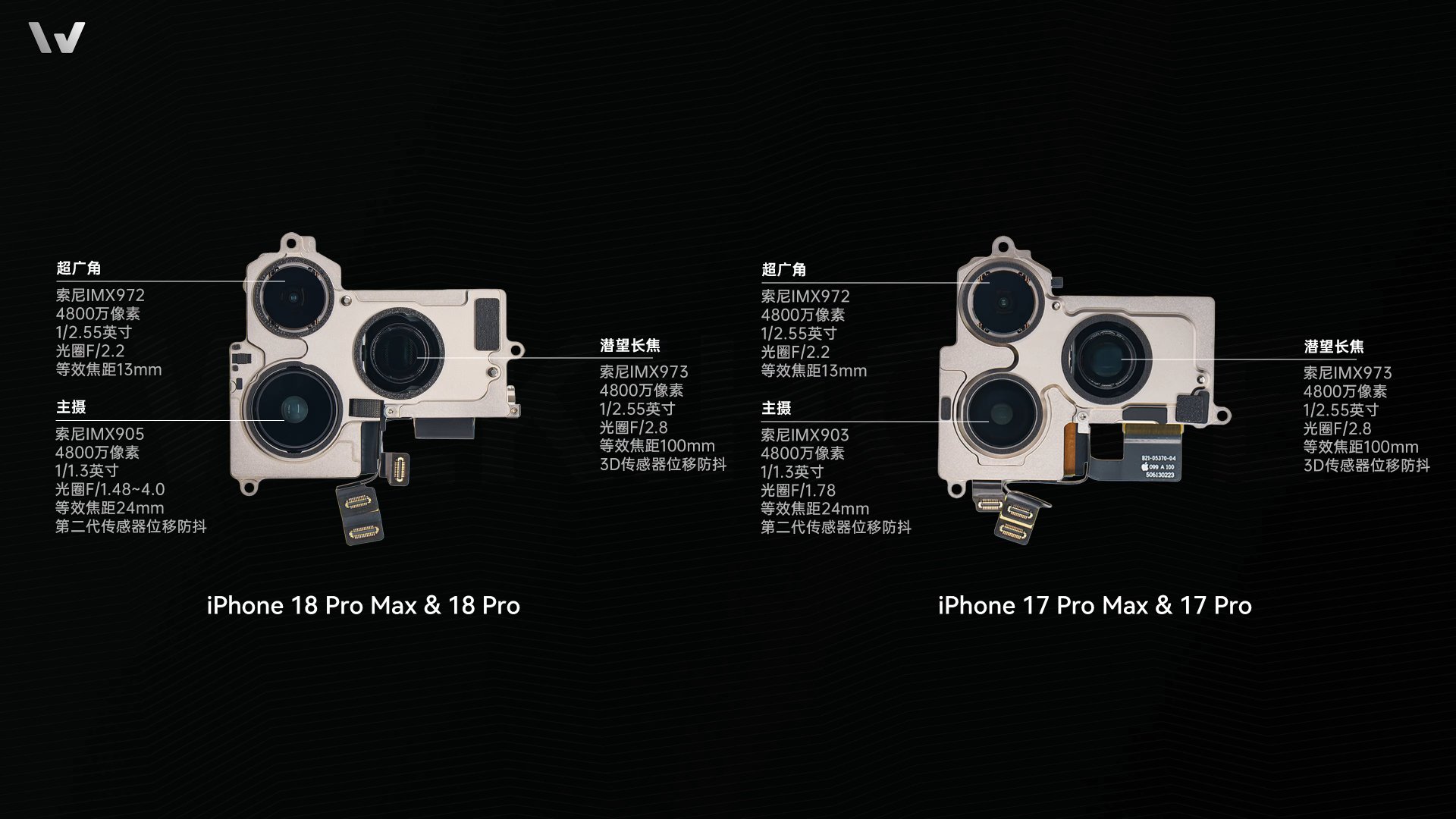
What’s inside the camera
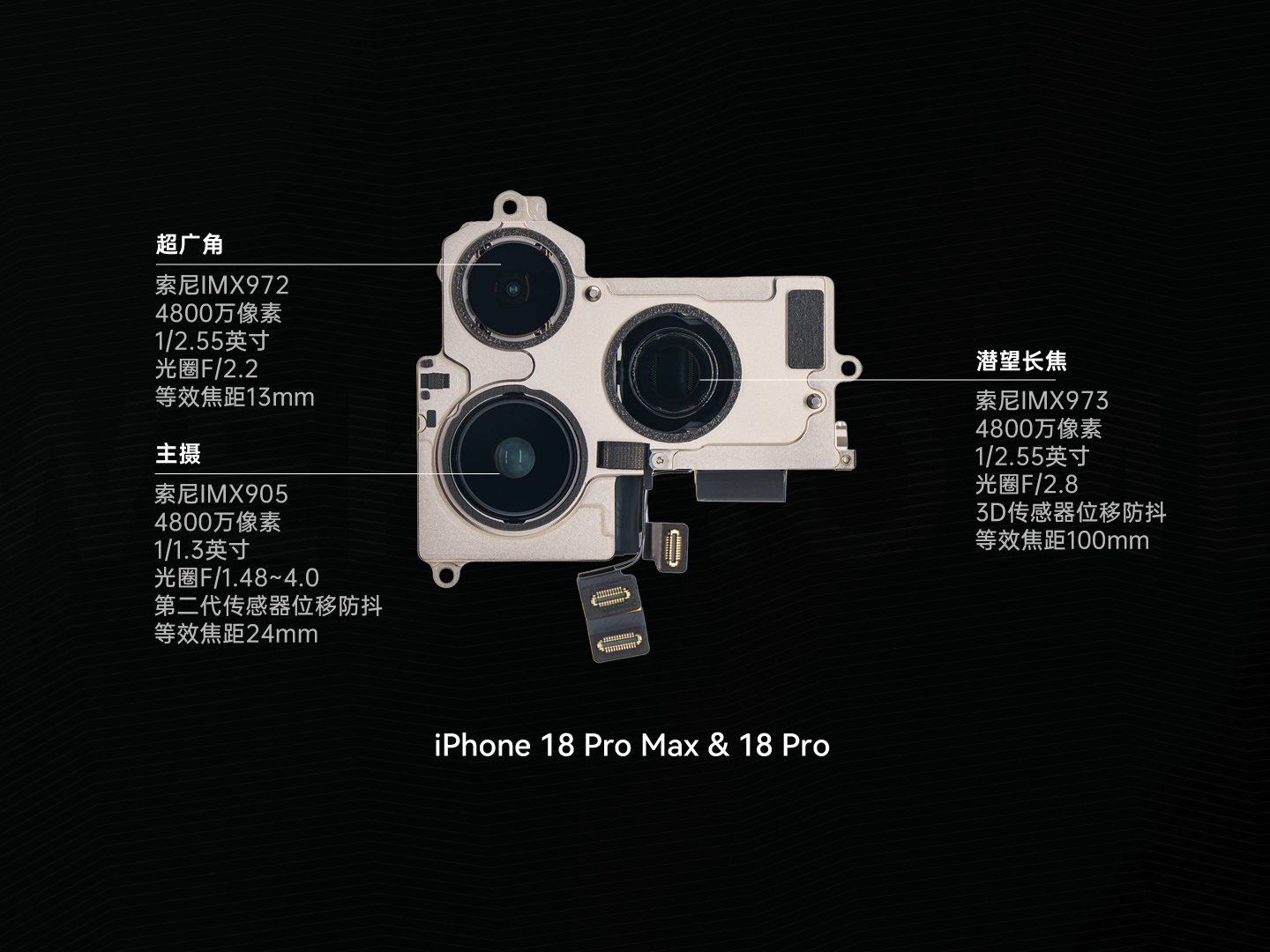
The rear cameras are the same in the iPhone 18 Pro and 18 Pro Max — the teardown author describes them once, for both phones at the same time. Three lenses mounted in a common metal frame, each 48 Mpix:
| Camera | Sensor | Size | Aperture | Focal length equivalent | Stabilization |
|---|---|---|---|---|---|
| Ultrawide | Sony IMX972 | 1/2.55″ | f/2.2 | 13 mm | not specified |
| Main | Sony IMX905 | 1/1.3″ | f/1.48–4.0 | 24 mm | second generation sensor-shift |
| Periscope | Sony IMX973 | 1/2.55″ | f/2.8 | 100 mm | 3D sensor-shift |
With the ultrawide, nothing is said about stabilization — which means that it is unknown, not that it is absent.
Controversy: two of the three cameras are the same as last year
The author placed the cameras from both generations side by side and described them with the same set of data. In pairs, because the Pro and Pro Max from the given year have the same set:
| iPhone 17 Pro i 17 Pro Max | iPhone 18 Pro i 18 Pro Max | |
|---|---|---|
| Ultraszeroki | Sony IMX972, 1/2,55″, f/2,2, 13 mm | Sony IMX972, 1/2,55″, f/2,2, 13 mm |
| Peryskop | Sony IMX973, 1/2,55″, f/2,8, 100 mm | Sony IMX973, 1/2,55″, f/2,8, 100 mm |
| Główny — matryca | Sony IMX903, 1/1,3″, 48 Mpix | Sony IMX905, 1/1,3″, 48 Mpix |
| Główny — przysłona | stała f/1,78 | zmienna f/1,48–4,0 |
Ultraszeroki i peryskop to dosłownie te same matryce. Ta sama rozdzielczość, ta sama wielkość, ta sama jasność i ten sam ekwiwalent ogniskowej.
Aparat główny zmienił oznaczenie z IMX903 na IMX905, ale rozbiórka podaje dla obu tę samą wielkość matrycy, 1/1,3 cala, i tę samą rozdzielczość. Serwisy branżowe podają dla siedemnastki dokładniejszą wartość 1/1,28 cala, więc jakaś drobna różnica może istnieć — autor rozbiórki zaokrągla obie tak samo.
Jedyna prawdziwa różnica to przysłona aparatu głównego.
Sześć ruchomych listków
W miejsce stałego otworu f/1,78 Apple włożyło zmienną przysłonę o zakresie f/1,48–4,0. DxOMark opisuje ją jako prawdziwą przysłonę z sześciu ruchomych listków, która otwiera się i zamyka jak w aparacie fotograficznym — na zdjęciach samego mechanizmu nie widać, bo autor nie rozkręcił obiektywu. Przy obiektywie jest tylko suchy podpis: f/1,48–4,0.
This is not a software trick, but a real mechanism that lets in less or more light. The improvement in the DxOMark score is attributed to this aperture.
What the range provides:
- f/1.48 at night — an opening wider than f/1.78 in the predecessor lets in more light; the score in low light went from 143 to 150 points
- f/4.0 during the day — closing down increases depth of field, allowing for sharpness to be maintained over a larger portion of the frame
- range instead of a single value for everything — although it is unclear whether the aperture closes smoothly or in steps
DxOMark Results: Where the Difference is Visible
| Category | iPhone 17 Pro | iPhone 18 Pro |
|---|---|---|
| Overall | 168 | 172 |
| Video | — | 176 — the highest video score in the entire DxOMark database |
| Low Light | 143 | 150 |
| Portraits | 151 | 157 |
| Zoom | 135 | 138 |
The most significant gains were in low light photos (+7) and portraits (+6), while zoom saw the least improvement (+3), and this is the only camera where the change in aperture does not apply at all. DxOMark does not elaborate on where each of these changes came from, so formally it is a coincidence. However, it is an exceptionally consistent one.
What DxOMark did not praise
DxOMark pointed out four issues: color inaccuracies and white balance jumps, weaker zoom at long distances, flares in certain conditions, and brightness differences between photo previews and video. The second point is not surprising, as the periscope remains the same.
How much do these points really matter
Before you consider 172 versus 168 as a decisive factor, it’s worth knowing where that number comes from and what it does not show.
DxOMark makes money from the manufacturers it tests. It sells them the DxO Analyzer software and consulting for camera tuning, and then evaluates the finished phones. In the industry, this is referred to as the «pay to win» problem: those who use DxO’s paid tools perform better in the rankings than those who do not. No one claims that results are purchased. However, it is difficult to maintain independence when the same company first advises and then evaluates.
Each subsequent generation receives a higher score. This has been visible in the rankings for years, and it is hard not to ask whether the points measure real progress or just grow along with the methodology. Therefore, results from different years cannot be directly compared.
One number hides all compromises. The overall score is derived from several sub-scores of varying weights, and the media only quotes that. Here, it is exemplified: the eighteen wins in low light photography and portraits, while in zoom it practically stands still. If you mainly shoot with a telephoto lens, this difference does not concern you.
There was also a loud dispute about independence. When Xiaomi did not send the 12S Ultra model for testing, DxOMark bought a unit on its own and published a review despite the lack of cooperation from the manufacturer.
The practical conclusion is this: DxOMark points are useful as a hint as to which direction the changes have gone, and here they align with what is seen in the teardown. However, they will not answer the question of whether it is worth replacing the phone. That will only be answered by photos taken in the conditions in which you usually photograph.
Face ID and LiDAR got more than the camera
The most changes occurred not in the cameras, but next to them.
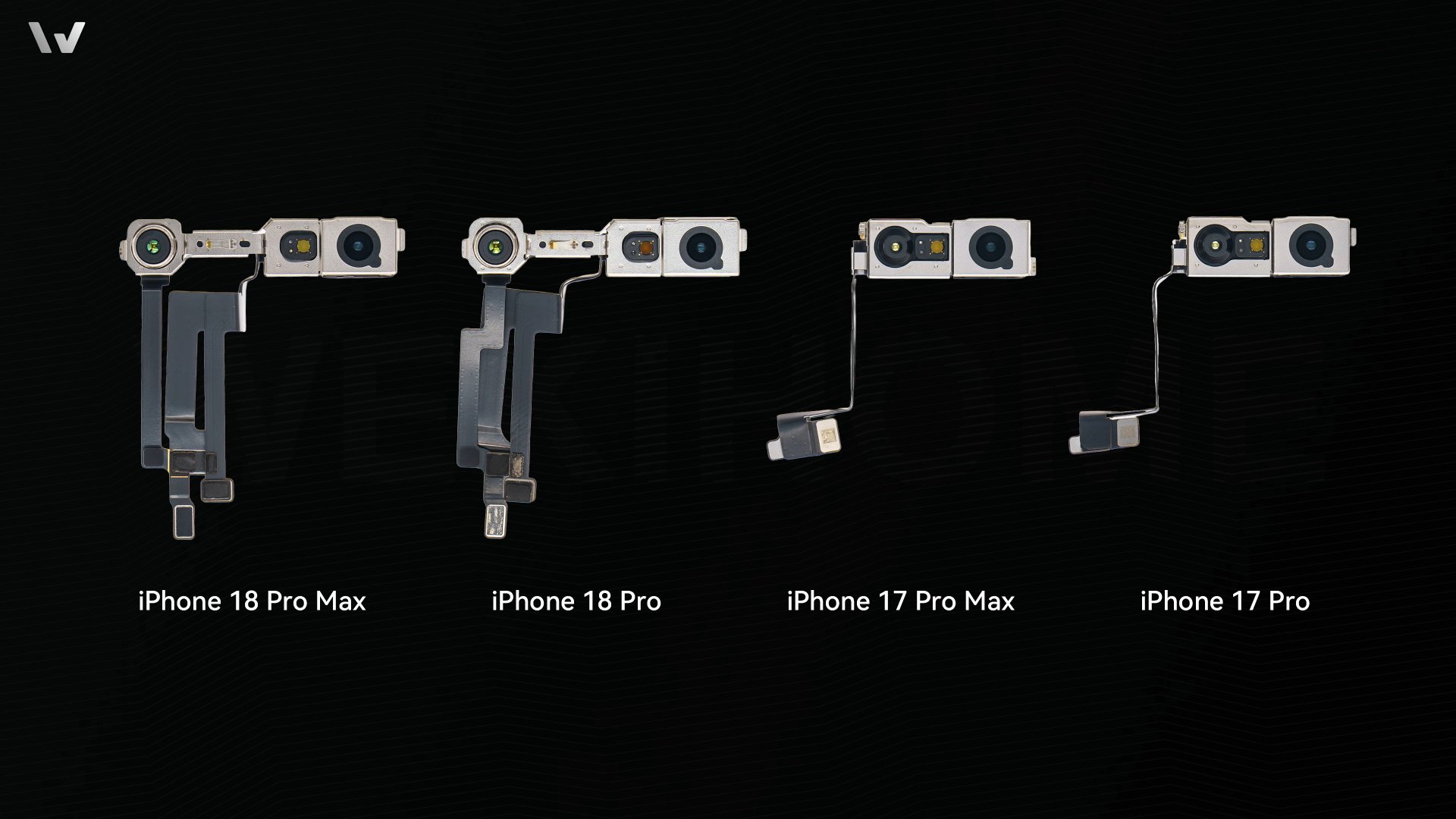
The entire Face ID setup in the eighteen is clearly longer — a wide ribbon with a metal stiffening plate has been added. In the seventeen, everything was tightly packed next to each other; here, the sensor has been moved a considerable distance away from the camera.
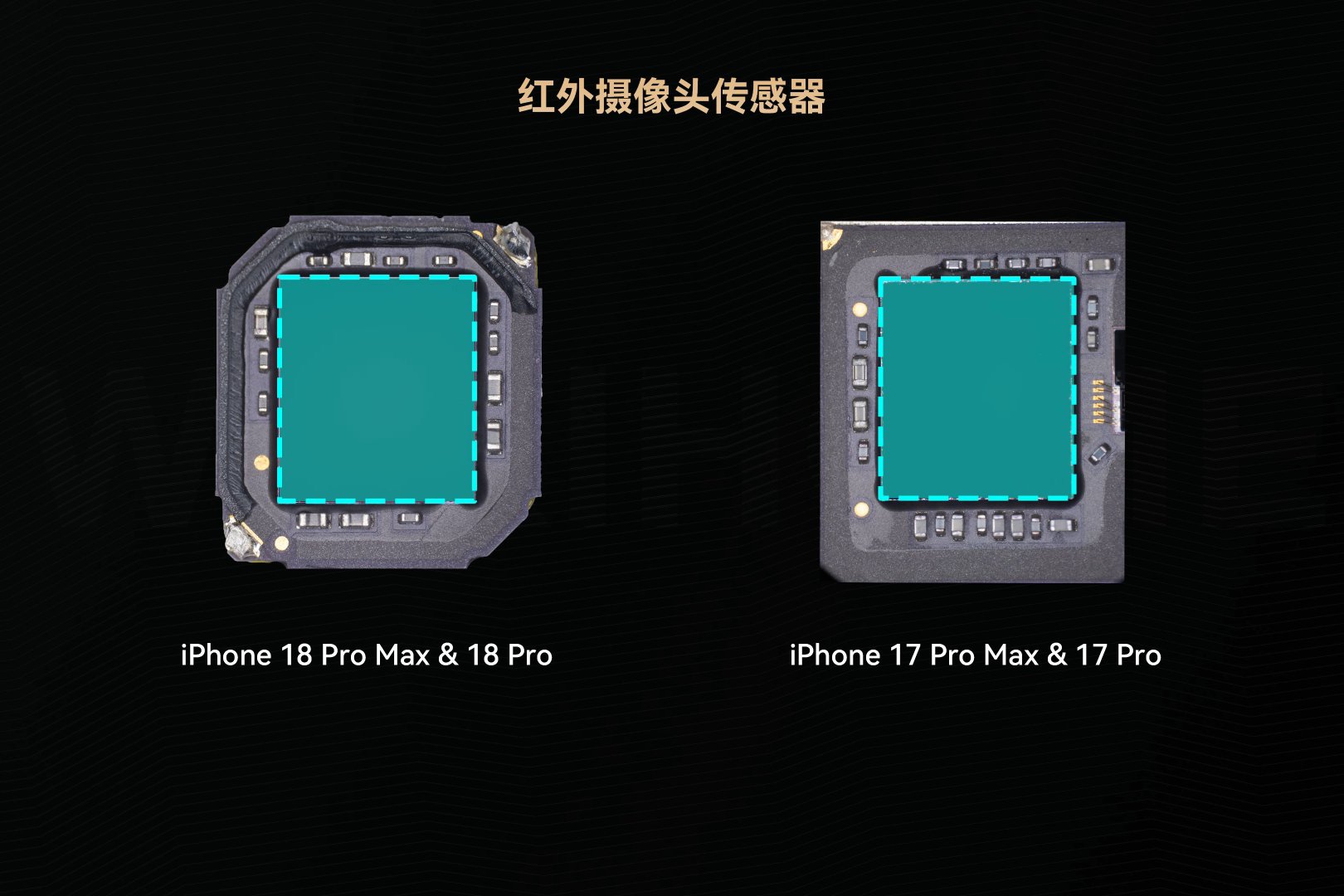
The infrared camera sensor is larger. The author outlined in the photo this part of both sensors that actually collects light — in the eighteen, it is larger and more square.
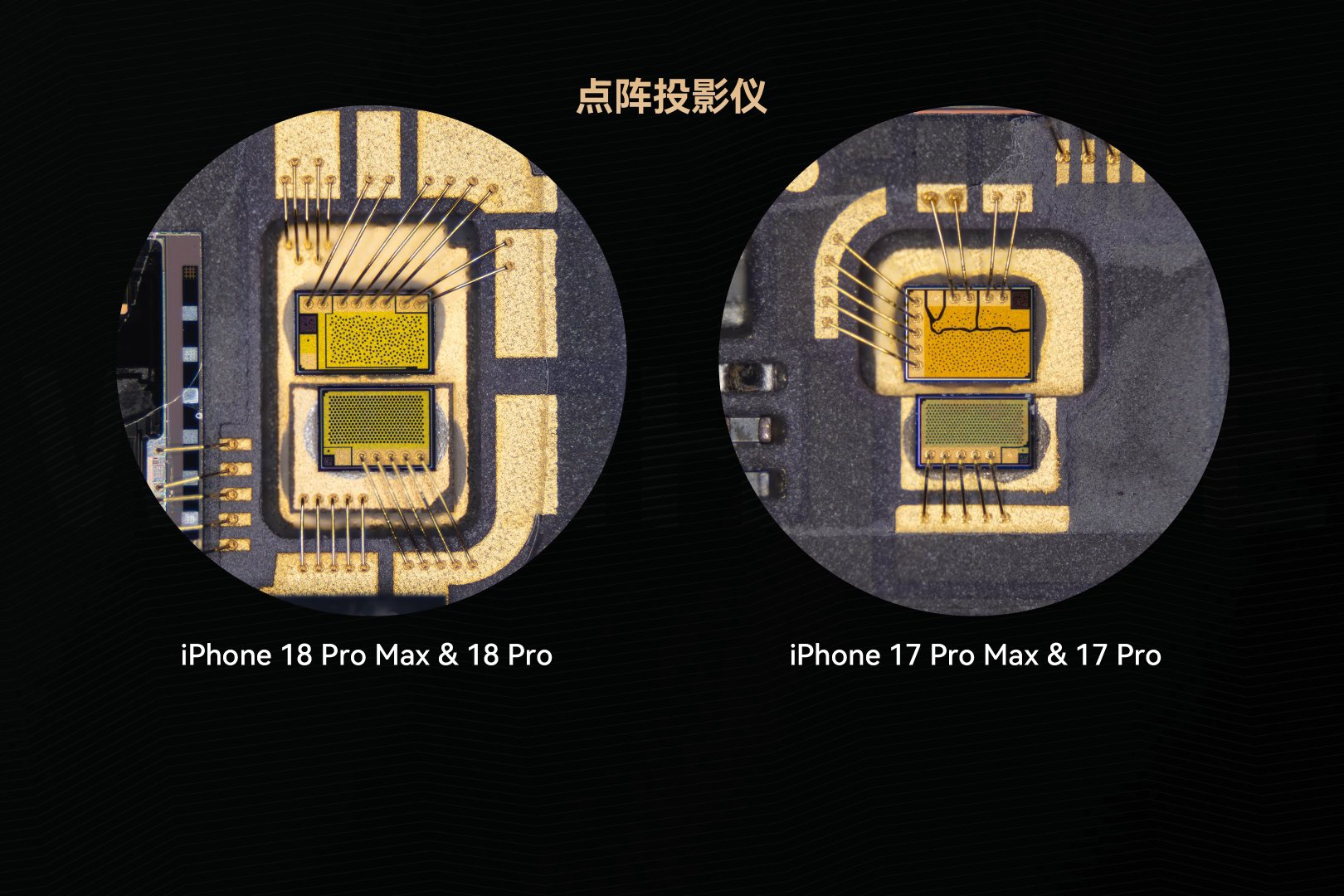
The author removed the casings from the dot projector and photographed the bare circuits in magnification. Here, the redesign is also visible: both circuits — the controlling one and the illuminating one — are larger, there are more thin wires connecting them, and they extend from two sides instead of one, with the light points lying more densely.
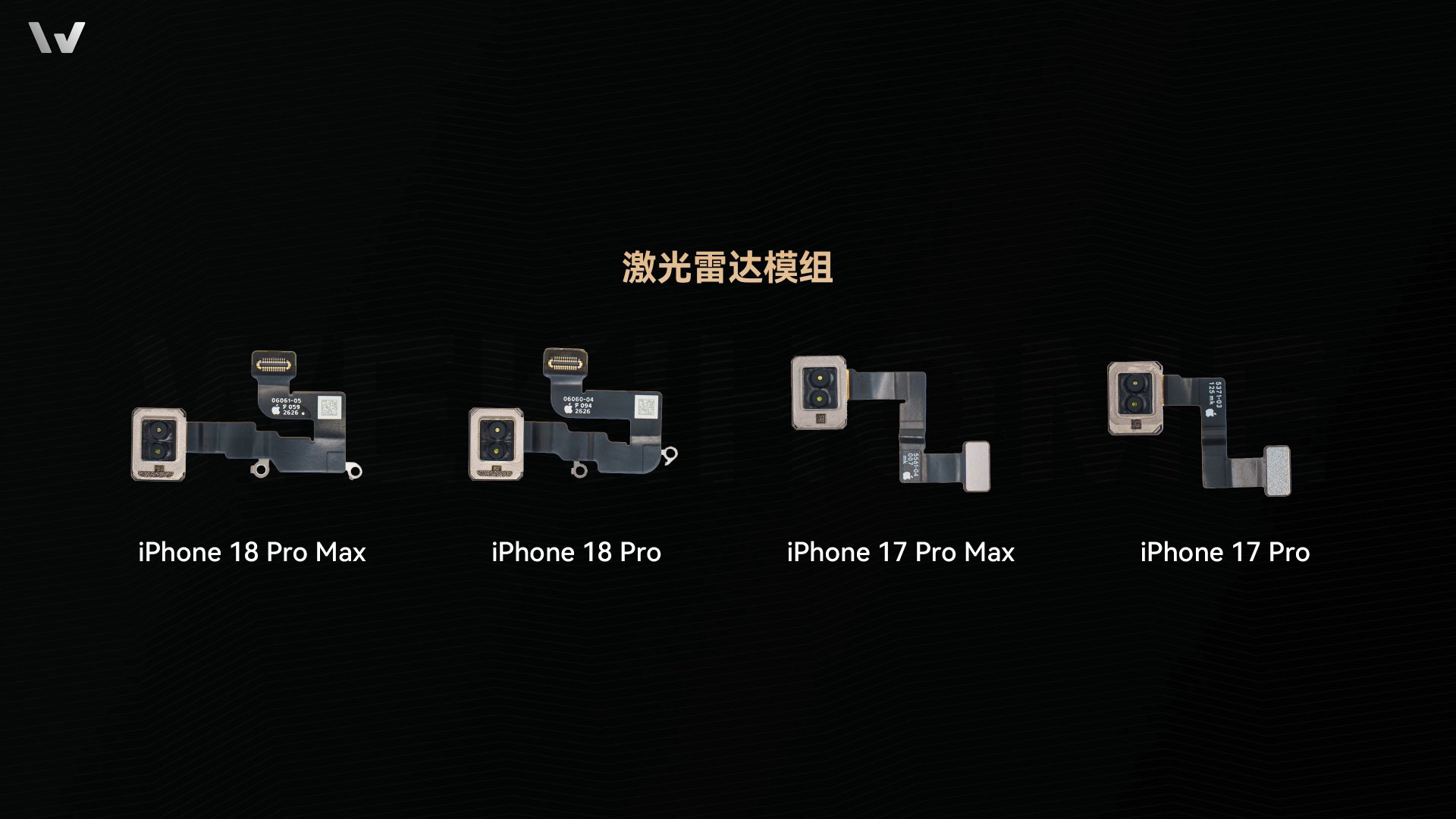
LiDAR has also increased in size. In the eighteen, it is simply larger, and its transmitter has a larger surface area. The tape markings are 06061-05 in 18 Pro Max and 06060-04 in 18 Pro, compared to 5561-04 and 5371-03 a year earlier.
None of these changes are measured by DxOMark, as they evaluate cameras for photos, not face recognition. How the redesign of the dot projector translates into the speed and effectiveness of Face ID is not determined by the teardown.
Front camera without revolution
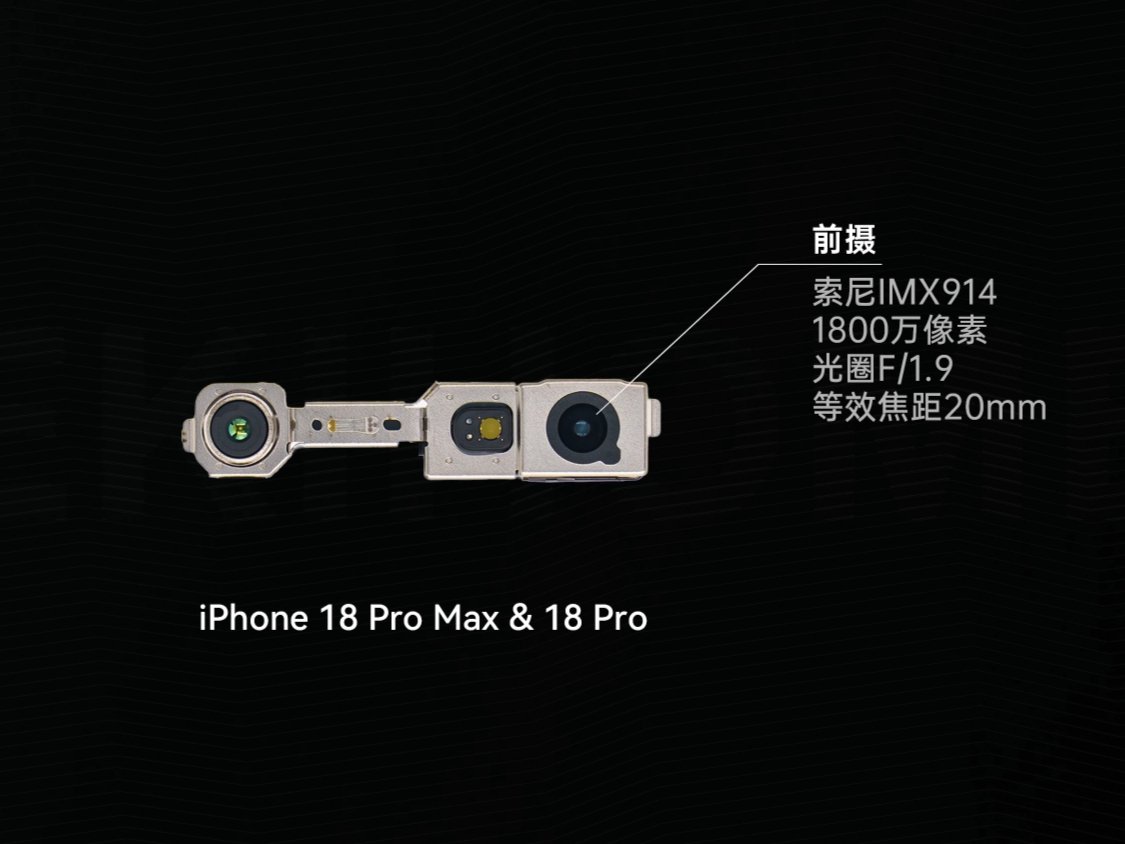
The selfie is taken by Sony IMX914, 18 Mpix, f/1.9, equivalent to 20 mm — the same data for 18 Pro and 18 Pro Max. The same sensor is attributed to the seventeen by industry services. The comparative photo from the teardown is not labeled; it only shows that both sensors have similarly sized light-collecting parts and differ in casing shape.
Co to znaczy przy zakupie ochrony
Wyspa aparatów w osiemnastce ciągnie się przez całą szerokość pleców. Mieści trzy obiektywy ustawione w trójkąt, lampę błyskową, mikrofon i okienko czujnika.
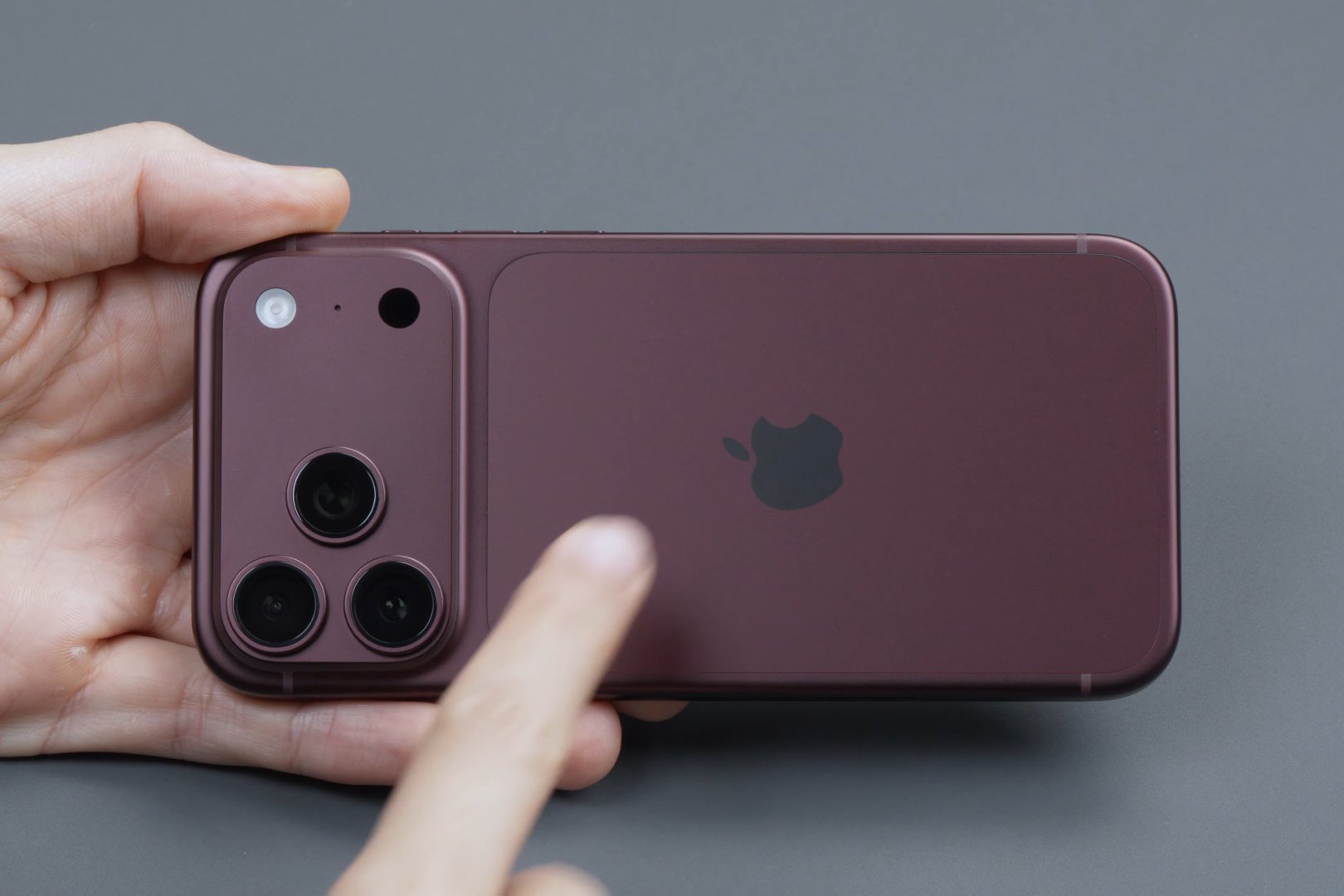
Na zdjęciach obudów obu generacji widać, że pierścienie wokół obiektywów w osiemnastce są szersze i inaczej rozmieszczone niż w siedemnastce. Ktoś zadał sobie trud i zmierzył to suwmiarką — na egzemplarzach Pro Max:
| Miejsce pomiaru | iPhone 17 Pro Max | iPhone 18 Pro Max |
|---|---|---|
| Na obiektywach | 13,20 mm | 13,68 mm |
| Na samej wyspie | 11,36 mm | 11,58 mm |
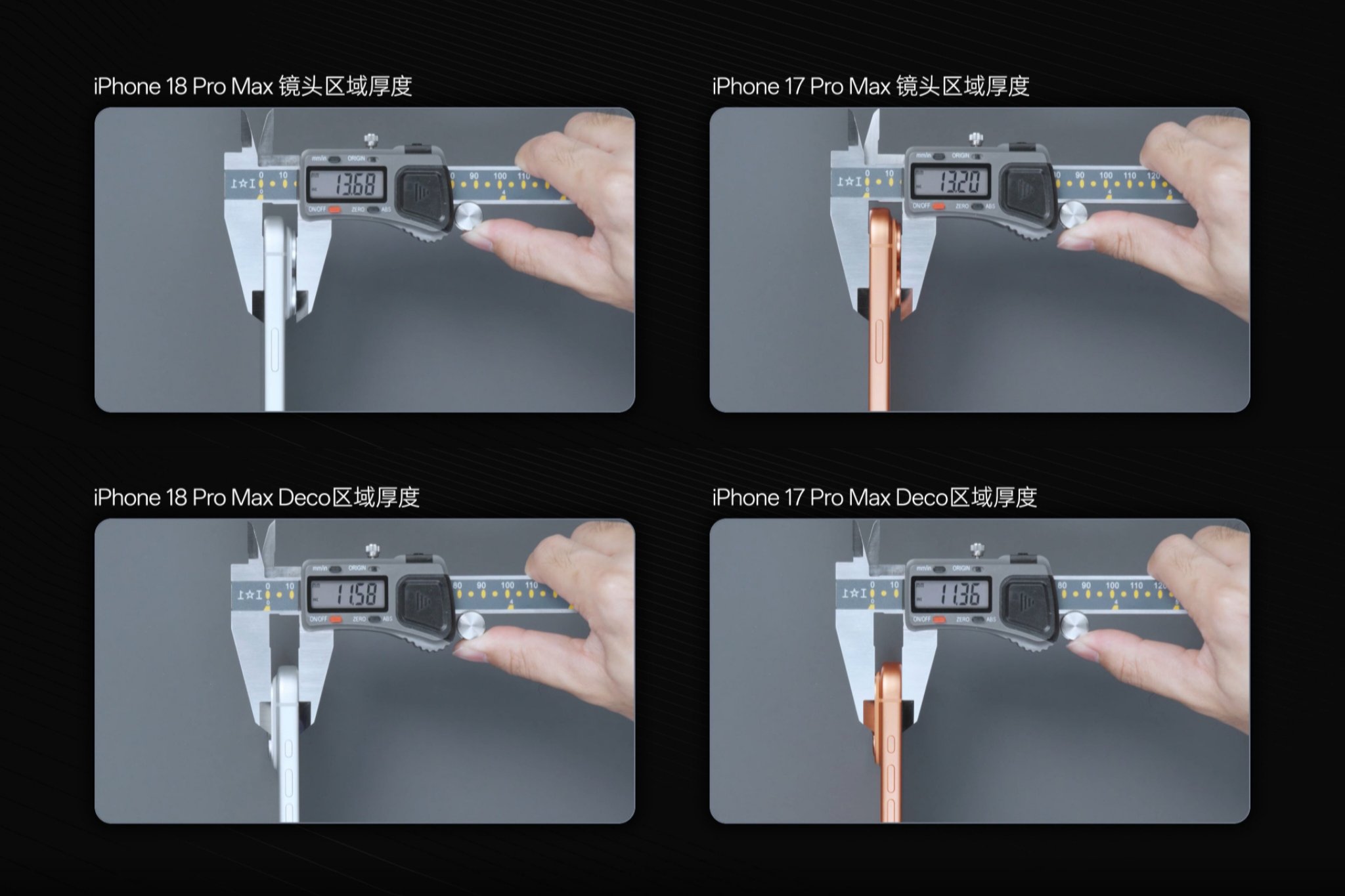
The island has grown by 0.22 mm, and together with the protruding lenses by almost half a millimeter. The measurement was taken on larger models, but the back construction is the same in both variants. It sounds like nothing, but the camera cover is a precisely fitted element — half a millimeter is the difference between a cover that sits evenly and one that wobbles on the edge or doesn’t fit at all. In our store, the covers for both generations are separate products, and that’s why.
A small tip when choosing, by the way universal: covers that hold onto the ring around the lens are easier to remove than those that stick directly to the glass — less risk of scratching something.
And one caveat: the flares mentioned by DxOMark are a feature of the camera itself, tested without any additions. The laboratory did not check the covers and does not comment on how they affect the photos.
If you have the seventeenth, the correct categories are camera glass for iPhone 17 Pro and iPhone 17 Pro Max — these are separate shelves. For the eighteenth, the fitting covers are camera covers for iPhone 18 Pro and iPhone 18 Pro Max.
You can find the full selection of accessories in the categories iPhone 17 Pro and iPhone 18 Pro.
Summary
In the iPhone 18 Pro the better result does not come from changing the sensors. The ultra-wide and periscope remain the same, the main camera has changed its designation while maintaining the same size and resolution, and the only real change is the aperture f/1.48–4.0. The new model debuts in second place in the ranking, while its predecessor is currently in fifth.
However, the most changes have occurred where DxOMark does not look at all: in Face ID and LiDAR.
And the points themselves should be taken with a grain of salt. They indicate the direction of changes, but they cannot replace viewing photos from the phone that you actually use.
FAQ — frequently asked questions
What camera does the iPhone 18 Pro have?
Three sensors of 48 Mpix: ultra-wide Sony IMX972 (f/2.2, equivalent to 13 mm), main Sony IMX905 (1/1.3″, variable aperture f/1.48–4.0, equivalent to 24 mm) and periscope Sony IMX973 (f/2.8, equivalent to 100 mm). The front camera is Sony IMX914 18 Mpix f/1.9. The same set goes to the 18 Pro Max.
How many DxOMark points does the iPhone 18 Pro have?
172 points and second place in the global ranking, behind the Huawei Pura 80 Ultra with 175. The iPhone 17 Pro has 168 points and occupies the fifth position. It is worth remembering that DxOMark sells tools and consulting to manufacturers for tuning cameras, so the ranking is sometimes criticized for a lack of independence.
What is the difference between the iPhone 18 Pro camera and the 17 Pro?
Właściwie jedną: aparat główny ma zmienną przysłonę f/1,48–4,0 zamiast stałej f/1,78. Matryca główna zmieniła oznaczenie (IMX903 → IMX905) przy tej samej wielkości i rozdzielczości, a ultraszeroki i peryskopowy to te same matryce, co w poprzedniej generacji.
Co to jest zmienna przysłona w iPhone 18 Pro?
Mechanizm zmieniający wielkość otworu obiektywu w zakresie od f/1,48 do f/4,0 — DxOMark opisuje go jako fizyczną przysłonę z sześciu ruchomych listków, jak w aparacie fotograficznym. Szerzej otwarta przepuszcza więcej światła po zmroku, przymknięta daje większą głębię ostrości.
Czy szkło na aparat z iPhone 17 Pro pasuje do 18 Pro?
Nie. Wyspa aparatu w osiemnastce jest grubsza — 11,58 mm wobec 11,36 mm, a licząc z wystającymi obiektywami 13,68 wobec 13,20 mm. Do tego pierścienie wokół obiektywów są szersze i inaczej rozmieszczone. Potrzebne będzie szkło dedykowane nowemu modelowi.
Czy można wierzyć wynikom DxOMark?
Z zastrzeżeniami. DxOMark sprzedaje producentom oprogramowanie i doradztwo przy strojeniu aparatów, a potem ocenia gotowe telefony — branża zarzuca temu brak niezależności. Do tego każda kolejna generacja dostaje wyższą notę, więc wyniki z różnych lat trudno zestawiać wprost, a jedna liczba ukrywa wszystkie kompromisy między kategoriami. Traktuj punkty jako wskazówkę, w którą stronę poszły zmiany, a nie jako werdykt.
Does the iPhone 18 Pro have better zoom than the 17 Pro?
Minimal: 138 points versus 135. The periscope uses the same Sony IMX973 sensor with the same f/2.8 aperture, so there has been no hardware change here, and DxOMark does not explain the reasons for these three points. The lab also pointed out weaker zoom at long distances.
Is Face ID on the iPhone 18 Pro better?
Hardware-wise, yes: the infrared camera sensor collects light from a larger area, and the dot projector has been redesigned — its components are larger, and the dots are more densely packed. However, the teardown does not indicate how this translates to speed or effectiveness of recognition.
Legg att eit svar