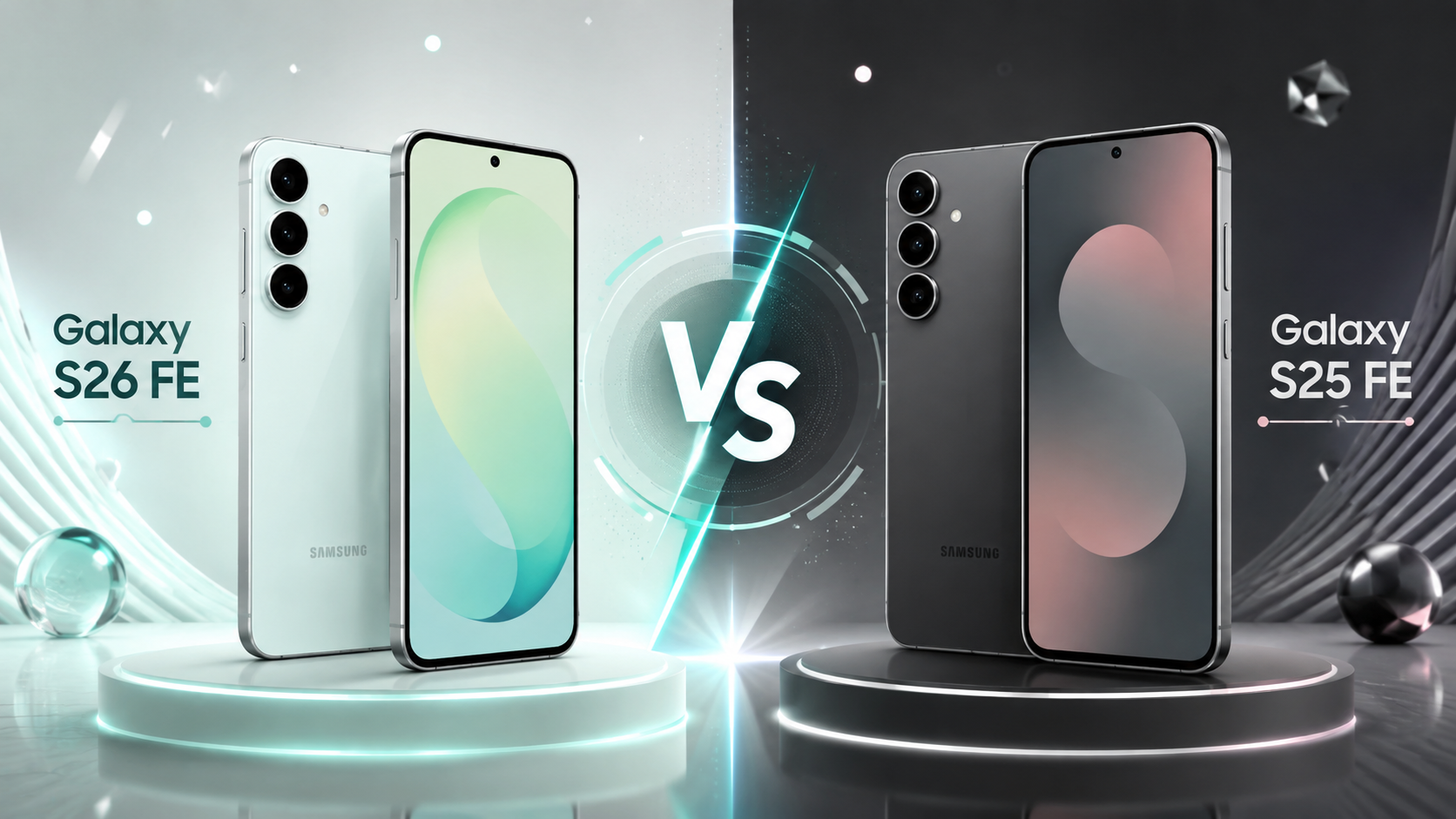
In comparison Galaxy S26 FE vs S25 FE, the differences come down to three things: the Exynos 2500 processor instead of 2400, the One UI 9 system instead of One UI 8, and the USB port, which has reverted to version 2.0. The screen, all three cameras, selfie, and the 4,900 mAh battery are identical.
The S26 FE was launched on August 27, 2026, and sales start on September 4.
Place both phones side by side, and you won’t distinguish them without looking into the settings. Samsung has transferred almost all the hardware from last year and raised the price.
Below is the full table of both models, resolving the circulating rumor about the silicon-carbon battery, which is even repeated in the specification tables, and a section about accessories: what fits which model and why the case from S25 FE won’t fit on S26 FE.
When each model entered the market
Both phones debuted at the same time of the year, with less than twelve months apart. The Galaxy S25 FE had its premiere and sales start on the same day, while the S26 FE got a week break between the two.
| Event | Galaxy S25 FE | Galaxy S26 FE |
|---|---|---|
| Launch (announcement) | September 4, 2025 | August 27, 2026 |
| Sales start | September 4, 2025 | September 4, 2026 |
| Starting price (128 GB) | 750 EUR | 799 EUR |
| System at launch | One UI 8, Android 16 | One UI 9, Android 17 |
Galaxy S26 FE is now official. Samsung unveiled it on August 27, 2026, and immediately provided the full specifications and prices, so all the data in this article comes from the manufacturer, not leaks. The phone hits stores on September 4, 2026.
Samsung S25 FE has been on sale for a year, which changes the entire calculation. Remember this for the price section, as this is where the most significant difference between these models lies.
Accessories for both generations are readily available. See the Galaxy S26 FE category →
Galaxy S26 FE vs S25 FE: full comparison table
We have bolded only those items that actually differ.
| Parametr | Galaxy S25 FE | Galaxy S26 FE |
|---|---|---|
| Procesor | Exynos 2400 (4 nm) | Exynos 2500 (3 nm) |
| Układ graficzny | Xclipse 940 | Xclipse 950 |
| RAM | 8 GB | 8 GB |
| Pamięć | 128 / 256 / 512 GB, UFS 4.0 | 128 / 256 / 512 GB, UFS 4.0 |
| Ekran | 6.7″, Dynamic AMOLED 2X | 6.7″, Dynamic AMOLED 2X |
| Rozdzielczość | 1080 × 2340 (385 ppi) | 1080 × 2340 (385 ppi) |
| Odświeżanie | 60–120 Hz | 60–120 Hz |
| Jasność szczytowa | 1 900 nitów | 1 900 nitów |
| Szkło | Gorilla Glass Victus+ | Gorilla Glass Victus+ |
| Aparat główny | 50 MP, f/1.8, OIS | 50 MP, f/1.8, OIS |
| Ultraszerokokątny | 12 MP, f/2.2, 123° | 12 MP, f/2.2, 123° |
| Teleobiektyw | 8 MP, zoom 3×, OIS | 8 MP, zoom 3×, OIS |
| Selfie | 12 MP, f/2.2 | 12 MP, f/2.2 |
| Wideo | 8K 30 fps, 4K 120 fps | 8K 30 fps, 4K 120 fps |
| Bateria | 4 900 mAh, Li-Ion | 4 900 mAh, Li-Ion |
| Ładowanie przewodowe | 45 W (65% w 30 min) | 45 W (69% w 30 min) |
| Ładowanie bezprzewodowe | 15 W, zgodność z Qi2 | 15 W, zgodność z Qi2 |
| Certyfikowane cykle ładowania | 2 000 | 1 200 |
| Port USB-C | USB 3.2 Gen 1 | USB 2.0 |
| Wymiary | 161.3 × 76.6 × 7.4 mm | 161.6 × 76.9 × 7.4 mm |
| Waga | 190 g | 193 g |
| Ramka | aluminium | aluminium |
| Odporność | IP68 | IP68 |
| System na starcie | One UI 8, Android 16 | One UI 9, Android 17 |
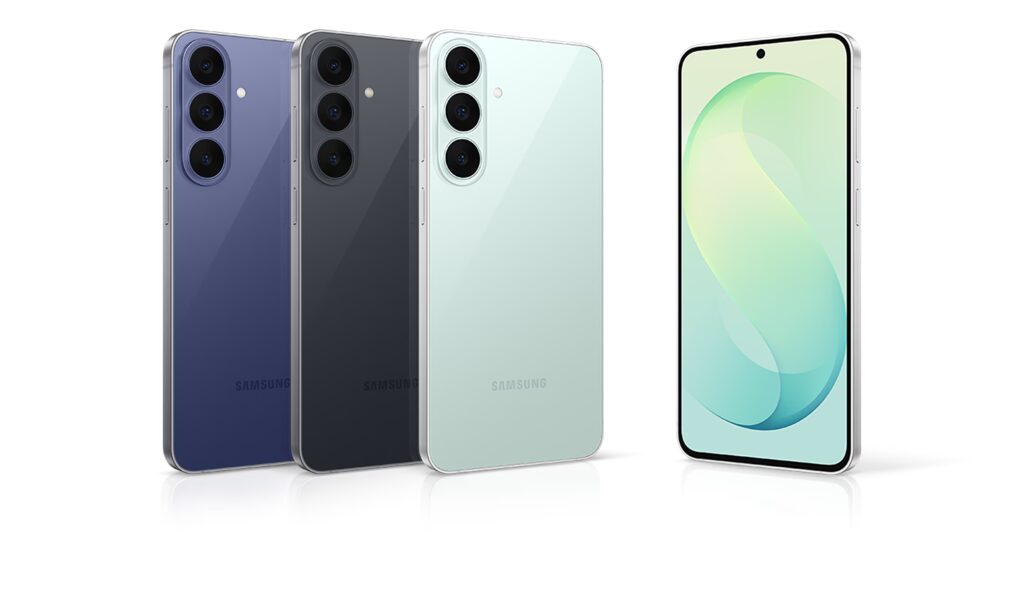
| Kolory | Icyblue, Jetblack, Navy, White | Graphite, Pistachio, Blueberry |
Nine different positions out of twenty-five. Of these, five are cosmetics (dimensions, weight, colors, charging speed, version number of One UI), two are steps back, and the performance gain comes from the processor along with the graphics chip.
What does Exynos 2500 provide in everyday use?
Exynos 2500 is the only noticeable change in daily use. The chip is built on the second generation of the 3 nm GAA process, while Exynos 2400 from S25 FE used 4 nm.
Performance gain according to Samsung:
- About 30% faster processor (CPU) and graphics chip (GPU)
- About 40% faster NPU, responsible for Galaxy AI functions
- Newer main core: Cortex-X925 instead of Cortex-X4
- Newer graphics chip: Xclipse 950 instead of Xclipse 940
NPU is more important here than it looks on paper. It counts the Galaxy AI functions, such as summaries, real-time translations, and photo processing. If you actually use Galaxy AI, that’s the biggest difference in the entire comparison.
Note: 30% on paper does not mean a 30% faster phone. Both models perform practically the same in everyday tasks, such as browsing, social media, and photos. The difference reveals itself in gaming and under prolonged load.
The screen and cameras remain unchanged
There’s nothing to write about here, and that’s the most important information.
The screen parameters are identical: 6.7 inches, Dynamic AMOLED 2X, 1080 × 2340, refresh rate from 60 to 120 Hz, declared brightness of 1,900 nits, Gorilla Glass Victus+.
The camera setup is identical, sensor by sensor:
- Main 50 MP, f/1.8, with optical stabilization (OIS)
- Ultrawide 12 MP, f/2.2, field of view 123°
- Telephoto 8 MP, 3× optical zoom, with OIS
- Selfie 12 MP, f/2.2
Video recording is also unchanged: 8K at 30 fps and 4K at 120 fps in both models.
Sensory są te same, ale zdjęcia przechodzą przez nowszy procesor sygnału obrazu (ISP), więc Samsung zapowiada nieznacznie lepszą rozpiętość tonalną po zmroku. To jedyne, co w aparatach faktycznie się zmienia.
Nowe w S26 FE są wyłącznie funkcje programowe: My FanCam (automatyczne trzymanie wybranej osoby w kadrze, wcześniej dostępne tylko w modelach składanych) oraz Super Steady z blokadą poziomu. To software, który Samsung może w przyszłości udostępnić także starszemu modelowi.
Bateria bez zmian i bez ogniwa silicon-carbon
Oba telefony mają 4 900 mAh, tę samą moc ładowania przewodowego 45 W i bezprzewodowego 15 W.
Krąży informacja, że Samsung S26 FE dostał baterię silicon-carbon. Nie jest potwierdzona. Samsung nie wymienia tej technologii w oficjalnej specyfikacji, a SamMobile wprost pisze o zwykłym ogniwie litowo-jonowym. Część baz danych, w tym GSMArena, oznacza jednak ogniwo jako Si/C.
Rozstrzygnięcia od producenta nie ma. Pewne jest natomiast to, że silicon-carbon trafiło w lipcu 2026 wyłącznie do modeli składanych: Galaxy Z Flip 8, Z Fold 8 i Z Fold 8 Ultra.
Real profit during operation comes not from the cell, but from a more efficient 3 nm processor. Samsung claims about an hour longer video playback, and the EU energy label states 50 hours of operation compared to 42.5 hours in the S25 FE and class A instead of B.
The difference in charging is cosmetic: 69% in 30 minutes compared to 65% in the S25 FE. Four percentage points.
Hidden downside: the battery will last fewer cycles
This is not advertised by Samsung, and it directly results from the EU energy label. The cell in the S26 FE is certified for 1,200 charging cycles, while in the S25 FE it is 2,000. A cycle is a full charge from zero to one hundred percent; after exceeding this limit, the battery retains less than 80% of its original capacity.
In practice, 1,200 cycles still mean several years of normal use. However, it is worth knowing that with seven years of system support, the battery will deplete its certified reserve much earlier than the updates.
To achieve the full 45 W, both models require the same USB Power Delivery charger (USB PD) with a power of at least 45 W. When purchasing accessories, you do not need to distinguish between generations.
USB port is the first step backward
The Galaxy S26 FE has a USB-C port in 2.0 standard, while the S25 FE had USB 3.2 Gen 1. This is the second point, alongside battery life, where the newer model performs worse than its predecessor.
Loading works just as fast, because power does not depend on the data standard version. Only file transfer is slower.
The scale of this difference is impressive only with specifics. A minute of 8K video weighs several hundred megabytes, so an hour of material is several dozen gigabytes. With USB 3.2 Gen 1, you can transfer it in a few minutes, while with USB 2.0, the phone will stay connected to the computer for much longer.
If you use the cloud or transfer photos wirelessly, you won’t notice the difference.
System and updates, or the difference of one year
Galaxy S26 FE starts with One UI 9 on Android 17, while S25 FE debuted with One UI 8 on Android 16.
Both generations have the same support policy: seven generations of Android and seven years of security patches. However, since S26 FE starts a year later, its support ends a year later.
This is a real advantage of the newer model, although in practice it means choosing between a phone supported until 2032 and one supported until 2033. S25 FE will still receive One UI 9 in an update.
Here lies the real difference between the models
The starting prices of both models in Europe:
| Version | Galaxy S25 FE at launch | Galaxy S26 FE at launch |
|---|---|---|
| 8 GB / 128 GB | 750 EUR | 799 EUR |
| 8 GB / 256 GB | 810 EUR | 899 EUR |
| 8 GB / 512 GB | 930 EUR | 1 099 EUR |
Samsung S26 FE is more expensive at every memory level. The increase grows with capacity: 49 EUR for the base version, 89 EUR for 256 GB, and as much as 169 EUR for 512 GB.
However, something else is key. The Galaxy S25 FE has been on the market for a year and has clearly dropped in price. The actual level of reduction depends on the store and promotions, but you can buy the older model today noticeably cheaper than on the day of its release, while the S26 FE is just starting with a full price list.
Combine this with the specification table: you get the same screen, the same camera setup, the same battery, and a faster USB port, paying significantly less. For most people, the Galaxy S25 FE is a more sensible purchase today.
Galaxy S26 FE vs S25 FE: which one to choose?
Choose Galaxy S26 FE if:
- You regularly use Galaxy AI features, as the NPU has gained the most here.
- You game and want power reserves for a few years ahead.
- You care about the longest possible support, until 2033.
- You buy a phone for six or seven years and the price difference is spread over that period.
Choose Galaxy S25 FE if:
- You are looking at the price-to-performance ratio. The screen, cameras, and battery are identical, and you pay significantly less.
- You transfer large files via cable, as only this model has a fast USB 3.2 Gen 1 port.
- You do not use AI features intensively enough to feel the faster NPU.
Our choice: with today’s price difference, the Galaxy S25 FE wins for most buyers. The Galaxy S26 FE makes sense if you plan to keep the phone until the end of the support period or heavily use Galaxy AI.
If you are considering stronger models from this family, we have compared them in the comparison Galaxy S26 Ultra and S25 Ultra.
Accessories: does the case from Galaxy S25 FE fit S26 FE?
It does not fit and it’s not worth trying. This is the first question that arises when changing generations, and here the answer is clear.
The difference in dimensions is 0.3 mm in height and 0.3 mm in width, and according to Android Authority, Samsung has slightly redesigned the camera island. The thickness is identical (7.4 mm), so soft cases from the previous model can often be stretched, but:
- The camera cutouts do not align in the same place. With the changed island, part of the lens may be covered.
- The buttons do not align with the cutouts, making clicking uncomfortable.
- Rigid cases crack at the corner when trying to stretch them.
It’s the same with tempered glasses. The diagonal and resolution have not changed, but the 0.3 mm wider front means that the glass for the S25 FE will not cover the screen evenly, and the glue will partially hit the edge.
Note: manufacturers released dedicated versions for the S26 FE even before the phone went on sale, so there’s no reason to compromise. Choose accessories described exactly for the model you have.
Magnets: a common problem for both generations
Neither the Galaxy S25 FE nor the S26 FE have built-in magnets. Both charge wirelessly in the Qi2 standard at 15 W, but neither will attract itself to the charger or holder.
W obu przypadkach rozwiązanie jest to samo: etui z pierścieniem magnetycznym. Zakładasz je i telefon zaczyna trzymać się ładowarek Qi2, powerbanków magnetycznych, uchwytów samochodowych i portfeli na karty. Ten sam mechanizm opisaliśmy przy iPhone’ie 16e bez MagSafe.
Akcesoria magnetyczne pasujące do obu modeli znajdziesz w kategoriach ładowarki indukcyjne oraz akcesoria MagSafe.
Akcesoria do Galaxy S26 FE
Etui i szkła do nowego modelu trafiły do magazynu, zanim telefon w ogóle pojawił się w sklepach.
Spigen Ultra Hybrid Mag MagSafe
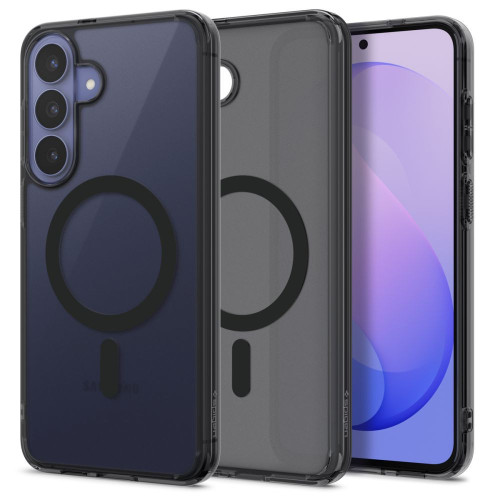

Do czego pasuje: Spigen Ultra Hybrid Mag, jeśli zależy Ci na magnesach.
Etui łączy sztywne plecy z poliwęglanu (PC) z elastyczną ramką z TPU (termoplastyczny poliuretan), a do tego dokłada pierścień magnetyczny, którego brakuje w samym telefonie. Wersja Frost Black ma matowe, przydymione plecy, na których odciski palców są dużo mniej widoczne niż na wariancie błyszczącym.
Ringke Fusion Magnetic MagSafe
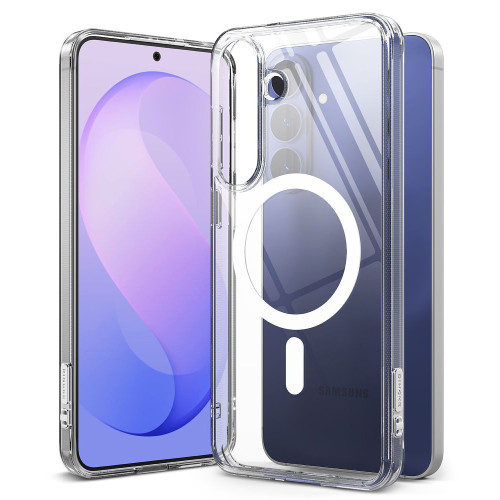
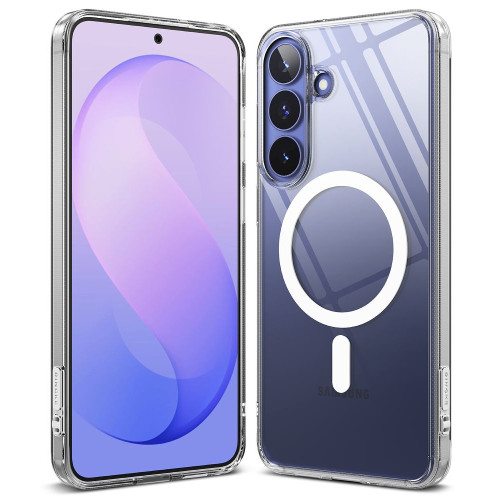
Przezroczyste etui ma magnesy i podwyższoną krawędź wokół wyspy aparatu. Dobry wybór, jeśli kupujesz kolor Pistachio albo Blueberry i chcesz go widzieć.
Tech-Protect Glass Fit+


Gorilla Glass Victus+ protects the screen from scratches, but not from breaking upon falling. Replacing the display at a service center costs hundreds of zlotys, while tempered glass is a fraction of that amount. Glass Fit+ comes in a set of two pieces with an installation frame.
[hs_products category=»2578″ limit=»6″ sort=»sales» title=»Accessories for Galaxy S26 FE»]
Accessories for Galaxy S25 FE
Samsung S25 FE has been on the market for a year, so the selection is much wider: the case category alone has over a hundred items. We have gathered the full ranking in a separate article about the best cases for Galaxy S25 FE.
UAG Scout MagSafe
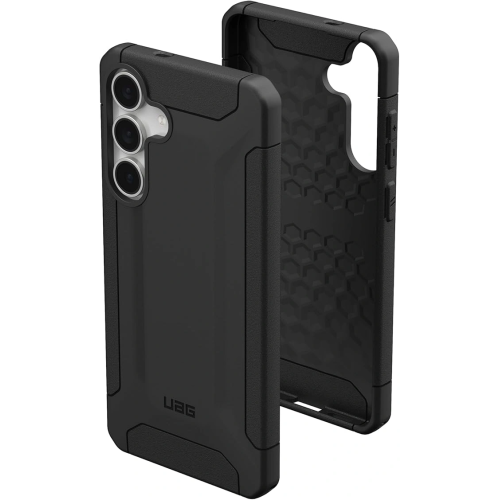
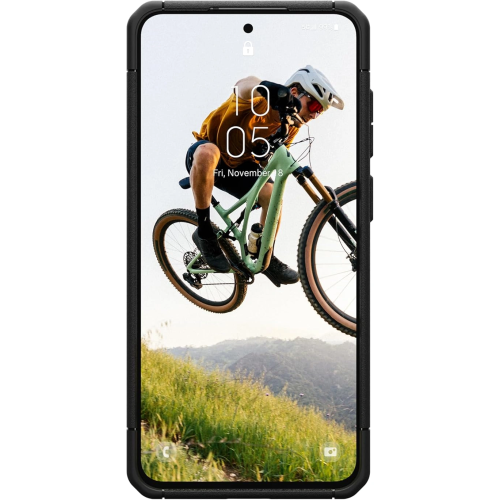
Konstrukcja pancerna z magnesami i certyfikatem MIL-STD-810G. UAG robi etui grubsze niż Spigen, ale to właśnie ta grubość chroni przy upadku na krawędź.
Tech-Protect Magflex MagSafe
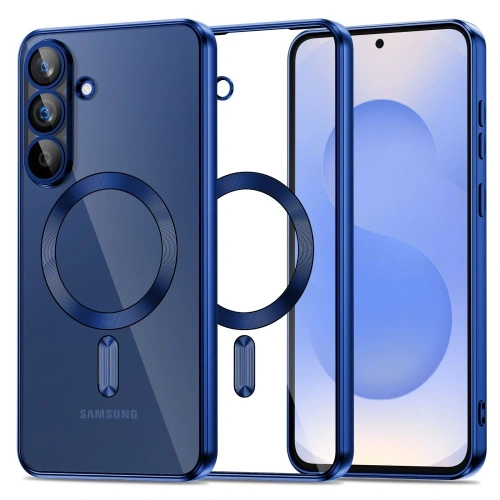
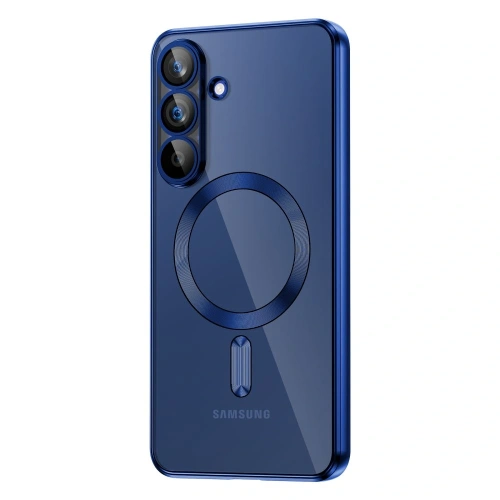
This is a thinner alternative to armored constructions, also with a magnetic ring. It will work well if you don’t want the case to add bulk to the phone.
Spigen Glas.tR EZ Fit Pro
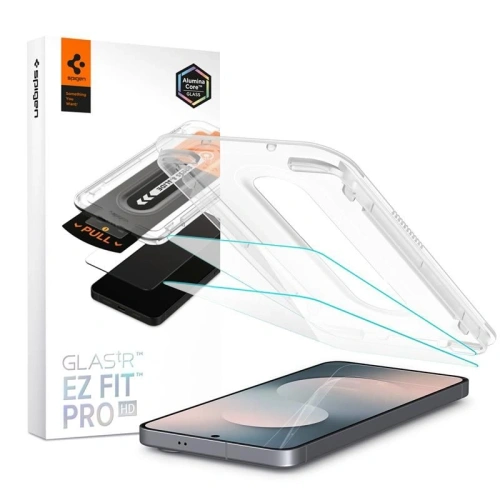
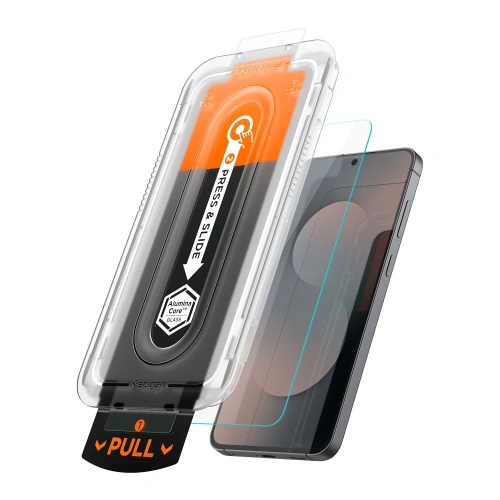
The EZ Fit system is one of the best-designed: the frame positions the glass itself, so even adhesion usually succeeds on the first try. The set includes two pieces.
[hs_products category=»1954″ limit=»6″ sort=»sales» title=»Cases for Galaxy S25 FE»]
Summary
Galaxy S26 FE is a remarkably cautious update. Samsung has transferred almost all the hardware from its predecessor. The processor, system, and USB port have changed. The screen, all cameras, and battery have been carried over unchanged.
Three things worth remembering:
- The real gain comes only from the processor. Exynos 2500 is about 30% faster in CPU and GPU and 40% in NPU, which is mainly noticeable in games and Galaxy AI features.
- There are two steps back, not one. The USB port has reverted to version 2.0, and the certified battery lifespan has dropped from 2,000 to 1,200 charge cycles.
- The price tips the scales in favor of S25 FE. With the same screen, cameras, and battery, the older model is now noticeably cheaper.
Regardless of the choice, both phones are worth complementing with the same: a case with a magnetic ring, as neither has built-in magnets, and tempered glass, as Gorilla Glass Victus+ protects against scratches, not drops.
Sources: official announcement of Galaxy S26 FE in Samsung Global Newsroom, comparison of S26 FE and S25 FE on SamMobile, explanation of the silicon-carbon battery issue on SamMobile, specification sheet for Galaxy S26 FE on GSMArena, price comparison of both generations on GSMArena, new camera features and One UI 9 according to Android Authority, EU energy label for Galaxy S26 FE on GSMArena, analysis of the decrease in charging cycles on Android Authority
FAQ: Galaxy S26 FE and S25 FE
Is it worth paying extra for Galaxy S26 FE?
Usually not. The screen, all three cameras, and the battery are identical to the S25 FE, and the newer model has a slower USB port. The extra cost makes sense if you use Galaxy AI intensively or want the longest support, which is until 2033.
When is the Galaxy S26 FE premiere and when does sales start?
The premiere took place on August 27, 2026, when Samsung showcased the phone and provided the full specification. Sales start on September 4, 2026.
What distinguishes the Galaxy S26 FE from the S25 FE?
Three things: the processor (Exynos 2500 in 3 nm instead of Exynos 2400 in 4 nm), the operating system at launch (One UI 9 on Android 17 instead of One UI 8), and the USB port, which has reverted from 3.2 Gen 1 to 2.0. The screen, cameras, selfie, and 4,900 mAh battery are identical.
Does the Galaxy S26 FE have a silicon-carbon battery?
There is no confirmation from the manufacturer. Samsung does not mention silicon-carbon in the official specification, and SamMobile writes about a regular lithium-ion cell of 4,900 mAh, although some databases label it as Si/C. It is certain that in July 2026, this technology was received exclusively by foldable models: Z Flip 8, Z Fold 8, and Z Fold 8 Ultra.
Does the case from the Galaxy S25 FE fit the S26 FE?
No. The new model is 0.3 mm taller and wider, and the camera island has been slightly redesigned. The cutouts for the camera and buttons do not align in the same place, so you need a case dedicated to the specific model.
Does the Galaxy S26 FE have magnets for MagSafe?
No, just like the S25 FE. Both phones charge wirelessly using the Qi2 standard at 15 W, but they do not have a built-in ring of magnets. The magnets are added by the case, such as the Spigen Ultra Hybrid Mag or UAG Scout MagSafe.
Which phone has a longer battery life?
The Galaxy S26 FE, but the difference is small. The capacity is identical (4,900 mAh), and the gain comes from the more efficient 3 nm processor. Samsung claims about an hour longer video playback.
Legg att eit svar