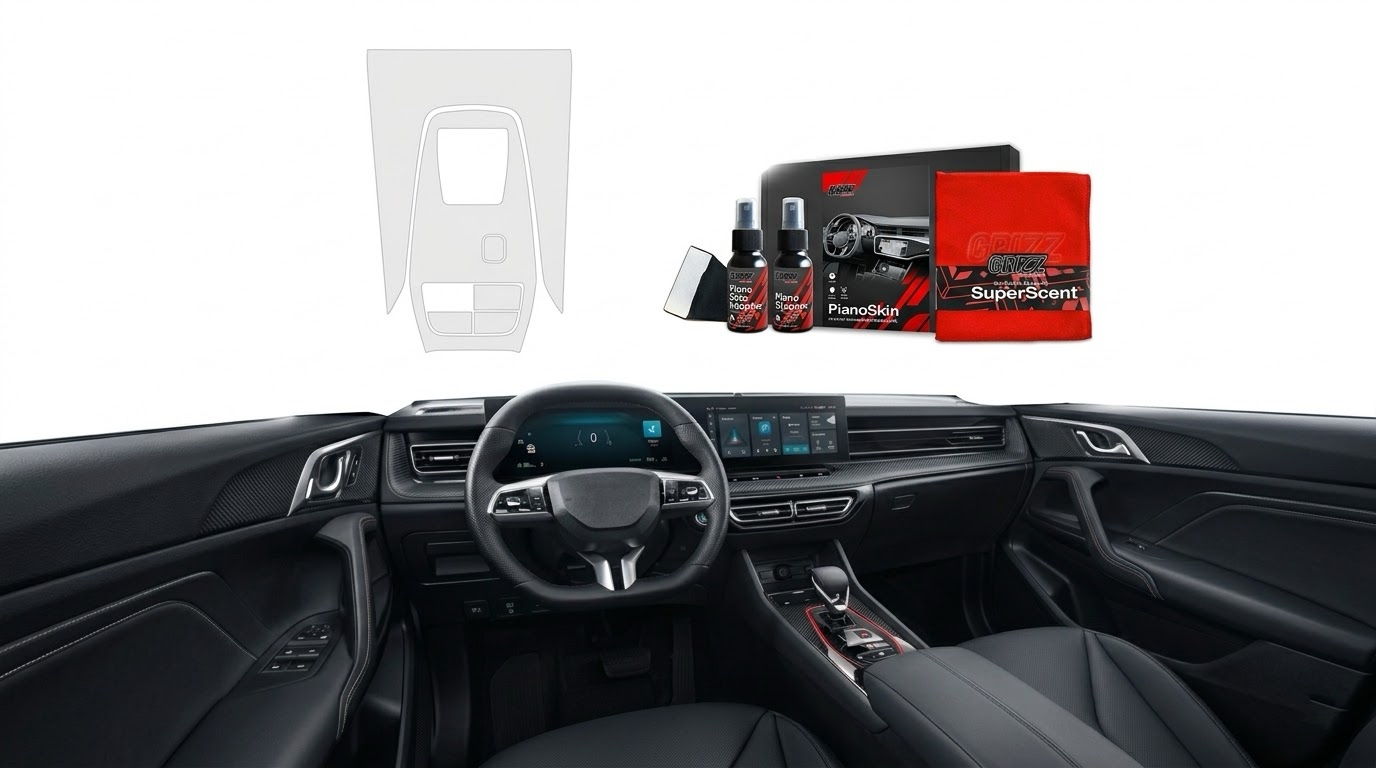
The most effective protection for piano black in a car is the PianoSkin protective film — a precisely cut PPF kit for self-installation, available from 112 PLN. Piano black is a finish that looks elegant until the first touch — the black, glossy plastic scratches with the slightest contact and collects fingerprints like a magnet.
The problem affects practically every brand — from Volkswagen and Škoda, through Toyota and Kia, to BMW and Tesla. If scratched plastic in your car is your problem, this guide will show you 5 ways to protect and restore piano black elements.
What is piano black and why does it scratch?
Piano black (also known as “black piano”) is a high-gloss lacquered plastic ABS or PMMA used on decorative elements inside the car. It gets its name from the finish resembling the surface of a piano — deep black with a mirror-like reflection.
You will most often find it on:
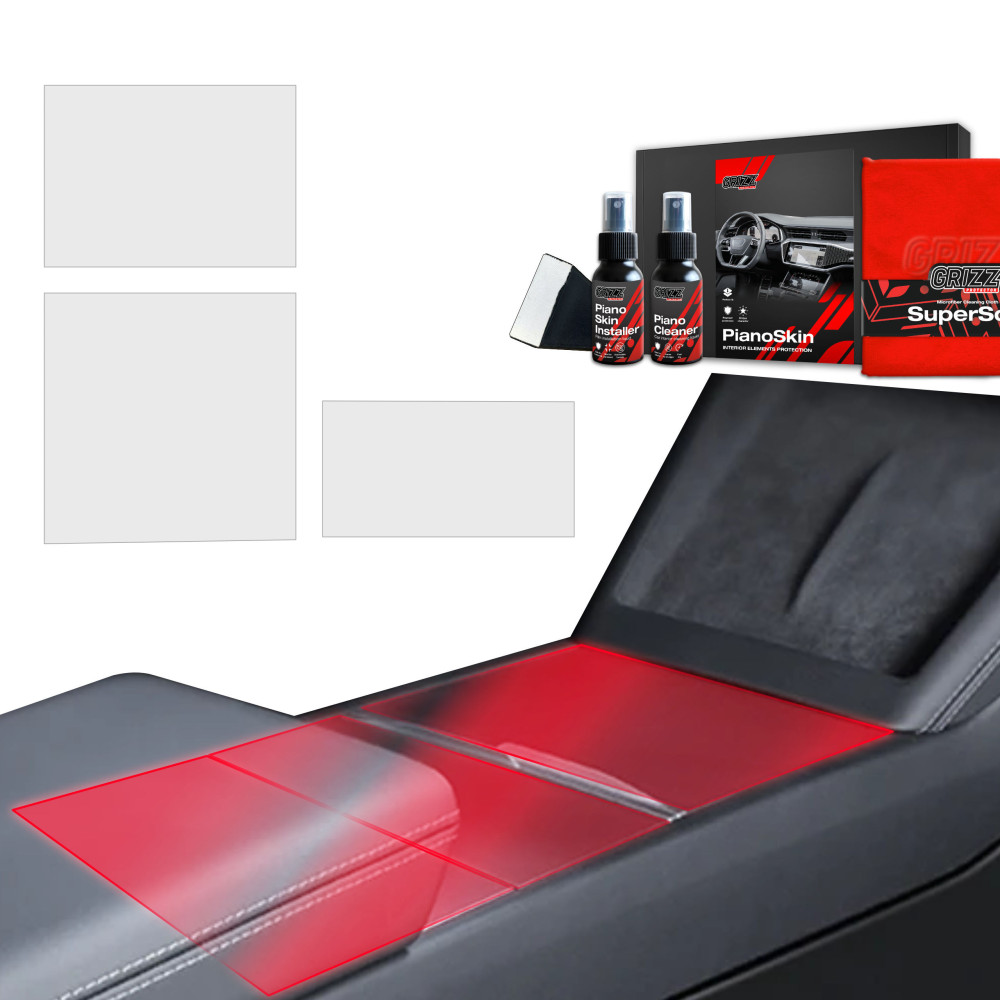
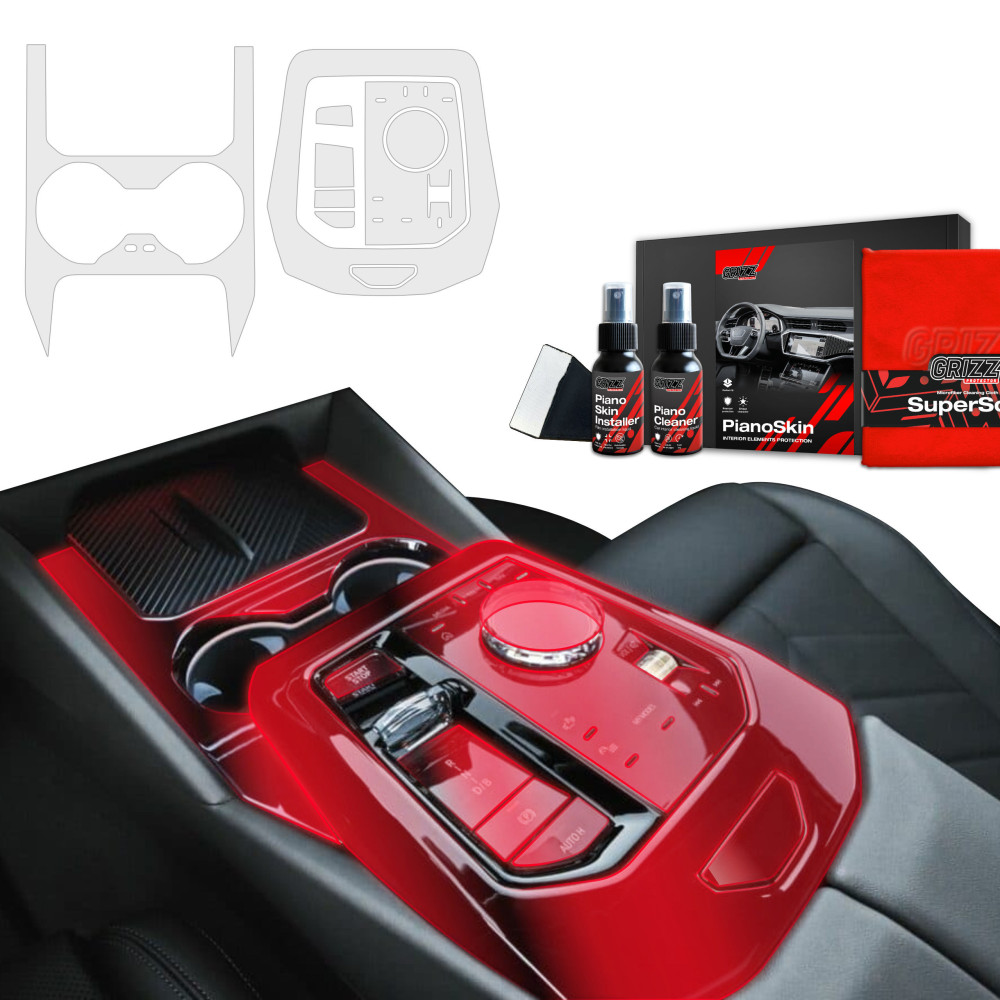
- Center panel (central console, center tunnel)
- Door trims and window frames from the inside
- Gear shift lever housing and the frame of the automatic transmission
- Multimedia screen frame
- Air conditioning panels and buttons
- Dashboard elements
The problem with piano black arises from the very nature of the material. The glossy surface reveals every scratch, even microscopic ones. Hard dust particles act like sandpaper — just wiping the element with a dry cloth leaves a network of fine scratches on the surface. Fingernails, rings, and even the sleeve of a jacket can leave visible marks.
Worse still, the darker the surroundings in the cabin, the more clearly the scratches reflecting light are visible. After a few months of use, a new, elegant panel looks heavily worn.
How to clean piano black without scratching?
Improper cleaning causes most scratches on piano black. What to clean piano black with to avoid scratching it? Here is a proven method.
What not to do:
- Do not wipe piano black with a dry cloth — you are dragging dust particles across the surface
- Do not use paper towels or tissues — they have too coarse a texture
- Do not use alcohol-based, acetone, or solvent-based cleaners
- Do not rub in circles — this deepens existing scratches
Proper cleaning step by step:
- Blow off loose dust with compressed air or a soft detailing brush
- Dampen a clean microfiber cloth (with a minimum weight of 300 GSM) with a pH-neutral cleaner or a dedicated product for piano black
- Wipe the surface gently, in one direction — never in circular motions
- Dry with a second, dry microfiber cloth, again in one direction
Tip: Keep a separate microfiber cloth in the glove compartment designated solely for piano black elements. A dirty cloth previously used to clean the dashboard contains particles that will scratch the glossy surface.
Polishing piano black — a rescue for scratched elements
Removing scratches from piano black is possible through polishing. If the elements in your car’s interior are already covered with a network of fine scratches — piano black scratches of this type can be effectively restored. However, this method has its limitations.
Hand polishing:
- Use a specialized polishing paste for piano black (fine-grained)
- Apply a small amount to a soft polishing sponge or microfiber pad
- Polish with gentle movements in one direction
- Wipe off excess paste with a clean microfiber cloth
- Repeat until the desired effect is achieved
Machine polishing:
Deeper scratches require a rotary or oscillating polisher with a soft pad. This solution is for individuals with detailing experience — an inexperienced hand can overheat the plastic or polish unevenly.
Polishing limitations:
| Aspect | Polishing | Protective film |
|---|---|---|
| Removes existing scratches | ✅ | ❌ (optically covers) |
| Protects against new scratches | ❌ | ✅ |
| Durability of the effect | 2–4 weeks | 3–5 years |
| One-time cost | 50–150 zł (paste + pad) | 112–430 zł (PianoSkin set) |
| Requires repetition | Yes, regularly | No |
Polishing is a temporary solution. The surface after polishing is perfectly smooth but lacks any protection — scratches reappear within a few weeks. Therefore, it is worth combining polishing with wrapping in film.
Piano black film — the most effective protection method
Wrapping piano black with PPF (Paint Protection Film) is the only method that permanently protects the surface from scratches. The film creates an invisible barrier between your fingers and the sensitive plastic.
How does the film on piano black work?
PPF is a multi-layer material consisting of:
- Top layer — a self-healing topcoat that seals minor scratches under heat
- Carrier layer — flexible polyurethane (TPU) with a thickness of 150–200 microns
- Adhesive layer — acrylic glue that leaves no marks after removing the film
A good piano black film maintains full transparency and the original finish appearance — the same deep gloss, but with protection. According to TPU material specifications used in PPF films, polyurethane has the ability to self-heal minor scratches when exposed to heat.
GrizzGlass PianoSkin — kits tailored to your car
Unlike PPF films sold by the meter (which require professional cutting and installation), GrizzGlass PianoSkin kits are precisely cut pieces tailored to a specific car model. Each film piece corresponds exactly to the shape and dimensions of the piano black decor in the given car.
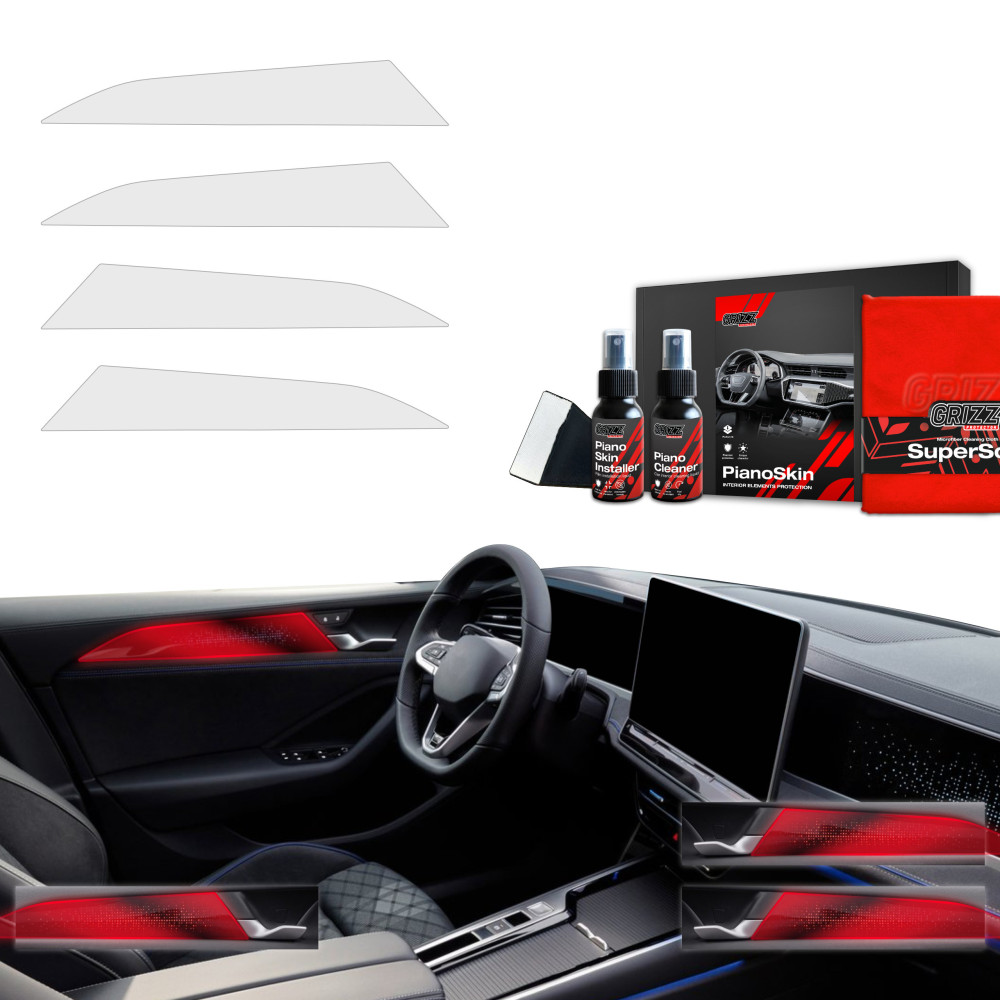
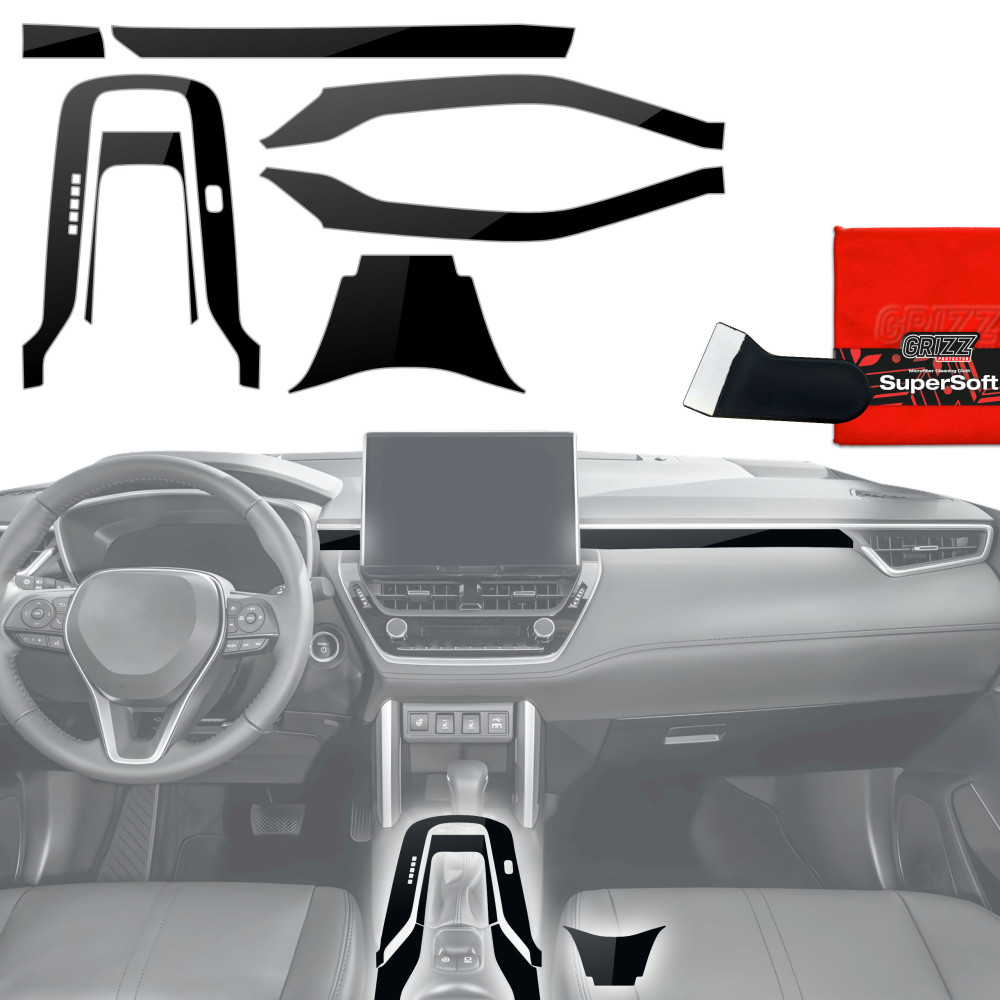
What does the PianoSkin set include:
- Precisely cut film elements (from 2 to 8 pieces, depending on the model)
- Microfiber cloth
- Cleaning solution for surface preparation
- Installation gel
- Application squeegee
- Installation instructions
Two finish options:
| Option | Effect | For whom |
|---|---|---|
| PianoSkin Glossy | Maintains the original piano black gloss | If you want invisible protection |
| PianoSkin Matte | Changes the finish to matte, satin | If you want to change the interior style and reduce fingerprints |
The matte option has an additional advantage — on the matte surface, fingerprints and minor scratches are virtually invisible.
How much does it cost to wrap piano black with film?
Cost comparison for piano black protection:
| Method | Cost | What it includes | Durability |
|---|---|---|---|
| Professional wrapping in a detailing studio | 500–1,500 PLN | Film by the meter + labor | 3–7 years |
| GrizzGlass PianoSkin (DIY) | 112–430 PLN | Ready-to-install DIY kit | 3–5 years |
| Regular polishing | 50–150 PLN / month | Paste + pad + time | 2–4 weeks |
| Wax paste / coating | 80–200 PLN | Temporary protective layer | 1–3 months |
The PianoSkin kit is a 2–3 times cheaper alternative to wrapping in a detailing studio — and the effect is comparable, as the film is factory-cut to the dimensions of the elements.
Our choice: GrizzGlass PianoSkin kit — 2–3 times cheaper than a detailing studio, with a comparable effect and self-installation in 30–60 minutes.
For which cars are PianoSkin films available?
GrizzGlass PianoSkin covers over 20 car brands and hundreds of specific models. Here are the most popular:
| Brand | Example models | Category link |
|---|---|---|
| Volkswagen | Golf 8, Passat B9, Tiguan, ID.4, T-Roc | VW Films |
| Toyota | Corolla, Corolla Cross, RAV4, Yaris Cross, C-HR | Toyota Films |
| BMW | Series 3 G20, Series 5 G60/F10, X3, X5, iX | BMW Films |
| Kia | Sportage 5, EV6, Ceed, Stonic, Niro | Kia Films |
| Hyundai | Tucson, Kona, i30, Ioniq 5, Santa Fe | Hyundai Films |
| Tesla | Model 3, Model 3 Highland, Model Y, Model S | Tesla Films |
| Škoda | Octavia 4, Kodiaq 2, Superb, Enyaq, Elroq | Škoda Films |
| Mercedes | Class C W206, GLC, GLA, EQA, Class E W214 | Mercedes Films |
| Audi | A3, A4, Q5, Q7, e-tron | Audi Films |
| Ford | Kuga, Focus, Puma, Explorer, Custom | Ford Films |
| Peugeot | 3008, 308, 208, 508, 5008 | Peugeot Films |
| Volvo | XC60, XC90, XC40, EX30, V60 | Volvo Films |
| Renault | Austral, Captur, Arkana, Clio, Rafale | Renault Films |
| Seat / Cupra | Leon, Formentor, Born, Ateca, Terramar | Seat Films |
| Alfa Romeo | Giulia, Stelvio, Tonale, Junior | Alfa Romeo Films |
| Fiat | 500, 600, Grande Panda, Tipo | Fiat Films |
| Citroën | C4, C5 Aircross, C3, Berlingo | Citroën Films |
| Lexus | NX, RX, UX, ES, LBX | Lexus Films |
If your model is not on the list, check the category films for other cars — you will find there, among others, Chinese brands (Chery, Jetour, Geely), as well as Opel, Mazda, Nissan, Honda, Porsche, Land Rover, and many others.
How to apply PianoSkin film yourself? Installation step by step
One of the biggest advantages of PianoSkin kits is the possibility of self-installation. You don’t need detailing experience — just patience and the included tools.
Preparation
- Wash your hands and make sure you don’t have rings or sharp nails on your fingers
- Clean the piano black elements with the included cleaning fluid — remove dust, grease, and fingerprints
- Wipe dry with the included microfiber cloth
- Make sure the cabin temperature is between 18–25°C (too cold a surface makes adhesion difficult)
Application
- Remove the film from the protective backing
- Apply the mounting gel to the piano black surface — this allows you to slide the film and adjust its position
- Apply the film to the element, align the edges
- Use a squeegee to smooth the film from the center to the edges — removing air bubbles and excess gel
- Wipe off the excess gel with a microfiber cloth
After installation
- Do not touch the wrapped elements for 12–24 hours (curing time of the adhesive)
- Do not clean or polish the film for 48 hours
- After curing, the film is ready for normal use
Tip: If a small air bubble remains under the film, do not panic. Small bubbles often disappear on their own within 24–48 hours as the mounting gel dries.
Not just piano black — complete protection for your car
Piano black is not the only part of the car susceptible to scratches. GrizzGlass also offers protective films for other sensitive elements of the body and interior:
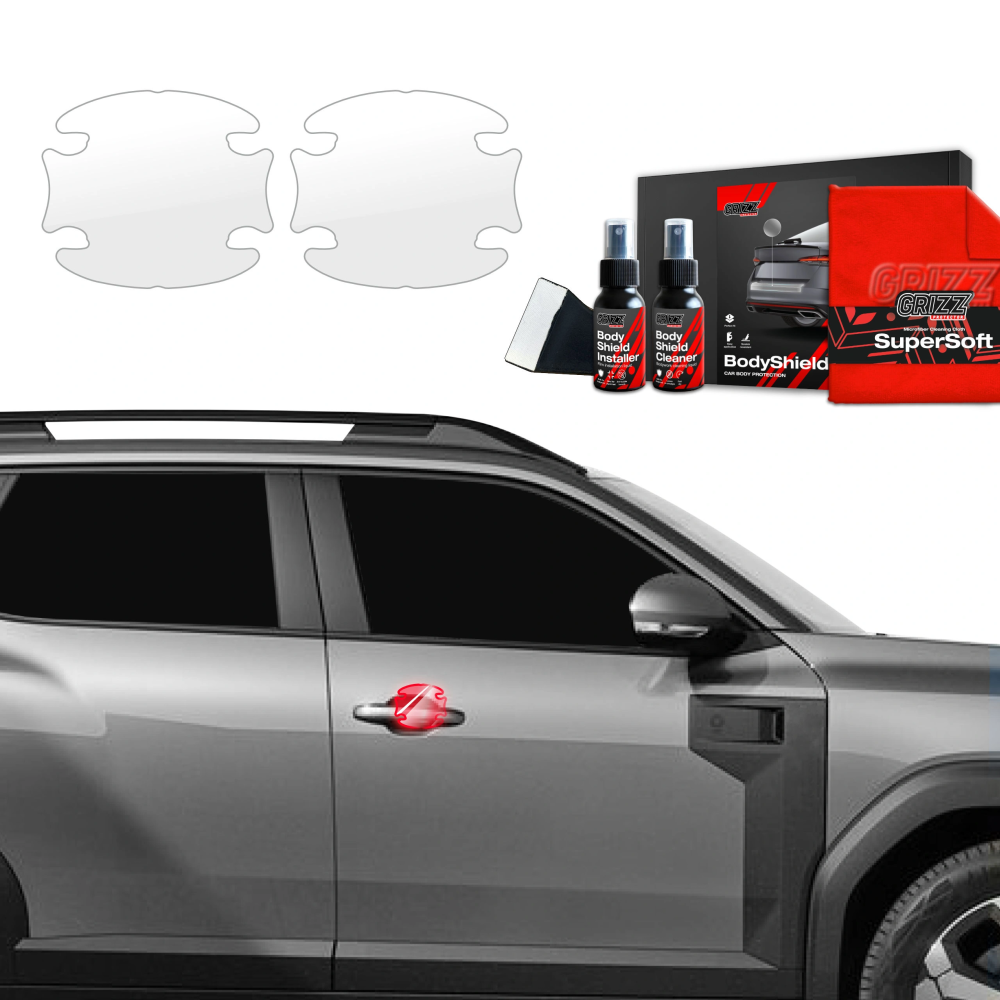
GrizzGlass BodyShield — body protection
BodyShield films protect external elements vulnerable to scratches and chips:
- Door sills — scratched when getting in and out (shoes, belt buckles)
- Handles — scratches from nails and rings
- Rear bumper — marks from loading the trunk
- B/C pillars — scratches from passengers and luggage
- Trunk edge — contact with suitcases and bags
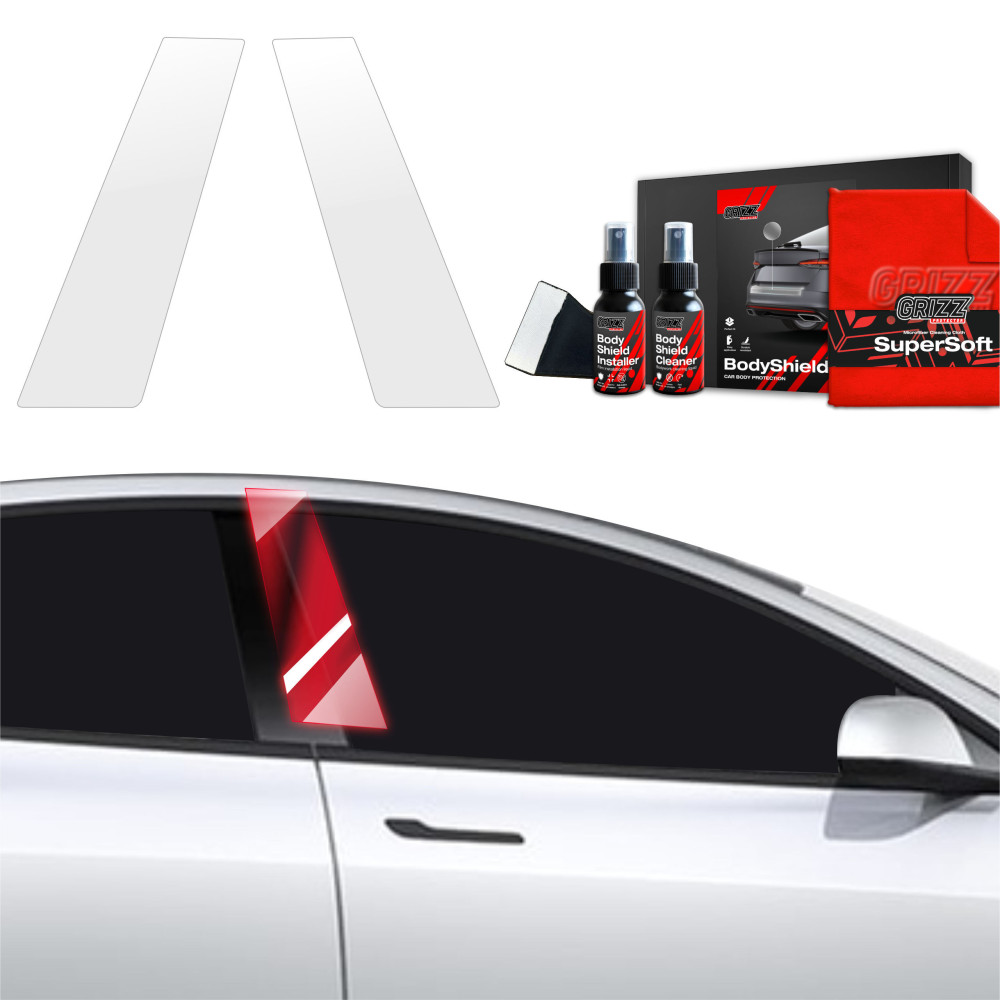
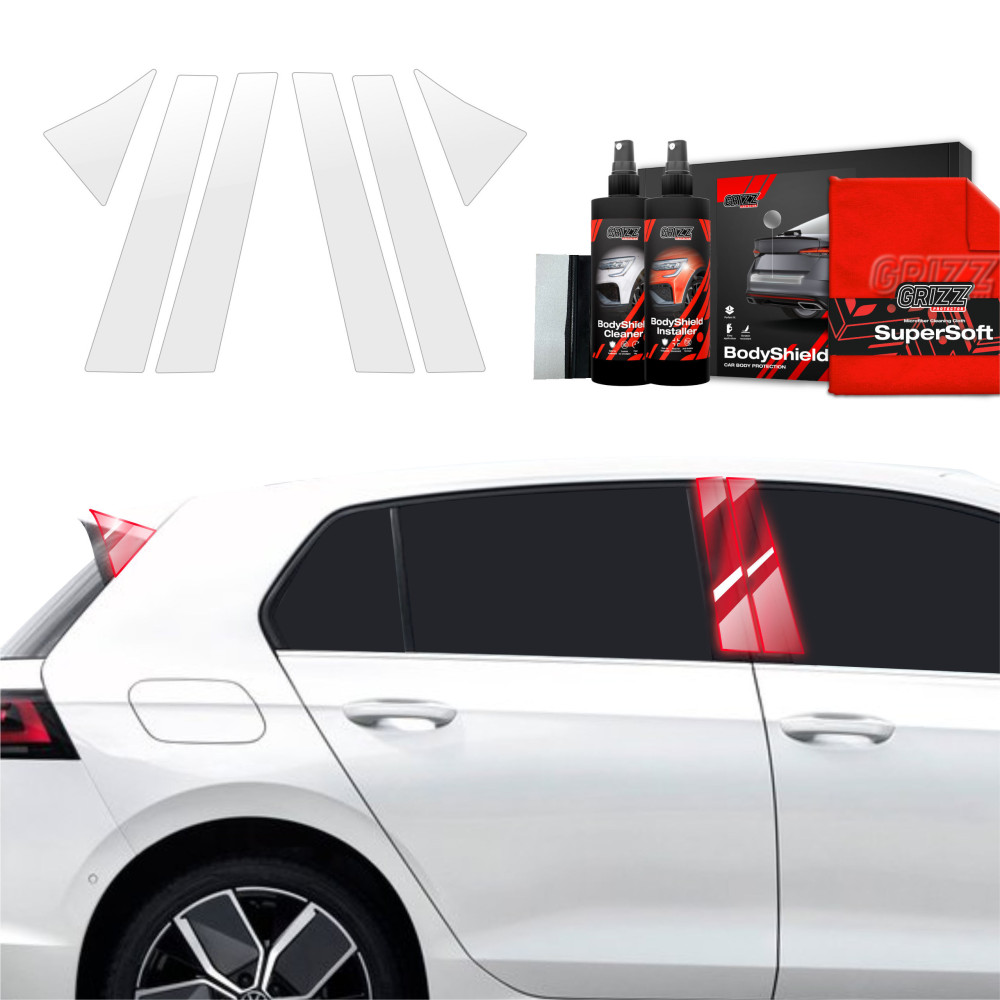
BodyShield kits for thresholds cost from 45 PLN — this is a fraction of the cost of repainting a scratched threshold (300–800 PLN at a paint shop).
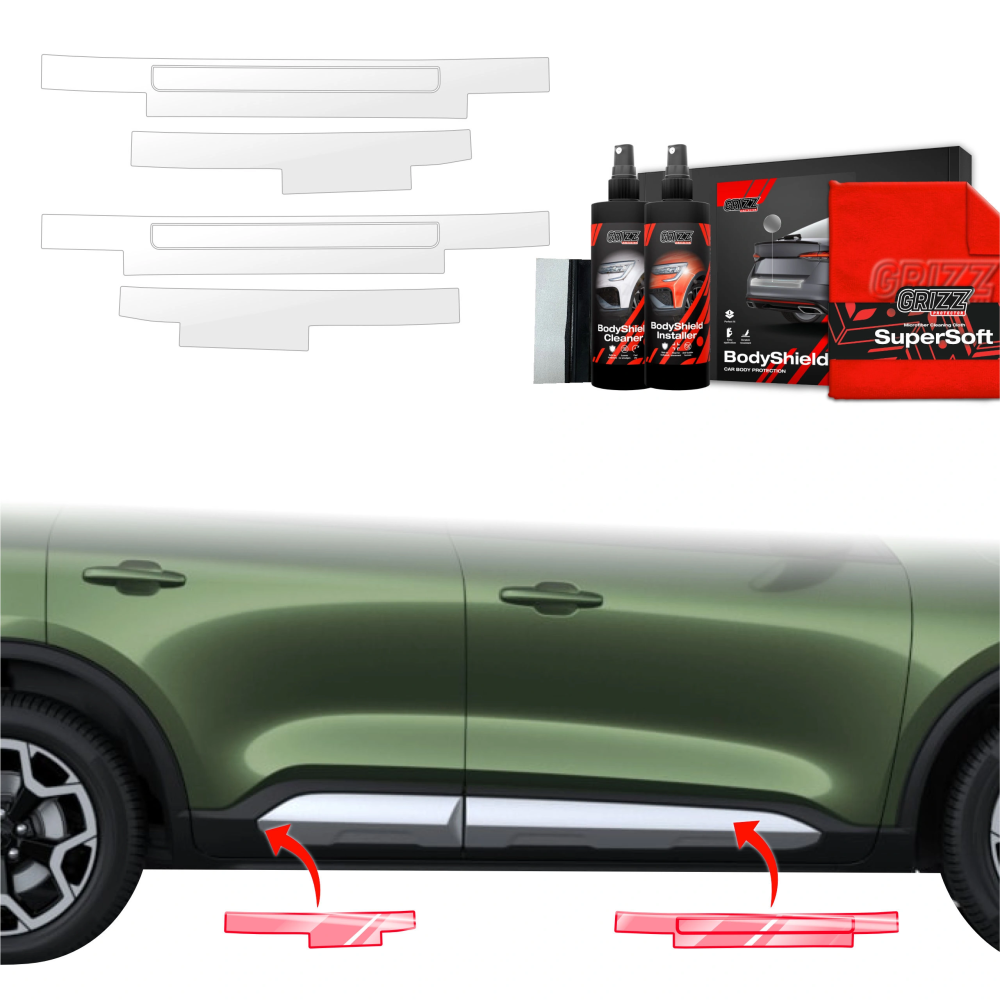
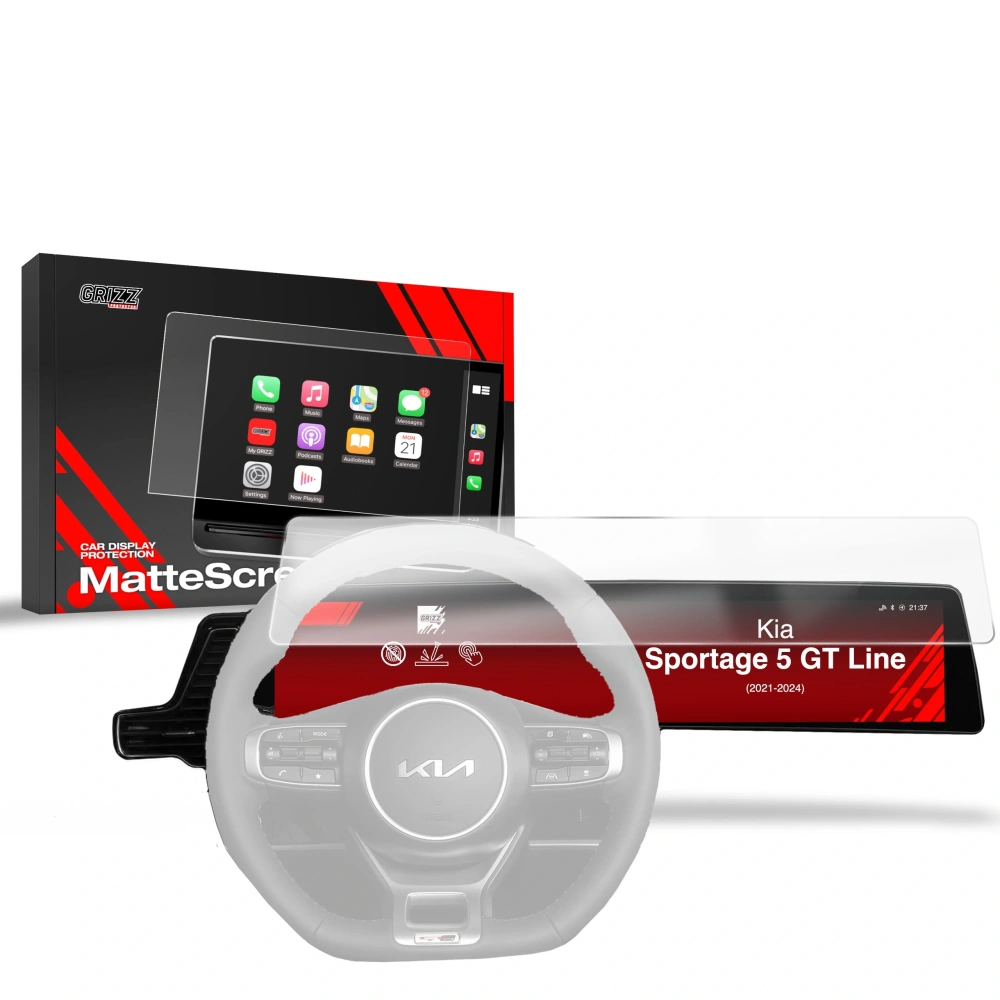
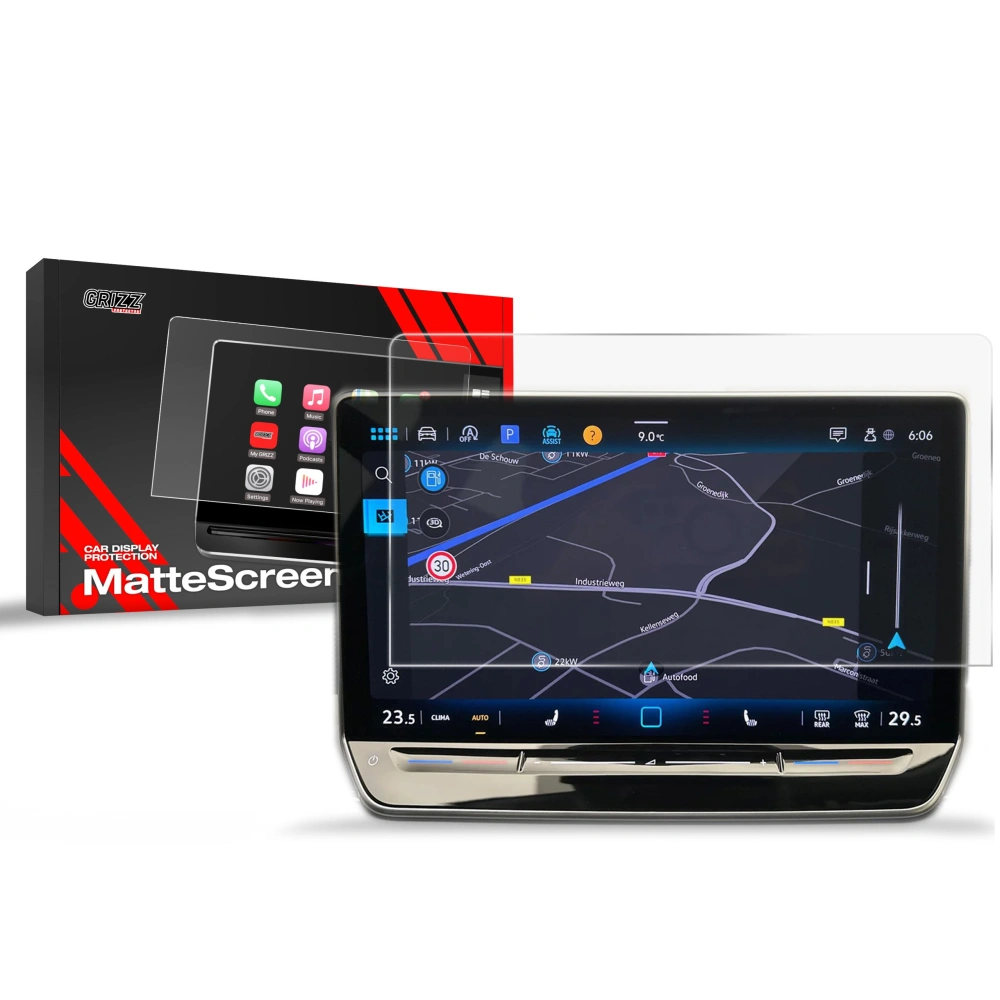
GrizzGlass CarDisplay Protection — multimedia screen protection
Screens in modern cars range from 8 to even 24 inches diagonally. They are made of glass or plastic and are prone to scratches from fingers and dust. CarDisplay Protection films are available in two variants:
- Ceramic — maintains full transparency, increases scratch resistance
- Matte — reduces glare, improves screen readability in sunlight
Films for multimedia screens cost from 110 to 220 PLN — depending on the display size and finish variant.
When to wrap piano black? The sooner, the better
The best time to protect piano black is on the day you pick up your new car. The elements are then in perfect condition, without any scratches. The film will preserve the factory gloss for years.
Tip: Order PianoSkin even before picking up your new car. The film applied on the first day will preserve the factory gloss for years — before anything gets scratched.
If your car is already a few months or years old, it’s still worth wrapping the piano black — but first polish the scratches. The order is important:
- Polish the scratched elements with polishing paste
- Clean the surface thoroughly with the included preparation
- Wrap with PianoSkin film
This way, you maintain a smooth, renewed surface under the film, which protects it from being scratched again.
Summary
Piano black is one of the most frustrating finishes in car interiors — visually stunning, but horrifically impractical without protection. Regular polishing lasts for a few weeks, while PianoSkin film protects elements for years.
GrizzGlass PianoSkin kits are tailored to specific car models, include everything needed for self-installation, and cost from 112 PLN. This is several times less than wrapping at a detailing studio.
Check protective films for your car at homescreen.pl — you will find PianoSkin, BodyShield, and CarDisplay Protection kits for over 20 brands and hundreds of car models →
FAQ — frequently asked questions
What is piano black in a car?
Piano black is a glossy, black decorative finish used on plastic elements in a car’s interior — panels, trims, button housings, and screen frames. The name comes from the finish resembling a piano’s lacquer. The material is particularly prone to scratches and collecting fingerprints.
Can scratches be removed from piano black?
Yes — minor scratches can be removed manually or mechanically using a specialized fine-grain polishing paste. However, the polishing effect is temporary and lasts 2–4 weeks. To permanently protect the surface, it is advisable to apply PianoSkin protective film after polishing.
How much does it cost to wrap piano black in film?
Professional wrapping of piano black at a detailing studio costs 500–1,500 PLN. An alternative is the GrizzGlass PianoSkin DIY kit — from 112 to 430 PLN, depending on the car model and the number of elements in the kit.
Can the PianoSkin film be applied by oneself?
Yes. The PianoSkin kits include precisely cut film elements and a complete set of tools (microfiber, cleaning solution, installation gel, squeegee). Installation takes 30–60 minutes and does not require detailing experience. After application, the film needs 12–24 hours to cure.
What to clean piano black in the car with?
For cleaning piano black, use only a soft microfiber cloth (min. 300 GSM) soaked in a pH-neutral cleaner. First, blow off dust with compressed air, then wipe the surface in one direction. Never wipe piano black dry or in circular motions.
Does the film on piano black change the interior appearance?
The Glossy variant is optically transparent and retains the original shine of piano black. The Matte variant changes the finish to satin — which has the additional advantage that fingerprints and small scratches are practically invisible on the matte surface.
Leave a Reply