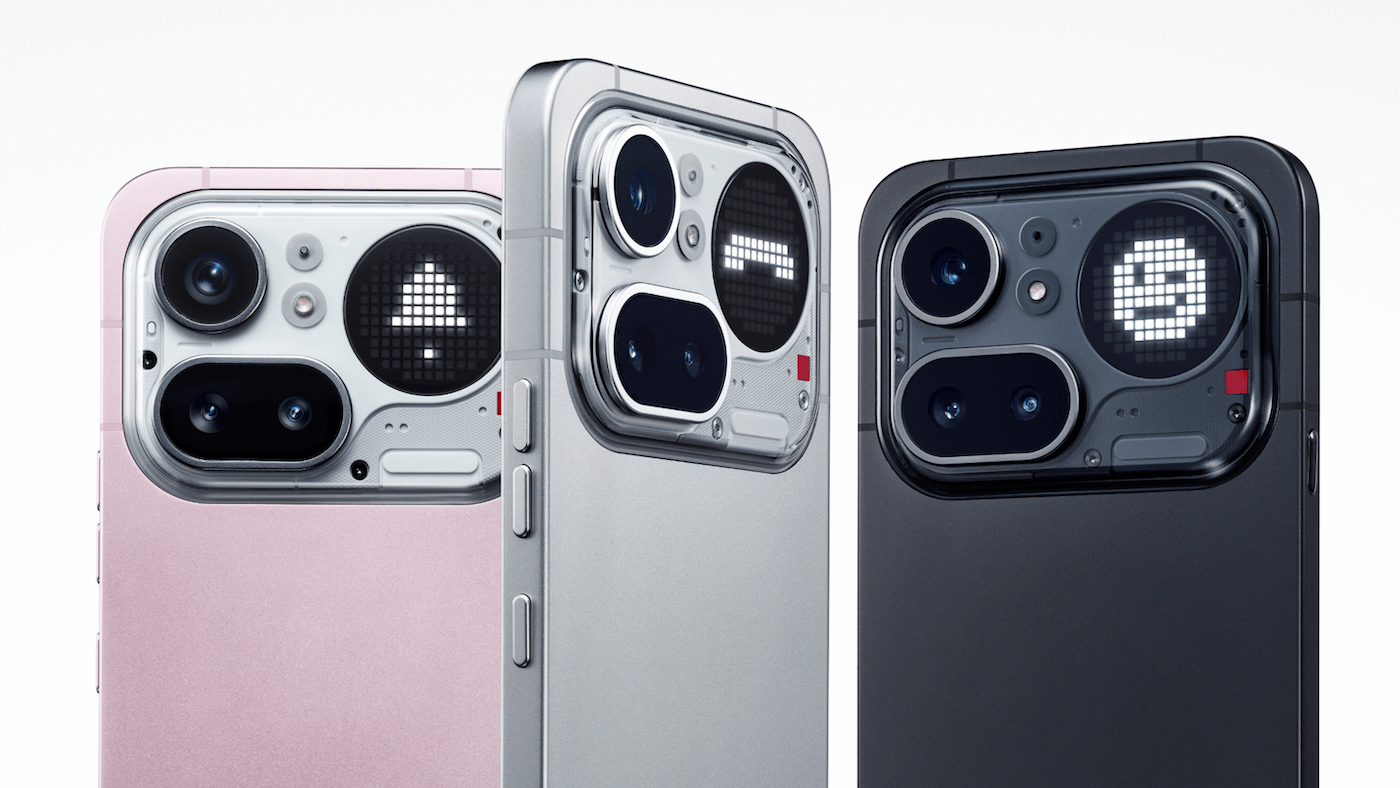
Nothing officially presented the Phone 4a and 4a Pro. Prices in Poland start at 1,599 PLN for the 4a model and 2,099 PLN for the 4a Pro. Both smartphones feature a periscope telephoto lens with 3.5x optical zoom, 1.5K AMOLED displays, and a new Glyph system. Pre-orders for the Phone 4a start today — sales begin on March 13.
The Nothing Phone 4a series represents the biggest quality leap in the history of the “a” line. Periscope zoom, screen brightness up to 5000 nits, and Snapdragon 7 Gen 4 processor are parameters that just a year ago we found only in flagships. Nothing poses the question: why pay for a flagship when a mid-range phone offers 90% of its capabilities?
What’s new in the Nothing Phone 4a and 4a Pro?
The biggest changes compared to the previous generation (Phone 3a / 3a Pro):
Periscope telephoto lens 50 MP with 3.5x optical zoom — a huge leap from 2x zoom in the Phone 3a. Hybrid zoom reaches 70x in the 4a and 140x in the 4a Pro.
Brighter screens — 4500 nits (4a) and 5000 nits (4a Pro) vs ~2300 nits in predecessors. Gorilla Glass 7i instead of Panda Glass.
New processors — Snapdragon 7s Gen 4 (4a) and Snapdragon 7 Gen 4 (4a Pro). The Pro model is ~27% faster in CPU and ~65% more efficient in AI tasks.
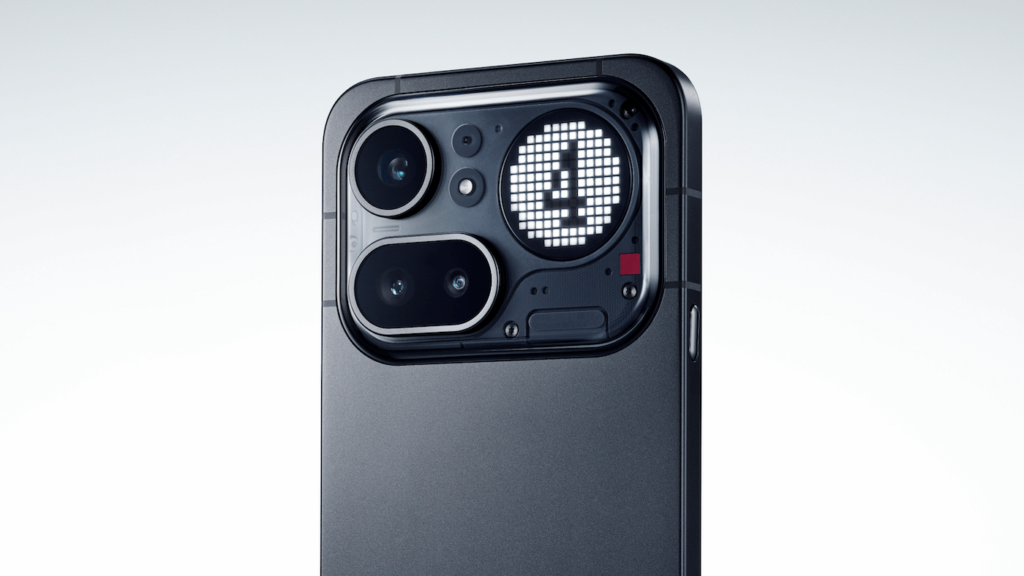
Refreshed Glyph — Phone 4a received a Glyph Bar (63 mini-LEDs in 7 zones), while 4a Pro got a Glyph Matrix (137 mini-LEDs with animations).
Nothing OS 4.1 on Android 16 — 3 years of system updates + 6 years of security patches.
eSIM in the Pro model — Phone 4a still uses only physical nano-SIM cards.
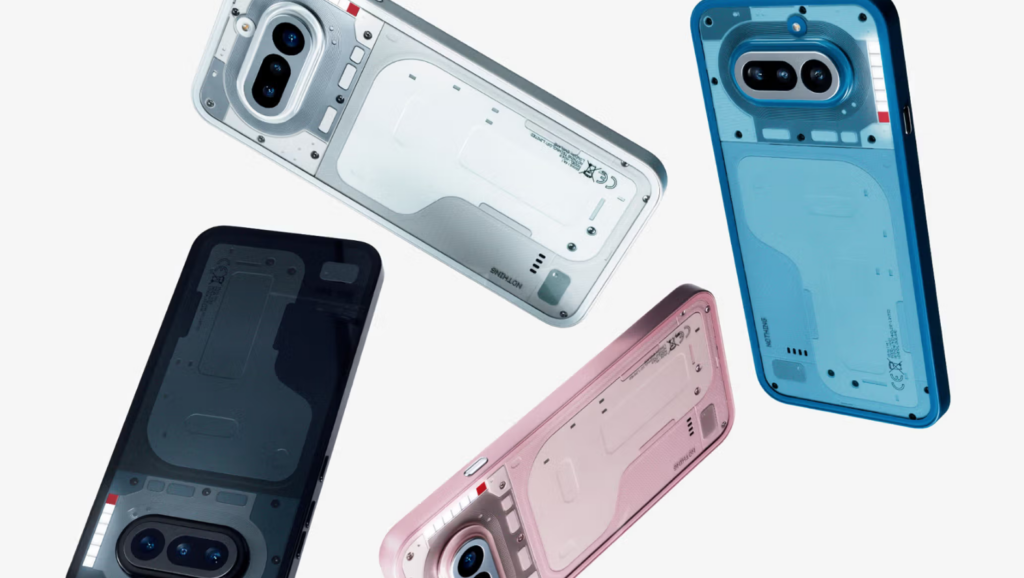
Phone 4a kontynuuje kultowy przezroczysty design. Pod szkłem Gorilla Glass 7i widać elementy wewnętrzne — cewki, śruby i struktury PCB. Nowe kolory różowy i niebieski mają barwioną warstwę pod przezroczystym panelem, co daje subtelny, pastelowy efekt.
Phone 4a Pro is a completely different story. Nothing has given up the transparent back for a metal unibody made of aluminum. It is the sleekest Nothing in history (7.95 mm). It looks more premium, but loses some of its «nothing-like» character. The transparent elements have been limited to the camera island.
The common denominator is Glyph. In the 4a model, it is the Glyph Bar — 7 square LED segments in a strip. In Pro — Glyph Matrix with 137 mini-LEDs arranged in a circular field. The Matrix displays animated notifications, charging progress, and reacts to Live Updates from Android 16.
Camera — periscope in a mid-range for 1,599 PLN
This is the biggest highlight of the 4a series. The 50 MP periscope telephoto lens with 3.5x optical zoom and OIS is something that did not exist in the previous generation Nothing Phone 3a. The 50 MP sensor with PDAF and optical stabilization provides sharp photos even in low light.
The Pro model gets a better main sensor — Sony LYT700c — and a dual hybrid zoom (140x vs 70x in the standard 4a). Both models record in 4K with Dolby Vision and Ultra XDR.
The new TrueLens Engine in Nothing OS 4.1 adds photographic presets, including «Stretch» developed in collaboration with photographer Jordan Hemingway.
Prices in Poland
Variant
Phone 4a
Phone 4a Pro
8 GB / 128 GB
1 599 zł
2 099 zł
8 GB / 256 GB
1 749 zł
—
12 GB / 256 GB
1 899 zł
2 399 zł
Prices in Europe: Phone 4a from 349 EUR, Phone 4a Pro from 479 EUR.
Availability and dates
Phone 4a: pre-sale from March 5, sale from March 13, 2026
Phone 4a Pro: pre-sale from March 13, sale from March 27, 2026
Both models are available on the official website pl.nothing.tech. Color variants: 4a in white, black, pink, and blue; 4a Pro in black, silver, and pink. Pink and blue colors available exclusively in the 12/256 GB version.
Expect availability in Polish electronics stores after the regular sales begin.
Who is Phone 4a for, and who is it for Pro?
Phone 4a for 1 599 zł is the choice if you care about the transparent design of Nothing and don’t need the fastest processor. You get a periscope zoom, a great 1.5K screen, and Glyph Bar — all for under 1,600 zł. The best price-to-performance ratio in the series.
Phone 4a Pro for 2,099 PLN makes sense if you want a faster processor (+27% CPU, +65% AI), 144 Hz instead of 120 Hz, IP65, eSIM, and Glyph Matrix with animations. The unibody metal construction looks premium, although it loses the iconic transparent style.
Both models are a very strong proposition in their price ranges. The 3.5x periscope telephoto lens for 1,599 PLN is something that no competitor offers at this price.
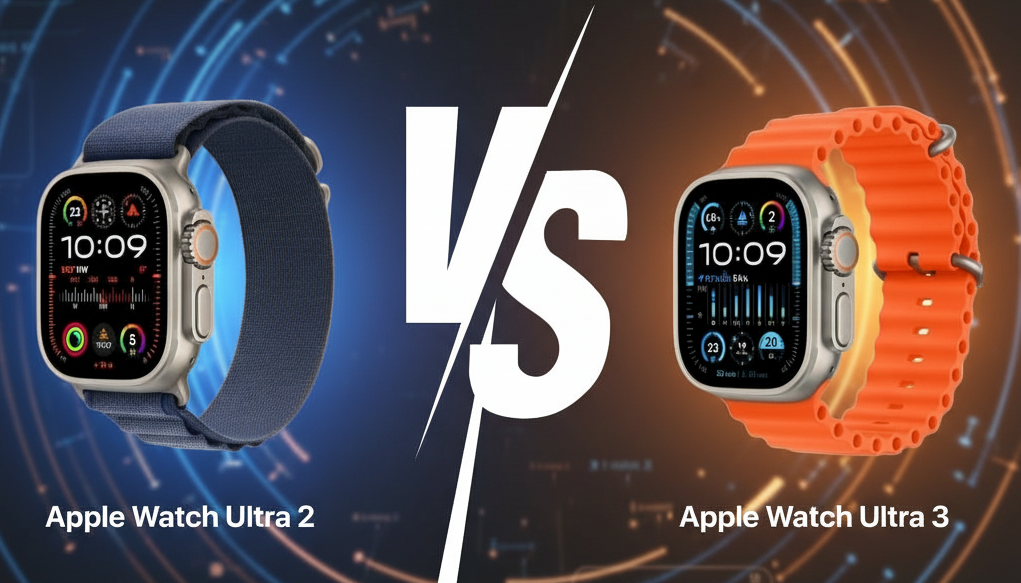
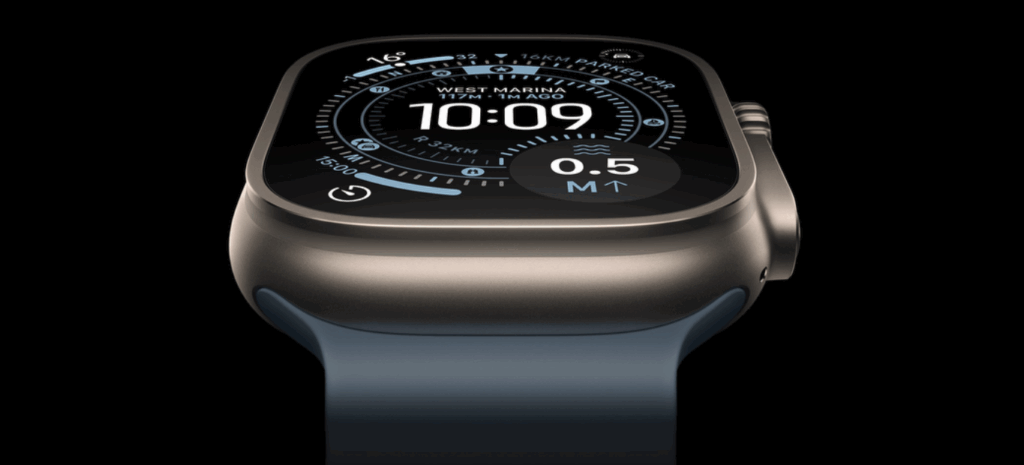
Apple Watch Ultra 3 is an evolution, not a revolution compared to Ultra 2 – both watches look almost identical, but Ultra 3 has a larger display, longer battery life, satellite connectivity, and a 5G RedCap modem. For most users, Ultra 2 will still be a great choice, but if you are just buying a premium smartwatch or need maximum independence in the field – Ultra 3 is the best choice for 2025.
What does the Apple Watch Ultra 3 look like and how does it differ from the Ultra 2?
Does the Apple Watch Ultra 3 have a new design?
On the outside, Apple Watch Ultra 3 looks almost identical to Ultra 2, but the devil is in the details. Apple has retained the distinctive aircraft-grade titanium case (Grade 5) with a size of 49 mm, however, the new model has thinner screen bezels by 24%. This allows the Ultra 3 to offer a larger working area (1.99″ vs 1.92″) without increasing the overall dimensions.
Interestingly, the case of the Ultra 3 is also thinner (12 mm instead of 14.4 mm), which makes the watch sit better on the wrist. The weight remains almost identical – around 61–62 g without the strap, so in everyday use, there is no noticeable difference in weight.
What materials are used in the Apple Watch Ultra 3?
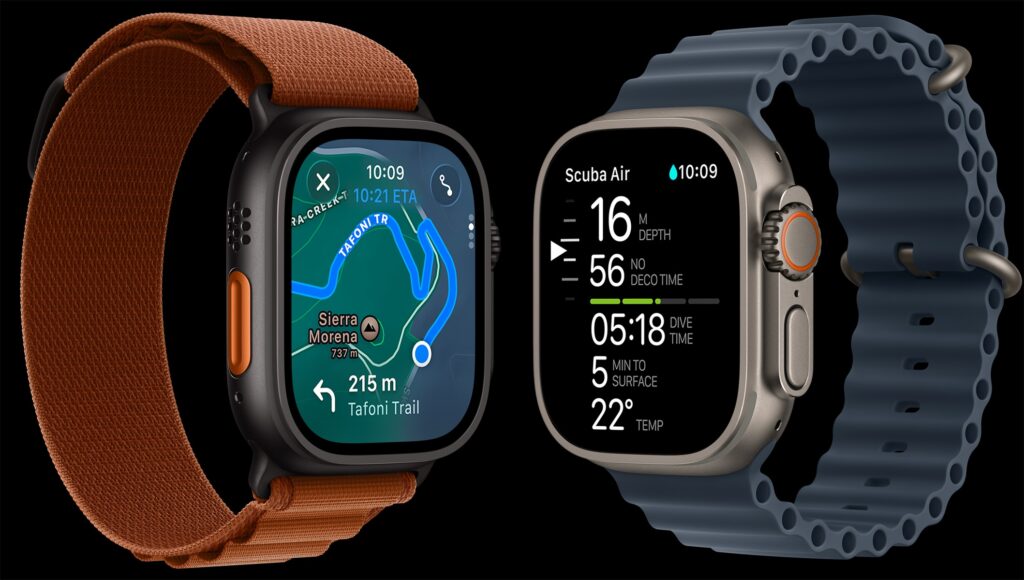
Both watches – Ultra 2 and Ultra 3 – utilize the same exceptionally durable titanium and sapphire glassthat is scratch-resistant. The construction meets IP6X, WR100 (up to 100 m immersion) and MIL-STD-810H, which is a military standard for resistance to shocks, dust, moisture, and extreme temperatures.
In practice, this means that both Ultra 2 and Ultra 3 are ready for mountain trekking, swimming, and even diving up to 40 m – ideal for outdoor athletes.
What colors are available for the Apple Watch Ultra 3?
Apple continues with two color variants:
Natural titanium (silver)
Black titanium
These are minimalist, elegant shades that pair well with any strap – from silicone sports to leather and fabric. 👉 See straps for Apple Watch Ultra 3 at the Home Screen store
Display, performance, and battery – what has been improved in the Apple Watch Ultra 3?
Is the display in Ultra 3 better?
Yes. The Ultra 3 has a newer LTPO OLED 3rd generation panel, which provides better viewing angles, deeper blacks, and greater energy efficiency. Although the brightness remains the same (3000 nits), in practice, the Ultra 3 is more readable in sunlight and has a smoother always-on mode with a refresh rate of 1 Hz – for the first time on the Apple Watch, you can constantly see the second hand.
The resolution has increased from 410×502 px to 422×514 px, which is not revolutionary but improves the sharpness of dials and the readability of maps in training mode.
Does the new S10 processor make a difference?
The Apple Watch Ultra 3 is powered by S10 SiP chip, which replaced S9 from Ultra 2. The differences in speed are minimal, but S10 is more energy-efficient, which combined with the new display gives a real +6 hours of battery. The new chip also enables wrist flick gesture (waving the wrist for control) and better processing of AI features with watchOS 26.
How long does the Apple Watch Ultra 3 last on battery?
Apple declares:
Ultra 2: up to 36 h of normal use
Ultra 3: up to 42 h (normally) or 72 h in power-saving mode
Tests confirm that Ultra 3 actually lasts even 2–3 days with typical use (with Always-On Display). Fast USB-C charging in 15 minutes adds about 12 h of usage.
Apple Watch Ultra 3 is the first Apple smartwatch with support for 5G RedCap networks and satellite SOS connectivity. Thanks to this, the watch can connect to the network even in places where there is no GSM coverage. The Emergency SOS via Satellite feature allows you to send an emergency message and GPS coordinates to emergency services or emergency contacts — it works similarly to iPhone 14 and 15. This solution is mainly aimed at people engaged in trekking, sailing, or off-road activities, where lack of coverage is a real problem.
The new modem 5G RedCap improves coverage and energy efficiency, not offering the full 5G speed known from smartphones, but sufficient for maps, notifications, or Siri. In Poland, the 5G Standalone feature is already being implemented by operators, so Ultra 3 will be fully compatible in the coming months.
Additional connectivity enhancements
improved antenna layout (better coverage in difficult terrain),
UWB 2nd gen. – precise device locating in the “Find” app,
dual GPS L1+L5 – accurate route tracking even in mountains and cities,
Bluetooth 5.3 and Wi-Fi 4 (2.4 / 5 GHz) with lower power consumption.
These enhancements make Ultra 3 the most “independent” Apple smartwatch so far – it operates independently from the iPhone, even in the field.
Health and sports features
Both generations of the Apple Watch Ultra offer a wide range of health sensors, however, the Ultra 3 expands their capabilities programmatically. The watch monitors heart rate (optical 3rd gen), ECG, blood oxygen (SpO₂), body temperature, and detects falls and accidents (Crash Detection).
The new features in Ultra 3 are:
notifications for hypertension,
Sleep Score – daily sleep quality rating,
Workout Buddy – an AI smart coach from Apple Intelligence, analyzing progress and motivating during workouts.
In terms of sports, both models offer:
measurement of running power, stride length, and ground contact,
86 dB emergency siren and Backtrack mode (return navigation).
The watches are waterproof up to 100 m, resistant to seawater and dust, and thanks to the EN13319 certification, they can serve as a dive computer.
Software and support
How long will Apple update these watches?
Apple is known for its long support of its devices, and the Ultra series is no exception. Apple Watch Ultra 2 debuted with watchOS 10, and after updates, it now runs on watchOS 26, while Ultra 3 comes factory-installed with this version.
How long will support last?
Ultra 2 – security and system updates expected until around 2028,
Ultra 3 – full support until 2030.
This means that by purchasing Ultra 3, you gain two more years of updates, and consequently – a longer device lifespan and access to new Apple Intelligence (AI) features that may require a newer chip S10.
Compatibility and ecosystem
Both models work with iPhone 11 or newer (running iOS 26). Thanks to integration with the Apple ecosystem, users can take advantage of:
Apple Fitness+ (workouts with trainers),
Apple Pay (contactless payments),
Apple Music and Podcasts,
health data synchronization in iCloud.
Ultra 3 and Ultra 2 also have full accessory compatibility – 49 mm bands and chargers are interchangeable between generations.
Is it worth buying Apple Watch Ultra 3 instead of Ultra 2?
For most users, the differences between Ultra 2 and Ultra 3 are not revolutionary, but real. The new model is more efficient, lasts longer on battery, supports 5G and satellite communication, and has longer support.
When is it better to choose Ultra 3?
if you do not yet have a watch from the Ultra series,
if you often stay out of network coverage (mountains, sailing, travel),
you want the most future-proof model with 5G and SOS via Satellite,
you care about an AI trainer and longer battery life.
When is it better to buy Ultra 2?
when you have a limited budget – the price difference is often 400–600 PLN,
if you mainly use the watch in the city and do not need satellite connectivity,
if you already have Ultra 2 – switching does not make much economic sense.
In terms of cost-effectiveness, a simple rule can be applied:
🔹 New users → choose Ultra 3 🔹 Ultra 2 owners → stick with the current model
📊 Summary: Apple Watch Ultra 3 vs Ultra 2
Aspekt
Lepszy wybór
Komentarz
Design i jakość wykonania
Remis
Oba modele z tytanu, ta sama solidność
Ekran
Ultra 3
Cieńsze ramki, nowszy panel LTPO3
Bateria
Ultra 3
+6 h przy typowym użytkowaniu
Łączność
Ultra 3
5G RedCap + SOS via Satellite
Funkcje zdrowotne
Ultra 3
Nowe algorytmy: nadciśnienie, Sleep Score
Funkcje sportowe
Remis
Workout Buddy (AI) tylko w Ultra 3
Cena
Ultra 2
Zazwyczaj tańszy o 400–600 zł
Wsparcie systemowe
Ultra 3
Do 2030 r. (vs 2028 r.)
💬 Opinie użytkowników i recenzje
Recenzenci (The Verge, Tom’s Guide, MacRumors) zgodnie podkreślają, że Ultra 3 to świetny smartwatch, ale bardziej dopracowanie niż rewolucja. Nowe funkcje są wartościowe głównie dla osób, które potrzebują ich w praktyce (outdoor, bezpieczeństwo, sport).
„Ultra 3 jest dla tych, którzy jeszcze nie mają Ultra — dla posiadaczy Ultra 2 to raczej luksus, nie konieczność.” — The Verge
Users praise primarily the longer battery life, larger screen, and the sturdiness of the construction. The most common conclusion: if this is your first Ultra – go for the «three»; if you have the «two» – wait for Ultra 4.
FAQ – frequently asked questions about Apple Watch Ultra 3 and Ultra 2
⭐️ Is it worth buying Apple Watch Ultra 3 in 2025? Yes, if you are just buying your first Apple Watch Ultra. The Ultra 3 model has a larger screen, longer battery life, satellite connectivity, and 5G support, making it the most future-proof choice. For Ultra 2 owners, the change is not necessary, as the differences are not revolutionary.
⭐️ What is the difference between Apple Watch Ultra 3 and Ultra 2? The Ultra 3 has a larger screen (1.99″ vs 1.92″), thinner bezels, a newer S10 processor, RedCap 5G connectivity, SOS via Satellite feature, and longer system support until 2030. The other elements – such as health sensors or durability – are practically identical.
⭐️ How long does the battery last in Apple Watch Ultra 3? The watch lasts up to 42 hours with normal use and up to 72 hours in power-saving mode. Thanks to fast charging, just 15 minutes is enough to gain about 12 hours of use.
⭐️ Does the Apple Watch Ultra 3 work in Poland with 5G network? Yes, it uses the 5G RedCap mode, which operates in Standalone (SA) 5G networks. Polish operators – including Plus, Orange, and T-Mobile – are gradually implementing this solution, so compatibility will expand.
⭐️ Does the Apple Watch Ultra 3 support SOS via satellite in Poland? Yes, Apple has announced the availability of the Emergency SOS via Satellite feature for users in Poland and the entire EU. The service is free for the first 2 years after activating the watch.
⭐️ Do the bands and cases from Apple Watch Ultra 2 fit Ultra 3? Yes. All accessories for the 49 mm case are fully compatible. Therefore, you can use your existing bands, cases, and chargers with the new model.
⭐️ Does the Apple Watch Ultra 3 have new health features? Ultra 3 introduces hypertension notifications and the Sleep Score feature – a sleep quality assessment. Both models measure heart rate, ECG, SpO₂, and detect falls or accidents (Crash Detection).
⭐️ Is the Apple Watch Ultra 3 suitable for diving? Yes. The watch is water-resistant up to 100 meters and meets the EN13319 standard, allowing it to be used as a dive computer up to a depth of 40 m. It also works in salt water and extreme temperatures.
⭐️ What are the prices of Apple Watch Ultra 3 and Ultra 2 in Poland? Ultra 3 costs around 3799 zł (premiere), while Ultra 2 is available from around 3399 zł. The difference of about 400–600 zł depends on the store and promotions. If Ultra 2 is significantly cheaper, it will still be a very good choice.
⭐️ Does Apple Watch Ultra 3 work without an iPhone? Yes. Thanks to the eSIM module and cellular connectivity (LTE/5G), Ultra 3 can operate independently – receiving calls, messages, and GPS data without a phone nearby.
⭐️ Does Ultra 3 support Apple Pay and Siri in Polish? Yes, the watch fully supports Apple Pay and Siri in Polish, both online and offline (thanks to on-device processing).
⭐️ Does Apple Watch Ultra 3 have a better screen than Ultra 2? Yes. Although the brightness remains at 3000 nits, Ultra 3 has a newer LTPO OLED 3rd generation display, with thinner bezels and better viewing angles.
The latest iPad Pro with the M5 chip is an evolutionary upgrade from the M4 predecessor. It offers higher performance (especially in graphics and AI), faster connectivity (Wi‑Fi 7, Bluetooth 6, faster 5G), and support for fast charging. The iPad Pro M5 will be the best choice for professionals and the most demanding users, while the iPad Pro M4 will still perform excellently for those with slightly lower requirements – and at a lower price.
📊iPad Pro M5 vs iPad Pro M4 – Comparison Table
Cecha
iPad Pro M4 11″
iPad Pro M4 12.9″
iPad Pro M5 11″
iPad Pro M5 13″
Wyświetlacz
11″ OLED Ultra Retina XDR, 120 Hz, HDR
12.9″ OLED Ultra Retina XDR
11″ OLED Ultra Retina XDR
13″ OLED Ultra Retina XDR
Procesor
Apple M4
Apple M4
Apple M5
Apple M5
RAM
8–16 GB
8–16 GB
12–16 GB
12–16 GB
Pamięć
256 GB – 2 TB SSD
256 GB – 2 TB SSD
256 GB – 2 TB (szybszy SSD)
256 GB – 2 TB (szybszy SSD)
Aparaty
12 + 10 Mpix + LiDAR
12 + 10 Mpix + LiDAR
bez zmian
bez zmian
Łączność
Wi-Fi 6E, BT 5.3
Wi-Fi 6E, BT 5.3
Wi-Fi 7, BT 6, 5G C1X
Wi-Fi 7, BT 6, 5G C1X
Ładowanie
ok. 20–30 W
ok. 20–30 W
Fast Charge (50% w 30 min)
Fast Charge (50% w 30 min)
System
iPadOS 17
iPadOS 17
iPadOS 26
iPadOS 26
Cena startowa
od 999 USD
od 1299 USD
od 999 USD
od 1299 USD
At first glance: iPad Pro M5 and M4 are very similar in terms of base specifications – both come in the same sizes and have fantastic OLED displays, identical cameras, and enclosures. The biggest differences lie in performance and internal components: the M5 chip delivers higher performance than the M4, M5 models have more RAM in cheaper configurations, as well as newer connectivity modules (Wi‑Fi 7, 5G C1X modem) and fast charging capability.
Screen and design – does the iPad Pro M5 have a better display than M4?
The same Ultra Retina XDR OLED screen
Both the iPad Pro M4 and M5 have the identical top-of-the-line Ultra Retina XDR OLED screen with ProMotion 120 Hz technology and full HDR support (1600 nit peak). It is the same tandem OLED panel that Apple introduced in 2024 and still has no competition in the tablet world.
The image quality is phenomenal: perfect blacks, high contrast, and a wide P3 color gamut. Both models provide smooth scrolling and responsiveness that no other tablet offers. In practice, you won’t notice a difference between the M4 and M5 screens – Apple didn’t need to change it, as it had already reached a «reference» level.
Design – cienki, lekki i solidny
Obie generacje iPadów Pro mają taką samą konstrukcję z aluminium lotniczego, z płaskimi krawędziami i bardzo małymi ramkami. Wymiary i waga pozostały identyczne:
iPad Pro 11″ – 5,3 mm grubości, ok. 470 g
iPad Pro 13″ – 5,1 mm grubości, ok. 570 g
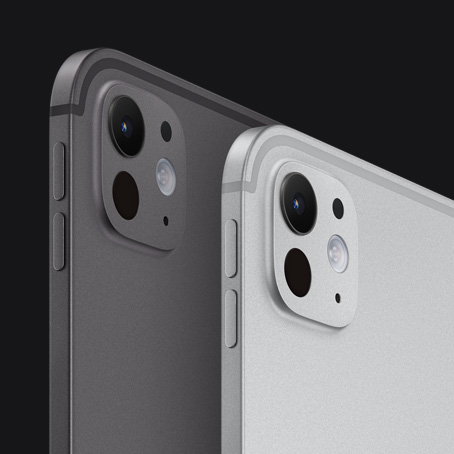
To wciąż najcieńsze tablety na rynku. Nowością w iPadzie Pro M5 jest kolor Space Black (czarny), który zastąpił dotychczasową gwiezdną szarość. Dla wielu użytkowników to drobna, ale pożądana zmiana estetyczna.
The most practical change concerns the position of the front camera. In the iPad Pro M5, it has been moved to the longer edge, so during horizontal conversations you look directly into the lens. In the M4, the camera was on the shorter side, so in horizontal orientation it gave the impression of a “side glance.” If you often hold online meetings or video lessons – this improvement really makes a difference.
Performance and computing power – Apple M5 vs M4
How big is the performance difference between M4 and M5?
The Apple M5 chip is an improved version of the M4 chip, made in the same 3 nm process, but with a new core architecture.
CPU: up to 15% faster, with better power management,
GPU: up to 40% more powerful, with support for 3rd generation ray tracing,
Neural Engine: even 4× faster in AI tasks.
In everyday use (notes, browsing the web, movies) the differences are minimal. But if you work with RAW files, design in Procreate, edit 4K videos in LumaFusion, or use AI applications – M5 will provide a real increase in work comfort.
More RAM in cheaper models
This is a significant change.
iPad Pro M4 (256/512 GB) → 8 GB RAM
iPad Pro M5 (256/512 GB) → 12 GB RAM
For demanding applications, this is a big difference – M5 handles multitasking better and keeps more projects open without refreshing. The 1 TB and 2 TB versions in both models have 16 GB RAM.
Faster disk and memory
M5 korzysta z nowszych modułów SSD NVMe, oferujących nawet 2× szybszy odczyt i zapis danych. Zwiększono też przepustowość pamięci do 153 GB/s (z 120 GB/s w M4). Efekt: krótsze czasy ładowania aplikacji, szybsze przenoszenie dużych plików i płynniejsze działanie w profesjonalnych aplikacjach.
Bateria i ładowanie – czy iPad Pro M5 działa dłużej?
Czas pracy
Apple deklaruje taki sam czas działania: do 10 godzin Wi-Fi lub 9 godzin w sieci 5G. W praktyce iPad Pro M5 ma nieco lepszą efektywność energetyczną – dzięki nowszemu procesorowi i modemowi zużywa mniej energii pod dużym obciążeniem (np. podczas streamingu 4K czy pracy na 5G).
Szybkie ładowanie – wreszcie!
The biggest novelty is fast charge. The iPad Pro M5 can be charged up to 50% in about 30 minutes using a 40W or stronger power adapter (e.g., a MacBook charger). The M4 model did not support fast charging and needed over an hour for a similar result. This is a huge advantage if you use the iPad outdoors or want to quickly recharge it between meetings.
Cameras and multimedia – does M5 take better photos?
Rear setup unchanged
Both models have the same layout:
main camera 12 Mpix (f/1.8),
ultra-wide 10 Mpix (123°),
LiDAR scanner for AR and autofocus.
The quality of photos and 4K video remains the same. Apple did not change the sensors or optics. These are solid cameras for scans and recordings, but they still do not match the Pro iPhones.
Front camera – practical change
The 12 Mpix module with Center Stage remains the same, but its position (on the longer side in M5) significantly improves the comfort of video conferencing.
Sound and multimedia
The system of four stereo speakers with Dolby Atmos remains unchanged. The sound is still fantastic – full and loud, even without headphones. Both iPads lack a 3.5 mm Jack socket, but you can use USB-C or Bluetooth headphones.
Connectivity and accessories – what’s new in the iPad Pro M5?
Wi-Fi 7 and Bluetooth 6
The new connectivity chip in M5 supports the Wi-Fi 7 (802.11be) standard, providing higher speeds and lower latencies. M4 remains with Wi-Fi 6E. Bluetooth 6 allows simultaneous audio connections and better energy management – these are future-proof features that you will appreciate over time.
5G C1X modem
The iPad Pro M5 received Apple’s proprietary C1X modem instead of the Qualcomm chip. It is even 50% faster and consumes less energy. If you often work in the field, M5 will provide more stable connections and fewer signal «drops».
Accessory compatibility
Full compatibility in both directions:
Apple Pencil 2 and Apple Pencil Pro work with M4 and M5,
Magic Keyboard (old and new with function keys) fits both models,
the same Smart Connector and magnetic mounts.
No need to buy new accessories when changing iPads – that’s a big plus.
Is it worth paying extra for the iPad Pro M5?
When to choose M5
You work with video, 3D graphics, design, or AI.
You often use a 5G modem and care about faster transmission.
You need fast-charge and modern connectivity standards.
You want hardware with longer system support (iPadOS 26+).
When M4 is enough
Używasz iPada do notatek, filmów, gier i codziennych zadań.
Nie potrzebujesz najszybszych sieci ani szybkiego ładowania.
Liczy się dla Ciebie niższa cena – M4 oferuje 90 % możliwości M5, często w promocji tańszy o kilkaset złotych.
❓ FAQ – najczęstsze pytania o iPad Pro M5 vs iPad Pro M4
🔹 Jaka jest główna różnica między iPad Pro M5 a M4?
iPad Pro M5 ma nowszy procesor Apple M5, szybsze GPU i AI, więcej RAM w tańszych modelach oraz obsługuje szybkie ładowanie. Reszta (ekran, obudowa, aparaty) pozostała bez zmian.
🔹 Czy iPad Pro M5 ma lepszy ekran?
Nie. Oba iPady Pro mają ten sam ekran Ultra Retina XDR OLED 120 Hz, o jasności do 1600 nitów.
🔹 Czy warto dopłacić do iPada Pro M5?
Tak – jeśli używasz iPada do grafiki, wideo, projektów 3D lub AI. Nie – jeśli korzystasz głównie z multimediów i notatek.
🔹 Czy iPad Pro M5 ma szybszy procesor?
Yes, the processor Apple M5 is about ~15% faster in CPU and up to 40% faster in GPU than M4.
🔹 How much RAM do the iPad Pro M4 and M5 have?
M4: 8 GB (256/512 GB) or 16 GB (1–2 TB) M5: 12 GB (256/512 GB) or 16 GB (1–2 TB)
🔹 Does the iPad Pro M5 have a longer battery life?
Unofficially – slightly longer under heavy load, but Apple claims the same 10 h.
🔹 Does the iPad Pro M5 support fast charging?
Yes. It supports fast-charge 50% in 30 min (charger ≥ 40 W).
🔹 Does the iPad Pro M4 support fast charging?
No. M4 charges normally (20–30 W), without fast-charge mode.
🔹 Does the iPad Pro M5 have a better camera?
No. The cameras are identical (12 + 10 Mpix + LiDAR), only the position of the front camera differs – in M5 it is on the side.
🔹 Is the camera on the iPad Pro M5 better for video calls?
Yes, because it has been moved to the longer edge – now you look straight into the lens during a call.
🔹 Does the iPad Pro M5 have Wi-Fi 7?
Yes, M5 supports Wi-Fi 7 and Bluetooth 6. M4 has Wi-Fi 6E and BT 5.3.
🔹 Does the iPad Pro M5 have a new 5G modem?
Yes. M5 uses the Apple C1X modem – faster and more energy-efficient than Qualcomm in M4.
🔹 Does the iPad Pro M5 work with Apple Pencil Pro?
Yes. Apple Pencil Pro works with the iPad Pro M5 and M4.
🔹 Do accessories from the iPad Pro M4 fit M5?
Yes – full compatibility. Magic Keyboard, Apple Pencil, and other accessories work on both models.
The series Xiaomi 17 is a significant step forward compared to Xiaomi 15. All models – from the basic to Pro Max – bring the new Snapdragon 8 Elite Gen 5 processor, better Leica cameras, larger batteries (up to 7500 mAh) and the latest HyperOS 3.0 system based on Android 16. On the other hand, Xiaomi 15 still remains a great choice for those looking for top performance at a lower price.
Comparison table Xiaomi 15 vs Xiaomi 17
Specyfikacja
Xiaomi 15 / 15 Pro / 15 Pro Max
Xiaomi 17 / 17 Pro / 17 Pro Max
Data premiery
IV kw. 2024 (globalnie)
III kw. 2025 (Chiny), globalnie 2026
System / UI
Android 15, HyperOS 2.0
Android 16, HyperOS 3.0
Ekran
6,36″ LTPO AMOLED (3200 nit HDR, 120 Hz) – Pro / Pro Max do 6,7″
6,3″ LTPO AMOLED (3500 nit HDR, 120 Hz) – Pro / Pro Max z ekranem tylnym OLED (2,7–2,9″)
Procesor
Snapdragon 8 Elite (3 nm, Oryon V2 do 4,32 GHz)
Snapdragon 8 Elite Gen 5 (3 nm, Oryon V3 do 4,6 GHz)
GPU
Adreno 830
Adreno 840
RAM / pamięć
12/16 GB LPDDR5x, 256/512 GB UFS 4.0 (1 TB w Pro Max)
12/16 GB LPDDR5x, 256/512 GB UFS 4.1 (1 TB w Pro / Pro Max)
5G, Wi-Fi 7, Bluetooth 5.4, NFC, UWB (Pro / Pro Max), USB-C 3.2 DP, IP68
Szkło / inne
Dragon Glass 2, czytnik ultradźwiękowy
Dragon Glass 3, UWB, ekran tylny (Pro / Pro Max)
Cena (start)
od ok. 3779 zł (12/256 GB, PL 2025)
podobny poziom cenowy w Chinach – PL premiera 2026
from left, Xiaomi 17, 17 Pro Max, Xiaomi 17 Pro
Performance of Xiaomi 15 vs Xiaomi 17
Which one is faster?
Both smartphones are powered by top Qualcomm processors. Xiaomi 15 uses the Snapdragon 8 Elite (3 nm) with Oryon V2 cores (up to 4.32 GHz) and Adreno 830 graphics, while Xiaomi 17 received the newer Snapdragon 8 Elite Gen 5 (3 nm) with Oryon V3 cores (up to 4.6 GHz) and Adreno 840 graphics.
In practice, this translates to a noticeable increase in performance. According to the manufacturer, the unit in Xiaomi 17 is 20–50% faster than in Xiaomi 15. Benchmarks confirm this data – GeekBench indicates around 3440 pts (single-core) for Xiaomi 17 vs 2769 pts for Xiaomi 15, and AnTuTu gives a clear advantage to the new model.
In everyday use
Both smartphones offer 12 or 16 GB of LPDDR5x memory, ensuring smooth operation of the system and games. However, Xiaomi 17 handles multitasking better, loads applications faster, and maintains high performance longer under heavy load. For gamers and demanding users – the choice is obvious.
Xiaomi 15 vs Xiaomi 17 Display
Does Xiaomi 17 have a better display than Xiaomi 15?
Xiaomi 15 has an LTPO AMOLED panel with a diagonal of 6.36″, a resolution of 2670 × 1200 px (~460 ppi), and a variable refresh rate from 1 to 120 Hz. The maximum brightness reached 3200 nits.
Xiaomi 17 offers an LTPO AMOLED display with a diagonal of 6.3″, a resolution of 2656 × 1220 px (~464 ppi) with an adaptive refresh rate of 1-120 Hz, but with a maximum brightness of up to 3500 nits and Dragon Crystal Glass 3 protective glass.
🔎 What does this mean in practice
In strong sunlight conditions, the Xiaomi 17 screen will be more readable due to its higher brightness – which translates to better visibility outdoors.
LTPO z zakresem 1–120 Hz oznacza, że częstotliwość odświeżania może być dynamicznie dopasowana w zależności od treści, co pomaga w oszczędzaniu baterii – obie generacje mają tę funkcję, ale 17-tka to bardziej dopracowane rozwiązanie.
Wyższa jasność i nowsze szkło ochronne w Xiaomi 17 oznaczają także lepszą wytrzymałość i mniejsze ryzyko refleksów lub utraty czytelności w słońcu.
Choć zmiana rozmiaru ekranu jest minimalna (6,36″ → 6,3″), Xiaomi 17 zyskuje na kompaktowości i lepszym stosunku proporcji, przy jednoczesnym zachowaniu znakomitej jakości obrazu.
W serii Xiaomi 17 (Pro i Pro Max) pojawiają się dodatkowe ulepszenia:
Dla wariantów Pro i Pro Max dostępny jest ekran pomocniczy z tyłu obudowy o przekątnej ok. 2,7″-2,9″ – który może służyć jako podgląd aparatów lub wyświetlać powiadomienia.
Wyższa jasność (3500 nitów) utrzymana również w Pro/Pro Max, co oznacza, że niezależnie od wersji otrzymujesz topowy panel.
✅ Wniosek
Jeżeli priorytetem jest najlepszy ekran — czyli doskonała jasność, szybka adaptacja odświeżania i lepsze szkło ochronne — wtedy Xiaomi 17 wypada lepiej niż Xiaomi 15. Jeśli jednak używasz smartfona głównie w normalnych warunkach i nie zależy Ci na ekstremalnej jasności czy ekranie tylnym w wersji Pro/Pro Max — ekran Xiaomi 15 wciąż sprosta większości zastosowań.
W sekcji aparatów oba smartfony stoją na bardzo wysokim poziomie, ale Xiaomi 17 wprowadza kilka znaczących ulepszeń w porównaniu do Xiaomi 15.
W Xiaomi 15: tylny zestaw trzech aparatów 50 MP (główny f/1.62 + ultraszeroki f/2.2 + tele f/2.0, 2,6× zoom) zgodnie z testem DXOMARK.
W Xiaomi 17: również trzy aparaty po 50 MP każdy, ale z nowszym sensorem Light Fusion 950 (1/1.31″, f/1.67) i ultrawide 50 MP f/2.4, tele 50 MP 2,6× zoom (a w wariantach Pro/Pro Max nawet 5× zoom optyczny).
Kamera przednia w Xiaomi 17: 50 MP z PDAF i autofokusem — w Xiaomi 15 było 32 MP bez AF
What does it mean in practice?
Better photo quality in low light: a larger sensor and improved lens in Xiaomi 17 mean more light, less noise, and better dynamic range (in Pro/Pro Max versions with LOFIC technology for 16.5 EV).
Better zooms: the basic model 17 maintains a 2.6× zoom, but the Pro and Pro Max versions are equipped with a 5× telephoto lens with a larger sensor – providing a real advantage when photographing from a distance.
Higher selfie detail: 50 MP with autofocus in 17 is definitely an improved front camera compared to 32 MP without AF in 15.
New features and processing: The 17 series uses newer Leica AI algorithms and better optics — effectively improving colors, contrast, and depth.
✅ Conclusions
If the camera is a priority for you, then the Xiaomi 17 takes photography and video to the next level: better zooms, better sensor, more details. However, if your needs are standard — photos, videos, social media — the Xiaomi 15 still delivers great results and may be a more cost-effective choice.
Battery and charging – Xiaomi 17 outclasses its predecessor
How long does Xiaomi 17 last?
The biggest advancement between the Xiaomi 15 and 17 series concerns the battery and energy efficiency.
Xiaomi 15 offered a battery capacity of 5240 mAh,
Xiaomi 15 Pro – about 5700 mAh,
Xiaomi 15 Pro Max – about 6100 mAh.
The new generation goes a step further:
Xiaomi 17 has 7000 mAh,
Xiaomi 17 Pro – 6300 mAh,
Xiaomi 17 Pro Max – up to 7500 mAh, making it one of the most powerful flagships on the market.
The difference is huge – in practice, the 17 series lasts even 40–60% longer on a single charge than the 15 series. The new Snapdragon 8 Elite Gen 5 chips, manufactured using a 3 nm process, are more energy efficient, so even more powerful devices consume less energy.
⚡ Charging Speed
Xiaomi 15 / Pro / Pro Max: 90 W wired + 50 W wireless + 22.5 W reverse charging.
Xiaomi 17 / Pro / Pro Max: up to 120 W wired, 50 W wireless, 22.5 W reverse.
This means that even the massive 7500 mAh battery in the Pro Max model can be fully charged in about 25 minutes, while the smaller Xiaomi 17 can replenish its energy in just under 20 minutes.
In practice:
10 minut ładowania to ok. 50 % energii,
30 minut – pełne naładowanie,
a 50 W bezprzewodowe działa stabilnie nawet z ładowarkami Qi2.
✅ Wniosek
Seria Xiaomi 17 to nie tylko więcej mocy, ale też rekordowy czas pracy na baterii. Model 17 Pro Max z ogniwem 7500 mAh i ładowaniem 120 W to jeden z najwydajniejszych flagowców 2025/2026 roku. Jeśli bateria i szybkie ładowanie są dla Ciebie priorytetem – to właśnie ta wersja zdecydowanie deklasuje poprzednią serię 15.
W serii Xiaomi 17 zastosowano najnowszą wersję interfejsu — HyperOS 3.0, działającą na bazie Androida 16. System wprowadza m.in.:
odświeżony interfejs z szybszymi animacjami i mniejszym opóźnieniem,
better energy management and RAM optimization — which positively affects smooth operation and multitasking,
new “Cross-Device” features and AI assistants that better integrate the phone with other Xiaomi devices (e.g., TV, headphones, tablet). Additionally, the HyperOS 3.0 update in the 17 models has been confirmed with version 3.0.17.0, containing stability fixes and optimizations for the rear screen and gaming.
🔹 Pro and Pro Max versions – rear screen, UWB, and advanced features
In the 17 Pro and 17 Pro Max models, hardware and software features not available in the base version have been added:
rear OLED screen (“Dynamic Back Display”) with a diagonal of ~2.7″–2.9″, allowing for camera preview, notifications, or wallpaper personalization.
support for UWB (Ultra Wide Band) technology – used for precise device location and better integration with accessories (e.g., headphones, locators).
better cooling, larger memory (up to 1 TB), which translates to even smoother operation and greater future-proofing of the smartphone.
Price and availability
which Xiaomi is more worth it?
Xiaomi 17 debuted in China in October 2025 and will hit the global market in 2026. Prices remain similar to Xiaomi 15 – around 4500 PLN for the 12/256 GB version.
Xiaomi 15 is already available in Poland and currently costs around 3779 PLN, and after the release of the newer model, it will be possible to buy it even cheaper.
💸 Conclusion: if you want to save money – choose Xiaomi 15. If you care about maximum performance and battery – Xiaomi 17 will be a better choice.
🏁 Final opinion – which model to choose?
After analyzing all key aspects — performance, screen, cameras, battery, system, and price — here’s a summary of which model will be the best in a specific situation:
✅ If you care about maximum performance and the best possible smartphone for years, choose:
Xiaomi 17 Pro Max — largest display (6.9″), huge battery (~7500 mAh), 5× optical zoom, rear OLED screen, full UWB support, latest processor.
Xiaomi 17 Pro — if you want a compromise: basically the same components as in Pro Max, but slightly smaller dimensions and lower price.
✅ If you want a great flagship, but don’t necessarily need absolutely top parameters – for many users the best choice will be:
Xiaomi 17 – the “basic” flagship of the 17 series: Gen 5 processor, large battery (~7000 mAh), improved camera and screen — still a huge leap compared to the 15 series, but in a more accessible size.
💡 If you have a limited budget or don’t need all the “features” of the new generation — the ideal choice will be:
Xiaomi 15 – great performance, very good camera set, compact form and attractive price. It is still a flagship that will meet expectations in everyday use.
📣 Śledź nas na bieżąco – kiedy Xiaomi 17 będzie dostępny w Polsce, znajdziesz u nas wszystkie akcesoria do Xiaomi 17: etui, szkła ochronne, ładowarki i więcej!
⭐ FAQ – najczęściej zadawane pytania o Xiaomi 15 i Xiaomi 17
⭐ Czy etui od Xiaomi 15 pasuje na Xiaomi 17?
Nie, każdy z modeli ma inne wymiary i rozmieszczenie aparatów. Etui z serii 15 nie będzie pasować na Xiaomi 17 – warto dobrać dedykowane akcesoria.
⭐ Czy Xiaomi 17 ma lepszy aparat od Xiaomi 15?
Tak – przede wszystkim dzięki nowej matrycy Light Fusion 950 oraz 50 MP aparacie selfie z autofokusem. Wersje Pro i Pro Max oferują też 5× zoom optyczny i lepsze zdjęcia nocne.
⭐ Jak długo działa Xiaomi 17 na baterii?
Zależnie od modelu, od 9 do 12 godzin SoT (ekranu na włączonym). Wersja Pro Max z baterią 7500 mAh może działać nawet dwa dni bez ładowania przy umiarkowanym użytkowaniu.
⭐ Does Xiaomi 17 have wireless charging?
Yes, the entire 17 series supports 50 W wireless charging and 22.5 W reverse charging, allowing you to power headphones, a smartwatch, or another phone.
⭐ Does Xiaomi 17 have a rear screen?
Yes, the Pro and Pro Max versions have an additional 2.7–2.9 inch OLED screen on the back panel – for selfies, notifications, and personalization.
⭐ Is it worth buying Xiaomi 15 in 2025?
Yes. Despite the launch of the 17 series, Xiaomi 15 is still one of the best-priced flagships – it offers high performance, an AMOLED display, and Leica cameras, and its price has dropped below 3800 PLN.
⭐ When will Xiaomi 17 be available in Poland?
The global premiere is scheduled for Q1 2026 Then the 17 series will be available for official sale in Europe.
⭐ Does Xiaomi 17 support UWB and the latest AI features?
Yes – the 17 Pro and Pro Max models have an UWB (Ultra Wide Band) module and AI features in HyperOS 3.0 (e.g. scene recognition, speech transcription, interface personalization).
⭐ How much do Xiaomi 15 and Xiaomi 17 cost in Poland?
Xiaomi 17 (12/256 GB) – estimated around 4,500 PLN after global launch
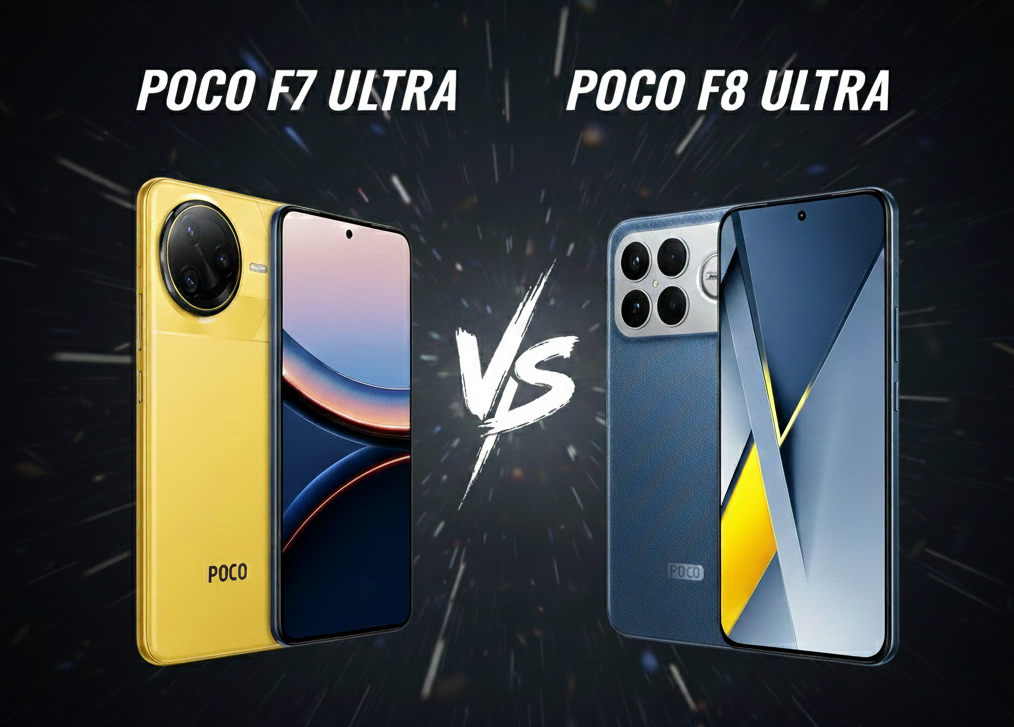
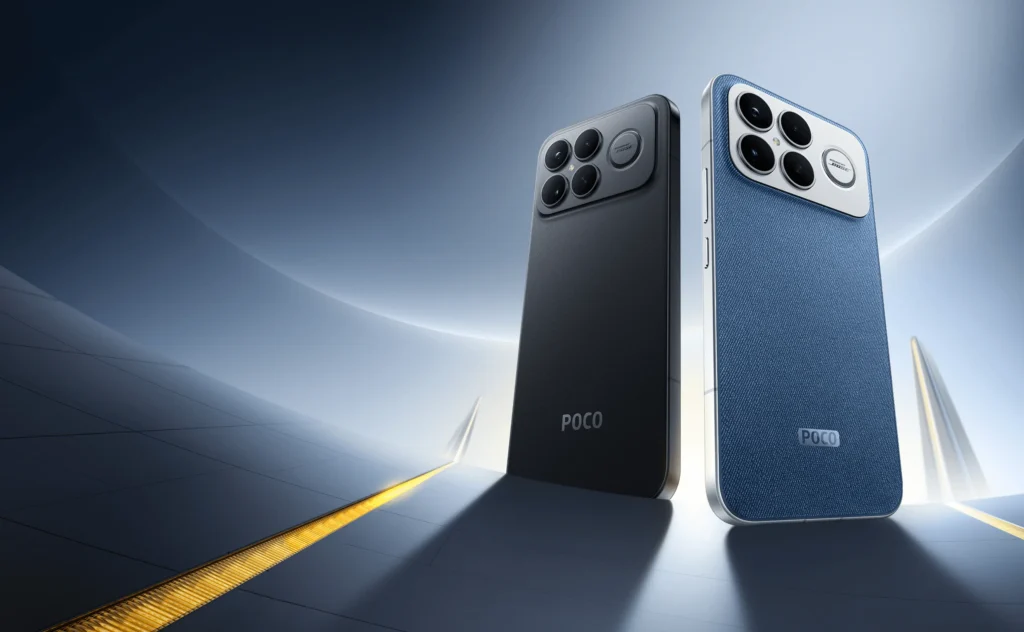
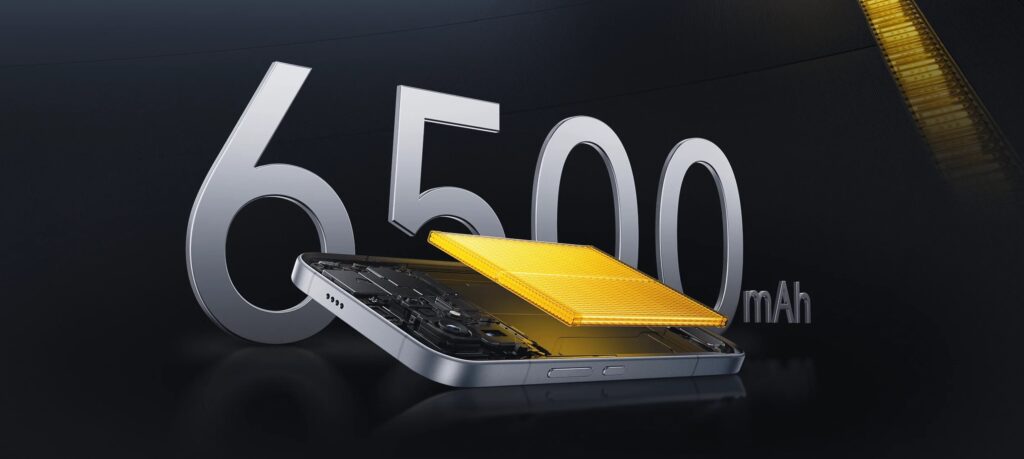
Nowy Poco F8 Ultra oferuje większą baterię (6500 mAh), lepszy aparat (peryskop 5x), głośniki z subwooferem Bose i topowy procesor Snapdragon 8 Gen 5. Starszy F7 Ultra nadal kusi ostrzejszym ekranem WQHD+, szybszym ładowaniem 120 W i niższą ceną.
📊 Tabela porównawcza: Xiaomi Poco F7 Ultra vs F8 Ultra
Parametr
Poco F7 Ultra
Poco F8 Ultra
Ekran
6,67″ WQHD+ AMOLED, 120 Hz
6,9″ AMOLED 1.5K, 120 Hz
Procesor
Snapdragon 8 Elite
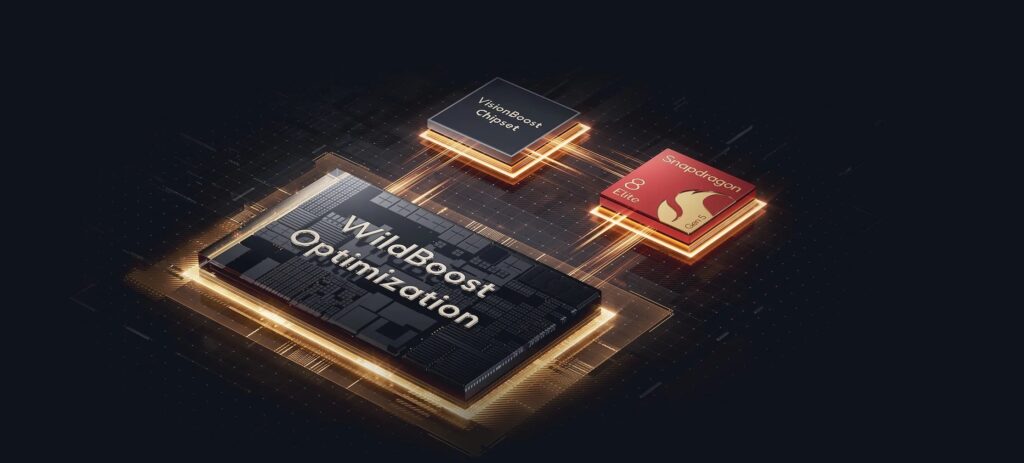
Snapdragon 8 Elite Gen 5
Aparat (tył)
50 + 50 (tele 2.5x) + 32 Mpix (ultra)
50 + 50 (peryskop 5x) + 50 Mpix (ultra)
Aparat (przód)
32 Mpix, FHD wideo
32 Mpix, 4K wideo
Bateria
5300 mAh
6500 mAh
Ładowanie
120 W przewodowe, 50 W bezprzewodowe
100 W przewodowe, 50 W bezprz., 22,5 W zwrotne
Audio
Stereo 2.0 (Dolby Atmos)
Stereo 2.1 + subwoofer Bose
System
Android 15, HyperOS 2
Android 16, HyperOS 3
Łączność
5G, Wi-Fi 7-ready, Bluetooth 5.4, IR, NFC
5G + eSIM, Wi-Fi 7, Bluetooth 6.0, IR, NFC
Cena (PL)
1875 zł (12/256 GB), 1999,99 zł (16/512 GB)
2699 zł (12/256 GB), 2999 zł (16/512 GB)
What does the Poco F8 Ultra and F7 Ultra casing look like?
What distinguishes the Denim Blue version with Bose subwoofer?
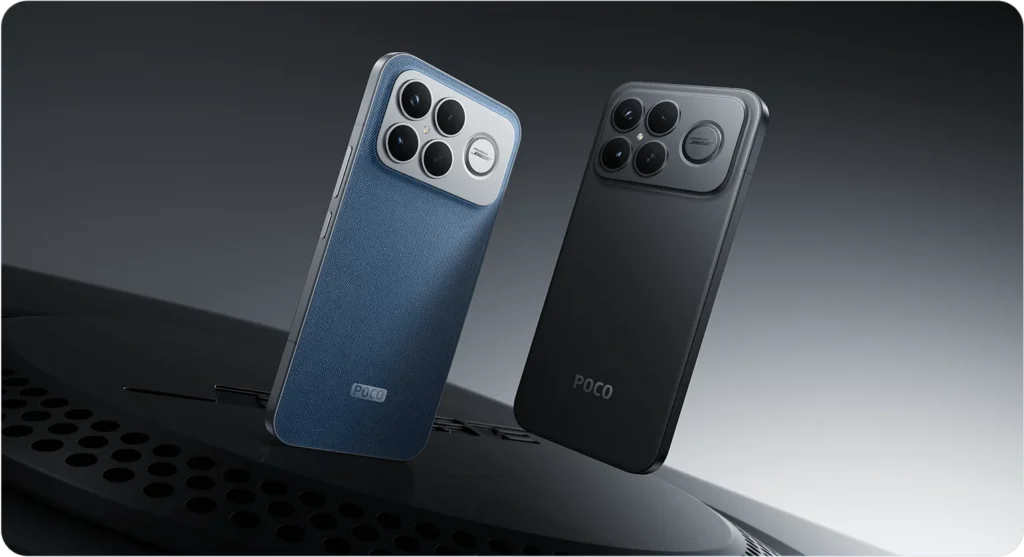
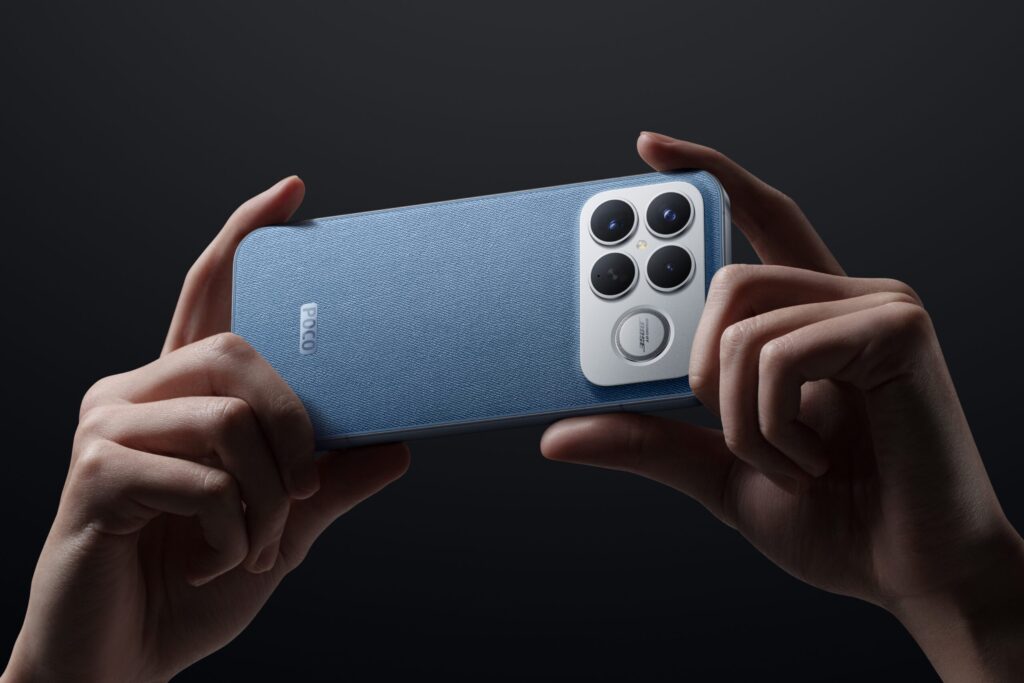
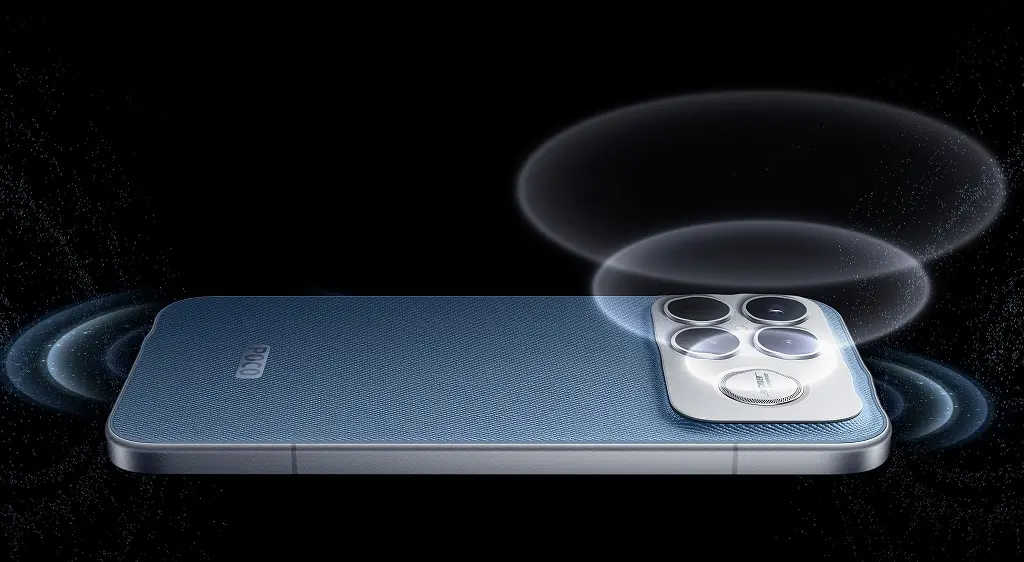
Poco F8 Ultra in the Denim Blue variant stands out with its vivid, unique design. The back with a texture resembling denim fabric gives the device a stylish yet modern character. It is not real fabric, but the visual and tactile effect is very realistic. At the top of the casing, there is a Bose logo, indicating an unusual addition – a third low-frequency speaker acting as a subwoofer. As a result, the F8 Ultra offers fuller, deeper sound than most smartphones – especially when playing music and movies without headphones.
Are both smartphones waterproof?
Both Poco F7 Ultra and F8 Ultra are designed with everyday durability in mind. Both models feature a metal frame, which ensures structural solidity and an elegant finish. Additionally, they meet the IP68 standard, meaning they are resistant to dust and immersion in water – up to a depth of 1.5 m for a maximum of 30 minutes. This is a useful feature, especially in the rain, during workouts, or on vacation.
Dimensions and comfort – which model fits better in hand?
Model
Dimensions (mm)
Weight
F8 Ultra
163.33 × 77.82 × 8.05
220 g
F7 Ultra
160.26 × 74.95 × 8.39
212 g
F8 Ultra has slightly larger dimensions, but at the same time is thinner than its predecessor. With rounded edges and a well-balanced center of gravity, it remains comfortable to use, even with one hand. F7 Ultra is lighter and narrower – more compact, which may be appreciated by those who prefer smaller devices.
What colors are the models available in?
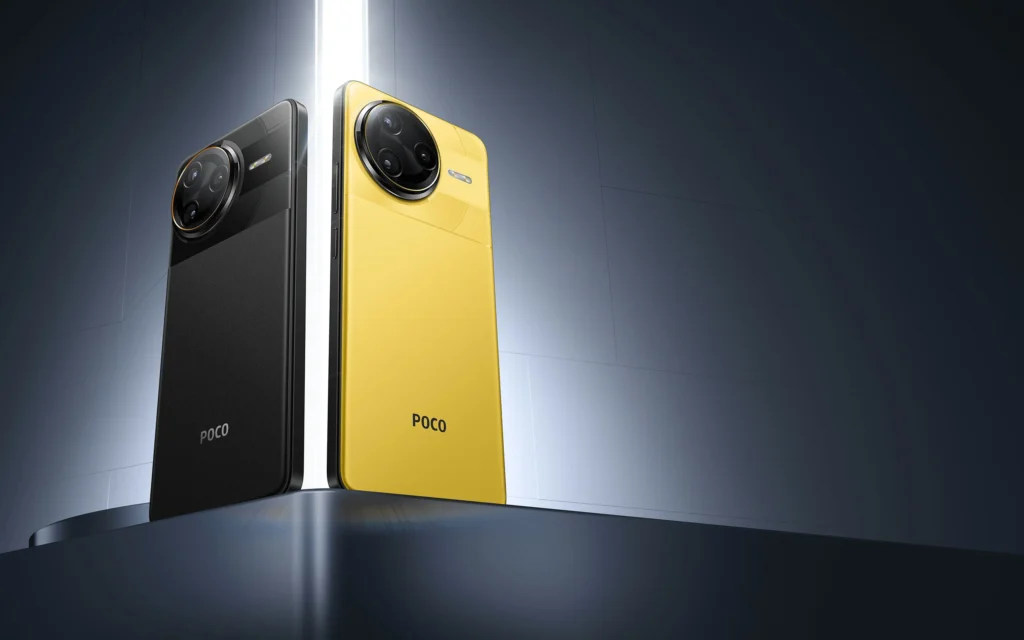
Poco F7 Ultra: classic black and intense, recognizable yellow
Poco F8 Ultra: elegant black, pure white and unique Denim Blue
The Denim Blue version is the strongest stylistic accent in the POCO offer – it combines aesthetics with functionality (Bose speaker) and makes the device stand out from the competition.
Larger screen vs higher resolution – which gives a better effect?
Poco F8 Ultra has a larger, 6.90-inch AMOLED LTPS display with a resolution of 1200 × 2608 px (~416 ppi). The 19.5:9 aspect ratio makes the screen wider and more spacious, ideal for movies, multitasking, and gaming.
Poco F7 Ultra has a smaller, but noticeably sharper screen: 6.67″ WQHD+ (1440 × 3200 px), which gives as much as ~526 ppi. This is noticeably better detail, especially when reading small fonts or browsing photos.
Refresh rate and brightness – can you see the differences?
Both models offer smooth 120 Hz, HDR10+ and Dolby Vision.
F8 Ultra: up to 3500 nits brightness – the screen is great to see in sunlight.
F7 Ultra: also very bright (up to 3200 nits), but slightly lags behind the newer model.
In summary:
F7 Ultra – more detailed image, ideal for working with text
F8 Ultra – larger, brighter screen, great for multimedia
Processor and performance – which Poco is stronger in everyday use?
Snapdragon 8 Elite vs Elite Gen 5 – how do they perform in tests?
Poco F7 Ultra is powered by the Snapdragon 8 Elite (SM8750-AB) processor with a clock speed of up to 4.32 GHz. At the time of its release, it was one of the most powerful mobile chips, offering excellent performance in games and applications.
F8 Ultra goes a step further — it features the latest Snapdragon 8 Elite Gen 5 (SM8850-AC) with a clock speed of up to 4.6 GHz and improved energy architecture (3 nm). In benchmarks like AnTuTu, the differences are clear:
AnTuTu: F8 Ultra approaches 3.86 million points, F7 Ultra around 2.63 million
Geekbench: F8 Ultra has about 24–25% higher single-core and multi-core performance
RAM and storage – has anything changed?
Both smartphones offer top configurations:
12 GB or 16 GB LPDDR5X RAM
256 GB or 512 GB UFS 4.1 storage
❌ No microSD card slot – you cannot expand the storage
System performance, loading applications or games with maximum details – in both cases it works great, but F8 Ultra provides a greater power reserve for the future.
Summary:
Camera – is Poco F8 Ultra the new leader in mobile photography?
What can the main lenses in F8 Ultra and F7 Ultra do?
Both models have very good, 50-megapixel main cameras with a large aperture (f/1.6–1.7) and optical image stabilization (OIS). This guarantees great photos during the day, good effects after dark, and smooth shots in motion.
However, differences appear with additional lenses.
Poco F8 Ultra – strong advantage in zoom and wide angle
Ultrawide angle: 50 Mpix (vs 32 Mpix in F7 Ultra) – better detail and less distortion
Periscope telephoto lens: 50 Mpix with 5x optical zoom and OIS (vs 2.5x zoom in F7 Ultra)
Front camera: 32 Mpix – in F8 Ultra records 4K, in F7 Ultra only 1080p
F8 Ultra zapewnia lepsze zbliżenia, więcej detali i bardziej zaawansowane możliwości fotograficzne. Dodatkowo dzięki peryskopowi zdjęcia z dużej odległości zachowują ostrość i jakość.
F7 Ultra – nadal bardzo solidna optyka
Świetny aparat główny z OIS
2,5x zoom optyczny przy teleobiektywie
Dobre ujęcia dzienne i nocne
Selfie z przodu w 32 Mpix
W skrócie:
F8 Ultra – lepszy zoom, lepszy szeroki kąt, lepsze wideo z selfie
Bateria i ładowanie – który Poco działa dłużej, a który ładuje się szybciej?
Who has a bigger battery and better runtime?
POCO F8 Ultra clearly wins in terms of capacity – it has a 6500 mAh battery that provides a very long operating time even with intensive use. POCO F7 Ultra has a slightly smaller battery 5300 mAh, which also lasts all day, but offers a shorter screen-on time.
How does fast charging and wireless technology look?
F7 Ultra supports very fast 120 W wired charging (full charge in about 30 minutes), as well as 50 W wireless and 10–15 W reverse charging. F8 Ultra supports 100 W wired charging, 50 W wireless and 22.5 W reverse charging.
Which model is better in terms of charging and battery?
F8 Ultra – longer operating time, larger capacity, and stronger reverse charging
➡️ For the older model, there are also chargers for Poco F7 Ultra, perfect for fully utilizing its capabilities.
System and software – does the new Android and HyperOS make a difference?
Android 16 vs Android 15 – what has changed?
Poco F8 Ultra debuts with the latest system Android 16, complemented by HyperOS 3, which is the next version of the Xiaomi overlay created after moving away from MIUI. This system offers better optimization, AI support, smoother animations, and better integration with other Xiaomi devices.
Poco F7 Ultra uses Android 15 and HyperOS 2, which still provides great smoothness, but may receive one update less in the future.
What does HyperOS offer in practice?
Advanced interface customization
Intelligent memory manager
Gaming mode and advanced sound options
Longer support for F8 Ultra (Android updates + security)
In everyday use, both phones operate very smoothly. But if you care about longer support and newer AI features, F8 Ultra is a better future-proof choice.
Memory and storage – is it worth paying extra for the 512 GB version?
What memory variants do Poco F8 Ultra and F7 Ultra offer?
Both models are available in identical configurations:
12 GB or 16 GB RAM (standard LPDDR5X – fast and energy-efficient)
256 GB or 512 GB internal storage (UFS 4.1 – very fast read/write)
This means that regardless of the model, you can count on top performance in multitasking, gaming, video editing, or storing large files.
Can memory be expanded with a microSD card?
❌ Unfortunately no. Neither F8 Ultra nor F7 Ultra have a memory card slot. This means that it is worth deciding on the right capacity right away – if you take a lot of photos, record 4K video, use many games or offline applications, the 512 GB variant will be a safer choice.
Short comparison:
Both models offer fast memory and a large amount of RAM
No microSD – the choice of capacity matters right away
F8 Ultra with 512 GB is a sensible investment «for years»
Connectivity and sound – which Poco has better audio and eSIM?
Do both models have 5G, Wi-Fi 7 and modern ports?
Yes – both Poco F8 Ultra and F7 Ultra support the latest connectivity standards:
5G dual SIM (supports two nanoSIM cards simultaneously)
Wi-Fi 7 – the fastest standard, backward compatible with Wi-Fi 6 and 5
Bluetooth:
F8 Ultra: 6.0
F7 Ultra: 5.4
NFC – for contactless payments on both
USB-C:
F8 Ultra: USB 3.2
F7 Ultra: USB 2.0
F8 Ultra additionally supports eSIM – a convenient solution for travelers
Does the sound differ as well?
Definitely yes! Poco F8 Ultra has an advantage in the audio system:
F8 Ultra: the first smartphone with triple 2.1 speaker system – two stereo + Bose subwoofer
F7 Ultra: stereo with Dolby
Which Poco Ultra is worth choosing?
Poco F8 Ultra is a more modern, more powerful, and more multimedia-oriented model:
✅ larger battery (6500 mAh) ✅ stronger processor (Snapdragon 8 Elite Gen 5) ✅ better additional cameras (5x zoom, 50 Mpix ultra wide) ✅ higher screen brightness and Bose subwoofer ✅ eSIM, USB 3.2, longer software support
On the other hand, Poco F7 Ultra still has its strengths:
✅ sharper screen (WQHD+) ✅ faster charging (120 W) ✅ solid camera set and great design ✅ often lower price (especially the 12/256 GB version)
In summary:
Choose Poco F8 Ultra if you care about maximum performance, cameras, and sound
Go for F7 Ultra if you want a great flagship at a better price and with a sharper screen
Frequently asked questions about Poco F8 Ultra and Poco F7 Ultra
What screen does the Poco F8 Ultra have and is it better than the F7 Ultra?
The Poco F8 Ultra has a larger 6.9″ AMOLED screen (~1.5K) with very high brightness – up to 3500 nits.
The Poco F7 Ultra has a sharper 6.67″ WQHD+ display (526 ppi).
Choose the F8 Ultra if visibility is important to you, or the F7 Ultra if you value image sharpness.
Does the Poco F8 Ultra have better sound than the F7 Ultra?
Yes – the F8 Ultra offers a unique 2.1 speaker system with a Bose subwoofer.
This is the first Poco smartphone with a dedicated subwoofer.
Does the Poco F8 Ultra have eSIM and USB 3.2?
Yes, the F8 Ultra supports eSIM and fast USB-C 3.2.
The F7 Ultra does not offer eSIM and uses a USB 2.0 port.
Which model has a better camera: Poco F7 Ultra or F8 Ultra?
F8 Ultra has 3 cameras 50 Mpix (main, ultra wide, and tele 5x), each with OIS.
F7 Ultra has a weaker ultra-wide (32 Mpix) and a 2.5x telephoto lens.
F8 Ultra wins in terms of zoom, detail, and night shots.
How long does the battery last in Poco F8 Ultra and F7 Ultra?
F8 Ultra has a larger 6500 mAh battery and lasts noticeably longer.
F7 Ultra with 5300 mAh charges faster (120 W), but offers shorter usage time.
Is it worth buying Poco F8 Ultra in 2025?
Yes, Poco F8 Ultra is one of the most advanced smartphones in its class. Great performance, triple 50 Mpix camera, and Bose subwoofer make it still a very worthwhile choice.
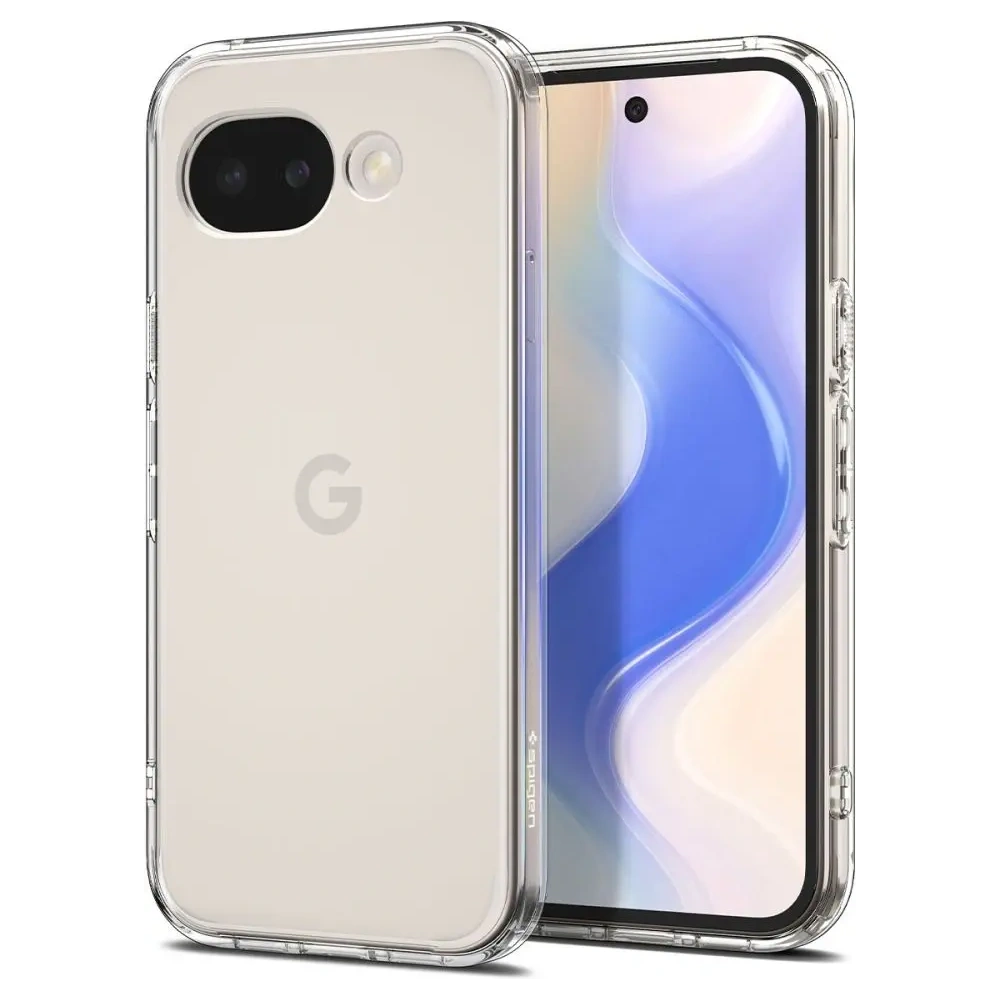
The best case for Pixel 10a is Spigen Ultra Hybrid (59 PLN) — transparent with raised edges and Air Cushion technology. The cheapest? Bizon Case Salpa for 25 PLN. The Pixel 10a has a plastic back, so a case is not a luxury, but a necessity.
Google Pixel 10a debuted on March 5, 2026. For 549 EUR, you get a Tensor G4 processor, a 48 MP camera with OIS, a 120 Hz display with Gorilla Glass 7i, and a 5100 mAh battery with 30W charging. It’s a great smartphone for its price — but it has a plastic back that scratches easily.
In this guide, you will find the best accessories for Pixel 10a: cases from 25 PLN, tempered glass, and chargers that utilize the full potential of 30W fast charging.
Tip: The Pixel 10a supports 10W Qi wireless charging, but it does not have native MagSafe or Qi2. Cases with a magnetic ring (e.g., Tech-Protect or Ringke MagSafe) add compatibility with MagSafe accessories.
1. Spigen Ultra Hybrid — transparent with Air Cushion (59 PLN)
Our choice
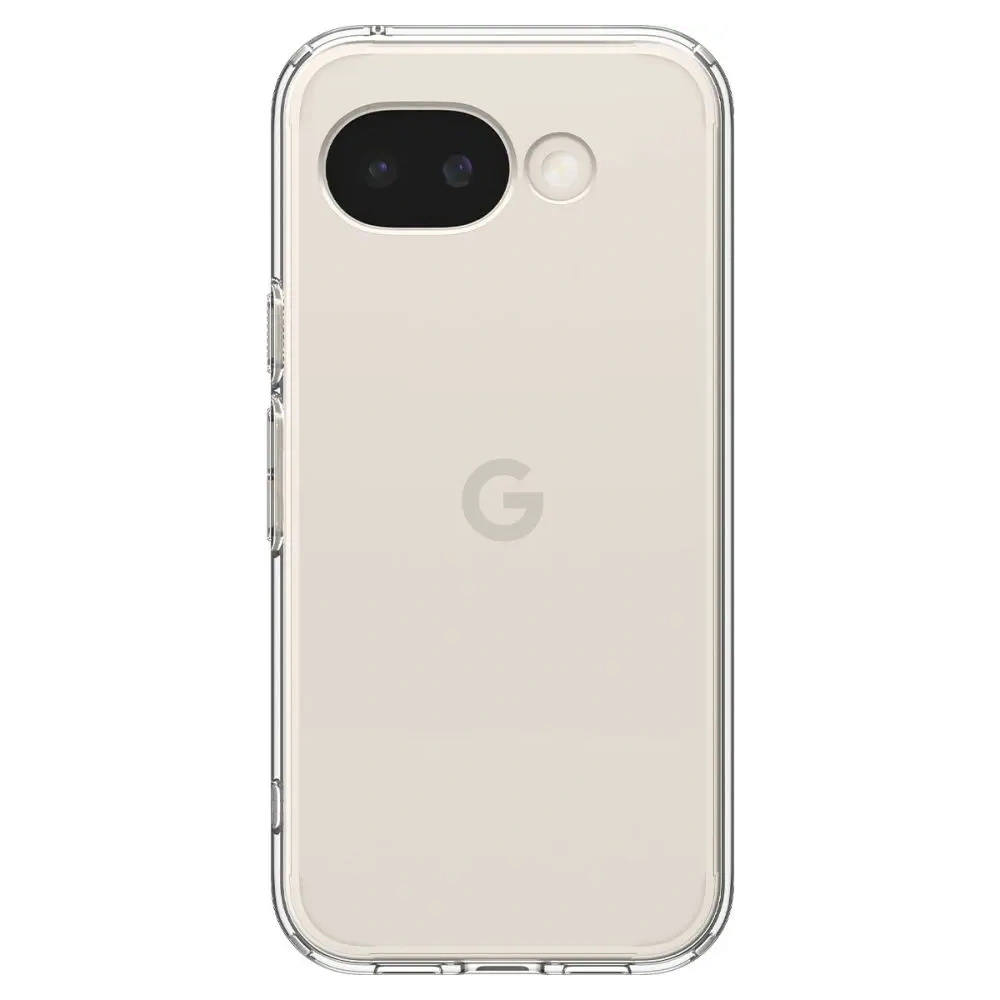
Spigen Ultra Hybrid is a proven series — transparent polycarbonate back with a flexible TPU frame. Air Cushion technology in the corners absorbs impacts, and the raised edges protect the screen and camera.
Air Cushion Technology — air cushions in the corners
Transparent back — shows the original color of the Pixel 10a
Raised edges — protection for the screen and camera
Precise cutouts for all ports and buttons
Pixel 10a has a flat camera module (without a protruding «island»), so the case sits perfectly on any surface. For 59 PLN you get the proven quality of Spigen and assurance of fit.
Parameter
Value
Material
TPU + polycarbonate
Type
Transparent
MagSafe
❌
Price
59 zł
2. Ringke Fusion Magnetic MagSafe — magnetic transparent (65 zł)
Pixel 10a does not have native MagSafe, but Ringke Fusion Magnetic adds a built-in magnetic ring. With it, you can use magnetic chargers, power banks, and car mounts — just like iPhone users.
Built-in MagSafe ring — compatibility with magnetic chargers and accessories
Transparent polycarbonate — resistant to yellowing
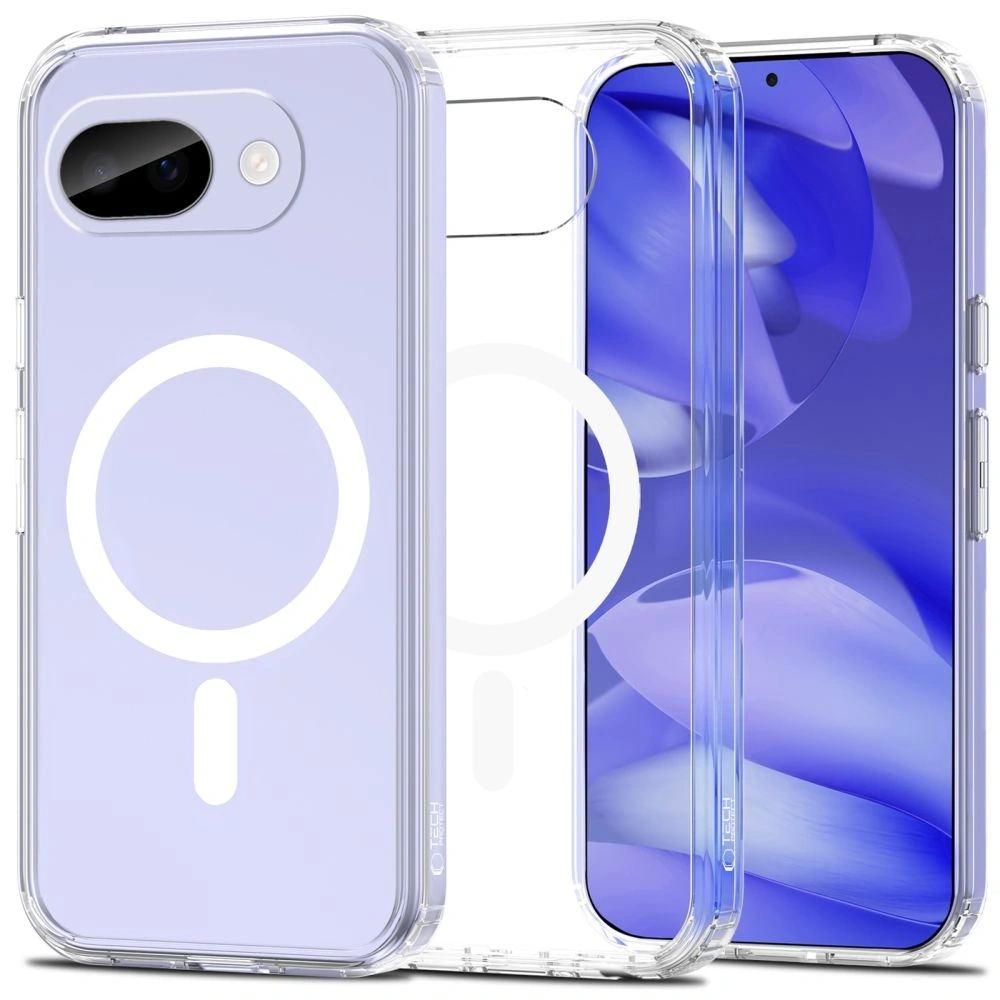
Tech-Protect Flexair is half the price of Ringke, yet offers the same key features: a transparent hybrid with a built-in magnetic ring. The hybrid construction (TPU + PC) combines the flexibility of the frame with a hard, scratch-resistant back.
MagSafe — built-in magnetic ring
Hybrid TPU + PC — rigid back, flexible frame
Transparent — visible original color of the phone
Raised edges around the screen and camera
At 35 zł, it offers the best price-to-functionality ratio in the comparison. If you want MagSafe for the Pixel 10a and don’t want to overpay, Tech-Protect Flexair is a perfect choice.
Parameter
Value
Material
TPU + polycarbonate
Type
Transparent
MagSafe
✅
Price
35 zł
4. 3MK Armor Case — armored protection (49.90 zł)
3MK Armor Case is a rugged case with reinforced corners and a textured back that won’t slip from your hand. The design absorbs impacts more effectively than standard TPU cases.
Reinforced corners — enhanced protection against drops
Textured back — non-slip surface
Matte finish — does not collect fingerprints
Raised edges around the screen and camera
The plastic back of the Pixel 10a is particularly prone to scratches. The 3MK Armor Case ensures that even a fall on concrete won’t result in a crack. At 49.90 PLN, it’s a solid rugged case from a Polish brand.
Parameter
Value
Material
Reinforced TPU
Type
Armored
MagSafe
❌
Price
49.90 zł
5. Bizon Case Salpa — the cheapest protection (25 zł)
Lowest price
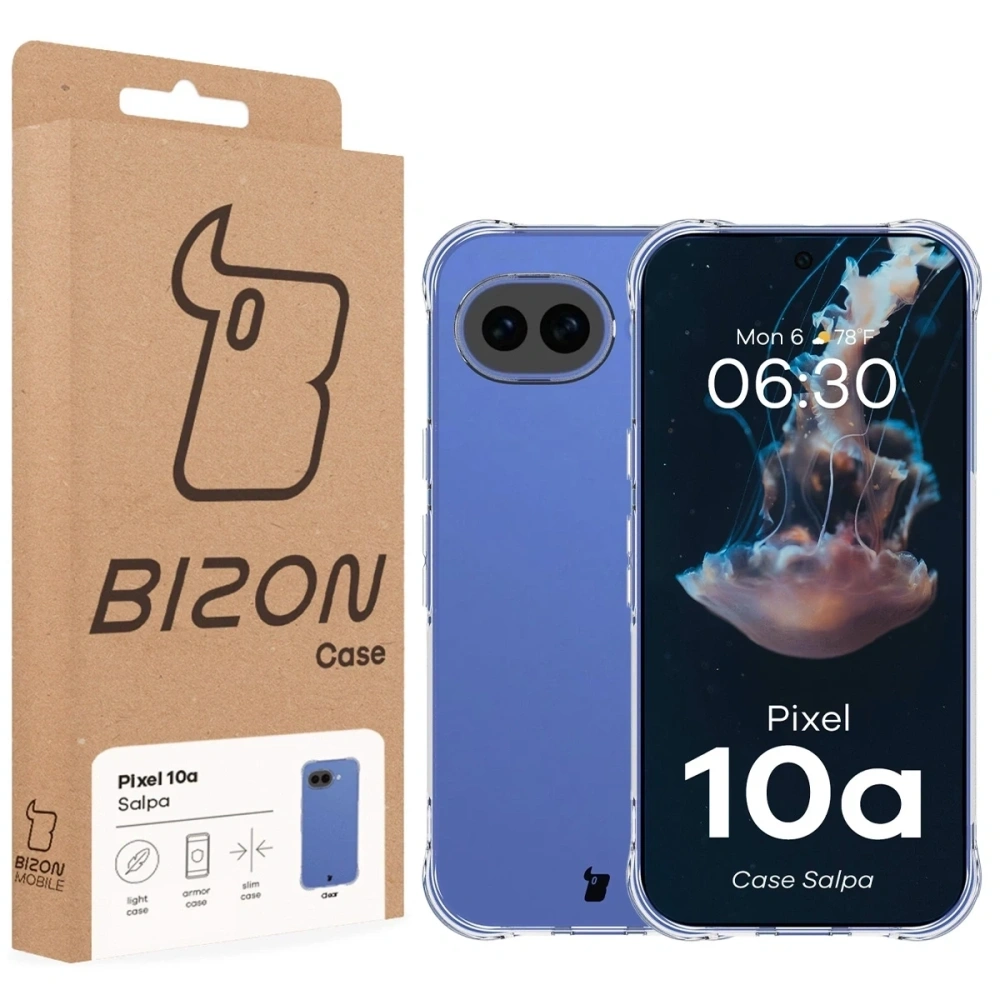
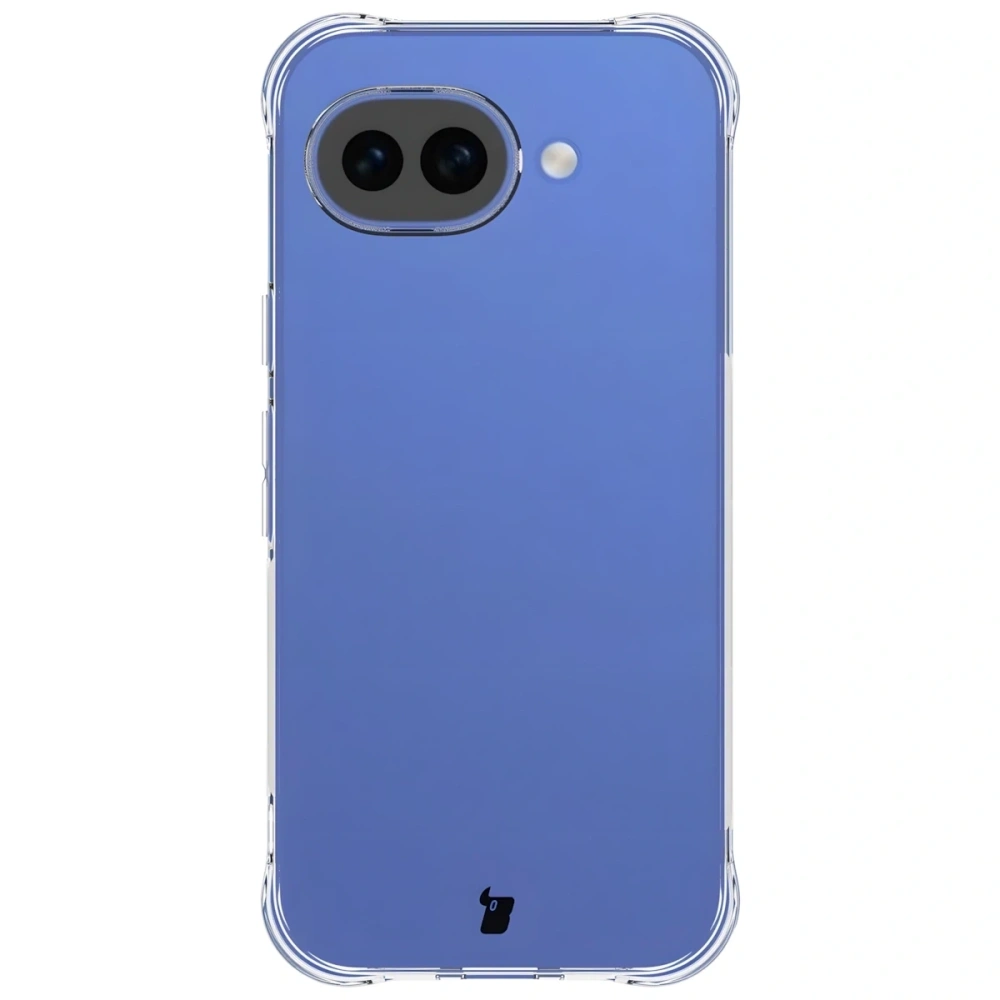
Flexible TPU case for 25 zł. Bizon Case Salpa is a minimalist, transparent cover that protects against scratches and light drops. It lacks Air Cushion and MagSafe, but it does what it needs to do — at a minimal price.
Flexible TPU — easy to put on and take off
Transparent — visible design of the Pixel 10a
Raised edges around the screen
Slim profile — adds no unnecessary thickness
Perfect as a temporary case right after purchasing a phone or for those who do not need advanced protection. For 25 PLN, it’s hard to find a better option to start with.
Parameter
Value
Material
TPU
Type
Transparent, flexible
MagSafe
❌
Price
25 PLN
Comparison of cases for Pixel 10a
Case
Brand
Type
MagSafe
Feature
Price
Ultra Hybrid
Spigen
Transparent
❌
Air Cushion, top brand
59 PLN
Fusion Magnetic
Ringke
Transparent
✅
MagSafe + yellowing resistance
65 PLN
Flexair Hybrid
Tech-Protect
Transparent
✅
Cheapest MagSafe
35 PLN
Armor Case
3MK
Armored
❌
Reinforced corners
49.90 PLN
Salpa
Bizon
Flexible
❌
Lowest price
25 PLN
Our choice: Depends on the priority. MagSafe for pennies? Tech-Protect Flexair (35 zł). Proven brand? Spigen Ultra Hybrid (59 zł). Minimum expenses? Bizon Salpa (25 zł).
Tempered glass for Pixel 10a
Pixel 10a has Gorilla Glass 7i on the front — it’s durable glass, but it’s not indestructible when dropped on concrete. Tempered glass adds a protective layer for a few dozen złoty.
Tech-Protect Glass Fit+ 2-pack(25 zł) — two glasses in a set for the price of one from the competition. Compatible with Pixel 9a and 10a (same screen size). The black frame conceals the edges and gives an elegant look. Best value in this category.
Ringke Tempered Glass 2-pack (39 zł) — premium option with an oleophobic coating (resistant to fingerprints) and a hardness of 9H. Two glasses in the set — one for now, the other as a spare.
3MK FlexibleGlass (34,90 zł) — hybrid glass that combines the flexibility of a film with the hardness of glass. It does not crack upon falling like traditional tempered glass. One piece in the package.
Ładowarki i powerbanki do Pixel 10a
Pixel 10a obsługuje ładowanie 30W po kablu (USB PD 3.0) i 10W bezprzewodowo (Qi). Żeby wykorzystać pełną prędkość ładowania, potrzebujesz ładowarki z USB PD o mocy minimum 30W.
Ładowarka sieciowa — szukaj modeli z USB-C PD 30W+. Ładowarka GaN (azotek galu) będzie kompaktowa i wydajna. Sprawdź ładowarki sieciowe w homescreen.pl.
Powerbank — minimum 10 000 mAh z USB-C PD. Jeśli kupiłeś etui z MagSafe (np. Ringke czy Tech-Protect), magnetyczny powerbank przyklei się do telefonu i naładuje go bezprzewodowo. Powerbanki w homescreen.pl.
USB-C cable — The Pixel 10a has USB-C 3.2, so you need aUSB-C to USB-C cable that supports PD 30W+. Most cables in the box are 2.0 versions — a 3.2 cable will be useful for data transfer.
FAQ — most common questions about Pixel 10a accessories
Does the Pixel 10a support MagSafe?
Not natively. The Pixel 10a has Qi standard (10W), but not MagSafe or Qi2. Cases with a built-in magnetic ring (e.g., Ringke Fusion Magnetic, Tech-Protect Flexair MagSafe) add compatibility with MagSafe accessories.
Do cases from the Pixel 9a fit the Pixel 10a?
No. The Pixel 10a has different dimensions (153.9 x 73 x 9 mm) than the Pixel 9a. Cases are not interchangeable between models. Tempered glasses may be compatible — e.g., Tech-Protect Glass Fit+ is labeled as “Pixel 9a / 10a».
What charger for the Pixel 10a?
A USB-C charger with PD (Power Delivery) of at least 30W. This provides full charging speed — 50% battery in 30 minutes.
Is the Pixel 10a waterproof?
Yes, it has an IP68 rating — dustproof and waterproof up to 1.5 meters for 30 minutes. A case is not required for waterproofing, but it protects against scratches and drops.
Does the Pixel 10a have a glass back?
No. The Pixel 10a has a plastic back — this is one of the reasons why a case is particularly important. Plastic scratches more easily than glass and does not look as good after a few months without protection.
How much do accessories for the Pixel 10a cost?
Cases from 25 PLN (Bizon Salpa) to 65 PLN (Ringke Fusion Magnetic MagSafe). Tempered glasses from 25 PLN (Tech-Protect 2-pack) to 39 PLN (Ringke 2-pack). A complete protection set (case + glass) can be purchased for 50–100 PLN.
Summary
Pixel 10a is a great smartphone, but the plastic back needs protection. The good news is that accessories are cheap — you can buy a complete set (case + tempered glass) for just 50 PLN.
Key takeaways:
Best quality: Spigen Ultra Hybrid (59 PLN) — Air Cushion, transparent, trusted brand
Best with MagSafe: Ringke Fusion Magnetic (65 PLN) — magnetic ring + transparent
Best price-to-value ratio: Tech-Protect Flexair MagSafe (35 PLN) — MagSafe for half the price of Ringke
If you care about the Apple ecosystem, stability, and great video — the better choice will be the iPhone 17 Pro Max.
On the other hand, if you prioritize maximum specifications, a 200 MP camera, S Pen, and greater control over the system — the Galaxy S26 Ultra offers more technology.
6,299 PLN for the iPhone 17 Pro Max. 6,499 PLN for the Samsung Galaxy S26 Ultra. The difference? 200 PLN and two completely different ecosystems. On paper, both phones have 6.9-inch screens, flagship processors, and cameras that make DSLRs from a few years ago look pale in comparison. But the devil is in the details.
If you are wondering which of them will be your companion for the next 3-4 years, this article will help you make an informed decision.
📊 Specifications – iPhone 17 Pro Max vs Galaxy S26 Ultra
Before we get into the details, here is a comparison of key parameters side by side:
Parametr
iPhone 17 Pro Max
Galaxy S26 Ultra
Wyświetlacz
6.9″ OLED, 2868×1320, 460 ppi
6.9″ Dynamic AMOLED 2X, 3120×1440, 498 ppi
Jasność
1000/1600/3000 nitów
~1750/2600 nitów
Procesor
Apple A19 Pro
Snapdragon 8 Elite Gen 5
RAM
12 GB (nieoficjalnie)
12/16 GB
Pamięć
256 GB / 512 GB / 1 TB / 2 TB
256 GB / 512 GB / 1 TB
Aparat główny
48 MP f/1.78
200 MP f/1.4
Ultraszeroki
48 MP f/2.2 (120°)
50 MP f/1.9
Teleobiektyw
48 MP 4x f/2.8 (8x optyczny)
50 MP 5x + 10 MP 3x
Selfie
18 MP f/1.9
12 MP f/2.2
Wideo
4K Dolby Vision 120fps, ProRes
8K 30fps, 4K 120fps
Bateria
4 823 mAh
5 000 mAh
Ładowanie
40 W przewodowe, 25 W MagSafe
60 W przewodowe, 25 W Qi2.2
Wymiary
163.4 x 78.0 x 8.75 mm
163.6 x 78.1 x 7.90 mm
Waga
233 g
214 g
Ochrona
Ceramic Shield 2, IP68 (6 m)
Gorilla Armor, IP68
Materiał
Aluminium, Ceramic Shield
Tytan
System
iOS 26
Android 16 + One UI
S Pen / rysik
❌
✅
Cena (256 GB)
6 299 zł
6 499 zł
At first glance, it is clear: these are two different approaches to flagship devices. Samsung focuses on camera resolution and faster charging, while Apple emphasizes the video ecosystem and memory capacity. Let’s get into the details.
⚡ Performance and Processor
A19 Pro vs Snapdragon 8 Elite Gen 5
The iPhone 17 Pro Max is powered by Apple A19 Pro — a chip manufactured using a 2 nm process with a 6-core CPU and a 6-core GPU featuring hardware ray tracing. Samsung counters with Snapdragon 8 Elite Gen 5 from Qualcomm, which Samsung uses in all regions (no more Exynos in Europe).
Benchmarks vs Reality
In Geekbench 6 tests, Samsung surprised: Galaxy S26 Ultra scored 11,738 points in multi-core — about 20% more than the iPhone 17 Pro Max (~9,700 points). Single-core? Samsung also leads with a score of 3,852 points.
Does this mean that Samsung is faster in everyday use? Not necessarily. iOS traditionally optimizes resources better, so an iPhone with less RAM (12 GB vs 16 GB in the top version of Samsung) can run just as smoothly. The differences in benchmarks mainly translate to:
Video and 3D graphics rendering — here Samsung has a measurable advantage
Multitasking with multiple heavy applications — 16 GB of RAM gives Samsung a buffer
Daily applications (social media, browser, maps) — both phones operate at the same speed
💡 Tip: If you’re not rendering video on your phone and not playing the latest 3D games, you simply won’t notice any performance differences between these two flagships.
Display – iPhone 17 Pro Max vs Samsung Galaxy S26 Ultra
Resolution, brightness, and screen features
The iPhone 17 Pro Max and Samsung Galaxy S26 Ultra offer large, 6.9-inch OLED displays with a refresh rate of 120 Hz. However, this is where the similarities between the screens of both flagships essentially end.
Samsung Galaxy S26 Ultra has a higher screen resolution — 3120 × 1440 px (498 ppi), while iPhone 17 Pro Max offers 2868 × 1320 px (460 ppi). In practice, you will notice the difference in sharpness mainly when viewing text or images very closely. In everyday use, both displays are simply phenomenally sharp.
Where does iPhone 17 Pro Max catch up? Screen brightness. Apple claims even up to 3000 nits at peak (e.g., in full sunlight) — this is one of the highest values on the smartphone market. Galaxy S26 Ultra reaches around 2600 nits, so in very bright conditions, the iPhone may be slightly more readable.
Samsung has something that we won’t find in the iPhone — the Privacy Display feature. This technology limits the screen viewing angle, so people sitting next to you on the bus or train won’t see your messages or banking app. In terms of privacy, this is a very practical solution.
This is where the most interesting part of the comparison begins. Both phones have camera systems that compete with compact cameras, but they approach photography from different angles.
Main Camera: 48 MP vs 200 MP
Samsung boasts a 200 MP with an aperture of f/1.4 — the brightest aperture in Galaxy history. It lets in 47% more light than the S25 Ultra (f/1.7). The iPhone responds with «modest» 48 MP, but with optical sensor-shift stabilization.
Is 200 MP better than 48 MP? By default, both phones take pictures at ~12 MP (through pixel binning). Samsung wins in situations where you want to pull out detail — the full 200 MP provides huge files for cropping. The iPhone focuses on color consistency across all three lenses.
Zoom: periscope system
Zoom
iPhone 17 Pro Max
Galaxy S26 Ultra
Ultrawide
48 MP, 0.5x
50 MP, 0.6x
Main
48 MP, 1x-2x
200 MP, 1x
Telephoto #1
—
10 MP, 3x
Telephoto #2
48 MP, 4x (8x optical)
50 MP, 5x
Max digital zoom
40x
100x (Space Zoom AI)
Samsung offers two telephoto lenses (3x and 5x), providing greater flexibility. The iPhone has one 4x telephoto lens, but with the ability to crop to 8x without losing quality (thanks to the 48 MP sensor). In practice, both systems deliver excellent results up to ~10x zoom. Above that, Samsung leads with its 100x Space Zoom supported by AI.
Selfie and portrait mode
The iPhone wins in selfies — 18 MP with autofocus and Center Stage vs 12 MP on Samsung. Center Stage automatically frames the shot, tracking your face during video calls. Samsung has HDR10+ in selfies, but at a lower resolution.
🎬 Video and filming
This is a category where the iPhone traditionally dominates — and the 17 Pro Max maintains this position.
iPhone 17 Pro Max records 4K Dolby Vision up to 120 fps and supports ProRes — a format used in professional post-production. Slow-motion in 4K at 120 fps is a quality that just 3 years ago required a camera costing several thousand zlotys. Additionally, Spatial Video for Apple Vision Pro.
Samsung Galaxy S26 Ultra nagrywa 8K przy 30 fps — wyższa rozdzielczość na papierze, ale 30 fps ogranicza płynność. W 4K Samsung oferuje do 120 fps, co wyrównuje szanse. Brakuje jednak odpowiednika ProRes — pliki Samsunga są kompresowane.
Cecha
iPhone 17 Pro Max
Galaxy S26 Ultra
Maks. rozdzielczość
4K 120 fps (Dolby Vision)
8K 30 fps
ProRes / format pro
✅ ProRes 4K 120 fps
❌
Slow-motion
4K 120fps, 1080p 240fps
4K 120fps, 1080p 240fps
Spatial Video
✅
❌
Stabilizacja
Sensor-shift OIS
OIS
Werdykt: Jeśli filmowanie jest dla Ciebie priorytetem, iPhone nie ma konkurencji w segmencie smartfonów. Jeśli nagrywasz głównie krótkie klipy do social media, oba telefony spisują się doskonale.
🔋 Bateria i ładowanie
Pojemność baterii i szybkość ładowania
Samsung has a larger battery (5,000 mAh vs 4,823 mAh), but the iPhone compensates with better energy optimization. Apple claims 39 hours of video playback for the Pro Max — one of the best results on the market.
Where does Samsung clearly win? Wired charging.
Charging
iPhone 17 Pro Max
Galaxy S26 Ultra
Wired
40 W (50% in 20 min)
60 W (75% in 30 min)
Wireless
25 W (MagSafe/Qi2)
25 W (Qi2.2)
Reverse charging
✅ (MagSafe)
✅ (4.5 W)
Samsung charges significantly faster wired — 60 W vs 40 W. If you forgot to charge your phone overnight, Samsung will return to 75% in half an hour. The iPhone takes longer, although 50% in 20 minutes is still a decent result.
Wireless charging is a tie — 25 W on both sides. Both support reverse charging (charging headphones or a watch from the phone).
🤖 AI and Software
This is a category that becomes one of the most important differentiators in 2026. Both phones offer advanced AI features, but in different styles.
Apple Intelligence
Apple Intelligence działa głęboko w systemie iOS 26. Kluczowe funkcje:
Siri z kontekstem — rozumie co jest na ekranie, kontynuuje rozmowę, wykonuje złożone polecenia
Narzędzia pisania — podsumowywanie, korekta tonu, przepisywanie tekstu w każdej aplikacji
Genmoji — generowanie spersonalizowanych emoji z opisu
Image Playground — tworzenie obrazów AI w stylu ilustracji
Priorytetyzacja powiadomień — AI sortuje powiadomienia według ważności
Galaxy AI
Samsung Galaxy AI w S26 Ultra oferuje:
Tłumaczenie rozmów w czasie rzeczywistym — podczas połączeń telefonicznych, bez internetu
Circle to Search — zakreśl cokolwiek na ekranie, żeby to wyszukać
Generative Edit — filling in photo fragments with AI-generated content
Note Assist — note summaries, transcription of recordings
Privacy Display AI — intelligent dimming of the screen when someone is looking from the side
Updates — how many years of support?
Here is the key difference. Apple traditionally supports iPhones for 6-7 years of iOS updates. Samsung promises 7 years of system and security updates starting from the S24 series — matching Apple.
In practice, both phones purchased today will receive updates until 2032-2033. This means that an investment of ~6,300 PLN spreads over at least 7 years of support.
💰 Price and value for money
How much does the iPhone 17 Pro Max cost vs Samsung Galaxy S26 Ultra?
Variant
iPhone 17 Pro Max
Galaxy S26 Ultra
256 GB
6 299 zł
6 499 zł
512 GB
7 299 zł
7 499 zł
1 TB
8 299 zł
9 499 zł
2 TB
10 299 zł
❌ brak
iPhone 17 Pro Max is about 200 zł cheaper than the Galaxy S26 Ultra in every memory variant. In practice, this means that regardless of the chosen version — 256 GB, 512 GB, or 1 TB — Apple’s smartphone remains slightly more affordable.
Additionally, Apple is the only one offering a variant with as much as 2 TB of memory, which we won’t find in the Galaxy S26 Ultra. This may be significant especially for those recording a lot of high-quality video or photographers working with ProRAW and ProRes files, which can take up a lot of space.
💡 Tip: If 256 GB turns out to be too little, and 1 TB too much, the best compromise for most users will be the 512 GB variant. In both models, it costs around 7 300–7 500 zł and offers enough space for photos, videos, and applications for several years of use.
iPhone 17 Pro Max vs Samsung Galaxy S26 Ultra – summary
Which flagship will be the better choice?
After analyzing 8 categories, there is no clear winner. Both phones are phenomenal, but they target different users.
Filmmakers and video creators — ProRes, Dolby Vision 4K 120fps, Spatial Video
Users of the Apple ecosystem — Mac, iPad, AirPods, Apple Watch, Vision Pro
People valuing long-term value — iPhones hold their value longer in the secondary market
Photographers needing large storage — 2 TB option
People preferring simplicity — iOS is less customizable but more consistent
Samsung Galaxy S26 Ultra — for whom?
S Pen users — notes, drawing, precise control
Photographers focusing on zoom — 100x Space Zoom, two telephoto lenses
People who value fast charging — 60 W wired
Multitaskers — DeX, split windows, 16 GB RAM
People who value screen privacy — Privacy Display is a unique feature
If you already have an iPhone or Samsung…
Changing ecosystems is not just about a new phone — it’s a change of watch, headphones, subscriptions, and habits. If you’ve been in the Apple or Samsung ecosystem for years, switching to the other side is rarely worthwhile. Choose a newer model in your ecosystem.
Are you buying your first flagship? Check out both in the store. Hold them in your hand. See which interface is more intuitive for you. For around ~6,300-6,500 PLN, you can’t go wrong with either of them.
Regardless of whether you choose an iPhone or Samsung, it’s worth taking care of the right accessories right away — especially screen protection, a case, and a good charger. If you’re looking for proven models, check out our rankings and guides:
How much does the iPhone 17 Pro Max cost in Poland? The iPhone 17 Pro Max starts at 6,299 PLN for the 256 GB version. The 512 GB variant costs 7,299 PLN, 1 TB — 8,299 PLN, and 2 TB — 10,299 PLN.
When is the release of Samsung Galaxy S26 Ultra? The Samsung Galaxy S26 Ultra was released in the first quarter of 2026. The phone has been available in Polish stores since February 2026.
Which has a better camera — iPhone 17 Pro Max or Galaxy S26 Ultra? It depends on the use case. Samsung excels in photography with high zoom (100x Space Zoom) and has a brighter main lens (f/1.4). The iPhone has better color consistency between lenses and dominates in video recording (ProRes, Dolby Vision 4K 120fps).
Which has longer update support? Both offer 7 years of system and security updates. The iPhone 17 Pro Max will be supported until ~2032, while the Galaxy S26 Ultra — until ~2033.
Is it worth waiting for the S26 Ultra, or should you buy the S25 Ultra cheaper? The S26 Ultra offers several significant upgrades: a brighter f/1.4 lens (vs f/1.7), Privacy Display, Snapdragon 8 Elite Gen 5, and next-generation Galaxy AI. If you find the S25 Ultra at a good price (below 5,000 PLN), it’s still an excellent phone. But if you’re buying for the next 3-4 years — the S26 Ultra is a better investment.
iPhone 17 Pro Max or Galaxy S26 Ultra — which is lighter? The Samsung Galaxy S26 Ultra weighs 214 g — 19 g less than the iPhone 17 Pro Max (233 g). Samsung is also slimmer: 7.9 mm vs 8.75 mm.
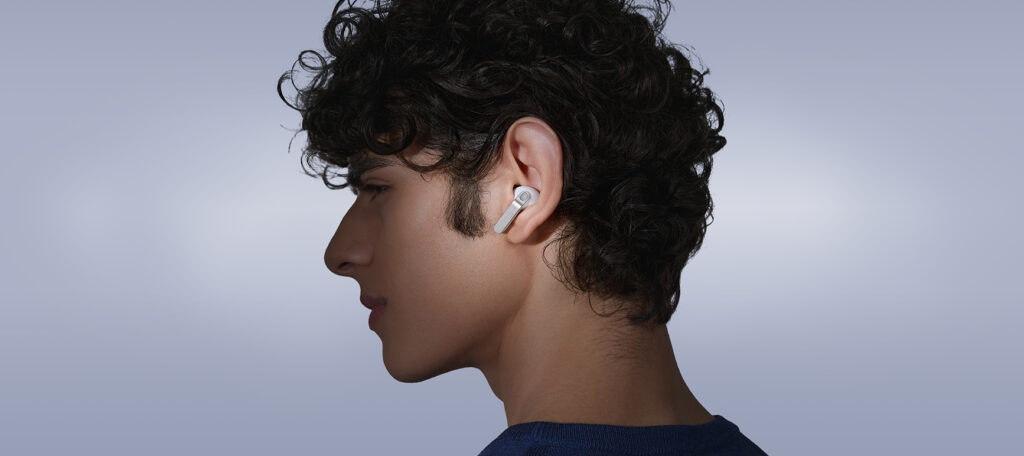
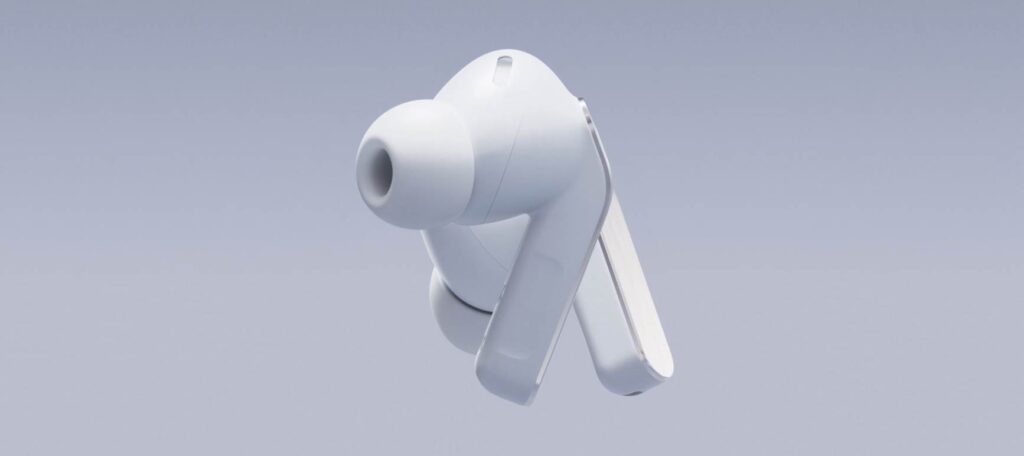
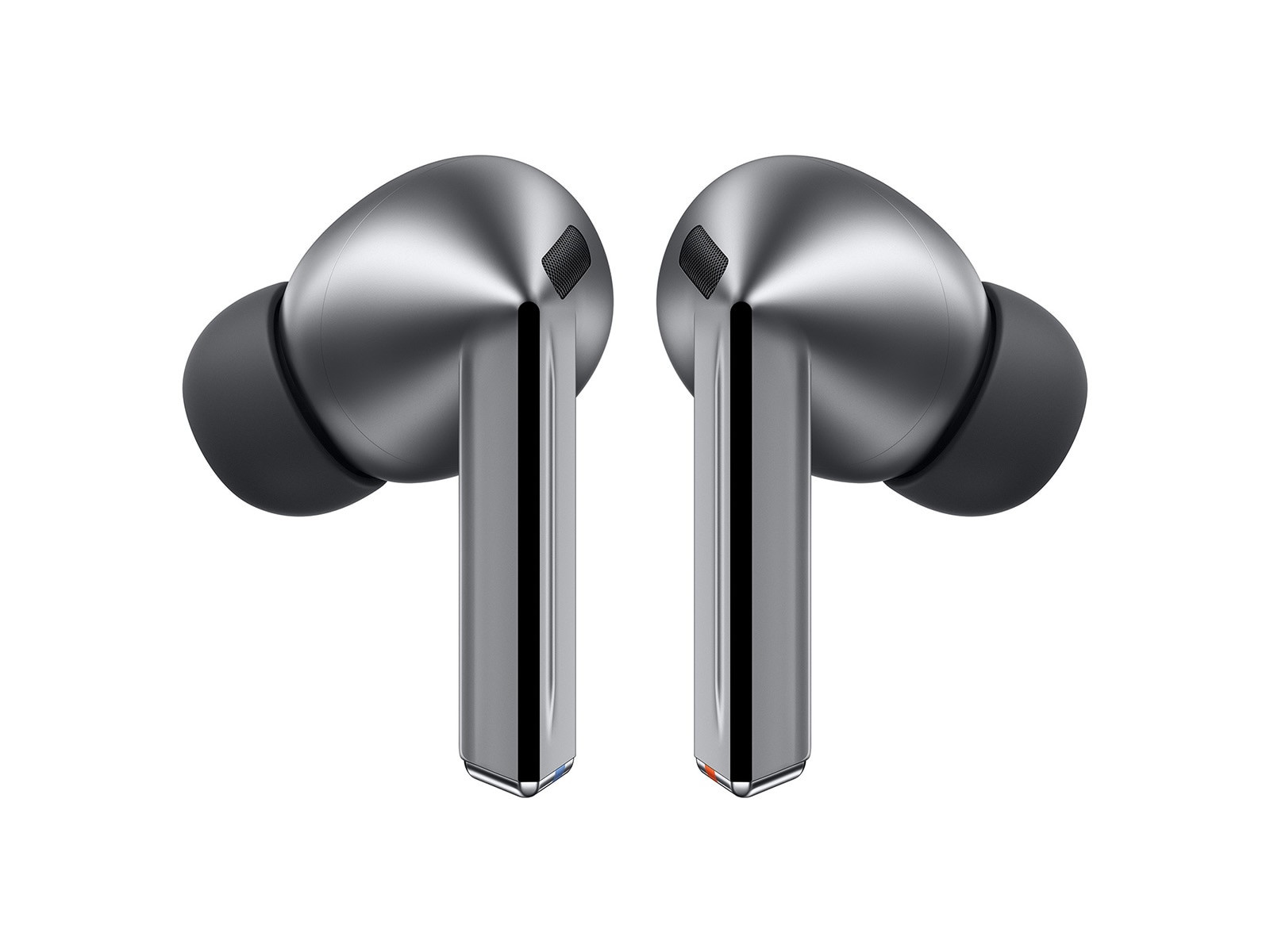
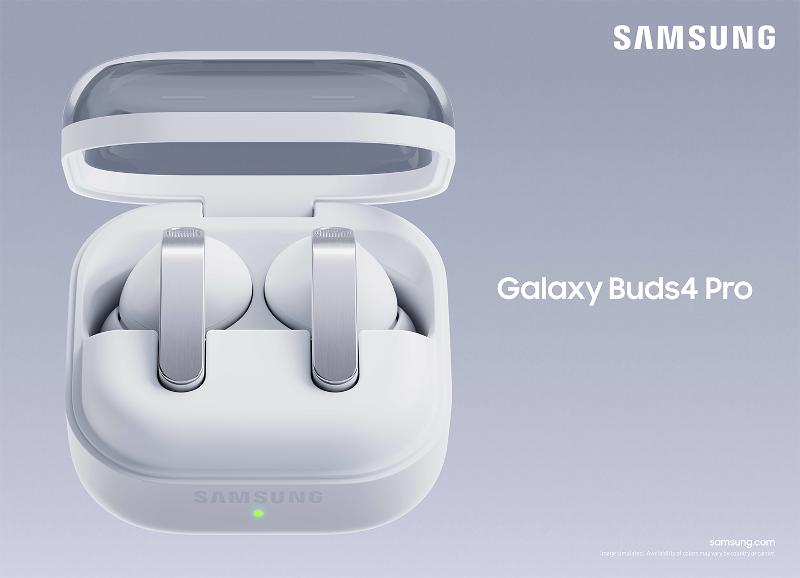
Galaxy Buds 4 Pro are the latest wireless headphones from Samsung with Adaptive ANC 2.0, Bluetooth 6.1, and a weight of 5.1 g. Compared to Galaxy Buds 3 Pro, they offer better noise cancellation, longer battery life in tests, and head gesture support. They cost 1099 PLN compared to about 650-899 PLN for the older model. Which one to choose? Below is a detailed comparison.
Samsung presented the Samsung Buds 4 Pro on February 25, 2026, and sales in Poland started on March 11. This is the direct successor to the Samsung Buds 3 Pro from July 2024. Both models of Samsung headphones have a dual-driver system (dynamic + planar), ANC, and IP57 water resistance, but differ in several important aspects.
📊 Specification of Galaxy Buds 4 Pro vs Buds 3 Pro
Parameter
Galaxy Buds 4 Pro
Galaxy Buds 3 Pro
Premiere
March 2026
July 2024
Low-frequency driver
11 mm dynamic
10.5 mm dynamic
High-frequency driver
5.4 mm planar
6.1 mm planar
ANC
Adaptive ANC 2.0
Adaptive ANC
Bluetooth
6.1
5.4
Codecs
SBC, AAC, LC3, SSC, SSC UHQ
SBC, AAC, LC3, SSC, SSC UHQ
Battery (earbud)
61 mAh
53 mAh
Battery (case)
530 mAh
515 mAh
Usage time (ANC on)
up to 6 h (tested: 6 h 1 min)
up to 6 h (tested: 4 h 31 min)
Usage time with case (ANC on)
up to 26 h
up to 26 h
Usage time (ANC off)
up to 7 h
up to 7 h
Usage time with case (ANC off)
up to 30 h
up to 30 h
Weight (earbud)
5.1 g
5.4 g
Weight (case)
approx. 44.3 g
46.5 g
Water resistance
IP57
IP57
Head gestures
yes (answer/reject calls)
no
Voice assistant
Gemini + Bixby simultaneously
Bixby or Google Assistant
Super Clear Call (SWB)
yes (with Galaxy S26)
no
Microphones
6 (including VPU)
6
Charging
USB-C + Qi wireless
USB-C + Qi wireless
Colors
Black, White, Pink Gold
Silver, White
Price in Poland
1099 zł
1029 zł (launch) / from approx. 650 zł (current)
🔊 Jakość dźwięku Galaxy Buds 4 Pro vs Buds 3 Pro
Oba modele słuchawek dousznych Samsung mają system dwóch przetworników, ale w Buds 4 Pro Samsung wymienił oba.
Galaxy Buds 4 Pro mają większy woofer 11 mm (vs 10,5 mm). W praktyce daje to ok. 20% większą powierzchnię przetwornika, co przekłada się na głębszy, bardziej kontrolowany bas. Recenzenci z SoundGuys i What Hi-Fi opisują dźwięk jako energiczny, ale precyzyjny, z lepszą separacją instrumentów.
Galaxy Buds 3 Pro mają z kolei większy tweeter planarny 6,1 mm (vs 5,4 mm w Buds 4 Pro). Teoretycznie powinno to dawać przewagę w wysokich tonach, ale w testach okazuje się, że Buds 3 Pro miały tendencję do zbyt mocnego basu, który «rozlewał się» na średnicę.
Kodeki audio
Oba modele obsługują te same kodeki: SBC, AAC, LC3 i Samsung Seamless Codec (SSC UHQ) z rozdzielczością do 24 bit/96 kHz. Żaden nie obsługuje LDAC ani aptX. SSC UHQ wymaga smartfona Samsung Galaxy S23 lub nowszego z One UI 6.1.1+.
It means that you will only get the full sound quality with a Samsung smartphone. With an iPhone or phones from other brands, these Samsung wireless headphones are limited to AAC, which is a noticeable loss of quality compared to SSC UHQ.
Tuning and sound character
Galaxy Buds 4 Pro have a slightly darker tuning with less emphasis on high frequencies. The bass is deep but does not dominate the rest of the spectrum. Mid frequencies (vocals, acoustic instruments) sound clearer than in the predecessor.
Galaxy Buds 3 Pro have a brighter tuning with more detail in the high frequencies. The soundstage is slightly wider, but the bass can be too expansive, which in some genres (e.g., EDM, hip-hop) leads to «muddiness» in low frequencies.
Buds 4 Pro win in sound quality. Better controlled bass, cleaner mid frequencies, and generally a more balanced presentation. The difference is not revolutionary, but it is noticeable.
🔇 ANC: Galaxy Buds 4 Pro vs Buds 3 Pro
This is one of the biggest leaps between generations of these Samsung headphones.
Galaxy Buds 4 Pro have Adaptive ANC 2.0, which monitors the environment in real-time and adjusts noise cancellation to specific frequencies. In SoundGuys tests, these Samsung wireless earbuds reduced around 84% of ambient noise, placing them on par with AirPods Pro 3.
Galaxy Buds 3 Pro feature first-generation Adaptive ANC, which operates based on programmed algorithms. It’s still effective noise reduction, but it doesn’t react as dynamically to changing conditions.
The most significant improvement is seen in the range below 1 kHz, where the noise from air conditioning, fans, and street traffic falls. Both models struggle with sudden loud sounds.
Ambient Mode and Voice Detection
Both Samsung earbuds have:
– Voice Detection: automatic switching to ambient mode when you start speaking
– Ambient Mode: allowing sounds from the environment
– Adaptive EQ: adjustment to the shape of the ear
In ambient mode, Buds 4 Pro sound a bit more natural. The sounds from the environment do not have the «metallic» aftertaste that sometimes appeared in Buds 3 Pro. This is important if you use ambient mode daily (e.g., in the office).
Buds 4 Pro win this category. Adaptive ANC 2.0 is a real improvement, not a marketing slogan.
🎙️ Call Quality
Here the difference is most apparent and concerns both sides of the connection.
Galaxy Buds 4 Pro have 6 microphones with a VPU (Voice Pickup Unit) sensor, meaning bone conduction. Additionally, they feature Super Clear Call technology with a bandwidth of 16 kHz (Super Wideband), but only when paired with the Galaxy S26.
In a quiet environment, the voice sounds clear and natural. In noise, the microphone performs well, although there is a slight «digitalization» of the voice. The VPU captures vibrations from the jawbone, which helps isolate the voice from background noise.
Galaxy Buds 3 Pro also have 6 microphones, but without the VPU sensor. They support AI noise cancellation, but reviewers rated the call quality as «below average,» especially in loud environments.
Super Clear Call is an exclusive feature of the Galaxy Buds 4 Pro, which doubles the voice transmission bandwidth (from 8 kHz to 16 kHz). In practice, the caller hears you more clearly, and your voice sounds more natural. However, this requires a Galaxy S26, S26+, or S26 Ultra.
Winner: Buds 4 Pro. The VPU and Super Clear Call are noticeable improvements, especially for those who make a lot of phone calls.
🔋 Samsung Buds 4 Pro vs Buds 3 Pro Battery
On paper, both models look identical: 6 h with ANC, 7 h without ANC, 26/30 h with the case. But tests from independent publications paint a different picture.
Parameter
Buds 4 Pro (test)
Buds 3 Pro (test)
ANC on (SoundGuys)
6 h 1 min
4 h 31 min
Headphone capacity
61 mAh
53 mAh
Case capacity
530 mAh
515 mAh
Galaxy Buds 4 Pro with a 61 mAh battery (15% more than Buds 3 Pro) achieved exactly 6 hours and 1 minute in SoundGuys tests with ANC on. This result is close to the manufacturer’s claims.
Galaxy Buds 3 Pro with a 53 mAh battery lasted only 4 hours and 31 minutes in the same tests, which is 25% less than the claimed 6 hours.
Both models charge via USB-C and wirelessly (Qi). Samsung does not provide exact charging times, but in practice, fully charging the case with a cable takes about 1.5 hours. The earbuds in the case charge to full in about 50-60 minutes.
Battery: advantage of Buds 4 Pro. An hour and a half longer battery life in real conditions is a significant difference, especially during travel or long workouts.
🎨 Design and wearing comfort
Samsung changed its approach to design in Buds 4 Pro, focusing on premium materials.
Galaxy Buds 4 Pro have metal (aluminum) legs with a matte finish and delicate touch grooves. The case is flat, horizontal, with a transparent cover through which the earbuds are visible. Weighing 5.1 g per earbud makes them one of the lighter in this class.
Galaxy Buds 3 Pro have plastic legs with a lit LED strip that lights up during pairing and notifications. The case is vertical, traditional, without a transparent cover. Weighing 5.4 g per earbud.
Fit and Ear Tips
The difference of 0.3 g per earbud sounds like nothing, but it matters during hours of wear. Both models come with 4 sizes of silicone ear tips (XS, S, M, L). Samsung claims that the Buds 4 Pro were designed based on the analysis of 100 million ear scans and 10,000 virtual simulations.
In practice, both models sit securely in the ear and are suitable for running and workouts. The IP57 certification means protection against dust and immersion in water up to 1 meter for 30 minutes, which is sufficient for sweating during training.
Available colors:
– Buds 4 Pro: Black, White, Pink Gold
– Buds 3 Pro: Silver, White
Tie with a slight advantage for Buds 4 Pro. The aluminum legs look premium, and the lighter weight improves comfort. But if you like the LED on the legs of the Buds 3 Pro, it’s a matter of taste.
📱 Smart features and Samsung ecosystem
Head gestures (Buds 4 Pro only)
New feature exclusive to Samsung Buds 4 Pro: nodding your head answers a call, shaking it declines. Works only with Samsung phones. A small but useful novelty when your hands are busy while cooking, training, or cycling.
Voice assistant
Buds 4 Pro support both Gemini and Bixby simultaneously: you say «Hey Google» or «Hey Bixby» without needing to select in settings. Buds 3 Pro require choosing one assistant (Bixby, Google Assistant, or Siri).
Dual assistant means you can use Gemini for questions and searches, and Bixby for controlling Samsung phone settings. It’s a convenient solution for Galaxy ecosystem users.
Spatial Audio and 360 Audio
Both Samsung headphone models support spatial audio with head tracking. The effect is most noticeable when watching movies on the Samsung Galaxy Tab. In music, Spatial Audio can be controversial as it expands the soundstage at the cost of precision.
Other Common Features
Both models have:
– Real-Time Interpreter: real-time conversation translation (requires Galaxy AI)
– Auracast: audio sharing via Bluetooth LE Audio (e.g., sharing music with a friend)
– SmartThings Find: locating lost earbuds
– Adapt Sound: sound personalization based on hearing test
– Dialogue Boost: enhancing dialogues in movies and podcasts
– Fall Detection: automatic notification to emergency contact
Compatibility with Phones
These Samsung earbuds work with both Android and iOS. However, you will only fully utilize the features (SSC UHQ, head gestures, Super Clear Call, Galaxy AI) with a Samsung smartphone.
With the iPhone, you lose: head gestures, Super Clear Call, SSC UHQ codec, SmartThings Find, and automatic pairing. You are left with AAC, basic ANC, and touch controls. If you have an iPhone, consider AirPods Pro 3 as an alternative.
💰 Price of Galaxy Buds 4 Pro vs Buds 3 Pro in Poland
Model
Cena premierowa
Cena aktualna (marzec 2026)
Galaxy Buds 4 Pro
1099 zł
1099 zł
Galaxy Buds 3 Pro
1029 zł
od ok. 650 zł
To najważniejsza różnica w tym porównaniu. Samsung Buds 3 Pro, które premierowo kosztowały 1029 zł, teraz można kupić za 650-899 zł (w zależności od sklepu i promocji). Galaxy Buds 4 Pro kosztują 1099 zł bez rabatów.
Różnica między premierowymi cenami to zaledwie 70 zł. Ale między aktualną ceną Buds 3 Pro a Buds 4 Pro to nawet 200-450 zł.
Pytanie sprowadza się więc do tego: czy Adaptive ANC 2.0, lepsza bateria w testach, gesty głową i Bluetooth 6.1 są warte dopłaty 200-450 zł?
Jeśli kupujesz słuchawki douszne Samsung na kilka lat i zależy Ci na najlepszym ANC i rozmowach, odpowiedź brzmi tak. Jeśli szukasz dobrego stosunku jakości do ceny, Buds 3 Pro za 650-700 zł to wciąż świetne słuchawki bezprzewodowe Samsung.
W Europie cena Galaxy Buds 4 Pro wynosi 249 euro, co jest identyczne jak premierowa cena Buds 3 Pro. W USA oba modele kosztowały po 249,99 USD, ale Buds 3 Pro można już kupić za ok. 170-190 USD.
🆚 Dla kogo które słuchawki Samsung?
Wybierz Galaxy Buds 4 Pro, jeśli:
Zależy Ci na najlepszym ANC w ekosystemie Samsung
You make a lot of phone calls
You have Galaxy S26 (Super Clear Call)
You want head gestures and dual assistant (Gemini + Bixby)
You bought a Samsung phone in 2026 and want a complete set
Choose Galaxy Buds 3 Pro if:
You want to save 200-450 zł
You don’t need the latest ANC
Sound is more important than call quality
You are looking for solid wireless headphones at a good price
You have an older Samsung phone (Buds 3 Pro work great anyway)
Yes. Buds 4 Pro connect to iOS via Bluetooth, but you lose Samsung-exclusive features: head gestures, Super Clear Call, Gemini/Bixby, SmartThings Find, and automatic pairing.
Do Galaxy Buds 3 Pro podporządkowują LDAC?
Nie. Ani Buds 3 Pro, ani Buds 4 Pro nie podporządkowują kodeka LDAC. Oba modele korzystają z Samsung Seamless Codec (SSC UHQ) oferującego jakość do 24 bit/96 kHz, ale tylko ze smartfonami Samsung.
Czy Buds 4 Pro mają lepszy dźwięk niż Buds 3 Pro?
Tak, ale różnica nie jest drastyczna. Buds 4 Pro mają lepiej kontrolowany bas i czystsze średnie tony dzięki większemu 11 mm przetwornikowi. W ślepych testach różnicę zauważą głównie audiofile.
Czy warto kupić Buds 3 Pro w 2026 roku?
Tak. Za 650-700 zł to jedne z najlepszych słuchawek bezprzewodowych Samsung z ANC, dźwiękiem planarnym i IP57. Spadek ceny po premierze Buds 4 Pro czyni je świetną okazją.
Ile kosztują Galaxy Buds 4 Pro w Polsce?
Cena premierowa Galaxy Buds 4 Pro w Polsce wynosi 1099 zł. Są dostępne w trzech kolorach: Black, White i Pink Gold.
Czy Samsung Galaxy Buds 4 Pro mają redukcję szumów?
Tak. Buds 4 Pro mają Adaptive ANC 2.0, czyli aktywną redukcję szumów nowej generacji, która monitoruje otoczenie w czasie rzeczywistym i dostosowuje tłumienie do konkretnych częstotliwości.
What is the difference between Galaxy Buds 4 Pro and regular Galaxy Buds 4?
Galaxy Buds 4 Pro feature a dual-driver system (dynamic + planar), Adaptive ANC 2.0, Bluetooth 6.1, and VPU. Regular Galaxy Buds 4 have a single driver, basic ANC, and Bluetooth 5.4. The price difference is about 400 PLN.
Summary
Galaxy Buds 4 Pro are an evolution, not a revolution, compared to Galaxy Buds 3 Pro. The most important upgrades are Adaptive ANC 2.0 (realistically better noise cancellation), Bluetooth 6.1, head gestures, dual AI assistant, and better battery in tests (6 h vs 4.5 h with ANC).
Is it worth the extra cost? At the full launch price (1099 vs 1029 PLN), the answer is yes. At the current price of Buds 3 Pro (about 650-700 PLN), the decision is harder, as for almost half the price you get 80-90% of the experience.
Our verdict: Galaxy Buds 4 Pro are the best earbuds Samsung has ever made. But if your budget is limited, Galaxy Buds 3 Pro for 650-700 PLN is one of the best deals on the wireless earbuds market in 2026.
Realme 16 Pro og realme 16 Pro+ er kommende premium mellomklasse telefoner som sannsynligvis vil debutere 6. januar (India) og bør snart være tilgjengelige i Europa. Telefonene skiller seg ut med design laget i samarbeid med Naoto Fukasawa, stor OLED 1.5K 144 Hz skjerm, enormt 7000 mAh batteri med 80 W lading og et 200 MP kamera, mens Pro+ versjonen tilbyr i tillegg et periskop teleobjektiv. Realme 16 Pro bruker Dimensity 7300, mens Pro+ vil få Snapdragon prosessor.
📊 Realme 16 Pro vs Realme 16 Pro+(Plus) – rask sammenligning
Egenskap
realme 16 Pro
realme 16 Pro+
Lansering (India)
6. januar (forventet)
6. januar (forventet)
Skjerm
6,78″ OLED 1.5K, 144 Hz
6,78″ OLED 1.5K, 144 Hz
Prosessor
MediaTek Dimensity 7300
Snapdragon (mest sannsynlig 7 Gen 4)
RAM / minne
8 / 12 / 16 GB RAM* 128–512 GB
8 / 12 GB RAM 128–512 GB
Hovedkamera
200 MP
200 MP
Ultravidvinkelkamera
8 MP
8 MP
Teleobjektiv
❌ ingen
✅ periskop 3.5×
Frontkamera
50 MP
50 MP
Batteri
~7000 mAh
~7000 mAh
Lading
80 W
80 W
System
Android 16 + realme UI 7
Android 16 + realme UI 7
Fingeravtrykksleser
ultralyd i skjermen
ultralyd i skjermen
IR-blaster
ja
ja
Design
Naoto Fukasawa, to-farget bakside
Naoto Fukasawa, to-farget bakside
* RAM-konfigurasjoner avhenger av markedet – 16 GB variant tilgjengelig kun i Kina.
Designet til realme 16 Pro inspirert av Naoto Fukasawa
Hvem er Naoto Fukasawa og hvilken innflytelse har han hatt på utseendet til realme 16 Pro?
Naoto Fukasawa er en av de mest anerkjente industrielle designerne i verden. Hans arbeid inkluderer samarbeid med merker som MUJI, B&B Italia og Maruni, og hans design er en del av den permanente samlingen til Museum of Modern Art (MoMA) i New York. Realme har offisielt bekreftet at serien realme 16 Pro er designet i tråd med hans visjon, noe som er sjeldent i mellomklasse-segmentet.
Fukasawas innflytelse er tydelig i den minimalistiske tilnærmingen til form, rolige linjer og avvik fra aggressive, «gaming» aksenter til fordel for et design som skal forbli aktuelt i mange år.
To-farget bakdeksel og et nytt stilistisk språk for realme
Baksiden av realme 16 Pro og realme 16 Pro+ skiller seg ut med to-farget premium finish, som kombinerer en matt panel med en blank kameramodul. Denne tilnærmingen gir telefonen et mer elegant og ryddig preg.
Oppsettet av kameraene tiltrekker seg oppmerksomhet med sin enkle, symmetriske form, som kan minne om løsninger kjent fra dyrere modeller fra konkurrentene. Helheten passer inn i en ny stilretning for merket realme, som fokuserer på premium estetikk, og ikke bare imponerende tall i spesifikasjonen.
Fargene til realme 16 Pro – inspirasjon fra naturen og blomsterdesign
Produsenten har forberedt flere fargevarianter inspirert av naturen og blomsterdesign, som godt gjenspeiler Fukasawas designfilosofi:
Camellia Pink – subtil rosa inspirert av kamelia blomster
Orchid Purple – uttrykksfull, men elegant lilla
Master Gold – klassisk, luksuriøst gull
Pebble Grey / Master Grey – dempet grå med steinaktig karakter
Realme understreker at noen farger er laget med tanke på det indiske markedet, men erfaringene fra tidligere lanseringer viser at noen fargevarianter senere også kommer til Europa.
📱 Skjermen til realme 16 Pro – er OLED 1.5K 144 Hz en reell fordel?
Stor 6,78 tommers skjerm med høyere oppløsning 1.5K
realme 16 Pro og realme 16 Pro+ er utstyrt med en 6,78-tommers OLED panel, som ifølge lekkasjer tilbyr en oppløsning på 1.5K. Dette er en stadig mer vanlig kompromiss mellom Full HD+ og QHD+, som gir klarere bilder uten dramatisk økning i energiforbruket.
I praksis betyr dette:
bedre skarphet på tekst og detaljer,
høyere lesbarhet ved større diagonaler,
mindre belastning på batteriet enn ved 2K skjermer.
144 Hz oppdateringsfrekvens – jevnhet over standarden i mellomklassen
Både realme 16 Pro og Pro+ versjonen skal tilby oppdateringsfrekvens på opptil 144 Hz. Dette er en parameter som fortsatt er sjelden i mellomklassen og forbedrer:
jevn scrolling,
grensesnitt animasjoner,
komfort ved spilling og daglig bruk.
Selv om den faktiske bruken av 144 Hz avhenger av optimaliseringen av systemet og applikasjonene, setter det faktum at en slik skjerm brukes, serie 16 Pro høyere enn mange konkurrenter som begrenser seg til 120 Hz.
Ultralyd fingeravtrykksleser i skjermen
Et stort kjennetegn ved serien er ultralyd fingeravtrykksleser integrert i skjermen. Dette er en løsning kjent hovedsakelig fra dyrere smarttelefoner, som:
fungerer raskere enn tradisjonelle optiske lesere,
håndterer fuktige fingre bedre,
tilbyr høyere sikkerhetsnivå.
Hvis denne funksjonen faktisk kommer til begge modellene i Europa, vil det være en av de største fordelene til realme 16 Pro over konkurrentene i dette prissegmentet.
Bildekvalitet og brukskomfort i hverdagen
Kombinasjonen av OLED-teknologi, høy oppdateringsfrekvens og høyere oppløsning antyder at realme satser sterkt på komfort ved innholdskonsum – filmer, serier, sosiale medier og spill. Dette er spesielt viktig i kombinasjon med det store 7000 mAh batteriet, som vil tillate bruk av skjermen i mange timer uten hyppig lading.
Batteriet til realme 16 Pro – er 7000 mAh en ny standard i mellomklassen?
Enorm kapasitet uten kompromisser mellom markedene
Realme 16 Pro og realme 16 Pro+ skal være utstyrt med et batteri med en kapasitet på omtrent 7000 mAh, noe som er betydelig høyere enn standarden i mellomklassen. Det er viktig å merke seg at produsenten ifølge lekkasjer ikke planlegger å differensiere kapasiteten avhengig av markedet, noe som betyr at de europeiske variantene bør få samme celle som modellene solgt i Asia.
Et så stort batteri kombinert med energieffektive prosessorer og OLED 1.5K skjerm bør resultere i:
opptil 2 dager med intensiv bruk,
svært lang batterilevetid i blandet modus,
mindre degradering av cellen ved daglig lading.
Rask lading på 80 W – praktisk energipåfylling
Til tross for den store kapasiteten, planlegger realme å bruke 80 W kablet lading. Dette er en løsning som gjør at:
du raskt kan fylle opp energien før du går ut av huset,
redusere tiden telefonen er tilkoblet laderen,
opprettholde brukskomfort selv på en veldig intensiv dag.
Selv om den nøyaktige ladetiden ikke er avslørt ennå, antyder erfaringene fra tidligere realme-modeller at lading til 50–60% bør ta noen få minutter.
Energieffektivitet i stedet for «vattløp»
Bruken av Dimensity 7300 i realme 16 Pro og Snapdragon i Pro+ versjonen indikerer at realme fokuserer på energi effektivitet, og ikke bare rå ytelse. I praksis betyr dette:
stabil drift uten overoppheting,
bedre skjermtid (SoT),
langsommere batteriforbruk over flere år.
Batteriet som et reelt kjøpsargument
I segmentet for smarttelefoner opp til omtrent 2500 kr er et så stort batteri fortsatt sjeldent, spesielt i kombinasjon med OLED-skjerm og rask lading. Hvis realme forbedrer systemoptimaliseringen, kan 7000 mAh bli en av hovedgrunnene til at brukere velger serien 16 Pro.
Ytelsen til realme 16 Pro og Pro+ – Dimensity mot Snapdragon
Realme 16 Pro med Dimensity 7300 – stabilitet og energieffektivitet
I henhold til Geekbench listen, er realme 16 Pro utstyrt med MediaTek Dimensity 7300. Dette er en moderne, energieffektiv brikke laget med 4 nm litografi, som ikke sikter mot benchmark-rekorder, men mot jevn og forutsigbar drift i hverdagen.
I praksis bør Dimensity 7300 gi:
svært god arbeidskultur,
lavt energiforbruk,
tilstrekkelig ytelse for daglige oppgaver, multimedia og spill.
Dette er en tydelig endring fra realme 15 Pro, som satset på en kraftigere Snapdragon-brikke, men til kostnad av høyere energibehov.
Realme 16 Pro+ – Snapdragon for de mer krevende
Realme har offisielt bekreftet at Pro+ modellen vil få Snapdragon prosessor, som oftest i lekkasjer er nevnt som Snapdragon 7 Gen 4. Dette er en brikke som er betydelig kraftigere enn Dimensity 7300, designet med tanke på:
bedre ytelse i spill,
stabilere kameradrift (ISP),
høyere kraftreserve for fremtiden.
Dermed vil realme 16 Pro+ være et naturlig valg for brukere som forventer maksimal jevnhet og større kraftreserve, selv på bekostning av noe kortere batterilevetid på en enkelt lading.
RAM og datalagring
Serien realme 16 Pro skal tilby flere minnekonfigurasjoner:
8 eller 12 GB RAM som standard,
variant 16 GB RAM mulig på utvalgte markeder,
intern lagring fra 128 GB til og med 512 GB.
Et så bredt utvalg av konfigurasjoner gjør det mulig å tilpasse telefonen både til grunnleggende brukere og mer krevende brukere.
realme UI 7 og Android 16
Begge modellene skal kjøre på Android 16 med realme UI 7. Produsenten fokuserer her på:
en lett og rask brukergrensesnitt,
utvidede tilpasningsmuligheter,
god optimalisering for store skjermer og høy oppdateringsfrekvens.
I henhold til den nåværende politikken til realme kan man forvente 3 år med Android-oppdateringer og 4 år med sikkerhetsoppdateringer.
Kameraene til realme 16 Pro og Pro+ – gjør 200 MP og periskop en forskjell?
200 MP sensor som hovedkamera i begge modeller
Både realme 16 Pro og realme 16 Pro+ skal være utstyrt med et hovedkamera på 200 MP, noe som fortsatt gjør stort inntrykk i mellomklasse-segmentet. Selve oppløsningen garanterer selvfølgelig ikke kvalitet, men i kombinasjon med riktig optikk og bildebehandling kan det gi:
svært høy detaljrikdom i bildene,
effektiv digital zoom uten stor kvalitetstap,
større fleksibilitet i beskjæring.
realme lover også forbedrede bildebehandlingsalgoritmer som skal håndtere hudfarge og portrettbilder bedre.
8 MP ultravidvinkel og 50 MP selfie-kamera
Et supplement til kamerasettet er 8-megapiksel ultravidvinkelobjektiv, som finnes i begge modeller. Dette er en standardløsning i denne klassen, hovedsakelig beregnet for landskaps- og gruppebilder.
På forsiden finner vi derimot 50 MP kamera, som bør gi:
høy kvalitet på selfies,
god detaljrikdom under videosamtaler,
solid videomateriale for sosiale medier.
Periskop teleobjektiv – fordelen til realme 16 Pro+
Den største forskjellen mellom modellene gjelder teleobjektivet. realme 16 Pro+ skal få periskopobjektiv med omtrent 3,5x optisk zoom, noe som er en løsning som vanligvis finnes i betydelig dyrere smarttelefoner.
Dermed vil Pro+ varianten tilby:
betydelig bedre zoom,
bedre portrettkvalitet,
større fotografisk allsidighet.
Den grunnleggende realme 16 Pro vil ikke få teleobjektiv, noe som tydelig posisjonerer den som en mer universell modell, men mindre avansert fotografisk.
Kameraene i praksis – forsiktig optimisme
Historien om smarttelefoner med 200 MP sensorer viser at tall ikke er alt. Det som er avgjørende er:
bevaring av kvalitet i svakt lys,
effektivitet av stabilisering,
arbeidet til HDR- og nattalgoritmer.
Hvis realme faktisk forbedrer kameroptimaliseringen og utnytter potensialet til periskopet i Pro+ versjonen, kan serie 16 Pro reelt true konkurransen i segmentet opp til omtrent 2500 kr.
Realme 16 Pro og Pro+ – når er lanseringen og hva kan de koste i Norge?
Lanseringsdato og tilgjengelighet i Europa
I følge flere uavhengige og pålitelige kilder vil realme 16 Pro og realme 16 Pro+ debutere 6. januar på det indiske markedet. Selv om produsenten ikke har annonsert en offisiell europeisk lanseringsdato ennå, antyder den nåværende strategien til realme at telefonene vil komme til Europa – inkludert Norge – innen noen uker etter debuten i India.
I praksis betyr dette:
europeisk lansering januar / februar,
rask tilgjengelighet av tilbehør (deksler, glass, ladere),
ingen store spesifikasjonsforskjeller mellom regionene.
Minnevarianter – bredt utvalg for mellomklassen
Serien realme 16 Pro skal tilby mer fleksible minnekonfigurasjoner enn forgjengerne, noe som er et klart nikk til brukere som krever mer lagringsplass.
Forventede varianter:
realme 16 Pro
8 / 128 GB
8 / 256 GB
12 / 256 GB
realme 16 Pro+
8 / 256 GB
12 / 256 GB
12 / 512 GB
Varianten med 16 GB RAM kan forbli begrenset til det kinesiske markedet.
Forventede priser for realme 16 Pro og Pro+ i Norge
Offisielle priser for det europeiske markedet er ennå ikke avslørt, men basert på:
prisene på forrige generasjon,
markedsposisjonen til realme,
den spesifikasjonen som er brukt,
kan man anta følgende prisklasser:
realme 16 Pro: omtrent 1400–1600 kr
realme 16 Pro+: omtrent 2200–2500 kr
En slik prising plasserer serien 16 Pro direkte i konkurranse med de sterkeste mellomklasse telefonene på markedet, men tilbyr samtidig elementer som sjelden finnes i denne klassen – som 7000 mAh batteri eller periskop teleobjektiv.
Posisjonering av serien realme 16 Pro
Realme retter seg tydelig mot brukere som:
ønsker en telefon for flere år,
verdsetter premium design,
forventer lang batterilevetid,
men ikke ønsker å gå inn i flaggskipprissegmentet.
Hvis produsenten opprettholder rimelige priser og god tilgjengelighet i Europa, kan realme 16 Pro og Pro+ bli noen av de mest populære mellomklasse telefonene i 2026.
FAQ – Realme 16 Pro og Realme 16 Pro+
⭐ Når er lanseringen av realme 16 Pro og realme 16 Pro+?
Den offisielle lanseringen av serien realme 16 Pro er planlagt til 6. januar (indisk marked). I Europa, inkludert Norge, bør telefonene være tilgjengelige noen uker senere, mest sannsynlig i januar eller februar.
⭐ Hvilken prosessor har realme 16 Pro?
realme 16 Pro er utstyrt med MediaTek Dimensity 7300, noe som bekreftes av Geekbench listen. Dette er en energieffektiv 4 nm brikke som er fokusert på stabil drift og lang batterilevetid.
⭐ Hvilken prosessor har realme 16 Pro+?
Produsenten har bekreftet at realme 16 Pro+ vil få Snapdragon prosessor. Ifølge lekkasjer vil dette være Snapdragon 7 Gen 4, selv om den nøyaktige modellen ikke er offisielt annonsert ennå.
⭐ Har realme 16 Pro et 200 MP kamera?
Ja. realme 16 Pro har et hovedkamera på 200 MP, supplert med 8 MP ultravidvinkelobjektiv og 50 MP frontkamera.
⭐ Hva er forskjellen mellom realme 16 Pro og realme 16 Pro+?
De viktigste forskjellene er:
kraftigere Snapdragon prosessor i Pro+ versjonen,
periskop teleobjektiv med 3.5× zoom kun i Pro+,
høyere pris for Pro+ modellen.
De andre elementene, som skjerm, batteri og hovedkamera på 200 MP, er svært like.
⭐ Har realme 16 Pro+ et periskop teleobjektiv?
Ja. realme 16 Pro+ skal få periskop teleobjektiv med omtrent 3,5x optisk zoom, noe som er sjeldent i mellomklassen.
⭐ Hvilket batteri har realme 16 Pro og Pro+?
Begge modellene er utstyrt med et batteri med en kapasitet på omtrent 7000 mAh og rask lading på 80 W, uten forskjeller mellom markedene.
⭐ Har realme 16 Pro en OLED 144 Hz skjerm?
Ja. Serien realme 16 Pro skal tilby 6,78-tommers OLED 1.5K skjerm med oppdateringsfrekvens på opptil 144 Hz, noe som gir svært høy bildekvalitet.
⭐ Hvor lenge vil realme 16 Pro motta oppdateringer?
I henhold til produsentens nåværende politikk kan man forvente 3 år med Android-oppdateringer og 4 år med sikkerhetsoppdateringer, selv om realme ikke har bekreftet støtte for serien 16 offisielt ennå.
Overgangen fra iPhone 15 til iPhone 17 gir en merkbar kvalitetsheving. Den nye modellen har endelig 120 Hz ProMotion-skjerm i alle versjoner, større og lysere skjermer, mye bedre batterilevetid og raskere lading.
Kameraene er mer allsidige – i hver modell finner vi dobbelt eller trippelt 48 Mpix-moduler, og frontkameraet har fått Center Stage-funksjon og 4K-opptak fra begge sider samtidig.
I tillegg er iPhone 17 kraftigere, varmes mindre opp og introduserer lokale AI-funksjoner, som sanntid oversettelse av samtaler og innholds gjenkjenning på skjermen.
For eiere av iPhone 15 eller 15 Plus er forskjellen enorm – først og fremst en jevnere skjerm og bedre batteri. For brukere av 15 Pro/Pro Max er det hovedsakelig et bedre teleobjektiv, større skjerm og lengre batterilevetid.
iOS 26 • Apple Intelligence (AI offline), Live Translation, Visual Intelligence, Memory Integrity Enforcement
Varianter og priser
15 / 15 Plus / 15 Pro / 15 Pro Max • fra 128 GB • 15 fra 4699 kr
17 / 17 Air / 17 Pro / 17 Pro Max • start fra 256 GB • 17 fra 3999 kr • nye farger (lavendel, cosmic orange)
Design og ergonomi
iPhone 17 vs iPhone 15 – hva har endret seg i utseende og konstruksjon?
Overgangen fra iPhone 15 til 17 begynner med det første inntrykket. Telefonen ser og føles annerledes – mer moderne og mer «tilpasset» hånden.
Apple har smalnet inn rammene med omtrent 15%, noe som gjør at selv iPhone 17 Pro Max med 6,9″ skjerm har nesten de samme dimensjonene som 15 Pro Max med 6,7″. Dette betyr:
Større skjerm i samme hus – perfekt for å se video og jobbe med delt skjerm.
Mer immersive opplevelser – færre synlige rammer gir mer glede ved spilling og filmvisning.
Mer komfortabel en-hånds betjening – til tross for større skjerm, føler du ikke at telefonen er mindre håndterlig.
Pro-versjonene har fått ny unibody-konstruksjon i aluminium, som ikke bare ser bedre ut enn titan i 15 Pro, men også bedre sprer varme. I praksis betyr dette mindre oppvarming av telefonen ved videoopptak eller lange spilløkter.
Baksiden er dekket med matt glass med ny tekstur – mindre glatt og mindre utsatt for fingeravtrykk. De nye fargene (lavendel, cosmic orange) gir linjen friskhet og skiller telefonen fra tidligere generasjoner.
💡 Forskjellen i hverdagen: iPhone 17 ligger bedre i hånden, varmes mindre opp, og Air-modellen er rekordtynn og lett – perfekt for de som tidligere valgte 15 Plus, men ønsker noe mer håndterlig.
Kameraer og video
Den største kvalitetsheving av bilder og videoer på mange år
Her ser man virkelig generasjonsforskjellen. I iPhone 15 og 15 Plus hadde vi hovedkamera på 48 Mpix og ultra-bredt 12 Mpix. Teleobjektivet manglet, og zoom ble gjort digitalt.
iPhone 17 introduserer:
to 48 Mpix allerede i grunnmodellen – hoved- og ultra-bredt,
full pakke med 48+48+48 Mpix i Pro og Pro Max – inkludert teleobjektiv 4× 100 mm, med mulighet for crop til 8× uten tap av kvalitet.
Effekten i praksis:
ultra-brede bilder er skarpere og mer detaljerte,
zoom er egnet for å fotografere konserter, arkitektur og fjerne objekter,
nattmodus er raskere og gir lysere bilder enn i 15.
Frontkameraet har nå 18 Mpix og Center Stage-funksjon – bildet følger deg under videosamtaler, noe som tidligere var forbeholdt iPad.
Video:
fra 4K/60 i 15 går du til 4K/120 i Dolby Vision,
du kan ta opp i ProRes RAW 4K/60,
du har mulighet for synkronisering av flere iPhone-er (Genlock) – en funksjon nyttig for videoprodusenter.
💡 Forskjellen i hverdagen: 15 Pro ga ProRes, men uten RAW og uten 4K/120. 17 Pro er i praksis et mini-kamera som kan erstatte profesjonelt utstyr i mange scenarier.
Skjerm
endelig 120 Hz for alle
Dette er den største «wow-effekten» etter overgangen fra iPhone 15 eller 15 Plus. I forrige generasjon hadde kun Pro-versjonene ProMotion 120 Hz og Always-On Display. Nå:
hver iPhone 17 har LTPO-skjerm 1–120 Hz,
Always-On Display er tilgjengelig for alle,
lysstyrken har økt til 3000 nits – 50% mer enn i 15.
💡 Forskjellen i hverdagen: scrolling, animasjoner og spill er ultra jevne selv i grunnmodellen. Skjermen er lesbar i fullt sollys, så bruk av telefonen utendørs er mer behagelig enn noen gang.
🔋 Batteri og lading – reelt lengre
Apple har økt batterikapasiteten og optimalisert energiforbruket takket være A19 og LTPO-paneler. Effekten:
iPhone 17 Pro Max: opptil 39 t videoavspilling (15 Pro Max – 29 t),
iPhone 17 Pro: opptil 33 t,
iPhone 17 Air: ca. 27 t til tross for den tynneste konstruksjonen.
Lading:
50% på 20 minutter med 40 W lader,
MagSafe/Qi2 opp til 25 W – endelig rask trådløs lading,
omvendt lading for AirPods og Apple Watch.
💡 Forskjellen i hverdagen: iPhone 15 måtte lades nesten daglig. iPhone 17 holder til 2 dager uten lader ved normal bruk.
⚡ Ytelse og kjøling – kraft uten throttling
iPhone 15 brukte A16 (15/Plus) eller A17 Pro (Pro/Max). I 17 fikk hele linjen A19/A19 Pro med AI-akseleratorer. I praksis:
applikasjoner åpner seg raskere,
videoeksport er 20–30% kortere,
i AAA-spill opprettholder telefonen stabil bildefrekvens lenger.
Takket være unibody-konstruksjonen og dampkammeret varmes iPhone 17 Pro mindre opp og reduserer ikke klokkehastigheten så raskt som 15 Pro.
🌐 System og programvare – iOS 26 og Apple Intelligence
iPhone 15 startet med iOS 17, som utførte de fleste AI-funksjoner i skyen. iPhone 17 introduserer:
Apple Intelligence offline – raskere og mer privat drift,
Live Translation – oversettelse av samtaler i sanntid,
Visual Intelligence – gjenkjenner objekter og tekst på skjermen med ett trykk,
Raskere Siri, som forstår konteksten og fungerer lokalt.
💡 Forskjellen i hverdagen: mindre venting og mindre avhengighet av internett. Telefonen blir mer en «intelligent assistent» enn i 15.
📶 Tilkobling – raskere og mer stabilt
iPhone 15 tilbød Wi-Fi 6/6E og Bluetooth 5.3. iPhone 17 går over til:
Wi-Fi 7 – mer stabil tilkobling og lavere latens,
Bluetooth 6 med LE Audio – bedre lydkvalitet og mindre lag i spill,
UWB gen. 3 – mer presis lokalisering av AirTags og digitale nøkler,
Thread – raskere automatisering av smarthus.
💡 Forskjellen i hverdagen: AirDrop er raskere, Hotspot fungerer mer stabilt, og smarthuset reagerer umiddelbart.