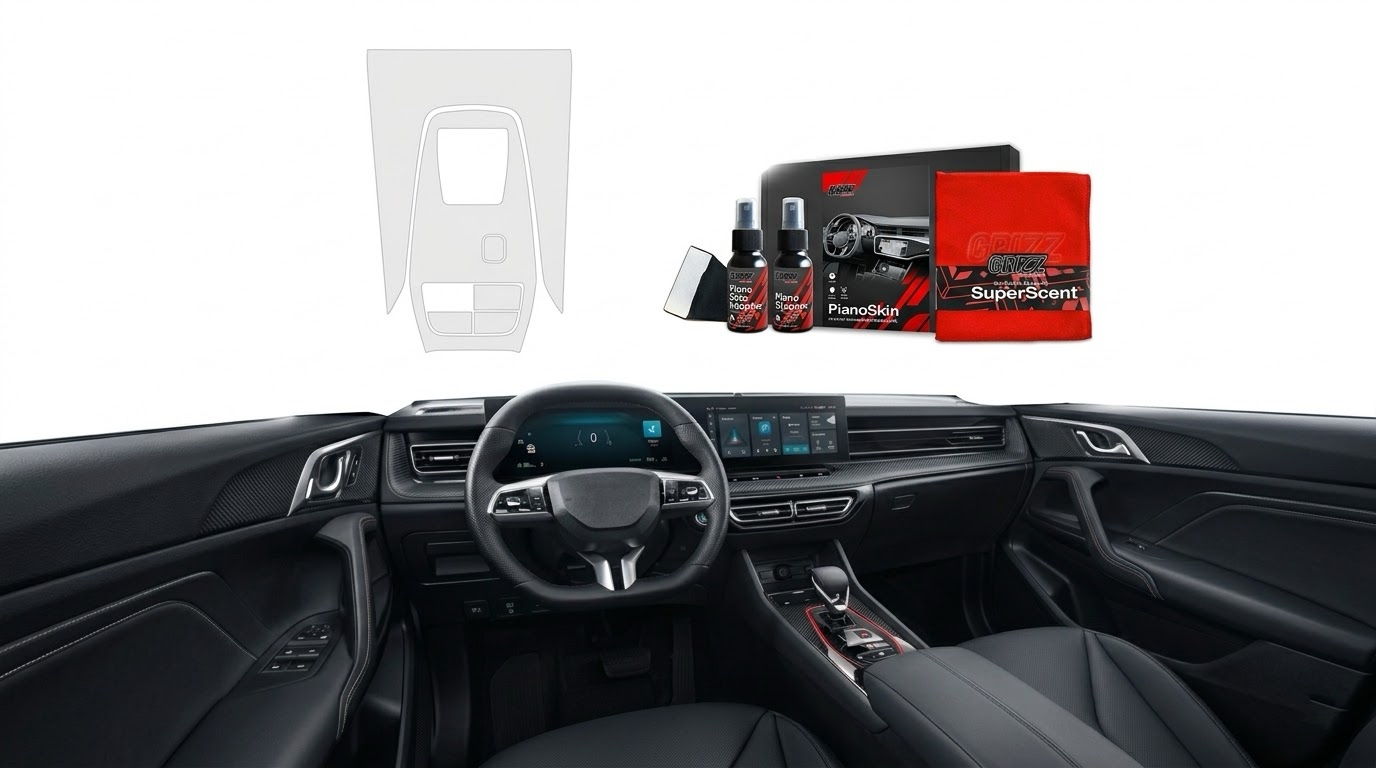
The most effective protection for piano black in a car is the PianoSkin protective film — a precisely cut PPF kit for self-installation, available from 112 PLN. Piano black is a finish that looks elegant until the first touch — the black, glossy plastic scratches from the slightest contact and collects fingerprints like a magnet.
The problem affects practically every brand — from Volkswagen and Škoda, through Toyota and Kia, to BMW and Tesla. If scratched plastic in your car is your problem, this guide will show you 5 ways to protect and restore piano black elements.
What is piano black and why does it scratch?
Piano black (also known as «black piano») is a high-gloss lacquered plastic ABS or PMMA used on decorative elements inside the car. It gets its name from the finish resembling the surface of a piano — deep black with a mirror-like reflection.
You will most often find it on:
- Center panel (central console, center tunnel)
- Door trims and window frames from the inside
- Gear shift lever housing and the frame of the automatic transmission
- Multimedia screen frame
- Air conditioning panels and buttons
- Dashboard elements
The problem with piano black arises from the very nature of the material. The glossy surface reveals every, even microscopic, scratch. Hard dust particles act like sandpaper — just wiping the element with a dry cloth covers the surface with a network of fine scratches. Nails, rings, and even the sleeve of a jacket can leave visible marks.
What’s worse, the darker the surroundings in the cabin, the more clearly the light-reflecting scratches are visible. After a few months of use, a new, elegant panel looks heavily worn.
How to clean piano black without scratching?
Improper cleaning causes most scratches on piano black. What to clean piano black with to avoid scratching it? Here is a proven method.
What not to do:
- Do not wipe piano black with a dry cloth — you are dragging dust particles across the surface
- Do not use paper towels or tissues — they have too coarse a texture
- Do not use alcohol-based, acetone, or solvent-based cleaners
- Do not rub in circles — it deepens existing scratches
Proper cleaning step by step:
- Blow off loose dust with compressed air or a soft detailing brush
- Dampen a clean microfiber cloth (with a minimum weight of 300 GSM) with a pH-neutral cleaner or a dedicated product for piano black
- Wipe the surface gently, in one direction — never in circular motions
- Dry with a second, dry microfiber cloth, again in one direction
Tip: Keep a separate microfiber cloth in the glove compartment designated solely for piano black elements. A dirty cloth previously used to clean the dashboard contains particles that will scratch the glossy surface.
Polishing piano black — a rescue for scratched elements
Removing scratches from piano black is possible through polishing. If the elements in your car’s interior are already covered with a network of fine scratches — piano black scratches of this type can be effectively renewed. However, this method has its limitations.
Hand polishing:
- Use a specialized polishing paste for piano black (fine-grained)
- Apply a small amount to a soft polishing sponge or microfiber pad
- Polish with gentle movements in one direction
- Wipe off excess paste with a clean microfiber cloth
- Repeat until the desired effect is achieved
Machine polishing:
Deeper scratches require a rotary or oscillating polisher with a soft pad. This solution is for those with detailing experience — an inexperienced hand can overheat the plastic or polish unevenly.
Polishing limitations:
| Aspect | Polishing | Protective film |
|---|---|---|
| Removes existing scratches | ✅ | ❌ (optically covers) |
| Protects against new scratches | ❌ | ✅ |
| Effect durability | 2–4 weeks | 3–5 years |
| One-time cost | 50–150 zł (paste + pad) | 112–430 zł (PianoSkin set) |
| Requires repetition | Yes, regularly | No |
Polishing is a temporary solution. The surface after polishing is perfectly smooth but lacks any protection — scratches reappear within a few weeks. Therefore, it is worth combining polishing with wrapping it in film.
Piano black film — the most effective protection method
Wrapping piano black with PPF (Paint Protection Film) is the only method that permanently protects the surface from scratches. The film creates an invisible barrier between your fingers and the sensitive plastic.
How does the film work on piano black?
PPF is a multilayer material consisting of:
- Top layer — self-healing topcoat that seals minor scratches under heat
- Carrier layer — flexible polyurethane (TPU) with a thickness of 150–200 microns
- Adhesive layer — acrylic glue that leaves no residue after removing the film
A good piano black film maintains full transparency and the original finish appearance — the same deep gloss, but with protection. According to the specifications of TPU materials used in PPF films, polyurethane has the ability to self-heal minor scratches when exposed to heat.
GrizzGlass PianoSkin — kits tailored to your car
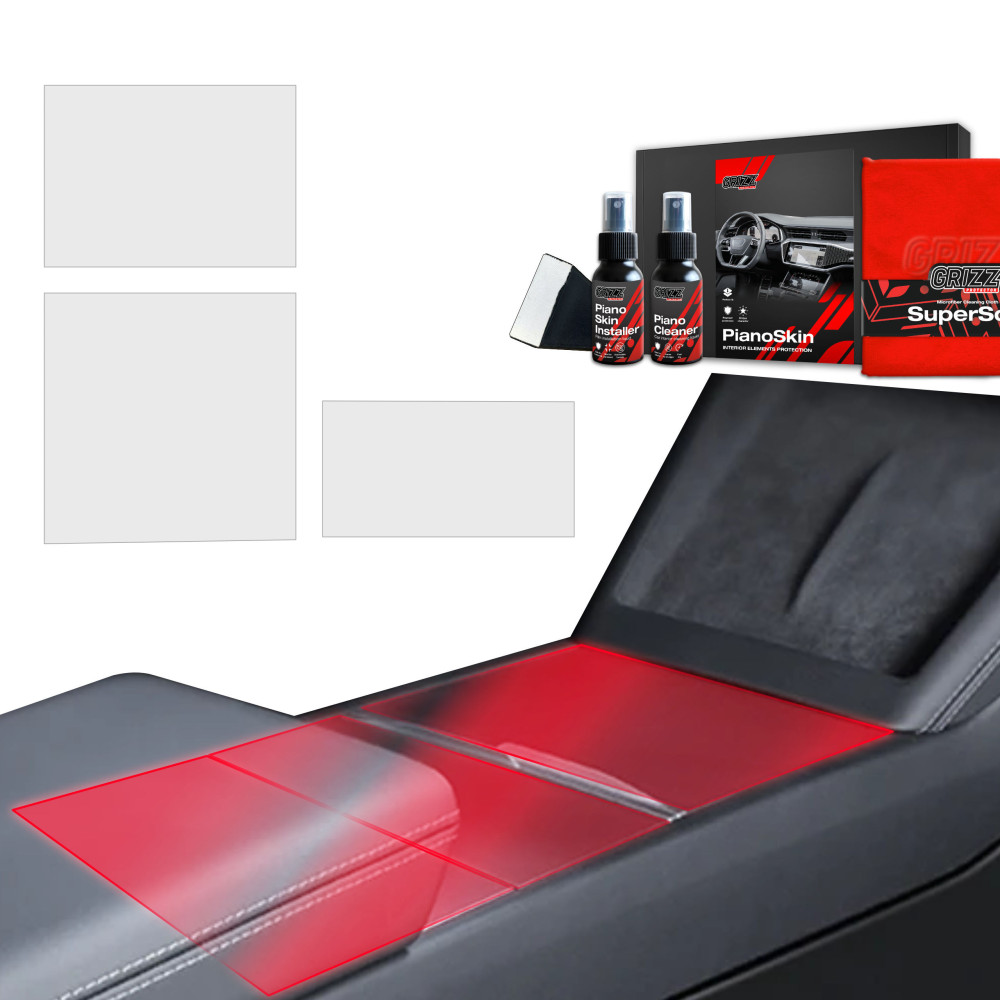
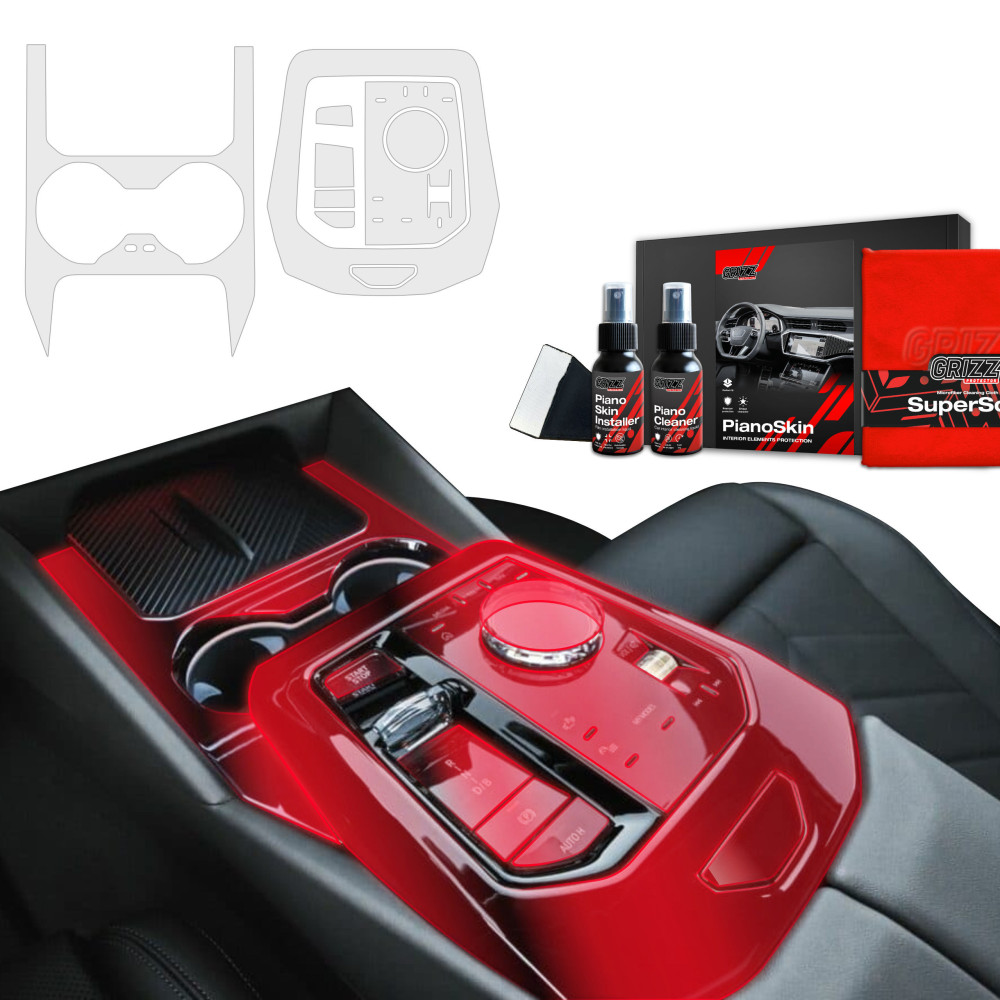
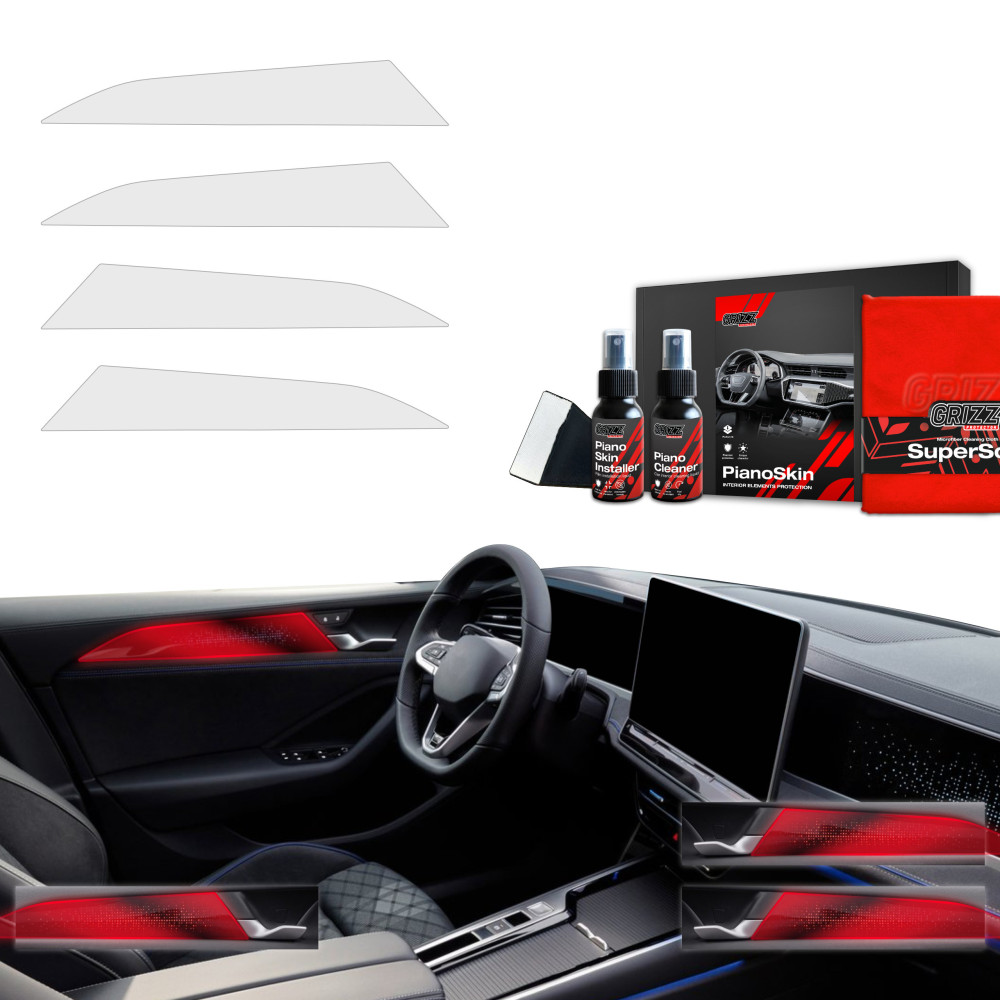
Unlike PPF films sold by the meter (which require professional cutting and installation), GrizzGlass PianoSkin kits are precisely cut elements tailored to a specific car model. Each film element corresponds exactly to the shape and dimensions of the piano black decor in that car.
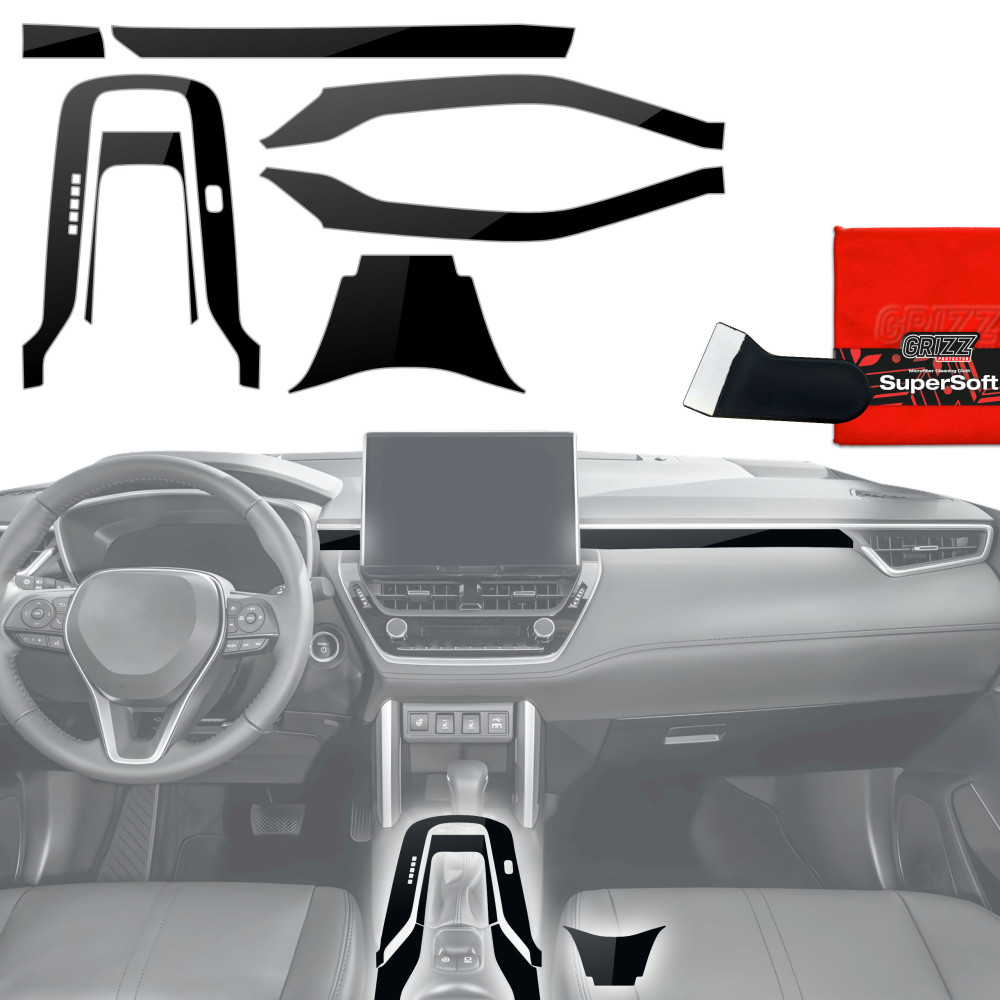
What the PianoSkin kit includes:
- Precyzyjnie wycięte elementy folii (od 2 do 8 sztuk, zależnie od modelu)
- Ściereczka z mikrofibry
- Płyn czyszczący do przygotowania powierzchni
- Żel montażowy
- Rakla do aplikacji
- Instrukcja montażu
Dwa warianty wykończenia:
| Wariant | Efekt | Dla kogo |
|---|---|---|
| PianoSkin Glossy | Zachowuje oryginalny połysk piano black | Jeśli chcesz niewidoczną ochronę |
| PianoSkin Matte | Zmienia wykończenie na matowe, satynowe | Jeśli chcesz zmienić styl wnętrza i zredukować odciski palców |
Wariant matowy ma dodatkową zaletę — na matowej powierzchni odciski palców i drobne zarysowania są praktycznie niewidoczne.
Ile kosztuje oklejanie piano black folią?
Porównanie kosztów ochrony piano black:
| Method | Cost | What it includes | Durability |
|---|---|---|---|
| Professional wrapping in a studio | 500–1,500 PLN | Film by the meter + labor | 3–7 years |
| GrizzGlass PianoSkin (DIY) | 112–430 PLN | Ready-to-install DIY kit | 3–5 years |
| Regular polishing | 50–150 PLN / month | Paste + pad + time | 2–4 weeks |
| Wax paste / coating | 80–200 PLN | Temporary protective layer | 1–3 months |
The PianoSkin kit is a 2–3 times cheaper alternative to wrapping in a detailing studio — and the effect is comparable, as the film is factory-cut to the dimensions of the elements.
Our choice: GrizzGlass PianoSkin kit — 2–3 times cheaper than a detailing studio, with a comparable effect and self-installation in 30–60 minutes.
For which cars are PianoSkin films available?
GrizzGlass PianoSkin covers over 20 car brands and hundreds of specific models. Here are the most popular:
| Brand | Sample models | Link to category |
|---|---|---|
| Volkswagen | Golf 8, Passat B9, Tiguan, ID.4, T-Roc | VW Foils |
| Toyota | Corolla, Corolla Cross, RAV4, Yaris Cross, C-HR | Toyota Foils |
| BMW | Series 3 G20, Series 5 G60/F10, X3, X5, iX | BMW Foils |
| Kia | Sportage 5, EV6, Ceed, Stonic, Niro | Kia Foils |
| Hyundai | Tucson, Kona, i30, Ioniq 5, Santa Fe | Hyundai Foils |
| Tesla | Model 3, Model 3 Highland, Model Y, Model S | Tesla Foils |
| Škoda | Octavia 4, Kodiaq 2, Superb, Enyaq, Elroq | Škoda Foils |
| Mercedes | Class C W206, GLC, GLA, EQA, Class E W214 | Mercedes Foils |
| Audi | A3, A4, Q5, Q7, e-tron | Audi Foils |
| Ford | Kuga, Focus, Puma, Explorer, Custom | Ford Foils |
| Peugeot | 3008, 308, 208, 508, 5008 | Peugeot Foils |
| Volvo | XC60, XC90, XC40, EX30, V60 | Volvo Foils |
| Renault | Austral, Captur, Arkana, Clio, Rafale | Renault Foils |
| Seat / Cupra | Leon, Formentor, Born, Ateca, Terramar | Seat Foils |
| Alfa Romeo | Giulia, Stelvio, Tonale, Junior | Alfa Romeo Foils |
| Fiat | 500, 600, Grande Panda, Tipo | Fiat Foils |
| Citroën | C4, C5 Aircross, C3, Berlingo | Citroën Foils |
| Lexus | NX, RX, UX, ES, LBX | Lexus Foils |
Jeśli Twojego modelu nie ma na liście, sprawdź kategorię folie do pozostałych aut — znajdziesz tam m.in. marki chińskie (Chery, Jetour, Geely), a także Opel, Mazda, Nissan, Honda, Porsche, Land Rover i wiele innych.
Jak samodzielnie nakleić folię PianoSkin? Montaż krok po kroku
Jedną z największych zalet zestawów PianoSkin jest możliwość samodzielnego montażu. Nie potrzebujesz doświadczenia detailingowego — wystarczy cierpliwość i dołączone narzędzia.
Przygotowanie
- Umyj ręce i upewnij się, że nie masz na palcach pierścionków ani ostrych paznokci
- Oczyść elementy piano black dołączonym płynem czyszczącym — usuń kurz, tłuszcz i odciski palców
- Wytrzyj do sucha dołączoną mikrofibrą
- Upewnij się, że temperatura w kabinie wynosi 18–25°C (zbyt zimna powierzchnia utrudnia przyleganie)
Aplikacja
- Zdejmij folię z podkładu ochronnego
- Nałóż żel montażowy na powierzchnię piano black — dzięki niemu możesz przesuwać folię i korygować pozycję
- Przyłóż folię do elementu, wyrównaj krawędzie
- Użyj rakli do wygładzenia folii od środka ku krawędziom — usuwasz pęcherzyki powietrza i nadmiar żelu
- Wytrzyj nadmiar żelu mikrofibrzą
Po montażu
- Nie dotykaj oklejonych elementów przez 12–24 godziny (czas utwardzenia kleju)
- Nie czyść ani nie poleruj folii przez 48 godzin
- Po utwardzeniu folia jest gotowa do normalnego użytkowania
Porada: Jeśli pod folią zostanie mały pęcherzyk powietrza, nie panikuj. Drobne pęcherzyki często znikają samoistnie w ciągu 24–48 godzin w miarę schnięcia żelu montażowego.
Nie tylko piano black — kompletna ochrona Twojego auta
Piano black is not the only part of the car vulnerable to scratches. GrizzGlass also offers protective films for other sensitive elements of the body and interior:
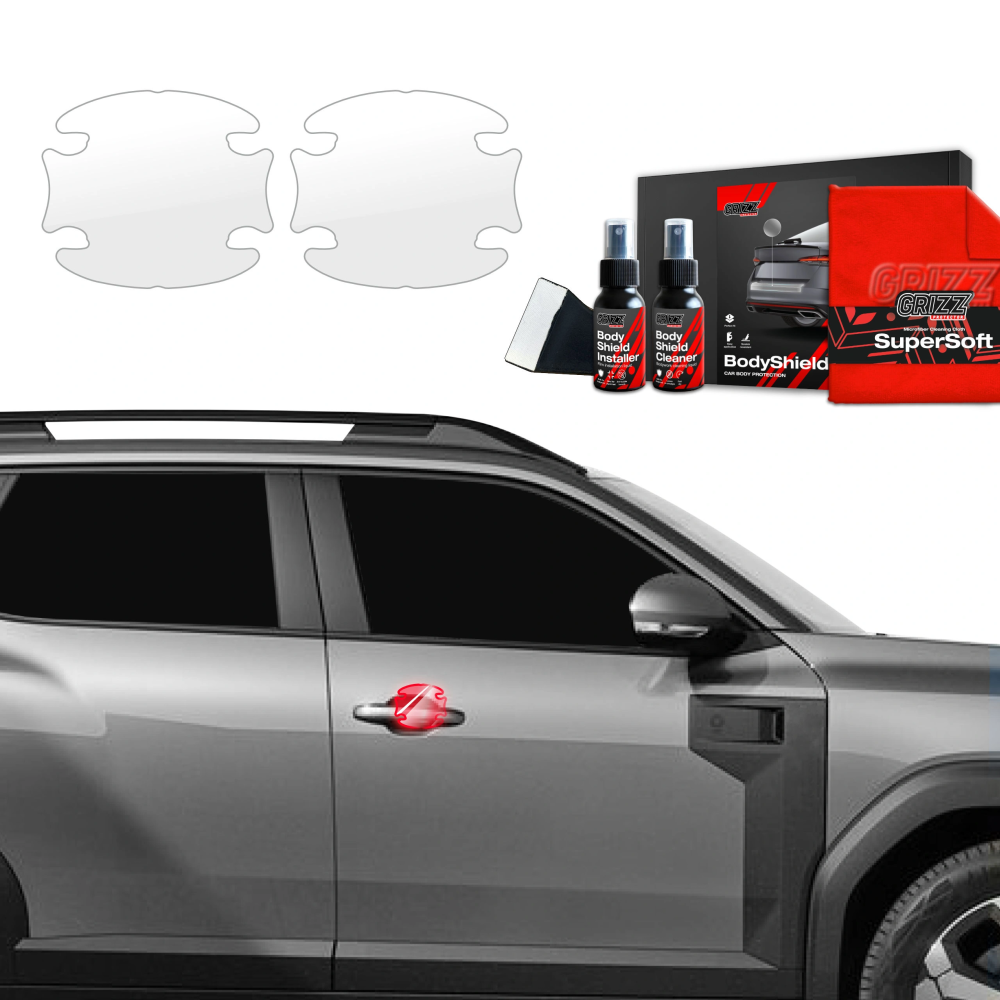
GrizzGlass BodyShield — body protection
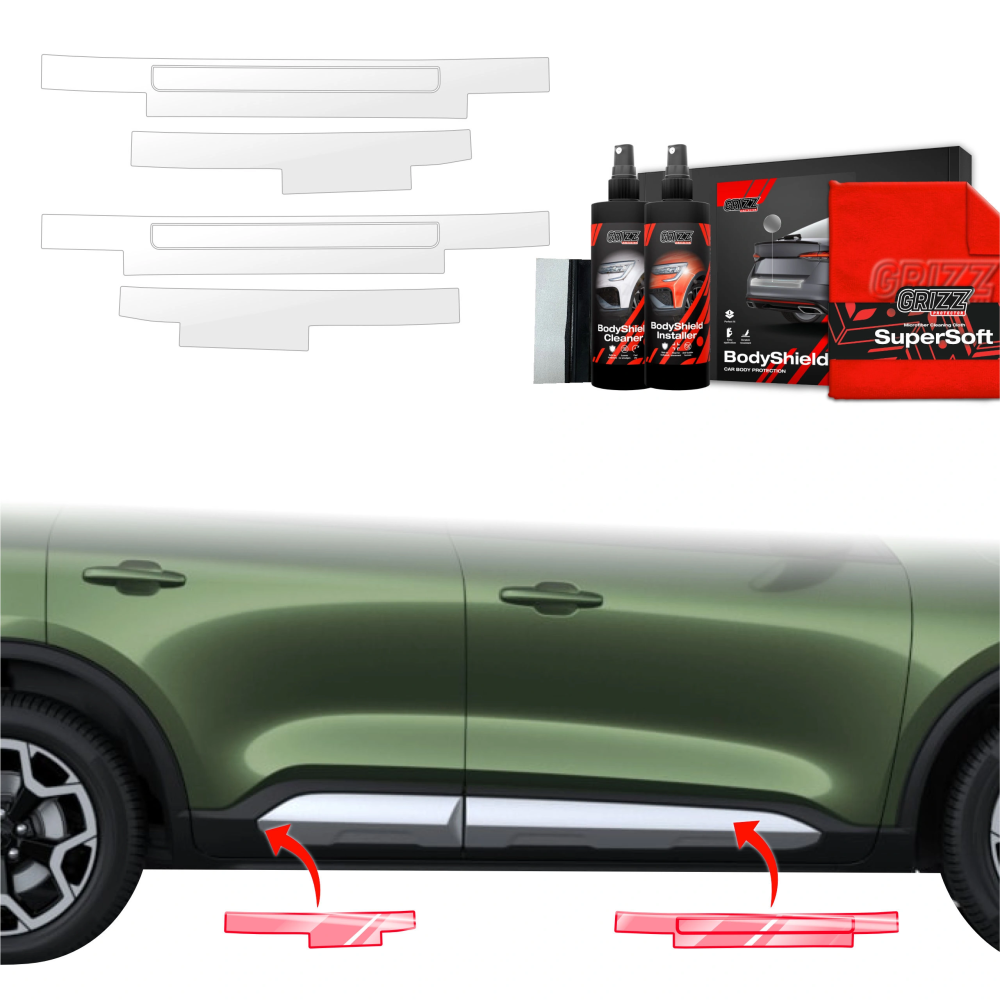
BodyShield films protect external elements exposed to scratches and chips:
- Door sills — scratched when getting in and out (shoes, belt buckles)
- Handles — scratches from nails and rings
- Rear bumper — marks from loading the trunk
- B/C pillars — scratches from passengers and luggage
- Trunk edge — contact with suitcases and bags
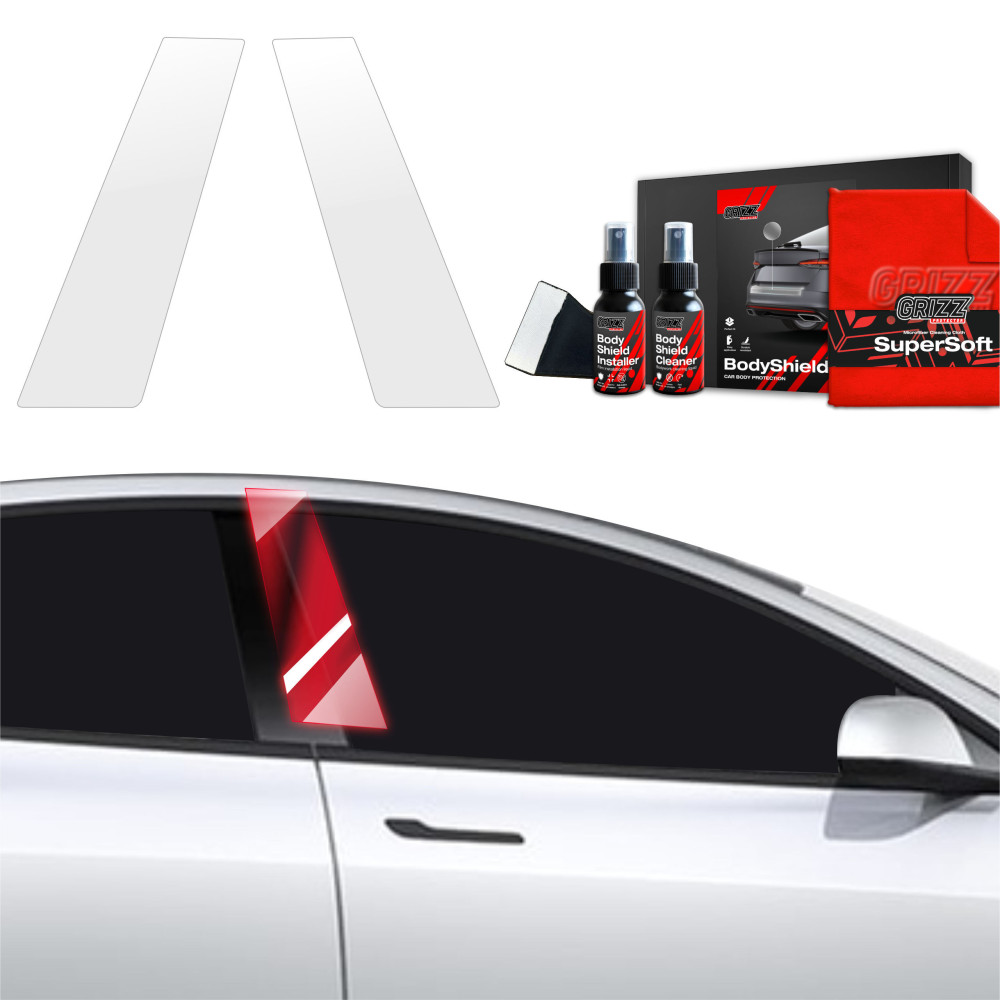
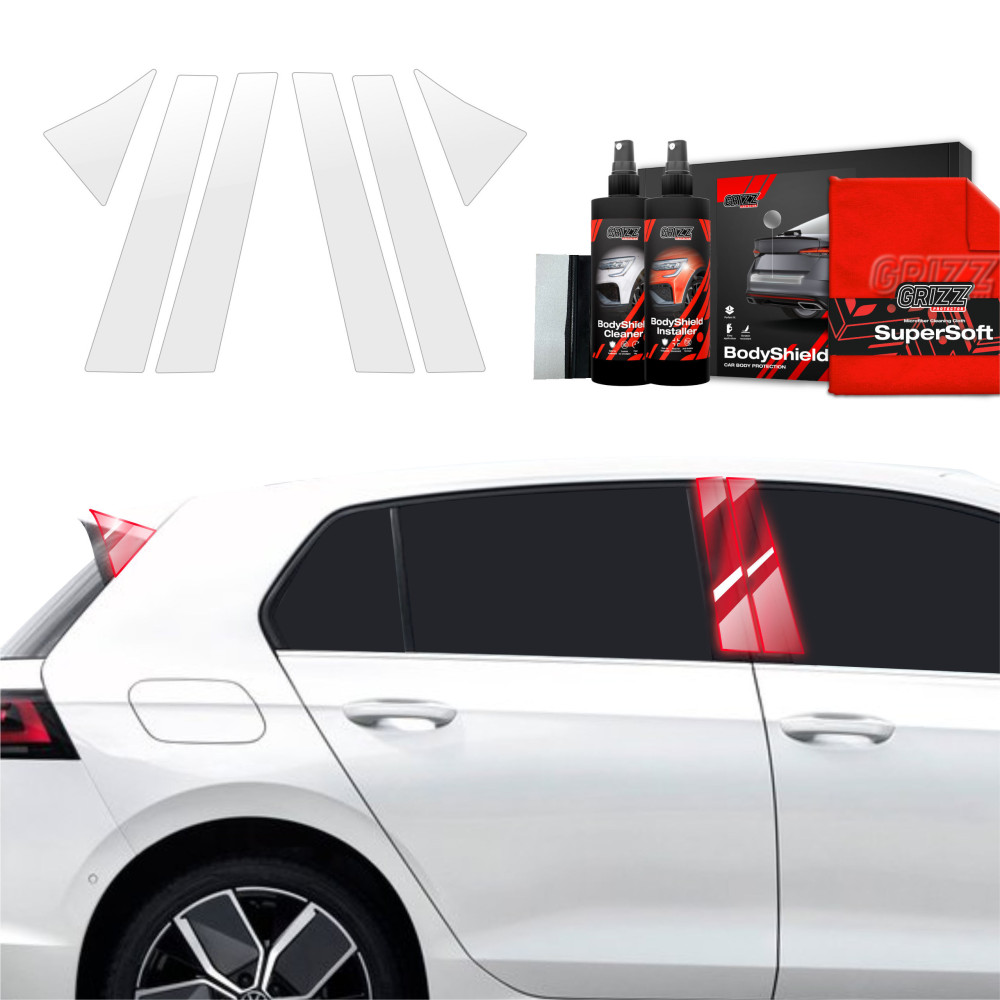
BodyShield kits for thresholds cost from 45 zł — this is a fraction of the cost of repainting a scratched threshold (300–800 zł at a paint shop).
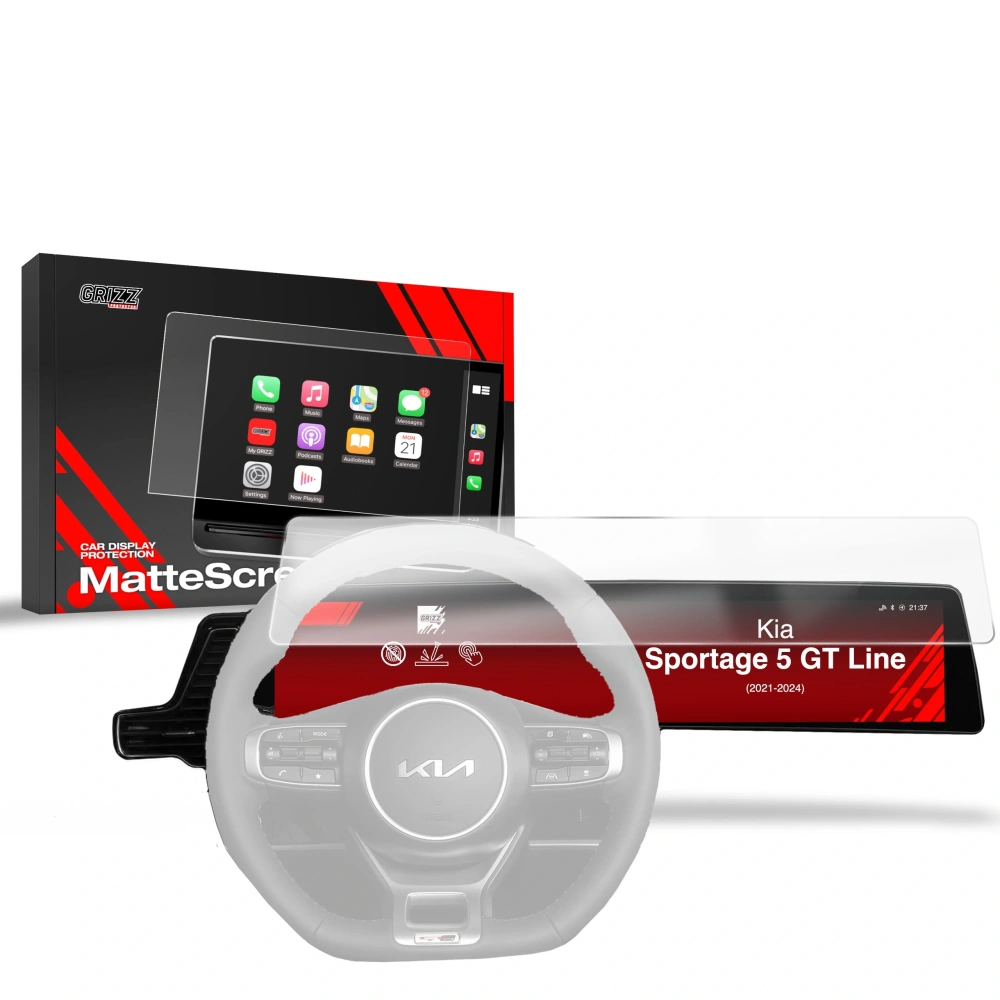
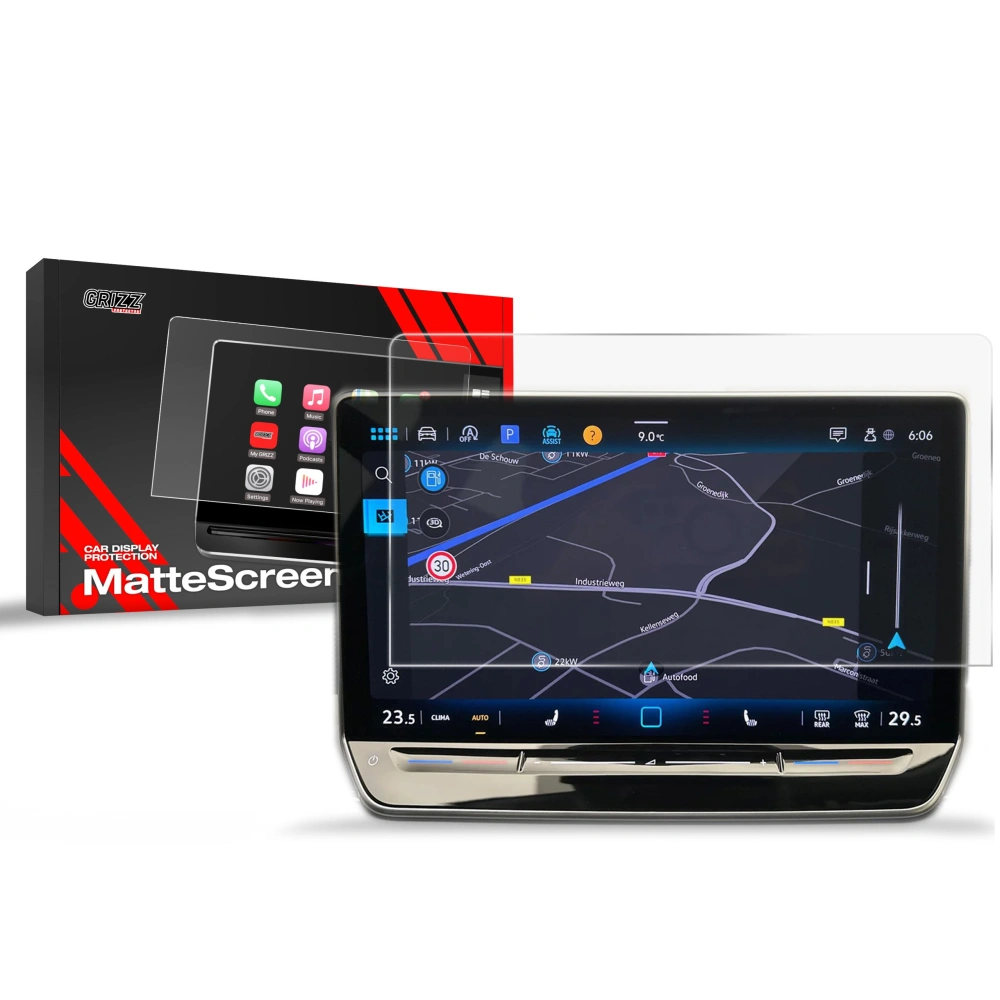
GrizzGlass CarDisplay Protection — multimedia screen protection
Screens in modern cars range from 8 to even 24 inches diagonally. They are made of glass or plastic and are susceptible to scratches from fingers and dust. CarDisplay Protection films are available in two variants:
- Ceramic — maintains full clarity, increases scratch resistance
- Matte — reduces glare, improves screen readability in sunlight
Films for multimedia screens cost from 110 to 220 zł — depending on the display size and finish variant.
Kiedy okleić piano black? Im wcześniej, tym lepiej
Najlepszy moment na zabezpieczenie piano black to dzień odbioru nowego samochodu. Elementy są wtedy w idealnym stanie, bez żadnych zarysowań. Folia zakonserwuje fabryczny połysk na lata.
Porada: Zamów PianoSkin jeszcze przed odbiorem nowego auta. Folia nałożona pierwszego dnia zakonserwuje fabryczny połysk na lata — zanim cokolwiek zdąży się porysować.
Jeśli Twoje auto ma już kilka miesięcy lub lat, wciąż warto okleić piano black — ale najpierw wypoleruj zarysowania. Kolejność jest ważna:
- Wypoleruj zarysowane elementy pastą polerską
- Oczyść powierzchnię dokładnie dołączonym preparatem
- Wrap with PianoSkin foil
Thanks to this, you maintain a smooth, renewed surface under the foil, which protects it from being scratched again.
Summary
Piano black is one of the most frustrating finishes in car interiors — visually beautiful, but horrendously impractical without protection. Regular polishing lasts for a few weeks, while PianoSkin foil protects elements for years.
GrizzGlass PianoSkin kits are tailored to specific car models, include everything needed for self-installation, and cost from 112 PLN. This is several times less than wrapping at a detailing studio.
Check protective films for your car at homescreen.pl — you will find PianoSkin, BodyShield, and CarDisplay Protection kits for over 20 brands and hundreds of car models →
FAQ — frequently asked questions
What is piano black in a car?
Piano black is a glossy, black decorative finish used on plastic elements in a car’s interior — panels, trims, button housings, and screen frames. The name comes from the finish resembling piano lacquer. The material is particularly susceptible to scratches and collecting fingerprints.
Can scratches be removed from piano black?
Yes — minor scratches can be removed manually or mechanically using a specialized fine-grain polishing paste. However, the polishing effect is temporary and lasts 2–4 weeks. To permanently protect the surface, it is advisable to apply PianoSkin protective film after polishing.
How much does it cost to wrap piano black with film?
Professional wrapping of piano black at a detailing studio costs 500–1,500 PLN. An alternative is the GrizzGlass PianoSkin DIY kit — from 112 to 430 PLN, depending on the car model and the number of elements in the kit.
Can the PianoSkin film be applied by oneself?
Yes. The PianoSkin kits include precisely cut film elements and a complete set of tools (microfiber, cleaning solution, installation gel, squeegee). Installation takes 30–60 minutes and does not require detailing experience. After application, the film needs 12–24 hours to cure.
What to clean piano black in the car with?
For cleaning piano black, use only a soft microfiber cloth (min. 300 GSM) soaked in a pH-neutral agent. First, blow off dust with compressed air, then wipe the surface in one direction. Never wipe piano black dry or in circular motions.
Does piano black foil change the appearance of the interior?
The Glossy variant is optically transparent and retains the original piano black shine. The Matte variant changes the finish to satin — which has the added benefit that fingerprints and minor scratches are practically invisible on the matte surface.
Legg att eit svar