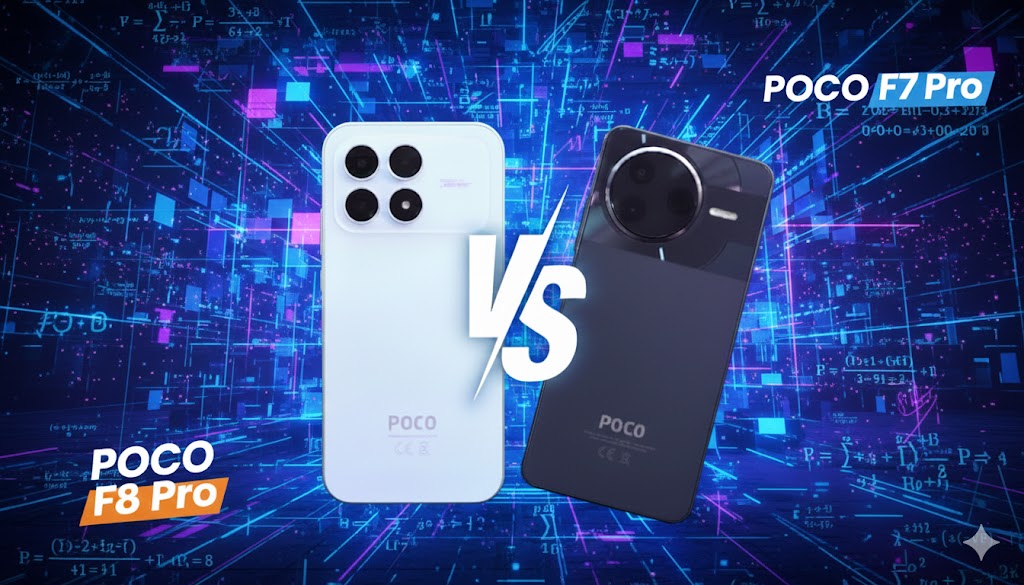
If you’re looking for the best POCO phone in Poland at the end of 2025, choose the POCO F8 Pro — it offers a more powerful processor, a better camera with a telephoto lens, and a larger battery with faster charging. But if you care about a great 2K screen and want to spend less than 2000 PLN, the POCO F7 Pro is still an excellent option.
📊 Comparison of specifications POCO F7 PRO vs POCO F8 PRO
| Feature / Parameter | POCO F7 Pro | POCO F8 Pro |
|---|---|---|
| Processor | Snapdragon 8 Gen 3 | Snapdragon 8 Elite (3 nm, Oryon) |
| GPU | Adreno 750 | Adreno 830 |
| RAM / Internal Memory | 12 GB LPDDR5X + 256 / 512 GB UFS 4.1 | 12 GB LPDDR5X + 256 / 512 GB UFS 4.1 |
| Screen | 6.67″ AMOLED, 3200×1440, 120 Hz | 6.59″ AMOLED, 2510×1156, 120 Hz, 3500 nit |
| Rear Cameras | 50 MP (main) + 8 MP (ultrawide) | 50 MP (main) + 50 MP tele + 8 MP ultrawide |
| Selfie Camera | 20 MP | 20 MP |
| Battery | 6000 mAh | 6210 mAh |
| Charging | 90W HyperCharge | 100W HyperCharge + 22.5W reverse charge |
| Body / Dimensions / Weight | 160.26 × 74.95 × 8.12 mm — 206 g | 157.49 × 75.25 × 8.0 mm — 199 g |
| SIM / eSIM | Dual nanoSIM | nanoSIM + nanoSIM / nanoSIM + eSIM / eSIM + eSIM |
| Water Resistance | IP68 | IP68 |
| Operating System | HyperOS 2 (Android 15) | HyperOS 3 (Android 16) |
| Connectivity / Wi-Fi / Bluetooth | Wi-Fi 7, Bluetooth 5.4 | Wi-Fi 7 (8×8 MU-MIMO), Bluetooth 5.4 |
| Approximate Price (PL) | about 1800–2000 PLN (promotions) | about 2099–2299 PLN |
Display and External Appearance
What has changed in the design and screen of the POCO F8 Pro compared to the F7 Pro?
In terms of appearance and build quality, both models present a high level, but the POCO F8 Pro introduces a few subtle changes that affect daily ergonomics:
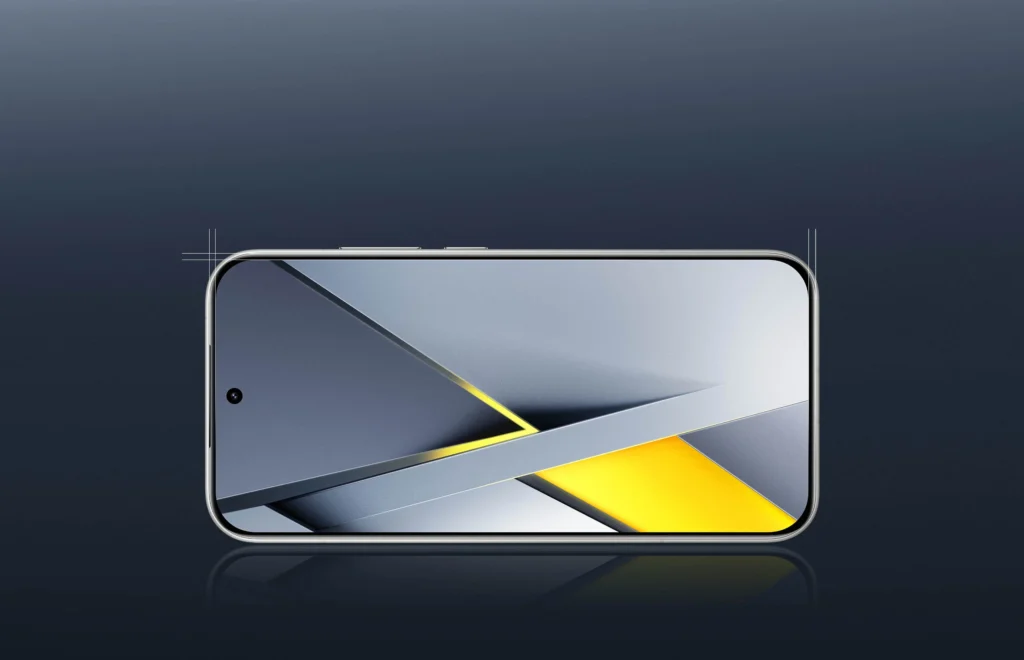
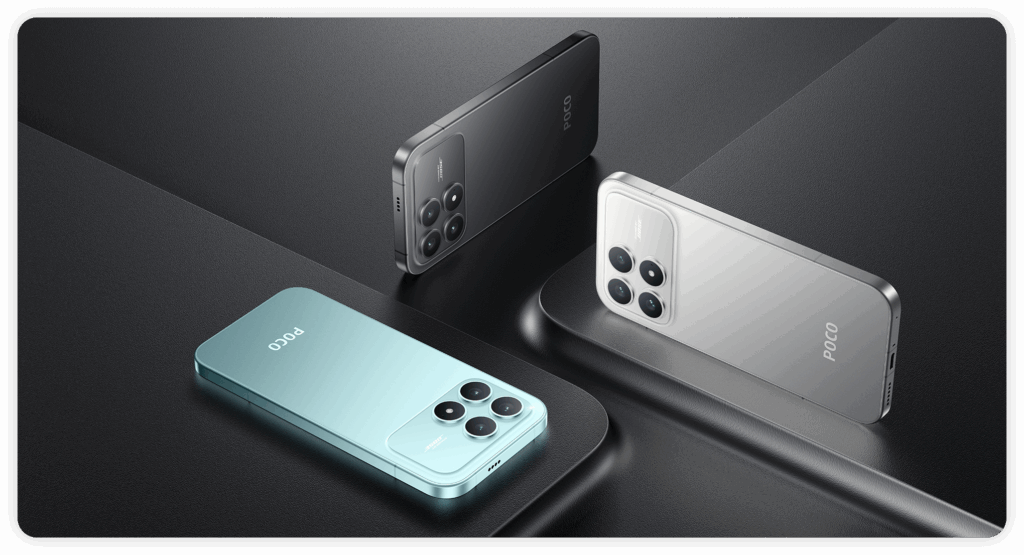
- Smaller dimensions and lower weight: The F8 Pro is shorter (157.5 mm vs 160.3 mm) and lighter (199 g vs 206 g), which translates to more comfortable one-handed use.
- Rounded edges and better grip: The new shape of the F8 Pro features gentle curves and a thinner bottom bezel, making the phone fit better in the hand.
- Identical IP68 resistance class: Both smartphones are resistant to dust and immersion in water up to 1.5 m for 30 minutes, confirming a high standard of construction.
The change in form is not revolutionary, but the F8 Pro is noticeably more compact and “smoother” in daily use – without compromising on sturdiness.
➡️ If you want to improve the protection and grip of the device, choose the appropriate case for POCO F7 Pro or case for POCO F8 Pro.
Screen: sharpness vs brightness – which is better for the eyes?
POCO F7 Pro impresses with its classic form – a flat 6.67″ AMOLED display with WQHD+ resolution (3200×1440 px) and thin, symmetrical bezels. With 12-bit color depth, support for HDR10+ and Dolby Vision, and very high sharpness (526 ppi), it is the perfect display for those who value detail – for reading, watching high-quality movies, or playing graphically intensive games.
The POCO F8 Pro features a smaller 6.59″ screen with a resolution of 2510×1156 px (446 ppi). Importantly, it has a significantly higher peak brightness – up to 3500 nits (vs 3200 nits in F7 Pro), making it better for outdoor use. Additionally, it supports Wet Touch 2.0 mode, which increases touch responsiveness in rain or with wet fingers – a rarity even among flagships.
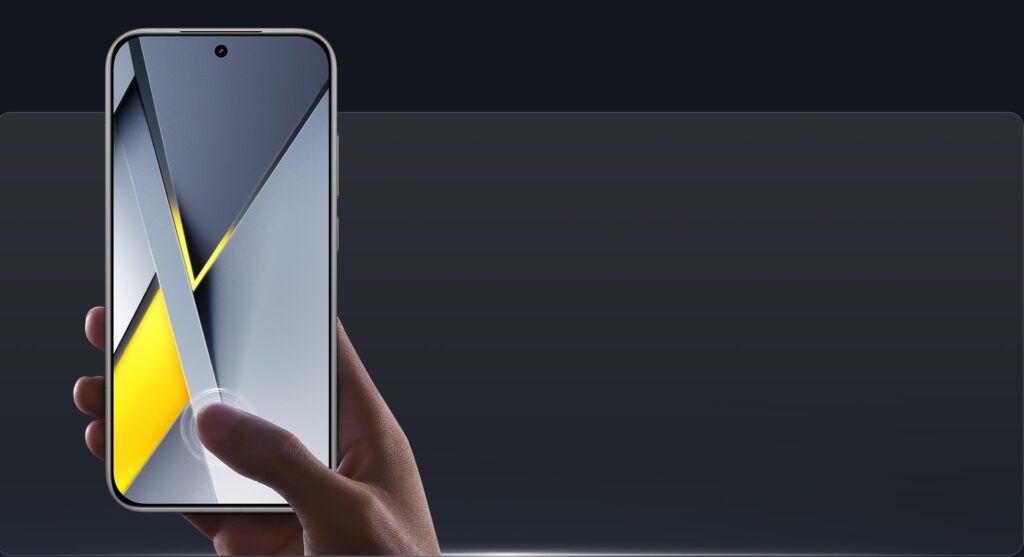
Both displays support 120 Hz refresh rate and advanced dimming (PWM/DC), but differ in priority: F7 Pro focuses on sharpness and pixel density, while F8 Pro emphasizes comfort in all lighting conditions. – the screen responds better to touch in humid conditions. Both displays are top quality, but the choice depends on whether detail (F7 Pro) or brightness and response time (F8 Pro) is more important.
➡️ Check out the matching tempered glass for POCO F7 Pro or tempered glass for POCO F8 Pro to avoid screen damage.
Cameras and Photo-Video Capabilities
Telephoto vs No Tele – an advantage that is immediately visible
Both smartphones use the same, very good 50 MP Light Fusion 800 sensor as the main camera. It is a 1/1.55″ matrix with OIS, large 2.0 μm pixels (after 4-in-1 merging) and excellent photo quality both day and night. However, this is where the similarities end.
🔍 POCO F8 Pro – a huge leap thanks to the 50 MP telephoto lens
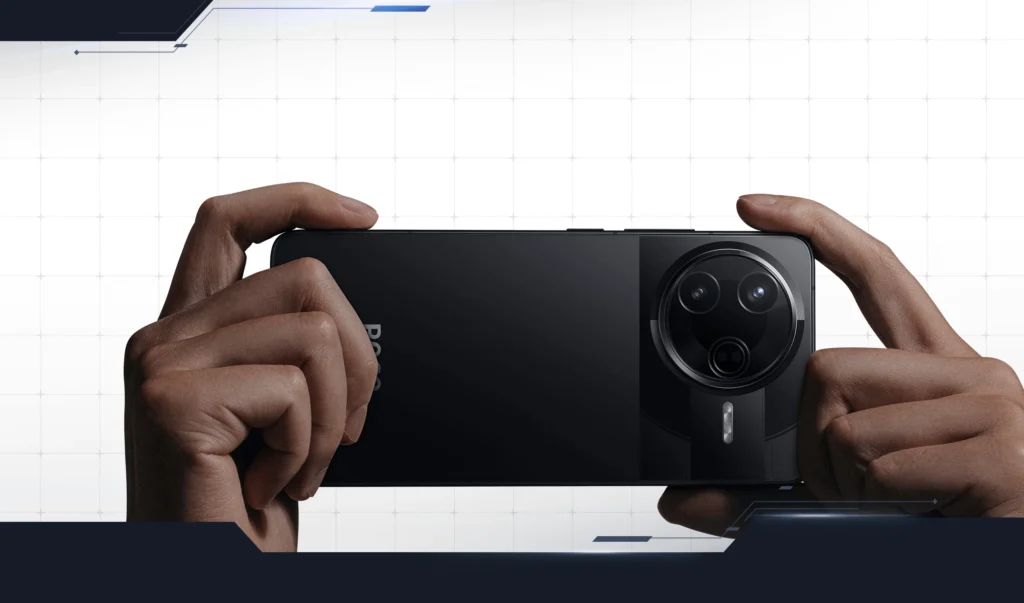
F8 Pro is the only one in this pair that has a dedicated 50 MP telephoto lens with a focal length of 60 mm, which offers:
- 2× optical zoom without quality loss,
- significantly better portrait photos with natural background separation,
- sharper detail photos from a greater distance,
- Super Moon mode and adaptive zoom.
This makes the F8 Pro clearly more versatile in photography.


🌄 POCO F7 Pro – only wide and ultra-wide
The F7 Pro offers two cameras:
- 50 MP main (the same as in F8 Pro),
- 8 MP ultra-wide.
The lack of a telephoto lens means that any zoom is digital, so quality decreases with close-ups. Portraits also look weaker – the bokeh effect is more artificial.
🎥 Video – both record in 8K, but the F8 Pro does it better
- F7 Pro: 8K 24 fps, 4K 60 fps.
- F8 Pro: 8K 30 fps, 4K 60 fps + more stabilization modes.
Additionally, the F8 Pro offers:
- director mode,
- dual video recording,
- ShootSteady,
- better motion tracking.
🤳 Selfie Camera – tie
Both phones have the same 20 MP front camera, offering HDR, portrait mode, and 1080p 60 fps recording.
Section summary: If you take a lot of photos, especially portraits and close-ups — the F8 Pro is a crushing winner. The F7 Pro delivers great quality from the main sensor, but it lacks versatility.
Battery and Charging
Greater capacity or greater convenience? Differences you feel every day
In terms of battery, both models perform excellently, but they differ in their approach to runtime and additional features.
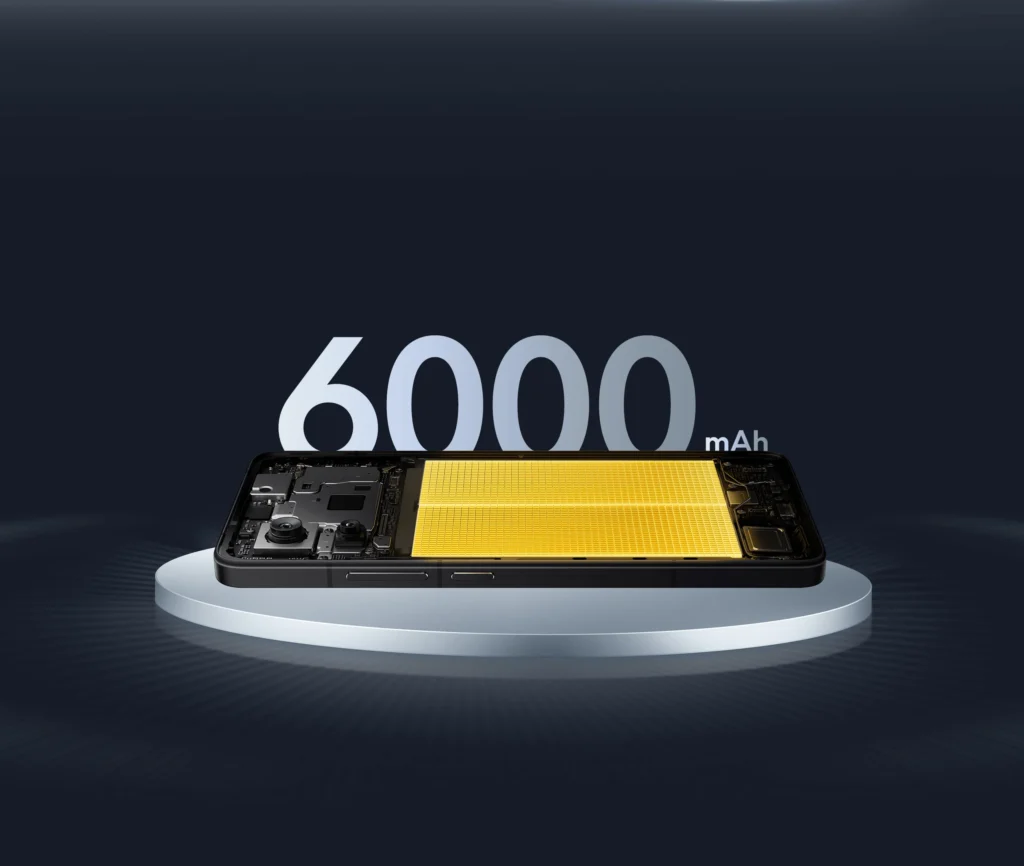
🔋 POCO F7 Pro — solid 6000 mAh battery
- Capacity: 6000 mAh
- Wired charging: 90W HyperCharge
- No reverse charging
The F7 Pro provides very good runtime — even 7–8 hours SOT, and thanks to 90W, it can be charged quickly. It’s an excellent battery in its price range.
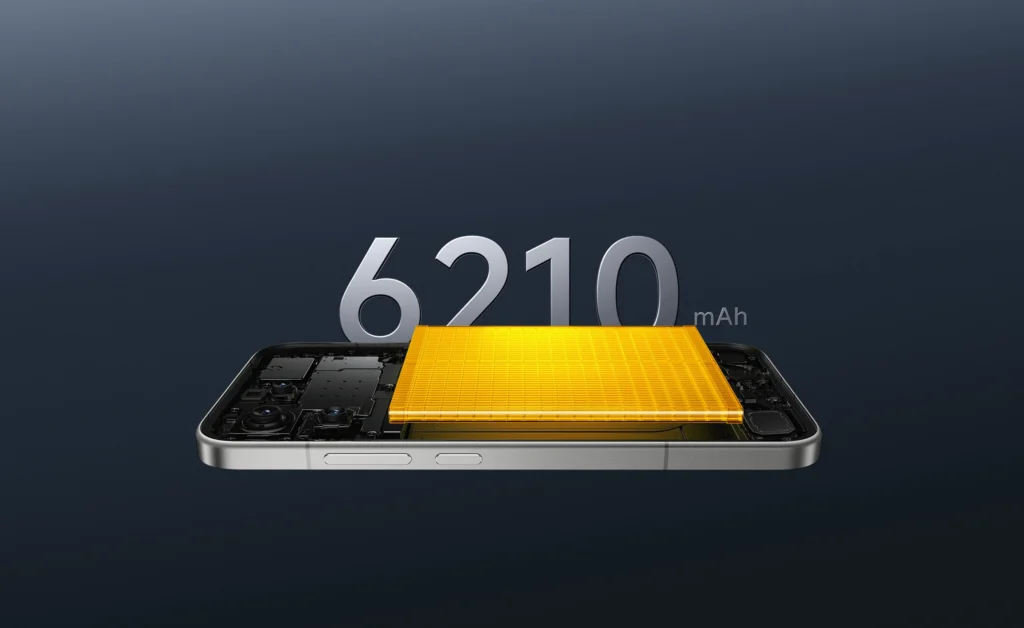
⚡ POCO F8 Pro — larger battery, faster charging, and power bank feature
- Capacity: 6210 mAh (210 mAh more)
- Wired charging: 100W HyperCharge (full charge in about 30 minutes)
- Reverse charging 22.5W — you can charge headphones, a smartwatch, or a second phone
The F8 Pro offers a realistically longer battery life (on average +40–60 minutes) and also acts as a portable power bank thanks to fast reverse charging.
📌 Which smartphone has a better battery?
- If you care about maximum convenience and the fastest charging → choose POCO F8 Pro.
- If you want very good battery life at a lower price → the F7 Pro is still a great choice.
In practice: the advantage of the F8 Pro is clear, as it combines greater capacity, better charging technology, and additional features that the F7 Pro does not offer.
➡️ To take full advantage of the 100W power, it’s worth checking fast chargers for POCO F8 Pro, which support the PD/PPS standard and enable the fastest possible charging of the phone.
Performance and Computing Power
Snapdragon 8 Gen 3 in POCO F7 Pro – powerful, stable, predictable
Snapdragon 8 Gen 3 has long been Qualcomm’s most powerful processor and still performs excellently in 2025. It is a chip that guarantees:
- high level of fluidity in applications,
- stable performance even during long gaming sessions,
- good cooling performance and energy efficiency.

In everyday use, the F7 Pro operates dynamically — switching applications, multitasking, and media handling are fast and seamless. In gaming, the phone maintains frame rates very well, although in the heaviest FPS titles, it can slightly drop after longer sessions.
In short: The F7 Pro still offers flagship-level performance but at a lower price.
Snapdragon 8 Elite in POCO F8 Pro – groundbreaking Oryon architecture
The Snapdragon 8 Elite is in a completely different league. Qualcomm has implemented the Oryon architecture, which is significantly more advanced than classic ARM cores.
Key advantages:
- significantly higher single-core performance, which is felt with every touch of the screen,
- much stronger Performance cores, which maintain stable clock speeds under heavier loads,
- better performance with AI and multimedia, which affects photo editing, video, transcription, and content recognition.
In practice, the F8 Pro works faster — apps open instantly, animations are more responsive, and the phone hardly slows down even with 30–40 apps in the background.
Smart System and Features
HyperOS 2 vs HyperOS 3 – is the difference noticeable?
The POCO F7 Pro runs on HyperOS 2 (Android 15), while the POCO F8 Pro debuts with HyperOS 3 basing on Android 16. Although the interface is visually similar, the differences are clear in performance and system features.
HyperOS 3 in POCO F8 Pro — faster, smoother, smarter
The new version of HyperOS introduces several improvements:
- better energy management thanks to the new processor workload schedule,
- more responsive animations — utilizing the higher performance of Oryon,
- enhanced AI modules that speed up photo processing, translation, and search,
- greater stability of background applications due to RAM optimization.
F8 Pro also leverages the power of Snapdragon 8 Elite for AI features that F7 Pro does not support, e.g., at such quality or speed.
HyperOS 2 in POCO F7 Pro — still fast, but less flexible
HyperOS 2 is a very stable and lightweight system that offers:
- fast app switching,
- intuitive gestures,
- wide customization options,
- good RAM management.
It works great, but it lacks some AI enhancements that only appeared in version 3.
🔐 Security and biometrics
Both phones offer:
- ultrasonic fingerprint reader in the display,
- AI face recognition,
- regular security updates.
The difference is that F8 Pro will be supported longer, as HyperOS 3 is a newer generation of the system.
Conclusions — which system is better?
- F7 Pro → fast, stable, polished, ideal for those who do not need next-generation AI features.
- F8 Pro → more future-proof, faster in animations, smarter, better utilizes processor power.
👉 If you care about up-to-date software and the best responsiveness — F8 Pro wins.
Connectivity and Global Standards
eSIM, 5G, Wi-Fi — this is where one of the key differences appears
In terms of connectivity, both models offer a full set of modern technologies, but the POCO F8 Pro has a more flexible SIM configuration and newer wireless connectivity standards.
SIM Cards — F8 Pro’s Advantage with eSIM Support
POCO F7 Pro
- Dual nanoSIM (2× physical cards)
No eSIM support.
POCO F8 Pro
- nano SIM + nano SIM
or - nano SIM + eSIM
or - eSIM + eSIM
eSIM requires activation with the operator and may have roaming restrictions — depending on the country and service provider.
This is a significant advantage of the F8 Pro, especially for people using:
- two numbers,
- foreign profiles,
- eSIM cards in a smartwatch or for easy operator switching.
Supported 5G and LTE Bands
Both phones support the same key bands:
- 5G SA/NSA,
- wide range of TDD and FDD bands for Europe,
- full operator support in Poland (Orange, Play, Plus, T-Mobile).
However, the F8 Pro has a somewhat richer list of bands, especially in 5G SA/NSA, making it more future-proof.
📡 Wi-Fi and Bluetooth
F7 Pro
- Wi-Fi 7, Wi-Fi 6, Wi-Fi 5
- Bluetooth 5.4
F8 Pro
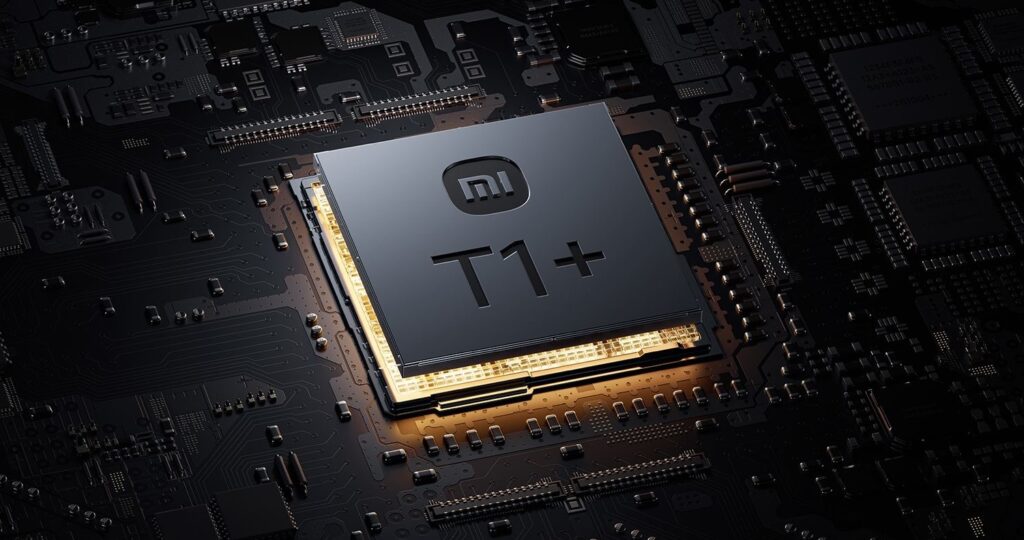
- Wi-Fi 7 (more complete support, 8×8 MU-MIMO),
- support for multiple links (multi-link),
- Bluetooth 5.4,
- support for LDAC, LHDC 5.0, AptX Adaptive, and a full set of codecs.
In practice:
- F8 Pro has more stable connections in crowded networks,
- better BT sound quality,
- lower latency in games.
GPS and Location
Both models have very broad support for global systems:
- GPS L1+L5
- Galileo E1+E5a
- QZSS
- GLONASS
- Beidou
- NavIC
The differences in practice are minimal — both phones offer fast and precise positioning, even in the city.
Connectivity Summary
POCO F8 Pro wins because it offers:
- eSIM in multiple configurations,
- more advanced Wi-Fi 7,
- a wider range of 5G bands,
- better audio BT codecs.
F7 Pro is still very good, but the F8 Pro offers more options and is more future-proof.
Prices and Availability in Poland
What are the prices of POCO F7 Pro and F8 Pro?
- In official Polish sales, the list price of F8 Pro (12 GB RAM + 512 GB) is 2299 PLN.
- The cheaper variant of F8 Pro (12/256 GB) started at 2099 PLN.
- Some stores may also have promotional offers — then the price may be lower, although it rarely drops to a level similar to F7 Pro.
Conclusions:
- The F8 Pro currently ranks above the level of “budget flagships” — the price of around 2099–2299 PLN reflects its modern features (telephoto lens, eSIM, powerful processor).
- If you find the F7 Pro on sale (~1800–2000 PLN), it may be more cost-effective with a good compromise between price and capabilities.
- The F8 Pro offers more options for the future — better camera, eSIM, faster charging — but you will pay more for it.
Summary: Which model to choose?
🔥 POCO F8 Pro — the choice for those who want:
- the best possible performance (Snapdragon 8 Elite with Oryon architecture),
- a better camera with a 50 MP telephoto lens,
- support for eSIM in various configurations,
- a larger battery and 100W faster charging,
- a more compact and lighter design,
- longer system support (HyperOS 3).
This is a more future-proof, versatile phone aimed at demanding users.
💎 POCO F7 Pro — a choice for those who want:
- an excellent screen WQHD+ 3200×1440 (a rarity at this price),
- a very powerful Snapdragon 8 Gen 3 processor,
- a large 6000 mAh battery with 90W fast charging,
- top gaming performance at a lower price,
- a reasonable price/quality ratio.
This is the best choice if you care about flagship components but don’t want to exceed 2000 PLN (during promotions).
Final Verdict
- If you want the best POCO 2025, choose F8 Pro.
- If you want the best value for money, choose F7 Pro.
- If you mainly care about a 2K display, F7 Pro wins — F8 Pro has a brighter screen but with a lower resolution.
- If you care about camera versatility, there’s no discussion — F8 Pro with a telephoto lens definitely wins.
FAQ — Frequently Asked Questions
⭐ 1. Which POCO has a better camera — F7 Pro or F8 Pro?
Definitely F8 Pro. It has a 50 MP telephoto lens with 2× optical zoom and better stabilization modes.
F7 Pro only has a main camera + ultra-wide.
⭐ 2. Does POCO F7 Pro support eSIM?
No. It only supports 2× nanoSIM.
eSIM works exclusively on POCO F8 Pro.
⭐ 3. Which model has a better battery?
The F8 Pro has a larger battery (6210 mAh) and faster 100W charging + reverse charging.
The F7 Pro has 6000 mAh and 90W.
⭐ 4. Which screen is better?
- F7 Pro — higher WQHD+ resolution and pixel density (ideal for content).
- F8 Pro — much higher brightness (3500 nits) and better outdoor visibility.
The choice depends on your priorities.
⭐ 5. Is it worth paying extra for the F8 Pro?
Yes, if you care about the best cameras, eSIM, performance, and charging.
If you want to spend less and have a great 2K screen — the F7 Pro is still excellent.
⭐ 6. Which model performs better in gaming?
F8 Pro, thanks to the Adreno 830 GPU, is more stable during long sessions and heats up less.
F7 Pro still delivers flagship performance, but F8 Pro wins in 3D gaming.
⭐ 7. Do both models have IP68 waterproofing?
Yes — both F7 Pro and F8 Pro have IP68 (submersion 1.5 m for 30 min).
Leave a Reply