Kategori: Porównania

  • iPhone 18 Pro vs iPhone 17 Pro: co się zmieniło

    iPhone 18 Pro vs iPhone 17 Pro: co się zmieniło

    The biggest difference between the iPhone 18 Pro and the 17 Pro is the main camera with a variable aperture, the first such mechanism in the history of the iPhone. In addition, there is the A20 Pro chip with steam cooling and longer battery life: up to 34 hours of video playback instead of 31 in the seventeen.

    The casing has not changed at all. Both phones have identical dimensions, the same screen, the same zoom range, and the same front camera. This comparison is therefore shorter than it might seem, and boils down to three areas: camera, performance, and battery.

    Below is the full specification table, commentary on each real change, a list of things that remain unchanged, and an answer to the question of whether switching from seventeen makes sense.

    iPhone 18 Pro Max from the back and iPhone 18 Pro from the front, both in Burgundy color
    iPhone 18 Pro and 18 Pro Max in Burgundy color, which replaced Cosmic Orange from seventeen. Photo. Apple

    iPhone 18 Pro vs iPhone 17 Pro: comparison table

    The data comes from the official Apple specification pages and the manufacturer’s comparison table.

    ParametriPhone 18 ProiPhone 17 ProZmiana
    EkranOLED Super Retina XDR 6,3″, ProMotion do 120 HzOLED Super Retina XDR 6,3″, ProMotion do 120 Hzbez zmian
    CzipA20 Pro z chłodzeniem parowymA19 Pronowa generacja
    Neural Enginepodwójny, 16-rdzeniowy16-rdzeniowypodwojony
    Aparat głównyFusion 48 MP, zmienna przysłona ƒ/1,48 do ƒ/4,0Fusion 48 MP, stała przysłonakluczowa nowość
    UltraszerokokątnyFusion 48 MP, ƒ/2,2Fusion 48 MPbez zmian
    TeleobiektywFusion 48 MP, 100 mm (4x), ƒ/2,8Fusion 48 MP, 4xbez zmian
    Zakres zoomu optycznego0,5x, 1x, 2x, 4x, 8x0,5x, 1x, 2x, 4x, 8xbez zmian
    Aparat przedniCenter Stage 18 MP, ƒ/1,9Center Stage 18 MPbez zmian
    Bateria (18 Pro)do 34 godz. odtwarzania wideodo 31 godz. odtwarzania wideo+3 godz.
    Bateria (wersja Max)do 43 godz. odtwarzania wideodo 37 godz. odtwarzania wideo+6 godz.
    Ładowanie bezprzewodoweMagSafe do 25 W, Qi2 do 25 WMagSafe do 25 W, Qi2 do 25 Wbez zmian
    Pamięć256 GB, 512 GB, 1 TB, 2 TB256 GB, 512 GB, 1 TB, 2 TBbez zmian
    Obudowaaluminium unibody, Ceramic Shield 2 z przodualuminium unibody, Ceramic Shield 2 z przodubez zmian
    Wymiary150,0 × 71,9 × 8,75 mm150,0 × 71,9 × 8,75 mmbez zmian
    Masa211 g204 g+7 g
    Wymiary (wersja Max)163,4 × 78,0 × 8,75 mm, 249 g163,4 × 78,0 × 8,75 mm, 231 g+18 g
    OdpornośćIP68 (6 m przez 30 min)IP68 (6 m przez 30 min)bez zmian
    Cena startowa w Polsce6 299 zł5 799 zł+500 zł

    Camera: variable aperture and what it really offers

    This is the only change in this comparison that you will see in the photos, not in the benchmark. The main Fusion 48 MP camera in the iPhone 18 Pro switches between four aperture values: ƒ/1.48, ƒ/1.8, ƒ/2.8, and ƒ/4.0. The iPhone 17 Pro has a fixed aperture, like every previous iPhone.

    In practice, it works both ways. At ƒ/1.48, more light hits the sensor than in any previous iPhone, which saves photos in low light and indoors. At ƒ/4.0, the depth of field increases, so in a group photo or macro shot, the entire frame stays sharp, not just the foreground. Previously, such background blur or its absence had to be simulated programmatically in portrait mode.

    Black and white portrait of a person with a heavily blurred background, taken with the iPhone 18 Pro
    At ƒ/1.48, the background is optically blurred, without portrait mode. Photo taken with the iPhone 18 Pro. Photo: Apple

    Apple has added to this Pro control: manual adjustment of aperture, shutter speed, and white balance, as well as a histogram preview. This is a set that previously required a third-party app.

    The rest of the optical layout remains unchanged. The ultra-wide Fusion 48 MP and the Fusion 48 MP telephoto lens with a focal length of 100 mm are the same as in the seventeenth model, as is the entire zoom range: 0.5x, 1x, 2x, 4x, and 8x.

    Performance: A20 Pro and vapor cooling

    The iPhone 18 Pro received the A20 Pro chip instead of the A19 Pro. Apple describes it as the most powerful and energy-efficient chip in iPhone history, built for AI computations. A key architectural change is the dual 16-core Neural Engine instead of a single one, along with Neural Accelerator accelerators.

    Graphic of Apple A20 Pro chip: silver plate with Apple logo and A20 Pro inscription
    A20 Pro replaced A19 Pro from the iPhone 17 Pro. Photo: Apple

    Additionally, there is vapor cooling. This is more important than it sounds, and it’s not just about benchmark results. The vapor chamber dissipates heat from around the chip, allowing the phone to maintain peak performance longer before it starts to throttle. This is noticeable during extended 4K video recording and gaming, which is precisely where iPhones have throttled after just a few minutes for years.

    Uczciwe zastrzeżenie: Apple nie publikuje procentowego porównania A20 Pro z A19 Pro. Liczby krążące w sieci dotyczą albo parametrów samego procesu produkcyjnego, albo porównań ze znacznie starszymi generacjami. Jeśli korzystasz z telefonu do przeglądania, zdjęć i mediów społecznościowych, różnicy w codziennej pracy nie zauważysz.

    Bateria i ładowanie

    Tu zmiana jest wymierna i podana wprost przez Apple.

    ModelOdtwarzanie wideo
    iPhone 17 Prodo 31 godzin
    iPhone 18 Prodo 34 godzin
    iPhone 17 Pro Maxdo 37 godzin
    iPhone 18 Pro Maxdo 43 godzin

    Wersja Max zyskała najwięcej, bo aż sześć godzin. To różnica rzędu jednego dodatkowego wieczoru bez ładowarki. Częścią tego zysku jest większa bateria i stąd bierze się wzrost masy: 249 g zamiast 231 g w Pro Maksie i 211 g zamiast 204 g w wersji Pro.

    Ładowanie przewodowe jest szybsze: do 50% w około 15 minut zasilaczem o mocy 60 W lub wyższej z regulacją napięcia. Ładowanie bezprzewodowe zostało bez zmian, czyli do 25 W przez MagSafe i tyle samo przez Qi2. To dobra wiadomość dla portfela, bo ładowarek nie trzeba wymieniać.

    Co się nie zmieniło

    Ta lista jest dłuższa niż lista zmian i warto ją przeczytać przed decyzją o przesiadce.

    • Screen. The same 6.3-inch diagonal, the same OLED Super Retina XDR technology, and the same ProMotion up to 120 Hz.
    • Body. Unibody aluminum, Ceramic Shield 2 on the front with three times higher scratch resistance than in the iPhone 16 Pro, Ceramic Shield on the back. The same in both generations.
    • Dimensions. Identical to the tenth of a millimeter, more on that shortly.
    • Zoom range. 0.5x, 1x, 2x, 4x, and 8x in both phones.
    • Front camera. Center Stage 18 MP in both generations.
    • Durability. IP68 up to 6 meters for 30 minutes.
    • Wireless charging. Up to 25 W via MagSafe and Qi2.
    • Memory. The same range from 256 GB to 2 TB, with no 128 GB version in either model.
    • Face ID. Still in Dynamic Island, not under the screen.

    Price: iPhone 18 Pro vs iPhone 17 Pro

    The increase is 500 PLN at entry level and remains at every memory level.

    Model (256 GB)Starting priceChange
    iPhone 17 Pro5,799 PLN–
    iPhone 18 Pro6,299 PLN+500 PLN
    iPhone 17 Pro Max6,299 PLN–
    iPhone 18 Pro Max6,799 PLN+500 PLN

    It is worth noting that the iPhone 18 Pro costs exactly as much as the iPhone 17 Pro Max did a year earlier. For the same amount, you choose between a newer phone in a smaller body and an older one with a larger screen.

    The full price list of both models of the eighteen, along with the Max version and the foldable iPhone Duo, is detailed in the text iPhone 18 Pro price in Poland.

    Is it worth switching from the iPhone 17 Pro to the 18 Pro?

    The answer depends on what you use the phone for, but it is quite clear.

    It is worth it if you earn from photos or videos. The variable aperture plus Pro controls are a real tool, not just cosmetics. Additionally, there is steam cooling that maintains performance during longer recordings, and six extra hours of battery life in the Max version.

    It is not worth it if you use the phone normally. The screen is the same, the body is the same, the front camera is the same, the zoom is the same, and the wireless charging is the same. With a jump of one generation, you pay 500 zł more for a camera feature that you may never consciously use.

    It is worth considering if you are switching from the iPhone 16 Pro or older. In that case, the difference accumulates over two generations and also includes the unibody aluminum case, Ceramic Shield 2, and Center Stage 18 MP in the front. Our text comparison of the iPhone 16 Pro and 17 Pro will be helpful here.

    Accessories: what you will transfer from the seventeen

    The casing has not changed, so the case from the iPhone 17 Pro fits, MagSafe accessories too. The exception is the glass and frame for the camera — the camera island has grown, and you need to buy the version for the eighteen. We laid out the entire list of what you will transfer and what you won’t, with dimensions and how to check a specific model, in a separate guide: whether the case from the iPhone 17 Pro fits the iPhone 18 Pro.

    Summary

    1. The variable aperture is the only change you will see in the photos. Four values from ƒ/1.48 to ƒ/4.0 plus manual Pro control.
    2. A20 Pro with steam cooling and dual Neural Engine. Apple does not provide a percentage comparison with A19 Pro, so be cautious with the numbers from the web.
    3. Battery longer by 3 hours in Pro and by 6 hours in Pro Max. At the cost of 7 and 18 grams of weight.
    4. Casing, screen, zoom, front camera, and wireless charging unchanged. The list of unchanged items is longer than the list of novelties.
    5. Price higher by 500 PLN. 6,299 PLN instead of 5,799 PLN for the 256 GB version.
    6. When switching, you only buy glass for the camera. You transfer the case and MagSafe accessories without purchases.

    FAQ

    What is the difference between iPhone 18 Pro and 17 Pro?

    Three things: a main camera with a variable aperture of ƒ/1.48 to ƒ/4.0, an A20 Pro chip with vapor cooling and a dual Neural Engine, and longer battery life, up to 34 hours of video playback instead of 31. The screen, casing, zoom, and front camera are the same.

    Does the iPhone 18 Pro have a larger screen than the 17 Pro?

    No. Both models have 6.3 inches, and the Max versions have 6.9 inches. The same OLED Super Retina XDR technology and the same ProMotion up to 120 Hz.

    What is a variable aperture in a camera?

    It is a mechanism that changes the size of the opening through which light enters the sensor. A wide-open aperture (ƒ/1.48) lets in more light and blurs the background, while a closed one (ƒ/4.0) provides greater depth of field, meaning the entire frame is sharp. The iPhone 18 Pro does this mechanically, while earlier models simulated the effect programmatically.

    How much heavier is the iPhone 18 Pro than the 17 Pro?

    By 7 grams: 211 g instead of 204 g. In the Max version, the difference is 18 grams, 249 g instead of 231 g. This is due to the larger battery and vapor chamber, not due to a change in the shape of the casing.

    Is it worth paying extra for the iPhone 18 Pro?

    If you photograph or record professionally, yes, because the variable aperture and vapor cooling are real tools of the trade. With regular use, the 500 PLN difference mainly buys you camera functionality, which you may consciously choose not to use.

    Does the iPhone 18 Pro have better zoom than the 17 Pro?

    No. Both phones offer the same optical zoom range: 0.5x, 1x, 2x, 4x, and 8x, with a 48 MP Fusion telephoto lens with a focal length of 100 mm.

    Does the case from the iPhone 17 Pro fit the 18 Pro?

    Yes. The body dimensions are identical: 150.0 × 71.9 × 8.75 mm. Only the camera glass does not fit, as the camera island has grown.

    Does the iPhone 18 Pro have Face ID under the screen?

    No. The TrueDepth module still sits in the Dynamic Island, just like in the iPhone 17 Pro. The Dynamic Island has received a new incarnation and can track up to three live events simultaneously.

    Sources: official specifications for the iPhone 18 Pro and 18 Pro Max, comparison table of iPhones on apple.com/pl (chips, battery, dimensions, weight, zoom range, front camera), iPhone 18 Pro purchase page (prices).
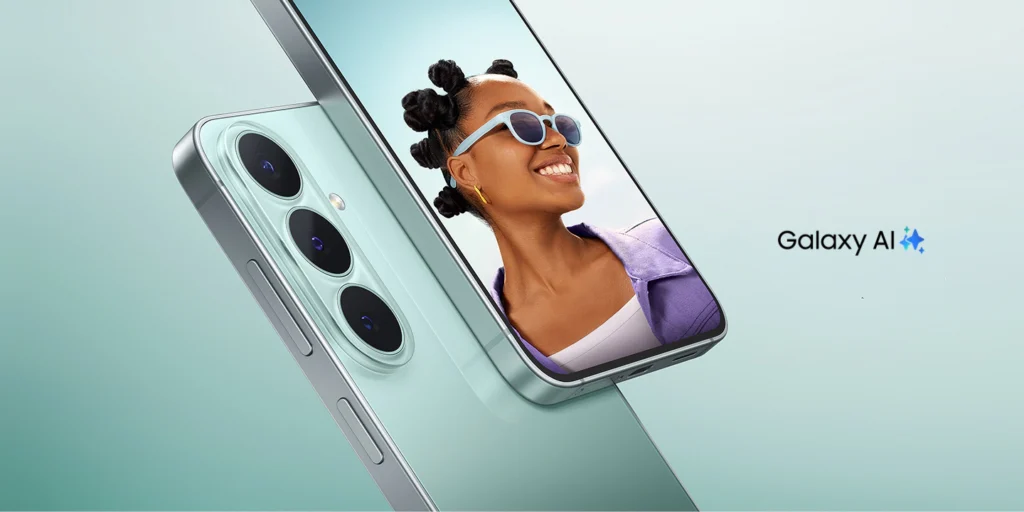
  • Galaxy S26 FE vs S25 FE: what has really changed?

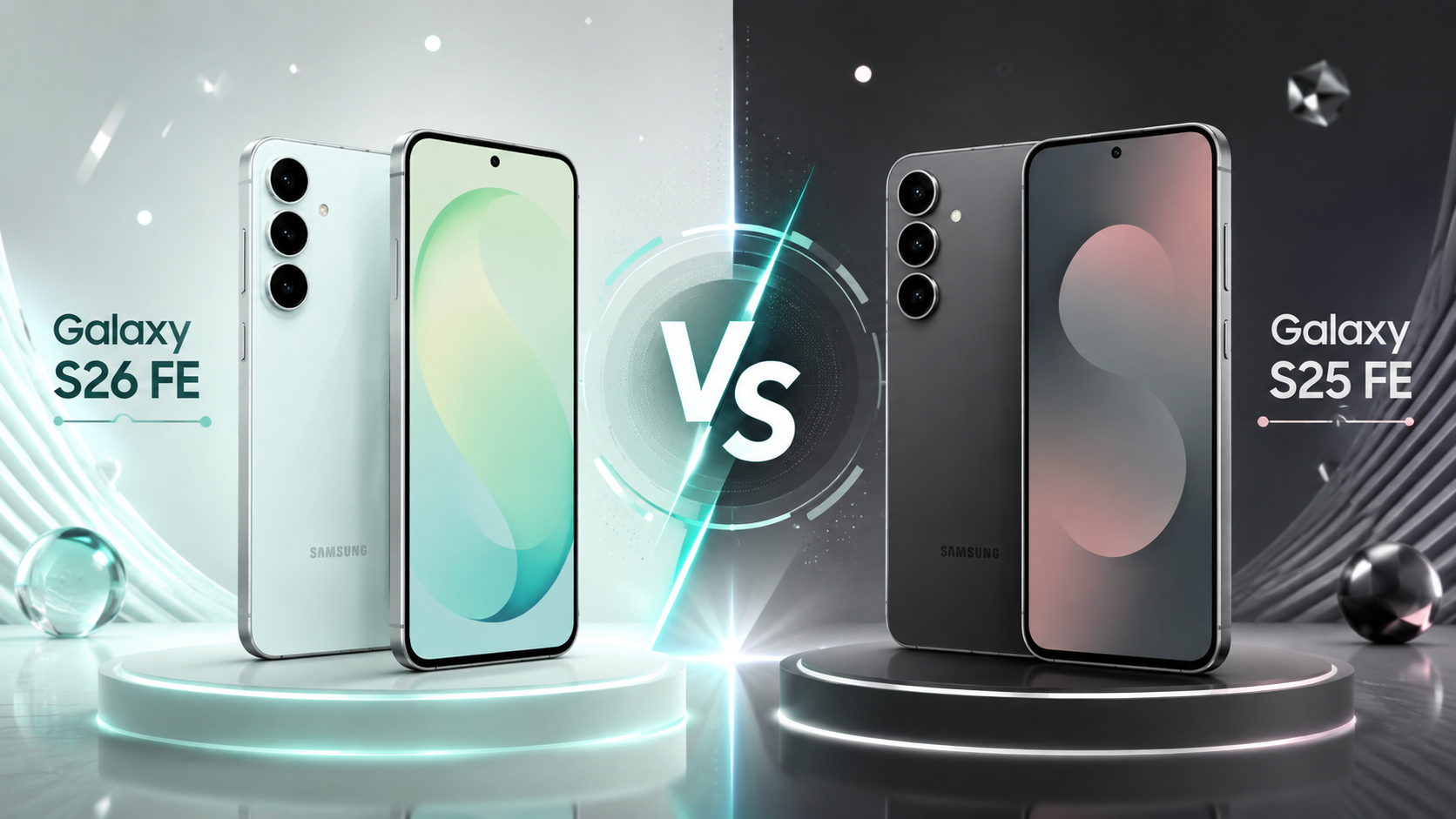
    Galaxy S26 FE vs S25 FE: what has really changed?

    In comparison Galaxy S26 FE vs S25 FE, the differences come down to three things: the Exynos 2500 processor instead of 2400, the One UI 9 system instead of One UI 8, and the USB port, which has reverted to version 2.0. The screen, all three cameras, selfie, and the 4,900 mAh battery are identical.

    The S26 FE was launched on August 27, 2026, and sales start on September 4.

    Place both phones side by side, and you won’t distinguish them without looking into the settings. Samsung has transferred almost all the hardware from last year and raised the price.

    Below is the full table of both models, resolving the circulating rumor about the silicon-carbon battery, which is even repeated in the specification tables, and a section about accessories: what fits which model and why the case from S25 FE won’t fit on S26 FE.

    When each model entered the market

    Both phones debuted at the same time of the year, with less than twelve months apart. The Galaxy S25 FE had its premiere and sales start on the same day, while the S26 FE got a week break between the two.

    EventGalaxy S25 FEGalaxy S26 FE
    Launch (announcement)September 4, 2025August 27, 2026
    Sales startSeptember 4, 2025September 4, 2026
    Starting price (128 GB)750 EUR799 EUR
    System at launchOne UI 8, Android 16One UI 9, Android 17

    Galaxy S26 FE is now official. Samsung unveiled it on August 27, 2026, and immediately provided the full specifications and prices, so all the data in this article comes from the manufacturer, not leaks. The phone hits stores on September 4, 2026.

    Samsung S25 FE has been on sale for a year, which changes the entire calculation. Remember this for the price section, as this is where the most significant difference between these models lies.

    Accessories for both generations are readily available. See the Galaxy S26 FE category →

    Galaxy S26 FE vs S25 FE: full comparison table

    We have bolded only those items that actually differ.

    ParametrGalaxy S25 FEGalaxy S26 FE
    ProcesorExynos 2400 (4 nm)Exynos 2500 (3 nm)
    Układ graficznyXclipse 940Xclipse 950
    RAM8 GB8 GB
    Pamięć128 / 256 / 512 GB, UFS 4.0128 / 256 / 512 GB, UFS 4.0
    Ekran6.7″, Dynamic AMOLED 2X6.7″, Dynamic AMOLED 2X
    Rozdzielczość1080 × 2340 (385 ppi)1080 × 2340 (385 ppi)
    Odświeżanie60–120 Hz60–120 Hz
    Jasność szczytowa1 900 nitów1 900 nitów
    SzkłoGorilla Glass Victus+Gorilla Glass Victus+
    Aparat główny50 MP, f/1.8, OIS50 MP, f/1.8, OIS
    Ultraszerokokątny12 MP, f/2.2, 123°12 MP, f/2.2, 123°
    Teleobiektyw8 MP, zoom 3×, OIS8 MP, zoom 3×, OIS
    Selfie12 MP, f/2.212 MP, f/2.2
    Wideo8K 30 fps, 4K 120 fps8K 30 fps, 4K 120 fps
    Bateria4 900 mAh, Li-Ion4 900 mAh, Li-Ion
    Ładowanie przewodowe45 W (65% w 30 min)45 W (69% w 30 min)
    Ładowanie bezprzewodowe15 W, zgodność z Qi215 W, zgodność z Qi2
    Certyfikowane cykle ładowania2 0001 200
    Port USB-CUSB 3.2 Gen 1USB 2.0
    Wymiary161.3 × 76.6 × 7.4 mm161.6 × 76.9 × 7.4 mm
    Waga190 g193 g
    Ramkaaluminiumaluminium
    OdpornośćIP68IP68
    System na starcieOne UI 8, Android 16One UI 9, Android 17
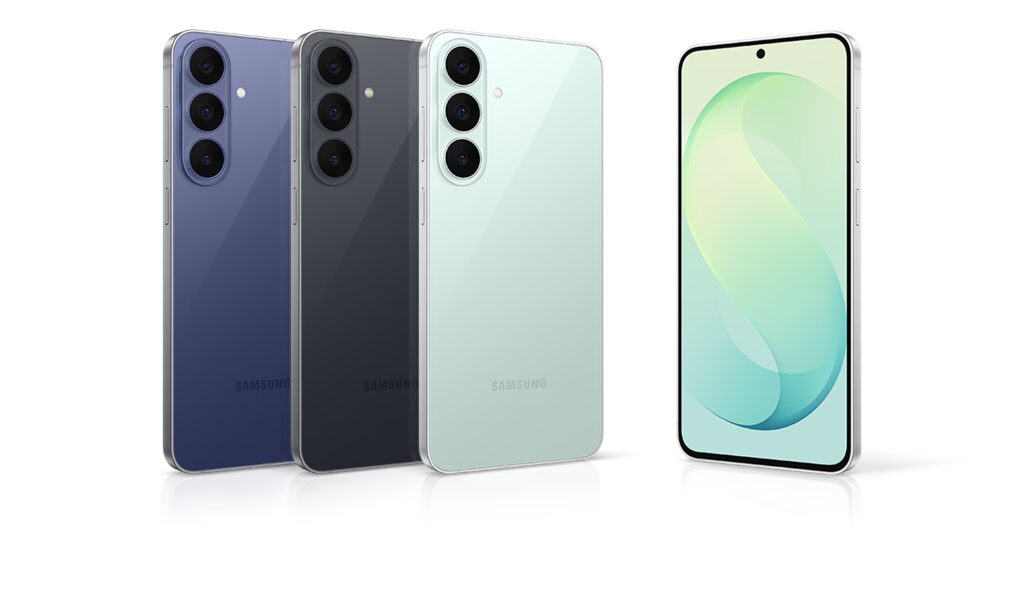
    KoloryIcyblue, Jetblack, Navy, WhiteGraphite, Pistachio, Blueberry

    Nine different positions out of twenty-five. Of these, five are cosmetics (dimensions, weight, colors, charging speed, version number of One UI), two are steps back, and the performance gain comes from the processor along with the graphics chip.

    What does Exynos 2500 provide in everyday use?

    Exynos 2500 is the only noticeable change in daily use. The chip is built on the second generation of the 3 nm GAA process, while Exynos 2400 from S25 FE used 4 nm.

    Performance gain according to Samsung:

    • About 30% faster processor (CPU) and graphics chip (GPU)
    • About 40% faster NPU, responsible for Galaxy AI functions
    • Newer main core: Cortex-X925 instead of Cortex-X4
    • Newer graphics chip: Xclipse 950 instead of Xclipse 940

    NPU is more important here than it looks on paper. It counts the Galaxy AI functions, such as summaries, real-time translations, and photo processing. If you actually use Galaxy AI, that’s the biggest difference in the entire comparison.

    Note: 30% on paper does not mean a 30% faster phone. Both models perform practically the same in everyday tasks, such as browsing, social media, and photos. The difference reveals itself in gaming and under prolonged load.

    The screen and cameras remain unchanged

    There’s nothing to write about here, and that’s the most important information.

    The screen parameters are identical: 6.7 inches, Dynamic AMOLED 2X, 1080 × 2340, refresh rate from 60 to 120 Hz, declared brightness of 1,900 nits, Gorilla Glass Victus+.

    The camera setup is identical, sensor by sensor:

    • Main 50 MP, f/1.8, with optical stabilization (OIS)
    • Ultrawide 12 MP, f/2.2, field of view 123°
    • Telephoto 8 MP, 3× optical zoom, with OIS
    • Selfie 12 MP, f/2.2

    Video recording is also unchanged: 8K at 30 fps and 4K at 120 fps in both models.

    Sensory są te same, ale zdjęcia przechodzą przez nowszy procesor sygnału obrazu (ISP), więc Samsung zapowiada nieznacznie lepszą rozpiętość tonalną po zmroku. To jedyne, co w aparatach faktycznie się zmienia.

    Nowe w S26 FE są wyłącznie funkcje programowe: My FanCam (automatyczne trzymanie wybranej osoby w kadrze, wcześniej dostępne tylko w modelach składanych) oraz Super Steady z blokadą poziomu. To software, który Samsung może w przyszłości udostępnić także starszemu modelowi.

    Bateria bez zmian i bez ogniwa silicon-carbon

    Oba telefony mają 4 900 mAh, tę samą moc ładowania przewodowego 45 W i bezprzewodowego 15 W.

    Krąży informacja, że Samsung S26 FE dostał baterię silicon-carbon. Nie jest potwierdzona. Samsung nie wymienia tej technologii w oficjalnej specyfikacji, a SamMobile wprost pisze o zwykłym ogniwie litowo-jonowym. Część baz danych, w tym GSMArena, oznacza jednak ogniwo jako Si/C.

    Rozstrzygnięcia od producenta nie ma. Pewne jest natomiast to, że silicon-carbon trafiło w lipcu 2026 wyłącznie do modeli składanych: Galaxy Z Flip 8, Z Fold 8 i Z Fold 8 Ultra.

    Real profit during operation comes not from the cell, but from a more efficient 3 nm processor. Samsung claims about an hour longer video playback, and the EU energy label states 50 hours of operation compared to 42.5 hours in the S25 FE and class A instead of B.

    The difference in charging is cosmetic: 69% in 30 minutes compared to 65% in the S25 FE. Four percentage points.

    Hidden downside: the battery will last fewer cycles

    This is not advertised by Samsung, and it directly results from the EU energy label. The cell in the S26 FE is certified for 1,200 charging cycles, while in the S25 FE it is 2,000. A cycle is a full charge from zero to one hundred percent; after exceeding this limit, the battery retains less than 80% of its original capacity.

    In practice, 1,200 cycles still mean several years of normal use. However, it is worth knowing that with seven years of system support, the battery will deplete its certified reserve much earlier than the updates.

    To achieve the full 45 W, both models require the same USB Power Delivery charger (USB PD) with a power of at least 45 W. When purchasing accessories, you do not need to distinguish between generations.

    USB port is the first step backward

    The Galaxy S26 FE has a USB-C port in 2.0 standard, while the S25 FE had USB 3.2 Gen 1. This is the second point, alongside battery life, where the newer model performs worse than its predecessor.

    Loading works just as fast, because power does not depend on the data standard version. Only file transfer is slower.

    The scale of this difference is impressive only with specifics. A minute of 8K video weighs several hundred megabytes, so an hour of material is several dozen gigabytes. With USB 3.2 Gen 1, you can transfer it in a few minutes, while with USB 2.0, the phone will stay connected to the computer for much longer.

    If you use the cloud or transfer photos wirelessly, you won’t notice the difference.

    System and updates, or the difference of one year

    Galaxy S26 FE starts with One UI 9 on Android 17, while S25 FE debuted with One UI 8 on Android 16.

    Both generations have the same support policy: seven generations of Android and seven years of security patches. However, since S26 FE starts a year later, its support ends a year later.

    This is a real advantage of the newer model, although in practice it means choosing between a phone supported until 2032 and one supported until 2033. S25 FE will still receive One UI 9 in an update.

    Here lies the real difference between the models

    The starting prices of both models in Europe:

    VersionGalaxy S25 FE at launchGalaxy S26 FE at launch
    8 GB / 128 GB750 EUR799 EUR
    8 GB / 256 GB810 EUR899 EUR
    8 GB / 512 GB930 EUR1 099 EUR

    Samsung S26 FE is more expensive at every memory level. The increase grows with capacity: 49 EUR for the base version, 89 EUR for 256 GB, and as much as 169 EUR for 512 GB.

    However, something else is key. The Galaxy S25 FE has been on the market for a year and has clearly dropped in price. The actual level of reduction depends on the store and promotions, but you can buy the older model today noticeably cheaper than on the day of its release, while the S26 FE is just starting with a full price list.

    Combine this with the specification table: you get the same screen, the same camera setup, the same battery, and a faster USB port, paying significantly less. For most people, the Galaxy S25 FE is a more sensible purchase today.

    Galaxy S26 FE vs S25 FE: which one to choose?

    Choose Galaxy S26 FE if:

    • You regularly use Galaxy AI features, as the NPU has gained the most here.
    • You game and want power reserves for a few years ahead.
    • You care about the longest possible support, until 2033.
    • You buy a phone for six or seven years and the price difference is spread over that period.

    Choose Galaxy S25 FE if:

    • You are looking at the price-to-performance ratio. The screen, cameras, and battery are identical, and you pay significantly less.
    • You transfer large files via cable, as only this model has a fast USB 3.2 Gen 1 port.
    • You do not use AI features intensively enough to feel the faster NPU.

    Our choice: with today’s price difference, the Galaxy S25 FE wins for most buyers. The Galaxy S26 FE makes sense if you plan to keep the phone until the end of the support period or heavily use Galaxy AI.

    If you are considering stronger models from this family, we have compared them in the comparison Galaxy S26 Ultra and S25 Ultra.

    Accessories: does the case from Galaxy S25 FE fit S26 FE?

    It does not fit and it’s not worth trying. This is the first question that arises when changing generations, and here the answer is clear.

    The difference in dimensions is 0.3 mm in height and 0.3 mm in width, and according to Android Authority, Samsung has slightly redesigned the camera island. The thickness is identical (7.4 mm), so soft cases from the previous model can often be stretched, but:

    • The camera cutouts do not align in the same place. With the changed island, part of the lens may be covered.
    • The buttons do not align with the cutouts, making clicking uncomfortable.
    • Rigid cases crack at the corner when trying to stretch them.

    It’s the same with tempered glasses. The diagonal and resolution have not changed, but the 0.3 mm wider front means that the glass for the S25 FE will not cover the screen evenly, and the glue will partially hit the edge.

    Note: manufacturers released dedicated versions for the S26 FE even before the phone went on sale, so there’s no reason to compromise. Choose accessories described exactly for the model you have.

    Magnets: a common problem for both generations

    Neither the Galaxy S25 FE nor the S26 FE have built-in magnets. Both charge wirelessly in the Qi2 standard at 15 W, but neither will attract itself to the charger or holder.

    W obu przypadkach rozwiązanie jest to samo: etui z pierścieniem magnetycznym. Zakładasz je i telefon zaczyna trzymać się ładowarek Qi2, powerbanków magnetycznych, uchwytów samochodowych i portfeli na karty. Ten sam mechanizm opisaliśmy przy iPhone’ie 16e bez MagSafe.

    Akcesoria magnetyczne pasujące do obu modeli znajdziesz w kategoriach ładowarki indukcyjne oraz akcesoria MagSafe.

    Akcesoria do Galaxy S26 FE

    Etui i szkła do nowego modelu trafiły do magazynu, zanim telefon w ogóle pojawił się w sklepach.

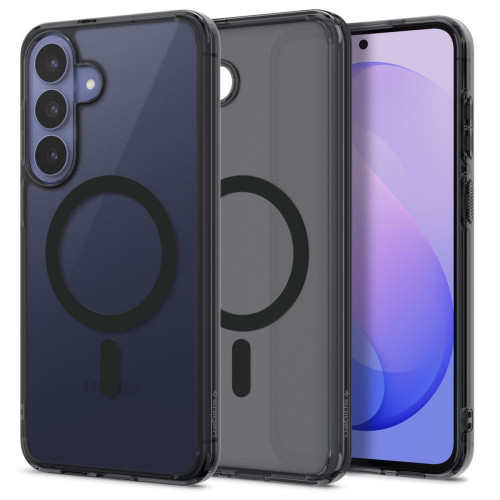
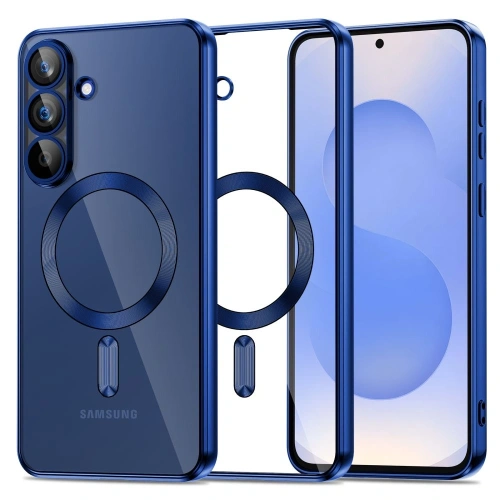
    Spigen Ultra Hybrid Mag MagSafe

    Do czego pasuje: Spigen Ultra Hybrid Mag, jeśli zależy Ci na magnesach.

    Etui łączy sztywne plecy z poliwęglanu (PC) z elastyczną ramką z TPU (termoplastyczny poliuretan), a do tego dokłada pierścień magnetyczny, którego brakuje w samym telefonie. Wersja Frost Black ma matowe, przydymione plecy, na których odciski palców są dużo mniej widoczne niż na wariancie błyszczącym.

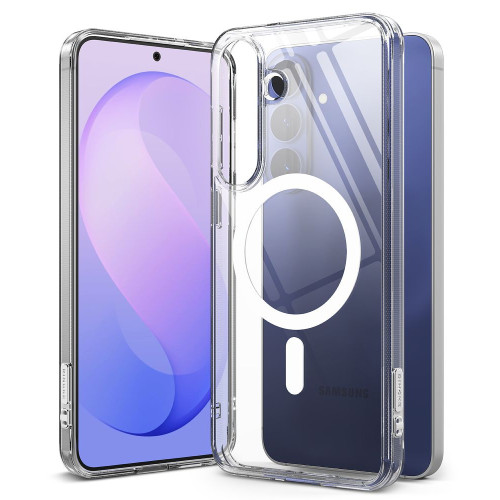
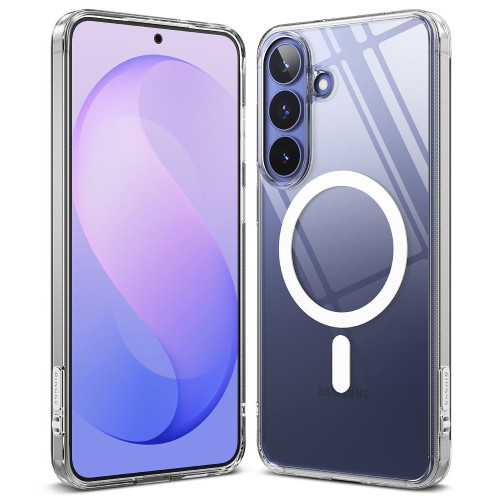
    Ringke Fusion Magnetic MagSafe

    Przezroczyste etui ma magnesy i podwyższoną krawędź wokół wyspy aparatu. Dobry wybór, jeśli kupujesz kolor Pistachio albo Blueberry i chcesz go widzieć.

    Tech-Protect Glass Fit+

    Gorilla Glass Victus+ protects the screen from scratches, but not from breaking upon falling. Replacing the display at a service center costs hundreds of zlotys, while tempered glass is a fraction of that amount. Glass Fit+ comes in a set of two pieces with an installation frame.

    [hs_products category=»2578″ limit=»6″ sort=»sales» title=»Accessories for Galaxy S26 FE»]

    Accessories for Galaxy S25 FE

    Samsung S25 FE has been on the market for a year, so the selection is much wider: the case category alone has over a hundred items. We have gathered the full ranking in a separate article about the best cases for Galaxy S25 FE.

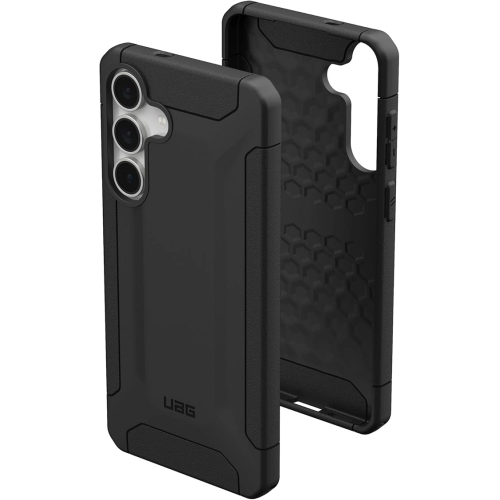
    UAG Scout MagSafe

    Konstrukcja pancerna z magnesami i certyfikatem MIL-STD-810G. UAG robi etui grubsze niż Spigen, ale to właśnie ta grubość chroni przy upadku na krawędź.

    Tech-Protect Magflex MagSafe

    This is a thinner alternative to armored constructions, also with a magnetic ring. It will work well if you don’t want the case to add bulk to the phone.

    Spigen Glas.tR EZ Fit Pro

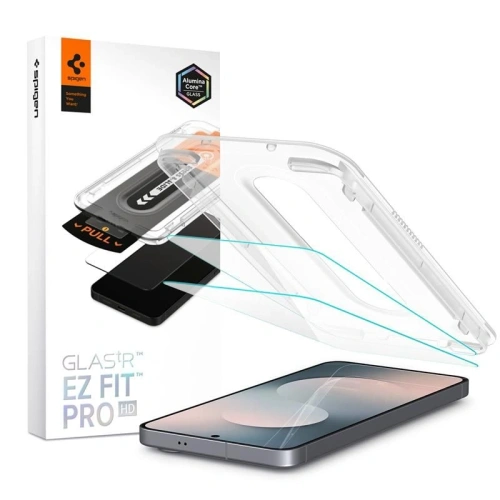
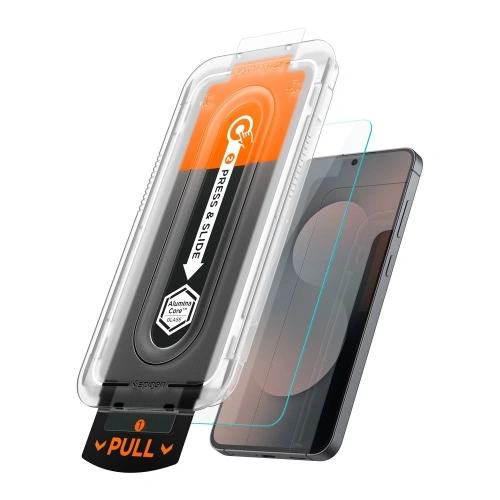
    The EZ Fit system is one of the best-designed: the frame positions the glass itself, so even adhesion usually succeeds on the first try. The set includes two pieces.

    [hs_products category=»1954″ limit=»6″ sort=»sales» title=»Cases for Galaxy S25 FE»]

    Summary

    Galaxy S26 FE is a remarkably cautious update. Samsung has transferred almost all the hardware from its predecessor. The processor, system, and USB port have changed. The screen, all cameras, and battery have been carried over unchanged.

    Three things worth remembering:

    1. The real gain comes only from the processor. Exynos 2500 is about 30% faster in CPU and GPU and 40% in NPU, which is mainly noticeable in games and Galaxy AI features.
    2. There are two steps back, not one. The USB port has reverted to version 2.0, and the certified battery lifespan has dropped from 2,000 to 1,200 charge cycles.
    3. The price tips the scales in favor of S25 FE. With the same screen, cameras, and battery, the older model is now noticeably cheaper.

    Regardless of the choice, both phones are worth complementing with the same: a case with a magnetic ring, as neither has built-in magnets, and tempered glass, as Gorilla Glass Victus+ protects against scratches, not drops.

    Sources: official announcement of Galaxy S26 FE in Samsung Global Newsroom, comparison of S26 FE and S25 FE on SamMobile, explanation of the silicon-carbon battery issue on SamMobile, specification sheet for Galaxy S26 FE on GSMArena, price comparison of both generations on GSMArena, new camera features and One UI 9 according to Android Authority, EU energy label for Galaxy S26 FE on GSMArena, analysis of the decrease in charging cycles on Android Authority

    FAQ: Galaxy S26 FE and S25 FE

    Is it worth paying extra for Galaxy S26 FE?

    Usually not. The screen, all three cameras, and the battery are identical to the S25 FE, and the newer model has a slower USB port. The extra cost makes sense if you use Galaxy AI intensively or want the longest support, which is until 2033.

    When is the Galaxy S26 FE premiere and when does sales start?

    The premiere took place on August 27, 2026, when Samsung showcased the phone and provided the full specification. Sales start on September 4, 2026.

    What distinguishes the Galaxy S26 FE from the S25 FE?

    Three things: the processor (Exynos 2500 in 3 nm instead of Exynos 2400 in 4 nm), the operating system at launch (One UI 9 on Android 17 instead of One UI 8), and the USB port, which has reverted from 3.2 Gen 1 to 2.0. The screen, cameras, selfie, and 4,900 mAh battery are identical.

    Does the Galaxy S26 FE have a silicon-carbon battery?

    There is no confirmation from the manufacturer. Samsung does not mention silicon-carbon in the official specification, and SamMobile writes about a regular lithium-ion cell of 4,900 mAh, although some databases label it as Si/C. It is certain that in July 2026, this technology was received exclusively by foldable models: Z Flip 8, Z Fold 8, and Z Fold 8 Ultra.

    Does the case from the Galaxy S25 FE fit the S26 FE?

    No. The new model is 0.3 mm taller and wider, and the camera island has been slightly redesigned. The cutouts for the camera and buttons do not align in the same place, so you need a case dedicated to the specific model.

    Does the Galaxy S26 FE have magnets for MagSafe?

    No, just like the S25 FE. Both phones charge wirelessly using the Qi2 standard at 15 W, but they do not have a built-in ring of magnets. The magnets are added by the case, such as the Spigen Ultra Hybrid Mag or UAG Scout MagSafe.

    Which phone has a longer battery life?

    The Galaxy S26 FE, but the difference is small. The capacity is identical (4,900 mAh), and the gain comes from the more efficient 3 nm processor. Samsung claims about an hour longer video playback.

  • Poco F6 Pro vs Poco X7 Pro – Which smartphone to choose in 2025?

    Poco F6 Pro vs Poco X7 Pro – Which smartphone to choose in 2025?

    What are the performance differences between the POCO F6 Pro and the POCO X7 Pro? 

    What processors power these phones? 

    POCO F6 Pro is equipped with a Qualcomm Snapdragon 8 Gen 2 SM8550-AB processor, one of the most powerful chips of 2024. This processor, built on a 4 nm technology, offers a maximum clock frequency of 3200 MHz and an advanced Adreno graphics unit, which handles the most demanding games and applications excellently.

    On the other hand, POCO X7 Pro uses a MediaTek Dimensity 8400 Ultra processor, also created in a 4 nm process, but offering a slightly higher clock frequency of 3250 MHz. The Dimensity 8400 Ultra stands out with its All-Big-Core architecture, which increases the performance of artificial intelligence (AI) tasks by up to 50%. Supported by the ARM Mali-G720 MC7 graphics unit, this processor handles modern applications, games, and high-resolution video recordings perfectly.

    How is performance in games? 

    Both models, POCO F6 Pro and POCO X7 Pro, perform excellently in games, but they differ in detailed performance.

    POCO F6 Pro with the Snapdragon 8 Gen 2 processor and Adreno graphics chip ensures high fluidity in the most demanding titles. The processor supports technologies such as Ray Tracing and Variable Rate Shading, allowing for more realistic visual effects and efficient management of graphic resources. Games run stably even at the highest settings, making the F6 Pro an excellent choice for mobile gamers.

    POCO X7 Pro with the MediaTek Dimensity 8400 Ultra processor and ARM Mali-G720 MC7 graphics chip raises the bar in terms of gameplay optimization. Thanks to the use of HyperEngine 6.0 technology, the device offers:

    • Smooth operation in games with dynamic resource allocation.
    • Higher frame rates in demanding titles such as PUBG Mobile or Genshin Impact.
    • Faster screen response time and better temperature management thanks to the LiquidCool 4.0 cooling system.

    In practice, POCO X7 Pro performs better in maintaining stable frames per second during prolonged gameplay, minimizing the phenomenon of throttling (performance drop). This makes it more suited for long gaming sessions.

    In summary, although both models offer excellent performance, POCO X7 Pro stands out due to better resource optimization and advanced cooling, making it an ideal choice for demanding gamers.

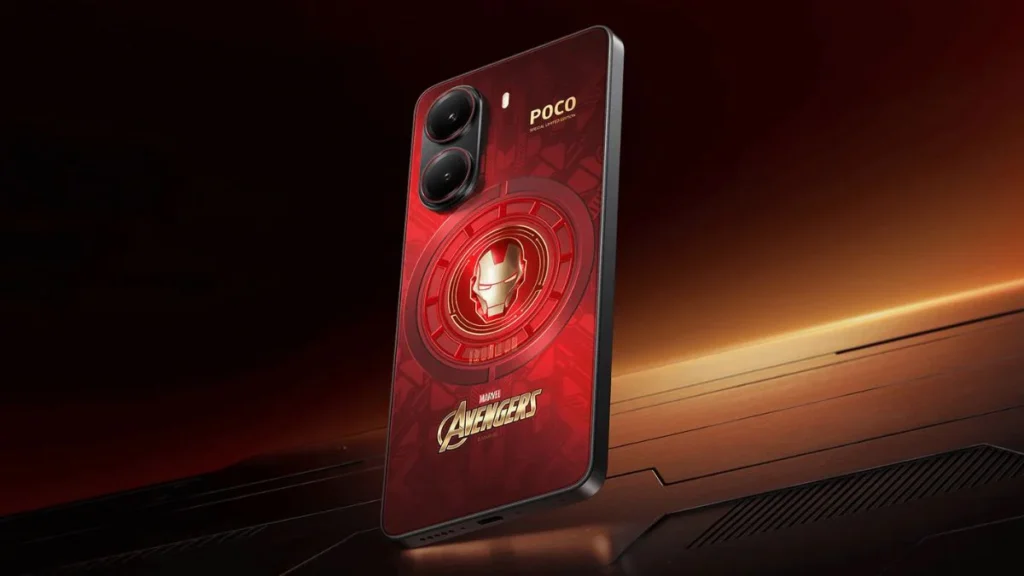
    It is worth adding that with the launch of POCO X7 Pro, Xiaomi surprised superhero fans by introducing a limited Iron Man edition. This special edition aimed at Marvel fans combines advanced technology with a unique design inspired by one of the most iconic comic book heroes.

    What are the differences in RAM and internal storage? 

    POCO F6 Pro and POCO X7 Pro differ in both RAM configurations and internal storage options, which may influence the choice of device depending on the individual needs of the user.

    POCO F6 Pro offers more advanced memory options:

    • RAM: Available configurations are 12 GB or even 16 GB, making this model better suited for users requiring greater multitasking capabilities, such as video editing or working with advanced applications.
    • Internal storage: F6 Pro is available in three variants: 256 GB, 512 GB and an impressive 1 TB, making it more flexible for storing large amounts of data, such as games, multimedia, or work files.

    POCO X7 Pro features a smaller, but still sufficient amount of memory:

    • RAM: Available configurations are 8 GB or 12 GB, which still provides excellent performance, but does not offer as much multitasking capability as the F6 Pro.
    • Internal storage: X7 Pro comes in two variants: 256 GB and 512 GB, which may be sufficient for most users who do not need extremely large data storage space.

    What does this mean in practice?

    • POCO F6 Pro is a better choice for those who need a large amount of memory, e.g., for storing large media libraries, working with heavy applications, or long-term use without the need to regularly delete data.
    • POCO X7 Pro on the other hand offers more optimized configurations that work great for everyday use, gaming, and using applications, but may be limiting for the most demanding users.

    In summary, if the priority is a larger amount of RAM and internal storage, POCO F6 Pro will be the better choice. Meanwhile, POCO X7 Pro is a sensible option for users who value a balance between performance and affordability.

    What camera features do POCO F6 Pro and POCO X7 Pro have?

    What are the camera specifications in both models? 

    Both models, POCO F6 Pro and POCO X7 Pro, are equipped with advanced photographic systems, but differ in details that may matter depending on the user’s needs.

    Main cameras

    • POCO F6 Pro:
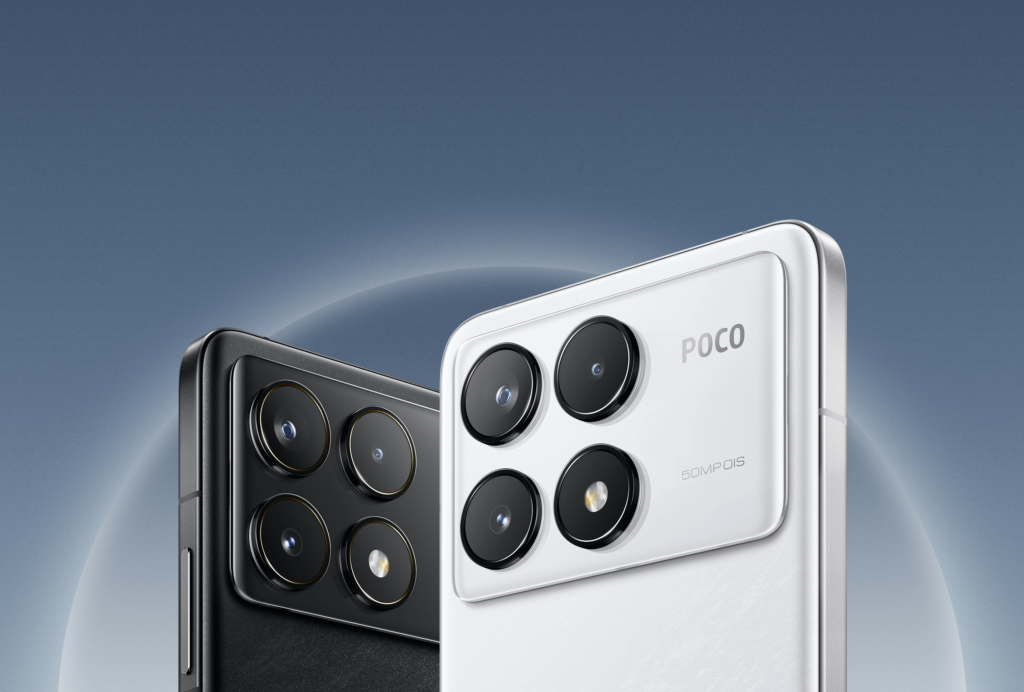
      • Sensor: 50 MP OmniVision Light Fusion 800.
      • Przysłona: f/1.6 – szeroka, pozwalająca na dobre zdjęcia w słabym oświetleniu.
      • Stabilizacja obrazu: Wyłącznie OIS (optyczna stabilizacja obrazu), co pomaga w redukcji drgań przy zdjęciach i nagraniach.
      • Rozdzielczość wideo: Obsługuje nagrywanie w imponującej jakości 8K przy 24 fps.
    • POCO X7 Pro:
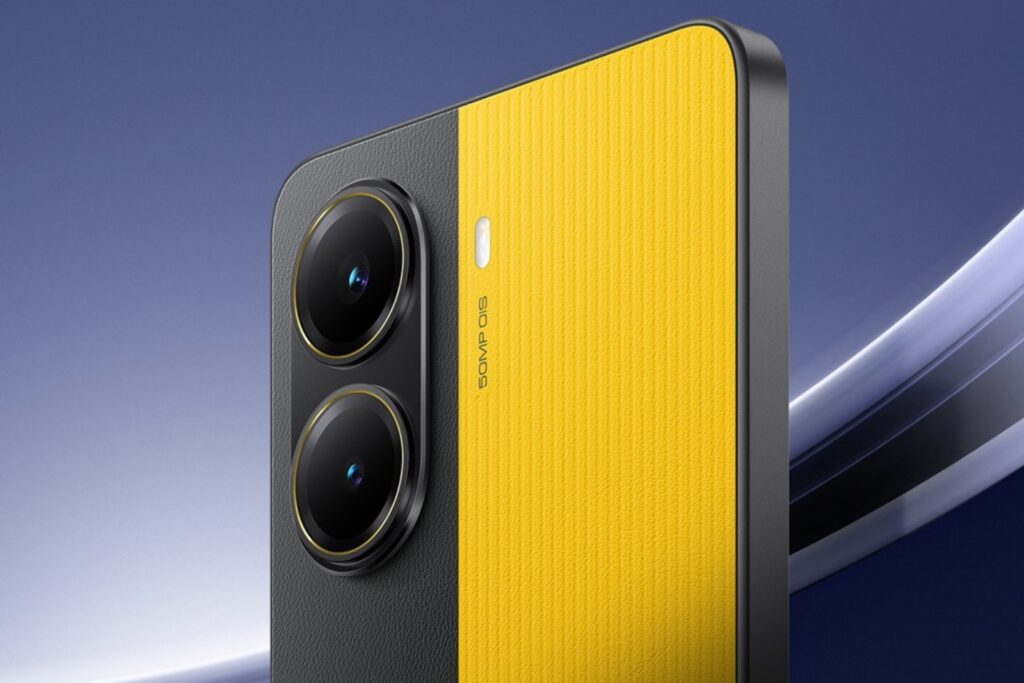
      • Sensor: 50 MP Sony IMX882 – bardziej zaawansowana matryca, oferująca lepsze odwzorowanie szczegółów i kolory.
      • Przysłona: f/1.5 – większa niż w F6 Pro, co dodatkowo poprawia wydajność w słabym świetle.
      • Stabilizacja obrazu: Zarówno OIS, jak i EIS (elektroniczna stabilizacja obrazu), co daje jeszcze większą płynność wideo.
      • Rozdzielczość wideo: Maksymalna rozdzielczość 4K przy 60 fps, ale z lepszą stabilizacją w porównaniu do F6 Pro.

    Aparaty dodatkowe

    • Szerokokątny aparat:
      • Oba modele posiadają 8 MP matrycę z przysłoną f/2.2, jednak w F6 Pro kąt widzenia wynosi 119°, a w X7 Pro dane o kącie nie są dostępne, choć jakość jest porównywalna.
    • Makro (dostępne tylko w F6 Pro):
      • 2 MP z przysłoną f/2.4 – umożliwia zbliżenia na małe obiekty, ale jest raczej funkcją dodatkową.

    Aparaty przednie

    • POCO F6 Pro: 16 MP sensor OmniVision OV16A10, aperture f/2.2, allowing for recording in Full HD quality (1920 x 1080 px).
    • POCO X7 Pro: 20 MP sensor OmniVision OV20B, aperture f/2.2 – better detail reproduction in selfies and more advanced AI features.

    Summary of camera specifications

    • POCO X7 Pro offers a more advanced main camera with a Sony sensor, larger aperture, and EIS addition, making it more versatile for video recording and photography in challenging lighting conditions.
    • POCO F6 Pro, although it has an equally good main camera, stands out with 8K video support and additional features like a macro camera, which may be attractive to creative photography enthusiasts.

    The final choice depends on whether the user values stabilization and versatility more (X7 Pro) or prefers higher video resolution and additional macro features (F6 Pro).

    What additional features do the cameras offer? 

    POCO F6 Pro and POCO X7 Pro stand out with various additional camera features that allow for more creative photos and videos. Below is a detailed discussion of their capabilities.

    Additional features in POCO F6 Pro

    • 8K video mode: Allows recording in ultra-high resolution, making even the most detailed shots look professional.
    • Macro photography: With a dedicated 2 MP macro camera, users can capture fine details up close, ideal for nature, jewelry, or texture shots.
    • Night mode: An advanced night mode combined with the OmniVision sensor allows for clear photos in low light, though without AI support.
    • HDR and panoramas: The camera offers HDR support, improving the tonal range of photos, as well as a panorama mode for wide landscape shots.

    Additional features in POCO X7 Pro

    • OIS and EIS stabilization: The combination of optical and electronic image stabilization ensures that 4K quality videos are incredibly smooth, even during dynamic movements.
    • Zaawansowany tryb nocny z AI: The Sony IMX882 camera in the X7 Pro uses artificial intelligence to automatically enhance details and brightness of photos taken in low light.
    • Dynamic Shots: A feature that allows you to take photos in motion without blurring, which is ideal for sports photography and dynamic scenes.
    • UltraSnap: Makes it easier to quickly capture the perfect shots by automatically adjusting photo parameters to lighting conditions.
    • Wideo w 4K przy 60 fps: Recording in high quality and smoothness, making this model ideal for vlogs and professional recordings.

    Comparison of additional features

    • POCO F6 Pro stands out with 8K video support and a dedicated macro camera, making it a better choice for those who value a variety of photography modes.
    • POCO X7 Pro focuses on smooth video recording thanks to EIS and OIS and advanced AI support in night mode and dynamic shots, making it a more versatile tool for photography and film enthusiasts.

    How does the battery in POCO F6 Pro compare to POCO X7 Pro? 

    What are the battery capacities in both phones? 

    Batteri er en nøkkelkomponent i enhver smarttelefon, som påvirker bruksvarighet og komfort i det daglige arbeidet. POCO F6 Pro og POCO X7 Pro skiller seg i batterikapasitet og ladeteknologi, noe som kan ha betydning for brukere med ulike behov.

    Batteri i POCO F6 Pro

    POCO F6 Pro er utstyrt med et batteri med kapasitet på 5000 mAh, noe som er standard blant smarttelefoner i sin klasse.

    • Brukstid: Gir opptil 10-12 timers intensiv bruk ved daglige aktiviteter som surfing på nettet, spilling eller videovisning.
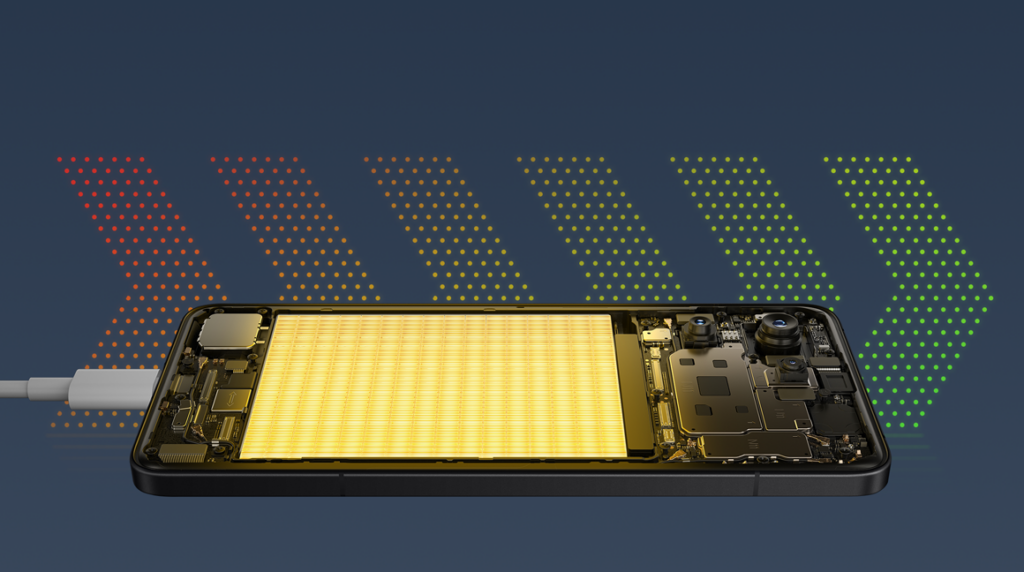
    • Ladeteknologi: Støtter hurtiglading med USB Power Delivery 3.0 med en effekt på 120 W, noe som gjør det mulig å lade telefonen fra 0 til 100% på bare omtrent 25-30 minutter.

    Batteri i POCO X7 Pro

    POCO X7 Pro tilbyr et større batteri med kapasitet på 6000 mAh, noe som gjør den mer holdbar når det gjelder driftstid på en enkelt lading.

    • Working time: Thanks to the larger capacity, the battery provides up to 14-16 hours of intensive use, which is particularly beneficial for those using the phone during travel or long workdays.
    • Charging technology: Supports fast charging of 90 W, allowing the phone to charge from 0 to 100% in about 42 minutes.

    Practical comparison

    • POCO F6 Pro is an excellent choice for users who value fast charging, which allows for quick energy replenishment in the phone. However, the smaller battery capacity may require more frequent charging with intensive use.
    • POCO X7 Pro stands out with a larger battery capacity, making it more reliable in the long run. Although charging is slightly slower than in the F6 Pro, this difference is balanced by the longer operating time of the phone on a single charge.

    If fast charging is a priority, POCO F6 Pro will be the better choice. On the other hand, POCO X7 Pro is better suited for those needing a larger battery that ensures longer device operation without the need for frequent charging.

    What are the differences in design and display between POCO F6 Pro and POCO X7 Pro?

    What display technologies are used? 

    POCO F6 Pro and POCO X7 Pro offer modern AMOLED display technologies, but differ in details such as resolution, brightness, and durability. These differences affect user comfort and image quality in everyday use.


    Display technology in POCO F6 Pro

    POCO F6 Pro is equipped with a high-resolution AMOLED display 1440 x 3200 px, which provides an impressive pixel density of 526 ppi.

    • Screen features:
      • The display supports 120 Hz, ensuring smooth animations and scrolling.
      • The display technology of 68.7 billion colors offers excellent color reproduction, ideal for watching movies or browsing photos.
      • No additional screen protection, which may make it more susceptible to mechanical damage.

    Display technology in POCO X7 Pro

    POCO X7 Pro features an AMOLED display with a resolution of 1220 x 2712 px and a pixel density of 446 ppi. Although the resolution is lower than in F6 Pro, this display is more optimized for energy saving.

    • Screen features:
      • Supports a refresh rate of 120 Hz, providing equally smooth performance as in F6 Pro.
      • The display supports 67.7 billion colors, which still offers high image quality, though slightly less detailed than in F6 Pro.
      • The screen is protected by Corning Gorilla Glass 7i, providing better resistance to scratches and damage compared to F6 Pro.

    Brightness and visibility

    • POCO F6 Pro: The display reaches a maximum brightness of around 1200 nits, making the screen well visible in most lighting conditions.
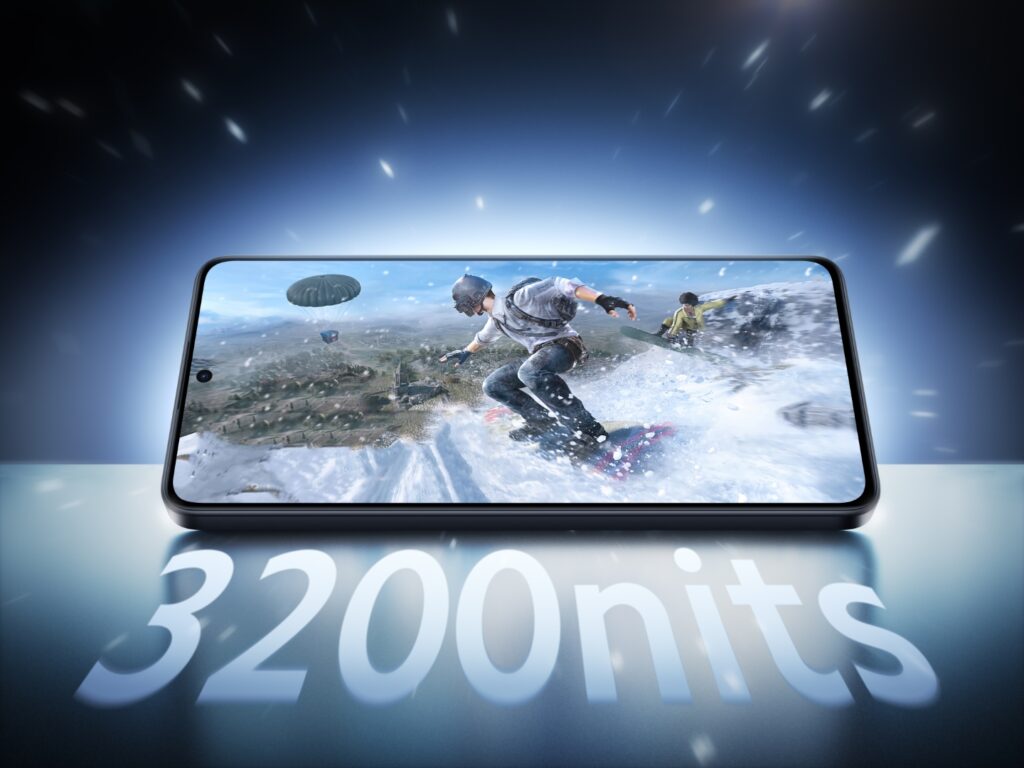
    • POCO X7 Pro: The display achieves an impressive maximum brightness of 3200 nits, making it excellent in direct sunlight and stands out compared to the F6 Pro.

    Design and screen proportions

    • POCO F6 Pro: The screen-to-body ratio is about 89%, providing a larger display area, but with slightly thicker bezels.
    • POCO X7 Pro: With a screen ratio of 88%, the device has marginally larger bezels, but the difference is hard to notice in everyday use.

    Summary of display technologies

    • POCO F6 Pro offers a higher resolution and greater pixel density, resulting in a more detailed image. However, the lack of screen protection may be a drawback for users exposing the device to intensive use.
    • POCO X7 Pro, despite its lower resolution, stands out with better brightness, a more durable display construction with Gorilla Glass 7i, and better energy-saving technology integration.

    The final choice depends on the user’s priorities – if you care about detailed images, choose POCO F6 Pro. However, if you value durability and excellent visibility in any conditions, a better choice would be POCO X7 Pro.

    What software and additional features do POCO F6 Pro and POCO X7 Pro have? 

    What versions of the operating system are installed? 

    POCO F6 Pro and POCO X7 Pro use the latest versions of the Android system, but differ in terms of interface, additional features, and software versions. These differences affect the user experience and customization options.


    Operating system in POCO F6 Pro

    • Operating system: Android 15 (thank you for your attention Mr. Remigiusz 😉 )
    • User Interface: HyperOS 1.0 – a lightweight and intuitive Xiaomi overlay that offers:
      • Optimization of application performance, which increases the smoothness of daily usage.
      • Extensive customization options, such as changing themes, icon layouts, or widgets.
      • Standard battery and memory management features.
    • AI Support: In HyperOS 1.0, artificial intelligence features are available but limited compared to newer versions.

    Operating System in POCO X7 Pro

    • Operating System: Android 15
    • User Interface: HyperOS 2.0 – a newer version of the Xiaomi overlay that introduces many improvements:
      • Even better system optimization, resulting in smoother operation even with a large number of open applications.
      • Advanced AI features, such as:
        • AI Erase Pro – removing objects from photos with one click.
        • AI Film – easy creation of professional videos using built-in templates.
        • AI Interpreter – real-time translation, perfect for travel.
      • New personalization options, such as dynamic wallpapers or advanced interactive widgets.
    • Xiaomi ecosystem support: HyperOS 2.0 integrates better with Xiaomi devices, such as smart home hardware, allowing seamless management from the phone.

    Additional features and software

    Additional features in POCO F6 Pro

    • Basic AI tools: Assistance in photo optimization and app management.
    • Game mode: Allows disabling notifications and increasing processor performance while gaming.
    • 5G connectivity support: Provides fast internet connection, especially in areas with developed 5G infrastructure.

    Additional features in POCO X7 Pro

    • Rozbudowane narzędzia AI:
      • Funkcja UltraSnap pozwala automatycznie dostosowywać parametry zdjęć do warunków oświetleniowych.
      • Dynamic Shots umożliwia wykonywanie zdjęć w ruchu bez rozmycia obrazu.
    • Chłodzenie LiquidCool 4.0: Zapewnia lepsze zarządzanie temperaturą podczas intensywnego użytkowania, co jest szczególnie przydatne w grach.
    • Obsługa Wi-Fi 7 i Bluetooth 5.4: Nowsze standardy łączności zapewniają szybsze połączenia i większą stabilność.

    Podsumowanie oprogramowania i funkcji dodatkowych

    • POCO F6 Pro to solidne urządzenie z lekkim i intuicyjnym interfejsem HyperOS 1.0, który zapewnia podstawowe funkcje AI oraz sprawne działanie systemu. Sprawdzi się idealnie w codziennym użytkowaniu.
    • POCO X7 Pro wyróżnia się bardziej zaawansowanymi funkcjami HyperOS 2.0, które integrują sztuczną inteligencję i nowoczesne technologie, takie jak AI Erase Pro czy obsługa Wi-Fi 7. Dzięki tym rozwiązaniom jest lepszym wyborem dla użytkowników poszukujących najnowszych technologii i płynnego działania w ekosystemie Xiaomi.

    Your choice should depend on whether the priority is basic features and stability (F6 Pro) or advanced AI capabilities and modern technologies (X7 Pro).

    Best accessories for POCO F6 Pro and POCO X7 Pro

    To fully secure and optimize the use of your smartphones, it is worth choosing the right accessories for POCO F6 Pro, as well as POCO X7 Pro. Whether you are looking for protection, convenience, or additional functionality, you will find something for yourself.

    Explore the full range of accessories to further enhance and personalize your device! 😊

  • iPhone 14 kontra iPhone 14 Plus.


    With the beginning of autumn, specifically on September 7, the latest smartphones released by Apple had their premiere. During the event, two basic models were presented: iPhone 14 and iPhone 14 Plus, as well as two advanced models in the Pro version: iPhone 14 Pro and iPhone 14 Pro Max.

    Today we will focus on comparing the two basic models.
    The first significant difference between the iPhone 14 and iPhone 14 Plus visible to the naked eye is:

    • display size

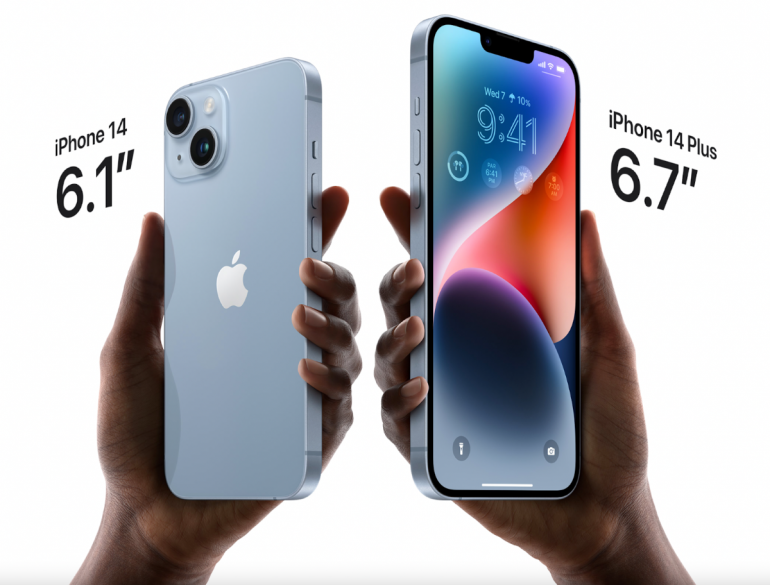
    The iPhone 14 Plus is the larger counterpart of the basic model, with a display diagonal of 6.1 inches. The Plus version features a Super Retina XDR OLED display with a diagonal of 6.7 inches. The iPhone 14 Plus is larger in dimensions.


    iPhone 14 Plus iPhone 14

    Dimensions (height x width x thickness): 160.8 × 78.1 × 7.80 mm Dimensions (height x width x thickness): 146.7 × 71.5 × 7.80 mm

    If you like phones with a large display, this model may be a better choice.

    Remember to ensure that the display of the latest smartphones is properly protected. In our store, you will find protective films, hybrid glasses, and tempered glasses that will perfectly secure your phone’s display. Below you will find links to both models.

    Glasses and films for iPhone 14
    https://homescreen.pl/szklo-folia-etui-apple-iphone-14/?page=2
    Glasses and films for iPhone 14 Plus
    https://homescreen.pl/szklo-folia-etui-apple-iphone-14-plus/

    The difference between the models is also:

    • battery


    The battery in the iPhone 14 Plus is larger (4325 mAh). It is worth noting that the Plus version has the largest capacity among the latest iPhones. This allows for video playback for up to 26 hours and audio for up to 100 hours.

    In the regular 14, it is 3279 mAh, in the iPhone 14 Pro the cell is 3200 mAh, and the iPhone 14 Pro Max is equipped with a slightly smaller battery of 4322 mAh.
    The remaining parameters have been almost identically preserved. The phones have the same appearance and are made of the same materials. The iPhone screens are covered with a protective Ceramic Shield layer, and the construction is made of glass (front and back) and aluminum (edges).
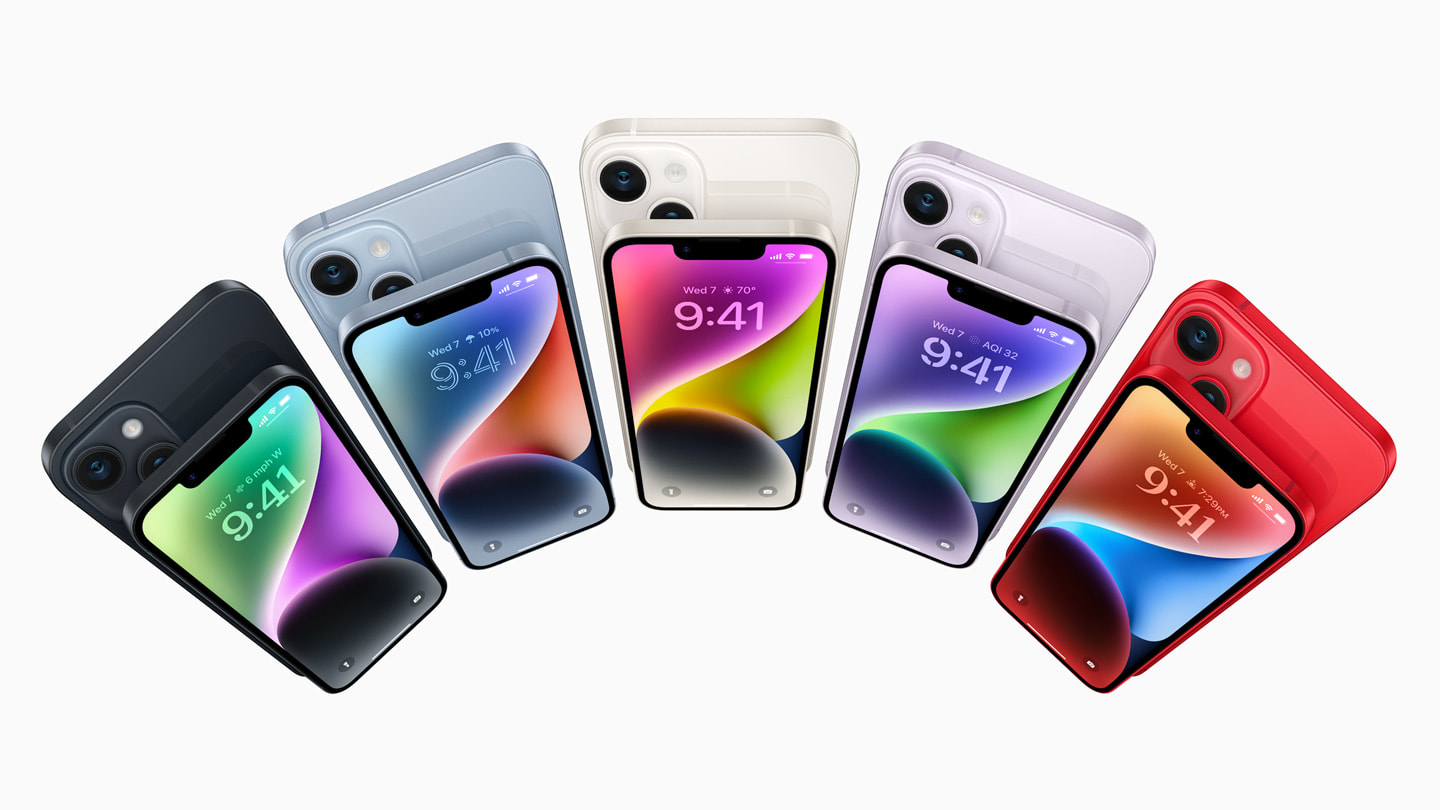
    Both models are available in identical 5 color variants:

    • midnight
    • starlight
    • purple
    • blue
    • Product Red


    These are very attractive colors, but let’s not forget that the key to maintaining the impeccable appearance of our smartphone is to ensure it has solid protection. Check out the wide range of cases available in our store. You will find transparent covers that allow you to keep the original look of your phone, slim and subtle, but also rugged, suitable for the most extreme conditions. Below are the links
    Cases for iPhone 14
    https://homescreen.pl/szklo-folia-etui-apple-iphone-14/?page=3
    Cases for iPhone 14 Plus
    https://homescreen.pl/szklo-folia-etui-apple-iphone-14-plus/

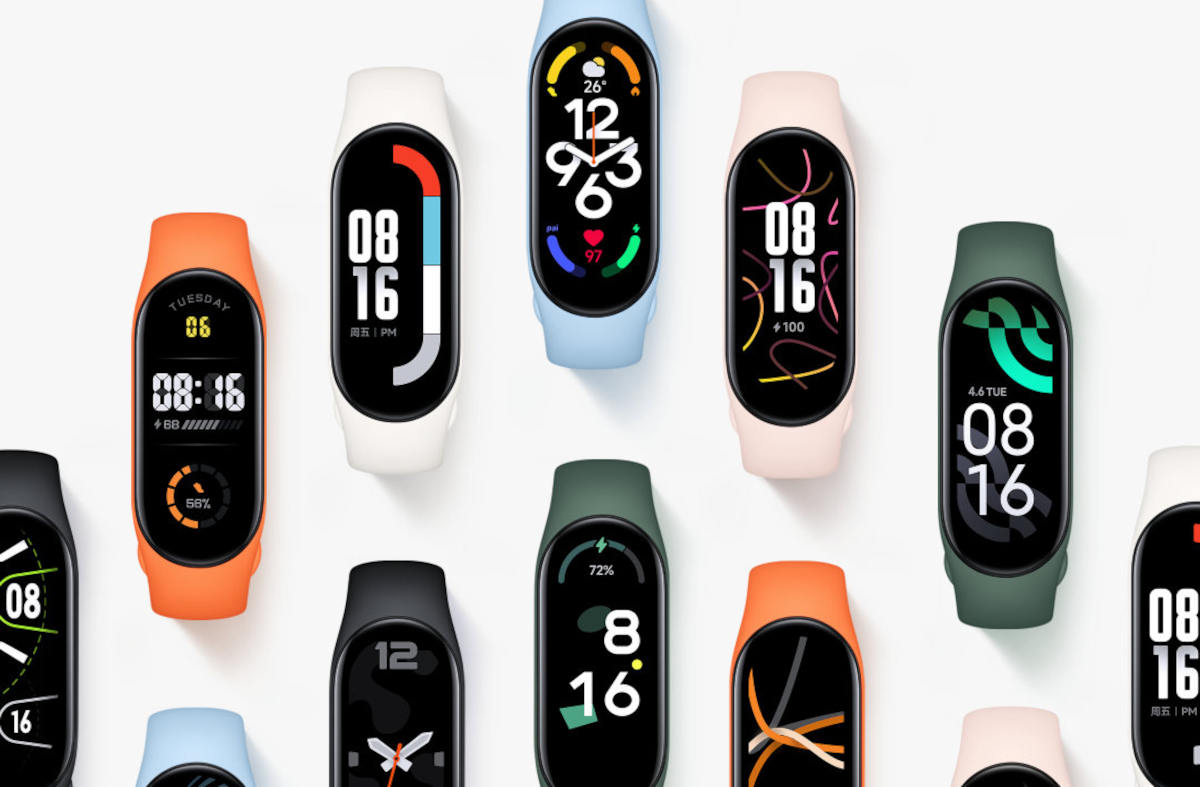
  • Mi Band 7 kontra Mi Band 6

    Sport bands from Xiaomi have been very popular for a long time. It can be confidently said that this is quality equipment, while also at a very affordable price.


    What do we know about the latest Xiaomi Mi Band 7?

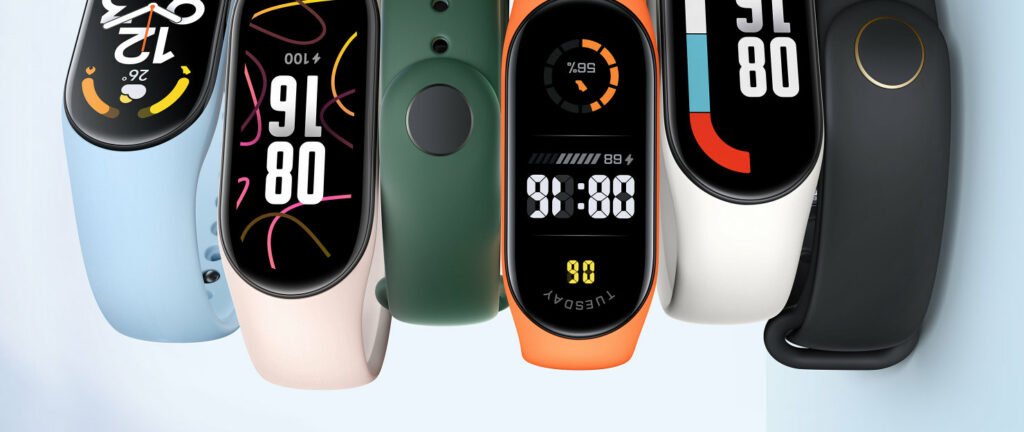
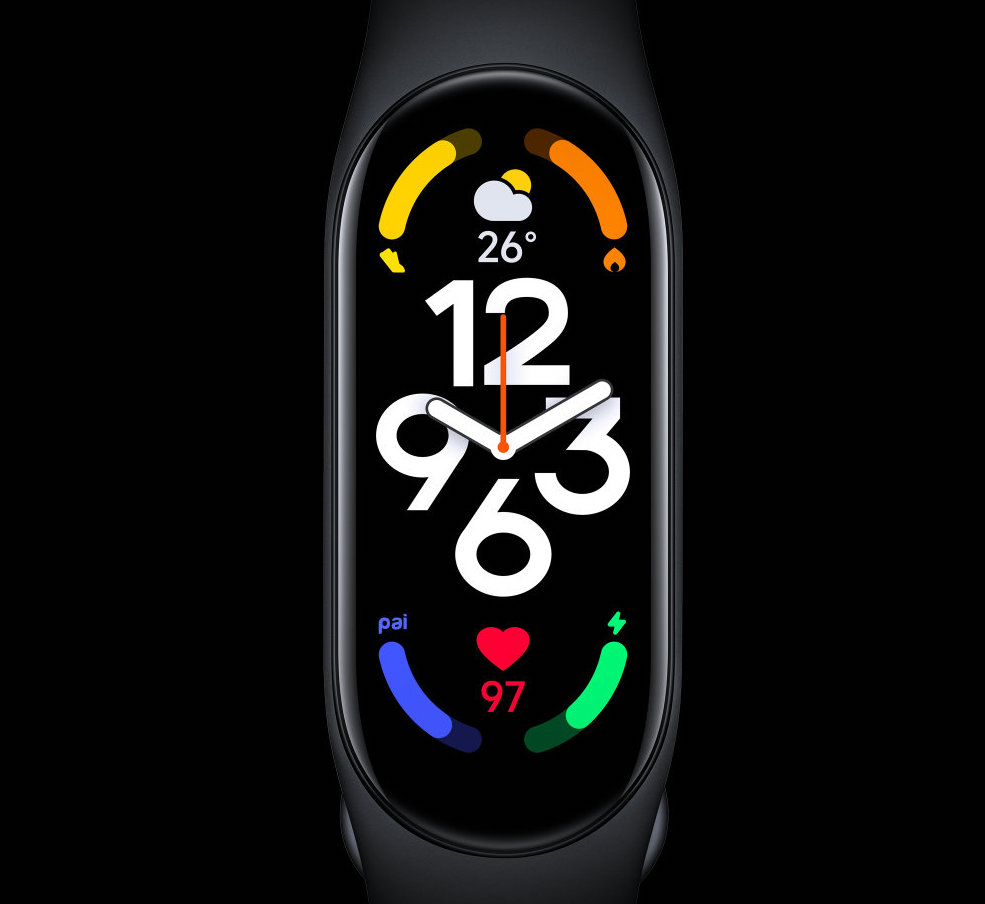
    The band debuted on May 24 and several significant changes have been introduced, which are worth mentioning. Namely, the most noticeable is definitely the larger screen with a size of 1.62 inches and a resolution of 192 x 490 pixels. In the Mi Band 6, the screen size is 1.56 inches and a resolution of 152 x 486 pixels. The latest band has a higher brightness level (500 nits vs 450) so using maximum brightness on sunny days will work perfectly. However, in both cases, there is a lack of automatic brightness adjustment. The band is equipped with a 2 times larger battery. Its capacity is 180 mAh vs 125 mAh in the Xiaomi Mi Band 6.

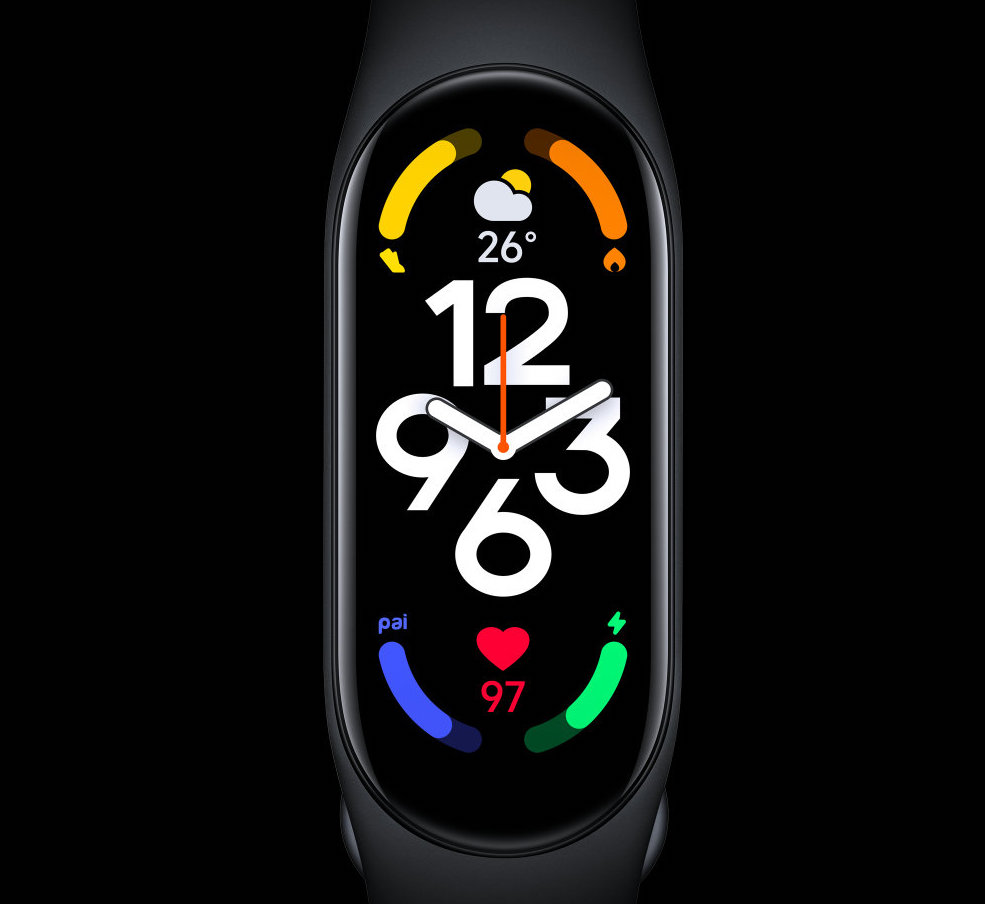
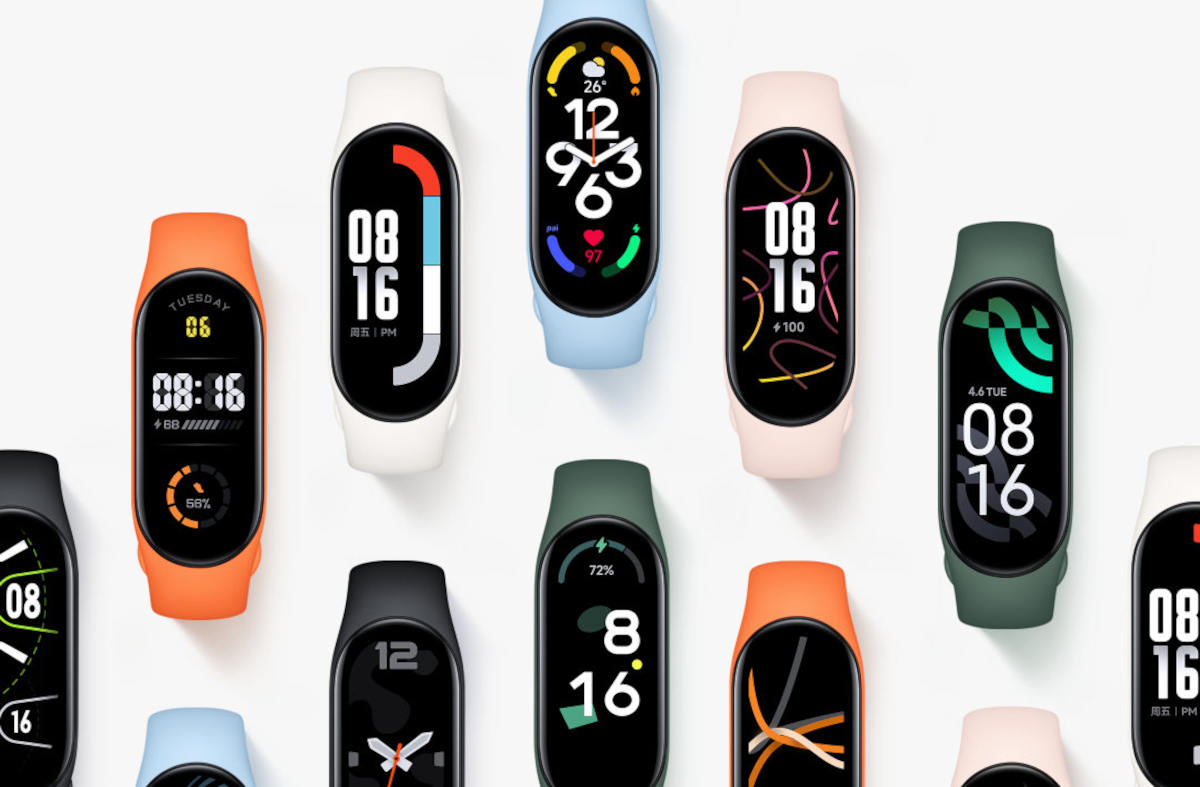
    In both cases, however, there is a lack of a GPS module, so it is not possible to register the course of our route. The latest model has an Always-On Display mode, which means that notifications and the date are available all the time. The available animated watch faces look great, pleasing the eye with an interesting graphic design. The new Mi Band has received as many as 120 different activities, which is a significant difference compared to 30 activities in the previous model. A novelty is also the SpO2 sensor, which will check the oxygen content in the blood and alert when saturation drops below, for example, 90%. Thanks to the enlarged screen, more graphs appear, they are much more vivid, and messages have more content. The Xiaomi Mi Band 7 is also slightly faster. Measuring heart rate or oxygen saturation occurs faster, so the speed of results will appear quicker.
     
    And what about the price of Xiaomi Mi Band 7?

    In China, the band is priced at 249 yuan (for us, it costs about 160 PLN). The NFC version is more expensive, namely it rises to 299 yuan (costing about 200 PLN). We can only speculate how much the latest band will actually cost in Poland, but we can be sure that the price will be quite affordable for the capabilities it has. So if we need a clear screen and the latest features, it is worth considering purchasing the newer variant. It is also worth mentioning that the Mi Band 6 straps are compatible with the latest model, despite the larger screen. If you are looking for the right strap for your Mi Band, check out our store HERE and choose a strap that meets your expectations for everyday use.

  • Mi Band 7 kontra Mi Band 6

    Sportarmbänder von Xiaomi erfrejają się od jakiegoś czasu dużą popularnością. Można z całą pewnością powiedzieć, że są to urządzenia wysokiej jakości, które jednocześnie oferowane są w bardzo przystępnej cenie.


    Co wiemy o najnowszym Xiaomi Mi Band 7?

    Opaska zadebiutowała 24 maja i wprowadzono kilka znaczących zmian, które warto wymienić. Mianowicie, najbardziej rzucającą się w oczy cechą jest zdecydowanie większy ekran o wielkości 1,62 cala i rozdzielczości 192 x 490 pikseli. W Mi Band 6 ekran ma wielkość 1,56 cala i rozdzielczość 152 x 486 pikseli. Najnowsza opaska posiada zwiększoną jasność (500 nitów vs. 450), dzięki czemu maksymalna jasność może być idealnie wykorzystana w słoneczne dni. W obu przypadkach brakuje jednak automatycznej regulacji jasności. Opaska wyposażona jest w podwójnie większą baterię. Jej pojemność wynosi 180 mAh vs. 125 mAh w Xiaomi Mi Band 6.

    W obu przypadkach brakuje jednak modułu GPS, co uniemożliwia rejestrowanie trasy naszej drogi. Najnowszy model posiada jednak tryb Always-On-Display, co oznacza, że powiadomienia i datę można wyświetlać w każdej chwili. Dostępne animowane tarcze wyglądają świetnie i cieszą oko interesującą grafiką. Nowy Mi Band otrzymał do 120 różnych aktywności, co stanowi znaczną różnicę w porównaniu do 30 aktywności w poprzednim modelu. Nowością jest również czujnik SpO2, który monitoruje poziom tlenu we krwi i alarmuje, gdy saturacja spada poniżej 90%. Dzięki powiększonemu ekranowi jest więcej wykresów, które są znacznie bardziej wyraziste, a wiadomości mają więcej treści. Xiaomi Mi Band 7 jest również nieco szybszy. Pomiar tętna lub saturacji tlenu w organizmie odbywa się szybciej, dzięki czemu wyniki są wyświetlane szybciej.

    A jak wygląda cena Xiaomi Mi Band 7?

    W Chinach cena opaski ustalona została na 249 juanów (u nas kosztuje około 160 PLN). Wersja NFC jest droższa i wynosi 299 juanów (koszt około 200 PLN). Możemy jedynie spekulować, ile najnowsza opaska będzie kosztować w Polsce, ale możemy być pewni, że cena za oferowane możliwości będzie dość przystępna. Jeśli więc potrzebujemy wyraźnego ekranu i najnowszych funkcji, powinniśmy rozważyć zakup nowszej wersji. Warto również wspomnieć, że paski z Mi Band 6 są kompatybilne z najnowszym modelem, mimo większego ekranu. Jeśli szukasz odpowiedniego paska do swojego Mi Band, zajrzyj do naszego sklepu TUTAJ i wybierz pasek, który odpowiada Twoim wymaganiom w codziennym użytkowaniu.