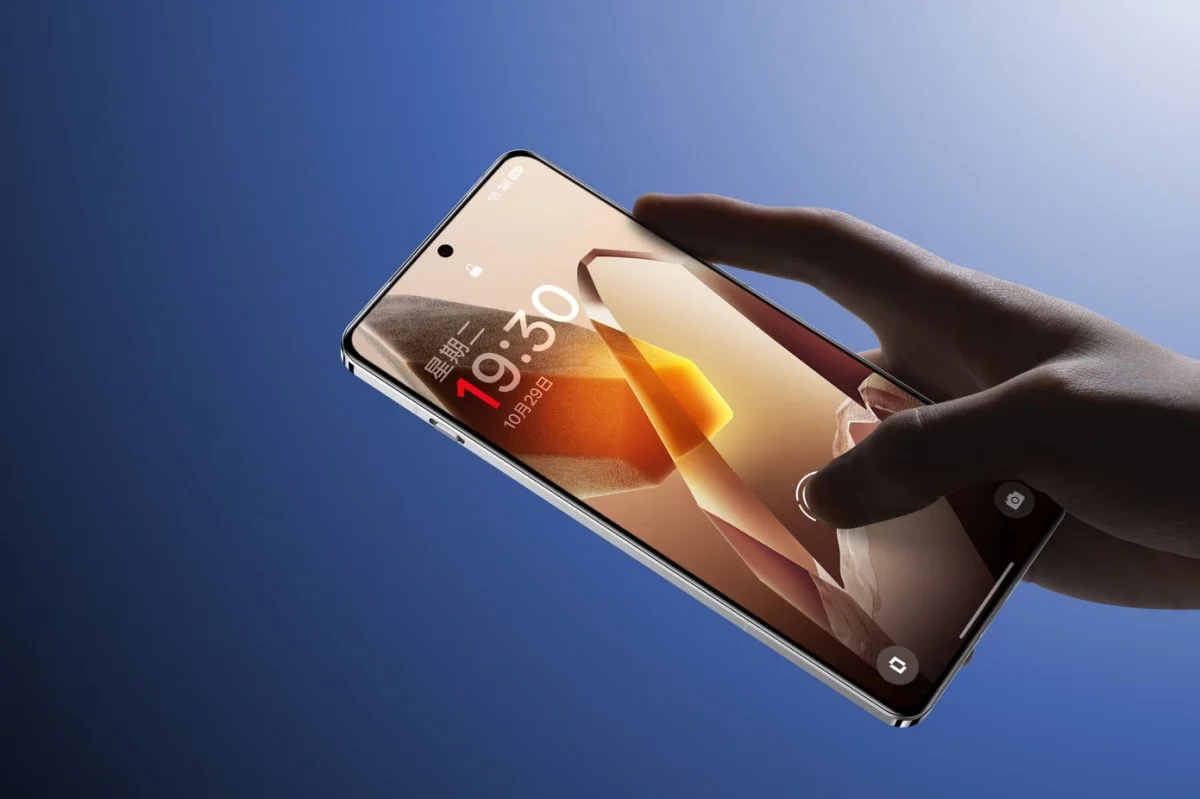
Smartphones with screens larger than 6.7 inches are ideal devices for those who want maximum comfort while watching movies, working, gaming, and enjoying multimedia. In 2025, five models stand out: Samsung Galaxy S25 Ultra, Apple iPhone 17 Pro Max, Samsung Galaxy Z Fold 7, Google Pixel 10 Pro XL, and OnePlus 13. Each of them offers top performance, excellent cameras, and large, bright displays.
Comparison Table: TOP 5 Smartphones with Large Screens (2025)
| Model | Screen | Processor | RAM | Storage | Battery | Cameras |
|---|---|---|---|---|---|---|
| Samsung Galaxy S25 Ultra | 6.9″ Dynamic AMOLED 2X, 120 Hz | Snapdragon 8 Elite | 12 / 16 GB | 256 GB – 1 TB | 5000 mAh | 200 + 50 + 10 + 50 Mpix |
| Apple iPhone 17 Pro Max | 6.9″ Super Retina XDR OLED, 120 Hz | Apple A19 Pro | 12 GB | 256 GB – 2 TB | ~5088 mAh | 48 + 48 + 48 Mpix |
| Samsung Galaxy Z Fold 7 | 8.0″ + 6.5″ AMOLED, 120 Hz | Snapdragon 8 Elite | 12 / 16 GB | 256 GB – 1 TB | 4400 mAh | 200 + 12 + 10 Mpix |
| Google Pixel 10 Pro XL | 6.8″ LTPO OLED, 120 Hz | Google Tensor G5 | 16 GB | 256 GB – 1 TB | 5200 mAh | 50 + 48 + 48 Mpix |
| OnePlus 13 | 6.82″ LTPO AMOLED, 120 Hz | Snapdragon 8 Elite | 12–24 GB | 256 GB – 1 TB | 6000 mAh | 50 + 50 + 50 Mpix |
Analysis of the TOP 5 smartphones with large displays – which model is worth choosing?
1. Samsung Galaxy S25 Ultra – the most powerful flagship with a large screen
The Samsung Galaxy S25 Ultra is a true king among large Android smartphones. It features a 6.9-inch Dynamic AMOLED 2X display with a resolution of 3120 x 1440 px (WQHD) and a refresh rate of 120 Hz, providing stunning sharpness and smoothness of the image. The screen is protected by Gorilla Glass Armor 2, and the device meets the IP68 standard – it is resistant to water and dust. The Galaxy S25 Ultra is powered by the latest Snapdragon 8 Elite (overclocked edition for Samsung) along with 12 or 16 GB of RAM, resulting in record performance. We have an enormous internal storage available – 256 GB, 512 GB, or even 1 TB – so there will definitely be no shortage of space for data.
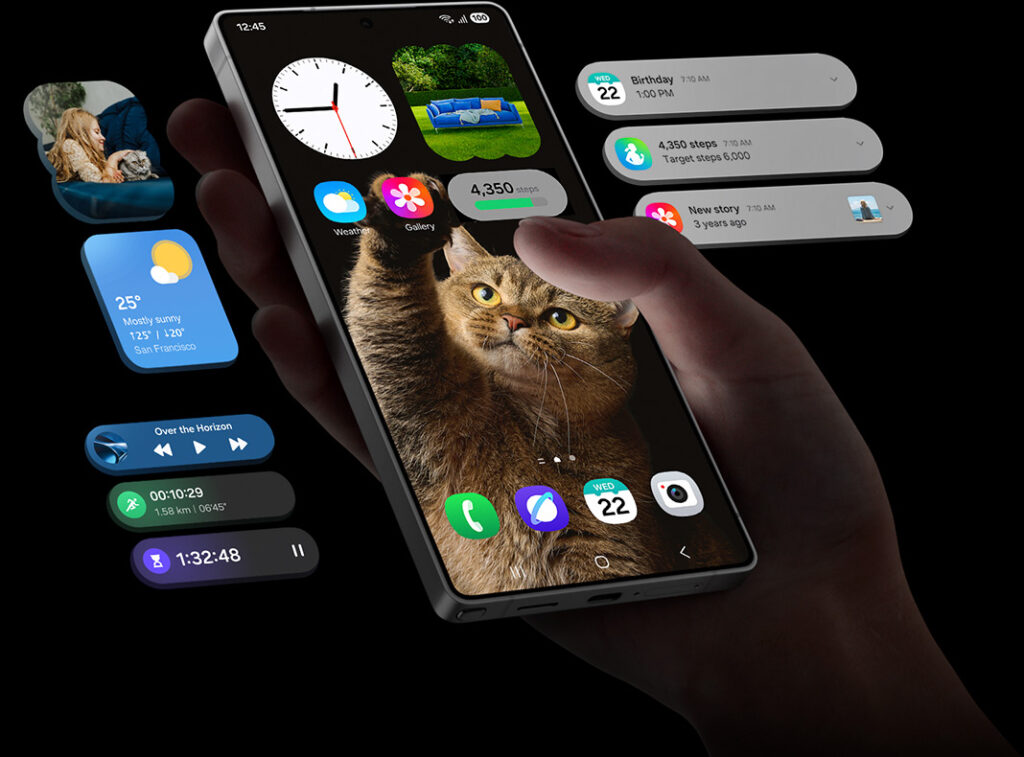
- Display: 6.9″ Dynamic AMOLED 2X, 3120×1440 px, 120 Hz (almost bezel-less, supports HDR10+)
- Processor: Snapdragon 8 Elite (8-core 3 nm, up to ~4.5 GHz) – the fastest chip of 2025.
- RAM: 12 GB or 16 GB LPDDR5X
- Storage: 256 GB / 512 GB / 1 TB UFS 4.0 (no microSD slot)
- Rear cameras: Quad – main 200 Mpix (OIS), ultra-wide 50 Mpix, telephoto 10 Mpix (3× optical zoom) and periscope telephoto 50 Mpix (5× optical zoom). This setup allows for up to 100× digital zoom and excellent night photos. On the front, there is a selfie camera 12 Mpix.
- Battery: 5000 mAh – fast charging 45 W (to full in ~1 hour) and wireless charging 15 W. In practice, the phone easily lasts all day with intensive use.
- System: Android 15 with One UI 7 (updates for several years)
- Connectivity: 5G, Wi-Fi 7, Bluetooth 5.3, Ultra Wideband (UWB), NFC, USB-C 3.2. There is also S Pen – the stylus hidden in the body makes note-taking and operation easier (now works passively, without charging).

The Samsung Galaxy S25 Ultra impresses with its powerful camera – photos have stunning detail thanks to the 200 Mpix sensor, and the 5× periscope telephoto lens can capture distant objects with surprising clarity. The large 6.9″ display is perfect for multimedia and using the DeX feature (desktop mode when connected to a monitor). This is an uncompromising flagship for the most demanding users, combining a huge display with top performance and functionality.
👉 Check the best cases for Samsung Galaxy S25 Ultra/ tempered glass for Galaxy S25 Ultra/ fast chargers for Samsung Galaxy S25 Ultra
2. Apple iPhone 17 Pro Max – the best iPhone with a large screen for multimedia
The latest iPhone 17 Pro Max is Apple’s response to the trend of maximally large screens. The smartphone features a 6.9-inch Super Retina XDR OLED display with a resolution of approximately 2868 x 1320 px and a refresh rate of up to 120 Hz (ProMotion). The screen is incredibly bright (up to 3000 nits in sunlight) and supports Always-On-Display and Dolby Vision. At the heart of the device is the Apple A19 Pro chip – a 6-core chip made in 3 nm, which provides unparalleled performance and extended battery life. The iPhone 17 Pro Max has received as much as 12 GB of RAM – this is the first iPhone with such a large memory, which combined with the refined iOS translates to lightning-fast operation. Data storage is also not an issue – available variants include 256 GB, 512 GB, 1 TB, and even 2 TB of internal memory.

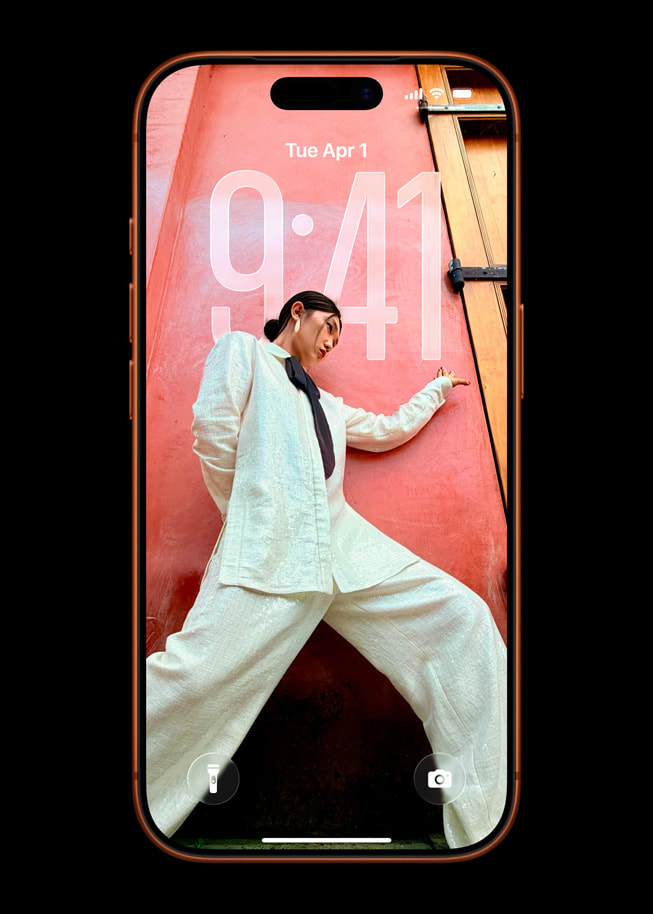
- Display: 6.9″ Super Retina XDR OLED, ~2868×1320 px, ProMotion 120 Hz (HDR10, Dolby Vision). The screen is protected by Ceramic Shield, and the frame is made of titanium, which increases durability.
- Processor: Apple A19 Pro (6-core CPU + 6-core GPU) – record power and energy efficiency.
- RAM: 12 GB LPDDR5
- Storage: 256 GB / 512 GB / 1 TB / 2 TB NVMe
- Rear Cameras: Triple 48 Mpix Camera – main 48 Mpix (sensor ~1/1.3″, OIS, f/1.6), ultra-wide 48 Mpix (120°) and periscope 48 Mpix telephoto lens. The telephoto lens offers 4× optical zoom (focal length approx. 120 mm) and up to 8× optical zoom range (0.5×–4×) thanks to the combined work of the lenses. All three rear cameras have the same high resolution, resulting in consistent photo quality. At the front, there is an improved 18 Mpix selfie camera with autofocus, supported by a Face ID (TrueDepth 3D) scanner.
- Battery: ~5088 mAh (larger than its predecessor) – allows for over 1 day of typical usage. Supports wired fast charging 40 W (up to 50% in ~20 minl) and wireless MagSafe 25 W. The iPhone 17 Pro Max also supports reverse charging for accessories.
- System: iOS 19 (the latest version for 2025) – with 7 years of update support. Introduces new AI features and even smoother multitasking.
- Connectivity: 5G (with mmWave and eSIM support), Wi-Fi 6E/7, Bluetooth 5.3, UWB (U2 chip) for device location, NFC, USB-C (compatible with Thunderbolt 4). The iPhone 17 Pro Max also has satellite connectivity (SOS) and stereo speakers with Dolby Atmos.
Apple focused on improving the cameras – now all three rear ones have 48 Mpix, which means significantly better ultra-wide and portrait photos than in previous models. Night photos are brighter, and the cinematic mode allows recording in 4K at 120 fps and Dolby Vision. Despite the large 6.9” screen, thanks to the slim bezels and titanium construction, the phone still fits in the hand similarly to earlier Pro Max models. The battery over 5000 mAh finally catches up with the competition from Android – the iPhone 17 Pro Max easily plays ~29 hours of video on a single charge. This is the most advanced iPhone, perfect for those looking for the maximum screen in the world of iOS.
👉 Check out the best cases for iPhone 17 Pro Max/tempered glass for iPhone 17 Pro Max/Magsafe chargers for iPhone 17 Pro Max
3. Samsung Galaxy Z Fold 7 – the largest screen and the perfect 2-in-1 smartphone
The Galaxy Z Fold 7 is a representative of the new generation of foldable smartphones, combining the features of a phone and a tablet. It has two displays: an external 6.5″ Dynamic AMOLED 2X screen with a resolution of 2520 x 1080 px (aspect ratio ~21:9) and a huge, foldable internal screen of 8.0″ with a resolution of 2184 x 1968 px. Both screens support a refresh rate of 120 Hz, providing incredible smoothness during multitasking. When unfolded, the Galaxy Z Fold 7 offers space like a small tablet – perfect for watching movies, working in multiple windows, or drawing (it supports the S Pen Fold Edition).
This model is powered by the flagship Snapdragon 8 Elite processor (the same as in S25 Ultra), supported by 12 or 16 GB of RAM. Samsung has ensured adequate storage – the Z Fold 7 comes in configurations of 256 GB, 512 GB, or 1 TB for data. This allows us to store plenty of movies and photos, which is what the Z Fold is known for.

- Displays:
- External: 6.5″ Dynamic AMOLED 2X, 2520×1080 px, 120 Hz (Always-On support). Covered with Gorilla Glass Ceramic, brightness up to 2600 nits.
- Internal: 8.0″ Dynamic AMOLED 2X (LTPO), 2184×1968 px, 120 Hz. Flexible panel made of ultra-thin glass (UTG); hinge design improved and the crease in the middle of the screen minimized compared to previous generations.
- Processor: Qualcomm Snapdragon 8 Elite (8 cores up to ~4.5 GHz) – special edition For Galaxy ensuring top performance in Samsung devices.
- RAM: 12 GB / 16 GB LPDDR5X
- Storage: 256 GB / 512 GB / 1 TB UFS 4.0 (no option for expansion via card)
- Rear cameras: Triple module like in top Galaxy models: main 200 Mpix (OIS, f/1.7) providing excellent detail, ultra-wide 12 Mpix (120°) for group photos and macro, telephoto 10 Mpix with 3× optical zoom (OIS). This set allows for up to 30× Space Zoom (digitally) and performs well in low light thanks to advanced image processing.
- Front cameras: Two – one on the external screen (10 Mpix in a small hole, for selfies with the phone folded) and the other under the internal screen (10 Mpix, hidden under the unfolded display). The under-display camera solution ensures that nothing disrupts the image on the large screen. Both cameras allow for convenient video calls (the internal one has a wider angle ~100° for shots from a greater distance).
- Battery: 4400 mAh (two cells) – lasts all day with moderate use in phone mode or several hours of continuous work in tablet mode. Supports fast charging 25 W (QC 2.0) – replenishes ~50% in 30 minutes. Wireless charging 15 W (Qi) is also available, as well as reverse charging (PowerShare) up to 5 W.
- System: Android 16 with One UI 8 interface tailored for foldable screens (including Multi-Active Window mode that allows running up to 3 apps simultaneously on the large screen). Samsung guarantees years of security updates.
- Connectivity: Dual SIM + eSIM, full set 5G (including 5G standalone), Wi-Fi 7 (up to 5.8 Gb/s), Bluetooth 5.3, NFC, USB-C 3.2. The Galaxy Z Fold 7 has stereo speakers with Dolby Atmos and is waterproof (IPX8) – withstands immersion at a depth of 1.5 m for 30 min.
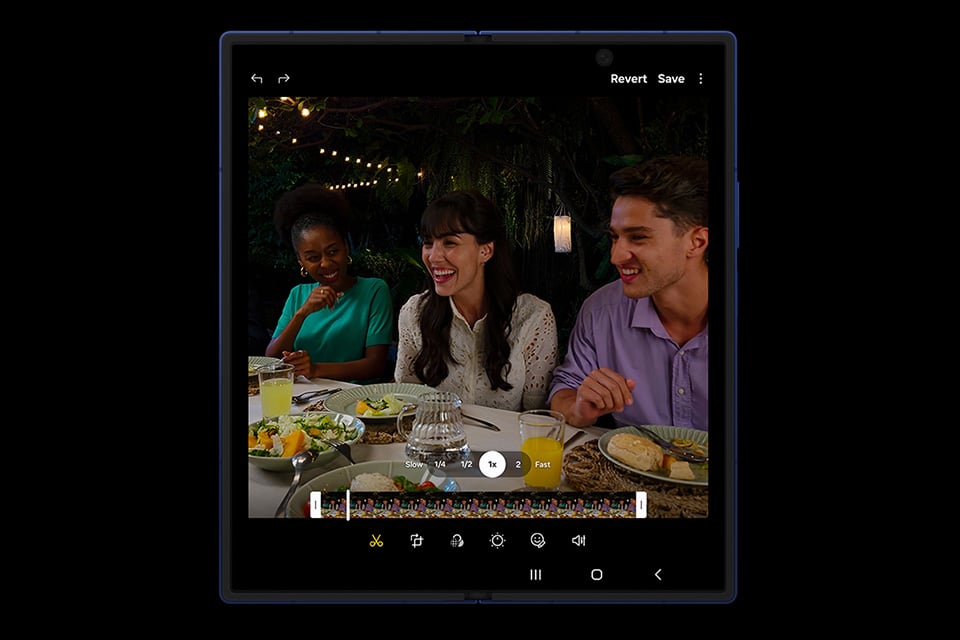
The Samsung Galaxy Z Fold 7 is the most versatile smartphone in this lineup. When folded, it is a fully-fledged phone with a slightly thicker profile (about 14 mm), and when unfolded, it transforms into an 8-inch tablet – perfect for work and entertainment. The software offers continuity (apps seamlessly transition from the smaller screen to the larger one) and Flex Mode, which divides the interface when the screen is partially folded – great for video conferencing, for example. The Galaxy Z Fold 7 will appeal to tech enthusiasts and those needing a 2-in-1 device that replaces both a smartphone and a tablet.
👉Check out the case for Galaxy Z Fold 7
4. Google Pixel 10 Pro XL – large display and the best AI photo quality
Google Pixel 10 Pro XL is the largest and most advanced phone in the Pixel series in 2025. It features a large 6.8-inch OLED LTPO display with a high resolution of 2992 x 1344 px and adaptive refresh rate of 1–120 Hz. Google has implemented a new Super Actua Display with peak brightness reaching 3000 nits, ensuring excellent readability even in bright sunlight. The Pixel 10 Pro XL boasts a minimalist design – the front is almost bezel-less, and the aluminum frame of the phone seamlessly connects with the Gorilla Glass Victus 2 protecting the display.
The heart of the device is the custom Google Tensor G5 processor, designed with artificial intelligence in mind. This unit ensures smooth operation of Android and special Pixel features (such as advanced photo processing). We have 16 GB of RAM and fast UFS 4.0 storage available – the Pixel 10 Pro XL comes in variants of 256 GB, 512 GB, or 1 TB for data.
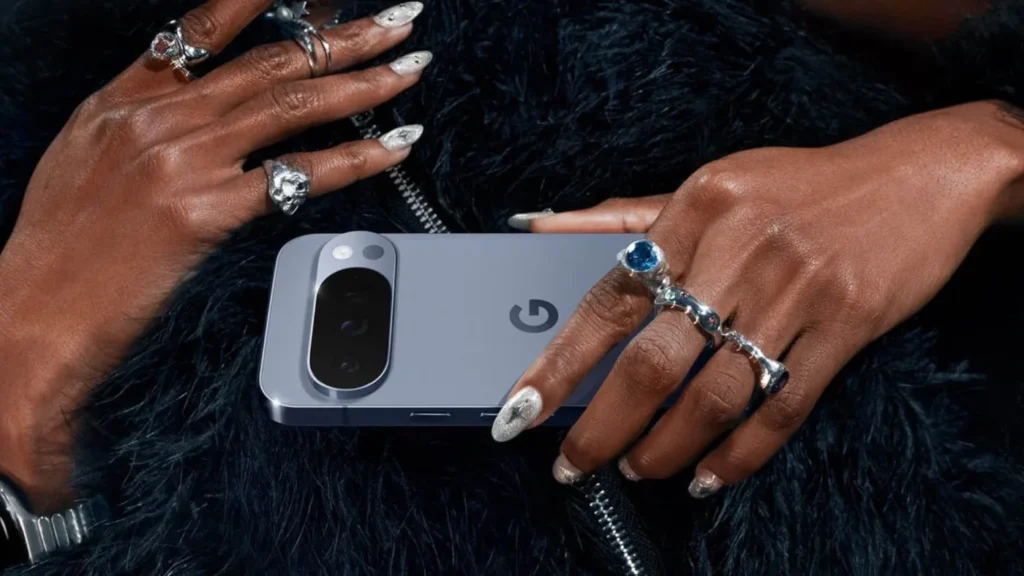
- Display: 6.8″ LTPO OLED, 2992×1344 px (QHD+), 1–120 Hz, ~490 ppi, brightness up to ~3000 nits. Supports HDR10+ and Always-On-Display. Provides vibrant colors and excellent contrast (Pixel calls it Super Actua Display).
- Processor: Google Tensor G5 (8 cores, up to 3.8 GHz) – optimized for AI and energy efficiency. Works with the Titan M2 security chip.
- RAM: 16 GB LPDDR5X
- Storage: 256 GB / 512 GB / 1 TB UFS 4.0 (no microSD). Each Pixel also receives unlimited photo storage in Google Photos (in high quality) for 7 years.
- Rear Cameras: Triple Pixel Pro Camera – main 50 MP (large 1/1.3″ sensor with OIS, laser AF), ultra-wide 48 MP (125° field of view, also serves as macro) and periscope telephoto 48 MP with 5× optical zoom (focal length ~120 mm). This setup provides incredibly versatile photographic capabilities – from spectacular wide-angle shots to close-ups without loss of quality. Pixel is renowned for its camera software: night mode, Astrophotography, Photo Unblur (for sharpening motion-blurred photos) and Magic Eraser work better than ever thanks to the power of AI Tensor G5.
- Front camera: 42 Mpix (Center Stage) – placed in a cutout, with a wide angle and automatic framing feature during video calls. It is one of the largest selfie sensors on the market, resulting in detailed selfies and better performance in low light.
- Battery: 5200 mAh – provides very good usage times (about 8-9h SoT). Supports fast charging ~39–45 W (up to 50% in ~25 min). Pixel has adopted the new standard Qi2 for wireless charging – power up to 15 W on compatible chargers. Also offers reverse charging (e.g., for Pixel Buds).
- System: Pure Android 16 straight from Google – with a guarantee of 7 years of updates (up to Android 23) and regular so-called Feature Drops every quarter. The interface is optimized for large screens (new split-screen layout, contextual widgets, etc.). Pixel stands out with AI features: assistant in Polish, live speech-to-text transcription, smart spam filtering, etc.
- Connectivity: 5G (including support for 5G Standalone networks), Wi-Fi 7, Bluetooth 5.4, NFC, USB-C 3.2 (Supports DisplayPort Alt Mode), Ultra Wideband (UWB) for digital keys and precise tracking of trackers. The Pixel 10 Pro XL stereo speakers offer clear sound with spatial audio.
Google Pixel 10 Pro XL is a smartphone for fans of pure Android and mobile photography. Its cameras, supported by Google’s algorithms, allow you to take great photos literally point-click – without the need for manual editing. The huge 6.8″ screen is perfect for content consumption, while the phone remains slightly narrower than competing Ultras, improving ergonomics. With long-term support and integration of Google services (Assistant, Photos, Live Translator), the Pixel 10 Pro XL will stay current and useful for many years.
👉Check out screen glass for Pixel 10 Pro XL/ case for Google Pixel 10 Pro XL
5. OnePlus 13 – large AMOLED screen and record performance
The OnePlus 13 closes our ranking – it’s a flagship that debuted at the end of 2024 and set new standards for 2025. It features a 6.82-inch LTPO AMOLED display with a resolution of 3168 x 1440 px (aspect ratio 19.8:9), which boasts incredible sharpness (510 ppi) and a peak brightness of up to 4500 nits – currently a record in the smartphone market. The screen supports adaptive refresh rates of 1–120 Hz and is 10-bit, resulting in beautiful, vibrant colors. The OnePlus 13 also has excellent build quality: the front is protected by Gorilla Glass Victus 2, the body is metal with a matte finish, and the device meets IP68/IP69 standards (water resistance even against strong water jets).

Inside, we find the top-of-the-line Snapdragon 8 Elite (the same as in the Galaxy S25 Ultra) and even 24 GB of RAM in the highest configuration. The OnePlus 13 comes in versions with 12 GB, 16 GB, or 24 GB of RAM and 256 GB, 512 GB, or 1 TB of fast UFS 4.0 storage. Such specifications make the phone perform excellently with both 3D games and multitasking – you can keep dozens of apps running in the background without reloading.
- Display: 6.82″ 10-bit LTPO AMOLED, 3168×1440 px, 1–120 Hz, up to 4500 nits brightness. Supports HDR10+, Dolby Vision, and is very readable even in direct sunlight. With a high resolution and a density of 510 ppi, the image is incredibly sharp.
- Processor: Qualcomm Snapdragon 8 Elite (gen. 4) with Adreno 830 graphics – currently one of the most powerful chips on the market. Provides a ~20% increase in CPU and AI power compared to its predecessor.
- RAM: 12 GB / 16 GB / 24 GB LPDDR5X – OnePlus 13 in the top version offers up to 24 GB of RAM, which allows it to maintain smooth performance for years to come.
- Storage: 256 GB / 512 GB / 1 TB UFS 4.0 (no microSD slot). The highest variant 24/1 TB will satisfy even the most demanding users.
- Rear Cameras: Triple Hasselblad 5.0 camera, each with a resolution of 50 Mpix:
- Main: 50 Mpix, Sony LYT808 sensor, large ~1″ sensor, with optical and electronic stabilization (OIS+EIS), f/1.8 lens. Provides excellent dynamics and detail in photos under all conditions.
- Telephoto: 50 Mpix, Sony LYT600 sensor, OIS+EIS, 3× lossless optical zoom (equivalent to ~78 mm). Also enables hybrid zoom up to about 10× with minimal quality loss.
- Ultra-wide: 50 Mpix, field of view 120°, EIS, f/2.2. Allows for photographing vast scenes without distortion, as well as close-up macro shots.
All three cameras have been tuned in collaboration with Hasselblad, providing natural colors and a Pro Mode with advanced settings. OnePlus 13 allows recording video in a resolution of up to 8K@30 fps and 4K up to 120 fps, with a rich color profile.
- Front camera: 32 Mpix (f/2.4) – takes very good selfies, offers a portrait mode with impressive background blur. It is centrally positioned at the top of the screen.
- Battery: 6000 mAh (high-density, carbon-silicon cell) – despite the powerful battery, the phone maintains a reasonable weight (approx. 213 g). The battery supports extremely fast SuperVOOC charging 100 W, allowing the phone to charge from 0 to 100% in about 30–35 minutes. Moreover, OnePlus 13 supports the fastest wireless charging in its class 50 W (requires a dedicated OnePlus charger – full charge in ~50 min). There is also 10 W reverse charging, for topping up devices like headphones.
- System: OxygenOS 15 (based on Android 15) – a lightweight overlay, similar in appearance to pure Android, known for its speed. The manufacturer promises at least 4 major system updates and 5 years of security patches. The system is optimized for 24 GB RAM – among other things, it intelligently keeps apps in memory and supports AI features to enhance performance.
- Connectivity: Dual SIM 5G, Wi-Fi 7, Bluetooth 5.3 (LE Audio), NFC, USB-C 2.0 port (unfortunately without video mode – OnePlus focuses on wireless casting). Lacks a 3.5 mm audio jack, but an adapter is included. The phone also offers stereo speakers with Dolby Atmos.

OnePlus 13 has earned the title of “flagship killer” – it offers comparable specifications to competitors from Samsung or Apple, usually at a more favorable price. Its huge OLED screen impresses with image quality, and thanks to the 120 Hz refresh rate and high resolution, it performs excellently in both mobile gaming and movie watching. 6000 mAh battery with super-fast 100 W charging means no more worries about battery life – even a few minutes of charging provides energy for many hours of use. The triple 50 Mpix camera, created in collaboration with the legendary brand Hasselblad, allows for professional-quality photos with natural colors. If you are looking for an Android phone with a large screen that almost matches competitive flagships in every respect, OnePlus 13 will be an excellent choice.
👉Check out cases for OnePlus 13/ wall chargers for OnePlus 13
How to choose the right smartphone with a large screen?
Choosing a phone with a large display is not just about the diagonal size. The right model should be comfortable to use, provide high image quality, and offer features tailored to your needs — from photography, through gaming, to multitasking. Below you will find the most important elements to pay attention to.
Compatibility factors
- Weight and ergonomics — larger smartphones may be heavier, but different screen ratios affect comfort. Slimmer models (e.g., Pixel 10 Pro XL) are easier to handle with one hand.
- Accessory compatibility — check if good cases, tempered glasses, and chargers are available for the specific model (Home Screen has a wide selection for 2025 models).
- Connectivity standards — if you use a smartwatch, headphones, or chargers, make sure the phone supports the required technologies (e.g., MagSafe, UWB, Qi2).
- Memory size — a large screen encourages watching movies and photos, so 128 GB of memory can be insufficient — it’s best to aim for 256 GB and more.
Key features to consider
- Screen brightness — large screens need high brightness. Flagships offer 2500–4500 nits, ensuring readability in sunlight.
- 120 Hz refresh rate — ideal for scrolling, gaming, and smooth system operation.
- Camera — it’s worth looking for models with large sensors (1/1.3″ or larger) and periscope lenses for 5× zoom.
- Battery and charging — a smartphone with a 6.8–7.0″ screen should have at least 4800–5200 mAh. The best models (OnePlus 13) even have 6000 mAh and 100 W charging.
- Performance — 2025 generation processors: Snapdragon 8 Elite, Apple A19 Pro, and Tensor G5 are the absolute top.
- Water resistance — minimum IP68, and preferably IP68/IP69 for more intensive use.
Price ranges in 2025
- 2500–3500 zł – larger mid-range phones, but without flagship image quality and cameras.
- 3500–5000 zł – solid premium models with large screens, though often without the best processors.
- 5000–7000 zł – flagships from 2024/2025 with 6.7–6.9″ screens, excellent cameras, and performance.
- 7000–9000 zł – absolute top: iPhone 17 Pro Max, Galaxy S25 Ultra, and Pixel 10 Pro XL.
- approx.9000 zł – foldable devices like Galaxy Z Fold 7, combining phone and tablet in one.
FAQ – Smartphones with Large Screens 2025
⭐ Which smartphone with a large display is the best in 2025?
Samsung Galaxy S25 Ultra – thanks to its powerful 200 Mpix camera, top-notch 6.9″ display, and S Pen stylus.
⭐ Which phone has the largest screen?
Samsung Galaxy Z Fold 7 – when unfolded, it offers an 8-inch screen like a small tablet.
⭐ Which model takes the best photos?
Google Pixel 10 Pro XL – AI algorithms, Astrophotography, and a great 50 Mpix sensor.
⭐ Best iPhone with a large screen?
Definitely the iPhone 17 Pro Max – 6.9″ OLED, triple 48 Mpix, top video quality.
⭐ Most cost-effective smartphone with a large screen?
OnePlus 13 – ultra-fast performance, 24 GB RAM, 4500 nits display, and an above-average 6000 mAh battery.
⭐ Does a large-screen phone drain the battery faster?
Not always — modern LTPO panels in 2025 models dynamically lower the refresh rate, allowing large-screen phones to last longer than smaller smartphones.
⭐ Are smartphones over 6.8 inches comfortable for everyday use?
Yes — manufacturers have significantly narrowed the bezels, and the bodies are more ergonomic. The narrower Pixel 10 Pro XL is the most comfortable.
⭐ Which large-screen smartphone is best for gaming?
OnePlus 13 – powerful Snapdragon 8 Elite chip, up to 24 GB RAM, and a 120 Hz display are perfect for mobile gaming.
⭐ Which phone to choose for movies and Netflix?
Samsung Galaxy S25 Ultra and Apple iPhone 17 Pro Max – the best HDR quality, high brightness, and perfect OLED colors.
Leave a Reply