Tag: porównania

  • POCO F9 Ultra vs F8 Ultra: is it worth switching?

    POCO F9 Ultra vs F8 Ultra: is it worth switching?

    The most important thing in this comparison is what has not changed: both phones have the same Snapdragon 8 Elite Gen 5 processor. The F9 Ultra adds an 8,050 mAh battery instead of 6,500 mAh, a 185 Hz display instead of 120 Hz, and a 200 MP main camera. In return, it is heavier, thicker, and more expensive: starting at 3,299 PLN compared to 2,799 PLN for the F8 Ultra.

    The short answer: the upgrade is usually not worth it. If you are buying for the first time, the F9 Ultra makes sense primarily if battery life is the most important factor for you. In other cases, the cheaper F8 Ultra offers almost the same.

    Below is the full table, point-by-point differences, and the answer to the question of whether the case and charger from the F8 Ultra fit the F9 Ultra. It is worth knowing right away that neither of these phones comes with a charger in the Polish box.
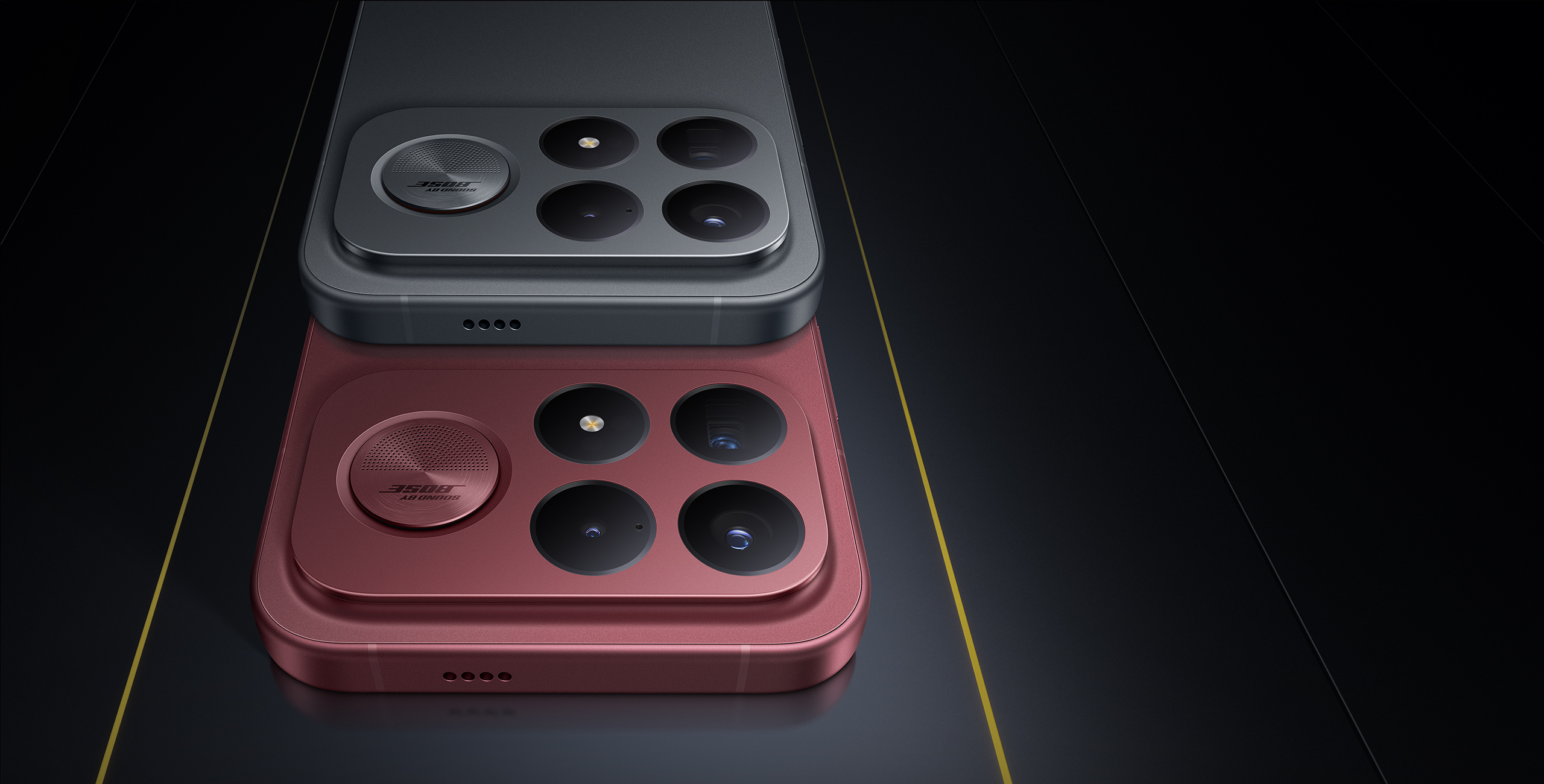
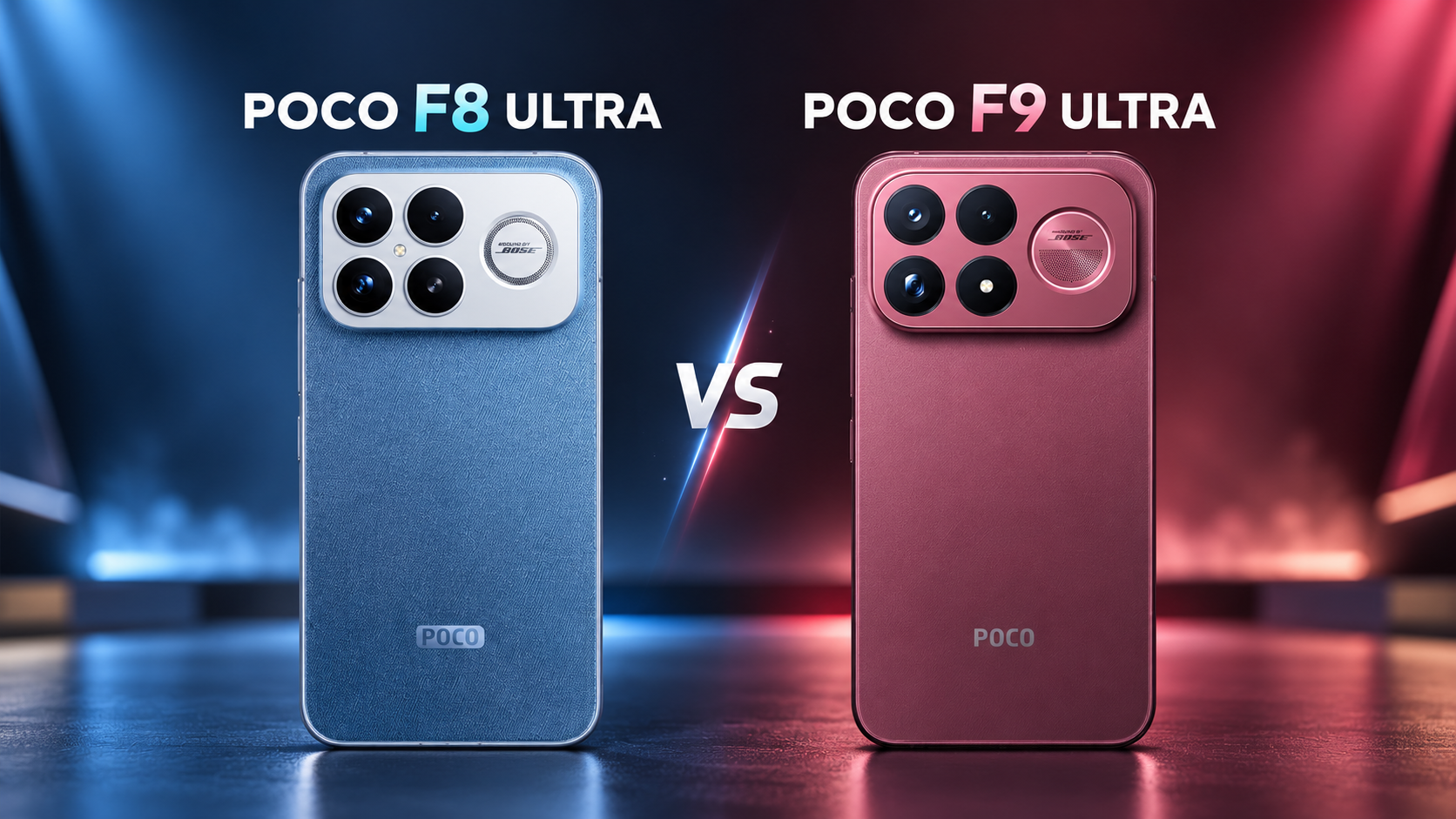
    On the left POCO F9 Ultra, on the right POCO F8 Ultra. You can see a completely different layout of the camera island. Photos: Xiaomi.

    POCO F9 Ultra vs F8 Ultra: comparison table

    Parameter POCO F9 Ultra POCO F8 Ultra
    Release September 1, 2026 November 26, 2025
    Price in Poland (Xiaomi, 10.02.2026) from 3,299 PLN from 2,799 PLN
    Processor Snapdragon 8 Elite Gen 5 + VisionBoost D8 chip Snapdragon 8 Elite Gen 5
    Memory 12/256, 16/512, 16 GB/1 TB 12/256, 16/512 GB
    Screen 6.9″ AMOLED, 185 Hz 6.9″ AMOLED, 120 Hz
    Peak Brightness (25% of screen) 4,500 nits 3,500 nits
    Screen Glass Gorilla Glass 7i POCO Shield Glass
    Main Camera 200 MP, OIS 50 MP Light Fusion 950, OIS
    Telephoto 50 MP, 5x periscope, OIS 50 MP, 5x periscope, OIS
    Ultrawide / Front 50 MP / 32 MP 50 MP / 32 MP
    Battery 8,050 mAh 6,500 mAh
    Wired / Wireless Charging 100 W / 50 W 100 W / 50 W
    Reverse Charging 27 W wired, 22.5 W wireless 22.5 W wired, wireless (power not specified)
    Dimensions 163.49 × 77.94 × 8.74 mm 163.33 × 77.82 × 7.9 mm (black) / 8.3 mm (Denim Blue)
    Weight 235 g 218 g (black) / 220 g (Denim Blue)
    Resistance IP68 IP68
    Charger in the box (PL) ❌ ❌

    Data according to the manufacturer’s specifications (F9 Ultra, F8 Ultra) and the Polish Xiaomi store.

    Performance: the same Snapdragon, additional gaming chip

    Both have Snapdragon 8 Elite Gen 5, manufactured using a 3 nm process, so you won’t feel a difference in everyday use and applications. In the Geekbench 6 benchmark, GSMArena even measured slightly lower scores for the F9 Ultra (3,530 / 10,500 points compared to 3,636 / 10,876 points).
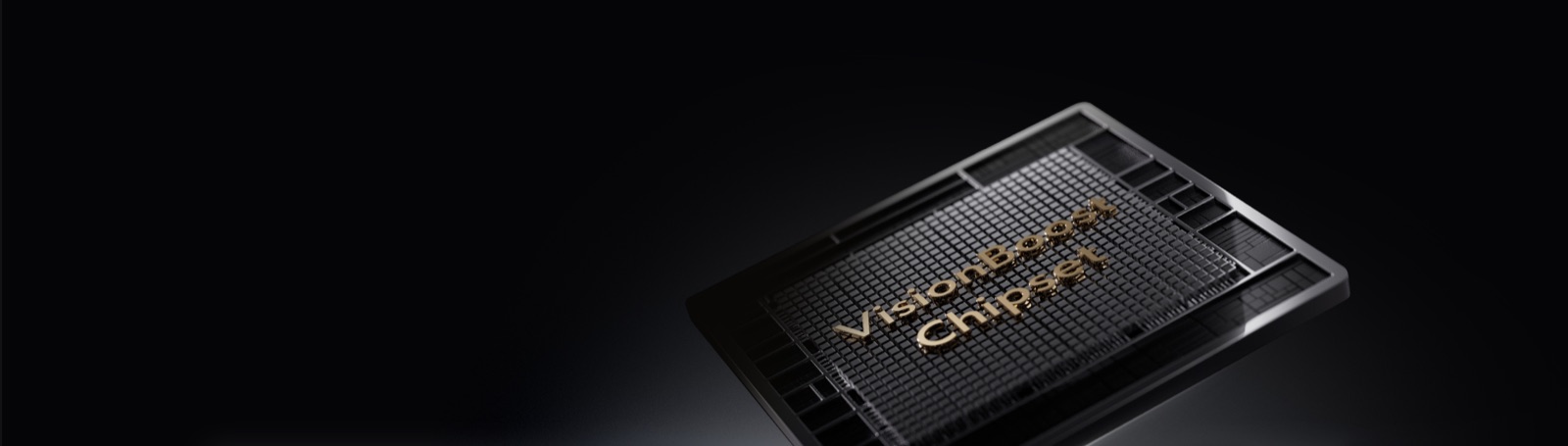
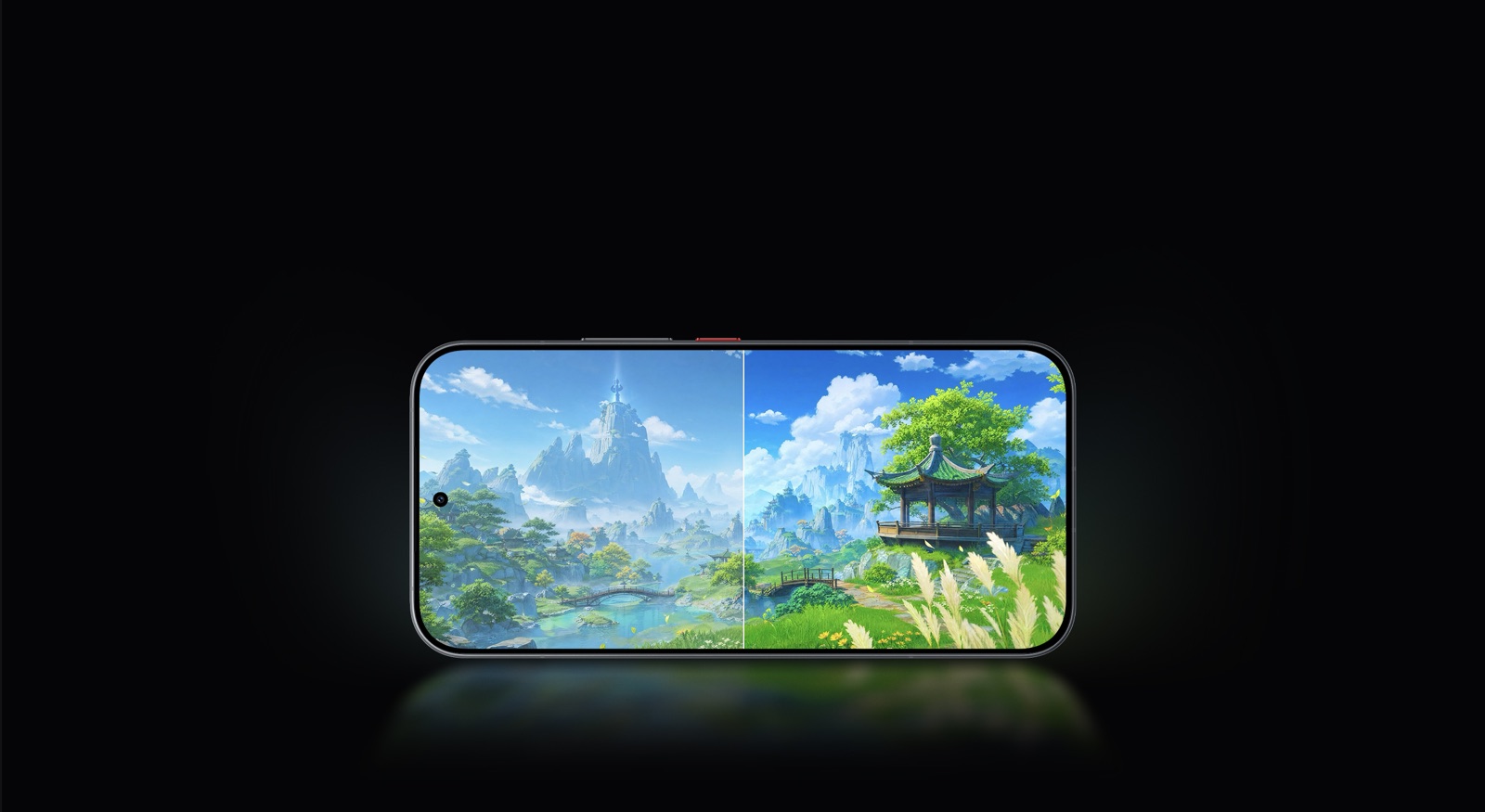
    VisionBoost D8 chip and the effect of its work in the game. Photos: Xiaomi.

    The F9 Ultra adds a separate VisionBoost D8 chip. According to Xiaomi, it is responsible for frame interpolation up to 185 fps, which is supported by over 20 games. The improvement of image details (AI Super Resolution) currently works only in five titles, including PUBG Mobile and Genshin Impact.

    There is also a new variant of 16 GB/1 TB. If you keep a lot of 8K movies on your phone, that’s a point. For most people, 256 GB or 512 GB is sufficient.

    Display: 185 Hz and higher brightness

    Both displays are 6.9 inches and have the same resolution of 2608 × 1200. The differences are:

    • refresh rate of 185 Hz compared to 120 Hz in F8 Ultra,
    • peak brightness of 4,500 nits compared to 3,500 nits (both at 25% screen area); in GSMArena’s measurements, it’s 4,333 versus 3,509 nits,
    • Gorilla Glass 7i instead of POCO Shield Glass.

    However, 185 Hz only works in supported games. According to GSMArena, in the system and apps, F9 Ultra operates at 120 Hz, just like F8 Ultra, so you won’t notice a difference while scrolling.

    Cameras: 200 MP, but smaller sensor
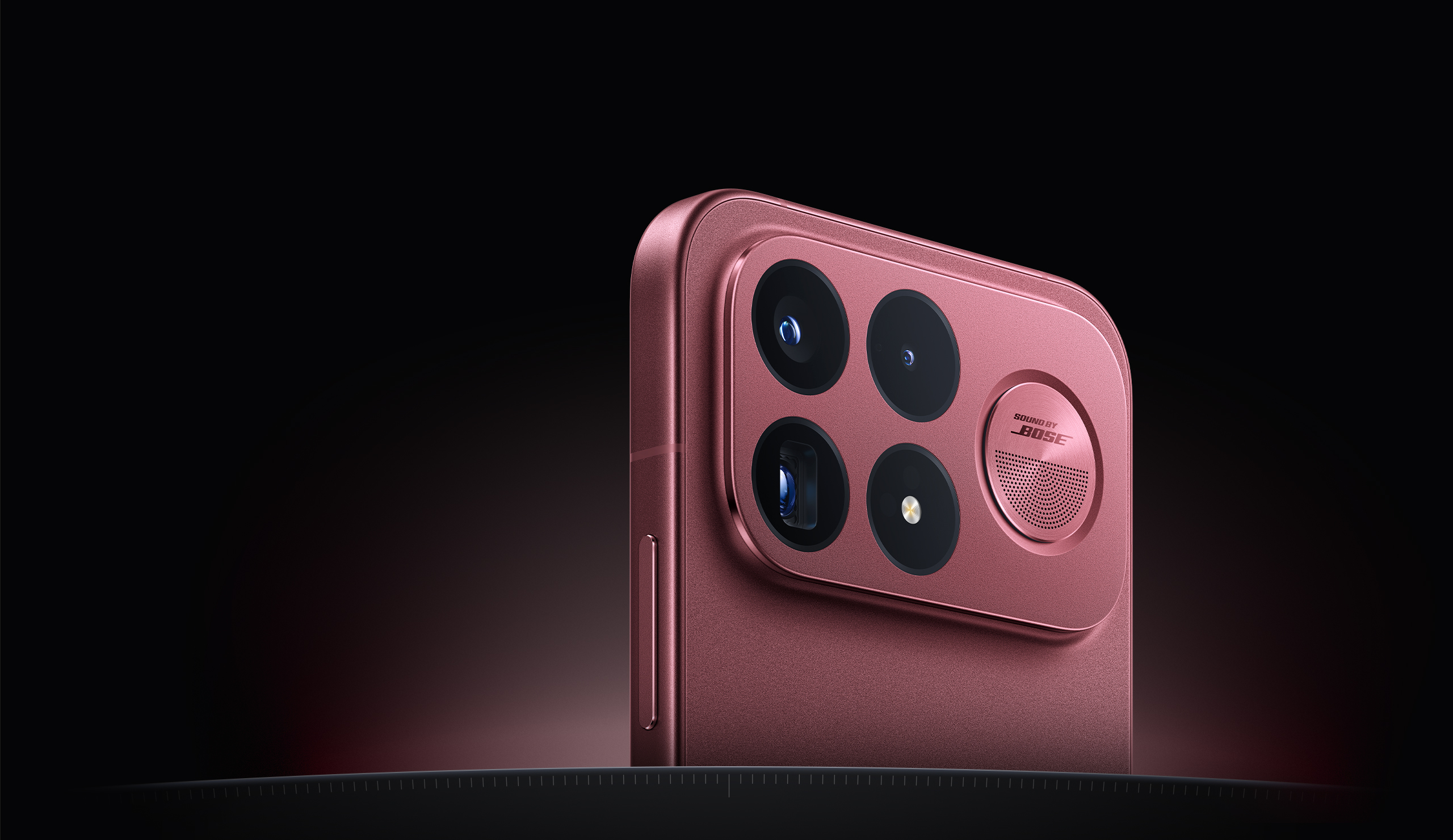
    Camera island of POCO F9 Ultra with the main 200 MP camera and 5x telephoto lens

    Camera island of POCO F9 Ultra. Photo: Xiaomi.

    F9 Ultra has a main camera of 200 MP instead of 50 MP. However, this does not automatically mean better photos. According to GSMArena, the sensor in F8 Ultra is physically larger (1/1.31″ compared to 1/1.56″), and a larger sensor collects more light overall.

    In practice, 200 MP will be useful when you want to crop photos heavily or print them in large format. GSMArena describes the new camera more as a sideways change than an upgrade, although it rates the night photos from the F9 Ultra very well.

    The rest of the set is almost the same: a 50 MP telephoto lens with 5x optical zoom and OIS, a 50 MP wide-angle, and a 32 MP front camera. The F9 Ultra adds slow motion up to 1920 fps in Full HD.

    Battery and Charging: the Biggest Difference

    8,050 mAh is 1,550 mAh more than the 6,500 mAh in the F8 Ultra, which is almost a quarter more. This is the strongest argument for the new model, especially if you play games or record a lot.

    The charging power is the same: 100 W wired, 50 W wireless. Since the F9 Ultra’s battery is larger, it takes longer to charge. In GSMArena’s test with the original Xiaomi charger, the F9 Ultra had 61% after 30 minutes and a full battery in just under an hour. The F8 Ultra charged to full in 39 minutes in GSMArena’s test with the original Xiaomi charger.
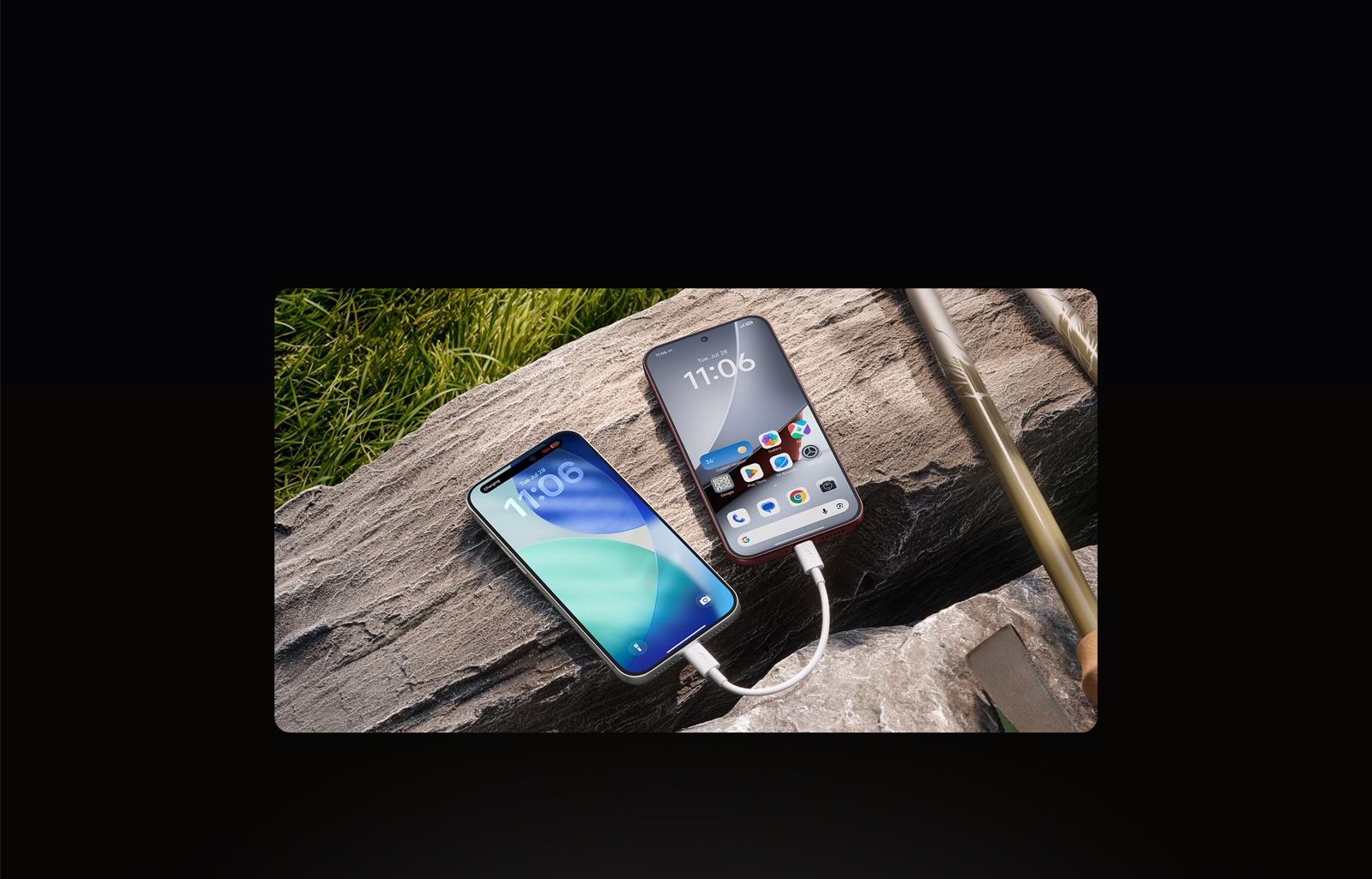
    POCO F9 Ultra charges another phone with a cable

    Wired reverse charging on the POCO F9 Ultra. Photo: Xiaomi.

    The reverse charging is also stronger: 27 W wired on the F9 Ultra compared to 22.5 W on the F8 Ultra. You can charge headphones, a watch, or even another phone with a cable.

    Games and temperature: does the F9 Ultra overheat?

    Playing on the POCO F9 Ultra held horizontally

    POCO F9 Ultra in a game. Photo: Xiaomi.

    The F9 Ultra is marketed as a gaming phone, but GSMArena’s test shows the other side of the coin. According to reviewers, the phone heats up significantly under load, and the cooling system does not handle heat dissipation well. During long sessions, performance drops.

    The 185 Hz display and frame interpolation work only in supported games. If you play other titles, the F9 Ultra will behave practically like the F8 Ultra, just with a larger battery.

    Tip: for gaming, choose a thin case. A thick armored case makes heat dissipation difficult, and with a heating phone, this is a noticeable difference.

    Dimensions and weight: the F9 Ultra is heavier

    A larger battery also means greater weight. The F9 Ultra weighs 235 g and is 8.74 mm thick. The F8 Ultra weighs 218–220 g and is 7.9–8.3 mm thick, depending on the color. The difference of 15–17 g is noticeable when holding the phone in one hand for a long time. Both models have IP68 resistance.

    Does the case from POCO F8 Ultra fit the F9 Ultra?

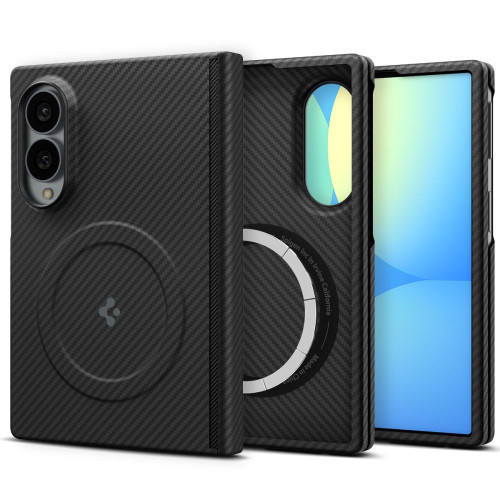
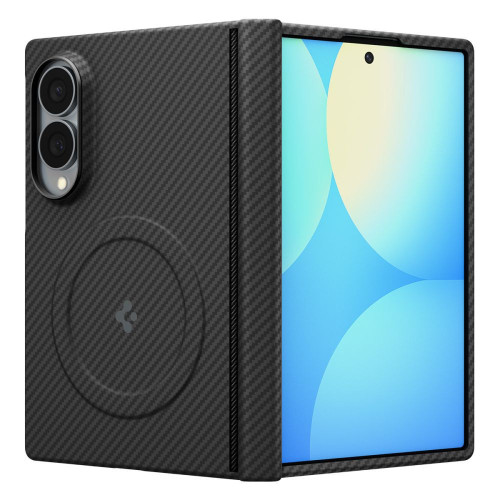
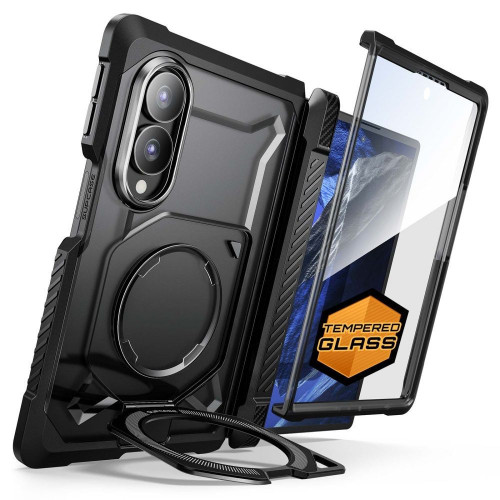
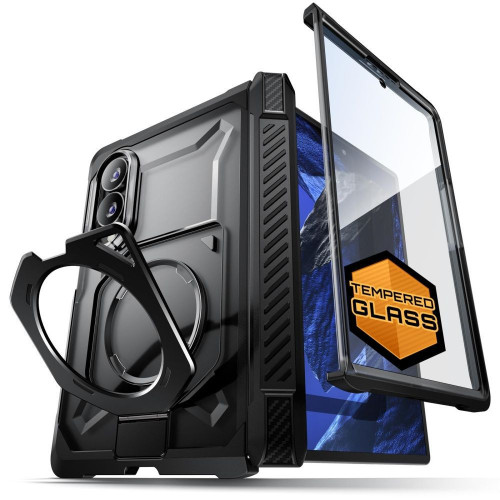
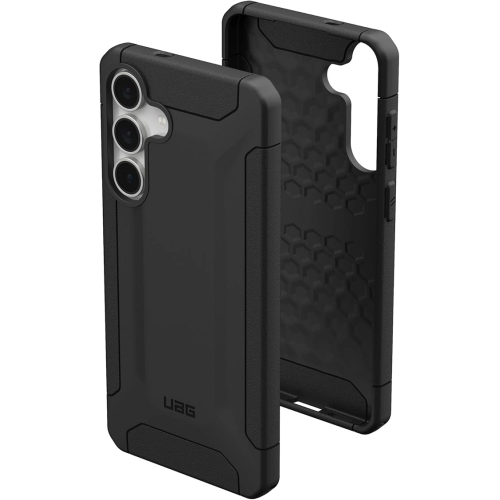
    No. The dimensions of the front are almost identical, but the F9 Ultra is thicker and, most importantly, has a completely different camera island layout. This is visible in the manufacturer’s photos above. Judging by them, the camera cutout in the F8 Ultra case will not align with the lenses of the F9 Ultra.

    No accessory manufacturer in our offer labels the case as common for both models. You need a new case and new glass for the F9 Ultra.
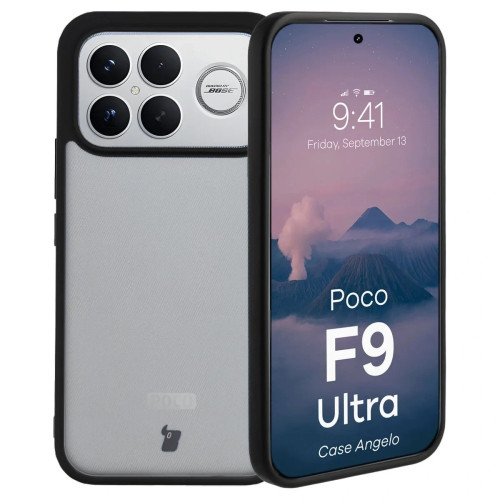
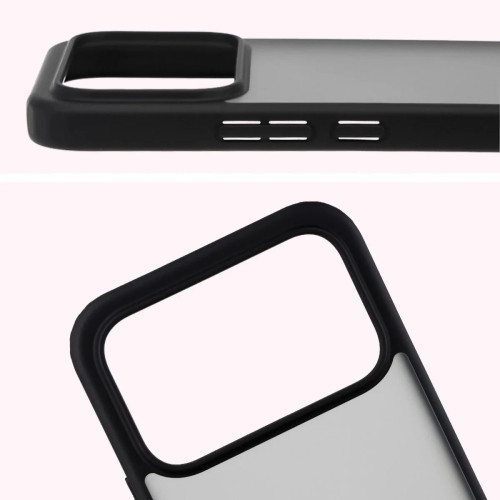
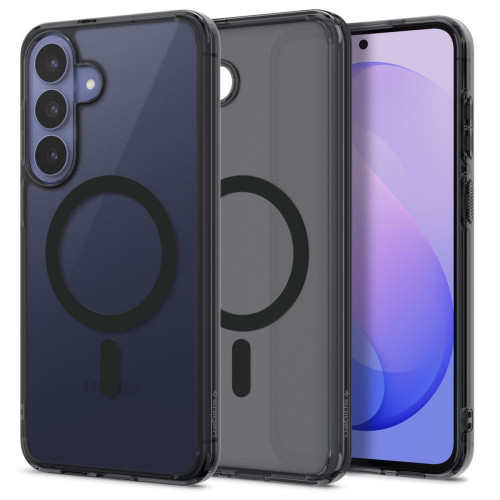
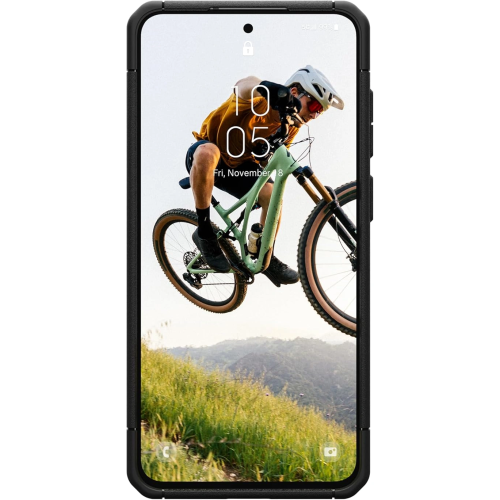
    Bizon Case Angelo for POCO F9 Ultra: smoky back and black frame.
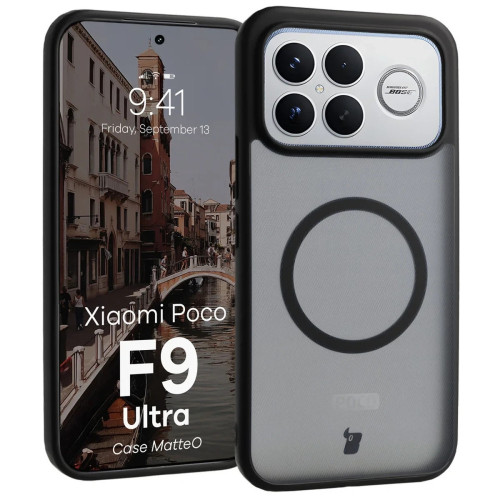
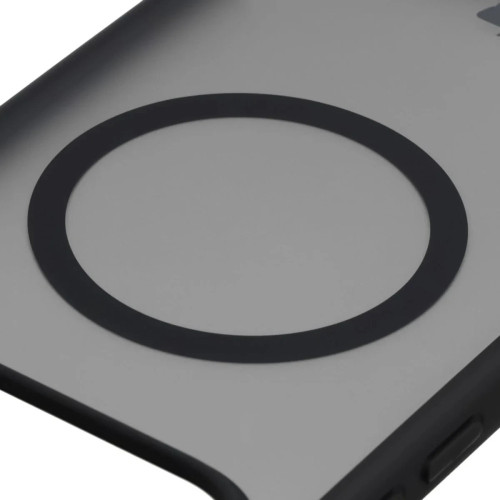
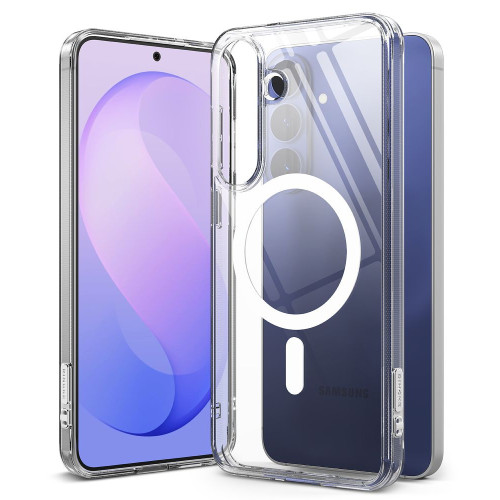
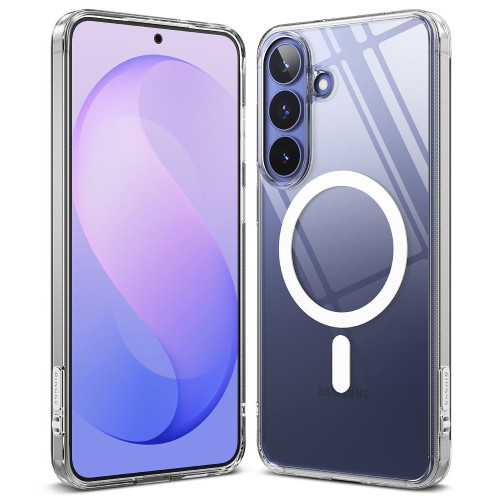
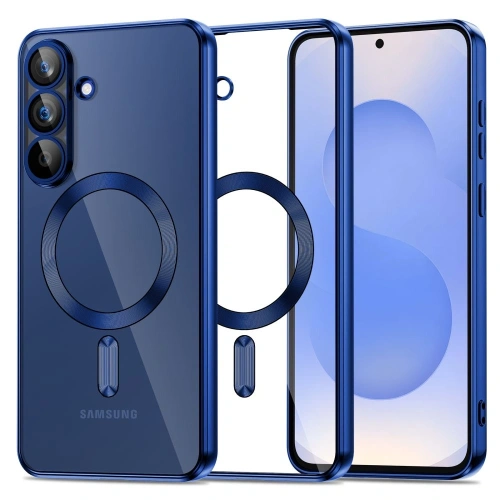
    Bizon Case MatteO for POCO F9 Ultra with a magnetic ring.
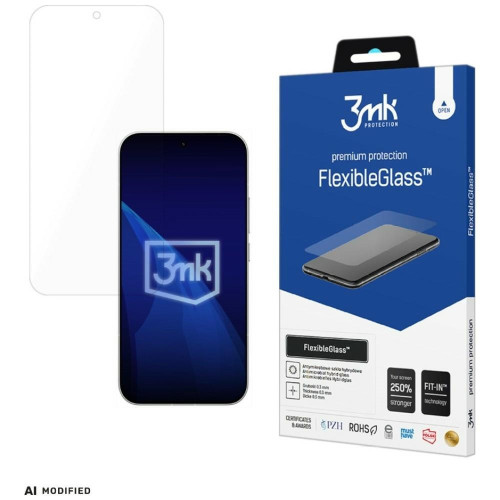
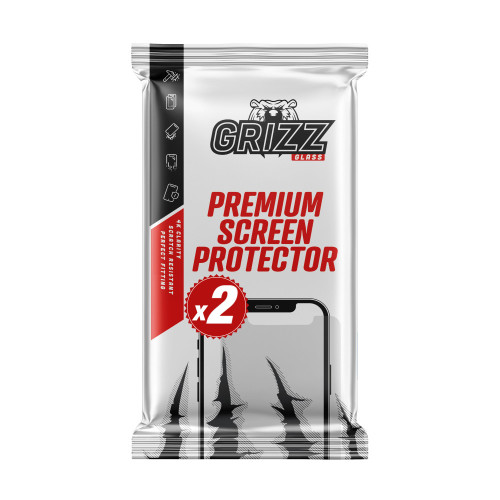
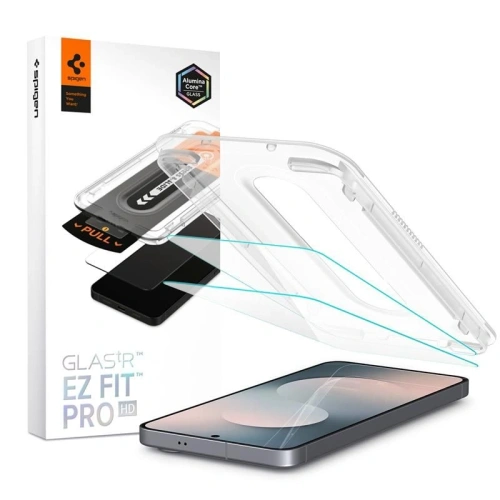
    3mk FlexibleGlass for the screen and GrizzGlass for the camera.

    In the store for F9 Ultra you will find, among others:

    [hs_products category=”2678″ limit=”6″ sort=”sales”]

    You can find the full offer in the category accessories for POCO F9 Ultra. If you are sticking with F8 Ultra, check out the category accessories for POCO F8 Ultra.

    Tip: in the box of both phones, there is a simple protective case from Xiaomi. It’s enough to start with, but there is no glass or camera cover.

    Charger: it is not included in the box in Poland

    On the Polish Xiaomi website, the contents of the box for both models include a phone, a USB-C cable, a case, and a SIM card ejector. There is no charger, although the global specification for the F9 Ultra lists a power adapter. If you already have a Xiaomi 100 W charger for the F8 Ultra, you can use it with the F9 Ultra as well. Both models achieve the full 100 W only with the Xiaomi charger.

    If you are buying a charger anew, it does not have to be an original Xiaomi. In the GSMArena test, the F8 Ultra charged almost as quickly with a USB Power Delivery 120 W charger and PPS up to 20 V: 76% after 30 minutes compared to 78%. A 100 W charger with PPS only up to 16 V provided 55% after half an hour.

    So look for a charger with PPS up to around 20 V, not just one with a high wattage. GSMArena tested the F9 Ultra only with the Xiaomi charger, but it has the same 100 W charging system. We discuss specific models in the guide what is the best charger for POCO F8 Ultra, and the full selection is in the network chargers category.

    Wireless charging and magnetic accessories

    Both models achieve a full 50 W wirelessly only with the Xiaomi dock. With a regular induction charger, the charging is much slower: in the GSMArena test, the F8 Ultra charged at around 8 W on a Qi2 charger. The F9 Ultra was not tested this way, but it has the same charging system.

    None of the models have built-in magnets. To use magnetic car mounts, power banks, or chargers, you need a case with a magnetic ring, e.g., the mentioned Bizon Case MatteO. You can find mounts in the phone mounts category, and chargers in the inductive chargers category.

    F9 Ultra can also wirelessly charge other devices with a power of 22.5 W. Just place headphones or a watch on its back. F8 Ultra also has reverse wireless charging, but Xiaomi does not specify its power.

    POCO F9 Ultra or F8 Ultra: which one to choose?

    Your situation Choose
    You have F8 Ultra and are satisfied with it Stick with F8 Ultra
    You have F8 Ultra, but the battery doesn’t last all day of gaming F9 Ultra
    You are buying your first POCO phone and counting every penny F8 Ultra
    You play titles that support 185 Hz F9 Ultra (be prepared for heating)
    You want a lighter phone F8 Ultra
    You need 1 TB of storage F9 Ultra

    If you have an older model, we also compared POCO F8 Ultra with F7 Ultra. Pre-release leaks and the F9 Pro model are described in the article POCO F9 Pro and F9 Ultra: premiere and leaks.

    Summary: POCO F9 Ultra vs F8 Ultra

    • The same processor. The difference concerns only games that support the VisionBoost D8 chip, and the F9 Ultra heats up more in them.
    • Larger battery (8,050 mAh) is the strongest argument for the new model.
    • 185 Hz and 200 MP look impressive on paper, but in everyday use, the difference is smaller than the numbers suggest.
    • F8 Ultra is cheaper: by 500 PLN, and it is also lighter and still very efficient.
    • The case from F8 does not fit, but the Xiaomi charger does. There is no charger included in the Polish box for either of them.

    Regardless of your choice, it’s worth securing the new phone right away. Start with the category accessories for POCO F9 Ultra. Shipping is free for orders over 100 PLN.

    FAQ

    Is it worth switching from POCO F8 Ultra to F9 Ultra? For most people, no. Both have the same processor, so the switch makes sense mainly if you need a larger battery.

    Does the case for POCO F8 Ultra fit F9 Ultra? No. The F9 Ultra is thicker and has a different camera island layout, so the cutout in the F8 Ultra case won’t align with the lenses. You need a case designed for the F9 Ultra.

    How much does POCO F9 Ultra cost in Poland? On the Xiaomi Poland website, the POCO F9 Ultra costs from 3,299 PLN for the 12/256 GB version. The F8 Ultra is available from 2,799 PLN.

    Does the POCO F9 Ultra come with a charger in the box? In Poland, no. According to the Polish Xiaomi website, the box contains the phone, a USB-C cable, a case, and a SIM card ejector. You need to buy the charger separately or use the Xiaomi 100 W charger if you already have it.

    Will the charger from the POCO F8 Ultra charge the F9 Ultra? Yes. The Xiaomi 100 W charger will charge the F9 Ultra at full power because both models have the same charging system. For chargers from other manufacturers, look for PPS support up to about 20 V.

    Does the POCO F9 Ultra have a better camera than the F8 Ultra? It has a main camera with a higher resolution (200 MP compared to 50 MP), but the F8 Ultra has a physically larger sensor. The 5x telephoto, wide-angle, and front cameras are very similar in both models.
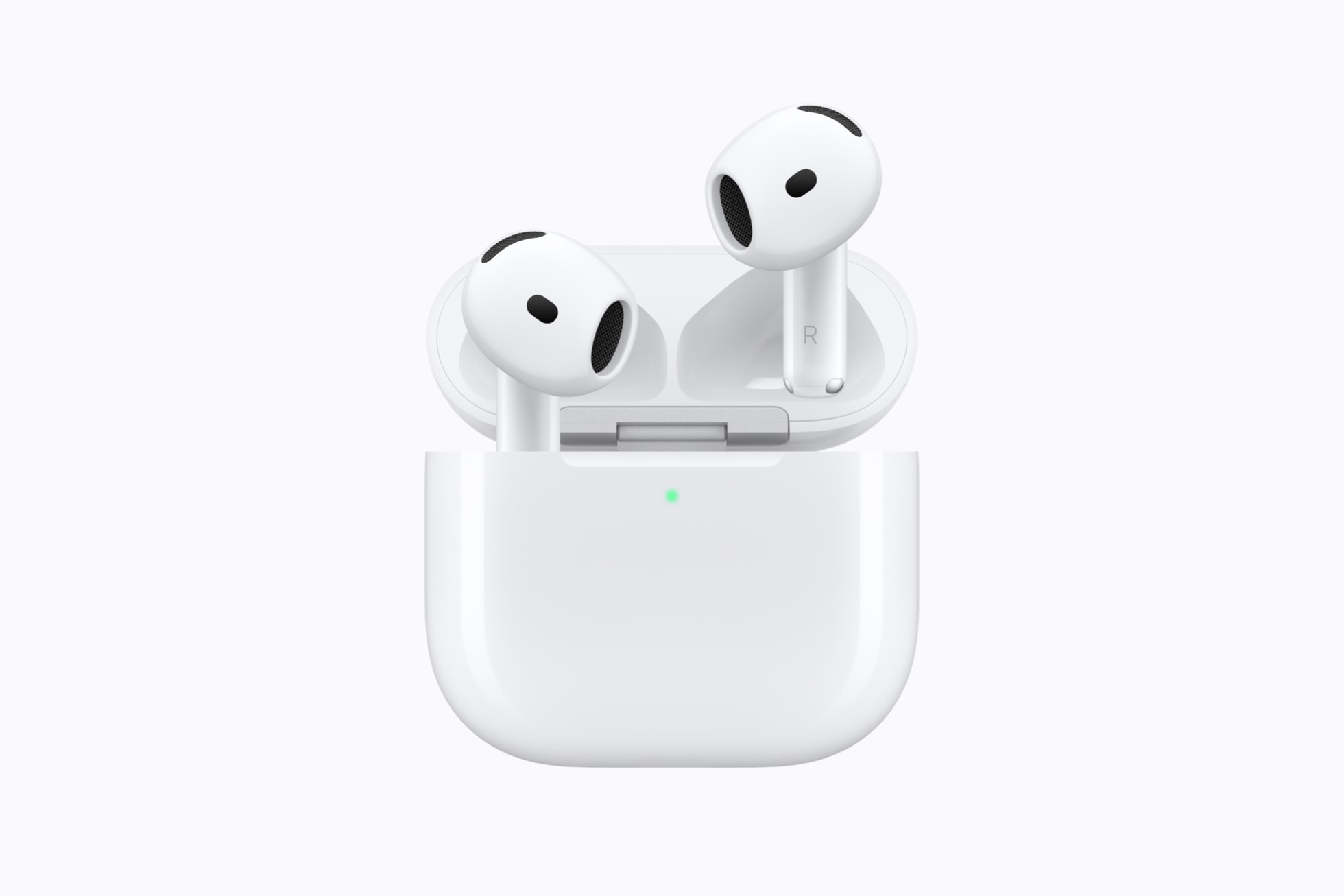

  • AirPods 5 vs AirPods 4: ANC in Every Version and Lower Price

    AirPods 5 vs AirPods 4: ANC in Every Version and Lower Price

    Compared to AirPods 5 vs AirPods 4, the biggest changes are not in the earbuds themselves, but in how much you have to pay for their best features. Active noise cancellation is now available in both versions and reduces 50% more noise than in AirPods 4 with ANC. It also gained IP57 resistance instead of IP54.

    The headphones went on sale on September 18, 2026. In Poland, they cost 599 PLN for the USB-C case version and 699 PLN for the wireless charging case.

    There is one more thing that no presentation mentions: the casing has not changed by a millimeter. The earbuds and case have the same dimensions as in AirPods 4, so a protective case purchased two years ago will fit the new model.

    A short answer on who should choose what: AirPods 5 for any new purchase and when switching from basic AirPods 4, and AirPods 4 ANC only if you find them significantly cheaper. Owners of AirPods 4 ANC have no reason to upgrade.

    Below is the full table of both generations, an explanation of what really separates the USB-C case version from the wireless case version today, and a fair list of things that AirPods 5 do not improve at all.

    AirPods 5 vs AirPods 4: full comparison table

    We compare four variants, as both generations come in two versions. We have bolded the positions where the new generation actually makes a change.

    ParameterAirPods 4 (USB-C case)AirPods 4 ANC (wireless case)AirPods 5 (USB-C case)AirPods 5 (wireless case)
    Active noise cancellation❌✅✅✅
    ANC effectiveness (against AirPods 4 with ANC)no ANCreference point+50% noise reduction+50% noise reduction
    Acoustic architectureclassicclassicmulti-portmulti-port
    Adaptive EQ✅✅next generationnext generation
    Transparency mode✅✅more naturalmore natural
    Adaptive sound❌✅✅✅
    Conversation awareness❌✅✅✅
    Studio-quality recording❌❌✅✅
    Live translation❌✅✅✅
    Volume control by touch❌❌❌✅
    ChipH2H2H2H2
    Bluetooth5.35.35.35.3
    Headphone and case resistanceIP54IP54IP57IP57
    Case chargingUSB-CUSB-C, wirelessUSB-CUSB-C, wireless
    Speaker in case for Find My app❌✅❌✅
    Earbud dimensions30.2 × 18.3 × 18.1 mm===
    Case dimensions46.2 × 50.1 × 21.2 mm===
    Case weight32.3 g34.7 g32.3 g34.7 g
    Price in Polanddependent on storedependent on store599 PLN699 PLN
    ReleaseSeptember 2024September 2024September 18, 2026September 18, 2026

    The conclusion from the table is one: the changes are in acoustics and water resistance, not in electronics. The chip, Bluetooth, dimensions, and weight are exactly the same as two years ago. The symbol “=” indicates a value identical to the first column. We have listed the operating times separately in the battery section, and you will find a complete list of things that remain unchanged below.

    ANC 50% more effective: what does it mean in practice

    Apple claims that the AirPods 5 remove 50% more external noise than the AirPods 4 with active noise cancellation. This is not the result of a new chip, as it has not changed, but rather a redesign of the construction itself.

    The new multi-port acoustic architecture directs air differently inside the earbud. Additionally, improved computational audio algorithms respond faster to changes in the environment.

    It is important to understand the starting point. The AirPods 4 ANC were the first open earbuds from Apple with active noise cancellation, and the noise reduction worked decently in the subway or on a plane, but clearly weaker than in the in-ear AirPods Pro. The design without a rubber tip does not seal the ear canal, so some noise enters from the side.

    One and a half times better noise reduction in the same open design is a real leap, but it still doesn’t reach the level of AirPods Pro 3. If you’re looking for maximum silence rather than comfort for long hours of wear, the in-ear model remains the right choice. We described the differences between the Pro generations in the comparison of AirPods Pro 3 and Pro 2.

    The transparency mode has also improved, sounding more natural, as well as the sound itself, thanks to the new generation adaptive EQ. A new feature is studio-quality recording, meaning a better audio track when recording video with your phone.

    USB-C case or wireless: what separates both versions today

    This question has changed its meaning with this release and is worth discussing separately, as the difference between the variants is no longer about sound.

    In AirPods 4, the extra cost primarily led to ANC, along with wireless charging and a speaker in the case. The cheaper version had no noise cancellation at all, so the choice was simple: either pay more or give up the most important feature.

    In AirPods 5, both versions sound the same and both have full ANC. The extra cost leads solely to convenience:

    • Volume control with a tap of the foot, swipe up or down instead of reaching for your phone
    • One hour more listening, 5 hours with ANC instead of 4, and 7 hours without ANC instead of 6
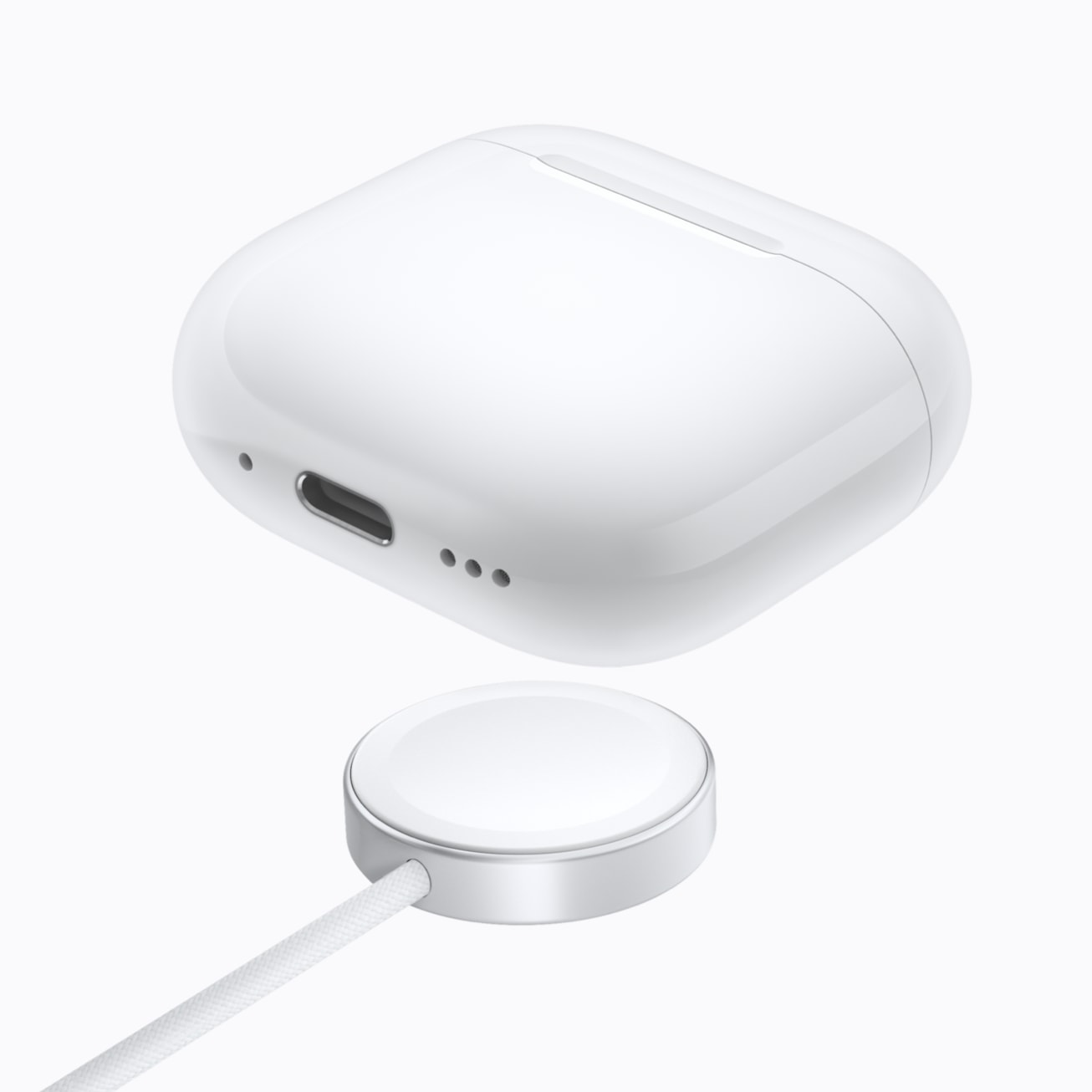
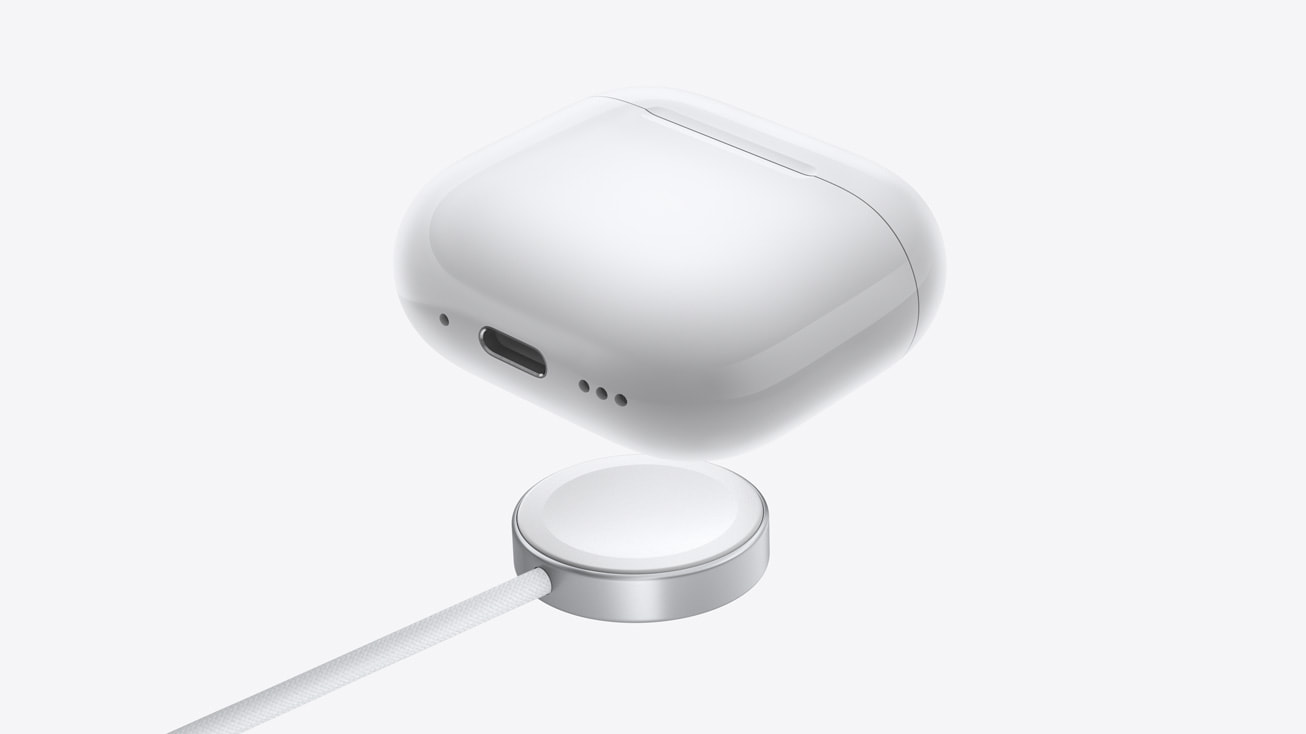
    • Wireless charging, with a Qi charger or the one from Apple Watch
    • Speaker in the case, helps find the lost case in the Find app

    Tip: if you have a wireless charger at home or frequently lose your case, the upgrade is worth it. If you charge everything with a USB-C cable and keep the case in the same pocket, the cheaper version gives exactly the same sound.

    Case with wireless charging: on the left AirPods 5, on the right AirPods 4. Photos: Apple.

    This is, by the way, the essence of this release. Two years ago, ANC in open AirPods required upgrading to a more expensive variant; today you get it in the basic version. Active noise cancellation is no longer an optional extra.

    Battery: an hour more where it matters most

    The changes in the battery are minor, but placed exactly where the user will notice them.

    ModeAirPods 4 ANCAirPods 5 (USB-C case)AirPods 5 (wireless case)
    Listening with ANC4 hours4 hours5 hours
    Listening without ANC5 hours6 hours7 hours
    Total with case, with ANC20 hours20 hours22 hours
    5 minutes of chargingabout 1 hourabout 1 hourabout 1 hour

    The second row is the most interesting. Listening without ANC has been extended in both versions, even though this is a mode that Apple doesn’t boast about at all. For someone who wears open headphones mainly for podcasts in the office, this is a gain that will be felt more often than better ANC.

    It is worth knowing, however, that the basic version of AirPods 5 does not extend the time with ANC. Four hours is exactly what the AirPods 4 provided with noise cancellation. The additional hour is available only in the variant with the wireless case.

    IP57 instead of IP54: what it really changes

    This change appears in the table as a shift by one degree, but in practice, it means a completely different category of resistance.

    IP54 provides protection against water splashes from any direction. Rain, sweat during a run, splashes while washing dishes. The headphones can survive this, but immersion is another story.

    IP57 offers protection against immersion up to one meter for 30 minutes. Falling into a sink, puddle, washbasin, or into a jacket pocket left in the rain is no longer a sentence.

    Dust resistance has also been increased: a five in the first position means that particles can penetrate, but will not disrupt functionality. For someone who wears headphones at the beach or on a construction site, this is a concrete argument.

    During training, however, it’s not just resistance that matters, but also whether the headphones will stay in the ear at all. An open design can be risky, which we detailed in the guide how to choose headphones for the gym.

    The standard applies to both headphones and the case, which was not always obvious for buyers of the AirPods 4.

    Note: IP resistance is not eternal. Seals wear out over time, and the manufacturer’s warranty does not cover damage caused by liquid. Treat IP57 as protection against accidents, not as an invitation to swim.

    What AirPods 5 Do Not Improve

    An honest list of things that remain exactly the same:

    • H2 chip, the same layout that debuted in AirPods Pro 2 in 2022
    • Bluetooth 5.3, no change in standard
    • Open design without rubber tips, with the same advantages and limitations
    • Dimensions and weight of the earbud: 30.2 × 18.3 × 18.1 mm and 4.3 grams, exactly the same as in AirPods 4
    • Dimensions of the case: 46.2 × 50.1 × 21.2 mm, unchanged
    • Spatial audio with head tracking, the same implementation
    • Voice isolation and personalized volume, transferred unchanged
    • Fast charging: 5 minutes still gives about an hour of listening

    There is no heart rate measurement, which the AirPods Pro 3 received. There are no interchangeable tips or a switch to an in-ear design. There is also no new chip, so the range and connection stability remain at the level of its predecessor.

    One detail is worth noting before purchase: the speaker in the case for the Find My app is only available in the wireless case version. The division here is exactly the same as in AirPods 4, where the speaker was also only available in the more expensive variant.

    AirPods 5 price: how much do they cost in Poland

    Prices in the Polish Apple store look like this:

    VersionPrice
    AirPods 5 with USB-C case599 PLN
    AirPods 5 with wireless charging case699 PLN

    The box does not include a cable or charger, so if you are buying your first Apple device, add a USB-C cable right away. The case for both versions charges via cable, and the more expensive one additionally with a wireless charger.

    AirPods 4 have disappeared from the forefront in the Apple store, but they remain in retail chains, usually much cheaper than the new model. This is their only, but strong argument.

    AirPods 5 Case: Does the old one fit?

    Case compatibility is the only point where Apple hasn’t messed up, and it’s worth knowing this before making a purchase.

    The charging case has identical dimensions of 46.2 × 50.1 × 21.2 mm in both generations. The weight also matches: 32.3 g for the USB-C version and 34.7 g for the wireless version. This means that a silicone or plastic case purchased for AirPods 4 will fit AirPods 5 without any looseness.

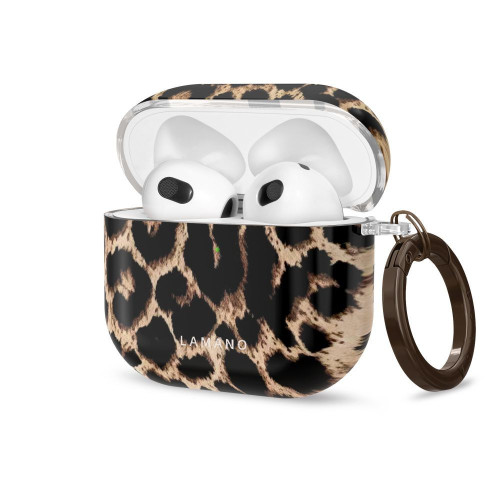
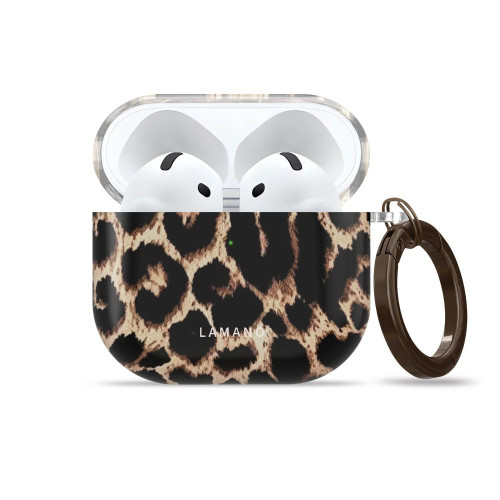
    This is confirmed by the manufacturers themselves. Tech-Protect has introduced the Lamano series described directly as “AirPods 4 / 5″, without separating the generations.

    ElementCompatibility with AirPods 5
    Protective case for AirPods 4✅ fits, identical dimensions
    Case for AirPods 3❌ different shape of the housing
    Case for AirPods Pro 3❌ different shape of the housing
    Clips and carabiners for AirPods 4✅ fit

    The only thing to keep in mind: if you buy the wireless charging version, choose a slim case without metal inserts to avoid blocking energy transfer.

    Tech-Protect Lamano for AirPods 4 and 5

    Tech-Protect Lamano case is the simplest answer to the question of compatibility, as the manufacturer lists both generations in the product name. You don’t have to guess anything.

    The finish mimics leather, and the attachment allows you to clip the case to a bag or backpack strap. There is also a Nature Muse version available in a lighter color scheme.

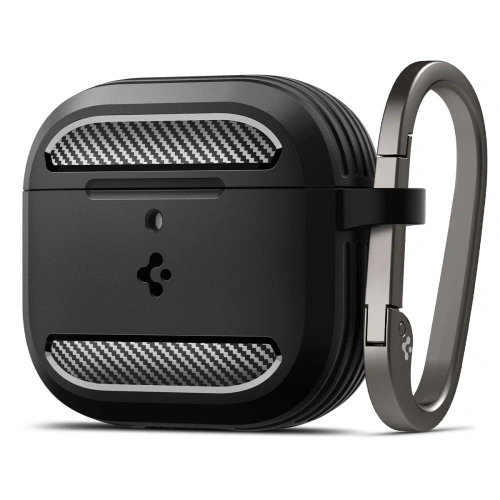
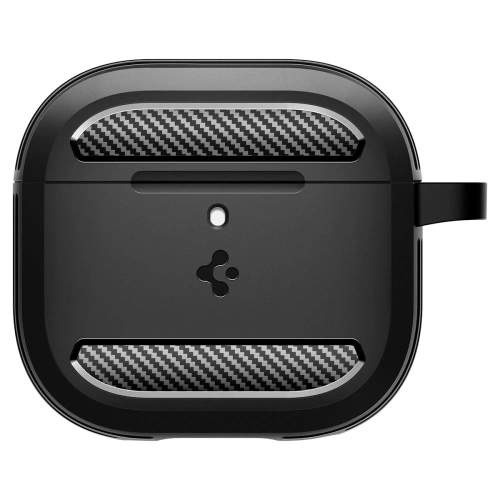
    Spigen Rugged Armor

    Spigen Rugged Armor case is a classic that works exactly like it does for phones in its version for AirPods. The flexible TPU with embossed pattern does not slip from your hand, and the matte surface does not collect fingerprints.

    The cutout at the bottom provides easy access to the USB-C port, and the status LED remains visible through the case.

    ESR Orbit HaloLock with MagSafe

    ESR Orbit HaloLock case adds to AirPods what Apple did not provide: a magnetic ring compatible with MagSafe. The case attaches to a car mount or a magnetic stand on the desk.

    This solution makes sense especially paired with the version with a wireless case, as the magnet helps align with the induction charger coil on the first try.

    UAG Scout

    UAG Scout Case is the choice for a backpack and construction site. The design with raised edges absorbs impact instead of the case hinge, which is the most vulnerable element in AirPods.

    The set includes a carabiner. If you prefer a version with a more distinct pattern, the same manufacturer offers UAG Plasma.

    UNIQ Clyde Lock Case

    UNIQ Clyde Case solves the most common problem of open cases for AirPods: the lid accidentally opening in your pocket. The clasp keeps the lid closed until you open it yourself.

    Tech-Protect MagMat

    Tech-Protect MagMat case is the second option with magnets, thinner than the Orbita and closer to the raw look of the Apple case itself. A good choice when you want protection that is almost invisible.

    If you care about natural materials, check out the NOMAD Modern Leather case, which develops a patina over time.

    [hs_products ids=”147076,81752,85241,112707,114224,86776″ cols=”6″ title=”Cases compatible with AirPods 4 and AirPods 5″]

    We have compiled a complete list with descriptions in the article about the best cases for AirPods 4. All the models mentioned there are also compatible with the fifth generation.

    AirPods 5 or AirPods 4: which model to choose?

    The comparison comes down to five situations and five clear answers.

    You have AirPods 4 ANC. Stick with them. The same chip, the same shape, the same spatial sound. You gain better noise cancellation and water resistance, but that’s not enough to replace functional headphones.

    You have AirPods 4 without ANC. Upgrading makes sense. You get a feature that your model doesn’t have at all, and it’s in a version that’s fifty percent more effective than the one you had to pay extra for two years ago.

    You have AirPods 2 or 3. Get AirPods 5 without hesitation. The jump includes ANC, transparency mode, spatial sound, USB-C case, and IP57 resistance.

    You are buying your first Apple headphones. AirPods 5 in the basic version. Since ANC is available in both variants, and the sound is identical, only pay extra if you really use wireless charging.

    You care about maximum silence. Choose an in-ear model. The open design has limits that no acoustic architecture can overcome. Check out cases and accessories for AirPods Pro 3 or our guide on in-ear or over-ear headphones.

    Summary

    AirPods 5 vs AirPods 4 is a launch where the most important change is the price, not the technology. Apple took the most expensive feature from the previous generation and put it into the base model.

    Five conclusions to end:

    1. ANC is in every version and reduces 50% more noise than in AirPods 4 with noise cancellation
    2. The choice of case no longer concerns sound, but wireless charging, speaker in the case, volume control by tapping, and listening time
    3. IP57 instead of IP54 changes the category from “splash resistant” to “survives immersion”
    4. Chip, Bluetooth, dimensions, and weight are identical to AirPods 4
    5. The case from AirPods 4 fits unchanged, as the charging case has the same dimensions

    If you stick with AirPods 4, invest in a good case instead of new headphones. If you switch to the fifth generation, don’t buy a case anew. The one you have will fit without any problem.

    FAQ: frequently asked questions

    When were the AirPods 5 released?

    The AirPods 5 went on sale on September 18, 2026, with pre-orders starting on September 9. The launch took place alongside the Apple Watch Series 12 and Apple Watch Ultra 4.

    Does the case for AirPods 4 fit AirPods 5?

    Yes. The charging case has identical dimensions of 46.2 × 50.1 × 21.2 mm in both generations, so a protective case purchased for AirPods 4 will fit AirPods 5 snugly. Some manufacturers, like Tech-Protect, describe their cases directly as “AirPods 4 / 5”.

    Do the AirPods 5 have ANC in both versions?

    Yes. This is the main change of this generation. Both the version priced at 599 PLN and the one at 699 PLN have full active noise cancellation. In AirPods 4, noise cancellation was only available in the more expensive variant.

    How much do AirPods 5 cost in Poland?

    The AirPods 5 with USB-C case cost 599 PLN, while the version with a wireless charging case is priced at 699 PLN. The box does not include a cable or charger.

    What is the difference between the 599 PLN AirPods 5 and the 699 PLN version?

    Nothing in terms of sound. The more expensive version adds wireless charging, a speaker in the case for the Find My app, volume control by tapping the stem, and an hour longer listening time on a single charge.

    Is it worth buying AirPods 4 instead of AirPods 5?

    It’s worth it if you find them clearly cheaper and accept weaker ANC and IP54 resistance. The chip, spatial sound, and shape are the same, so the biggest loss concerns noise cancellation effectiveness.

    Are AirPods 5 waterproof?

    They have an IP57 rating, meaning they can withstand immersion up to one meter for 30 minutes. This is clearly more than the IP54 in AirPods 4, which only protected against splashes. The standard applies to both the earbuds and the case.


    Sources:

  • Apple Watch Ultra 4 vs Ultra 3: 50 hours and new sensors

    Apple Watch Ultra 4 vs Ultra 3: 50 hours and new sensors

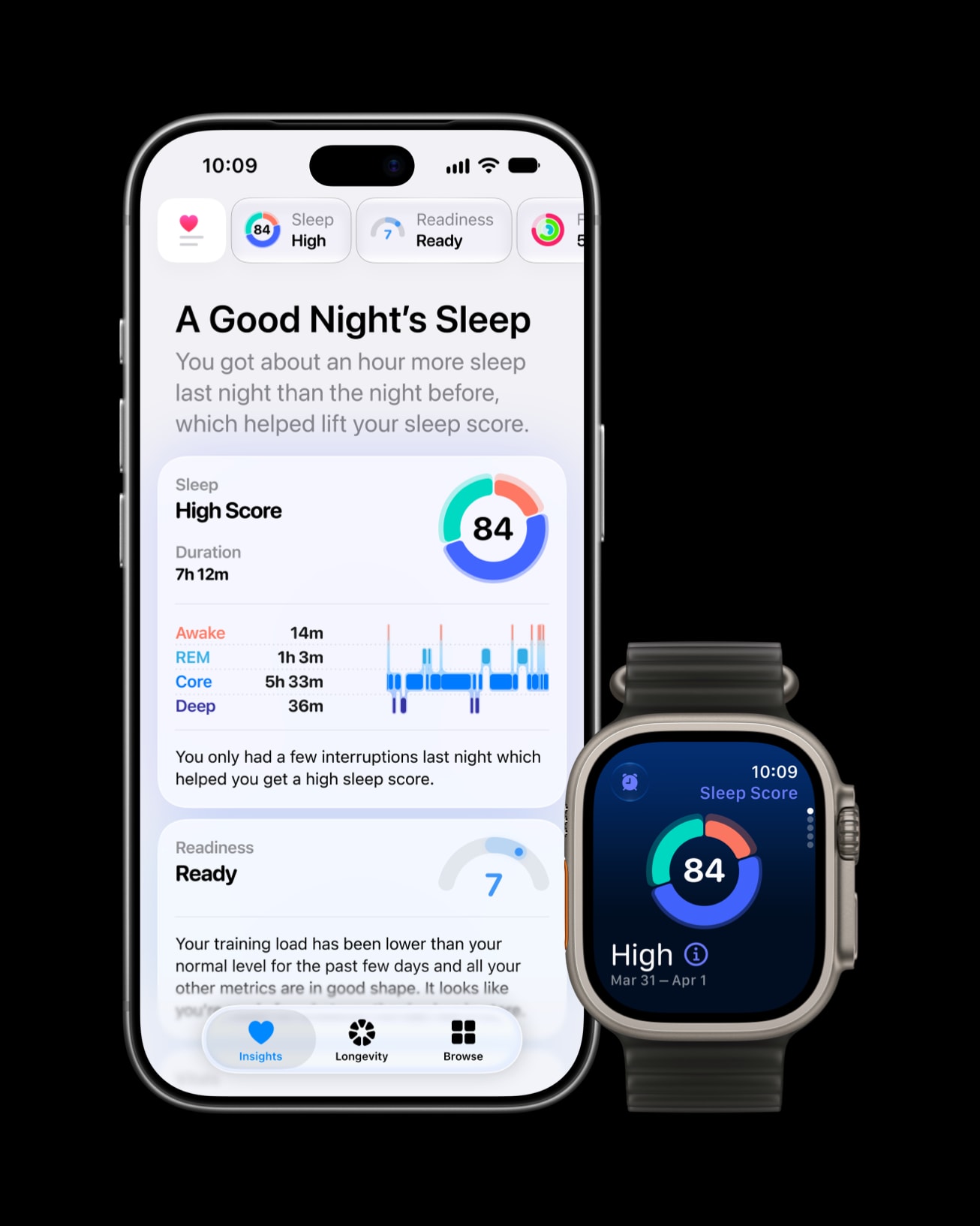
    In comparison, Apple Watch Ultra 4 vs Ultra 3, two things matter: battery and sensors. Ultra 4 lasts up to 50 hours instead of 42, and the new health measurement system checks heart rate every 5 seconds around the clock and calculates the Readiness index from that. The screen, case dimensions, satellite, and diving features remain unchanged.

    The watch went on sale on September 18, 2026, and in Poland, it costs 3,799 PLN, exactly the same amount that Ultra 3 cost at launch last year.

    There is also one very good piece of news that no presentation mentions: the case has not grown by a millimeter. Ultra 4 has the same dimensions of 49 × 44 × 12 mm as Ultra 3, Ultra 2, and the first Apple Watch Ultra from four years ago.

    A short answer on who should choose what: Ultra 4 for first-time buyers and for those upgrading from older than Ultra 3, Ultra 3 on sale if you count every penny. Owners of Ultra 3 have no reason to change.

    Below is the full table of both models, a fair list of things that Ultra 4 does not improve at all, and a specific answer to the question of whether your existing bands and cases will fit the new watch.

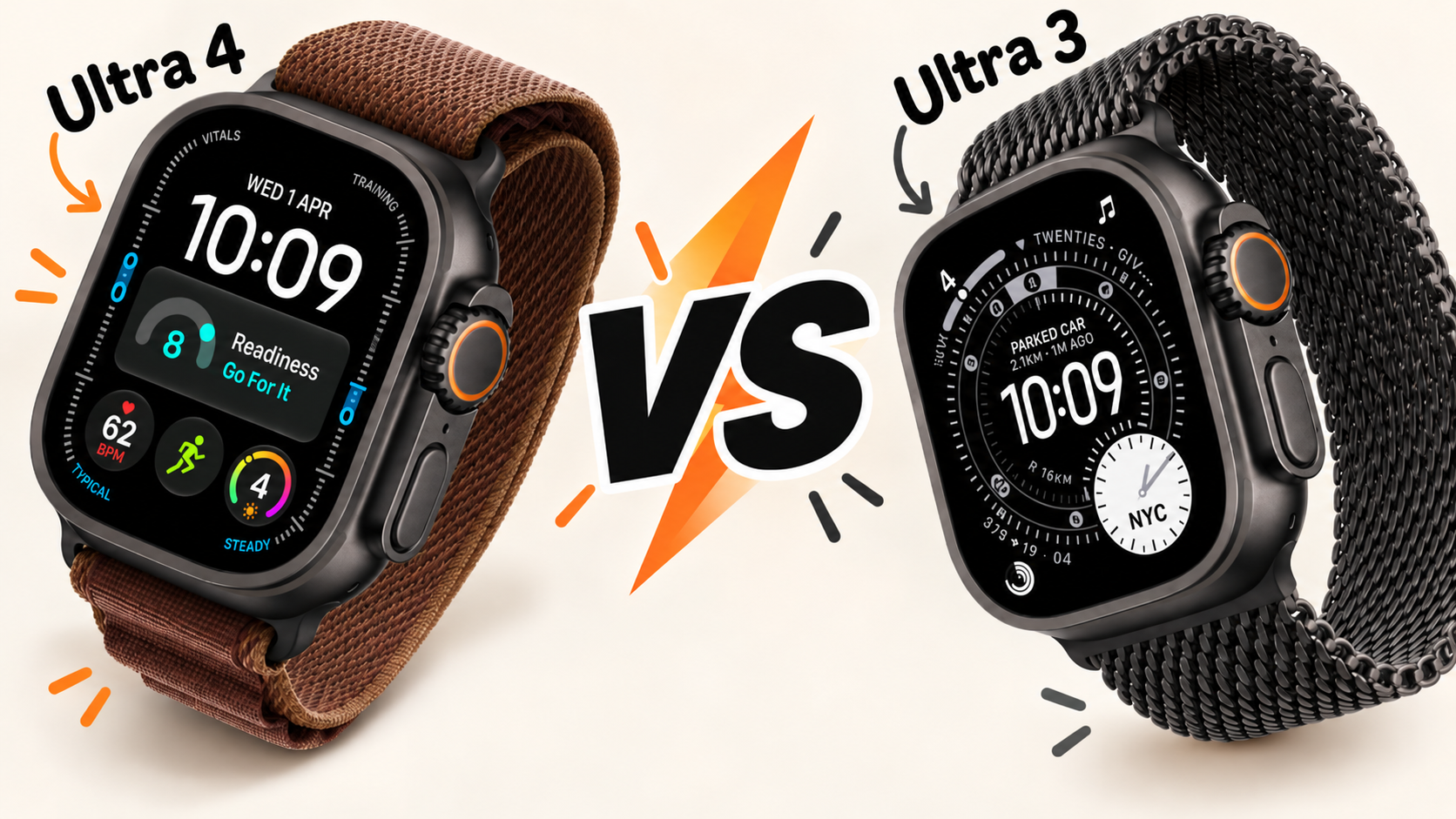
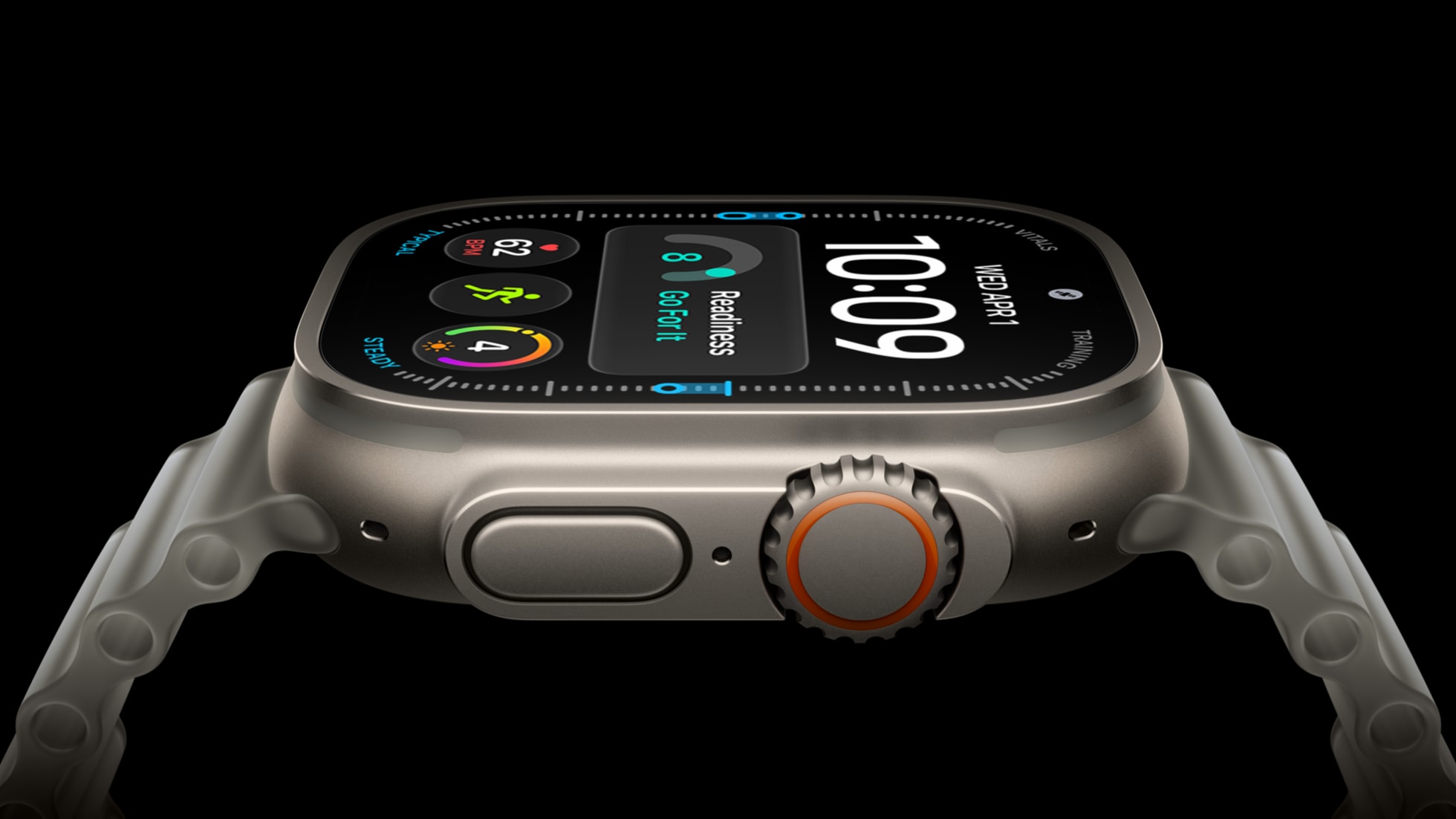
    On the left Apple Watch Ultra 4, on the right Ultra 3. The case 49 × 44 × 12 mm is identical in both. Photos: Apple.

    Apple Watch Ultra 4 vs Ultra 3: complete comparison table

    We have bolded only those items that actually differ.

    Parameter Apple Watch Ultra 3 Apple Watch Ultra 4
    Release September 2025 September 18, 2026
    Chip S10 S11
    Storage 64 GB 64 GB
    Optical heart rate sensor 3rd generation redesigned, Health Sensing System
    Electrical sensor (ECG) previous generation larger electrode surface
    Heart rate measurement recording samples every few minutes sample every 5 seconds, 24/7
    HRV measurement standard frequency up to 24 times more frequently
    Readiness ❌ ✅
    Audio Intelligence ❌ ✅
    Display LTPO3 wide-angle OLED, always-on LTPO3 wide-angle OLED, always-on
    Resolution 422 × 514 422 × 514
    Screen area 1,245 mm² 1,245 mm²
    Peak brightness 3,000 nits 3,000 nits
    Glass flat sapphire flat sapphire
    Case material Grade 5 titanium Grade 5 titanium, 3D printed
    Colors natural titanium, black titanium natural titanium, black titanium
    Dimensions 49 × 44 × 12 mm 49 × 44 × 12 mm
    Weight natural / black 61.6 g / 61.8 g 63.0 g / 63.1 g
    Battery, normal use up to 42 hours up to 50 hours
    Low power mode up to 72 hours up to 84 hours
    Outdoor training no data in specifications up to 18 hours
    Extended training no data in specifications up to 25 hours
    Maximum extended training no data in specifications up to 45 hours
    15 minutes of charging provides up to 12 hours of use up to 18 hours of use
    Charging to 80% approx. 45 minutes approx. 45 minutes
    Cellular network 5G RedCap and LTE 5G RedCap and LTE
    Satellite connectivity ✅ ✅
    Wi-Fi / Bluetooth Wi-Fi 4 / Bluetooth 5.3 Wi-Fi 4 / Bluetooth 5.3
    GPS dual-frequency L1 and L5 dual-frequency L1 and L5
    Ultra Wideband 2nd generation 2nd generation
    Water resistance 100 m, IP6X 100 m, IP6X
    Diving EN13319 up to 40 m up to 40 m
    Requirements iPhone 11+, iOS 26 iPhone 11+, iOS 27
    Starting price in Poland 3,799 PLN 3,799 PLN

    Thirty-four positions, of which fourteen differ. More importantly: aside from 1.4 grams of weight, all differences lie in the battery, sensors, and software. The dimensions of the case and screen remain untouched.

    Accessories for both generations are readily available, as the cut hasn’t changed. See bands and cases for the Apple Watch Ultra 49 mm →

    Battery: eight hours more and faster charging

    This is the most measurable change in the entire launch. The Ultra 3 claimed 42 hours of normal usage, while the Ultra 4 states 50 hours. In Low Power mode, the jump is similar: from 72 to 84 hours.

    What does this mean in practice? The Ultra 3 usually drained by the end of the second day, so you realistically charged it every other evening. The Ultra 4 easily lasts two full days with sleep tracking in between and leaves enough for a morning workout on the third day.

    The second gain is even more practical. 15 minutes of charging provides 18 hours of use instead of 12. A quarter of an hour in the shower is enough to leave the house with the watch for the whole day and night.

    • Normal use: 50 hours instead of 42, which is 19% longer
    • Low energy consumption: 84 hours instead of 72
    • Outdoor training with GPS and heart rate: up to 18 hours in Ultra 4
    • Extended training: up to 25 hours in Ultra 4
    • Maximum extended training with GPS every second: up to 45 hours in Ultra 4
    • Charging to 80%: about 45 minutes in both models

    Note the last line. Apple did not change the full charging speeds, only what it provides in a quarter of an hour. For the Ultra 3, the manufacturer does not publish separate results for outdoor training and extended mode, so these two items cannot be fairly compared.

    You won’t find chargers in the box of either of these models. If you need a second one for your desk or travel, choose it from the inductive chargers category.

    New health measurement system, or the second half of this launch

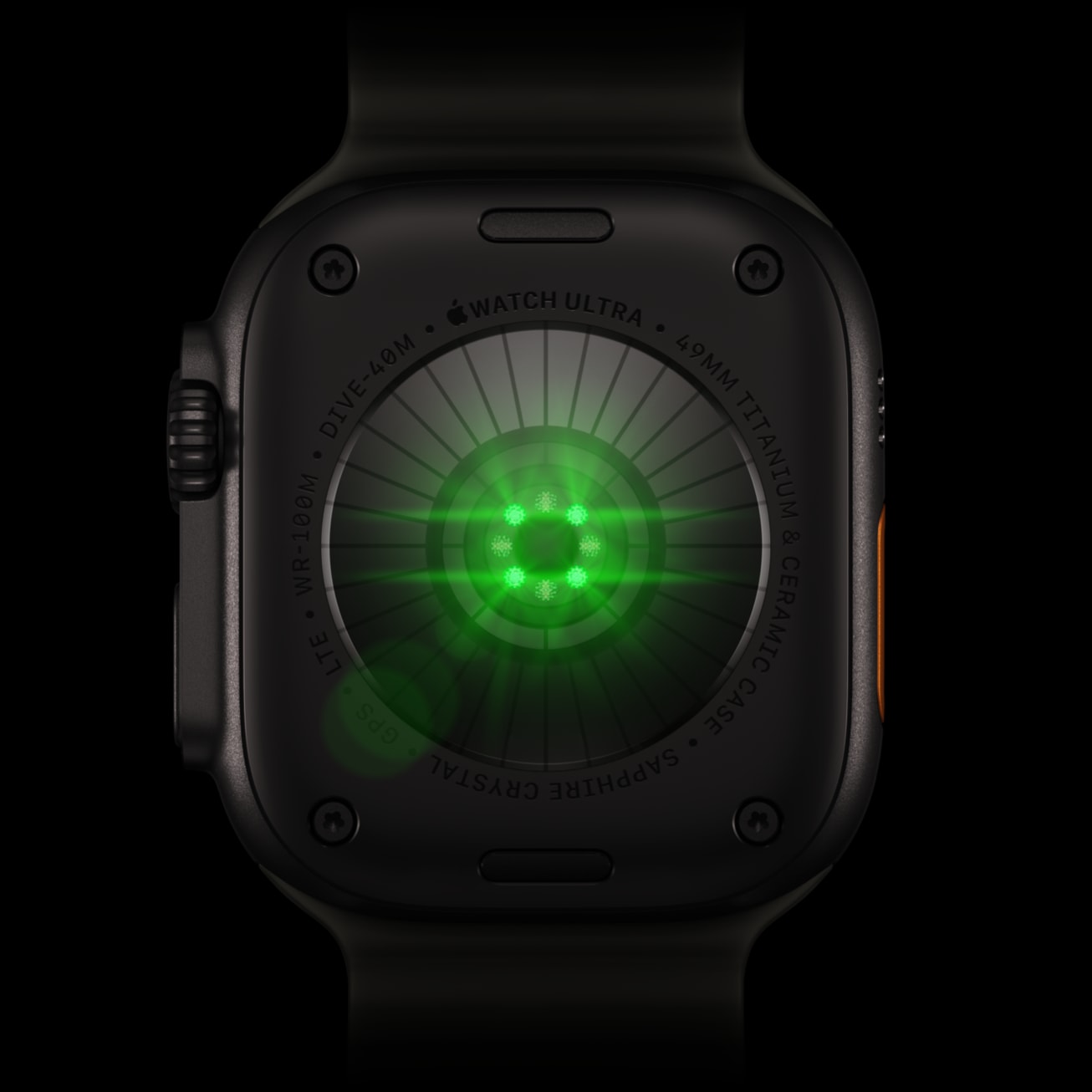
    Apple calls it the Health Sensing System and it is not a marketing label for the same electronics. Both sensors on the bottom of the case have physically changed.

    Apple explicitly mentions a new optical sensor and a new electrical sensor, which are both systems responsible for heart rate and ECG. Details of the construction, such as larger LEDs or different arrangements of photodiodes, are described by industry services; the manufacturer does not provide them in the specifications. The same set of sensors has also been introduced to the Apple Watch Series 12.

    Heart rate every 5 seconds instead of samples every few minutes

    Apple had not previously stated how often the Ultra 3 measures heart rate in the background. For the Ultra 4, it declares it directly: readings every 5 seconds around the clock, which is about 17 thousand times a day.

    Why so much? Because from denser data, you can calculate things that are not visible in sparse samples: stress response, micro fluctuations in heart rate after coffee, recovery pace after intervals.

    HRV measured 24 times more often and the Readiness indicator

    Heart Rate Variability (HRV) is a parameter that tells you whether the body has actually rested. The Ultra 4 measures it up to 24 times more often than its predecessor and separates it into recovery HRV and overall HRV.

    This is the basis for Readiness, a score on a scale from 0 to 10 that you receive in the morning along with one of four recommendations: recover, pace yourself, you are ready, or go full throttle.

    Note: Apple makes the Ready feature available only on Ultra 4 and Series 12 and has not announced it for older models. The feature relies on measurement density that the sensor from Ultra 3 simply does not collect.

    If you train according to loads and realistically look at recovery, this is the reason to change your watch. If the Ultra is primarily a durable watch with satellite for you, you won’t notice the difference.

    Audio Intelligence, or what the watch does with sound

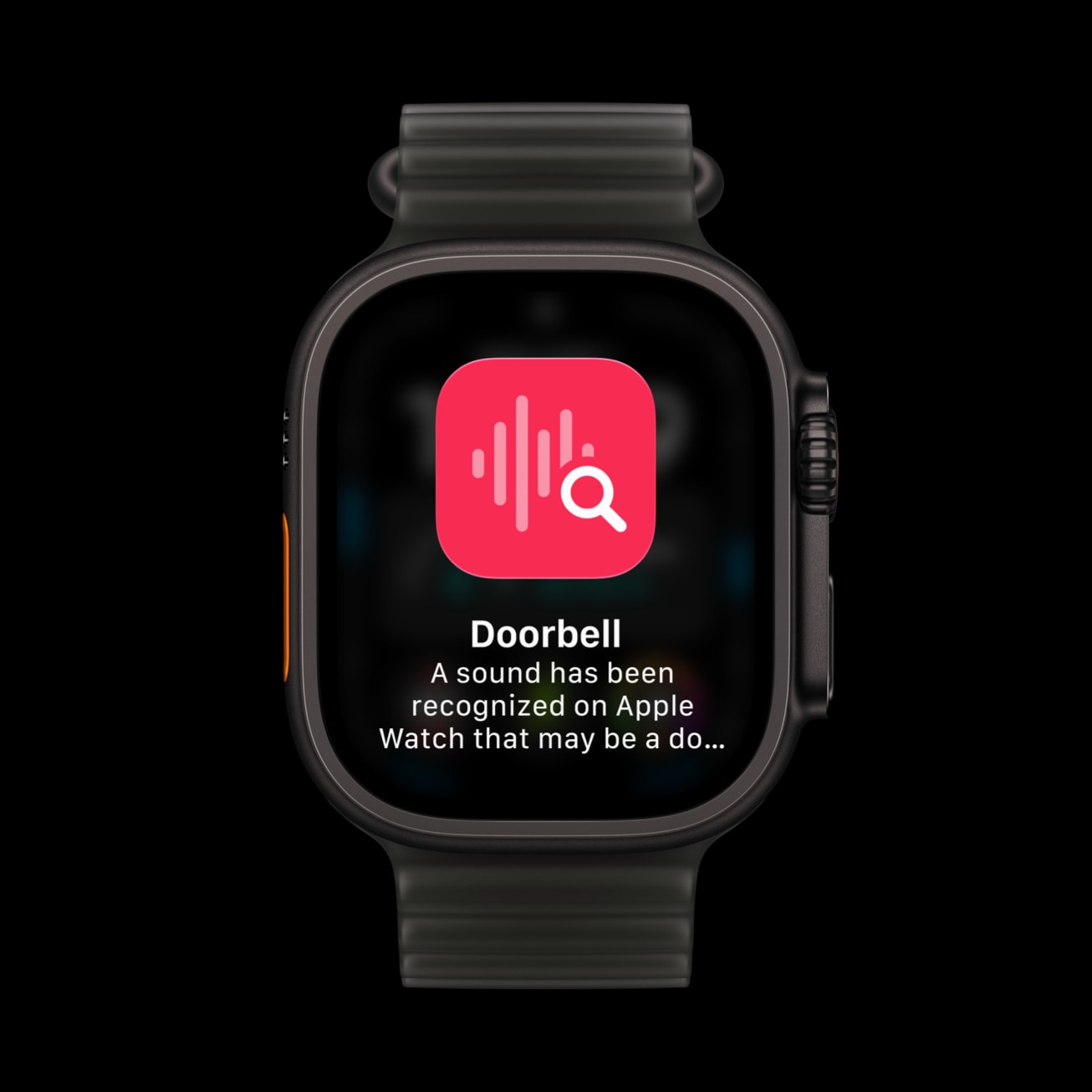
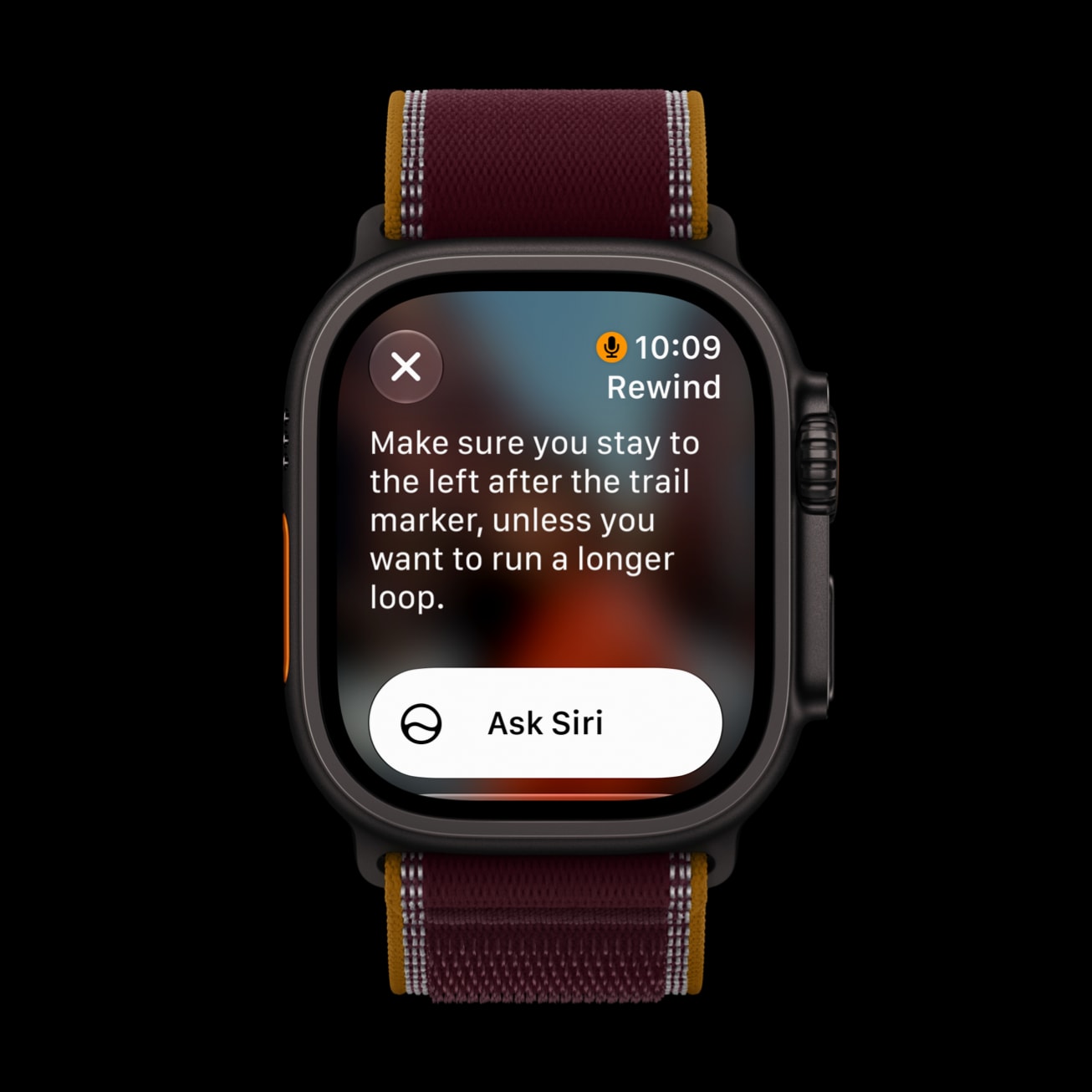
    This is a set of four features that Ultra 3 will not receive: Sound Recognition (alarm, baby crying, siren), faster Shazam, Live Rewind (displaying the last 15 seconds of a conversation as text after double-clicking the crown), and Siri Recap (summary of the conversation).

    The first two have been available since launch. Live Rewind and Siri Recap require an iPhone with Apple Intelligence and are being rolled out in stages. Apple requires Series 12 or Ultra 4 for them, so it is not exclusive to the Ultra model, but older watches will not receive them.

    What Apple Watch Ultra 4 Does Not Improve

    An honest list of things that remain exactly the same. For the Ultra model, it is exceptionally long, as its predecessor set the bar very high.

    • Display: 422 × 514 pixels, 1,245 mm² surface area, and 3,000 nits brightness, unchanged
    • Sapphire glass in a flat version, identical in both models
    • Case: the same 49 × 44 × 12 mm and the same Grade 5 titanium
    • Satellite connectivity: SOS Alarm, messages, and Find are available on both models
    • 5G RedCap and LTE, no differences
    • Dual-frequency GPS L1 and L5, the same setup
    • Diving: 100 m water resistance and EN13319 up to 40 m in both
    • Three beamforming microphones, two speakers, and a siren, identical
    • 64 GB memory and 2nd generation Ultra Wideband, unchanged

    There is also no glucose level measurement, which is rumored every year. There is no change in the shape of the case or a new strap attachment system.

    However, the Ultra 4 is 1.4 grams heavier (63.0 g compared to 61.6 g in natural titanium). It’s a difference you won’t feel on your wrist, but it’s worth knowing that the newer generation has gained a little weight, despite identical dimensions.

    Unofficially, there are also 4 GB of RAM, as reported by 9to5Mac. Apple does not provide this parameter in the specifications, so treat it as second-hand information.

    Apple Watch Ultra 4 Price: how much it costs in Poland

    The entry price has not changed. Apple Watch Ultra 4 costs 3,799 PLN in the version with natural or black titanium, always with GPS and cellular modem. Exactly the same price as Ultra 3 at the time of its release.

    Ultra 3 has made way for its successor in the spotlight, but it is still available from operators and retail chains, usually a few hundred PLN cheaper. This is its only, but very strong argument. A year ago, Ultra 2 was in a similar situation, which we compared with its successor in the comparison of Ultra 3 and Ultra 2.

    The Hermès version with a titanium bracelet is a separate price tier and purely a branding choice. Underneath, it’s the same watch.

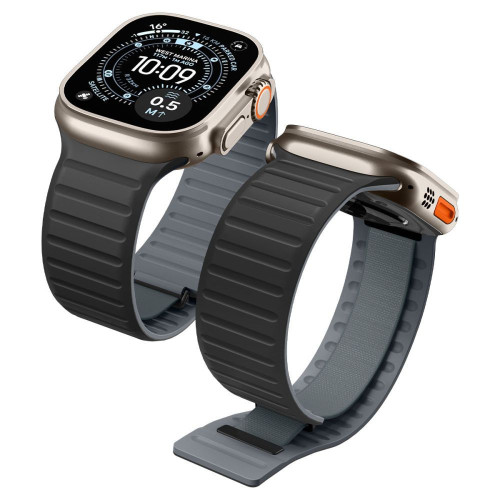
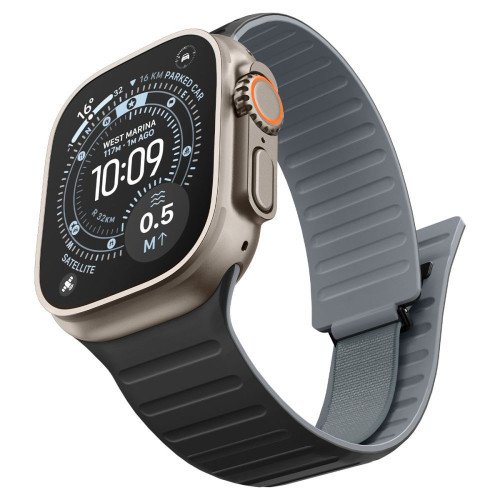
    Apple Watch Ultra 4 with the Alpine strap and Ocean strap. Photos: Apple.

    Accessories for Apple Watch Ultra 4: everything from the older Ultra fits

    Here is the best news of the entire comparison of Apple Watch Ultra 4 vs Ultra 3, and at the same time, something that no media outlet covering the premiere will tell you.

    The case has identical dimensions of 49 × 44 × 12 mm across all four generations of the Ultra model. This means that bands, cases, glasses, and films purchased for Ultra 1, Ultra 2, or Ultra 3 will fit onto Ultra 4 without any modifications.

    This is the opposite situation compared to the Series line. There, the Series 12 case changed dimensions compared to Series 11 (in the 46 mm version, it grew by a millimeter in width) and cases from the previous generation no longer fit. Nothing like that happened with the Ultra.

    Element Compatibility with Apple Watch Ultra 4
    49 mm bands from Ultra 1 / 2 / 3 ✅ fit without changes
    44 / 45 / 46 mm bands from Apple Watch Series ✅ fit, same lug size
    Cases for Ultra 1 / 2 / 3 ✅ fit without changes
    Glass and films for Ultra 49 mm ✅ fit, same cut
    Bands from smaller Series cases (38–42 mm) ❌ different lug size
    Cases, glass, and films from any Series ❌ different shape and size of the case

    Bands from larger Apple Watch Series cases can be found in the 42–49 mm category — the same models support the Ultra.

    Watch out for two traps. First, only the band attachment fits — cases and glass from the Series line have a different shape and will not fit the Ultra. Second, product cards will still say “Ultra 1 / 2 / 3” for a few more months, as they were created before the launch of the fourth generation. This describes the state at the time of the product’s market introduction, not a limitation.

    Bands for Apple Watch Ultra 4

    Bands for Apple Watch Ultra 3 and those for Ultra 4 are exactly the same product today, as the 49 mm lug has not changed since the first generation. Below are three proposals from different tiers.

    UAG Civilian

    UAG Civilian strap is the closest equivalent to the factory Trail band, only significantly sturdier. The soft silicone with an embossed pattern holds securely on a wet wrist, and the metal buckle does not unclip when snagged on a backpack.

    The manufacturer lists models from Series 4 to Ultra 2 in the name because the strap has been available for several years. The 49 mm attachment has not changed, so it also fits the Ultra 3 and Ultra 4.

    UNIQ Revix IV Premium

    UNIQ Revix IV Premium solves a problem that most manufacturers do not consider: one strap, two colors. It is double-sided, so you can flip it depending on whether you are going for a run or to a meeting.

    The magnetic clasp adjusts infinitely, without searching for the right hole. The size includes 44, 45, 46, and 49 mm, which fits both the Ultra and larger Series.

    NOMAD Rocky Point Band

    NOMAD Rocky Point Band is a proposal for someone who bought the Ultra 4 for the titanium and doesn’t want to ruin it with discount silicone. The FKM rubber is resistant to sweat, salt, and UV radiation, and the fittings are made of titanium in the same shade as the case.

    FKM is the same material used for seals in diving equipment. It doesn’t stiffen in the cold and doesn’t yellow after the season.

    If you’re looking for something more formal, the same manufacturer has a titanium bracelet NOMAD Stratos Band, which combines titanium links with FKM inserts.

    [hs_products ids=”86436,135188,135251,126096″ cols=”4″ title=”Bands compatible with Ultra 3 and Ultra 4″]

    We have gathered more proposals in the review of accessories for Apple Watch Ultra, and a separate compilation for running can be found in the text about sport bands for Apple Watch.

    Cases and Glasses for Apple Watch Ultra 4

    Sapphire glass is scratch-resistant, but not impact-resistant. It cracks from point contact with concrete or a door frame just like regular glass. The cost of screen replacement in the Apple Watch Ultra exceeds a thousand zlotys, so the bill for protection becomes straightforward.

    Spigen Rugged Armor and tempered glass

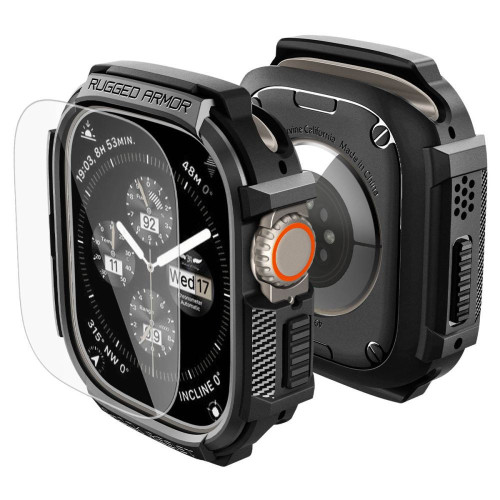
    Spigen Rugged Armor and Tempered Glass combines two things in one box: a flexible TPU case for the watch and glass for the screen. You don’t have to choose two products and check if they fit together.

    The matte finish does not collect fingerprints, and the cutouts provide free access to the crown, side button, and orange action button. If you prefer a slimmer profile, the same manufacturer offers Spigen Liquid Air Pro.

    UAG Scout

    UAG Scout case is a choice for physical work and cycling. The protruding edge around the display absorbs impacts instead of the glass, and the reinforced corners protect the area where the titanium often hits the wall.

    The manufacturer lists compatibility as “Ultra 1 / 2 / 3” because the product has been available since the launch of Ultra 3. The cut also fits Ultra 4.

    Tech-Protect Glass Ring

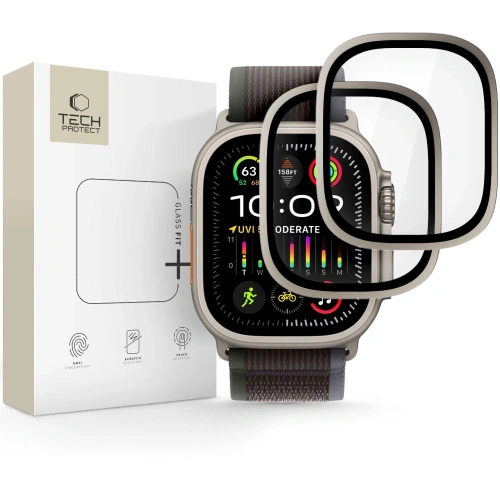
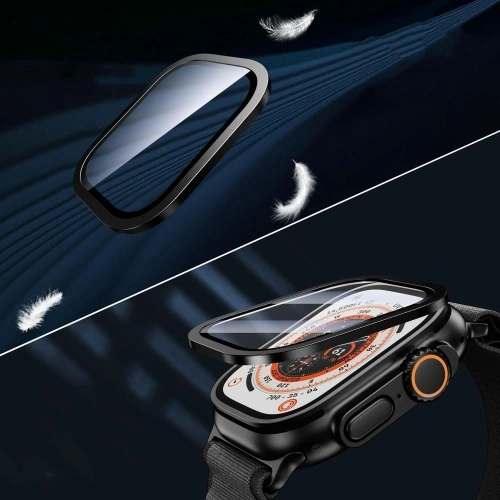
    Tech-Protect Glass Ring is an option for those who do not want to hide titanium under plastic. The metal frame in titanium color surrounds only the edge of the screen, while the rest of the case remains visible.

    The set includes two pieces, so the first unsuccessful application does not end the matter. If you prefer a completely invisible solution, check out the Bizon Watch Film HydroFlex hydrogel film in a set of six or GrizzGlass hybrid glass.

    [hs_products ids=”137791,118629,120933,140438″ cols=”4″ title=”Protection for Apple Watch Ultra 49 mm”]

    Apple Watch Ultra 4 or Ultra 3: which one to choose?

    The entire comparison boils down to five situations and five clear answers.

    You have an Apple Watch Ultra 3 and are considering an upgrade. Stick with yours. The same screen, the same connectivity, the same satellite, and the same diving capabilities. Eight more hours of battery life are not worth the full price of a new watch, unless recovery training is your main reason for wearing it.

    You have an Apple Watch Ultra 1 or Ultra 2. The jump is significant, but note: the biggest changes came with the Ultra 3, not the 4. Satellite, 5G, and a larger screen are thanks to the previous generation. If you find the Ultra 3 significantly cheaper, it will be a better purchase than paying extra for the latest model.

    You are buying your first Apple Watch Ultra. Choose the Ultra 4. Since the entry price hasn’t changed, there’s no reason to reach for the predecessor at a price close to the new model.

    You are looking for savings. Ultra 3 on sale from the operator. You get the same screen, the same case, satellite, 5G, and diving up to 40 meters. You only lose the new sensors, Readiness, and eight hours of battery life.

    You are hesitating between the Ultra model and the regular Series. The Ultra is primarily about battery, satellite, and diving. If none of these three things are necessary for you, check out the cheaper Apple Watch SE 3. And if you are looking beyond the Apple ecosystem, compare it with Google Pixel Watch 5.

    Summary

    Apple Watch Ultra 4 vs Ultra 3 is a comparison of two very similar watches, where the entire difference lies in two areas: the battery and the sensors.

    Five conclusions at the end:

    1. The battery is the strongest argument: 50 hours instead of 42 and a quarter of charging giving 18 hours of operation instead of 12
    2. The new sensor system measures heart rate every 5 seconds and unlocks the Readiness indicator, which Ultra 3 will not receive
    3. The screen, case, satellite, and diving are identical, including 3,000 nits and EN13319 to 40 meters
    4. The case has not grown, so bands, cases, and glasses from any previous Ultra fit without modifications
    5. The entry price has not changed, so when purchasing for the first time, the newer model wins without discussion

    If you stick with Ultra 3, invest in a good strap and glass instead of a new watch. If you switch to the fourth one, don’t buy accessories anew; the ones you have will fit without any problem.

    FAQ: frequently asked questions

    Do the bands from Apple Watch Ultra 3 fit Ultra 4?

    Yes. The case has the same dimensions of 49 × 44 × 12 mm in both generations, and the strap attachment has not changed. A strap from Ultra 1, Ultra 2, or Ultra 3 will fit on Ultra 4 without modifications.

    Does the case from Apple Watch Ultra 3 fit Ultra 4?

    Yes. This is the main difference compared to the Series line, where the Series 12 case grew by a millimeter and the case no longer fit. In the Ultra line, the cut has been the same since the first generation, so the cases and glass are fully interchangeable.

    How much does Apple Watch Ultra 4 cost in Poland?

    Apple Watch Ultra 4 costs 3,799 PLN in the natural or black titanium version, always with GPS and cellular modem. This is exactly the same price at which Ultra 3 started a year earlier.

    How long does the battery last in Apple Watch Ultra 4?

    Up to 50 hours of normal usage and up to 84 hours in Low Power mode. During outdoor training with GPS and heart rate measurement, the watch lasts up to 18 hours, and in maximum extended training mode, up to 45 hours.

    What’s new in Apple Watch Ultra 4?

    There are three new things: battery (50 hours instead of 42), redesigned sensor system with heart rate measurement every 5 seconds and a Readiness indicator, and the Audio Intelligence package. The screen, case, satellite connectivity, and diving features remain unchanged compared to Ultra 3.

    Is it worth buying Apple Watch Ultra 3 instead of Ultra 4?

    It’s worth it if you find it clearly cheaper. The Ultra 3 has the same screen, the same case, satellite connectivity, 5G, and diving capabilities up to 40 meters. You lose new sensors, the Readiness indicator, and eight hours of battery life.

    Is the Apple Watch Ultra 4 suitable for diving?

    Yes, just like its predecessor. Both models are water-resistant up to 100 meters according to ISO 22810:2010 and have EN13319 certification for recreational diving up to 40 meters, with a depth measurement accuracy of ±1 m.


    Sources:

  • Apple Watch Series 12 vs 11: what has really changed?

    Apple Watch Series 12 vs 11: what has really changed?

    In comparing Apple Watch Series 12 vs 11, one thing matters: the new health measurement system. Series 12 checks heart rate every 5 seconds around the clock, measures HRV up to 24 times more frequently, and adds a Readiness indicator. The resolution, brightness, and declared battery life remain unchanged.

    The watch went on sale on September 18, 2026, and prices in Poland start from 1,899 PLN, exactly where Series 11 launched a year ago.

    However, there is another change that no presentation mentions: the case has grown by a millimeter. It sounds like a detail, but that one millimeter determines whether your current case will fit the new watch.

    Below is the full table of both models and an honest list of things that Series 12 does not improve at all. Finally, accessories: what fits both generations and what suddenly no longer fits.

    Apple Watch Series 12 vs 11: full comparison table

    We have bolded only those items that actually differ.

    ParameterApple Watch Series 11Apple Watch Series 12
    PremiereSeptember 2025September 2026
    ChipS10S11
    Memory64 GB64 GB
    Optical heart rate sensor3rd generationredesigned, Health Sensing System
    Electrical sensor (ECG)previous generation2nd generation
    Heart rate measurement recordingsamples every few minutessample every 5 seconds, all day
    HRV measurementstandard frequencyup to 24 times more frequently
    Readiness❌✅
    Audio Intelligence❌✅ (Live Rewind and Siri Recap in beta)
    DisplayOLED LTPO3, always-onOLED LTPO3, always-on
    Resolution 46 / 42 mm416 × 496 / 374 × 446416 × 496 / 374 × 446
    Screen area 46 mm1,220 mm²1,196 mm²
    Screen area 42 mm989 mm²970 mm²
    Peak brightness2,000 nits2,000 nits
    Glass (aluminum)Ion-XCeramic Shield 2
    Glass (titanium, ceramic)sapphiresapphire
    Case materialsaluminum, titaniumaluminum, titanium, ceramic
    Dimensions 46 mm46 × 39 × 9.7 mm46 × 40 × 9.7 mm
    Dimensions 42 mm42 × 36 × 9.7 mm42 × 37 × 9.7 mm
    Weight 46 mm, aluminum GPS37.8 g39.5 g
    Weight 42 mm, aluminum GPS30.3 g32.2 g
    Battery, normal useup to 24 hoursup to 24 hours
    Low power modeup to 38 hoursup to 38 hours
    Outdoor trainingup to 8 hoursup to 10 hours
    15 minutes of charging givesup to 8 hours of useup to 12 hours of use
    Charging to 80%about 30 minutesabout 30 minutes
    Cellular networkRedCap 5G and LTERedCap 5G and LTE
    Wi-Fi / BluetoothWi-Fi 4 / Bluetooth 5.3Wi-Fi 4 / Bluetooth 5.3
    Ultra Wideband2nd generation2nd generation
    Water resistance50 m, IP6X50 m, IP6X
    RequirementsiPhone 11+, iOS 26iPhone 11+, iOS 27
    Starting price in Poland1,899 PLN1,899 PLN

    Thirty-two positions, of which nineteen differ. Almost all differences, however, lie in one place: in the sensors and in what the watch calculates from them.

    Accessories for both generations are at your fingertips. See bands and cases for the Apple Watch 46 mm →

    The new health measurement system is the essence of this generation

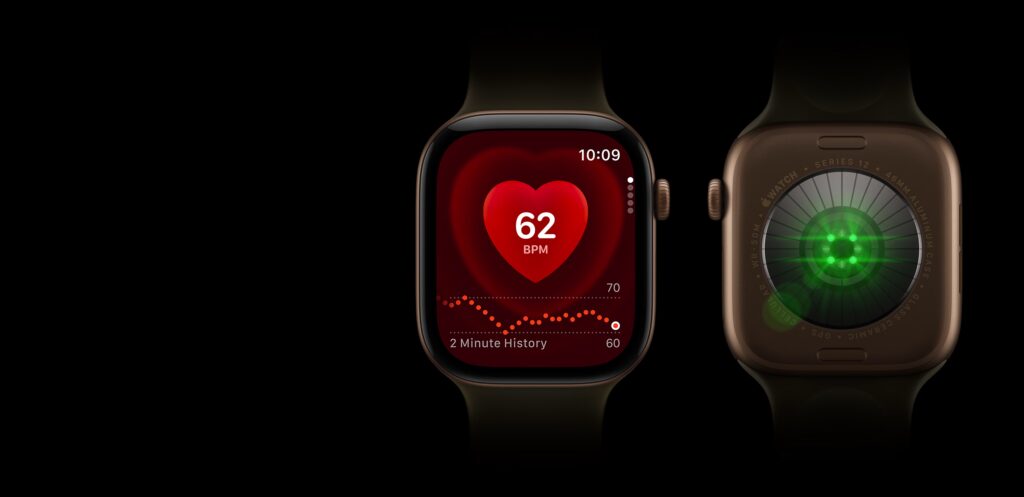
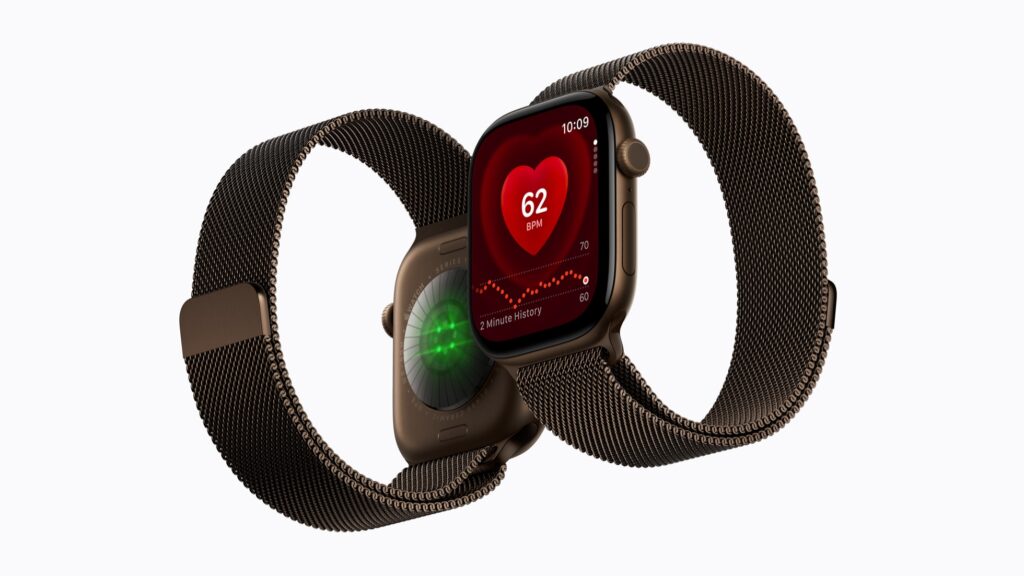
    Apple calls it the Health Sensing System, and it is not just a marketing name for the same electronics. Both sensors on the back of the case have physically changed.

    The optical sensor has been redesigned and received larger, more efficient green LEDs; MacRumors describes it as the fourth generation, although Apple does not provide a number. The electrical sensor, responsible for the ECG, has transitioned to the second generation. This is the first such deep overhaul in several years.

    Heart rate every 5 seconds instead of samples every few minutes

    The Series 11 samples heart rate in the background at intervals of a few minutes. The Series 12 takes readings every 5 seconds around the clock, which is about 17,000 times a day.

    Why so much? Because denser data can reveal things that are not visible in sparse samples. Micro fluctuations in heart rate after coffee, reactions to stress in the middle of a meeting, the pace of returning to rest after exercise.

    Apple also claims the most accurate heart rate measurement in a watch, citing its own tests against the competition. This is, of course, a manufacturer’s claim, not an independent audit.

    HRV measured 24 times more often and the new Readiness indicator

    Heart Rate Variability (HRV) is an indicator that lets you know if your body has rested. Series 12 measures it up to 24 times more often than its predecessor and divides it into two types: recovery HRV and general HRV.

    This is the basis for Readiness, a score on a scale from 0 to 10 that you receive in the morning along with one of four recommendations: recover, pace yourself, you are ready, or go all out.

    Additionally, there is a preview of vital parameters also during the day, not just at night. Series 11 displayed them solely based on sleep.

    Note: Apple provides Readiness exclusively in Series 12 and has not announced it for older models. The feature relies on measurement density, which the eleventh series does not collect.

    If you train regularly and realistically look at recovery, this is the reason to change your watch. If you mainly wear it for notifications and payments, you won’t notice a difference.

    Ceramic Shield 2 and the return of the ceramic case

    The aluminum versions of Series 12 received Ceramic Shield 2, the same glass that Apple uses in the latest iPhones. According to Apple’s announcement, it is 60% more resistant than Ion-X from Series 11.

    This is a real gain, as the aluminum Apple Watch has always been the model that scratches the easiest. Titanium and ceramic have sapphire glass, just like before.

    The second return is the ceramic case, absent from the lineup since Series 5. Available in two colors: pearl white and midnight blue.

    However, ceramic has two drawbacks. It is noticeably heavier (51.3 g in pearl white and 52.9 g in midnight blue, compared to 39.5 g in aluminum) and larger: 47 × 41 × 9.85 mm instead of 46 × 40 × 9.7 mm. This means that a case for the aluminum version 46 mm will not fit the ceramic one.

    The aluminum palette is also new: dark brown, black, light gold, and space gray. Titanium comes in gold and natural versions.

    Audio Intelligence, or what the watch does with sound

    This is a set of four features that the Series 11 will not receive: Sound Recognition (alarm, baby crying, siren), faster Shazam, Live Rewind (playback of the last 15 seconds of a conversation) and Siri Recap (summary of the conversation).

    The first two have been working since launch. Live Rewind and Siri Recap will enter beta at the end of 2026 and require an iPhone 16 or newer with Apple Intelligence. The same package has also been received by the Apple Watch Ultra 4, so it is not exclusive to the Series 12.

    According to MacRumors, the new watch also has twice the RAM (4 GB instead of 2 GB) and a zirconium case back instead of sapphire. Apple does not provide either of these parameters in the official specifications.

    Battery in Apple Watch Series 12 vs 11: same duration, faster charging

    Here Apple did not change the declared 24 hours of normal use or 38 hours in Low Power mode. The numbers are identical to those in Series 11.

    However, the charging speed and endurance during training have changed:

    • Outdoor training: up to 10 hours instead of 8, which is 25% longer
    • 15 minutes of charging: up to 12 hours of operation instead of 8, which is half more
    • 5 minutes of charging: up to 10 hours of sleep tracking
    • Charging to 80%: about 30 minutes, unchanged

    Those five minutes before sleep are a more practical change than it appears in the table. Anyone who sleeps with a watch knows the problem of morning charging on the go.

    You won’t find chargers in the box of any of these models. If you’re buying a watch as your first Apple device, add it right away from the wireless charger category.

    The screen has shrunk by 2% and no one is talking about it

    This is the most interesting detail of the entire launch. The resolution, brightness, and display technology are identical, but the active screen area has decreased:

    • 46 mm: from 1,220 mm² to 1,196 mm²
    • 42 mm: from 989 mm² to 970 mm²

    The envelope has grown, the screen has shrunk. Apple does not comment on this, but the arithmetic leads to one conclusion: the bezels around the display are thicker than in Series 11.

    Two percent is a difference that you won’t see with the naked eye. However, it’s worth knowing that in this particular area, the newer generation has taken a step back, especially since Apple boasts about every progress separately.

    What Series 12 does not improve

    An honest list of things that remain exactly the same:

    • Screen resolution and brightness: 416 × 496 pixels and 2,000 nits, unchanged
    • Declared battery life, the same 24 and 38 hours
    • Memory, 64 GB in both models
    • Wi-Fi 4 (802.11n), standard from 2009, still current in the Apple Watch
    • Bluetooth 5.3 and second-generation Ultra Wideband, unchanged
    • Water resistance of 50 m and IP6X rating, identical
    • Cellular network, RedCap 5G and LTE have both models

    There is also no glucose level measurement, which has been rumored every year. There is no change in the shape of the envelope or a new strap attachment system. Both are reportedly coming only with Series 13.

    However, purely software features, such as Sleep Score and notifications for hypertension and sleep apnea, are also in Series 11. Don’t pay for them a second time.

    Apple Watch Series 12 price: how much does it cost in Poland

    The price of the Apple Watch Series 12 starts exactly where its predecessor started a year ago. The aluminum version 42 mm with GPS costs the same as the Series 11 did on the day of its release.

    Version42 mm46 mm
    Aluminum, GPS1,899 PLN2,199 PLN
    Aluminum, GPS + Cellular2,399 PLN2,699 PLN
    Titanium, GPS + Cellular3,299 PLN3,599 PLN
    Ceramic, GPS + Cellular4,399 PLN4,699 PLN

    Series 11 has disappeared from Apple’s offer, but it remains available from operators and in retail networks, usually a few hundred PLN cheaper than the new model. This is its only, but strong argument.

    Ceramic is a branding position in this comparison. It is available only with a modem, so a fair point of reference is aluminum with a modem: 4,699 PLN compared to 2,699 PLN for the same watch in a different case and 12 grams lighter.

    Apple Watch Series 12 vs 11 Accessories: What Fits Which

    Here we return to the millimeter from the beginning of the article, because in the comparison of Apple Watch Series 12 vs 11, this is the most costly difference.

    Apple Watch Bands: Fit Both Generations

    Good news: the band attachment has not changed. A band purchased for Series 11 will fit Series 12 and vice versa. Manufacturers describe them directly as compatible with models 8, 9, 10, 11, and 12, and compatibility extends even further back, as we showed in the comparison of bands for Apple Watch Series 10.

    You just need to match the lug size, which is different from the number on the case:

    Your WatchBand Category
    Series 11 or 12, 42 mm casebands 38 / 40 / 41 / 42 mm
    Series 11 or 12, 46 mm casebands 42 / 44 / 45 / 46 / 49 mm
    Apple Watch Ultra, 49 mm caseUltra 49 mm bands

    This is the most common mistake when purchasing. The 42 mm case in Series 11 and 12 takes a smaller lug, the same as the old 41 mm models. Despite having the same number in the name, it is not a size from the 42/44/45/46/49 mm group.

    Tech-Protect Silicone

    Tech-Protect Silicone is the simplest answer to the question of compatibility. The manufacturer lists models from 8 to 12 as well as SE and Ultra in the name, so you don’t have to guess anything. The soft silicone does not absorb sweat and is suitable for the pool.

    Spigen Athlex Air M

    Spigen Athlex Air M is a training strap. The perforation wicks away sweat, and the Velcro closure holds securely during running.

    The name ends with “11” because the product was released before the twelfth generation. However, the fit is determined by the lug size, which has not changed, so the strap will also fit Series 12. We have gathered more models in our overview of sport straps for Apple Watch 11.

    Spigen WBF01 Band

    Spigen WBF01 Band is a daily option, closer to the classic Apple sports band than the training version. The same attachment for 44/45/46/49 mm, so both generations will be supported without difference.

    [hs_products ids=”146771,146530,146419″ cols=”3″ title=”Bands compatible with Series 11 and 12″]

    Case for Apple Watch Series 12: this is where compatibility ends

    Bad news: the case from Series 11 will not fit Series 12. The casing fits tightly around the case, so a millimeter in width makes all the difference.

    This is evident from the descriptions of the manufacturers themselves. Spigen labels its Thin Fit 360 case as compatible with “Apple Watch 10 / 11” and there is no mention of the twelfth in this name. Bizon, on the other hand, released separate series dedicated exclusively to Series 12, separately for the 46 mm and 42 mm cases.

    The same principle applies to screen protectors and glasses. Since the display surface and the thickness of the bezels have changed, the cutout from the previous generation will not fit the edges.

    Bizon Case Watch Adamo for Series 12

    Bizon Case Watch Adamo combines a case with a screen protector, so you protect the case and display with one product. The transparent version does not obscure the color of the case, while the matte black visually changes the watch.

    The case is available separately for the 46 mm and 42 mm versions. It is not one universal size.

    Bizon Case Watch Felipe for Series 12

    Bizon Case Watch Felipe is a proposal for physical work and cycling. It protects the screen with a protruding edge that takes the abrasion instead of the glass. Ceramic Shield 2 is more resistant than Ion-X, but still loses to concrete and door frames.

    Note when purchasing: the product card that states only “Apple Watch 46 mm” without a generation number almost always describes the cut for Series 10 and 11. Look for a description with an explicit “Series 12”.

    [hs_products ids=”146683,143174,146680″ cols=”3″ title=”Cases for Apple Watch Series 12″]

    If you stick with Series 11

    It is still worth securing it, especially since the aluminum eleven has weaker Ion-X glass.

    UNIQ Valencia

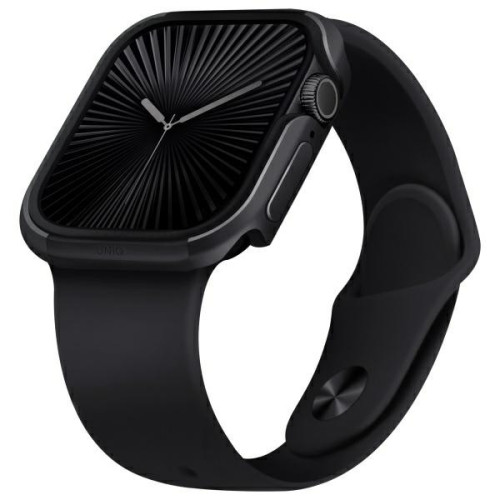
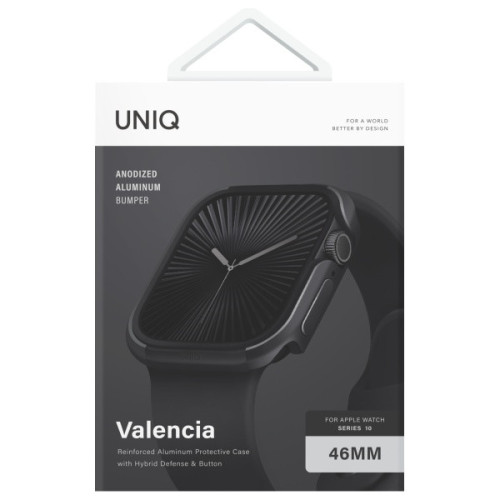
    UNIQ Valencia is anodized aluminum combined with flexible TPU. It looks like a metal frame but behaves like a case. A good choice when you want protection that is not visible.

    The manufacturer lists compatibility as “Apple Watch 46 mm,” without a generation number, and the product was added to the offer before the twelfth generation was released. Treat it as a case for Series 11 and 10.

    Bizon Watch Film HydroFlex

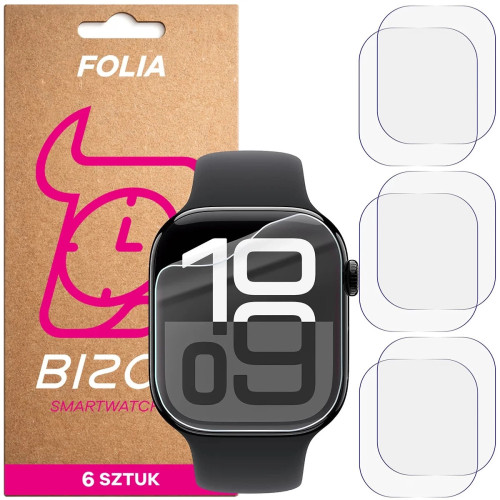
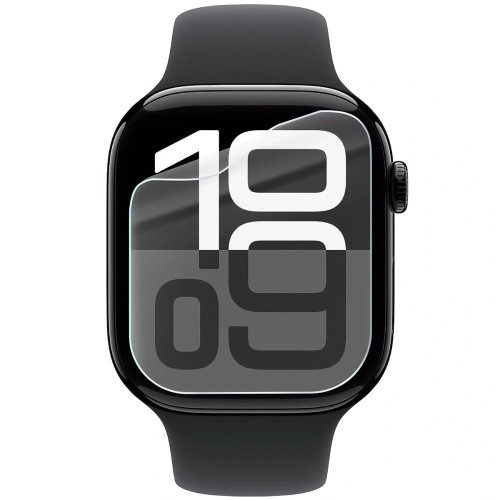
    Bizon Watch Film HydroFlex is a hydrogel film in a set of six pieces, cut for Series 11 and 10 in size 46 mm. The version for 42 mm is sold separately. Hydrogel conforms to the curvature of the screen better than rigid glass.

    The cost of repairing the screen on an Apple Watch can reach several hundred zlotys, while a set of films is a fraction of that amount. The math is simple.

    Apple Watch 12 or 11: which one to choose?

    Apple Watch Series 12 vs 11 comes down to five situations and five clear answers.

    You have Series 11 and are considering an upgrade. Stick with what you have. The same resolution, the same battery, the same connectivity. Unless regeneration and training data are your main reasons for wearing a watch. Then Readiness and denser HRV are real arguments.

    You have Series 9 or an older model. Go for Series 12. The leap is significant: 24-hour battery instead of 18 hours, a noticeably larger screen, faster charging, a whole new layer of health features, and Ceramic Shield 2.

    You are buying your first Apple Watch. Series 12 in aluminum version. Since the entry price hasn’t changed, there’s no reason to reach for the predecessor at a price close to the new model. If the budget is tight, an alternative is the cheaper Apple Watch SE 3.

    You’re looking for savings. Series 11 on sale from the operator. You get the same resolution and brightness, the same battery, the same runtime, and all the software features. You only lose the new sensors and Readiness.

    You’re considering ceramic. Only if you care about the appearance. Underneath, it’s the same watch, and for the case alone, you pay almost as much as the entire aluminum model costs. In this budget, the Ultra is already included, which we described in the comparison of Apple Watch Ultra 3 and Ultra 2.

    If you’re also looking beyond the Apple ecosystem, compare it with the Google Pixel Watch 5, and if you’re looking for a watch specifically for running, check out our ranking of running watches 2026.

    Summary

    The entire comparison of Apple Watch Series 12 vs 11 comes down to one idea: to measure the heart more accurately and more frequently than before. Everything else remains almost untouched.

    Five conclusions in the end:

    1. New sensors are the only real reason to upgrade, heart rate every 5 seconds, HRV up to 24 times more often, Readiness indicator
    2. Resolution, battery, and connectivity are identical to Series 11, including 24 hours of operation and Wi-Fi 4
    3. Ceramic Shield 2 really helps owners of the aluminum version, as it is the variant that scratches the easiest
    4. The case has grown by 1 mm, the bands still fit, but cases and films from Series 11 do not
    5. The entry price has not changed, so when purchasing for the first time, the newer model wins without discussion

    If you are sticking with the eleven, invest in a film and a good strap instead of a new watch. If you are switching to the twelve, remember that the case must be labeled as “Series 12″, older ones simply will not fit.

    FAQ: frequently asked questions

    Do the bands from Apple Watch 11 fit Series 12?

    Yes. The band attachment has not changed between generations, so the band from Series 11 will fit on Series 12 without modifications. Just remember that the 42 mm case takes a smaller lug (38/40/41/42 mm), while the 46 mm case takes a larger one (42/44/45/46/49 mm).

    Does the case from Apple Watch 11 fit Series 12?

    No. The Series 12 case is 1 mm wider in both sizes, so the housing from the previous generation will not close properly. Look for a case explicitly labeled as “Apple Watch Series 12″.

    Is it worth buying the Apple Watch Series 11 instead of 12?

    It is worth it if you find it significantly cheaper. The Series 11 has the same screen, the same battery, the same 5G connectivity, and all the software features, including Sleep Score and hypertension notifications. You lose the new sensors and the Readiness indicator.

    Does the Apple Watch Series 12 measure blood pressure?

    No, it does not measure blood pressure. Both generations, 11 and 12, do have hypertension notifications. The watch analyzes data from the optical sensor and signals possible symptoms, but it does not provide blood pressure values.

    What is the difference in battery life between Series 12 and 11?

    The declared battery life is identical: up to 24 hours of normal usage and up to 38 hours in Low Power mode. The Series 12 lasts up to 10 hours of outdoor training instead of 8, and 15 minutes of charging provides 12 hours of usage instead of 8.

    Will Readiness come to the Apple Watch Series 11 in an update?

    Apple is providing Readiness exclusively in Series 12 and has not announced it for older models. The feature relies on measurement density that the sensor in Series 11 simply does not collect.

    How much does the Apple Watch Series 12 cost in Poland?

    Prices start at 1,899 PLN for the 42 mm aluminum version with GPS. The 46 mm variant costs 2,199 PLN, versions with cellular modem start from 2,399 PLN, titanium from 3,299 PLN, and ceramic from 4,399 PLN.

    Which Apple Watch size to choose: 42 or 46 mm?

    The 42 mm size fits wrists with a circumference of 130–200 mm, while the 46 mm fits 140–245 mm. The larger case provides a bigger screen and the same battery life, while the smaller one is lighter by about 7 grams and less noticeable under a sleeve.


    Sources:

  • iPhone Duo or Galaxy Z Fold 8? A Comparison of Foldables

    iPhone Duo or Galaxy Z Fold 8? A Comparison of Foldables

    iPhone Duo vs Galaxy Z Fold 8 is a choice between two foldable phones in a passport format, with an internal screen of the same diagonal of 7.6 inches. The iPhone wins with its IP68 dust and water resistance and the Apple ecosystem. The Samsung Galaxy Z Fold 8 is 53 g lighter, thinner, cheaper by 1,250 PLN, and has Galaxy AI in Polish.

    The choice will mainly depend on the system you are already using. We compared both phones parameter by parameter based on the official specifications from Apple and Samsung, and at the end of each section, we provide a brief verdict.

    One caveat: the iPhone Duo will be available for sale only on October 23, so this is a comparison of manufacturer data, not a test.

    iPhone Duo vs Galaxy Z Fold 8: key differences in the table

    ParameteriPhone DuoGalaxy Z Fold 8
    Internal display7.6″, 1878 × 2670 px, 430 ppi, matte finish7.6″ (4:3), 2448 × 1848 px, 403 ppi
    External display5.4″, 1398 × 2034 px, 460 ppi5.5″ (16:10), 1972 × 1248 px, 428 ppi
    Peak brightness3000 nits3000 nits
    Dimensions when folded117.8 × 84.1 × 11.3 mm123.9 × 81.9 × 9.7 mm
    Thickness when unfolded5.2 mm4.5 mm
    Weight254 g201 g
    ProcessorApple A20 ProSnapdragon 8 Elite Gen 5 for Galaxy
    Memory256 GB, 512 GB, 1 TB, 2 TB256 GB, 512 GB, 1 TB
    Rear cameras48 MP + 48 MP ultra-wide50 MP + 50 MP ultra-wide
    Telephoto❌❌
    Front cameras12 MP (external) + FaceTime under the display10 MP (external) + 10 MP (internal)
    Batterytwo cells, Apple does not provide mAh4,800 mAh, two cells
    Wired charging50% in about 20 min (60 W charger)63% in about 30 min (45 W charger)
    Wireless chargingMagSafe and Qi2 up to 25 WQi up to 20 W, reverse charging
    BiometricsTouch ID in the side buttonreader in the side button
    SIM cardonly eSIM (two numbers)nano-SIM + eSIM (two lines at once)
    ResistanceIP68IP48
    Stylus✅ Apple Pencil (USB-C), support later in 2026❌ no S Pen support
    SystemiOS 27Android 17, One UI 9
    Updatesmin. 5 years of security patches7 generations of Android, 7 years of patches
    AI in Polish❌✅
    Price in Poland (from)9,999 PLN8,749 PLN

    Data: iPhone Duo specifications, comparison of Galaxy Z Fold 8 and Fold 8 Ultra and Samsung press release

    Appearance and format: two passports, different proportions

    Both phones when folded resemble a passport, rather than a narrow bar like the Galaxy Z Fold 8 Ultra. However, the differences are noticeable in hand. The iPhone Duo is 6 mm shorter and 2 mm wider, but is 11.3 mm thick, while the Fold 8 is only 9.7 mm.

    An even greater difference concerns weight. The Fold 8 weighs 201 g and according to Samsung is the lightest Fold in history. The iPhone Duo weighs 254 g, over a quarter more. When unfolded, the thickness difference decreases, but the Fold 8 is still thinner: 4.5 mm compared to 5.2 mm.

    On the left, the unfolded iPhone Duo, on the right, the Galaxy Z Fold 8. Sources: Apple Newsroom, Samsung Newsroom

    Apple has made the casing from Grade 5 titanium with a mirror polish. Samsung opted for Flex Titanium technology, which is a titanium layer under the screen that is meant to strengthen the panel and over time reduce the visibility of the crease.

    Verdict: Galaxy Z Fold 8. It is lighter by 53 g and thinner when folded by 1.6 mm.

    Screens and the crease

    On paper, it’s a draw. Both internal screens have 7.6 inches, a refresh rate of up to 120 Hz, and brightness of up to 3000 nits. The iPhone has slightly denser pixels (430 vs. 403 ppi), but you won’t see this difference from a normal distance.

    What matters is the finish. The iPhone Duo has a matte nanostructural coating that suppresses reflections and, according to Apple, reduces the visibility of the crease line. Samsung uses a low-reflectance finish and a Vision Booster feature, but does not describe the screen as matte.

    The second difference is the aspect ratio. In the Fold 8, the internal screen has a 4:3 format, close to square, which is comfortable for reading and working on documents. According to Apple, both Duo screens have the same aspect ratio, so when unfolded, the content scales proportionally, and the transition from the small screen to the large one is smooth.

    Note: some Fold 8 owners have noticed that the corners of the inner screen slightly bend under pressure. In response to users in South Korea, Samsung explained that this is a deliberate cushioning zone that protects the display, not a defect. This also applies to the Fold 8 Ultra. Reports SamMobile.

    Verdict: a tie with a slight edge for the iPhone Duo due to its matte finish.

    Performance and system: A20 Pro vs Snapdragon

    The iPhone Duo received the A20 Pro, the same chip as the iPhone 18 Pro, with a vapor chamber directly connected to the processor. Samsung uses the Snapdragon 8 Elite Gen 5 for Galaxy with 12 or 16 GB of RAM. These are flagship chips of this generation, so neither phone will lack power in everyday use. Which one is faster in games will be shown in tests.

    The bigger difference is in the software. iOS 27 on the iPhone Duo introduces Split View for the first time, allowing two apps side by side. Samsung has been developing multitasking for seven generations of Folds: One UI divides the screen into three apps and adds floating windows.

    Galaxy AI in Polish, Apple Intelligence without Polish

    For Polish users, this is one of the most important differences in this comparison. Galaxy AI supports the Polish language: it includes features such as live conversation translation and Writing Assistant.

    Apple Intelligence operates in 16 languages, among which Polish is not included. If AI features are important to you, the Fold 8 clearly offers more today.

    iOS 27 Features That Won’t Be Available in Poland

    iOS 27 launches in the European Union with limitations. Apple announced in June that due to the requirements of the EU Digital Markets Act (DMA), the new Siri AI is being delayed in the EU. Along with it, you won’t receive the new Siri app, enhanced Visual Intelligence, integrated writing tools, or Siri mode in the camera.

    This is important because these features were showcased by Apple as the biggest advantage of the large Duo screen. On the Polish iPhone Duo, you are left with just the foldable screen and Split View.

    Updates: 7 Generations at Samsung, Minimum 5 Years at Apple

    Samsung promises for the Galaxy Z Fold 8 series seven generations of Android updates and seven years of security patches, which starting with Android 17 provides support until Android 24. Apple does not specify how many versions of iOS the iPhone Duo will receive. In documents for the British regulator, it declares a minimum of five years of security patches from the launch for iPhones.

    In practice, iPhones usually receive updates longer than this minimum, but on paper, Samsung’s guarantee is stronger.

    Verdict: performance is a draw until tests, and the software in Poland favors the Fold 8: Galaxy AI in Polish and longer declared support.

    Cameras: 48 MP vs 50 MP, both without telephoto lens

    The sets are almost identical. The iPhone Duo has two 48 MP cameras (main and ultra-wide), while the Fold 8 has two 50 MP cameras. Neither has a telephoto lens, but both offer 2x optical quality zoom, which is a crop from the center of the main sensor.

    On the left, iPhone Duo in starlight white and midnight sky colors, on the right, cameras of Galaxy Z Fold 8. Sources: Apple Newsroom, Samsung Newsroom

    Both manufacturers similarly utilize the second screen. On the iPhone Duo, the Duo Preview feature shows a preview of the shot to the person being photographed. Samsung allows simultaneous recording with the front and rear cameras, with a preview on the external screen.

    With the main camera of the Duo, you can record 4K Dolby Vision video at 120 fps, while the Fold 8 has the My FanCam feature, which automatically tracks a selected person and crops the recording to social media format.

    Who takes better photos will only be revealed by tests. The 10 MP telephoto lens with 3x zoom and the 200 MP camera have been reserved by Samsung for the Fold 8 Ultra, which we show in the comparison of Ultra with Galaxy Z Fold 8.

    Verdict: a tie until tests. The camera setups are almost identical.

    Battery and Charging

    Samsung provides specifics: 4,800 mAh in two cells. Apple does not disclose capacity. It is only known that the Duo also has two cells, one in each half, and according to the manufacturer, it lasts up to 24 hours of typical usage.

    Fast charging according to the manufacturers looks like this:

    • iPhone Duo: 50% in about 20 minutes with a 60 W USB PD charger, 50% in about 30 minutes with MagSafe and a 35 W charger, wirelessly on MagSafe and Qi2 chargers up to 25 W.
    • Galaxy Z Fold 8: 63% in about 30 minutes with a 45 W charger and a 3A cable, wirelessly up to 20 W (Qi), and it also supports reverse charging for other devices.

    Neither of them comes with a charger in the box. For the Duo, choose a USB PD wall charger with a power of at least 60 W, and for the Fold 8, a 45 W charger compatible with Samsung’s fast charging (USB PD with PPS). We described specific models in the guide about chargers for the Galaxy Z Fold 8 Ultra, as both Folds charge at the same power.

    Verdict: undecidable, as Apple does not provide capacity. The Duo charges faster wirelessly (25 W versus 20 W), while the Fold 8 can charge other devices.

    Durability: IP68 vs IP48

    Here the iPhone has a clear advantage. IP68 rating means complete dust resistance, and Apple claims that the Duo is resistant to immersion up to 6 m for 30 minutes.

    The Galaxy Z Fold 8 has IP48. Samsung claims resistance to immersion up to 1.5 m in fresh water for 30 minutes, but it only partially protects against dust, as the standard covers particles larger than 1 mm. The manufacturer itself advises against using it on the beach and by the pool.

    On the front, the iPhone features a Ceramic Shield 2 layer, which according to Apple is 3x more scratch-resistant than the previous generation. By 2026, the Duo will also receive support for Apple Pencil, while Samsung has already abandoned the S Pen stylus with the Galaxy Z Fold 7.

    Verdict: iPhone Duo. IP68 is a real advantage in a phone with a movable hinge.

    Price and availability in Poland

    MemoryiPhone DuoGalaxy Z Fold 8
    256 GB9,999 PLN8,749 PLN
    512 GB10,999 PLN9,599 PLN
    1 TB12,999 PLN11,299 PLN
    2 TB15,999 PLNnot available

    Manufacturer’s list prices as of September 10, 2026. Samsung’s store has ongoing promotions, so the Fold 8 can be cheaper.

    The difference in the base version is 1,250 PLN in favor of Samsung. For the price of the basic Duo, you can buy the Fold 8 with 512 GB and have 400 PLN left. The Fold 8 is already on sale, while the iPhone Duo goes on pre-sale on October 16 at 2:00 PM and hits stores on October 23. Only Apple offers a version with 2 TB.

    Before purchasing, check your SIM card. The iPhone Duo does not have a tray and only supports eSIM. The Galaxy Z Fold 8 has a nano-SIM slot and supports eSIM, with a maximum of two active lines at the same time according to SamMobile. If you are using a physical card, ask your operator for an eSIM before switching to the Duo.

    Verdict: Galaxy Z Fold 8. It is cheaper in every capacity and available immediately.

    Which foldable phone to choose: iPhone Duo or Galaxy Z Fold 8?

    The choice is simpler than the length of the table suggests:

    • Choose the iPhone Duo if you have an iPhone, Mac, or Apple Watch, you care about dust resistance, and you plan to write with a stylus. However, be prepared for a higher price, greater weight, and lack of AI in Polish.
    • Choose the Galaxy Z Fold 8 if you use Android, want a lighter phone, AI in Polish, and richer multitasking. You save 1,250 PLN and can buy it right away, but you have to reckon with weaker dust protection (IP48) and lack of a stylus.
    • Consider another model if you care about zooming from a distance. None of these foldables have a telephoto lens; for example, the iPhone 18 Pro has one (4x) or the Galaxy Z Fold 8 Ultra (3x).

    Switching from iOS to Android (or vice versa) just for a foldable phone is rarely worth it. Apple Watch works exclusively with iPhone, iMessage and FaceTime won’t transfer to Android, and Galaxy Watch doesn’t work with iPhone. You can transfer data using the Move to iOS app or Samsung Smart Switch, but you won’t be able to transfer the accessory ecosystem and subscriptions.

    In the showdown between iPhone Duo and Galaxy Z Fold 8, there is no single winner. The key takeaways:

    1. The screen is a tie. Both have 7.6 inches, and the Duo stands out with its matte finish.
    2. Fold 8 is lighter and thinner. 201 g and 9.7 mm compared to 254 g and 11.3 mm.
    3. Duo is more water-resistant and will get a stylus. IP68 vs IP48, and support for Apple Pencil will arrive in 2026.
    4. Fold 8 has AI in Polish and longer support. Apple Intelligence does not support Polish, and Siri AI does not work in the EU at launch.
    5. Fold 8 is cheaper by 1,250 PLN and available immediately along with a full range of accessories.

    Everything about the iPhone Duo itself, including the full specifications and Polish pricing, can be found in our article about the foldable iPhone Duo.

    Accessories for Galaxy Z Fold 8 and iPhone Duo: what you can buy today

    This is a practical difference that is easy to forget. There are already dozens of products available for the Galaxy Z Fold 8 in our offer: cases, glass, films, and camera covers. The category of iPhone Duo accessories is waiting for the first models that manufacturers will prepare after the official dimensions are published.

    Spigen Airskin Aramid MagSafe

    Spigen Airskin Aramid MagSafe is a thin case made of aramid fiber with a magnetic ring. The Fold 8 does not have built-in magnets, so only with such a case can you attach it to MagSafe chargers and mounts, while the phone retains its greatest advantage, which is its low weight.

    Supcase UB Grip Mag MagSafe

    Supcase UB Grip Mag MagSafe is the choice for those who want stronger protection and a more secure grip. The case will not improve dust resistance, but it will protect the edges and hinge area from drops and scratches.

    Tech-Protect Easy Set Foil & Glass Fit+ 4in1

    Tech-Protect Easy Set Foil & Glass Fit+ 4in1 combines a film for the inner screen with glass for the outer one, which is exactly how a foldable should be protected. We explain why rigid glass is not suitable for the inner screen in our review of glasses for Galaxy Z Fold 8.

    [hs_products ids=”142087,141063,142722″ cols=”3″ title=”Accessories for Galaxy Z Fold 8″]

    FAQ: iPhone Duo vs Galaxy Z Fold 8

    Which is better: iPhone Duo or Samsung Galaxy Z Fold 8?

    Neither wins in everything, and whether the iPhone or Samsung Galaxy turns out to be better mainly depends on the system you are already using. The iPhone Duo is more waterproof (IP68) and will support Apple Pencil by 2026, while the Galaxy Z Fold 8 is lighter by 53 g, cheaper by 1,250 PLN, and has Galaxy AI in Polish.

    How much does Galaxy Z Fold 8 cost, and how much is iPhone Duo?

    The Samsung Galaxy Z Fold 8 costs in Poland from 8,749 PLN, while the iPhone Duo starts at 9,999 PLN, in both cases for the 256 GB version. You can buy the Samsung immediately, while the Duo will hit stores on October 23.

    What does the iPhone Duo have that the Samsung doesn’t?

    Full dust resistance with an IP68 rating, a version with 2 TB of storage, a matte finish on the internal screen, and built-in MagSafe magnets, so it works with magnetic chargers without an additional case. It will also receive support for Apple Pencil by 2026.

    What does the Galaxy Z Fold 8 have that the iPhone Duo doesn’t?

    Galaxy AI in Polish, multitasking with three apps side by side and floating windows, a nano-SIM slot, lower weight (201 g compared to 254 g), and a thinner body. It is also cheaper by 1,250 PLN and already available.

    Does the Galaxy Z Fold 8 support the S Pen?

    No. The Galaxy Z Fold 8 and Fold 8 Ultra do not support the S Pen. Samsung dropped the stylus starting with the Galaxy Z Fold 7 in 2025.

    Does the iPhone Duo have a SIM card?

    No. The iPhone Duo only supports eSIM, with a maximum of two numbers simultaneously. The Galaxy Z Fold 8 has a nano-SIM slot and supports eSIM, so it will work with a traditional card.

    Does a case for the Samsung Fold 8 fit the iPhone Duo?

    No. The phones have different dimensions and differently arranged cameras, so each requires a dedicated case.

    Sources: iPhone Duo specifications, Apple press release, Apple on the suspension of Siri AI in the EU, comparison of Galaxy Z Fold 8 and Fold 8 Ultra on Samsung’s website, Samsung press release on Galaxy Z Fold 8, SamMobile on the screen corners of Fold 8, SamMobile on SIM cards in the Z8 series

  • iPhone Duo or Galaxy Z Fold 8? A Comparison of Foldables

    iPhone Duo or Galaxy Z Fold 8? A Comparison of Foldables

    iPhone Duo vs Galaxy Z Fold 8 is a choice between two foldable phones in a passport format, with an internal screen of the same diagonal of 7.6 inches. The iPhone wins with its IP68 dust and water resistance and the Apple ecosystem. The Samsung Galaxy Z Fold 8 is 53 g lighter, thinner, cheaper by 1,250 PLN, and has Galaxy AI in Polish.

    The choice will mainly depend on the system you are already using. We compared both phones parameter by parameter based on the official specifications from Apple and Samsung, and at the end of each section, we provide a brief verdict.

    One caveat: the iPhone Duo will be available for sale only on October 23, so this is a comparison of manufacturer data, not a test.

    iPhone Duo vs Galaxy Z Fold 8: key differences in the table

    ParameteriPhone DuoGalaxy Z Fold 8
    Internal screen7.6″, 1878 × 2670 px, 430 ppi, matte finish7.6″ (4:3), 2448 × 1848 px, 403 ppi
    External screen5.4″, 1398 × 2034 px, 460 ppi5.5″ (16:10), 1972 × 1248 px, 428 ppi
    Peak brightness3000 nits3000 nits
    Dimensions when folded117.8 × 84.1 × 11.3 mm123.9 × 81.9 × 9.7 mm
    Thickness when unfolded5.2 mm4.5 mm
    Weight254 g201 g
    ProcessorApple A20 ProSnapdragon 8 Elite Gen 5 for Galaxy
    Memory256 GB, 512 GB, 1 TB, 2 TB256 GB, 512 GB, 1 TB
    Rear cameras48 MP + 48 MP ultra-wide50 MP + 50 MP ultra-wide
    Telephoto❌❌
    Front cameras12 MP (external) + FaceTime under the screen10 MP (external) + 10 MP (internal)
    Batterytwo cells, Apple does not specify mAh4,800 mAh, two cells
    Wired charging50% in about 20 min (60 W charger)63% in about 30 min (45 W charger)
    Wireless chargingMagSafe and Qi2 up to 25 WQi up to 20 W, reverse charging
    BiometricsTouch ID in the side buttonreader in the side button
    SIM cardonly eSIM (two numbers)nano-SIM + eSIM (two lines at once)
    ResistanceIP68IP48
    Stylus✅ Apple Pencil (USB-C), support later in 2026❌ no S Pen support
    SystemiOS 27Android 17, One UI 9
    Updatesmin. 5 years of security patches7 generations of Android, 7 years of patches
    AI in Polish❌✅
    Price in Poland (from)9,999 PLN8,749 PLN

    Data: iPhone Duo specifications, comparison of Galaxy Z Fold 8 and Fold 8 Ultra and Samsung press release

    Appearance and format: two passports, different proportions

    Both phones when folded resemble a passport, rather than a narrow bar like the Galaxy Z Fold 8 Ultra. However, the differences are noticeable in hand. The iPhone Duo is 6 mm shorter and 2 mm wider, but it has a thickness of 11.3 mm, while the Fold 8 is only 9.7 mm.

    An even greater difference concerns weight. The Fold 8 weighs 201 g and according to Samsung is the lightest Fold in history. The iPhone Duo weighs 254 g, over a quarter more. When unfolded, the thickness difference decreases, but the Fold 8 is still thinner: 4.5 mm compared to 5.2 mm.

    On the left, the unfolded iPhone Duo, on the right, the Galaxy Z Fold 8. Sources: Apple Newsroom, Samsung Newsroom

    Apple has crafted the casing from Grade 5 titanium with a mirror polish. Samsung opted for Flex Titanium technology, which includes a titanium layer under the screen designed to strengthen the panel and gradually reduce the visibility of the crease over time.

    Verdict: Galaxy Z Fold 8. It is lighter by 53 g and thinner when folded by 1.6 mm.

    Screens and crease

    On paper, it’s a draw. Both internal screens measure 7.6 inches, with a refresh rate of up to 120 Hz and brightness of up to 3000 nits. The iPhone has slightly denser pixels (430 vs. 403 ppi), but you won’t notice this difference from a normal viewing distance.

    Finish matters. The iPhone Duo features a matte nanostructural coating that reduces glare and, according to Apple, minimizes the visibility of the crease line. Samsung uses a low-reflectance finish and Vision Booster feature, but does not describe the screen as matte.

    The second difference is the aspect ratio. In the Fold 8, the internal screen has a 4:3 format, close to square, which is comfortable for reading and working on documents. According to Apple, both Duo screens have the same aspect ratio, so when unfolded, the content scales proportionally, and transitioning from the small screen to the large one is seamless.

    Note: some Fold 8 owners have noticed that the corners of the inner screen slightly bend under pressure. Samsung explained to users in South Korea that this is a deliberate cushioning zone that protects the display, not a defect. This also applies to the Fold 8 Ultra. Reports SamMobile.

    Verdict: a tie with a slight advantage for the iPhone Duo due to its matte finish.

    Performance and system: A20 Pro vs Snapdragon

    The iPhone Duo features the A20 Pro, the same chip as the iPhone 18 Pro, with a vapor chamber directly connected to the processor. Samsung uses the Snapdragon 8 Elite Gen 5 for Galaxy with 12 or 16 GB of RAM. These are the flagship chips of this generation, so neither phone will lack power in everyday use. Which one is faster in games will be shown in tests.

    The bigger difference is in the software. iOS 27 on the iPhone Duo introduces Split View for the first time, allowing two apps side by side. Samsung has been developing multitasking for seven generations of Fold devices: One UI splits the screen into three apps and adds floating windows.

    Galaxy AI in Polish, Apple Intelligence without Polish

    For Polish users, this is one of the most important differences in this comparison. Galaxy AI supports the Polish language: features include live conversation translation and Writing Assistant.

    Apple Intelligence operates in 16 languages, among which Polish is not included. If AI features are important to you, the Fold 8 clearly offers more today.

    iOS 27 features that will not be available in Poland

    iOS 27 launches in the European Union cut down. Apple announced in June that due to the requirements of the EU Digital Markets Act (DMA), it is withholding the new Siri AI in the EU. Along with it, you won’t get the new Siri app, enhanced Visual Intelligence, integrated writing tools, or Siri mode in the camera.

    This is important because these features were showcased by Apple as the biggest advantage of the large Duo screen. On the Polish iPhone Duo, today you only have the foldable screen and Split View.

    Updates: 7 generations at Samsung, minimum 5 years at Apple

    Samsung promises for the Galaxy Z Fold 8 series seven generations of Android updates and seven years of security patches, which starting with Android 17 provides support until Android 24. Apple does not specify how many iOS versions the iPhone Duo will receive. In documents for the British regulator, it declares for iPhones a minimum of five years of security patches from the release.

    In practice, iPhones usually receive updates longer than this minimum, but on paper, Samsung’s guarantee is stronger.

    Verdict: performance is a draw until tests, and the software in Poland favors the Fold 8: Galaxy AI in Polish and longer declared support.

    Cameras: 48 MP vs 50 MP, both without telephoto lens

    The sets are almost identical. The iPhone Duo has two 48 MP cameras (main and ultra-wide), while the Fold 8 has two 50 MP cameras. Neither has a telephoto lens, but both offer 2x optical quality zoom, which is a crop from the center of the main sensor.

    Both manufacturers similarly utilize the second screen. On the iPhone Duo, the Duo Preview feature shows a preview of the frame to the person being photographed. Samsung allows simultaneous recording with the front and rear cameras, with a preview on the external screen.

    With the main camera of the Duo, you can record 4K Dolby Vision video at 120 fps, while the Fold 8 has the My FanCam feature, which automatically tracks a selected person and crops the recording to social media format.

    Who takes better photos will only be shown by tests. The 10 MP telephoto lens with 3x zoom and the 200 MP camera have been reserved by Samsung for the Fold 8 Ultra, which we demonstrate in the comparison of the Ultra with the Galaxy Z Fold 8.

    Battery and Charging

    Samsung provides specifics: 4,800 mAh in two cells. Apple does not disclose capacity. It is known that the Duo also has two cells, one in each half, and according to the manufacturer, it lasts up to 24 hours of typical use.

    Fast charging according to the manufacturers looks like this:

    • iPhone Duo: 50% in about 20 minutes with a 60 W USB PD charger, 50% in about 30 minutes with MagSafe and a 35 W charger, wirelessly on MagSafe and Qi2 chargers up to 25 W.
    • Galaxy Z Fold 8: 63% in about 30 minutes with a 45 W charger and a 3A cable, wirelessly up to 20 W (Qi), and also reverse charging for other devices.

    None of them comes with a charger in the box. For the Duo, choose a USB PD wall charger with a power of at least 60 W, and for the Fold 8, a 45 W charger compatible with Samsung’s fast charging (USB PD with PPS). We described specific models in our guide on chargers for the Galaxy Z Fold 8 Ultra, as both Fold devices charge at the same power.

    Verdict: inconclusive, as Apple does not provide capacity. The Duo charges faster wirelessly (25 W versus 20 W), while the Fold 8 can charge other devices.

    Durability: IP68 vs IP48

    Here, the iPhone has a clear advantage. IP68 rating means complete dust resistance, and Apple claims the Duo is resistant to immersion up to 6 m for 30 minutes.

    The Galaxy Z Fold 8 has IP48. Samsung claims resistance to immersion up to 1.5 m in fresh water for 30 minutes, but it only partially protects against dust, as the standard covers particles larger than 1 mm. The manufacturer itself advises against using it on the beach and by the pool.

    On the front, the iPhone features a Ceramic Shield 2 layer, which Apple claims is 3x more resistant to scratches than the previous generation. By 2026, the Duo will also support Apple Pencil, while Samsung dropped the S Pen stylus already in the Galaxy Z Fold 7.

    Verdict: iPhone Duo. IP68 is a real advantage in a phone with a movable hinge.

    Price and availability in Poland

    MemoryiPhone DuoGalaxy Z Fold 8
    256 GB9,999 PLN8,749 PLN
    512 GB10,999 PLN9,599 PLN
    1 TB12,999 PLN11,299 PLN
    2 TB15,999 PLNunavailable

    Manufacturer’s list prices as of September 10, 2026. Samsung’s store has promotions, so the Fold 8 can be cheaper.

    The difference in the base version is 1,250 PLN in favor of Samsung. For the price of the basic Duo, you can buy the Fold 8 with 512 GB and have 400 PLN left. The Fold 8 is already on sale, while the iPhone Duo goes on pre-sale on October 16 at 2:00 PM and will be in stores on October 23. Only Apple offers the version with 2 TB.

    Before purchasing, check the SIM card. iPhone Duo does not have a tray and supports only eSIM. Galaxy Z Fold 8 has a nano-SIM slot and supports eSIM, with a maximum of two active lines at the same time, according to SamMobile. If you are using a physical card, ask your operator for an eSIM before switching to Duo.

    Verdict: Galaxy Z Fold 8. It is cheaper in every capacity and available immediately.

    Which foldable phone to choose: iPhone Duo or Galaxy Z Fold 8?

    The choice is simpler than the length of the table suggests:

    • Choose iPhone Duo if you have an iPhone, Mac, or Apple Watch, you care about dust resistance, and you plan to write with a stylus. However, be prepared for a higher price, greater weight, and lack of AI in Polish.
    • Choose Galaxy Z Fold 8 if you use Android, want a lighter phone, AI in Polish, and richer multitasking. You save 1,250 PLN and can buy it immediately, but you have to reckon with weaker dust protection (IP48) and lack of a stylus.
    • Consider another model if you care about close-ups from a distance. Neither of these foldables has a telephoto lens; for example, iPhone 18 Pro (4x) or Galaxy Z Fold 8 Ultra (3x) has one.

    Switching from iOS to Android (or vice versa) is rarely worth it for a foldable phone. Apple Watch works exclusively with iPhone, iMessage and FaceTime won’t transfer to Android, and Galaxy Watch doesn’t work with iPhone. You can transfer data using the Move to iOS app or Samsung Smart Switch, but the ecosystem of accessories and subscriptions won’t carry over.

    In the duel of iPhone Duo vs Galaxy Z Fold 8 there is no single winner. The key takeaways:

    1. The screen is a draw. Both have 7.6 inches, and the Duo stands out with a matte finish.
    2. Fold 8 is lighter and thinner. 201 g and 9.7 mm compared to 254 g and 11.3 mm.
    3. Duo is more waterproof and will get a stylus. IP68 versus IP48, and Apple Pencil support will arrive in 2026.
    4. Fold 8 has AI in Polish and longer support. Apple Intelligence does not support Polish, and Siri AI does not work in the EU at launch.
    5. Fold 8 is cheaper by 1,250 PLN and available immediately along with a full range of accessories.

    All about the iPhone Duo itself, including full specifications and Polish pricing, can be found in our article about the foldable iPhone Duo.

    Accessories for Galaxy Z Fold 8 and iPhone Duo: what you can buy today

    This is a practical difference that is easy to forget. There are already several dozen products available for the Galaxy Z Fold 8 in our offer: cases, glass protectors, films, and camera shields. The category of iPhone Duo accessories is waiting for the first models that manufacturers will prepare after the official dimensions are published.

    Spigen Airskin Aramid MagSafe

    Spigen Airskin Aramid MagSafe is a thin case made of aramid fiber with a magnetic ring. The Fold 8 does not have built-in magnets, so only with such a case can you attach it to MagSafe chargers and mounts, while the phone retains its greatest advantage, which is its low weight.

    Supcase UB Grip Mag MagSafe

    Supcase UB Grip Mag MagSafe is the choice for those who want stronger protection and a more secure grip. The case will not improve dust resistance, but it will protect the edges and hinge area from drops and scratches.

    Tech-Protect Easy Set Foil & Glass Fit+ 4in1

    Tech-Protect Easy Set Foil & Glass Fit+ 4in1 combines a foil for the inner screen with glass for the outer one, which is exactly how a foldable should be protected. Why rigid glass is not suitable for the inner screen is explained in the review of glasses for Galaxy Z Fold 8.

    [hs_products ids=”142087,141063,142722″ cols=”3″ title=”Accessories for Galaxy Z Fold 8″]

    FAQ: iPhone Duo vs Galaxy Z Fold 8

    Which is better: iPhone Duo or Samsung Galaxy Z Fold 8?

    Neither wins in everything, and whether the iPhone or Samsung Galaxy turns out to be better mainly depends on the system you are already using. The iPhone Duo is more water-resistant (IP68) and will support Apple Pencil as early as 2026, while the Galaxy Z Fold 8 is lighter by 53 g, cheaper by 1,250 PLN, and has Galaxy AI in Polish.

    How much does Galaxy Z Fold 8 cost, and how much does iPhone Duo cost?

    The Samsung Galaxy Z Fold 8 costs in Poland from 8,749 PLN, while the iPhone Duo starts at 9,999 PLN, in both cases for the 256 GB version. You can buy the Samsung immediately, while the Duo will hit stores on October 23.

    What does the iPhone Duo have that the Samsung doesn’t?

    Full dust and water resistance in IP68 class, a version with 2 TB of storage, a matte finish on the internal screen, and built-in MagSafe magnets, so it works with magnetic chargers without an additional case. It will also receive support for Apple Pencil by 2026.

    What does the Galaxy Z Fold 8 have that the iPhone Duo doesn’t?

    Galaxy AI in Polish, multitasking with three apps side by side and floating windows, a nano-SIM slot, lower weight (201 g compared to 254 g), and a thinner body. It is also cheaper by 1,250 PLN and already available.

    Does the Galaxy Z Fold 8 support the S Pen?

    No. The Galaxy Z Fold 8 and Fold 8 Ultra do not support the S Pen. Samsung dropped the stylus starting with the Galaxy Z Fold 7 in 2025.

    Does the iPhone Duo have a SIM card?

    No. The iPhone Duo only supports eSIM, with a maximum of two numbers simultaneously. The Galaxy Z Fold 8 has a nano-SIM slot and supports eSIM, so it will work with a traditional card.

    Does a case for the Samsung Fold 8 fit the iPhone Duo?

    No. The phones have different dimensions and differently arranged cameras, so each requires a dedicated case.

    Sources: iPhone Duo specifications, Apple press release, Apple on the suspension of Siri AI in the EU, comparison of Galaxy Z Fold 8 and Fold 8 Ultra on Samsung’s website, Samsung press release on Galaxy Z Fold 8, SamMobile on Fold 8 screen corners, SamMobile on SIM cards in the Z8 series

  • Galaxy S26 FE vs S25 FE: what has really changed?

    In comparison, the Galaxy S26 FE vs S25 FE differences come down to three things: the Exynos 2500 processor instead of 2400, the One UI 9 system instead of One UI 8, and a USB port that has reverted to version 2.0. The screen, all three cameras, selfie, and the 4,900 mAh battery are identical.

    The S26 FE was launched on August 27, 2026, and sales start on September 4.

    Place both phones side by side, and you won’t distinguish them without looking into the settings. Samsung has transferred almost all the hardware from last year and raised the price.

    Below is the complete table of both models, resolving the circulating rumor about the silicon-carbon battery, which is even repeated in the specification tables, and a section on accessories: what fits which model and why the case from the S25 FE won’t fit the S26 FE.

    When each model was released

    Both phones debuted at the same time of year, less than twelve months apart. The Galaxy S25 FE had its premiere and sales start on the same day, while the S26 FE had a week gap between the two.

    Event Galaxy S25 FE Galaxy S26 FE
    Launch (announcement) September 4, 2025 August 27, 2026
    Sales start September 4, 2025 September 4, 2026
    Starting price (128 GB) 750 EUR 799 EUR
    System at launch One UI 8, Android 16 One UI 9, Android 17

    Galaxy S26 FE is now official. Samsung unveiled it on August 27, 2026, and immediately provided the full specifications and prices, so all the data in this article comes from the manufacturer, not leaks. The phone hits stores on September 4, 2026.

    Samsung S25 FE has been on sale for a year, and that changes the entire calculation. Remember this for the pricing section, as that’s where the most significant difference between these models lies.

    Accessories for both generations are available immediately. See the Galaxy S26 FE category →

    Galaxy S26 FE vs S25 FE: full comparison table

    We have bolded only those items that actually differ.

    Parameter Galaxy S25 FE Galaxy S26 FE
    Processor Exynos 2400 (4 nm) Exynos 2500 (3 nm)
    Graphics Chip Xclipse 940 Xclipse 950
    RAM 8 GB 8 GB
    Storage 128 / 256 / 512 GB, UFS 4.0 128 / 256 / 512 GB, UFS 4.0
    Screen 6.7″, Dynamic AMOLED 2X 6.7″, Dynamic AMOLED 2X
    Resolution 1080 × 2340 (385 ppi) 1080 × 2340 (385 ppi)
    Refresh Rate 60–120 Hz 60–120 Hz
    Peak Brightness 1,900 nits 1,900 nits
    Glass Gorilla Glass Victus+ Gorilla Glass Victus+
    Main Camera 50 MP, f/1.8, OIS 50 MP, f/1.8, OIS
    Ultrawide 12 MP, f/2.2, 123° 12 MP, f/2.2, 123°
    Telephoto 8 MP, 3× zoom, OIS 8 MP, 3× zoom, OIS
    Selfie 12 MP, f/2.2 12 MP, f/2.2
    Video 8K 30 fps, 4K 120 fps 8K 30 fps, 4K 120 fps
    Battery 4,900 mAh, Li-Ion 4,900 mAh, Li-Ion
    Wired Charging 45 W (65% in 30 min) 45 W (69% in 30 min)
    Wireless Charging 15 W, Qi2 compatible 15 W, Qi2 compatible
    Certified Charging Cycles 2,000 1,200
    USB-C Port USB 3.2 Gen 1 USB 2.0
    Dimensions 161.3 × 76.6 × 7.4 mm 161.6 × 76.9 × 7.4 mm
    Weight 190 g 193 g
    Frame aluminum aluminum
    Resistance IP68 IP68
    Operating System at Launch One UI 8, Android 16 One UI 9, Android 17
    Colors Icyblue, Jetblack, Navy, White Graphite, Pistachio, Blueberry

    Nine different items out of twenty-five. Of these, five are cosmetics (dimensions, weight, colors, charging speed, One UI version number), two are steps backward, and the performance gain comes from the processor along with the graphics unit.

    What does Exynos 2500 offer in everyday use?

    Exynos 2500 is the only noticeable change in daily use. The chip is built on the second generation of the 3 nm GAA process, while Exynos 2400 in the S25 FE used 4 nm.

    Performance gain according to Samsung:

    • About 30% faster processor (CPU) and graphics unit (GPU)
    • About 40% faster NPU, responsible for Galaxy AI functions
    • Newer main core: Cortex-X925 instead of Cortex-X4
    • Newer graphics unit: Xclipse 950 instead of Xclipse 940

    The NPU is more important here than it looks on paper. It calculates Galaxy AI functions, such as summaries, real-time translations, and photo processing. If you actually use Galaxy AI, it is the biggest difference in the entire comparison.

    Note: 30% on paper does not mean a 30% faster phone. Both models perform practically the same in everyday tasks, such as browsing, social media, and photos. The difference reveals itself in gaming and under prolonged load.

    The screen and cameras remain unchanged

    There is nothing to write about here, and that is the most important information.

    The screen parameters are identical: 6.7 inches, Dynamic AMOLED 2X, 1080 × 2340, refresh rate from 60 to 120 Hz, declared brightness of 1,900 nits, Gorilla Glass Victus+.

    The camera setup is identical, sensor by sensor:

    • Main 50 MP, f/1.8, with optical stabilization (OIS)
    • Ultrawide 12 MP, f/2.2, 123° field of view
    • Telephoto 8 MP, 3× optical zoom, with OIS
    • Selfie 12 MP, f/2.2

    Video recording is also unchanged: 8K at 30 fps and 4K at 120 fps in both models.
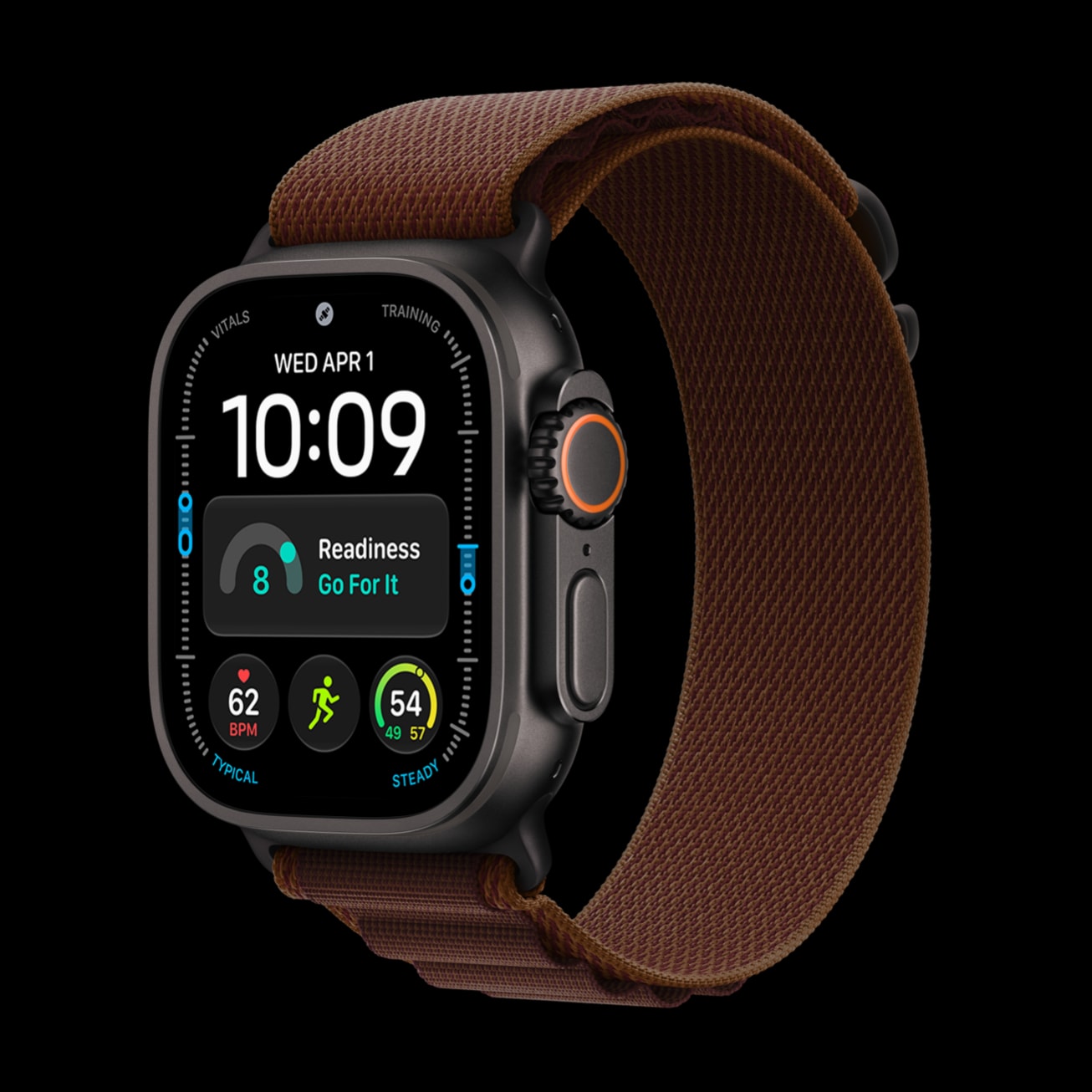
    The sensors are the same, but the photos go through a newer image signal processor (ISP), so Samsung promises slightly better dynamic range in low light. That’s the only thing that actually changes in the cameras.

    New in the S26 FE are only software features: My FanCam (automatically keeping a selected person in the frame, previously available only in foldable models) and Super Steady with horizon lock. This is software that Samsung may also make available to the older model in the future.

    Battery unchanged and without silicon-carbon cell

    Both phones have 4,900 mAh, the same wired charging power of 45 W and wireless charging of 15 W.

    There are rumors that the Samsung S26 FE received a silicon-carbon battery. This is not confirmed. Samsung does not mention this technology in the official specification, and SamMobile explicitly states it has a regular lithium-ion cell. However, some databases, including GSMArena, label the cell as Si/C.

    There is no decision from the manufacturer. What is certain, however, is that silicon-carbon will only be available in foldable models: Galaxy Z Flip 8, Z Fold 8, and Z Fold 8 Ultra in July 2026.

    The real gain during operation comes not from the battery, but from the more efficient 3 nm processor. Samsung claims about an hour longer video playback, and the EU energy label states 50 hours of operation compared to 42.5 hours in the S25 FE and class A instead of B.

    The difference in charging is cosmetic: 69% in 30 minutes compared to 65% in the S25 FE. Four percentage points.

    Hidden downside: the battery will last fewer cycles

    This is not advertised by Samsung, and it directly results from the EU energy label. The battery in the S26 FE is certified for 1,200 charging cycles, while in the S25 FE it is 2,000. A cycle is a full charge from zero to one hundred percent; after exceeding this limit, the battery retains less than 80% of its original capacity.

    In practice, 1,200 cycles still means several years of normal use. However, it is worth knowing that with seven years of system support, the battery will deplete its certified reserve much earlier than the updates.

    To achieve full 45 W, both models require the same USB Power Delivery charger (USB PD) with a power of at least 45 W. When buying accessories, you do not need to distinguish between generations.

    USB port is the first step backward

    Galaxy S26 FE has a USB-C port in the 2.0 standard, while the S25 FE had USB 3.2 Gen 1. This is the second point, alongside battery life, where the newer model performs worse than its predecessor.

    Charging works at the same speed, as power does not depend on the version of the data standard. Only file transfer is slower.

    The scale of this difference is impressive only when looking at specifics. A minute of 8K video weighs several hundred megabytes, so an hour of footage amounts to several dozen gigabytes. With USB 3.2 Gen 1, you can transfer it in a few minutes, while with USB 2.0, the phone will remain connected to the computer for significantly longer.

    If you use the cloud or transfer photos wirelessly, you won’t notice the difference.

    System and updates, or the difference of one year

    Galaxy S26 FE starts with One UI 9 on Android 17, while S25 FE debuted with One UI 8 on Android 16.

    Both generations have the same support policy: seven generations of Android and seven years of security patches. However, since the S26 FE starts a year later, its support ends a year later.

    This is a real advantage of the newer model, although in practice it means choosing between a phone supported until 2032 and one supported until 2033. The S25 FE will still receive One UI 9 in an update.

    This is where the real difference between the models lies

    The starting prices of both models in Europe:

    Version Galaxy S25 FE at launch Galaxy S26 FE at launch
    8 GB / 128 GB 750 EUR 799 EUR
    8 GB / 256 GB 810 EUR 899 EUR
    8 GB / 512 GB 930 EUR 1,099 EUR

    Samsung S26 FE is more expensive at every memory level. The increase grows with capacity: 49 EUR for the base version, 89 EUR for 256 GB, and as much as 169 EUR for 512 GB.

    However, something else is key. The Galaxy S25 FE has been on the market for a year and has clearly dropped in price. The actual level of reduction depends on the store and promotions, but you can buy the older model today noticeably cheaper than on the day of its release, while the S26 FE is just starting with the full price list.

    Combine this with the specification table: you get the same screen, the same camera setup, the same battery, and a faster USB port, paying significantly less. For most people, the Galaxy S25 FE is a more sensible purchase today.

    Galaxy S26 FE vs S25 FE: which one to choose?

    Choose Galaxy S26 FE if:

    • You regularly use Galaxy AI features, as the NPU has gained the most here.
    • You game and want power reserve for a few years ahead.
    • You care about the longest possible support, until 2033.
    • You are buying a phone for six or seven years and the price difference spreads over that period.

    Choose Galaxy S25 FE if:

    • You are looking at the price-to-performance ratio. The screen, cameras, and battery are identical, and you pay significantly less.
    • You transfer large files via cable, as only this model has a fast USB 3.2 Gen 1 port.
    • You do not use AI features intensively enough to feel the faster NPU.

    Our choice: given the current price difference, the Galaxy S25 FE wins for most buyers. The Galaxy S26 FE makes sense if you plan to keep the phone until the end of the support period or heavily use Galaxy AI.

    If you are considering stronger models from this family, we have compared them in the article Galaxy S26 Ultra vs S25 Ultra.

    Accessories: does the case from Galaxy S25 FE fit the S26 FE?

    It does not fit and it is not worth trying. This is the first question that arises when changing generations, and here the answer is clear.

    The difference in dimensions is 0.3 mm in height and 0.3 mm in width, and according to Android Authority, Samsung has slightly redesigned the camera island as well. The thickness is identical (7.4 mm), so a soft case from the predecessor can often be stretched, but:

    • The cutouts for the camera do not align in the same place. With the changed island, part of the lens may be covered.
    • The buttons do not align with the cutouts, making clicking uncomfortable.
    • Rigid cases crack at the corner when trying to stretch them.

    It’s the same with tempered glasses. The diagonal and resolution haven’t changed, but the 0.3 mm wider front means that the glass for the S25 FE won’t cover the screen evenly, and the glue will partially hit the edge.

    Note: manufacturers released dedicated versions for the S26 FE even before the phone went on sale, so there’s no reason to compromise. Choose accessories described exactly by the model you have.

    Magnets: a common problem for both generations

    Neither the Galaxy S25 FE nor the S26 FE have built-in magnets. Both charge wirelessly using the Qi2 standard at 15 W, but neither will stick to the charger or holder by itself.

    In both cases, the solution is the same: a case with a magnetic ring. You put it on, and the phone starts to hold onto Qi2 chargers, magnetic power banks, car mounts, and card wallets. We described the same mechanism with the iPhone 16e without MagSafe.

    Magnetic accessories compatible with both models can be found in the categories of induction chargers and MagSafe accessories.

    Accessories for the Galaxy S26 FE

    Cases and glasses for the new model arrived in stock before the phone even appeared in stores.

    Spigen Ultra Hybrid Mag MagSafe

    What it fits: Spigen Ultra Hybrid Mag, if you care about magnets.

    The case combines rigid polycarbonate (PC) back with a flexible TPU (thermoplastic polyurethane) frame, and adds a magnetic ring that is missing on the phone itself. The Frost Black version has a matte, smoky back, on which fingerprints are much less visible than on the glossy variant.

    Ringke Fusion Magnetic MagSafe

    The transparent case has magnets and a raised edge around the camera island. A good choice if you are buying the Pistachio or Blueberry color and want to see it.

    Tech-Protect Glass Fit+

    Gorilla Glass Victus+ protects the screen from scratches, but not from cracking upon impact. Replacing the display at a service center costs hundreds of zlotys, while tempered glass is a fraction of that amount. Glass Fit+ comes in a set of two pieces with a mounting frame.

    [hs_products category=”2578″ limit=”6″ sort=”sales” title=”Accessories for Galaxy S26 FE”]

    Accessories for Galaxy S25 FE

    Samsung S25 FE has been on the market for a year, so the selection is much broader: the case category alone has over a hundred items. We have compiled a complete ranking in a separate article about the best cases for Galaxy S25 FE.

    UAG Scout MagSafe

    Armored construction with magnets and MIL-STD-810G certification. UAG makes cases thicker than Spigen, but it is this thickness that protects when dropped on the edge.

    Tech-Protect Magflex MagSafe

    This is a thinner alternative to armored constructions, also with a magnetic ring. It will work if you don’t want the case to add bulk to the phone.

    Spigen Glas.tR EZ Fit Pro

    The EZ Fit system is one of the best-designed: the frame positions the glass itself, so even application is usually successful on the first try. The set includes two pieces.

    [hs_products category=”1954″ limit=”6″ sort=”sales” title=”Cases for Galaxy S25 FE”]

    Summary

    Galaxy S26 FE is a remarkably cautious update. Samsung has transferred almost all the hardware from its predecessor. The processor, operating system, and USB port have changed. The screen, all cameras, and battery have been carried over unchanged.

    Three things worth remembering:

    1. Real profit comes only from the processor. The Exynos 2500 is about 30% faster in CPU and GPU and 40% in NPU, which is mainly noticeable in games and Galaxy AI features.
    2. There are two steps back, not one. The USB port has reverted to version 2.0, and the certified battery lifespan has dropped from 2,000 to 1,200 charging cycles.
    3. The price tips the scales in favor of the S25 FE. With the same screen, cameras, and battery, the older model is clearly cheaper today.

    Regardless of the choice, both phones are worth equipping with the same: a case with a magnetic ring, as neither has built-in magnets, and tempered glass, as Gorilla Glass Victus+ protects against scratches, not drops.

    Sources: official announcement of Galaxy S26 FE on Samsung Global Newsroom, comparison of S26 FE and S25 FE on SamMobile, explanation of the silicon-carbon battery issue on SamMobile, specification sheet for Galaxy S26 FE on GSMArena, price comparison of both generations on GSMArena, new camera features and One UI 9 according to Android Authority, EU energy label for Galaxy S26 FE on GSMArena, analysis of the decrease in charging cycles on Android Authority

    FAQ: Galaxy S26 FE and S25 FE

    Is it worth paying extra for the Galaxy S26 FE?

    Usually not. The screen, all three cameras, and the battery are identical to those in the S25 FE, and the newer model has a slower USB port. Paying extra makes sense if you heavily use Galaxy AI or want the longest support, which is until 2033.

    When is the release of Galaxy S26 FE and when does sales start?

    The premiere took place on August 27, 2026, when Samsung showcased the phone and provided the full specifications. Sales start on September 4, 2026.

    What distinguishes the Galaxy S26 FE from the S25 FE?

    Three things: the processor (Exynos 2500 in 3 nm instead of Exynos 2400 in 4 nm), the operating system at launch (One UI 9 on Android 17 instead of One UI 8), and the USB port, which has reverted from 3.2 Gen 1 to 2.0. The screen, cameras, selfie, and 4,900 mAh battery are identical.

    Does the Galaxy S26 FE have a silicon-carbon battery?

    There is no confirmation from the manufacturer. Samsung does not mention silicon-carbon in the official specifications, and SamMobile writes about a regular lithium-ion cell of 4,900 mAh, although some databases label it as Si/C. It is certain that in July 2026, this technology was only available in foldable models: Z Flip 8, Z Fold 8, and Z Fold 8 Ultra.

    Does the case from the Galaxy S25 FE fit the S26 FE?

    No. The new model is 0.3 mm taller and wider, and the camera island has been slightly redesigned. The cutouts for the camera and buttons do not align in the same place, so you need a case dedicated to the specific model.

    Does the Galaxy S26 FE have magnets for MagSafe?

    No, just like the S25 FE. Both phones charge wirelessly in the Qi2 standard at 15 W, but do not have a built-in ring of magnets. The magnets are added by the case, for example, the Spigen Ultra Hybrid Mag or UAG Scout MagSafe.

    Which phone has a longer battery life?

    Galaxy S26 FE, but the difference is small. The capacity is identical (4,900 mAh), and the gain comes from the more efficient 3 nm processor. Samsung claims about an hour longer video playback.

  • Galaxy S26 FE vs S25 FE: what has really changed?

    Galaxy S26 FE vs S25 FE: what has really changed?

    In comparison, the Galaxy S26 FE vs S25 FE differences come down to three things: the Exynos 2500 processor instead of the 2400, the One UI 9 system instead of One UI 8, and a USB port that has reverted to version 2.0. The screen, all three cameras, selfie, and the 4,900 mAh battery are identical.

    The S26 FE was launched on August 27, 2026, and sales start on September 4.

    Place both phones side by side, and you won’t distinguish them without looking into the settings. Samsung has transferred almost all the hardware from last year and raised the price.

    Below is the complete table of both models, the resolution of the circulating rumor about the silicon-carbon battery, which is even repeated in the specification tables, and a section about accessories: what fits which model and why the case from the S25 FE won’t fit the S26 FE.

    When each model was released

    Both phones debuted at the same time of year, less than twelve months apart. The Galaxy S25 FE had its premiere and sales start on the same day, while the S26 FE had a week break between the two.

    EventGalaxy S25 FEGalaxy S26 FE
    Launch (announcement)September 4, 2025August 27, 2026
    Sales startSeptember 4, 2025September 4, 2026
    Starting price (128 GB)750 EUR799 EUR
    System at launchOne UI 8, Android 16One UI 9, Android 17

    Galaxy S26 FE is now official. Samsung unveiled it on August 27, 2026, and immediately provided the full specifications and prices, so all the data in this article comes from the manufacturer, not leaks. The phone hits stores on September 4, 2026.

    Samsung S25 FE has been on sale for a year, which changes the entire calculation. Remember this for the price section, as this is where the most important difference between these models lies.

    Accessories for both generations are readily available. See the Galaxy S26 FE category →

    Galaxy S26 FE vs S25 FE: full comparison table

    We have bolded only those items that actually differ.

    ParameterGalaxy S25 FEGalaxy S26 FE
    ProcessorExynos 2400 (4 nm)Exynos 2500 (3 nm)
    GraphicsXclipse 940Xclipse 950
    RAM8 GB8 GB
    Storage128 / 256 / 512 GB, UFS 4.0128 / 256 / 512 GB, UFS 4.0
    Screen6.7″, Dynamic AMOLED 2X6.7″, Dynamic AMOLED 2X
    Resolution1080 × 2340 (385 ppi)1080 × 2340 (385 ppi)
    Refresh Rate60–120 Hz60–120 Hz
    Peak Brightness1,900 nits1,900 nits
    GlassGorilla Glass Victus+Gorilla Glass Victus+
    Main Camera50 MP, f/1.8, OIS50 MP, f/1.8, OIS
    Ultrawide12 MP, f/2.2, 123°12 MP, f/2.2, 123°
    Telephoto8 MP, 3× zoom, OIS8 MP, 3× zoom, OIS
    Selfie12 MP, f/2.212 MP, f/2.2
    Video8K 30 fps, 4K 120 fps8K 30 fps, 4K 120 fps
    Battery4,900 mAh, Li-Ion4,900 mAh, Li-Ion
    Wired Charging45 W (65% in 30 min)45 W (69% in 30 min)
    Wireless Charging15 W, Qi2 compatible15 W, Qi2 compatible
    Certified Charge Cycles2,0001,200
    USB-C PortUSB 3.2 Gen 1USB 2.0
    Dimensions161.3 × 76.6 × 7.4 mm161.6 × 76.9 × 7.4 mm
    Weight190 g193 g
    Framealuminumaluminum
    ResistanceIP68IP68
    Operating System at LaunchOne UI 8, Android 16One UI 9, Android 17
    ColorsIcyblue, Jetblack, Navy, WhiteGraphite, Pistachio, Blueberry

    Nine different positions out of twenty-five. Of these, five are cosmetic (dimensions, weight, colors, charging speed, version number of One UI), two are steps backward, and the performance gain comes from the processor along with the graphics unit.

    What does Exynos 2500 offer in everyday use?

    Exynos 2500 is the only noticeable change in daily use. The chip is built on the second generation of the 3 nm GAA process, while the Exynos 2400 in the S25 FE used 4 nm.

    Performance gain according to Samsung:

    • About 30% faster processor (CPU) and graphics unit (GPU)
    • About 40% faster NPU, responsible for Galaxy AI functions
    • Newer main core: Cortex-X925 instead of Cortex-X4
    • Newer graphics unit: Xclipse 950 instead of Xclipse 940

    NPU is more important here than it looks on paper. It counts the Galaxy AI functions, such as summaries, real-time translations, and photo processing. If you actually use Galaxy AI, then the biggest difference in the entire comparison.

    Note: 30% on paper does not mean a 30% faster phone. Both models perform practically the same in everyday tasks, such as browsing, social media, and photos. The difference reveals itself in gaming and under prolonged load.

    The screen and cameras remain unchanged

    There is nothing to write about here, and that is the most important information.

    The screen parameters are identical: 6.7 inches, Dynamic AMOLED 2X, 1080 × 2340, refresh rate from 60 to 120 Hz, declared brightness of 1,900 nits, Gorilla Glass Victus+.

    The camera setup is identical, sensor by sensor:

    • Main 50 MP, f/1.8, with optical stabilization (OIS)
    • Ultrawide 12 MP, f/2.2, field of view 123°
    • Telephoto 8 MP, 3× optical zoom, with OIS
    • Selfie 12 MP, f/2.2

    Video recording is also unchanged: 8K at 30 fps and 4K at 120 fps in both models.
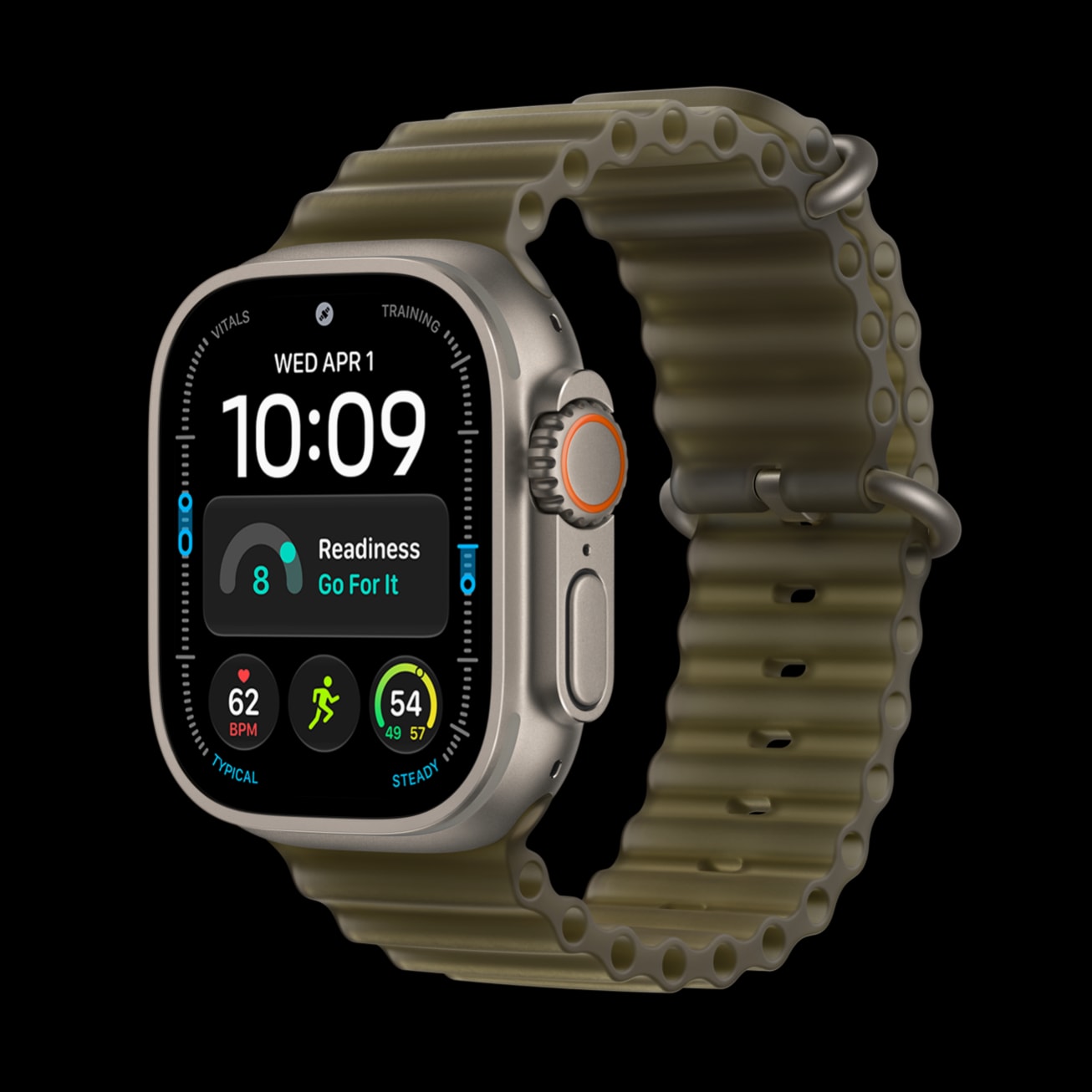
    The sensors are the same, but the photos go through a newer image signal processor (ISP), so Samsung promises slightly better dynamic range in low light. That’s the only thing that actually changes in the cameras.
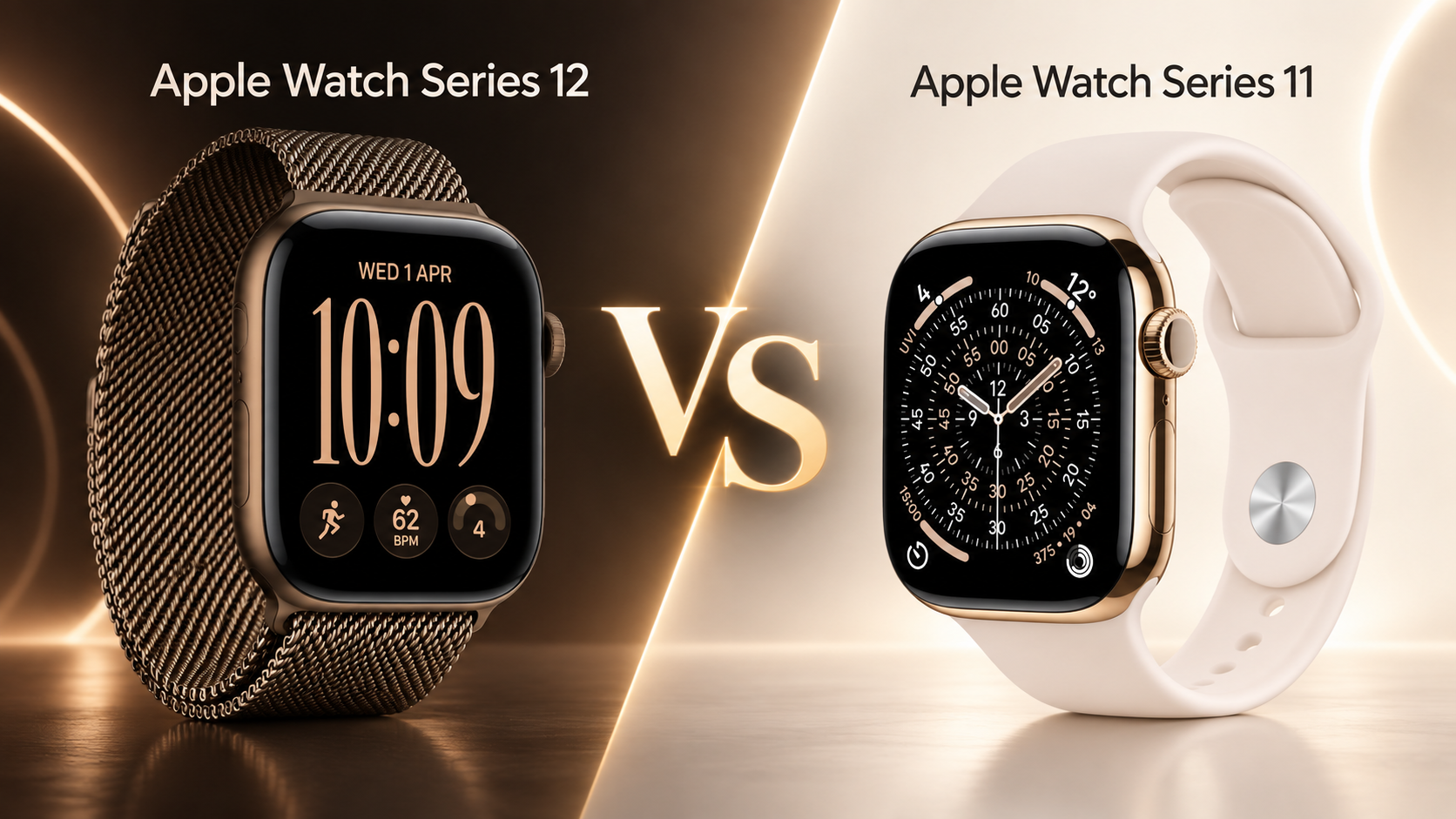
    New in the S26 FE are only software features: My FanCam (automatically keeping a selected person in the frame, previously available only in foldable models) and Super Steady with level lock. This is software that Samsung may also make available to older models in the future.
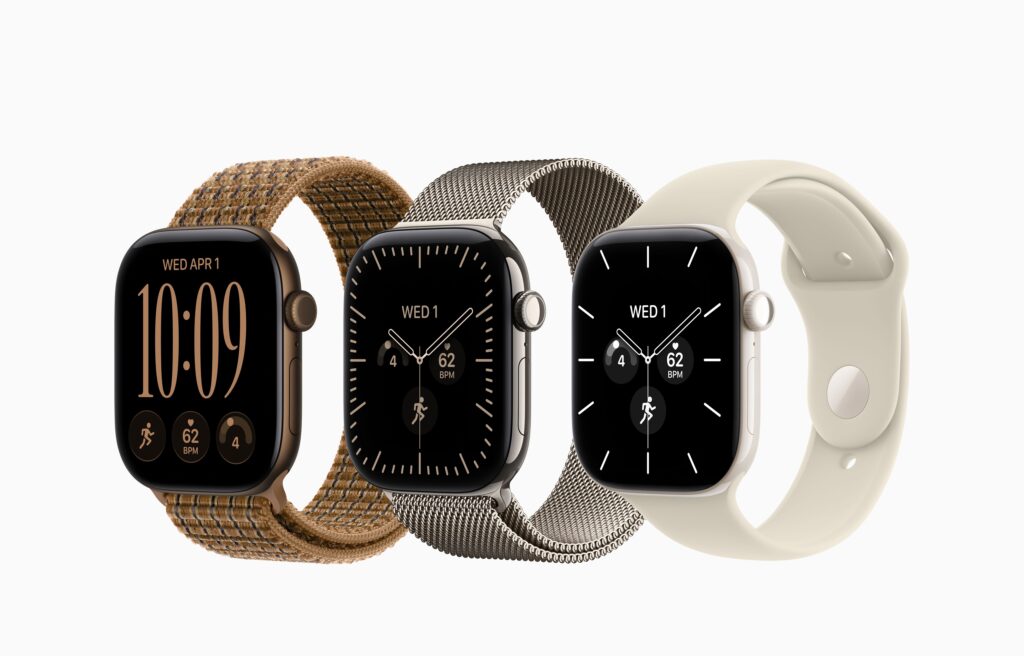
    Battery unchanged and without silicon-carbon cell

    Both phones have 4,900 mAh, the same wired charging power of 45 W and wireless charging of 15 W.

    There are rumors that the Samsung S26 FE received a silicon-carbon battery. It is not confirmed. Samsung does not mention this technology in the official specifications, and SamMobile explicitly states it has a regular lithium-ion cell. However, some databases, including GSMArena, label the cell as Si/C.

    There is no resolution from the manufacturer. However, it is certain that silicon-carbon was introduced in July 2026 exclusively to foldable models: Galaxy Z Flip 8, Z Fold 8, and Z Fold 8 Ultra.

    The real gain during operation comes not from the battery, but from the more efficient 3 nm processor. Samsung claims about an hour longer video playback, and the EU energy label states 50 hours of operation compared to 42.5 hours in the S25 FE and class A instead of B.

    The difference in charging is minimal: 69% in 30 minutes compared to 65% in the S25 FE. Four percentage points.

    Hidden downside: the battery will last fewer cycles

    This is not advertised by Samsung, and it directly results from the EU energy label. The battery in the S26 FE is certified for 1,200 charging cycles, while in the S25 FE it is 2,000. A cycle is a full charge from zero to one hundred percent; after exceeding this limit, the battery retains less than 80% of its original capacity.

    In practice, 1,200 cycles still means several years of normal use. However, it is worth knowing that with seven years of system support, the battery will deplete its certified reserve much earlier than the updates.

    To achieve the full 45 W, both models require the same USB Power Delivery charger (USB PD) with a power of at least 45 W. When buying accessories, you do not need to distinguish between generations.

    USB port is the first step backward

    The Galaxy S26 FE has a USB-C port in the 2.0 standard, while the S25 FE had USB 3.2 Gen 1. This is the second point, alongside battery life, where the newer model performs worse than its predecessor.

    Charging works just as quickly, as the power does not depend on the data standard version. Only the file transfer is slower.

    The scale of this difference only impresses when looking at specifics. A minute of 8K video weighs several hundred megabytes, so an hour of footage is several dozen gigabytes. With USB 3.2 Gen 1, you can transfer it in a few minutes; with USB 2.0, the phone will be connected to the computer for much longer.

    If you use the cloud or transfer photos wirelessly, you won’t notice the difference.

    System and updates, or the difference of one year

    The Galaxy S26 FE launches with One UI 9 on Android 17, while the S25 FE debuted with One UI 8 on Android 16.

    Both generations have the same support policy: seven generations of Android and seven years of security patches. However, since the S26 FE starts a year later, its support ends a year later.

    This is a real advantage of the newer model, although in practice it means choosing between a phone supported until 2032 and one supported until 2033. The S25 FE will still receive One UI 9 in an update.

    Here lies the real difference between the models

    The starting prices of both models in Europe:

    VersionGalaxy S25 FE at launchGalaxy S26 FE at launch
    8 GB / 128 GB750 EUR799 EUR
    8 GB / 256 GB810 EUR899 EUR
    8 GB / 512 GB930 EUR1,099 EUR

    Samsung S26 FE is more expensive at every memory level. The increase grows with capacity: 49 EUR for the base version, 89 EUR for 256 GB, and as much as 169 EUR for 512 GB.

    However, the key point is something else. The Galaxy S25 FE has been on the market for a year and has clearly dropped in price. The actual level of reduction depends on the store and promotions, but you can buy the older model today noticeably cheaper than on the day of its premiere, while the S26 FE is just starting out with the full price list.

    Combine this with the specifications table: you get the same screen, the same camera set, the same battery, and a faster USB port, paying significantly less. For most people, the Galaxy S25 FE is a more sensible purchase today.

    Galaxy S26 FE vs S25 FE: which one to choose?

    Choose the Galaxy S26 FE if:

    • You regularly use Galaxy AI features, as the NPU has gained the most here.
    • You game and want power reserves for a few years ahead.
    • You care about the longest possible support, which is until 2033.
    • You buy a phone for six or seven years and the price difference is spread over that period.

    Choose the Galaxy S25 FE if:

    • You are looking at the price-to-performance ratio. The screen, cameras, and battery are identical, and you pay significantly less.
    • You transfer large files via cable, because only this model has a fast USB 3.2 Gen 1 port.
    • You do not use AI features intensively enough to feel the faster NPU.

    Our choice: given today’s price difference, the Galaxy S25 FE wins for most buyers. The Galaxy S26 FE makes sense if you plan to keep the phone until the end of the support period or heavily use Galaxy AI.

    If you are considering stronger models from this family, we have compared them in the Galaxy S26 Ultra vs S25 Ultra comparison.

    Accessories: does the case from Galaxy S25 FE fit the S26 FE?

    It does not fit and it’s not worth trying. This is the first question that arises when changing generations, and here the answer is clear.

    The difference in dimensions is 0.3 mm in height and 0.3 mm in width, and according to Android Authority, Samsung has slightly redesigned the camera island. The thickness is identical (7.4 mm), so soft cases from the predecessor can often be stretched, but:

    • The camera cutouts do not align in the same place. With the changed island, part of the lens may be covered.
    • The buttons do not align with the cutouts, making clicking uncomfortable.
    • Rigid cases crack at the corners when attempting to stretch them.

    It’s the same with tempered glass. The diagonal and resolution have not changed, but the 0.3 mm wider front means that the glass for the S25 FE will not cover the screen evenly, and the adhesive will partially hit the edge.

    Note: manufacturers released dedicated versions for the S26 FE even before the phone went on sale, so there’s no reason to compromise. Choose accessories described exactly by the model you have.

    Magnets: a common problem for both generations

    Neither the Galaxy S25 FE nor the S26 FE have built-in magnets. Both charge wirelessly using the Qi2 standard at 15 W, but neither will attract itself to the charger or mount.

    In both cases, the solution is the same: case with a magnetic ring. You put it on, and the phone starts to hold onto Qi2 chargers, magnetic power banks, car mounts, and card wallets. We described the same mechanism with the iPhone 16e without MagSafe.

    Magnetic accessories compatible with both models can be found in the categories of induction chargers and MagSafe accessories.

    Accessories for Galaxy S26 FE

    Cases and glass for the new model arrived in stock before the phone even appeared in stores.

    Spigen Ultra Hybrid Mag MagSafe

    What it suits: Spigen Ultra Hybrid Mag, if you care about magnets.

    The case combines a rigid polycarbonate (PC) back with a flexible TPU (thermoplastic polyurethane) frame, and adds a magnetic ring that is missing in the phone itself. The Frost Black version has a matte, smoky back, where fingerprints are much less visible than on the glossy variant.

    Ringke Fusion Magnetic MagSafe

    The transparent case has magnets and a raised edge around the camera island. A good choice if you’re buying the Pistachio or Blueberry color and want to see it.

    Tech-Protect Glass Fit+

    Gorilla Glass Victus+ protects the screen from scratches, but not from cracking upon impact. Replacing the display at a service center costs hundreds of zlotys, while tempered glass is a fraction of that price. Glass Fit+ comes in a set of two pieces with an installation frame.

    [hs_products category=”2578″ limit=”6″ sort=”sales” title=”Accessories for Galaxy S26 FE”]

    Accessories for Galaxy S25 FE

    The Samsung S25 FE has been on the market for a year, so the selection is much broader: the case category alone has over a hundred items. We have compiled a full ranking in a separate article about the best cases for Galaxy S25 FE.

    UAG Scout MagSafe

    Armored construction with magnets and MIL-STD-810G certification. UAG makes cases thicker than Spigen, but it is this thickness that protects during edge drops.

    Tech-Protect Magflex MagSafe

    This is a thinner alternative to armored constructions, also with a magnetic ring. It will work well if you don’t want the case to add bulk to your phone.

    Spigen Glas.tR EZ Fit Pro

    The EZ Fit system is one of the best-designed: the frame positions the glass itself, so even application is usually successful on the first try. The set includes two pieces.

    [hs_products category=”1954″ limit=”6″ sort=”sales” title=”Cases for Galaxy S25 FE”]

    Summary

    Galaxy S26 FE is a remarkably cautious update. Samsung has transferred almost all the hardware from its predecessor. The processor, system, and USB port have changed. The screen, all cameras, and battery have been carried over unchanged.

    Three things worth remembering:

    1. The real gain comes only from the processor. Exynos 2500 is about 30% faster in CPU and GPU and 40% in NPU, which is mainly noticeable in games and Galaxy AI features.
    2. There are two steps back, not one. The USB port has reverted to version 2.0, and the certified battery lifespan has dropped from 2,000 to 1,200 charging cycles.
    3. The price tips the scales in favor of S25 FE. With the same screen, cameras, and battery, the older model is clearly cheaper today.

    Regardless of the choice, both phones are worth complementing with the same: a case with a magnetic ring, as neither has built-in magnets, and tempered glass, as Gorilla Glass Victus+ protects against scratches, not drops.

    Sources: official announcement of Galaxy S26 FE in Samsung Global Newsroom, comparison of S26 FE and S25 FE on SamMobile, explanation of the silicon-carbon battery issue on SamMobile, specification sheet for Galaxy S26 FE on GSMArena, price comparison of both generations on GSMArena, new camera features and One UI 9 according to Android Authority, EU energy label for Galaxy S26 FE on GSMArena, analysis of the decrease in charging cycles on Android Authority

    FAQ: Galaxy S26 FE and S25 FE

    Is it worth paying extra for Galaxy S26 FE?

    Usually not. The screen, all three cameras, and the battery are identical to the S25 FE, and the newer model has a slower USB port. The extra cost makes sense if you heavily use Galaxy AI or want the longest support, which is until 2033.

    When is the Galaxy S26 FE premiere and when does sales start?

    The premiere took place on August 27, 2026, when Samsung showcased the phone and provided the full specifications. Sales start on September 4, 2026.

    What are the differences between Galaxy S26 FE and S25 FE?

    Three things: the processor (Exynos 2500 in 3 nm instead of Exynos 2400 in 4 nm), the operating system at launch (One UI 9 on Android 17 instead of One UI 8), and the USB port, which has downgraded from 3.2 Gen 1 to 2.0. The screen, cameras, selfie, and 4,900 mAh battery are identical.

    Does the Galaxy S26 FE have a silicon-carbon battery?

    There is no confirmation from the manufacturer. Samsung does not list silicon-carbon in the official specifications, and SamMobile mentions a regular lithium-ion cell of 4,900 mAh, although some databases label it as Si/C. It is certain that in July 2026, this technology was only available in foldable models: Z Flip 8, Z Fold 8, and Z Fold 8 Ultra.

    Does the case from Galaxy S25 FE fit the S26 FE?

    No. The new model is 0.3 mm taller and wider, and the camera island has been slightly redesigned. The cutouts for the camera and buttons do not align in the same place, so you need a case dedicated to the specific model.

    Does the Galaxy S26 FE have magnets for MagSafe?

    No, just like the S25 FE. Both phones charge wirelessly using the Qi2 standard at 15 W, but they do not have a built-in ring of magnets. The magnets are added by the case, such as the Spigen Ultra Hybrid Mag or UAG Scout MagSafe.

    Which phone has a longer battery life?

    The Galaxy S26 FE, but the difference is small. The capacity is identical (4,900 mAh), and the gain comes from the more efficient 3 nm processor. Samsung claims about an hour longer video playback.