Tag: ładowarki

  • What is the best charger for the iPhone Duo? 2026 Ranking

    What is the best charger for the iPhone Duo? 2026 Ranking

    The best charger for the iPhone Duo is a USB Power Delivery charger with a power of at least 60 W, only from this threshold does Apple promise to charge up to 50% in about 20 minutes. Our choice is the UGREEN Nexode Air 65W, as it fits this power on one port and is the size of a matchbox.

    In the box with the phone, you will find only a USB-C cable. There is no charger, and the old 20 W cube from the iPhone 12 will charge the Duo noticeably slower than the manufacturer states.

    The foldable iPhone goes on sale on October 23, 2026, with pre-orders starting on October 16. This is a good time to choose a charger in advance, instead of looking for it after receiving the package.

    Below are five wall chargers that meet this threshold, and further on all the other equipment: MagSafe and Qi2 25W wireless chargers, USB-C cables, car chargers, and power banks. Along the way, four things on which it’s easiest to lose the promised 20 minutes.

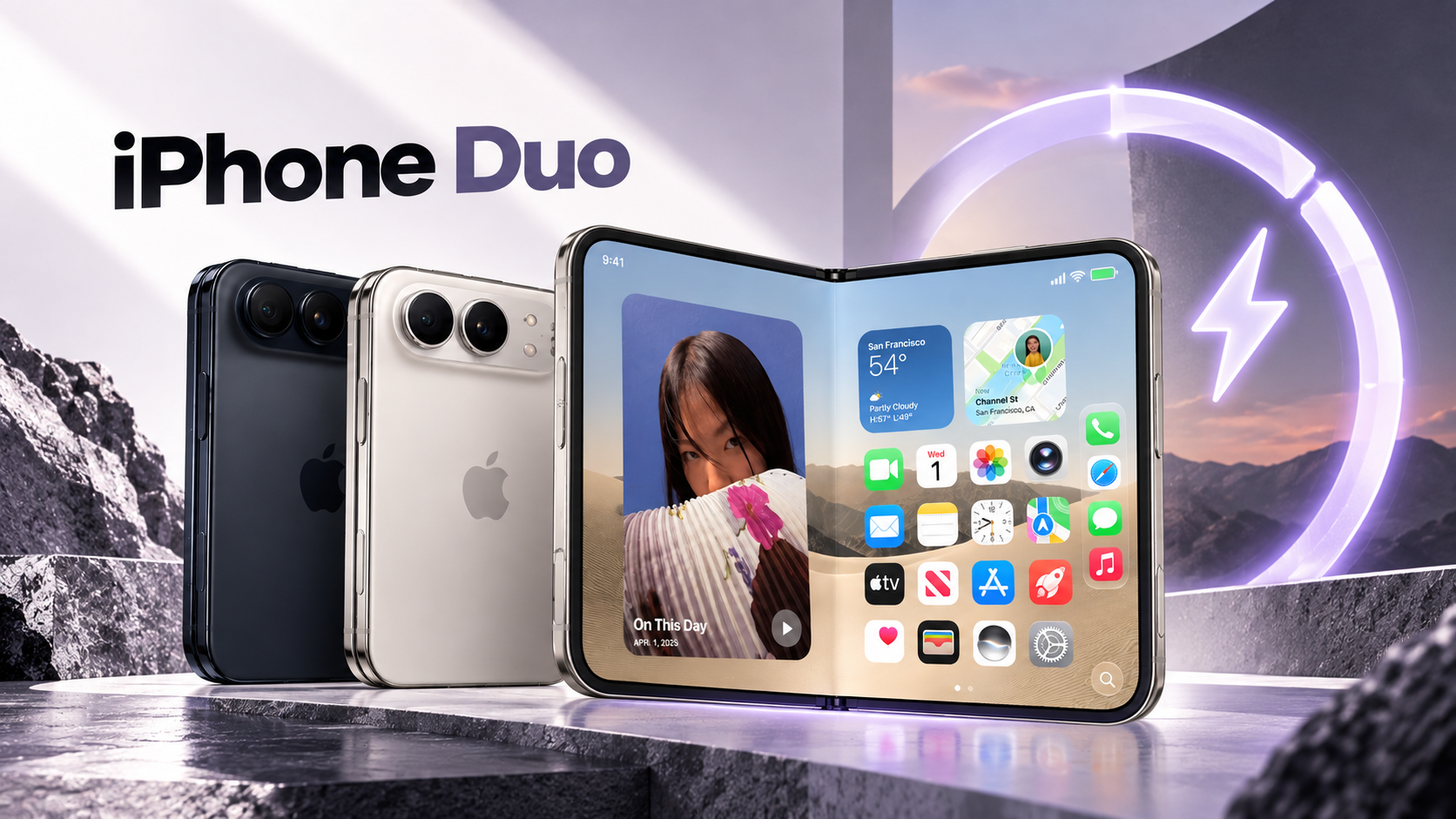
    The iPhone Duo charges via USB-C and wirelessly, using MagSafe and Qi2 standards. Photos: Apple.

    Note: The iPhone Duo is not the MagSafe Duo

    Before we move on to the ranking, one distinction that is easy to overlook when purchasing.

    MagSafe Duo Charger is a foldable, dual charger from Apple for the iPhone and Apple Watch, introduced in 2020 and long discontinued. The name “Duo” refers to its two charging pads, not a phone model.

    iPhone Duo is a foldable iPhone from 2026, which we described in the premiere article about the foldable iPhone. It requires a regular USB-C wall charger, but one that is more powerful than previous iPhones.

    If you see “Apple dual charger,” “Apple Duo Charger,” or “Apple Duo wireless charger” in the search engine, it is not a product for this phone.

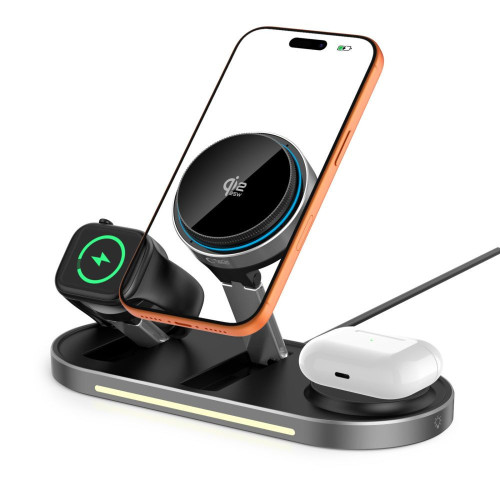
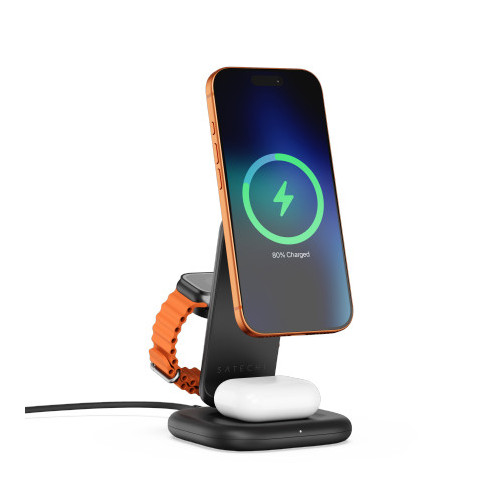
    Are you looking for such a dual charger? Its modern equivalent is 3-in-1 stations: they charge the phone, watch, and headphones at the same time, and unlike the MagSafe Duo, they are still available for purchase. We describe them in the section on wireless chargers later in the text.

    What the iPhone Duo requires from a charger

    Apple provides three numbers in the specifications, and all three are important when making a purchase.

    ParameterValue according to Apple
    Wired fast chargingup to 50% in about 20 minutes
    Minimum power of the power adapter60 W or higher
    MagSafe chargingup to 25 W
    Qi2 chargingup to 25 W
    MagSafe charging to 50%about 30 minutes, power adapter 35 W or stronger
    ConnectorUSB-C, USB 3 (10 Gb/s)
    Included1 m USB-C cable, no power adapter
    Phone weight254 g

    Note one thing: 60 W is a requirement for the power adapter, not the power drawn by the phone. The Duo does not draw 60 W continuously. However, the power adapter must have that reserve to maintain a high current in the initial phase of charging when the battery is nearly empty.

    This is a change compared to the rest of the line. The iPhone 17 reaches its 50% in 20 minutes with a 40 W power adapter, which we described in the ranking of chargers for the iPhone 17. The Duo has two batteries and raises this threshold by half.

    Need a charger right now? See phone chargers →

    Four things that determine full speed

    1. Power on one port, not total

    This is the most common trap with multi-port chargers. The manufacturer writes “65 W” on the box, but that number refers to the total across all ports. Plug in a second device, and the main port drops to 45 W or lower, and the phone falls below the 60 W threshold.

    Look for specifications that state “65 W on a single USB-C port.” If you are charging a laptop and a phone from one block, go for a higher power tier: 100 W or more.

    2. USB Power Delivery, not just Quick Charge

    The iPhone exclusively uses USB Power Delivery (USB PD), a standard that negotiates voltage between the charger and the device. Quick Charge is Qualcomm’s competing standard, useful for Android phones, but it offers nothing to the iPhone.

    Most GaN chargers support both at the same time. Just make sure that USB PD is explicitly mentioned.

    3. GaN, if size matters to you

    GaN (gallium nitride) is a material that has replaced silicon in charger transistors. It heats less and allows for fitting 65 W in a case the size of the old 20 W block.

    At 60 W and above, it’s the difference between something that fits in your jacket pocket and a brick for your backpack.

    4. The cable that no one mentions on the box

    Manufacturers of chargers are silent about this because the cable is usually sold separately. At 60 W, the cable must carry 3 A, and not every cable can do that, even if the plug looks identical. We will return to this in a separate section below.

    The cable from the Duo box performs flawlessly. The problem starts when you reach for the first random cable from the drawer, and then you wonder why 20 minutes turned into an hour.

    Ranking: 5 chargers for iPhone Duo that meet the 60 W threshold

    We have ranked them from the most universal to the most specialized.

    The phone will be available for sale only on October 23, so we selected them based on the parameters provided by Apple, not on our own tests with this model.

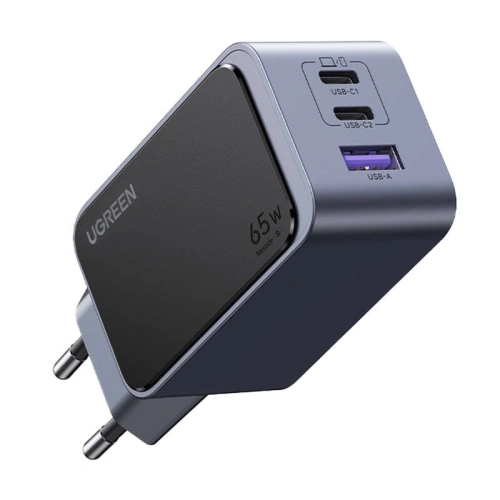
    1. UGREEN Nexode Air 65W
    Our choice

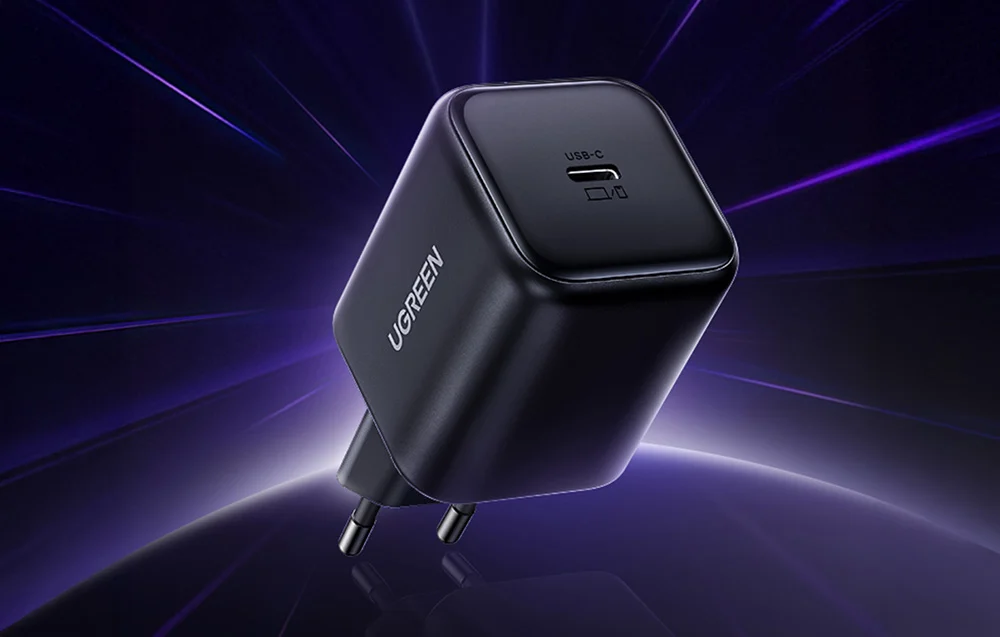
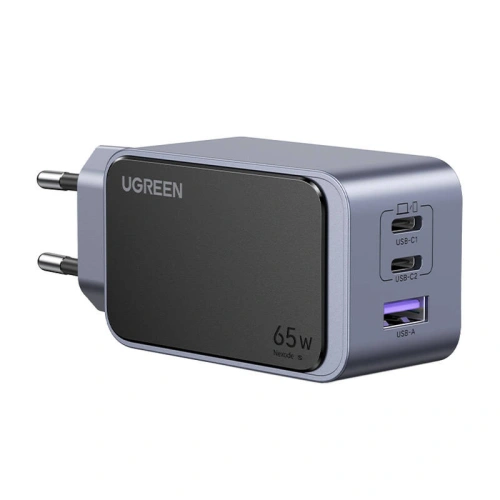
    UGREEN Nexode Air 65W exceeds the 60 W threshold with a small margin and does so in a casing that you can easily carry in your backpack pocket. It has two USB-C ports and one USB-A, so you can also charge your headphones or watch from it.

    You will get a full 65 W with one connected device. When you plug in a second one, the power is divided between the ports, and Duo may drop below the required 60 W. This is not a flaw of this specific model, but a feature of all multi-port chargers in this power class.

    For most people who want one cube for their phone and occasionally something else, this is the most sensible choice from the entire lineup.

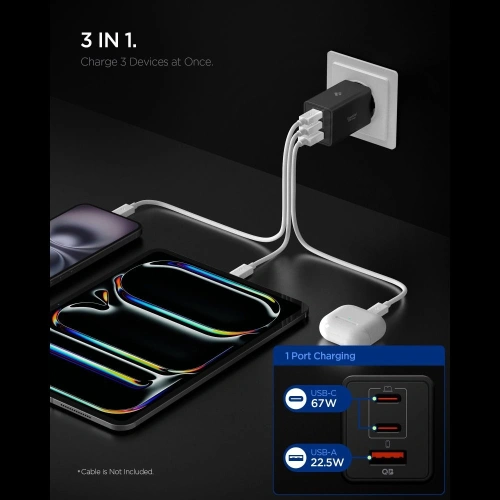
    2. Spigen Essential EE673EU 67W
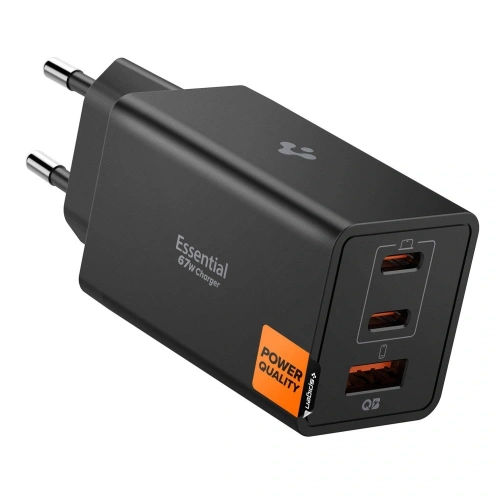
    Spigen Essential EE673EU provides 67 W, which is seven watts above the required threshold. This surplus makes sense: when charging a phone and a second small device simultaneously, you have a better chance that Duo will maintain full speed.

    The port layout is identical to the UGREEN proposal: two USB-C and one USB-A. The black casing is less conspicuous at the socket than a typical white cube.

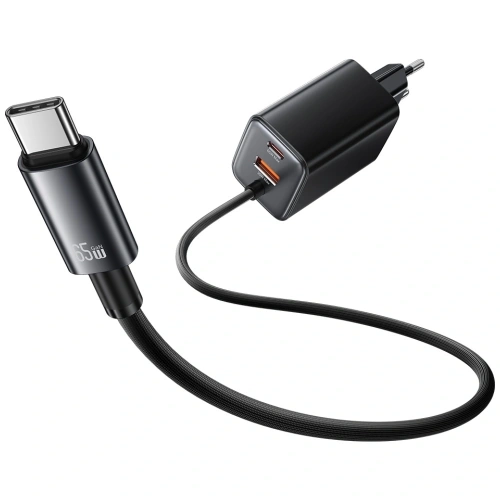
    3. USAMS JC Series CC266 65W GaN
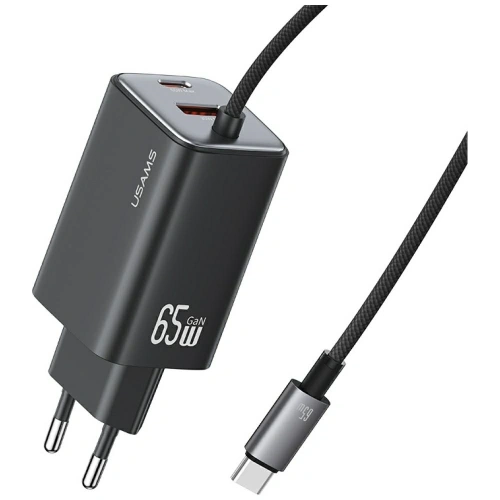
    USAMS JC Series CC266 65W GaN is the simplest way to reach 60 W without paying extra for a recognizable logo. Three ports, GaN technology, and the same 65 W as the competition from the higher tier.

    If the charger is going to sit behind the couch and no one will look at it, this model does exactly the same job.

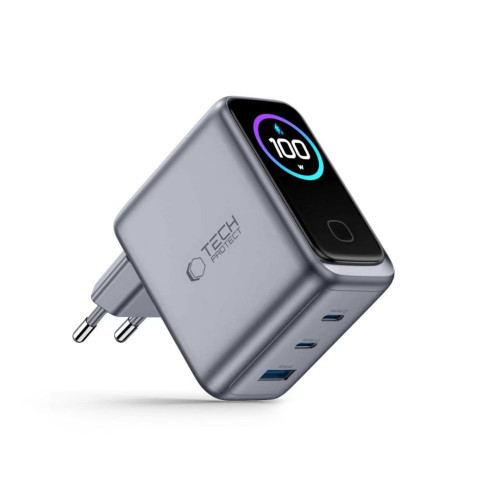
    4. Tech-Protect PowerVision NC100W GaN
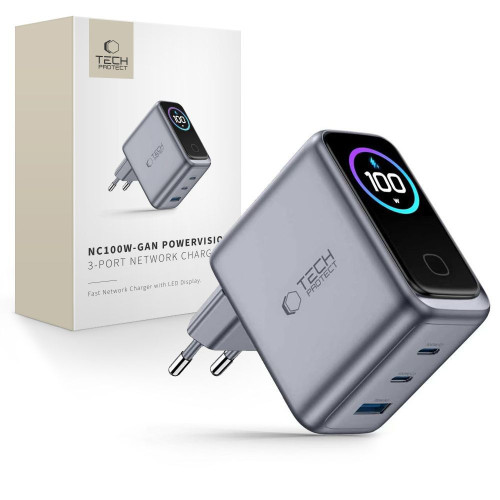
    Tech-Protect PowerVision NC100W solves the problem we mentioned above: it shows on a small display how many watts are actually flowing to the phone.

    This is the only way to see for yourself whether the Duo is getting the promised 60 W, or if the cable or the second connected device has reduced the power. With a phone that has such specific requirements, this information is worth more than with an ordinary smartphone.

    One hundred watts also provides a real reserve when using two devices at once, and is sufficient for most laptops with USB-C.

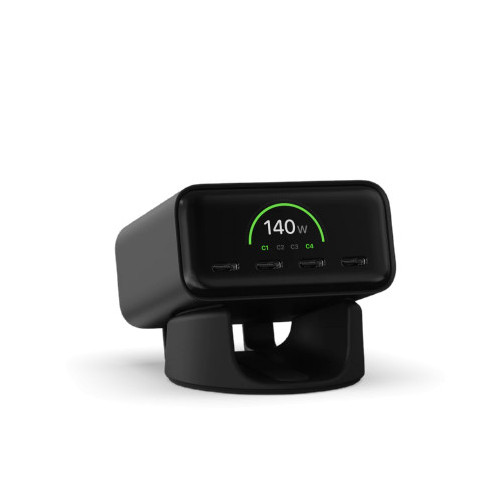
    5. Satechi 4-Port GaN Travel Charger 140W
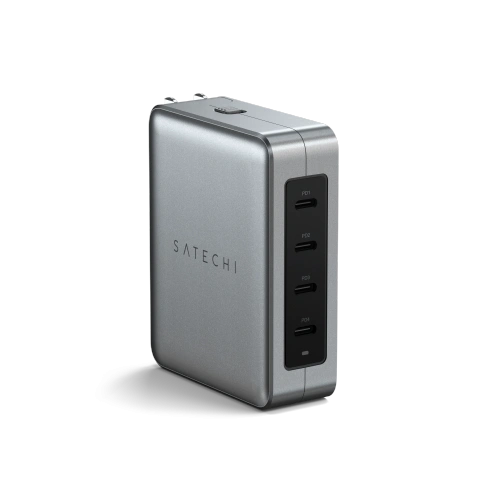
    Satechi 4-Port GaN Travel Charger 140W is a proposal for someone who travels a lot. Four USB-C ports and interchangeable plugs in American, British, European, and Asian standards replace an entire bag of adapters.
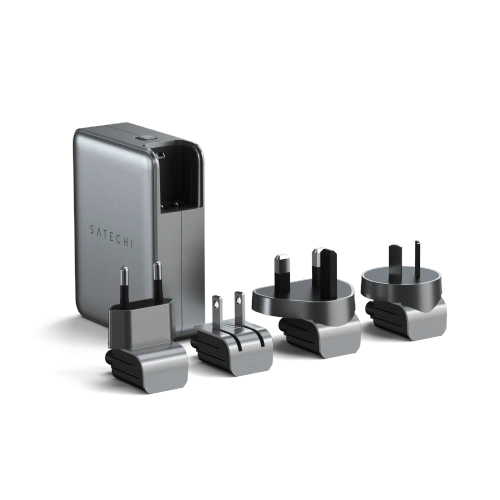
    With 140 W to share, even three connected devices won’t push the phone below the threshold. If you’re also carrying a MacBook, it’s the only brick you need. For those who prefer a permanent setup on their desk, the same manufacturer offers Satechi GaN Charger 165W with four USB-C ports.

    [hs_products ids=”76151,126200,109815,142549,73695″ cols=”5″ title=”60 W and stronger chargers for iPhone Duo”]

    Comparison of chargers for iPhone Duo

    ModelPowerPortsGaNPower DisplayInterchangeable Plugs
    UGREEN Nexode Air65 W2× USB-C + USB-A✅❌❌
    Spigen Essential EE673EU67 W2× USB-C + USB-A✅❌❌
    USAMS JC CC26665 W2× USB-C + USB-A✅❌❌
    Tech-Protect PowerVision NC100W100 W2× USB-C + USB-A✅✅❌
    Satechi 4-Port Travel140 W4× USB-C✅❌✅

    Duo Induction Chargers for iPhone: Qi2, Qi2 25W and MagSafe

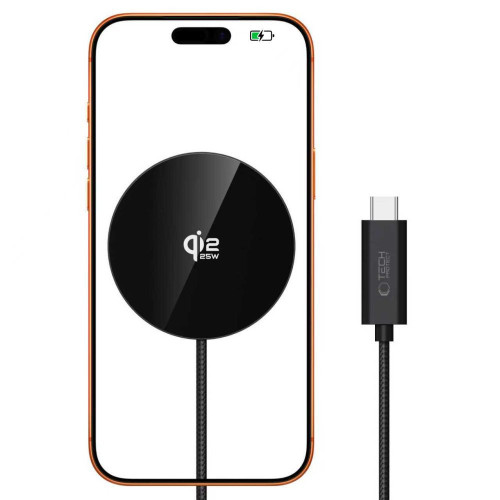
    Duo charges wirelessly with power up to 25 W: via MagSafe or via Qi2 in the 25 W version, which the Wireless Power Consortium designates as Qi2 25W. So you don’t have to look for accessories with the Apple logo, but you need to pay attention to the power, as older Qi2 chargers are limited to 15 W.

    The names of the standards get mixed up in store descriptions, so a brief clarification:

    StandardPower for iPhoneMagnetsWhat it means in practice
    Qi (old)7.5 W❌The phone needs to be aligned with the coil, charges slowly
    Qi2 (first version)up to 15 W✅Standard magnets, power like the old MagSafe
    Qi2 25Wup to 25 W✅Full wireless speed in Duo
    MagSafeup to 25 W✅Apple’s solution, equivalent to Qi2 25W in Duo

    So look for the designation Qi2 25W or simply the number 25 W in the description. The label “Qi2” alone is not enough: the same trade name now covers both 15 W and 25 W. A slower charger will work without any issues, just longer.

    There is one more condition that is easy to forget: the induction charger alone is not enough. You connect it to a power adapter, and it is the adapter that determines the power. Apple states that charging MagSafe to 50% in about 30 minutes requires a 35 W or stronger adapter, and 3-in-1 stations can be even more demanding: Tech-Protect A51 needs 45 W, A52 at least 40 W. Check this in the description of the specific model before buying a pad without an adapter included.

    The naming trap: “25 W” on the box of the 3-in-1 station is often the sum of all charging fields, not the power for the phone. The Satechi 3-in-1 Qi2 25W divides it into 15 W for the iPhone plus 5 W for the watch and 5 W for the earbuds. Look for a separate line in the specifications that says “output, phone”.

    You will charge your phone wirelessly slower than with a cable. However, you can place it down with one motion, without aiming for the plug, and with a foldable phone with a hinge, it is more convenient than it seems.

    Tech-Protect A50 MagSafe 25W Qi2.2, single disc
    Our choice among inductive chargers

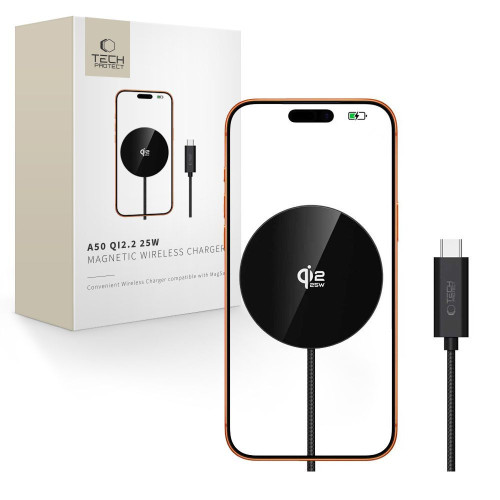
    Tech-Protect A50 delivers a full 25 W for the phone, as all the power goes into one field. It is the simplest form possible: a magnetic disc on a cable.

    The magnet holds securely despite the 254 grams of the Duo. If you prefer a different finish, the same manufacturer offers Tech-Protect A54 Qi2.2.

    Tech-Protect A51 ArcticBoost 3in1, full 25 W for the phone
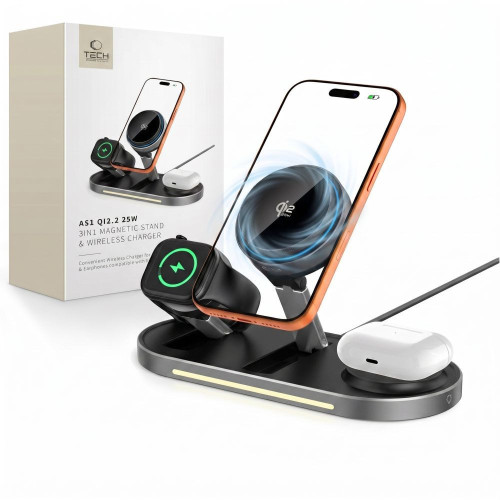
    Tech-Protect A51 ArcticBoost is a rare case of a 3-in-1 station where the phone receives a full 25 W, while the watch and headphones have their own power budget alongside. The manufacturer requires at least a 45 W power supply for this.

    Additionally, it has active cooling. Inductive charging inherently generates heat, and heat is the main enemy of battery life, so at 25 W this is a real value, not marketing. A cheaper alternative is Tech-Protect A52 3in1 Qi2.2, also with 25 W for the phone, but without a fan and requiring 40 W on the power supply.

    Satechi 3-in-1 Qi2, foldable stand with 15 W
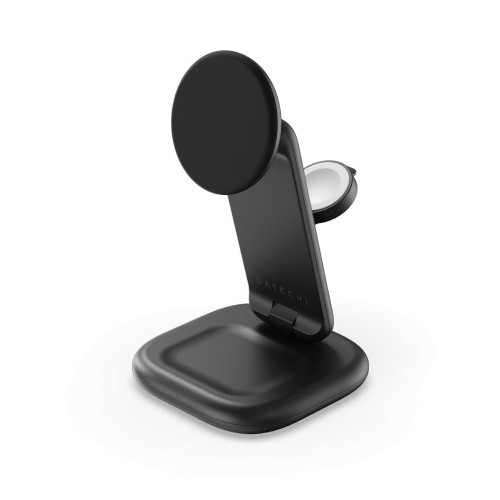
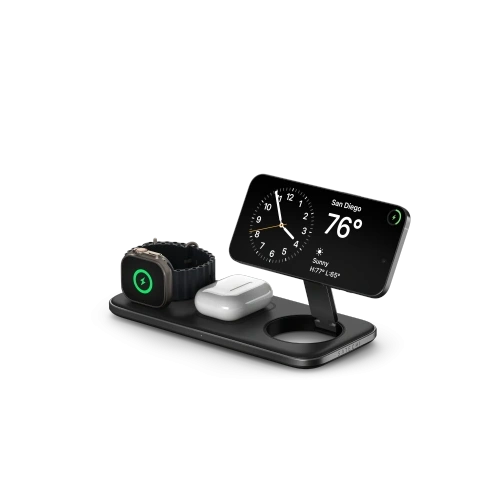
    Satechi 3-in-1 Qi2 holds a phone, watch, and headphones, and the Duo stand keeps the phone upright, so you can see notifications on the external screen without picking up the phone. When folded, it takes up little space, making it a sensible travel charger.

    Note the power: the manufacturer states 15 W for the iPhone, despite the “25W” in the name. For overnight charging, this doesn’t matter; for daytime top-ups, a model with the full 25 W would be better.

    Satechi Qi2 Trio Wireless Charging Pad, flat mat 15 W
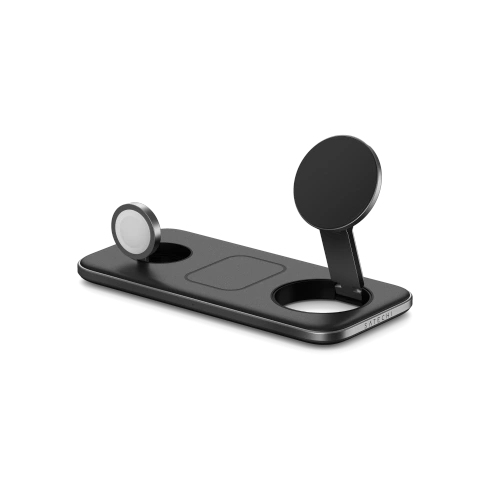
    Satechi Qi2 Trio is the same idea in a flat version, also with 15 W for the phone. The Duo lies horizontally instead of standing, which makes sense on a nightstand where a stand would block the alarm clock or lamp.

    With a foldable phone, a flat mat has one more advantage: you can place the Duo closed on it without stressing the hinge.

    [hs_products ids=”134148,137939,140801,135816″ cols=”4″ title=”25 W wireless chargers and 3-in-1 stations”]

    We gathered a broader overview of this category in the guide which MagSafe charger to choose, and you can find the full offer in the wireless chargers category.

    USB-C Cables: This is where you can easily lose the promised 60 W

    The cable from the Duo box is one meter long and carries the required power. The problem arises when you need a second cable: a longer one for the bed, a shorter one for the backpack, or a spare one for work.

    A 60 W charging cable must carry 3 A at 20 V. This is the upper limit for a regular USB-C cable: above 3 A, the cable must have an e-marker chip that informs the charger of its capabilities. The Duo fits exactly within this limit, so a decent cable without an e-marker will suffice, but it operates at the edge.

    Three numbers worth watching in the description:

    • Current: 3 A is exactly what you need; 5 A provides a buffer and ensures that the bottleneck is the charger, not the cord
    • Power: 100 W and 240 W cables carry the required 60 W well within their limits
    • Data speed: a separate parameter, completely unrelated to power

    This last thing is the most surprising. Most 100 W cables transmit data at USB 2.0 standard, which is 480 Mb/s. The Duo has a USB 3 connection with a bandwidth of 10 Gb/s, so when transferring video material, the difference is more than twenty times.

    This also applies to both cables below: both charge at full power, both transmit data in USB 2.0. If you are looking for a cable for fast recording transfers, check the transfer speed separately, as it is a completely different product category.

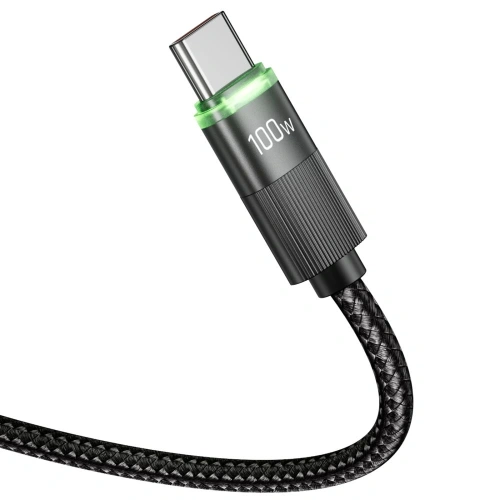
    Tech-Protect UB20T Ultraboost 100W, spring cable for car and desk
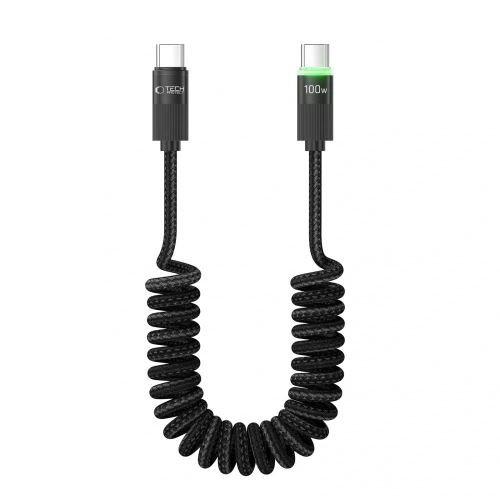
    Tech-Protect UB20T Ultraboost cable supports 100 W at 5 A, which is well above the 3 A required by the Duo.

    Its construction is spring-loaded: at rest, it coils down to a few centimeters and stretches up to 180 cm. In the car and on the desk, this means the end of tangles, as the cable returns to shape instead of lying in a knot.

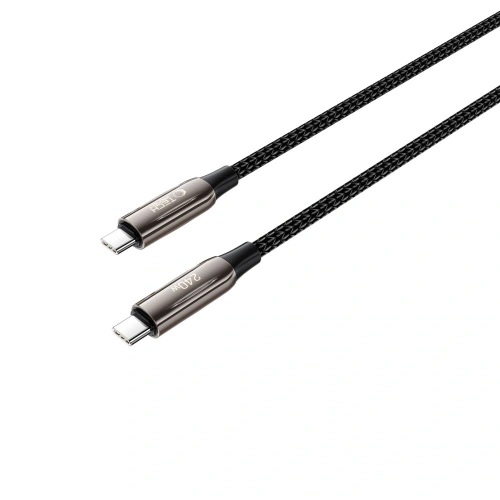
    Tech-Protect UB10T Ultraboost 240W, with extra for a laptop

    Tech-Protect UB10T Ultraboost cable transfers 240 W in EPR extension from the USB PD 3.1 standard. For a phone, it’s an overkill, but if the same cable sometimes needs to power a laptop, you buy one cable instead of two.

    A meter length works well at the desk and in the backpack. For a permanent workstation at the computer, a shorter and cheaper Tech-Protect Ultraboost DNA 100W is sufficient.

    More about choosing the cable is written in the article which fast charging cable to choose. The full offer is in the USB-C cables category.

    Car chargers for iPhone Duo

    Duo claims up to 24 hours of typical usage, but two screens can quickly eat through that. In the car, different factors matter than at the desk: navigation on a large internal screen drains the battery faster than a weak charger from the cigarette lighter can charge it.

    The principle is the same as with a wall charger. The car charger must provide 60 W on one port for the phone to charge at full speed. Popular 18 W or 30 W adapters will maintain the battery level during navigation, but will not raise it.

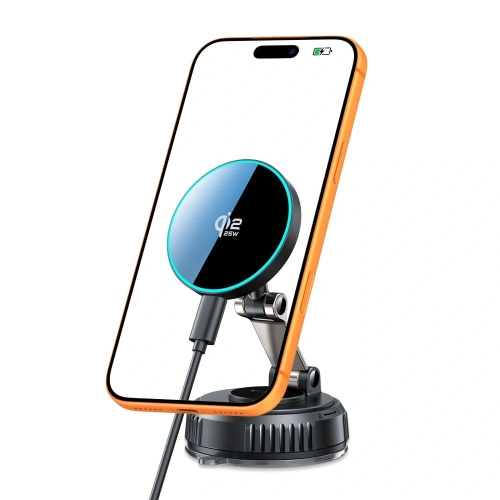
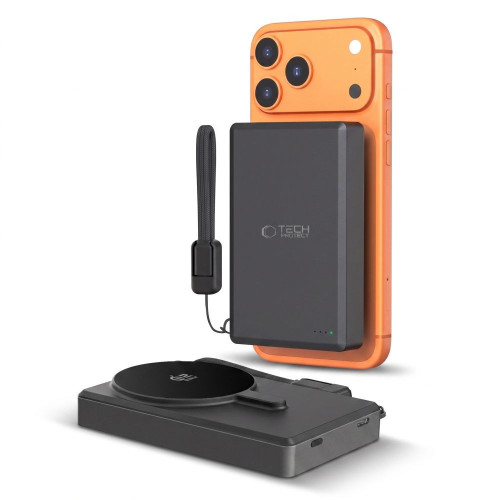
    Wireless charging mount Tech-Protect MM25W-V8
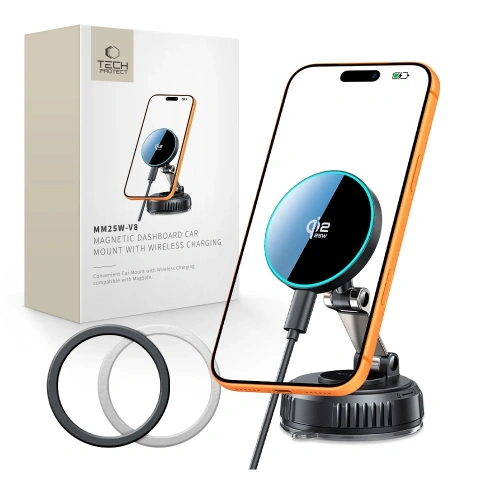
    Tech-Protect MM25W-V8 Mount combines a windshield or dashboard mount with a 25 W Qi2.2 charger. You attach your phone magnetically and it starts charging immediately, without plugging in the connector every time you get in.

    With Duo, there’s one more benefit: the mount keeps the phone secure, so you don’t stress the hinge while on the road.

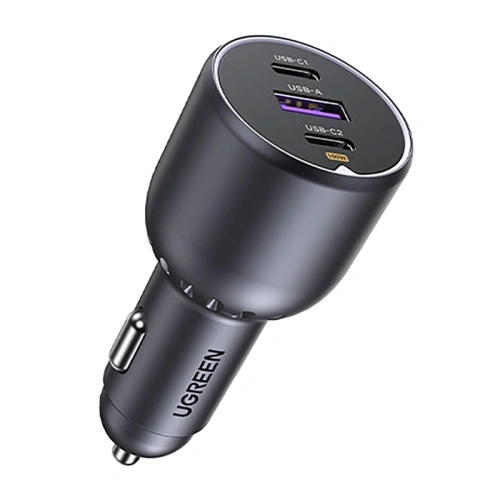
    UGREEN EC705 130W, for the driver with a laptop
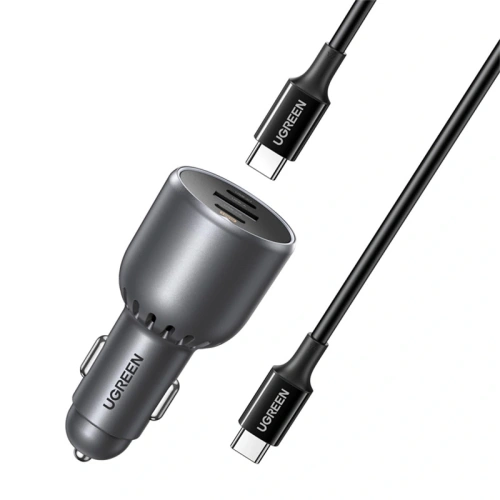
    UGREEN EC705 charger provides 130 W across three ports, so your phone gets its 60 W even when a laptop or passenger tablet is charging next to it. The package includes a 5 A cable, which is exactly what is required for full power.

    An alternative with two USB-C ports is the Tech-Protect CC03 100W.

    Note on descriptions: car chargers described as “PD 60W” often split this power between ports, for example, 30 W on USB-C and 18 W on USB-A. For Duo, only the number at the USB-C port matters, not the total from the box.

    We described more options in the guide fast car charger, and the full offer is in the car charger category.

    Power banks for iPhone Duo

    A power bank for a foldable phone is chosen differently than for a regular smartphone, for one reason: Duo weighs 254 g. This is clearly more than a classic iPhone, so a magnetic power bank attached to the back turns the set into something you don’t want to hold to your ear for half an hour.

    Hence a simple rule: magnetic up to 10,000 mAh or wired above. Heavier cells are better kept in your pocket and connected with a cable.

    Tech-Protect PB40 LifeMag 10,000 mAh, magnetic with full Qi2.2 power
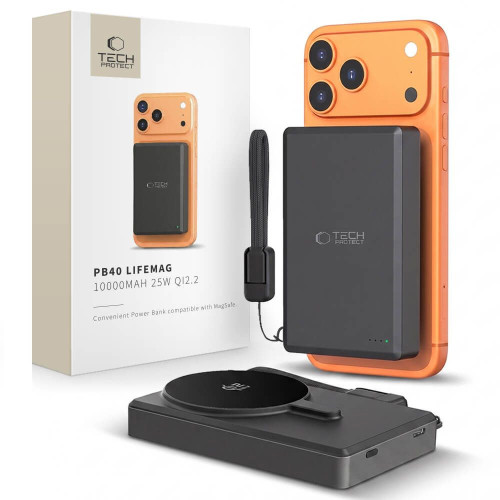
    Tech-Protect PB40 LifeMag power bank has 10,000 mAh and charges wirelessly in the Qi2.2 standard with a power of 25 W, which is as much as Duo can accept without a cable. You attach it to the back of your phone and go on.

    It’s the most convenient solution for the city: charging starts the moment you place it, without searching for a plug in your pocket.

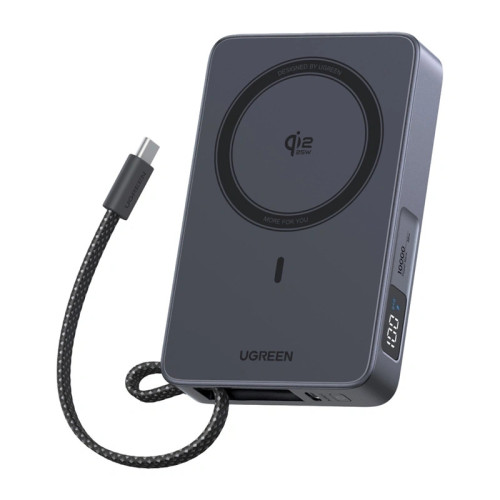
    UGREEN PB773 10,000 mAh 30W, magnetic with USB-C port
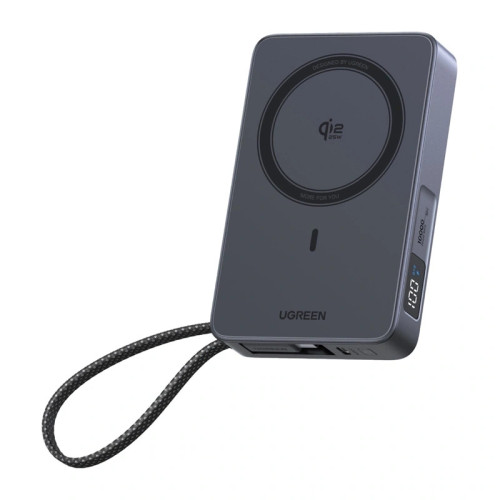
    UGREEN PB773 power bank combines magnetic mounting with a 30 W USB-C port. You wirelessly add energy on the go, and charge faster with a cable when you have a moment to stop.

    Thirty watts through the cable won’t give the claimed 20 minutes to half by Apple, but it still exceeds the 25 W available wirelessly.

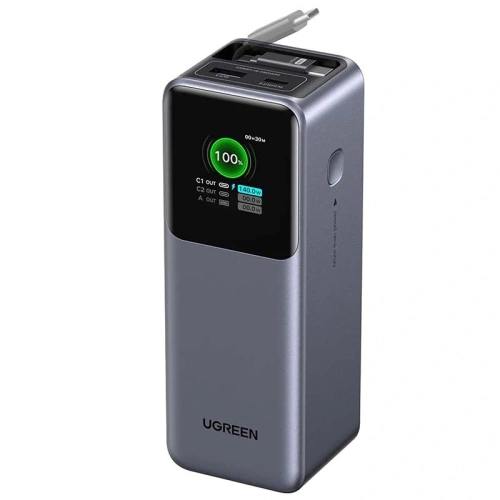
    UGREEN PB726 20,000 mAh 165W, for longer trips
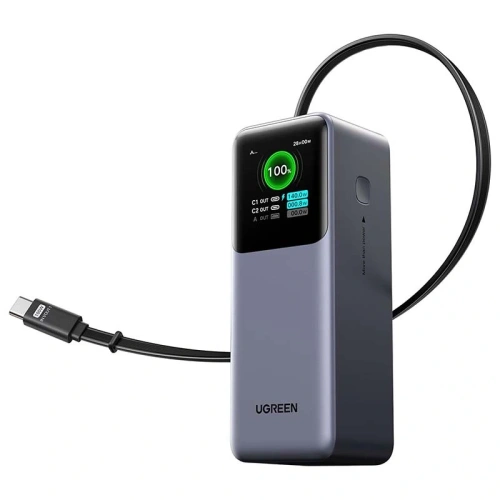
    UGREEN PB726 Powerbank is in a different league: 20,000 mAh and 165 W, which means it can charge Duo at full speed and still have power left for a laptop. The built-in retractable cable also solves the problem of always missing a cable.

    This powerbank is for a backpack, not for a pocket. However, on a two-day trip without access to a socket, it replaces the rest of this article. If you care about power with less weight, check out UGREEN PB537 20,000 mAh 55 W.

    Pre-flight advice: as of March 27, 2026, new ICAO rules apply. Each passenger is allowed a maximum of two powerbanks, each up to 100 Wh (20,000 mAh is about 74 Wh, so it fits within the limit). They may only be carried in the cabin, must be kept within reach, not in the overhead compartment, and cannot be recharged from onboard sockets.

    [hs_products ids=”141166,142610,129239,100096,127489,109233″ cols=”6″ title=”Powerbanks, cables, and charging on the go”]

    We have gathered more models in the 2026 powerbank ranking, and you can find the entire offer in the powerbank category.

    Which charger to choose? Recommendations based on needs

    Your situationWhat to buyWhy
    You want one charger and don’t want to thinkUGREEN Nexode Air 65WMeets the threshold, is small, has three ports for backup
    You charge your phone and laptop from one socketTech-Protect PowerVision NC100WOne hundred watts for both, and the display will show how much is actually flowing
    You travel a lotSatechi 4-Port GaN Travel 140WInterchangeable plugs replace a set of adapters
    You mainly charge at night by the bedTech-Protect A50 or Satechi Qi2 Trio with the appropriate power supplyDuring eight hours of sleep, speed doesn’t matter
    You already have a strong charger for your MacBookNothing or just the cableCheck how much it delivers on one port; 60 W+ is enough
    You need a second cableTech-Protect UB20T 100 W / 5 AHas more than the required 3 A, won’t cut power
    You drive with navigationTech-Protect MM25W-V8 mount or UGREEN EC705A weaker adapter will maintain battery level but won’t raise it
    You’re going away for a longer time without a socketUGREEN PB726 20,000 mAhMagnetic 10,000 mAh is for convenience, not capacity

    You are choosing between the Duo and Samsung’s foldable. We compared both in the comparison of iPhone Duo and Galaxy Z Fold 8, and a separate ranking of chargers for Samsung can be found in the text about chargers for Galaxy Z Fold 8 Ultra.

    Summary

    The Duo charger for iPhone comes down to one number and three details surrounding it.

    1. The power supply must be at least 60 W, otherwise you won’t see the promised 50% in 20 minutes
    2. What matters is the power on one port, not the total written on the box
    3. The cable must carry 3 A at 20 V, so 100 W and 5 A cables are a safe choice
    4. Wirelessly you will get 25 W via MagSafe or Qi2 25W, but the pad needs its own power supply, from 35 to 45 W depending on the model
    5. There is no power supply in the box, only a USB-C cable, so the brick needs to be purchased separately

    The rest of the equipment revolves around the same thresholds, with one exception. The power bank is chosen not for power, but for the weight of the phone: magnetic up to 10,000 mAh, heavier cells on a cable.

    If you have to buy one thing before picking up the phone, let it be a 65 W charger with USB Power Delivery. The rest, from the induction pad to the power bank, can wait until you learn your habits with the new phone.

    At least 60 W. Apple states that with a 60 W or stronger power adapter, the phone will charge to 50% in about 20 minutes. Weaker chargers will work, but slower.

    Can you charge the iPhone Duo with a 65 W charger?

    Yes, and it is actually recommended. The phone only draws as much power as it needs, and a higher wattage charger never “forces” it. A 65 W power adapter provides a small buffer above the required threshold.

    Is a 67 W charger good for the iPhone Duo?

    Yes, and it is one of the better choices. Seven watts above the required 60 W threshold provides a buffer that allows the phone to maintain full speed even when you connect headphones or a watch to the second port.

    Can the iPhone Duo be charged with a 100 W or 140 W charger?

    It is possible and completely safe. USB Power Delivery negotiates the voltage and current between the charger and the phone, so the device draws only as much as it can handle. A more powerful charger is useful when charging multiple devices at once.

    Does the iPhone Duo need an original Apple charger?

    No. Any power adapter that supports USB Power Delivery with a power of 60 W or higher is sufficient. Apple does not require MFi certification for wall chargers, and for wireless charging, compatibility with the Qi2 standard is what matters.

    Is there a charger included with the iPhone Duo?

    No. In the box, you will find only a 1-meter USB-C cable. The wall adapter needs to be purchased separately, just like with every iPhone since 2020.

    How fast does the iPhone Duo charge?

    Up to 50% in about 20 minutes with a 60 W or stronger adapter. MagSafe and Qi2 wireless charging works with a power of up to 25 W, so a full charge takes significantly longer than with a cable.

    Will an old 20 W charger from the iPhone charge the Duo?

    It will charge, but much slower than Apple states. The foldable iPhone has two batteries, and with a 20 W adapter, the charging time increases several times compared to the stated 20 minutes to reach half capacity.


    Sources:
  • What is the best charger for the Samsung Galaxy Z Fold 8 Ultra?

    What is the best charger for the Samsung Galaxy Z Fold 8 Ultra?

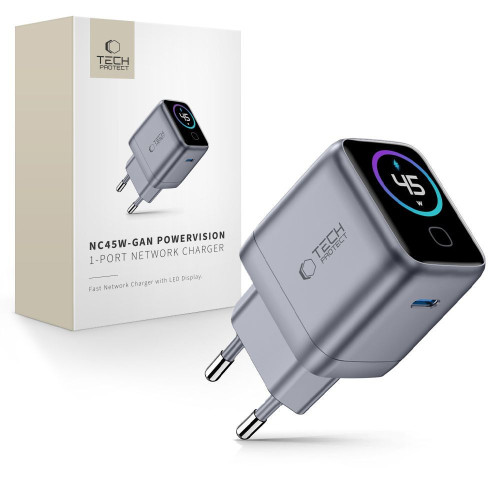
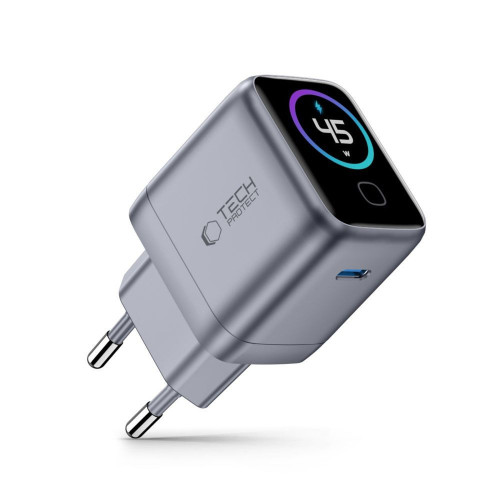
    The best charger for the Galaxy Z Fold 8 Ultra is the Tech-Protect PowerVision NC45W-GaN. It has a profile of 15 V / 3 A, supports PPS, and features a display where you can check the actual charging power. A safe choice is the original Samsung charger EP-T4511 45 W. For both, purchase a USB-C 5 A cable, as without it, the phone won’t reach 45 W.

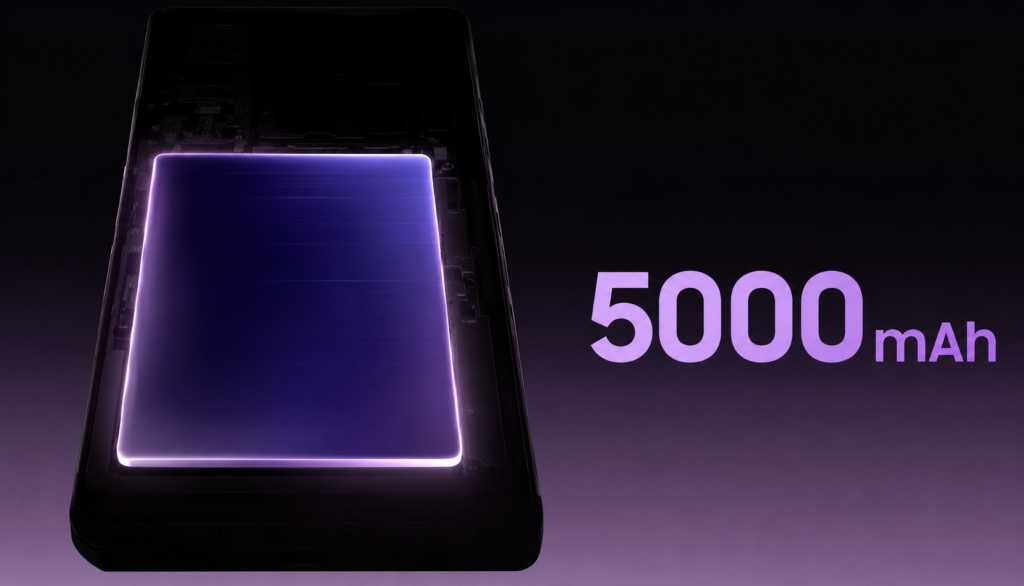
    The Z Fold 8 Ultra has a 5,000 mAh battery and supports 45 W wired charging and 20 W wireless charging. It sounds simple, but the charger market is full of 65 W and 100 W bricks that throttle down to 25 W in Samsung devices.

    Below you will find three parameters that must be on the box, a fourth condition often overlooked by manufacturers, and a ranking of 7 chargers with an output profile table.

    Three parameters that must be on the box

    When buying a charger for the Z Fold 8 Ultra, look for three things at once. The absence of even one will revert the phone to a slower mode.

    Power: 45 W or more. A more powerful charger won’t hurt. The phone draws exactly what it needs, and a 65 W or 100 W brick operates cooler than a 45 W brick pushed to its limits. If you’re looking for the smallest high-power designs, check out our ranking of GaN chargers.

    PPS: a necessary condition. Programmable Power Supply allows for smooth regulation of voltage and current instead of jumping between fixed thresholds. Without PPS, a 45 W charger throttles down to 15–25 W in Samsung devices, as the phone cannot activate Super Fast Charging 2.0 mode.

    PD 3.0: base protocol. USB Power Delivery 3.0 is the standard under which PPS operates at all. A charger with just Quick Charge, without PD, will not communicate with Samsung at full speed.

    Note: “45 W” on the casing is the maximum power of the charger, not a guarantee of 45 W for the phone. The output profile matters. Look for the specification stating 15 V / 3 A: that’s what provides 45 W.

    The fourth condition that charger manufacturers are silent about

    You can have the perfect charger and still charge your phone slowly. The reason lies in the cable.

    Charging at 45 W requires a USB-C to USB-C cable with a 5 A load capacity and an e-marker. An e-marker is an integrated circuit in the cable that informs devices what current the cable can safely carry. The USB Type-C specification requires it in every cable above 3 A.

    A cable without an e-marker reports a limit of 3 A. The phone sees this limit and automatically switches to a slower mode, even if the charger offers more. A regular USB-A cable also excludes Super Fast Charging 2.0.

    Samsung sells its set directly under the name “45W PD Power Adapter with 5A USB-C Cable.” This is not a marketing addition, but part of the specification.

    This explains the most common complaint from users of foldable phones: “I bought a more powerful charger, and the phone charges slower than before.” Usually, the culprit is the cable included in the package.

    How long does the Galaxy Z Fold 8 Ultra actually take to charge

    ParameterValue
    Battery capacity5,000 mAh
    Wired charging45 W (Super Fast Charging 2.0)
    Wireless charging20 W, Qi2 standard
    Magnets in the case❌ phone is “Qi2 Ready”
    ConnectorUSB-C
    Required cable for 45 WUSB-C / USB-C, 5 A, e-marker

    The battery has increased from 4,400 mAh in the previous generation to 5,000 mAh thanks to silicon-carbon cells. With the larger cell, the difference between charging at 25 W and 45 W becomes noticeable: it’s a matter of several dozen minutes for a full cycle.

    Note: The Z Fold 8 Ultra does not have magnets in the case. It supports Qi2, but the magnetic ring must be provided by the case. A magnetic wireless charger will not stick to the bare phone.

    Ranking: 7 best chargers for Galaxy Z Fold 8 Ultra

    1. Tech-Protect PowerVision NC45W-GaN: the only one with a power display

    Our choice: a complete set of parameters plus a display that confirms the actual power.

    This is a charger that shows how many watts are actually flowing to the phone. The PowerView AI 2.0 display provides the current power consumption and temperature. If there is an issue with charging speed, you can immediately see whether the charger or the cable is to blame.

    Under the hood, it has a complete set of required parameters: a profile of 15 V / 3 A, PPS in the range of 5–11 V at 4.5 A, and the PD 3.2 protocol, which is newer than the required PD 3.0.

    • Profile 15 V / 3 A provides a full 45 W for Samsung
    • PPS 5–11 V / 4.5 A and PD 3.2, QC4+, AVS, UFCS, AFC
    • PowerView AI 2.0 display shows power in watts and temperature
    • GaN technology in a case of 78.5 × 32 × 41 mm
    • Thermal and overvoltage protections

    Cons: one USB-C port. If you are charging a phone and a laptop at the same time, check the multi-port options below. No cable included.

    ParameterValue
    Maximum power45 W
    Ports1 × USB-C
    Profile 15 V / 3 A✅
    PPS✅ 5–11 V / 4.5 A
    ProtocolsPD 3.2, QC4+, AVS, UFCS, AFC

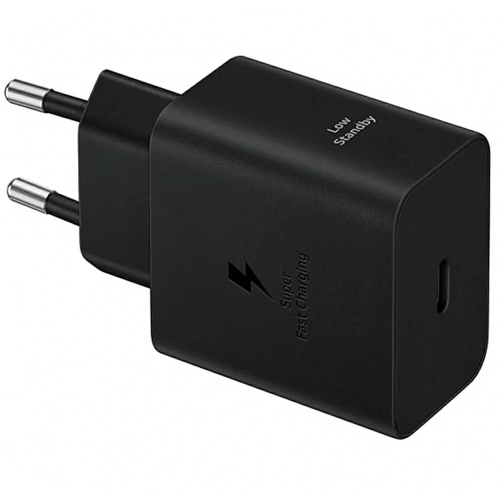
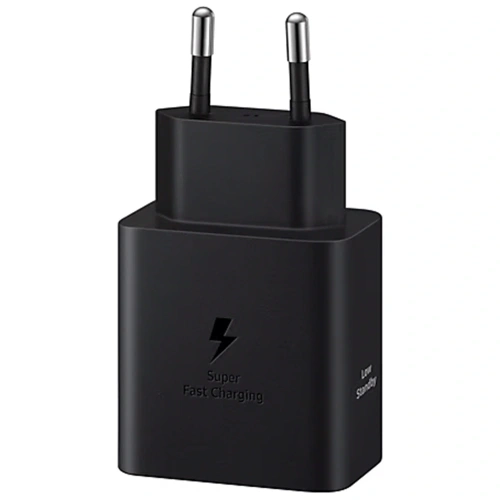
    2. Samsung EP-T4511 45W: original without surprises

    If you don’t want to analyze the specifications, take the manufacturer’s charger. EP-T4511 is Samsung’s reference 45 W brick and the standard against which others are compared.

    The specification lists PDO profiles of 9 V, 15 V, and 20 V, with a current of 3 A at 9 V and 15 V, and PPS in the range of 5–20 V. The standby power consumption is below 5 mW, so the brick can remain in the socket.

    • 15 V / 3 A profile confirmed in the manufacturer’s specification
    • PPS 5–20 V and full compatibility with Super Fast Charging 2.0
    • Standby consumption below 5 mW
    • Protections against overload, short circuit, and overheating

    Two downsides. Cable sold separately. And this is not a trivial matter, because without a 5 A cable, the charger will not show its full capabilities. It is also the largest design among the 45 W models: 43.5 × 81.8 × 28 mm, without GaN technology.

    ParameterValue
    Maximum power45 W
    Ports1 × USB-C
    Profile 15 V / 3 A✅
    PPS✅ 5–20 V
    Cable included❌

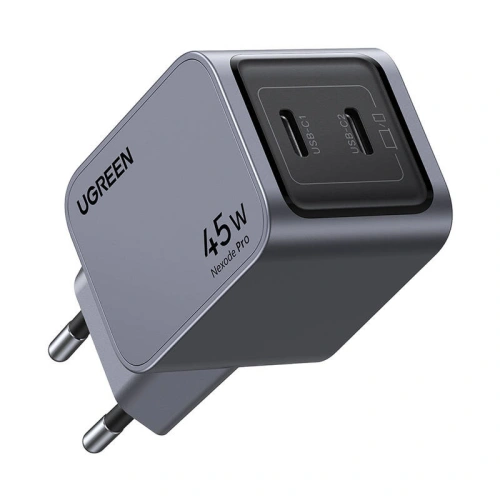
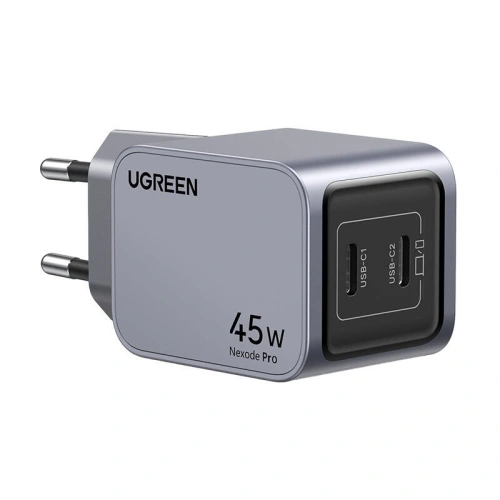
    3. UGREEN Nexode Pro 45W: two ports in a package-sized cube

    The best compromise between size and capabilities. The GaNInfinity chip allowed to fit 45 W and two USB-C ports into a 35.89 × 36.5 × 47 mm housing, 21% smaller than traditional designs.

    The list of supported standards is the longest in the ranking and includes the most important: PD 3.0 with PPS, along with QC4+, SCP, FCP, and AFC. The manufacturer states that the MacBook Air M2 charges up to 72% in one hour.

    • PD 3.0 with PPS plus QC4+, QC3.0, SCP, FCP, AFC
    • Two USB-C ports: phone and headphones simultaneously
    • GaNInfinity provides a 21% smaller casing
    • Thermal Guard monitors temperature in real-time

    To be fair: the manufacturer does not publish exact voltage profiles in the store specification, so we cannot confirm the 15 V / 3 A profile in black and white. However, the presence of PPS in PD 3.0 is sufficient confirmation. This is the most frequently purchased 45 W charger in the ranking.

    ParameterValue
    Maximum power45 W
    Ports2 × USB-C
    15 V / 3 A profilenot specified
    PPS✅
    TechnologyGaNInfinity

    [hs_products ids=”142548,102989,76149″ cols=”3″ title=”Three highest-rated chargers from the ranking”]

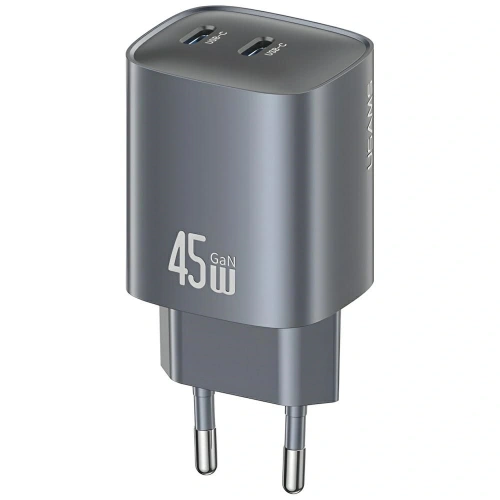
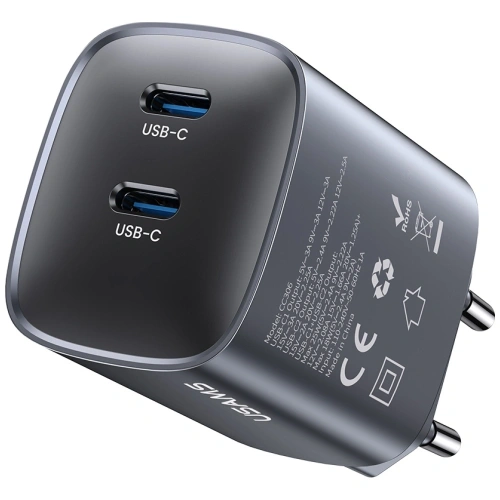
    4. USAMS CC305 T66 45W GaN: full 45 W on the main port

    USAMS, as one of the few manufacturers, provides a full output profile table in the store. This works to its advantage. The USB-C1 port delivers 5 V / 3 A, 9 V / 3 A, 12 V / 3 A, 15 V / 3 A, and 20 V / 2.25 A.

    The second port is noticeably weaker (15 V at 2 A), and when both are used simultaneously, the power is divided into 25 W and 18 W. It’s important: connect the phone to port C1 if you want full speed.

    • Profile 15 V / 3 A on the USB-C1 port, confirmed in the manufacturer’s table
    • Two USB-C ports with power split of 25 W + 18 W
    • GaN technology, housing made of ABS and polycarbonate (PC)
    • Weight approximately 96 g, dimensions 39 × 33.5 × 44.5 mm

    What is missing: the specification does not explicitly mention PPS. However, the 15 V / 3 A profile is clearly stated, and it is responsible for 45 W.

    ParameterValue
    Maximum power45 W
    Ports2 × USB-C (25 W + 18 W combined)
    Profile 15 V / 3 A✅ port C1
    PPSnot specified
    Weightapprox. 96 g

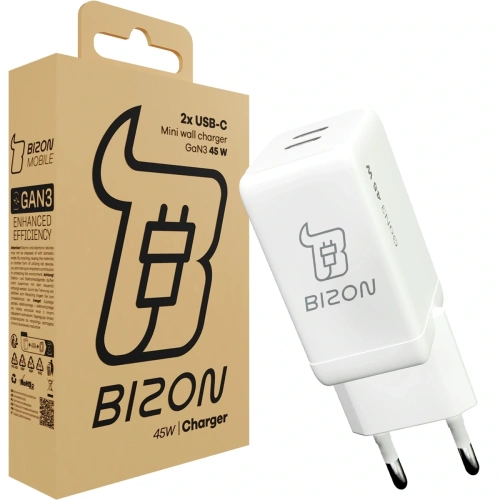
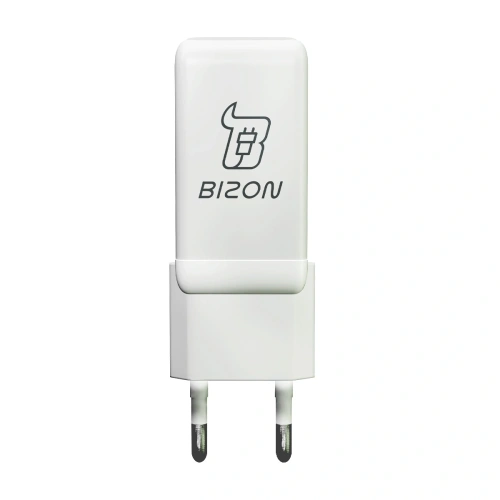
    5. Bizon Charger VT-36B 45W: the only one with Super Fast Charging 2.0 in the specification

    The most complete specification outside the first league of brands. Bizon is the only one that mentions Super Fast Charging 2.0 by name in the specification, which is exactly the mode that matters for Samsung.

    Moreover, the 15 V / 3 A profile is available on both USB-C ports, not just the main one. GaN3 technology keeps the temperature low, and the manufacturer claims it can charge up to 50% in 30 minutes.

    • Super Fast Charging 2.0 mentioned directly in the specification
    • Profile 15 V / 3 A on both USB-C ports
    • GaN3 lowers operating temperature
    • CE and RoHS certifications, dimensions 9 × 3.5 cm

    Limitation: with two devices at once, 45 W is divided between the ports, so the phone will not receive full power. Bizon is the least recognizable brand in the comparison, but here the specification speaks for itself.

    ParameterValue
    Maximum power45 W
    Ports2 × USB-C
    Profile 15 V / 3 A✅ both ports
    Super Fast Charging 2.0✅ declared
    TechnologyGaN3

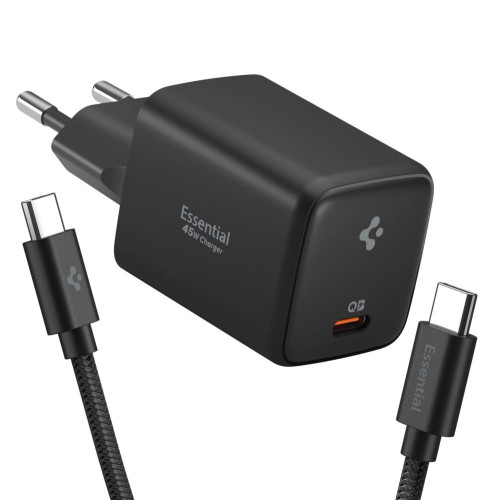
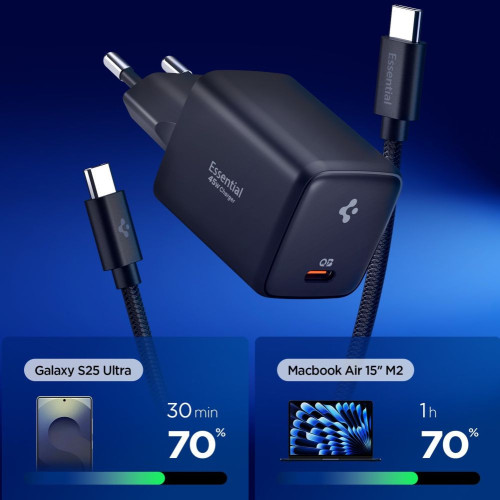
    6. Spigen EE451EU Essential 45W: charger and cable in one box

    This is the only item in the ranking with a cable included. Considering that the cable determines the achievement of 45 W, the set in one box has real value.

    The design is maximally simple: one USB-C port, 45 W power, Power Delivery support, cable length of 1 m.

    • 1 m USB-C cable included
    • 45 W power on one USB-C port
    • Power Delivery standard
    • Compact design without unnecessary features

    To be fair: Spigen does not publish voltage profiles, PPS support, or the load capacity of the included cable in the product sheet. If you care about confirmed 45 W, choose an item with full specifications, and purchase the cable separately.

    ParameterValue
    Maximum power45 W
    Ports1 × USB-C
    Profile 15 V / 3 Anot specified
    PPSnot specified
    Cable included✅ 1 m

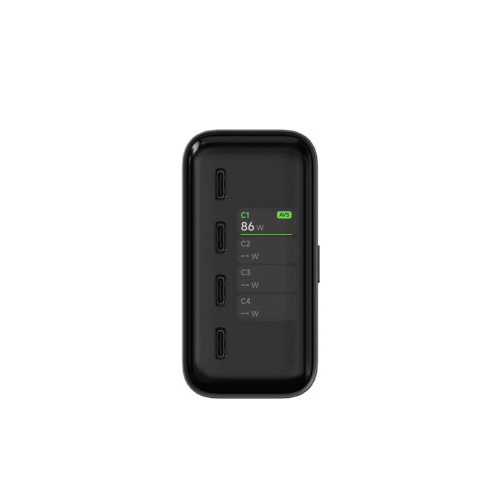
    7. Satechi ChargeView GaN 140W: one cube for the entire desk

    A proposal for someone who wants to use one charger for a laptop, tablet, headphones, and Z Fold 8 Ultra. Four USB-C ports and 140 W are enough to charge the phone at full power even when the other ports are in use.

    The display shows the charging status, and GaN technology keeps reasonable dimensions for this power. An alternative to a multi-port cube are 2-in-1 and 3-in-1 charging stations.

    • 140 W total power
    • Four USB-C ports: phone, laptop, tablet, and headphones at the same time
    • Built-in display for charging status
    • GaN Technology in a compact housing

    Honestly: this is overkill for the phone itself, and the product card does not mention PPS or power distribution to the ports. You buy it for the number of ports and power reserve, not because it is the best charger for the phone itself.

    ParameterValue
    Maximum power140 W
    Ports4 × USB-C
    Profile 15 V / 3 Anot specified
    PPSnot specified
    Display✅ charging status

    [hs_products ids=”108818,127267,132892,138104″ cols=”4″ title=”Items 4–7 from the ranking”]

    Comparison of 45 W chargers for Samsung Galaxy Z Fold 8 Ultra

    ChargerPowerPortsProfile 15 V / 3 APPSHighlight
    Tech-Protect PowerVision NC45W45 W1 × USB-C✅✅Power and temperature display
    Samsung EP-T451145 W1 × USB-C✅✅Original phone manufacturer
    UGREEN Nexode Pro45 W2 × USB-Cnot specified✅Smallest with two ports
    USAMS CC305 T6645 W2 × USB-C✅ port C1not specifiedFull output profile table
    Bizon Charger VT-36B45 W2 × USB-C✅ both portsnot specifiedClaims Super Fast Charging 2.0
    Spigen EE451EU Essential45 W1 × USB-Cnot specifiednot specifiedCable included
    Satechi ChargeView140 W4 × USB-Cnot specifiednot specifiedFour ports and display

    “Not specified” means that the manufacturer does not publish this parameter on the product sheet. This is not a criticism of the equipment, but information about what cannot be verified before purchase.

    Which charger to choose? Recommendations based on needs

    Want to be sure you’re getting 45 W → Tech-Protect PowerVision NC45W-GaN. The display shows real power, so you don’t have to guess anything.

    Don’t want to analyze specifications → Samsung EP-T4511. The charger from the phone manufacturer, fully compliant with the standard. Remember the cable.

    Charging your phone and a second device → UGREEN Nexode Pro 45W. Two USB-C ports in a case smaller than the original Samsung.

    Want 45 W on both ports at the same time → Bizon Charger VT-36B. 15 V / 3 A profile on each output and Super Fast Charging 2.0 mentioned in the specifications.

    Buying your first charger and don’t have a cable → Spigen EE451EU Essential. A complete set in one box.

    You have a laptop, tablet, and phone on your desk → Satechi ChargeView GaN 140W. Four ports and power reserve.

    Cable: the element where it’s easiest to lose 45 W

    Let’s repeat, because this is the most common mistake. To charge 45 W you need a USB-C to USB-C cable with a 5 A load capacity and an e-marker. A cable from the previous phone’s set, a USB-A cable, and a cheap unmarked wire will keep the phone in a slower mode.

    What to look for in the cable description:

    • 5 A or 100 W is the same information expressed differently
    • E-marker, sometimes described as “E-Mark chip”
    • USB-C on both ends: adapters and USB-A are not acceptable
    • Length matched to the charging location, because a longer cable means greater losses

    More about choosing the cable can be found in the guide which fast charging cable to choose.

    [hs_products ids=”120612,120615,137656″ cols=”3″ title=”USB-C 5 A cables for 45 W charging”]

    You will find the full selection in the category USB-C to USB-C cables.

    Wireless charger for Samsung: what Qi2 offers in the Z Fold 8 Ultra

    The Z Fold 8 Ultra charges wirelessly with a power of 20 W in the Qi2 standard. A wireless charger is a convenient solution for the desk, but it is always slower than wired charging.

    Important note: the phone does not have magnets in the case. A magnetic Qi2 charger will not stick to the bare phone until you put on a case with a magnetic ring. A regular flat wireless charger will work without any additional accessories.

    When choosing a wireless charger for Samsung, check the declared power for Android phones. Some magnetic chargers state the highest power only for iPhones, while offering significantly less for other devices.

    Below you will find both variants: flat pads that work with a bare phone, and magnetic Qi2 models to pair with a case with a ring.

    [hs_products category=”245″ limit=”6″ sort=”sales” title=”Wireless and magnetic Qi2 chargers”]

    Charging in the Car and on the Go

    In the car, the same three parameters apply as at home. Look for a 45 W charger with PD and PPS, not a block described only by the amperage. Check car chargers and power banks if you are charging your phone on the go.

    If you are looking for accessories for a specific model, we have separate categories for Galaxy Z Fold 8 Ultra and Galaxy Z Fold 8.

    Summary

    The best charger for the Samsung Galaxy Z Fold 8 Ultra is the Tech-Protect PowerVision NC45W-GaN. It has a confirmed profile of 15 V / 3 A, PPS, and a display that shows real power. The safest choice without analyzing specifications is the original Samsung charger EP-T4511, and the most confirmed parameters outside of the original are provided by the Bizon Charger VT-36B.

    Three things to remember:

    1. Three parameters on the box: power of 45 W or more, PPS, and PD 3.0. Lack of PPS takes away over half the speed.
    2. 5 A cable with e-marker is just as important as the charger. Without it, the phone will not reach 45 W.
    3. A stronger charger does not harm. A 65 W or 100 W charger will provide exactly what the phone requests.

    FAQ: Frequently Asked Questions about the Z Fold 8 Ultra Charger

    Does it have to be an original charger for Samsung?

    No. Any charger with a minimum power of 45 W, supporting PPS and PD 3.0 standard is sufficient. The original Samsung charger ensures compatibility without checking specifications, but chargers from other brands with these parameters work identically.

    What is the difference between a 25 W charger and a 45 W charger?

    The 45 W charger activates Super Fast Charging 2.0 mode in the Galaxy Z Fold 8 Ultra, which is a profile of 15 V / 3 A. The 25 W charger is limited to the first generation of Super Fast Charging. With a 5,000 mAh battery, the difference in full cycle time is several dozen minutes.

    Can a 65 W charger be used to charge the phone?

    Yes. It is completely safe. The phone negotiates the power it needs with the charger and will draw a maximum of 45 W. A stronger charger operates cooler because it does not work at the edge of its capabilities.

    How many watts must a charger for Samsung have?

    To the Galaxy Z Fold 8 Ultra minimum of 45 W with PPS support. A 25 W charger will charge the phone, but clearly slower. Power alone is not enough: a 65 W block without PPS will slow down to 15–25 W.

    Why does my new charger charge slower than my old one?

    The most common reason is the cable. 45 W charging requires a USB-C to USB-C cable with a 5 A load capacity and an e-marker. Another reason may be the lack of PPS support in the new charger, despite the high power indicated on the casing.

    Does the Galaxy Z Fold 8 Ultra support wireless charging?

    Yes, with a power of up to 20 W in the Qi2 standard. However, the phone does not have magnets in the casing, so a magnetic Qi2 charger requires a case with a magnetic ring. A regular flat induction charger works without any additions.

    What is the purpose of a power display on a charger?

    It allows you to verify the actual charging speed. The display shows the power consumption in watts, so you can immediately see whether the phone is receiving 45 W or has dropped to a slower mode due to the cable or lack of PPS.


    Sources: Galaxy Z Fold8 Ultra specifications on GSMArena, 45W PD Power Adapter with 5A USB-C Cable set on Samsung.com, USB Type-C specification, e-marker requirement above 3 A — USB-IF
  • What is the best charger for MacBook Neo 13 [2026]? Top 7 models

    What is the best charger for MacBook Neo 13 [2026]? Top 7 models

    The best charger for MacBook Neo 13 is Ugreen X524 45 W USB-C GaN (59.90 PLN), a compact GaN power supply with Power Delivery that fully utilizes the maximum 30 W that the MacBook Neo accepts, and the additional 15 W reserve will also allow you to charge your iPhone. The second place goes to Usams T70 40 W (49 PLN), a multi-port charger with 2× USB-C and 2× USB-A. Below is the full ranking of 7 models with prices, specifications, and recommendations for various scenarios.

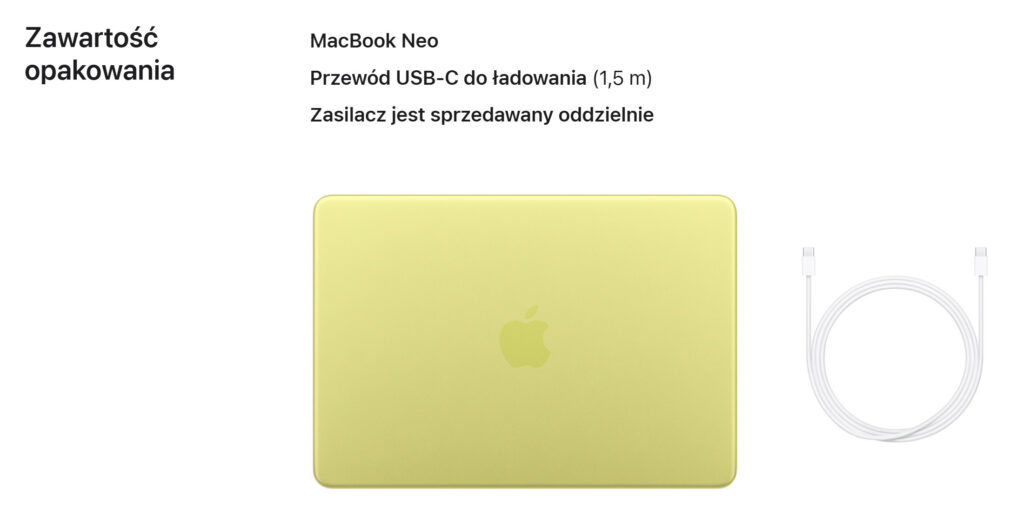
    MacBook Neo 13″ (A18 Pro) is sold without a power adapter, in the box you will find only the laptop and a USB-C cable. You need to purchase the charger separately. We selected 7 models from the homescreen.pl offer, with power ranging from 33 W to 140 W, which is where the new MacBook actually uses the available energy. We focused on proven brands: Ugreen (including Nexode S 140 W), Usams (including US-CC180 Sandru 65 W), Spigen, Crong, and 3MK.

    What power charger for MacBook Neo 13?

    MacBook Neo 13 with A18 Pro chip is the cheapest Apple laptop, launching in March 2026, priced from $599. The device weighs under 1.3 kg and has two USB-C ports (USB 3 on the left, USB 2 on the right). Unlike the MacBook Pro, the Neo does not support fast charging.

    The optimal charger power for MacBook Neo 13 is around 35 W, as this model can accept a maximum of 30 W. Tests have shown that the Neo will not utilize higher power when charging the laptop itself.

    Weaker chargers, such as 20 W, will also charge the laptop, but the charging time will be noticeably longer. Stronger chargers, such as 60–140 W, will be useful when you want to charge multiple devices simultaneously or if you also use them for a more powerful laptop. We do not include models exceeding 140 W in the ranking, as for the Neo they would only mean additional cost, not speed.

    When is it worth choosing a stronger charger (45–140 W)?

    A higher power charger will be useful if:

    • You plan to also charge a more powerful laptop with it, e.g. MacBook Pro (14″ requires 70–96 W, 16″ even 140 W).
    • You are looking for a multi-port charger to simultaneously charge the MacBook Neo and other devices, such as an iPhone, iPad, or AirPods.
    • You travel often and want to have one charger for the entire Apple ecosystem.
    • You want to keep some power reserve for future devices.

    Tip: If you want to charge your laptop and other devices, such as an iPhone and iPad, at the same time, choose a multi-port charger with two or three USB-C ports. Smart power management will automatically adjust the performance for each connected device.

    What standards to look for?

    A charger for the MacBook Neo should support:

    • USB Power Delivery (USB PD), a fast charging standard up to 240 W, essential for USB-C.
    • Minimum 30 W on the USB-C port, to ensure the Neo charges at full supported speed.
    • GaN (gallium nitride), allows for a smaller charger while maintaining power; ideal for a backpack.
    • PPS (Programmable Power Supply), optional, useful for newer iPhones and Samsungs.

    Ranking: 7 best chargers for MacBook Neo 13

    The following models were selected from the homescreen.pl offer, comparing power, number of ports, GaN technology, and value for money. All come from reputable brands and fall within the range of 33–140 W.

    1. Ugreen X524 45 W USB-C GaN, our choice (59.90 PLN)

    Our choice. Ugreen X524 45 W is a GaN charger with a single USB-C port and a power of 45 W for under 60 PLN, making it hard to find a better price-to-performance ratio. Gallium nitride has allowed the casing to be reduced to the size of a standard 25 W charger while delivering a full 45 W output.

    45 W is a safe buffer above the maximum 30 W that Neo accepts. This means that the laptop will charge at the full supported speed, and Ugreen X524 is also sufficient for the iPhone 17 Pro Max (27 W) or iPad Pro. If you want a ready-made set, choose the variant Ugreen X524 45 W with a 1 m USB-C cable for 69.90 PLN.

    ParameterValue
    Power45 W
    Ports1× USB-C
    TechnologyGaN, USB PD
    Weightapprox. 80 g
    Price59.90 zł

    2. Usams T70 40 W, multi-port home hub (49.00 zł)

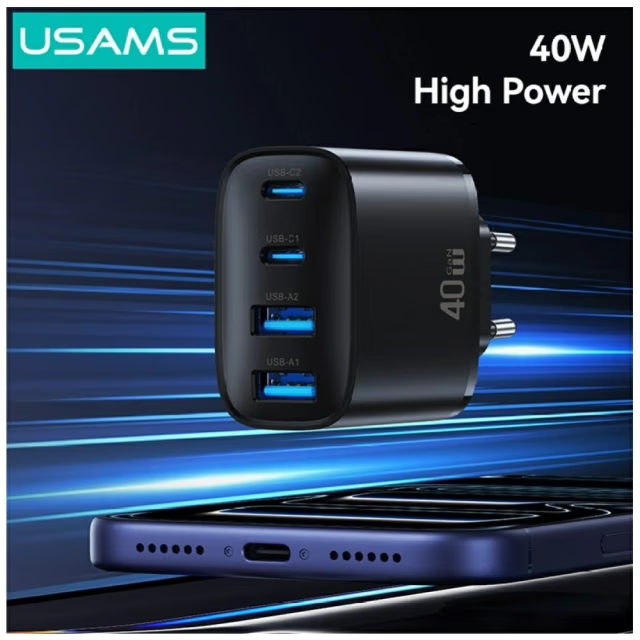
    If you are looking for one charger that can handle the entire family of devices, Usams T70 40 W is the cheapest option in the ranking. Four ports (2× USB-C + 2× USB-A) allow you to charge a MacBook Neo, iPhone, iPad, and headphones simultaneously, and the total cost is 49 zł. This is unbeatable in this category.

    It is worth remembering that in the Usams T70 40 W is the total power, intelligently distributed among the ports. When charging four devices simultaneously, Neo will receive less than 30 W, but overnight charging of the entire set is not a problem. It is the perfect charger for a desk or a nightstand.

    ParameterValue
    Power40 W (total)
    Ports2× USB-C + 2× USB-A
    TechnologyUSB PD, Quick Charge
    Price49.00 zł

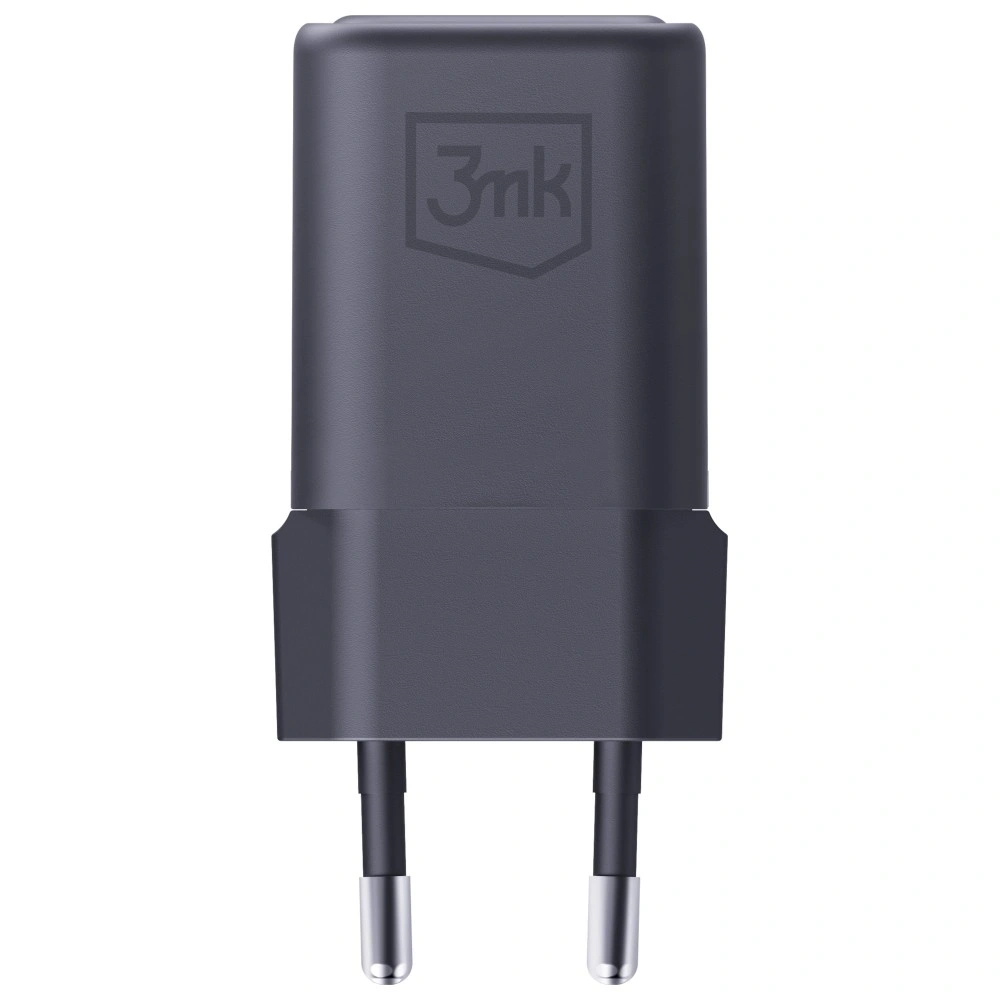
    3. 3MK Hyper Charger PD 33 W GaN, the most power-matched (49.90 zł)

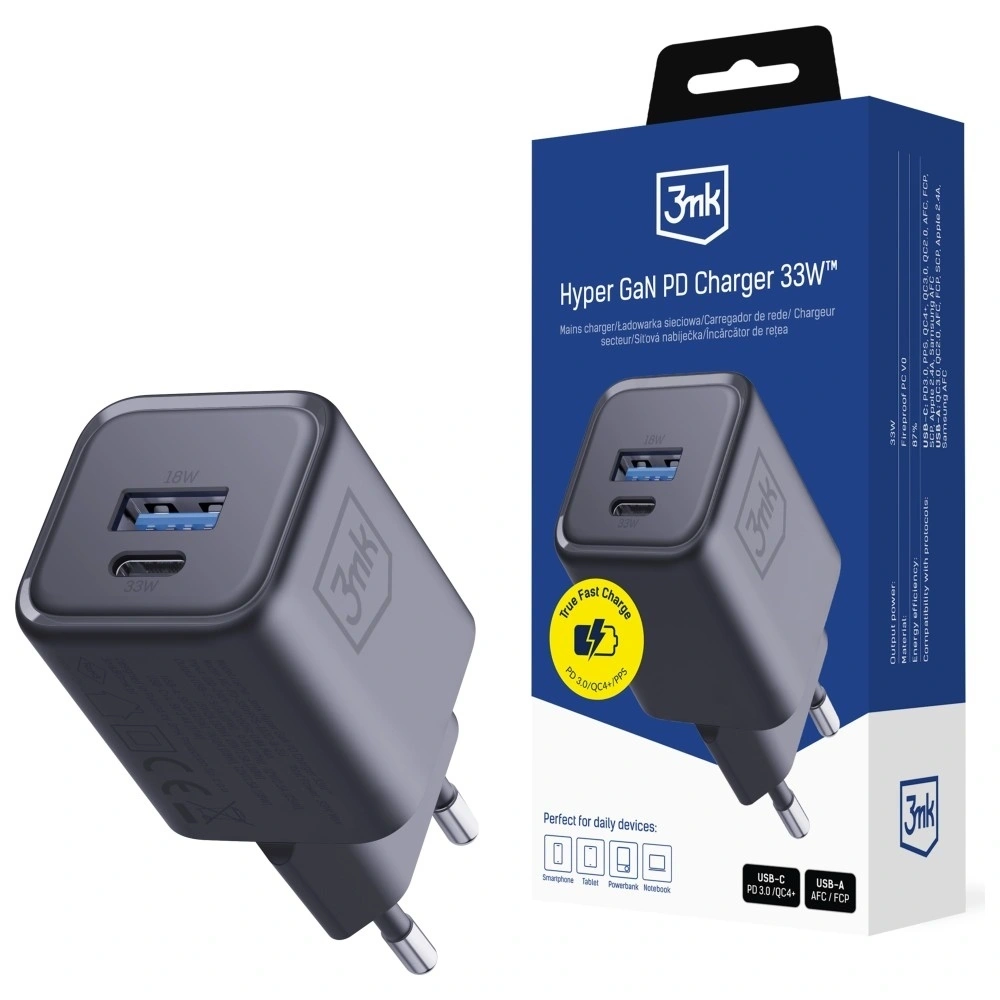
    3MK Hyper Charger PD 33 W GaN is the most precisely power-matched model in the ranking. 33 W is practically exactly what Neo can accept (30 W), so you are not paying for unused capacity. At this price, you also get a second USB-A port, useful for a phone with an older cable or an additional accessory.

    3MK supports a full set of fast charging standards: USB PD, QC 4+, PPS, AFC, FCP, and SCP. The intelligent circuit automatically adjusts the power to the connected device, and protections against overheating, overloading, and voltage spikes protect both the charger and the laptop.

    ParameterValue
    Power33 W (total)
    Ports1× USB-C + 1× USB-A
    TechnologyGaN, PD, QC 4+, PPS
    Price49.90 zł

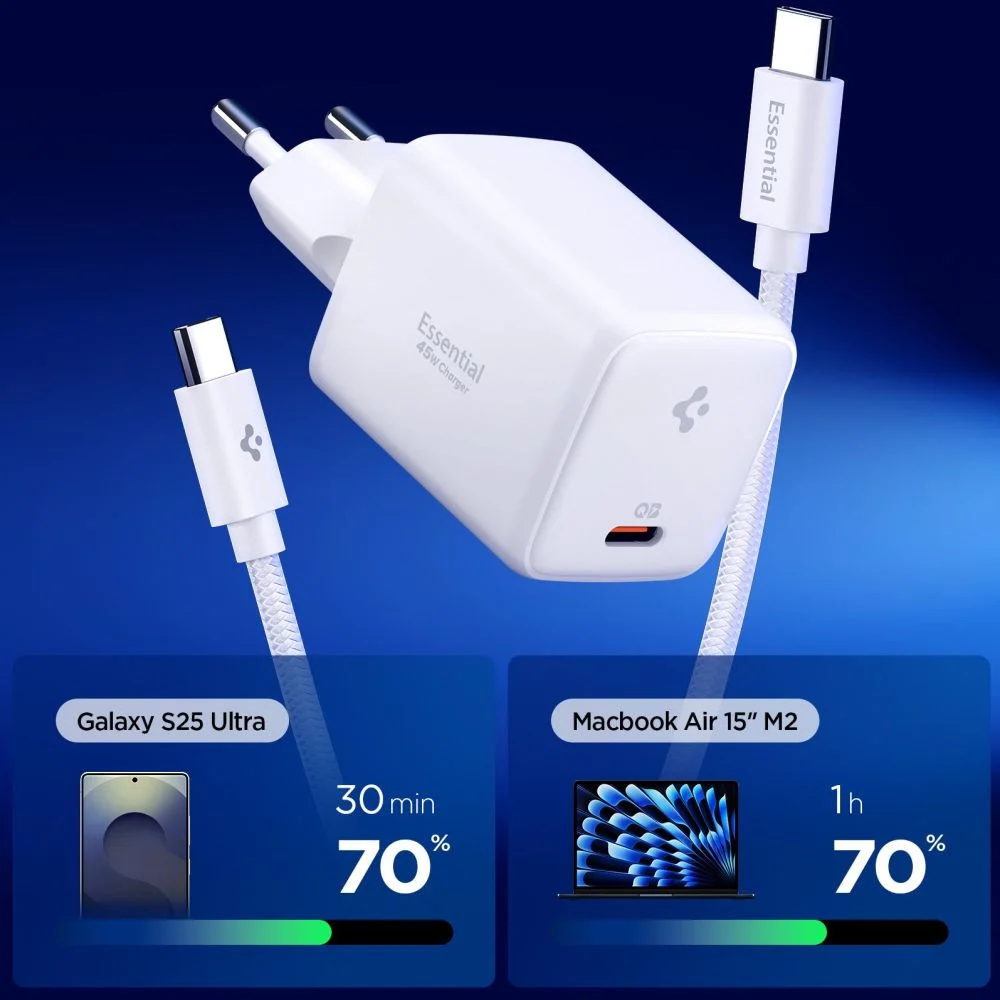
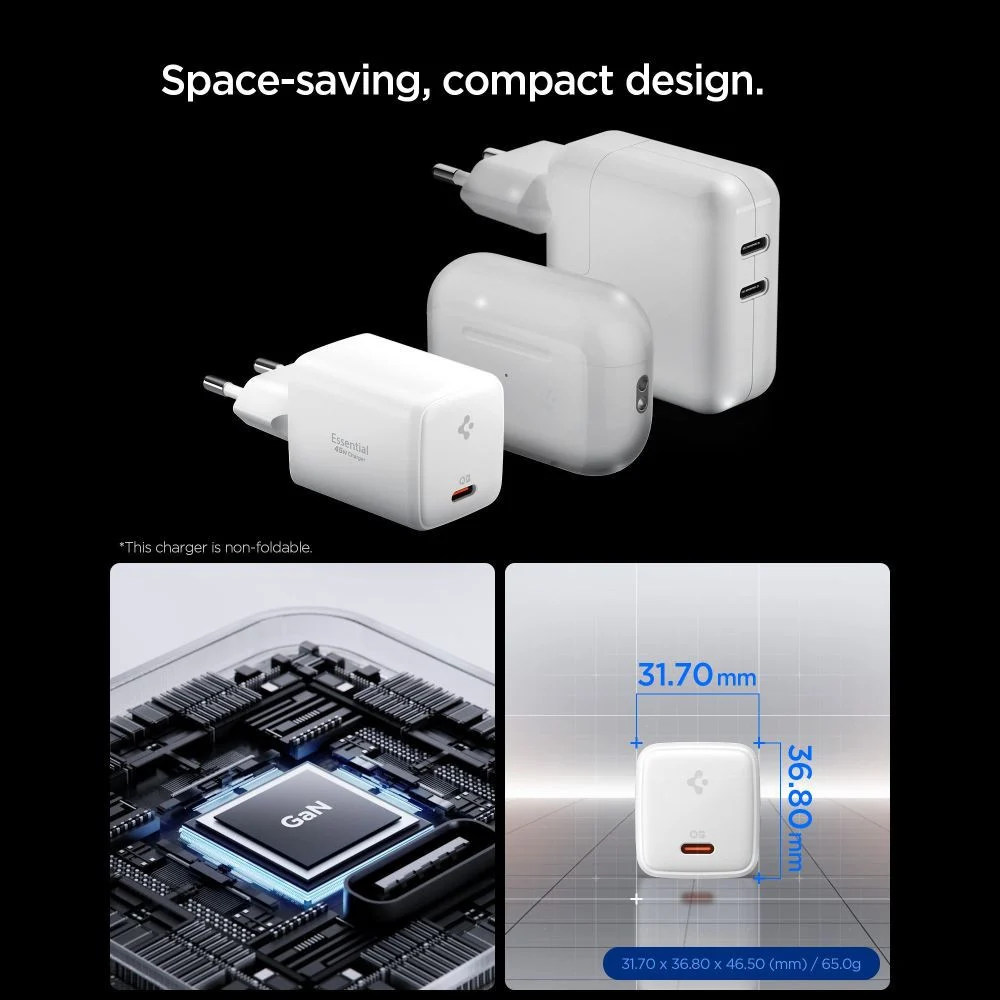
    4. Spigen Essential 45 W (white) with USB-C cable, premium (79.00 zł)

    Spigen is a brand that has built a reputation for premium accessories for the Apple ecosystem. Spigen Essential 45 W is a stable, reliable choice with a 1 m USB-C cable included, you don’t need to buy anything extra. The cable from Spigen is armored and durable, which matters for everyday use in a backpack.

    45 W in Spigen Essential is the same power as in Ugreen, but for an additional 20 PLN you get a branded cable and a classic, white design that matches the MacBook. If you care about aesthetics and a branded set, it’s a reasonable expense.

    ParameterValue
    Power45 W
    Ports1× USB-C
    TechnologyUSB PD
    Included1 m USB-C cable
    Price79.00 zł

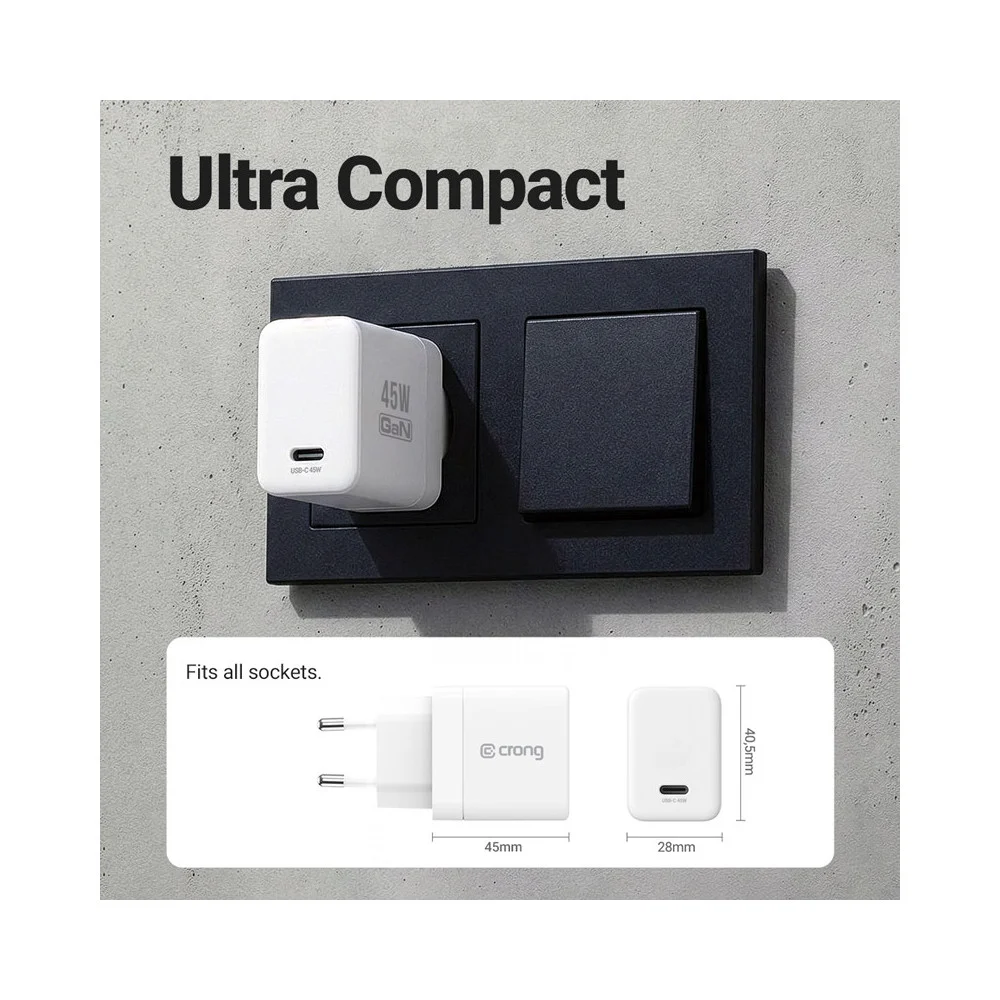
    5. Crong Ultra Compact GaN 45 W with PPS, battery protection (89.00 zł)

    Crong Ultra Compact 45 W stands out for two reasons: very small housing (one of the smallest 45 W chargers on the market) and full support for the PPS (Programmable Power Supply) standard. PPS dynamically adjusts the voltage, which in practice means less heat and reduced battery cell consumption in the long term.

    Crong Ultra Compact is an option for those who want to take care of the longevity of their MacBook Neo and iPhone battery. The price of 89 PLN is higher than the competition, but for the PPS technology in such a compact housing, it’s fair.

    ParameterValue
    Power45 W
    Ports1× USB-C
    TechnologyGaN, PD 3.0, PPS
    Price89.00 PLN

    6. Usams US-CC180 Sandru 65 W GaN, multi-port travel (129.00 PLN)

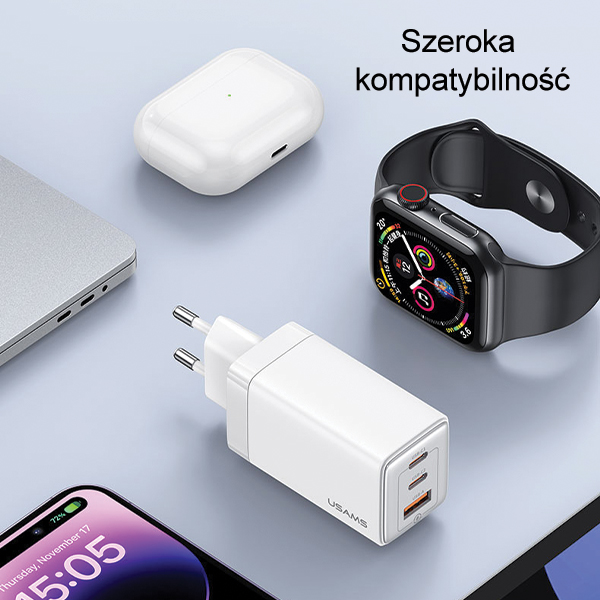
    Usams US-CC180 Sandru 65 W is a compact GaN charger that combines higher power with multi-port capability in one travel case. Two USB-C ports (main up to 65 W) and one USB-A output allow simultaneous charging of a MacBook Neo, iPhone, and smartwatch, while the foldable plugs save space in your backpack.

    65 W provides a real reserve: the MacBook Neo will get its 30 W from the main port, while the second USB-C port can still power the iPhone at 27 W. For those who want one charger for business trips and home, Usams US-CC180 is a sensible compromise between power and size.

    ParameterValue
    Power65 W (total)
    Ports2× USB-C + 1× USB-A
    TechnologyGaN, USB PD, QC
    Price129.00 PLN

    7. Ugreen Nexode S 140 W GaN with 3× USB-C, desktop power hub (199.00 PLN)

    Ugreen Nexode S 140 W is the most versatile charger in the ranking. Four ports (3× USB-C + 1× USB-A) and 140 W of total power allow you to simultaneously power a MacBook Pro 16″ (140 W), MacBook Neo, iPhone, and wireless headphones, while GaN ensures that the casing remains compact and does not heat up under load.

    At the price of 199 PLN Ugreen Nexode S is exceptionally advantageous, competing single-port 140 W chargers from original manufacturers cost twice as much, and here you also get 3× USB-C for power distribution. This is a choice for users who want to reduce the number of chargers on their desk to one and have extra power for a laptop running at full load.

    ParameterValue
    Power140 W (total)
    Ports3× USB-C + 1× USB-A
    TechnologyGaN, USB PD 3.1
    Price199.00 PLN

    Comparison of chargers for MacBook Neo 13

    ModelPowerPortsGaNPPSPrice
    Ugreen X524 45 W45 W1× USB-C✅❌59.90 zł
    Usams T70 40 W40 W2× USB-C + 2× USB-A❌❌49.00 zł
    3MK Hyper Charger 33 W33 W1× USB-C + 1× USB-A✅✅49.90 zł
    Spigen Essential 45 W white45 W1× USB-C❌❌79.00 zł
    Crong Ultra Compact 45 W45 W1× USB-C✅✅89.00 zł
    Usams US-CC180 Sandru 65 W65 W2× USB-C + 1× USB-A✅❌129.00 zł
    Ugreen Nexode S 140 W140 W3× USB-C + 1× USB-A✅❌199.00 zł

    Which charger to choose? Recommendations based on scenarios

    We have shown the full spectrum of possibilities. To make the decision easier, we suggest which charger to choose depending on how you use your MacBook Neo:

    What to avoid when choosing a charger for MacBook Neo

    Not every USB-C charger will charge the MacBook Neo as it should. What to watch out for:

    • Chargers below 20 W will charge the Neo, but very slowly. They are not suitable for intensive laptop use while charging.
    • Chargers without USB Power Delivery, some cheap models are limited to 5 V / 3 A, which gives a maximum of 15 W. Neo won’t even utilize its 30 W limit.
    • Cheap products from marketplaces without certifications, the lack of short-circuit and over-voltage protections poses a real risk of damaging a laptop worth several thousand zlotys.
    • A single 5–10 W charger from a phone, it will physically connect, but it may even discharge the laptop during intensive use.

    Note: MacBook Neo does not support fast charging (like MacBook Pro). Buying a 140 W charger just for Neo makes no sense, as you will only utilize a maximum of 30 W from it. It only makes sense if you plan to charge a MacBook Pro or several devices at the same time.

    Where to buy a charger for MacBook Neo 13?

    You can find all the chargers from the ranking in the category network chargers at homescreen.pl. The store also has a separate category for accessories for MacBook Neo 13″ A18 Pro, where you will find compatible Tech-Protect cases, GrizzGlass screens, and 3MK films.

    If you also use an iPhone, it’s worth checking out MagSafe accessories, the wireless chargers work with the phone, and the same USB-C power supply powers both it and the MacBook. This is the most economical way to reduce the number of chargers at home. A wider selection of power banks, USB-C cables, and wireless chargers can also be found in the collective category charging accessories.

    The USB Power Delivery standard, which is supported by both the MacBook Neo and all chargers in the ranking, is detailed in the official USB-IF specification. It’s a good source if you want to understand why 30 W from one charger is not the same as 30 W from another.

    Our choice: For most MacBook Neo 13 users, the optimal choice will be the Ugreen X524 45 W GaN (59.90 PLN), it has ample power, GaN technology, is affordable, and comes from a trusted brand.

    Summary

    The MacBook Neo 13 is sold without a power adapter, so you need to purchase a charger for the MacBook Neo separately. The optimal power is around 35 W, as the laptop accepts a maximum of 30 W and does not support fast charging. More powerful chargers in the range of 45–140 W make sense mainly when you want to charge other devices simultaneously or a more powerful MacBook Pro.

    If you don’t know where to start, choose Ugreen X524 45 W (59.90 PLN), Usams T70 40 W (49 PLN) or 3MK Hyper Charger 33 W (49.90 PLN), all three support USB PD and will charge the Neo at full available speed.

    If you also charge your phone and tablet while traveling, consider the Usams US-CC180 Sandru 65 W (129 PLN) with 2× USB-C + USB-A. For a desk with a MacBook Pro, Neo, and other accessories, the best choice is the Ugreen Nexode S 140 W (199 PLN), which has 3× USB-C + USB-A and 140 W total power, covering even the MacBook Pro 16″ along with a phone and headphones.

    Check the full range of chargers for MacBook Neo in the network chargers category at homescreen.pl and choose a model that fits your work style. If you have any questions, feel free to write to [email protected], and we will advise you on the best configuration for your devices.

    FAQ, frequently asked questions

    What power charger is optimal for MacBook Neo 13?

    The optimal power is around 35 W, as the MacBook Neo accepts a maximum of 30 W and does not support fast charging. Chargers of 33–45 W provide the full supported speed with a slight buffer for a phone.

    Will a 20 W charger charge the MacBook Neo?

    Yes, a 20 W charger will charge the MacBook Neo, but the charging time will be noticeably longer, by about 30–40% compared to a 30–45 W power adapter. This is a good emergency option, but not for everyday use.

    Will the charger for iPhone 16 Pro Max charge the MacBook Neo?

    Yes, if it is a USB-C 30 W (or more) charger with USB Power Delivery support. The 20 W charger from the iPhone will also work, but charging will be slower than with a dedicated 40–45 W power adapter.

    Does the MacBook Neo come with a charger in the box?

    No. In the MacBook Neo box, you will find only the laptop and a USB-C cable. The power adapter must be purchased separately; Apple offers 20 W, 30 W, and 35 W dual-port models.

    Is it worth buying a 140 W charger for the MacBook Neo?

    Only if you plan to use the same charger for the MacBook Pro 14″ or 16″ (which require 70–140 W). For the Neo itself, a 33–45 W charger is sufficient, as the laptop will not draw more than 30 W anyway.

    What is the difference between a GaN charger and a regular one?

    GaN (gallium nitride) is a semiconductor technology that allows for a 30–50% reduction in charger size while maintaining the same power. GaN chargers heat up less and are lighter, making them ideal for backpacks and travel.

    Will a charger from a manufacturer other than Apple work with the MacBook Neo?

    Yes, any USB-C charger that supports USB Power Delivery works with the MacBook Neo, regardless of the brand. Standards (USB PD, power) are what matter, not the manufacturer. Branded chargers from Ugreen, Usams, or Spigen meet the same USB-IF specifications as the original Apple.

    What charger brands are recommended for the MacBook Neo?

    For the MacBook Neo, chargers from trusted accessory brands are the best choice: Ugreen, Usams, Spigen, Crong, and 3MK. These are manufacturers with years of experience in USB PD and GaN, with reliable protections and warranties.