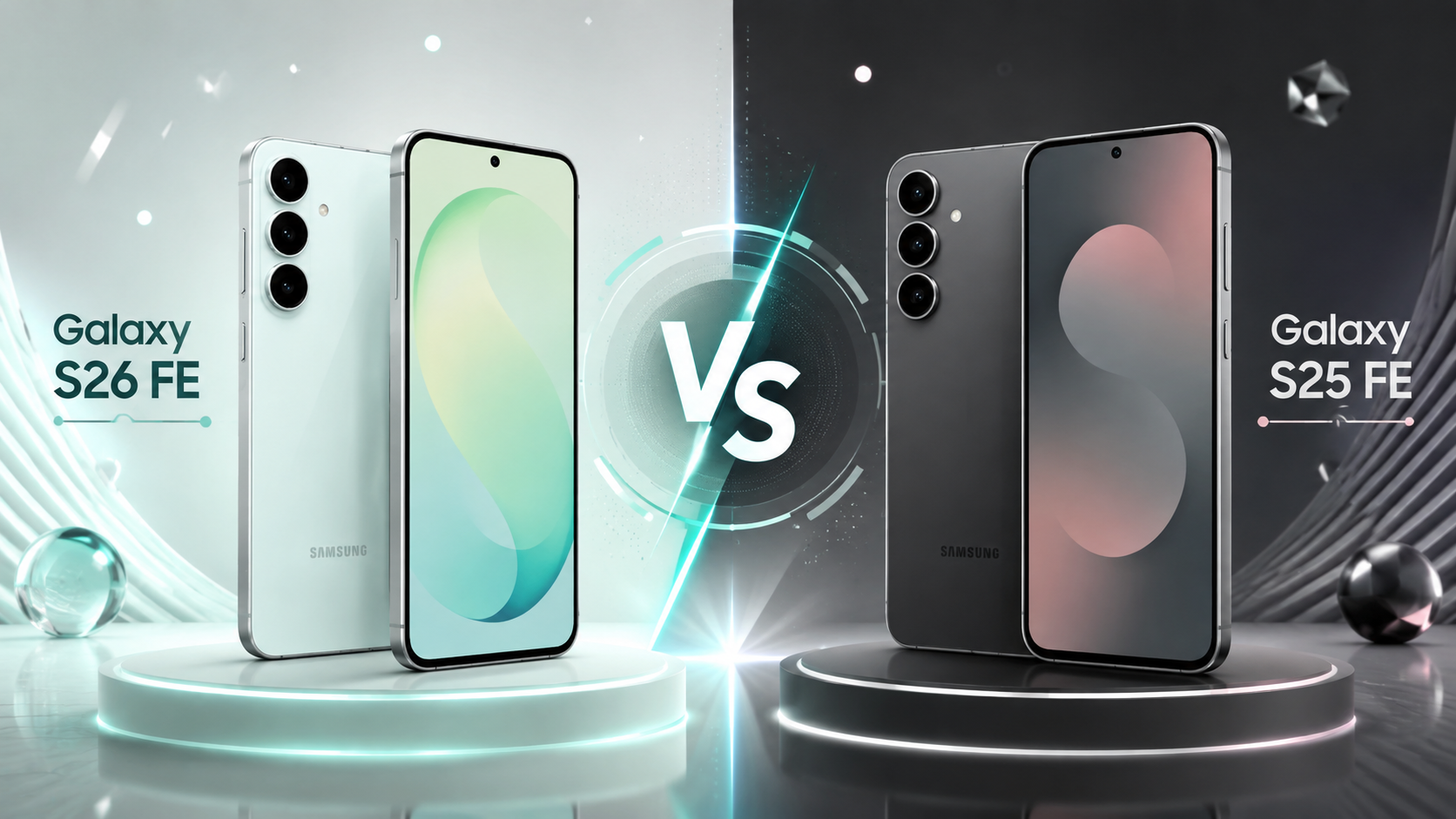
In comparison, the Galaxy S26 FE vs S25 FE differences come down to three things: the Exynos 2500 processor instead of 2400, the One UI 9 system instead of One UI 8, and a USB port that has reverted to version 2.0. The screen, all three cameras, selfie, and the 4,900 mAh battery are identical.
The S26 FE was launched on August 27, 2026, and sales start on September 4.
Place both phones side by side, and you won’t distinguish them without looking into the settings. Samsung has transferred almost all the hardware from last year and raised the price.
Below is the complete table of both models, resolving the circulating rumor about the silicon-carbon battery, which is even repeated in the specification tables, and a section on accessories: what fits which model and why the case from the S25 FE won’t fit the S26 FE.
When each model was released
Both phones debuted at the same time of year, less than twelve months apart. The Galaxy S25 FE had its premiere and sales start on the same day, while the S26 FE had a week gap between the two.
| Event | Galaxy S25 FE | Galaxy S26 FE |
|---|---|---|
| Launch (announcement) | September 4, 2025 | August 27, 2026 |
| Sales start | September 4, 2025 | September 4, 2026 |
| Starting price (128 GB) | 750 EUR | 799 EUR |
| System at launch | One UI 8, Android 16 | One UI 9, Android 17 |
Galaxy S26 FE is now official. Samsung unveiled it on August 27, 2026, and immediately provided the full specifications and prices, so all the data in this article comes from the manufacturer, not leaks. The phone hits stores on September 4, 2026.
Samsung S25 FE has been on sale for a year, and that changes the entire calculation. Remember this for the pricing section, as that’s where the most significant difference between these models lies.
Accessories for both generations are available immediately. See the Galaxy S26 FE category →
Galaxy S26 FE vs S25 FE: full comparison table
We have bolded only those items that actually differ.
| Parameter | Galaxy S25 FE | Galaxy S26 FE |
|---|---|---|
| Processor | Exynos 2400 (4 nm) | Exynos 2500 (3 nm) |
| Graphics Chip | Xclipse 940 | Xclipse 950 |
| RAM | 8 GB | 8 GB |
| Storage | 128 / 256 / 512 GB, UFS 4.0 | 128 / 256 / 512 GB, UFS 4.0 |
| Screen | 6.7″, Dynamic AMOLED 2X | 6.7″, Dynamic AMOLED 2X |
| Resolution | 1080 × 2340 (385 ppi) | 1080 × 2340 (385 ppi) |
| Refresh Rate | 60–120 Hz | 60–120 Hz |
| Peak Brightness | 1,900 nits | 1,900 nits |
| Glass | Gorilla Glass Victus+ | Gorilla Glass Victus+ |
| Main Camera | 50 MP, f/1.8, OIS | 50 MP, f/1.8, OIS |
| Ultrawide | 12 MP, f/2.2, 123° | 12 MP, f/2.2, 123° |
| Telephoto | 8 MP, 3× zoom, OIS | 8 MP, 3× zoom, OIS |
| Selfie | 12 MP, f/2.2 | 12 MP, f/2.2 |
| Video | 8K 30 fps, 4K 120 fps | 8K 30 fps, 4K 120 fps |
| Battery | 4,900 mAh, Li-Ion | 4,900 mAh, Li-Ion |
| Wired Charging | 45 W (65% in 30 min) | 45 W (69% in 30 min) |
| Wireless Charging | 15 W, Qi2 compatible | 15 W, Qi2 compatible |
| Certified Charging Cycles | 2,000 | 1,200 |
| USB-C Port | USB 3.2 Gen 1 | USB 2.0 |
| Dimensions | 161.3 × 76.6 × 7.4 mm | 161.6 × 76.9 × 7.4 mm |
| Weight | 190 g | 193 g |
| Frame | aluminum | aluminum |
| Resistance | IP68 | IP68 |
| Operating System at Launch | One UI 8, Android 16 | One UI 9, Android 17 |
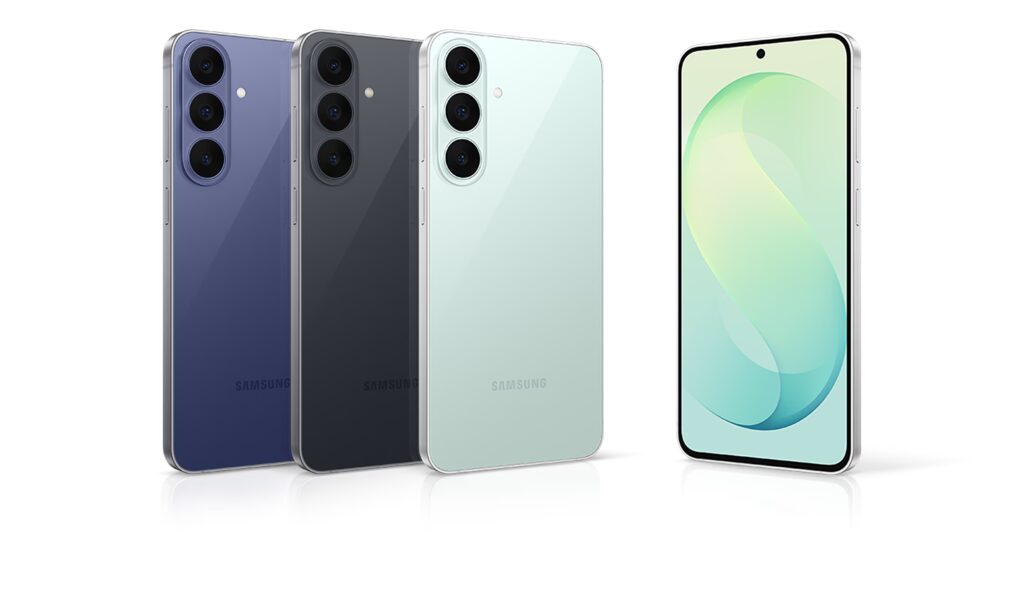
| Colors | Icyblue, Jetblack, Navy, White | Graphite, Pistachio, Blueberry |
Nine different items out of twenty-five. Of these, five are cosmetics (dimensions, weight, colors, charging speed, One UI version number), two are steps backward, and the performance gain comes from the processor along with the graphics unit.
What does Exynos 2500 offer in everyday use?
Exynos 2500 is the only noticeable change in daily use. The chip is built on the second generation of the 3 nm GAA process, while Exynos 2400 in the S25 FE used 4 nm.
Performance gain according to Samsung:
- About 30% faster processor (CPU) and graphics unit (GPU)
- About 40% faster NPU, responsible for Galaxy AI functions
- Newer main core: Cortex-X925 instead of Cortex-X4
- Newer graphics unit: Xclipse 950 instead of Xclipse 940
The NPU is more important here than it looks on paper. It calculates Galaxy AI functions, such as summaries, real-time translations, and photo processing. If you actually use Galaxy AI, it is the biggest difference in the entire comparison.
Note: 30% on paper does not mean a 30% faster phone. Both models perform practically the same in everyday tasks, such as browsing, social media, and photos. The difference reveals itself in gaming and under prolonged load.
The screen and cameras remain unchanged
There is nothing to write about here, and that is the most important information.
The screen parameters are identical: 6.7 inches, Dynamic AMOLED 2X, 1080 × 2340, refresh rate from 60 to 120 Hz, declared brightness of 1,900 nits, Gorilla Glass Victus+.
The camera setup is identical, sensor by sensor:
- Main 50 MP, f/1.8, with optical stabilization (OIS)
- Ultrawide 12 MP, f/2.2, 123° field of view
- Telephoto 8 MP, 3× optical zoom, with OIS
- Selfie 12 MP, f/2.2
Video recording is also unchanged: 8K at 30 fps and 4K at 120 fps in both models.
The sensors are the same, but the photos go through a newer image signal processor (ISP), so Samsung promises slightly better dynamic range in low light. That’s the only thing that actually changes in the cameras.
New in the S26 FE are only software features: My FanCam (automatically keeping a selected person in the frame, previously available only in foldable models) and Super Steady with horizon lock. This is software that Samsung may also make available to the older model in the future.
Battery unchanged and without silicon-carbon cell
Both phones have 4,900 mAh, the same wired charging power of 45 W and wireless charging of 15 W.
There are rumors that the Samsung S26 FE received a silicon-carbon battery. This is not confirmed. Samsung does not mention this technology in the official specification, and SamMobile explicitly states it has a regular lithium-ion cell. However, some databases, including GSMArena, label the cell as Si/C.
There is no decision from the manufacturer. What is certain, however, is that silicon-carbon will only be available in foldable models: Galaxy Z Flip 8, Z Fold 8, and Z Fold 8 Ultra in July 2026.
The real gain during operation comes not from the battery, but from the more efficient 3 nm processor. Samsung claims about an hour longer video playback, and the EU energy label states 50 hours of operation compared to 42.5 hours in the S25 FE and class A instead of B.
The difference in charging is cosmetic: 69% in 30 minutes compared to 65% in the S25 FE. Four percentage points.
Hidden downside: the battery will last fewer cycles
This is not advertised by Samsung, and it directly results from the EU energy label. The battery in the S26 FE is certified for 1,200 charging cycles, while in the S25 FE it is 2,000. A cycle is a full charge from zero to one hundred percent; after exceeding this limit, the battery retains less than 80% of its original capacity.
In practice, 1,200 cycles still means several years of normal use. However, it is worth knowing that with seven years of system support, the battery will deplete its certified reserve much earlier than the updates.
To achieve full 45 W, both models require the same USB Power Delivery charger (USB PD) with a power of at least 45 W. When buying accessories, you do not need to distinguish between generations.
USB port is the first step backward
Galaxy S26 FE has a USB-C port in the 2.0 standard, while the S25 FE had USB 3.2 Gen 1. This is the second point, alongside battery life, where the newer model performs worse than its predecessor.
Charging works at the same speed, as power does not depend on the version of the data standard. Only file transfer is slower.
The scale of this difference is impressive only when looking at specifics. A minute of 8K video weighs several hundred megabytes, so an hour of footage amounts to several dozen gigabytes. With USB 3.2 Gen 1, you can transfer it in a few minutes, while with USB 2.0, the phone will remain connected to the computer for significantly longer.
If you use the cloud or transfer photos wirelessly, you won’t notice the difference.
System and updates, or the difference of one year
Galaxy S26 FE starts with One UI 9 on Android 17, while S25 FE debuted with One UI 8 on Android 16.
Both generations have the same support policy: seven generations of Android and seven years of security patches. However, since the S26 FE starts a year later, its support ends a year later.
This is a real advantage of the newer model, although in practice it means choosing between a phone supported until 2032 and one supported until 2033. The S25 FE will still receive One UI 9 in an update.
This is where the real difference between the models lies
The starting prices of both models in Europe:
| Version | Galaxy S25 FE at launch | Galaxy S26 FE at launch |
|---|---|---|
| 8 GB / 128 GB | 750 EUR | 799 EUR |
| 8 GB / 256 GB | 810 EUR | 899 EUR |
| 8 GB / 512 GB | 930 EUR | 1,099 EUR |
Samsung S26 FE is more expensive at every memory level. The increase grows with capacity: 49 EUR for the base version, 89 EUR for 256 GB, and as much as 169 EUR for 512 GB.
However, something else is key. The Galaxy S25 FE has been on the market for a year and has clearly dropped in price. The actual level of reduction depends on the store and promotions, but you can buy the older model today noticeably cheaper than on the day of its release, while the S26 FE is just starting with the full price list.
Combine this with the specification table: you get the same screen, the same camera setup, the same battery, and a faster USB port, paying significantly less. For most people, the Galaxy S25 FE is a more sensible purchase today.
Galaxy S26 FE vs S25 FE: which one to choose?
Choose Galaxy S26 FE if:
- You regularly use Galaxy AI features, as the NPU has gained the most here.
- You game and want power reserve for a few years ahead.
- You care about the longest possible support, until 2033.
- You are buying a phone for six or seven years and the price difference spreads over that period.
Choose Galaxy S25 FE if:
- You are looking at the price-to-performance ratio. The screen, cameras, and battery are identical, and you pay significantly less.
- You transfer large files via cable, as only this model has a fast USB 3.2 Gen 1 port.
- You do not use AI features intensively enough to feel the faster NPU.
Our choice: given the current price difference, the Galaxy S25 FE wins for most buyers. The Galaxy S26 FE makes sense if you plan to keep the phone until the end of the support period or heavily use Galaxy AI.
If you are considering stronger models from this family, we have compared them in the article Galaxy S26 Ultra vs S25 Ultra.
Accessories: does the case from Galaxy S25 FE fit the S26 FE?
It does not fit and it is not worth trying. This is the first question that arises when changing generations, and here the answer is clear.
The difference in dimensions is 0.3 mm in height and 0.3 mm in width, and according to Android Authority, Samsung has slightly redesigned the camera island as well. The thickness is identical (7.4 mm), so a soft case from the predecessor can often be stretched, but:
- The cutouts for the camera do not align in the same place. With the changed island, part of the lens may be covered.
- The buttons do not align with the cutouts, making clicking uncomfortable.
- Rigid cases crack at the corner when trying to stretch them.
It’s the same with tempered glasses. The diagonal and resolution haven’t changed, but the 0.3 mm wider front means that the glass for the S25 FE won’t cover the screen evenly, and the glue will partially hit the edge.
Note: manufacturers released dedicated versions for the S26 FE even before the phone went on sale, so there’s no reason to compromise. Choose accessories described exactly by the model you have.
Magnets: a common problem for both generations
Neither the Galaxy S25 FE nor the S26 FE have built-in magnets. Both charge wirelessly using the Qi2 standard at 15 W, but neither will stick to the charger or holder by itself.
In both cases, the solution is the same: a case with a magnetic ring. You put it on, and the phone starts to hold onto Qi2 chargers, magnetic power banks, car mounts, and card wallets. We described the same mechanism with the iPhone 16e without MagSafe.
Magnetic accessories compatible with both models can be found in the categories of induction chargers and MagSafe accessories.
Accessories for the Galaxy S26 FE
Cases and glasses for the new model arrived in stock before the phone even appeared in stores.
Spigen Ultra Hybrid Mag MagSafe
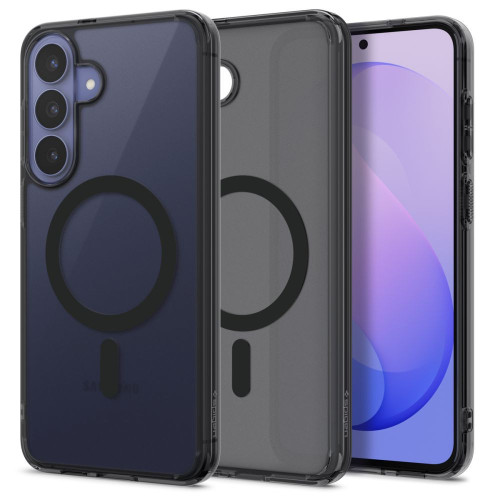

What it fits: Spigen Ultra Hybrid Mag, if you care about magnets.
The case combines rigid polycarbonate (PC) back with a flexible TPU (thermoplastic polyurethane) frame, and adds a magnetic ring that is missing on the phone itself. The Frost Black version has a matte, smoky back, on which fingerprints are much less visible than on the glossy variant.
Ringke Fusion Magnetic MagSafe
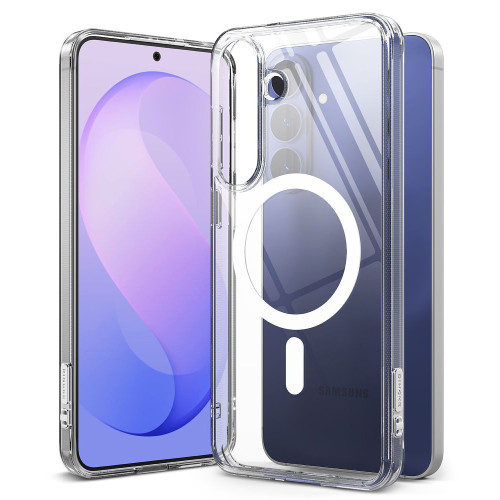
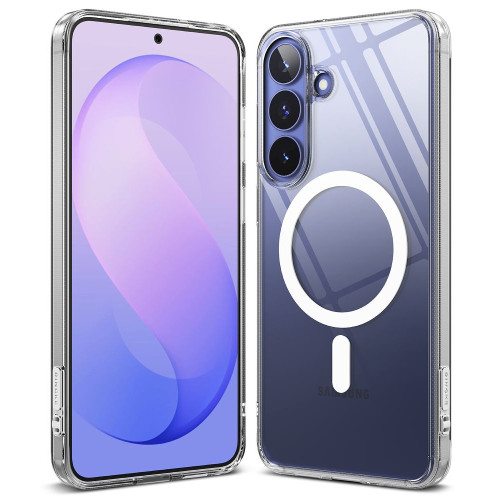
The transparent case has magnets and a raised edge around the camera island. A good choice if you are buying the Pistachio or Blueberry color and want to see it.
Tech-Protect Glass Fit+


Gorilla Glass Victus+ protects the screen from scratches, but not from cracking upon impact. Replacing the display at a service center costs hundreds of zlotys, while tempered glass is a fraction of that amount. Glass Fit+ comes in a set of two pieces with a mounting frame.
[hs_products category=”2578″ limit=”6″ sort=”sales” title=”Accessories for Galaxy S26 FE”]
Accessories for Galaxy S25 FE
Samsung S25 FE has been on the market for a year, so the selection is much broader: the case category alone has over a hundred items. We have compiled a complete ranking in a separate article about the best cases for Galaxy S25 FE.
UAG Scout MagSafe
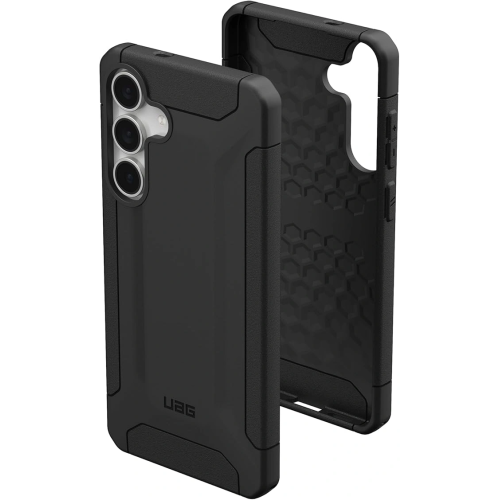
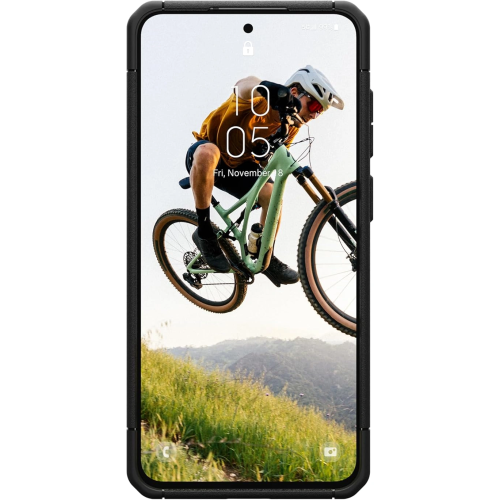
Armored construction with magnets and MIL-STD-810G certification. UAG makes cases thicker than Spigen, but it is this thickness that protects when dropped on the edge.
Tech-Protect Magflex MagSafe
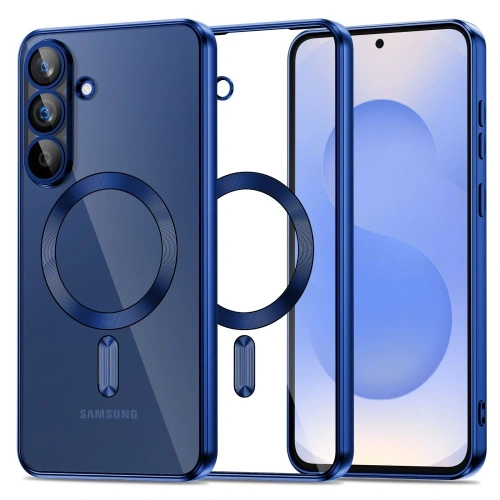
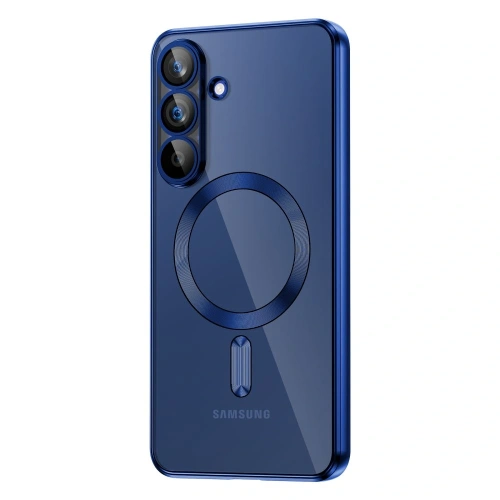
This is a thinner alternative to armored constructions, also with a magnetic ring. It will work if you don’t want the case to add bulk to the phone.
Spigen Glas.tR EZ Fit Pro
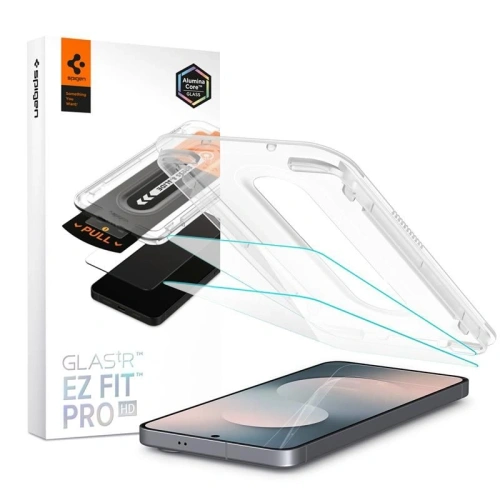
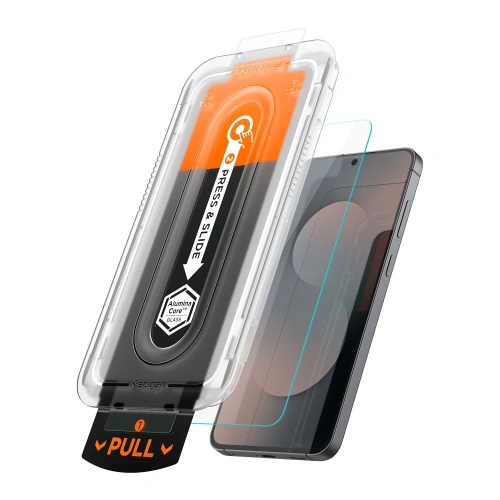
The EZ Fit system is one of the best-designed: the frame positions the glass itself, so even application is usually successful on the first try. The set includes two pieces.
[hs_products category=”1954″ limit=”6″ sort=”sales” title=”Cases for Galaxy S25 FE”]
Summary
Galaxy S26 FE is a remarkably cautious update. Samsung has transferred almost all the hardware from its predecessor. The processor, operating system, and USB port have changed. The screen, all cameras, and battery have been carried over unchanged.
Three things worth remembering:
- Real profit comes only from the processor. The Exynos 2500 is about 30% faster in CPU and GPU and 40% in NPU, which is mainly noticeable in games and Galaxy AI features.
- There are two steps back, not one. The USB port has reverted to version 2.0, and the certified battery lifespan has dropped from 2,000 to 1,200 charging cycles.
- The price tips the scales in favor of the S25 FE. With the same screen, cameras, and battery, the older model is clearly cheaper today.
Regardless of the choice, both phones are worth equipping with the same: a case with a magnetic ring, as neither has built-in magnets, and tempered glass, as Gorilla Glass Victus+ protects against scratches, not drops.
Sources: official announcement of Galaxy S26 FE on Samsung Global Newsroom, comparison of S26 FE and S25 FE on SamMobile, explanation of the silicon-carbon battery issue on SamMobile, specification sheet for Galaxy S26 FE on GSMArena, price comparison of both generations on GSMArena, new camera features and One UI 9 according to Android Authority, EU energy label for Galaxy S26 FE on GSMArena, analysis of the decrease in charging cycles on Android Authority
FAQ: Galaxy S26 FE and S25 FE
Is it worth paying extra for the Galaxy S26 FE?
Usually not. The screen, all three cameras, and the battery are identical to those in the S25 FE, and the newer model has a slower USB port. Paying extra makes sense if you heavily use Galaxy AI or want the longest support, which is until 2033.
When is the release of Galaxy S26 FE and when does sales start?
The premiere took place on August 27, 2026, when Samsung showcased the phone and provided the full specifications. Sales start on September 4, 2026.
What distinguishes the Galaxy S26 FE from the S25 FE?
Three things: the processor (Exynos 2500 in 3 nm instead of Exynos 2400 in 4 nm), the operating system at launch (One UI 9 on Android 17 instead of One UI 8), and the USB port, which has reverted from 3.2 Gen 1 to 2.0. The screen, cameras, selfie, and 4,900 mAh battery are identical.
Does the Galaxy S26 FE have a silicon-carbon battery?
There is no confirmation from the manufacturer. Samsung does not mention silicon-carbon in the official specifications, and SamMobile writes about a regular lithium-ion cell of 4,900 mAh, although some databases label it as Si/C. It is certain that in July 2026, this technology was only available in foldable models: Z Flip 8, Z Fold 8, and Z Fold 8 Ultra.
Does the case from the Galaxy S25 FE fit the S26 FE?
No. The new model is 0.3 mm taller and wider, and the camera island has been slightly redesigned. The cutouts for the camera and buttons do not align in the same place, so you need a case dedicated to the specific model.
Does the Galaxy S26 FE have magnets for MagSafe?
No, just like the S25 FE. Both phones charge wirelessly in the Qi2 standard at 15 W, but do not have a built-in ring of magnets. The magnets are added by the case, for example, the Spigen Ultra Hybrid Mag or UAG Scout MagSafe.
Which phone has a longer battery life?
Galaxy S26 FE, but the difference is small. The capacity is identical (4,900 mAh), and the gain comes from the more efficient 3 nm processor. Samsung claims about an hour longer video playback.