The best power bank of 2026 is the UGREEN PB550 20,000 mAh 67 W (219 zł): it charges phones, tablets and laptops that charge via USB-C, and has a built-in USB-C cable and three outputs. For a more powerful laptop, choose the UGREEN PB552 25,000 mAh (299 zł) with a 100 W cable, and for everyday use the lightweight UGREEN PB584 10,000 mAh (129.90 zł). Below is the full ranking with power output, energy in Wh and a breakdown by need.
A power bank comes in handy all year round: when travelling, on a long car journey, when working on a laptop away from the office and whenever navigation or the camera drains your phone quickly. We’ve picked six models available off the shelf at Home Screen and suggest which one to choose for a laptop, for the car, for a flight and for everyday use.
As of 22 October 2026: all the power banks in the ranking are available in the shop, and the prices are from homescreen.pl on that day. We give specifications based on the manufacturers’ descriptions.
What to look for when choosing a power bank
A good power bank isn’t just about high capacity. What matters most is the charging power and the standards it supports. Here are the key specifications:
- Capacity (mAh) — 10,000 mAh is one to two full phone charges, 20,000 mAh is 2–3 charges or a top-up for a laptop
- Power (W) — 20–30 W is enough for a phone, but for a laptop that charges via USB-C, look for a port of at least 65 W; the higher the power, the faster the charging
- USB Power Delivery (PD) and PPS — these are fast charging standards; without them you won’t get the full power of new phones and laptops
- Built-in cable — convenient when travelling, one less thing to forget
- Number of ports — an extra USB-C or USB-A port lets you charge two devices at the same time
- Weight — a 20,000 mAh power bank usually weighs 350–450 g (UGREEN PB550: approx. 404 g); a 10,000 mAh model is more comfortable for a pocket
- Charge-level display — a digital percentage readout is easier to read than four LEDs
- Wireless charging — a magnetic power bank will charge your phone without a cable, but usually more slowly than by cable; we cover this below
- Limit for flying — you may carry no more than two power banks in hand luggage, each up to 100 Wh (approx. 27,000 mAh at 3.7 V); details below
Tip: if you have an iPhone 15 or later or an Android phone with USB-C, look for a power bank with USB Power Delivery and at least one 30 W USB-C port. It’s a good compromise between price and charging speed.
Power bank ranking 2026 — the best models of 20,000 mAh and above
First up, four models with a capacity of 20,000 mAh or more: an all-rounder, a powerful one for laptops, a rugged one for the outdoors and a cheap energy reserve. We describe the lighter 10,000 mAh power banks in the next part.
1. UGREEN PB550 20,000 mAh 67 W — best for most people (219 zł)
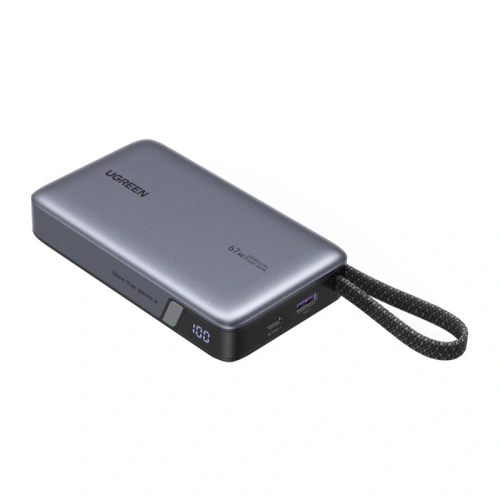
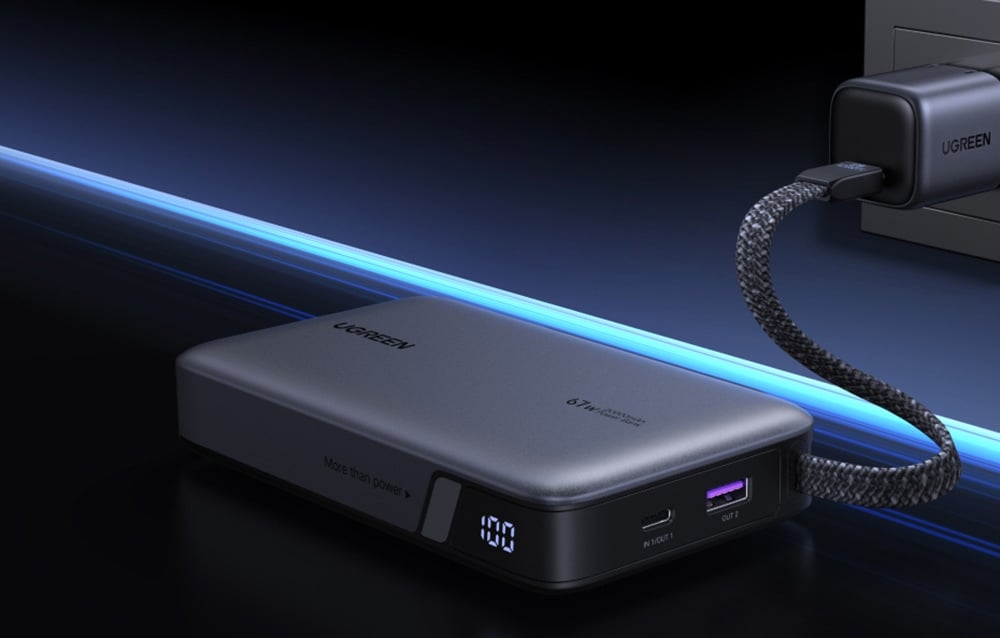
This is our top pick. The UGREEN PB550 combines a capacity of 20,000 mAh (72 Wh) with up to 67 W of power and support for PD 3.0, PPS and Quick Charge, so it will charge a phone, tablet, console and a laptop that charges via USB-C. It can handle three devices at once: via the built-in USB-C cable, a separate USB-C port and a USB-A port.
According to UGREEN, the power bank charges a 14″ MacBook Pro to 32% in 30 minutes, and a Galaxy S24 Ultra to 70% in the same time. The full capacity is enough for one charge of a 14″ MacBook Pro or up to four charges of an iPhone 15 Pro. You can recharge the power bank itself with a 65 W charger in just under 2.5 hours. It weighs approx. 404 g, and a 0.5 m 240 W USB-C cable is included.
Best for: if you want one power bank for everything — phone, tablet and laptop, including in the car and on a plane.
2. UGREEN PB552 25,000 mAh 165 W — best for laptops (299 zł)
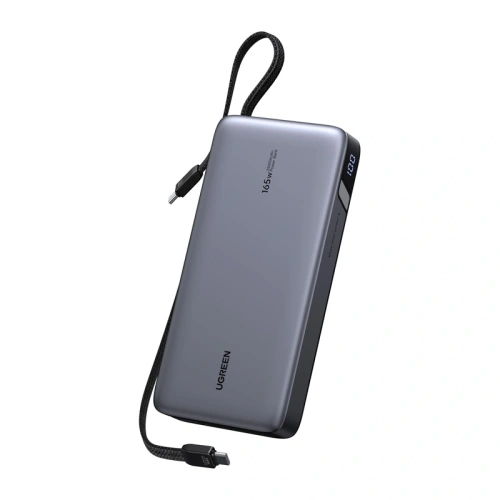
The UGREEN PB552 is a power bank for people who work on a laptop away from the office. It has 25,000 mAh (90 Wh) and a total output of up to 165 W. The first of its two built-in USB-C cables delivers up to 100 W and the second up to 65 W, so you can charge two laptops at once. On top of that, there’s a USB-A port (22.5 W) and a third USB-C port (20 W): four devices at the same time in total.
Both cables retract into the housing. Via the 100 W USB-C input, the power bank charges fully in around 2 hours. It also has a low-current mode for earbuds and smartwatches (activated by holding the button for 3 seconds) and 21700 cells, which the manufacturer describes as automotive grade. Its 90 Wh is within the 100 Wh limit for hand luggage.
If you prefer your own cables, the UGREEN PB205 has similar power: 25,000 mAh, 90 Wh, 145 W in total, a USB-C port of up to 100 W and an LED display.
Best for: MacBooks and other laptops that charge via USB-C, on business trips and when working remotely.
3. 4smarts Lucid Air 26,800 mAh 65 W — best for the outdoors (499 zł)
The 4smarts Lucid Air has the largest capacity in the ranking: 26,800 mAh, plus up to 65 W of power and three ports (two USB-C and one USB-A). The aluminium and plastic housing is rated IP67, and according to the manufacturer it withstands drops from a height of one metre. There’s also a 500 lm torch with an SOS mode and an LCD display that shows the voltage, power, temperature and charge level.
The power bank can be recharged while powering other devices, and a 100 W USB-C cable (0.5 m) is included. The manufacturer claims the Lucid Air will charge a MacBook at least once and that it can be taken on a plane. However, it weighs approx. 0.64 kg, and the description doesn’t state its energy in Wh: at a typical voltage of 3.7 V, it works out at approx. 99 Wh, just under the limit. Check the value printed on the housing before you fly.
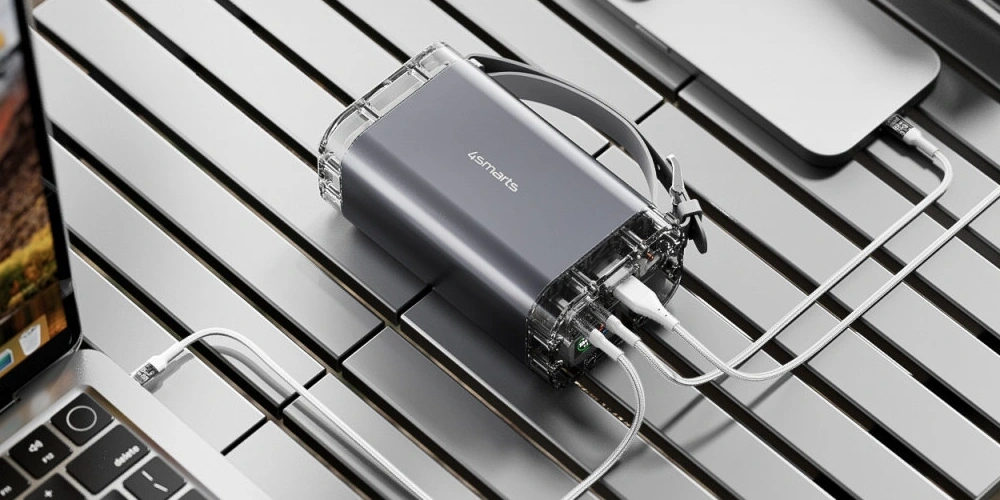
Best for: camping, the mountains and fieldwork, where your kit might get wet or be dropped.
4. BlitzWolf BW-P22 20,000 mAh 22.5 W — best budget (119 zł)
The BlitzWolf BW-P22 is the cheapest 20,000 mAh model in the ranking. The USB-C port charges at up to 20 W using USB PD, and the USB-A port at up to 22.5 W, so you can charge two devices at once. The USB-C port is also used to recharge the power bank itself, which according to the manufacturer takes around 3 hours.
A digital display shows the charge level, and protections guard against overheating, overvoltage, short circuits and overcharging. The power bank measures 142 × 68 × 28 mm. A 65 W model is better for a laptop, but this one will charge your phone several times.
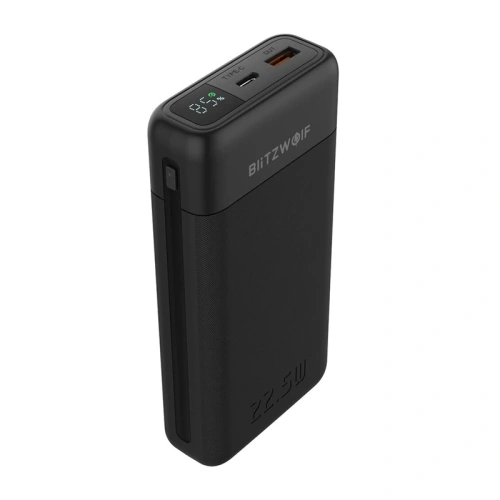
Best for: a cheap energy reserve for your backpack or car.
10,000 mAh power banks — lighter, for everyday use
A 10,000 mAh power bank usually means one full phone charge with some to spare, and it’s noticeably lighter and smaller than a 20,000 mAh model. For a handbag or jacket pocket, it’s the more convenient choice.
5. UGREEN PB584 10,000 mAh 33 W — best for everyday use (129.90 zł)
The UGREEN PB584 fits in the palm of your hand: it measures 8.2 × 6.2 × 2.6 cm. Even so, it charges at up to 33 W and supports PD 3.0, PPS, QC 3.0 and Samsung and Huawei fast charging protocols (AFC, FCP, SCP). The built-in cable also doubles as a strap, so you don’t have to remember a separate cable.
It can charge three devices at once, and the display shows the exact charge level. Its 36 Wh is well below the 100 Wh limit that applies on planes. You can recharge the power bank itself with a 30 W charger in around 2 hours.
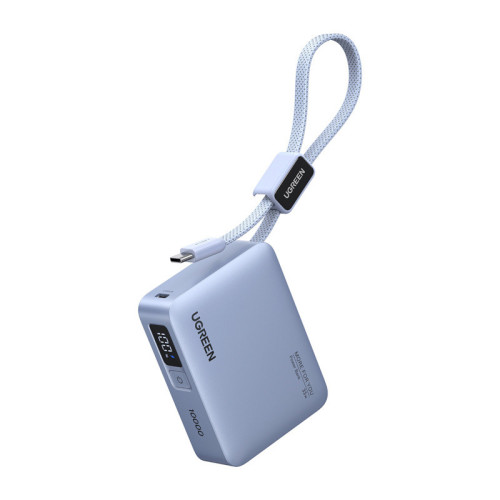
Best for: everyday use, your handbag and flights, if you want a reserve of energy with you at all times.
6. Samsung EB-P3401XU 10,000 mAh 25 W — the slimmest (159 zł)
The Samsung EB-P3401XU power bank is 14.9 mm thick and weighs 215 g, so it will fit in a jacket pocket. It charges at up to 25 W via two USB-C ports, including two devices at once. It supports USB PD 3.0 with PPS and Samsung fast charging (Super Fast Charging), so it works well with Galaxy phones, but also with iPhones with USB-C and other smartphones with PD.
The capacity is 10,000 mAh (37 Wh), and a 20 cm USB-C to USB-C cable is included. There’s no built-in cable.
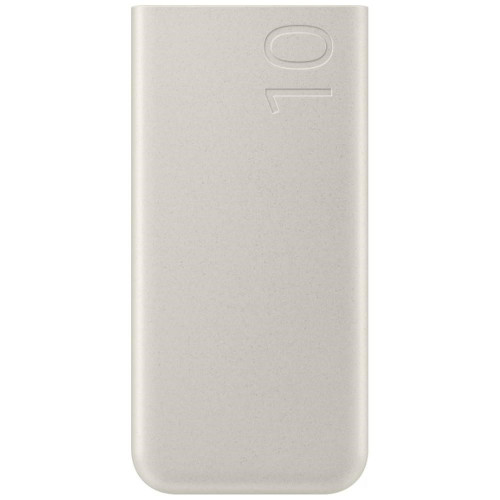
Best for: Galaxy phone owners and anyone who wants a flat power bank for their pocket.
[hs_products ids=”129240,127459,107946,118822,137799,141308″ cols=”3″ title=”Power banks from the ranking”]
Power bank comparison — summary table
| # | Power bank | Capacity | Energy | Max. power² | Built-in cable | Price³ |
|---|---|---|---|---|---|---|
| 1 | UGREEN PB550 | 20,000 mAh | 72 Wh | 67 W | ✅ | 219 zł |
| 2 | UGREEN PB552 | 25,000 mAh | 90 Wh | 165 W | ✅ | 299 zł |
| 3 | 4smarts Lucid Air | 26,800 mAh | approx. 99 Wh¹ | 65 W | ❌ | 499 zł |
| 4 | BlitzWolf BW-P22 | 20,000 mAh | approx. 74 Wh¹ | 22.5 W | ❌ | 119 zł |
| 5 | UGREEN PB584 | 10,000 mAh | 36 Wh | 33 W | ✅ | 129.90 zł |
| 6 | Samsung EB-P3401XU | 10,000 mAh | 37 Wh | 25 W | ❌ | 159 zł |
¹ Value calculated by us from the capacity and a typical cell voltage of 3.7 V, because the manufacturer doesn’t state Wh in the product description. The other Wh values come from the manufacturers.
² Maximum output power stated by the manufacturer.
³ Price at homescreen.pl on 22 October 2026. Current prices are shown in the tiles above.
Which power bank for what? Recommendations by need
The choice depends on what you charge most often and where. Here are some pointers:
- For a laptop → UGREEN PB552 25,000 mAh (299 zł) — a 100 W cable and a second 65 W one; for a lighter laptop, the UGREEN PB550 67 W (219 zł) is enough
- For the car → UGREEN PB550 20,000 mAh (219 zł) — high capacity for a long journey; in the car itself, it’s more convenient to charge your phone with a car charger
- For flying → UGREEN PB584 10,000 mAh (129.90 zł) — 36 Wh, well below the 100 Wh limit; the UGREEN PB550 (72 Wh) gives you a bigger reserve
- For the outdoors and camping → 4smarts Lucid Air 26,800 mAh (499 zł) — IP67, a torch and 65 W of power
- For everyday use → UGREEN PB584 (129.90 zł) with a built-in cable or the slim Samsung EB-P3401XU (159 zł)
- For an iPhone → you can charge the iPhone 15 and later models with USB-C using the built-in cable of the UGREEN PB584 or PB550
- Cheapest → BlitzWolf BW-P22 20,000 mAh (119 zł) — lots of energy at a low price
Tip: to recharge your power bank quickly at home, you’ll want a good USB-C PD wall charger and a USB-C to USB-C cable. We’ve compared powerful chargers in our GaN charger ranking.
How many mAh will actually reach your phone?
The capacity on the box is the capacity of the cells at their voltage, usually 3.7 V. The phone charges at a higher voltage, and when stepping it up, some of the energy is lost as heat. That’s why manufacturers also state the rated output capacity: in the UGREEN PB550, 20,000 mAh of cells leaves 11,520 mAh at 5 V, and in the PB552, 25,000 mAh leaves 14,000 mAh. Converted into energy, the PB550 delivers approx. 58 Wh out of 72 Wh, i.e. around 20% less. You should usually expect a loss of around 20–30%.
In practice: 10,000 mAh is around 1.5 full charges of a modern phone, 20,000 mAh is 2–3 charges, and 25,000–26,800 mAh is as many as 4–5 phone charges or one laptop charge. UGREEN states, for example, that the PB550 will charge a 14″ MacBook Pro once or an iPhone 15 Pro up to four times. The bigger the battery in your phone, the fewer charges you’ll get from the same capacity.
Power banks on planes — how many Wh can you take?
Since 27 March 2026, stricter rules have applied to carrying power banks. On that day, an amendment by ICAO (the UN agency for civil aviation) to the technical instructions for the safe transport of dangerous goods by air came into force. The airline association IATA described the new rules in its guidance for passengers dated 31 March 2026:
- A maximum of two power banks per person, each up to 100 Wh.
- Hand luggage only. A power bank must not be put in checked luggage. If your cabin bag ends up in the hold at the gate, take the power bank out of it first.
- Don’t charge the power bank from a socket on the plane.
- Don’t keep it in the overhead locker; keep it on you.
- Don’t use it to power devices during taxiing, take-off and landing.
You can work out the energy in watt-hours by multiplying the capacity in mAh by the cell voltage (usually 3.7 V) and dividing by 1000. Many power banks have this value printed on the housing. IATA points out that an airline may refuse to carry a battery whose Wh rating can’t be verified on the housing or in the documentation.

| Capacity | Energy at 3.7 V | Hand luggage |
|---|---|---|
| 5,000 mAh | approx. 18.5 Wh | ✅ yes |
| 10,000 mAh | approx. 37 Wh | ✅ yes |
| 20,000 mAh | approx. 74 Wh | ✅ yes |
| 25,000 mAh | approx. 92.5 Wh | ✅ yes |
| 26,800 mAh | approx. 99 Wh | ✅ yes, just under the limit |
| 30,000 mAh | approx. 111 Wh | ❌ no¹ |
¹ The ICAO amendment allows power banks of 100 to 160 Wh with the airline’s approval. However, in its guidance for operators, IATA announces that from 1 January 2027 (the 68th edition of the IATA Dangerous Goods Regulations, DGR) this option will no longer exist, and in its table for passengers it already marks such power banks as forbidden. A battery above 160 Wh can only be transported as cargo.
All the power banks in our ranking are within the 100 Wh limit: from 36 Wh (UGREEN PB584) to approx. 99 Wh (4smarts Lucid Air). Just remember that you can take no more than two on board. Airlines may have stricter rules, so check your carrier’s terms before flying. You’ll find models within the limit in the power banks for flying category.
Wireless power banks — when do they make sense?
A magnetic power bank attaches to the back of an iPhone with MagSafe or a phone with Qi2 magnets and charges it without a cable, but usually more slowly than by cable. We’ve compared models like these, from pocket-sized 5000 mAh ones to 20,000 mAh ones with Qi2 25 W, in a separate ranking of the best MagSafe power banks.
Summary — which power bank should you choose?
The best power bank of 2026 for most people is the UGREEN PB550 20,000 mAh 67 W (219 zł): versatile, with a built-in cable and enough power for a laptop. For a more powerful laptop, choose the UGREEN PB552 (299 zł) with a 100 W cable; for the outdoors, the 4smarts Lucid Air (499 zł) with IP67; and for everyday use, the lightweight UGREEN PB584 (129.90 zł) or the slim Samsung EB-P3401XU (159 zł). Looking for high capacity at a low price? The BlitzWolf BW-P22 at 119 zł is the cheapest 20,000 mAh model in the ranking.
You’ll find the full range and current prices in the power banks category, and models of a specific capacity in the 20,000 mAh power banks and 10,000 mAh power banks categories.
[hs_products category=”128″ limit=”6″ sort=”sales” title=”Best-selling power banks”]
FAQ — frequently asked questions about power banks
Which power bank can you take on a plane?
A power bank of up to 100 Wh (around 27,000 mAh at 3.7 V), in hand luggage only and no more than two per person. Since 27 March 2026, you’re not allowed to charge a power bank from a socket on the plane, and IATA recommends not keeping it in the overhead locker. 10,000–25,000 mAh models, such as the UGREEN PB584 (36 Wh) or UGREEN PB552 (90 Wh), are within the limit.
How many mAh should a good power bank have?
For a phone, 10,000 mAh is enough (one to two full charges). If you charge several devices or a laptop, choose 20,000 mAh or more. Remember that the real-world capacity is around 20–30% lower due to losses when stepping up the voltage.
Which power bank for a laptop?
For a laptop that charges via USB-C, choose a power bank with USB Power Delivery and a port of at least 65 W, e.g. the UGREEN PB550 (67 W). For larger laptops, a 100 W port is better, as in the UGREEN PB552. Also check the wattage of your laptop’s power adapter: a power bank that’s weaker than it will charge the computer more slowly.
Which power bank is best for an iPhone?
You can charge the iPhone 15 and later models with USB-C using any power bank with USB Power Delivery, e.g. the UGREEN PB584 with a built-in USB-C cable or the higher-capacity UGREEN PB550. Older iPhones with a Lightning connector will need a USB-C to Lightning cable. If you prefer to charge without a cable, check out our MagSafe power bank ranking.
Which power bank for the car on a long journey?
For a long journey, a 20,000 mAh power bank with fast USB-C PD charging works best, for example the UGREEN PB550. It will charge your phone several times while you navigate, and the built-in cable makes it easy to use in the car.
How long does a power bank take to charge?
It depends on the capacity and input power. According to the manufacturers, you can charge the UGREEN PB552 (25,000 mAh) with its 100 W input in around 2 hours, the PB550 (20,000 mAh) with a 65 W charger in just under 2.5 hours, and the BlitzWolf BW-P22 (20,000 mAh) in around 3 hours. That’s why it’s worth choosing power banks with USB Power Delivery and charging them with a powerful wall charger.
Can you charge a phone and a power bank at the same time?
Yes, but only if the power bank supports pass-through charging. Manufacturers declare it, for example, for the 4smarts Lucid Air and UGREEN PB205. You then plug the power bank into the socket and the phone into the power bank, and both charge. Not all models can do this, so check the specifications before you buy.
How many Wh does a 20,000 mAh power bank have?
Around 74 Wh at a typical cell voltage of 3.7 V. Manufacturers sometimes state slightly different values, e.g. the UGREEN PB550 has 72 Wh. That’s below the 100 Wh limit, so you can take a 20,000 mAh power bank on a plane in your hand luggage.