Category: News

  • Is Samsung Changing Its Design? The Galaxy S27 Looks Like a Pixel and S10

    Is Samsung Changing Its Design? The Galaxy S27 Looks Like a Pixel and S10

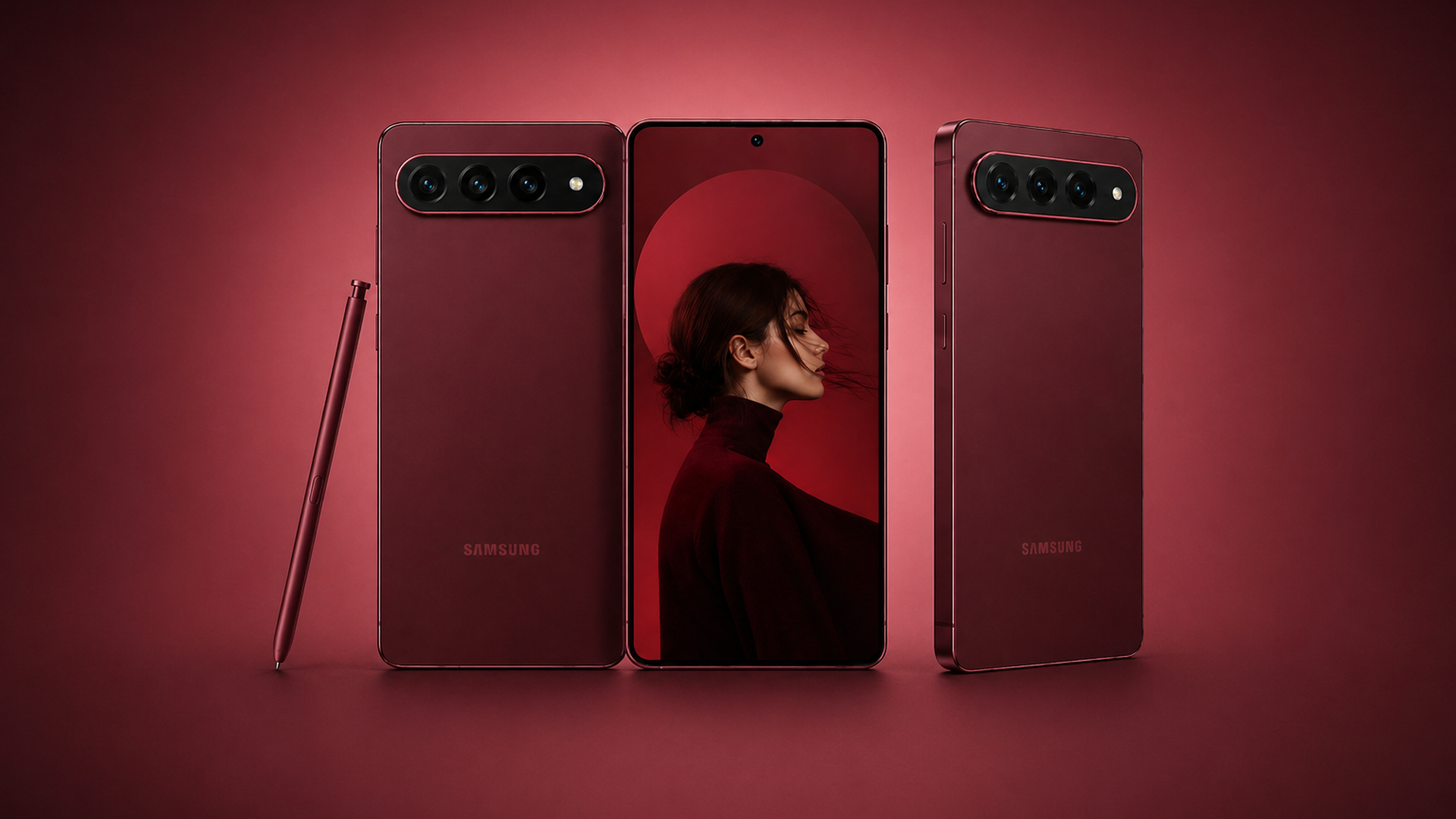
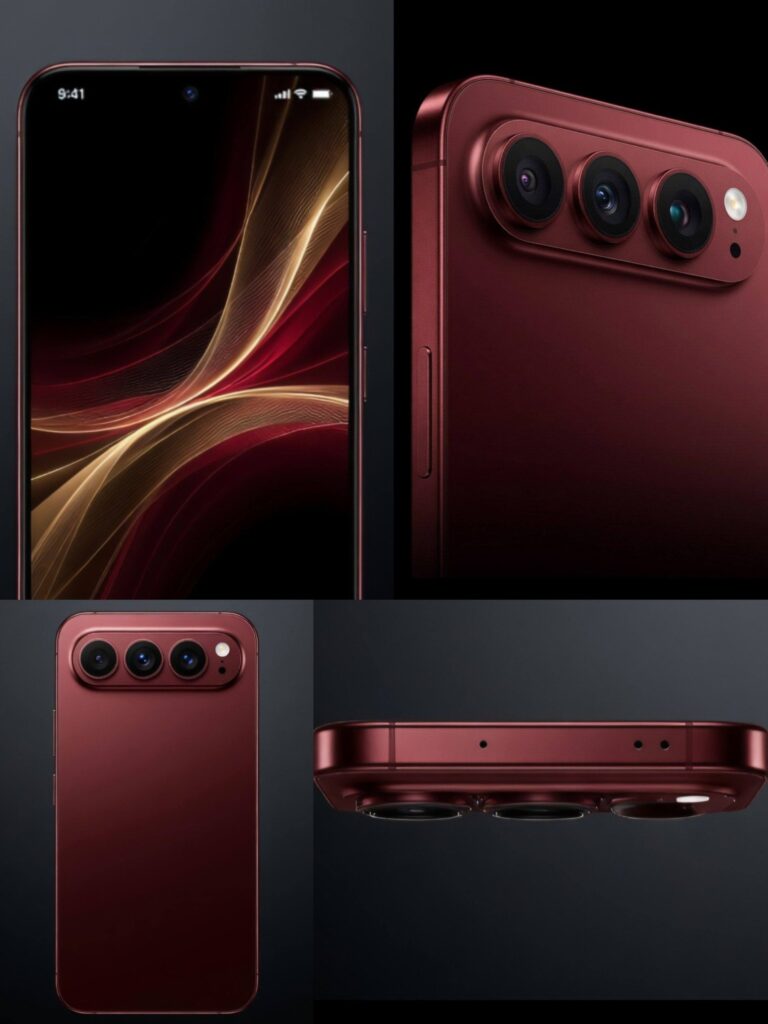
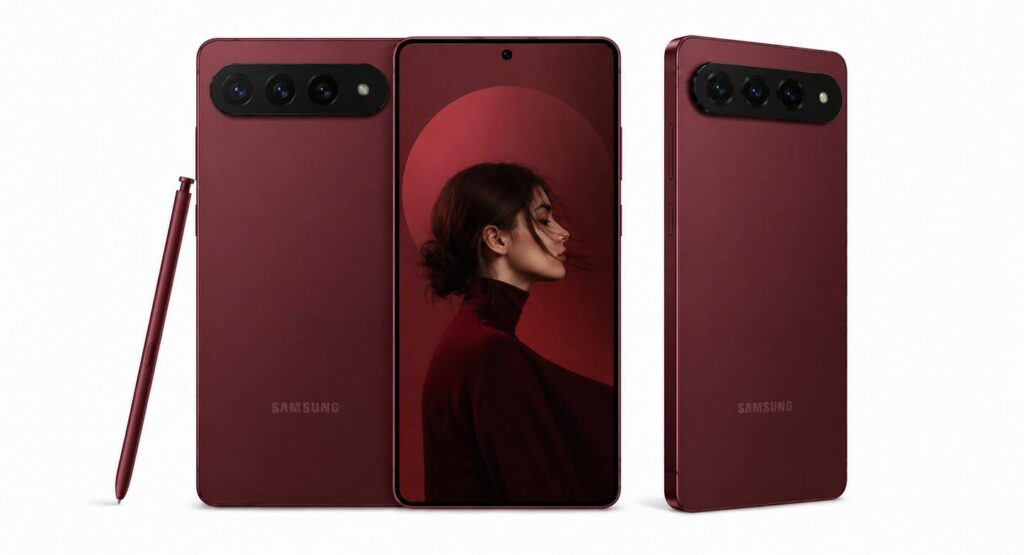
    The Samsung Galaxy S27 Ultra will feature a horizontal pill-shaped camera bar, Qi2 magnets for wireless charging, and will lose the 3x telephoto lens? Renders from Ice Universe show a design reminiscent of the Galaxy S10 and Google Pixel. The premiere is expected in February or March 2027.

    Below, we have gathered all confirmed leaks, renders, and specifications that have appeared online by May 2026. We are also checking what the new design means for accessories: in particular, for cases, wireless chargers, and the MagSafe accessory ecosystem on Android.

    Pill-shaped camera bar: the end of the island known from Galaxy S21–S26

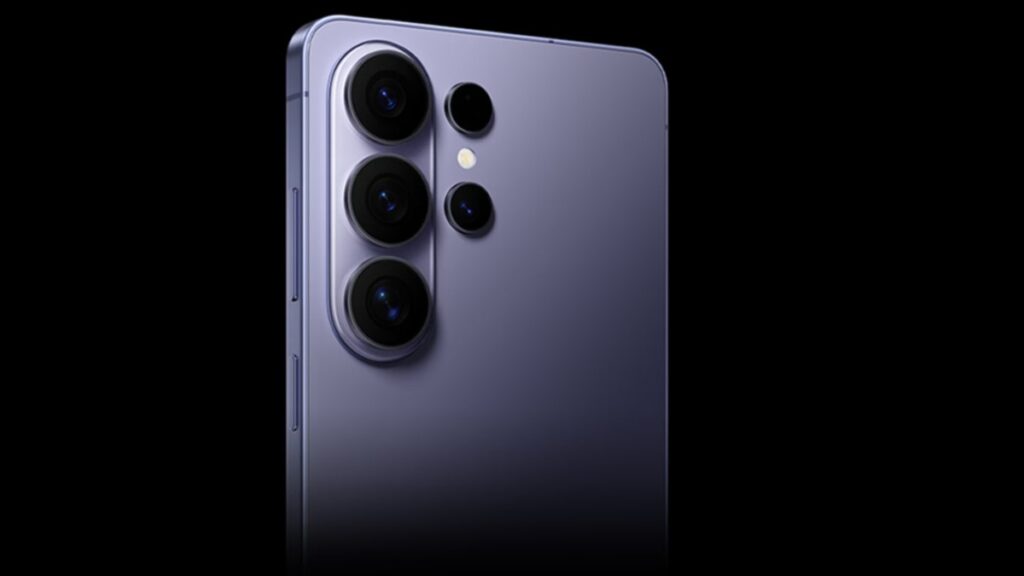
    The most striking change is the horizontal, elongated camera module. Instead of the vertical arrangement of three lenses, known from every Galaxy S model since 2021, Samsung is returning to the concept of a horizontal bar. It looks like a hybrid of two familiar designs: the back panel of the Galaxy S10 from 2019 and the Google Pixel series, where the pill-shaped camera bar has been a trademark since the Pixel 6.

    The first information about the new look comes from Ice Universe, one of the most reliable Chinese leakers of Samsung.

    Specific renders, based on his findings, were published on April 29, 2026, by the WHYLAB profile on the Chinese platform Weibo. These graphics then spread throughout the industry network and can be seen below. The third independent leaker, Smart Pikachu, confirms the outline of the concept. However, he notes that the final version may differ in details.
    Context: This is the first such deep modification of the rear panel of the Galaxy S since the S21 Ultra was released in early 2021. For six years, Samsung has stuck to a vertical island with three camera lenses.
    According to the renders, the strip will be available in two variants: black (contrasting with the casing) or in a color matching the casing. The graphics from Ice Universe show, among other things, a deep burgundy (wine) version, in which the strip blends into the body.

    Why is Samsung changing the design? Everything for Qi2 magnets

    The change is not driven by aesthetics. It is an engineering necessity. Samsung needs space for the Qi2 wireless charging coils and a ring of magnets that allow for native magnetic attachment (similar to Apple MagSafe).

    According to a report from the Korean service Naver, in the current Galaxy S26, the charging ring is placed too close to the camera module. In practice, this blocks compatibility with most MagSafe accessories available on the market. Samsung tried to implement magnets already in the S26 series, but it was unsuccessful. Galaxy S27 is another attempt to solve the same problem.

    What Qi2 with native magnets means in practice:

    • Magnetic attachment of power banks, mounts, and wallets to the back of the phone
    • More stable wireless charging without the phone sliding on the charger
    • Higher loading speed without a cable: Qi2 offers 15 W in the standard version, while the HPP profile can reach 25 W
    • Compatibility with existing MagSafe accessories for iPhone (at least in the magnetic layer)

    One downside: production costs are higher. Combined with the ongoing DRAM memory price crisis, this means that according to some sources, the feature may be delayed until the Galaxy S28 in 2028.

    Camera: the end of the 3x telephoto lens and a new 200 MP sensor

    The second major change is the reorganization of the camera module. Samsung plans to completely eliminate the 10 MP 3x telephoto lens, known from every Ultra model for the past four years. Instead, the following will be included:

    LensResolutionFunction
    Main200 MP ISOCELL HP6 (1/1.3″) with LOFICPhotos + 1–3x zoom through cropping
    Ultrawide50 MP (from 12 MP)Landscapes, macro
    Periscope telephoto50 MP, 5x optical (up to 10x hybrid)Close-ups
    Front (selfie)Square sensor + Polar ID 3D system from MetalenzFace scanning, selfies

    The absence of a 3x telephoto lens is a controversial decision. Samsung argues that the new 200 MP sensor with LOFIC (Lateral Overflow Integration Capacitor) has such a high resolution that a threefold zoom can be achieved through intelligent cropping without quality loss. Some users who value the 3x optical zoom may be disappointed.

    Samsung Galaxy S27 Ultra: display, processor, battery

    Leaks also concern the device’s internals. Although some information still requires confirmation, the direction is quite consistent.

    Display

    • 6.9″ Dynamic AMOLED 2X
    • Resolution 1440 × 3120 px
    • LTPO 1–144 Hz (1 Hz in AOD, 144 Hz in games)
    • Frames approx. 1 mm, the narrowest in Galaxy S history

    Processor and memory

    • Snapdragon 8 Elite Gen 6 Pro for Galaxy in a 2 nm process
    • 12 or 16 GB LPDDR6 RAM
    • 256 GB / 512 GB / 1 TB UFS 5.0 storage (transfer up to 10.8 Gbps)
    • One UI 9.5 with Galaxy AI 2.0 on Android 17

    Battery and Charging

    • Silicon-carbon cells with a capacity of 5,500–6,000 mAh
    • Wired charging 65 W Super Fast Charging v3.0 (0 → 70% in about 30 minutes)
    • Wireless charging Qi2 with native magnets
    • Up to 3 days of use with light usage

    Case

    • Frame made of Grade 5 titanium
    • IP69 rating (highest resistance to water and dust)
    • S Pen as a key productivity element

    Galaxy S27, S27+, S27 Ultra, S27 Pro: what do we know about them?

    The Galaxy S27 line is expected to be the widest in years. According to leaks, there will be three or four variants:

    ModelDisplayMain cameraRAMExpected starting price
    Galaxy S276.3″ AMOLED 1–120 Hz50 MP + 12 MP8/12 GBfrom approx. 4,499 PLN
    Galaxy S27+6.7″ AMOLED 1–120 Hz50 MP + 12 MP12 GBfrom approx. 5,499 PLN
    Galaxy S27 Ultra6.9″ AMOLED 1–144 Hz200 MP HP6 LOFIC12/16 GBfrom approx. 6,999 PLN
    Galaxy S27 Pro (?)6.7″ AMOLED200 MP HP6 LOFIC16 GBfrom approx. 6,499 PLN

    The S27 Pro variant is the biggest unknown. According to Notebookcheck, it would take over some advanced features from the Ultra (200 MP sensor, Snapdragon 8 Elite Gen 6 Pro), but in a smaller, more compact body. This is Samsung’s response to the “compact flagship” trend that Apple is implementing through the iPhone Pro. However, some leakers claim that Pro is just a name change, and the S27+ will simply disappear from the offer.

    All models will receive a new horizontal camera strip. They will mainly differ in the number of lenses: the standard S27 will keep two, the S27+ will have two or three, and the Ultra/Pro will have three plus an additional ToF element.

    When is the Galaxy S27 premiere? Price and risk of delay

    According to consistent leaks, Samsung will showcase the Galaxy S27 series in February or March 2027, following the traditional Unpacked schedule. The actual date is usually the second week of February (as was the case with S24, S25, and S26).

    Price is the biggest unknown. The increase in costs is due to three sources:

    1. DRAM Memory: global supply crisis drives up LPDDR6 prices
    2. New 2 nm process for Snapdragon 8 Elite Gen 6 Pro
    3. Change in housing design for Qi2 magnets

    Experts Sammy Fans estimate that the S27 Ultra could be more expensive by 100–200 USD compared to its predecessor. In Poland, this would mean a starting price of approx. 6,999 PLN for the base version, compared to 6,499 PLN, from which the S26 Ultra started.

    Risk: If the memory market situation does not improve, Samsung may forgo the most expensive upgrades (Qi2, new sensor) and push them to the Galaxy S28.

    What does the new design mean for accessories?

    The change in the layout of the cameras will necessitate a completely new generation of cases for the Galaxy S27 Ultra. Cases designed for the vertical module of the S26 Ultra will not physically fit. This is good news for those planning to buy the S27: a fresh selection of new cases, tempered glass, and films will be available from brands like Spigen, Tech-Protect, Ringke, and ESR.

    The second change is the explosion of MagSafe-type accessories in Android. After years when the magnetic ecosystem was practically reserved for the iPhone, Galaxy S27 owners will receive:

    • Magnetic power banks that stick to the back of the phone, without a cable
    • Magnetic mounts for cars and desks
    • MagSafe-compatible wallets with card slots
    • Qi2 wireless chargers with a 15 W certification

    Right now, in our category of induction chargers, you will find over 500 models supporting MagSafe and Qi2. Most of them will be compatible with the Galaxy S27 Ultra right after the launch.

    If you own an older model, check the full categories of accessories for the Galaxy S26 Ultra, Galaxy S25 Ultra, or the entire Galaxy S series.

    Is it worth waiting for the Galaxy S27, or should you buy the S26 Ultra now?

    Short answer: it depends on how much you care about Qi2 magnetic charging and the new design. If you currently have the S22 Ultra or an older model, the S26 Ultra is a great choice today. You get 100x Space Zoom, a 5,000 mAh battery, and the Snapdragon 8 Elite for Galaxy. Accessories are widely available, and prices have started to drop six months after the launch.

    However, if you own the S24 Ultra or S25 Ultra, the situation looks different. The performance jump to the S26 Ultra is moderate. Waiting another 9 months for the S27 launch makes sense if you care about:

    • Native magnetic mounting for the entire Qi2 ecosystem
    • A new, fresh look after six years of the same design
    • 200 MP HP6 sensor with LOFIC, which is expected to significantly improve night photography
    • 2 nm processor, saving battery during intensive tasks

    On the other hand, the risk of delays and price increases may prompt some to purchase the S26 Ultra on promotion. The final decision depends on how often you reach for magnetic accessories in your daily life.

    Summary: Galaxy S27 Ultra in brief

    Everything that is known today about Samsung’s upcoming flagship boils down to five key points:

    1. New design: horizontal pill-shaped camera bar, similar to Galaxy S10 and Google Pixel
    2. Native Qi2 magnets: Samsung’s answer to Apple MagSafe, compatible with existing accessories
    3. No 3x telephoto lens: zoom achieved through cropping from the 200 MP ISOCELL HP6 sensor
    4. Snapdragon 8 Elite Gen 6 Pro 2 nm + 16 GB LPDDR6 + UFS 5.0
    5. Launch February–March 2027: price likely 100–200 USD higher than its predecessor

    This is the biggest visual change in the Galaxy S line since the S21 Ultra. If the leaks from Ice Universe and Smart Pikachu are confirmed, the Samsung Galaxy S27 could be the phone that finally completes the magnetic accessory ecosystem in Android, just as the iPhone did with MagSafe in 2020.

    Before the launch arrives, it’s worth following Samsung’s official channels and our articles on the news. The first cases and screen protectors for the new model will appear on Home Screen right after Unpacked.

    FAQ: frequently asked questions about Samsung Galaxy S27

    When is the Samsung Galaxy S27 launch?

    The latest leaks indicate February or March 2027. Samsung traditionally holds the Galaxy Unpacked event at the beginning of the year, so this date is very likely. An earlier reveal is unlikely due to the production cycle.

    Will the Galaxy S27 Ultra have MagSafe?

    Not literally MagSafe (that’s an Apple trademark), but native magnets in the Qi2 standard. This means magnetic attachment for chargers, power banks, mounts, and wallets. Functionally, it is identical to MagSafe. This is the first Galaxy with this solution.

    Why does the Galaxy S27 look like a Pixel and Galaxy S10?

    Engineering, not nostalgia. To fit the Qi2 coils and the ring of magnets, Samsung has to move the camera module from a vertical island to a horizontal strip. This layout has been used by Google in Pixels for years, and Samsung itself used it in the Galaxy S10 from 2019.

    Will the Galaxy S27 Ultra lose the 3x telephoto lens?

    Yes, the 10 MP lens with three times optical zoom will disappear. In its place, a 50 MP periscope with 5x zoom and a 200 MP main sensor will take over, which will achieve 3x zoom through cropping the frame. A full-fledged optical 5x remains.

    How much will the Samsung Galaxy S27 Ultra cost in Poland?

    There is no specific price yet. Experts estimate an increase of 100–200 USD compared to the S26 Ultra, which in Poland would mean a starting price of around 6,999 PLN for the base version. The final price depends on currency exchange rates and the situation in the DRAM memory market.

    Will current cases and chargers fit the Galaxy S27?

    Cases and glass for the S26 Ultra will not fit. The change in the camera layout will necessitate a completely new generation of accessories. However, Qi and Qi2 wireless chargers and MagSafe accessories will work, as they use the same magnetic standards and charging frequencies. USB-C cables for fast charging at 65 W will also remain compatible.

    Does the Galaxy S27 Pro exist, or is it just a rumor?

    For now, it’s a rumor. The hits online mainly come from Korean and Chinese leakers who speculate that Samsung will introduce a fourth variant. However, there is no solid confirmation from the supply chain. It is most likely that the Pro will take over some functions from the Ultra in a smaller body. Some leakers believe it is simply a name change for the Plus model.

  • Xiaomi Smart Band 10 Pro – the first ceramic Mi Band in history

    Xiaomi Smart Band 10 Pro – the first ceramic Mi Band in history

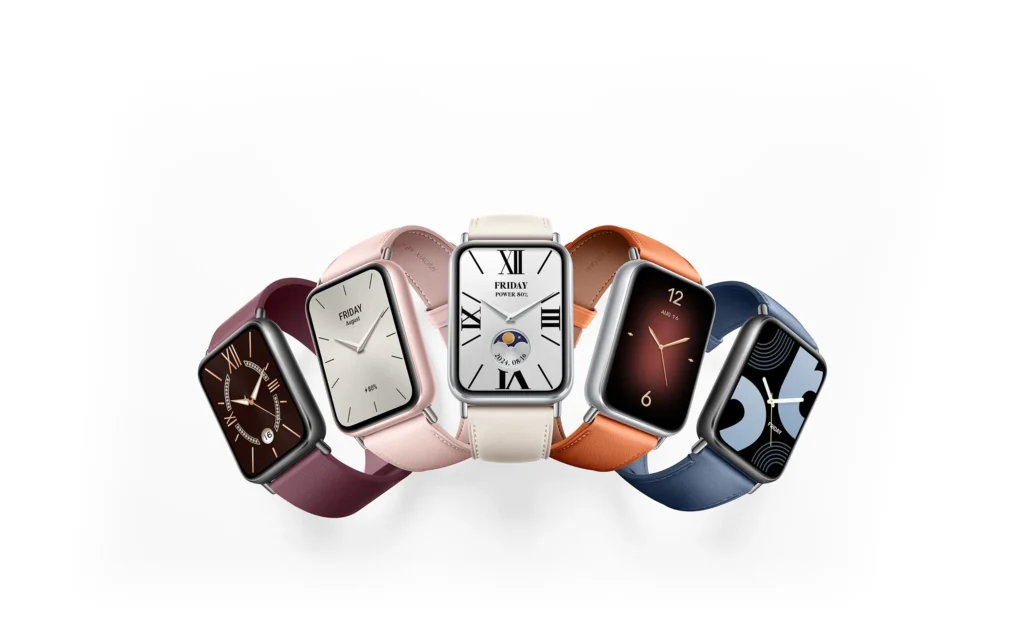
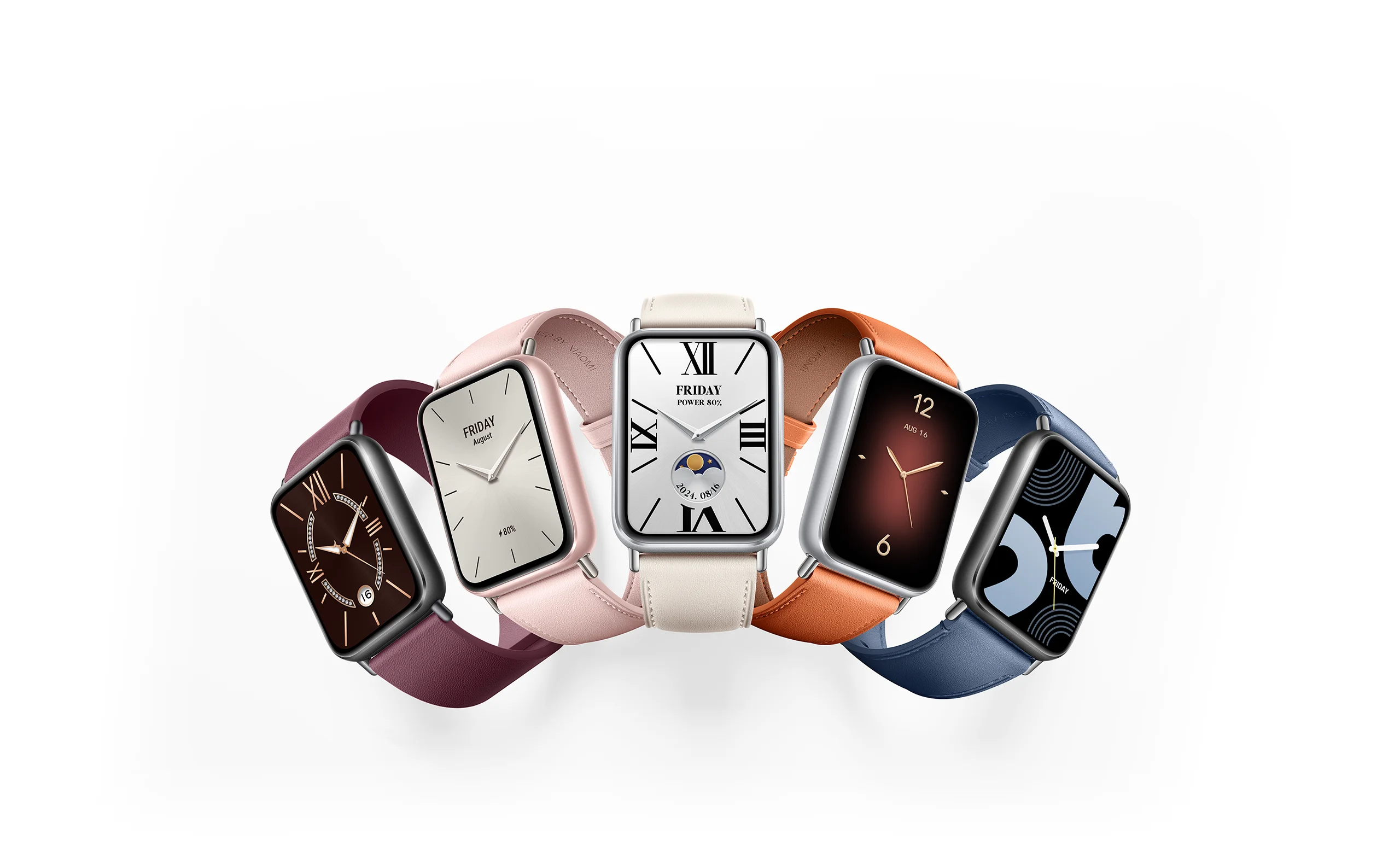
    Xiaomi Smart Band 10 Pro debuts in May 2026 in China, with a Polish premiere expected in the summer. The latest Xiaomi band will retain the form of the best-selling smart band in the world, but for the first time in the series’ history, there will be a variant with a ceramic casing. The starting price is expected to be around 100 dollars (approx. 350 PLN), which is only slightly more than its predecessor. This is a significant step towards premium, on the border of the smartwatch world.

    Do you want to know what exactly distinguishes the Smart Band 10 Pro from the Smart Band 10, what will be improved compared to the Mi Band 9 Pro, and when exactly you can buy it in Poland? Below we have gathered all the confirmed information, leaks, and comparisons to help you make an informed decision about whether it’s worth waiting for the new band or better to buy the currently available model.

    Premiere of Xiaomi Smart Band 10 Pro (Mi Band 10 Pro), when and where to buy?

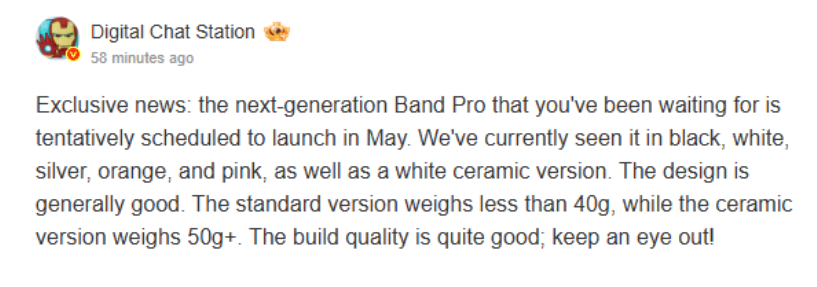
    The official premiere of Xiaomi Smart Band 10 Pro is set for May 2026 in China. This information is confirmed by the well-known leaker Digital Chat Station and a Brazilian store that has already listed the model M2552B1 in its system. The Polish market traditionally waits for Xiaomi bands several weeks to three months after the Chinese premiere.

    The Polish debut is expected at the earliest in July 2026, realistically in August, if we compare the release schedules of previous generations. The Smart Band 9 Pro appeared in Poland in January 2025, about three months after the global premiere.

    Price of Xiaomi Smart Band 10 Pro in Poland

    According to a Brazilian store, the Smart Band 10 Pro will cost 10 dollars more than the Mi Band 9 Pro, which translates to a starting price of about 350-400 PLN in Poland for the standard version. The premium ceramic edition with a white casing will likely reach 500-600 PLN.

    VariantExpected price PLNCase material
    Smart Band 10 Pro standardapprox. 350-400 PLNaluminum / polycarbonate
    Smart Band 10 Pro Ceramicapprox. 500-600 PLNwhite ceramic

    For comparison, the prices of current models in the Polish market:

    ModelStarting price (launch)Current price
    Xiaomi Smart Band 9 Pro299 PLNfrom 185 PLN
    Xiaomi Smart Band 10199 PLNfrom 175 PLN
    Xiaomi Smart Band 10 Ceramic235 PLNfrom 235 PLN

    Advice: If budget is a priority, it’s worth considering the Xiaomi Smart Band 9 Pro, which has already dropped to 185 PLN. Functionally, the new Pro won’t surprise with a huge change, and the 9 Pro still offers GPS, a 1.74″ AMOLED display, and 21 days of battery life.

    Specifications of Xiaomi Smart Band 10 Pro, what we already know

    Xiaomi has not yet revealed the full specifications of the Smart Band 10 Pro, but leaks published on Notebookcheck and Gizmochina allow us to outline the picture of the new band.

    Case and dimensions

    • Weight of the standard version: below 40 g (Smart Band 9 Pro weighs 24.5 g)
    • Weight of the ceramic version: above 50 g
    • Materials: aluminum and polycarbonate in color variants, white ceramic in the premium edition
    • Model number: M2552B1 (confirmed in the Korean certification database)
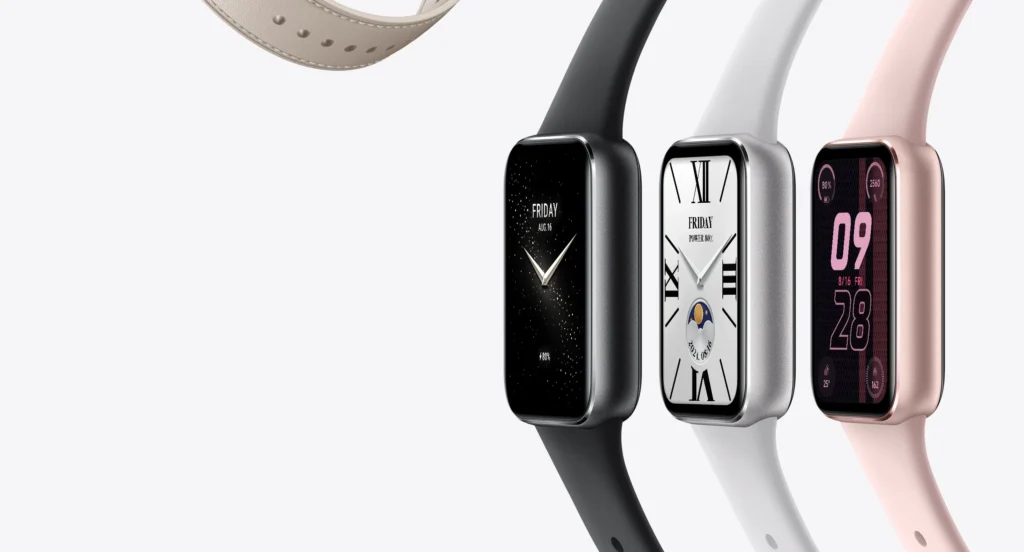
    • Colors: black, white, silver, orange, pink, plus white ceramic

    A greater weight is simultaneously a sign of a larger battery and more advanced electronics. The manufacturer is clearly moving towards a “small smartwatch,” rather than an even thinner band.

    Display

    Xiaomi has not confirmed the screen size, but based on the previous generation and the arrangement of sensors, we expect AMOLED 1.74″, similar to the Smart Band 9 Pro. Realistic predictions are:

    • Diagonal: 1.74″ AMOLED (unchanged compared to 9 Pro)
    • Resolution: 360 × 480 px
    • Peak brightness: 1500 nits (up from 1200 nits)
    • Refresh rate: 60 Hz
    • Always-On Display: yes

    Higher brightness is a key change that will help in full sunlight, e.g., when running at noon.

    Battery and Charging

    • Capacity: approx. 350-400 mAh (up from 289 mAh in 9 Pro)
    • Battery life: up to 21 days (typical use), up to 14 days with active GPS
    • Full charge: approx. 60-75 minutes
    • Pogo-pin magnetic charger: yes

    A larger housing, especially in the ceramic version, provides space for a bigger battery. A battery life of up to 21 days is a standard that Xiaomi has maintained for four generations.

    Health and sports sensors

    The Smart Band 10 Pro aims to expand the capabilities of its predecessor with:

    • Optical heart rate sensor: 5-channel, more accurate than in 9 Pro
    • Pulse oximeter (SpO₂): blood oxygen saturation measurement 24/7
    • Accelerometer and gyroscope: motion tracking and fall detection
    • Electronic compass: navigation during training
    • Ambient light sensor: automatic brightness
    • Barometer: altitude measurement and weather forecast (new feature)
    • Skin temperature: new sensor (to be confirmed)
    • ECG: unconfirmed, unlikely at this price

    GPS and connectivity

    • Dual-frequency GPS: more accurate location fix (new feature)
    • GLONASS, Galileo, BeiDou: support for multiple satellite systems
    • Bluetooth 5.3 LE: low energy consumption and stable connection to the phone
    • Water resistance: 5 ATM (swimming, showering)

    Xiaomi Smart Band 10 Pro NFC, will you be able to pay in Poland?

    The Smart Band 10 Pro will feature a built-in NFC module, which in China will work with the Xiaomi Pay system supporting bank cards and public transport. This is one of the features that distinguishes the Pro from the standard Smart Band 10 (where NFC is only available in the NFC version).

    Unfortunately, the situation in Poland is less optimistic. Xiaomi Pay does not yet have partners among Polish banks, and Google Wallet does not work with Xiaomi bands (only with Wear OS watches). This means that NFC in the Smart Band 10 Pro in Poland will mainly work for pairing devices and transferring files, but not for contactless payments.

    Sports modes

    We expect 150+ activity modes (like in Smart Band 10), with selected new features:

    • running, walking, cycling, swimming, yoga, HIIT
    • winter sports (skiing, snowboarding) with auto-detection of routes
    • e-sports with real-time heart rate monitoring

    Smart Band 10 Pro vs Smart Band 10 vs Smart Band 9 Pro, comparison

    ParameterSmart Band 10 Pro (leaks)Smart Band 10Smart Band 9 Pro
    Display1.74″ AMOLED 1500 nits1.72″ AMOLED 1500 nits1.74″ AMOLED 1200 nits
    Resolution360 × 480 px212 × 520 px336 × 480 px
    Batteryup to 21 days (350-400 mAh)up to 21 days (233 mAh)up to 21 days (289 mAh)
    GPSdual-frequencynonesingle-frequency
    NFCyesoptional NFC versionnone
    Casealuminum / ceramicpolycarbonatealuminum
    Water Resistance5 ATM5 ATM5 ATM
    Weight35-50 g15.9 g24.5 g
    Sport Modes150+150+150+
    Starting Priceapprox. 350-400 PLN199 PLN299 PLN

    Conclusions:

    • Compared to Smart Band 10 Pro, it is a different category, larger screen with better GPS, more expensive by about 150-200 PLN
    • Compared to Smart Band 9 Pro, the main novelties will be a better screen (1500 nits), dual-frequency GPS, and a ceramic edition
    • If you have a Smart Band 9 Pro, upgrading is not necessary; the difference will be mainly felt visually and in navigation accuracy.

    Ceramic Edition, the biggest novelty in the history of the series

    For the first time in the history of Mi Band / Smart Band, Xiaomi introduces a variant with a white ceramic case. This solution has so far been reserved for premium watches, such as the Apple Watch Edition Ceramic or Huawei Watch GT 4 Ceramic.

    Why ceramic?

    • Scratch resistance: ceramic does not scratch from contact with a desk, wall, or keys in your pocket.
    • Premium appearance: matte, smooth white with a porcelain effect.
    • Hypoallergenic: ideal for people with metal allergies.
    • No oxidation: color does not fade or dull.
    • Weight: about 15 g heavier than the standard version, but still significantly lighter than a smartwatch.

    What to expect from the ceramic edition?

    Following the example of the Smart Band 10 Ceramic, the ceramic case will be combined with:

    The price of the ceramic edition will probably be around 500-600 PLN, which is 50-60% more expensive than the standard version. This is still significantly cheaper than any smartwatch with ceramic.

    Accessories for Xiaomi Smart Band 10 Pro, what is worth buying?

    Xiaomi consistently maintains accessory compatibility between Smart Band 8, 9, and 10. All existing straps, cases, and films for the Smart Band 10 series will likely fit the Smart Band 10 Pro in the standard version (assuming the same case size). The ceramic version may require dedicated straps due to the holder.

    Check the full offer: All accessories for Xiaomi Smart Band 8/9/10 NFC at homescreen.pl.

    Xiaomi Smart Band 10 Pro vs competition in 2026

    Smart Band 10 Pro does not enter an empty market. On the shelves of Polish stores, you can find Huawei Band 10, Samsung Galaxy Fit 4, and Honor Band 10. How will the new Xiaomi perform against them?

    ModelScreenBatteryGPSNFCPrice
    Xiaomi Smart Band 10 Pro1.74″ AMOLED 1500 nitsup to 21 daysdual-bandyesapprox. 350-400 PLN
    Huawei Band 101.47″ AMOLEDup to 14 daysnoneyes219 PLN
    Samsung Galaxy Fit 41.6″ AMOLEDup to 14 daysvia phoneyes379 PLN
    Honor Band 101.57″ AMOLEDup to 14 daysnonenone189 PLN

    Xiaomi Smart Band 10 Pro will stand out primarily with its full-fledged GPS in the band, which competitors in this price range simply do not have. A 21-day battery life is also the longest result in the segment.

    Is it worth waiting for the Smart Band 10 Pro?

    Yes, if:

    • you have a Mi Band 7 or an older Mi Band 5/6 and need GPS on your wrist
    • you appreciate the premium ceramic finish at a reasonable price
    • you plan to run or cycle without your phone
    • you want the latest equipment and are not afraid to wait until summer 2026

    It’s not worth waiting if:

    Xiaomi Smart Band 10 Pro, reviews and first impressions from leaks

    The tech-leaker community (Digital Chat Station, Notebookcheck, Gizmochina) is currently gathering moderately positive opinions about the Xiaomi Smart Band 10 Pro. There are no reviews of the final product yet, but initial reactions focus on three threads.

    Pros highlighted in pre-release reviews:

    • ceramic edition as the first in the budget band segment (premium for below 600 PLN)
    • expected 21-day battery life despite the larger electronics
    • dual-frequency GPS at a price point where competitors do not offer it
    • familiar Mi Band design that has already proven itself with 200 million units sold in the series

    Cons reported in pre-release reviews:

    • weight of 35-50 g may be noticeable for those used to the 24-gram Smart Band 9 Pro
    • lack of ECG, which competitors in the higher segment have been offering for several generations
    • limited NFC in Poland (no Xiaomi Pay)
    • Smart Band 11 expected 1-2 months after Pro, which may weaken the appeal of this generation

    After the Polish premiere, we will publish a full review of the Xiaomi Smart Band 10 Pro along with the results of GPS, battery, and screen tests in full sunlight.

    Summary, Xiaomi Smart Band 10 Pro at a glance

    Xiaomi Smart Band 10 Pro is an evolution, not a revolution. The most important changes compared to its predecessor:

    • ceramic premium edition, the first in the series’ history, probably 500-600 PLN
    • dual-frequency GPS, more accurate navigation during workouts
    • brightness of 1500 nits, readability in full sunlight
    • compatibility with existing bands and cases, significant savings if you already have Smart Band 8/9/10
    • price 350-400 PLN, an increase of about 50 PLN compared to Smart Band 9 Pro

    Wait for the Smart Band 10 Pro if you care about a ceramic case and improved GPS. Otherwise, the Smart Band 9 Pro for 185 PLN remains the best price-to-performance ratio in the Polish store.

    FAQ, frequently asked questions

    When is the Mi Band 10 Pro release?

    Xiaomi Smart Band 10 Pro debuts in May 2026 in China. The global premiere is expected in June or July 2026, and the Polish market will receive the band no earlier than July, and no later than August 2026.

    Is there a Mi Band 10 Pro?

    Yes. The Smart Band 10 Pro has been confirmed in the Korean certification database (model M2552B1) and by a Brazilian store that has preliminarily listed the product. The premiere is just a matter of weeks.

    Which is better, Mi Band 9 or 10?

    The Mi Band 10 has a brighter screen (1500 vs 1200 nits), a new processor, and a refreshed design. The Mi Band 9, on the other hand, offers all the key features (HR, SpO₂, 150+ sports) at half the price. The choice depends on the budget; both perform excellently.

    Will the Smart Band 10 Pro have NFC?

    Yes, the Smart Band 10 Pro will support NFC, just like the Smart Band 10 NFC version. In China, Xiaomi Pay will work, while in Poland, the functionality will be limited due to the lack of Xiaomi payment partners.

    How much does the Smart Band 10 Pro cost in Poland?

    The expected price of the Smart Band 10 Pro in Poland is 350-400 PLN for the standard version and 500-600 PLN for the ceramic edition. Official prices will be announced by Xiaomi Poland after the global premiere.

    Is it worth buying the Xiaomi Band 10?

    Yes, if you are looking for a band in the price range of 175-200 PLN with a large AMOLED screen, long battery life (up to 21 days), and 150+ sports modes. It is the cheapest Xiaomi band with a brightness of 1500 nits. However, it lacks built-in GPS; if you need it, pay extra for the Smart Band 9 Pro or wait for the Smart Band 10 Pro.

    Does the Smart Band 10 have GPS?

    No, the standard version of the Xiaomi Smart Band 10 does not have built-in GPS; it uses the phone’s location. Built-in GPS is offered by the Smart Band 9 Pro and the upcoming Smart Band 10 Pro.

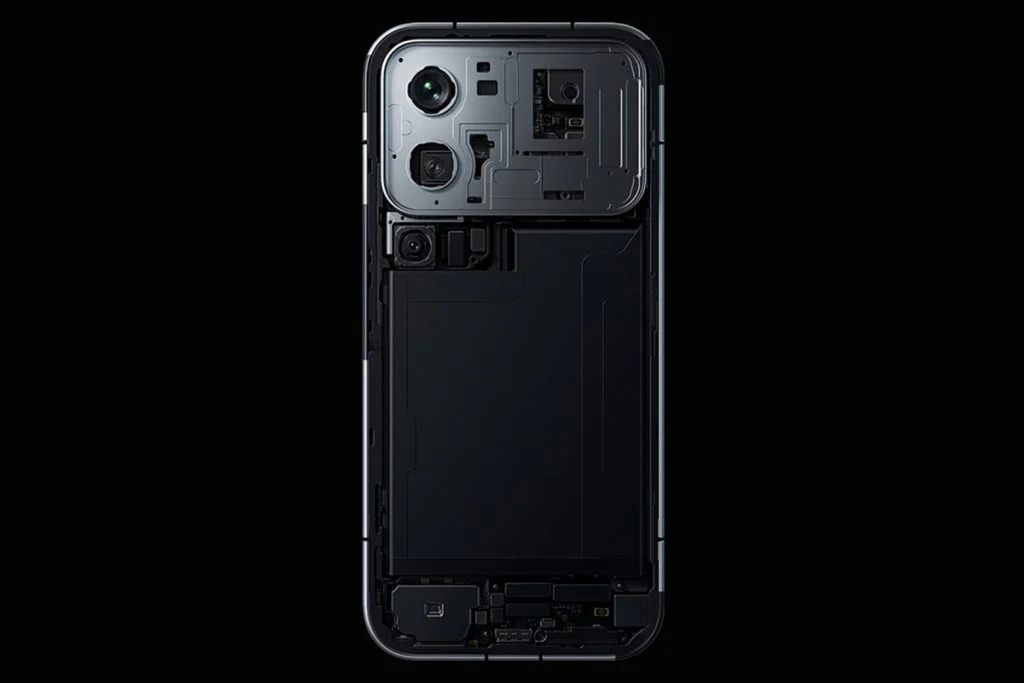
  • Xiaomi 18 Pro in renders — AI button, two 200 MP cameras, and a screen on the back

    Xiaomi 18 Pro in renders — AI button, two 200 MP cameras, and a screen on the back

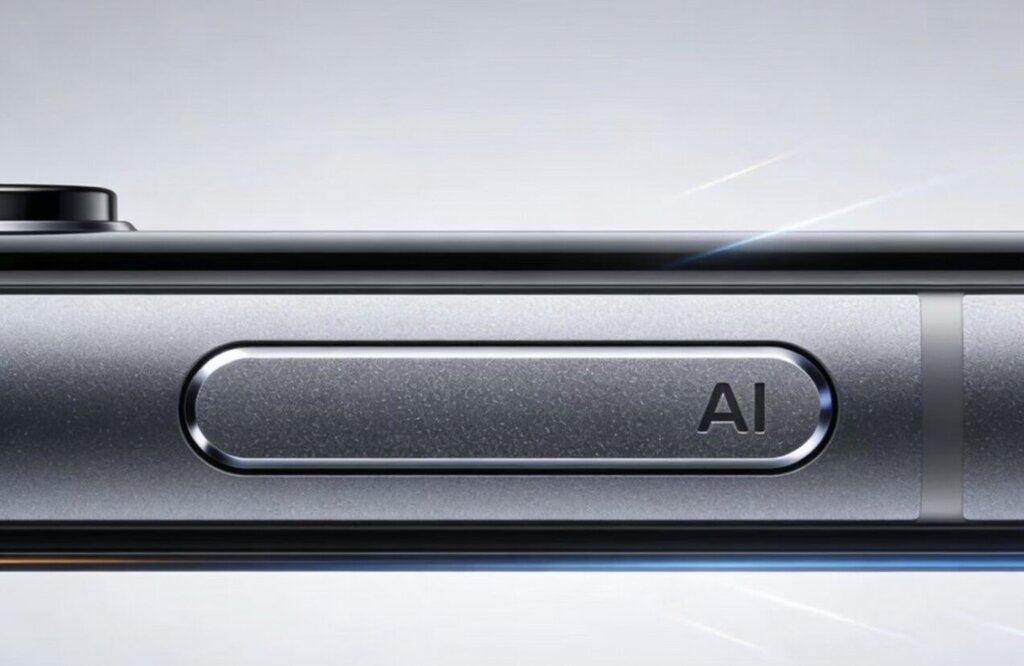
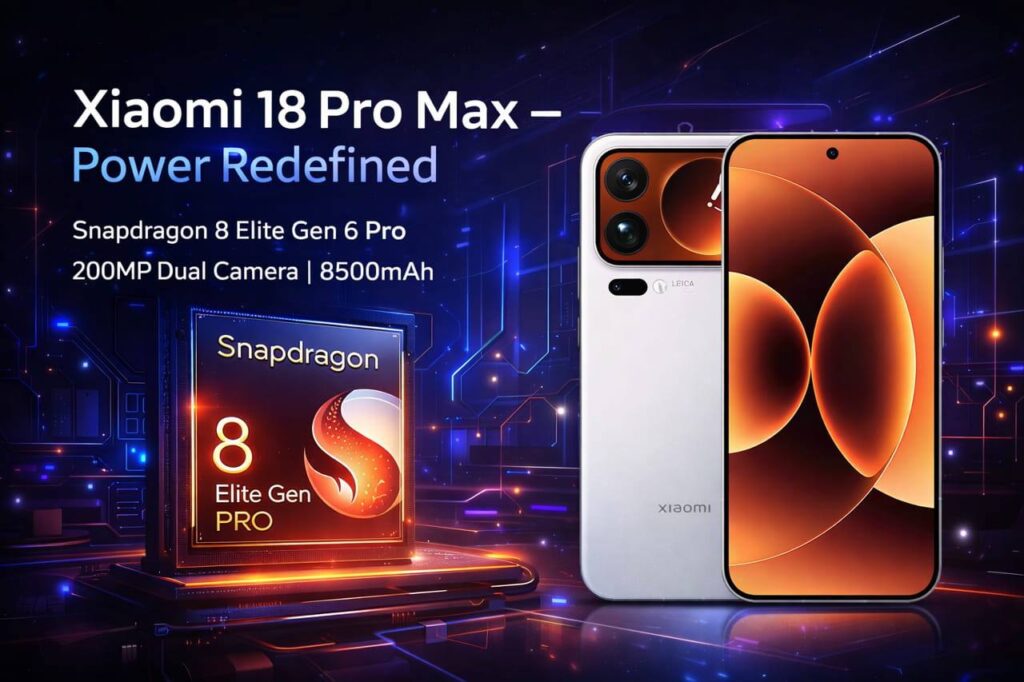
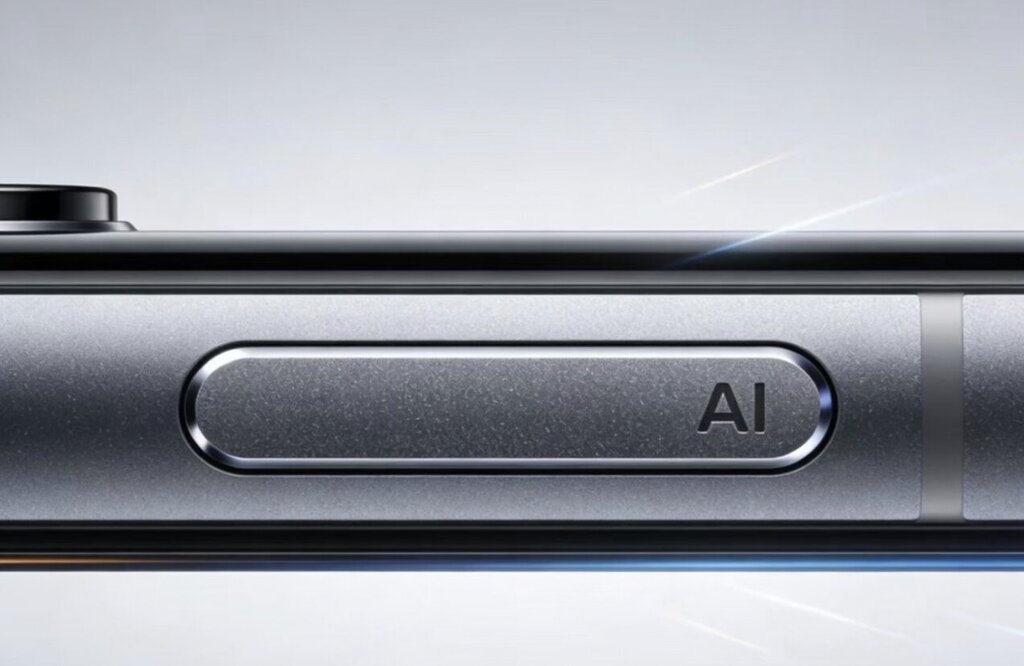
    Xiaomi 18 Pro appeared in the first renders with a dedicated AI button on the side frame, two 200 MP cameras with LOFIC HDR 3.0, a rear AMOLED display (returning after Xiaomi 17 Pro) and a 7000 mAh battery. The larger Pro Max will get 8500 mAh and an expanded audio set. Both models are powered by Snapdragon 8 Elite Gen 6 in a 2 nm process — the Pro variant has a higher clock speed than the base model.

    The most interesting novelty is the dedicated AI button placed centrally on the curved middle frame. Xiaomi has made it a three-function controller: a single click launches the AI agent, a double click controls the Xiaomi SU7 electric car, and a long press activates smart home routines. This is the first button in a smartphone designed from scratch for AI — unlike the Apple Action Button, which is simply a configurable shortcut.

    Xiaomi 18 Pro in renders, what can be seen

    Leaked renders show the Xiaomi 18 Pro with a distinctive camera island shaped like a round “plate,” similar to the Xiaomi 17, but enlarged with a second 200-megapixel module. On the back cover, there is an additional AMOLED display, which Xiaomi calls an “intelligent window.” The small screen allows for receiving calls, controlling music, translating conversations in real-time, and functioning as a viewfinder for selfies taken with the main camera.

    The design departs from the flat edges known from the previous generation. The renders show a rounded titanium frame and a slightly curved display, a move towards ergonomics that Xiaomi has already tested in the 17 Ultra model. The colors visible in the leaks are classic black, white with a ceramic texture, and dark Leica brown, the latter likely as a limited edition with distinctive leather finishes.

    Note: The renders come from early prototypes. Xiaomi regularly changes design details between the leak and the premiere, so the final version may look different. The confirmed elements are two 200 MP modules and the rear display.

    Specifications of Xiaomi 18 Pro and 18 Pro Max, what we already know

    Below is a summary of all confirmed and expected parameters of both models, gathered from leaks from mgsm.pl, notebookcheck.pl, and gsmmaniak.pl.

    ParameterXiaomi 18 ProXiaomi 18 Pro Max
    ProcessorSnapdragon 8 Elite Gen 6 (2 nm)Snapdragon 8 Elite Gen 6 Pro (SM8975)
    Main display6.3″ 2K LTPO OLED6.9″ flat 2K LTPO OLED
    Rear displayAMOLED “intelligent window”AMOLED AI-powered (enhanced version)
    Main camera200 MP, 1/1.28″ SmartSens, LOFIC HDR 3.0200 MP, 1/1.28″, LOFIC HDR 3.0
    Telephoto200 MP periscope, 3× zoom200 MP periscope, 3× zoom
    Ultrawide50 MP50 MP
    OpticsLeicaLeica
    Battery7000 mAh8500 mAh
    Wired charging100 W100 W
    Wireless charging50 W50 W
    AI buttonDedicated, 3 functions (click/double click/long press)Dedicated, 3 functions (click/double click/long press)
    SpeakersStereoSymmetrical stereo
    Haptic motorX-axisX-axis (enhanced)
    Fingerprint readerUltrasonic, under the screenUltrasonic, under the screen
    Water resistanceIP68/IP69 (expected)IP68/IP69 (expected)
    SystemHyperOS 4 on Android 17HyperOS 4 on Android 17
    Global launchSeptember 2026September 2026
    Availability in Poland20272027

    The most important change compared to its predecessor is the second 200 MP module in the telephoto lens. This would be the first Xiaomi with two 200 MP sensors — previously, such a configuration was only available in selected Chinese models. The European version of the Xiaomi 17 Pro ended with a single 200 MP + 50 MP periscope 5× zoom.

    Xiaomi 18 Pro Camera, Leica, and Two 200 MP

    The heart of the Xiaomi 18 Pro is two SmartSens 1/1.28″ sensors (each 200 MP), tuned by Leica. The photo configuration is a triple rear module: main 200 MP + periscope 200 MP with zoom + ultra-wide 50 MP. We have the same sensor size as in the Oppo Find X9 Ultra and Vivo X300 Ultra, but used in two lenses simultaneously.

    The change in focal length from 5× in the Xiaomi 17 Pro to 3× in the 18 Pro is a response to user criticism. A 3× zoom (approx. 75-85 mm) is a classic portrait range — natural face proportions, gentle bokeh, less distortion. 5× is great for cutting details from afar, but few people use it in everyday photography.

    LOFIC HDR 3.0, what does it offer

    LOFIC (Lateral Overflow Integration Capacitor) is a CMOS sensor technology that allows for capturing brighter lights without clipping and darker shadows without noise in a single shot. According to leaks, the third generation of this implementation in SmartSens sensors has two advantages over older versions:

    • Larger dynamic range (by 1-1.5 EV more than LOFIC 2.0), practically noticeable in high-contrast scenes like sunsets or night street photography
    • Faster detection, fewer artifacts on moving objects, which will be appreciated by those photographing children or pets

    LOFIC 3.0 will debut for the first time in the Xiaomi 18 Pro. Previously, the 1-inch version of the technology debuted in the Xiaomi 17 Ultra, but only in one module.

    Do you have the current Xiaomi flagship? Check out available accessories for the Xiaomi 17 series at homescreen.pl, cases, protective glasses, and films.

    Dedicated AI button in Xiaomi 18 Pro — Miclaw, smart home, and Xiaomi SU7

    The most important physical novelty in the Xiaomi 18 Pro is the dedicated AI button placed centrally on the curved side frame. Renders from tipster Leo Hefeng (Gizchina) clearly show it — it is located below the power button, on the right edge.

    Unlike the Apple Action Button from the iPhone 16/17 Pro, which is simply a configurable shortcut, the Xiaomi button has been designed from the ground up as an AI controller. It supports three different interactions:

    • Single click — invoke the AI assistant Miclaw (the new Xiaomi HyperIntelligence agent) with an immediate query
    • Double click — control the electric car Xiaomi SU7 (open doors, air conditioning, navigation)
    • Long press — trigger smart home routines (lighting scenes, thermostat, Xiaomi Mi Home devices)

    What the Miclaw assistant can do

    Miclaw is the first fully agent-based AI from Xiaomi — unlike traditional chatbots, it understands the context of what you see on the screen. Confirmed features from leaks:

    • Flight and hotel booking — you press a button during a conversation on Messenger, Miclaw books a ticket according to the discussed dates
    • Automatic photo organization — you press a button in the Gallery, Miclaw groups photos by places, people, or events and adds tags
    • Email editing — in Gmail, long press starts dictation, Miclaw adds a formal tone and context from previous conversations
    • Screen summary — one click summarizes a long article, email, or Slack message

    Integration with the Xiaomi ecosystem

    The AI button unlocks full integration with the Xiaomi ecosystem in a way that is not available programmatically from the app level. For owners of Xiaomi SU7 and SU7 Ultra, this means a physical key in the smartphone — a double click from a distance of up to 10 m opens the car, without the need to take out the phone. A similar integration applies to Mi Smart Plug smart sockets, Roborock vacuum cleaners, and air purifiers.

    For Polish users, the key question is whether the AI button will work with the global version of the ROM. The Xiaomi 17 Pro (sold in Poland) only has the classic silent mode slider. If the Polish distribution of the Xiaomi 18 Pro does not receive a dedicated button, the entire Miclaw + Xiaomi SU7 function will pass by the Polish market — just like before with the satellite connectivity feature in the Xiaomi 14 Ultra.

    Note: The functionality of the Xiaomi SU7 in Poland is purely theoretical until Xiaomi officially introduces electric vehicles to the European market — which will not happen before 2027-2028. Until then, the “double click” will either be inactive or reassigned to another function in the EEA ROM.

    Rear screen, what the “intelligent window” can do

    The second AMOLED display on the rear cover is a feature debuting in the Xiaomi series for the first time. Previously, a similar solution was found in the Honor Magic V5, Nubia Z70 Ultra, and even earlier, in the pre-release series of foldable smartphones. Xiaomi positions the rear screen as an “intelligent window” with several specific applications.

    Notification widget and AI control

    The rear display shows notifications from the calendar, music, incoming calls, all without the need to turn the phone around. A dedicated AI button (a new element of the casing) activates the Xiaomi HyperIntelligence assistant, which works in tandem with the rear screen: you see the assistant’s responses directly on the back of the phone.

    Teleprompter for recording and selfie viewfinder

    A feature that will delight vloggers and streamers, the rear screen acts as a viewfinder when recording with the main camera. You see the frame you are in without fiddling with an additional monitor. The built-in teleprompter displays scripts during recordings, scrolling text at a set pace.

    Live Translation

    The rear screen displays real-time conversation transcription on the caller’s side. You turn the phone around, the caller sees the text in their language, and you hear the translation through the speaker. The feature works offline for several languages, including Polish.

    Tip: If you often record videos for YouTube or TikTok, the rear screen saves you from purchasing an external monitor for 800-1500 PLN. For a combined tripod, it’s worth considering accessories for Xiaomi after the Polish premiere.

    Snapdragon 8 Elite Gen 6 in 2 nm lithography

    Xiaomi 18 Pro gets the Snapdragon 8 Elite Gen 6 — the upcoming Qualcomm chip in 2-nanometer lithography (a shift from 3 nm in the previous generation). A smaller manufacturing process means lower energy consumption at the same performance, which realistically extends battery life by 15-20% compared to Xiaomi 17 Pro on 8 Elite Gen 5.

    Pro Max takes it a step further — it is powered by the Snapdragon 8 Elite Gen 6 Pro (designation SM8975), a variant with higher GPU clock speed. The practical difference: Pro Max renders 8K video faster, handles HDR computational photography effects more smoothly, and performs better in AAA game titles at maximum settings.

    Xiaomi 18 Pro is powered by a 7000 mAh battery (with a new silicon-carbon cell), while the Pro Max features a record-breaking 8500 mAh. That’s 20% more than the Motorola Edge 70 Pro (6500 mAh) and nearly twice as much as the iPhone 17 Pro Max (4685 mAh). Charging: 100 W wired and 50 W wireless on both models. Thanks to Si-C cells, Xiaomi managed to fit 8500 mAh in a case of the same thickness as the previous generation.

    Availability of Xiaomi 18 Pro in Poland

    The global premiere of the Xiaomi 18 series is planned for September 2026, in line with Xiaomi’s typical cycle (similar to the 17 series in 2025). The problem is that European distribution, including Poland, will likely not start until the first quarter of 2027.

    Xiaomi’s past practice: global premiere in China → international distribution after 3-5 months → full availability in Poland (Media Expert, x-kom) after another 2-3 months. For the 18 series, this realistically means January-February 2027 for orders in Polish stores.

    Estimated Polish price for Xiaomi 18 Pro: 5499-5999 PLN (12/256 GB variant), and 6499-6999 PLN for Pro Max. This positions it in the flagship segment, comparable to the launch price of Xiaomi 15 and Samsung Galaxy S26 Ultra flagships.

    Xiaomi 18 Pro vs competition, who will it be best for

    The flagship photo segment for 2026-2027 will be the most competitive in years. The Xiaomi 18 Pro must compete with three specific models that target the same group of users.

    ModelMain CameraTelephotoBatteryLaunch Price (PL)
    Xiaomi 18 Pro200 MP, 1/1.28″200 MP periscope 85 mm7000 mAh~5799 PLN (est.)
    Oppo Find X9 Ultra50 MP, 1-inch200 MP periscope 85 mm6500 mAh~5999 PLN
    Vivo X300 Ultra200 MP, 1/1.28″200 MP, 85 mm6500 mAh~6299 PLN
    Samsung Galaxy S26 Ultra200 MP HP550 MP periscope 5×5000 mAh~7499 PLN
    iPhone 18 Pro Max48 MP Fusion48 MP periscope 5×4200 mAh~7999 PLN

    The Xiaomi 18 Pro stands out with its battery (7000 mAh vs 4200-6500 in the competition) and a rear screen that no one else has in this segment. The photo advantage over the Oppo Find X9 Ultra is minimal (the same sensor in the telephoto, competitive 1-inch main). With the iPhone and Samsung, the difference is obvious; Xiaomi wins in photography and battery but loses in the application ecosystem and long-term support.

    Who should buy the Xiaomi 18 Pro

    Mobile photography enthusiasts, the two 200 MP sensors from Leica are the most versatile photo set on the Android market. If mobile photography is your hobby and you have no problem with the Chinese ecosystem, this is the best choice. Compatible lenses and cases for the entire Xiaomi series can be found in the category Xiaomi 17, Xiaomi 15, and older Xiaomi 14.

    Vloggers and streamers, the rear screen + prompter is a unique feature that saves hundreds of zlotys on additional equipment. It’s worth adding PD power banks and good accessories for Xiaomi Pad 7 as a second screen to the complete set.

    People who hate short battery life, 7000 mAh is 40% more than the iPhone 18 Pro Max (4200 mAh) and 65% more than the Samsung Galaxy S26 Ultra (5000 mAh). This realistically means 2 days of usage without a charger.

    Summary, is it worth waiting for the Xiaomi 18 Pro

    The first renders of the Xiaomi 18 Pro confirm an ambitious set: two 200 MP Leica cameras with LOFIC HDR 3.0, an AMOLED rear screen, a 7000 mAh battery, and Snapdragon 8 Elite Gen 6 Pro. Global premiere in September 2026, availability in Poland expected in January-February 2027, estimated price 5499-5999 PLN.

    Xiaomi 18 Pro is the choice for mobile photographers, vloggers, and those who value battery life over brand. If you’re already considering the Xiaomi flagship, the 17 Pro (4499-4999 PLN) is still a strong competitor, and its cameras are not much inferior to the upcoming 18 Pro. The new model is mainly an evolution (second 200 MP, rear screen, better battery), not a revolution.

    FAQ, frequently asked questions about Xiaomi 18 Pro

    When is the Xiaomi 18 Pro premiere?

    The global premiere of the Xiaomi 18 Pro is planned for September 2026 in China. International distribution, including Poland, is expected in the first quarter of 2027. Typical Xiaomi schedule: China → Asia → Europe (3-5 months delay).

    How much will the Xiaomi 18 Pro cost in Poland?

    The estimated launch price of the Xiaomi 18 Pro in Poland: 5499-5999 PLN for the 12/256 GB variant. The Xiaomi 18 Pro Max should cost 6499-6999 PLN. Prices are based on the previous generation and market trends +10-15% annually.

    What is the difference between the Xiaomi 18 Pro and 18 Pro Max?

    Both models have the same processor (Snapdragon 8 Elite Gen 6 Pro), identical camera setup (2× 200 MP Leica), and AMOLED rear screen. Differences include: larger main screen in Pro Max (expected 6.9″ vs 6.73″), larger battery in Pro Max (~7500 mAh vs 7000 mAh), and price (approximately 1000 PLN difference).

    Where to buy accessories for Xiaomi 18 Pro?

    After the Polish premiere in 2027, compatible cases, protective glasses, and films will appear in the Xiaomi category at homescreen.pl. Until then, accessories for the previous generation Xiaomi 17 and Xiaomi 15 from brands Spigen, Tech-Protect, 3mk, and ESR are available.

  • Huawei Pura 90 Pro Max — a photographic monster with 200 MP zoom

    Huawei Pura 90 Pro Max — a photographic monster with 200 MP zoom

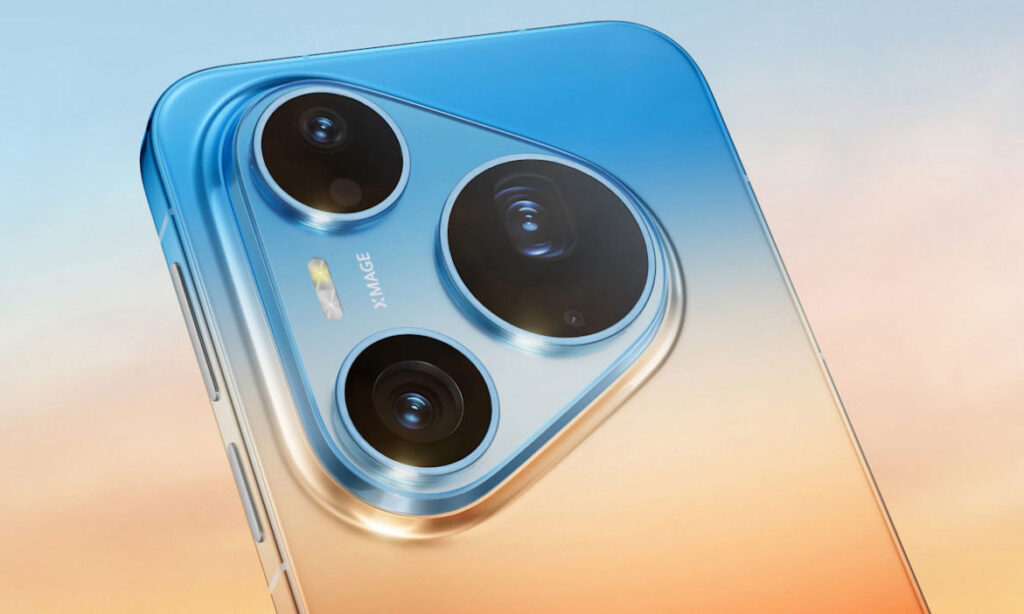
    Huawei officially presented the Pura 90 series on April 20, 2026, and sales of the base variant in China will start on April 29, 2026. At the top of the range is the Huawei Pura 90 Pro Max with a record telephoto lens of 200 MP on a RYYB 1/1.28″ sensor, a main camera of 50 MP with a variable 10-step mechanical aperture of f/1.4–f/4.0, and an ultra-wide 40 MP. Additionally, it features a new processor HiSilicon Kirin 9030S, the HarmonyOS 6.1 system, a 6000 mAh battery with 100 W wired and 80 W wireless charging, and a 6.9″ OLED LTPO 1–120 Hz display with next-generation Kunlun glass.

    Prices in China start from 6499 yuan (approx. 3500 PLN) for the 12/256 GB variant and rise to 8499 yuan (approx. 4500 PLN) for the top 16 GB + 1 TB. In China, this is a lower price than for the iPhone 17 Pro Max, Samsung Galaxy S25 Ultra, or Xiaomi 15 Ultra. We break down everything Huawei announced and check if the Pura 90 Pro Max will make it to Poland.

    When is the Huawei Pura 90 Pro Max premiere in Poland

    The official presentation of the Huawei Pura 90 series took place on April 20, 2026, in China. Sales of the Pro and Pro Max variants will start on April 29, 2026 in the Chinese market, while the basic Pura 90 model will go on sale a few days earlier. All three phones will be available first on consumer.huawei.com, in the Vmall network, and through official offline partners.

    The global premiere is expected at the turn of June and July 2026. Since 2023, Huawei has been consistently introducing the Pura series to Europe, albeit with a 2–3 month delay compared to China. The predecessor, Huawei Pura 80 Ultra, debuted in China in March 2025, and appeared in Poland in June 2025 at a price of 6,499 PLN. For the Pura 90 Pro Max, we can expect a similar pattern — availability in Poland from July to September 2026.

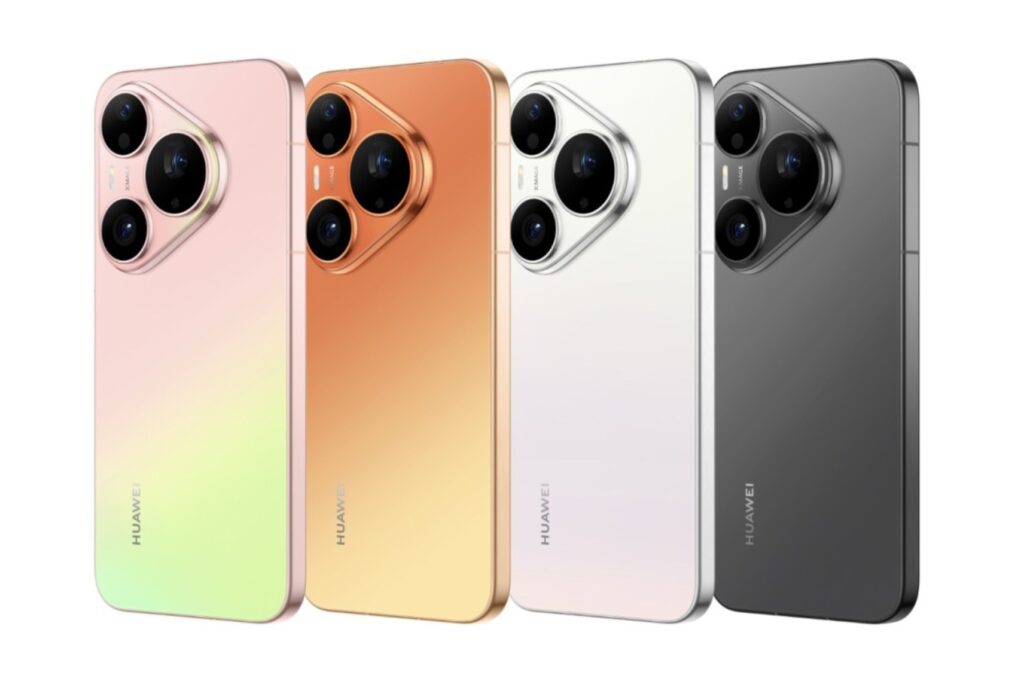
    Note: Availability in the European Union is not guaranteed. Some color variants (Orange Ocean, Sunset Purple) will remain exclusive to the Chinese market. The Polish distribution will likely offer only Dawn Gold and Obsidian Black, similar to the Pura 80 Pro.

    We will return to the article about Polish prices after the official announcement. For now, estimates for Polish prices of Huawei Pura 90 Pro Max are 6,999–8,499 PLN depending on the configuration. The Pro model is expected to be around 5,799–6,999 PLN, and the basic Pura 90 — 4,999–5,499 PLN.

    Specifications of Huawei Pura 90 Pro Max — full technical data

    Below is the complete specification of the flagship presented by Huawei at the Chinese conference and confirmed by benchmark.pl, GSMArena, and Notebookcheck.

    ParameterHuawei Pura 90 Pro Max
    Display6.9″ OLED LTPO
    Resolution2880 × 1308 px (458 ppi)
    Refresh Rate1–120 Hz adaptive
    Screen ProtectionKunlun Glass (new generation, −70% reflection)
    ProcessorHiSilicon Kirin 9030S
    RAM12 GB / 16 GB LPDDR5X + HyperSpace Memory
    Storage256 GB / 512 GB / 1 TB
    Main Camera50 MP, RYYB 1/1.28″, f/1.4–f/4.0 (10-step mechanical), OIS
    TechnologyLOFIC + XMAGE
    Ultra Wide40 MP, f/2.2
    Telephoto200 MP, RYYB 1/1.28″, 4× optical zoom, 16× hybrid, OIS, f/2.6
    Macro5 cm
    Selfie13 MP, f/2.0
    Battery6000 mAh
    Wired Charging100 W
    Wireless Charging80 W
    Reverse ChargingYes (inductive)
    Water ResistanceIP69
    Dimensions164 × 77.1 × 8.1 mm
    Weight231 g
    Operating SystemHarmonyOS 6.1
    Connectivity5G (SA/NSA), Wi-Fi 7, Bluetooth 6.0, NFC, infrared, satellite, eSIM
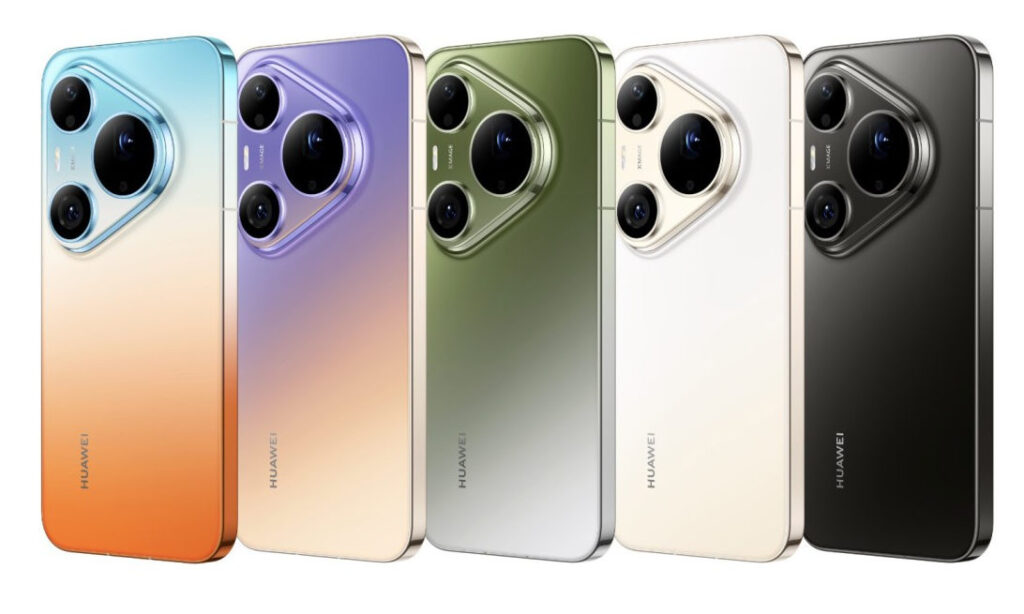
    ColorsOrange Ocean, Sunset Purple, Emerald Lake, Dawn Gold, Obsidian Black
    Price Chinafrom 6499 CNY (~3,500 PLN) to 8499 CNY (~4,500 PLN)
    Price PL (est.)6,999–8,499 PLN
    Launch29.04.2026 (China), ~07.2026 (PL)

    The most important key features are the 200-megapixel RYYB telephoto lens with a 1/1.28″ sensor (the largest in the industry for a telephoto camera), a variable 10-stop mechanical aperture f/1.4–f/4.0, and LOFIC technology that expands the dynamic range of the main sensor.

    Huawei Pura 90 Pro Max Camera — 200 MP Telephoto with 1/1.28″ Sensor

    At the heart of the Pura 90 Pro Max is a 200 MP telephoto lens on a 1/1.28″ RYYB sensor — the same size as the main camera. In the Samsung Galaxy S25 Ultra or iPhone 17 Pro Max, telephoto lenses have sensors of 1/2.5″ and smaller, which results in a loss of quality in low light. With Huawei, it’s the opposite: 4× optical zoom and 16× hybrid zoom remain usable even in a museum gallery, and the macro mode from a distance of 5 cm provides full-value 200 MP photos of flowers or jewelry — without a dedicated macro sensor.

    The main 50 MP camera features a 10-stop variable mechanical aperture f/1.4–f/4.0 — f/1.4 for portraits with bokeh, f/2.8 for general scenes, and f/4.0 for landscapes. Competitors (iPhone, Samsung, Xiaomi) use a fixed aperture of f/1.6–f/1.8, which forces compromises. Additionally, there are two unique Huawei technologies: LOFIC (Lateral Overflow Integration Capacitor) that expands the dynamic range, and the RYYB sensor with yellow pixels instead of green — 40% more light than RGB, which is visibly noticeable in night mode and indoor zoom. The processing is managed by the proprietary XMAGE algorithm, which balances colors without excessive saturation boosting.

    6.9″ OLED LTPO Display, Kunlun Glass, and Kirin 9030S Processor

    The 6.9″ OLED LTPO display offers a resolution of 2880 × 1308 px (458 ppi) and adaptive refresh rate of 1–120 Hz — when reading text, the screen operates at 1 Hz, while in games at 120 Hz. A novelty is the next-generation Kunlun Glass with 70% reduction in light reflection (the screen remains readable in sunlight without maximum brightness) and ten times higher drop resistance than Gorilla Glass Victus 2 (according to Huawei’s claims).

    The Pro Max is powered by the HiSilicon Kirin 9030S — Huawei’s proprietary processor (SMIC 7 nm+). Compared to the Kirin 9020 from the Pura 80 Ultra, it offers +30% in ML tests and +15% in Geekbench multi-core. The phone runs on HarmonyOS 6.1 — a system without Google Play, Gmail, Google Maps, or YouTube. Huawei offers its own App Gallery, which supports Polish banking apps (mBank, PKO BP, BLIK), but Netflix and some tools require manual installation. The HarmonyOS 6.1 ecosystem seamlessly connects the phone with Huawei Watch GT 6, FreeBuds Pro 4, and MatePad tablets.

    What Sets Pro Max Apart — HyperSpace Memory, Satellite, Design

    HyperSpace Memory in the 16 GB variant provides up to 24 GB of effective RAM (virtual buffering in UFS) — practically 30 background applications without being removed from memory, instant switching between the camera and editors, no freezes in Genshin Impact after 90 minutes. Samsung and iPhone offer a maximum of 12 GB without expansion.

    Pro Max supports bidirectional satellite communication via BeiDou and Tiantong (Chinese systems) — SMS and voice calls without GSM coverage. Disclaimer for Poland: lack of full coverage in Europe, so the feature will likely be limited in the European version.

    The design features a round, central camera island (a departure from the squares of Pura 70/80) and a 5th class titanium frame. Of the five colors — Orange Ocean, Sunset Purple, Emerald Lake — they have textures of eco-leather or microcrystalline glass, while Dawn Gold and Obsidian Black have matte glass backs.

    6000 mAh battery with 100 W charging and 80 W wireless

    Pro Max gets a 6000 mAh battery — more than the iPhone 17 Pro Max (4685 mAh) and Galaxy S25 Ultra (5000 mAh). The silicon-carbon technology provides up to 2 days of use and 2400 charging cycles while maintaining 80% capacity (about 5–6 years). Charging: 100 W wired (0–100% in 38 minutes) and 80 W wireless (50 minutes) — a record in the industry, although the full 80 W requires the original Huawei Wireless SuperCharge charger. For comparison: the iPhone 17 Pro Max has 25 W MagSafe, Samsung S25 Ultra 15 W Qi2, Xiaomi 15 Ultra 50 W.

    For wired charging, universal 100 W GaN chargers with USB PD 3.1 will work well — see wall chargers. In the category of wireless chargers, you will find universal models up to 15 W for everyday desk use. Reverse charging allows you to use Pro Max as a power bank for headphones or a smartwatch.

    Huawei Pura 90 Pro Max vs Pura 90 Pro vs Pura 90 — which variant to choose

    The Pura 90 series has three variants: basic Pura 90, Pura 90 Pro, and Pura 90 Pro Max. This article focuses on the flagship model, but it’s worth knowing what you get at each price tier.

    ParameterPura 90 Pro MaxPura 90 ProPura 90
    Screen6.9″ OLED LTPO 2880 × 1308 px6.6″ OLED 2760 × 1256 px6.8″ OLED 2856 × 1320 px
    Refresh Rate1–120 Hz adaptive120 Hz120 Hz
    ProcessorKirin 9030SKirin 9030SKirin 9010S
    Main Camera50 MP f/1.4–f/4.0 LOFIC50 MP f/1.4–f/4.050 MP f/1.8
    Ultrawide40 MP12.5 MP12.5 MP
    Telephoto200 MP 1/1.28″ RYYB 4×50 MP 4× zoom50 MP 3.7× zoom
    Selfie13 MP13 MP50 MP
    Battery6000 mAh6000 mAh6500 mAh
    Dimensions164 × 77.1 × 8.1 mm157.8 × 74.5 × 8.2 mm163.1 × 78.1 × 7 mm
    Weight231 g213.5 g210 g
    Price Chinafrom 6499 CNYfrom 5499 CNYfrom 4699 CNY
    Price PL (est.)6,999–8,499 zł5,799–6,999 zł4,999–5,499 zł

    The key differences are telephoto (200 MP vs 50 MP), ultrawide (40 MP vs 12.5 MP), and screen (6.9″ LTPO vs 6.6″ standard OLED). The Pro model also lacks the LOFIC technology in the main camera, although the variable aperture f/1.4–f/4.0 is identical.

    For whom is Pro Max: professional photographers, people using zoom daily (concerts, sports, nature), enthusiasts of top specifications.

    For whom Pro: people looking for a compact flagship, as 6.6″ within 157 mm in height is a rarity in 2026. The Pro is also 17.5 g lighter — a difference that is clearly felt in the pocket.

    For whom the basic Pura 90: people wanting the cheapest Huawei flagship with a good camera and a record battery of 6500 mAh, without paying extra for LOFIC and a 200 MP telephoto lens.

    Huawei Pura 90 — basic model with a 6500 mAh battery and 50 MP selfie

    The basic Huawei Pura 90 stands out with two parameters better than in Pro and Pro Max: a larger battery (6500 mAh) and a better selfie camera (50 MP instead of 13 MP). The older Kirin 9010S processor (known from Pura 80 Pro, about 20% slower than 9030S) left room for a larger cell, and the lack of an advanced telephoto lens allowed for investment in a better front. Additionally, the thinnest body (7 mm) and the lowest weight (210 g) of the entire trio.

    For whom is Pura 90: vloggers and people who take a lot of selfies (50 MP front camera), users requiring a battery for 2+ days, people in the Huawei ecosystem without the need for top photography. When it’s not enough: if you take a lot of zoom photos, portraits with bokeh, or night photography — the difference compared to Pro Max (lack of LOFIC, variable aperture, smaller telephoto sensor) will be noticeable. Priced at around 5,000 PLN, the basic Pura 90 competes with the Samsung Galaxy S25 and Xiaomi 15 — Samsung offers full Android with Google, while Huawei provides a better camera and battery.

    Huawei Pura 90 Pro Max vs competition in the 7,000–9,000 PLN segment

    The top tier of flagship cameras in Poland in 2026 includes four names: Huawei, Apple, Samsung, and Xiaomi. All have sensibly configured camera setups, but each is going in a different direction.

    ModelProcessorMain CameraTelephotoBatteryScreenPrice PL
    Huawei Pura 90 Pro MaxKirin 9030S50 MP f/1.4–f/4.0200 MP 4× RYYB6000 mAh6.9″ 120 Hzfrom ~6,999 zł
    iPhone 17 Pro MaxA19 Pro48 MP f/1.7848 MP 5×4685 mAh6.9″ 120 Hz8,199 zł
    Samsung Galaxy S25 UltraSnapdragon 8 Elite200 MP f/1.750 MP 5×5000 mAh6.9″ 120 Hz7,499 zł
    Xiaomi 15 UltraSnapdragon 8 Elite50 MP f/1.63 Sony LYT-900200 MP 4.3× Leica5410 mAh6.73″ 120 Hz6,999 zł

    Huawei wins in three parameters: telephoto sensor (1/1.28″ is twice as large as Samsung’s or Apple’s), variable aperture (unique in 2026), and battery (6000 mAh is the largest in the segment). It loses in the main camera — 200 MP in Samsung provides more details in full frames, and Xiaomi with the Sony LYT-900 sensor has better dynamic range.

    Is Huawei Pura 90 Pro Max the best camera in 2026

    From the perspective of photo quality — probably yes, but with reservations. The Pura 90 Pro Max will dominate in scenarios requiring zoom (concerts, sports, nature, street photography), portraits, and night mode. The Samsung Galaxy S25 Ultra will remain better in full frames and detail, while the Xiaomi 15 Ultra will excel in natural colors thanks to Leica Summicron.

    The problem for Poles remains the lack of Google services. For those who take photos, but also use Gmail, Google Maps, and YouTube as their main source of multimedia — the Pura 90 Pro Max requires compromises. For photographers who primarily use their phone for photos and editing — this lack becomes irrelevant.

    Prices of Huawei Pura 90 Pro Max in China and expected in Poland

    VariantChina (CNY)Estimated Poland (PLN)
    12 GB + 256 GB6499 CNY~6,999 zł
    12 GB + 512 GB7199 CNY~7,599 zł
    16 GB + 512 GB7799 CNY~8,199 zł
    16 GB + 1 TB8499 CNY~8,499 zł

    The Polish price list has not been officially announced and the above amounts are estimates based on the yuan exchange rate (1 CNY ≈ 0.54 zł) and distributor margin (traditionally 15–25% for the Pura series). For reference: the Huawei Pura 80 Ultra cost 9,999 CNY (about 5,400 zł) in China, while in Poland it was sold for 6,499 zł — with VAT and distribution costs, this is a fair conversion.

    If Huawei maintains a similar pricing policy, Pura 90 Pro Max in Poland will fall within the range of 6,999–8,499 zł depending on the memory variant. Competition from Xiaomi 15 Ultra (6,999 zł) and Samsung Galaxy S25 Ultra (7,499 zł) forces Huawei to adjust prices — the top model 16 GB + 1 TB may not exceed 8,500 zł.

    What else we don’t know about Huawei Pura 90 Pro Max

    Three elements remain to be confirmed in the context of the European market:

    • Official release date in Poland — Huawei may decide on distribution only after the first quarter of sales in China. The Pura 80 Ultra appeared in Poland 3 months after its Chinese debut; for the Pura 90 Pro Max, we are betting on a similar pattern.
    • Polish pricing — the official distributor of Huawei in Poland usually announces prices about a week before the sales start. Our estimates of 6,999–8,499 PLN are based on the yuan exchange rate and the pricing policy of its predecessor.
    • Available colors in Polish distribution — from the five Chinese variants (Orange Ocean, Sunset Purple, Emerald Lake, Dawn Gold, Obsidian Black), usually only two reach Poland: neutral black and exclusive gold.

    The topic of the top variant also remains open (details below).

    Huawei Pura 90 Ultra — will a top variant be created?

    Huawei Pura 90 Ultra is a phrase that Polish users search for on Google significantly more often than “Pura 90 Pro Max” (210 vs 10 searches per month, trend +420% month over month). The reason is simple — in previous generations, Huawei always released the Ultra variant as the absolute flagship, even stronger than the Pro Plus or Pro Max. The problem is that at the conference on April 20, 2026, Huawei did not show the Pura 90 Ultra.

    What does this mean? There are three scenarios:

    • Ultra will debut later — just like the Pura 70 Ultra, which appeared 3 months after the Pro+, the Pura 90 Ultra may have a separate conference in July or September 2026
    • Pro Max replaced Ultra — Huawei may have changed the naming of the line. The Pura 80 had an Ultra, the Pura 90 may not — the Pro Max with a 200 MP telephoto lens realistically serves the same role as the previous Ultra
    • Ultra is just a leak — it is possible that the phrase “huawei pura 90 ultra” in Google comes solely from extrapolating the names of predecessors, and such a variant may never appear

    For Polish buyers, this means that if you are waiting for the Ultra — you are probably wasting your time. The Huawei Pura 90 Pro Max in photo specifications (200 MP zoom, variable aperture, LOFIC) surpasses the Pura 80 Ultra, so there is realistically no room for another, higher variant. Distributors openly favor two variants instead of three — Pro and Pro Max.

    Our choice: If you are looking for the strongest camera in a smartphone in 2026 and accept the lack of Google — the Huawei Pura 90 Pro Max will be the best purchase of the summer. In any other scenario (Google Pay, YouTube, Android ecosystem) — the Samsung Galaxy S25 Ultra or Xiaomi 15 Ultra will provide more satisfaction in everyday use.

    Summary — is it worth waiting for the Huawei Pura 90 Pro Max in Poland

    The Huawei Pura 90 Pro Max officially debuted on April 20, 2026, and sales in China will start on April 29, 2026, at prices of 6,499–8,499 CNY (approx. 3,500–4,500 PLN). In Poland, we expect availability from July to September 2026 at prices of 6,999–8,499 PLN. The upgrades over the Pura 80 Ultra are spectacular: 200 MP telephoto lens on a sensor with about four times larger surface area, new Kirin 9030S with 30% better AI performance, Kunlun glass with 70% reflection reduction.

    The biggest advantage remains the camera set. No other flagship in 2026 has both a variable mechanical aperture, a 200 MP telephoto lens, and LOFIC technology at the same time. For photographers, vloggers, and creative individuals — a natural choice. For other users — it’s worth comparing with the Samsung Galaxy S25 Ultra or Xiaomi 15 Ultra, which offer full Android with Google.

    Check out accessories for the Pura 80 series today at homescreen.pl — as soon as the Pura 90 category is opened, you will find it next to it. Also, check out accessories for Pura 70, Huawei Watch GT 6, which integrates with HarmonyOS 6.1 in a unique way, as well as universal protective films and wireless chargers for 80 W of inductive charging.

    FAQ, frequently asked questions about Huawei Pura 90 Pro Max

    When is the release of Huawei Pura 90 Pro Max?

    The official presentation of the Pura 90 series took place on April 20, 2026, in China. Sales of the Pura 90 Pro Max and Pura 90 Pro will start on April 29, 2026 in the Chinese market. In Europe and Poland, the phone is expected from July to September 2026 — Huawei traditionally introduces the Pura series to our markets 2–3 months after the Chinese debut.

    How much will Huawei Pura 90 Pro Max cost in Poland?

    The estimated price of Huawei Pura 90 Pro Max in Poland is 6,999–8,499 PLN depending on the memory configuration. The base variant 12 GB + 256 GB is likely to start from 6,999 PLN, while the top variant 16 GB + 1 TB may reach 8,499 PLN. The Chinese prices are 6,499–8,499 yuan (approx. 3,500–4,500 PLN). The Polish distributor will announce the official prices after setting the date for the Polish premiere.

    What camera does the Huawei Pura 90 Pro Max have?

    The Huawei Pura 90 Pro Max has three cameras on the back: 50 MP RYYB 1/1.28″ main camera with a variable mechanical aperture of f/1.4–f/4.0 and LOFIC technology, 40 MP f/2.2 ultra-wide, and 200 MP RYYB 1/1.28″ telephoto lens with 4× optical zoom and 16× hybrid zoom. The selfie camera is 13 MP f/2.0. The telephoto lens has a sensor size equal to that of the main camera — a unique feature in the smartphone industry.

    What battery does the Huawei Pura 90 Pro Max have?

    The Huawei Pura 90 Pro Max comes with a 6000 mAh battery featuring silicon-carbon technology. Wired charging works at 100 W (from 0 to 100% in about 38 minutes), while wireless charging reaches 80 W (full charge in 50 minutes with Huawei Wireless SuperCharge). The phone also supports reverse wireless charging, allowing it to serve as a power bank for headphones or a smartwatch.

    What processor does the Huawei Pura 90 Pro Max have?

    The Huawei Pura 90 Pro Max is powered by the HiSilicon Kirin 9030S — Huawei’s proprietary processor manufactured in China by SMIC using a 7 nm+ process. The chip offers approximately 30% better AI performance and 15% higher Geekbench multi-core score compared to its predecessor, the Kirin 9020 from the Pura 80 Ultra. The phone runs on HarmonyOS 6.1.

    Does the Huawei Pura 90 Pro Max have Google Play?

    No, the Huawei Pura 90 Pro Max runs on HarmonyOS 6.1 without Google services. There is no Play Store, Gmail, Google Maps, or YouTube as native apps. Huawei offers its own App Gallery, which supports popular Polish banking apps (mBank, PKO BP, BLIK), but some apps (Netflix, public transport apps) require manual installation from APK files.

    What is the difference between Huawei Pura 90 Pro Max and Pura 90 Pro?

    The Huawei Pura 90 Pro Max has a larger screen (6.9″ vs 6.6″), a significantly better telephoto lens (200 MP vs 50 MP), a better ultra-wide (40 MP vs 12.5 MP), and LOFIC technology in the main camera. The processor, RAM, charging, and selfie camera are identical. The Pro Max is also 17.5 g heavier and costs about 1000 CNY more. The Pro is a better choice for those looking for a compact flagship, while the Pro Max is for photographers demanding top-notch zoom.

    Will there be a Huawei Pura 90 Ultra?

    At the conference on April 20, 2026, Huawei did not showcase the Pura 90 Ultra variant. There are three scenarios: Ultra will debut with a few months delay (like the Pura 70 Ultra in 2024), Huawei has opted for Pro Max as the flagship instead of Ultra, or Ultra will not appear at all in this generation. The second scenario seems the most likely — the Pura 90 Pro Max with its 200 MP telephoto lens and LOFIC technology surpasses the Pura 80 Ultra, so realistically there is no longer room for a higher variant.

  • Motorola Edge 70 Pro — premiere, specifications, and price

    Motorola Edge 70 Pro — premiere, specifications, and price

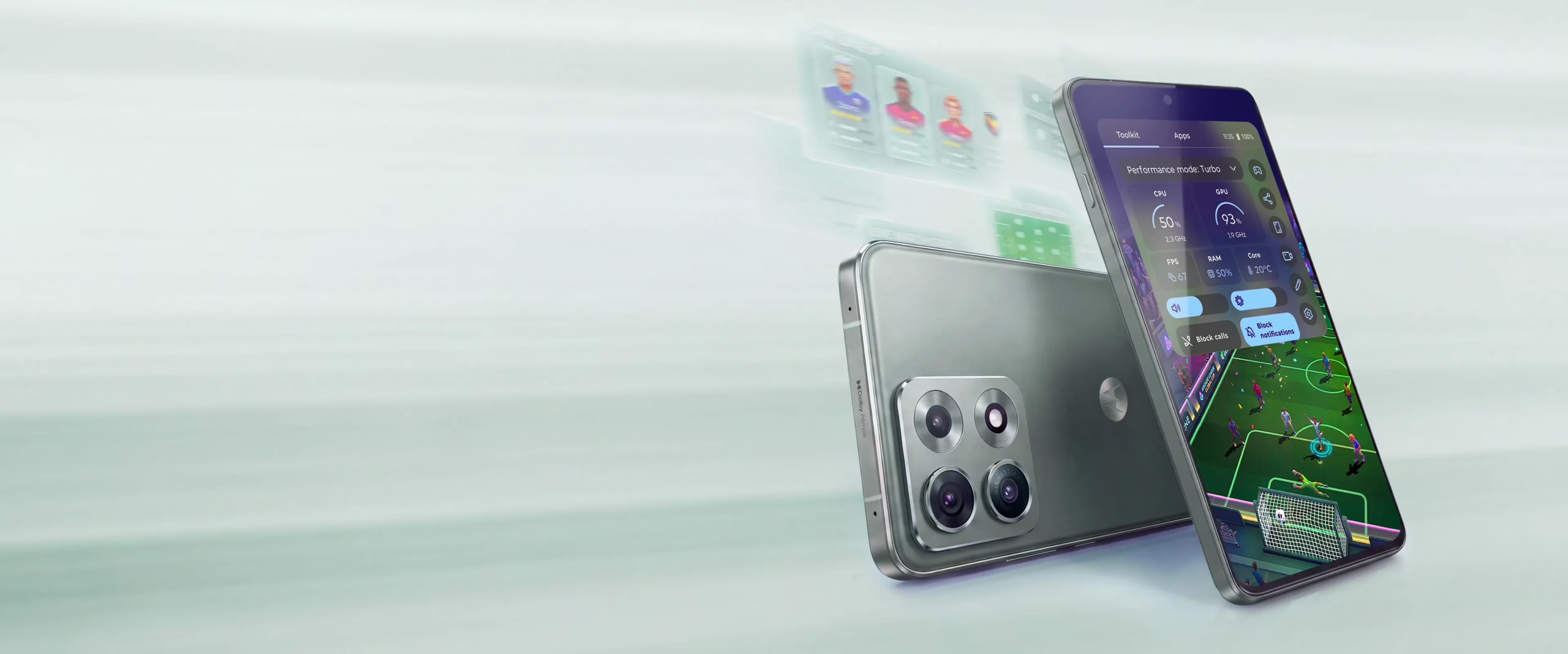
    Motorola Edge 70 Pro officially debuts on April 22, 2026, in India, and we expect it in Poland in May. The phone will feature a 6500 mAh battery, a 144 Hz display with a brightness of 5200 nits, and a Sony Lytia 710 camera — all for a price of around 3000 PLN.

    The premiere of Motorola Edge 70 Pro is scheduled for April 22, 2026, and the first units are expected to hit Polish stores most likely on May 14, 2026. The mid-range flagship comes with a 6.8-inch Extreme AMOLED 144 Hz display with a brightness of 5200 nits, a MediaTek Dimensity 8500 Extreme processor, a main camera of 50 MP Sony Lytia 710, and a 6500 mAh battery with 90 W charging. All enclosed in a body with IP68, IP69, and MIL-STD-810H certifications.

    Motorola is learning from the Edge 60 Pro. A larger battery, a brighter screen, a more powerful chip, and a bolder design (marble, satin, fabric) — all under Pantone. The European price of €649–699 (around 2,900–3,100 PLN) positions the model exactly where Galaxy A57, Xiaomi 15T, and Nothing Phone 3a Pro compete. Does Motorola have what it takes to win? We break down the leaks and confirmed facts into their components.

    When is the Motorola Edge 70 Pro premiere

    The global premiere of Motorola Edge 70 Pro takes place on April 22, 2026, in India, as confirmed by Flipkart in the pre-sale. According to information from purepc.pl, the Polish distribution starts on May 14, 2026 — that’s when the shipping of the first orders from x-kom, Media Expert, Komputronik, and RTV Euro AGD is expected to begin.

    This is standard practice for Motorola’s Edge series. The predecessor, Motorola Edge 60 Pro, debuted in April 2025 and was available in Polish stores from May of the same year at a price of 2499 PLN. The Edge 70 Pro will follow this pattern, although the price may be slightly higher due to better components.

    Note: The global dates announced by Motorola may differ from the Polish ones. The official Motorola EMEA (Europe, Middle East, Africa) conference is expected at the turn of April and May 2026. Until then, details about the Polish price and availability are estimates.

    Motorola is preparing launch promotions. The company traditionally adds a selected gadget at the start: for the Edge 60 series, it was the Moto Buds 2 Loop headphones, and for the Edge 70 Pro, we expect the Moto Watch 70 smartwatch or a TurboPower 90 W charger set with USB-C to USB-C cable. Details will be confirmed at the press conference in May.

    Specifications of the Motorola Edge 70 Pro, what we officially know

    Below is the complete list of confirmed parameters (some from official Motorola graphics published before the premiere) and leaks from the portals PhoneArena, gsmmaniak.pl and telepolis.pl.

    ParameterMotorola Edge 70 Pro
    Display6.8″ Extreme AMOLED, quad curved
    Resolution2712 × 1220 px (1.5K Super HD)
    Refresh Rate144 Hz
    Brightness (peak)5200 nits
    Screen ProtectionCorning Gorilla Glass 7i
    ProcessorMediaTek Dimensity 8500 Extreme, 3.40 GHz
    GPUMali-G720 MC8
    RAM12 GB LPDDR5X
    Storageup to 512 GB
    Main Camera50 MP, Sony Lytia 710, OIS
    Ultrawide50 MP
    Telephoto3.5× optical zoom (leak)
    Multispectral SensorYes, 3-in-1
    Selfie50 MP
    Video4K 60 fps on each module
    Battery6500 mAh
    Wired Charging90 W (TurboPower)
    Wireless Charging15 W (expected)
    Water ResistanceIP68 + IP69
    DurabilityMIL-STD-810H
    CoolingVapor chamber 4600 mm²
    AudioDolby Atmos, Hi-Res Audio
    SystemAndroid 16
    Support3 years of Android updates, 5 years of patches
    ColorsPantone Lily White, Tea, Titan
    EU Price (expected)€649–699 (2,900–3,100 PLN)
    India PriceRs. 36,999+
    Launch22.04.2026 (India), 14.05.2026 (PL)

    The biggest upgrades compared to the Edge 60 Pro are battery (6500 mAh vs 6000 mAh), screen brightness (5200 vs 4500 nits), and refresh rate (144 Hz vs 120 Hz). The camera remains at a similar level with the same Sony sensor (now Lytia 710 instead of 700C).

    Motorola Edge 70 Pro — Extreme AMOLED display 5200 nits

    The Motorola Edge 70 Pro gets one of the brightest screens in the mid-range segment. The peak brightness of 5200 nits is a value that today only competes with the Xiaomi 15T Pro (4500 nits) and Honor Magic 7 Lite (5000 nits) at this price. In comparison, the iPhone 17 has 3000 nits peak, and the Samsung Galaxy A57 — 1900 nits.

    In practice, this means readability in full sunlight without squinting, even on the beach or in a convertible car. The refresh rate of 144 Hz is an advantage for gamers and those using dynamic applications. The difference between 120 and 144 Hz in everyday scrolling is subtle, but noticeable in games like Call of Duty Mobile or Genshin Impact.

    The screen is quad curved — curved on all four edges. It’s an impressive but controversial design: accidental touches are more likely, and the full-screen tempered glass is harder to fit. If you plan to purchase, prepare to invest in UV glass or hydrogel film to cover the curves.

    It’s worth getting a case and glass for the new Edge 70 right away — check accessories for Motorola Edge 70 at homescreen.pl

    Sony Lytia 710 camera, telephoto lens, and multispectral sensor

    The heart of the Motorola Edge 70 Pro photography is the 50-megapixel Sony Lytia 710 sensor with optical image stabilization (OIS). This is an improved version of the sensor from the Edge 60 Pro (Lytia 700C), with higher sensitivity and better noise reduction in low light. The lens has an aperture of f/1.8.

    The rear set is complemented by two additional modules: a 50 MP ultra-wide (120° field of view, useful for landscapes and architecture) and a telephoto lens with 3.5× optical zoom. The latter has an interesting focal length — close to the classic 85 mm used in portraits, but far enough to cut out details from the background.

    What the 3-in-1 multispectral sensor offers

    A new feature compared to the Edge 60 Pro is the additional 3-in-1 multispectral sensor. This component does not take photos but collects information about light in three spectral ranges: visible, infrared, and UV. As a result, the phone better maps colors and accurately represents skin tones, fabrics, and plants — areas where smartphones traditionally struggle.

    The effect is noticeable in two scenarios:

    • Portraits in artificial light (office, restaurant, shopping mall), where fluorescence tints the skin green or yellow
    • Culinary photography, where traditional white balance washes out the colors of dishes

    The 50 MP front selfie camera supports 4K recording at 60 fps — a specification that just two years ago was reserved for flagship models costing 5000 PLN. Perfect for vloggers and those creating content for TikTok or YouTube Shorts.

    Motorola Edge 70 Pro Battery — 6500 mAh and 90 W charging

    The biggest practical change in the Motorola Edge 70 Pro is the 6500 mAh battery. This is 500 mAh more than in the Edge 60 Pro (6000 mAh) and 25% more than in the Samsung Galaxy S25 (5000 mAh). Motorola claims over two days of use on a single charge with typical usage.

    In practical terms, this means:

    • 16-18 hours of screen on time (SOT) while scrolling through social media and watching videos
    • Weekend without a charger — a trip from Friday to Sunday without searching for a socket
    • 10-12 hours of gaming in games like Genshin Impact or PUBG Mobile

    Charging with 90 W TurboPower will charge the phone from 0 to 100% in about 35-40 minutes (confirmed parameters similar to Edge 60 Pro). Wireless charging is expected at 15 W — an unofficial value, but predicted based on its predecessor. For inductive charging, it’s worth looking at wireless chargers and docking stations.

    It is worth remembering that Motorola does not include a 90 W charger in the package — you have to buy it separately. If you don’t have a GaN charger yet, this is a good time to invest in a universal USB-C Power Delivery unit. Check out our category of wall chargers at homescreen.pl — the Baseus GaN5 Pro and Anker 737 models support 100 W and can also charge a laptop. A good power bank with PD will also come in handy on trips — 20,000 mAh will recharge the Edge 70 Pro three times.

    Tip: The 6500 mAh battery in an 8 mm thick case was made possible only by new silicon-carbon cells with higher energy density. This is the same technology that powers the Oppo Find X8 Pro and Honor Magic 7 Pro. In practice: longer lifespan and less degradation after 500 charging cycles.

    Pantone Design, marble, and fabric instead of plastic

    Motorola consistently embraces bold design. Motorola Edge 70 Pro comes in three color variants curated by Pantone:

    • Pantone Lily White — white with a marble texture (replicates the pattern of natural stone)
    • Tea — warm beige with a satin finish (matte, fingerprint resistant)
    • Titan — graphite with fabric texture (new — tactile finish, slightly rough to the touch)

    Three different textures instead of one glass on the back is the direction Motorola has been heading for several years. Previous Edge series had versions with eco-leather, vegan velvet, and wood. The marble texture in the Edge 70 Pro is the first in the industry — no one has applied this effect in a mass series before.

    Practical consequence: each texture reacts differently to daily use. Marble and fabric are more resistant to minor scratches and fingerprints, but harder to clean. Satin is the most versatile, but collects micro-scratches.

    For all three versions, a case is a must-have investment — the manufacturer does not include a silicone cover in the box. A transparent case will showcase the unique texture, while a rugged one will protect the phone from drops. It is also worth getting tempered glass for curved screens right away, as standard flat glass will not cover the edges of the quad curved.

    Motorola Edge 70 Pro vs Edge 60 Pro, what has changed

    The predecessor is currently available in Polish stores at a price of 1,999–2,099 PLN (after seasonal promotions). A comparison of key differences shows whether it’s worth paying extra for the newer generation.

    ParameterMotorola Edge 70 ProMotorola Edge 60 Pro
    ProcessorDimensity 8500 ExtremeDimensity 8350
    Geekbench performance (multi)65635840
    Screen6.8″ AMOLED 144 Hz6.7″ pOLED 120 Hz
    Peak brightness5200 nits4500 nits
    Battery6500 mAh6000 mAh
    Wired charging90 W90 W
    Main camera50 MP Sony Lytia 71050 MP Sony Lytia 700C
    Telephoto3.5× with multispectral3× without multispectral
    Selfie50 MP50 MP
    DurabilityIP68 + IP69 + MIL-STD-810HIP68 + IP69
    SystemAndroid 16 (3+5 years)Android 15 (3+4 years)
    Launch price PL~2,999 PLN (est.)2,499 PLN

    The most noticeable changes are more powerful processor (+12% multi-core), brighter screen (+16%), and larger battery (+8%). The camera received a better sensor, but in everyday use, the difference is subtle — mainly noticeable in low light and in portraits thanks to the multispectral sensor.

    Is it worth paying an extra 500 PLN for the newer model? If you want a phone for 3-4 years — yes, the longer support and better processor will pay off. If you’re looking for a basic, reliable phone for 2 years — the Edge 60 Pro on promotion (~1,999 PLN) still offers great value for money.

    Motorola Edge 70 Pro vs competition in the mid-range

    The 2,500–3,000 PLN segment is the most competitive area on the market. The Edge 70 Pro enters a territory where four other mid-range flagships are already battling.

    ModelProcessorBatteryScreenMain CameraPrice PL
    Motorola Edge 70 ProDimensity 85006500 mAh6.8″ 144 Hz 5200 nit50 MP Lytia 710~2,999 PLN
    Samsung Galaxy A57Exynos 15805000 mAh6.7″ 120 Hz 1900 nit50 MP2,499 PLN
    Xiaomi 15TDimensity 8400 Ultra5500 mAh6.8″ 144 Hz 3200 nit50 MP Leica2,799 PLN
    Nothing Phone 3a ProSnapdragon 7s Gen 35000 mAh6.77″ 120 Hz 3000 nit50 MP periscope 3×2,399 PLN
    Honor 400 ProSnapdragon 8s Gen 35300 mAh6.78″ 120 Hz 5000 nit200 MP2,999 PLN

    Motorola wins in three key parameters: battery (6500 mAh — the most in the segment), screen brightness (5200 nits — on par with Honor 400 Pro) and durability (MIL-STD-810H — no one else has this at this price). It loses a bit in the camera to Xiaomi 15T (Leica) and Honor 400 Pro (200 MP).

    Who the Motorola Edge 70 Pro will be the best choice for

    Travelers and active individuals — MIL-STD-810H + IP69 guarantees that the phone will survive a fall from a bike path, a dip in the sea, and office coffee disasters. Add a good case and hydrogel film from brands like 3mk, Spigen, or Tech-Protect, and the phone will last 3-4 years without a scratch.

    Screen demanding users — a brightness of 5200 nits is visible even at noon in the sun, which no competitor offers at this price. Ideal for those spending a lot of time outdoors or in the car.

    Portrait and scenery photographers — multispectral sensor + Lytia 710 + 3.5× telephoto lens is the most versatile photo set in the segment. If natural skin tone and good portraits are important to you, Motorola does it better than Samsung and Nothing.

    Mobile gamers — the combination of 144 Hz + Dimensity 8500 + 4600 mm² vapor chamber provides stable 90-120 fps in Call of Duty and Genshin Impact. The Samsung Galaxy A57 with 60 fps in these titles falls short.

    What is missing before the premiere

    Three elements remain unconfirmed and may affect the final rating:

    • Exact price in Poland — Motorola will announce it only at the EMEA conference (end of April/beginning of May 2026). Estimates of 2,899–3,099 PLN are based on the predecessor and the euro exchange rate.
    • Availability of the 16 GB RAM variant — India receives two configurations (12/256 GB and 12/512 GB), but the variant with 16 GB RAM seen in some leaks has not been confirmed for Europe
    • Telephoto lens details — 3.5× optical zoom is a leak, not official data. Motorola may still change this specification between the Indian and European launches

    It is also important to ask about long-term software support. 3 years of Android updates is a good standard, but Samsung (7 years) and Google Pixel (7 years) offer significantly longer support — 2-4 years more. For those planning to use the phone for 5+ years, this may be a deciding factor.

    Our choice: If you are looking for a solid mid-range flagship with a record battery and bright screen — the Motorola Edge 70 Pro will be the best choice in its price range for 2026. But make sure to buy a case and tempered glass right away. The quad curved AMOLED is beautiful, but delicate.

    Summary, is it worth waiting for the Motorola Edge 70 Pro

    The Motorola Edge 70 Pro will hit the market on April 22, 2026, in India, and on May 14, 2026, in Poland, at a price of around 2,900–3,100 PLN. The upgrades over the Edge 60 Pro are evolutionary but significant: +500 mAh battery, +24 Hz refresh rate, +700 nits brightness, and a new Dimensity 8500 Extreme processor. Overall: a better phone in every dimension.

    The biggest advantage remains durability combined with design. MIL-STD-810H in a Pantone casing with marble is something you won’t find at Samsung or Xiaomi. For active people and those demanding durability — an obvious choice. For photographers — great, but the Xiaomi 15T with Leica will provide a slightly better photo set for a similar price.

    Check out accessories for Motorola Edge 70 today at homescreen.pl — cases, tempered glass, hydrogel films, and camera protection for the entire series.

    FAQ, frequently asked questions about Motorola Edge 70 Pro

    When is the release of Motorola Edge 70 Pro?

    The official release of the Motorola Edge 70 Pro will take place on April 22, 2026, in India. In Poland, the phone will be available from May 14, 2026 — that’s when the first orders will start shipping from x-kom, Media Expert, and Komputronik. The EMEA conference with the Polish price is expected at the turn of April and May 2026.

    How much will Motorola Edge 70 Pro cost in Poland?

    The estimated price of the Motorola Edge 70 Pro in Poland is 2,899–3,099 PLN for the 12/512 GB variant. The European price is €649–699, and the Indian price starts at Rs. 36,999. Official Polish prices will be announced by Motorola at the EMEA press conference. The predecessor Edge 60 Pro cost 2,499 PLN at launch.

    What battery is in Motorola Edge 70 Pro?

    The Motorola Edge 70 Pro comes with a 6500 mAh battery — that’s 500 mAh more than the Edge 60 Pro and 30% more than the Samsung Galaxy A57. Wired charging works with a power of 90 W TurboPower (from 0 to 100% in about 35-40 minutes). The manufacturer claims over two days of use on a single charge.

    What processor is in the Motorola Edge 70 Pro?

    The Motorola Edge 70 Pro is powered by the MediaTek Dimensity 8500 Extreme with a maximum clock speed of 3.40 GHz and a Mali-G720 MC8 graphics processor. In Geekbench, it achieves scores of 1727 single-core and 6563 multi-core, which translates to smooth gaming in AAA titles at medium and high settings.

    What camera is in the Motorola Edge 70 Pro?

    The main camera in the Motorola Edge 70 Pro is a 50 MP with a Sony Lytia 710 sensor and OIS. Additionally, it features an ultra-wide 50 MP (120°), a telephoto lens with 3.5× optical zoom, and an additional 3-in-1 multispectral sensor for more accurate color reproduction. The selfie camera is 50 MP with 4K 60 fps recording.

    Is the Motorola Edge 70 Pro waterproof?

    Yes, the Motorola Edge 70 Pro has dual certification of IP68 (protection against immersion up to 1.5 m) and IP69 (protection against hot water under pressure) as well as military standard MIL-STD-810H (resistance to drops, shocks, extreme temperatures). It is one of the most durable mid-range flagships of 2026.

  • Huawei Watch Buds 2: premiere, specifications, and price of the smartwatch with earbuds

    Huawei Watch Buds 2: premiere, specifications, and price of the smartwatch with earbuds

    Huawei showcases the second generation of the most unusual smartwatch on the market. The Watch Buds 2 debuts on April 20, 2026, during the Huawei Pura event and combines a watch with a pair of TWS earbuds hidden under the dial.

    The Huawei Watch Buds 2 is a smartwatch with built-in wireless earbuds that will have its official premiere on April 20, 2026, during the Huawei Pura event. The device continues the concept from 2022, where a slight press on the dial opens the case, revealing two miniature TWS earbuds with active noise cancellation inside. The second generation is expected to bring a new chip, HarmonyOS NEXT, and a set of AI features.

    The first generation of Watch Buds cost 2299 PLN in Poland and was available in only one color. The version 2 is expected to be lighter, thinner, and equipped with better sound, while also opening up the segment of “hybrid” audio-smart devices. We check everything we already know before the premiere.

    Huawei Watch Buds 2, when the premiere and availability in Poland

    The manufacturer has confirmed the date of the official premiere, April 20, 2026. The presentation will take place as part of the global Huawei event dedicated to the new Pura 80 smartphone series, alongside which the second generation of Watch Buds will also debut. The first generation of Watch Buds reached the European market a few months after its debut in China, so we will likely see the second one in Poland in the second quarter of 2026.

    Global sales are set to begin within four to six weeks of the premiere. The Polish distribution of Huawei usually aligns with the rest of Europe, so June–July 2026 is a realistic availability date for the Watch Buds 2 with Polish retail partners. The first generation was available at Media Expert, x-kom, and the official Huawei store.

    Tip: If you plan to buy the Watch Buds 2 right after the premiere, it’s worth preparing a replacement strap and protective glass for the face, as Huawei only provides them in a package for selected colors. You can find compatible accessories in the watch straps category.

    Specifications of Huawei Watch Buds 2, what we already know

    Huawei has not yet released the full specifications, but leaks and regulatory documents indicate specific changes compared to the first generation. Below we summarize the confirmed and expected parameters.

    ParameterWatch Buds (2022)Watch Buds 2 (2026)
    DisplayAMOLED 1.43″, 466 × 466 pxAMOLED 1.5″, LTPO (expected)
    CaseStainless steel, 47 mmAluminum alloy, ~46 mm (expected)
    Earbuds2× TWS with ANC, IP542× TWS with ANC 2.0 (expected)
    Watch battery lifeUp to 3 daysUp to 5 days (expected)
    Earbud battery~4 hours per charge~5–6 hours (expected)
    Battery capacity410 mAh~450 mAh (expected)
    SystemHarmonyOS 3.0HarmonyOS NEXT 5.0
    GPSDual-band L1 + L5Dual-band L1 + L5
    Health monitoringTruSeen 5.0, SpO2TruSeen 6.0, ECG, blood pressure (expected)
    Watch water resistance5 ATM5 ATM
    ConnectivityBluetooth 5.2, NFCBluetooth 5.4, NFC
    Sport modes80+100+ (expected)
    Launch price (PL)2299 zł~2499–2699 zł (estimate)

    The most important changes concern TWS earbuds. Huawei claims a better driver, second-generation active noise cancellation (ANC 2.0), and support for the LDAC codec, which theoretically will elevate sound quality to the level of separate earbuds costing 400–500 zł. This is crucial for those who consider the Watch Buds a real replacement for a pair of TWS.

    How Huawei Watch Buds 2 works, a watch with hidden earbuds

    The mechanism remains the same. The magnetic disc opens under the thumb, revealing two slots with earbuds. The earbuds charge inside the watch, the case functions as both a case and a power bank. When you don’t need music, the watch looks like a classic smartwatch with a round face.

    This concept solves a daily inconvenience: carrying two devices (watch + earbud case) and managing two batteries. Watch Buds 2 integrates one with the other, and after removing the earbuds, the watch still shows notifications, measures heart rate, and tracks steps. In the first generation, the entire cycle of “tap, open, put on earbuds” took about 3 seconds. The new case is expected to be thinner and lighter by about 8 g.

    Note: The earbuds in Watch Buds 2 are the size of bullet-type earbuds (elongated capsules), not classic AirPods. People with small ears should try them on before purchasing; the dimensions of the first generation earbuds are 21.8 × 10.3 × 10.3 mm, and the new version is expected to be comparable.

    AI Features and HarmonyOS NEXT in Watch Buds 2

    The second generation debuts with a new system HarmonyOS NEXT 5.0, which Huawei presents as a separate platform from Android. In practice, this means three significant changes for the user of Watch Buds 2.

    AI Health Coach, a health assistant based on a language model

    The first generation measured parameters but could not interpret them. HarmonyOS NEXT introduces AI Health Coach, an assistant that analyzes pulse, sleep, activity, and suggests specific actions. Noticed poorer sleep quality for three consecutive nights? It will suggest a shorter nap or a change in meal time. This is a local feature, most calculations happen on the watch, without sending data to the cloud.

    Smart headphone modes

    The Watch Buds 2 headphones automatically adapt to the situation. Adaptive ANC recognizes the environment, enhancing noise reduction on the train, switching to transparent mode in the office. During a phone call, the voice isolation system cuts out background noise, which you will appreciate on a busy street or in a café.

    Live conversation translation

    The Watch Buds 2 supports live translation between several languages (including Polish). The feature works in tandem with a Huawei smartphone from the Pura 80 or Mate series, you hear the translation in the headphones, while the conversation partner sees the transcription on the phone screen. This is not a substitute for a translator but assistance in simple situations (shopping, ordering in a restaurant, asking for directions).

    Huawei Watch Buds 2 price, how much will it cost?

    The manufacturer has not yet announced the official price, but based on the first generation and pricing trends in the hybrid wearables segment, we estimate the launch price of the Watch Buds 2 in Poland to be 2499–2699 PLN. For comparison:

    DevicePriceType
    Huawei Watch Buds (1st gen)2299 złSmartwatch + headphones
    Huawei Watch 51999 złFlagship smartwatch
    Huawei Watch GT 61499 złSports smartwatch
    Huawei Watch Ultimate3799 złPremium smartwatch
    Samsung Galaxy Watch 81899 złSmartwatch with Wear OS
    Apple Watch Series 102299 złiOS smartwatch

    Watch Buds 2 is positioned in the premium segment, you are not paying so much for a better smartwatch, but for the convenience of wearing one device instead of two. If you still need a smartwatch and TWS, the total of ~1500 zł (watch) + ~800 zł (ANC headphones) gives 2300 zł. The difference becomes symbolic.

    Want to check the current offer? Also see the full range of accessories for Huawei Watch 5 at homescreen.pl, straps, protective glasses, and screen protectors.

    Watch Buds 2 vs first generation, what has changed

    The first generation had three weak points: short battery life of the headphones (about 4 hours), thick case (14.99 mm), and limited compatibility with iPhone. The second generation addresses all three.

    • Headphone battery, expected 5–6 hours of single use, with the possibility of recharging in the watch for a total of 20 hours of playback
    • Thickness, the casing is thinner by about 1.5 mm thanks to the new magnetic mechanism
    • iOS compatibility, full support for iPhone through the Huawei Health app (notifications, activity tracking, music control)
    • Headphones, ANC 2.0, LDAC support, dual microphone with noise reduction
    • Health, added blood pressure measurement (after calibration with a cuff) and real-time stress analysis
    • Connectivity, Bluetooth 5.4 instead of 5.2, which reduces latency and increases range

    Who is Huawei Watch Buds 2 for

    Watch Buds 2 is not a device for everyone. If you already have a good pair of headphones and a smartwatch, a dual solution will not be better than dedicated devices. However, for three groups of users, it is a great choice.

    People minimizing daily “carrying”, one device instead of two, one battery to keep track of, one charger in the bag. If you often forget your earbud case at home or at work, Watch Buds 2 physically solves that problem.

    Travelers and commuters, quick access to earbuds without taking the case out of the backpack, live translation while traveling, good call quality thanks to two microphones. Additionally, sleep monitoring will be useful on the plane.

    Huawei ecosystem enthusiasts, if you have a Huawei Pura 80 smartphone or one from the Mate series, integration with HarmonyOS NEXT works smoothly. For iPhone and Android users from other manufacturers, functionality is reduced by 15–20%.

    Our choice: We recommend Watch Buds 2 to those for whom the convenience of “one device” outweighs maximum sound quality and separate watch functions.

    Alternatives to Huawei Watch Buds 2

    If the concept of a hybrid device doesn’t convince you, it’s worth considering three classic combinations:

    Smartwatch + separate TWS earbuds (budget). Huawei Watch GT 5 (999 zł) plus any pair of TWS earbuds (300–500 zł) will provide similar functions for less money. Minus: two devices to charge and carry.

    Apple Watch + AirPods Pro 3. For iPhone users, this is probably the best combination, with full integration with iOS, dictation, Handoff, and Apple Music. The total cost is around 3400 PLN, but you get two separate devices that are the best in their categories. Matching accessories: Apple Watch bands and AirPods Pro 3.

    Samsung Galaxy Watch 8 + Galaxy Buds 4 Pro. For Android and Samsung users, the Galaxy ecosystem offers seamless integration. Total cost: around 2800 PLN. At homescreen.pl, you will find a full selection of cases for Galaxy Watch 8 and Galaxy Buds 4 headphones.

    What Will Be Missing in Watch Buds 2

    The full specifications are not yet available, but knowing Huawei’s strategy from previous generations, three areas can be pointed out where Watch Buds 2 will likely not match the competition.

    • Google Pay / Apple Pay, HarmonyOS supports Huawei Pay, but in Poland, integration with banks is limited (only selected cards work)
    • App Store, AppGallery does not match Google Play or the App Store, lacking popular fitness apps (Strava, AllTrails)
    • GPS Support for Advanced Sports, despite dual-band L1+L5, the watch does not offer as precise analytics as Garmin or dedicated sports watches

    If your main goal is professional workout tracking, the Huawei Watch Ultimate or the Garmin series are a better choice. The Watch Buds 2 are more of a versatile everyday tool than specialized sports equipment.

    Summary, is it worth waiting for the Huawei Watch Buds 2

    The Huawei Watch Buds 2 is not a device for everyone, but it has no competition in its niche. The second generation fixes the weak points of its predecessor (battery, thickness, ANC) and adds HarmonyOS NEXT with AI features. Premiere on April 20, 2026, availability in Poland expected in June–July 2026, estimated price 2499–2699 PLN.

    If you care about having one device instead of two and live in the Huawei ecosystem, wait and buy. If you are an iPhone user or an Android user from another manufacturer, consider whether the lost integration functionality is worth the convenience. And if you already have a good smartwatch and headphones, there’s no reason to change.

    FAQ, frequently asked questions about Watch Buds 2

    When is the premiere of Huawei Watch Buds 2?

    Huawei Watch Buds 2 will officially debut on April 20, 2026 during the global event accompanying the launch of the Huawei Pura 80 series. Availability in Poland is expected in the second quarter of 2026, with the most likely months being June and July.

    How much will Huawei Watch Buds 2 cost?

    Huawei has not yet announced an official price. We estimate it to be 2499–2699 PLN, based on the price of the first generation (2299 PLN) and expected improvements. The first generation cost 2299 PLN, so the new model will likely increase in price by 10–15%.

    What headphones are in the Watch Buds 2?

    The watch hides two bullet-type TWS earbuds (elongated capsules) with second-generation active noise cancellation (ANC 2.0). The expected battery life on a single charge is 5–6 hours, and the watch case charges them for a total of 20 hours of playback.

    How does Watch Buds 2 differ from the first generation?

    The main changes are: a thinner case (about 1.5 mm), longer battery life for the earbuds (5–6 hours instead of 4 hours), the HarmonyOS NEXT 5.0 system with AI Health Coach, Bluetooth 5.4, LDAC codec, blood pressure measurement, and full iPhone support. The price will increase by about 200–400 PLN.

    Do the earbuds in the Watch Buds 2 sound like separate AirPods?

    According to the specifications and initial leaks, yes. Support for the LDAC codec, larger drivers, and ANC 2.0 are expected to provide sound quality comparable to TWS earbuds in the 400–600 PLN segment. The first generation reached the level of around 250 PLN earbuds.

    Where to buy accessories for the Watch Buds 2?

    Replacement straps, protective glass for the dial, and films can be found at the homescreen.pl store, with the categories Huawei Watch 5 and watch straps offering compatible accessories for most Huawei models. For the Watch Buds 2, the first products will appear after the premiere.

  • Huawei Watch Buds 2: premiere, specifications, and price of the smartwatch with headphones

    Huawei Watch Buds 2: premiere, specifications, and price of the smartwatch with headphones

    Huawei showcases the second generation of the most unusual smartwatch on the market. The Watch Buds 2 debuts on April 20, 2026, during the Huawei Pura event, combining a watch with a pair of TWS headphones hidden under the dial.

    The Huawei Watch Buds 2 is a smartwatch with built-in wireless headphones, which will have its official premiere on April 20, 2026, during the Huawei Pura event. The device continues the concept from 2022, opening the case with a light press on the dial, revealing two miniature TWS headphones with active noise cancellation inside. The second generation is expected to bring a new chip, HarmonyOS NEXT, and a set of AI features.

    The first generation of Watch Buds cost 2299 PLN in Poland and was available in only one color. The version 2 is expected to be lighter, thinner, and equipped with better sound, while also opening the segment of “hybrid” audio-smart devices. We check everything we already know before the premiere.

    Huawei Watch Buds 2, when is the premiere and availability in Poland

    The manufacturer has confirmed the date of the official premiere, April 20, 2026. The presentation will take place as part of the global event dedicated to the new Pura 80 smartphone series by Huawei, alongside which the second generation of Watch Buds will also debut. The first generation of Watch Buds reached the European market a few months after its debut in China, so we will likely see the second one in Poland in the second quarter of 2026.

    Global sales are expected to start within four to six weeks after the premiere. The Polish distribution of Huawei usually joins the rest of Europe, so June–July 2026 is a realistic availability date for the Watch Buds 2 with Polish trading partners. The first generation was available at Media Expert, x-kom, and the official Huawei store, among others.

    Tip: If you plan to buy the Watch Buds 2 right after the premiere, it’s worth preparing a replacement strap and protective glass for the dial, as Huawei provides them in the package only for selected colors. Compatible accessories can be found in the category watch straps.

    Specifications of Huawei Watch Buds 2, what we already know

    Huawei has not yet released the full specifications, but leaks and regulatory documents indicate specific changes compared to the first generation. Below we summarize the confirmed and expected parameters.

    ParameterWatch Buds (2022)Watch Buds 2 (2026)
    DisplayAMOLED 1.43″, 466 × 466 pxAMOLED 1.5″, LTPO (expected)
    CaseStainless steel, 47 mmAluminum alloy, ~46 mm (expected)
    Earbuds2× TWS with ANC, IP542× TWS with ANC 2.0 (expected)
    Watch battery lifeUp to 3 daysUp to 5 days (expected)
    Earbud battery~4 hours per charge~5–6 hours (expected)
    Battery capacity410 mAh~450 mAh (expected)
    SystemHarmonyOS 3.0HarmonyOS NEXT 5.0
    GPSDual-band L1 + L5Dual-band L1 + L5
    Health monitoringTruSeen 5.0, SpO2TruSeen 6.0, EKG, blood pressure (expected)
    Watch water resistance5 ATM5 ATM
    ConnectivityBluetooth 5.2, NFCBluetooth 5.4, NFC
    Sport modes80+100+ (expected)
    Launch price (PL)2299 zł~2499–2699 zł (estimate)

    The most important changes concern TWS earbuds. Huawei claims a better driver, second-generation active noise cancellation (ANC 2.0), and support for the LDAC codec, which theoretically will elevate sound quality to the level of separate earbuds costing 400–500 zł. This is crucial for those who consider the Watch Buds a real replacement for a pair of TWS.

    How Huawei Watch Buds 2 works, a watch with hidden earbuds

    The mechanism remains the same. The magnetic disc opens under the thumb, revealing two slots with earbuds. The earbuds charge inside the watch, the case serves as both a case and a power bank. When you don’t need music, the watch looks like a classic smartwatch with a round face.

    This concept solves a daily inconvenience: carrying two devices (watch + earbud case) and managing two batteries. Watch Buds 2 integrates one with the other, and after removing the earbuds, the watch still shows notifications, measures heart rate, and tracks steps. In the first generation, the entire cycle of “tap, open, put on earbuds” took about 3 seconds. The new case is supposed to be thinner and lighter by about 8 g.

    Note: The earbuds in Watch Buds 2 are the size of bullet-type earbuds (elongated capsules), not classic AirPods. People with small ears should try them on before purchasing; the dimensions of the first generation earbuds are 21.8 × 10.3 × 10.3 mm, and the new version is expected to be comparable.

    AI Features and HarmonyOS NEXT in Watch Buds 2

    The second generation debuts with the new system HarmonyOS NEXT 5.0, which Huawei presents as a separate platform from Android. In practice, this means three significant changes for the user of Watch Buds 2.

    AI Health Coach, a health assistant based on a language model

    The first generation measured parameters but could not interpret them. HarmonyOS NEXT introduces AI Health Coach, an assistant that analyzes pulse, sleep, activity, and suggests specific actions. Noticed worse sleep quality for three nights in a row? It will suggest a shorter nap or a change in meal time. This is a local feature, most calculations happen on the watch, without sending data to the cloud.

    Smart headphone modes

    The Watch Buds 2 headphones automatically adjust to the situation. Adaptive ANC recognizes the environment, enhancing noise reduction on the train, switching to transparent mode in the office. During a phone call, the voice isolation system cuts out background noise, which you will appreciate on a busy street or in a café.

    Live conversation translation

    The Watch Buds 2 supports live translation between several languages (including Polish). The feature works in tandem with a Huawei smartphone from the Pura 80 or Mate series, you hear the translation in the headphones, while the conversation partner sees the transcription on the phone screen. This is not a substitute for a translator but a help in simple situations (shopping, ordering in a restaurant, asking for directions).

    Huawei Watch Buds 2 price, how much will it cost?

    The manufacturer has not yet provided an official price, but based on the first generation and price trends in the hybrid wearables segment, we estimate the launch price of the Watch Buds 2 in Poland to be 2499–2699 PLN. For comparison:

    DevicePriceType
    Huawei Watch Buds (1st gen)2299 PLNSmartwatch + headphones
    Huawei Watch 51999 PLNFlagship smartwatch
    Huawei Watch GT 61499 PLNSport smartwatch
    Huawei Watch Ultimate3799 PLNPremium smartwatch
    Samsung Galaxy Watch 81899 PLNSmartwatch with Wear OS
    Apple Watch Series 102299 PLNiOS smartwatch

    Watch Buds 2 is positioned in the premium segment, you are not just paying for a better smartwatch, but for the convenience of wearing one device instead of two. If you still need a smartwatch and TWS, the sum of ~1500 PLN (watch) + ~800 PLN (ANC headphones) totals 2300 PLN. The difference becomes symbolic.

    Want to check the current offer? Also see the full range of accessories for Huawei Watch 5 at homescreen.pl, straps, protective glasses, and screen protectors.

    Watch Buds 2 vs first generation, what has changed

    The first generation had three weak points: short battery life of the headphones (about 4 hours), thick case (14.99 mm), and limited compatibility with iPhone. The second generation addresses all three.

    • Headphone battery, expected 5–6 hours of single use, with the possibility of recharging in the watch for a total of 20 hours of playback
    • Thickness, the casing is thinner by about 1.5 mm thanks to the new magnetic mechanism
    • iOS compatibility, full support for iPhone through the Huawei Health app (notifications, activity tracking, music control)
    • Headphones, ANC 2.0, LDAC support, dual microphone with noise reduction
    • Health, added blood pressure measurement (after calibration with a cuff) and real-time stress analysis
    • Connectivity, Bluetooth 5.4 instead of 5.2, which reduces latency and increases range

    Who is Huawei Watch Buds 2 for

    Watch Buds 2 is not a device for everyone. If you already have a good pair of headphones and a smartwatch, a dual solution will not be better than dedicated devices. However, for three groups of users, it is a great choice.

    People minimizing daily “carrying”, one device instead of two, one battery to keep track of, one charger in the bag. If you forget your headphone case at home or work every day, Watch Buds 2 physically solves that problem.

    Travelers and commuters, quick access to headphones without taking the case out of the backpack, live translation while traveling, good call quality thanks to two microphones. Additionally, sleep monitoring will be useful on the plane.

    Huawei ecosystem enthusiasts, if you have a Huawei Pura 80 smartphone or one from the Mate series, integration with HarmonyOS NEXT works smoothly. For iPhone and Android users from other manufacturers, functionality is reduced by 15–20%.

    Our choice: We recommend Watch Buds 2 to those for whom the convenience of “one device” outweighs maximum sound quality and separate watch functions.

    Alternatives to Huawei Watch Buds 2

    If the concept of a hybrid device doesn’t convince you, it’s worth considering three classic combinations:

    Smartwatch + separate TWS headphones (budget). Huawei Watch GT 5 (999 PLN) plus any pair of TWS headphones (300–500 PLN) will provide similar functions for less money. Minus: two devices to charge and carry.

    Apple Watch + AirPods Pro 3. For iPhone users, this is probably the best combination, with full integration with iOS, dictation, Handoff, and Apple Music. The total cost is around 3400 PLN, but you get two separate devices that are the best in their categories. Matching accessories: Apple Watch bands and AirPods Pro 3.

    Samsung Galaxy Watch 8 + Galaxy Buds 4 Pro. For Android and Samsung users, the Galaxy ecosystem offers seamless integration. Total cost: around 2800 PLN. On homescreen.pl you will find a full selection of cases for Galaxy Watch 8 and Galaxy Buds 4 headphones.

    What Will Be Missing in Watch Buds 2

    The full specification is not yet available, but knowing Huawei’s strategy from previous generations, three areas can be identified where Watch Buds 2 will likely not match the competition.

    • Google Pay / Apple Pay, HarmonyOS supports Huawei Pay, but in Poland, integration with banks is limited (only selected cards work)
    • App Store, AppGallery does not match Google Play or the App Store, lacking popular fitness apps (Strava, AllTrails)
    • GPS Support for Advanced Sports, despite dual-band L1+L5, the watch does not offer as precise analytics as Garmin or dedicated sports watches

    If your main goal is professional training tracking, the Huawei Watch Ultimate or the Garmin series are a better choice. The Watch Buds 2 is more of a versatile everyday tool than specialized sports equipment.

    Summary, it’s worth waiting for Huawei Watch Buds 2

    The Huawei Watch Buds 2 is not a device for everyone, but it has no competition in its niche. The second generation fixes the weak points of its predecessor (battery, thickness, ANC) and adds HarmonyOS NEXT with AI features. Launch on April 20, 2026, availability in Poland expected in June–July 2026, estimated price 2499–2699 PLN.

    If you value having one device instead of two and live in the Huawei ecosystem, wait and buy. If you are an iPhone user or an Android user from another manufacturer, consider whether the lost integration functionality is worth the convenience. And if you already have a good smartwatch and headphones, there is no reason to change.

    FAQ, frequently asked questions about Watch Buds 2

    When is the launch of Huawei Watch Buds 2?

    The Huawei Watch Buds 2 will officially debut on April 20, 2026 during the global event accompanying the launch of the Huawei Pura 80 series. Availability in Poland is expected in the second quarter of 2026, with June and July being the most likely months.

    How much will the Huawei Watch Buds 2 cost?

    Huawei has not yet announced an official price. We estimate it to be 2499–2699 PLN, based on the price of the first generation (2299 PLN) and expected improvements. The first generation cost 2299 PLN, so the new model will likely increase in price by 10–15%.

    What headphones are in the Watch Buds 2?

    The watch hides two bullet-type TWS earbuds (elongated capsules) with second-generation active noise cancellation (ANC 2.0). The expected battery life on a single charge is 5–6 hours, and the watch case charges them for a total of 20 hours of playback.

    How does the Watch Buds 2 differ from the first generation?

    The main changes are: a thinner case (about 1.5 mm), longer battery life for the earbuds (5–6 hours instead of 4 hours), the HarmonyOS NEXT 5.0 system with AI Health Coach, Bluetooth 5.4, LDAC codec, blood pressure measurement, and full iPhone support. The price will increase by about 200–400 PLN.

    Do the headphones in the Watch Buds 2 sound like separate AirPods?

    According to specifications and initial leaks, yes. Support for the LDAC codec, larger drivers, and ANC 2.0 are expected to provide sound quality comparable to TWS headphones in the 400–600 PLN segment. The first generation reached the level of about 250 PLN headphones.

    Where to buy accessories for Watch Buds 2?

    Replacement straps, protective glass for the dial, and films can be found at homescreen.pl, the categories Huawei Watch 5 and watch straps offer compatible accessories for most Huawei models. For Watch Buds 2, the first products will appear after the premiere.

  • Samsung Galaxy Z Fold 8 and Fold 8 Wide — specifications, price, and release date

    Samsung Galaxy Z Fold 8 and Fold 8 Wide — specifications, price, and release date


    Source: Android Headlines / OnLeaks

    Samsung Galaxy Z Fold 8 is a foldable flagship with a 200 MP camera, a 5000 mAh battery, and 45 W charging — alongside it debuts the completely new Galaxy Z Fold 8 Wide in a passport format with a 3:4 screen. Both models are powered by Snapdragon 8 Elite Gen 5, and the premiere is expected at Galaxy Unpacked around July 7, 2026.

    This is the first generation in which Samsung offers two variants of the foldable flagship. The Z Fold 8 is an evolution of the proven formula with significant internal upgrades, while the Z Fold 8 Wide is a response to the rumored iPhone Fold — a wider, more tablet-like format that changes the way you use a foldable phone.

    Galaxy Z Fold 8 Specifications — Key Parameters

    ParameterGalaxy Z Fold 8Galaxy Z Fold 8 Wide
    Internal display~8″ AMOLED 2X, 120 Hz~7.6″ AMOLED 2X, 120 Hz, aspect ratio 3:4
    External display~6.5″ AMOLED, 120 Hz~5.4″ AMOLED (“passport”)
    Brightness2600 nits peak2600 nits peak
    ProcessorSnapdragon 8 Elite Gen 5Snapdragon 8 Elite Gen 5
    RAM12 / 16 GB LPDDR5x12 / 16 GB
    Storage256 / 512 GB / 1 TB UFS 4.1256 / 512 GB / 1 TB UFS 4.1
    Main camera200 MP, f/1.7, OIS200 MP, OIS
    Ultrawide50 MP with AF50 MP with AF
    Telephoto~12 MP, 3x zoom❌ not available
    Battery5000 mAh~4800–5000 mAh
    Wired charging45 W45 W
    Wireless charging15 W25 W
    Thickness (folded)~9.0 mm~9.8 mm
    Thickness (unfolded)~4.5 mm~4.9 mm
    S Pen✅ (it’s back!)not confirmed
    SystemAndroid 17 + One UI 9Android 17 + One UI 9
    ResistanceIP48IP48

    200 MP Camera — the biggest leap in Z Fold history

    Samsung Galaxy Z Fold 8 leaked renders — 200 MP camera module
    Source: SamMobile / OnLeaks

    Samsung Galaxy Z Fold 8 receives a camera setup that finally matches the flagship models from the Galaxy S series:

    • Main 200 MP (f/1.7, OIS, 1/1.3″ sensor) — a huge leap from 50 MP in Z Fold 7
    • 50 MP Ultra-wide with autofocus — up from 12 MP in Z Fold 7, supports 8K video recording
    • ~12 MP Telephoto with 3x optical zoom — carried over from its predecessor

    This is Samsung’s first foldable smartphone with a 200 MP sensor. Until now, the cameras in the Z Fold line were a compromise — now Samsung eliminates that difference. The 50 MP ultra-wide with AF is a particularly significant change — it enables macro photography and 8K video recording.

    Z Fold 8 Wide forgoes the telephoto lens — it has only two rear lenses (200 MP + 50 MP). This is a compromise resulting from a wider, shorter design.

    Tip: If optical zoom is important to you, choose the standard Z Fold 8. Z Fold 8 Wide targets users who care about a larger screen for multitasking and media, not necessarily photography.

    Z Fold 8 vs Z Fold 8 Wide — two formats, one line

    Samsung Galaxy Z Fold 8 Wide CAD renders — passport format
    Source: Android Headlines / OnLeaks

    This is the key novelty of this generation. Samsung offers two different formats of the folding flagship:

    Z Fold 8 (standard) — traditional, tall format:
    – When folded, it looks like a tall, narrow smartphone (~6.5″ external screen)
    – When unfolded, it gives a tall rectangle (~8″)
    – Has a telephoto lens and S Pen support
    – For productivity, photography, and multitasking users

    Z Fold 8 Wide — new, passport format:
    – When folded, it looks like a short, wide phone (~5.4″ “passport” screen)
    – When unfolded, it gives almost a square (~7.6″, 3:4 aspect ratio)
    – No telephoto lens, but with faster wireless charging (25 W vs 15 W)
    – For media, gaming, and multitasking users on a wide screen

    The Wide format is a direct response to the rumored iPhone Fold, which is also expected to adopt wide screen proportions. Samsung wants to be the first with this format on the market.

    Battery and charging — finally real progress

    The 5000 mAh battery in the Z Fold 8 is a huge leap from 4400 mAh in the Z Fold 7 — the first real increase in capacity since the Z Fold 3. Combined with the energy-efficient Snapdragon 8 Elite Gen 5 and a new vapor chamber, this means significantly longer battery life.

    Wired charging 45 W doubles the power compared to 25 W in the Z Fold 7. Wireless charging remains at 15 W in the standard model, but the Z Fold 8 Wide offers 25 W wirelessly.

    Tip: When charging at 45 W, it’s worth getting a suitable wall charger with USB PD and PPS — the original Samsung charger is not included in the package.

    Design and Durability — Less Visible Crease

    Samsung introduces dual-layer Ultra-Thin Glass (UTG) technology in both models with a laser-perforated metal support plate and new optical adhesive. The result? The crease on the inner screen is about 20% less visible than in the Z Fold 7.

    The construction combines a frame made of Armor Aluminum (10% stronger than its predecessor) with the Armor FlexHinge reinforced with carbon fiber (CFRP) — instead of titanium in the Z Fold 7, which reduces weight. The outer screen is protected by Gorilla Glass Ceramic 2.

    The novelty is the foreign object detection system — sensors alert when dust or sand particles may damage the screen while closing the phone.

    The IP48 certification indicates resistance to dust and splashes — not immersion. With a weight of over 200 g and a foldable design, it’s worth considering a car mount that will securely hold the phone.

    Software and AI — One UI 9 with Galaxy AI

    Both models debut with Android 17 and the One UI 9 overlay. Samsung promises 7 years of system and security updates — until 2033.

    New features of Galaxy AI:
    Now Nudge — AI analyzes the screen content and proactively suggests actions (e.g., “add to calendar”, “call this number”)
    Ask AI in Browser — summarizing and answering questions about website content
    Photo Assist and Generative Edit — advanced AI photo editing
    ProVisual Engine — enhanced photo and video processing engine
    Samsung DeX and Flex Mode — full support for desktop mode and stand

    Launch and Price of Samsung Galaxy Z Fold 8

    The launch of both models is expected at the Galaxy Unpacked event around July 7, 2026. Pre-orders will start on the same day, and sales will begin around July 22–24.

    ModelVariantEstimated price (USD)~PLN
    Z Fold 8256 GB1999 USD~8600 zł
    Z Fold 8512 GB2119 USD~9100 zł
    Z Fold 81 TB2419 USD~10 400 zł
    Z Fold 8 Wide256 GB~1799–1900 USD~7750–8200 zł

    Z Fold 8 Wide is estimated to be about 100–200 USD cheaper than the standard model — probably because it lacks a telephoto lens.

    Samsung traditionally offers attractive pre-launch promotions — trading in an old phone (especially Z Fold 6/7) can reduce the price by several hundred dollars.

    Summary

    Samsung Galaxy Z Fold 8 and Z Fold 8 Wide are the most ambitious generation of Samsung’s foldable flagships. Key features:

    • 200 MP + 50 MP ultra-wide camera — no more compromises in foldable phone photography
    • 5000 mAh battery and 45 W charging — a huge leap from 4400 mAh / 25 W in Z Fold 7
    • 20% less visible crease — dual-layer UTG with a laser metal plate
    • Z Fold 8 Wide — completely new passport format with a 3:4 screen
    • S Pen returns — after a break in Z Fold 7
    • Launch ~July 7, 2026 — sales from around July 22, price starting at ~1799 USD

    If you decide on Z Fold 8 or Fold 8 Wide, check out accessories for Galaxy Z Fold at homescreen.pl — cases, films, and chargers will be available with the launch.

    FAQ — frequently asked questions

    When is the Samsung Galaxy Z Fold 8 launch?

    Galaxy Unpacked is expected around July 7, 2026, with immediate pre-order availability. Sales should start around July 22–24. Z Fold 8 Wide will debut at the same event.

    How much will the Samsung Galaxy Z Fold 8 cost?

    Estimated from 1999 USD (~8600 PLN) for the 256 GB variant to 2419 USD (~10,400 PLN) for 1 TB. Z Fold 8 Wide should be about 100–200 USD cheaper — starting at ~1799 USD (~7750 PLN).

    What is the difference between Z Fold 8 and Z Fold 8 Wide?

    Z Fold 8 is a traditional, tall format with a telephoto lens and S Pen. Z Fold 8 Wide has a wider, more square internal screen (3:4), a shorter external screen in a passport format, but lacks a telephoto lens. Wide targets media consumption and multitasking, while the standard focuses on productivity and photography.

    Does the case for Z Fold 7 fit Z Fold 8?

    No — the changed dimensions, thickness, and module of the device mean that cases from the Z Fold 7 will not be compatible. You need dedicated accessories for the Galaxy Z Fold.

    Does the Z Fold 8 support the S Pen?

    Yes — the S Pen, according to rumors, is returning after a break in the Z Fold 7. The stylus is not built into the case — it is an external accessory. S Pen support has not yet been confirmed for the Z Fold 8 Wide.

    How many years of updates will the Z Fold 8 receive?

    Samsung guarantees 7 years of system and security updates — until 2033. This is the standard for Samsung flagships starting in 2024.